Reviewed by Tara Sullivan · Updated July 2026 · 10 min read
Fine hair needs fewer products than the aisle suggests — five, in fact. A lightweight volumizing shampoo, a conditioner used only from the ears down, one body-builder on damp roots, a dry shampoo for day two, and a light heat protectant if you use hot tools. That covers every job fine hair genuinely has, and most flat, limp, "my volumizing products don't work" problems come from owning more than that and applying it in the wrong order.
This page is the map of the whole category: the five essentials, a full guide to every product type with our pick for each, the order to layer them in, three kits by budget, and the things fine hair should skip outright. Underneath all of it is one rule — fine hair has a small weight budget, and every product spends some of it.
Every product we recommend is chosen independently, on the merits — what genuinely suits fine, thin hair. Links go to each brand's official page, and we don't take payment for placement. Price tiers are rough guides because prices change.
The five that matter. Everything else solves a specific secondary problem.
Chair-side note
I ask new fine-haired clients to photograph their bathroom shelf before the first appointment, and the picture is nearly always the same: eleven products, four of them promising volume, at least two of them rich enough for coarse hair. What I explain is the weight budget. A fine strand can only hold up so much before it lies down, and that budget is spent by everything you put on it — conditioner, leave-in, oil, cream, and yes, the "volumizing" serum too.
So the fastest improvement for most people isn't buying something better. It's removing three things and halving the quantity of what's left. I've watched clients get more lift out of using less of what they already own than they ever got from a new bottle, and it costs nothing to try before your next appointment.
MH
— Megan Holloway, Editor-in-Chief
The five products that actually change fine hair
If you bought nothing else, these five would cover it. Each one does a job the others can't.
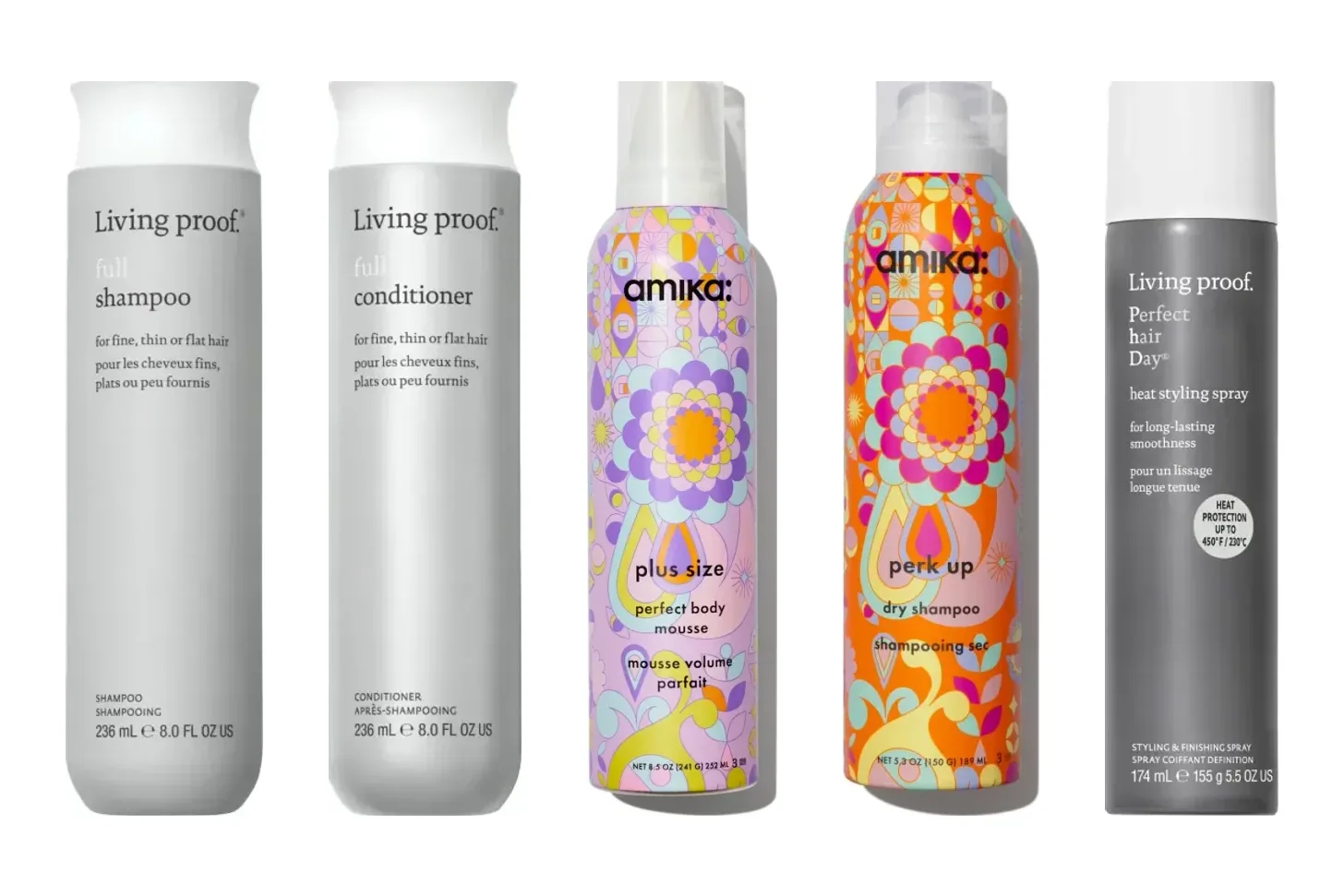
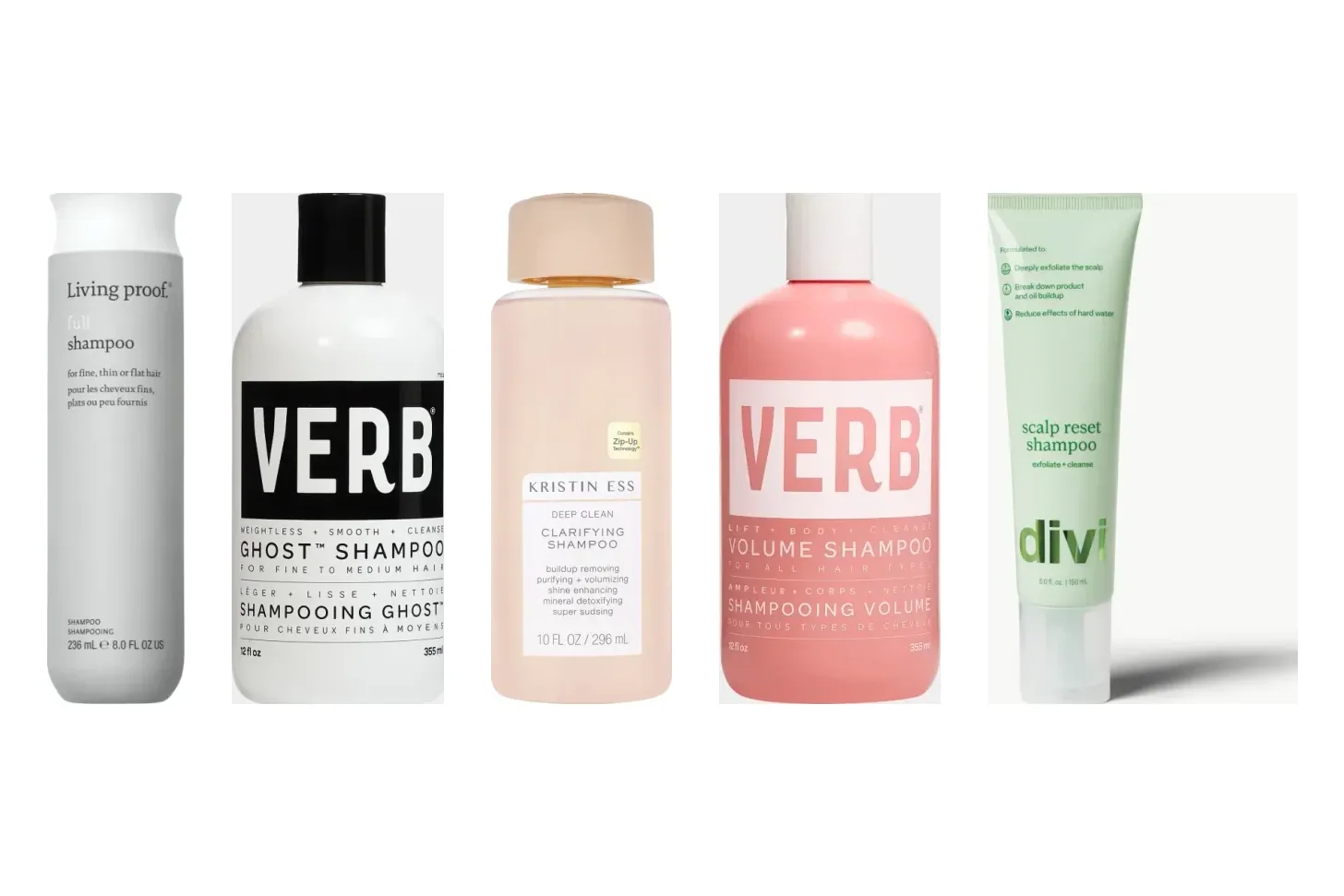
1. A lightweight volumizing shampoo. The single highest-impact purchase, because it's the product with the most contact time and the one most likely to be quietly weighing you down. A shampoo formulated for fine hair cleans thoroughly without the conditioning agents that coat the strand. Our picks are in the best shampoo for fine and thin hair.
2. A conditioner you use from the ears down. Fine hair still needs conditioning — it just doesn't need it at the roots. A light formula on the mid-lengths and ends only keeps the hair soft without flattening the crown. See the best conditioner for fine hair, and how much conditioner fine hair actually needs if you suspect you're overdoing it.
3. One body-builder for damp roots. A lightweight mousse or a volumizing spray — pick one, not both. Applied to damp roots before drying, it gives the blow-dry something to hold and the heat sets that body into the strand. This is the product that does the volume work.
4. A dry shampoo. Not just for skipping a wash. On fine hair it's a styling product: it absorbs the oil that re-flattens the crown by mid-afternoon and adds the grip that makes second-day hair hold a style better than first-day hair does. Picks in the best dry shampoo for fine hair.
5. A lightweight heat protectant. Non-negotiable if you blow-dry, curl, or straighten. The format matters: a fine mist coats evenly without loading the strand, where a cream adds the weight that undoes the volume you're styling for. See the best heat protectant for fine hair.
Every product category, and our pick for each
Below is the full map. Read down the "what it's for" column and buy only the rows that describe a problem you actually have — the essentials above are marked, and everything else is genuinely optional.
Styling products for fine hair: which rows are stylers, and what each one weighs
People search for "hair products for fine hair" and "styling products for fine hair" as if they were two lists, and the table above quietly mixes them. They are not the same shopping trip.
Roughly the top third of the table is wash-day care — shampoo, conditioner, mask, clarifier, leave-in — and its job is to leave the strand clean and uncoated so the styling layer has something to grip. Everything else is a styling product, and on fine hair the only question that matters about a styler is how much it weighs once it is on the head.
Ranked from lightest to heaviest, the stylers fine hair can carry are: dry-applied powders and sprays — dry shampoo, root powder, texture spray — which add grip with almost no mass and are the safest category to experiment in; damp-applied polymers — mousse, volumizing spray, root lifter — which set body into the hair as it dries and are the category that actually creates volume; hold products — flexible hairspray and gel — which dry out of the hair and leave a film rather than a weight; and finally creams, pastes and oils, which stay on the hair as mass and belong on the ends, on short cuts, or nowhere.
A fine-hair styling kit usually needs one product from the first two groups and a hairspray, and nothing from the last group above the ears. The heat tools are stylers too, and they are the one place to spend: the styling tools guide covers the heat-and-tension budget they draw on.
If your hair is thin as well as fine — fewer strands, not just narrower ones — the styling list shortens rather than lengthens. Low density cannot carry a second damp-applied product, and the dry-applied group does proportionally more, because grip at the root is what keeps a small amount of hair from lying flat against the scalp.
The distinction takes two minutes to check in fine hair versus thin hair, and it changes which rows of the table you should be reading.
The order to apply them in
Order matters as much as choice, and getting it wrong is the most common reason a good product appears to do nothing. The principle is wet to dry, light to heavy, volume at the roots and conditioning from the ears down.
Shampoo at the scalp. Massage the roots, let the suds rinse through the lengths on their way out. Scrubbing the ends is unnecessary and roughs up the cuticle.
Conditioner from the ears down. Mid-lengths and ends only. A pea to a hazelnut, depending on length. Rinse thoroughly — residue is one of the most common causes of flat roots.
Squeeze, don't rub, with the towel. Fine hair tangles and roughs up easily when it's wet. Blot and press rather than scrubbing.
Heat protectant on damp hair, if you're using heat. Comb it through so the coverage is even.
Body-builder at the damp roots and upper lengths. Mousse or volumizing spray, not both. Keep it off the ends — that's where it becomes weight rather than volume.
Dry with the airflow lifting the roots. Head flipped, or a round brush at the crown. This is where the volume is actually created; the product only makes it possible. The method is in how to blow-dry fine hair for volume.
Grit and lift on dry hair, if needed. Texture spray or root powder at the roots, worked in with fingertips.
Light hold, then shine, last. A flexible hairspray from ten inches away, then — only if your ends need it — one or two drops of oil pressed onto the last two inches.
Two ordering errors account for most complaints. Putting a damp-hair product on dry hair, where it sits on the surface and turns sticky; and applying anything conditioning near the roots, which flattens them before you've started. If your routine feels right and your hair still goes flat by noon, the fuller diagnosis is in how to fix flat hair and why it keeps falling flat.
Three kits, by budget
You don't need all nineteen categories. Here's what to buy in what order, depending on where you're starting.
Anyone starting from scratch, or air-drying most days. Covers cleansing, softness and day two.
Everyday (5 products)
The starter three, plus a mousse or volumizing spray and a heat protectant
Most people. Adds real volume and makes blow-drying safe. This is the honest kit.
Complete (8 products)
The everyday five, plus a root lifter, a texture spray and a flexible hairspray
Anyone styling daily or fighting a specifically flat crown. Beyond eight, you're adding weight, not results.
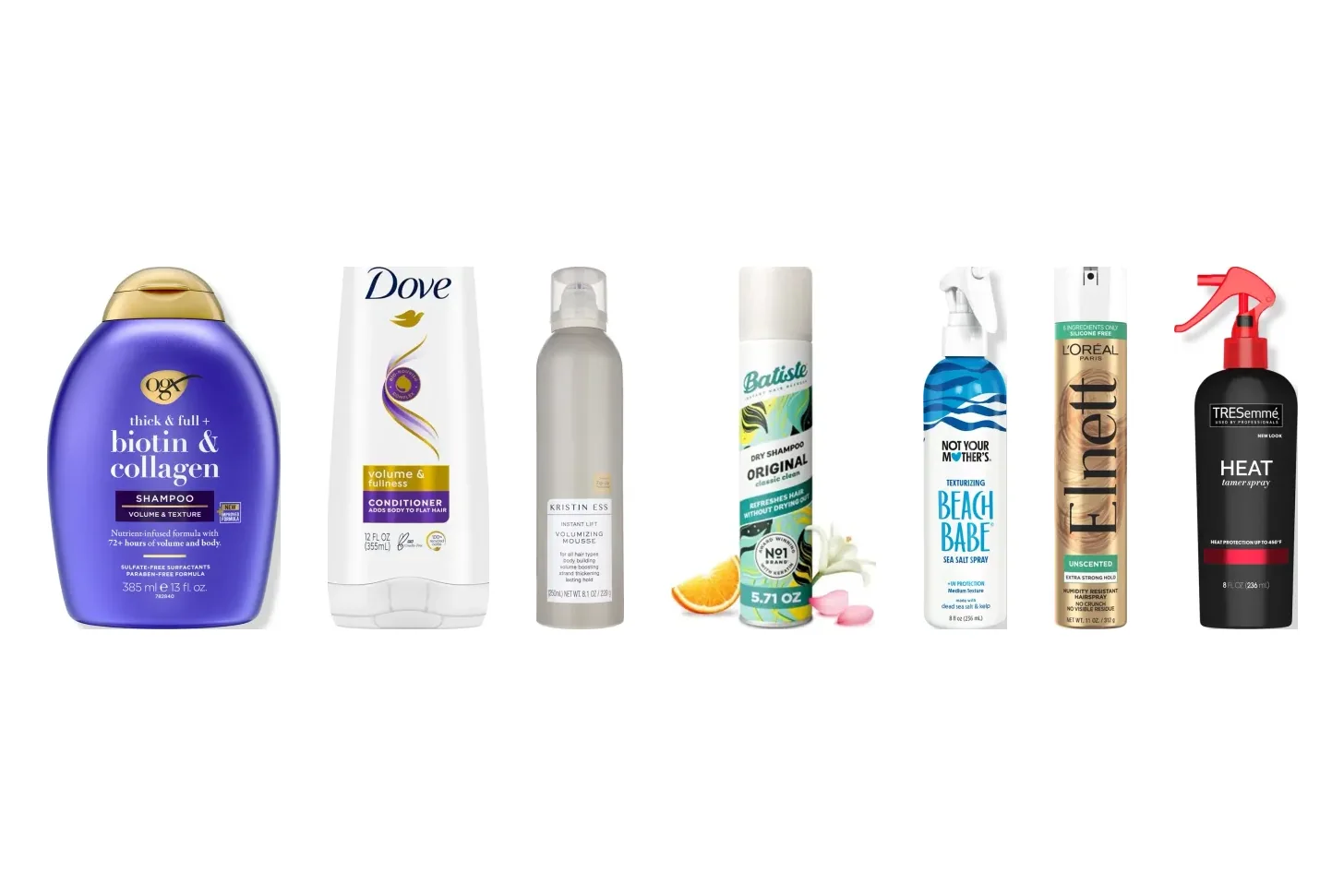
Budget note: fine hair is one of the types where drugstore formulas genuinely compete, because what it needs most is the absence of heavy conditioning agents rather than the presence of expensive actives. Start at the budget end for shampoo, mousse and dry shampoo — our drugstore picks for fine, flat hair cover those — and spend where build quality matters, which is hot tools and the heat protectant you'll use daily.
What fine hair should skip
The list of things not to buy is as useful as the list of things to buy, because most fine-hair problems are additive.
Rich creams, butters and daily masks. They're formulated for coarse or very dry hair and will flatten fine hair within one wash. A light mask once a week on the ends is plenty — the honest version is in our hair mask guide.
Oil anywhere near the roots. Two drops on the last two inches, applied last, on dry hair. That's the whole permitted use.
Two volume products doing the same job. A mousse and a volumizing spray both build body in damp hair. Using both doubles the weight for no extra lift.
Anything sold as "thickening" that feels heavy in the bottle. Genuine thickening formulas are light and coat the strand. Products that feel rich are adding mass to the outside of the hair, which is the opposite of what you want.
Stiff, freeze-hold hairspray. It sets fine hair into a shell that collapses flat when it's disturbed. Flexible hold, misted from a distance, holds height instead of crushing it.
Products aimed at hair loss when the issue is texture. Fine and thinning are different things, and buying for the wrong one wastes money. Our guide to telling fine hair from thin hair takes two minutes, and fine hair or thinning? covers the distinction that matters medically.
When more products isn't the answer
Your hair is flat within hours of washing. Usually residue or technique, not a missing product. Clarify once, then check that conditioner is staying below the ears and that you're drying the roots up rather than down — the honest fine-hair routine walks through it.
Your roots look greasy by day two but your ends feel dry. That's a scalp-and-lengths mismatch, not a product gap. Adjust where each product lands before buying anything new; fine, oily hair: the balancing routine covers it.
You can see more scalp than you used to. No styling product changes density. Get the cause looked at rather than covering it — start with coverage for thinning on top, which is written with a dermatologist's review.
Your cut is fighting you. The wrong shape defeats any product. Weight placement, length, and layering do more for fine hair than a shelf of volumizers — see haircuts for fine and thin hair.
Nothing has worked and you've tried everything. That's often the diagnosis itself: too many products, all at once. Strip the routine back to the essential five for two weeks and reintroduce one at a time.
FAQ
Five, and the rest is optional. A lightweight volumizing shampoo, a conditioner used only from the ears down, one body-builder applied to damp roots (a mousse or a volumizing spray), a dry shampoo for day two, and a lightweight heat protectant if you use hot tools. Those five cover cleansing, conditioning, volume, extending time between washes, and protection — which is every job fine hair genuinely has. Everything beyond that, from texture spray to hair oil to a deep mask, solves a specific secondary problem. Buy those only when you have the problem they solve.
A body-builder applied to damp roots before you dry — a lightweight mousse or a volumizing spray — because it works inside the drying process rather than sitting on top of finished hair. It coats each strand so it feels thicker and gives the blow-dry something to hold, and the heat sets that body into the strand. Products applied to dry hair, like texture spray or root powder, add grit and lift at the roots but cannot change how the hair dried. If you only buy one volume product, buy the damp-hair one; if your crown specifically is the problem, add a targeted root lifter there rather than more product everywhere.
Usually because of quantity, placement, or timing rather than the product itself. Fine hair has a small weight budget — it takes very little product before the strand is carrying more than it can hold up. Three common errors: using a coin-sized amount where a pea would do, applying at the roots and dragging it through to the ends so the whole length gets loaded, and applying a damp-hair product to dry hair where it sits on the surface and goes sticky. Halve your quantity, keep volume products at the roots and upper lengths, keep conditioning products from the ears down, and check whether the label says damp or dry.
Yes, if it is a light or dry oil and you keep it well away from the roots. One or two drops warmed between the palms and pressed onto the last two inches will smooth split-looking ends and add shine without visible weight. What fine hair cannot take is a rich oil applied through the mid-lengths or anywhere near the scalp — it flattens the roots immediately and makes hair look greasy within hours. Apply it as the very last step on dry hair, start with less than you think, and if your hair looks limp the next morning you used too much.
No. Fine hair is one of the hair types where drugstore formulas compete well, because what fine hair needs most is the absence of heavy conditioning agents rather than the presence of expensive actives. A good lightweight drugstore shampoo, mousse, and dry shampoo will outperform a premium range formulated for dry, coarse hair every time. Where paying more can be worth it is in hot tools, where build quality affects how evenly the heat is delivered, and in a heat protectant you will use daily. Everything else is worth trying at the budget end first.
Wet to dry, light to heavy, roots to ends for volume and ears-down for conditioning. In the shower: shampoo at the scalp, conditioner from the ears down only. On damp hair: heat protectant if you are using hot tools, then a mousse or volumizing spray at the roots and upper lengths. Then dry, with the airflow lifting the roots. On dry, finished hair: texture spray or root powder if you need grip and lift, then a light hairspray, and one or two drops of oil on the ends last of all. The most common ordering mistake is putting a damp-hair volume product onto already-dry hair, which is where the sticky, flat result comes from.
Five categories do almost all of the work: a lightweight volumizing shampoo, a light conditioner used from the ears down, one damp-applied body-builder for the roots (a mousse or a volumizing spray, not both), a dry shampoo for grip on day two, and a fine-mist heat protectant if you use hot tools. Everything else in the table is optional and should be bought only for a problem you actually have. The best hair products for fine hair share one property regardless of category: they rinse or dry out of the hair rather than staying on it as weight. If a product feels rich in the bottle, it will feel like less hair on the head.
The lightest ones that still do the job, and usually only two or three of them. For volume, a mousse or a volumizing spray applied to damp roots before the blow-dry, because body set into hair as it dries lasts longer than anything applied afterwards. For grip and second-day hold, a dry shampoo or a texture spray on dry roots. For hold, a flexible hairspray misted from a distance rather than a stiff one. Creams, pastes and oils are styling products fine hair can use only in small amounts on the ends or on very short cuts. Gel is the exception among the heavier-feeling products: it dries out of the hair and leaves hold without weight, which is why it suits short fine styles.
Mostly the same products, used in smaller amounts and fewer of them. Fine describes strand width; thin describes how many strands you have. Fine hair is weighed down by rich formulas, so it wants lightweight products. Thin hair has less total hair to carry any product at all, so it wants fewer of them and leans harder on the dry-applied group — dry shampoo, root powder, texture spray — which add grip at the scalp without adding mass. Most people with fine hair are also on the lower side of density, so the honest kit above is written for both. Where the two part ways is coverage: if you can see scalp, no styling product changes that, and the answers are on our thinning pages rather than on this one. Start with best shampoo for thinning hair, which says what the one product people buy first can and cannot do.
Fourteen years in hair — eight behind the chair, six in editorial — with a focus on scalp health and the science of fine, flat-prone hair. Megan's first prescription for a crowded bathroom shelf is usually subtraction.
Results vary with hair type, density, and growth patterns. This guide is educational and not a substitute for an in-person consultation with a licensed stylist.
Get the good hair intel
One honest, stylist-written guide in your inbox each week. No hype.

 MH
MH