Reviewed by Tara Sullivan · Updated July 2026 · 9 min read
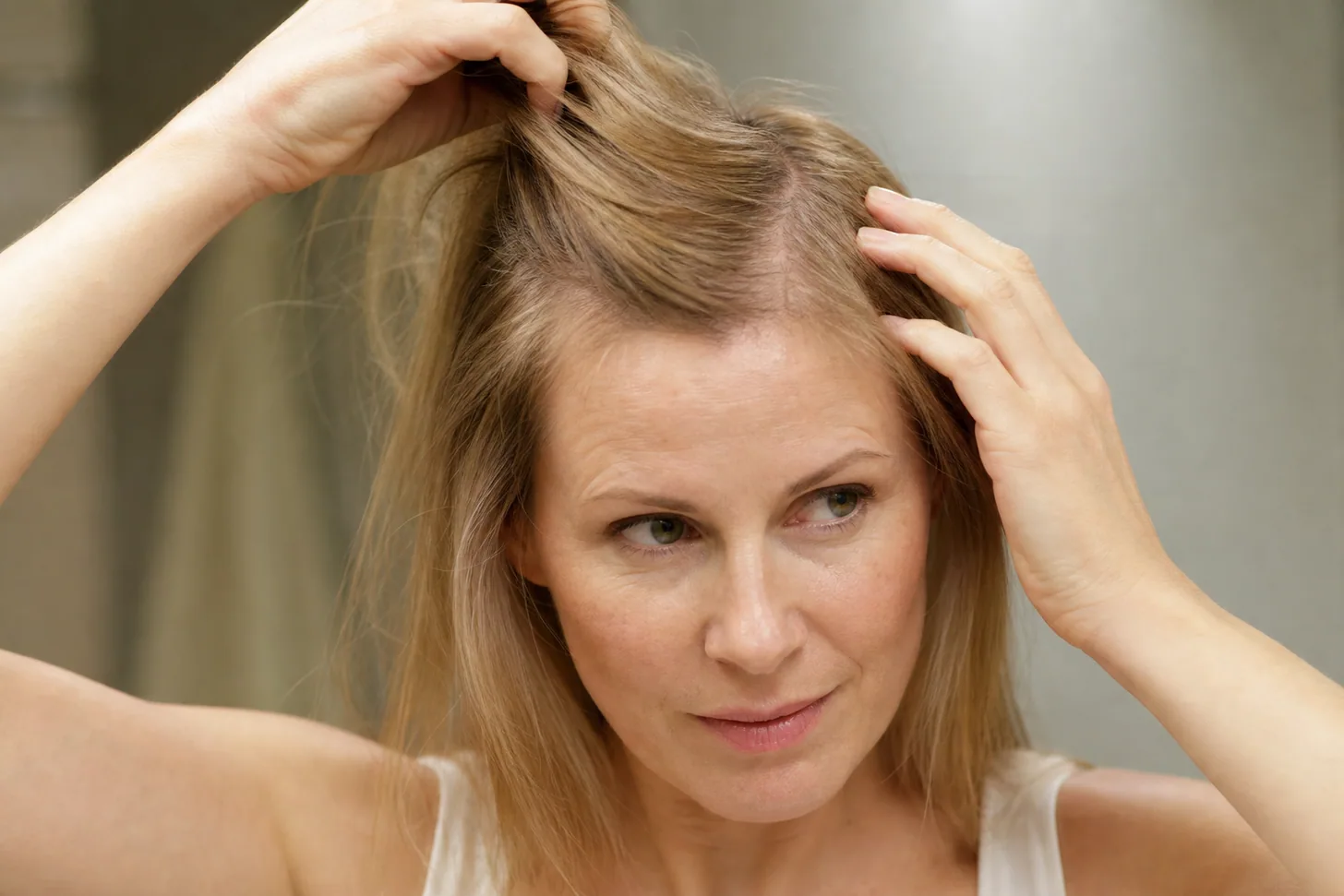
Flat hair is a weight problem at the root, and it has exactly five causes: roots trained flat by habit, residue coating the strand, product that's too heavy for it, a cut that's too long or too solid, and wash timing that leaves oil sitting on the scalp.
Everything that fixes flat hair attacks one of those five — which is why the fix that transformed your friend's hair did nothing for yours. Below: how to tell which flat you have in about a minute, the five-minute rescue for today, and the changes that stop it coming back.
Chair-side note
"Limp," "flat," "no body," "falls the minute I leave the house" — clients use different words, but when I lift the hair at the crown, I'm checking one thing: does the root stand away from the scalp or lie against it?
Hair is a lever, and the root is the hinge. Everything you see in the mirror — volume or the lack of it — is decided in that first half-inch. Once you start diagnosing at the root instead of the ends, flat hair stops being a mystery and becomes a checklist.
SB
— Simone Baptiste, Senior Stylist
The five reasons hair falls flat
1. Trained roots. Hair holds the shape it dries and cools in. If you part in the same place every day, sleep on damp hair, or let it air-dry hanging down, the roots learn to lie flat against the scalp — and they'll reproduce that shape daily until you retrain them. The parting half of that retraining is in how to part fine hair.
2. Residue and buildup. Styling product, silicone-rich conditioners, dry shampoo layered for days, and hard-water minerals all leave a film. Film is weight, and it also glues strands into wider, heavier ribbons that bend at the root. Buildup flatness is sneaky because it arrives gradually — hair that's "just gotten blah over the past month" is usually coated, not tired.
3. Product too heavy for the strand. Rich masks, oils, leave-in creams, conditioner applied at the roots. On a coarse strand these absorb; on a fine one they sit on the surface as load. If your hair is flattest on wash day, the wash itself is adding the weight.
4. The cut. Long, one-length hair is a curtain — maximum weight, zero built-in lift. Past a certain length-to-strength ratio, no product can beat the physics.
5. Wash timing. Scalp oil migrates down the root and acts like a styling cream you didn't choose. Go one day past your hair's real tolerance and the first inch collapses.
Fine hair suffers all five earlier and harder, because a narrow strand has the least strength to carry any load — that's the whole story of fine versus thin hair in one sentence. But every hair type hits its version of the ceiling — and if yours is dead straight, straightness is compounding all five, for reasons set out in fine, straight hair.
Limp hair and flat hair are two different complaints
People use the words interchangeably and they describe opposite ends of the same strand. Sorting out which one you have saves you buying the wrong product, because the fixes barely overlap.
Flat hair has no lift at the root.The hair lies against the scalp so the head reads narrow from the front, but the lengths may still move perfectly well. Everything on this page addresses this one.
Limp hair has no body along the length.It hangs without bounce and falls straight out of any shape you put in it. The root might have plenty of lift and the hair still reads lifeless from the ears down.
The distinction matters because limp hair is usually a grip problem rather than a weight problem. A strand that is smooth, well-conditioned and clean has nothing for the neighbouring strand to hold onto, so any shape you set slides straight back out — that is the mechanism behind why fine hair won't hold a style, and the answer is texture rather than volume.
Limp hair wants a dry texture spray, less conditioner through the mid-lengths, and second-day hair to work with. Flat hair wants root lift, and the rest of this page covers it.
Plenty of fine hair has both at once, and if that is you, fix the root first — a limp length above a flat root is invisible, but a limp length above a lifted root just reads as soft.
For the morning the mirror gives you a pancake. In order:
Flip the part first — it's free
Move your part one inch past its usual line, or switch sides entirely. Hair trained to lie one way stands up when pushed the other — instant root lift at the crown, no product, no heat. This is the highest return-per-second move in styling, and it works precisely because of the training that caused the flatness.
Absorb what's weighing the roots
If the roots feel oily or coated, dry shampoo at the part and crown from 8–10 inches, wait a full minute, then massage out with your fingertips and brush through. The wait matters — powder needs time in contact with oil to absorb it. Sprayed-and-instantly-rubbed is why dry shampoo gets called chalky.
Sixty seconds of upside-down heat, cooled in place
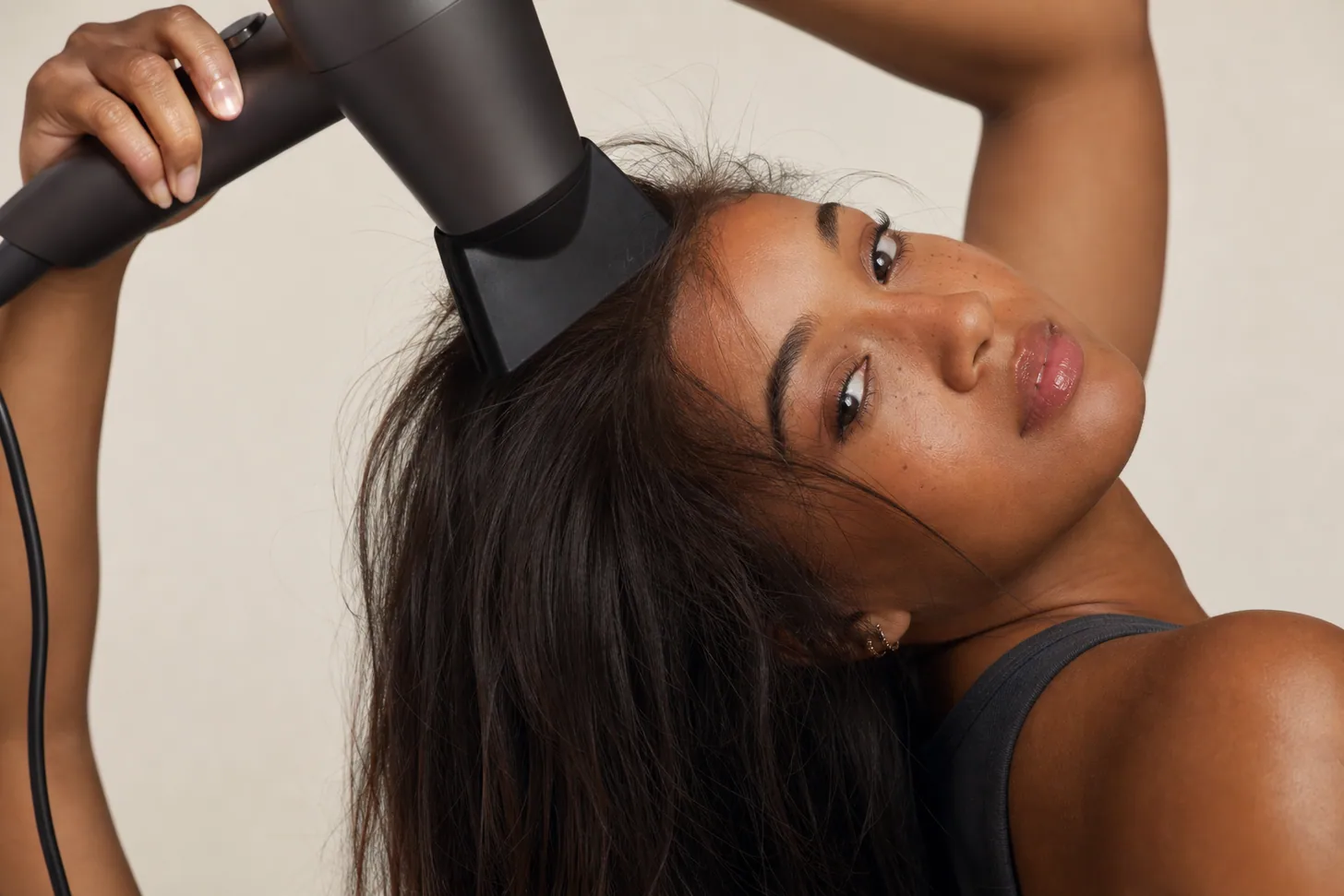
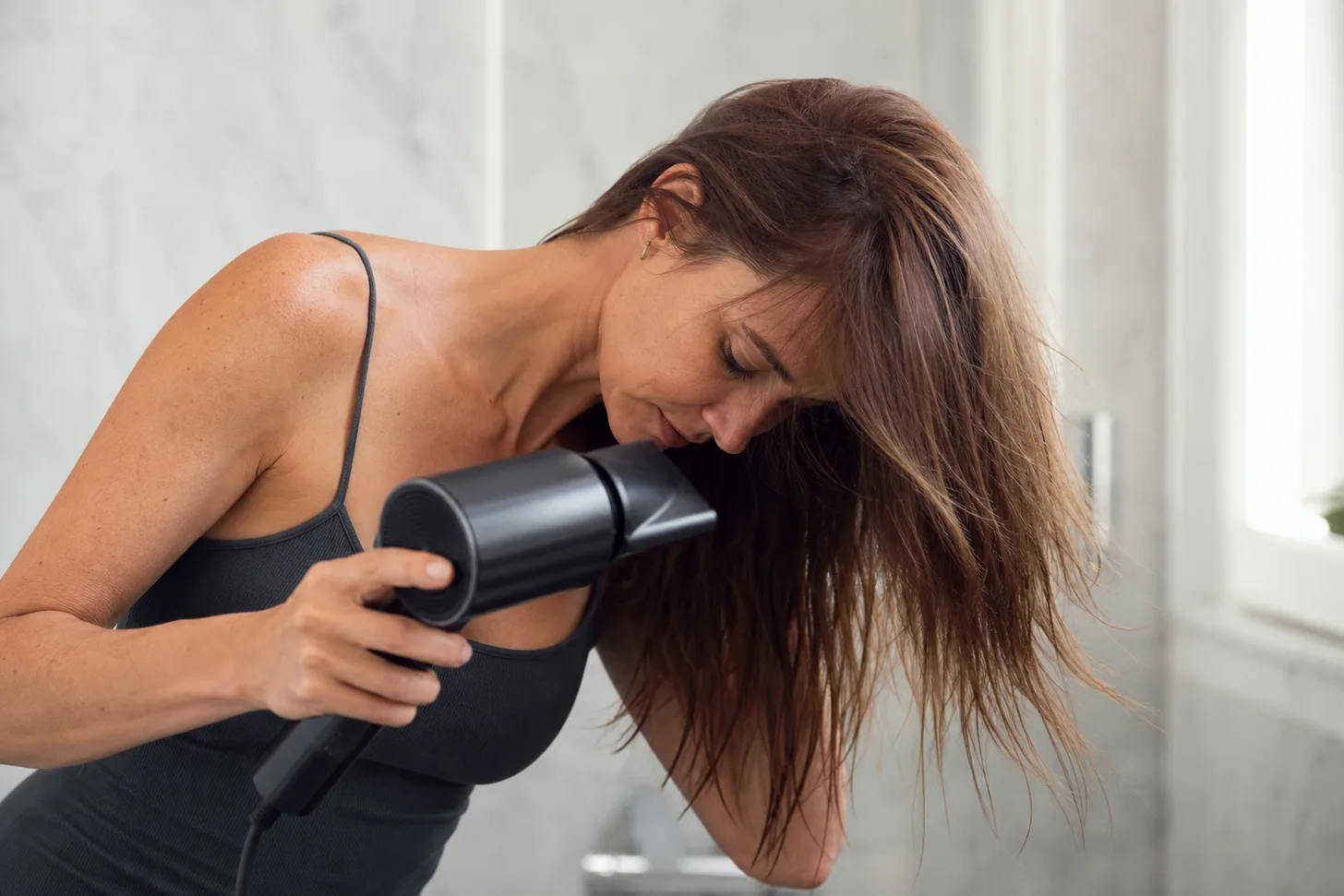
Tip your head over and blast the roots with the dryer on medium — moving constantly — for 30–60 seconds. Then, still upside down, hit the cool-shot button or simply wait until the roots are cool before flipping back.
Heat makes hair movable; cooling locks the shape. Skip the cool-down and the lift falls out by the first red light of your commute. The same rule is why a hat pulled onto warm hair sets the roots flat for the rest of the day — see fine hair in winter.
A pinch of grip where it counts
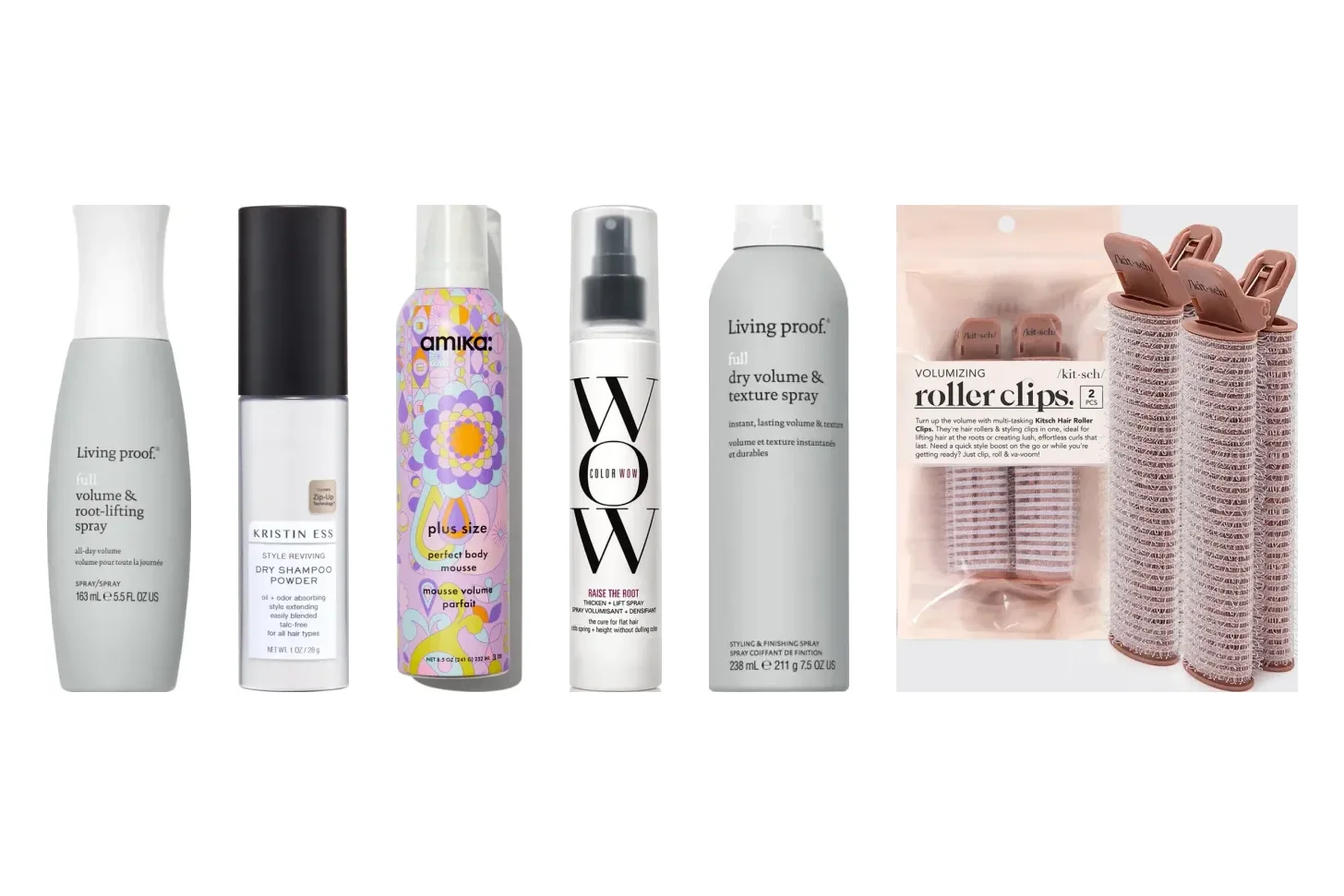
Finish with a light texture spray through the roots, or — for crown flatness that survives everything else — a small pinch of volumizing powder rubbed in at the part. Powders add friction, and friction is what holds strands away from each other and off the scalp. Go easy: the line between lifted and gritty is about half a pinch.
Fix it for good: four changes that outlast any styling trick
Worth saying before the four: the cut is the change that keeps working on the mornings you don't have ten minutes. Volumizing haircuts for fine and thin hair splits the options by density — which decides whether layers lift your hair or flatten it — and the haircut for thin hair to look thicker covers the shapes that read fuller regardless.
If your hair is long and one length, the cheapest permanent fix is usually four inches rather than a product — blunt cuts for thin hair explains where that crossover sits.
Clarify on a schedule, then protect the reset
If flatness crept in over weeks, start here: one wash with a clarifying shampoo strips the accumulated film and typically returns a startling amount of body in a single shower.
Then protect the reset — clarify every 2–4 weeks (weekly if you use lots of styling product, or if you're on hard water, which leaves a mineral deposit detergent alone won't lift), and choose a genuinely lightweight everyday shampoo so the film rebuilds slowly. Clarifying more than weekly overshoots: stripped hair overproduces oil, and you're back where you started by Thursday.
Move every rich product below your ears
Conditioner, masks, leave-ins, oils: mid-lengths and ends only, never the roots. The top two inches of your hair need exactly nothing from any of those products, and they pay for them in flatness. This single relocation is the cheapest routine change with the biggest visible payoff on flat-prone hair.
Dry the roots first, against their fall
Whatever else you do to your hair, spend the first two minutes of every dry on the roots, pushing them side to side and back against their natural direction with your fingers or a brush.
Roots dried in a lifted position stay lifted; roots that air-dry flat are flat until the next wash. The complete technique — sectioning, brush choice, the cool set — is in how to add volume to thin hair, and it applies to every length and age.
Let the cut carry the load
If your hair is flat by lunch no matter how well you style it, you've found the limit of products — and the beginning of the haircut conversation. Soft internal layers, a shorter perimeter, or a shape with built-in graduation removes the weight your roots can't hold.
Tell your stylist: "It falls flat by midday — I want weight out of the shape without thinning my ends see-through." The styling-first daily method is in how to style thin hair; when you're ready to change the shape itself, that's a cut conversation, not a product one.
Chair-side note
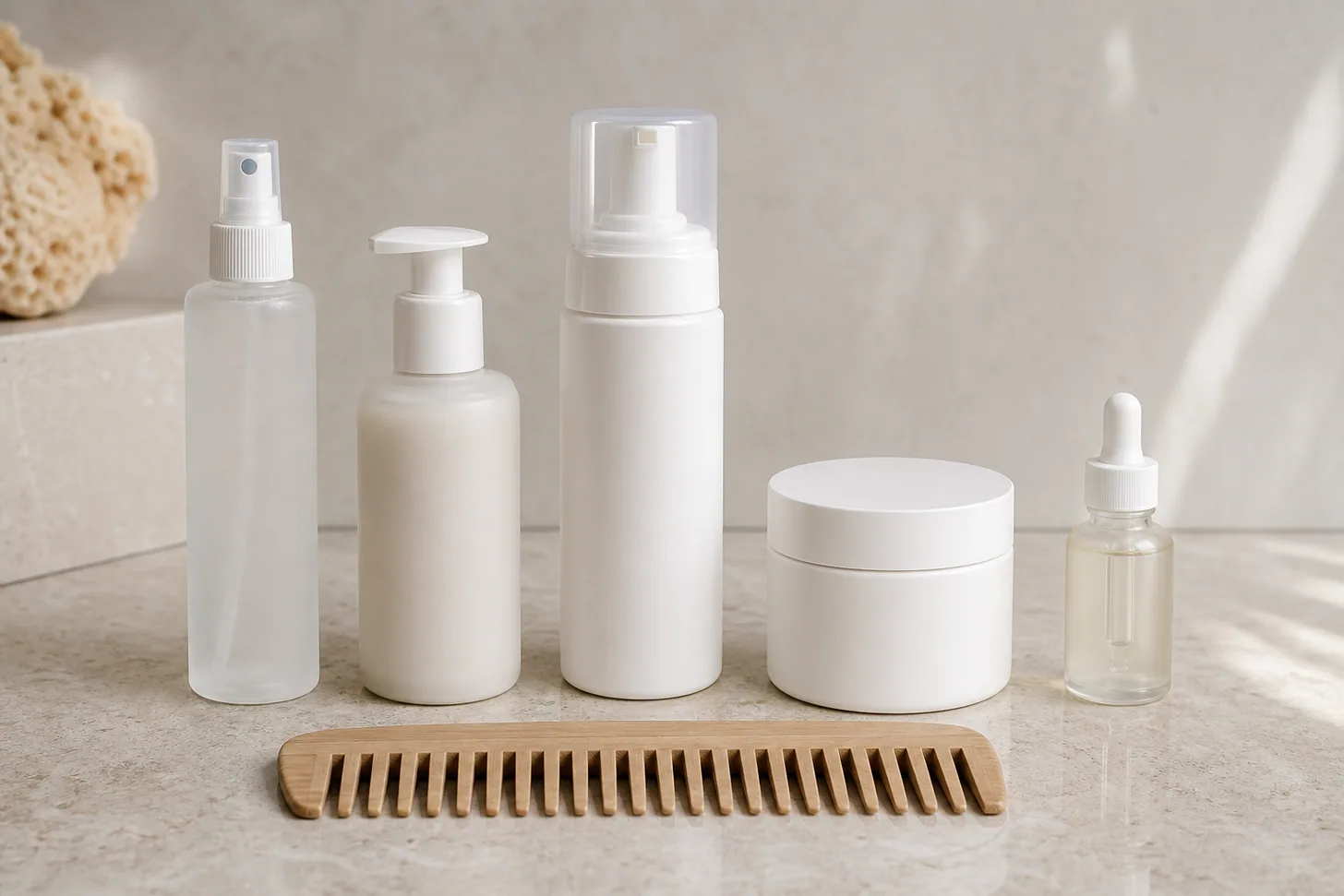
The flattest hair I see in the chair is almost never unwashed hair — it's over-loved hair. A client fighting flatness buys a volume shampoo, a volume conditioner, a thickening leave-in, a smoothing cream for the frizz the leave-in caused, and an oil for shine.
Five products, five layers of weight, applied to hair that's begging to be left alone. When we strip her routine down to two light products used correctly, the "miracle" is just subtraction. Before you buy anything new for flat hair, take two things away.
SB
— Simone Baptiste, Senior Stylist
When flat hair isn't a styling problem
Your part is visibly wider than in last year's photos. Progressive widening is a density signal, not a styling one — here's how to tell the difference, and a dermatologist can rule out treatable causes.
Shedding has genuinely increased for 3+ months. Persistent increased shedding deserves medical eyes before styling advice.
Your scalp is itchy, flaky, or sore alongside the flatness. An unhappy scalp changes oil production and how hair sits — treat the scalp first.
Flatness arrived suddenly with a new medication or major stress. Talk to your doctor; hair is often the messenger, not the problem.
FAQ
They describe opposite ends of the same strand, and the fixes barely overlap. Flat hair has no lift at the root — it lies against the scalp so the head reads narrow from the front, even though the lengths may move perfectly well. Limp hair has no body along the length — it hangs without bounce and falls straight out of any shape you put in it, even when the root has plenty of lift. Flat hair is a weight problem and wants root lift, which is what the rest of this page is about. Limp hair is usually a grip problem: a clean, smooth, well-conditioned strand has nothing for its neighbours to hold onto, so it wants a dry texture spray, less conditioner through the mid-lengths, and second-day hair to work with. Plenty of fine hair has both at once — fix the root first.
Usually one of three reasons, and they stack: your roots are trained flat by always drying and parting the same way; a film of product residue, hard-water minerals, or conditioner is coating the strands and adding weight; or the hair itself is fine, so even normal scalp oil and light products are heavy relative to the strand. Diagnose before you treat — lift a dry section at the crown and check whether the root stands, and whether the lengths feel coated or clean.
Flip your part to the opposite side — the roots lift against their training instantly. Then spray dry shampoo at the roots, let it sit a minute, and massage it out; finish by blasting the roots with a dryer for 30 seconds while the hair hangs upside down, and let it cool before you flip back up. Those three moves take under five minutes and fix most flat mornings.
No. Flatness is a physics problem — weight versus root lift — not a health problem. Perfectly healthy fine hair falls flat because each strand is light and bends easily under any load. The confusion runs the other way: people treat flat hair with nourishing oils and rich masks, which adds weight and makes it flatter. Flat hair is fixed with less on the hair, not more.
It's the most permanent fix there is. Length is weight, and one-length weight is what drags roots down — removing a few inches or adding soft internal layers takes the load off the root so lift happens on its own. If your hair is flat by noon no matter what products you use, the cut is almost certainly the ceiling you keep hitting.
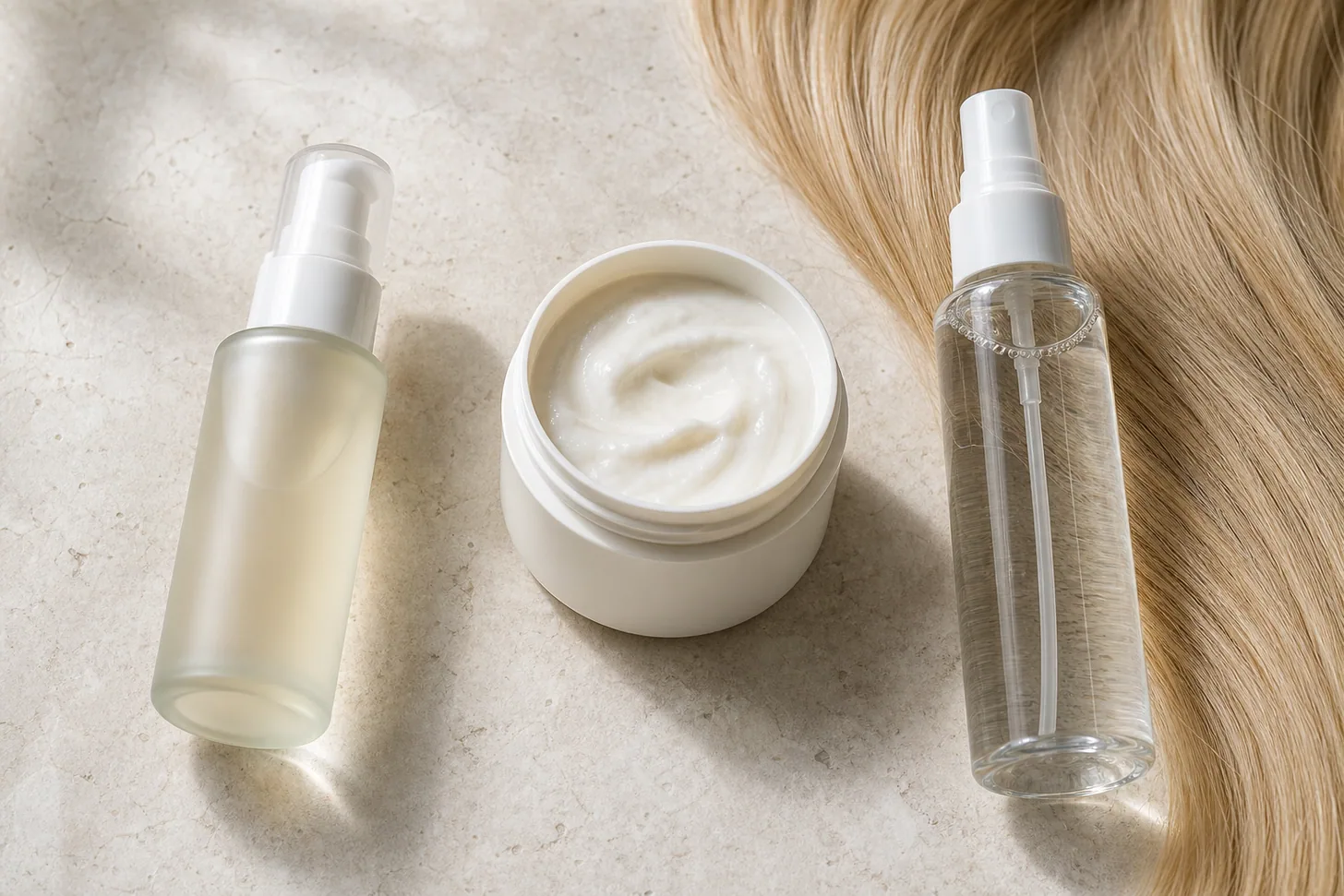
The lightweight ones do, applied at the roots only: mousse on damp roots before drying, a root-lifting spray blown in with heat, or a pinch of volumizing powder on dry hair. What doesn't work is anything applied mid-length and down in the name of volume, or any thick cream or oil — on flat-prone hair, product weight is the disease, so more product is rarely the cure.
When flatness comes with visible change: a widening part, more scalp at the crown in photos, a ponytail that's lost real thickness, or noticeably more shedding for over three months. Ordinary flatness looks the same year after year; thinning progresses. If you're seeing progression, see a board-certified dermatologist — early causes are often treatable, and no styling trick should stand in for that.
Eleven years behind the chair, specializing in short shapes and fine-hair texture. Simone believes the best haircut is the one you can style yourself in ten minutes.
Images in this article are AI-generated illustrations, not photographs of real clients or results. See our image policy.
Results vary with hair type, density, and growth patterns. This guide is educational and not a substitute for an in-person consultation with a licensed stylist. If you're noticing sudden or patchy thinning, a board-certified dermatologist can rule out a treatable cause.
Get the good hair intel
One honest, stylist-written guide in your inbox each week. No hype.

 SB
SB