Reviewed by Tara Sullivan · Updated July 2026 · 8 min read
Fine hair looks oily so fast for a simple reason: there's less of it to soak up the same amount of oil. Your scalp makes roughly as much sebum as anyone's, but a fine, low-density head has far less surface area for that oil to spread across — so it saturates and shows at the root within hours, and finer strands go limp and stringy under even a light coating.
The fix is balancing the scalp, not stripping it, because harsh, drying washing usually backfires: a scalp that feels tight and over-cleansed tends to feel greasy again faster. This is the honest routine — right wash cadence, scalp-focused technique, weight kept off the roots — that keeps fine hair clean without setting off the very oiliness you're fighting.
Why fine hair greases up faster than thick hair
Two things are working against you, and neither is your cleanliness. First, coverage: sebum travels from the follicle down the strand, and a fine or low-density head simply has less hair for the same volume of oil to coat.
The oil runs out of strand before it runs out of oil, so it pools and shows at the scalp fast. Second, weight: a fine strand has a narrow diameter and very little internal structure holding it upright, so it collapses under a film of oil that a thick, coarse strand would carry without visibly drooping.
That's why the identical amount of sebum reads as "healthy shine" on thick hair and "I need to wash again" on fine hair. If you're not sure whether your real issue is fine strands, low density, or both, it's worth two minutes with the difference between fine and thin hair — the answer changes how aggressively you should chase root cleanliness.
Here's the part most oily-hair advice gets backwards. Sebum output is largely governed by hormones and genetics, not by how often you shampoo — so the popular idea that you can "train" your scalp to make less oil by washing less has thin support. What over-washing with a harsh, stripping shampoo does do is leave the scalp tight and dehydrated, which for many people rebounds as roots that feel oily again within a day.
The productive goal isn't to punish the scalp into submission; it's to cleanse it gently and often enough to stay ahead of the oil. The American Academy of Dermatology's own guidance lands here too: it advises washing based on how oily your scalp gets, and applying shampoo to the scalp rather than the whole length of the hair (AAD, tips for healthy hair).
Chair-side note
The most common thing I hear from fine, oily-haired clients is some version of "I read that if I just stop washing, my hair will regulate itself." Then they white-knuckle through three greasy weeks, hate every day of it, and conclude their hair is broken.
On thick, dry, coarse hair that reset can genuinely help. On fine, oily hair it usually just means three weeks of flat roots and a scalp that feels no calmer at the end. Wash on the schedule your scalp actually asks for — the goal is a clean, comfortable scalp, not a badge for going the longest between washes.
MH
— Megan Holloway, Editor-in-Chief
Step 1 — Set the right wash cadence (probably daily or every other day)
For genuinely oily fine hair, every day to every other day is the honest rhythm. That's more frequent than the blanket "wash less" advice you'll see everywhere, but that advice was written for thick, dry, coarse, or textured hair — the opposite situation.
Oil at the root is weight exactly where fine hair can't afford it, so letting it build for the sake of a longer gap works against you. The test is simple: if your hair looks best the day you wash it and worse every day after, your scalp is telling you its cadence.
Match it rather than fight it. If you'd still like to stretch your washes, do it gradually — push the gap by a single day and hold it for a couple of weeks before adding another — so you're adjusting, not shocking, the scalp. The full reasoning, including who can genuinely stretch to day three, is in how often to wash fine hair.
Step 2 — Wash the scalp, not the lengths, with a lightweight formula
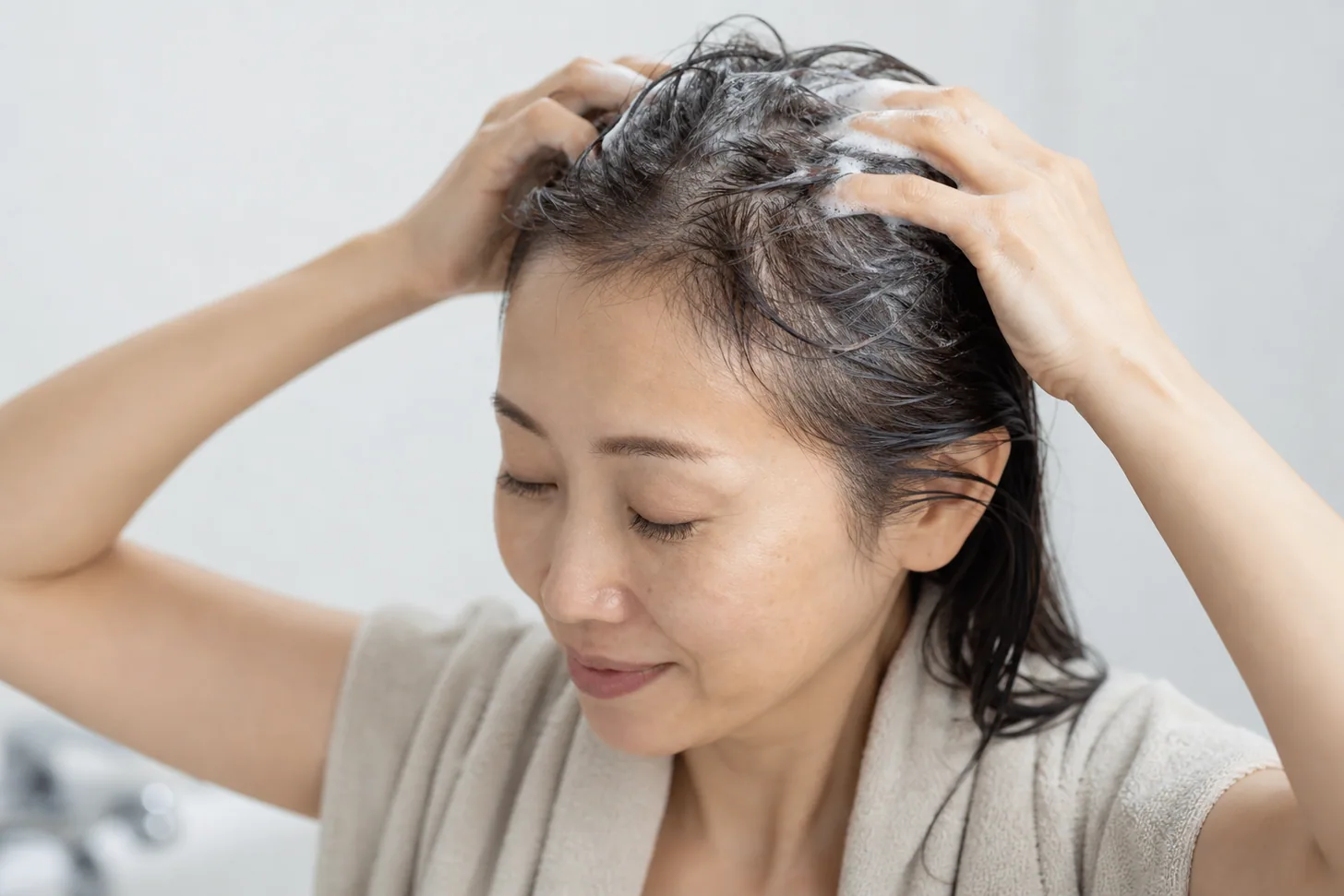
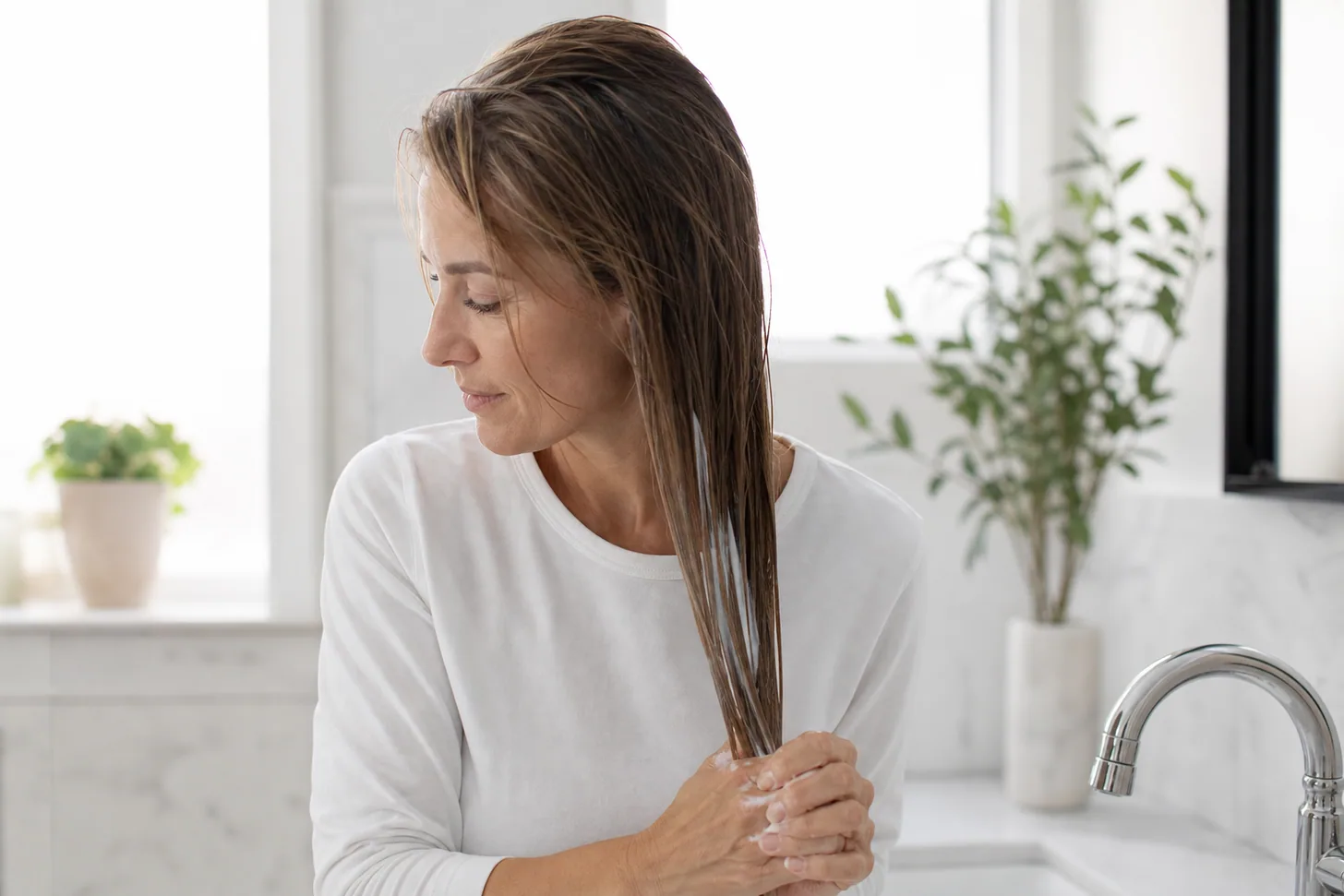
Where you put the shampoo matters as much as how often. The oil lives at the scalp, so that's where the shampoo belongs: massage a lightweight formula into the scalp with your fingertips, work it in for a full 30 to 60 seconds, and let the rinse-down carry the suds through the lengths — the mid-lengths and ends get cleaned on the way out and don't need direct scrubbing (which only roughs up and tangles fine strands).
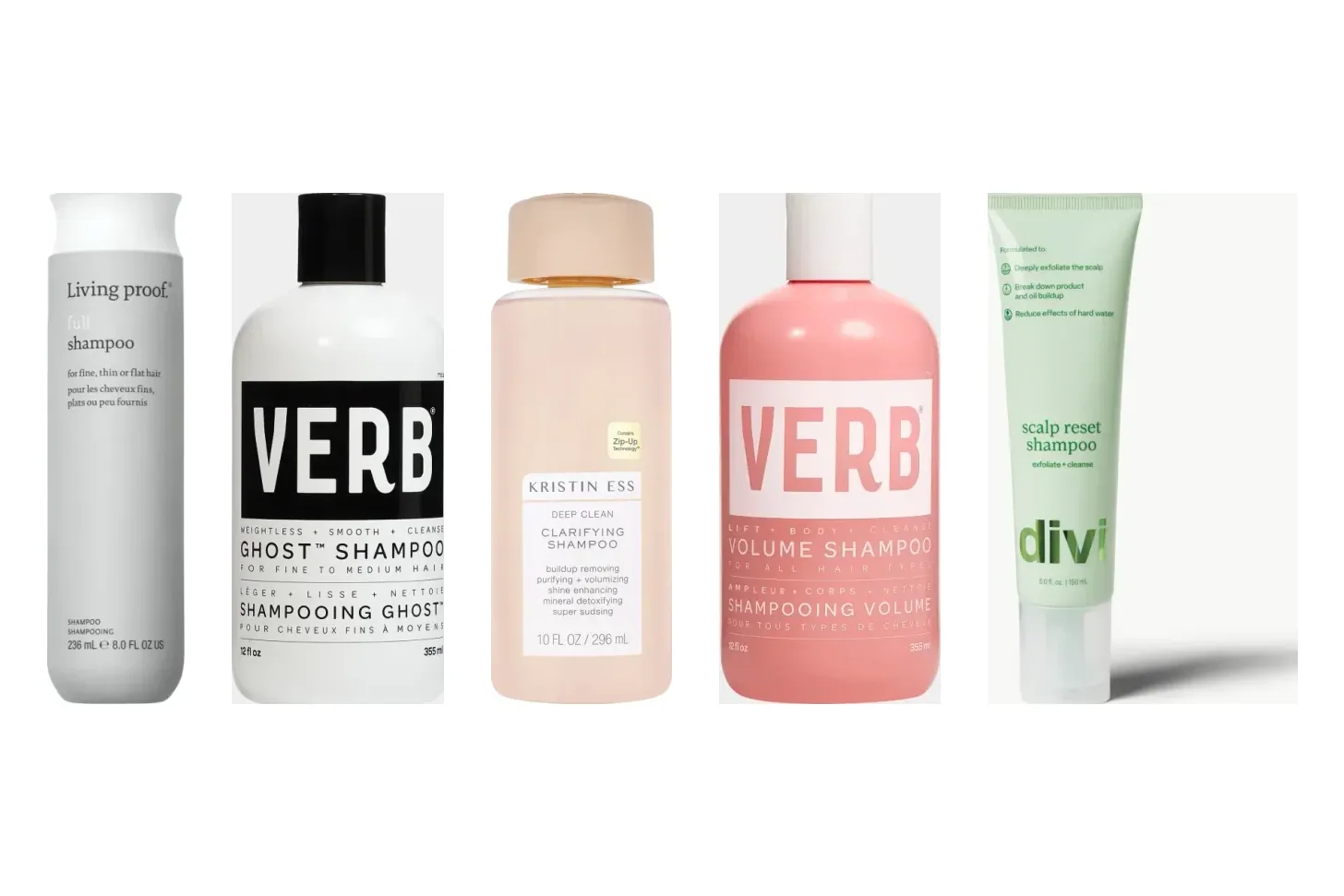
Choose your shampoo carefully, because it's the one product touching your roots at every wash. You want something labeled volumizing, lightweight, weightless, or balancing, and you want it to rinse completely clean. Skip "2-in-1" formulas, smoothing or moisturizing shampoos, and anything "for dry and damaged hair" — those deposit a conditioning film that flattens fine hair and makes roots read greasy sooner.
Our tested picks by hair situation are in the best shampoo for fine and thin hair. If your fingertips can't reliably reach the scalp through your hair, a scalp brush is the cheap tool that fixes exactly this step — see scalp brushes for fine hair, including why it must never travel below the ears.
Chair-side note
When a fine-haired client tells me her roots are oily by lunch no matter what she does, the first thing I check isn't her shampoo — it's where she's putting it. Nine times out of ten she's lathering the ponytail and barely touching the scalp.
Flip that. The scalp is the only place that's actually producing oil; the lengths are just along for the ride. Two fingertips of shampoo, worked into the scalp in small circles, does more for oily fine hair than any "clarifying" claim on the bottle.
MH
— Megan Holloway, Editor-in-Chief
Step 3 — Condition mid-lengths to ends only, never the scalp
Oily-haired people are often tempted to skip conditioner entirely, and that's a mistake — fine hair tangles when wet, and tangles snap narrow strands. The answer isn't to drop conditioner; it's to relocate it. Apply a lightweight conditioner from the ears down, concentrating on the mid-lengths and ends, comb it through with fingers or a wide-tooth comb, then rinse thoroughly.
The scalp never sees it. Dragging conditioner up to the roots is one of the fastest ways to make oily fine hair look greasy an hour after it dries, because you've added a film on top of the oil you're already producing. Keep the roots clean and product-free, and let the conditioner do its job only where the hair is oldest and most fragile.
Hands applying a lightweight conditioner to the mid-lengths and ends of fine wet hair, roots kept clear — illustrating the ears-down rule
Step 4 — Add a weekly-ish clarifying reset for buildup
Even a gentle daily shampoo leaves a little behind, and dry shampoo, styling product, and hard water all add to it over time. That residue is its own kind of weight, and on oily fine hair it can make the scalp feel coated and speed up how greasy roots look. A clarifying wash every one to two weeks strips that accumulated film and gives you a true clean slate — homes with hard water usually need it on the more frequent end.
You don't need a special ritual; a deeper-cleansing wash in place of your regular shampoo, worked into the scalp and rinsed well, is enough. Just don't over-do it: clarifying more than that can leave the scalp stripped and dry, which loops you right back to the rebound-oil problem. Once a week or so is the sweet spot for most fine, oily hair.
Step 5 — Use dry shampoo between washes (and use it right)
Dry shampoo is a genuinely useful bridge for oily fine hair — it absorbs oil at the root and buys you a fresher-looking day without a full wash. The catch is that it's a bridge, not a replacement: layer it on day after day with no washing in between and it builds up into a dull, powdery film that can leave the scalp itchy and coated.
The technique that keeps it clean is counterintuitive: apply it at night, not in the morning. Mist it lightly onto the roots before bed, let it absorb the oil while you sleep, and brush it fully out in the morning — you wake up with lifted, matte roots and none of the chalky cast that comes from spraying it on right before you walk out the door.
The products you reach for to style fine hair can quietly undo everything the wash routine accomplished. The rule for oily fine hair is keep oil-based and heavy products away from the roots: skip facial-style hair oils, rich leave-in creams, and silicone smoothing serums anywhere near the scalp — on fine hair they read as instant grease and weight. If you love the ends-only glossiness a drop of light oil gives, keep it strictly to the bottom third of dry hair and nowhere near the crown.
For lift and hold, lean on genuinely lightweight tools instead: a volumizing mousse or root-focused foam on damp hair, or a texture spray and dry shampoo on dry hair, all applied at the roots where fine hair falls flat. This step is really just the styling end of a bigger picture — the complete weight-first approach lives in the honest fine-hair care routine.
What to look for — and what to avoid
Shopping for fine, oily hair comes down to reading labels for weight. A short cheat sheet: An oily scalp and a flaking one often travel together, and the actives differ — see dandruff shampoo picks for fine hair if you have both.
Reach for
Skip
Why
Volumizing / lightweight / balancing shampoo
2-in-1, moisturizing, "dry & damaged" shampoo
Conditioning films flatten roots and look greasy sooner
Lightweight conditioner, ears-down
Rich masks and butters at the scalp
Weight belongs on the ends, never the roots
Mousse, texture spray, dry shampoo
Hair oils, heavy creams, silicone root serums
Oil-based stylers read as instant grease on fine hair
A clarifying wash ~weekly
Daily harsh clarifying or scrubbing
Over-stripping rebounds into faster oiliness
When it's not just oily fine hair
Your scalp is flaking, itchy, red, or sore. Persistent flaking and itch alongside oiliness can be seborrheic dermatitis, not ordinary grease — dandruff on fine hair covers the mechanism and the routine, and if it doesn't settle, see a board-certified dermatologist rather than reaching for another shampoo.
Your roots feel coated and dull no matter how recently you washed. That's usually product and hard-water buildup, not fresh oil — clarify to reset before assuming your scalp is the problem.
Your roots grease up within hours even with daily washing. Adjust cadence gradually and check your technique first; if it truly won't settle, a dermatologist can look at whether oil production itself is the driver.
Your hair changed abruptly — suddenly oilier or shedding more after illness, pregnancy, menopause, or a new medication. Those are hormonal and systemic signals worth a doctor's visit; no routine change addresses them on its own.
FAQ
Because there's less hair to absorb the oil. Your scalp produces roughly the same amount of sebum whether your strands are fine or coarse, but a fine, low-density head has far less surface area for that oil to coat — so it saturates and shows at the root within hours. Fine strands also go limp under even a light film of oil, so the same amount that a coarse head would carry invisibly reads as flat, stringy, and greasy on fine hair. It's a visibility and weight problem, not a hygiene one.
Most fine, oily hair does best washed every day or every other day with a lightweight shampoo focused on the scalp. That's more often than the internet's blanket "wash less" advice, and for a genuinely oily fine-haired scalp it's the honest rhythm. Wash on the schedule your scalp actually asks for rather than forcing longer gaps and fighting grease with dry shampoo the whole time. If you want to stretch your cadence, do it gradually — a day at a time over a few weeks — not overnight.
Not reliably. The popular idea that you can "train" your scalp to make less oil by washing less isn't well supported — your sebum output is mostly set by hormones and genetics, not your wash schedule. What washing less actually does on fine hair is let oil accumulate at the root, where it weighs strands flat. Stripping the scalp with harsh, drying shampoo is the real problem to avoid, because a tight, over-cleansed scalp often rebounds by feeling oilier faster. Wash at the frequency that keeps your roots clean, using a gentle formula.
A lightweight, volumizing or balancing shampoo — one that cleanses the scalp well and rinses completely clean without leaving a conditioning film. Avoid "2-in-1", moisturizing, smoothing, or "for dry and damaged hair" formulas; those deposit exactly the weight that flattens fine hair and can make roots look greasy sooner. Look for words like volumizing, lightweight, weightless, or balancing, and shampoo the scalp rather than the lengths so you clean where the oil actually is. For named bottles that meet those criteria — and the reason "fine" and "oily" ask for opposite formulas — see our picks for the best shampoo for fine, oily hair.
Used as a bridge between washes, no — it's genuinely useful for stretching a day. Used as a substitute for washing, it builds up: layers of starch and oil pile at the root, dull the hair, and can leave the scalp feeling coated or itchy. The technique that keeps it clean is applying it at night to slightly-oily roots, letting it absorb while you sleep, and brushing it fully out in the morning. Think of dry shampoo as a second-day tool, not a replacement for cleansing.
Yes — but only the mid-lengths and ends, never the scalp. Fine hair still tangles and snaps at the ends without conditioner, so skipping it entirely leaves the lengths fragile. The mistake that makes oily fine hair worse is dragging conditioner up to the roots, which adds a film exactly where you're fighting oil. Apply a lightweight conditioner from the ears down, rinse thoroughly, and keep the scalp itself clean and product-free.
Fourteen years in hair — eight behind the chair, six in editorial — with a focus on scalp health and the science of fine, flat-prone hair. Megan reviews product formulas the way she'd read a label for her own clients: weight first.
Images in this article are AI-generated illustrations, not photographs of real clients or results. See our image policy.
Results vary with hair type, density, and growth patterns. This guide is educational and not a substitute for an in-person consultation with a licensed stylist. If your scalp is persistently flaky, itchy, or sore, or your hair changes suddenly, a board-certified dermatologist can rule out a treatable cause.
Get the good hair intel
One honest, stylist-written guide in your inbox each week. No hype.

 MH
MH