What makes thin hair look thicker, ranked by payoff
Everything below is worth doing, but they are nowhere near equal and the order surprises people. This is the sequence I would work through, cheapest and most powerful first — and the first two cost nothing at all.
- 1. Move your part. Free, instant, and the biggest single change available. Shifting off the sparse line so denser hair falls across it does more than any product in this list. Details below, and the mechanics are in where to part fine hair.
- 2. Get lift at the root. Hair standing away from the scalp casts a shadow over it; hair lying flat lets light straight through. Also free, and it is the difference between the same head looking full and looking sparse. Root volume for fine hair is the method.
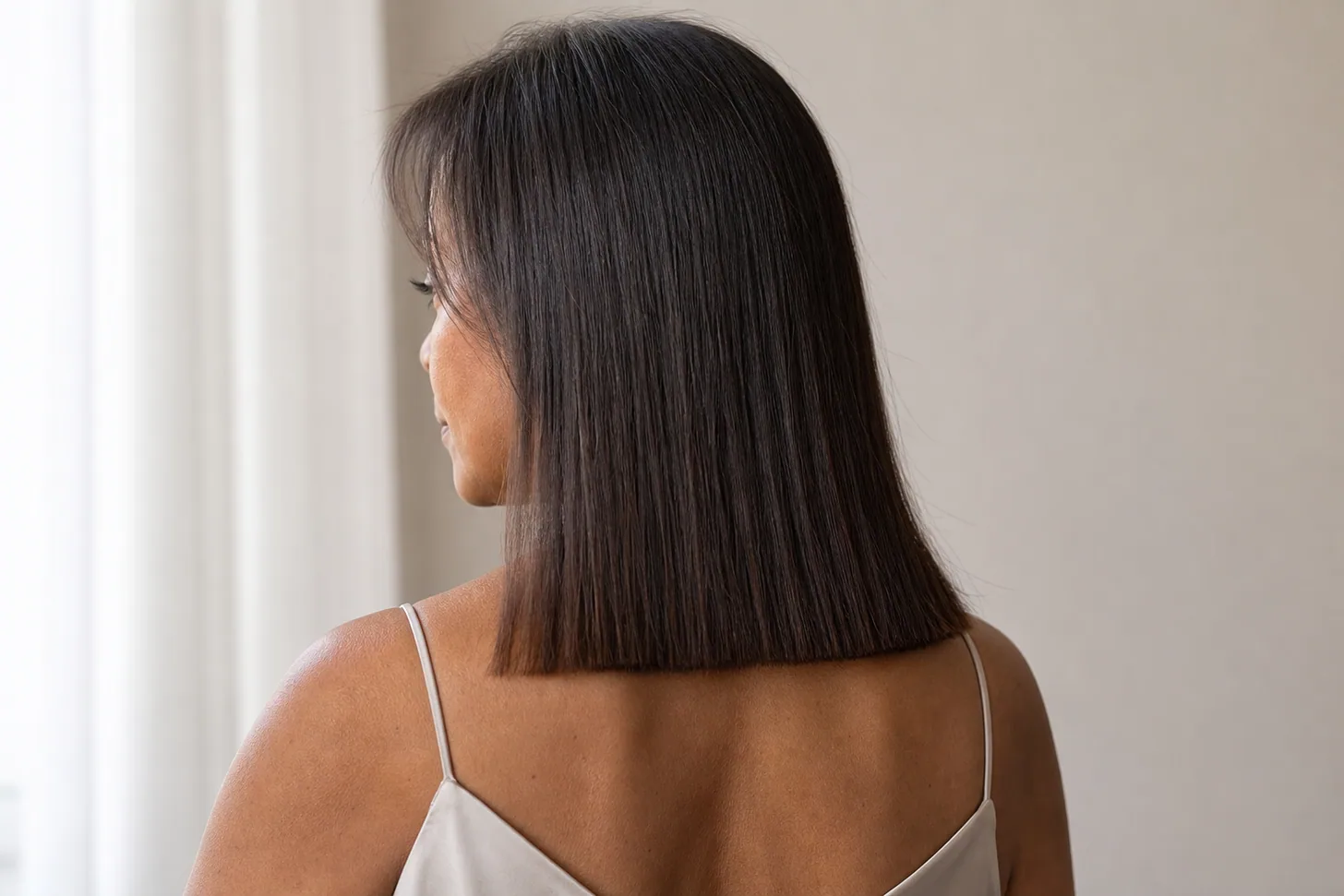
- 3. Cut it shorter, and keep the ends blunt. Length is weight and weight kills lift, so shorter hair holds volume that long hair cannot. Blunt ends stop the hair finishing in see-through wisps — blunt cuts for thin hair covers where that helps and where it stops helping.
- 4. Scalp concealer at the part, or building fibers through the hair around it. The fastest visual win you can buy. It darkens the skin between strands so the gap stops reading as a gap. Costs about twenty pounds and takes thirty seconds a day.
- 5. Soften the colour contrast. Dark hair against pale scalp is the harshest possible combination. A few lighter pieces through the top narrows that contrast and turns the spotlight down on the gap.
- 6. Put it up rather than down. Often overlooked, and it works because a gathered style has depth that a flat sheet of hair does not. Easy updos for fine and thin hair is sorted by what goes wrong rather than by occasion.
What is not on this list, deliberately: thickening shampoos, biotin, and brushing more. All three come up constantly and none of them changes what anyone sees today — the honest accounting is in what not to waste time on further down. If you still want the shampoo, best shampoo for thinning hair picks the six that at least do a real job.
Why the top thins first on fine hair
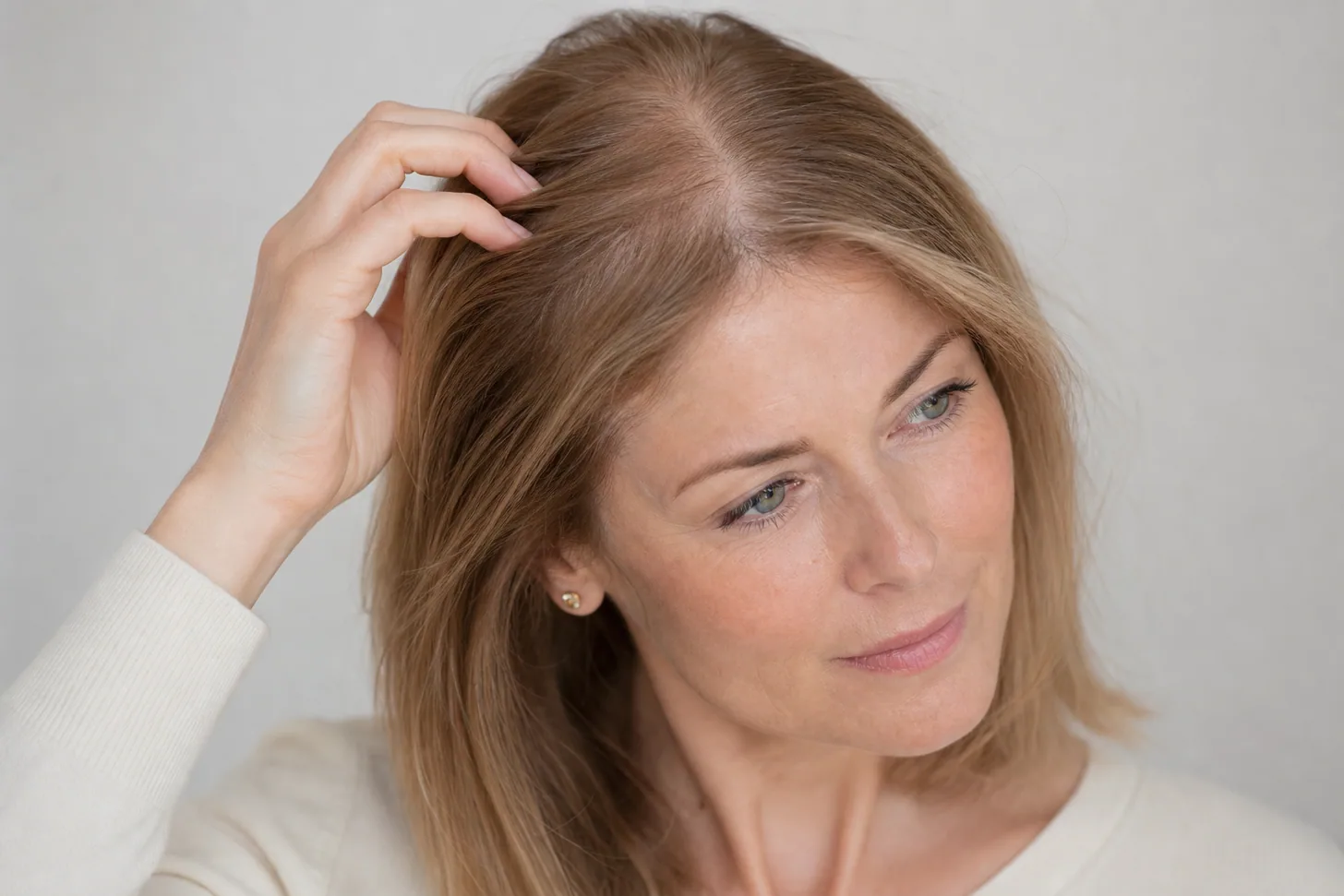
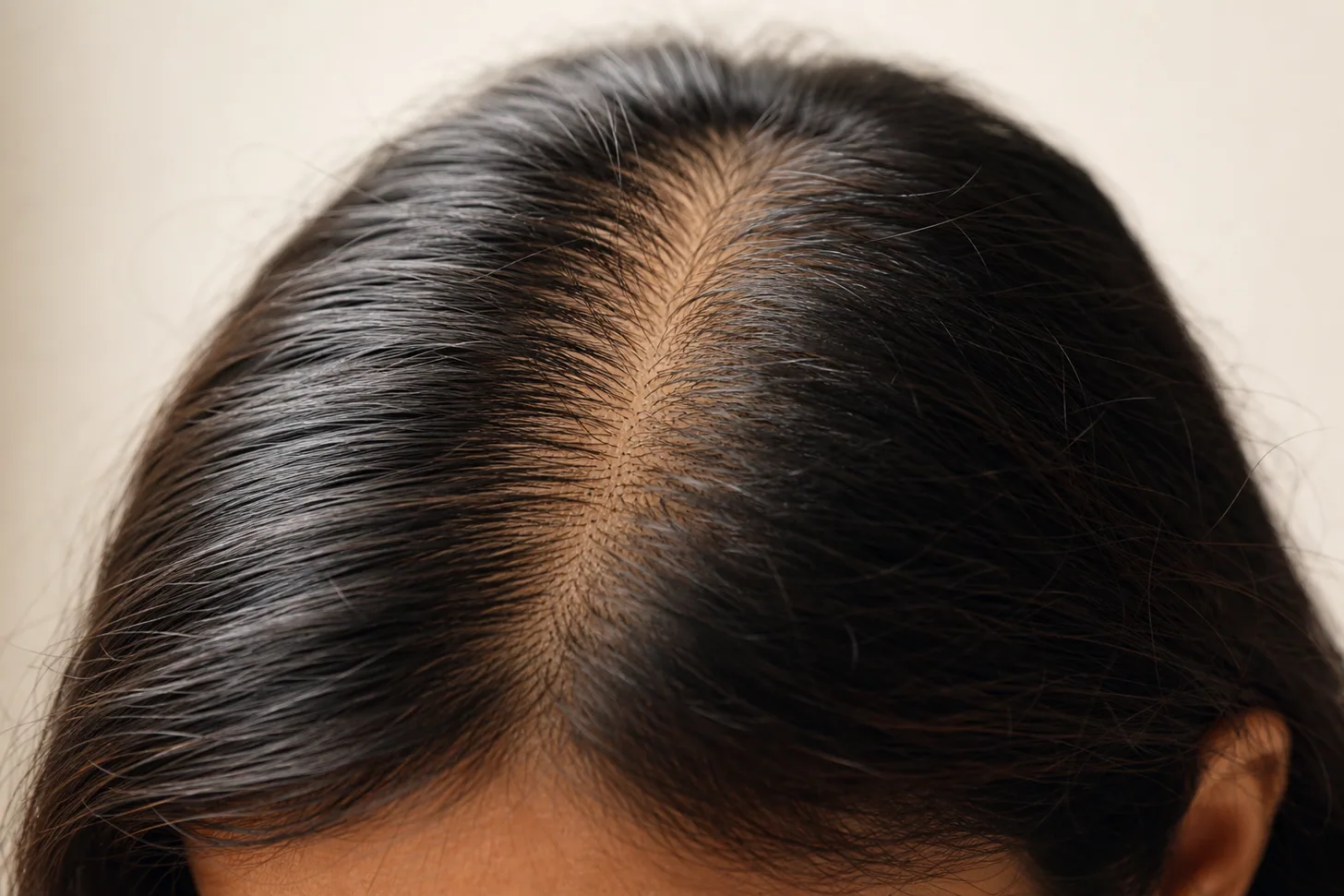
The crown and part are where the scalp is most exposed to begin with — hair has to lie down and split apart along the part line, so there's no overlap to hide behind. Add fine strands, which are narrow enough to let light through even at full density, and the top is simply the place where any drop in coverage shows up first.
That's also why fine hair can look like it's thinning when it isn't: less visual mass means the scalp peeks through sooner than it would under coarse hair. If you're not sure whether you're dealing with plain fineness or an actual loss of density, that distinction is worth settling first — we walk through it in how to tell fine hair from thinning hair, because the answer changes what you do next.
Two other things look exactly like a thinning crown and aren't: a crown whorl, which exposes scalp at its center on any head and has been doing so since childhood, and breakage, which leaves short stiff pieces standing up in one worked-hard patch.
The pattern matters too. Female-pattern thinning concentrates at the crown and along the part while usually sparing the front hairline — which is precisely why a widening part is the sign women notice before anything else.
Good news hides in that same fact: because the front is spared, you almost always have denser hair nearby to borrow from for coverage. It also cuts the other way — loss that is confined to the temples and front edge usually points somewhere else entirely, most often tension, which is covered in thinning at the hairline and temples.
Chair-side note
The number of women who come in convinced they need a dramatic fix, when what they need is to stop parting their hair on the exact line it's thinning along — I've lost count. Fine hair "trains" into a part over years, and that habitual part is often the sparsest strip on the whole head, because it's been exposed to the most light and friction.
The first thing I do is move the part half an inch toward the denser side and let the hair fall across the thin spot instead of splitting over it. Nine times out of ten, that alone is the biggest visible improvement of the appointment — before a single product.

MH
Make it look thicker today: the layered approach
Coverage works best built up in order, lightest touch first, adding the next step only if you still see scalp. Rushing to the heaviest option first is how fine hair ends up looking coated and flat — the opposite of what you want. Here's the sequence.
Move the part, then lift the roots
Start with placement, because it's free and it's the most powerful lever. Shift your part off the thinnest line — a deeper side part, or a zigzag part that scatters the exposure instead of drawing one clean sparse stripe. Then get height at the root, where fine hair falls flattest and where lift casts the most shadow over the scalp.
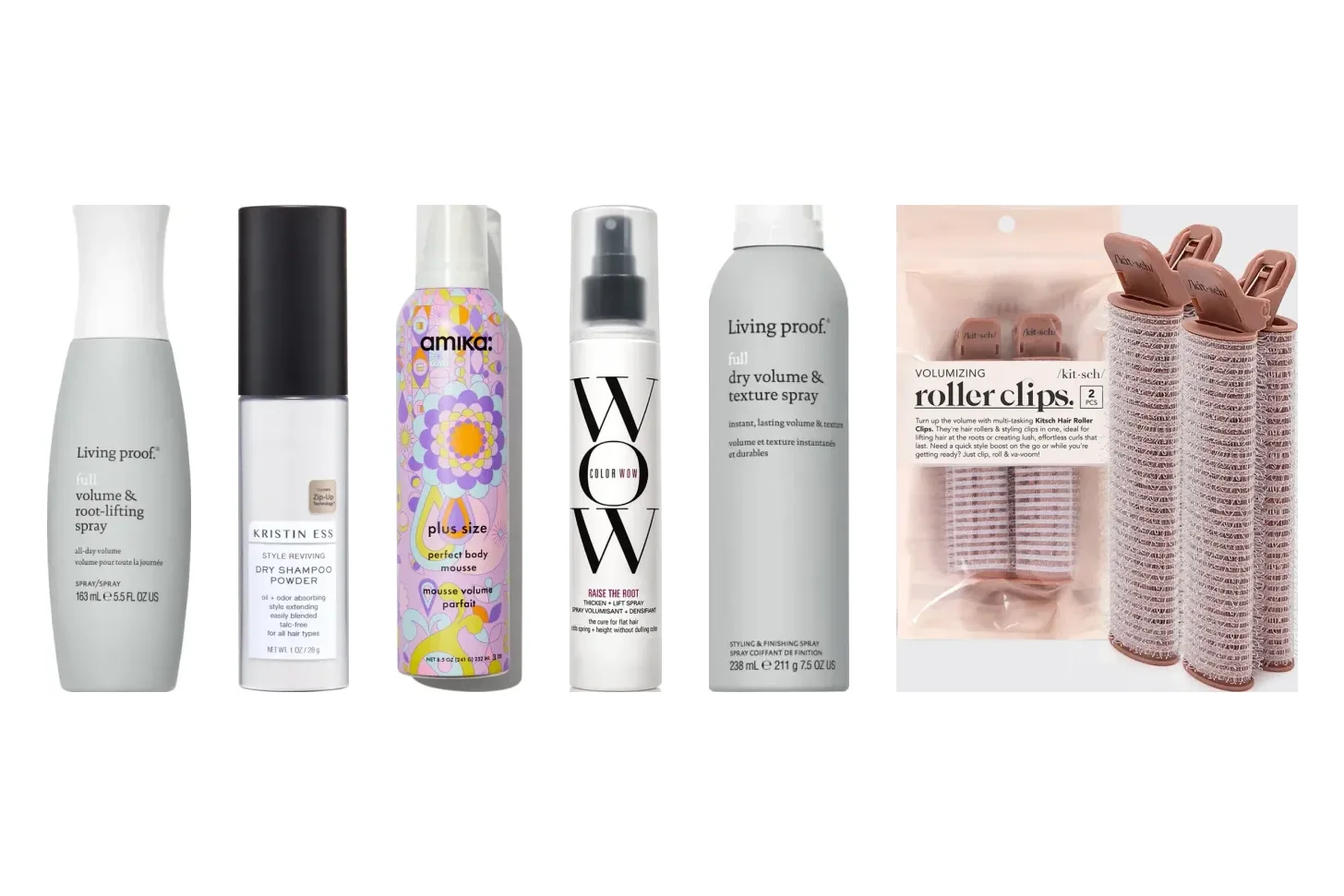
Rough-dry the roots at the crown with your head flipped, direct a round brush to lift the base, and finish with a shot of cool air to set it. A lightweight root-lifting spray or volumizing powder at the base holds that lift without weighing the ends; our full method for that is in how to add volume to thin hair. Skip heavy serums and oils near the top — on fine hair they collapse exactly the lift you're trying to build.
Scalp concealers and root touch-up powders
This is the makeup step, and it's the fastest visual win after the part. Scalp-concealing products come as pressed powders, loose powders, and sprays, all tinted to hair colors — you apply them to the scalp, not the hair, so the skin showing between strands reads dark and full instead of pale and bare.
Press a powder in with the sponge or a small brush, tap off excess, and build sparingly; a spray works over a wider crown but needs a careful, shielded aim so it lands on skin, not your forehead. The honest limit: these color the gap, they don't fill it. They cover beautifully in photos and daylight, they can transfer onto a pillow or a pale collar, and they rinse out at the next wash.
Match the shade slightly lighter rather than darker — too-dark powder reads as a shadow, which is the look you're trying to avoid. For the shopping half of this — six named picks by job, the press-don't-sweep technique, which formulas survive a workout, and the wash-out rule that matters when you're leaving powder on your scalp for days — see best scalp concealers and root powders for fine hair.
Keratin hair fibers
Hair fibers are tiny keratin strands that carry a static charge, so when you shake them over the thinning area they cling to the hairs you already have and fatten the whole region visually. On fine hair with real strands still present — even sparse ones — the effect can be genuinely convincing, because there's something for the fibers to grab. Their limit is the flip side of how they work: over a truly bare patch with nothing to hold onto, they have little to cling to.
Apply over dry, styled hair, tap the fibers in, then lock them with a light mist of hairspray so they survive wind and a light drizzle. Like the powders, they wash out, and — this is the part product marketing blurs — they are a covering, not a treatment. They make the top look fuller; they do nothing to the follicle underneath.
Tinted dry shampoo and a topper as an option
Two more tools worth knowing. A tinted dry shampoo does double duty on fine hair that goes flat and oily at the roots: it lifts the base for coverage and its color deposits a little scalp camouflage along the part in one step — handy for second-day hair.
And if the area you want to cover is larger than powders and fibers can convincingly handle, a hair topper — a small hairpiece that clips onto your own hair to add coverage right at the crown — is a legitimate option, and modern ones are light and undetectable when color-matched by a professional.
A topper is a bigger commitment than a powder, but for a wider thinning crown it can be the difference between fussing every morning and simply clipping in coverage that lasts the day. It's also the one option here with a real downside to understand first — it hangs from clips gripping your own hair — so read the honest guide to hair toppers for fine hair before buying one. None of these change what's happening at the root; they change what other people see.
Cuts and color that make thin hair look thicker
The short version is below; for the full gallery of shapes built around this problem, see haircuts for a thinning crown and a widening part.
Your cut can work for you or against you here. The enemy is one long, heavy, uniform sheet of hair: on a thinning top it lies flat, goes translucent, and pulls whatever root lift you build straight back down. What helps is layering and, usually, less length.
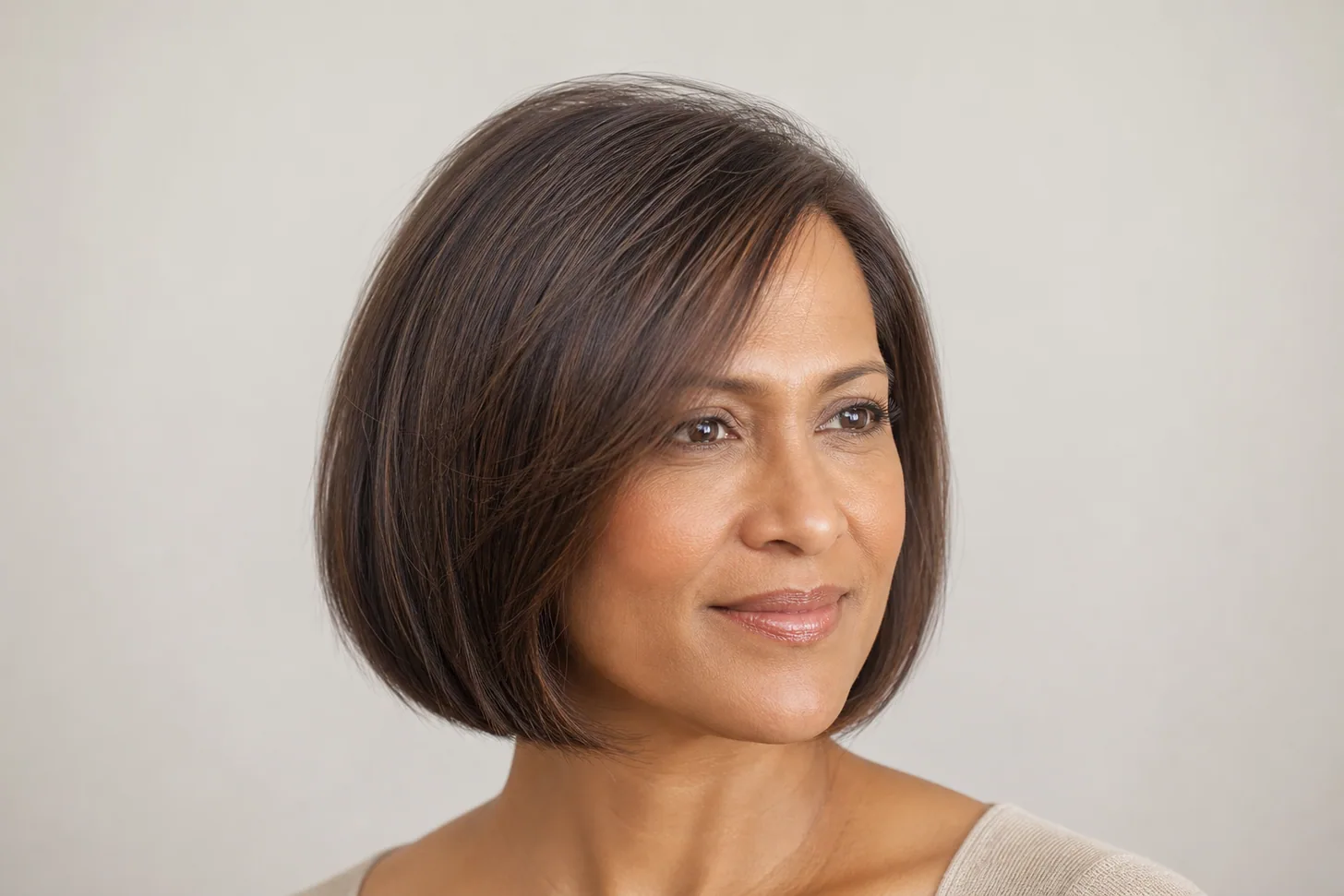
Soft layers through the top and crown overlap each other and cast shadow across the scalp instead of letting it show through; a shorter overall length lets fine hair hold root lift far better, because it isn't fighting its own weight all day. Ask your stylist to point-cut the internal layers rather than razor them — razored ends on fine hair go transparent and thin out the very coverage you're after.
A soft fringe or face-framing pieces also help by pulling the eye forward, toward your face and away from the crown. If a lower-effort routine is the goal, the cuts in low-maintenance haircuts for fine and thin hair and the length options in short hairstyles for fine and thin hair are built around exactly this kind of easy, coverage-friendly shape.
Color is a quieter helper. Flat, single-block dark color makes any scalp-show more obvious, because the contrast between dark hair and pale skin is stark. Soft dimension — a few lighter pieces worked through the top, or lightening the base a touch closer to your skin tone — narrows that contrast so the scalp underneath reads less sharply. It's not a cover-up so much as turning down the spotlight on the gap.
Keep it gentle; fine hair doesn't need heavy highlighting, just enough break-up to soften the line. The shade side of that decision — how close your color should sit to your scalp tone — is worked through in hair color ideas for fine and thin hair, and the placement side in highlights for fine hair.
Chair-side note
One thing I gently push back on: the instinct to grow it long to "have more hair to cover with." On a thinning top it usually backfires. Length adds weight, weight kills the root lift, and a long, flat, translucent top shows more scalp than a shorter shape with built-in layers ever would.
When a client is anxious about coverage, we often go shorter, not longer — and she's surprised every time by how much fuller the top reads. More hair on the floor, more fullness in the mirror. If the thinning sits at your hairline and temples rather than on top, see cuts for a receding hairline and thinning temples.
MH
Hairstyles for thinning hair on top, by the length you already have
The cuts are covered above. This is the styling question underneath them, and it has one governing rule that holds at every length: coverage on top comes from lift and direction, not from length lying over the gap. Hair combed across a sparse crown is thinner than the hair beside it and lets more scalp through, not less. Hair lifted off the crown casts a shadow and reads as density. Everything below is a version of that.
| What you have | The style that covers | The one to avoid |
|---|
| Short — pixie to ear length | Crown pieces dried upward and forward, finished with a matte paste on the fingertips only | Anything flattened back off the face; it opens the exact area you are covering |
| Bob to lob | A deep side part with the bulk swept over, plus a bend at the root on the heavier side | A dead-centre part, which puts the widest view of the scalp in the middle of your head |
| Medium and longer | A half-up with the crown pinned loosely enough to keep height, or a low bun with the top section teased first | A tight high ponytail — it drags every crown hair backwards and exposes the parting line |
Short Hairstyles for Thinning Hair on Top Work Because Short Hair Stands Up
This is the honest reason short cuts dominate every gallery in this category, and it is mechanical rather than fashionable: a two-inch piece of fine hair supports its own weight and stays where the dryer put it, while a ten-inch piece does not.
If you are willing to go shorter, you get coverage for free that longer hair has to buy with product every morning. The shapes themselves are in haircuts for a thinning crown, and very short cuts for fine hair covers the shortest tier.
After 60, the Constraint Is Usually Arm Time Rather Than the Style
The styles above are the same at any age; what changes is how long you can comfortably hold a dryer and a brush overhead.
If that is the limiting factor, choose a cut that holds its lift from the shape rather than from daily work — the effort tiers are sorted out in short hairstyles for thin hair over 60 and cuts for mature fine hair. A heat-free option that costs no arm time at all is root clips, put in damp and left while you do something else.
For the full gallery of shapes rather than the styling of them, haircuts for thin hair that look thicker is the companion page.
The medical side: is this hair loss?
If you're of reproductive age and the thinning arrived alongside irregular periods, adult acne or new coarse hair on the chin and jaw, PCOS and hair loss on fine hair sets out what each of those signs is — and isn't — evidence of.
Whether the loss is spread evenly across your whole scalp or concentrated on top is the next question after this one, and it changes the answer — diffuse thinning and how to tell which pattern you have covers the front-versus-back check. Here's where I hand over to medicine, because covering the top and understanding the top are two different jobs — and the second one matters more for your long game.
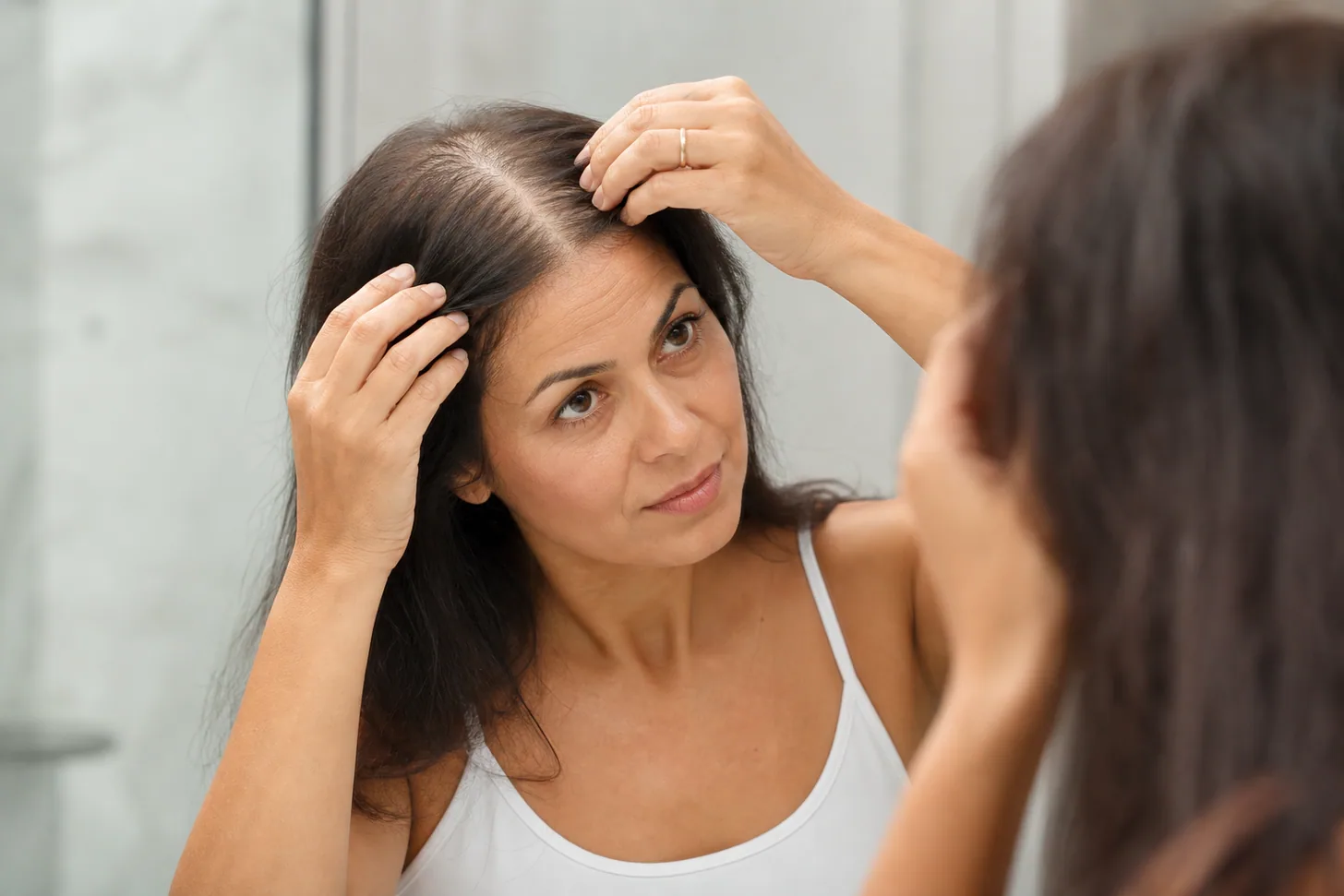
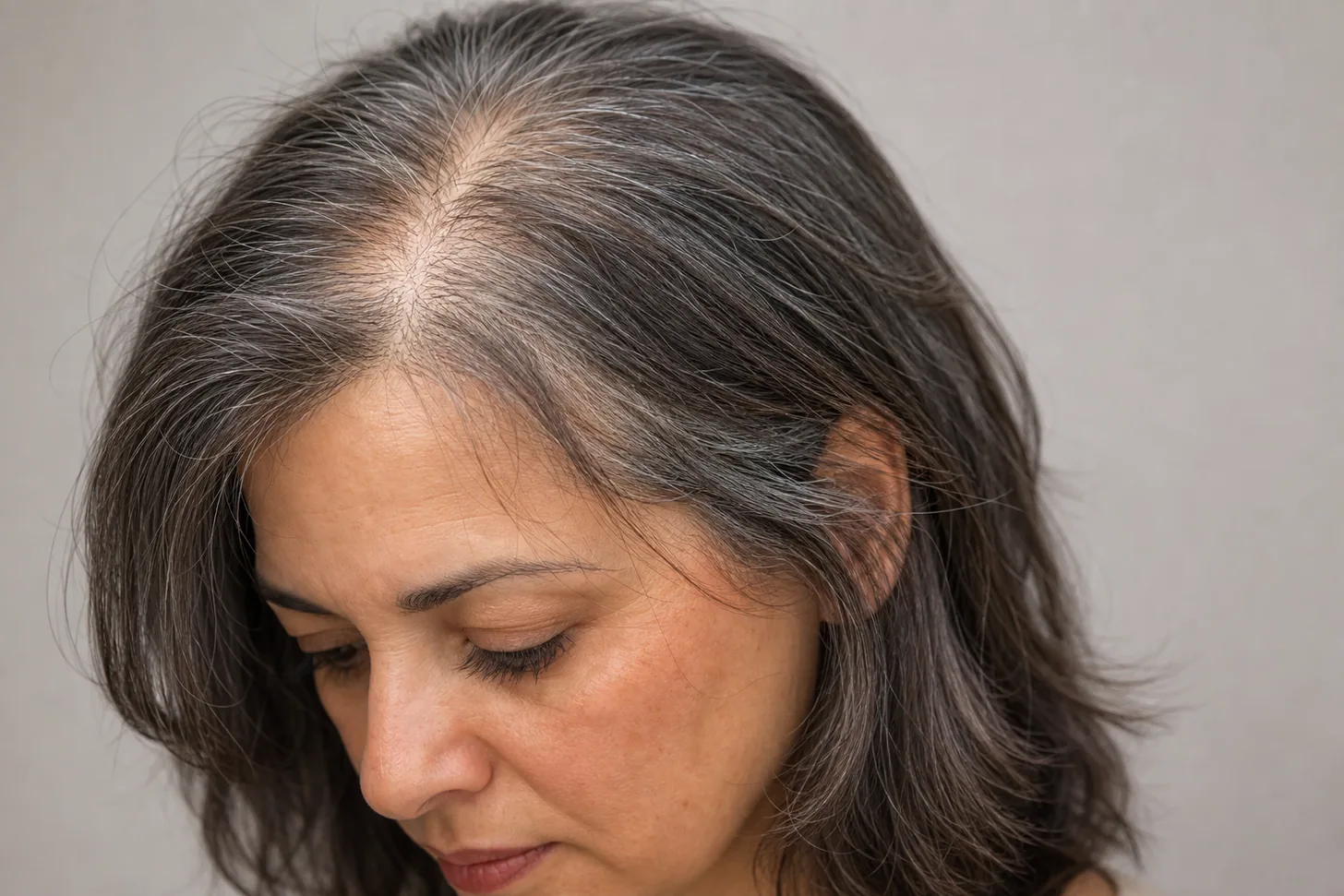
If your scalp is newly visible, your part has genuinely widened over months, or the crown looks sparser than it does in photos from a couple of years ago, that points to a real drop in density, not just fineness. In women, the most common cause is female-pattern hair loss (androgenetic alopecia).
The American Academy of Dermatology describes it as the most common cause of hair loss in women — treatable, and best treated at the first sign, when intervention can slow the loss and help regrow hair. That last part is the whole reason not to wait.
The other common cause is telogen effluvium: a wave of shedding that shows up two to three months after a body-level stressor — childbirth, illness, surgery, crash dieting, a thyroid or iron issue, some medications. It's usually temporary and tends to recover once the trigger passes, but it can look alarming while it lasts, and it can overlap with pattern thinning.
A dermatologist can tell them apart; the internet cannot. Rapid weight loss belongs on that list of triggers too, and it now has its own page — shedding after weight loss and GLP-1 medications — as does the prescription side of it: medications that cause hair shedding.
When to book the appointment: see a board-certified dermatologist — ideally one who treats hair loss — if your part or crown is measurably thinning over months, you're shedding well above your own normal for more than a few weeks, you notice patches or a receding hairline, or thinning comes with any scalp symptom. Bring evidence: photos of your part over time, roughly when it started, and any life events in the two to three months before.
That timeline is genuinely useful to a physician. And critically — don't spend a year self-treating first. The most treatable moment is early, and a year of guessing is mostly a year of the treatable window closing. Cover it cosmetically for confidence in the meantime; that's what the first half of this guide is for.
If you want to think through the fine-versus-thinning question before you go, fine hair or thinning — how to tell the difference lays out the at-home checks a dermatologist will ask about anyway, and PRP, microneedling and laser caps sets out what that appointment can actually offer — and in what order, since cost and evidence run in opposite directions in this field.
What not to waste time on
- A year of "thickening" supplements and viral scalp serums before you've been diagnosed. If there's a treatable cause, the time spent cycling through them is the time that mattered most. Get the diagnosis first; treat the actual cause.
- Expecting concealers, fibers, or toppers to regrow hair. They cover — that's their job, and they're good at it — but none of them touch the follicle. Believing otherwise just delays real treatment.
- Heavy oils, rich creams, and thick "volumizing" masks on the top. On fine hair they coat and flatten, making the scalp show more. The routine that keeps fine hair light and lifted is in the honest fine-hair care routine.
- Brushing hard or teasing aggressively at the crown to "build" coverage. Friction on already-stressed hair at the part is counterproductive; gentle lift and product do the job without the breakage.