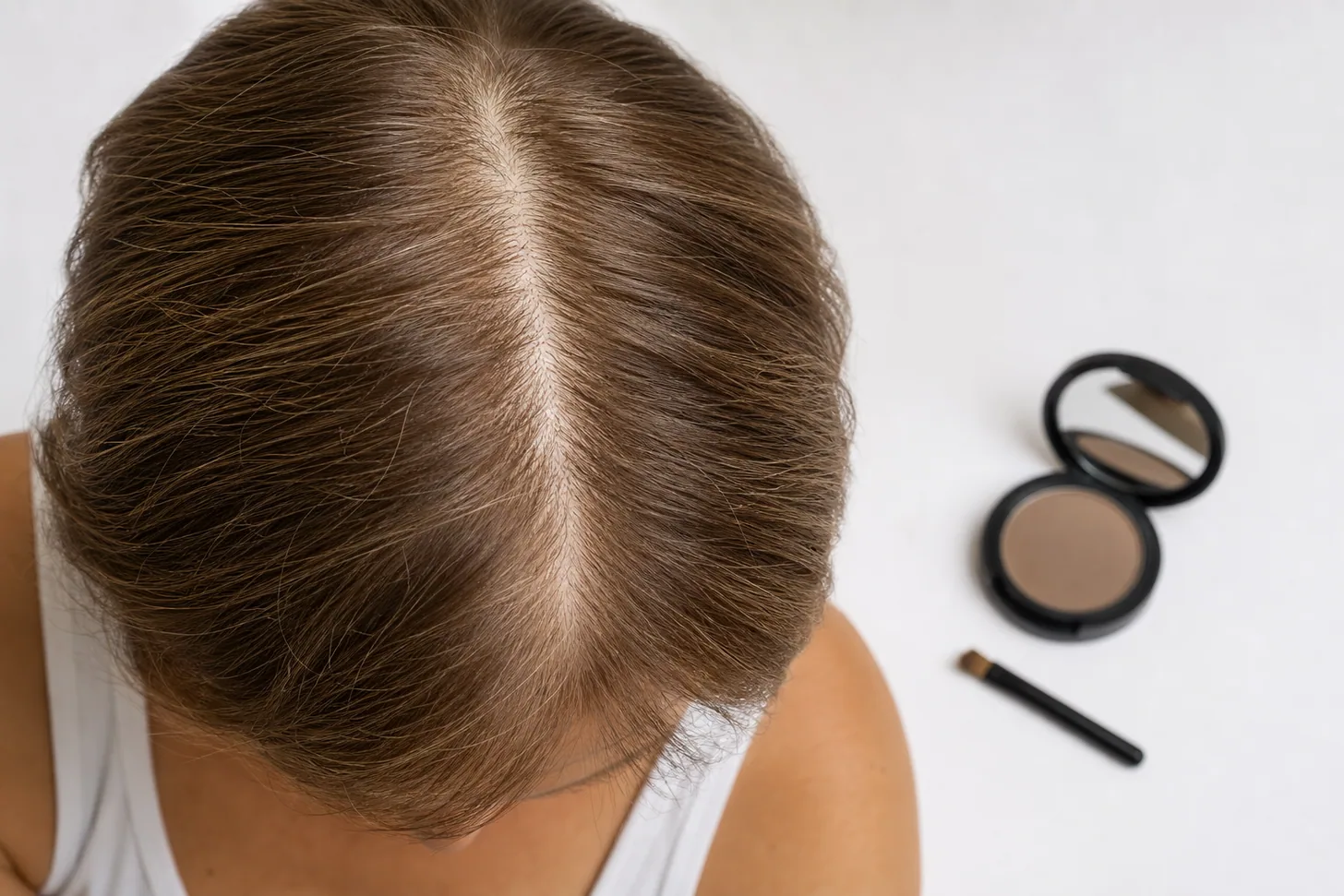
This aisle contains two completely different products wearing similar packaging, and buying the wrong one is why so many people conclude that none of it works. A scalp concealer darkens the skin so the gap between hairs stops announcing itself. Hair fibers do the opposite — they cling to the hairs you already have and bulk them.
Which matters enormously, because their effectiveness runs in opposite directions: Toppik's own description of its fibers is that they "cling to hairs, not to the scalp", so the emptier the area, the less there is for them to hold onto — while a shadow works on bare skin and works better the barer it is.
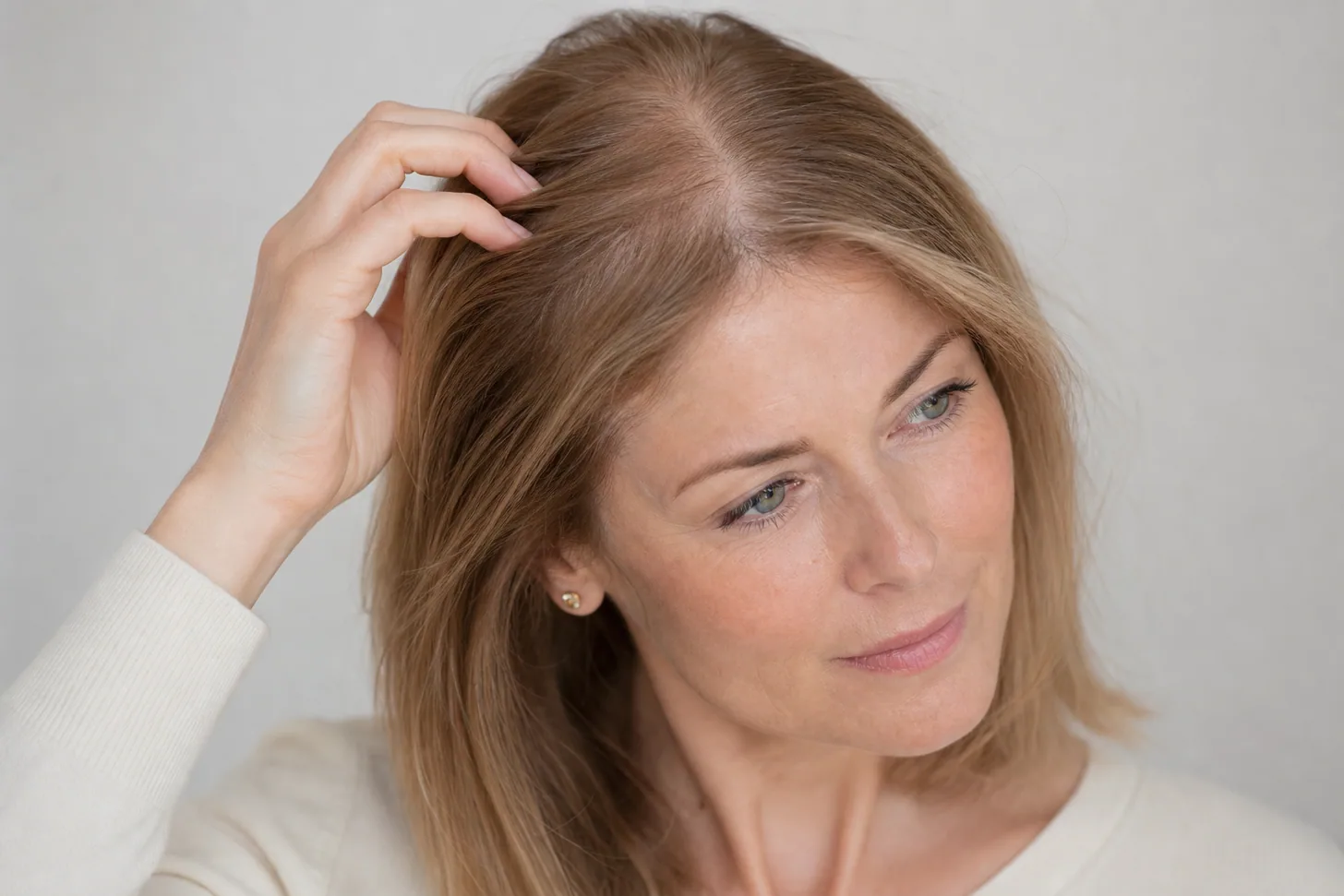
On fine, low-density hair, that usually settles it in favour of shadow. And there's a second reason: what you're seeing when your part looks wide isn't an absence of hair so much as contrast — pale scalp behind darker strands — and lowering the contrast makes an area read fuller without adding a single hair. Below: the six products worth owning, by job, the four application habits that separate convincing from obvious, and an honest section on what these do and don't survive.
Every product here is chosen independently, on the merits — what genuinely suits fine, thin hair. Links go to each brand's official page, and we don't take payment for placement. Price tiers are rough guides because prices change.
This is the what to buy page. If you're still working out whether coverage is what you need and where it sits in the order of operations, start with "I can see my scalp" — coverage for thinning-on-top fine hair, which puts concealer third behind moving your part and lifting your roots.
The job is lowering contrast at the part, not painting hair on.
Two products, two jobs — work out which one you need first
Everything in this category does one of two things, and the labels rarely say which.
Shadow products put pigment on the scalp. Pressed mineral powders, tinted powders, root sprays. They don't touch the hair's appearance at all — they change the background it's seen against.
Bulking products put material on the hair. Keratin fibers, thickening sprays. They make each existing strand read wider so the area looks denser.
Here's the table that saves you a wasted purchase, and it includes the two categories that aren't concealers at all but get bought instead of one.
Product
What it does
Best when…
Where it fails
Pressed root powder
Shadows the scalp; water-resistant; lasts to the next wash
A widened part, a sparse hairline, everyday use
Swept on rather than pressed — then it coats the hair
Tinted dry shampoo powder
Shadows and absorbs oil and adds grip at the root
Fine hair that's flat and oily at the roots as well as sparse
Coverage is lighter; it's a hybrid, not a specialist
Root spray
Shadows a wide area in seconds with fine powder pigment
A whole parting or a large zone, in a hurry
Overspray on skin and clothes; less precise at a hairline
Keratin fibers
Bulk the strands you still have
Diffuse thinning where there's still decent hair to grip
Cost, commitment, and tension on existing hair. See toppers
Why the shadow route usually wins on fine hair
Three reasons, and the third is the one nobody mentions on a product page.
One: contrast is what you're actually seeing. A part looks wide because pale skin is visible behind darker hair, and the eye reads that difference as absence. Lower the contrast and the same amount of hair reads as more. This is the same principle behind the placement advice in our highlights and hair color guides — contrast between hair and scalp is the variable that flatters or betrays fine hair, and it can be adjusted from either side.
Two: fibers get worse exactly where you need them most. They work by attaching to existing hairs — Toppik says so itself. So in the crown or the part panel, where density is lowest, there's least for them to hold. Fibers are genuinely good over diffuse thinning that still has hair in it; they're the wrong tool for a bare strip.
Three: fine hair has no weight budget. Anything that adds mass to a strand with no stiffness has a visible cost. Fibers on fine hair can clump, and at close range on light hair they can read as grit rather than hair. A shadow adds no weight at all, which is why it's the option that survives contact with a fine-hair reality check.
The honest exception: if your thinning is diffuse across the whole top rather than concentrated at the part, and you still have a reasonable amount of hair there, fibers can do something a shadow can't — they change the apparent volume, not just the background. That's why one is on this list.
The best scalp concealers for fine hair, by job
One honest pick per job. Four shadows, one fiber, and one that's really its own category.
1
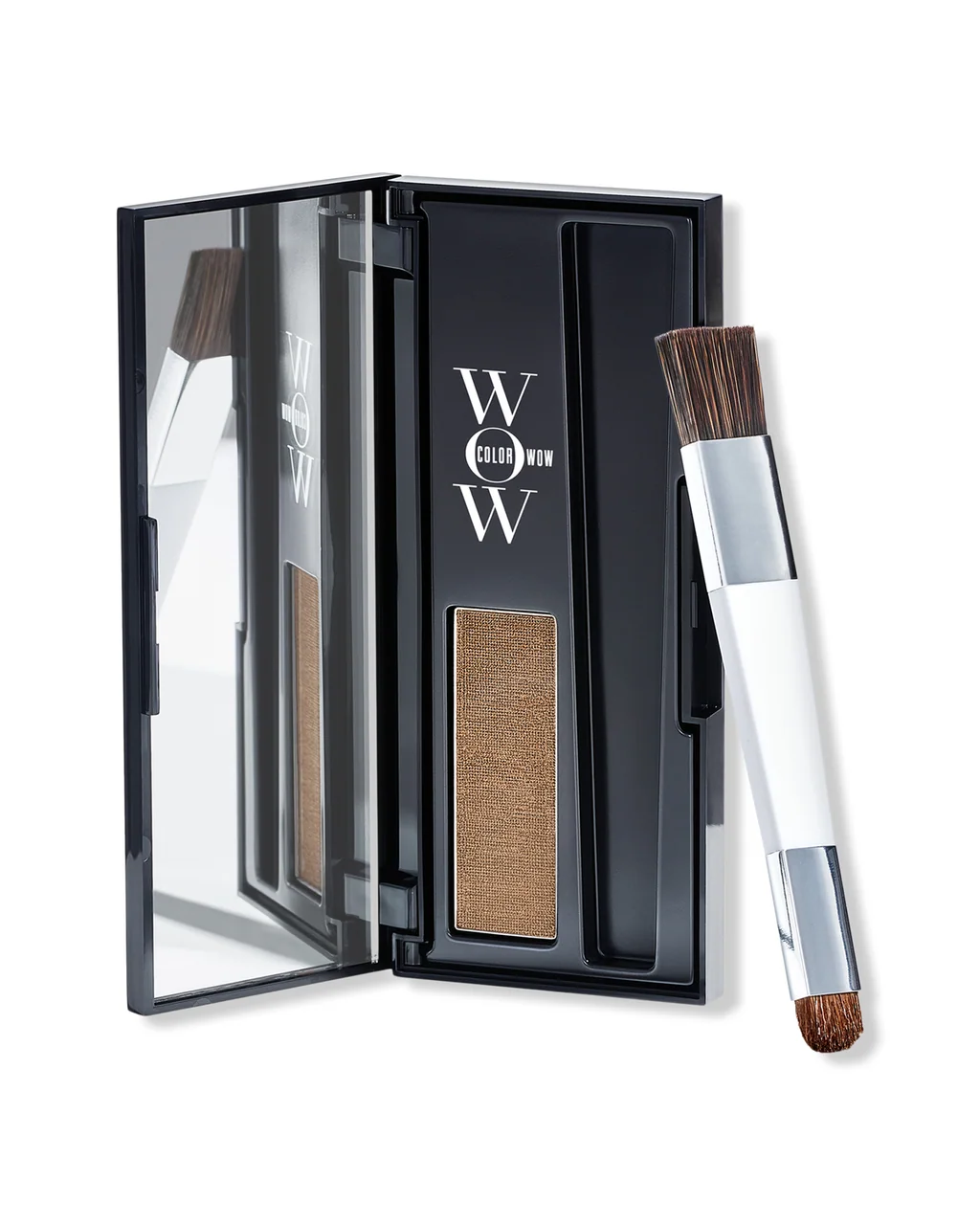
Best overall: Color Wow Root Cover Up
The one I'd buy first, and the one that behaves most like a professional product. It's a pressed mineral powder rather than a spray, applied by pressing a dual-ended brush into the roots — the brand is specific that you press firmly in a stippling motion rather than sweeping, which is exactly the technique difference that decides whether this looks like hair or like dirt. It's water-resistant in a way most of the category isn't, described as staying put when you sleep, sweat or swim and lasting from shampoo to shampoo, and it's formulated without dyes, waxes or PPDs — the absence of wax is what keeps it off the fine hair around the area. Reflective particles stop it going flat and matte in daylight. Best for: a widened part, everyday use, and anyone whose main requirement is that it not move. Honest limitation: shade choice is unforgiving because there's no blending forgiveness in a pressed powder — go one shade lighter than you think, and it is genuinely hard to remove between washes if you overdo it.
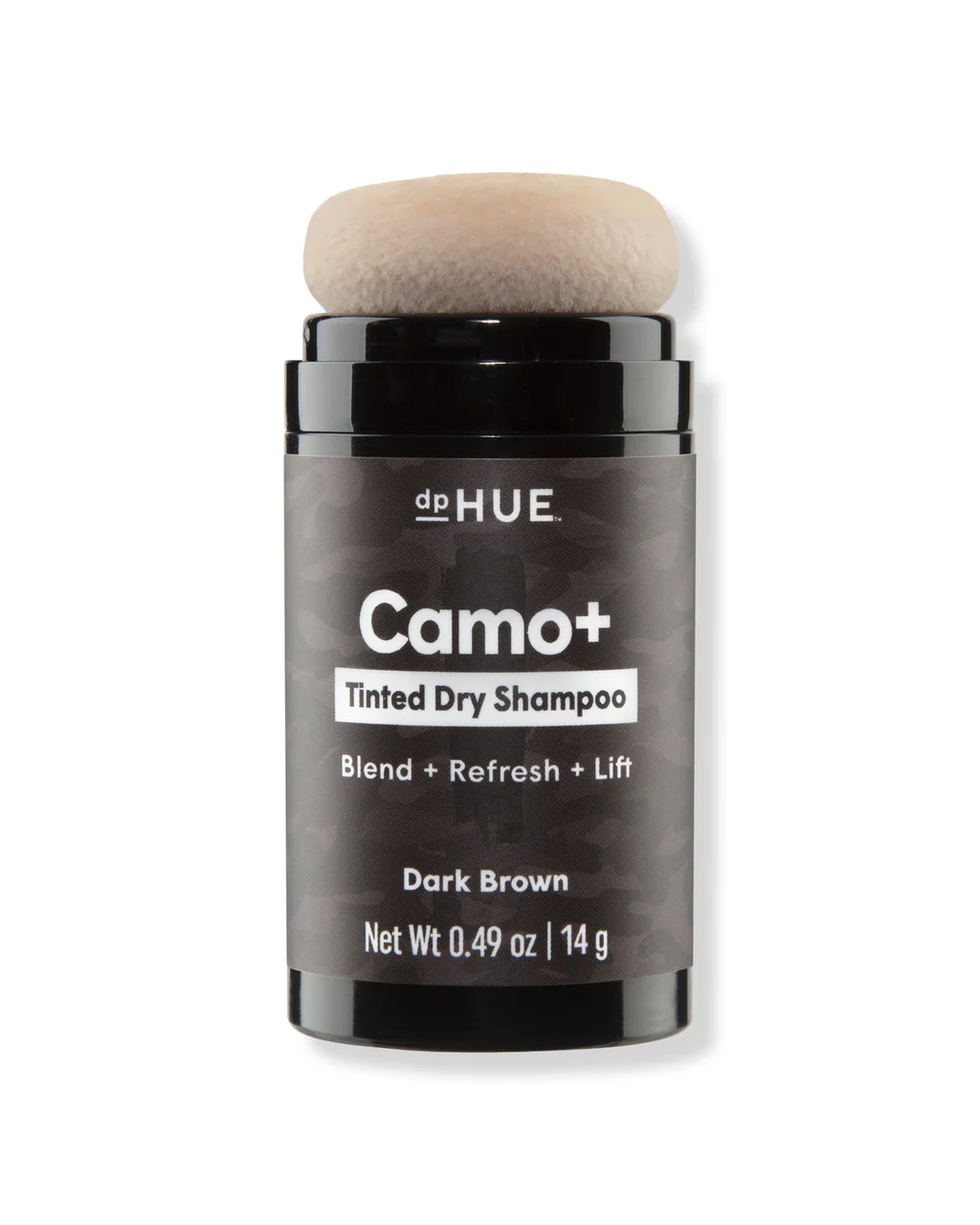
Best for fine hair that's flat as well as sparse: dpHUE Camo+ Tinted Dry Shampoo Powder
This is the pick I'd hand to most readers of this site, because it does three fine-hair jobs at once instead of one. It's a non-aerosol tinted powder that dpHUE describes as covering roots, absorbing oil and adding volume — which maps precisely onto the three things happening at a fine root: it's showing scalp, it's greasy by the afternoon, and it's flat. You're already putting dry shampoo there; this version does the shadow work in the same pass. Non-aerosol also means you can aim it, which matters at a part line. Best for: fine hair where visible scalp and flat, oily roots are the same problem. Honest limitation: coverage is lighter than a dedicated pressed powder and it's designed to wash out in one shampoo, so it's a daily-refresh product rather than a set-and-forget one. If pure coverage is what you want, buy the Color Wow.
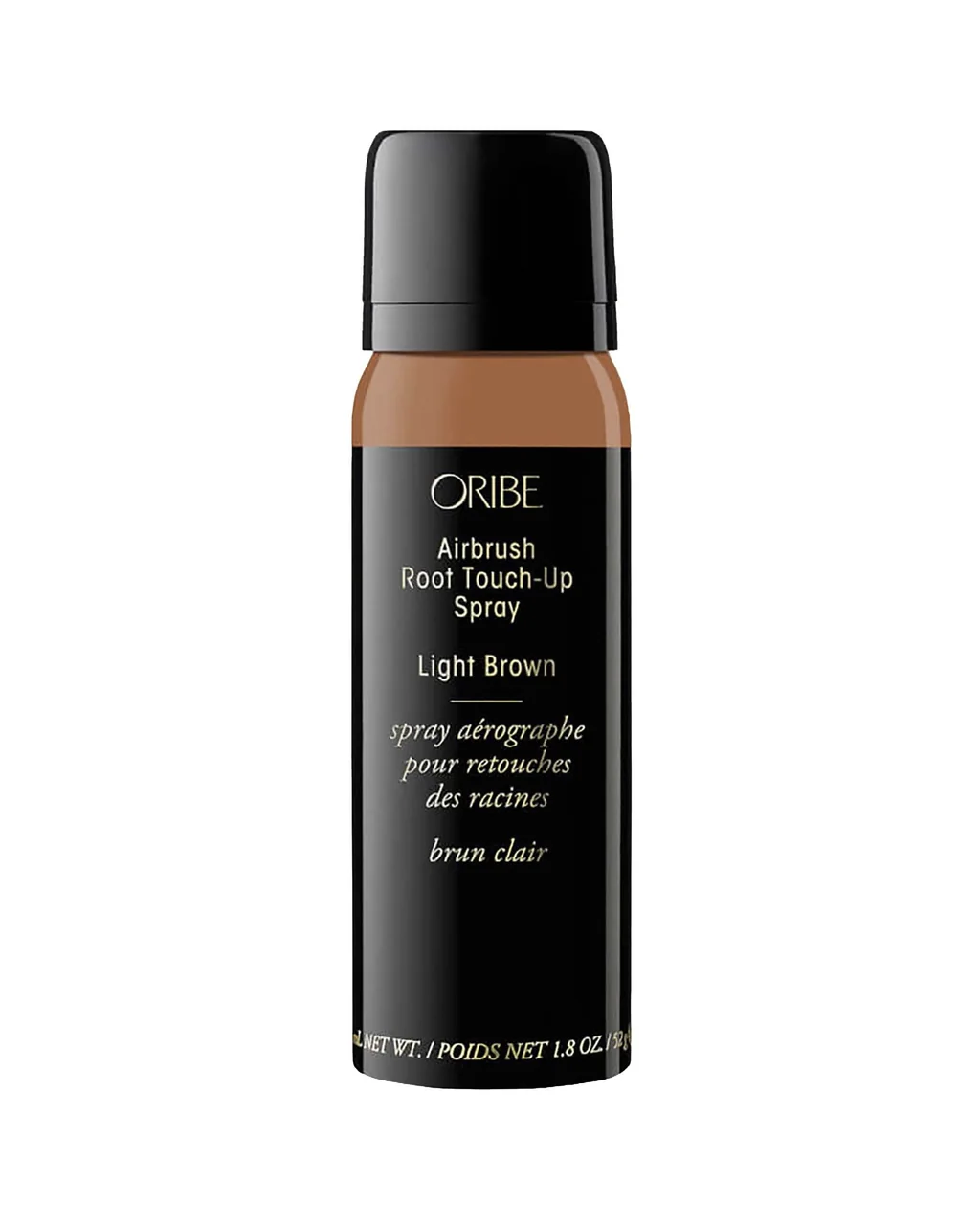
Best spray for covering a large area fast: Oribe Airbrush Root Touch-Up Spray
When the area you need to cover is a whole parting rather than a patch, a spray does in fifteen seconds what a powder does in three minutes. Oribe's uses microfine powder pigments and dries quickly, and the formula absorbs oil as it goes, so like the dpHUE it refreshes the root as well as shading it. The finish is the reason it's here rather than a cheaper spray: fine pigment sits without the chalky cast that makes budget sprays obvious in daylight. Best for: a full parting, an even coverage need, or five minutes before you leave. Honest limitation: it's a premium price for a temporary product, and sprays are intrinsically less precise than powders — mask your forehead and hairline with a tissue, and don't attempt fine work at the temples with it.
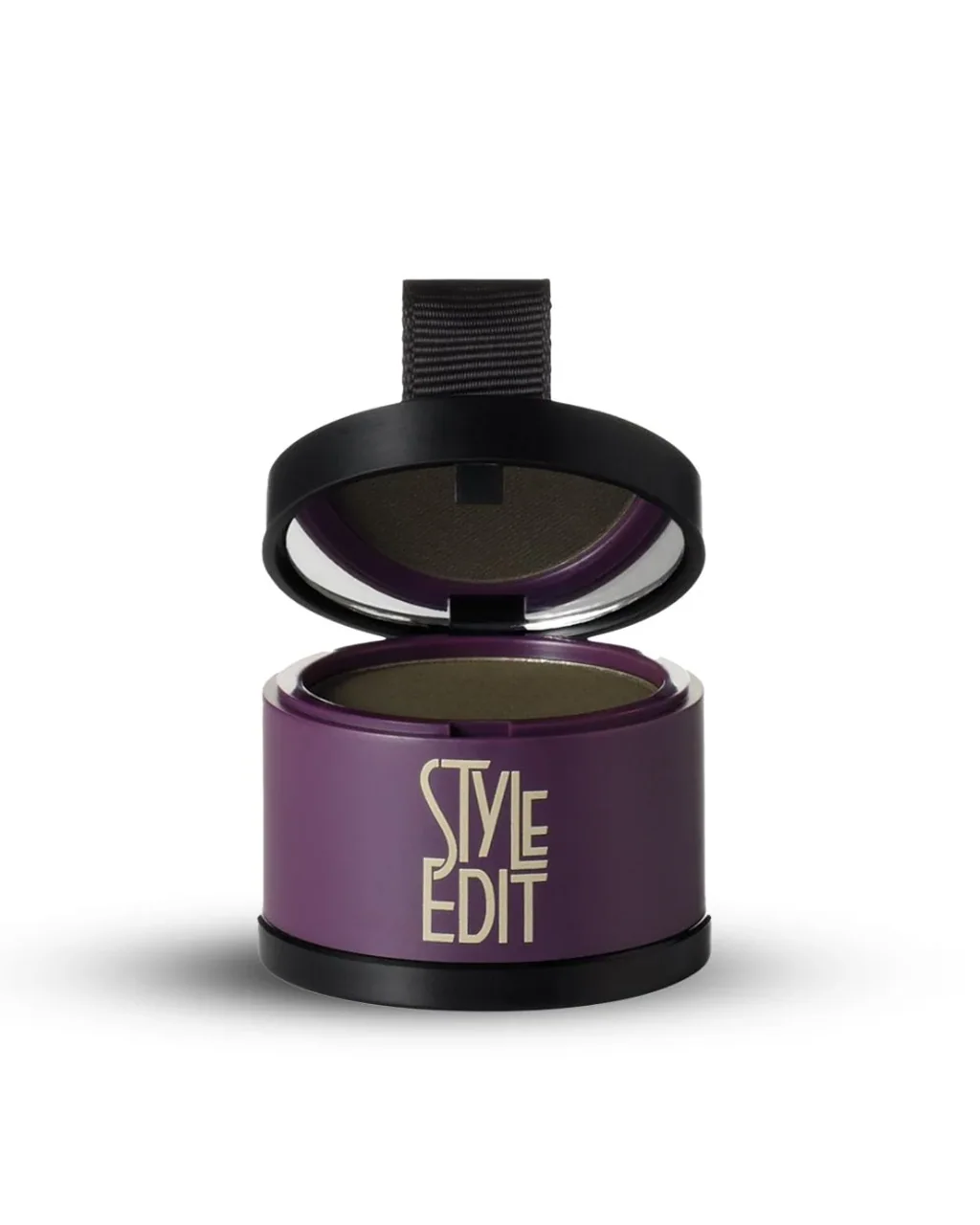
Best for sweat and rain: Style Edit Root Touch-Up Powder
A salon-counter staple, and the one to reach for if the failure mode you care about is weather. Style Edit builds its claim around being rain and sweat resistant, and describes the powder as giving weightless volume that blends naturally — which on fine hair is the right pair of promises, because a powder that grips the root does add a little lift while it shades. It's also a good first purchase if you're nervous, since a powder applied with a brush is the most controllable format in this list. Best for: gym days, humid climates, and anyone who has had a concealer run on them once and never trusted one since. Honest limitation: the range is built primarily around covering grays rather than covering scalp, so choose the shade against your roots in daylight, and be aware it's a coverage product first and a volume product a distant second.
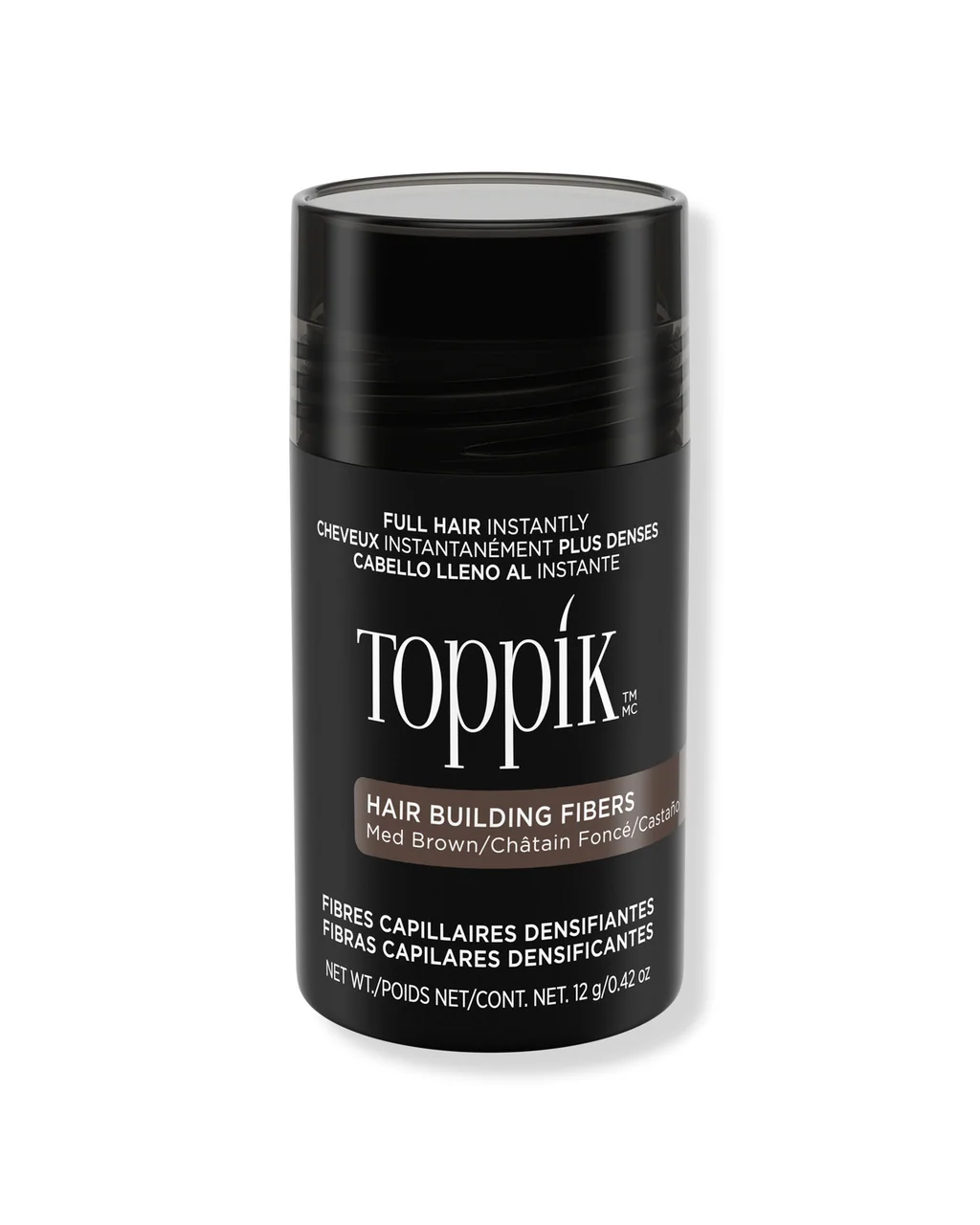
Best fiber option — with a caveat: Toppik Hair Building Fibers
The category's reference product, and worth owning if your thinning is diffuse rather than concentrated. The fibers are colored keratin — the same protein as hair — shaken into the area and patted to disperse, and they hold up well outdoors, with the brand claiming resistance to wind, rain and perspiration. Where they genuinely beat a shadow is apparent volume: they change how much hair appears to be there, not just what's behind it. Best for: diffuse thinning across the top where there's still a reasonable amount of hair, and for photographs, where they read better than pigment. Honest limitation: the brand's own mechanism is the limitation — they "cling to hairs, not to the scalp", so over a genuinely bare strip there's nothing to grip and they'll sit on skin looking like what they are. On very fine hair, use half what feels right; too much clumps, and on pale hair the individual fibers can be visible up close.
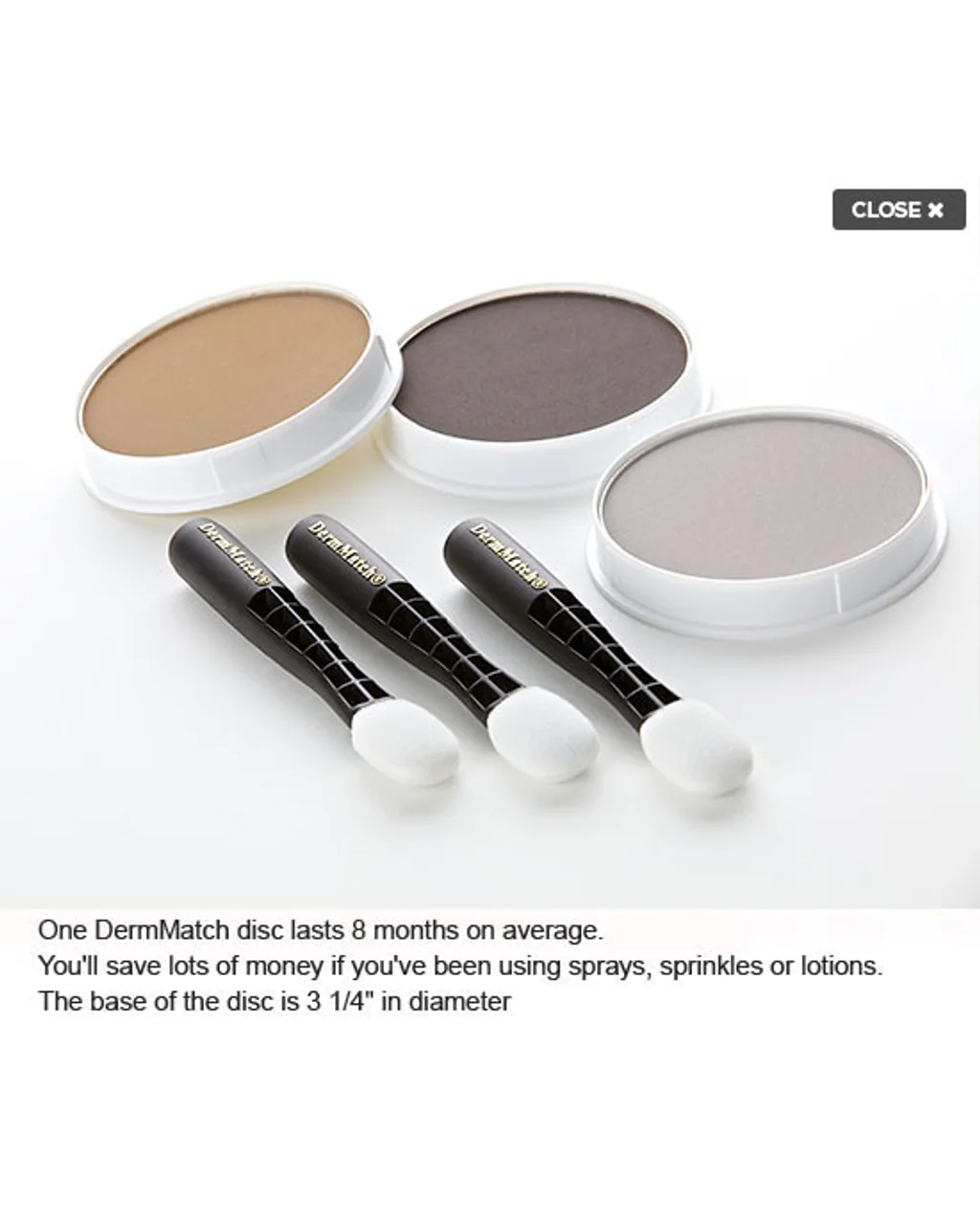
The outlier, and the one to know about if everything else has washed off you at the wrong moment. It's a solid disc rather than a loose powder, worked with an applicator, and it goes further than the rest of this list on durability — the brand's claim is that you can swim with it, walk in the rain, sweat at the gym or brush your hair with it. It also coats the hair shaft as well as shading the skin, so it sits between the two mechanisms rather than choosing one. Best for: a wide part or a genuinely bare area, holidays and swimming, and anyone who wants coverage that stays put for the day without thought. Honest limitation: it's the heaviest-handed product here and the least forgiving of a rushed application — build it up gradually or it will look like makeup. It's also the most work to remove, which is the flip side of waterproof, and that makes the wash-out note below more important rather than less.
The thing that gives these products away is almost never the shade. It's the edge. Someone applies concealer into the part itself, so there's a crisp dark line exactly where a parting should be a soft gradient of scalp — and a crisp line is the one thing that never occurs naturally on a head.
What I do instead is work either side of the part, pressing pigment onto the strip of scalp about a centimetre out from the line on each side, and leave the parting itself alone. The eye stops finding the gap because there's no pale band left to find, and there's nothing sharp anywhere.
The other tell is quantity, and there's a simple discipline for it: do one pass, then go and do something else for two minutes before you look again. Pigment settles and reads darker after a minute, and almost everyone who applies twice in a row has applied twice as much as they needed.
MH
— Megan Holloway, Editor-in-Chief
How to apply it so it reads as hair
Four habits. Get these right and a $20 powder outperforms a $40 one applied badly.
Press, don't sweep. The single biggest one. Color Wow's own instruction is to press the brush down firmly into the roots in a stippling motion — sweeping drags pigment along the hair, where it looks like grease or dust rather than scalp.
Aim beside the part, not into it. Shade the strip of scalp on either side and leave the parting line itself alone. You're removing a pale band, not drawing a dark one.
Two thin passes, with a pause. Apply less than looks right, wait a minute, look again. Pigment darkens as it settles, and over-application is the failure people can't undo without washing.
Check it from the angle other people see. That's above and slightly behind you, not straight-on in a bathroom mirror. Hold your phone over your head and take a photo. It's the only honest view.
Two extras worth knowing. On dry hair, always — these are finishing products and they go on after styling, not before. And match to your roots, not your ends, which on fine colored hair are often a different shade entirely; if you're between shades, take the lighter one, because too dark reads as a shadow on the skin rather than as hair.
If you're covering a part that's widened, the concealer is only half the fix. Moving the part and rebuilding lift at the root does more than pigment can, and the two together are far better than either alone — how to part fine hair and root volume.
None of that makes concealers a bad idea. It makes stacking them a bad idea. So:
Don't extend your wash schedule because the coverage is still holding. That's the trap with the water-resistant formulas, and it's the one that produces an itchy, flaky scalp six weeks later.
Don't reapply over yesterday's. Either use a wash-out formula and clear it nightly, or use a long-wear one every few days.
Clarify occasionally if you're using these alongside dry shampoo, since both leave residue in the same place. Clarifying shampoo for fine hair.
Stop if the scalp complains. Itch, flaking or soreness means take a week off and treat that first — flakes and dandruff on fine hair.
This is makeup for your scalp — and that's genuinely enough
I want to be exact about this in both directions, because the category attracts both overclaiming and unnecessary shame.
These products do nothing to the follicle. They don't slow shedding, they don't encourage growth, and they aren't treatment. Anything in this aisle implying otherwise is overreaching, and if you want the evidenced version of the growth question it's in can you actually grow fine hair thicker?.
And they're still one of the highest-value things you can own if your part has widened. The relief of not thinking about the overhead light in a restaurant is real, it costs the price of a compact, and there is nothing to apologize for in it. Concealer is not a substitute for finding out what's happening — it's what makes the months of finding out liveable.
What it doesn't replace is the question underneath. If your part is genuinely widening, your ponytail is thinner than it was, or shedding has stepped up, that needs its own answer: fine hair or thinning? to sort it, which blood tests are worth asking for to rule out the reversible causes, and breaking or shedding? if the hairs you're finding are short.
One last thing on the concealer-and-hairstyle combination, because it comes up: covering a sparse hairline with pigment and then pulling that hairline back tightly every day works against itself.
Your scalp is itchy, flaking, sore or inflamed.Treat the scalp before you cover it. Powder on an irritated scalp makes it worse.
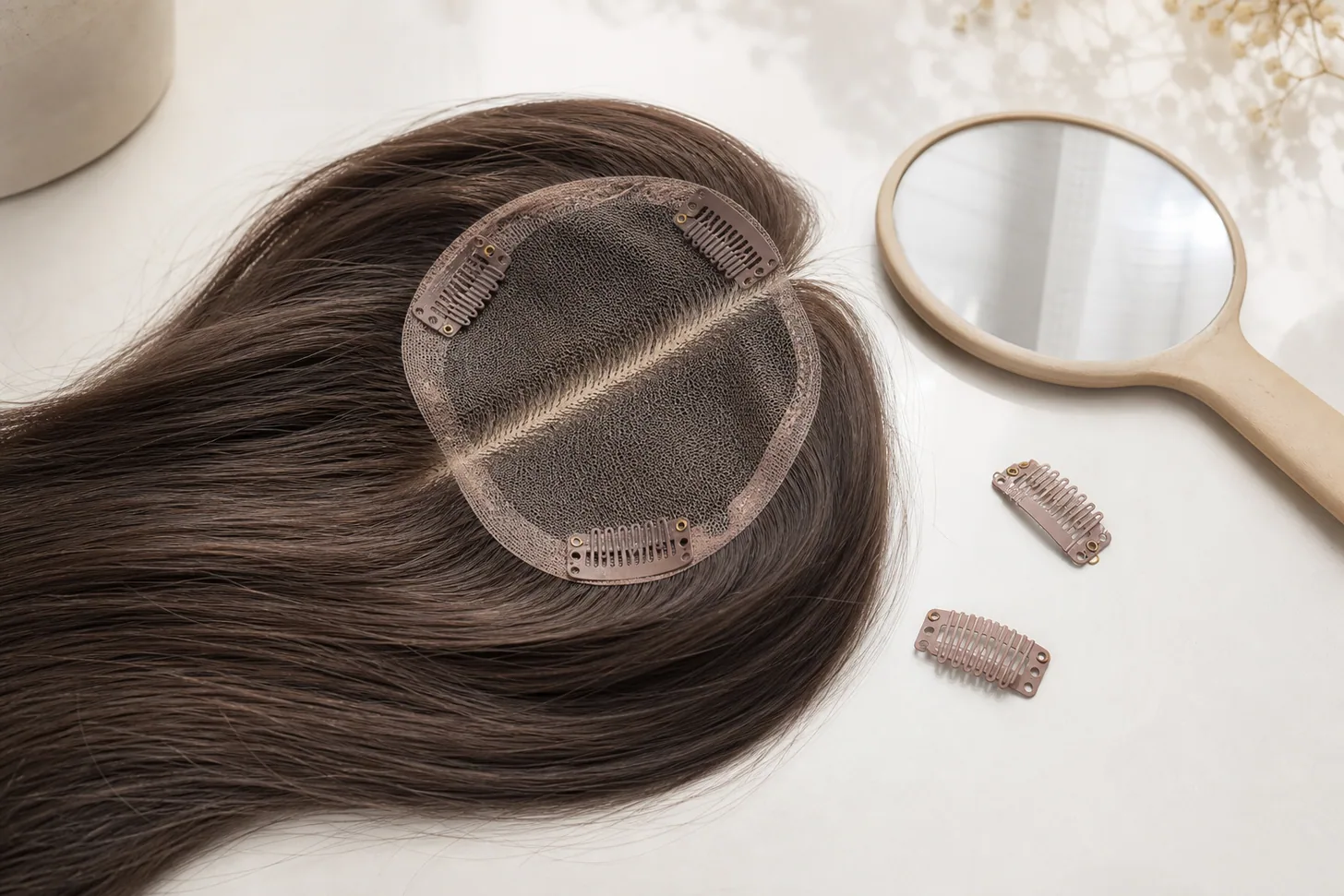
The area is genuinely bare rather than sparse.Pigment on empty skin reads as pigment. That's topper or medical territory — hair toppers for fine hair.
You're using it to avoid finding out what's happening.Said gently, because it's common and understandable. Use the concealer and book the appointment.
You want it to hold through a swim or a workout and bought a wash-out formula.Read the durability claim before the shade chart; the range in this category is enormous.
You're stretching washes to make it last.That's the trade that costs you scalp health. Wash on schedule and reapply.
Your hair is very pale blonde or white.Shadow products work by darkening, so on a pale scalp with pale hair the contrast is already low and pigment can create a problem instead of solving one. Volume at the root does more — going gray with fine hair.
FAQ
They solve the problem from opposite directions, and buying the wrong one is the commonest mistake in this category. A scalp concealer — a pressed powder, a tinted powder or a root spray — puts pigment on the skin to darken it, so the gap between hair and scalp stops announcing itself. Hair fibers do the reverse: tiny colored keratin particles that attach to the hairs you already have, bulking each strand so the area looks denser. The distinction matters because their effectiveness runs in opposite directions. Toppik describes its own fibers as clinging to hairs rather than to the scalp, which means the less hair you have in an area, the less there is for fibers to hold onto — while a shadow works on bare skin, and works better the barer it is.
Yes, and on fine hair they tend to outperform the alternatives, because what reads as thin hair is largely contrast. You aren't seeing an absence of hair; you're seeing pale scalp through the gaps between darker strands, and your eye reads that contrast as sparseness. Reduce the contrast and the area reads fuller without a single hair being added. That's why a shadow-based product punches above its weight on low density. Two fine-hair adjustments make the difference: use a great deal less than the instructions suggest, since fine hair grips pigment readily and the excess sits visibly on the surface, and press the product in rather than sweeping it, which keeps it on the scalp instead of coating the hair.
It depends entirely on which type you bought, and the range is wide enough to check before an event or a workout. Water-resistant pressed powders are the most durable of the everyday options — Color Wow says its Root Cover Up stays put when you sleep, sweat or swim and lasts from shampoo to shampoo. Fibers are also built to hold on, with Toppik claiming resistance to wind, rain and perspiration, and DermMatch goes furthest, saying you can swim, walk in the rain, sweat at the gym or brush your hair with it. At the other end, plenty of temporary sprays and tinted powders are designed to wash out in a single shampoo, which is a feature if you want a clean slate each night. The honest test is your own: apply it, then press a white tissue to the area after an hour.
It's worth taking seriously, because these products ask you to leave powder on your scalp for days and that isn't a neutral thing to do. The AAD's warning about dry shampoo is directly relevant: if dry shampoo stays on your hair or scalp, it can cause problems like hair breakage and hair shedding, and shampooing with water removes the dry shampoo that can accumulate on the scalp. The practical rule isn't to avoid the product but to avoid stacking it. Wash on your normal schedule rather than extending it because the concealer still looks fine, don't layer a fresh application over three days of old ones, and if your scalp becomes itchy or flaky, stop and let it settle. Anyone with an inflamed or symptomatic scalp should treat that first.
Four habits separate a convincing result from an obvious one. Press rather than sweep — Color Wow specifically instructs pressing the brush firmly into the roots in a stippling motion, because sweeping drags pigment onto the hair where it reads as dirt. Aim beside the part rather than into it, so you're darkening the strip of scalp either side rather than painting a solid dark line where a part should be. Use less than looks right in the compact, building in two thin passes with a look in the mirror between them. And check it from the angle other people see, which is above and slightly behind, not straight on — a hand mirror or a phone camera held over your head shows the view that matters. Then wait a minute before touching anything.
Most people can, provided the wash schedule keeps up and the scalp stays comfortable. The thing to watch isn't the daily use but the accumulation: a water-resistant powder designed to last from shampoo to shampoo is, by design, still there tomorrow, so reapplying daily on top of it builds a layer that will eventually look like a layer. Either use a wash-out formula daily and clear it each night, or use a long-wear one every few days and leave it alone in between. Whichever you pick, keep your normal washing frequency rather than stretching it because the coverage is holding, and clarify occasionally if you use these alongside dry shampoo, since both leave residue in the same place.
They cover different amounts of ground, and cost and commitment scale accordingly. A concealer is the right tool for a part that's widened, a slightly sparse hairline, or thinning visible only under certain light — it costs very little, takes a minute, and nobody needs to know. A topper is a hairpiece that adds actual hair, and it's the answer when the area is beyond what pigment can convincingly explain, or when you want coverage that doesn't need reapplying. Many people use both, with the concealer as the everyday option and the topper for occasions or bad days. If you're weighing it up, read our guide to hair toppers alongside this page, and factor in that toppers clip to existing hair and so bring a tension question of their own.
No, and any product in this category implying it will is overreaching. These are cosmetics: pigment, powder and fibers that change how an area looks today and rinse out later. They don't act on the follicle, they don't slow shedding, and they aren't treatment. That isn't a criticism — makeup for the scalp is a legitimate and often transformative thing to own, and the relief of not thinking about your part all day is worth the price of a compact. But it does mean the two questions are separate, and only one is answered in a shop. If your part is genuinely widening, your ponytail is thinner than it was, or shedding has stepped up, that deserves its own investigation. The AAD's position is that if you have hair loss, it's never too early to see a board-certified dermatologist.
Product descriptions and durability claims are the manufacturers' own, taken from each brand's official product page and quoted as claims rather than as tested findings. We don't fabricate testing data.
Fourteen years across the chair and the page, with a particular interest in the hair problems that hide inside explanations people have already accepted. Megan's rule for concealer: work beside the part, never into it.
This article is for general education and is not medical advice. Scalp concealers are cosmetic products and are not a treatment for hair loss. If you are experiencing sudden, patchy or prolonged hair loss, scalp pain, or other concerning symptoms, see a board-certified dermatologist.
Images in this article are AI-generated illustrations, not photographs of real clients or results. See our image policy.
Results vary with hair type, density, and growth patterns. This guide is educational and not a substitute for an in-person consultation with a licensed stylist or physician.
Get the good hair intel
One honest, stylist-written guide in your inbox each week. No hype.

 MH
MH