Reviewed by Tara Sullivan · Updated July 2026 · 10 min read
There's no single trick that gives fine hair volume — and chasing one is why most people stay flat. Real fullness comes from stacking small levers: the cut, a light wash, the right product at the root, a blow-dry that works against gravity, and a cool-down that sets it.
Each does a little; together they transform fine hair. This is the complete map of every lever — which matter most, how to pull each one, and the weight habits quietly cancelling them out.
The one principle behind all of it
Weight is the enemy; the root is the style. A fine strand is narrow and collapses under anything heavy, and the lift at the first inch of hair decides whether the whole head reads full or flat. Almost every volume lever below is really one of two moves: removing weight, or building lift at the root and locking it there.
Hold onto that and the rest is detail. If your hair goes flat fast and you want to diagnose exactly why before you fix it, start with why hair falls flat. The daily execution of this — the exact 10-minute routine — lives in how to style thin hair; this guide is the bigger picture of every lever you can pull.
How to get volume in hair, in the order that pays
Every lever below is worth pulling, but they are not worth the same. If you want to know how to add volume to hair that is fine and flat without turning it into a project, this is the ranking — by how much fullness each lever buys, what it costs you in minutes, and how long the result survives. The cut is on its own tier. The blow-dry is the biggest thing you control daily. Everything else amplifies those two.
Lever
Fullness it buys
Daily time
How long it lasts
1 · The cut
The most, by a distance — shape built in
0 min
6–8 weeks per trim
2 · Wash light, wash right
Restores lift residue was cancelling
0 extra
Until the next wash
3 · Product at the root
Moderate on its own; doubles the blow-dry
1 min
All day, with heat to set it
4 · Drying technique
The biggest daily lever
8–10 min
All day if cooled before you touch it
5 · Styling tricks
Small each, free, they stack
1–2 min
Hours
6 · Color & dimension
Visual depth, not physical lift
0 min
6–10 weeks
Getting More Volume in Hair Is Mostly Subtraction
Notice that three of the six levers add nothing at all. A cut removes weight from the wrong places, a lighter wash removes the film that was gluing the roots down, and the anti-volume list further down removes the habits doing the damage.
People searching for how to get more volume in hair usually arrive looking for a product to add, and the honest answer is that on fine hair the first three moves are all about taking things away. Add product only once the roots are clean, the cut is right and the drying is going against gravity — at that point a little mousse and a root lifter do a great deal, and before it they do almost nothing.
Lever 1 — The cut (the biggest lever of all)
Nothing else on this list comes close. The right cut builds fullness that lasts all day with zero effort, and the wrong one flattens fine hair no product can rescue. The principles: a blunt or weighty hemline reads as density; internal, point-cut layers (never razored) add lift without thinning the ends; and a length that doesn't drag the roots flat.
In practice that means a bob, a layered bob with conservative internal layers, a pixie, or a modern shag for texture — and if styling time is short, a genuinely low-maintenance cut that builds the shape in. If your hair falls flat every day no matter what you do, start here, not with product.
The cut does most of the work, so the words you bring to the chair matter. Say: "My hair is fine and I want it to look thicker. Can we keep the ends blunt with only minimal internal layering, point-cut not razored, and build a little root-forward lift? Please don't thin or texturize the ends — it makes my hair look see-through."
That one request prevents the single most common mistake: a stylist thinning fine hair to "add movement," which does the exact opposite of what you want.
Lever 2 — Wash light, wash right
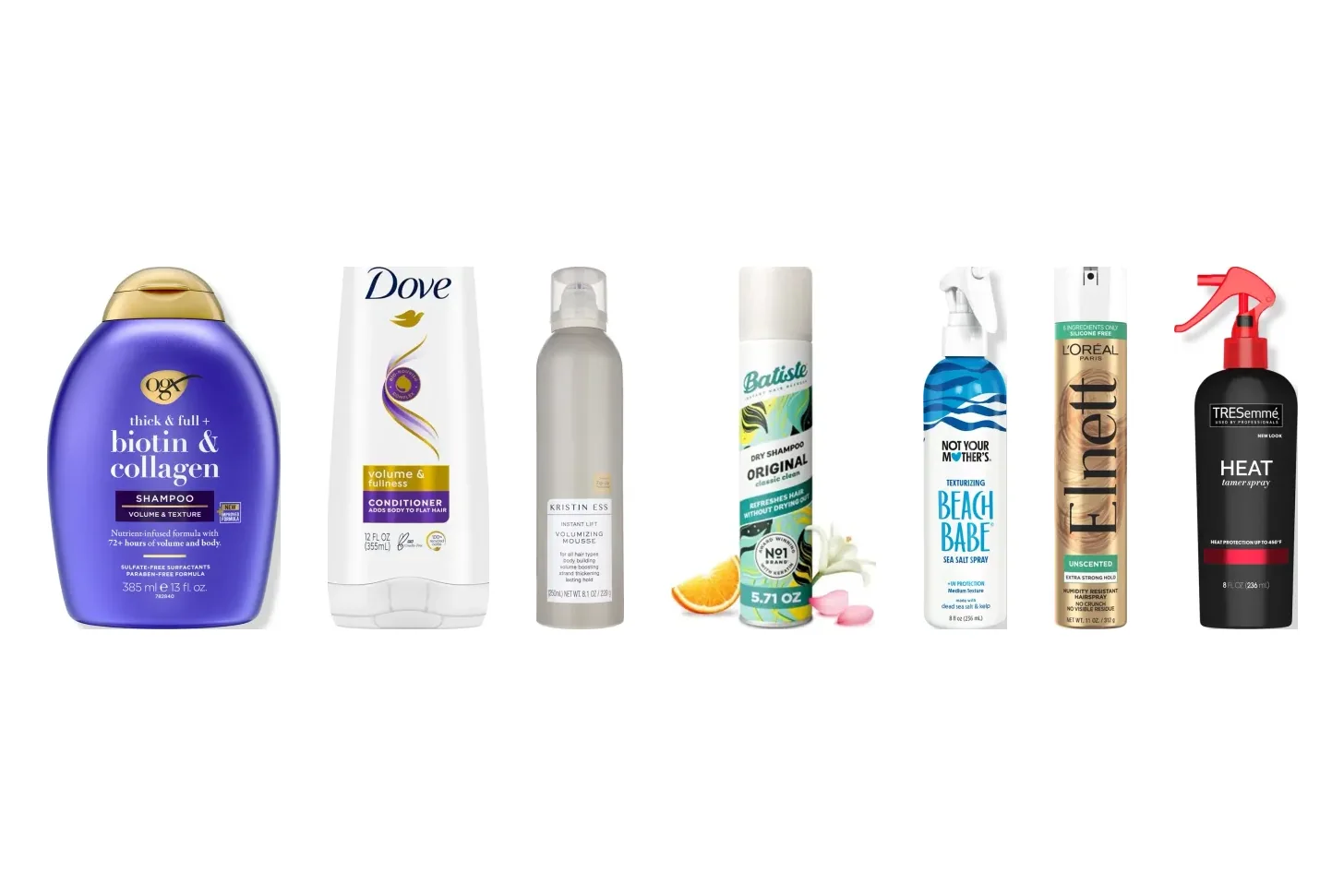
A coated root physically cannot lift, so volume starts in the shower. Use a lightweight volumizing shampoo on the scalp, keep conditioner on the ends only (conditioner at the root is liquid weight on the exact spot you need to lift), and rinse until the hair feels clean, not slippery.
Wash frequency matters too — fine hair goes flat and greasy faster, and second-day oil coats the roots and drags them down, so many people need to wash more often than the internet suggests. Our honest take is in how often to wash fine hair. Product buildup is a silent volume-killer; if your hair has gone limp lately, a clarifying wash often brings the lift back on its own.
Lever 3 — The right products, at the root
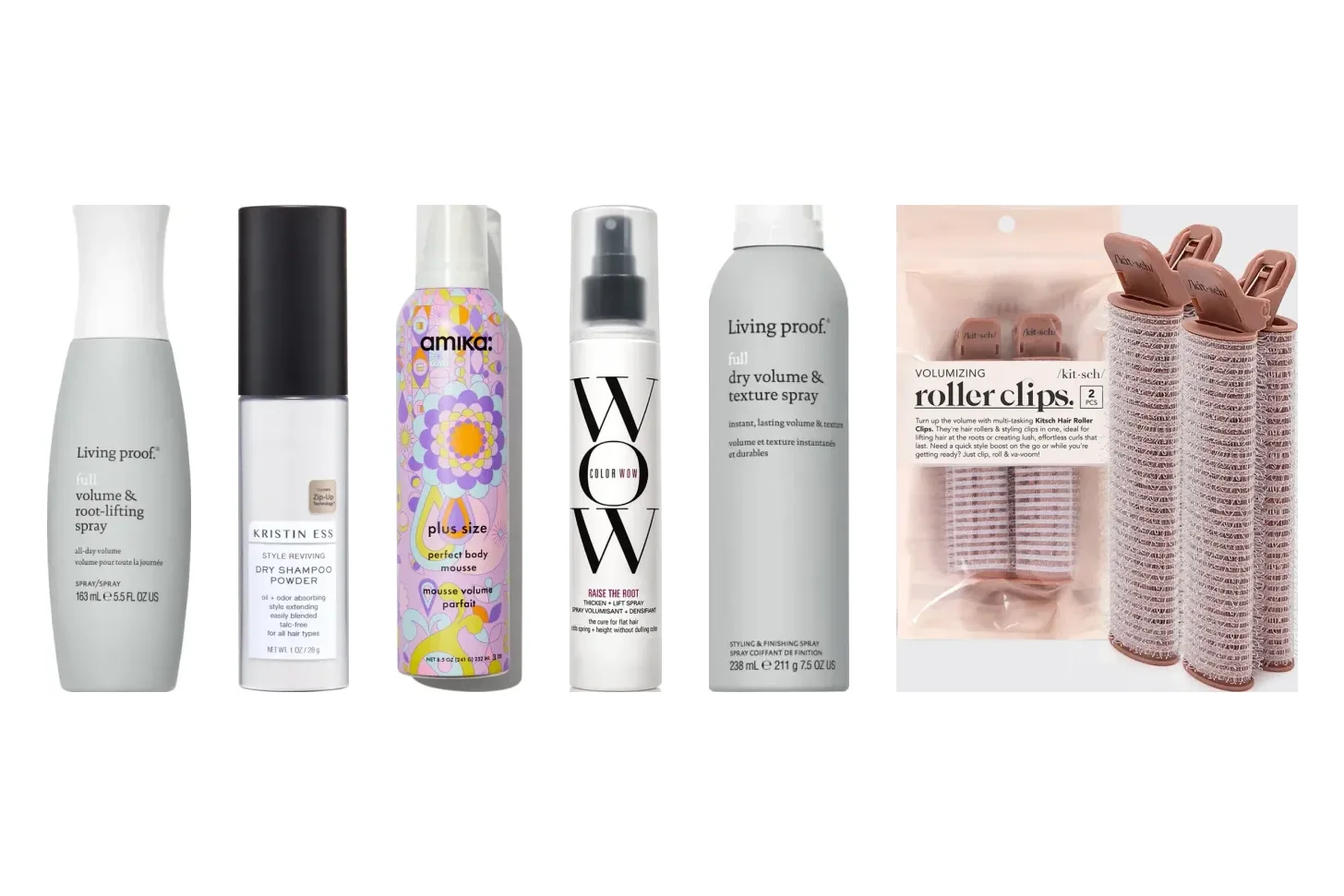
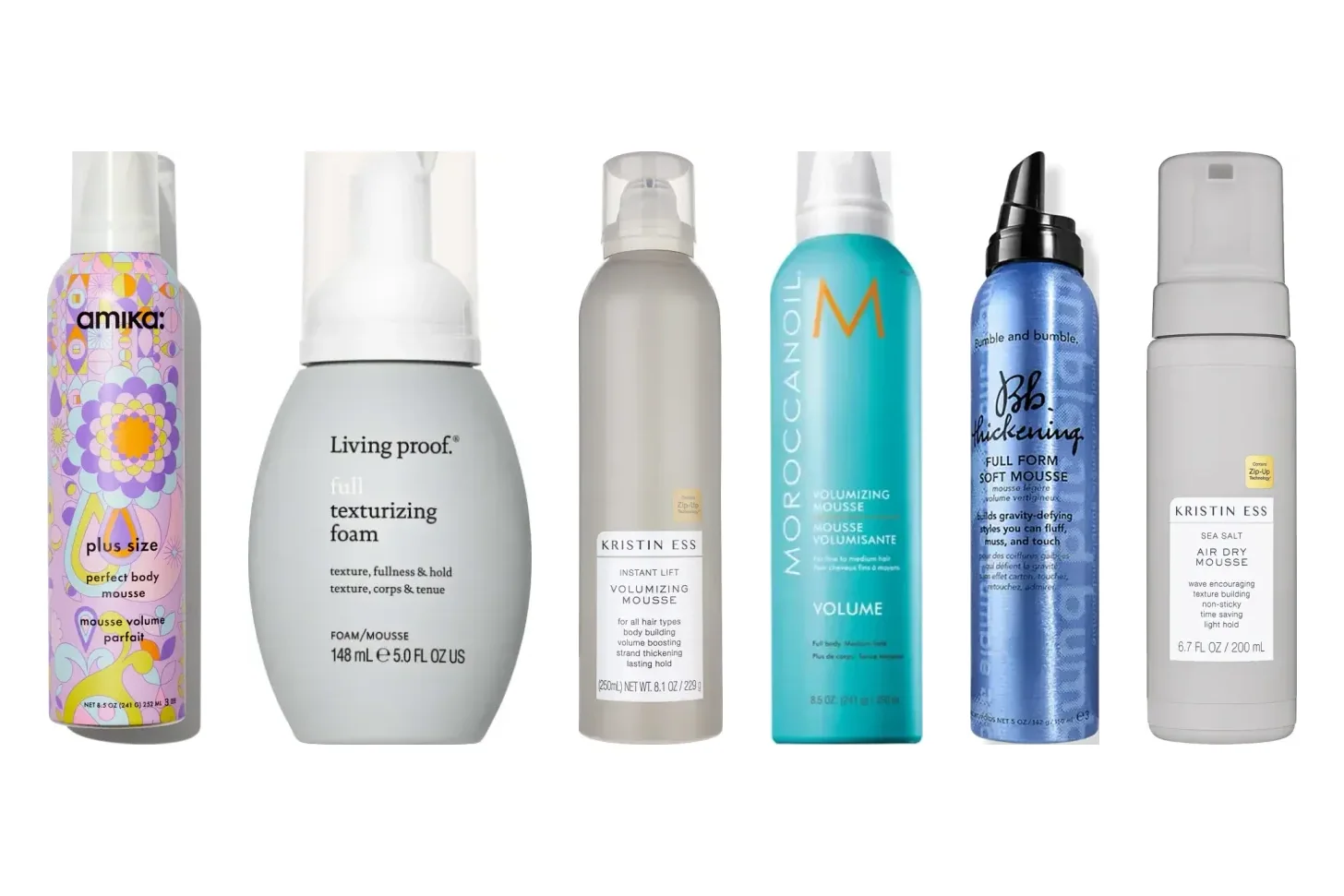
Fine hair wants aerated and dry textures — mousse, root lifter, texture spray, dry shampoo — applied mostly at the roots and in small amounts. Skip creams, oils, and rich serums anywhere near the scalp; they're engineered to add weight. The core toolkit:
Volumizing mousse — the all-over base, worked into damp roots before drying. Our picks are in best mousse for fine hair.
Texture spray — grip and separation on dry, finished hair, so the lift holds.
Dry shampoo — revives day-two roots by absorbing oil, restoring both freshness and lift.
The rule for all of them: a little, at the roots. More product is more weight, which is the opposite of volume.
Lever 4 — Drying technique (the biggest daily lever)
After the cut, how you dry is the move that matters most day to day. Air-drying lets fine hair set flat against the scalp in whatever direction gravity pulls it — and no product fully lifts a root that has already dried flat.
A root-first blow-dry flips that: rough-dry with your head flipped over to about 80%, then lift each root section and dry it against its natural fall. Keep the dryer moving and a few inches away — continuous motion at a distance measurably reduces heat damage to the strand (peer-reviewed study on dryer distance and hair damage).
Then the step everyone skips: let it cool in the lifted position, because hair holds the shape it cools in — a cool shot or a couple of velcro rollers at the crown locks the lift in. The full section-by-section technique is in how to blow-dry fine hair for volume, and for a bob specifically there's a bob blow-dry at home.
Lever 5 — Styling tricks (mostly free)
Two of the cheapest sit at the root: flipping your part, and clipping the roots up while they dry — root clips for fine hair has the method and the honest limits.
Small moves that stack real height, most of them costing nothing: A lot of volume advice online is theatre rather than technique; viral hair hacks, tested on fine hair names which ones hold up.
Switch your part. Hair trains itself flat along your usual part; flip it to the other side and the roots stand against their training for instant crown lift.
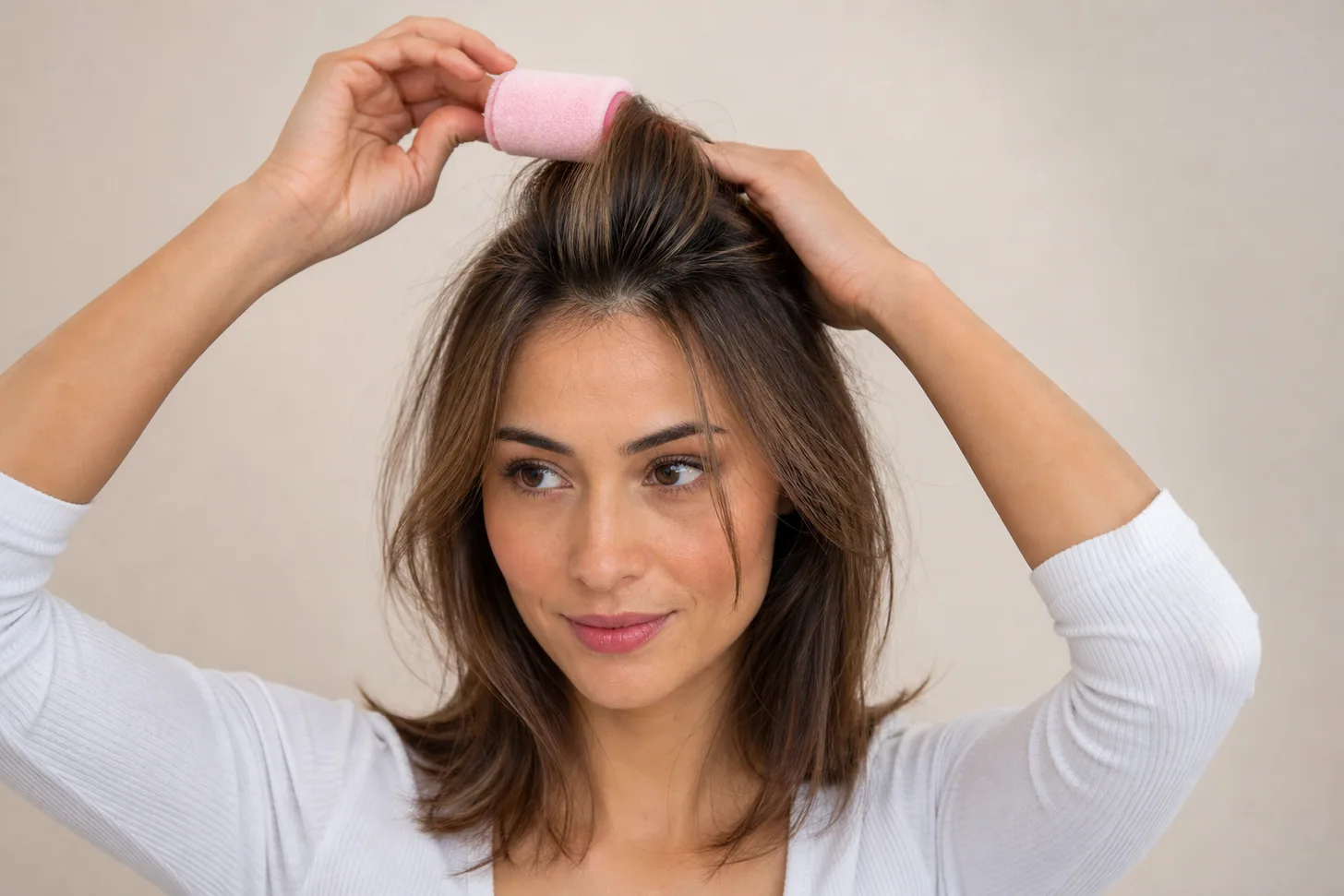
Velcro rollers. Two or three large rollers set in the warm crown for ten minutes while you get ready — the easiest volume in the routine, no skill required.
Gentle teasing. A few light strokes toward the root at the crown, done occasionally and smoothed over, adds height for an event. Don't overdo it — fine hair has less structure to spare.
Go up. A voluminous half-up or a full updo built for fine hair can create fullness a down style can't, and hides thinner density at the crown.
Lever 6 — Color & dimension
Color is the sleeper volume trick. Soft dimension — lighter and darker pieces catching light at different depths — creates the illusion of depth and fullness that a single flat color can't, especially placed around the face and through the top layer.
It won't add a single strand, but visually it reads as more hair. The technique and the fine-hair cautions (less is more; protect with bond-builders) are in balayage vs. foilyage for fine hair. Keep it soft and blended — chunky, high-contrast stripes do the opposite and expose fineness.
Chair-side note
When a client says "nothing gives me volume," I don't reach for a new product — I watch them style. Almost always it's one of three things: they condition their roots, they air-dry and then wonder why it's flat, or they never cool-set the lift they just built.
Fix those three and their existing products suddenly "work." Volume on fine hair isn't about finding the magic bottle. It's about stopping the four or five small things quietly flattening you, and doing the two big things — the cut and the cool-set blow-dry — properly.
SB
— Simone Baptiste, Senior Stylist
The anti-volume list — what to stop doing
Conditioner on the roots. Keep it below the ears; root conditioner is weight where you need lift.
Rich creams, oils, and "smoothing" lines near the scalp. They're built to add weight — keep anything rich to the ends only.
Air-drying and expecting volume. Flat-dried roots can't be lifted later; dry the roots first, against their fall.
Skipping the cool-down. Hair sets as it cools — no cool shot means the lift falls within the hour.
Touching your hair all day. Fingers transfer oil and press roots flat; hands out.
Doubling product when it falls. More product is more weight — the fix is technique and cool-setting, not another pump.
Daily teasing and backcombing. It roughs up the cuticle and snaps fine strands over time — you end up with less hair. Save gentle teasing for the occasional event, and see how to tease fine hair without wrecking it for the method that keeps the cost down.
Treating thickening shampoo as a treatment. It coats the strand to feel fuller while styled — a fine styling aid, but it doesn't change your strand diameter or grow new hair.
Making fine hair look thicker vs adding volume
People ask for these as two different things, and they're really one. "Thicker" describes how hair reads — a solid perimeter, no scalp showing through, ends that don't taper to transparent points. "Volume" describes how it sits — lifted at the root, away from the scalp. Every lever above moves both, because the eye reads lift as density: a root that stands up puts space and shadow where flatness used to show scalp.
If it's specifically the reads-thicker half you're after, that's a cutting question more than a routine one, and the haircut for thin hair to look thicker works through the twelve shapes that do it by length. For the sits-fuller half, volumizing haircuts for fine and thin hair splits the options by density, which is the variable that decides whether layers help you or cost you.
The one honest limit is the strand itself. Nothing here changes your hair's diameter — no cut, product, or blow-dry makes an individual fine strand thicker. What they change is how much room your hair occupies and how solid its outline looks, which is what people actually mean when they say they want thicker hair.
If you're not sure whether you have fine strands, low density, or both, start with fine vs thin hair — the answer changes which levers pay off most.
When it's thinning, not just flat
One honest caveat: if your hair feels genuinely less than it used to be — a widening part, more scalp showing, a thinner ponytail — that may be reduced density rather than flat styling, and volume technique can only do so much for it.
It's worth understanding the difference; our guide to fine vs thin hair explains fineness versus density, the three at-home thinning checks tell you whether density is actually changing, and if you're noticing ongoing shedding, a board-certified dermatologist can rule out a treatable cause. Styling makes fine hair look fuller; it can't replace hair that's genuinely thinning, and it's kinder to yourself to know which you're working with.
FAQ
By stacking several small levers rather than looking for one product that does it, which is the mistake that keeps most people flat. Six levers matter, in rough order of payoff: the cut, which is by far the biggest and the only one that works while you do nothing; washing lighter and more often at the scalp, because volume dies under residue long before it dies from a bad blow-dry; the right product placed only at the root; drying against gravity with the nozzle aimed up at the base; a cool shot to set the shape while it cools, which is when hair actually holds; and a few free styling tricks such as switching your part. On fine hair specifically, the constraint underneath all six is weight — every gram you add anywhere below the root is working against you, so the honest instruction is to add lift at the scalp and take weight off everywhere else. Expect a cumulative effect rather than a single dramatic one: each lever is worth a little, and the stack is worth a lot.
Volume on fine hair comes from stacking small levers, not one magic product. The biggest are the cut (a shape with weight and lift built in), a lightweight wash, a root-first blow-dry that dries the roots against their natural fall, and a cool-down that sets the lift. Add a lightweight mousse or root lifter at the roots and a texture spray to finish. No single step does much; together they transform fine hair.
The cut and the blow-dry — in that order. A cut with a blunt hemline and internal lift does volume work no product can match, all day, with no effort. After that, a root-first blow-dry that lifts the roots against gravity and sets them with a cool shot is the biggest daily lever. Products and styling tricks amplify those two; they can't replace them.
Usually weight and technique, not your hair itself. Heavy products and rich conditioners coat fine strands and collapse the root; a wrong-length or over-layered cut hangs flat; and air-drying or styling the lengths instead of the roots leaves no lift. Fine hair is capable of real fullness — the volume is almost always being weighed down or never built at the root in the first place.
Work with the principle that hair holds the shape it dries in. Apply a soft-hold air-dry foam to damp roots, clip the crown roots up or set a couple of velcro rollers while hair dries, and switch your part to the opposite side so the roots stand against their trained direction. Overnight braids or twists add bend and body by morning. It won't match a blow-dry, but it builds real body heat-free.
Set it and stop touching it. Finish every styled section with a cool shot, because hair sets as it cools; keep product light and off the roots, since weight collapses lift within the hour; and keep your hands out of your hair, because fingers transfer oil and press the roots flat. A quick root refresh with dry shampoo or a cool blow-dry revives midday lift without a rewash.
Lightweight, aerated, and dry textures — never creams or oils. A volumizing mousse is the all-over base, a root lifter targets lift at the scalp, a texture spray adds grip and separation to finished hair, and dry shampoo revives day-two roots. Applied mostly at the roots and in small amounts, these build and hold volume; overused or applied to the ends, they add weight and do the opposite.
The same levers that add volume: a cut with a blunt, weighty perimeter and minimal point-cut internal layering; a root-first blow-dry that's cooled before you touch it; and light, dry-textured product at the roots only. The cut does most of it — a solid hemline reads as density, while razored or heavily thinned ends taper to transparent points that broadcast how fine the hair is. Nothing changes the diameter of the strand itself, but these change how much room your hair takes up and how solid its outline looks, which is what "thicker" really means day to day.
Only look thicker — and that's worth saying plainly. Strand diameter is genetic and doesn't change with shampoo, masks, or styling; thickening products coat the strand to feel fuller while styled rather than growing new hair. What you can change is the illusion: how lifted the roots are, how solid the ends read, and how much scalp shows. That's usually a dramatic difference on its own. If your hair is genuinely less than it used to be — a widening part, a smaller ponytail — that's density loss rather than fineness, and a board-certified dermatologist can look for a treatable cause.
A root-first blow-dry with a cool finish, and it takes about eight minutes on fine hair. Rough-dry to damp, then dry the roots against their natural fall — nozzle pointed at the scalp, hair pulled up and over to the opposite side — and hit each section with the cool shot before you let it go, because hair sets as it cools. If there is no time for that, two shortcuts work: a spritz of dry shampoo massaged into dry roots gives instant grip and lift, and a couple of velcro rollers on the crown while you do your makeup build height with no heat at all. What does not work fast is product on its own; without the drying step it just adds weight.
Eleven years behind the chair, specializing in short shapes and fine-hair texture. Simone believes the best haircut is the one you can style yourself in ten minutes.
Images in this article are AI-generated illustrations, not photographs of real clients or results. See our image policy.
Results vary with hair type, density, and growth patterns. This guide is educational and not a substitute for an in-person consultation with a licensed stylist or, for thinning or scalp concerns, a board-certified dermatologist.
Get the good hair intel
One honest, stylist-written guide in your inbox each week. No hype.

 SB
SB