Reviewed by Tara Sullivan · Updated July 2026 · 7 min read
Almost every argument about hair type is really an argument about two words doing four jobs. Fine only ever measures how wide one strand is. Thin only ever measures how many strands you have. Thick gets used for both, which is why it causes most of the confusion — and medium is the setting nobody defines.
They are two separate dials, not one scale, so you can be fine and thin, fine and dense, or coarse and sparse, and each corner needs different products and a different cut. This guide gives you the two-minute tests for both dials, settles what people actually mean by fine vs thick, places medium on the scale with a sewing thread, and then maps the five combinations so you can find your own row.
Chair-side note
Nearly every week someone tells me their hair is "thinning" when it's actually always been fine. The distinction isn't pedantic — I'd recommend a completely different routine for each. Getting this right is the first thing that fixes a limp, flat feeling that products never seem to solve.
MH
— Megan Holloway, Editor-in-Chief
Fine hair meaning: the width of one strand, not how much you have
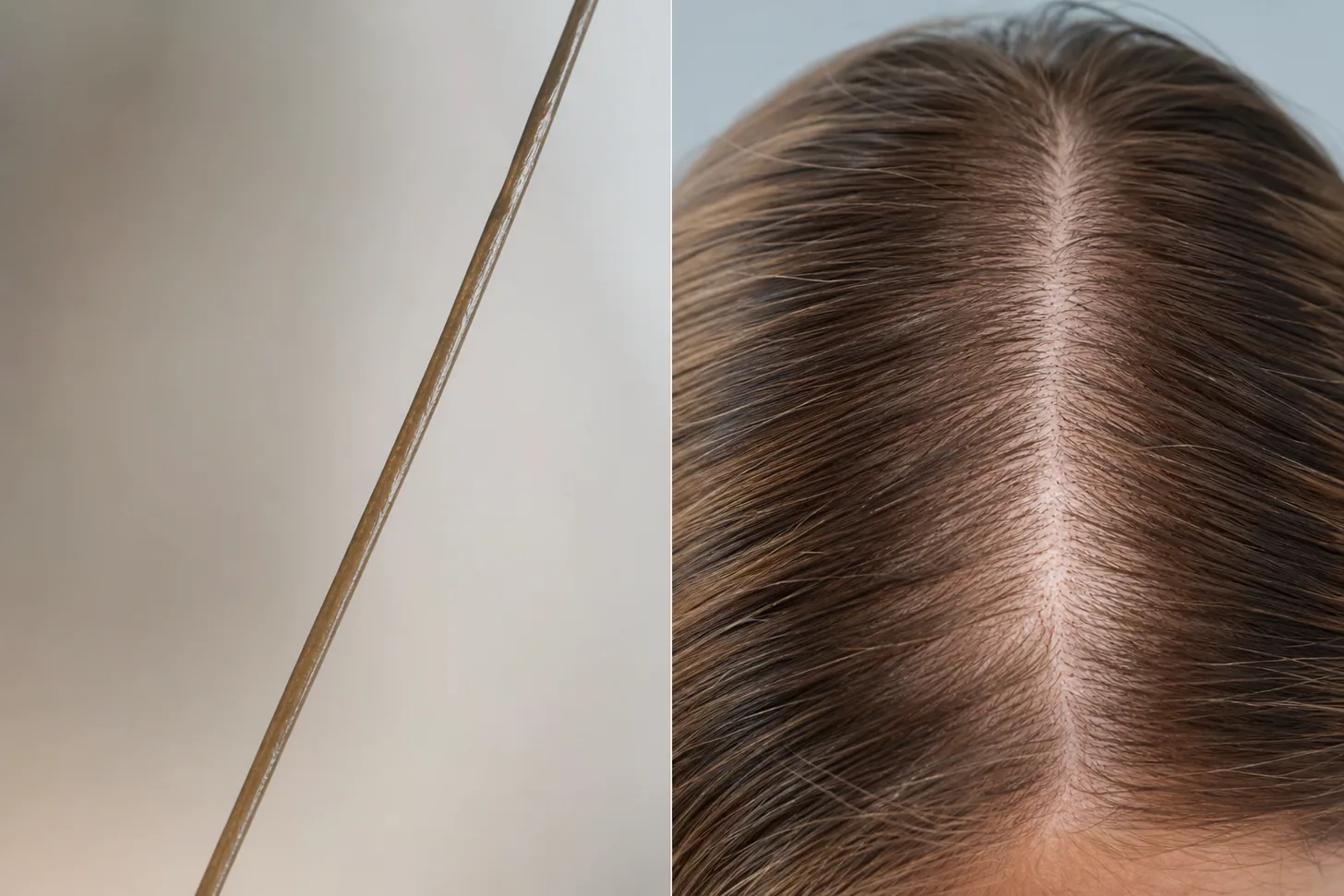
Fine is about the width of a single strand. Thin is about the number of strands on your head (density). They feel similar in the mirror — both can look flat and sparse — but they come from different places and respond to different care.
Fine Describes Strand Diameter
A fine strand is physically narrow. In the lab, hair fiber diameter is measured in micrometers and varies widely from person to person — roughly from the high teens to well over 100 micrometers across the population, and it differs measurably by hair type and ethnicity (micro-CT analysis of scalp hair fibres, 2025).
Fine hair simply sits at the narrow end of that range. It's usually something you're born with, and it tends to feel soft, look shiny (a smooth, narrow strand reflects light well), and go flat quickly because each strand carries less structure.
Thin Describes Density (How Many Strands)
Thin — more precisely low density — means fewer hairs per square inch of scalp. A full head typically carries 100,000 follicles or more, and the number varies with natural hair color: blondes average around 150,000, brown around 110,000, black around 100,000, and red closer to 90,000 (American Academy of Dermatology).
Density can be lifelong, or it can change over time — which is the important part, because a change in density is the signal that separates "naturally thin" from "thinning."
What Fine Hair Looks Like — and Why It Gets Called Thin
Because the measurement is microscopic, most people identify fine hair by its behaviour rather than by looking at a strand. The recognisable signs: it goes flat within hours of styling, a ponytail feels slim in the hand even when there is plenty of hair in it, the part line shows scalp more readily than you would expect, it tangles and knots easily, and it takes colour and heat faster than the box or the tool suggests.
It often looks shiny, because a smooth narrow strand reflects light cleanly — which is why "fine" and "unhealthy" are not the same thing at all.
What none of those signs tell you is how much hair you have, and that is where the word "thin" gets borrowed by mistake. A head of fine hair can be extremely dense; a head of coarse hair can be sparse. Both look "thin" in a mirror and neither responds to the other's routine, which is the practical reason this distinction is worth two minutes of your time.
How to tell what you have in two minutes
You don't need a microscope. Three quick at-home checks tell you diameter, density, and whether anything is changing. Do all of them on dry hair — wet hair makes everyone's density look alarming, for reasons explained in why your hair looks so thin when it's wet.
The Strand Test Tells You Fine vs Coarse
Take one clean, dry strand and roll it slowly between your thumb and forefinger. If you can barely feel it, your hair is fine. If it feels like a distinct thread — something with body between your fingers — it's medium to coarse. For a second reference, lay a strand next to a sewing thread: fine hair looks noticeably thinner than the thread.
The Ponytail and Part Test Tells You Density
Gather all your hair into a ponytail and note the circumference (many stylists use rough bands: under 2 inches is low density, 2–3 inches is medium, over 4 inches is high). Then look at your part in good light: if the scalp line stays narrow, your density is fine; if it reads wide or you can see a lot of scalp at the crown, density is on the lower side.
The Change Test Tells You Whether It's Thinning
This is the one that matters most. Naturally fine or thin hair is stable — it looked like this a year ago and five years ago. Thinning is a change: a ponytail that used to wrap three times and now wraps four, a part that's widened, or noticeably more shedding than your normal baseline.
It's normal to shed 50–100 hairs a day (AAD); a sustained jump above that, or patchy loss, is a reason to see a dermatologist — see the caveat below.
Fine hair
Thin (low-density) hair
What it measures
Width of each strand
Number of strands on the scalp
Quick test
Barely feel one strand
Small ponytail; wide part; scalp shows
Usually
Born with it; stable
Can be lifelong or a change over time
Main problem
Goes flat; weighed down easily
Scalp shows; every strand "counts"
What helps most
Lightweight, non-coating products; root lift
Coverage strategy; gentle, breakage-free care
You can be fine and thin at the same time
Fine and thin aren't opposites — they're two separate dials, and plenty of people are turned up on both. You can have fine strands packed densely (fine, not thin), medium-width strands spaced sparsely (thin, not fine), or narrow strands and low density together. That last combination is the most delicate to care for: there's almost no margin for a heavy conditioner or a weighty styling cream, because both the strand and the density are working against volume.
When you're both, default to lightweight and gentle in every decision. The opposite corner — fine strands at high density — has its own rulebook, and most standard fine-hair advice inverts on it: see fine hair but a lot of it.
The remaining corner — medium or coarse strands at low density — is the one most often mislabelled as fine, and it inverts even further: thin but coarse hair covers it. Curl pattern is a third dial again, independent of both; on tightly coiled hair, shrinkage disguises the reading badly enough that it deserves its own guide — fine natural hair, the honest care routine.
Fine vs thick hair: "thick" means two different things, and that is the whole confusion
"Is my hair fine or thick?" almost never gets a clean answer, and the reason is a vocabulary problem rather than a hair problem. Fine always measures one thing — how wide a single strand is. Thick gets used for two things that have nothing to do with each other:
Thick as in wide strands.Each individual hair has real diameter. This is the genuine opposite of fine, and the technical word for it is coarse.
Thick as in a lot of hair.The strands may be any width; there are simply many of them. This is the opposite of thin, and the technical word for it is dense.
So "fine vs thick hair" is not one comparison, it is two. Fine vs coarse is a real, decidable comparison about diameter — the strand test above settles it in ten seconds. Fine vs dense is not a comparison at all, because those are separate dials and you can be high on both at once.
This is why a stylist can tell you that you have wonderfully thick hair on the same day you are certain your hair is fine, and both of you are right: they are judging how much is in their hand, and you are feeling how little is in one strand.
The practical upshot: when someone asks whether your hair is fine or thick, ask which they mean. If they mean diameter, answer with the strand test. If they mean quantity, answer with the ponytail test. Answering the wrong one is how people end up with products and cuts built for the opposite of what they have.
Where the thread sits: fine, medium and coarse
Medium is the setting nobody defines, which is why fine vs medium hair is such a common question. Use an ordinary sewing thread as the ruler and the scale becomes concrete:
Fine— the strand looks noticeably thinner than the thread, and you can barely feel it rolled between finger and thumb.
Medium— about the same width as the thread. You can feel it clearly, but it is not stiff. Most people are here, and most product labelling is written for them.
Coarse— visibly wider than the thread, with a distinct springiness or wiriness to it.
Two things worth knowing about that scale. You almost certainly have all three on your head — diameter varies across the scalp, and the hair at your nape is usually finer than the hair at your crown — so judge from several strands rather than one.
And going gray shifts it: unpigmented hair has a greater average diameter than pigmented hair, so someone who was fine at thirty can genuinely be medium at sixty in the gray strands while the rest stays fine. Going gray with fine hair covers what that does to styling.
Thick vs thin hair is a density question, and it is the one that changes your haircut
When people say thick versus thin, they nearly always mean the amount. That comparison is settled by the ponytail test, and it matters more than diameter for one specific decision: whether layers help you or cost you. High density hair has weight to spare, so removing some gives the rest somewhere to move.
Low density hair does not, so the same layers open up the ends and leave the perimeter see-through. That single split is why the layers argument never resolves — the two sides are describing different heads. Volumizing haircuts for fine and thin hair runs the self-test and then gives two separate sets of cuts.
The five combinations, and which one is you
Two dials, and the corners behave differently enough that generic advice fails at least three of them. Find your row.
Strand × density
What people call it
How it actually behaves
Where to go next
Fine strands, low density
"thin hair", "fine hair" — usually named correctly
The least margin of any combination. Both dials work against volume, so one heavy product flattens the whole day.
"thick hair" — and you are told you have nothing to complain about
High density fine hair. A big ponytail and flat roots at the same time. Most fine-hair advice inverts here: you need more product, not less, and you can afford real layers.
Weight is the problem rather than the goal. Not the hair this site is written for.
—
"High density fine hair" is worth knowing as a phrase, because stylists use it and it rarely gets explained. If you have been handed that description in a salon, it means your individual strands are narrow but you have plenty of them — and it accounts for the specific frustration of hair that fills a hairbrush, refuses to hold a curl, and lies flat at the roots regardless.
Curl pattern is a third dial again, independent of both, and on tightly coiled hair shrinkage disguises the reading badly enough to need its own guide: fine natural hair, the honest care routine.
Why it changes what you buy and how you cut
Knowing your type turns product shopping from guesswork into a rule. Fine hair is coated and flattened by anything rich, so the whole game is weightlessness. Thin hair is about making the density you have read as fuller, and protecting each strand from breakage. Once you know which you are, build the day-to-day around it with the honest fine hair care routine.
It changes the cut even more sharply than it changes the shelf. Density, not strand diameter, decides whether layers give you volume or cost you a perimeter you cannot get back for three months — which is why the layers argument never resolves. Volumizing haircuts for fine and thin hair settles it with a self-test and two separate sets of cuts, and the haircut for thin hair to look thicker covers the shapes that read fuller whichever answer you get.
For Products, Fine Hair Wants Weightless Formulas
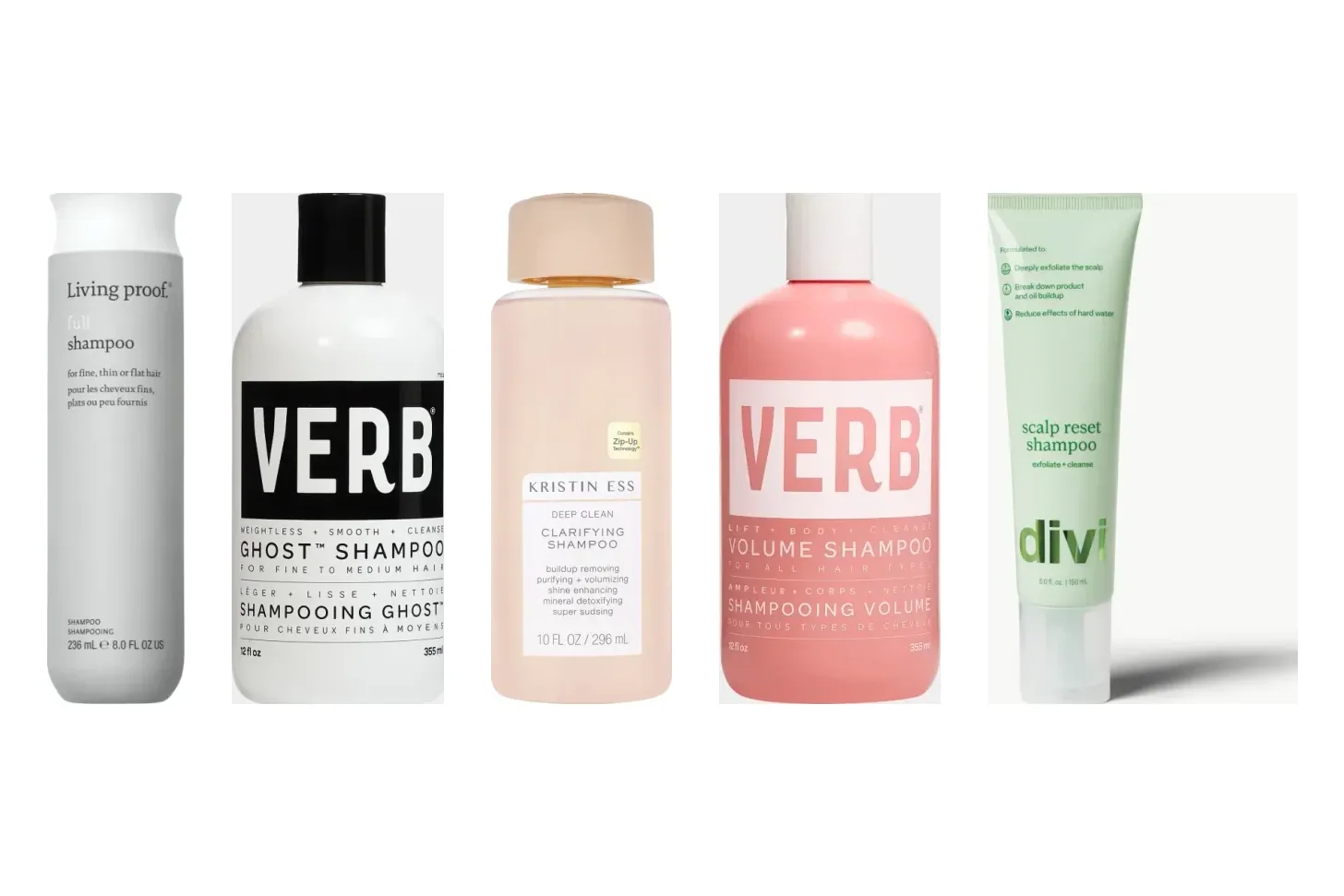
Skip heavy oils, butters, and "nourishing" creams on the lengths and roots — they're the number-one cause of fine hair that's flat by noon. Reach instead for volumizing, lightweight formulas. If you're not sure where to start, our stylist picks for the best shampoo for fine hair are all chosen to clean without coating — and the same weight-first logic picks your styler in the best mousse for fine hair roundup.
For Cuts, Weight Placement Does the Work
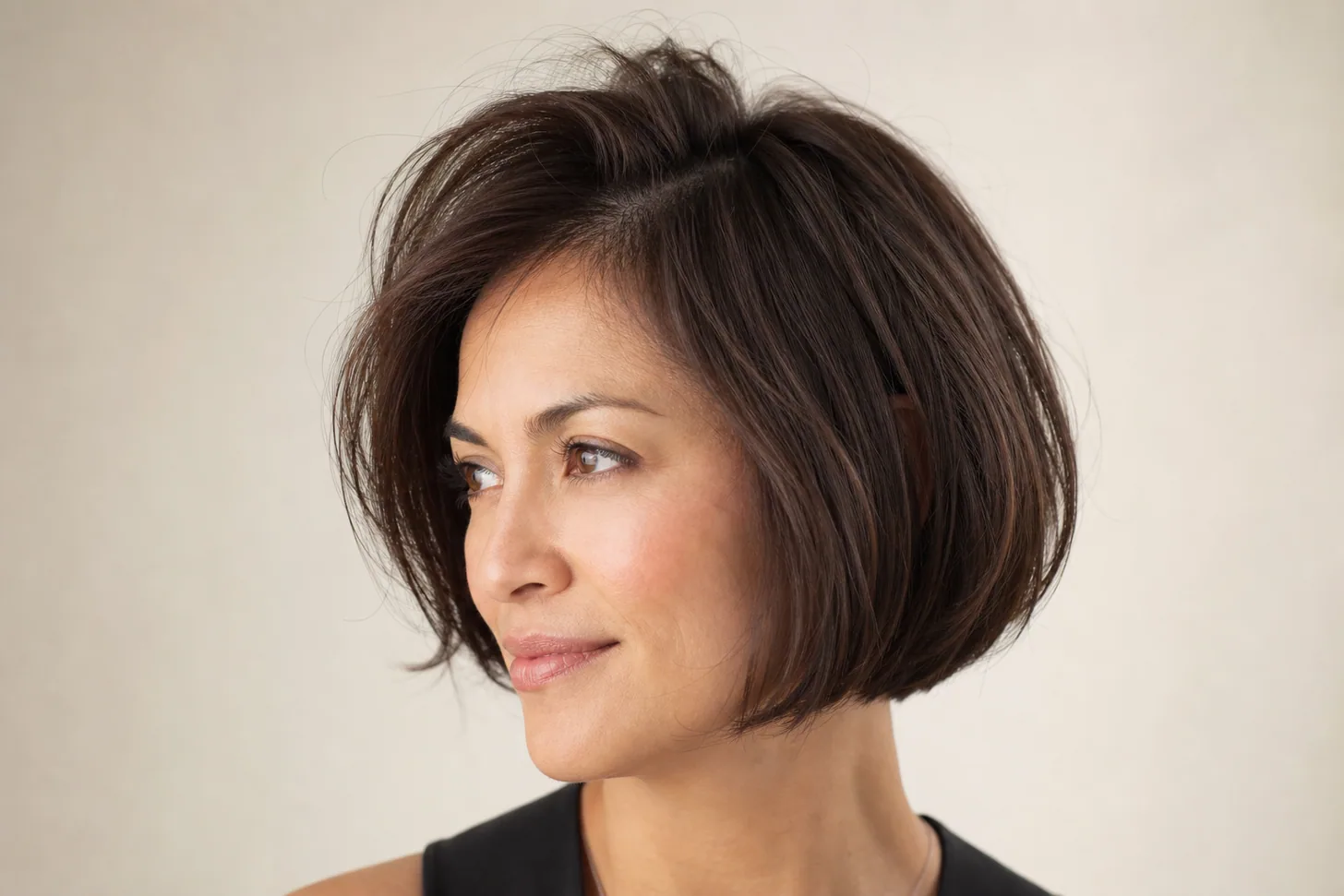
Both fine and thin hair look fullest when a cut concentrates weight where you want density and removes it where hair falls flat. That's why a graduated bob for fine hair or soft, texturized curtain bangs for fine hair read as fuller than long, one-length hair — the shape builds body the strand can't.
Ask your stylist to point-cut internal layers rather than razor-cut; razoring thins already-narrow ends and leaves them transparent — you can see that principle applied across all 16 layered bobs for fine hair in our gallery.
When "thin" is actually thinning — and time to see a professional
Your hair is tightly coiled and none of the visual checks feel conclusive. Shrinkage decouples how much hair you have from how much space it takes up, so a full-looking puff can be low density and a small one can be high. Judge a single strand between your fingers for fineness and the scalp at several partings for density — cuts and styles for fine coily hair starts from that distinction.
Your ponytail has visibly shrunk, or your part has widened over months. That's a density change, not a strand type — run the three at-home thinning checks, and see a dermatologist if they confirm it.
You're shedding well above your normal baseline for weeks, or hair comes out in patches. See a board-certified dermatologist; sudden or patchy loss has treatable causes.
You notice scalp tenderness, itching, redness, or a receding hairline alongside the shedding. These point to a medical cause, not a styling one.
FAQ
Fine hair means the individual strand is narrow — it is a measurement of one hair's diameter, and nothing at all to do with how many hairs you have. Hair fibre diameter is measured in micrometres and ranges across the population from the high teens to well over 100, so fine hair simply sits at the narrow end of that range. It is usually something you are born with rather than something that happens to you. The word people reach for when they mean "not much hair" is thin, which describes density — hairs per square inch of scalp. The two get used interchangeably in everyday speech and they are separate measurements, which is why the same product can be described as a miracle by one person and a disaster by another.
You cannot really see a strand's width without magnification, so fine hair is recognised by behaviour instead. The reliable signs: it loses volume within hours of styling, a ponytail feels slim in the hand even when there is plenty of hair, the part shows scalp sooner than you would expect, it tangles easily, and it takes colour and heat faster than the packet or the tool suggests. It often looks glossy, because a smooth narrow strand reflects light cleanly — so fine is not the same as damaged or unhealthy. What none of that tells you is how much hair is on your head, which is the separate question that decides your haircut.
Yes, and it's common. Fine measures how wide each strand is; thin measures how many strands you have. You can have fine strands packed densely (fine but not thin), or fewer strands that are actually medium-width (thin but not fine), or both at once. Both-at-once needs the most careful product and cut choices because there's little room for anything heavy.
Roll one clean strand between your fingertips. If you can barely feel it, it's fine. Then pull your hair into a ponytail and measure the circumference, or look at how much scalp shows at your part. Little to feel plus a normal ponytail means fine, not thin. A thin ponytail or a widening part points to lower density.
No. Fine hair is a strand thickness you're usually born with, not hair loss. Thinning is a change over time — a ponytail that's shrunk, a part that's widened, more hair in the drain than your normal 50 to 100 strands a day. If you're seeing that change, especially suddenly or in patches, see a board-certified dermatologist.
Fine strands hold less structure, so gravity and product weight win faster. The two biggest culprits are conditioner or styling product that's too heavy for the strand, and washing infrequently enough that natural oil coats and collapses the root. Lightweight formulas and root-focused volume help more than any single product.
The overlap is large but the emphasis differs. Fine hair needs lightweight everything — volumizing, non-coating formulas kept off the roots. Thin (low-density) hair benefits from scalp-visible coverage strategies and gentle care that avoids breakage, since every strand counts more. If you're both, prioritize lightweight and gentle.
You can't change the diameter you were born with, but you can make hair look fuller: volumizing cuts with internal layers, root-lifting technique, lightweight product, and protecting the hair you have from breakage. Genuine density changes are a medical question for a dermatologist, not a styling one.
It depends which meaning of "thick" you are using, and that ambiguity is the whole reason the question is confusing. Fine always describes strand diameter. Thick describes either wide strands — whose proper name is coarse — or a large amount of hair, whose proper name is dense. So fine versus coarse is a genuine comparison about diameter, settled by rolling one strand between your fingers against a sewing thread. Fine versus dense is not a comparison at all, because they measure different things and you can be both at once. A stylist saying you have thick hair while you are certain it is fine can both be right.
Yes, when "thick" is being used to mean density — which is how most people use it. Thick and thin in that sense are two ends of one dial: how many strands you have. That comparison is settled by the ponytail test rather than the strand test, and it is the measurement that changes your haircut most, because density decides whether layers help you or cost you. If "thick" is being used to mean wide strands instead, then its opposite is fine, not thin. Volumizing haircuts runs the density self-test.
Roughly the width of an ordinary sewing thread. Lay a clean dry strand alongside one: fine looks clearly thinner and can barely be felt rolled between finger and thumb, medium is about the same width and can be felt clearly without being stiff, and coarse is visibly wider with a springy or wiry quality. Most people are medium, and most product labelling is written for them — which is why generic advice under-delivers at either end. Judge from several strands rather than one, since the hair at your nape is usually finer than the hair at your crown.
Your individual strands are narrow but you have a lot of them. Stylists use the phrase and rarely explain it, which leaves people in this group being told they have nothing to complain about while their roots go flat by lunchtime. It accounts for a very specific set of frustrations: a ponytail with real circumference, a hairbrush that fills up, hair that will not hold a curl, and no root lift regardless of product. Most fine-hair advice inverts here — you generally need more product rather than less, and you can afford real layers. Fine hair when you have a lot of it is written for exactly this.
Fourteen years in hair — eight behind the chair, six in editorial — with a focus on scalp health and the science of fine, flat-prone hair. Megan's rule: fix the routine before you blame the product.
Images in this article are AI-generated illustrations, not photographs of real clients or results. See our image policy.
Results vary with hair type, density, and growth patterns. This guide is educational and not a substitute for an in-person consultation with a licensed stylist or, for concerns about hair loss, a board-certified dermatologist.
Get the good hair intel
One honest, stylist-written guide in your inbox each week. No hype.

 MH
MH