Reviewed by Tara Sullivan · Updated August 2026 · 8 min read
Almost every comb sold in a drugstore is injection-moulded, which means it was formed between two halves of a mould — and the join leaves a fine ridge of plastic running the length of every single tooth. That ridge sits exactly where a hair has to slide past, and fine hair is where it shows up first, because a fine strand gets deflected and caught by an edge a coarse strand slides straight over.
It is the whole reason a $4 comb drags and a $20 one doesn't, and it has nothing to do with how wide the teeth are. Below: six seamless combs by job — everyday, in-shower, anti-static, sectioning, splurge and budget — each with an honest limitation, plus the spacing rule that stops fine hair getting the wrong comb, and how to detangle without leaving hair in it.
Every product here is chosen independently, on the merits — what genuinely suits fine, thin hair. Links go to each brand's official page, and we don't take payment for placement. Price tiers are rough guides because prices change.
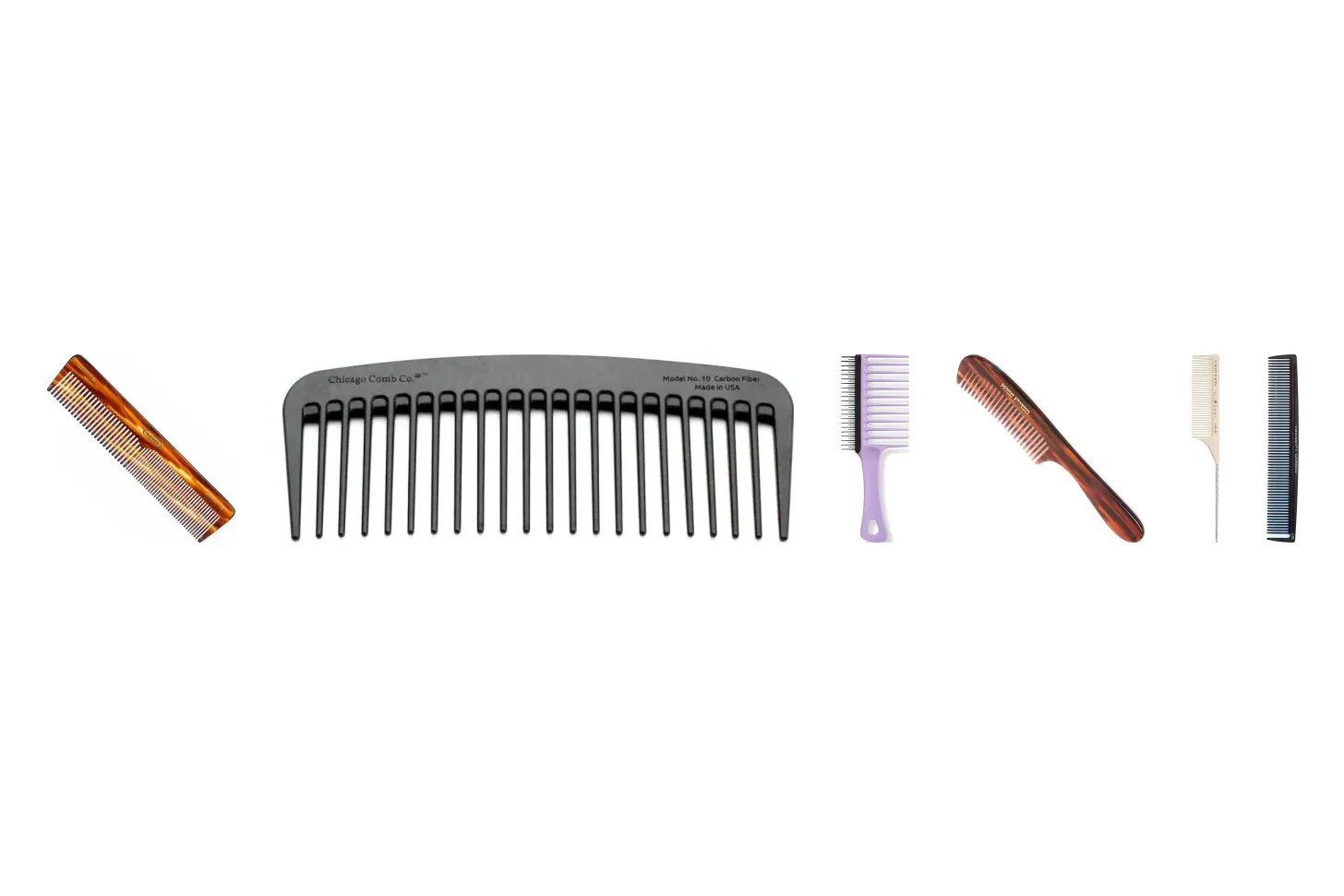
Our six picks, one per job. Product images courtesy of the brands.
Chair-side note
The fastest way to tell whether a comb is any good is to close your eyes and run a fingernail slowly down the inside of one tooth, from tip to base. If you feel a line — a tiny ridge, a change in texture halfway round — that is the mould seam, and that is what your hair is being pulled across every time you use it.
I do this in shops. I have put combs back on shelves in front of people. It takes four seconds and it is a better test than anything written on the packet, because "gentle detangling comb" is marketing and a seam is physics.
MH
— Megan Holloway, Editor-in-Chief
Sawcut versus moulded: the spec nobody puts on the packaging
Combs are made two ways. The cheap way is injection moulding: molten plastic is forced into a two-part mould, and where those halves meet, a thin line of flash is left behind along the edge of every tooth. Good manufacturers tumble and polish that away. Budget ones don't, or don't fully, and the ridge stays — invisible to the eye, obvious to a hair.
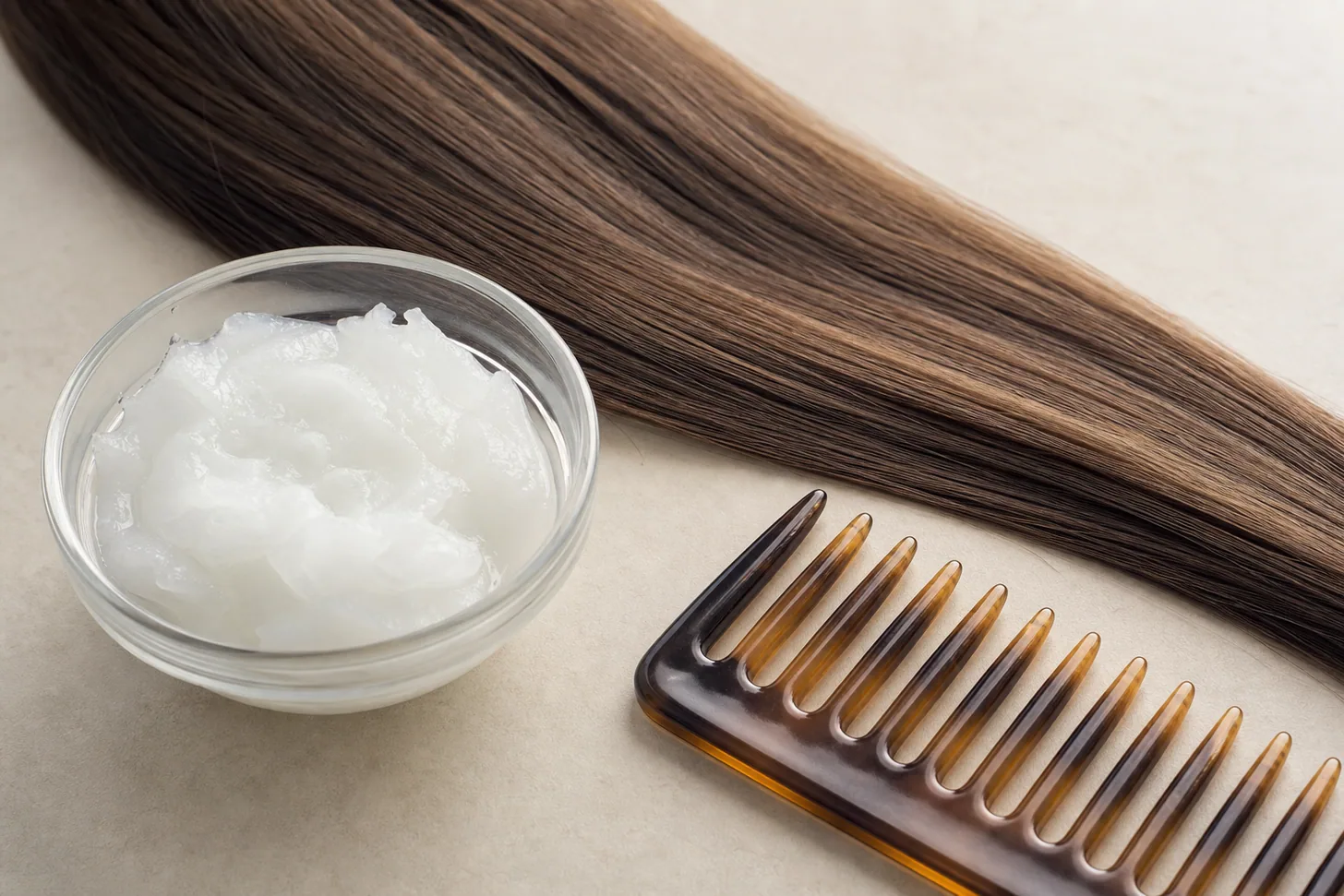
The other way is sawcutting. The comb is cut out of a solid sheet of material and the teeth are then rounded and polished, so there is no parting line anywhere on the piece. Kent, who have been making them this way for over two centuries, describe their handmade combs as hand-sawn from sheets of cellulose acetate with rounded teeth rather than moulded — and that, rather than any ingredient or coating, is what people are paying for.
Why fine hair cares more than anyone else: a strand's stiffness falls away extremely fast as it gets thinner, so a fine hair doesn't push past a small obstruction, it wraps around it. Multiply that by a hundred passes a week and you get the mid-length roughness and short broken pieces around the part that most people blame on their shampoo. Seamless is not a luxury detail on fine hair. It is the specification.
Fine hair does not want the widest comb on the shelf
This is the mistake I see most, and it comes from good advice applied one step too far. "Use a wide-tooth comb" is correct — but "wide-tooth" covers everything from a 3mm dressing comb to a rake built for dense type-4 coils, and those are not interchangeable.
A very wide rake passes through fine hair without ever engaging a knot. It feels wonderful. It also does nothing: the tangle gets pushed down the length, gathers the loose hairs it meets on the way, and arrives at the ends as a bigger knot than it started as.
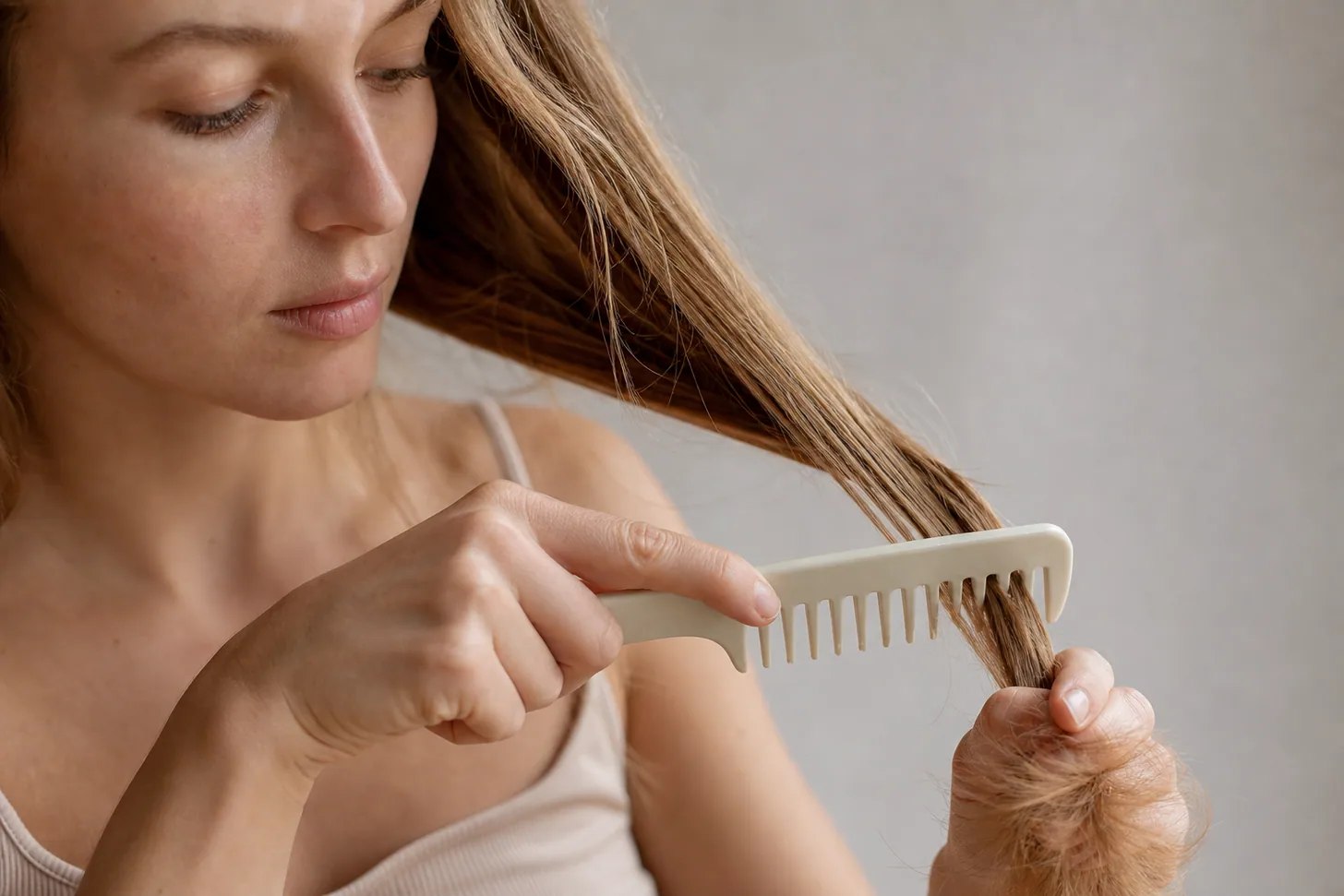
Fine hair wants teeth close enough to actually meet a tangle and smooth enough to leave it in one piece — the moderate end of wide, roughly 3–6mm, not the extreme end.
The other three specs worth knowing, in the order they matter:
Spec
What to look for on fine hair
Why
Seam
None — sawcut or well-finished
A mould ridge is the single biggest cause of snagging
Spacing
Roughly 3–6mm, medium-wide
Too wide and the comb skips the tangle rather than clearing it
Taper & tip
Tapered teeth, rounded tips
A tapered tooth widens the gap gradually instead of forcing it open
Material
Cellulose acetate or carbon composite
Both hold far less static than cheap moulded plastic — static is why fine hair haloes after combing
Flex
A little give, not rigid
A rigid tooth transfers all the force to the hair; a flexing one shares it
A comb is the wet-hair tool. A brush is the dry-hair tool.
These get treated as alternatives and they are not — they are two halves of one routine, and fine hair needs both. The dividing line is water.
Hair swells and weakens when it's wet, and the American Academy of Dermatology's healthy-hair advice is explicit about it: hair is delicate when wet, so use a wide-tooth comb rather than a brush to detangle. Its list of habits that damage hair adds the second half — let straight hair dry a little first, and comb gently.
Dry hair is the brush's territory: distributing oil down the length, smoothing a finished style, prepping a blow-dry. We covered that side in full in the best hair brush for fine and thin hair, including bristle spacing and why it matters more than bristle material.
This page is deliberately the other half of that pair. If you're deciding which to buy first, buy the comb — the wet-hair job is where fine hair is most often damaged, and it is the one a brush cannot safely do.
The best combs for fine hair, by job
One honest pick per job. Two of them are from the same professional supplier, which is less a coincidence than a reflection of how small the seamless-comb world actually is.
1
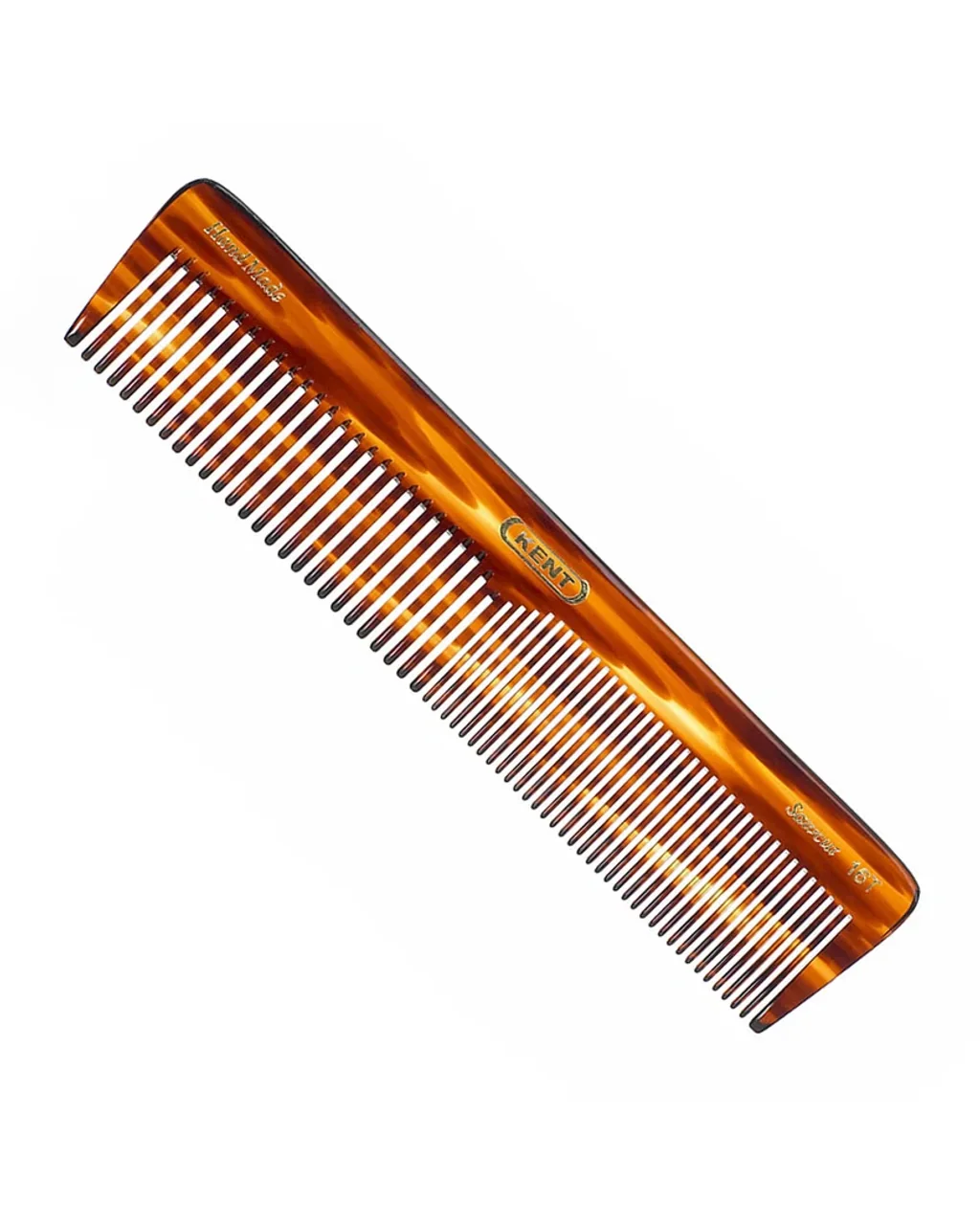
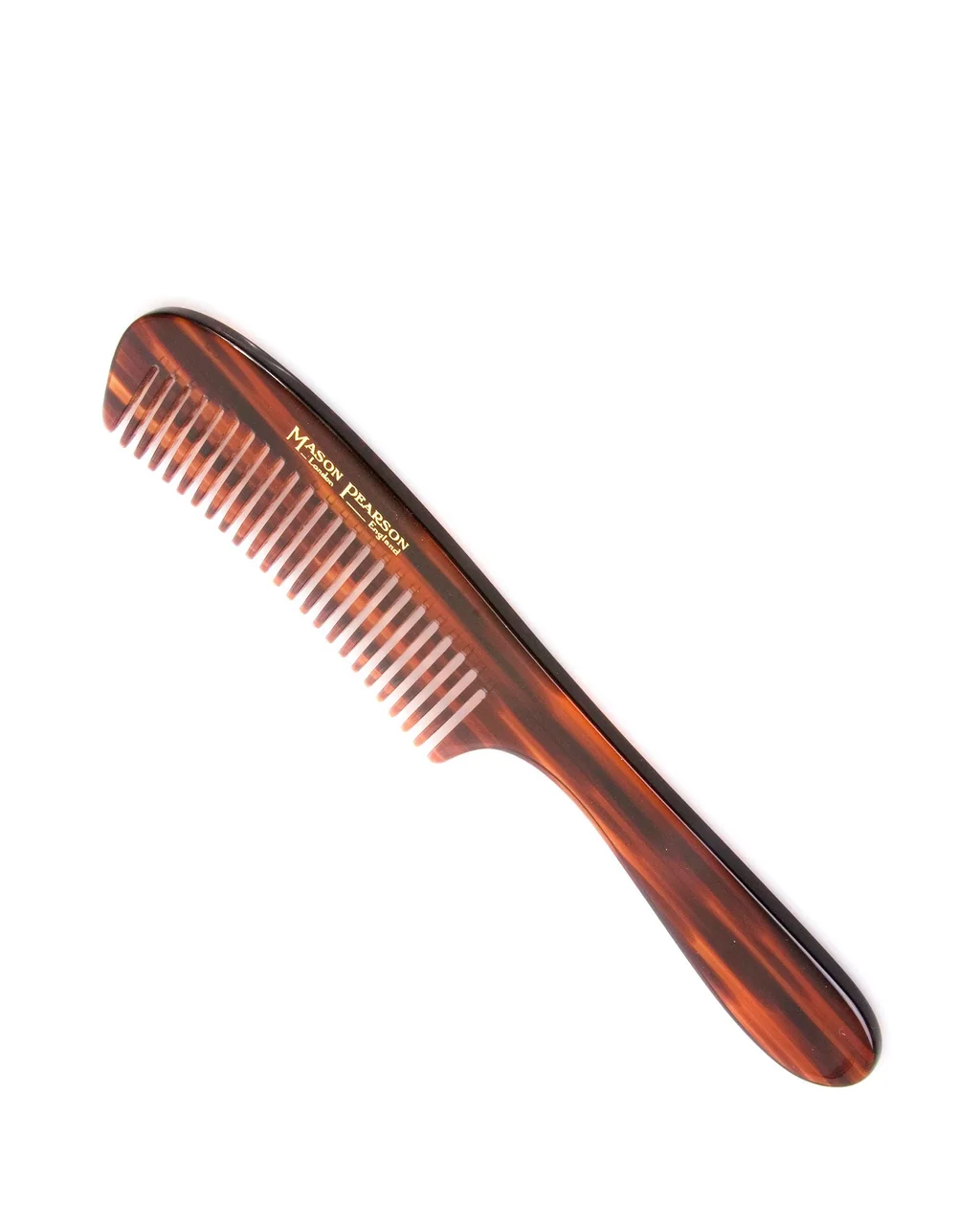
Best overall: Kent Handmade Dressing Table Comb A 16T
A 185mm sawcut comb with two tooth spacings on one body — wider at one end for working through damp hair, finer at the other for smoothing and parting — which covers almost everything fine hair asks a comb to do. It is hand-sawn from cellulose acetate rather than moulded, so there is no seam anywhere on it, and the teeth are rounded and polished to a finish you can feel the moment you use it. Best for: the one comb on the dresser, everyday detangling on damp-to-dry hair, and anyone replacing a lifetime of drugstore combs. Honest limitation: the length is generous, which is lovely at a dressing table and awkward in a handbag, and cellulose acetate does not love being left in a hot, wet shower.
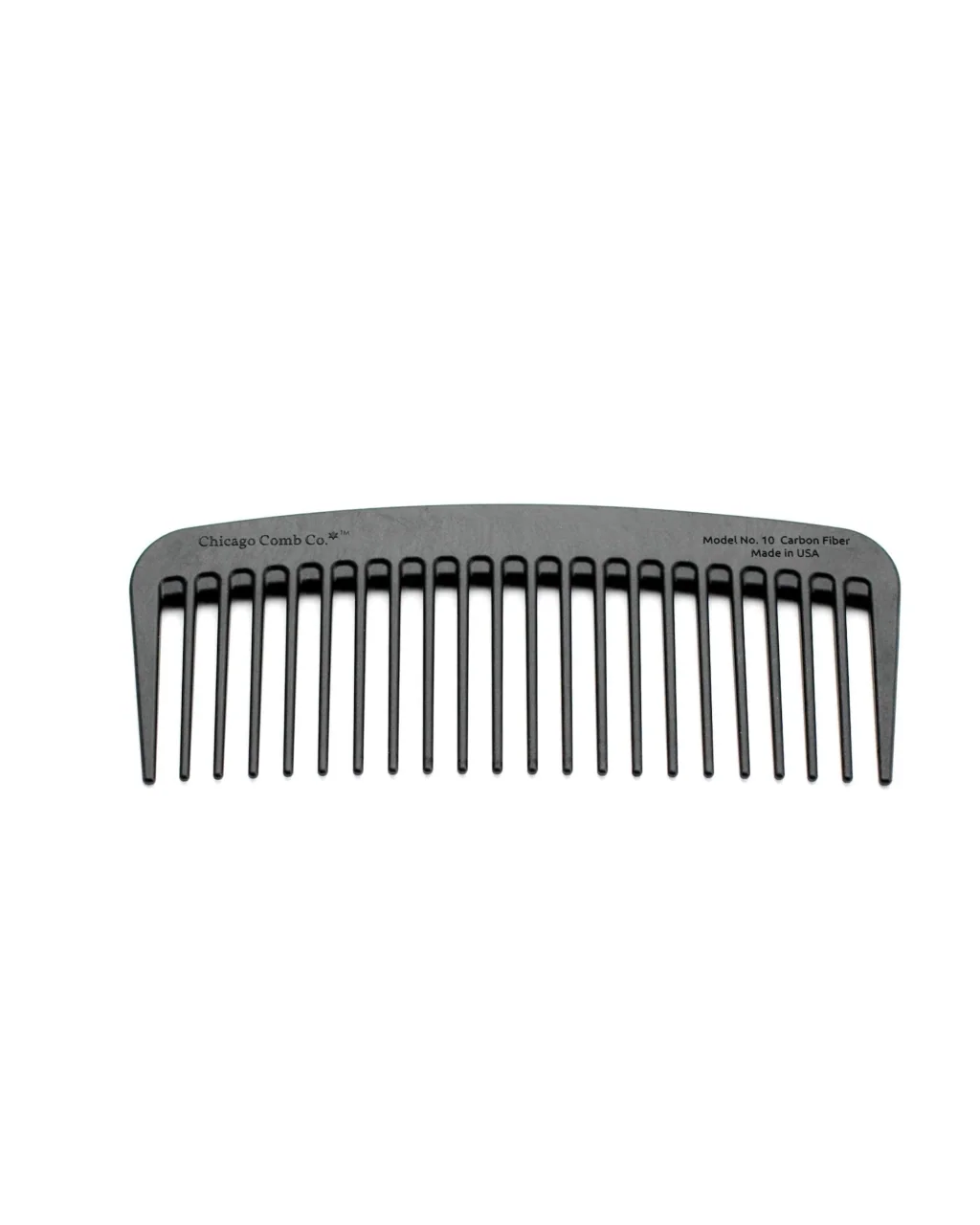
Best anti-static: Chicago Comb Model 10, Carbon Fiber
Five inches long with roughly 3.8mm tooth spacing — squarely in the range fine hair wants — in a carbon-fiber composite that holds essentially no static charge. If your hair lifts and haloes the moment a comb touches it in winter, this is the specific fix, and the material is unbothered by heat, chemicals or being left in the shower. Best for: static-prone fine hair, travel and gym bags, and colour-treated hair you don't want dragged through a plastic comb. Honest limitation: at five inches it's a pocket comb, so it is slow going on long hair, and carbon composite is stiff — it has almost no flex to share the load if you hit a knot.
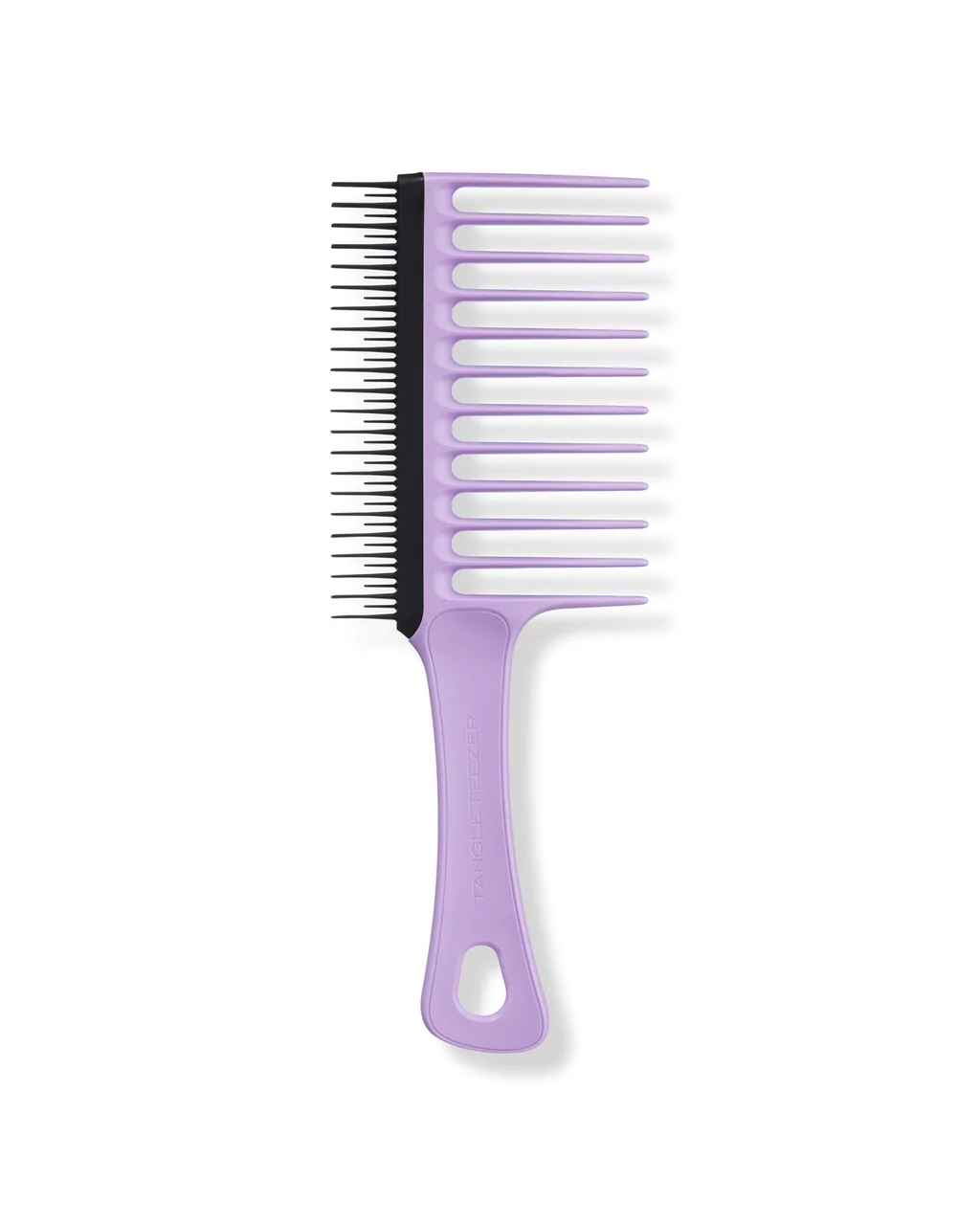
Two tooth patterns on one dual-sided body, with long teeth and soft rounded tips built for detangling with conditioner still in the hair — which is the single kindest moment to detangle fine hair, because the conditioner is doing half the work. It is moulded rather than sawn, but properly finished, and the rounded tips are the point. Best for: in-shower detangling, wavy fine hair, and anyone who currently drags a brush through wet hair. Honest limitation: it's designed for 3C–4C textures, so the teeth are longer and wider-set than fine straight hair strictly needs — use the closer-spaced side, and expect it to feel like it's barely touching your hair on the wide side.
Seven and three-quarter inches of hand-finished cellulose acetate with smoothly tapered teeth and rounded tips, made for wet hair and for pulling conditioner through the length. The taper is what you're buying: each tooth widens gradually along its own length, so a tangle is eased open rather than forced. Best for: long fine hair, fragile or colour-treated lengths, and buying once. Honest limitation: the price is not far off a decent hair dryer, and it does the same job as pick one at roughly twice the cost — this is a splurge, and we're not going to pretend it's a necessity.
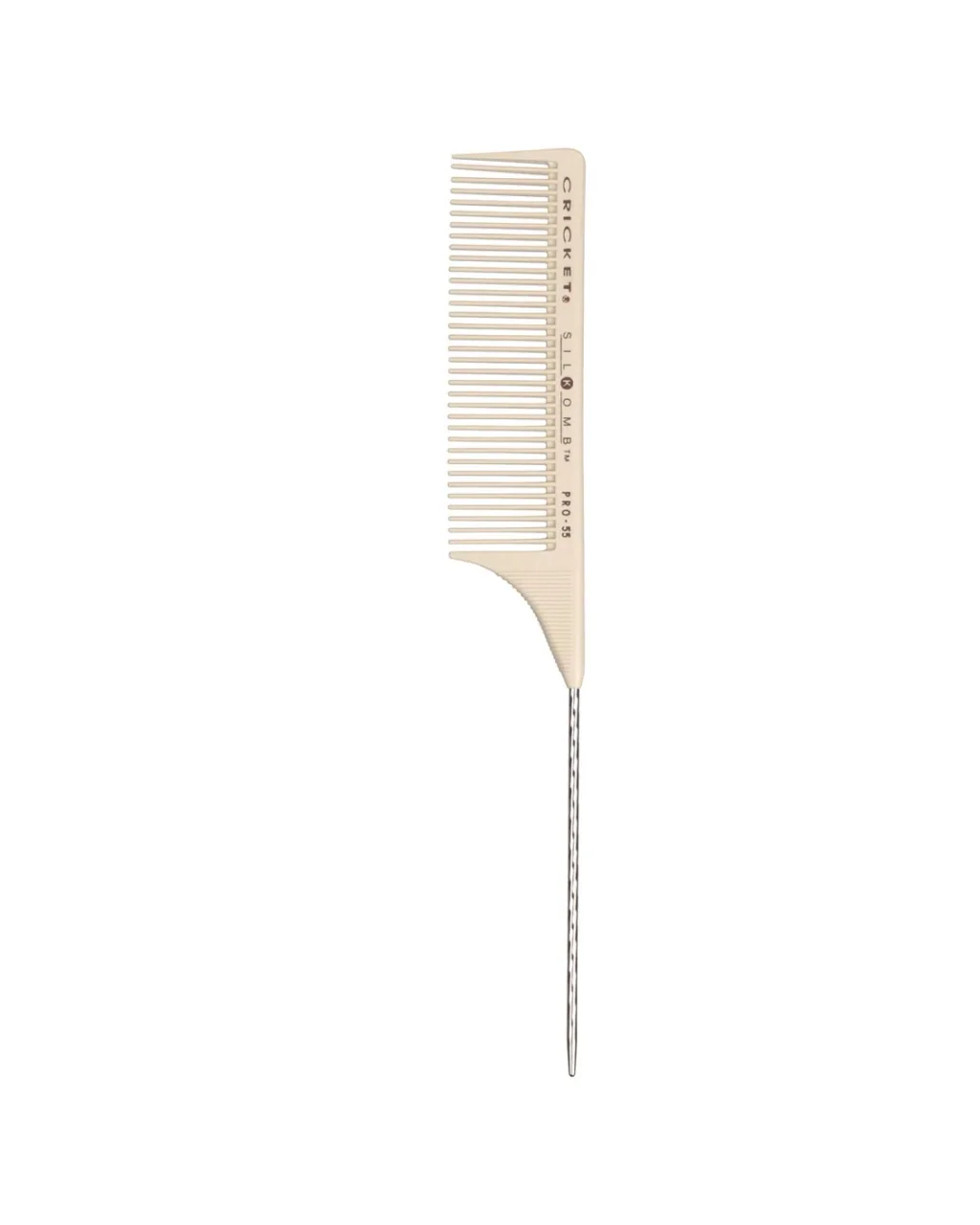
Best for sectioning: Cricket Silkomb Pro-55 Wide-Toothed Rattail
A salon-standard comb moulded in injected silicone and finished to genuinely seamless, polished teeth — with a tail for drawing clean partings, lifting sections to pin, and shifting a part line an inch to the side, which is the cheapest volume trick fine hair has. Best for: sectioning for a blow-dry, setting rollers, prepping an updo, and part-switching. Honest limitation: a rattail is a precision tool, not a detangler — the teeth are too widely set to clear a knot properly, so this is a second comb rather than a first one.
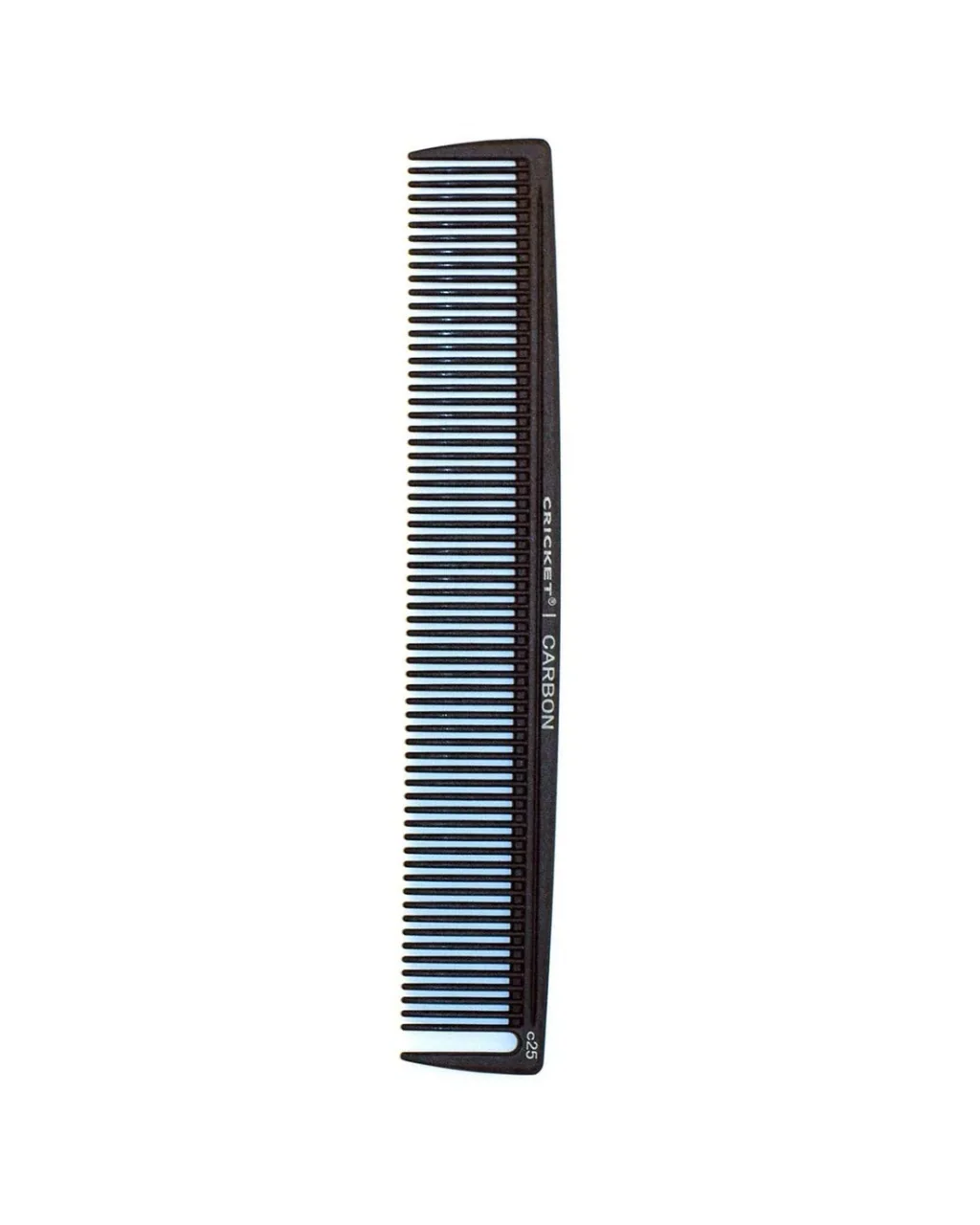
Best budget: Cricket Carbon Comb C25 Multi-Purpose
The comb sitting in most professional kit bags, for roughly the price of two coffees. Carbon fiber composite, anti-static, heat-resistant enough to sit next to a dryer, with a consistent medium tooth pattern that suits fine hair better than most things marketed at it. If you want to find out what a properly finished comb feels like without spending, start here. Best for: a first upgrade, a spare for the car or desk, colour application at home. Honest limitation: it is a workhorse rather than an heirloom — the finish is good, not exquisite, and the teeth are stiff with no flex, so it rewards patience on knots.
How to comb fine hair without leaving half of it in the comb
Five steps. The second one is the whole technique, and almost nobody does it.
Detangle before you get in the shower. Dry hair tangles less catastrophically than wet hair, and every knot you remove first is a knot that won't be tightened by shampoo. This one habit does more than any comb you can buy — the full case for it is in how to keep fine hair from tangling.
Hold above the tangle. Grip the section between the knot and your scalp with one hand, and comb below your grip. Your hand takes the tension instead of your roots. It is the difference between combing hair and pulling hair, and it costs nothing.
Ends first, in short sections, working upward. Clear the last two inches, then the next two, and so on. Never start a stroke at the scalp — that gathers every knot in the length into one and drags it to the ends, which is precisely where fine hair is oldest and weakest.
Wet detangling happens with conditioner in. The slip is doing half the work. Comb it through in the shower, rinse, then blot with a T-shirt rather than rubbing — rubbing is where most tangles are actually created. A pea of lightweight leave-in on the ends afterward keeps the next comb-through easy.
Stop when it stops finding anything. Fine hair does not benefit from a hundred strokes; that's an old myth for a different tool and a different era. Once the comb passes cleanly, put it down.
If the ends are the part that fights you every time, the underlying problem is usually moisture rather than technique — see the moisture routine for dry, fine hair. And if you're finding more hair in the comb than you expect, the honest reckoning of what is normal shedding and what isn't is in why your hair looks so thin when it's wet.
Hair combs for fine hair: the decorative kind, and which shapes hold
Confusingly, "hair comb" also means the ornamental kind — side combs, French combs, tuck combs, jewelled bridal combs. Those are an accessory question rather than a detangling question, and the fine-hair verdict on them is better than you would expect, for a mechanical reason worth understanding.
Every other accessory in the drawer grips by squeezing. A claw clip closes its jaws on a mass of hair; a barrette pinches a flat ribbon between a bar and a base; a banana clip folds hair between two rows of teeth. All three fail on fine hair the same way, because fine hair never fills the space the fastener was built for.
A decorative comb doesn't squeeze anything. It holds by leverage. The teeth slide under a base of hair, and the comb is then rotated back and down against the head — so the hair itself becomes the fulcrum and the comb locks against the skull. That rotation is the entire mechanism, and it's why a comb is one of the very few accessories whose grip barely depends on how much hair you have.
Which is the good news: on fine hair a comb will usually outperform the clip or the pins you reached for instead. What decides it is buying the right shape and putting it in the right way.
Shape
How it holds
Verdict on fine hair
French comb One curved comb, 3–4 in
Teeth slide under a section, then the comb rotates back and locks against the head
The best of the set. Holds a whole half-up on one piece of plastic, with no pins at all
Side combs Sold in pairs, 2–3 in
Pushed in flat along the temple; held by tension between the comb and the skull
Works in pairs, and only on hair with some grip — they slide straight out of freshly washed fine hair
Tuck or French-twist comb Long teeth, 4–5 in
Teeth pass through a rolled twist and lock the roll shut against itself
Good, but it needs the twist to bite into. Build the twist first and the comb becomes easy
Jewelled or bridal comb Short decorative teeth
Mostly ornamental — relies on the style underneath already being secure
Decoration only on fine hair. Anchor the style with a pin or a French comb first, then add it
Two rows of interlocking teeth fold the hair on itself
The weakest of the group on fine hair — the teeth need mass between them to stay apart
Three specs that decide whether a decorative comb holds
Tooth length — shorter than you think. The teeth have to pass all the way through the section and come out the other side to rotate against the head. Long teeth meant for thick hair travel straight past a fine section and grip nothing at all. This is the single most common reason a comb someone was given doesn't work for them.
Tooth count and spacing — more teeth, closer together. Widely spaced teeth let fine strands slide between them instead of being carried by them. Count the teeth: a French comb with fourteen or more across three inches will hold where one with eight won't.
Curve — it has to match the head. A comb curved to the shape of the skull locks flat against it. A straight comb sits proud at the ends and levers itself out over the course of an afternoon, which is the same leverage problem that makes oversized claw clips fail.
Then the technique, which matters as much as the shape: slide the comb in upward from below the base of the section, then rotate it back and down so the teeth turn against the head. Pushed straight in like a hairpin, it will fall out immediately. Easy updos for fine and thin hair has the French-comb half-up step by step, and half-up styles for fine hair has the variations on the shape.
Your hair is dry and you want it smooth and shiny. That's a brush's job — bristles distribute oil down the length, teeth don't. See the best hair brush for fine hair.
You're planning to backcomb for fullness. A stiff teasing comb shreds fine hair. A small teasing brush with mixed boar and nylon bristles builds the same cushion far more gently — it's pick six on the brush page.
Your hair tangles into knots within hours of brushing it. A better comb won't fix that; it's a cuticle problem. Start with porosity for fine hair, then the moisture routine.
You have fine, coily or tightly curled hair. Fingers first, comb second, and only ever on soaking-wet, conditioner-loaded hair — the full method is in care for fine natural hair.
FAQ
A seamless comb with medium-wide spacing, in cellulose acetate or carbon composite. Seamless means the teeth were sawn and polished rather than moulded, so there's no parting-line ridge running down the tooth for a fine strand to catch on. Medium-wide matters because the very widest rake combs, which are built for dense coily hair, pass straight through fine hair without engaging a knot and simply push it further down toward the ends. You want teeth close enough to meet the tangle and smooth enough to leave it without tearing.
They do different jobs, and fine hair needs both. A comb is the correct tool on wet hair — the American Academy of Dermatology advises using a wide-tooth comb rather than a brush to detangle wet hair, because hair is at its weakest when it's wet. A brush is the tool for dry hair, for distributing oil down the length, and for smoothing a finished style. If you only own one, own a comb: the wet-hair job is where fine hair is most often damaged.
An injection-moulded comb is formed between two halves of a mould, and the join leaves a fine ridge of plastic running the length of every tooth. On a well-finished comb that ridge is buffed away; on a cheap one it isn't. Fine hair is where the difference shows up first, because a fine strand is easily deflected and caught by an edge a coarse strand simply slides over. Sawcut combs — cut from a sheet of cellulose acetate and then rounded and polished by hand — have no parting line at all, which is why they're the traditional professional choice.
A comb doesn't break hair on its own; how and when you use it does. The three habits that cause damage are combing soaking-wet hair from the roots downward, forcing a comb through a knot rather than holding above it, and using a comb with rough or seamed teeth. Fine hair shows all three faster than coarse hair because each strand has less mass to survive the tension. Work from the ends upward in short sections, hold the hair above the tangle so your hand takes the strain, and let the comb do the finding rather than the pulling.
Indirectly, and only by preventing damage rather than creating volume. A comb doesn't add body — nothing about combing lifts a root or thickens a strand. What it does is preserve the hair you have, which matters more than it sounds when fine hair is already short on mass and every broken strand is visible. The one direct fullness trick a comb offers is the tail end of a rat-tail comb, used to shift your parting or lift a section for discreet backcombing at the crown.
A good sawcut or carbon comb should last decades — that's much of the point of buying one. Replace it when a tooth chips or snaps, because a broken tooth leaves a sharp edge that will cut into fine hair, and when the tips feel rough if you run a fingernail down them. Cheap moulded combs are worth checking more often; they lose their polish and start to drag. Wash any comb weekly in warm water with a drop of shampoo, and keep wooden-handled combs out of a soaking shower.
A rat-tail comb with medium teeth and a smooth pointed tail, used gently. On fine hair the tail is worth more than the teeth — it draws a clean parting, lifts a section for pinning, and shifts a part line without disturbing the hair around it. Avoid metal-tailed combs at the scalp unless you're experienced with them; a metal point is easy to scratch with, and a scratched scalp is a genuinely common cause of irritation that gets blamed on shampoo.
Better than most accessories, and the reason is mechanical. A claw clip, a barrette and a banana clip all grip by squeezing a mass of hair, and fine hair never fills the space they were built for — so they lever themselves out. A decorative comb holds by leverage instead: the teeth slide under a section, the comb rotates back and down, and the head itself becomes what it locks against. That grip barely depends on how much hair you have, which is why a French comb will often hold a half-up that a clip won't. Three specs decide it — teeth shorter than you expect so they pass right through the section, teeth close together so fine strands can't slide between them, and a curve that matches the shape of your head. And it has to go in upward from below the section and then rotate; pushed straight in, it falls out immediately.
Fourteen years across the chair and the page, specialising in fine-hair care. Megan's view on combs is that it's the cheapest upgrade in the whole routine and the one nobody makes, because a comb doesn't feel like a purchase — it feels like something you already own.
Results vary with hair type, density, and growth patterns. This guide is educational and not a substitute for an in-person consultation with a licensed stylist.
Get the good hair intel
One honest, stylist-written guide in your inbox each week. No hype.

 MH
MH