Reviewed by Tara Sullivan · Updated July 2026 · 9 min read
The spec that matters on a brush for fine hair isn't the bristle material everyone argues about — it's how far apart the bristles are set and how much they flex. A densely packed pad grips more strands than a fine head can give, and the tension that feels like thorough brushing on thick hair is what snaps fragile strands at the hairline and the nape. Below are six brushes by job — everyday detangling, brushing without pulling, boar bristle for shine, the premium choice for fragile hair, smoothing and styling, and teasing for root volume — each with who it suits and one honest limitation. Round brushes are a different tool for a different job and have their own guide.
Every product here is chosen independently, on the merits — what genuinely suits fine, thin hair. Links go to each brand's official page, and we don't take payment for placement. Price tiers are rough guides because prices change.
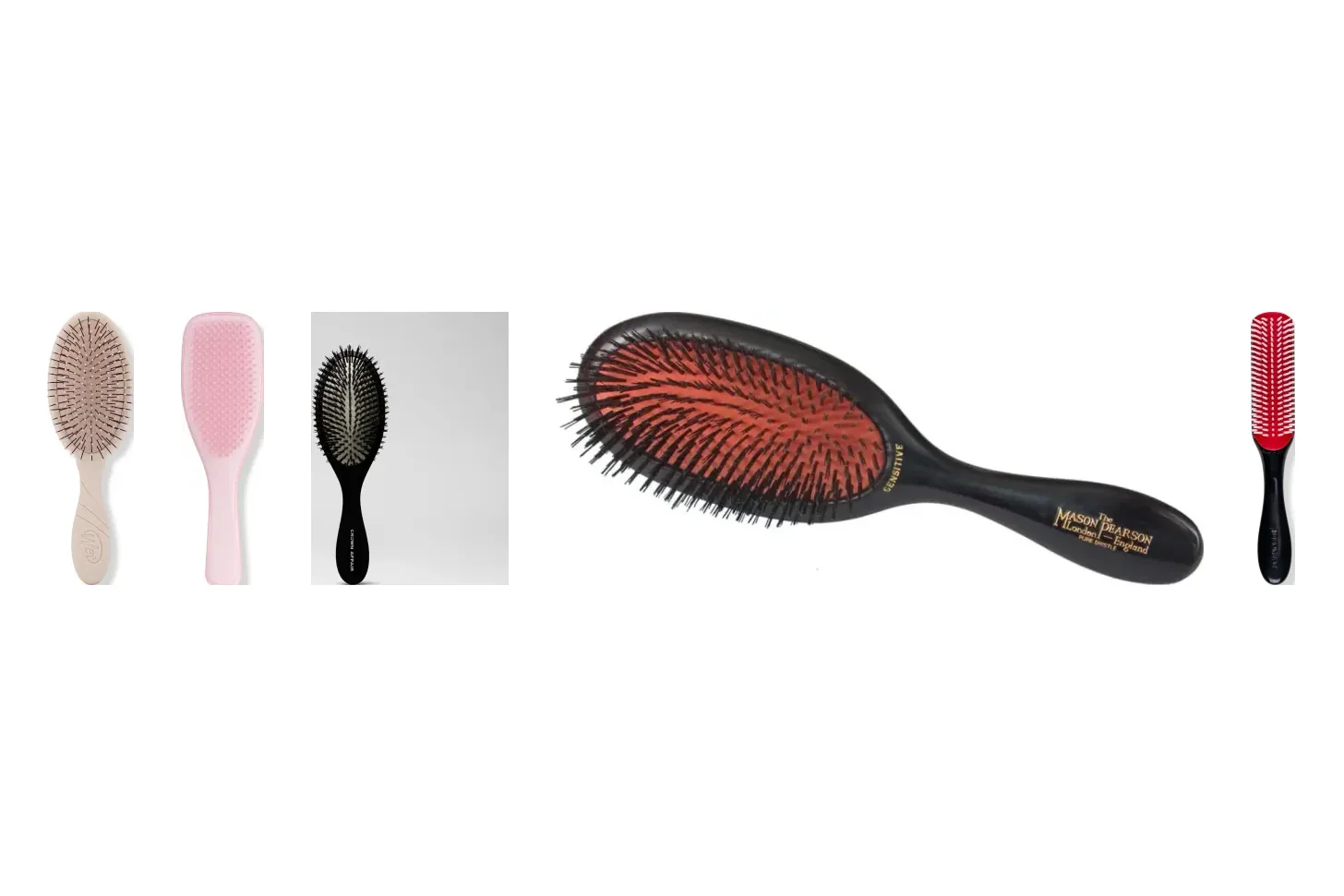
Our six picks, one per job. Product images courtesy of the brands.
Chair-side note
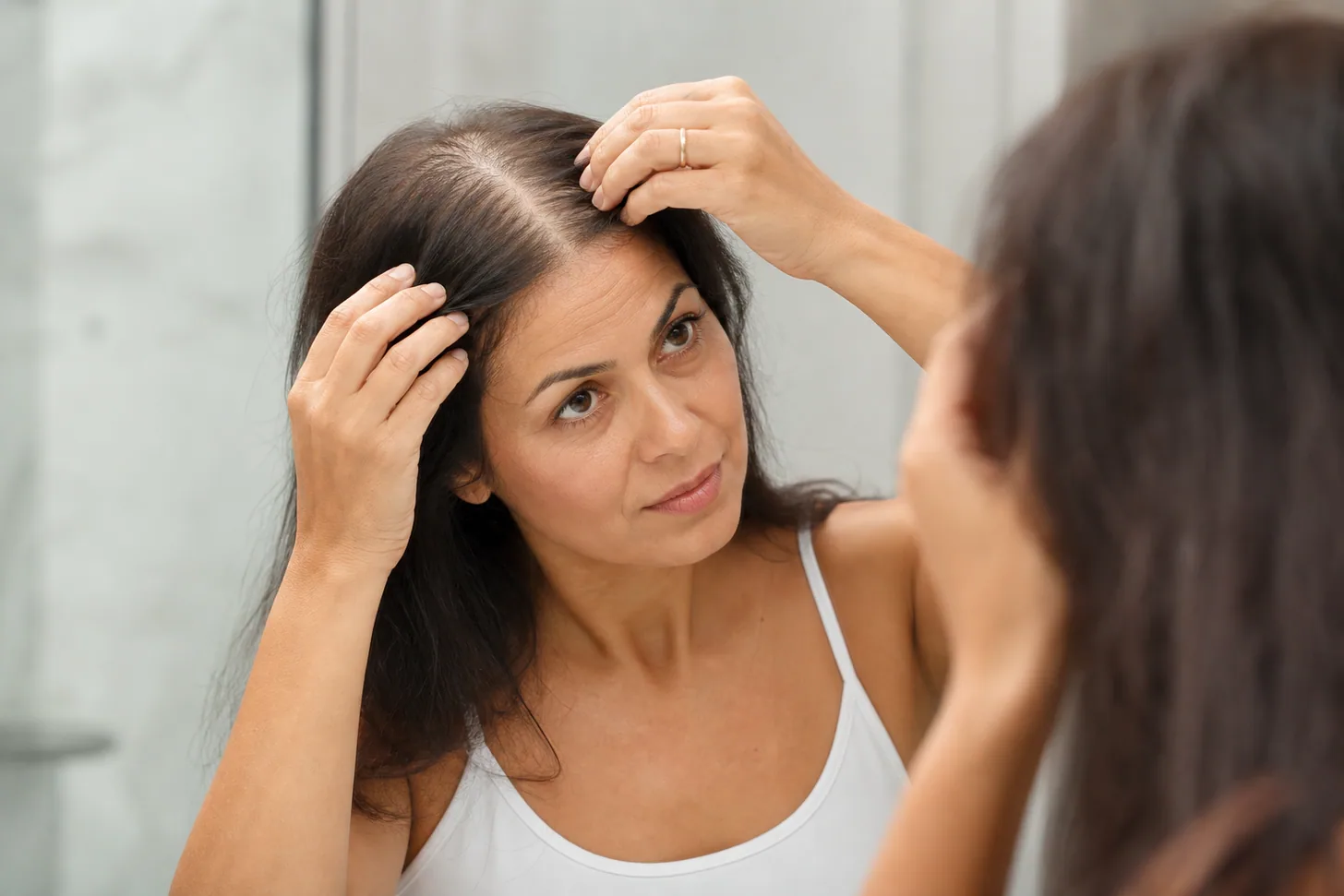
Ask me what's causing the short, wispy breakage around a client's hairline and my first question isn't about heat or color — it's "what do you brush with, and when?" More often than not she brushes soaking-wet hair from the roots down, with a firm brush she bought because it felt substantial. Fine hair is at its most fragile wet, and a root-to-tip stroke drives every tangle in the length into one knot at the ends, where it either rips or breaks. What I ask for instead: comb it wet with a wide-tooth comb, brush it when it's mostly dry, and always start at the ends and work upward in short sections. Six weeks of that and the halo of broken pieces around the part starts growing out rather than multiplying.

MH
— Megan Holloway, Editor-in-Chief
What actually matters in a brush for fine hair
Bristle spacing before bristle material. A pad built for thick hair packs bristles tightly so it can catch enough strands to control the mass. On a fine head, that same pad catches too many strands at once and the drag has nowhere to go except into the hair. Widely spaced, flexible bristles do less per stroke and far less damage.
Flex, not force. Bristles that give when they meet resistance — flexible plastic, or soft boar with a cushioned base — release a tangle instead of tearing through it. Rigid pins on an unpadded head are the opposite.
Boar, nylon, or a mix. Boar bristle smooths the cuticle and pulls scalp oil down the length, which suits fine hair that's greasy up top and dry at the ends. Nylon pins detangle better and reach through more hair. Mixed brushes attempt both, with the longer nylon pins doing the detangling and the short boar doing the smoothing.
Ball tips, honestly assessed. The little plastic balls on the ends of nylon bristles protect the scalp, but they also catch and tug fine strands. If you have fine hair and a sensitive scalp, a soft boar brush or a flexible detangler usually feels better than a ball-tipped pad.
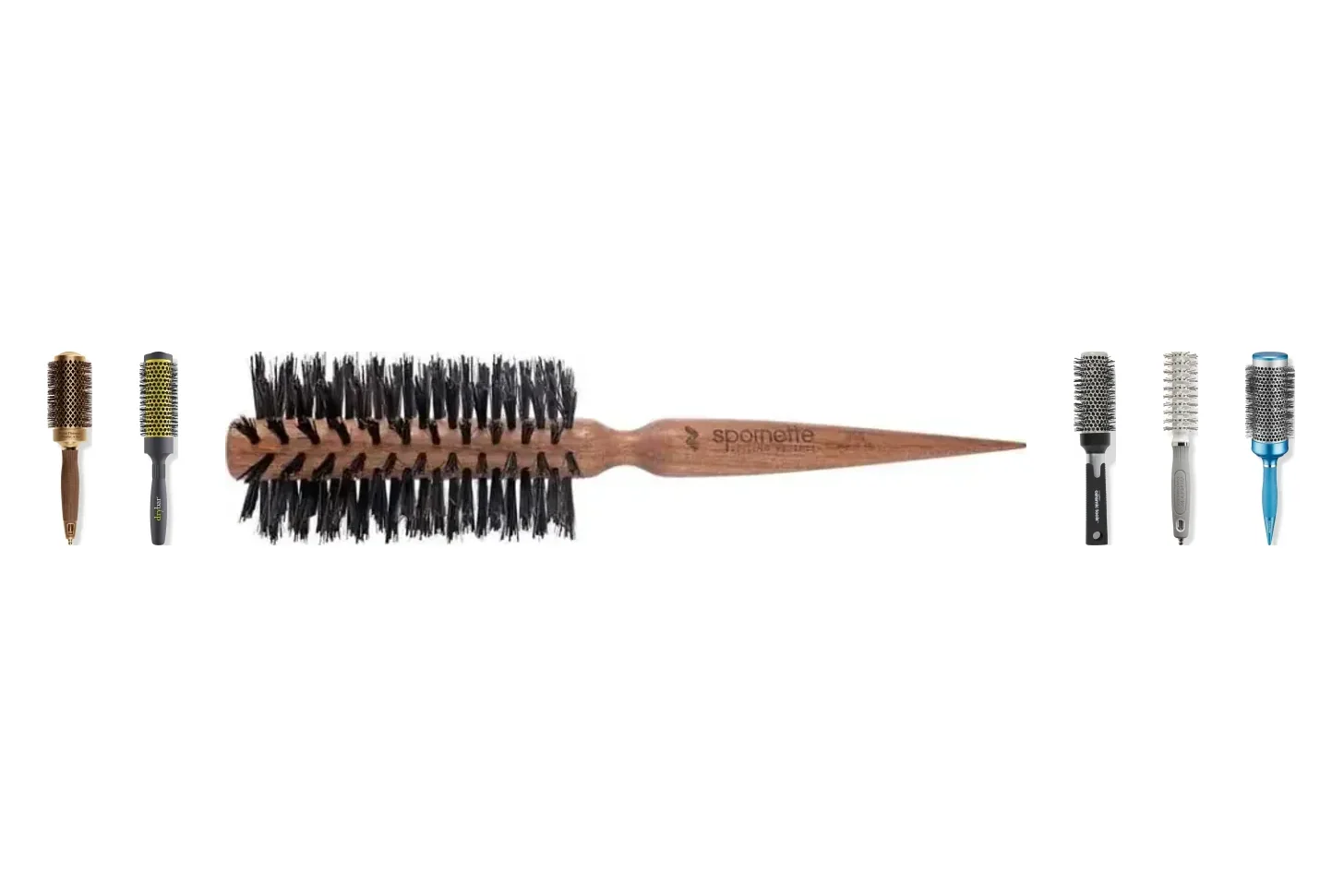
What isn't on this page. Round brushes, which are heat-styling tools used against airflow to build root lift rather than to detangle. Barrel sizes and bristle types for fine hair are in our round brush guide, and the technique that uses them is in how to blow-dry fine hair for volume.
Wet fine hair wants a comb, not a brush
This is the single highest-value habit change on this page. Hair is weakest when it's wet — the fiber swells, stretches further before it breaks, and doesn't return to where it started. The American Academy of Dermatology's guidance on habits that damage hair is to let straight hair dry a little before combing it gently with a wide-tooth comb, and its healthy-hair advice puts it plainly: hair is delicate when wet, so use a wide-tooth comb rather than a brush to detangle it, and blot with a towel or t-shirt instead of rubbing.
The same guidance also punctures the ritual most of us grew up with — hair never needs a hundred brush strokes a day, and on fine hair those strokes are actively costly. Brush to detangle, to distribute product, and to style. Otherwise, leave it be.
Which means a comb is the other half of this kit rather than an alternative to it — and combs have their own specification that matters far more than the price: whether the teeth were sawn or moulded. The picks, and the seam test that tells them apart in four seconds, are in the best comb for fine and thin hair.
The best brushes for fine hair, by job
One honest pick per job. Most fine-haired people need two of these — an everyday detangler and one specialist brush — not six.
1
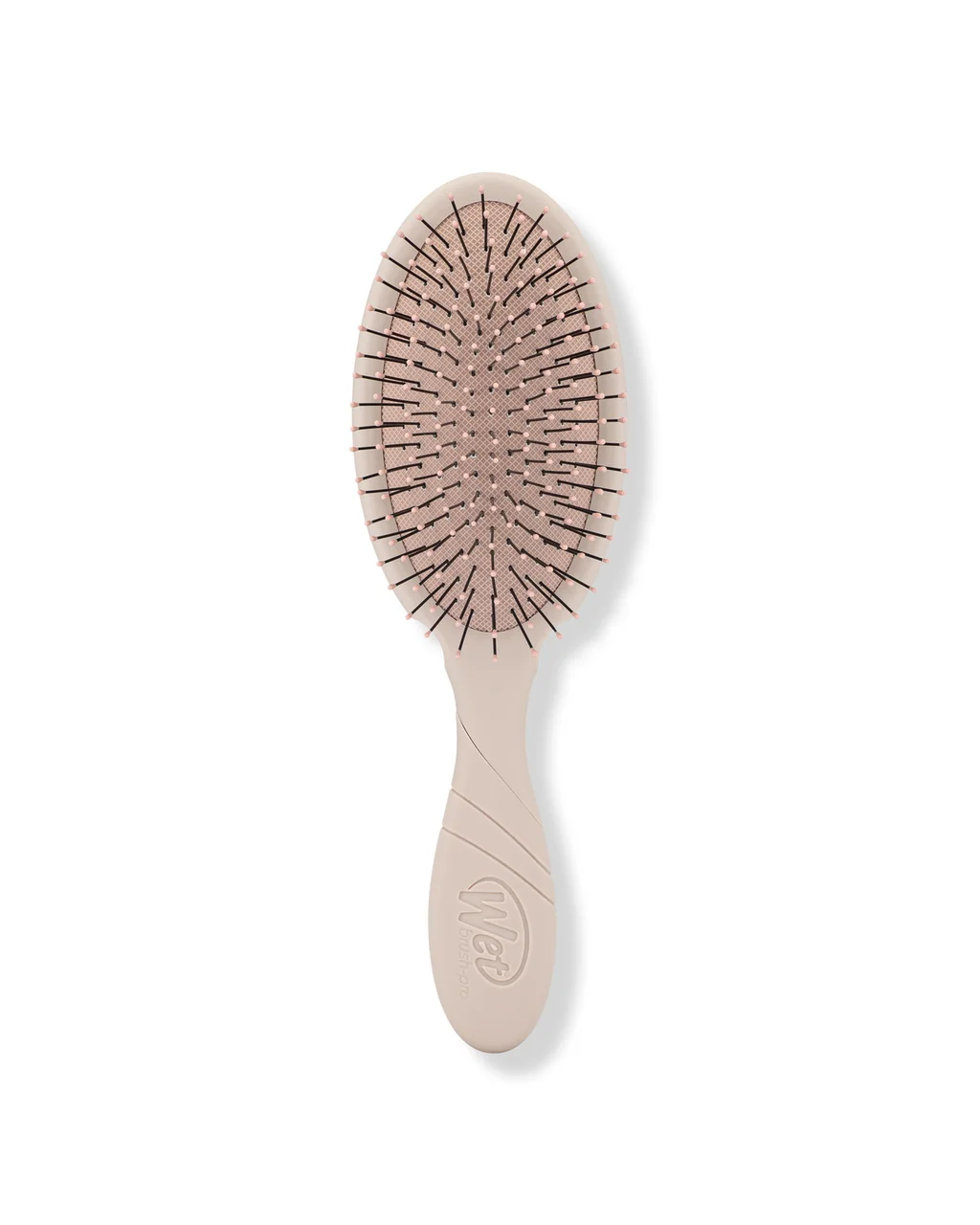
Best overall: Wet Brush Original Detangler
Long, thin, widely spaced bristles that bend out of the way when they hit a knot instead of dragging it through the length — which is the entire specification fine hair needs, at a price under most people's lunch. It's the brush I hand to clients who tell me they're losing hair in their brush, because a good proportion of what they're seeing is breakage rather than shedding. Best for: everyday detangling on fine hair of any length, and the brush to keep in the bathroom. Honest limitation: it detangles far better than it smooths — it won't give you the polished, glossy finish a boar-bristle brush does, and the plastic handle feels exactly as cheap as it is.
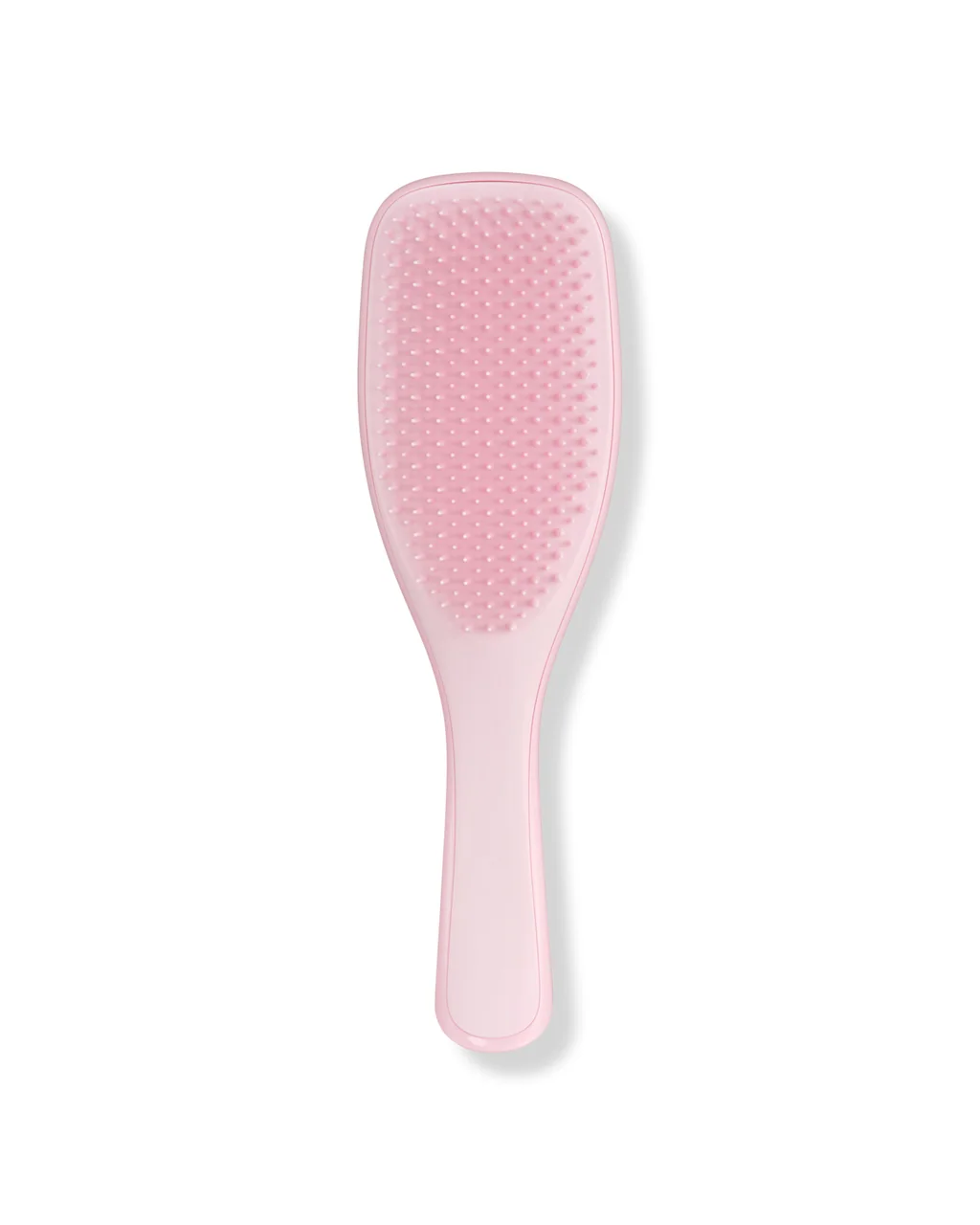
Best for brushing without pulling: Tangle Teezer The Ultimate Detangler
Two bristle lengths on a flexible plate: the long ones open the tangle, the short ones smooth behind them, and the whole head flexes so the force never builds up in one strand. The handled version is worth the extra over the palm-held original if you have any shoulder or wrist trouble, because it lets you keep the stroke light. Best for: tender-headed people, fine hair that tangles easily, and anyone who brushes on the go. Honest limitation: it can't hold tension for styling, so it's useless for blow-drying, and the tight bristle field collects shed hair that needs picking out regularly.
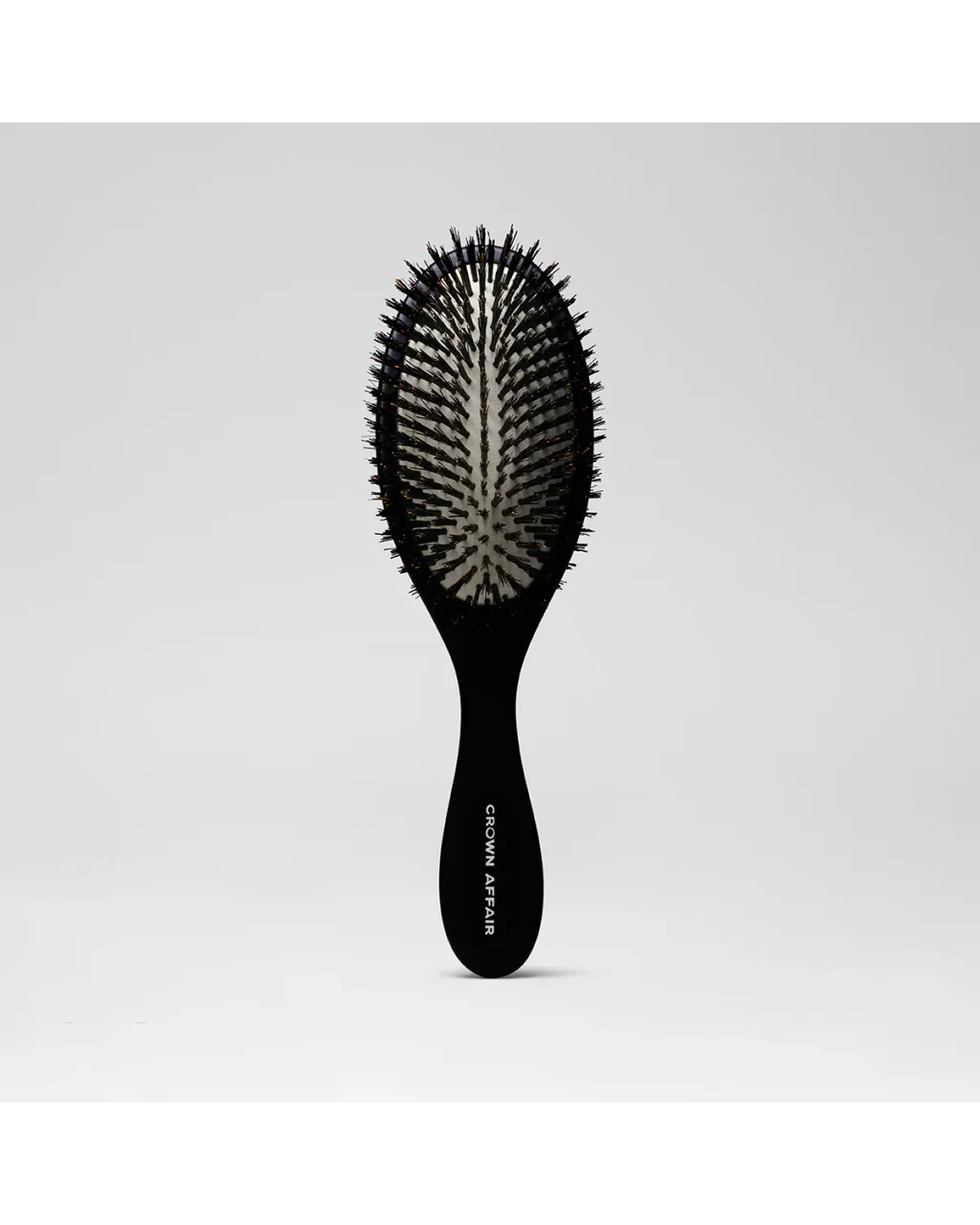
Best boar bristle for shine: Crown Affair The Brush No. 003
A pure boar-bristle brush made specifically with fine strands in mind — it smooths flyaways and walks the scalp's oils down the length rather than leaving them sitting at the roots, which is the fine-hair version of a conditioning treatment that costs nothing. Ten slow strokes at night visibly changes how the ends look by morning. Best for: fine hair that's oily at the roots and dull at the ends, and for polishing a finished style. Honest limitation: boar bristle doesn't detangle — this is a second brush, used after a detangler, not instead of one — and it's a real investment for something that only smooths.
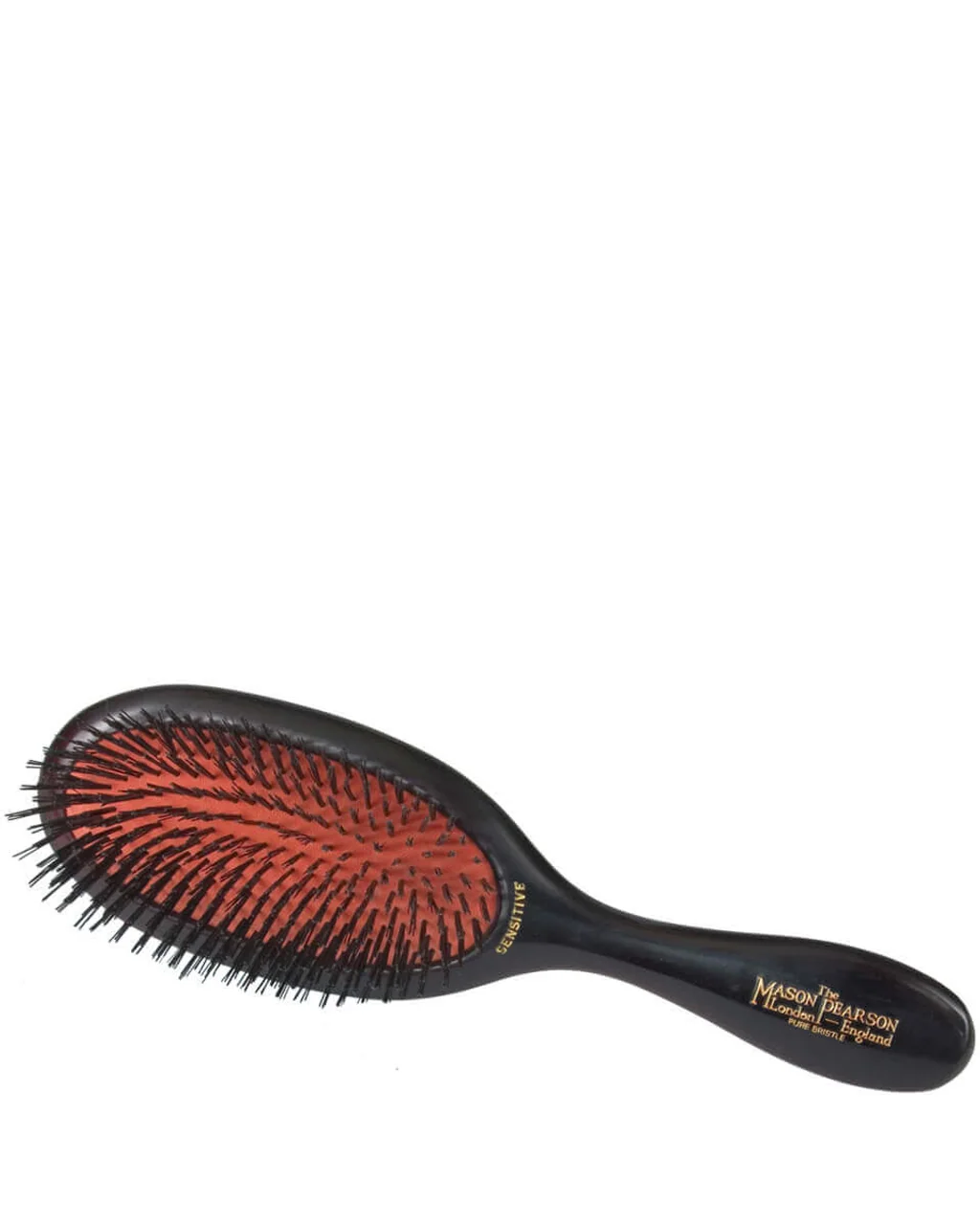
Best for fragile or thinning fine hair: Mason Pearson Sensitive
The Sensitive is the model in the range built from fine boar bristle alone, and the brand recommends it specifically for fine, thinning, and delicate hair — including hair that's fragile from illness or treatment. Set into a rubber cushion that gives under pressure, it's about as gentle as a real brush gets while still smoothing properly. Best for: genuinely fragile hair, low density, and anyone who has watched breakage build up at the hairline. Honest limitation: the price is difficult to defend on any grounds other than that it lasts decades, and pure bristle can't work through a serious tangle — you'll still need a detangler alongside it.
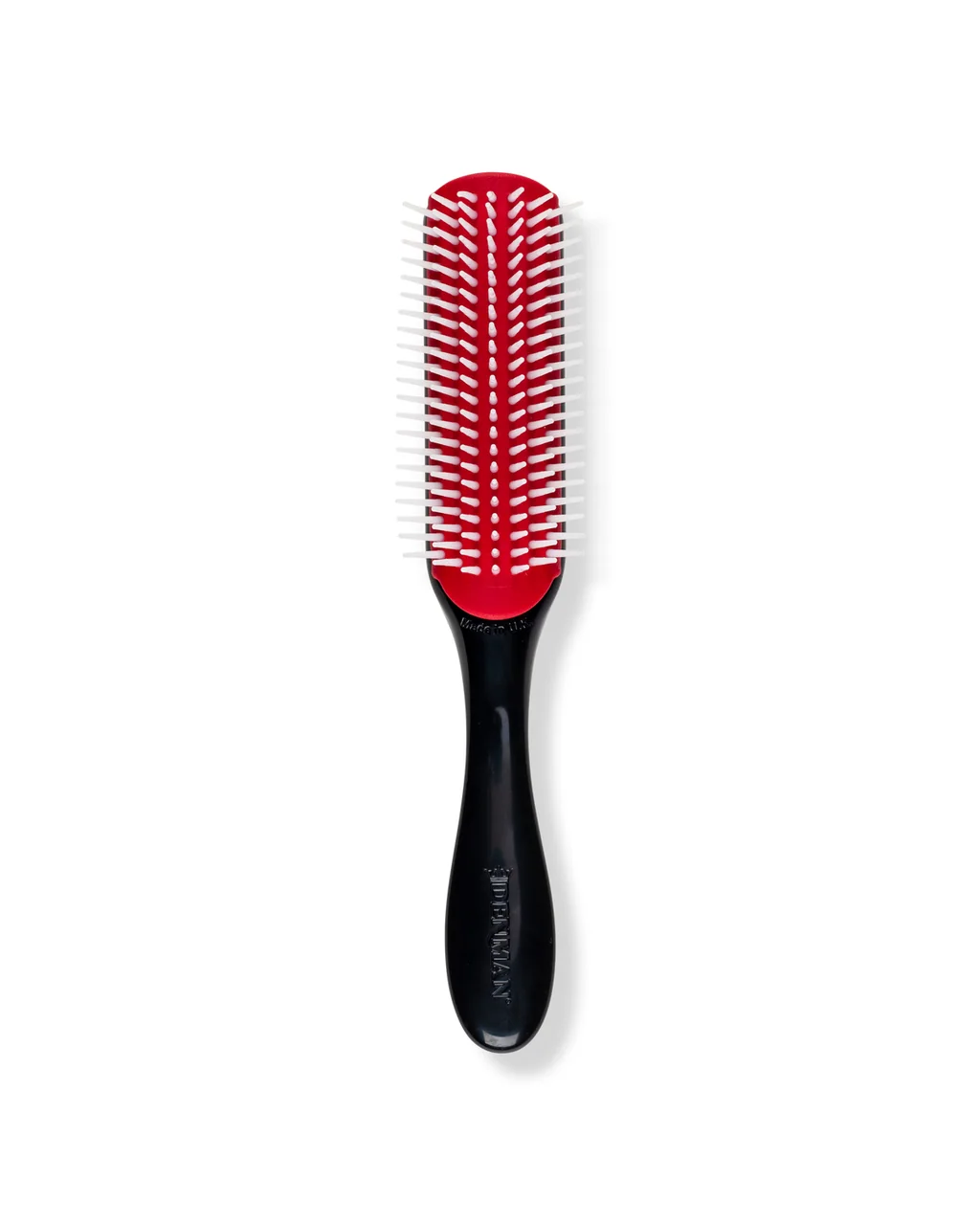
Best for smoothing and styling: Denman D3 Original Styler
The classic seven-row styling brush, and the useful detail for fine hair is that the rows come out — pull two and you have a wider-spaced brush that grips a fine section without over-tensioning it. It gives the control you need to smooth a bob or direct a fringe, which a flexible detangler can't do. Best for: smoothing short and mid-length fine hair, styling a blow-dried bob, and directing bangs. Honest limitation: at full row count it's firm — too firm for wet fine hair — and the pins are unforgiving if you rush a stroke.
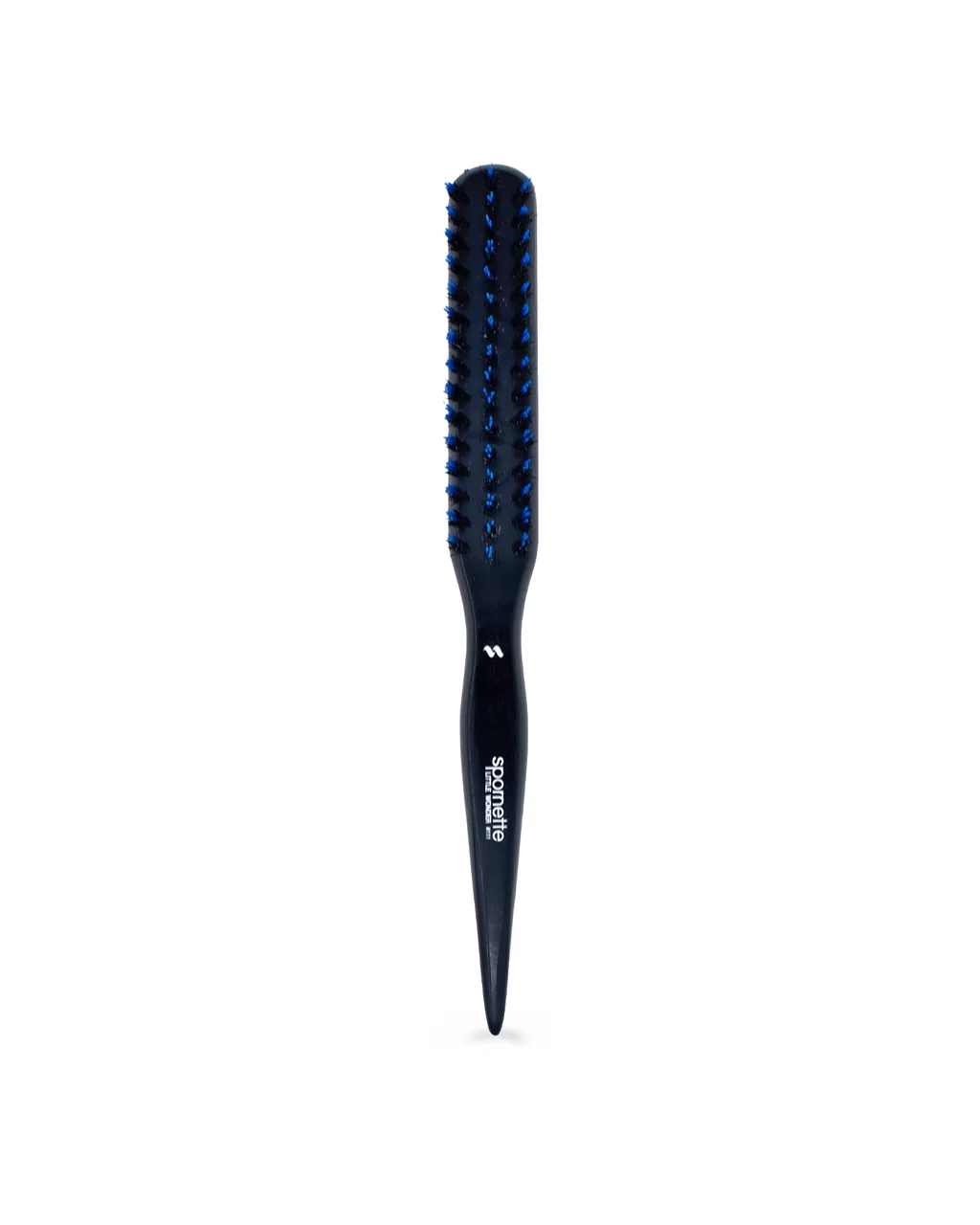
Spornette Little Wonder small teasing brush with boar and nylon bristles, product shot on white
6
Best for root volume: Spornette Little Wonder Teasing Brush #111
A small teasing brush with short boar bristles and longer nylon ones, which is the combination that builds a cushion at the roots without shredding fine strands the way a stiff teasing comb does. It's the tool behind almost every fuller-looking updo, half-up style, and lifted crown you've admired on fine hair. Best for: discreet backcombing at the crown, prepping a fuller-looking ponytail, and lifting a flat part. Honest limitation: teasing is a technique before it's a tool — done too often or too aggressively it causes exactly the breakage this page is trying to avoid, so keep it to the under-layers and brush it out gently the same day.
Detangle wet hair with a wide-tooth comb, not a brush. If you must use something with bristles, make it a flexible detangler and be slow about it.
Always start at the ends. Work in short sections, moving up an inch or two at a time. Root-to-tip strokes push every tangle in the length into a single knot at the ends.
Hold the section above where you're brushing. Anchoring the hair with your free hand means the tension stops at your fingers instead of pulling at the follicle.
Brush before you wash, not just after. A pre-wash detangle means fewer knots forming in the shower, which is where most fine-hair breakage actually happens.
Use the boar brush last, on dry hair. Ten unhurried strokes from the scalp down distributes oil and closes the cuticle — the same principle behind taming frizz on fine hair without adding product.
Clean the brush weekly, wash it monthly. Oil and product residue on the bristles transfer straight back onto clean roots, which is a surprisingly common cause of hair that goes greasy a day early.
About the hair in your brush
It's the question that brings people to a brush guide in the first place, so here's the honest answer. The American Academy of Dermatology notes that it's normal to shed between 50 and 100 hairs a day, and if you brush every second or third day, several days' worth arrives at once and looks like a crisis. Shed hairs have a small pale bulb at one end; short broken pieces snapped mid-length don't, and those point to mechanical damage from brushing, heat, or elastics rather than to loss.
What isn't routine is a sustained increase — clumps in the shower, a part that's visibly widening, or a ponytail that's noticeably thinner than it was six months ago. That's a dermatologist's question, not a brush question. Start with how to tell fine hair from thinning, which is medically reviewed and says plainly when to book an appointment.
When a new brush isn't the fix
Your hair looks flat rather than tangled. No brush creates volume on its own — that happens with airflow and tension during the dry. Start with how to get root volume in fine hair.
You have short broken pieces along the part and hairline. That's mechanical damage. Change the technique and the wet-hair habit first; a gentler brush helps only once the pulling stops.
Your ends tangle again within an hour of brushing. Dryness and a raised cuticle, not the brush. The moisture routine for dry, fine hair fixes the cause.
You're brushing to distribute oil down greasy roots. Brushing moves oil onto the lengths but also stimulates more of it. The wash cadence matters more — see how often to wash fine hair.
You want lift while you blow-dry. That's a round brush, a different tool with a different technique — the sizing is in our round brush guide.
FAQ
One with widely spaced, flexible bristles rather than the densely packed pad most brushes use. Bristle spacing matters more than bristle material on fine hair, because tightly packed bristles grip more strands than a fine head can comfortably give and the tension snaps them. A Wet Brush Original Detangler is the safest everyday choice and costs very little; a Tangle Teezer flexes rather than pulls; and if you want boar bristle for shine, Mason Pearson's Sensitive model uses fine, sparse boar specifically for fine and thinning hair. What matters more than any brand is that the brush glides through without you having to force it.
Yes, if the bristles are soft and sparsely set. Boar bristle is genuinely good at smoothing the cuticle and drawing the scalp's natural oils down the length, which is useful on fine hair that goes greasy at the roots and dry at the ends. The problem is that most boar brushes are packed densely for thick hair, and that density creates too much drag on fine strands. Look for a brush described as being for fine or delicate hair, and expect it to take more strokes with less grip, which is exactly the point.
Ideally not with a brush. Hair is at its weakest when wet, and the American Academy of Dermatology's advice is to use a wide-tooth comb rather than a brush to detangle wet hair, working gently. If you do brush wet fine hair, use a flexible-bristle detangler, start at the ends and work upward in short sections, and never drag from the roots down through a knot. Let the hair dry partway first if you can, and blot with a microfiber towel or t-shirt rather than rubbing, which is what creates most of the tangles in the first place.
Some of it is normal and some of it is worth investigating. The American Academy of Dermatology notes that it's normal to shed between 50 and 100 hairs a day, and if you only brush every couple of days, several days' worth arrives in the brush at once, which looks alarming and usually isn't. What is not normal is a sudden, sustained increase — clumps in the shower, a widening part, or noticeably less hair in a ponytail. That pattern is worth a dermatologist's opinion rather than a new brush, and the difference between fine hair and thinning hair is worth understanding first.
Only as often as you need to style or detangle it. The old advice about a hundred strokes a night is a myth the AAD specifically debunks, and on fine hair repeated brushing does real mechanical damage — it roughs up the cuticle, drags oil from the scalp onto roots that are already flat, and snaps the fragile strands around the hairline. Brush to remove tangles, to distribute product, and to style. Between those, leave it alone.
Only if you blow-dry for volume. A round brush is a heat-styling tool, not a detangling one: it creates tension against the airflow so the roots dry standing up rather than lying flat. Everything on this page is for detangling, smoothing, teasing, and finishing on hair that's already dry or drying. If your main complaint is that your hair falls flat by lunchtime, the round brush is the more important purchase, and the barrel sizes that suit fine hair are covered in our separate round brush guide.
Pull the shed hair out weekly with the end of a rat-tail comb, and wash the brush properly once a month. Fine hair carries less oil down the length than thick hair does, so more of it stays on the scalp, transfers to the bristles, and comes back onto clean roots the next day — a dirty brush is a genuinely common cause of hair that goes greasy faster than it should. Use a drop of shampoo in warm water, swirl the bristles without submerging a wooden handle or a cushioned pad, rinse, and dry bristles-down on a towel.
Fourteen years in hair — eight behind the chair, six in editorial — with a focus on scalp health and the science of fine, flat-prone hair. Megan judges a brush by how little force it needs, not by how substantial it feels.
Results vary with hair type, density, and growth patterns. This guide is educational and not a substitute for an in-person consultation with a licensed stylist.
Get the good hair intel
One honest, stylist-written guide in your inbox each week. No hype.