Reviewed by Tara Sullivan · Updated August 2026 · 10 min read
Start with the thing every other page in this category is built on, because it isn't true. The "43% less hair breakage" figure attributed everywhere to a dermatology journal cannot be found in any index of the literature — a PubMed search for "silk pillowcase hair" returns nothing at all, and every site quoting the number sells silk. That doesn't make silk pointless: friction genuinely damages the cuticle, and silk genuinely has a smoother surface than cotton, so the direction of the effect is almost certainly right.
It means nobody has measured the size of it, and you are therefore buying a plausible mechanism, not a proven result. Which changes what you should shop on. Since the efficacy claims can't be checked, buy on the specifications that can: momme, fiber, certification, and — the one that matters most on fine hair and gets mentioned least — closure type.
A zipper is a strip of hard teeth sitting under your head all night, and fine hair is the hair most likely to get caught in it and least able to survive being caught. Below: five picks with their specs verified on the brand's own page, how to read the claims on the box, and the honest case for a $10 satin one instead.
Every product here is chosen independently, on the merits — what genuinely suits fine, thin hair. Links go to each brand's official page, and we don't take payment for placement. Price tiers are rough guides because prices change.
This is the what to buy page. For where a pillowcase actually ranks among the things that happen to fine hair overnight — it's third — start with sleeping with fine hair.
The closure is the specification worth caring about, and almost nobody mentions it.
The evidence, in full — because it takes one paragraph
This category runs on a single statistic, so it's worth seeing exactly how much is behind it.
What can't be found: the study. Search PubMed for "silk pillowcase hair" and there are no results — not a small study, not a weak study, none. The "43% less breakage than cotton" line is attributed across dozens of retail sites to a paper in a named dermatology journal, and none of them links to it.
And one genuinely relevant data point nobody in this aisle cites. Silk as a therapeutic textile has been tested properly, once, in a different application: the CLOTHES trial randomized "Three hundred children" to silk garments plus standard care versus standard care alone for eczema.
That is skin, not hair, and it doesn't transfer directly — different tissue, different problem, different mechanism. It is included for one reason: it's the only time anyone has spent real money testing whether a silk textile does what silk textiles are said to do, and the answer came back smaller than the reputation. Hold that lightly, but hold it.
The conclusion this site draws: buy one if you'd like. It's inexpensive, it lasts, it does no harm, and it very likely helps a little. Just don't buy it instead of the two things that matter more.
What actually happens to fine hair overnight — and which part a pillowcase fixes
Three separate things happen while you sleep, and a pillowcase only touches one of them. This is the reason so many people buy one and report that nothing changed.
Friction abrades the cuticle as hair drags across fabric each time you turn over. A silk or satin surface reduces this. This is the part a pillowcase addresses.
Compression flattens the roots. Eight hours of head weight presses the hair at the crown and the sides into whatever position it's in, and on fine hair — where root position is the volume — this is the overnight variable that decides how your hair looks in the morning. A pillowcase does nothing about it whatsoever. No fabric ever invented resists the weight of a skull.
Sebum migration moves oil from scalp to root overnight, which is why fine hair is flatter and greasier on waking than it was at bedtime. A pillowcase doesn't affect this either, though a less absorbent fiber returns marginally less of it to your hair.
So the honest framing: a silk pillowcase addresses the second-most-important overnight variable, and people buy it hoping it will fix the first. If your complaint is "my hair is flat in the morning", this is not the purchase — heatless volume methods and reviving second-day hair are.
If your complaint is "my hair is rough, tangled and frizzy in the morning", now you're in the right aisle. Detangling fine hair and frizz on fine hair cover the rest of that problem.
The four specs worth comparing — and how to read the claims
Since you can't shop on efficacy, shop on what's verifiable. There are only four things.
Spec
What it means
What to choose for fine hair
Closure
Zipper, hidden zipper, or envelope flap
Envelope. The only hard part of the product, removed. The spec that matters most and is mentioned least
Momme
Weight and density of the silk; 19 entry, 22 standard, 25–30 heavy
22. More momme buys durability and drape, not a smoother surface
Fiber
Mulberry silk (often graded 6A) vs polyester satin
Silk breathes and lasts; satin's surface may do the same job. See below
Certification
OEKO-TEX Standard 100 — tested for harmful substances in processing
Worth having, and a brand that publishes its certificate number is telling you something
And two claims you'll meet on the packaging, decoded:
"94% said they had less frizz and breakage." Blissy's figure, on its own product page. Read the verb: said. That's a consumer perception survey of people who bought a silk pillowcase, not a measurement of breakage. It's not dishonest — it's just not what a casual reader takes it for.
"A low friction coefficient of just 7.4%." Lilysilk's, on the product page for a pillowcase we otherwise recommend. A coefficient of friction is a dimensionless ratio, not a percentage of anything — the number as printed doesn't correspond to a real unit. Good product, meaningless statistic.
Neither of those is a reason to avoid either brand. They're offered as calibration: this is a category where the marketing runs well ahead of the measurement, and the specifications in the table above are the part you can actually trust.
Chair-side note
I've stopped recommending silk pillowcases as a first move, and it's because of a pattern I kept seeing. Someone would arrive frustrated that she'd spent real money on one and her hair was no better, and when I asked about the rest of her night routine, the answers were always the same two things: she was going to bed with damp hair, and she was sleeping in the same elastic she'd worn all day.
Those are the first and second levers, and they're free. The pillowcase is the third, and a third lever pulled on its own doesn't do much. So the order I give people now is: get the hair dry before bed, swap the elastic for a loose claw clip or a soft scrunchie at the nape rather than the crown, and then, if you want to, buy the pillowcase.
Done in that order it's a nice small addition to something that's already working. Done first, it's a purchase that gets blamed for a problem it was never capable of solving.
MH
— Megan Holloway, Editor-in-Chief
The five worth buying, by job
One honest pick per job, every spec below checked on the brand's own product page. You need exactly one of these.
Slip pure silk queen pillowcase in a neutral shade, folded flat, product shot on white
1
Best overall: Slip Pure Silk Queen Pillowcase
The brand that made this a category, and still the one whose manufacturing is hardest to fault. It's 100% pure mulberry silk at 22 momme in grade 6A — the long-fiber grade, which is the specification that governs pilling and longevity rather than smoothness. Slip's own account of its slipsilk is that it was "specially-commissioned and made to our exacting standards, developed and refined over ten years" for a combination of "shine, thickness, softness and durability", and the claims it makes for hair are refreshingly modest for the price — reduces frizz, reduces tangles, reduces bed head, maintains a hairstyle. No breakage percentages. Best for: anyone who wants the best-made version and will keep it for years. Honest limitation: it's the most expensive way to buy 22 momme silk by a wide margin, and it uses an invisible zipper rather than an envelope closure — good as zippers go, but still the one hard component in the product. Turn it so the zip sits away from where your head lands.
Quince mulberry silk pillowcase in silver grey, folded, product shot on white
2
Best value, and the transparency pick: Quince 100% Mulberry Silk Pillowcase
This is the one I'd tell most people to buy. Identical headline specification to the premium options — 100% mulberry silk at 22 momme with a zipper closure — at a fraction of the price, and it does the thing that earns real trust in a category built on vague claims: it publishes its certificate number. Not "OEKO-TEX certified" as a badge, but "STANDARD 100 by OEKO-TEX® certified by Hohenstein #1BEHO 078808", which is checkable. Its hair claims are also stated as mechanism rather than magic: a "Smooth surface creates less friction than cotton, helping prevent tangles and split ends". Care is the usual: cold, gentle, inside out in a bag, line dry. Best for: almost everyone, and anyone who has been put off by the price of the name brands. Honest limitation: zipper rather than envelope, and the color range is narrower than the marketing-heavy brands. Neither affects your hair.
Lilysilk envelope-closure silk pillowcase showing the folded flap opening, product shot on white
3
Best closure for fine hair: Lilysilk 22 Momme Terse Envelope Silk Pillowcase
The pick if you take the closure argument seriously, and on fine hair you should. This is 22 momme mulberry silk with an envelope closure — a folded flap of the same fabric instead of a zip — which means there is no hard component anywhere on the product for a fine strand to find in the dark. Lilysilk positions 22 momme as "one step up from the entry-level 19 Momme silk", which is an accurate and unusually unglamorous description, and the case is OEKO-TEX certified. Best for: fine, fragile or tangle-prone hair, long hair that gets wound around itself overnight, and anyone who has ever caught their hair in a pillowcase zip and would like not to again. Honest limitation: the brand's marketing includes a "low friction coefficient of just 7.4%", which isn't a real unit — ignore the number, the product is sound. Envelope closures also let a pillow work its way loose if the case is a size too large, so buy the size that matches your pillow rather than sizing up.
Blissy mulberry silk pillowcase in white with hidden zipper edge, product shot on white
4
Widest choice of sizes and colors: Blissy 100% Mulberry Silk Pillowcase
Included because the specification is genuinely good and the range is the broadest in the category, with the caveat that its marketing needs reading carefully. The fabric is 100% mulberry silk, 22-momme, 6A grade with a hidden zipper, and it's "OEKO-TEX certified safe and non-toxic" with the certificate number published — the same transparency marker that earns Quince its place. The caveat is the headline claim: "94% said they had less frizz and breakage". That's what people reported, not what was measured, and the brand also states the case "helps grow long, healthy hair", which nothing in this category can support. Judge it on the fabric. Best for: odd pillow sizes, and anyone who wants a specific color. Honest limitation: you're paying a premium over Quince for the same headline specification, and buying into the loudest marketing in a category whose evidence base is thin.
a pair of folded satin pillowcases in soft grey with envelope closures, product shot on white
5
Best budget — and the honest experiment: Bedsure Satin Pillowcase, 2-pack
Here's the pick that follows logically from everything above. If the working mechanism is a smooth, low-snag surface, and nobody has ever demonstrated that silk beats polyester satin on hair, then a two-pack of satin cases for roughly the price of two coffees is the rational way to find out whether a smoother sleeping surface changes anything for you. Bedsure's satin cases are 100% polyester with an envelope closure, which means they get the specification that matters most on fine hair right, at the bottom of the market. They wash like any other bedding — no mesh bag, no line drying, no thinking about it — which is a genuine advantage over silk that rarely gets counted. Best for: testing the idea before committing, second homes and travel, anyone who won't reliably hand-wash, and children's beds. Honest limitation: polyester breathes poorly and sleeps warm, which is the real trade against silk and the reason some people give up on satin. It also won't last the way good silk does. If you try this and notice a difference, that's your evidence to upgrade.
If you do all three, do them in this order, because the first two are free and do more.
Don't go to bed with wet hair. This is the one genuinely damaging overnight habit, and no fabric compensates for it — a hair fiber is swollen, softened and at its weakest while wet, and you're about to rub it against something for eight hours. Get it dry first. How to towel-dry fine hair and air-drying both cover getting there faster.
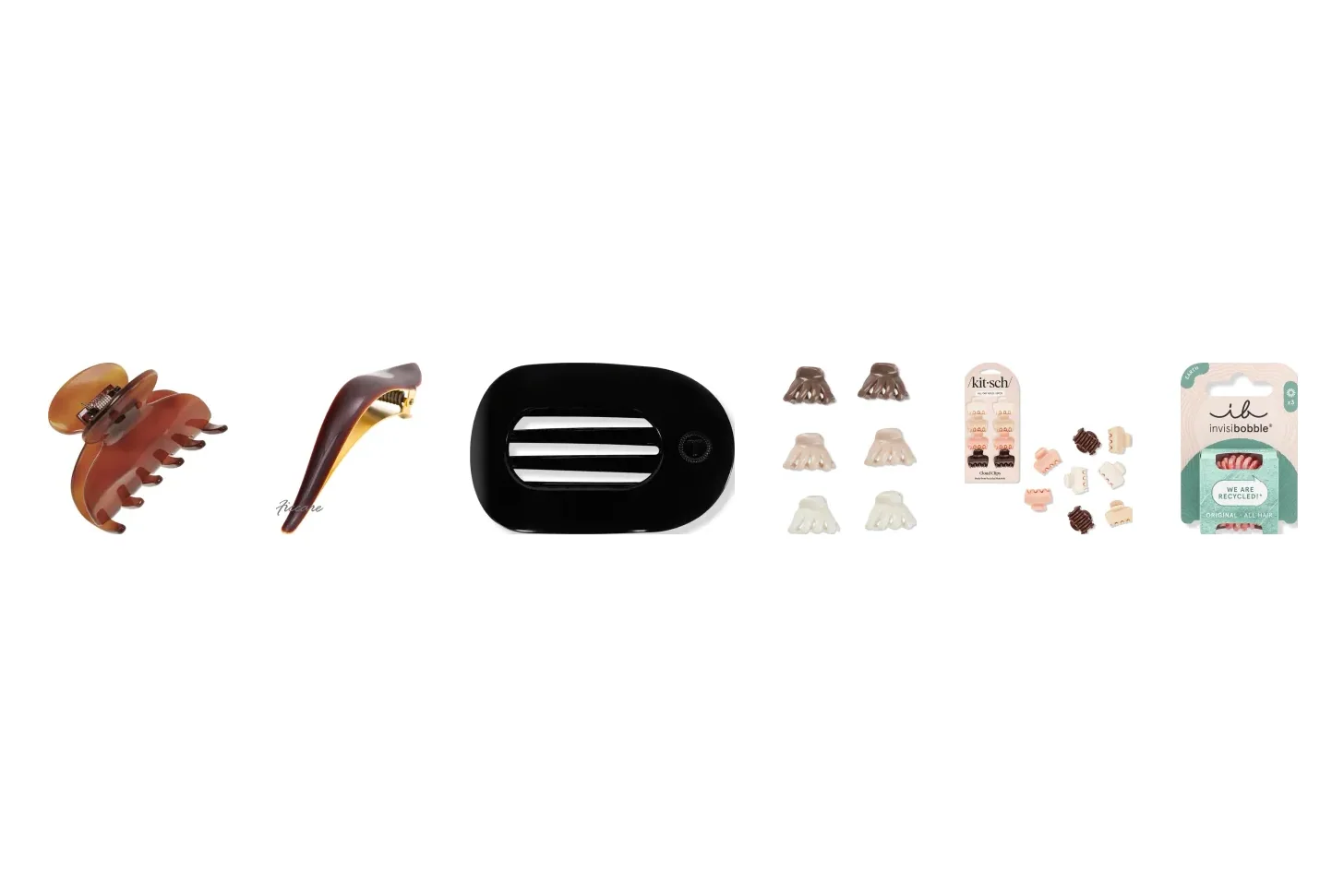
Get the tension off the hairline. A day elastic worn overnight is a traction load applied for another eight hours. A loose claw clip, or a soft scrunchie sitting low at the nape rather than high at the crown. Thinning at the hairline explains how long the reversible window lasts; the clips that hold on fine hair and the ties that don't dent it are the buying half.
Then the pillowcase. Cheap, harmless, plausibly helpful, and the smallest of the three.
One thing worth adding for anyone whose morning problem is flatness rather than roughness: the pillowcase makes it very slightly worse, because a slippier surface holds a set less well than a grippy one. That's not a reason to avoid it. It is a reason to make sure you've correctly identified which overnight problem you have. Where you part your hair and root volume are the levers for the other one.
When a silk pillowcase isn't the purchase to make
Your complaint is flat hair in the morning.Compression causes that, and no fabric resists the weight of your head. Heatless volume, second-day hair.
You're shedding rather than breaking.Shedding is a follicle event and a pillowcase has no bearing on it. Work out which you have — breaking or shedding?, fine or thinning?
You still go to bed with damp hair.Fix that first; it outweighs everything on this page. Sleeping with fine hair.
You sleep hot.Skip polyester satin specifically — it breathes poorly. Silk is the better choice here, or a cotton percale you already own.
You won't hand-wash or use a mesh bag.A silk case that's washed badly pills and stops being smooth, at which point you've bought nothing. Buy satin instead and wash it normally.
The mechanism is sound and the evidence is much weaker than the marketing implies. Friction damages the cuticle — that's well established — and silk has a smoother surface than cotton, which is textile physics rather than opinion. What doesn't exist is a measurement of the effect on hair. A search of PubMed, the US National Library of Medicine's index of biomedical literature, for "silk pillowcase hair" returns no results at all, and the "43% less breakage" figure that circulates everywhere is attributed to a named dermatology journal by dozens of retailers, none of whom link to a paper anyone can find. So the honest position: a silk pillowcase very likely helps a little, nobody has measured how much, and you should buy it for the reasons you can verify rather than the ones you can't. On fine hair it's worth adding that friction is only one of the things happening overnight — and not the one that flattens your hair.
Twenty-two momme is the sensible standard, and there's little reason to pay more for hair reasons. Momme is a weight measure for silk — roughly the weight in pounds of a fixed size of fabric — so a higher number means denser, heavier and more durable. Nineteen is the usual entry level, 22 is the mainstream premium, and 25 and 30 exist. The thing to understand is what extra momme buys: durability and drape, not smoothness. The surface a hair slides over is a function of the fiber and the weave, and it isn't meaningfully smoother at 30 momme than at 22. Heavier silk also sleeps warmer, which matters if you sleep hot. Buy 22, don't spend the difference, and pay attention to the closure instead.
Possibly, and the reason this is hard to answer honestly is that nobody has run the comparison. Satin is a weave, not a fiber. A polyester satin pillowcase has a smooth, flat, low-snag surface produced by how it's woven, and that surface is the property doing the work. Silk is a fiber usually woven into a satin weave, and it brings genuine extra qualities: it breathes better, it's less absorbent than cotton, it feels cooler, and it lasts longer if cared for. What hasn't been demonstrated is that silk outperforms polyester satin on hair specifically. Given that, a $10 satin pillowcase is a perfectly rational way to find out whether a smoother sleeping surface changes anything for you — and if it does, you can upgrade knowing what you're upgrading for. Polyester's one real drawback is heat, since it breathes poorly.
For fine hair, envelope — and this is the specification that matters most and gets discussed least. A zipper is a strip of hard teeth running along one edge of an otherwise perfectly smooth product, and it sits under your head for eight hours while you turn over. Fine hair is the hair most likely to work its way into a small gap and the least able to survive being caught there, because a fine strand has very little cross-section to lose before it fails. An envelope closure is just a folded-over flap of the same fabric, which removes the only hard component from the product entirely. Manufacturers favor zippers because the pillow stays put and the case looks tidier. If you buy a zippered case, the practical fix is to turn it so the zip sits at the far edge rather than under where your head and hair actually rest.
No, and the distinction matters because the two problems have nothing to do with each other. Shedding is a follicle event: a hair reaches the end of its growth cycle and releases from the scalp, and no fabric influences that. Breakage is a fiber event: a strand fails somewhere along its length from accumulated mechanical and chemical damage, and a smoother sleeping surface plausibly reduces one small contributor. A pillowcase can only ever address the second. If what you're seeing is more hair in the drain and the brush, a part that's widening, or a ponytail that's thinned, a pillowcase isn't the intervention — and buying one is a way of postponing a more useful conversation. Work out which of the two you're dealing with first, and if there's any doubt, see a board-certified dermatologist.
Cold water, gentle cycle, inside out in a mesh bag, no bleach, no tumble drying, line dry. Quince's own care instructions are representative: hand wash in cold water is recommended, and machine washing should be cold on a gentle cycle with similar colors, inside out in a garment bag, with no bleaching, no tumble drying and no hot ironing. Two practical notes for anyone weighing the purchase. Silk needs washing at least as often as any other pillowcase — more often if you use overnight products — because the case collects the same sebum and residue any fabric does, and a coated surface is no longer a smooth one. And the care requirement is a real ongoing cost in effort, which is a legitimate reason some people are better served by a satin case they can wash without thinking about it.
They solve different halves of the problem, and the bonnet solves the larger half — with one caveat that matters specifically on fine hair. A pillowcase reduces friction wherever your hair happens to touch it, which is a fraction of your hair for a fraction of the night. A bonnet or loose silk wrap contains all of it, so it addresses friction between hairs as well as friction against fabric, and stops the hair being dragged around as you turn over. The caveat is tension and compression. Anything worn on the head has to be genuinely loose, because a tight band at the hairline is a traction load applied for eight hours a night — and a wrap flattens the roots in whatever position it holds them. On fine hair, where root position is most of the volume, that's a real cost to weigh against the friction benefit.
Better made, generally. Better for your hair, not demonstrably. What money genuinely buys here is verifiable and worth knowing: longer-fiber silk that pills less, more consistent dyeing, better stitching, a hidden or invisible zipper rather than a coarse one, published certification such as OEKO-TEX for the chemistry used in processing, and a case that survives years of washing rather than months. Those are durability and quality-of-manufacture differences, and they're real. What the extra money doesn't buy is a smoother surface against your hair, because at the same momme and the same fiber the surface is the same. Pricing in this category also has a large brand component, and the gap between a well-made value pillowcase with a published certificate number and a heavily marketed premium one is mostly not a materials gap.
This article is for general education and is not medical advice. A pillowcase is a bedding product, not a treatment for hair loss. If you are experiencing sudden, patchy or prolonged hair loss, scalp pain, or other concerning symptoms, see a board-certified dermatologist.
Images in this article are AI-generated illustrations, not photographs of real clients or results. See our image policy.
Results vary with hair type, density, and growth patterns. This guide is educational and not a substitute for an in-person consultation with a licensed stylist.
Get the good hair intel
One honest, stylist-written guide in your inbox each week. No hype.

 MH
MH