Reviewed by Tara Sullivan · Updated July 2026 · 8 min read
Claw clips do not fail on fine hair because they are badly made. A claw clip holds by squeezing a mass of hair between two jaws, so if your hair does not fill the jaw, the teeth close on almost nothing and the clip levers itself out under its own weight.
That single mechanical fact explains the whole problem, and it points at the fix: a smaller jaw, more teeth in contact, less weight — and a twist before you clip, so there is something with genuine bulk for the clip to bite.
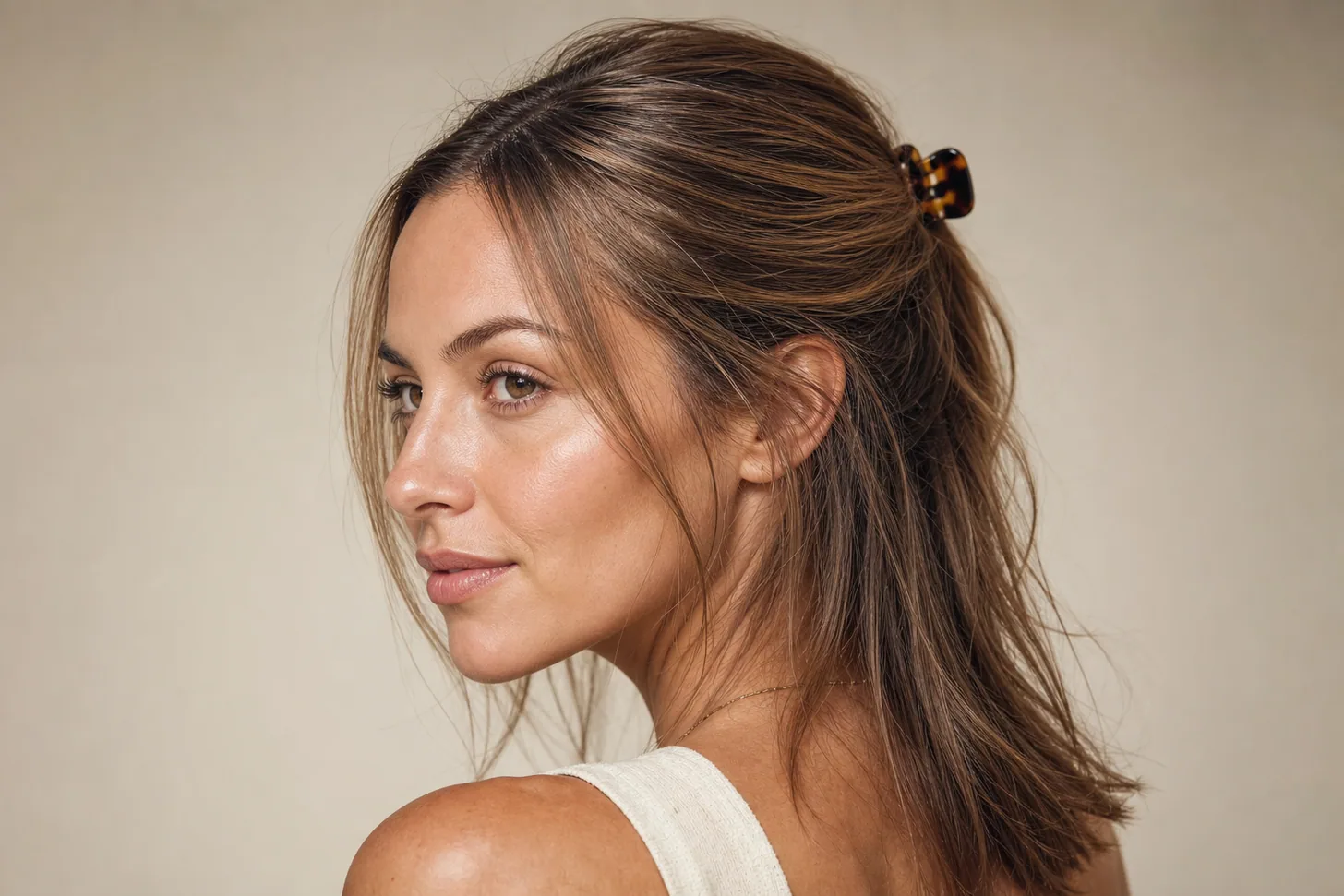
It is also why flat hair clips — the low-profile shapes that sit close to the head instead of standing proud of it — solve this better than any amount of spring tension: less protrusion means less leverage, and less leverage means the clip is not working to prise itself out all day.
Below are six picks by job — best overall claw, best grip on very fine hair, best flat clip, best budget minis, best everyday set, and the one hair tie worth owning — each with who it suits and one honest limitation, plus the two-second twist that makes almost any clip hold.
Every product here is chosen independently, on the merits — what genuinely suits fine, thin hair. Links go to each brand's official page, and we don't take payment for placement. Price tiers are rough guides because prices change.
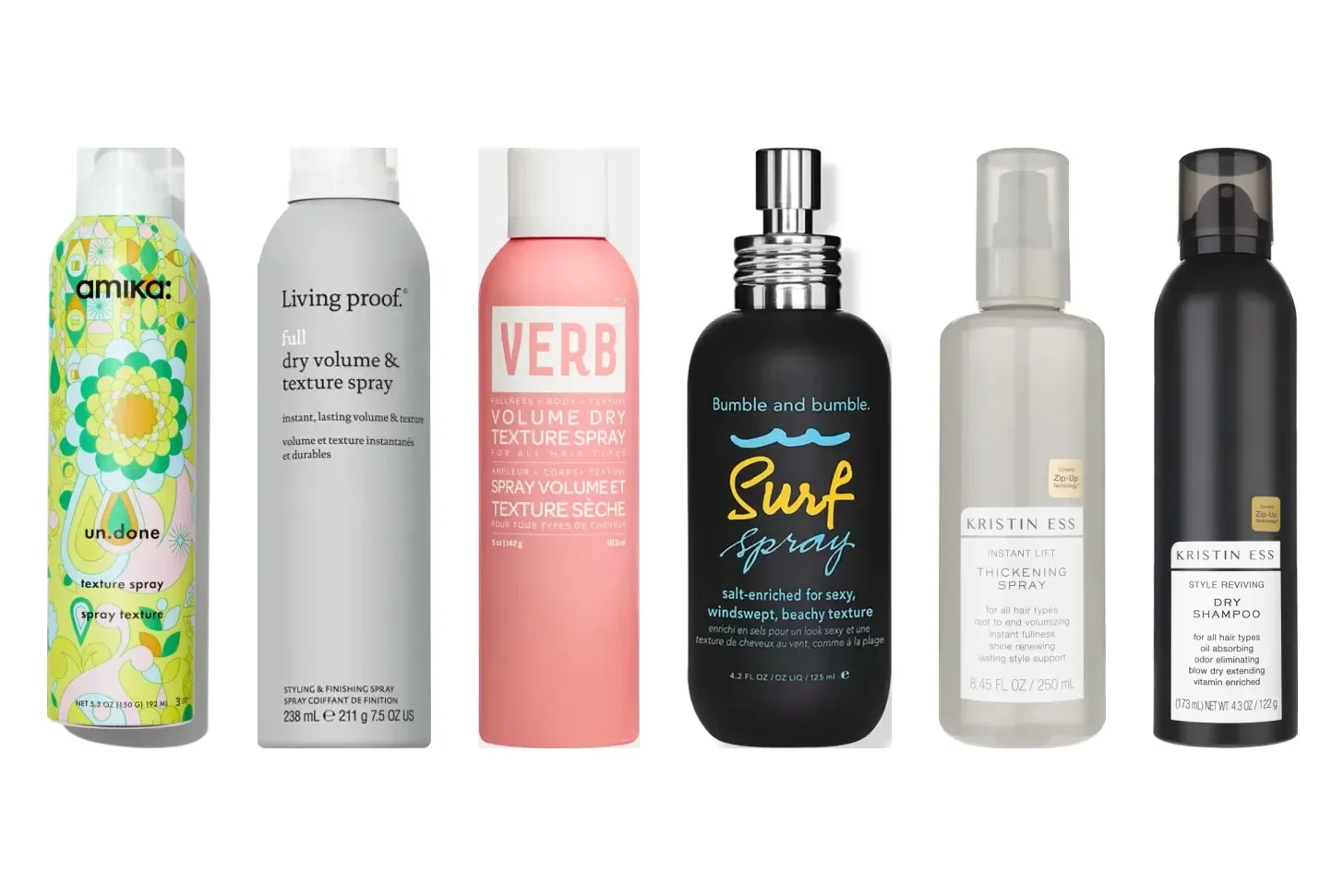
Our six picks, one per job. Product images courtesy of the brands.
Chair-side note
Clients bring me clips the way people bring shoes to a cobbler — "this doesn't work, can you fix it." Nine times out of ten the clip is simply too big, and I can prove it at the mirror in about five seconds. I clip their hair up the way they normally would, then hold the closed clip up to the light: you can see straight through the jaw, past a thin curtain of hair, to daylight on the other side.
Nothing is being gripped. Then I twist their hair three turns and clip the same clip into the twist, and it holds all afternoon. Fine hair does not need a stronger clip. It needs either a smaller one or more bulk to offer the one it has.
SB
— Simone Baptiste, Senior Stylist
Why clips slip out of fine hair
Every claw clip is designed around an assumed volume of hair. The spring is calibrated so that when the jaw closes on that volume, the teeth interlock through it and the tension holds.
Put half that volume in and two things go wrong at once: the teeth pass each other with only a thin layer of hair between them, and the spring — now barely resisted — clamps almost shut, so the contact area is a fraction of what it should be.
Then gravity gets to work. The clip's own weight pulls downward on that small patch of grip, and every step you take adds a little vibration. Over an hour or two the clip walks steadily down the back of your head until it falls out, usually somewhere inconvenient. Nothing about your hair is broken; the tool is simply the wrong size for the job.
This is the same principle that governs everything else on this site: fine hair is a volume problem before it is anything else. A cut builds weight where there is none; a styling product adds grip a fine strand cannot generate; an accessory has to be scaled to the mass it is actually holding.
If you are not sure whether you are working with fine strands, genuinely low density, or both, the two-minute distinction is in telling fine hair from thin hair.
Claw clips for thin hair: the four specs that decide whether one holds
Spec
What to look for on fine hair
Why
Jaw size
2–2.5" for bob length, 3" maximum for long
Your hair must fill roughly ¾ of the closed jaw
Teeth
More teeth, closely spaced, smooth and rounded
Contact points do the gripping; sharp teeth snap fine strands
Spring tension
Firm but not brutal; consistent through the close
A weak spring on a small jaw still holds; a strong one on a big jaw doesn't
Weight & finish
Light acetate or resin; matte over high-polish
Gravity fights friction all day; a matte surface adds grip
Two of those surprise people. Tooth count matters more than tooth length — a clip with many short, closely-set teeth grabs a fine section in more places than one with a few long spikes, which mostly just poke through. And weight is a genuine specification, not an aesthetic one. A beautiful heavy metal clip is working against itself from the moment it goes in.
Flat hair clips for thin hair: the low-profile shapes that stay put
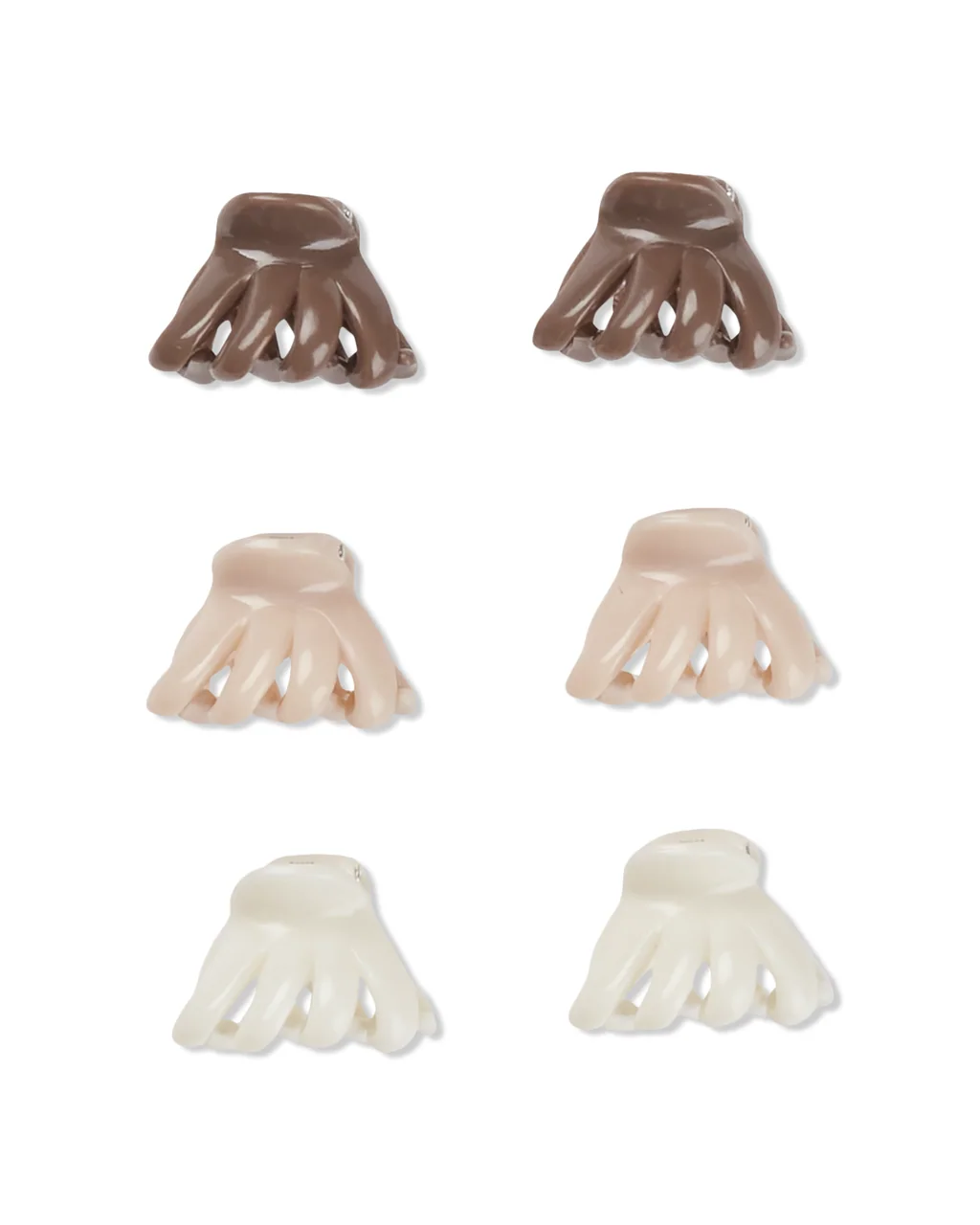
A flat hair clip is any clip built to lie against the head rather than project out from it — flat-backed claws, low-profile round snap clips, slim rectangular barrettes, and the small shallow-jaw claws that readers call baby claw clips or, more descriptively, flat-to-your-head claw clips. The category has quietly become the default for fine hair, and there's a mechanical reason rather than a fashion one.
Leverage is the thing you're actually fighting. A deep, chunky claw holds your hair at one end and sticks out an inch or more at the other.
Every time you move, that projecting mass acts as a lever arm working against a small patch of grip — the further the clip stands off your head, the more torque it generates on the few strands doing the holding. A flat clip has almost no lever arm. The same grip strength holds far better simply because nothing is prising it loose.
They also fix the proportion problem, which is the complaint people voice before the mechanical one. A large sculptural claw on a small amount of hair reads as an accessory wearing you: the clip is visibly bigger than the hair it's holding. A flat clip sits within the outline of your head, so the eye reads hair with a clip in it rather than a clip with some hair attached.
Where flat clips beat a claw: half-up styles, pinning the front back, anything worn under a hat or against a car headrest or a chair back, video calls, and sleeping in the afternoon on a train. Where they don't: holding a whole head of long hair up.
A flat clip has a shallower bite by definition, so past shoulder length it's a half-up tool. Use a small-jaw claw for all-up and a flat clip for everything else — most fine-haired women end up owning both and reaching for the flat one four days out of five.
Two buying notes. Size down harder than feels right — a flat clip rated for "medium" hair is usually built around a density you don't have, and the sizing quizzes some brands run are genuinely worth two minutes. And matte beats polished, in flat clips more than any other kind: a low-profile clip has less mechanical grip to trade on, so surface friction is doing proportionally more of the work. The flat pick below is number three.
The best clips and ties for fine hair, by job
One honest pick per job. Match the job to what you actually need it to do — hold the whole head, hold a half-up, hold a section flat under a hat, or tie a ponytail that doesn't leave a dent.
1
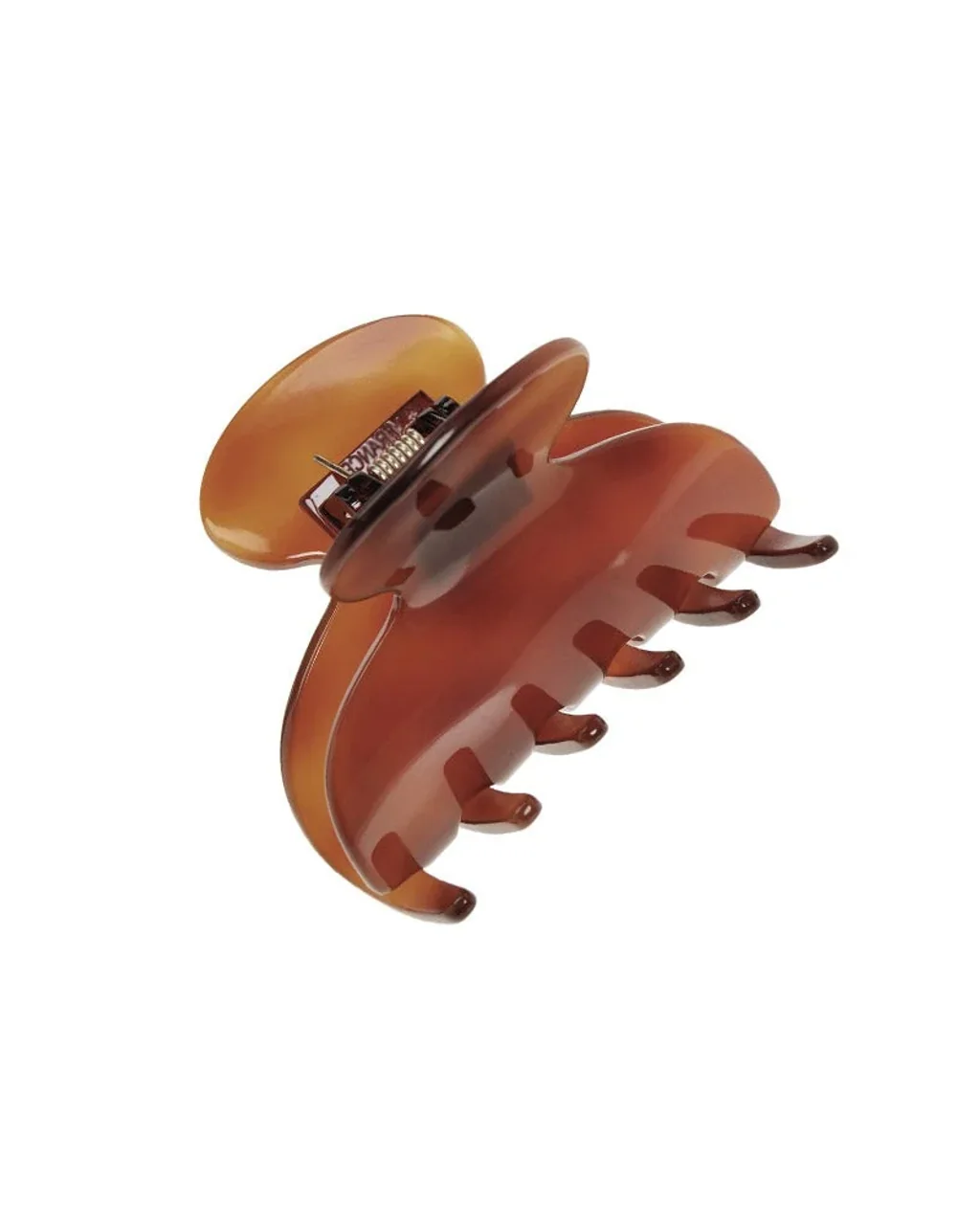
Best overall claw clip: France Luxe Small Jaw Clip
France Luxe makes clips in a genuinely graded size range — mini, small, medium, large, jumbo — and keeps a small-clip category specifically for thin hair, which almost no accessory brand bothers to do. The small jaw is the sweet spot for most fine hair: light cellulose acetate, closely set teeth, and a spring that closes firmly onto a modest amount of hair instead of collapsing shut. Best for: everyday all-up styling on fine hair from chin length to a few inches past the shoulder. Honest limitation: it's a considered purchase rather than a three-pack, and if your hair is long and fine you may need two stacked rather than one.
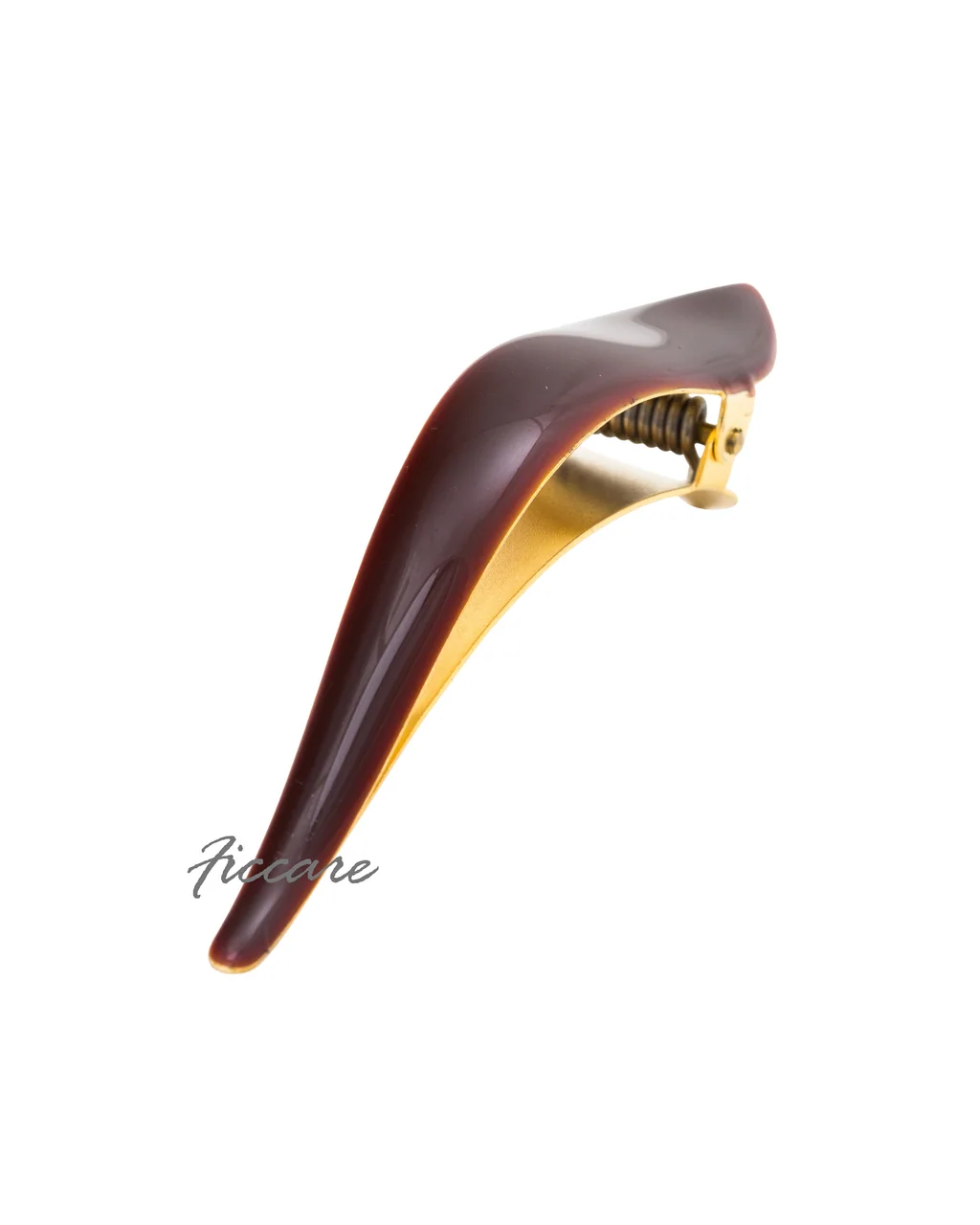
A different mechanism entirely, which is why it succeeds where claws fail. The Maximas is a hinged clasp with a sprung bar rather than an interlocking jaw, so it clamps a folded twist along its whole length instead of relying on teeth biting into bulk — meaning the amount of hair you have matters far less. It has a devoted following among people who had given up on clips, and the hold genuinely lasts a working day. Best for: very fine or low-density hair that defeats every claw clip; French twists and low chignons. Honest limitation: the price is a real jump, and there's a short learning curve — the fold-and-clasp motion isn't the same as a claw and takes a few goes.
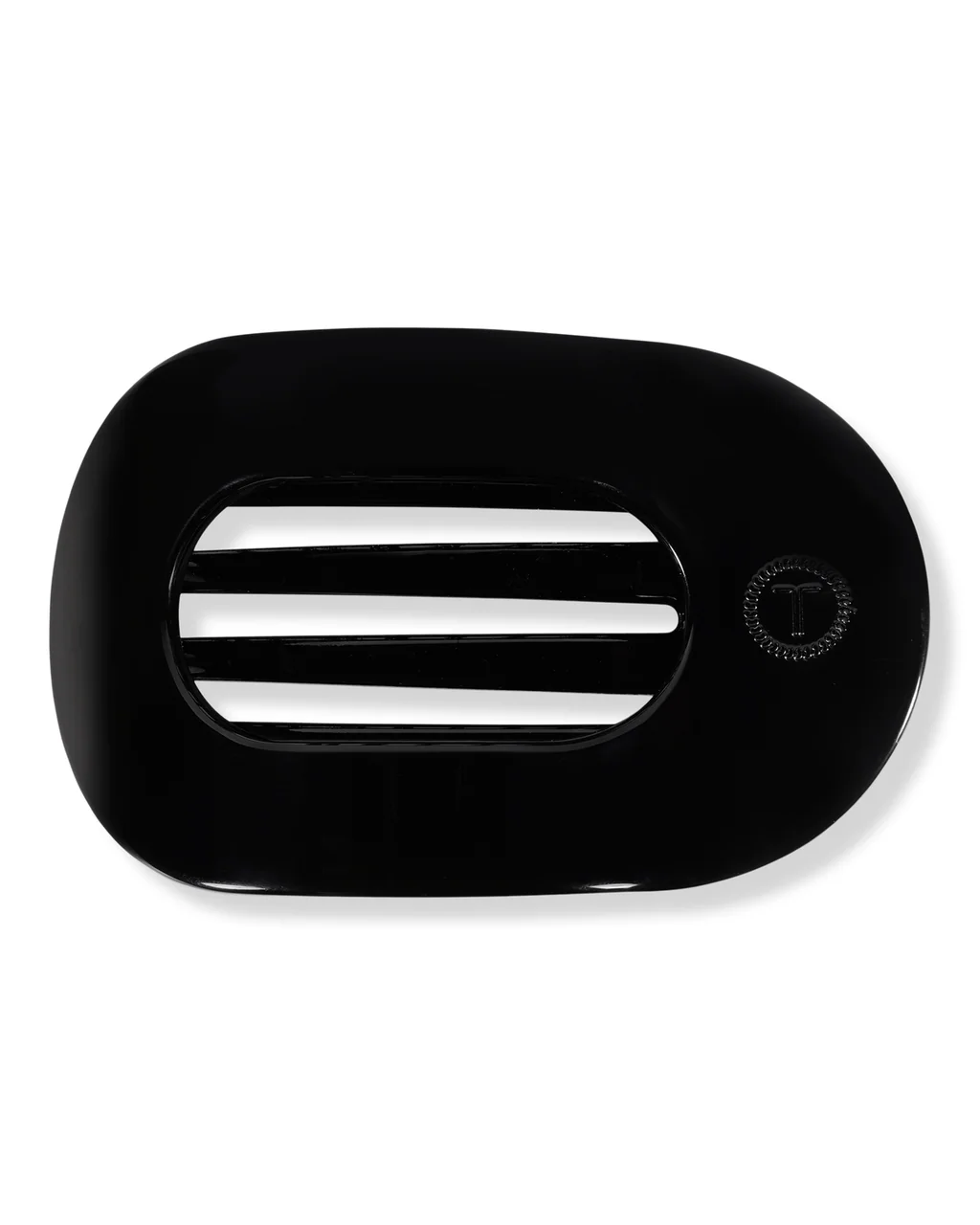
Best flat, low-profile clip: TELETIES Small Flat Clips
Flat clips sit close to the head rather than standing proud of it, which solves a problem specific to fine hair: a bulky clip on a small amount of hair looks like the accessory is wearing you. TELETIES runs a short-and-fine-hair collection and a sizing quiz, and the small flat shape holds a half-up or a low twist without the leverage that pulls a chunky claw loose. Best for: half-up styles, shorter fine hair, and anywhere you need the clip to disappear — under a hat, against a headrest, in a video call. Honest limitation: flat clips hold less total hair than a deep-jawed claw, so on long fine hair this is a half-up tool rather than an all-up one.
Best budget minis: Scünci No-Slip Grip Mini Octopus Claw Clips
The cheapest way to test the whole principle in this article. These are miniature versions of the classic octopus claw with smaller openings and a tighter grip, sold several to a pack, and the no-slip coating adds exactly the surface friction a polished clip lacks. Buy a pack, use them for sectioning while you style and for pinning back the front, and you will feel the difference a correctly-sized jaw makes. Best for: half-ups, pinning back the front, sectioning during a blow-dry, and keeping a few in every bag. Honest limitation: minis hold a section, not a whole head — for all-up on anything past shoulder length you'll want one of the picks above.
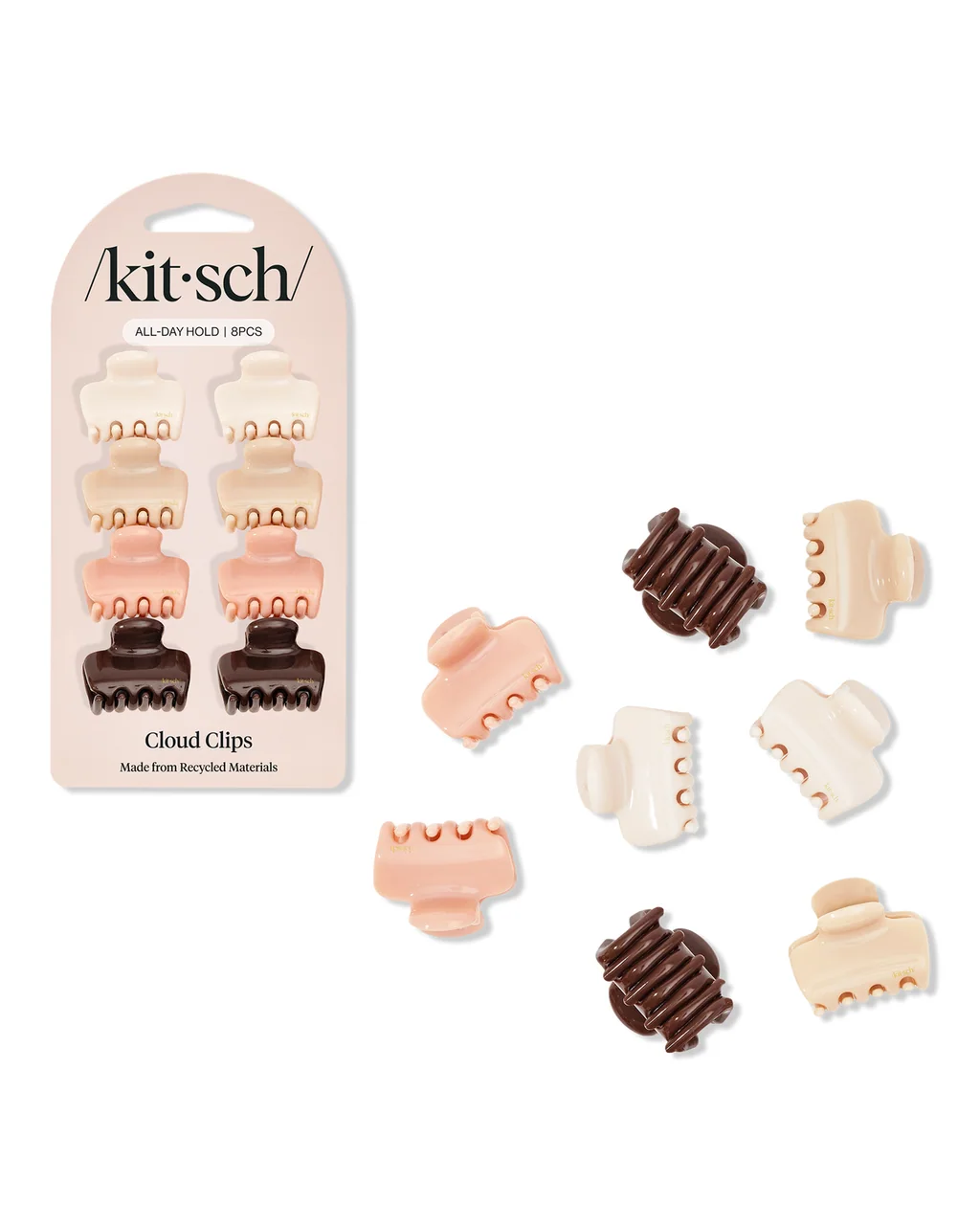
Kitsch sits in the useful middle — better finished than a drugstore multipack, cheaper than a French acetate clip, and sold in coordinated sets so you can keep one at your desk, one in the car, and one by the shower. Look through the range for the smaller shapes rather than the chunky statement claws, which are built for the volume fine hair doesn't have. Best for: having a decent clip wherever you happen to be, and for anyone who loses clips faster than they wear them out. Honest limitation: the chunky styles the brand is known for are the wrong size for fine hair — you have to shop the small end of the range deliberately.
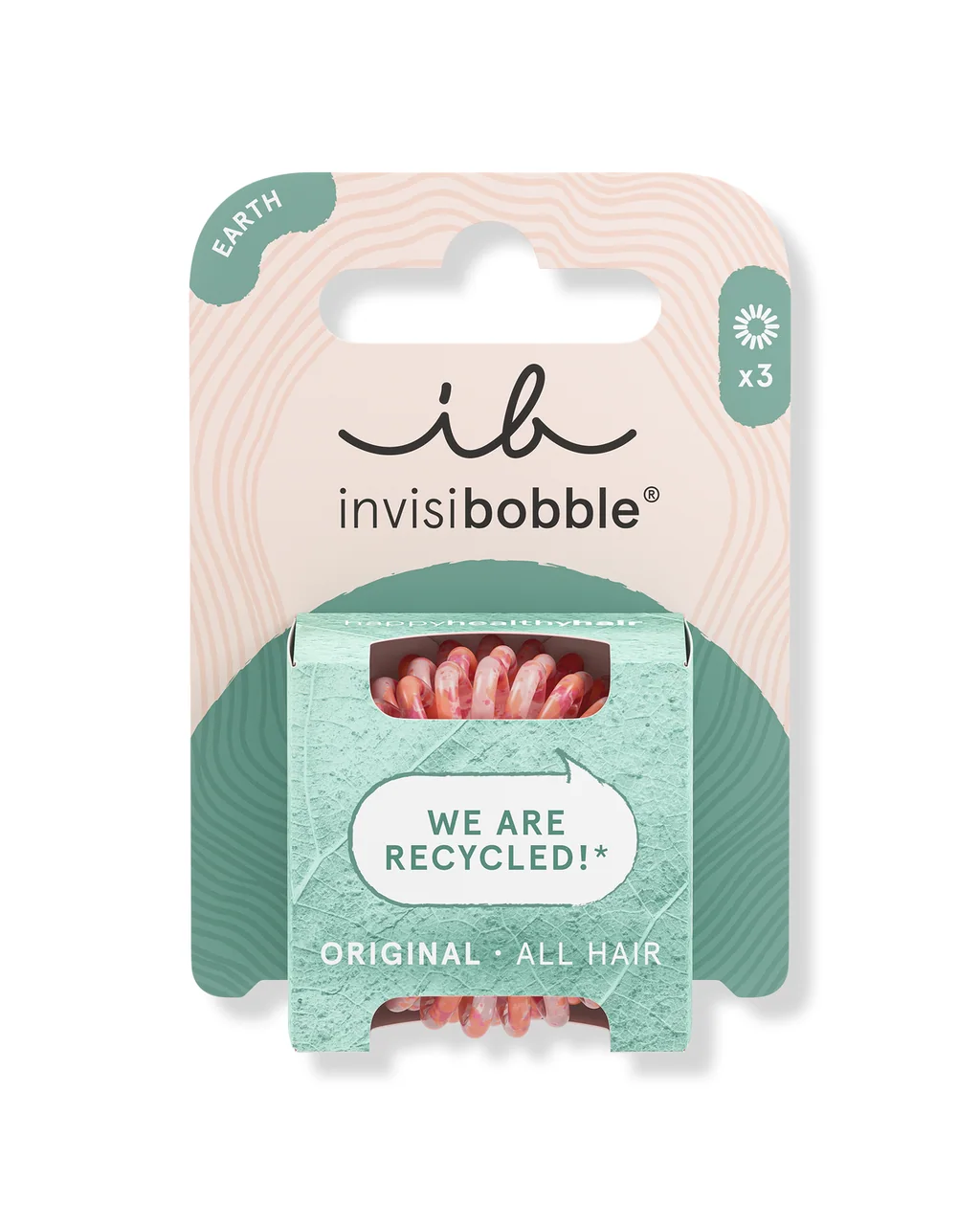
If you only own one hair tie: invisibobble Original
Not a clip, but the tie that belongs in the same drawer, for a reason that has nothing to do with the dent it famously doesn't leave. A spiral tie grips by wrapping around the ponytail rather than compressing it at one point, so it takes far fewer hairs with it when you pull it out — and on hair you're already worried about, that daily handful matters. Best for: everyday ponytails, sleeping, gym bags, and anyone whose elastics leave a crease. Honest limitation: a spiral distributes pressure rather than concentrating it, so a fine ponytail can work its way loose over a long day — and the coils stretch out permanently if you leave them somewhere hot, like a car in summer. If you find yourself taking any tie round four times to feel secure, the tie is too big for your ponytail rather than too weak; hair ties for fine and thin hair is the full set, sized by how much hair you actually have.
One job this page does not cover: using small clips at the scalp to hold the roots up while the hair dries. That is a different technique with a different rulebook — root clips for fine hair.
Buying the right size solves most of the problem. This solves the rest, and it works with the clips you already own. The styles those clips are actually holding up are in easy updos for fine and thin hair.
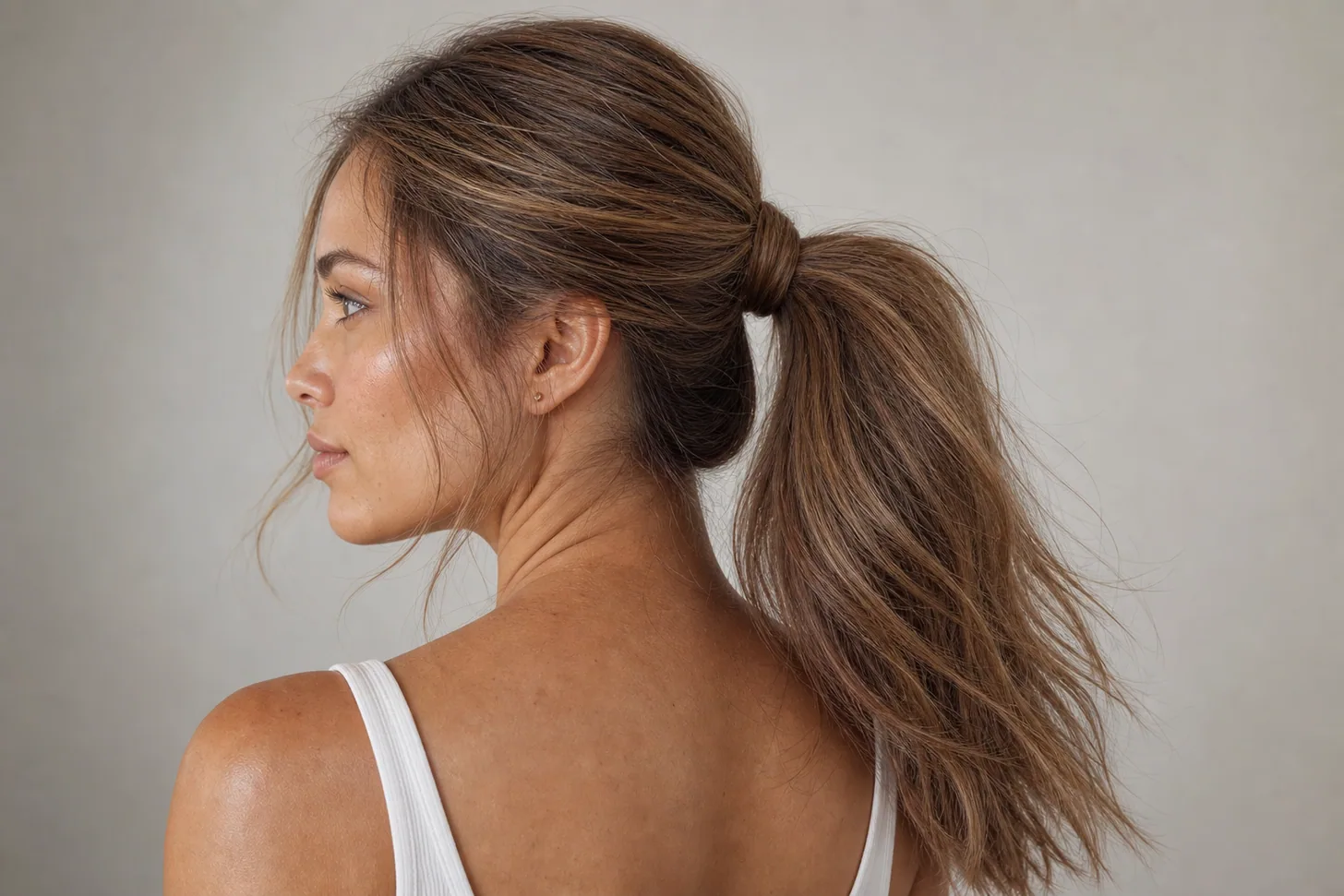
Start with grip, not clean hair. Freshly washed fine hair is slippery and holds nothing. Second-day hair works far better, and clean hair can be made to behave like it with a mist of texture spray or dry shampoo through the mid-lengths — see our texture spray picks.
Gather lower than feels right. Collect the hair at the nape or just above it rather than high on the crown. A high gather gives the clip less hair and more leverage against it.
Twist two or three full turns. Keep twisting until the length forms a rope with genuine bulk. This is the step that manufactures the volume the clip was designed to grip.
Fold the rope up against your head so it doubles back on itself — now there are two thicknesses of hair where the clip is going.
Open the clip fully and catch the base first. Set the lower jaw against your head so it picks up the folded base and a little of the flat hair underneath, then close it upward into the twist. Clipping only the loose tail is why clips slide.
Tug once to test, then leave it alone. A correctly placed clip survives a gentle downward tug. Adjusting it repeatedly through the day is what loosens the twist.
Clips get the attention, but the rest of the drawer matters too. Elastics: spiral or coil ties for daily wear, fabric-covered elastics when you need real security, and nothing with a metal join, which catches and cuts fine strands — and, more than any of that, a loop small enough to reach tension in two wraps rather than four, which hair ties for fine and thin hair takes apart in full.
Bobby pins: go in with the wavy side against the scalp — that ridged side is the grip, and most people insert them upside down. Fine hair needs pins crossed in pairs rather than single pins, because one pin in fine hair has almost nothing to brace against.
Headbands: choose ones with a velvet or ribbed underside rather than smooth plastic teeth, which slide backward on fine hair all day and dig in when you push them forward. Six matte pins in your own colour are also the single most useful thing to carry as a bridesmaid, for reasons covered in bridesmaid hairstyles for fine hair.
Those three families — plus barrettes, snap clips and banana clips — hold hair by mechanisms that have nothing to do with jaw tension, and each one fails on fine hair for its own reason.
You wear the same clip in the same place every day. Repeated tension on one section of hairline causes traction damage over time. Rotate the position and the style.
The clip has sharp, unfinished teeth or a visible seam. That edge scores the cuticle and snaps fine strands. Run a fingernail along the teeth before you buy — smooth or leave it.
You're clipping up hair to hide flatness at the roots. Fair enough as a rescue, but the fix is upstream — start with how to get root volume in fine hair.
You sleep in a clip. Hours of pressure on one point, plus friction against the pillow, is a reliable way to break fine hair. A loose spiral tie or a satin scrunchie instead.
Your hairline is thinning where ties and clips sit. Stop the tension there entirely and get it looked at — fine hair or thinning? covers how to tell the difference.
FAQ
Flat hair clips are any clip built to lie against the head rather than project out from it — flat-backed claws, low-profile round snap clips, slim barrettes, and the small shallow-jaw claws often called baby claw clips. For fine hair they're usually better, and the reason is leverage. A deep chunky claw holds your hair at one end and sticks out an inch or more at the other, so every movement applies torque to the small patch of hair actually doing the gripping. A flat clip has almost no lever arm, so the same grip strength holds much longer. They also fix the proportion problem, since a large sculptural claw on a small amount of hair reads as an accessory wearing you. The trade-off is capacity: a flat clip has a shallower bite, so past shoulder length treat it as a half-up tool and keep a small-jaw claw for all-up.
Because a claw clip holds by squeezing a mass of hair between two jaws, and fine hair doesn't fill the jaw it was designed for. The teeth close almost all the way, grip a thin layer near the surface, and the clip slowly levers itself out under its own weight. The fix isn't a stronger clip — it's a smaller one, so that your hair actually fills the space, plus a twist before you clip so there's something with bulk for the teeth to bite into. A clip sized for thick hair will never hold fine hair no matter how tight its spring is.
Smaller than you think, and smaller than the one you own. For a chin-to-shoulder length fine bob, a clip of around two to two and a half inches usually holds the whole head; for longer fine hair, three inches is generally the ceiling. The rule is that the twisted hair should fill roughly three-quarters of the jaw when the clip closes — if you can see daylight inside the closed clip, it's too big. Two smaller clips stacked one above the other hold long fine hair better than one large clip does.
They're gentler than elastics for daily wear, because they distribute tension across a wide area instead of cinching one point, and they come out without dragging. The two things that do cause damage are sharp, unfinished teeth on cheap clips, which score the cuticle and snap fine strands, and wearing the same clip in the same place every day, which puts repeated traction on the same section of hairline. Rotate the position, choose clips with smooth rounded teeth, and take them out before you sleep.
Spiral or coil ties for daily wear, because they grip by wrapping rather than by compressing, so they leave no dent and pull far fewer hairs out when you remove them. Fabric-covered elastics are the next best thing and are more secure for exercise. What to avoid on fine hair is any tie with a metal join, which catches and cuts strands, and thin rubber bands, which cinch one narrow point hard enough to break hair. And if any tie needs four wraps before it feels secure, the loop is simply too big for your ponytail — a smaller tie, not a gentler one, is the fix.
Twist first, then clip into the twist rather than into loose hair. Gather the hair, twist it two or three full rotations until it forms a rope with real bulk, fold the rope up against your head, and open the clip so its lower jaw catches the folded base and a little of the hair underneath it before you close it. The clip is then gripping a dense rope, not a thin sheet. Second-day hair holds better than clean hair, and a mist of texture spray or dry shampoo through the mid-lengths gives clean fine hair enough friction to behave like day-two hair.
Weight is a real problem on fine hair, and it's the specification nobody checks. A clip holds by friction against the hair; gravity works against that friction constantly, so a heavy clip is fighting itself all day and will gradually walk down the back of your head. Light acetate, resin, and coated metal clips outperform heavy ornamental ones on fine hair every time. If you love a heavy decorative clip, put it in a twist that's anchored with a couple of bobby pins first, so the pins hold the weight and the clip is doing the looking rather than the lifting.
Two clips, not one, and both smaller than you think. For all of your hair up, a small-jaw claw — around two to two and a half inches for a fine bob, three inches as the ceiling for longer fine hair — clipped into a twisted rope rather than loose hair, so the jaw is gripping bulk; the France Luxe Small Jaw Clip is our overall pick. For half-up, pinning the front back, and anything worn against a headrest or under a hat, a flat, low-profile clip such as the TELETIES Small Flat Clip, because it has almost no lever arm to prise itself loose. Matte finishes beat polished on both, and a light clip beats a heavy one every time. The full six picks, with one honest limitation each, are in the picks section above.
Eleven years behind the chair, specializing in short shapes and fine-hair texture. Simone keeps a drawer of undersized clips at her station, because the ones clients bring in are almost always two sizes too big.
Results vary with hair type, density, and growth patterns. This guide is educational and not a substitute for an in-person consultation with a licensed stylist.
Get the good hair intel
One honest, stylist-written guide in your inbox each week. No hype.

 SB
SB