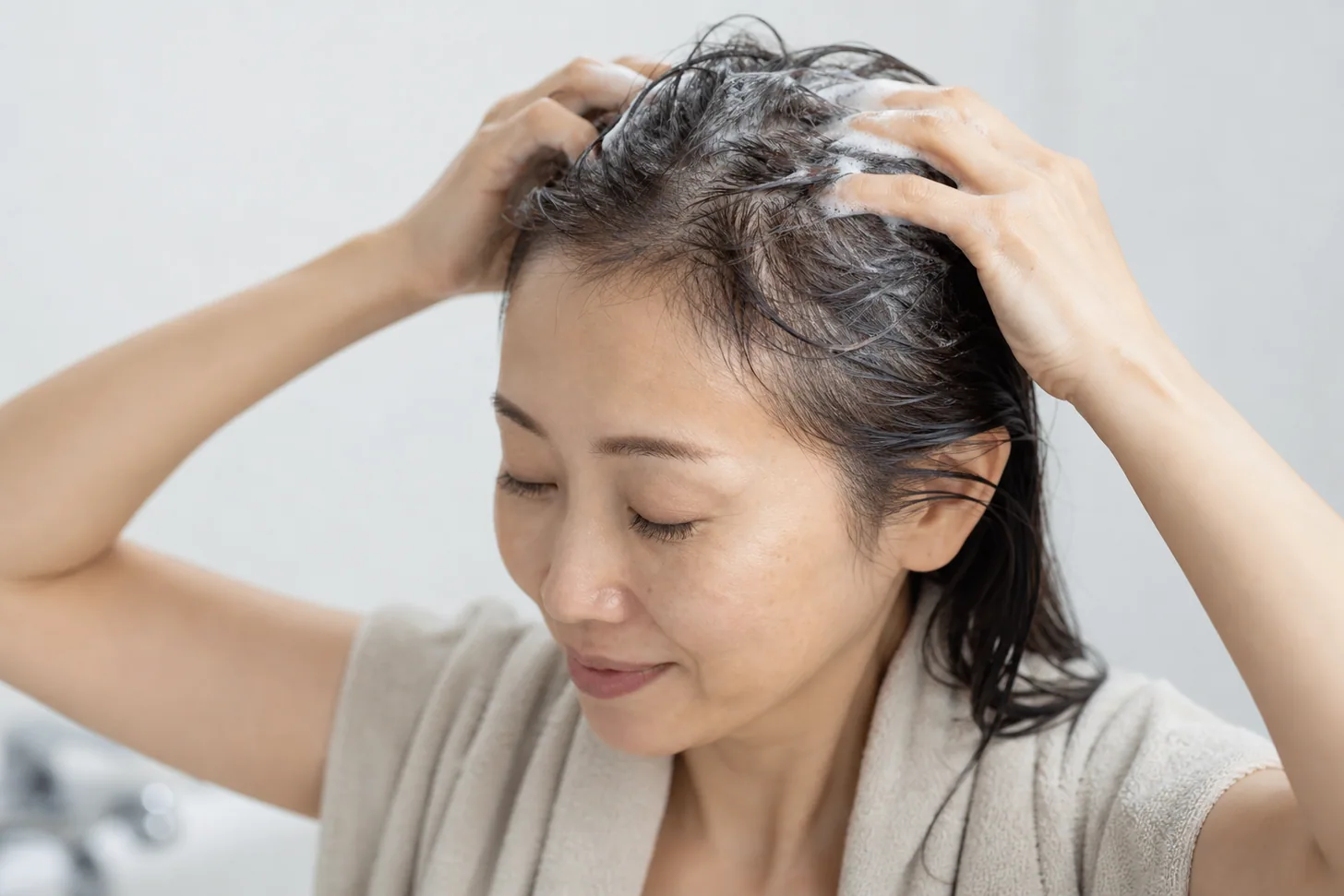
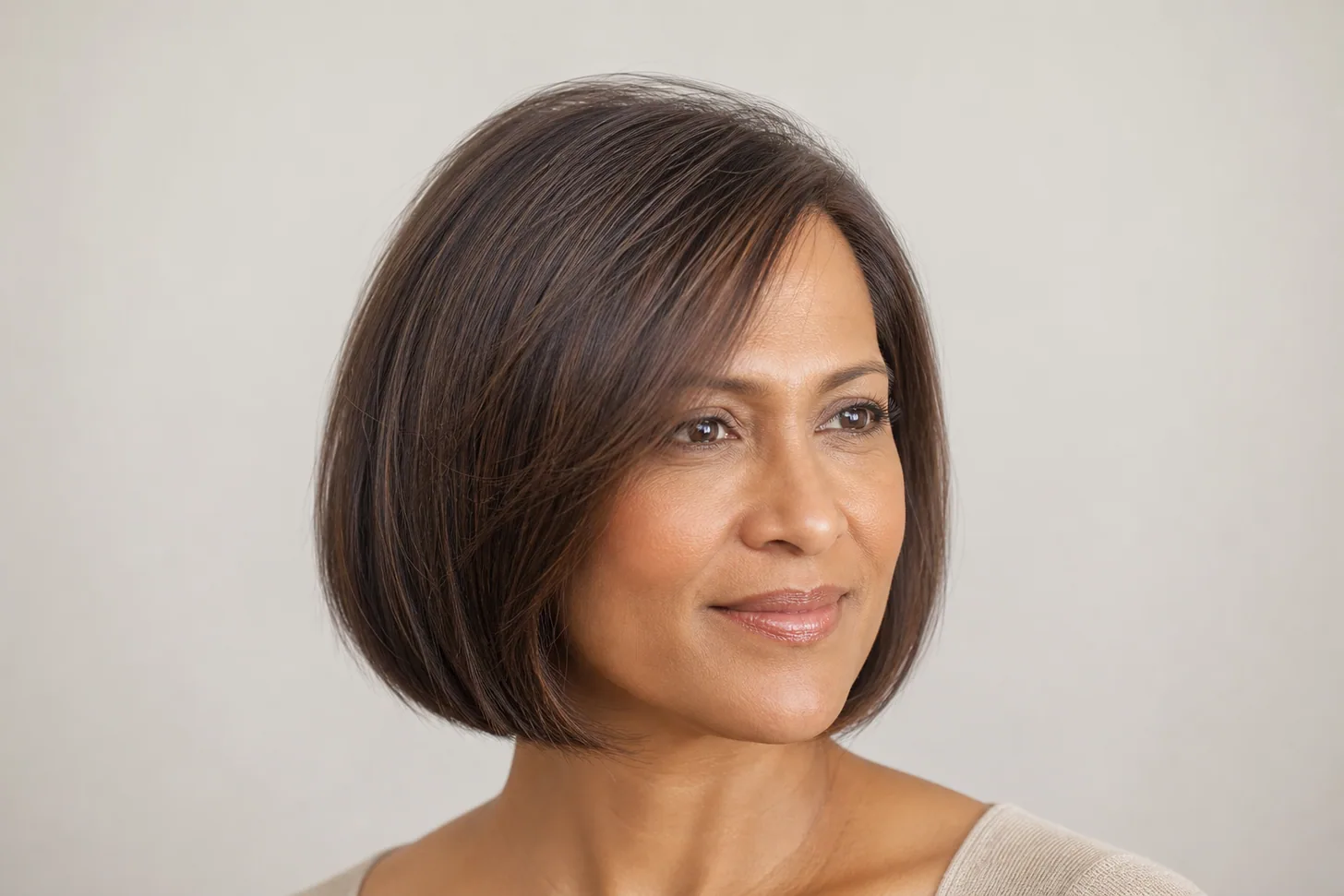
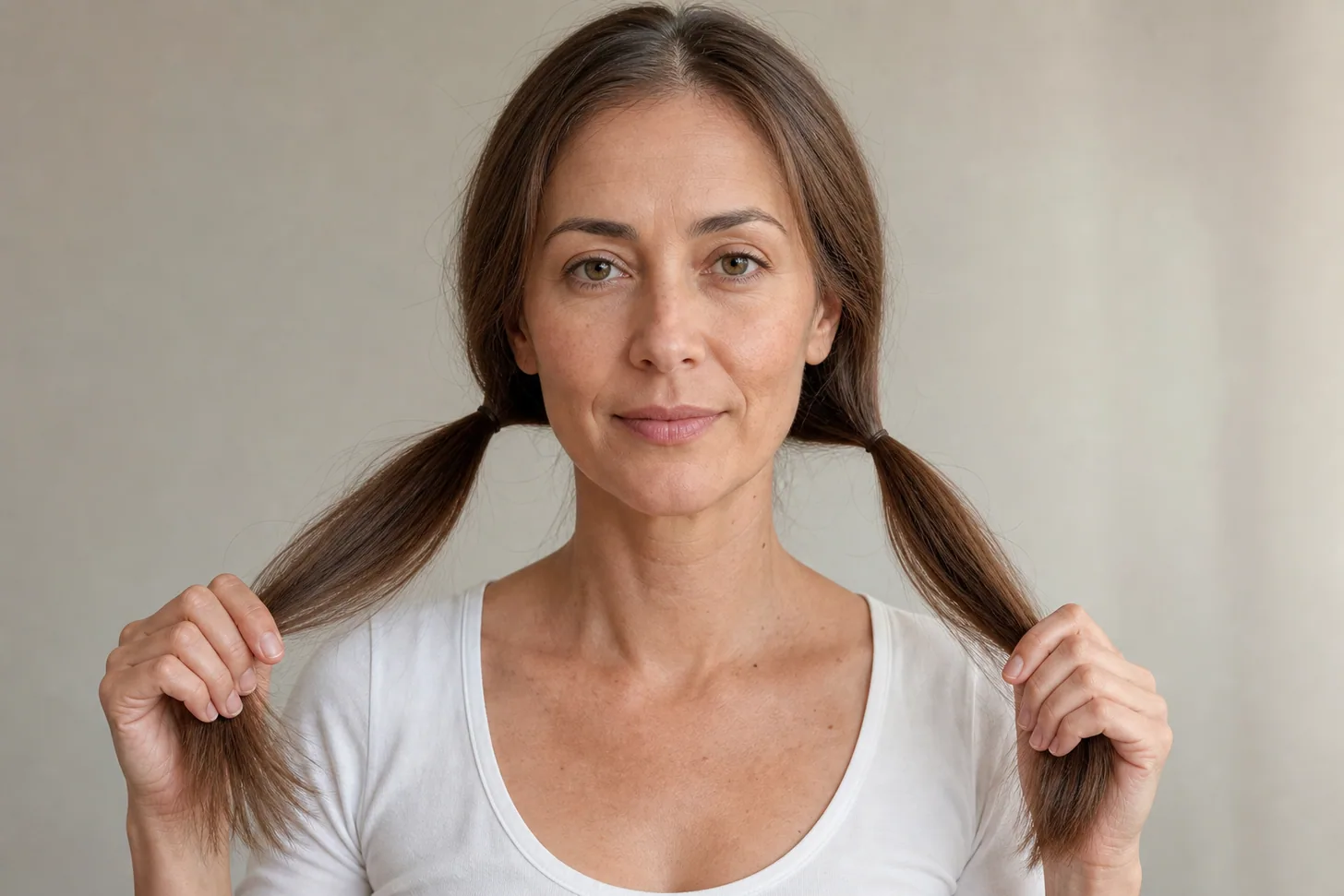
Here's the distinction in one line: fine hair is a strand width you were born with; thinning is a change in how much hair you have. Fine hair has always been fine — thinning has a "before."
That's why the answer never comes from staring at today's mirror, but from comparison over time, and it's a question worth settling: flat, limp hair that's simply fine needs styling, while genuine thinning deserves a diagnosis, and the earlier the better. Below are the three at-home checks we walk clients through, the signs that actually indicate thinning, and exactly when to hand the question to a dermatologist.
Fine and thinning measure two different things
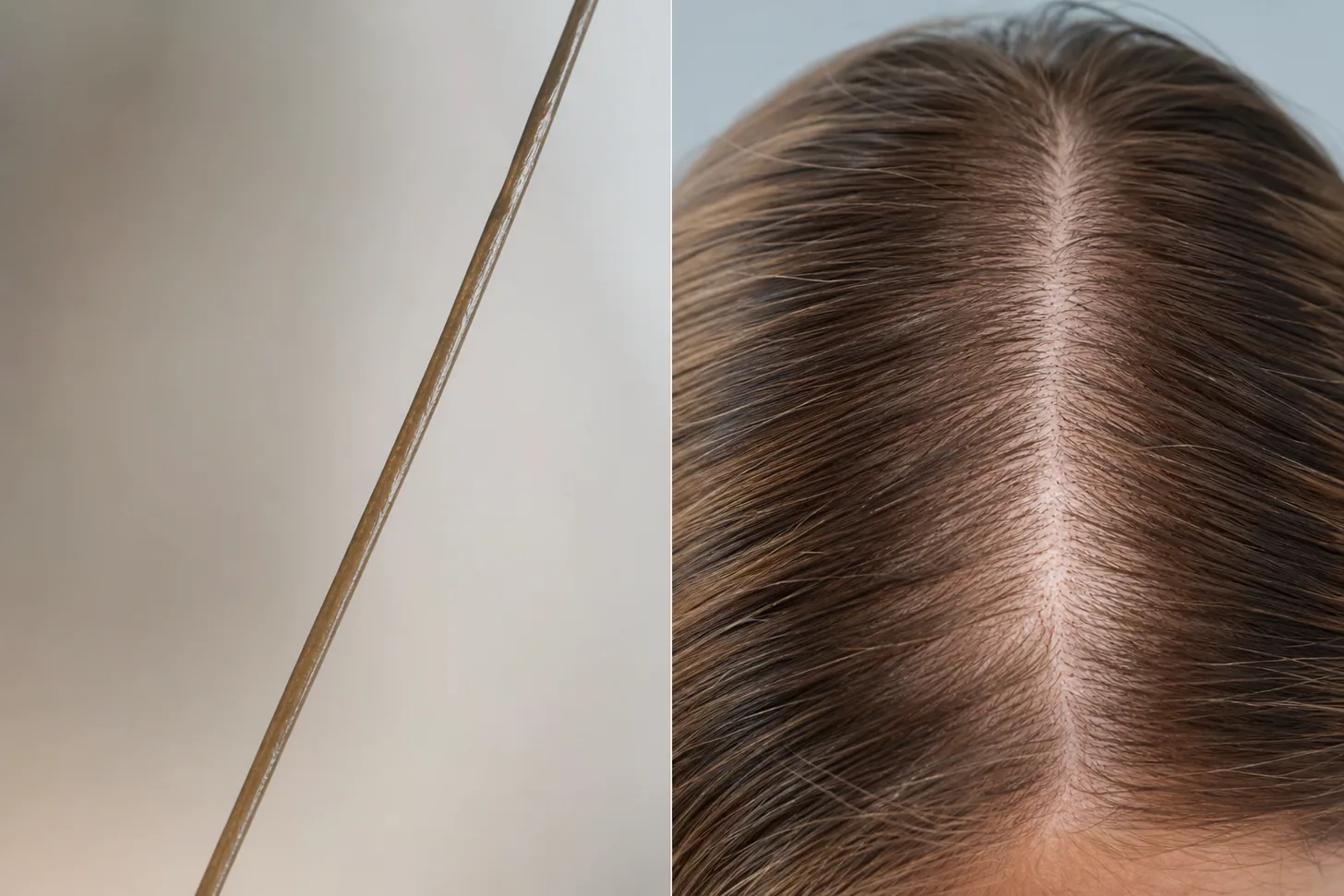
"Fine" describes the diameter of each individual strand — a trait set by your follicles, like eye color. "Thin" describes density, how many strands cover your scalp. They're independent: you can have fine, dense hair (very common — often mistaken for thinning because it lies flat), coarse, sparse hair, or any other combination. We unpack the fine-vs-thin distinction, with the strand and ponytail tests, in fine vs thin hair: what you actually have.
Thinning adds a third axis: time. Thinning isn't a hair type — it's density moving in the wrong direction. And that's the entire diagnostic key. Fine hair behaves consistently across years; thinning leaves a trail of change. Every check below is really the same question asked three ways: compared to your own baseline, is there less?
Chair-side note
The most common version of this worry I see isn't thinning at all — it's a woman in her thirties or forties who has always had fine hair, discovers the flat-by-noon problem getting louder, and quietly concludes she's losing her hair.
When we compare old photos, the density is identical; what changed was a longer cut, heavier products, or hormones shifting the oil balance so it flattens faster. Before you spiral, do the comparisons below. And if they do show change — that's not a styling conversation, and I'll be the first to say so and send you to a dermatologist.
MH
— Megan Holloway, Editor-in-Chief
The three at-home checks
None of these diagnoses anything — they establish whether density is changing, which is the fact a dermatologist will want to know anyway.
The ponytail check tracks density over years
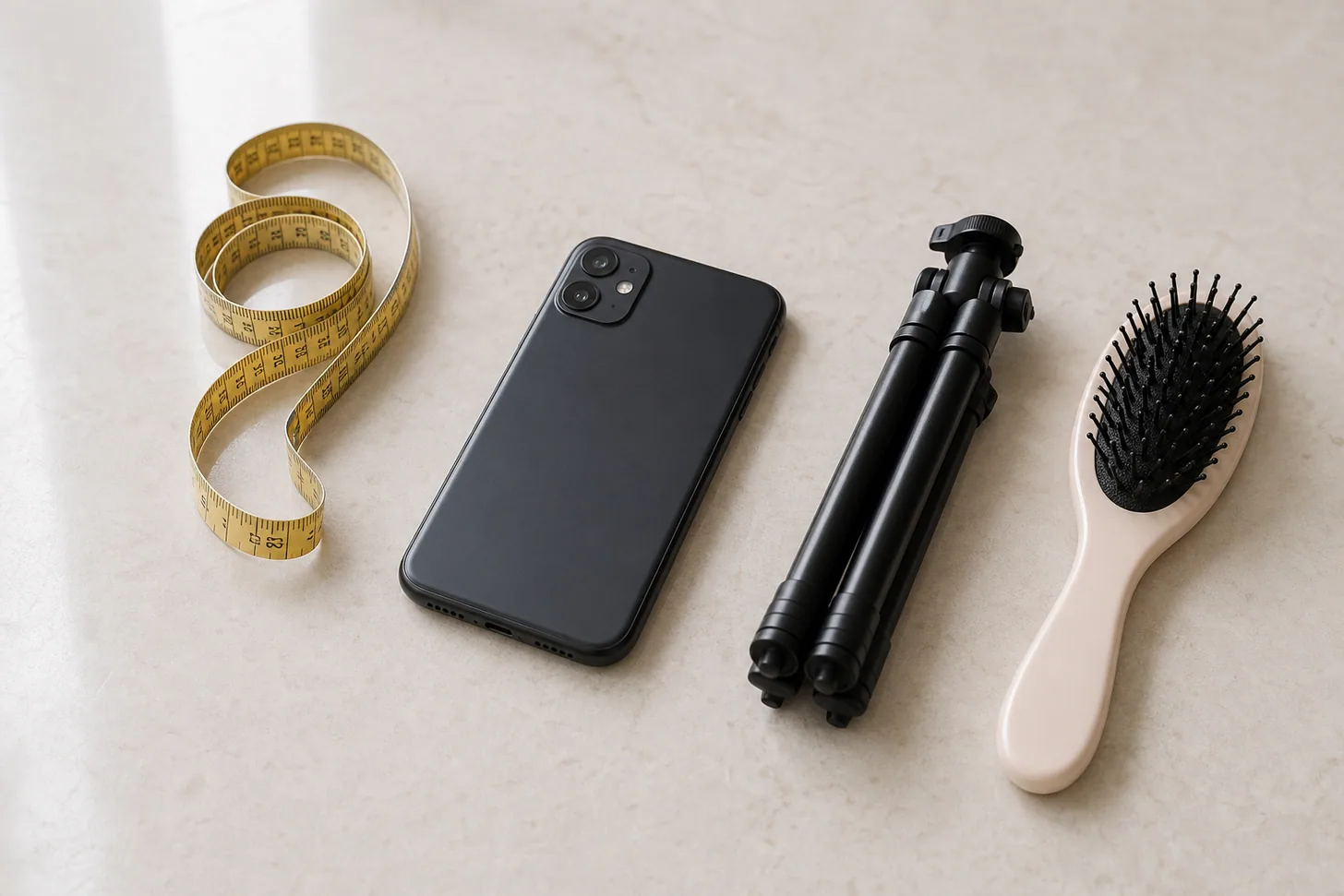
Gather your hair into a ponytail and note the circumference — against a measuring tape, or simply how many times the elastic wraps. Fine hair makes a slim ponytail and always has; that's not news. The signal is trend: a ponytail that used to take two wraps of the elastic and now takes three is reporting a real drop in density, in a way no mirror-glance can. If you check nothing else, know your wrap count.
The part-line photo beats the mirror's memory
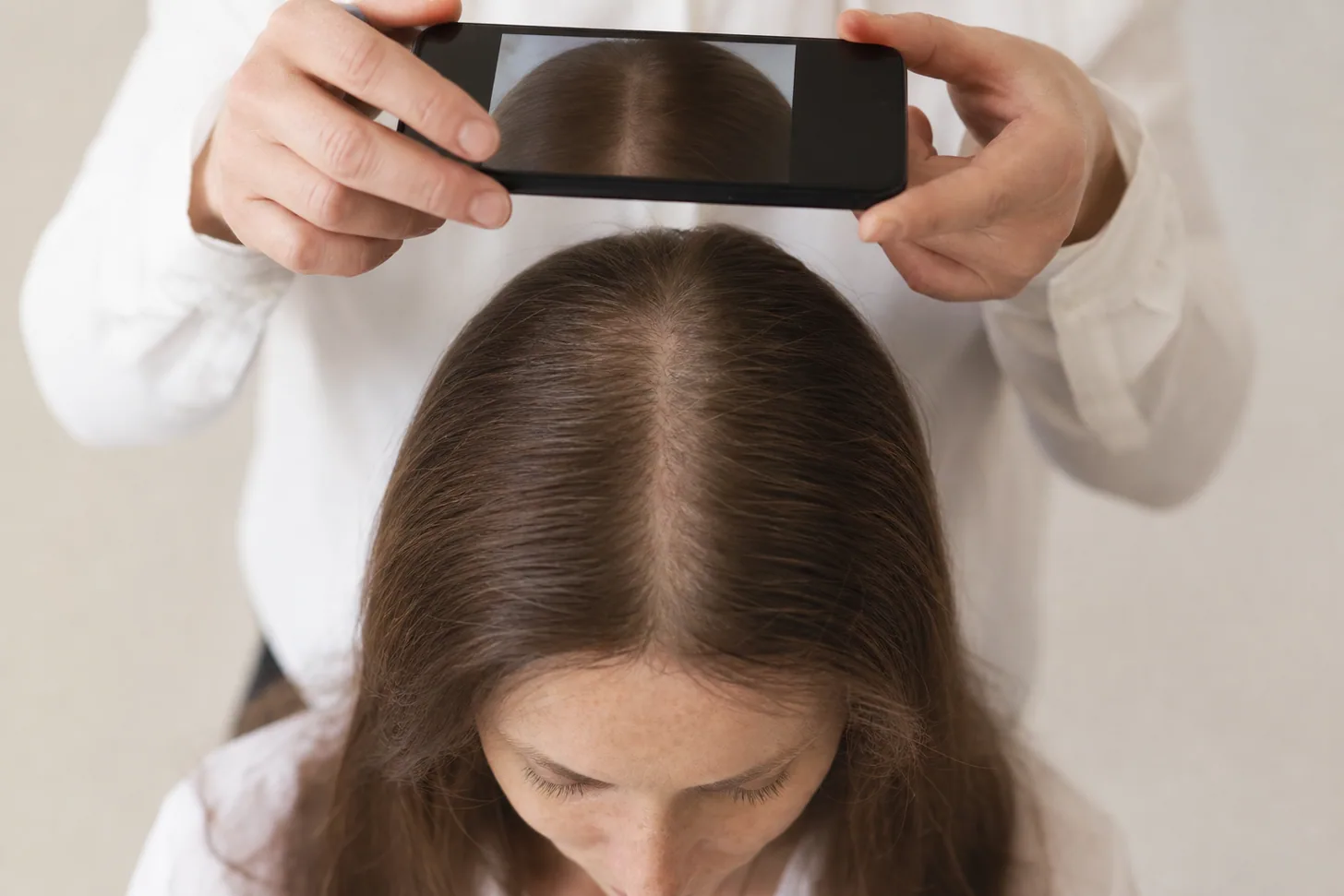
Memory is a terrible instrument for gradual change. Once a month, photograph your part from above in the same spot and light, and compare across months, not days.
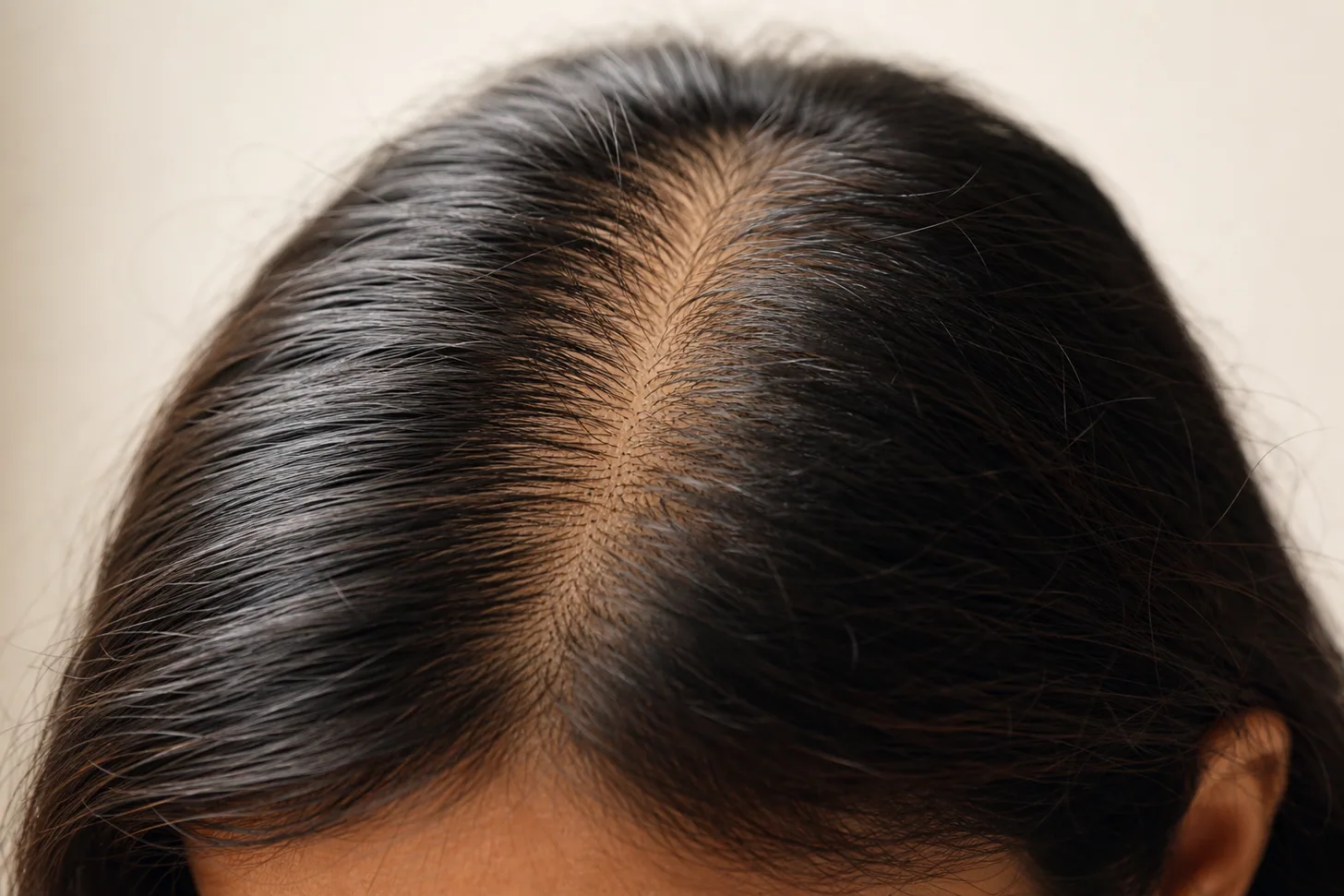
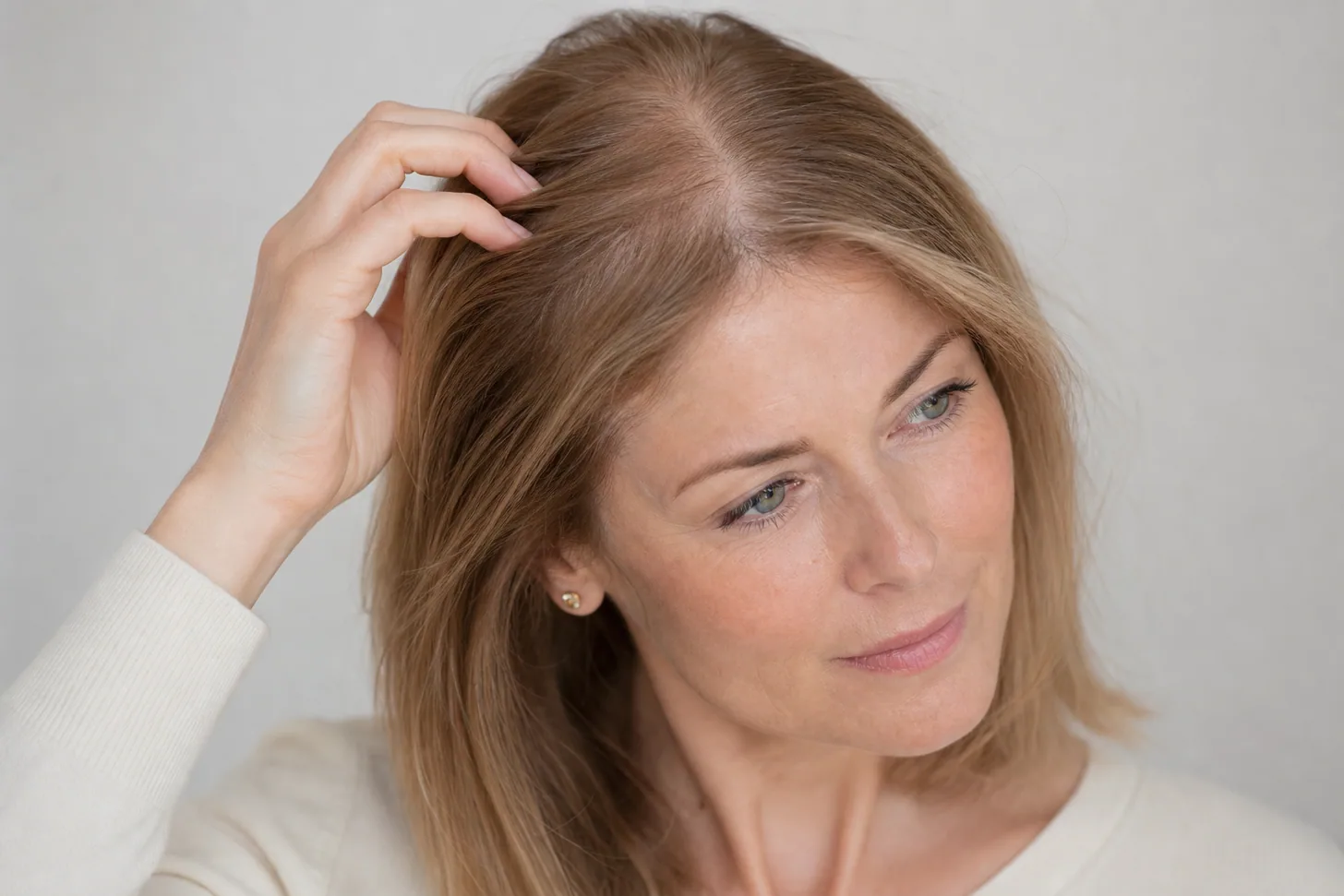
A part that holds its width is fineness doing what fineness does; a part that's visibly widening — especially along the crown while the front hairline holds — is the classic early pattern of female-pattern hair loss and belongs in front of a dermatologist, not a product page. The same monthly photo works for men, and older men's hairstyles for thinning hair matches a cut to the pattern it shows.
The shedding audit needs a baseline, not a panic count
Losing 50 to 100 hairs a day is normal, per the American Academy of Dermatology — and because fine-haired scalps often carry more strands, a completely normal day can look dramatic in the brush or the shower drain.
Don't count hairs; learn your normal over a couple of ordinary weeks, then watch for a sustained jump — a drain suddenly catching double, a pillow that's newly covered — lasting more than a few weeks. A one-day fright after wearing your hair up (shed hairs trapped, then released at once) is noise, not signal.
Signs it's thinning, not just fine
A widening part or newly visible scalp at the crown under normal light — the single most reliable everyday sign.
A measurably slimmer ponytail than your own past — an extra elastic wrap you never used to need.
A shed that arrived out of nowhere — worth dating rather than diagnosing, because the trigger is usually two to four months behind it. How hair actually grows explains the delay.
Sustained shedding above your baseline for more than a few weeks, especially two to three months after illness, surgery, childbirth, or intense stress.
Shorter, wispier regrowth along the part — follicles under pressure produce progressively finer, shorter hairs before they stop.
Recession at the temples or patches anywhere — never a fineness thing; always worth a medical look.
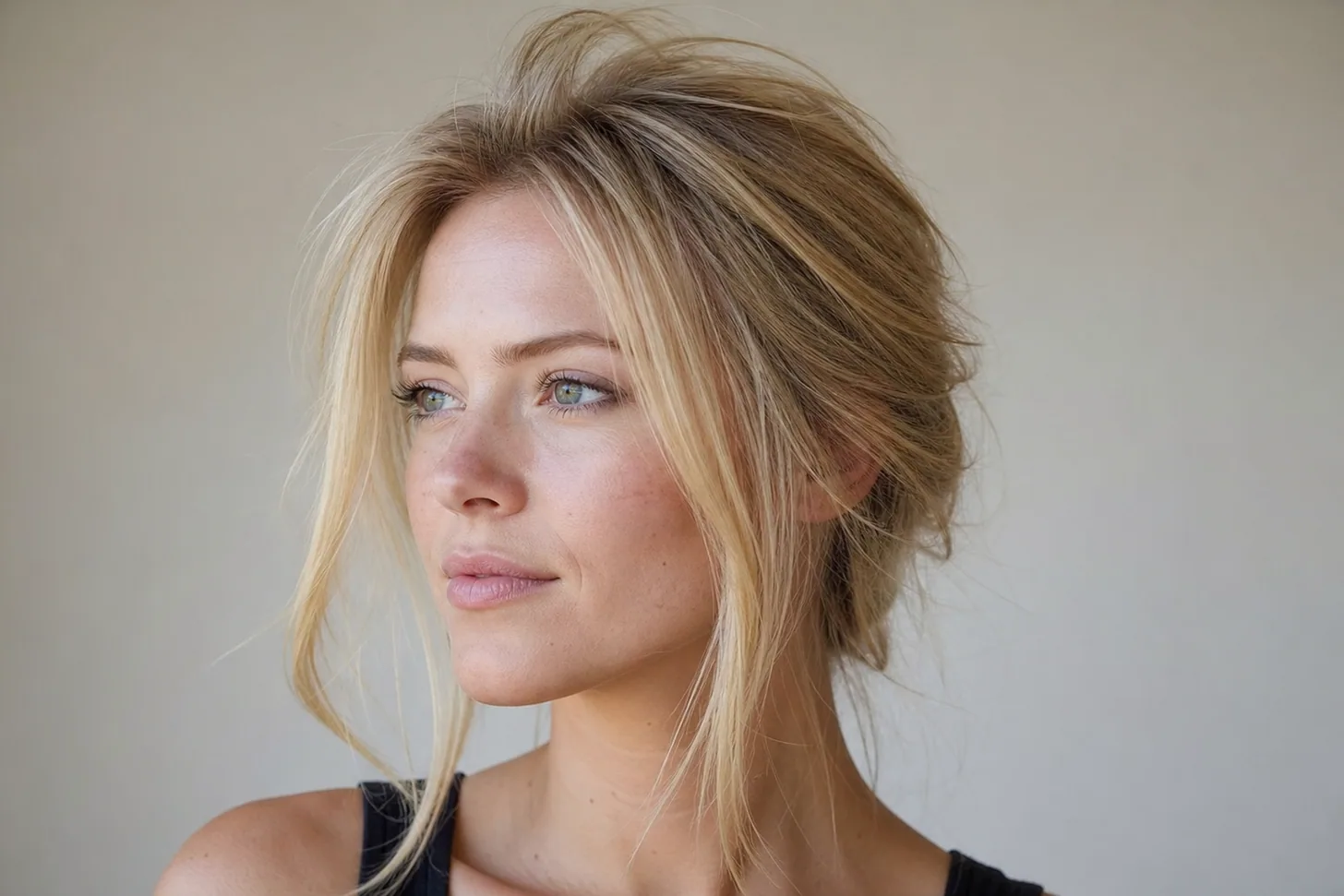
What doesn't belong on this list: hair that looks flat by afternoon, limp ends, or a silhouette that seems smaller when your hair is longer, oilier, or weighed down by product. Those are styling physics — the fixable kind we cover in how to add volume to fine hair.
If it is thinning, the common causes are mostly treatable
One more worth ruling in or out if you are of reproductive age and your cycles are irregular: PCOS and hair loss on fine hair — including why thinning hair on its own is weak evidence for it.
Brief, because this is where we hand over to medicine — but worth knowing so a diagnosis doesn't arrive as a shock:
Telogen effluvium — a wave of shedding two to three months after a body-level stressor (childbirth, illness, surgery, crash dieting, some medications, thyroid or iron issues). Usually temporary, typically resolving within months once the trigger passes. If yours followed rapid weight loss or an appetite-suppressing medication, shedding after weight loss and GLP-1 medications has that version in full — and if you started, stopped or changed a prescription in the months before it began, medications that cause hair shedding explains the two-to-four-month lag that makes the culprit so easy to misidentify.
Female-pattern hair loss (androgenetic alopecia) — gradual, hereditary thinning concentrated at the crown and part, front hairline usually spared. It's very common, and more so after menopause — and there are evidence-based treatments, which work best started early. What changes at that stage, and how to tell a temporary shed from miniaturization, is in menopause and fine hair — and, for the years before it, perimenopause and hair thinning; what a dermatologist can actually offer beyond minoxidil, and in what order, is in PRP, microneedling and laser caps.
Traction alopecia — thinning at the hairline and temples from years of tight ponytails, buns, and extensions. Fine hair, having less structural reserve, is especially vulnerable; loosening the styles early can stop and often reverse it.
Everything else — nutritional deficiencies, thyroid conditions, autoimmune causes. This is exactly why the answer to real thinning is a work-up, not a guess: the treatment depends entirely on the cause. The first sorting question a clinician asks is whether the loss is spread evenly or concentrated on top, and it is one you can partly answer yourself — how to tell which pattern of thinning you have covers the front-versus-back check.
What to do with your answer
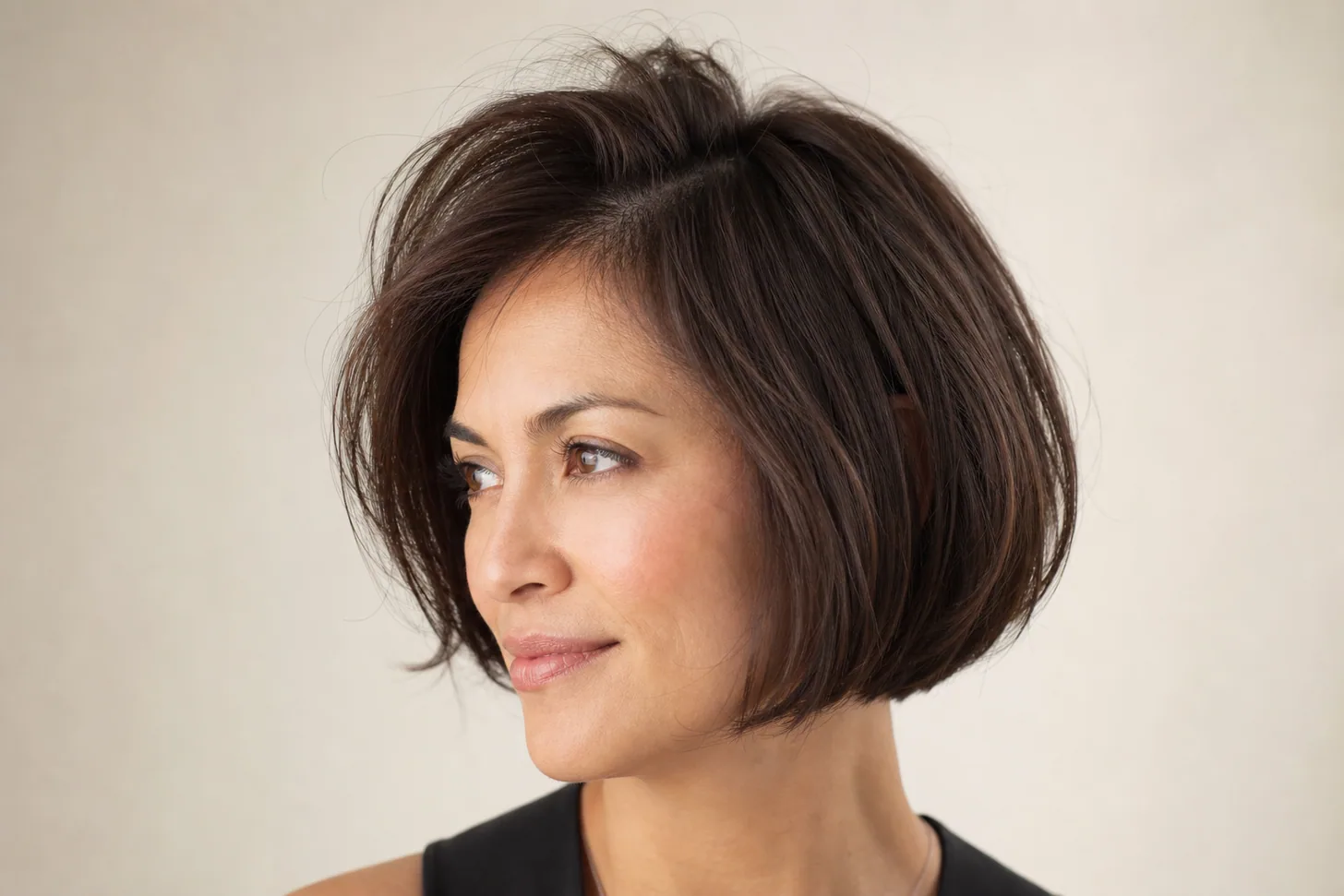
If your checks say "fine, stable": exhale — you have a styling project, not a scalp problem. The levers that make fine hair read fuller are the cut (see haircuts built for fine & thin hair), a lightweight wash routine, and root-first styling. Skip the "thickening" supplements aimed at your worry; on stable density they're buying you nothing a decent mousse doesn't.
One thing worth ruling out first: if what you're seeing is short pieces standing up rather than a wider part, that's damage rather than density — is it breaking or shedding? separates the two in about a minute. And before you buy anything labelled for thinning, best shampoo for thinning hair says plainly what a wash can and cannot do.
If your checks show change: book a board-certified dermatologist — ideally one who sees hair-loss patients — and bring your evidence: the part photos, the ponytail trend, when the shedding started, and any life events in the two to three months before.
That timeline is diagnostic gold. It's also worth knowing what the appointment can usefully test for, and what it can't — which blood tests actually matter for hair loss covers the short list, why a ferritin inside the reference range can still be your answer, and the supplement to stop 48 hours before the draw because it distorts thyroid results.
What you shouldn't do is spend a year cycling through internet remedies first; the common causes are most treatable early, and self-treatment mostly costs the months that matter. If what you are seeing is at the hairline and temples specifically, haircuts for a receding hairline covers the cosmetic half.
When not to wait on the monthly photos
Hair coming out in clumps or distinct patches. Patchy loss can indicate alopecia areata or other conditions that need prompt treatment — see a dermatologist now, not in three months.
Scalp symptoms alongside shedding — itching, burning, pain, redness, scaling. Inflammatory and scarring conditions can permanently close follicles; early treatment protects them.
Sudden shedding with fatigue, weight change, or feeling unwell. Hair is often the first visible sign of a systemic issue — thyroid, iron, hormonal — worth a doctor's visit in its own right.
It's affecting how you feel every day. You don't need to earn the appointment with worse symptoms. "I'm worried about my hair" is reason enough to go.
FAQ
Fine hair is a strand diameter you were born with — each hair is narrow, and it has always been that way. Thinning is a change: fewer strands than you used to have. The tell is comparison over time, not appearance today. A ponytail that measures the same as it did five years ago is fine hair; one that's noticeably slimmer, a part that's widened, or shedding well beyond your normal all point toward thinning and are worth a dermatologist's look.
Shedding 50 to 100 hairs a day is normal, according to the American Academy of Dermatology — those hairs are at the natural end of their growth cycle and are replaced. Because fine hair often means more total strands, a normal day can genuinely look like a lot in the brush. The signal isn't the daily number; it's a sustained jump above your own baseline for more than a few weeks.
Yes — the two are independent, so every combination exists. Fine hair that begins thinning tends to show it sooner, because there's less visual mass to hide a drop in density. That's not a reason to panic over every flat day; it's a reason fine-haired women benefit from knowing their baseline ponytail size and part width, so a real change stands out from ordinary styling variation.
A gradually widening part is one of the more reliable signs of reduced density rather than fineness, and in women it's a classic early pattern of female-pattern hair loss, which typically thins the crown and part line while sparing the front hairline. It can also follow temporary causes like postpartum shedding or a stressful event. Photograph your part in the same light monthly; if it's widening over months, see a board-certified dermatologist.
It can, temporarily. A significant stressor — illness, surgery, childbirth, crash dieting, some medications — can push an unusually large share of follicles into their resting phase at once, and two to three months later they shed together. This is telogen effluvium, and it usually resolves within six to nine months once the trigger passes. The hair isn't gone for good; the follicles restart. Persistent or patchy shedding is different and warrants a medical work-up.
See a board-certified dermatologist if shedding stays elevated beyond roughly three months, your part or ponytail is measurably changing, you notice patches or a receding hairline, or thinning comes with scalp symptoms — itching, burning, pain, redness, or flaking. Also go sooner rather than later: most causes of thinning are far easier to treat early, and a dermatologist can identify the cause rather than leaving you guessing.
Fourteen years in hair — eight behind the chair, six in editorial — with a focus on scalp health and the science of fine, flat-prone hair. Megan reviews product formulas the way she'd read a label for her own clients: weight first.
This article is for general education and is not medical advice. If you are experiencing sudden or patchy hair loss, scalp pain, or other concerning symptoms, see a board-certified dermatologist.
Images in this article are AI-generated illustrations, not photographs of real clients or results. See our image policy.
Results vary with hair type, density, and growth patterns. This guide is educational and not a substitute for an in-person consultation with a licensed stylist.
Get the good hair intel
One honest, stylist-written guide in your inbox each week. No hype.

 MH
MH