None of that makes bond builders useless. It makes them a specific tool for a specific kind of damage, which on fine hair is very often not the damage you have. Below: how to tell which kind you've got, why the format matters more than the brand, and six picks sorted by what they leave behind.
Every product here is chosen independently, on the merits — what genuinely suits fine, thin hair. Links go to each brand's official page, and we don't take payment for placement. Price tiers are rough guides because prices change.
Pre-wash, leave-in, or in the shampoo — on fine hair, the format is the decision.
First: is your damage the kind these are built for?
Most fine-hair damage is not that. It's mechanical: a strand physically broken by a brush, an elastic, a towel or a wet detangle. That's the failure the hair-cosmetics literature keeps pointing at — wet handling in particular, where "wet combing is related to long segment breaks". A broken hair is cut through. Nothing reconnects it.
So before you buy, look at what you actually have:
Rough, stretchy, gummy-feeling hair after a bleach or color service; ends that feel like straw; a lightening appointment that went further than planned. This is the bond builder case, and it's a strong one.
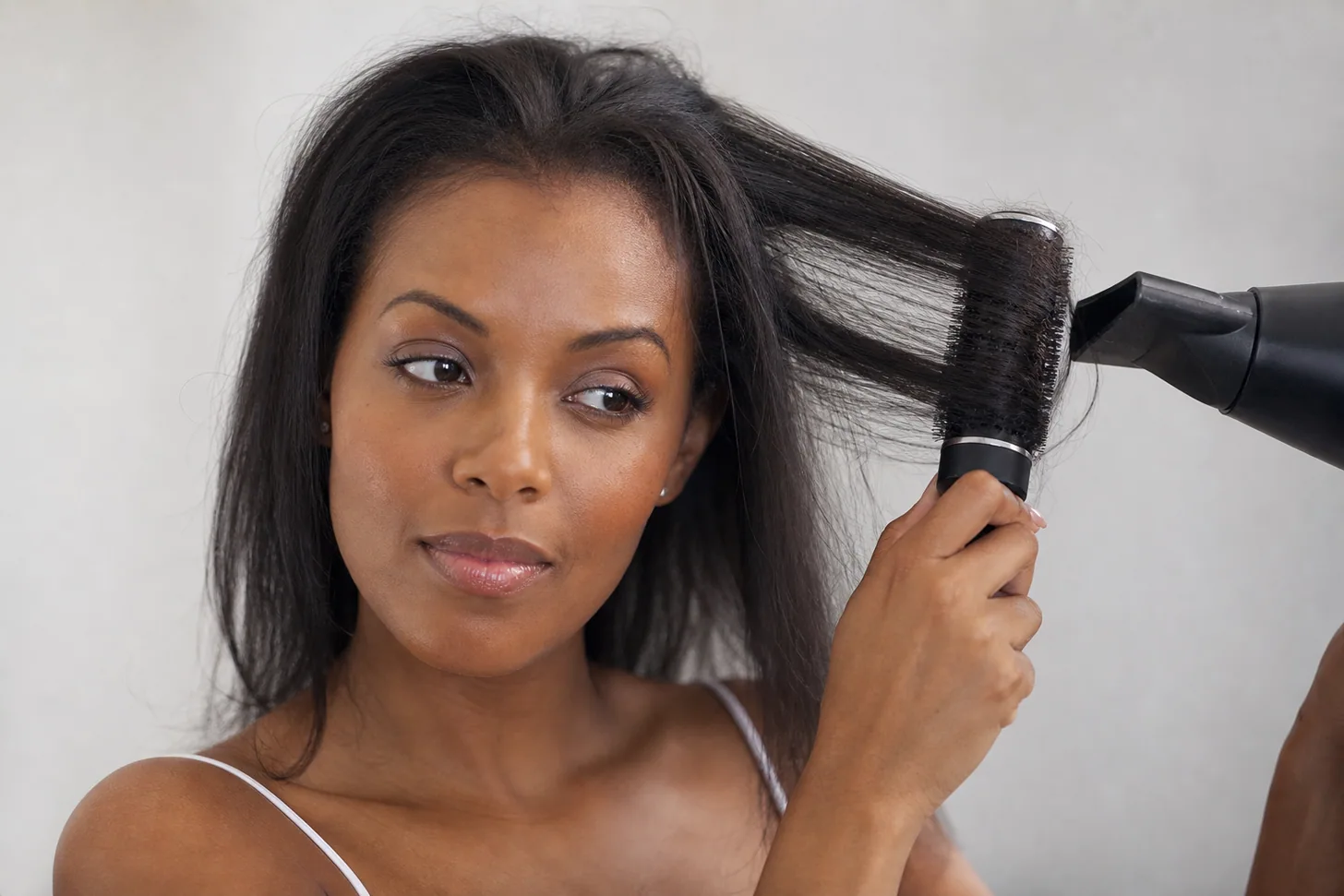
Short broken hairs standing up at the crown and hairline; hair that won't grow past your shoulders; snapping when you brush. This is handling, and it's answered by breakage on fine hair and how you dry it, not by a bottle.
Hair that just looks flat and limp. Not a damage problem at all — see why fine hair goes flat.
If you're in the second or third group, the honest advice is to spend the money on a good cut and skip this shelf entirely.
On fine hair, the format decides everything
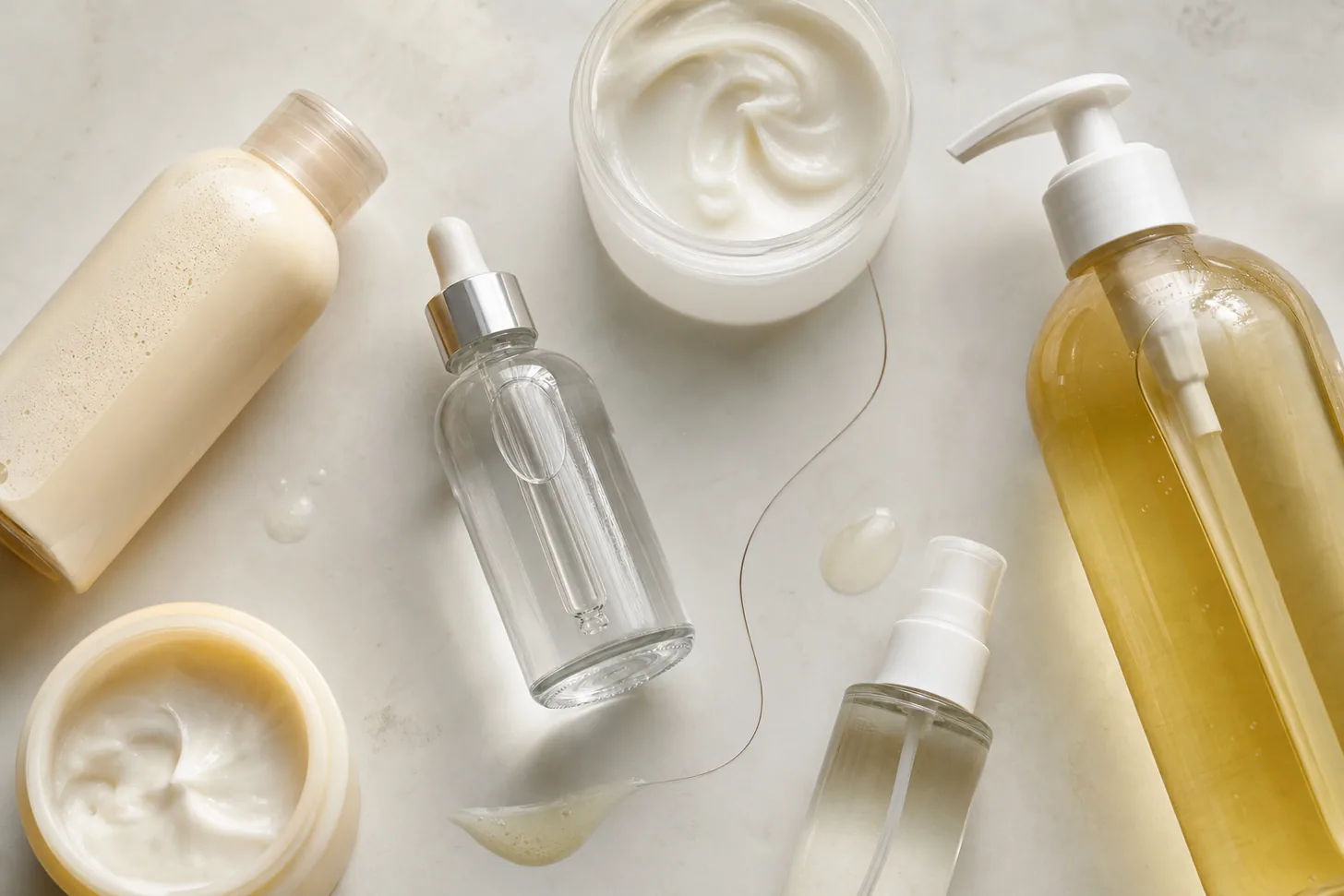
The active ingredient in a bond builder is used at low concentration and isn't usually what you feel afterwards. What you feel is the base it's carried in — and that's where fine hair gets into trouble, because the category's most popular format is a rich mask.
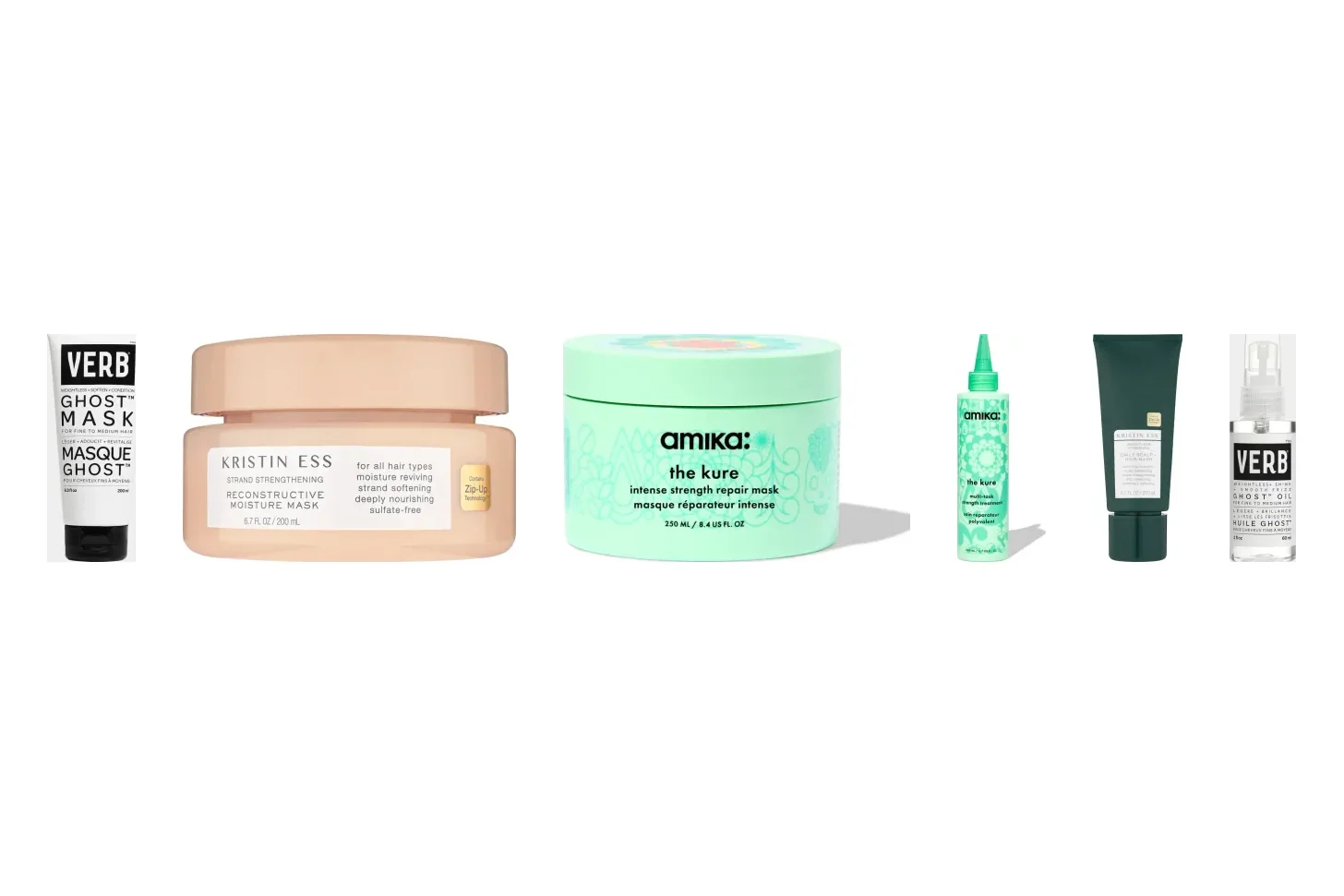
amika's the kure is a useful illustration, and a fair one: it's a good product that the brand itself positions honestly. Its ingredient list opens "Water/Eau/Aqua, Cetearyl Alcohol, Cetyl Alcohol, Dimethicone, Glycerin" with mango and shea butter further down, and amika says it's "best for high porosity hair." That's a mask designed to deposit conditioning material — exactly the thing fine hair has the least tolerance for. The bond claim is genuine; the format is aimed at someone else.
Format
What's left on your hair
Fine-hair verdict
Best when…
Pre-wash treatment
Nothing — you shampoo afterwards
Safest format. Impossible to weigh hair down
Flat-prone fine hair, and anyone who over-applies
Leave-in treatment
A small measured dose stays
Excellent if you respect the dose; risky if you eyeball it
Dry, porous ends; no patience for extra steps
Bonding shampoo & conditioner
Very little — rinsed
The lightest way to use this ingredient daily
Maintenance between treatments; color-treated fine hair
Rich repair mask
A lot — butters, silicones, fatty alcohols
Usually too heavy at the roots; ends only
Fine hair that's also genuinely dry and high-porosity
Chair-side note
The thing I see most often isn't people using the wrong bond builder — it's people using a perfectly good one on top of everything else they own. Bond treatment, then a mask, then a leave-in, then an oil, because each one promised repair and none of them said stop.
Two weeks later the hair feels rough and looks dull, and the conclusion is always "I need something stronger." It's the opposite. Fine hair reaches saturation faster than any other type, and coated hair mimics damaged hair almost perfectly — dull, tangly, no movement. When someone shows me that hair, I take everything away, clarify once, and rebuild with two products.
The other habit worth breaking: leaving treatments on longer than the box says, on the theory that more time equals more repair. Olaplex says outright that leaving N°.3 in longer than recommended won't increase the benefits. These are chemical reactions with a finish line, not marinades.
MH
— Megan Holloway, Editor-in-Chief
The six worth buying, by format
One pick per job. Fine hair needs one of these, not a shelf of them.
K18 Leave-In Molecular Repair Hair Mask pump bottle, product shot on white
1
Best overall for fine hair: K18 Leave-In Molecular Repair Hair Mask
Redken Acidic Bonding Concentrate shampoo and conditioner for fine hair, product shot on white
5
Best everyday version made for fine hair: Redken Acidic Bonding Concentrate, Fine Hair duo
Worth knowing about because it's the rare case of a bonding line making a version specifically for this hair type rather than expecting fine hair to make do with the standard one. The wash-and-rinse format is the lightest way to keep this ingredient in your routine — nothing sits on the hair, there's no extra step, and the fine-hair formulation is built to condition less aggressively than the original, which is the thing that makes bonding conditioners feel heavy. The line is built around a bonding care complex with citric acid and an acidic pH, and Redken's argument is that it reinforces weakened bonds while the low pH keeps the cuticle flat. On fine hair, treat it as maintenance rather than repair: it's what you use between treatments, or instead of them if your damage is mild. Best for: color-treated fine hair that needs an everyday wash routine, and anyone whose hair goes flat with regular bonding conditioners. Honest limitation: a short-contact wash-off product can't do what a ten-minute treatment does, so don't buy this expecting to reverse a bad bleach; and a full shampoo-plus-conditioner set is a bigger commitment than a single bottle. (Described in our own words: this brand's site declines automated requests, so nothing here is quoted from its product copy.)
How to use one on fine hair without going backwards
One bond product at a time. Not a treatment plus a bonding mask plus a bonding leave-in. Fine hair saturates fast, and coated hair looks exactly like damaged hair.
Start at the smallest dose. One pump, not three. You can always add next wash; you can't take it back out until you shampoo.
Ends up, never roots. The hair at your scalp is weeks old and undamaged. Treating it costs volume and buys nothing.
Respect the clock. Three minutes means three minutes. Longer doesn't repair more — brands say so themselves.
Once or twice a week, then reassess. If hair starts feeling stiff, rough or snappy rather than strong, that's the protein-heavy end of the spectrum and it's time to stop. Keratin and protein treatments covers that balance in full.
Clarify occasionally. If you've been layering repair products for weeks and everything feels dull, one clarifying wash resets it — see clarifying shampoos.
When to skip bond builders entirely
You've never had a chemical service.No bleach, no permanent color, no perm, no relaxer — the damage these target mostly isn't there. Spend it on a cut.
You're shedding rather than breaking.Hairs coming out with a white bulb at the root aren't a damage problem at all. Fine hair or thinning?
FAQ
The bond-repair molecule itself doesn't — it's a small ingredient used at low concentration, and in most formulas it isn't what you feel afterwards. What weighs fine hair down is the format it arrives in. A rich mask carrying that ingredient is still a rich mask: look at amika the kure, where the ingredient list runs water, cetearyl alcohol, cetyl alcohol, dimethicone, glycerin before it reaches anything else, with mango and shea butter further down. That's a genuinely good product, and the brand says it's best for high porosity hair — it's simply built to deposit conditioning material, which is the thing fine hair has the least tolerance for. Choose by format instead of by claim. Pre-wash treatments get shampooed off, so nothing stays behind. Leave-ins stay, so the dose matters. Bonding shampoos and conditioners are the lightest daily option because you rinse them.
Only if it has the kind of damage these products are built for. Bond builders were developed for chemical damage — bleaching, permanent color, relaxing, perming — where disulfide bonds inside the fiber are broken by the process. If you've never lightened your hair, never permed it and don't use a flat iron daily, the damage you have is far more likely to be mechanical: breakage from brushing, tension, elastics and towel-drying, which happens outside the cortex and isn't what a bond builder addresses. The most useful test is what your damage looks like. Snapped mid-length hairs, split ends and a rough feel from a bleach or a color service is the bond builder case. Short broken hairs at the crown and hairline, or hair that won't grow past your shoulders, is a handling problem and no bottle fixes it.
No, and this is the most common disappointment in the category. A bond builder works on the strength of the strands you already have. It doesn't change strand diameter, it doesn't change how many hairs you have, and it doesn't create volume — if anything, hair that's smoother and better aligned can read slightly flatter than hair with damage-driven texture. What it can do indirectly is preserve length and reduce the snapping that makes ends look wispy and see-through, and over months that's a real difference in how full your hair looks. But if fullness is the goal for next week rather than next year, a root lifter, a mousse and a better cut will all do more than any bond product. Strength and volume are separate problems with separate solutions.
Better than nothing and thinner than the marketing implies. The chemistry is described in the peer-reviewed literature — a 2025 paper in Pharmaceuticals notes that Olaplex contains bis-aminopropyl diglycol dimaleate, which effectively reconnects broken disulfide bonds in hair keratin — but look at how the supporting work is done. That same paper tests its own compounds with in vitro tensile strength measurements on hair fibers, and its authors state that the study has limitations, as it was conducted on a specific category of artificial hairs, and that the findings need to be supported by in vivo tests to create a comprehensive outlook. In other words, the strength data behind this whole category comes from tresses in a lab, not from heads. Brand claims add a second layer worth reading: several are measured across a whole three or four step system rather than the single product, and sometimes against a non-conditioning shampoo as the comparison.
They solve the same problem in two formats, and the format is what should decide it. Olaplex N°.3PLUS is a pre-shampoo treatment — the brand calls it a 3-minute pre-shampoo treatment to reverse all hair damage, and because you shampoo afterwards, nothing is left sitting on fine hair. That makes it the safer choice if your hair goes flat at the slightest provocation, and the more forgiving one if you tend to over-apply. K18 is a leave-in that works in four minutes, with the brand instructing you to apply 1-3 pumps based on your length and density and not to rinse it out. That's less time and less effort, and the small dose is deliberate, but the product stays on your hair, so discipline about the amount matters. Fine hair with flat roots and a low tolerance for residue: Olaplex. Fine hair that's dry and porous at the ends, or anyone who won't add a pre-wash step to their routine: K18.
Yes, and fine hair is where overuse shows first. Two things go wrong. The first is buildup: leave-in and mask formats deposit material each time, and on fine strands that accumulates into limpness and a dull, coated feel that people usually misread as needing more treatment. The second is stiffness. Bond builders are frequently used alongside protein-based repair products, and fine hair reaches the point of feeling hard, rough and snappy sooner than coarse hair does. Follow the brand's own frequency rather than your instincts — Olaplex advises that leaving N°.3 on longer than recommended won't increase the benefits, and K18 tells you to use it for four to six shampoos consecutively and then as needed. Once or twice a week is plenty for most fine hair. If it starts feeling dry and brittle rather than strong, stop and use a lightweight conditioner for a couple of weeks.
For fine hair, a bonding shampoo and conditioner is often the more sensible purchase, because it's the lightest way to get this ingredient onto your hair — you rinse it out, so residue is minimal, and there's no extra step to remember. What you shouldn't expect is treatment-level repair from a wash-off product with a short contact time. The other reason to consider the wash version is that brand strength claims are usually measured across the full system, not the treatment alone: L'Oréal's bond pre-shampoo footnotes its 3x stronger hair claim as being with use of a 4-step system versus a non-conditioning shampoo, and Olaplex attributes its results to the treatment plus its bond maintenance shampoo and conditioner. Read honestly, that means the wash products are doing a real share of the work in the numbers you're being shown.
Partly, and less than you'd hope for the everyday kind. Brands do include heat in the damage they address — K18 describes its peptide as reconnecting polypeptide chains and disulfide bonds broken during damage from bleach and color, chemical services, and heat — and there's a reasonable case that repeated high-heat styling breaks bonds a bond builder can act on. But mechanical breakage is a different failure. When a fine hair snaps because it was combed wet, or pulled by an elastic, or dragged in a towel, the fiber has been cut through rather than internally weakened, and nothing reconnects it. That's why the honest order of operations for fine hair puts handling first: fix the towel, the brush, the elastic and the wet detangling, then use a bond builder to look after what the chemistry has cost you.
Mid-lengths and ends, working upward, and stopping well short of the roots on anything that stays in the hair. The damage is concentrated at the ends because that hair is oldest and has been through the most washes, brushes and heat cycles, while the hair at your scalp is weeks old and effectively new. Root application on fine hair buys you nothing and costs you the volume you were trying to keep. K18 words it as starting at the ends and working up towards the roots, and that direction is the right habit for any format. Start with the smallest dose the brand suggests rather than the largest, and only increase if your ends still feel rough after a couple of uses. With pre-wash treatments you have more latitude, because the shampoo that follows removes whatever didn't absorb.
This article is for general education and is not medical advice. Bond builders are cosmetic products and are not a treatment for hair loss. If you are experiencing sudden, patchy or prolonged hair loss, scalp pain, or other concerning symptoms, see a board-certified dermatologist.
Images in this article are AI-generated illustrations, not photographs of real clients or results. See our image policy.
Results vary with hair type, density, and growth patterns. This guide is educational and not a substitute for an in-person consultation with a licensed stylist or physician.
Get the good hair intel
One honest, stylist-written guide in your inbox each week. No hype.

 MH
MH