Reviewed by Tara Sullivan · Updated August 2026 · 9 min read
A barrette doesn't grip the way a claw clip does. It holds by pinching a flat ribbon of hair between a sprung bar and a base — and on fine hair there isn't enough thickness to fill that gap, so the clasp closes straight past the hair, meets itself, and the whole thing slides down under its own weight before you've reached the car.
Scrunchies fail differently, headbands fail differently again, and each failure has its own fix. Below: the four accessory families that aren't claw clips, why each one loses its grip on fine hair, the loading technique that makes almost any barrette hold, and six picks — barrettes, snap clips, a scrunchie, a headband and a banana clip — each with the limitation the packaging leaves out.
Every product here is chosen independently, on the merits — what genuinely suits fine, thin hair. Links go to each brand's official page, and we don't take payment for placement. Price tiers are rough guides because prices change.
Four families, four mechanisms, four different ways fine hair loses its grip.
Chair-side note
I keep a tiny two-inch barrette in my kit purely to hand to clients who've just told me nothing stays in their hair. They put it in, look at it, and say some version of "that's too small." Then it's still there four hours later, which is longer than anything they own has managed.
The instinct on fine hair is always to reach for a bigger clip, because it feels like more clip means more hold. It's the exact opposite: a bigger clasp has further to close before it meets your hair, and everything it closes past is slack.
SB
— Simone Baptiste, Senior Stylist
Four families, four mechanisms
Accessories get bought by how they look and fail by how they work. Each of these holds hair a fundamentally different way, and fine hair defeats each one for its own reason — with one exception, the decorative comb, which holds by leverage rather than by gripping bulk and so barely cares how much hair you have. Its shapes are on the combs for fine hair page.
Family
How it holds
Why it fails on fine hair
The fix
Barrette
A latching clasp pinches a flat ribbon of hair against a base
Not enough thickness to fill the bite; the clasp closes past the hair
A smaller clasp, and hook it under an anchor layer
Snap clip
Sprung metal curls back and grips along its length
Spring pressure alone, with little hair to press against
Silicone-gripped versions; short wear times
Scrunchie / elastic
Circumferential compression — friction against the bundle
A small ponytail circumference inside a large relaxed loop
Fine hair never fills the jaw, so it levers itself out
Covered in full on its own page
That last row is the scope note. Claw clips and hair ties have their own page, because jaw tension is a different problem with a different set of answers. This one covers everything else in the drawer.
The anchor: how to load a barrette so it holds
This is the part that changes results more than the purchase does, and it takes about three seconds once you've done it twice. For the styles these are fastening rather than the hardware itself, see easy updos for fine and thin hair.
Most people load a barrette by laying a flat sheet of hair across the base and snapping the clasp shut over it. On dense hair that works, because the sheet is thick. On fine hair, don't pinch — hook.
Open the barrette, slide the bar under a thin surface layer of hair first, then bring it up and over the main section before you latch it. The clasp is now catching two separate layers travelling in different directions, and it physically can't slide down past the anchor layer, because that layer is running the wrong way.
Three smaller things that compound it:
Load it on second-day hair, or add grip. Freshly washed fine hair is slippery. A mist of texture spray through the section before you clip gives the clasp something to hold. This is the accessory equivalent of the twist trick.
Twist a half-inch before it latches. A quarter-turn in the section makes it rounder, and a round section fills a clasp better than a flat one at the same volume.
Point the opening downward. A barrette loaded with the clasp opening toward the floor has gravity working against the direction it would need to travel to fall out.
The picks, by job
One per job, across the four families. Two are from the same drugstore brand, which is less about loyalty than about it being one of the few making silicone-gripped versions at that price. A decorative slide is also the shortest route to a formal look on a bob — see the short-hair entries in bridesmaid hairstyles for fine hair.
1
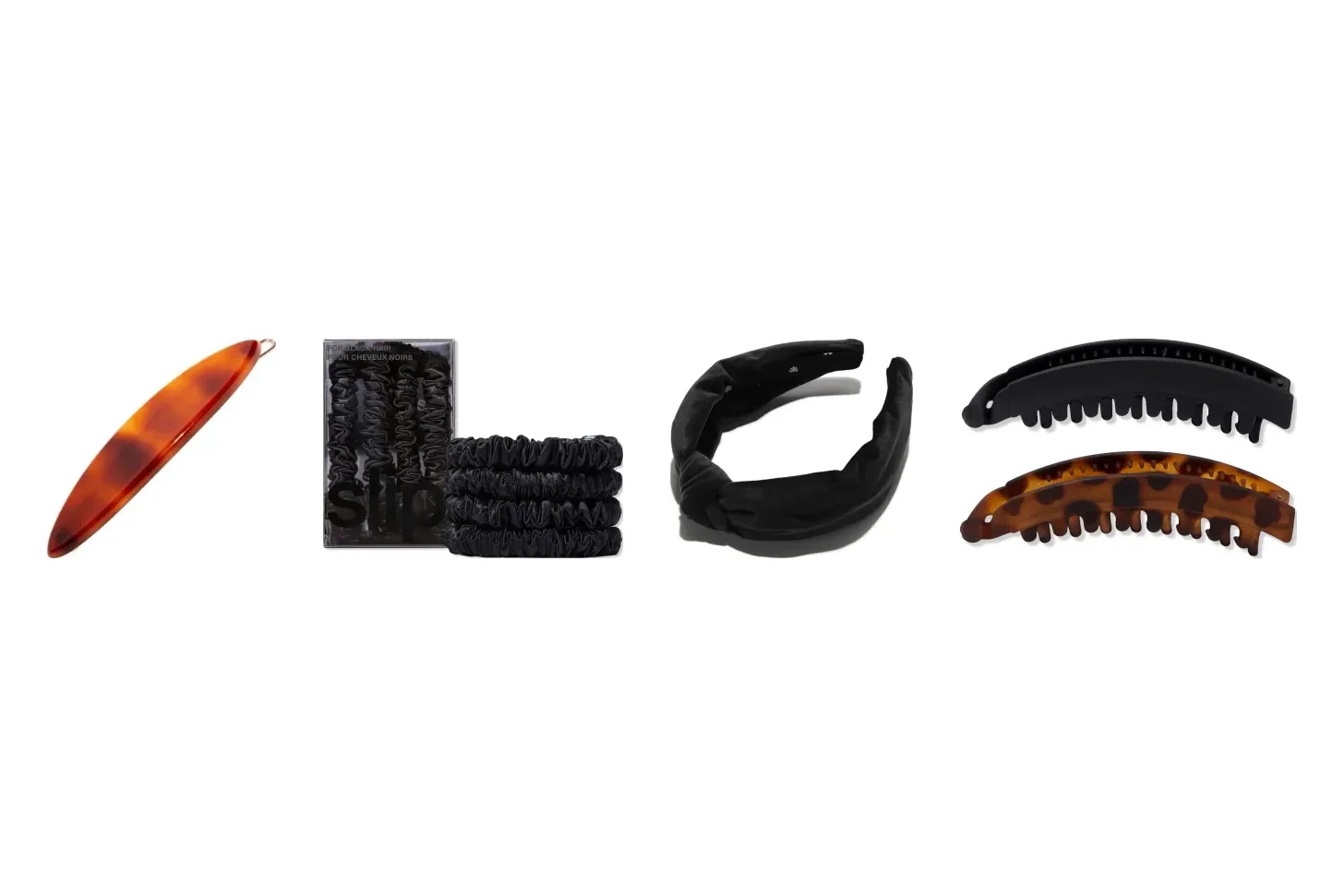
Best overall: France Luxe Mini Oblong Tige Boule Barrette
A half-inch by one-and-five-eighths-inch barrette in hand-polished cellulose acetate, with a tige boule clasp — the French ball-and-stem mechanism that latches rather than relying on spring pressure. The small scale is the entire point: this closes properly on the amount of hair a fine head actually offers, where a decorative four-inch barrette needs a fistful. Best for: half-up styles, pinning back one side, all-day wear that has to look intentional. Honest limitation: it's genuinely tiny, so it holds one small section rather than a whole half-up on longer hair — and it's a premium price for an object that is very easy to leave in a coat pocket.
Scunci No-Slip Grip clasp barrettes, pair in neutral tones, product shot on white
2
Best budget barrette: Scünci No-Slip Grip Clasp Barrettes
The same latching principle at drugstore money, with silicone grip strips along the inside of the clasp doing the work that a hand-finished acetate surface does on the pick above. Two to a pack, which matters more than it sounds — barrettes are worn in pairs far more often than singly, and buying two of an expensive one is a different decision. Best for: everyday wear, trying the format before committing, keeping a pair in a bag. Honest limitation: the finish is functional rather than beautiful, and silicone grip does wear smooth over a year or so of daily use — this is a replaceable item, not an heirloom one.
Scunci No-Slip Grip tortoiseshell epoxy snap clips, four in a row, product shot on white
3
Best snap clips: Scünci No-Slip Grip Tort Epoxy Snap Clips
Snap clips are the fastest accessory there is — press, done — and the small 5.5cm size is the one to take on fine hair, because a longer snap clip has more length to grip with and less hair to grip along it, which is how they end up hanging off the ends of your hair. The no-slip coating gives the spring something to bite. Best for: pinning a fringe back while you do your face, holding a section for an hour, keeping in a desk drawer. Honest limitation: snap clips concentrate pressure along a narrow strip, so they crease fine hair faster than a barrette does — take them out before the crease sets rather than wearing them all day.
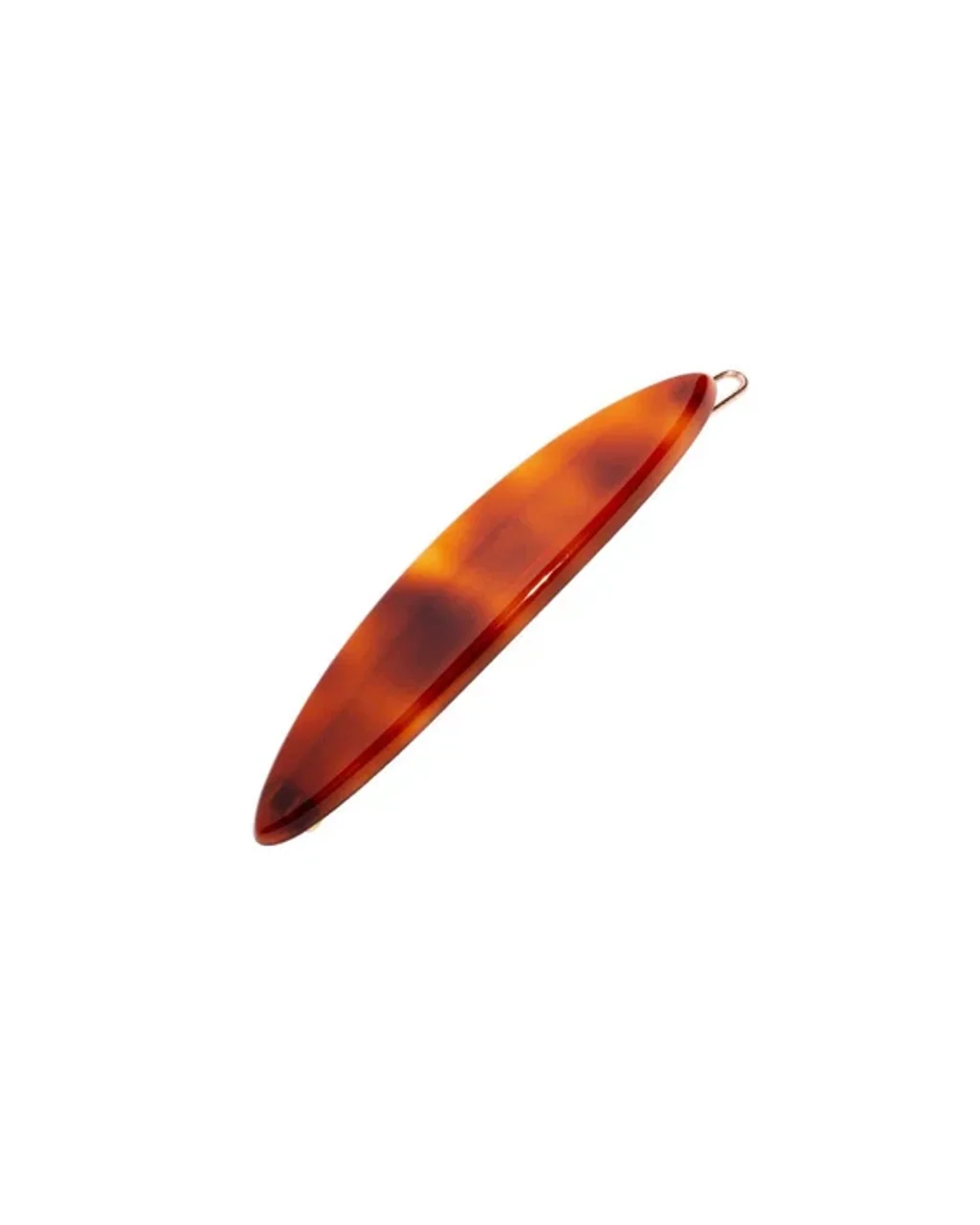
The skinny cut is what makes this work on fine hair. A full-volume scrunchie has a large relaxed diameter and a lot of fabric, so a small ponytail sits loose inside it; the skinny version closes down to a much smaller circumference and grips at a size a fine ponytail actually reaches. The silk itself is the breakage story — it slides over the hair instead of catching it, which is the whole reason to spend here. Best for: ponytails, sleeping in, hair that snaps on ordinary elastics. Honest limitation: the same low friction that protects your hair also means less grip, so plan on one extra wrap compared with a cotton tie — you're trading a little hold for a lot less breakage.
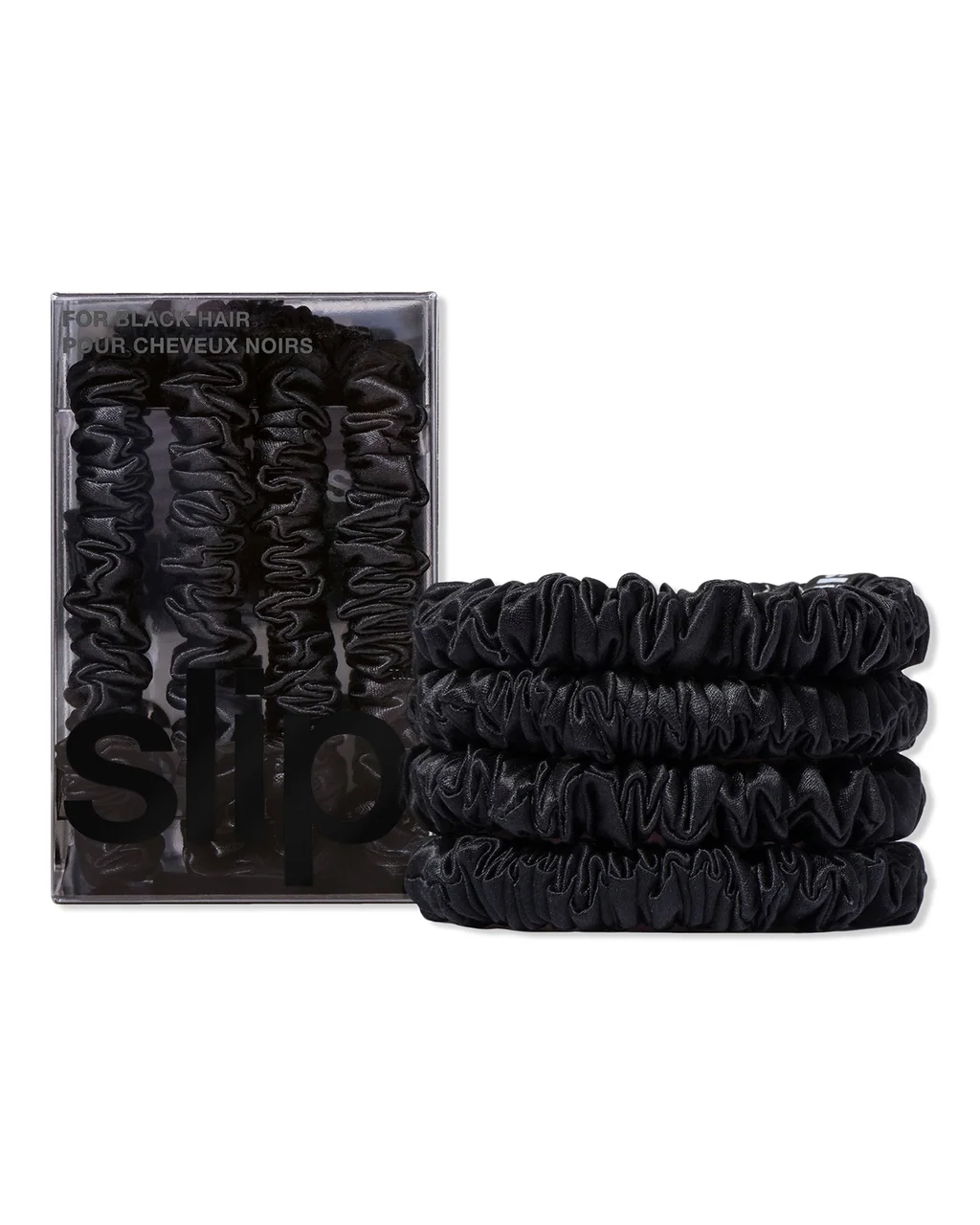
Best headband: Lele Sadoughi Velvet Knotted Headband
Velvet is the material answer to the headband problem — the pile catches on fine hair where smooth plastic slides over it, so the band stays where you put it instead of creeping backward through the afternoon. This one runs about two and a half inches at the sides with a narrower one-inch band behind the ears, which distributes the pressure rather than concentrating it. Best for: growing out a fringe, second-day hair, adding width to a narrow silhouette. Honest limitation: two and a half inches covers a lot of head, and anything that crosses the crown flattens it — see the section below on where to sit it. It's also a premium price for a fabric object.
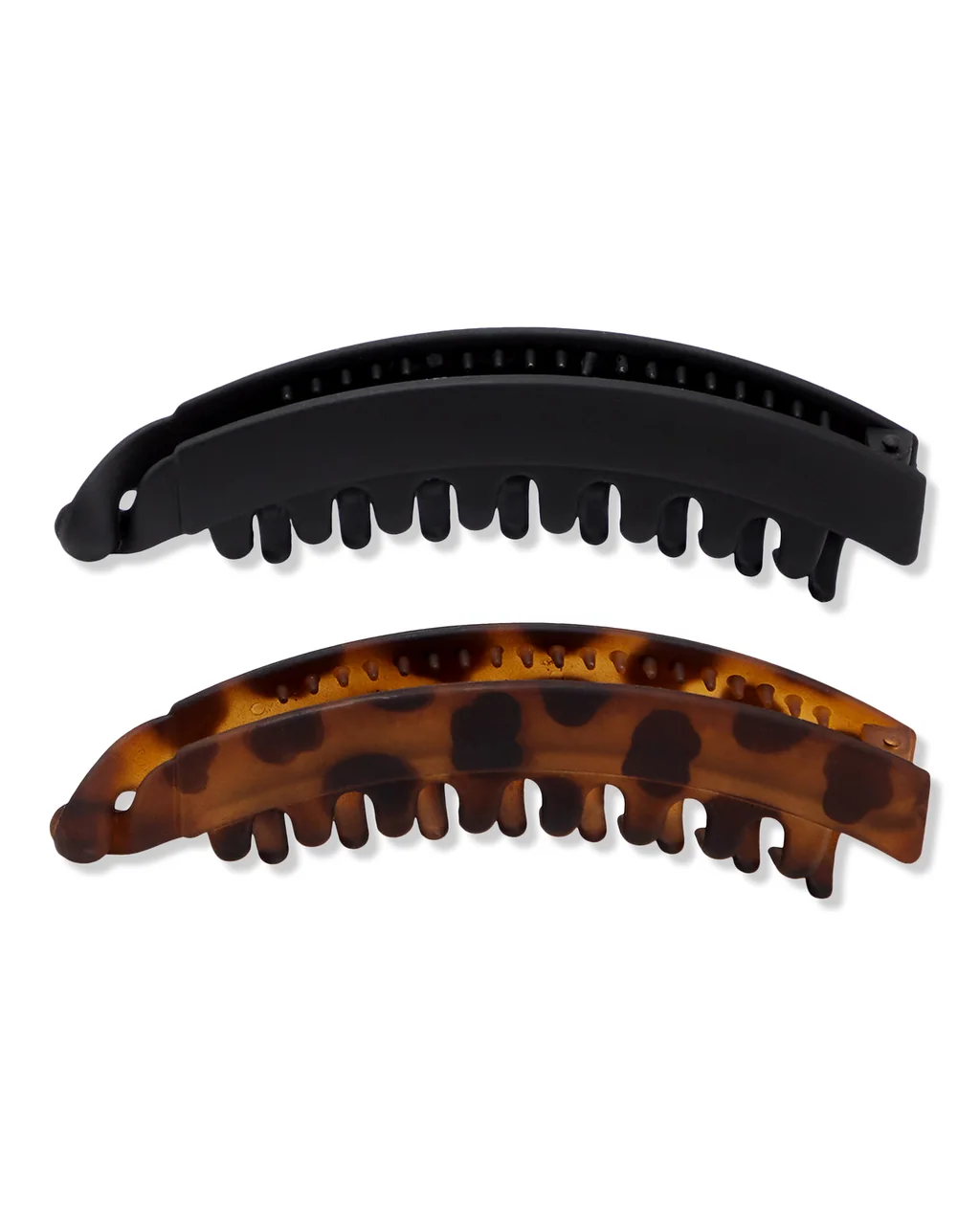
The banana clip's genuine advantage is that it folds hair rather than gathering it at one point, so it makes a ponytail-ish shape with no crease and no tension line — which is a real benefit for anyone worried about what daily ponytails do to fine hair. The long interlocking teeth and metal spring on this pair grip better than the moulded plastic versions that dominate the category. Best for: crease-free updos, wearing hair back without an elastic, a fuller-looking tail. Honest limitation: the brand's own guidance is that banana clips work best on medium to thick hair, and that's accurate — the teeth need mass between them to stay apart. On fine hair, twist the section before you clip it, and accept that this is the least reliable pick on the page straight out of the packet.
Headbands get recommended to fine-haired people constantly, usually as a way to hide a limp root area — and they're one of the few accessories that can make the underlying problem look worse if you wear them in the obvious place.
Anything crossing the top of your head presses the hair flat, and the crown is exactly where fine hair can least afford to lose height. A band pushed forward over the crown gives you a smooth, low silhouette from every angle. So: sit the band behind the crown, an inch or two further back than feels natural, and let the hair in front of it keep its lift.
If you want to be deliberate about it, build the lift first — a little root lifter and thirty seconds of drying the roots against the grain, then place the band behind what you've built. The technique behind that is in how to get root volume in fine hair.
The second headband issue is migration. A smooth plastic band has very little to grip on fine hair, so it creeps backward until it falls off. Velvet, rubberised silicone strips, or a toothed interior all solve it. And if a band leaves your head aching after an hour, it's too narrow for the tension it's applying — the pressure is concentrated on a small area, which over years of daily wear is worth avoiding on hair that's already fine.
When an accessory isn't the answer
You want to hold all of your hair up, all day. That's a claw clip's job, not a barrette's — and it has its own fine-hair rulebook in the best hair clips for fine hair.
Everything slips because your hair is freshly washed and slippery. No accessory beats clean, soft hair. Add grip first — second-day fine hair, revived covers the products that give fine hair something to hold onto.
You're using accessories to cover a thinning parting. They'll draw the eye rather than hide it. Start with coverage for thinning on top, which is built for that specific problem.
Your hairline is receding where you wear clips and bands. Stop, and vary the placement. Repeated tension in the same spot is a real risk on fine hair — the hair topper guide covers the same tension question in more depth.
You want volume, not tidiness. Accessories flatten by definition. Volume is a cut-and-styling question: how to add volume to fine hair.
FAQ
Because a barrette holds by pinching a flat ribbon of hair between a sprung bar and a base, and fine hair doesn't fill that gap. The clasp closes past the hair, meets itself, and the hair sits loose inside a closed clip — so the whole thing slides down under its own weight within about twenty minutes. The two fixes are a smaller clasp, which closes on less, and a different way of loading it: hook the bar under a thin anchor layer of hair rather than pinching a flat sheet.
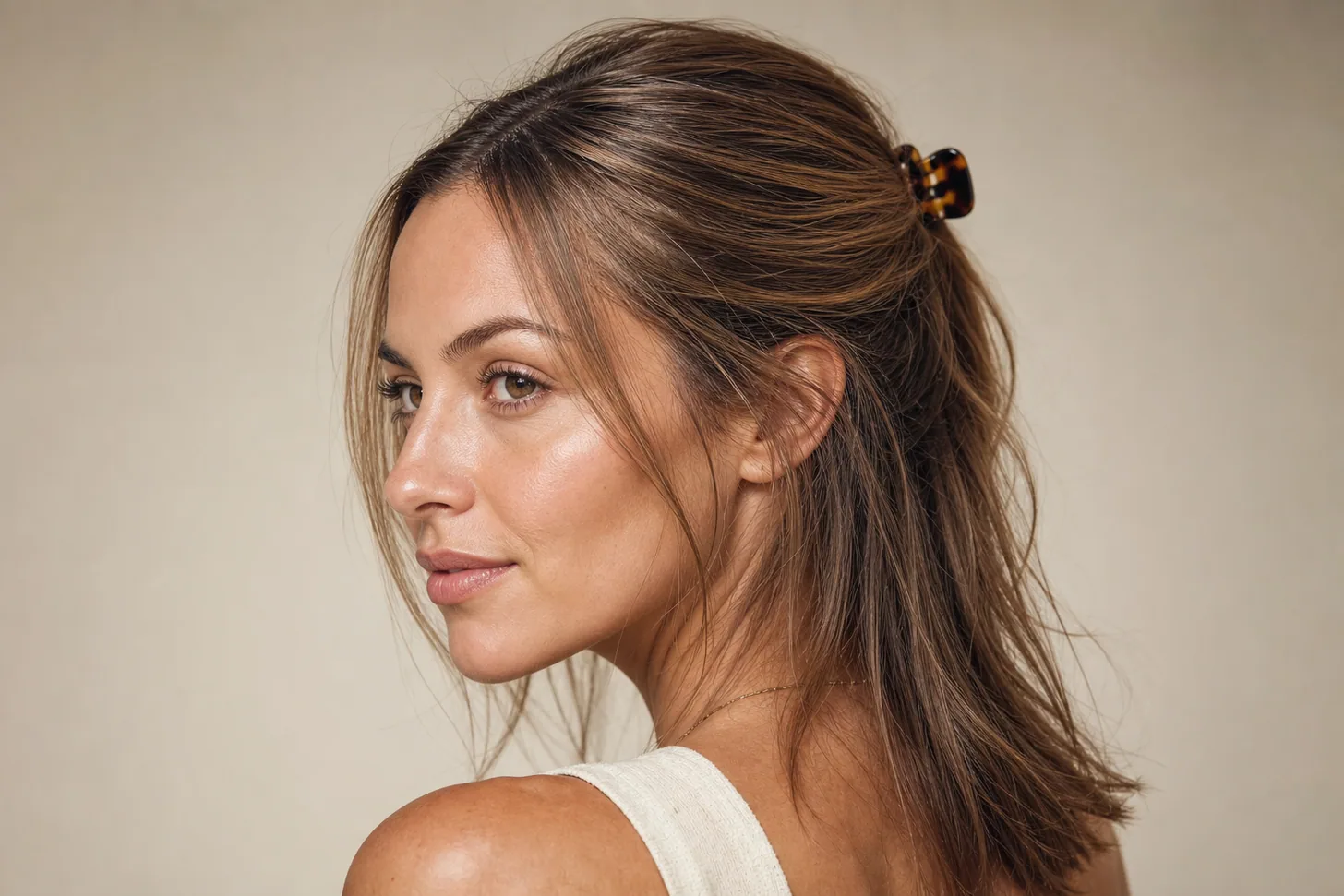
Small, and smaller than looks right in the packet. A barrette around one and a half to two inches long with a narrow clasp will close properly on the amount of hair you actually have, where a decorative four-inch barrette needs a fistful to grip. The counterintuitive part is that a small clip on fine hair looks deliberate and a large one looks borrowed — the scale of the accessory reads against the scale of the hair, so undersizing flatters and oversizing announces.
For breakage yes, for grip less so, and it's worth knowing both halves. Silk has a low coefficient of friction, which is exactly why it's gentle on the hair it touches — and exactly why a silk scrunchie is more likely to slide down a fine ponytail than a cotton one. The practical answer is a skinny silk scrunchie rather than a full one, taken around one extra time. You keep the gentleness and you get the grip back from the reduced diameter.
They work, with two adjustments. First, choose an interior that grips — velvet, rubberised silicone or a toothed edge — because a smooth plastic band has less hair to hold onto and migrates backward all day. Second, and more importantly for how it looks: a headband flattens whatever it crosses, and the crown is where fine hair can least afford to lose height. Sit the band behind the crown rather than over it, and build a little lift in front of it before you put it on.
A barrette has a hinged clasp — usually a ball-and-stem or a French clip — that latches, so it holds a set amount of hair at a consistent tension. A snap clip is a bent strip of sprung metal that flattens when you press it and curls back when released, gripping by tension along its whole length. On fine hair the barrette is the better all-day option because it latches rather than relying on spring pressure, while snap clips are quicker and better for pinning back small sections for an hour or two.
Only with help. A banana clip works by folding hair between two rows of interlocking teeth, and the teeth need enough hair between them to stay apart — most brands say plainly that the style suits medium to thick hair. On fine hair the teeth close too far and the clip either falls out or slides down the ponytail. It becomes wearable if you twist the section before you clip it, which manufactures the bulk the teeth are looking for, but it will never be the most reliable option in the drawer.
Move them, and choose the ones that spread the pressure. A crease is a bend held under tension for hours, so the same clip in the same place all day is the reliable way to get one — shifting a barrette an inch between wears solves most of it. Beyond that, fabric-covered elastics and scrunchies crease far less than bare elastics, banana clips crease less than ponytails because the hair is folded rather than gathered at one point, and snap clips crease more than barrettes because the pressure is concentrated along a narrow strip.
Eleven years behind the chair, styling fine and thin hair into things that hold. Simone's rule on accessories is that fine hair should buy one size down from whatever looks right — and that a clip you can barely see is a clip that's still there at six o'clock.
Results vary with hair type, density, and growth patterns. This guide is educational and not a substitute for an in-person consultation with a licensed stylist.
Get the good hair intel
One honest, stylist-written guide in your inbox each week. No hype.

 SB
SB