Reviewed by Tara Sullivan · Updated August 2026 · 10 min read
Every styling tool ever made does the same job by the same mechanism: it breaks the hydrogen bonds in your hair and holds it somewhere new until they re-form. The only variables are heat, tension and time — and a fine strand reaches the same result on less of all three, because there's less of it to heat and less of it to hold. Which means the spec that matters on a fine-hair tool is always the bottom of its range, not the top.
A dial that's right for someone else's hair overshoots on yours. Below: the three tools that do about ninety percent of the work, a temperature-and-tension table for every tool in the drawer, what you can genuinely skip, and the two minutes of maintenance that change results more than an upgrade would.
This is the tools counterpart to the honest product kit. Individual picks live on the linked roundups — every product we recommend is chosen independently, on the merits, and we don't take payment for placement.
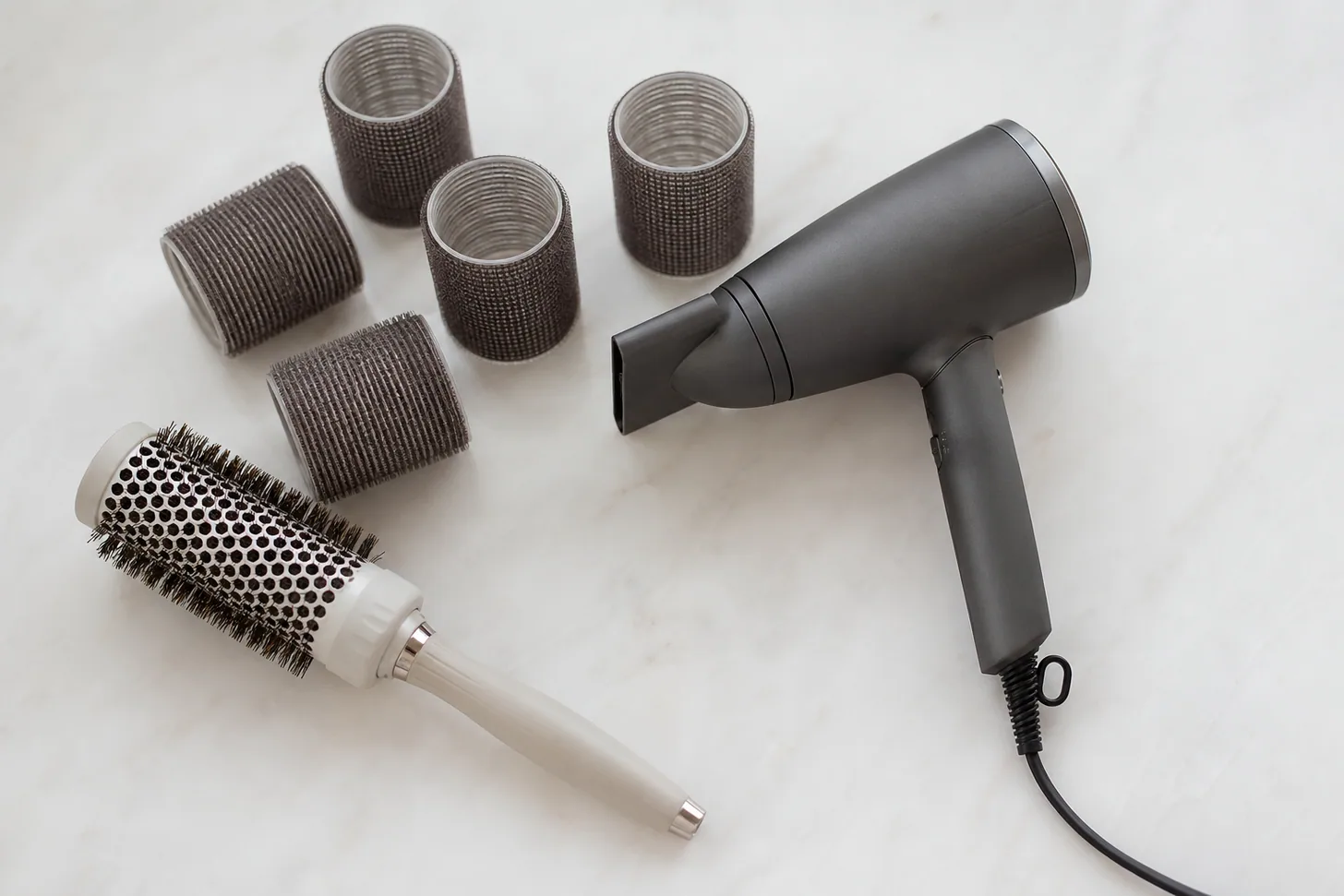
The three tools that do most of the work on fine hair.
Chair-side note
I ask new clients what temperature they iron at and most of them don't know — the tool has one button and they press it. So I've started doing a demonstration instead of a lecture: I iron one section at the bottom of the dial and one at the middle, and we look at them side by side in the mirror.
On fine hair they look identical. One of them cost twice as much heat for the same result. Nobody argues with the mirror, and nobody goes back to the higher number afterwards.
SB
— Simone Baptiste, Senior Stylist
Every tool is the same trade
Hair holds its shape because of hydrogen bonds between the keratin chains inside each strand. Water breaks those bonds, which is why wet hair can be set into any shape; heat breaks them faster and drives the water out at the same time.
Either way, the bonds re-form as the hair dries and cools — and they re-form in whatever position the hair is being held. That's the whole of styling. Rollers, a round brush, a flat iron and an overnight braid are four ways of holding hair somewhere while the bonds settle.
Two consequences follow, and both of them favour fine hair once you know them.
First, fine hair needs less heat. A thinner strand has less mass, so it reaches the same internal temperature faster and with fewer passes. The setting that gives a coarse-haired friend a perfect result will overshoot on yours — same tool, same dial, different fibre.
The American Academy of Dermatology's advice on habits that damage hair lands on the same rule from the safety side: use the lowest possible setting that gives you the style you want, and don't use heat every day.
Second, the cooling matters more than the heating. If you drop a section off the brush while it's still warm, the bonds re-form hanging down, and the volume you just built disappears within the hour. Hold every section in shape until it's completely cool — around the brush, pinned flat to your head, or in a clip. On fine hair this is the single highest-value habit in the whole routine, and it costs nothing.
The heat-and-tension budget, tool by tool
What each tool actually does, and where the fine-hair setting sits inside its range.
Tool
What it really does
The fine-hair setting
Picks
Blow dryer
Drives water out while you hold the hair in shape
Medium heat, high airflow. Concentrator on. Cool shot on every section
There's a fourth worth considering only if it replaces two of these rather than joining them: a hot air brush, which is a dryer and a round brush in one body. The case for and against is in blow-dry brushes for fine hair.
If you're building from nothing, or rebuilding after a drawer clear-out, buy in this order. Each one earns its place before the next is worth having.
A dryer with a concentrator nozzle and a real cool shot. The nozzle is not an accessory — undirected airflow blows fine hair around rather than setting it, and most people lose their nozzle in the first month and never notice why their blow-dries got worse. The cool shot is what locks the shape. Between them they turn a dryer from a hair-drying device into a styling tool. The picks are here.
One round brush, sized to your length. A 1.5-inch barrel for anything from chin to collarbone, 1 inch for shorter. Vented barrels dry faster, which means less time under heat. The brush supplies tension, and tension is what turns drying into shaping — the technique is in how to blow-dry fine hair for volume. Barrel sizes and picks.
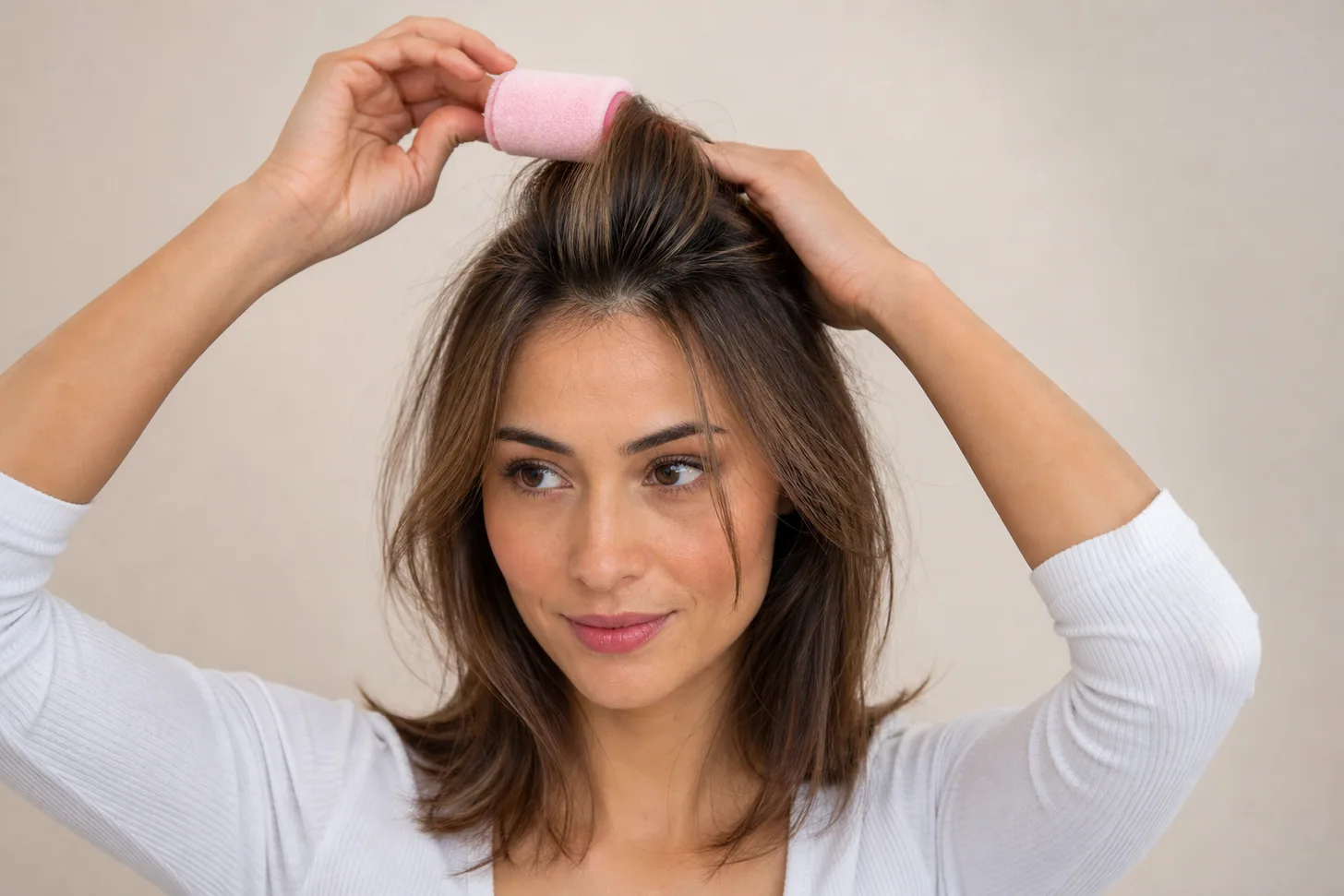
One setting tool. For most fine hair this is a set of rollers, because the hair cools in shape — hot rollers if you want it in twenty minutes, velcro or heatless if you're happy to wait. If your hair is wavy and what you actually want is smooth, a flat iron replaces this slot instead. Rollers · Flat irons.
That's it. A dryer, a brush, and something to set with covers root lift, shape and finish, which between them are every fine-hair style there is. The fourth purchase — whatever it is — buys you a variation, not a capability.
What you can skip
Not because these are bad tools, but because on fine hair they solve a problem you either don't have or can solve more cheaply.
A curling iron, for most people. An iron releases the hair hot, so the curl starts relaxing the second it leaves the barrel — and fine hair has the least structure to resist that. Rollers do the same job better because the hair cools wrapped. If you want curls that survive the afternoon, start with how to curl fine hair so it actually holds.
A crimper or root-lift iron. Genuinely effective and genuinely aggressive — it's heat applied directly at the root, which is the most fragile hair on your head and the hardest to hide damage on. A root lifter and correct drying direction get most of the way there.
A second brush "for volume." Volume comes from where you dry, not what you dry with. The exception is a small teasing brush, which does something no other tool does.
Anything marketed as a 5-in-1. Multi-head systems are usually excellent at one attachment and mediocre at the others. If you'll genuinely use three heads, they're good value; if you bought it for one, buy that one thing properly.
Ionic settings, as a deciding factor. Useful for frizz, irrelevant to volume, and not worth choosing a tool over. Airflow shape and minimum temperature matter far more.
Two minutes of maintenance that beat an upgrade
Both of these change results measurably, and both get skipped.
Clear the dryer filter every few weeks. A clogged filter restricts airflow, and a dryer that can't move air compensates by running hotter and taking longer — more heat, more time, exactly backwards for fine hair. Most filters twist off; a dry toothbrush clears the lint in thirty seconds. If your dryer feels like it "got hotter," this is usually why.
Wash brushes and combs monthly. Pull the shed hair out weekly with the tail of a comb, then wash with a drop of shampoo in warm water. Fine hair carries less oil down the length than coarse hair does, so more of it stays near the scalp and transfers onto the brush — and a dirty brush puts it straight back onto clean roots the next day.
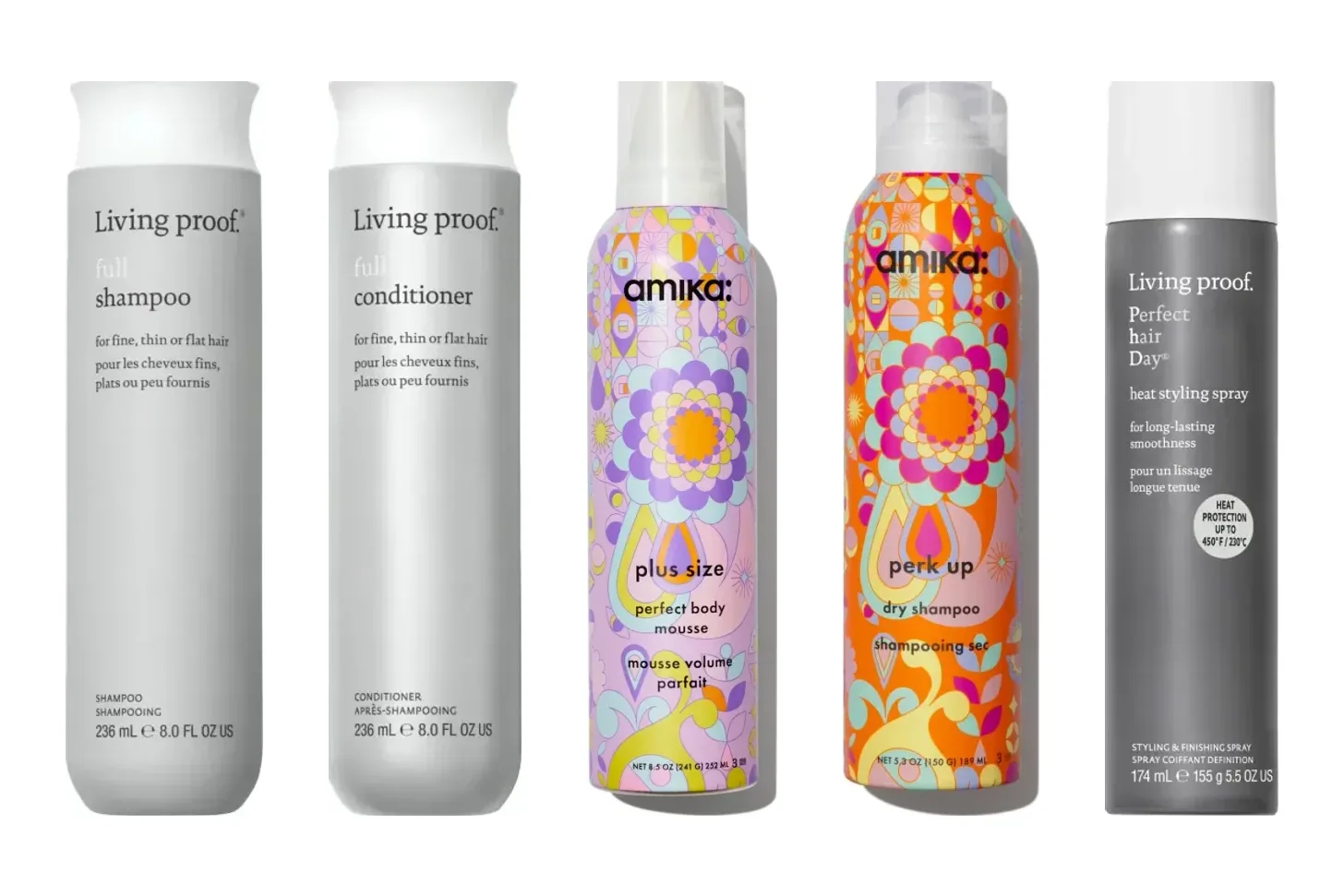
One more, less obvious: keep a heat protectant in the routine and let it dry before an iron touches the hair. Applying a hot plate to wet product is what makes the crackling sound, and the damage follows the sound. Light sprays rather than creams, and keep them off the roots.
When a new tool isn't the answer
Your hair holds a style for an hour and then drops. That's a cooling problem or a product problem, not a tool problem. Hold each section until it's cold, and check you're using something at the roots — mousse or a root lifter.
Everything you do goes flat by lunchtime. Start with the diagnosis rather than the drawer: why fine hair goes flat covers build-up, wash frequency and weight, which are the three usual culprits.
Your ends look thin and see-through after styling. That's damage accumulating, and more heat will accelerate it. Drop the temperature, add a protectant, and read the moisture routine for dry, fine hair.
The cut is fighting you. No tool rescues a shape that's wrong for your density. That conversation starts at the exact words to ask your stylist.
FAQ
Three: a dryer with a concentrator nozzle and a genuine cool shot, a round brush in a barrel size that matches your length, and one setting tool — rollers for most people, a flat iron if your hair is wavy and you want it smooth. That combination covers root lift, shape and finish, which is everything a fine-hair style is made of. Everything beyond those three is a refinement rather than a requirement, and a drawer full of tools is usually a sign that none of them were being used at the right settings.
The lowest setting that achieves the style, which on fine hair is nearly always far lower than the tool's default. A fine strand has less mass, so it reaches the same internal temperature faster and with fewer passes than a coarse one — the dial that's right for your friend's hair will overshoot on yours. Start at the bottom of the range, take one pass, and only increase if the shape genuinely won't hold. The American Academy of Dermatology's guidance is the same principle: use the lowest possible temperature setting that gives you the style you want.
On two specific things, yes; on the rest, not much. Even, well-regulated heat matters because fine hair is the least forgiving of hot spots, and a low minimum temperature matters because cheap tools often start higher than fine hair wants. Those two features tend to travel with price. What doesn't scale with price is airflow shaping, barrel size or bristle spacing — a mid-priced dryer with the right nozzle beats an expensive one used without it, every time.
Neither is a volume tool, which is the first thing to know. A flat iron smooths and can bend, so it's the better buy if your hair is wavy and you want it sleek or want a soft bend at the ends. For curls and body on fine hair, rollers beat an iron for a structural reason: the hair cools while it's still wrapped in shape, and it's the cooling under tension that sets the bond. An iron releases the hair hot, so the shape starts relaxing immediately.
Almost always because it was still warm when you let go of it. Heat styling works by breaking hydrogen bonds in the hair and letting them re-form in a new position, and they only lock into that position as the hair cools. If you drop a section straight off the brush while it's hot, it re-forms hanging down. Hold each section in shape — around the brush, in a clip, or pinned to your head — until it's completely cool to the touch. On fine hair this single habit is worth more than any product.
Wash brushes and combs monthly and clear the dryer filter every few weeks. Neither is housekeeping for its own sake. A clogged dryer filter restricts airflow, which makes the dryer run hotter and take longer — the exact opposite of what fine hair wants — and it's the most common reason a dryer that used to be gentle suddenly isn't. A brush full of shed hair and product transfers both back onto clean roots, which is a genuinely common cause of hair that goes greasy faster than it should.
With anything that gets hot, yes, including a blow dryer. Fine hair has the least mass to absorb thermal energy, so it reaches damaging temperatures sooner than coarse hair at the same setting. Use a light spray rather than a cream, keep it off the roots, and let it dry before an iron touches the hair — applying a hot plate to a wet product is how you get the crackling sound and the damage that follows it. Air-drying and heatless setting are the only routines that genuinely skip this step.
Eleven years behind the chair, cutting and styling fine hair. Simone's view on tools is that most people own enough of them already and are running all of them about fifty degrees too hot.
Results vary with hair type, density, and growth patterns. This guide is educational and not a substitute for an in-person consultation with a licensed stylist.
Hairstyle images in this guide are AI-generated illustrations, not photos of real clients or results. See our image policy.
Get the good hair intel
One honest, stylist-written guide in your inbox each week. No hype.

 SB
SB