Chair-side note
When a client tells me her flat iron is "damaging" her hair, we almost never end up talking about the iron. We talk about the dial. Nearly everyone straightens at whatever number the tool defaulted to — usually somewhere in the 400s — because it works fast, and fine hair does not need fast.
Here's the test I run at the basin: set the iron to its lowest setting, take one section from underneath, do a single pass, and let it cool completely before you look at it.
Nine times out of ten it's straight. If it isn't, move up one setting and test again, rather than jumping to the top of the range. The client who does this ends up straightening at 100 degrees lower than she was, in one pass instead of three, and the difference in shine four weeks later is not subtle.

MH
What actually matters in a flat iron for fine hair
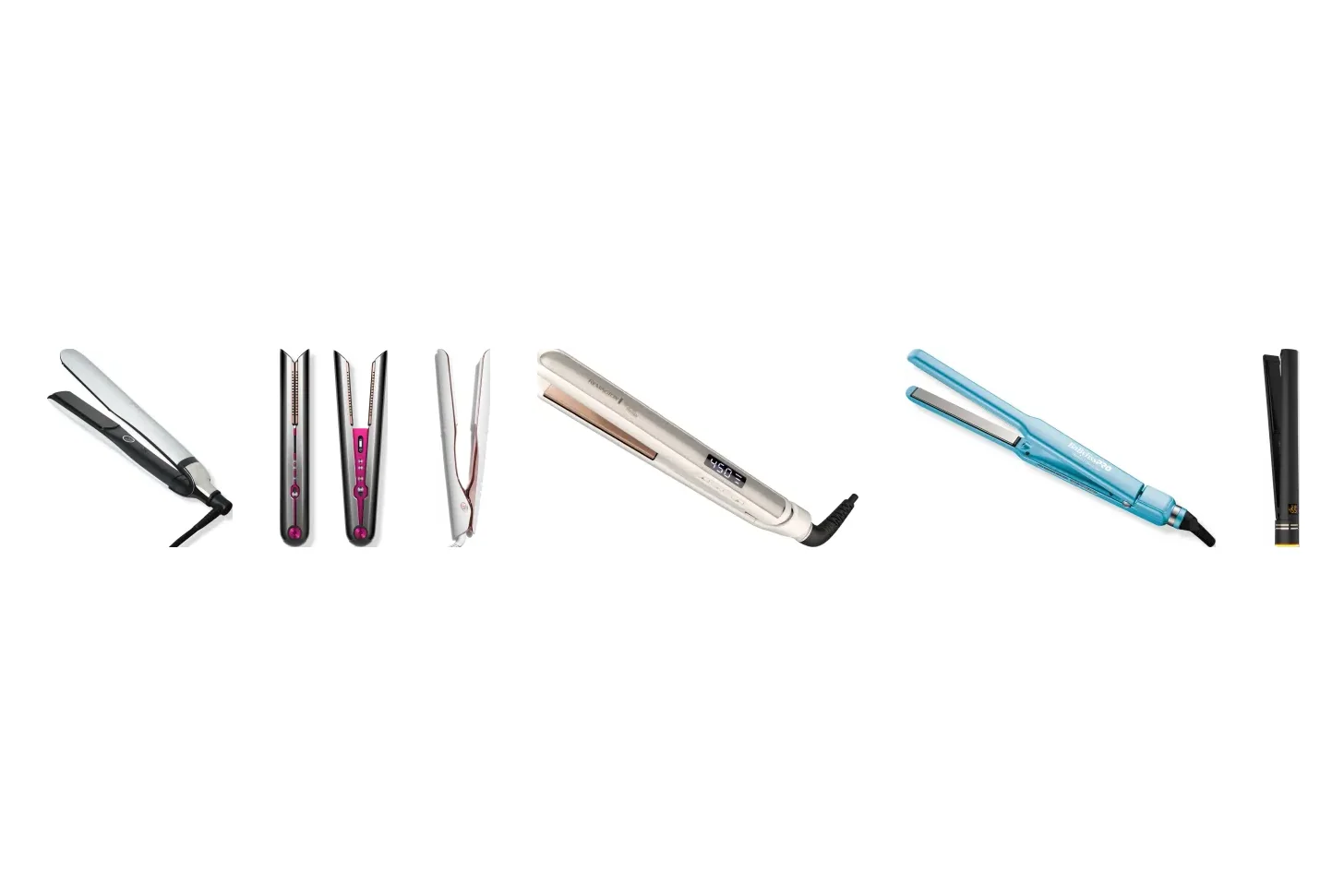
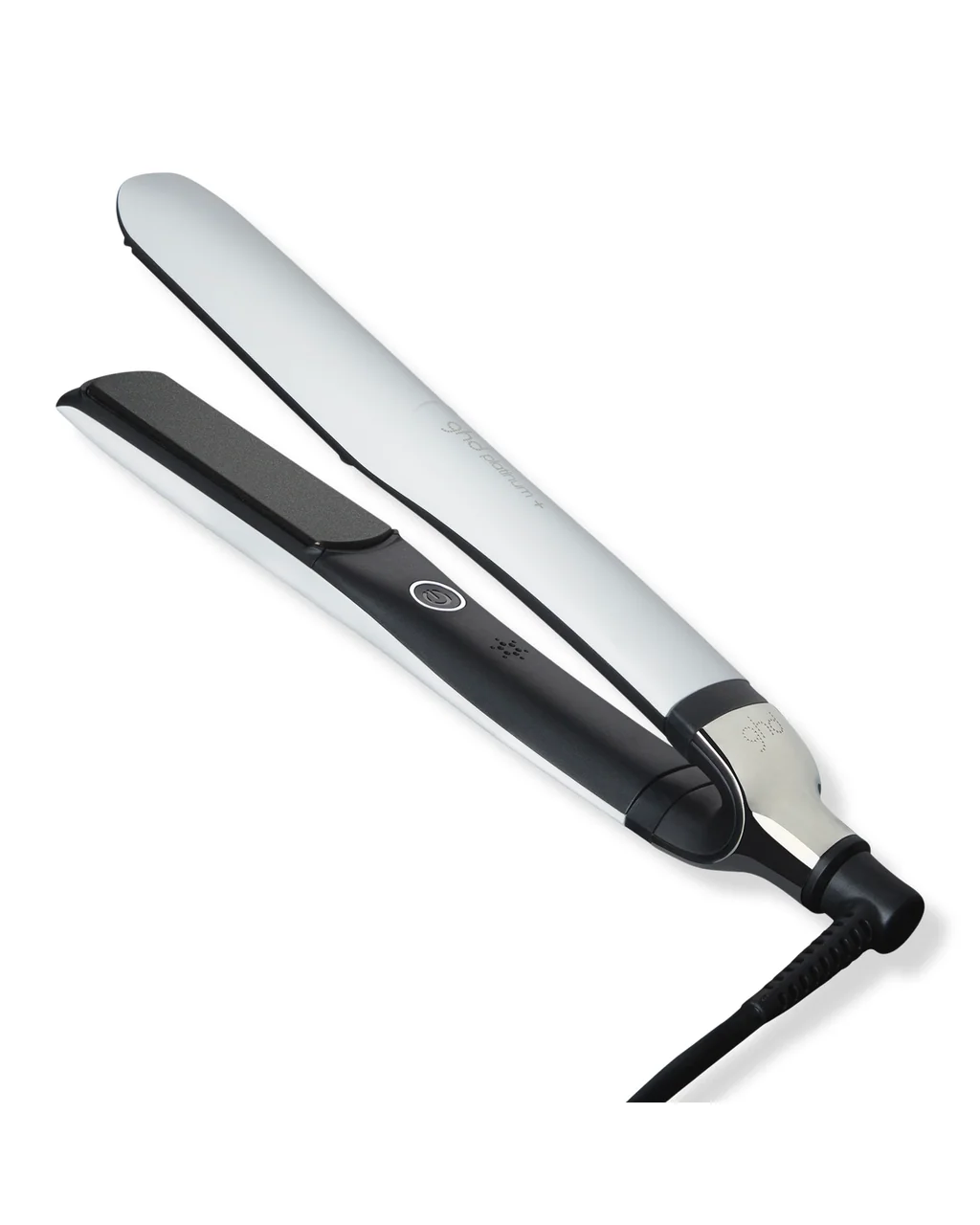
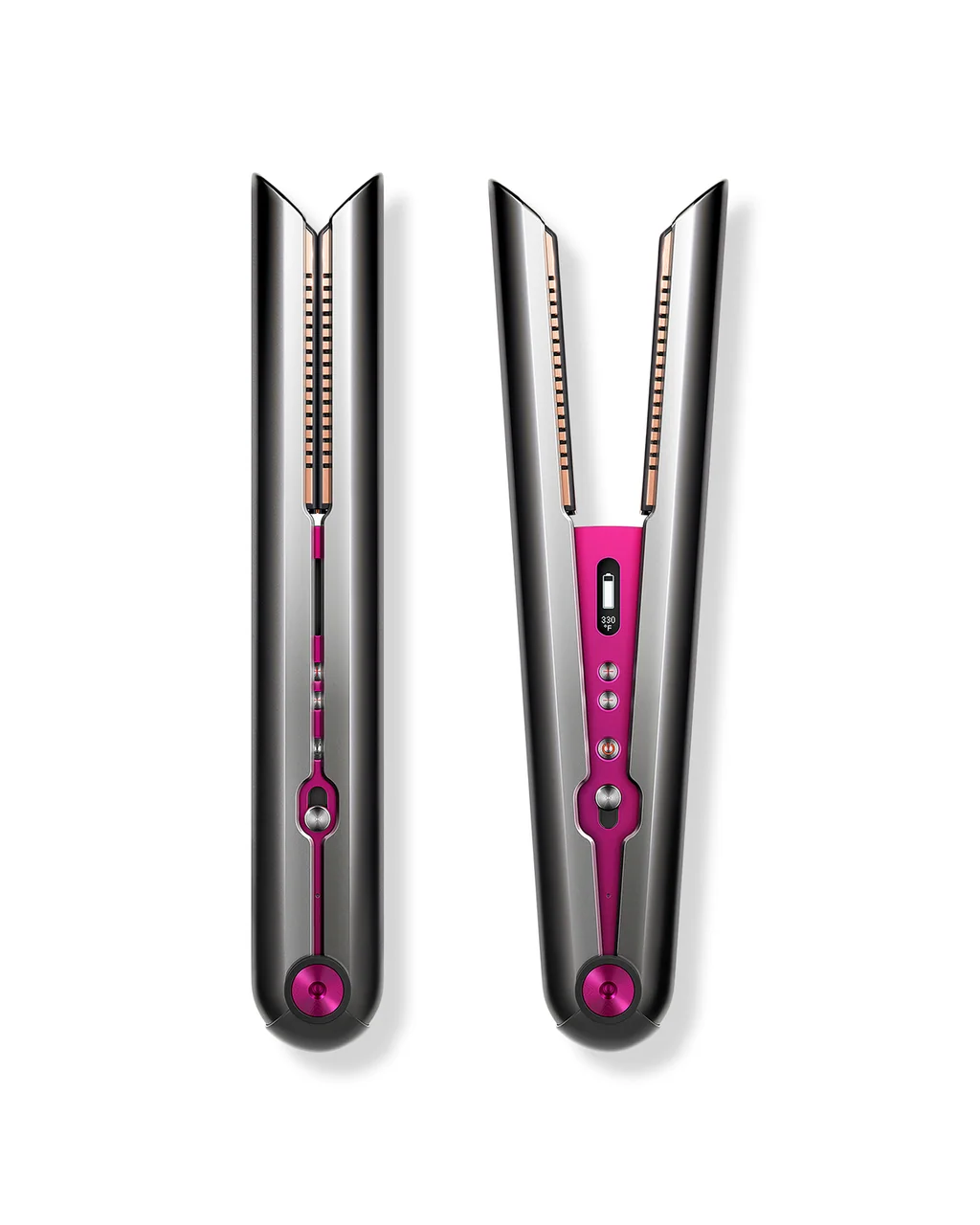
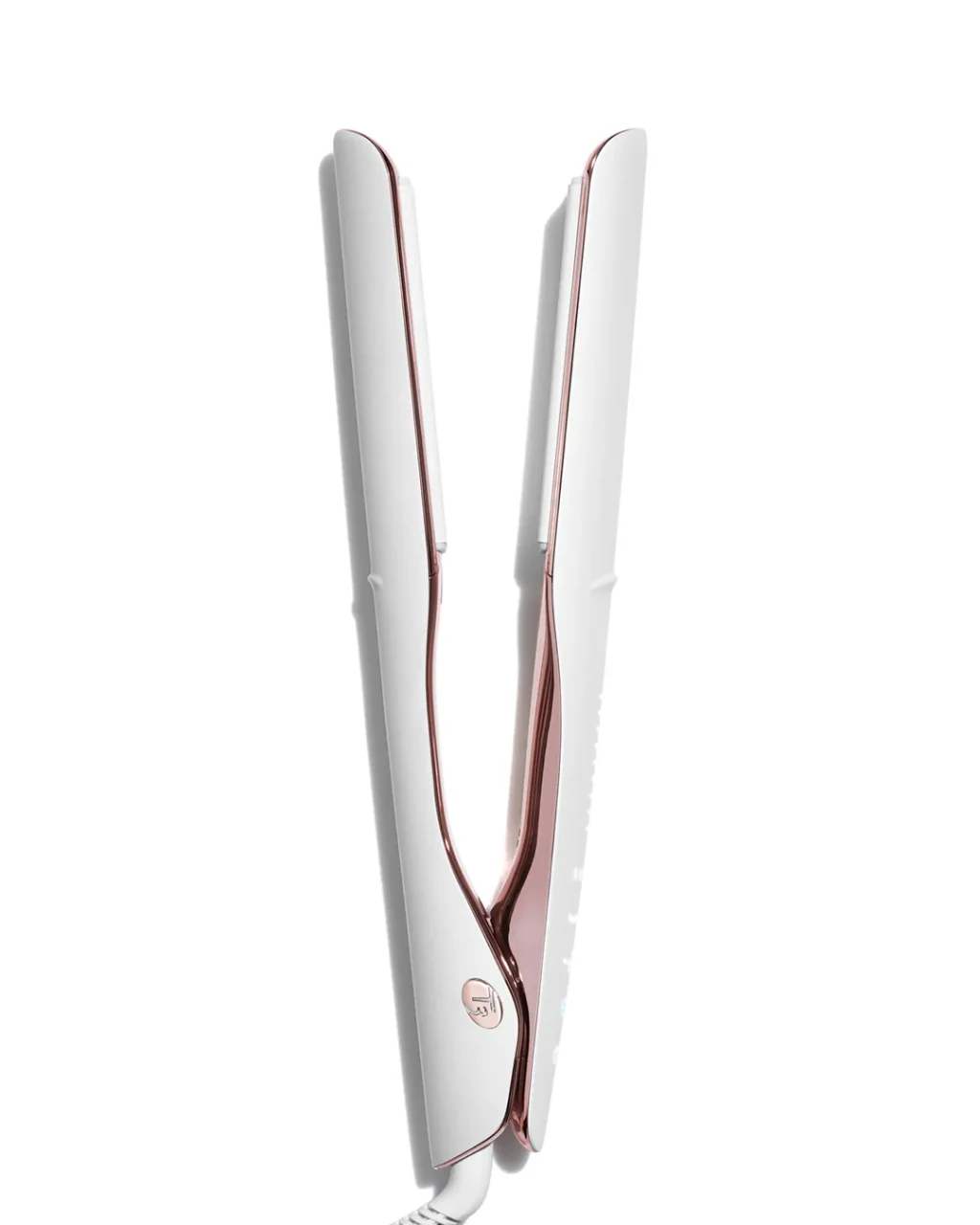
Flat iron, hair straightener, straightening iron — one tool, three names, and which one you use is mostly regional. Nothing on this page changes depending on the word. What does change everything is the number at the bottom of the temperature dial.
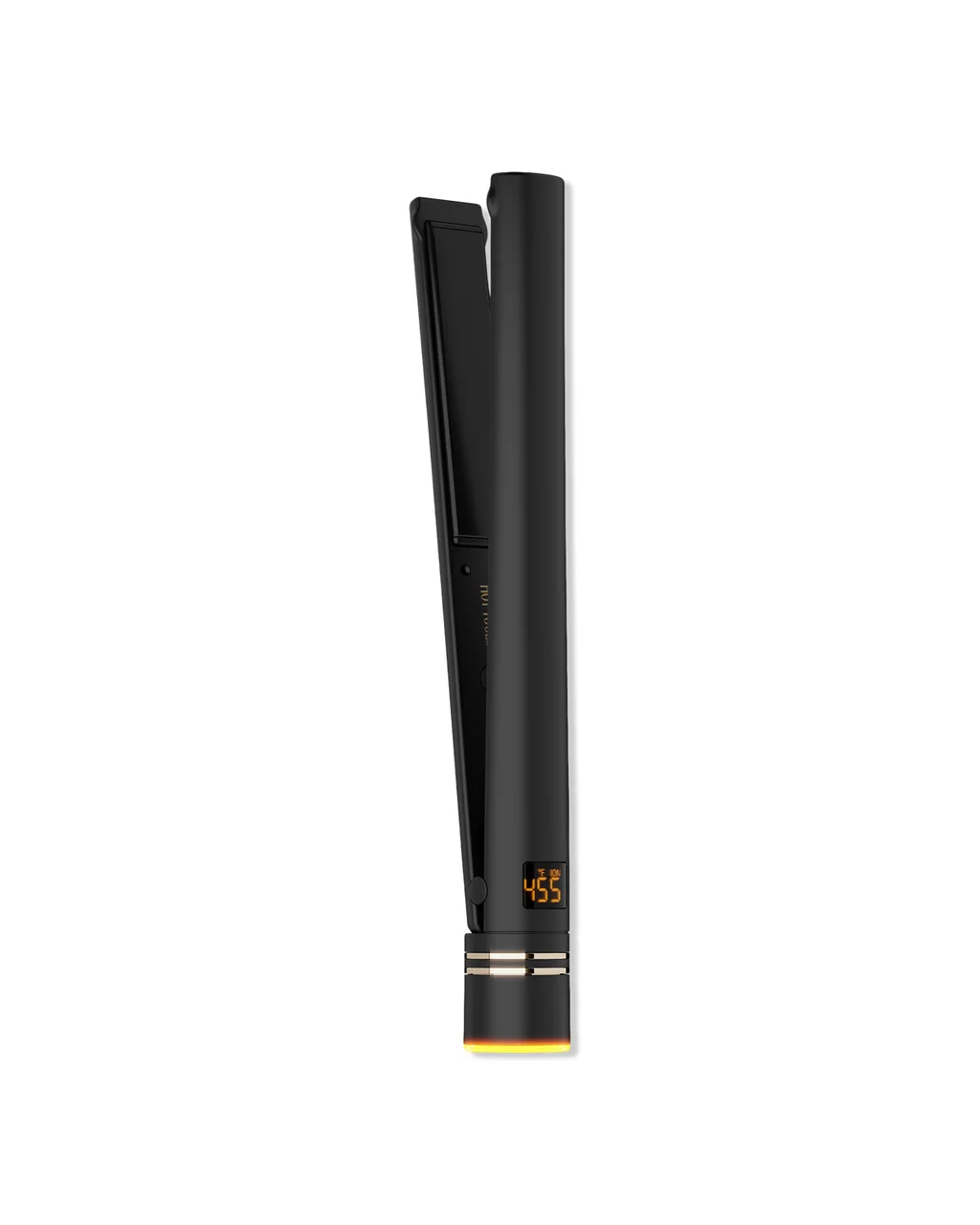
The bottom of the temperature range, not the top. A dial that starts at 250 or 280°F is more useful to fine hair than one that reaches 460°F, because you will live at the low end. Irons with a single moderate fixed temperature solve the problem a different way — they remove the decision entirely.
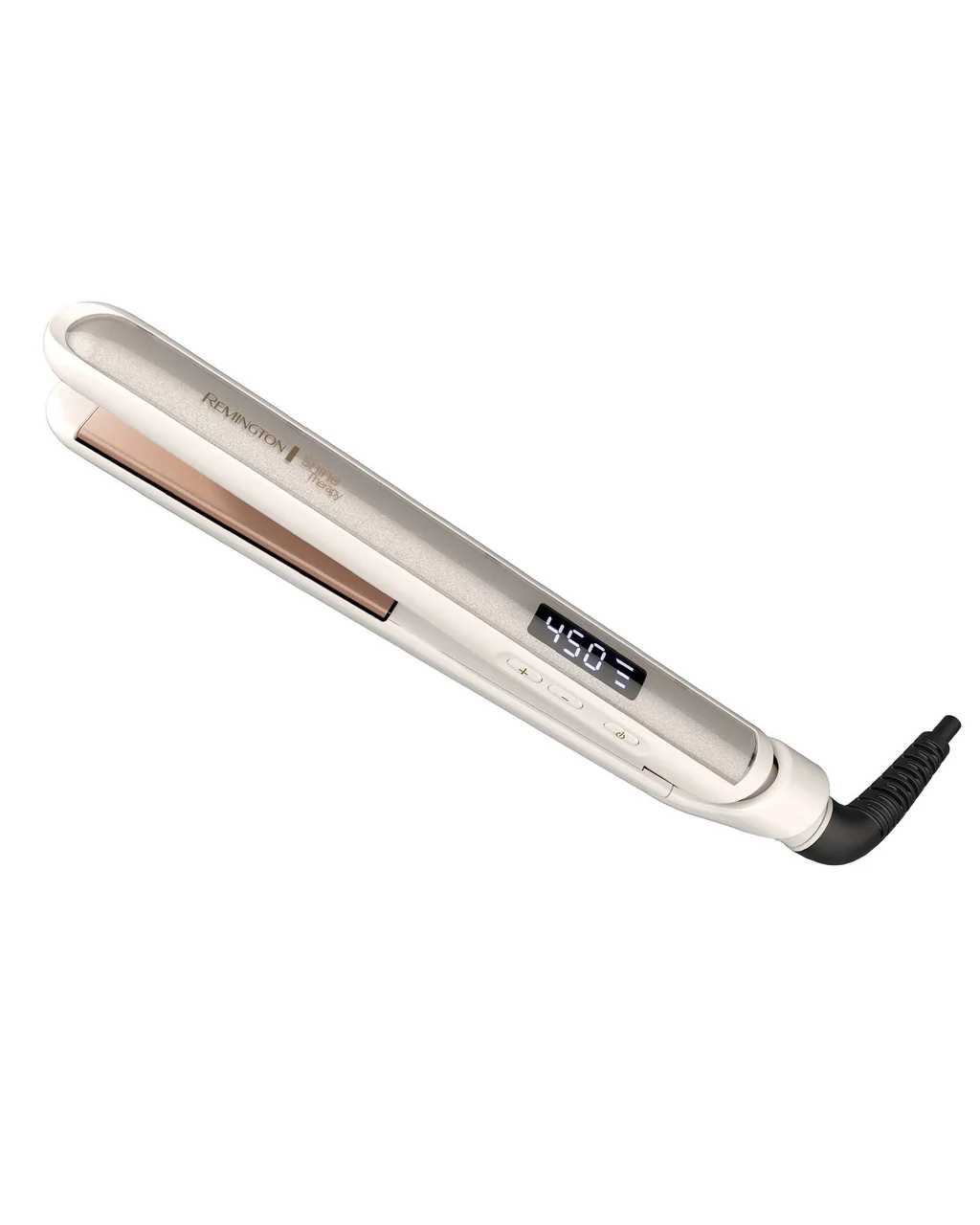
Even heat and floating plates. Cheap irons run hot in the middle of the plate and cool at the edges, which is why people compensate by going over the same section repeatedly. Floating plates — mounted so they tilt to meet the hair — keep even contact on a thin section instead of pinching it at one point.
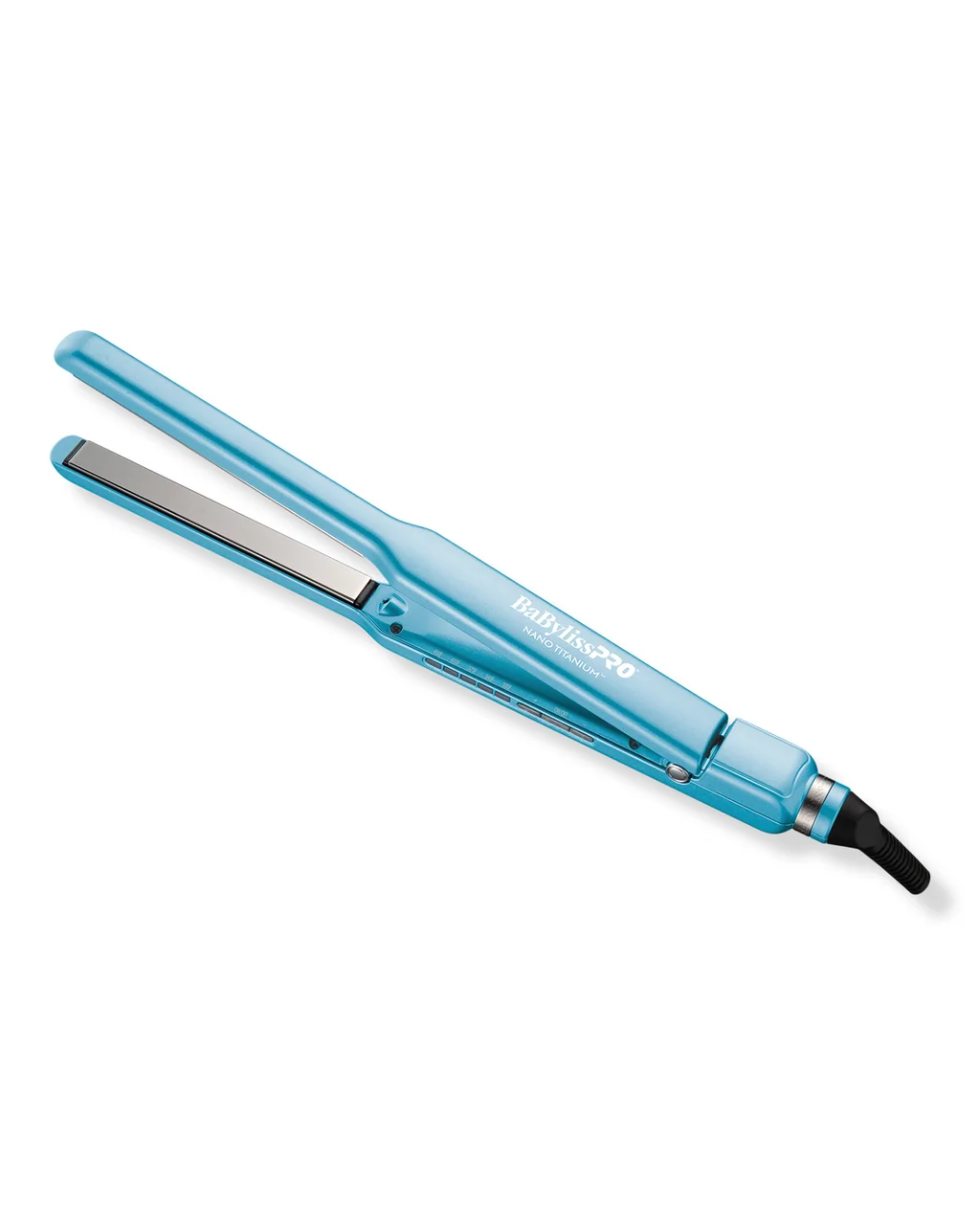
Plate width, matched to your length. One inch handles most fine hair, takes a section thin enough to straighten in one pass, and still works near the roots. Half an inch is the specialist size for bangs, pixies, and short bobs. Anything 1.5 inches or wider is built to cover ground on dense hair and is unwieldy on a fine head.
Rounded edges, if you want more than straight. A squared-off iron makes flat hair. Rounded housing lets you rotate the iron mid-pass to create a bend or a wave — which, on fine hair, usually looks fuller than dead-straight does.
Whether you are working with fine strands, low density, or both changes what a flat iron can do for you: fine-but-plentiful hair straightens beautifully and just needs restraint on the dial, while genuinely sparse hair often looks thinner ironed flat than it does with a soft bend.
The two-minute distinction is in our guide to telling fine hair from thin hair. If you are building a kit rather than replacing one item, the fine-hair styling tool list puts this in order of what to buy first.
The temperature fine hair actually needs
Lower than the number your iron defaults to, and lower than the number on the box. Fine strands have less mass, so they reach the plate's temperature faster than coarse hair does and show the consequences sooner — dullness, roughness at the mid-lengths, and breakage where the iron passed most often.
The professional bodies are consistent on the principle even where they don't name numbers: the American Academy of Dermatology's guidance on hair care habits that damage hair is to use the lowest heat setting, limit how long a hot tool touches the hair, and use heat tools less often, and its healthy-hair advice pairs low or medium heat with a product that protects against it.
In practice that means three habits. Start at the bottom of your iron's range and test one section before committing to the whole head. Move in one confident pass rather than three hesitant ones — repeated passes at a low temperature do more cumulative damage than a single pass at a slightly higher one.
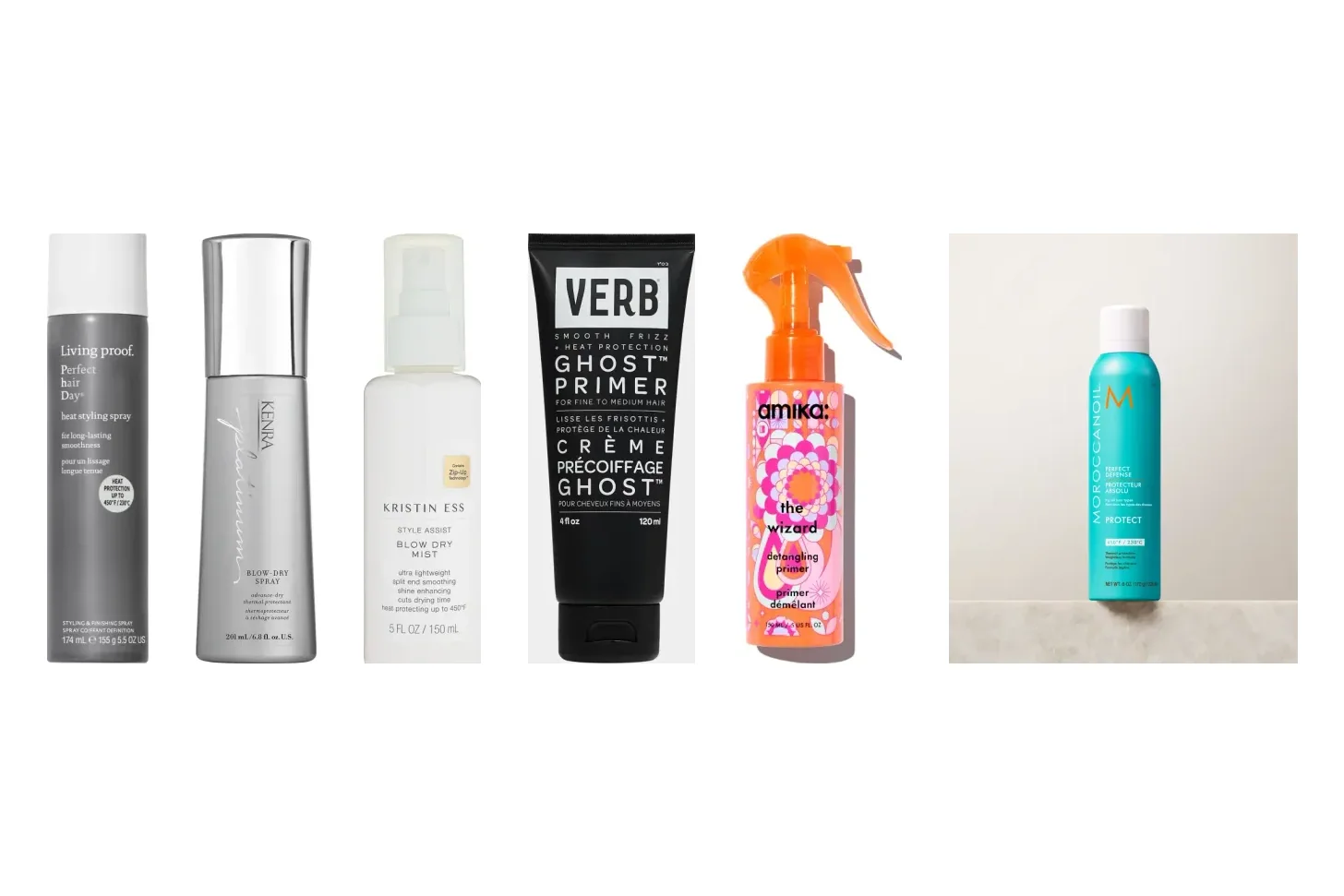
And never put an iron on hair that is even slightly damp; the water trapped inside the strand turns to steam against the plate, and that is a different and more serious kind of damage than dry heat. A weightless heat protectant goes on before every session, in a mist format rather than a cream, so the coverage is even without the weight that flattens fine hair.