Reviewed by Tara Sullivan · Updated July 2026 · 7 min read
Fine hair needs a coin-sized amount of a lightweight conditioner, on the mid-lengths and ends only — never the roots. The two mistakes that ruin fine hair are opposite: skipping conditioner entirely (which leaves it tangled and breaking) and slathering it root-to-tip (which leaves it flat and greasy by tomorrow). Get the amount and the placement right and conditioner protects fine hair without costing you a single ounce of volume.
Chair-side note
The women who tell me "conditioner makes my hair flat, so I stopped using it" almost always have the same story: they were applying it at the scalp, like the shampoo. Move it down. Conditioner belongs where the damage is — the ends — and your scalp is already making the best conditioner there is for your roots. Start at your ears and go down. That one change fixes both the flatness and the tangling.
MH
— Megan Holloway, Editor-in-Chief
Yes, fine hair needs conditioner
This is worth saying plainly, because so many fine-haired women quietly gave up on conditioner after it flattened their hair. Fine strands are the most fragile hair there is — narrow, with less protective cortex — so they tangle and snap more easily than coarse hair. Conditioner is what prevents that: it coats the cuticle and neutralizes the strand's static charge so hairs slide past each other instead of catching.
A dermatology review of hair cosmetics describes conditioner's job as exactly this — to reduce friction and static and improve combability by lubricating the cuticle. Skip it, and fine hair frizzes, tangles, and breaks — and broken strands read as thinner hair, the opposite of what you want. The goal was never to stop conditioning. It was to stop conditioning wrong.
How much, and where — the method
Three variables decide whether conditioner helps or hurts fine hair: how much, where, and how light the formula is. Get these right and you never have to choose between soft hair and volume.
Use less than the bottle suggests
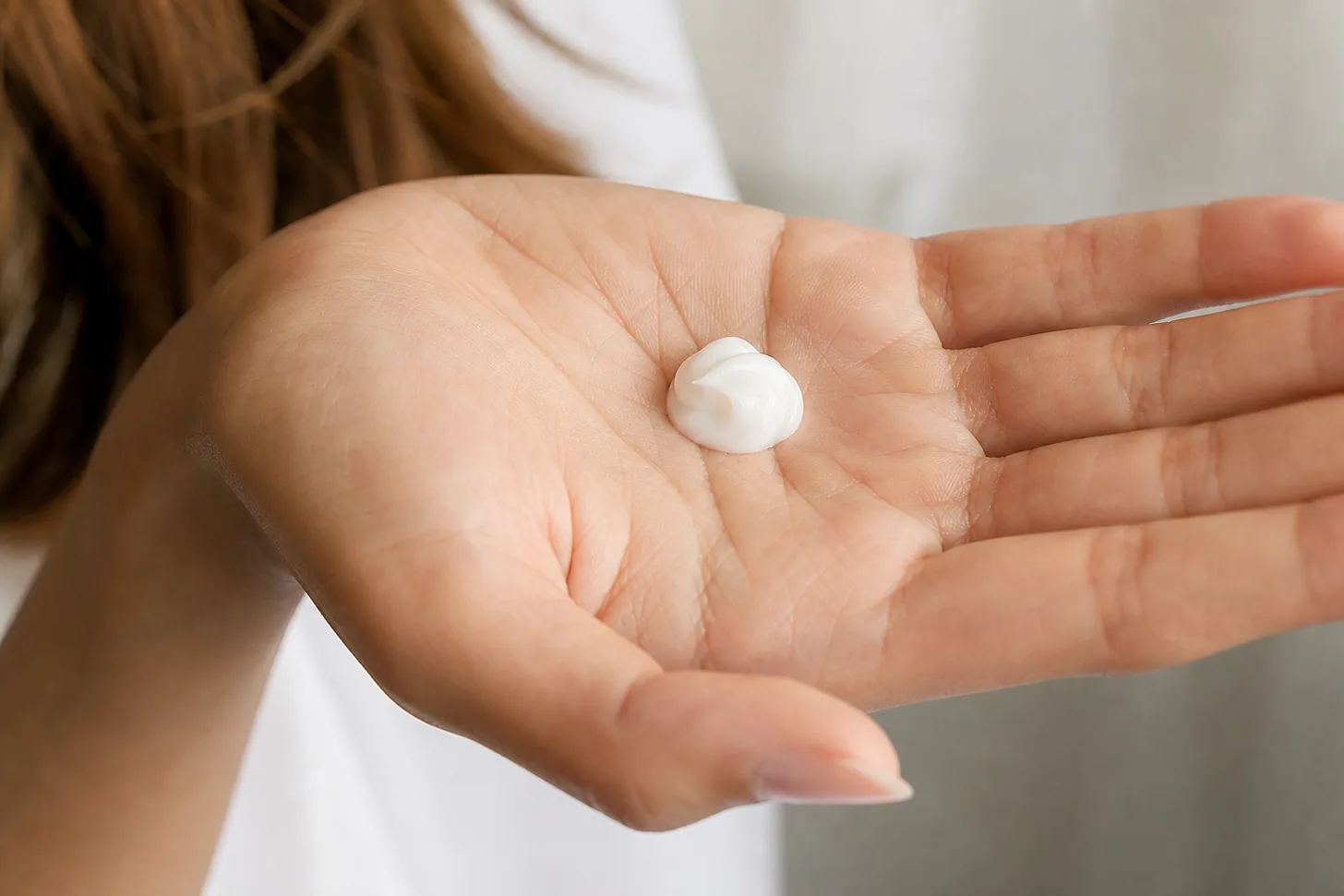
Start with a coin-sized amount for short-to-medium hair, or a small palmful for long hair — roughly half what you'd instinctively squeeze out. Fine hair coats fast because each strand is thin; a little product spreads across a lot of surface. You can always add more to dry ends, but you can't rescue a root that's already been weighed down. When in doubt, use less.
If your ends stay rough no matter how carefully you place the conditioner, the amount isn't the issue — the whole routine needs adjusting toward moisture. That version is in the moisture routine for dry, fine hair.
Apply from the ears down, never at the roots
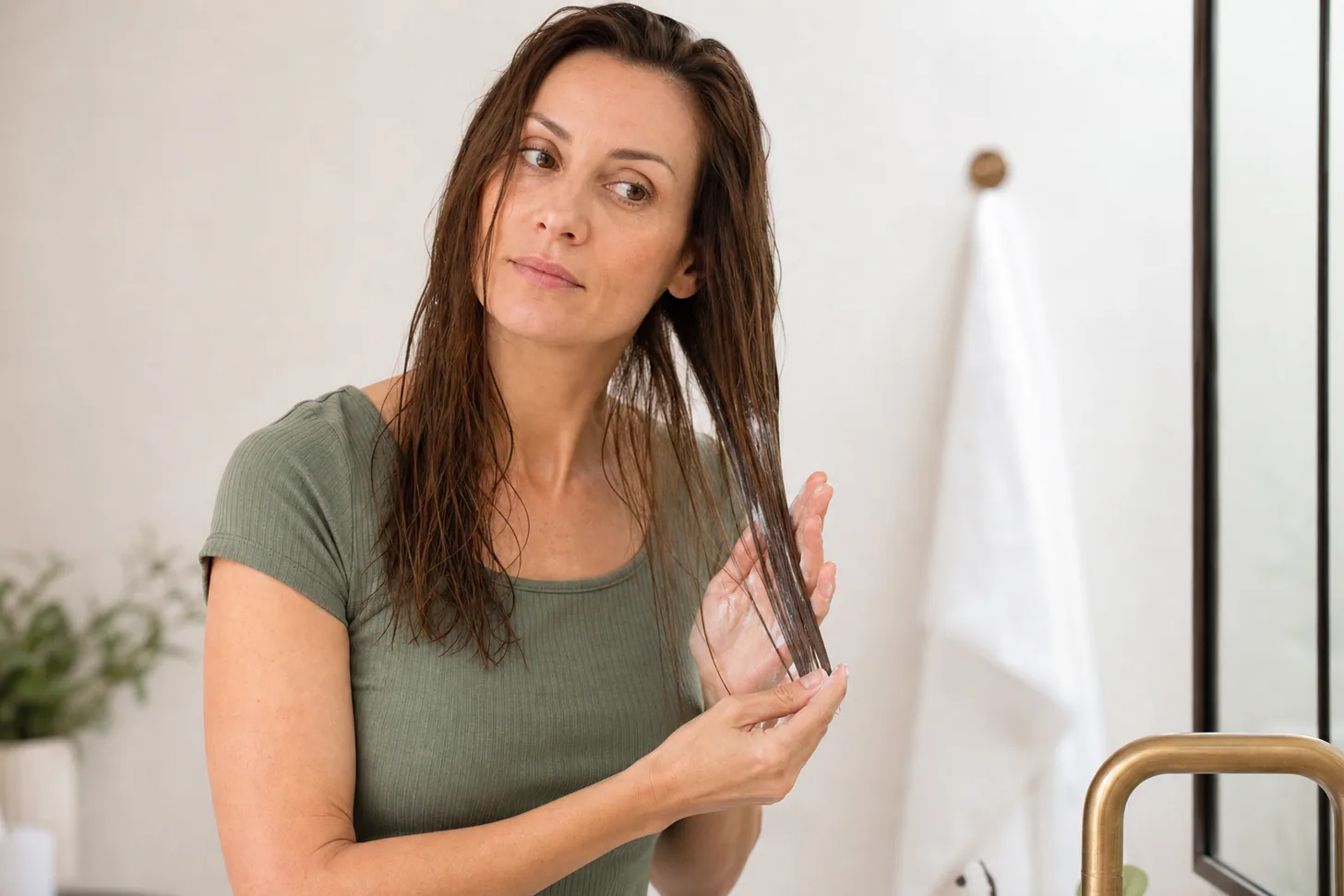
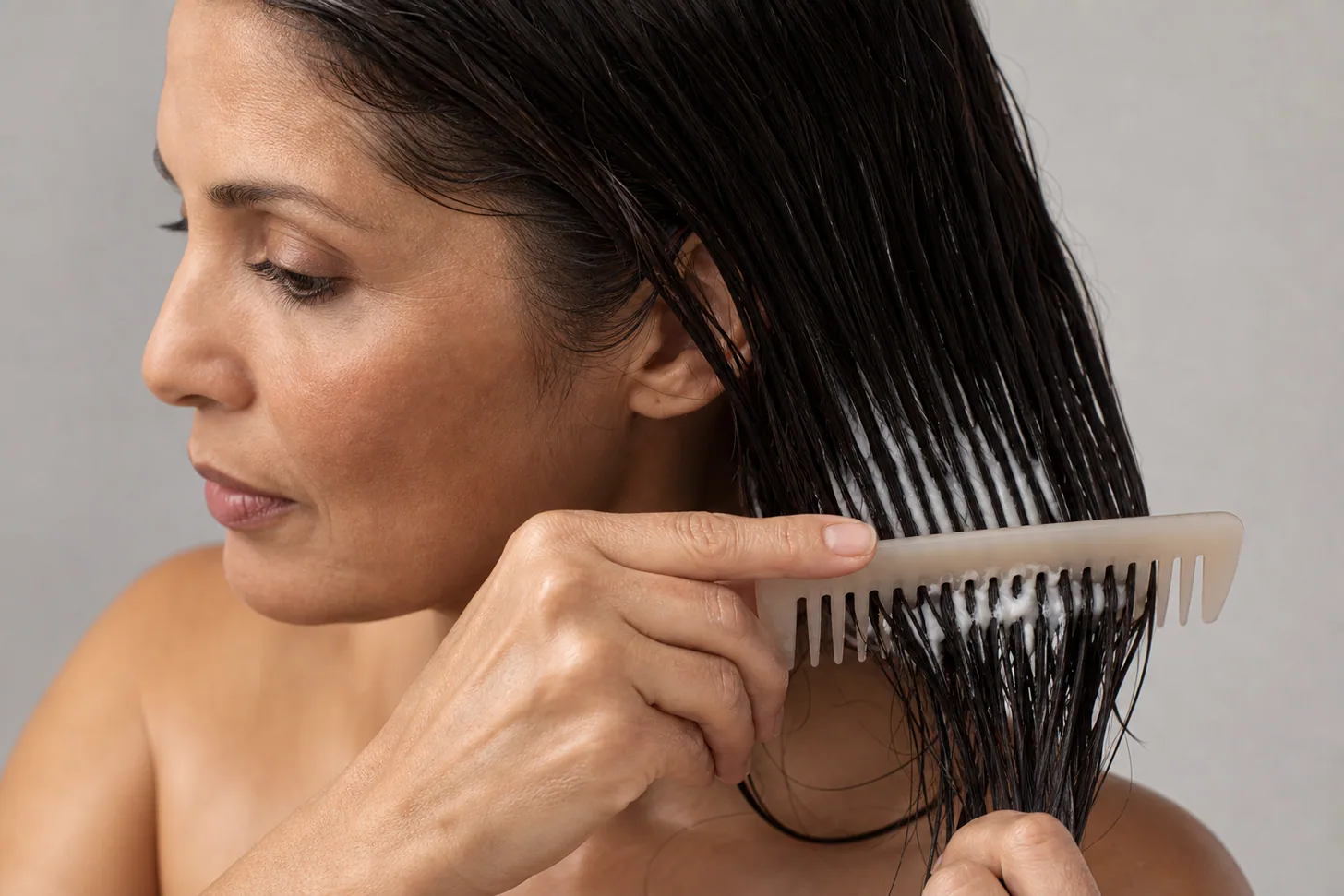
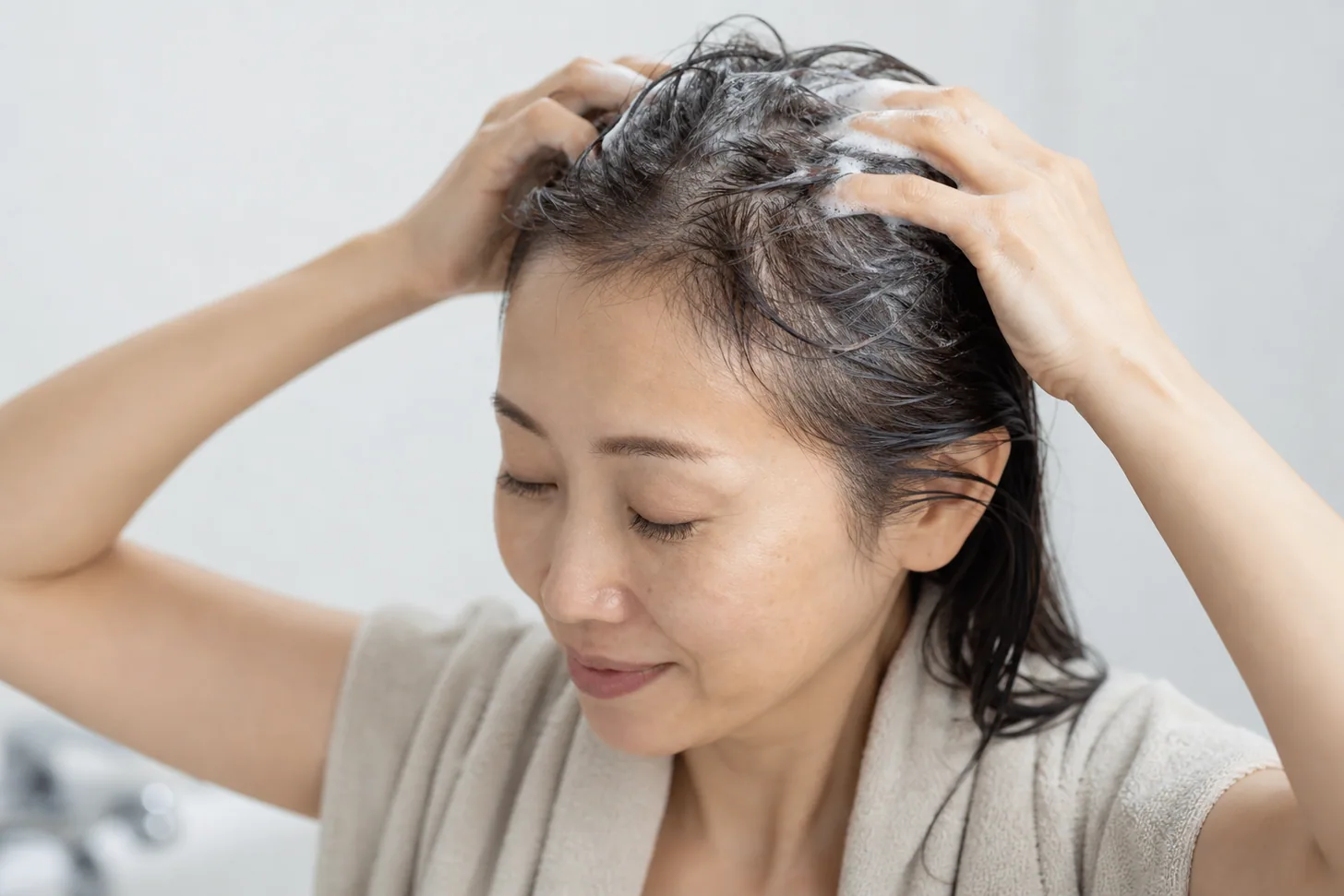
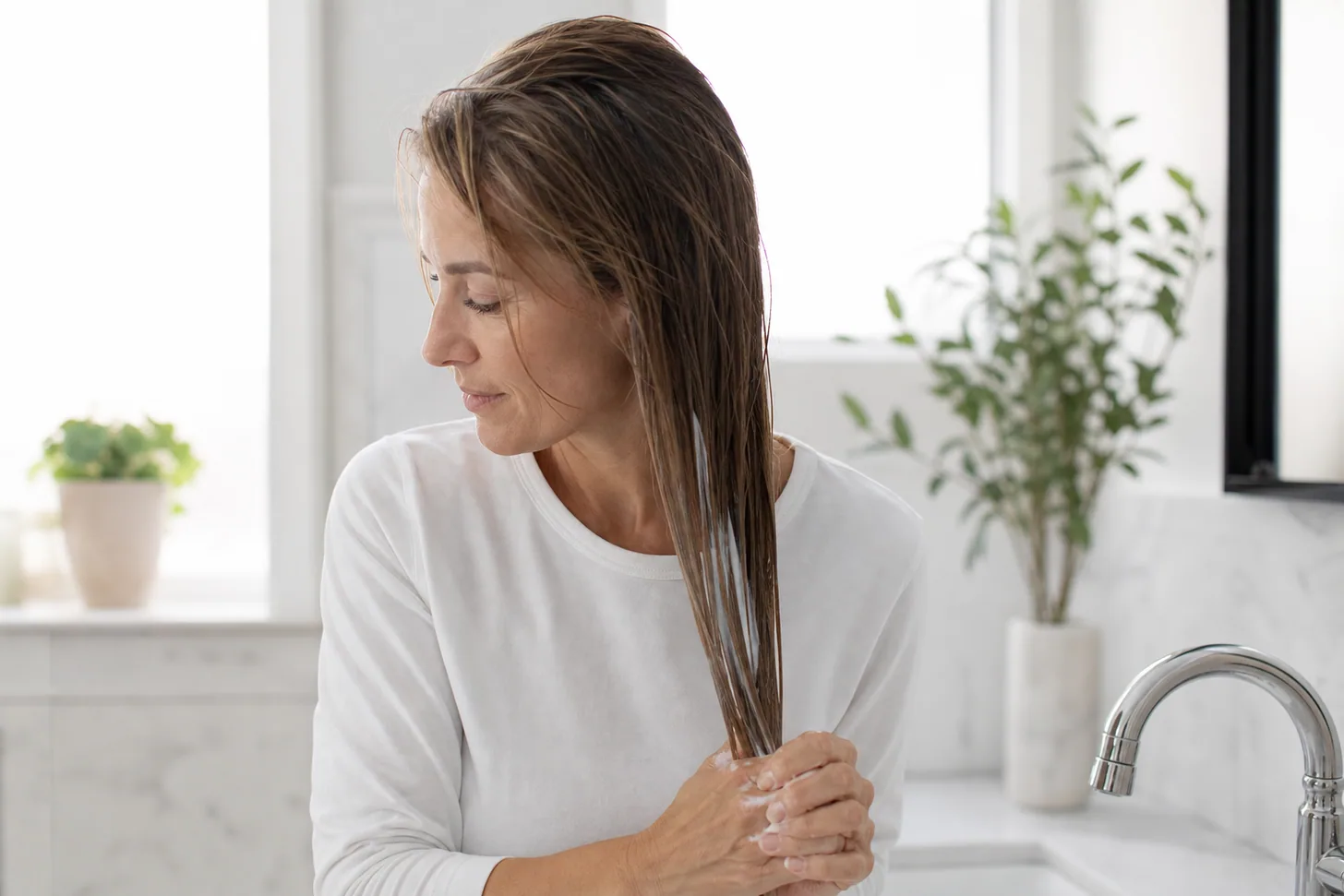
Rake it through the mid-lengths and ends, concentrating on the last two inches — the oldest, most damaged hair. Keep it entirely off the scalp and the top few inches, which are young, healthy, and already lubricated by your natural oils. Root application is the number-one cause of "conditioner makes me flat." A wide-tooth comb helps distribute a small amount evenly so no single section gets over-coated.
Choose a lightweight, volume-safe formula
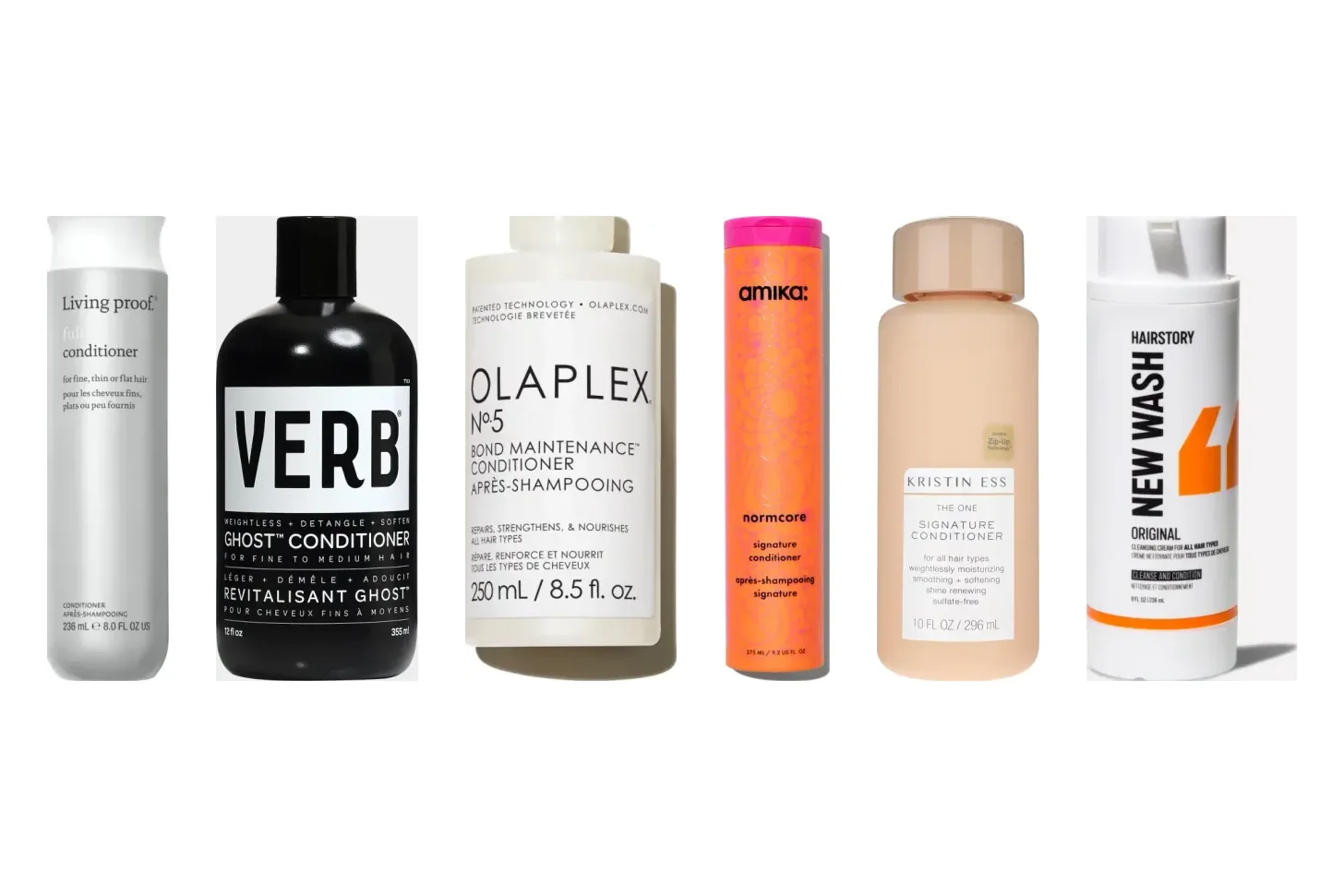
The formula matters as much as the amount. Fine hair wants a conditioner labelled lightweight, volumizing, or weightless — thin, fast-rinsing, and low on heavy oils, butters, and silicones that build up. Rich, creamy "nourishing" or "repair" conditioners built for thick or curly hair will flatten fine strands no matter how carefully you apply them. Our roundup of the best conditioners for fine hair is filtered on exactly this: slip without weight.
Quick reference: how much by length
A starting point, not a rule — adjust down if your hair feels heavy the next day.
Hair length
Rinse-out amount
Apply from
Frequency
Pixie / short bob
Dime-sized
Ends only
Every wash, or skip if fresh
Chin to shoulder
Coin-sized
Ear level down
Every wash
Shoulder to mid-back
Small palmful
Mid-lengths & ends
Every wash
Long / mid-back+
Palmful
Mid-lengths & ends
Every wash; light mask monthly
The conditioning mistakes that flatten fine hair
Mistake: Applying conditioner at the roots
Reality: the roots are the one place fine hair should never see conditioner. They're healthy, oil-rich, and where all your volume lives. Everything you put there is dead weight. Keep conditioner to the mid-lengths and ends, full stop.
Mistake: Not rinsing it out fully
Reality: fine hair holds onto residue, and a rushed rinse leaves a film that dulls and flattens. Rinse longer than feels necessary — until the water runs clear and the hair squeaks slightly at the ends. Cool water at the end helps the cuticle lie flat and shine.
Mistake: Using a rich "repair" mask every wash
Reality: daily deep conditioning is for coarse and curly hair. On fine hair it builds up fast, and within a week you've got limp, greasy roots and no hold. Save the lightweight mask for once a week or fortnight, on the ends only.
Mistake: Blaming conditioner for build-up that's really a wash problem
Reality: if fine hair goes flat within a day, the cause is often accumulated product and oil, not one wash's conditioner. A clarifying wash resets it — and reviewing how often to wash fine hair usually solves the recurring flatness.
When fine hair actually needs more conditioning
Not all fine hair is the same, and some needs a heavier hand — always on the ends, never the roots. Reach for a richer approach when:
Your ends are dry, split, or color-treated. Coloring and heat roughen the cuticle; the ends drink up more moisture. Add a weightless leave-in spray on the ends, or a light weekly mask.
Your hair is fine but also high-porosity. Porous hair loses moisture fast and can take more conditioning without going limp. If you don't know your porosity, our guide to porosity for fine hair shows you how to test it at home.
You live in a hard-water or very dry climate. Both strip moisture; a slightly richer ends-only conditioner offsets it.
The reverse is also true: fine and oily hair needs the lightest touch of all — the honest fine-hair routine covers how to balance the two without flat roots.
Chair-side note
Here's the test I give clients: after your next wash and dry, if your roots feel flat or look greasy by the end of the day, you conditioned too high or too much.
If your ends feel straw-like or tangle in the comb, you conditioned too little or too light. Fine hair lives in a narrow band between those two — a small amount of a light formula, kept to the ends. Adjust one variable at a time until you land in it.
MH
— Megan Holloway, Editor-in-Chief
When to change your conditioning approach
Hair is flat and greasy by day one. Cut the amount, move it lower, and clarify once to strip existing build-up.
Ends tangle and snap despite conditioning. You're using too little or too light a formula — add a weightless leave-in on the ends.
Nothing seems to help and hair feels gummy or overly soft. This can be over-conditioning or a protein/moisture imbalance — pause rich products and see what actually repairs fine hair.
You're shedding noticeably more than usual. That's not a conditioner issue — check whether it's fine hair or thinning and see a professional if it's sudden.
FAQ
Yes. Skipping conditioner is one of the most common fine-hair mistakes. Fine strands are fragile and tangle easily, and conditioner coats the cuticle so strands slide past each other instead of snagging — which means less breakage, less frizz, and easier detangling. The fear that conditioner flattens fine hair is really a fear of using too much, or using it at the roots. Used correctly — a small amount on the mid-lengths and ends — it protects fine hair without weighing it down.
About a coin-sized amount for short-to-medium fine hair, up to a small palmful for long fine hair — far less than the bottle's generous swirl suggests. Start with less than you think you need; you can always add more, but you can't un-coat a flattened root. If your hair feels heavy, slippery, or limp within a day of washing, you're using too much or applying it too high up.
On the mid-lengths and ends only — never the roots or scalp. The ends are the oldest, driest, most damaged part of the hair and the part that actually needs conditioning; the roots are new, healthy, and already getting natural oil from the scalp. Applying conditioner at the root is the single biggest cause of fine hair going flat and greasy fast. Rake it through from about ear level down, concentrating on the last couple of inches.
Most fine hair does best with a lightweight rinse-out conditioner as the everyday base, plus an optional weightless leave-in spray on the ends if they're dry or prone to tangles. Skip rich, creamy leave-in balms — they're built for thick or curly hair and will flatten fine strands. If you use both, keep the total amount small and keep everything off the roots.
Yes, and it's common. Over-conditioning — too much product, too rich a formula, or too often — leaves fine hair limp, greasy at the roots, and slippery, with no volume and no hold. Some people also experience protein-heavy or very moisturizing products building up over time. If your hair has gone flat and lifeless despite feeling clean, cut back the conditioner, move it lower down the strand, and clarify once to reset.
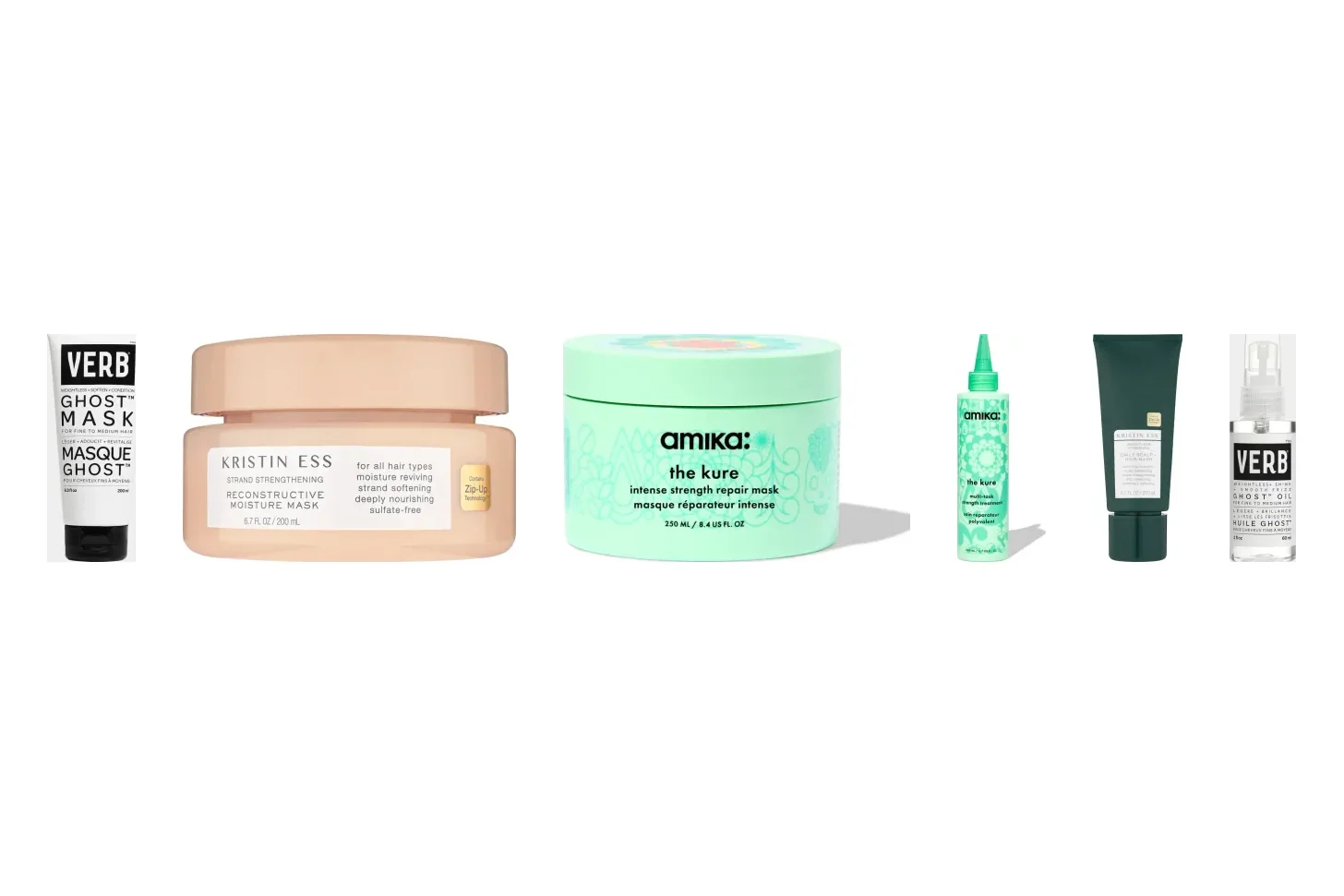
Occasionally, and only a lightweight one on the ends. Fine hair that's colored, heat-styled, or simply dry at the ends benefits from a weekly or fortnightly light mask or deep conditioner — but a rich mask left on roots-to-ends will flatten it for days. Apply a thin layer to the mid-lengths and ends, leave it the recommended time, and rinse well. Everyday conditioning matters more for fine hair than any occasional mask.
Fourteen years in hair — eight behind the chair, six in editorial — with a focus on scalp health and the science of fine, flat-prone hair. Megan reviews product formulas the way she'd read a label for her own clients: weight first.
Results vary with hair type, density, and growth patterns. This guide is educational and not a substitute for an in-person consultation with a licensed stylist.
Images in this guide are AI-generated illustrations, not photos of real clients or results. See our image policy.
Get the good hair intel
One honest, stylist-written guide in your inbox each week. No hype.

 MH
MH