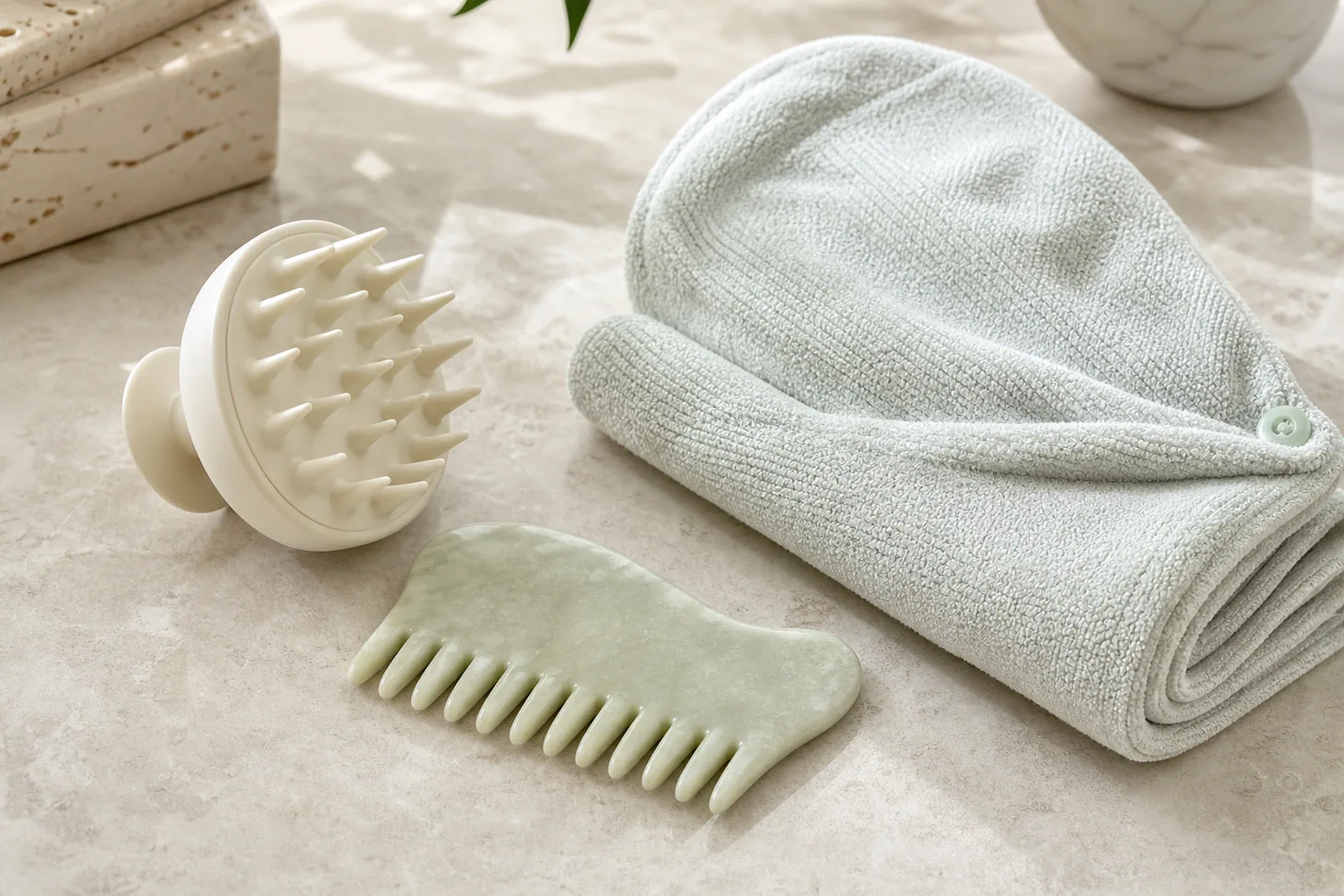
A scalp brush is a scalp tool, and on fine hair the hair is what pays if you forget that. The rule that makes this whole category safe is one sentence: the tool moves against your skin, never down your strands.
Kept on the scalp, though, this is one of the few cheap tools that changes how fine hair behaves the same day — not because of growth, but because fine hair goes flat from root residue, and a brush is the only reliable way to get shampoo onto the skin rather than through the lengths. Below: six picks by job, what the growth research actually says (nine subjects, all men), and the four minutes-per-week routine worth doing.
Every product here is chosen independently, on the merits — what genuinely suits fine, thin hair. Links go to each brand's official page, and we don't take payment for placement. Price tiers are rough guides because prices change.
Two different jobs: one cleans the skin in the shower, one works product through a dry scalp.
The real benefit on fine hair is cleaning, not growth
Every scalp brush is sold on circulation and hair growth. That is the weakest part of the case, and we will come to the evidence in a moment. The strongest part is the one nobody leads with, because it is unglamorous.
Fine hair goes flat because the roots are coated — sebum, dry shampoo, styling polymers, conditioner that drifted upward, mineral deposit from hard water. And most people shampoo badly in a specific way: they pile the lather onto the lengths and squeeze it through, which cleans the section that was not dirty and barely touches the skin that was.
A brush fixes that mechanically. It carries the shampoo down to the scalp between the hairs, it agitates the skin rather than the strands, and it lets you use noticeably less product because the product is finally in the right place. The result on fine hair is visible the same day: roots that feel lighter, and a first day after washing that starts higher.
That is a genuine, immediate, mechanical benefit. It has nothing to do with follicles.
What the growth research actually says — and how small it is
There is one study behind essentially every "stimulates growth" claim in this category, and it is worth seeing in full because the gap between the study and the marketing is wide.
Read honestly, that is: nine people, all men, six months, a machine at a fixed speed, on one side of the head, for a change of about eight percent in strand diameter. Eight percent is below the threshold at which you would see a difference in a mirror. It is not a hand-held brush in a shower, and it is not this audience.
So the position this site takes: scalp massage plausibly does something small for thickness over months, the supporting evidence would not survive being described as robust, and it is not on its own a reason to buy anything.
Buy the brush for the cleaning. If the massage does something as well, that is a bonus you did not pay for. If diameter is the thing you actually want to change, can you grow fine hair thicker? is the honest accounting of what does and doesn't move it.
Chair-side note
The first thing I ask anyone who tells me a scalp brush made their hair fall out is to show me how they use it, and nine times out of ten they demonstrate a brushing motion — down the head, through the lengths, like a hairbrush. That's not what the tool is.
Watch a good shampoo at a basin and the stylist's fingers barely travel: they plant on the scalp, work in small circles, lift, and replant somewhere else. The hair moves as little as possible. That's what the brush is copying. The other thing I say early, because it panics people, is that the first two or three washes with a new brush will put more hair in the drain than usual.
That's not new shedding — you're collecting hairs that had already let go and were sitting there waiting to be dislodged, and the same thing happens after a few days of not brushing. If it's still elevated after three or four washes, that's a different conversation and the brush isn't the cause.
MH
— Megan Holloway, Editor-in-Chief
Four kinds of tool wearing the same name
"Scalp brush" covers four genuinely different objects with different risk profiles on fine hair. Working out which one you want saves most of the decision.
Type
What it's for
Risk on fine hair
Best when…
Silicone / rubber shower brush
Working shampoo into the scalp; lifting oil and buildup
Low — broad blunt tips, lather cushions contact
The default. Flat, oily roots and a wash routine that isn't reaching the skin
Bi-level bristle brush
Reaching the scalp through hair without disturbing the lengths
Low–moderate — depends entirely on the tips being rounded
Longer or denser fine hair, where silicone nubs can't get through to the skin
Electric / vibrating massager
Consistent, unescalating pressure without effort
Low — the machine won't press harder when you're distracted
Grip or wrist limitations, or a known habit of scrubbing too hard
Smooth stone / no-bristle tool
Dry-scalp massage and working a treatment in
Lowest — nothing to catch a strand
Fragile, shedding or mid-recovery hair; oil and serum application
The six worth owning, by job
One honest pick per job. You need exactly one of these, not four.
Tangle Teezer Scalp Exfoliator and Massager, winged handle scalp brush, product shot on white
1
Best overall: Tangle Teezer The Scalp Exfoliator & Massager
If the phrase "light hand" makes you nervous, buy this instead. It uses "soft silicone bristles" rather than firm teeth — broad, blunt and flexible, which is the profile least able to catch a fine strand — and it works either side of the wash, since it "Can be used on wet or dry hair, with or without product." Vegamour flags it as "Ideal for massaging in serums, foams and shampoos", which is the honest description of what it's good at. And here's the detail that earned it the slot: this is a brand whose entire business is hair-growth products, and its own copy for this tool claims only that it "relieves tension, promotes relaxation and enhances overall hair wellness" — no growth claim at all. When the company with the most incentive to promise regrowth declines to, that tells you where the evidence sits. Best for: fine hair that's already fragile, and anyone who suspects they press too hard. Honest limitation: soft silicone is less effective on genuinely stubborn buildup, and short bristles struggle to reach the scalp through long hair — if you're a daily dry-shampoo user, let a clarifying wash do the heavy work.
Jupiter Scalp Brush, ergonomic shower scalp exfoliator with solid bristles, product shot on white
3
Best for flakes and buildup: Jupiter Scalp Brush
Jupiter is a dandruff-first brand, and this is the pick when the problem at your roots is flaking or stubborn residue rather than general dullness. The bristles are described as "Flexible, solid bristles" — solid rather than hollow matters more than it sounds, because a hollow bristle traps the debris it's supposed to be lifting and carries it back to your scalp next wash. It "exfoliates and lifts buildup" and works on both sides of the wash: "Brush gently through dry hair and scalp before shampooing" to loosen buildup, or "Use in the shower as a scalp massager while shampooing". The pre-wash dry pass is the one worth knowing about — on fine hair it means the shampoo arrives to a scalp that's already been loosened, so you need less of it. Best for: flaking, heavy dry-shampoo habits, and roots that feel coated no matter how you wash. Honest limitation: the dry pre-wash pass is the highest-friction way to use any bristled tool, so keep it strictly on the scalp and skip it entirely if your hair is breaking. Flaking driven by a scalp condition needs the right shampoo, not more scrubbing — see dandruff on fine hair.
Kitsch terracotta silicone scalp exfoliator shampoo brush, product shot on white
4
Best budget pick: Kitsch Scalp Exfoliator
The honest truth about this category is that the cheap version does most of the work, and this is the cheap version worth buying. Soft, flexible silicone bristles, a handle you can hold in a wet hand, and nothing else — which is the correct feature list. Used properly it does the only thing that reliably matters: it gets shampoo onto the scalp and agitates the skin. If you're unconvinced that a scalp brush will change anything about your hair, this is the sensible way to find out, and if it turns out you love it you can upgrade knowing what you're upgrading for. Best for: a first brush, shorter fine hair, and anyone who doesn't want to spend on a tool they're not sure about. Honest limitation: short silicone bristles struggle to reach the scalp through longer or denser hair, and the flexibility that makes them gentle also makes them less effective on real buildup. Section your hair first and it goes a long way.
Manta Pulse vibrating scalp brush in cool grey with soft silicone bristles, product shot on white
5
Best electric, and the one built for this audience: Manta Pulse
The case for a powered massager on fine hair isn't that vibration does something a hand can't — there's no evidence it does. It's that a machine applies steady, moderate pressure and never escalates, whereas a hand presses harder as attention drifts. That makes it the pick for anyone who knows they scrub. What lifts this one above the rest of the powered category is that Manta built it for exactly the hair this site is about: the brand's own positioning is "For Fine or Fragile Hair & Sensitive Scalps", on "soft silicone bristles" that are "Ultra-gentle and safe for use on wet hair". It's "100% waterproof" so it lives in the shower, and it has two modes — "Press once for relaxing stress and tension relief. Press twice for invigorating blood-flow and circulation."Best for: arthritis, grip or wrist limitations, anyone whose pressure control is the weak link, and fine hair fragile enough that you want the gentlest tool available. Honest limitation: it is by a distance the most expensive thing on this page, and the vibration is the part you're paying for and the part with the least evidence behind it. If your hands work well and you can be gentle, the Kitsch does the essential job for a fraction of it.
Wet the hair thoroughly first, and shampoo before the brush comes out. Never brush dry hair in the shower — you want lather between the tool and everything it touches.
Section it if your hair is longer than a bob. Two or three rough sections. This is what lets the tool reach skin instead of riding on hair.
Plant, circle, lift, move. Small circles in one spot, then pick the tool up and place it somewhere else. The tool never travels across the head with contact.
Light pressure. If the scalp is tender or pink afterwards, that was too much. There is no benefit to pressing harder and there is a real cost.
Never take it below the ears. That's where the rule earns its keep. The lengths are not what you're cleaning.
Rinse thoroughly — a brush that gets shampoo into the scalp also means there's more of it to get out. Under-rinsing is its own cause of flat roots. How often to wash fine hair.
Clean the tool. Pull the hair off it after each use and rinse it. A warm, wet, product-clogged brush in a shower is not something to press into your scalp twice a week.
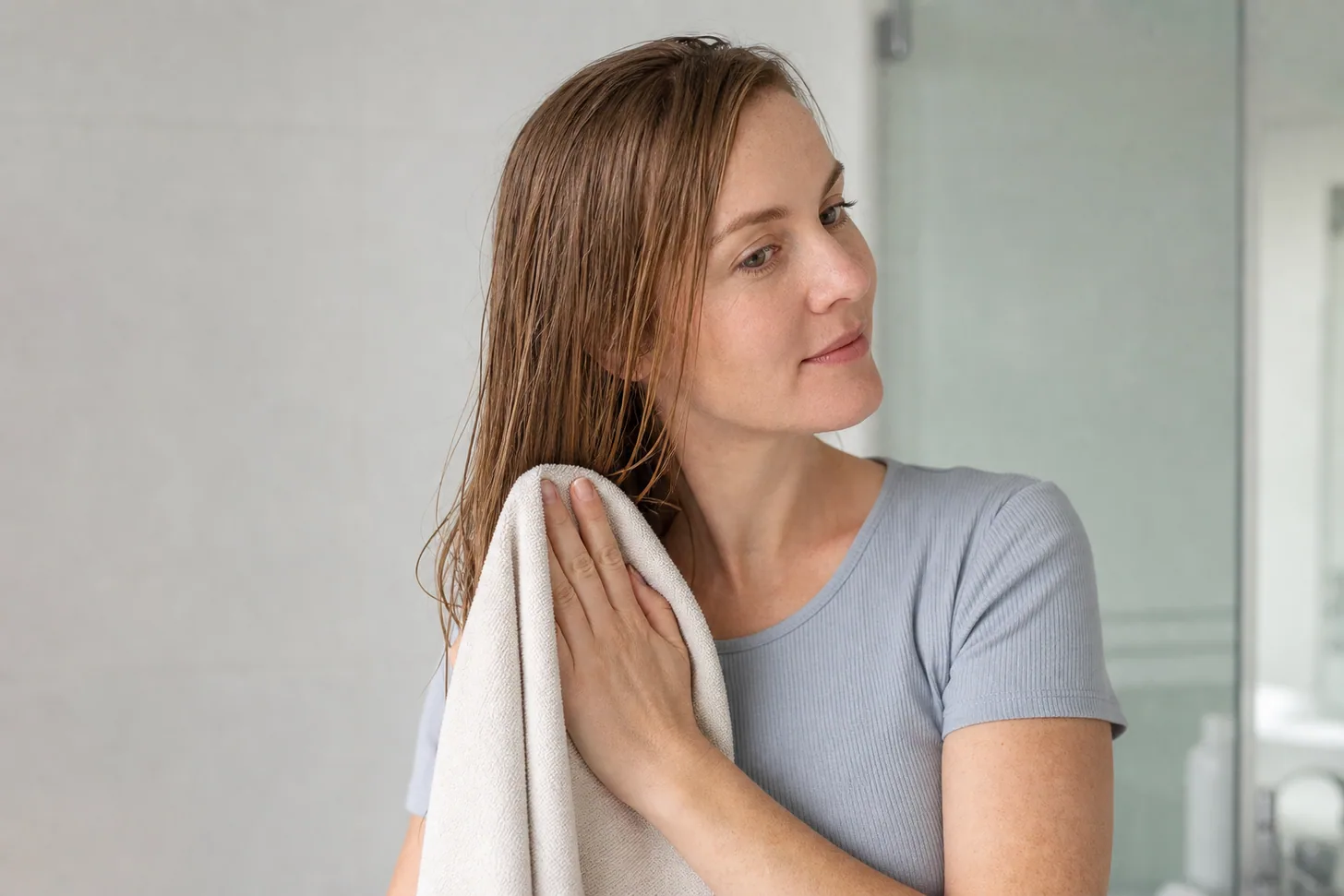
Then towel-dry properly, because you've just spent effort protecting the hair and the next sixty seconds is where most of the damage happens. How to towel-dry fine hair.
What to pair it with
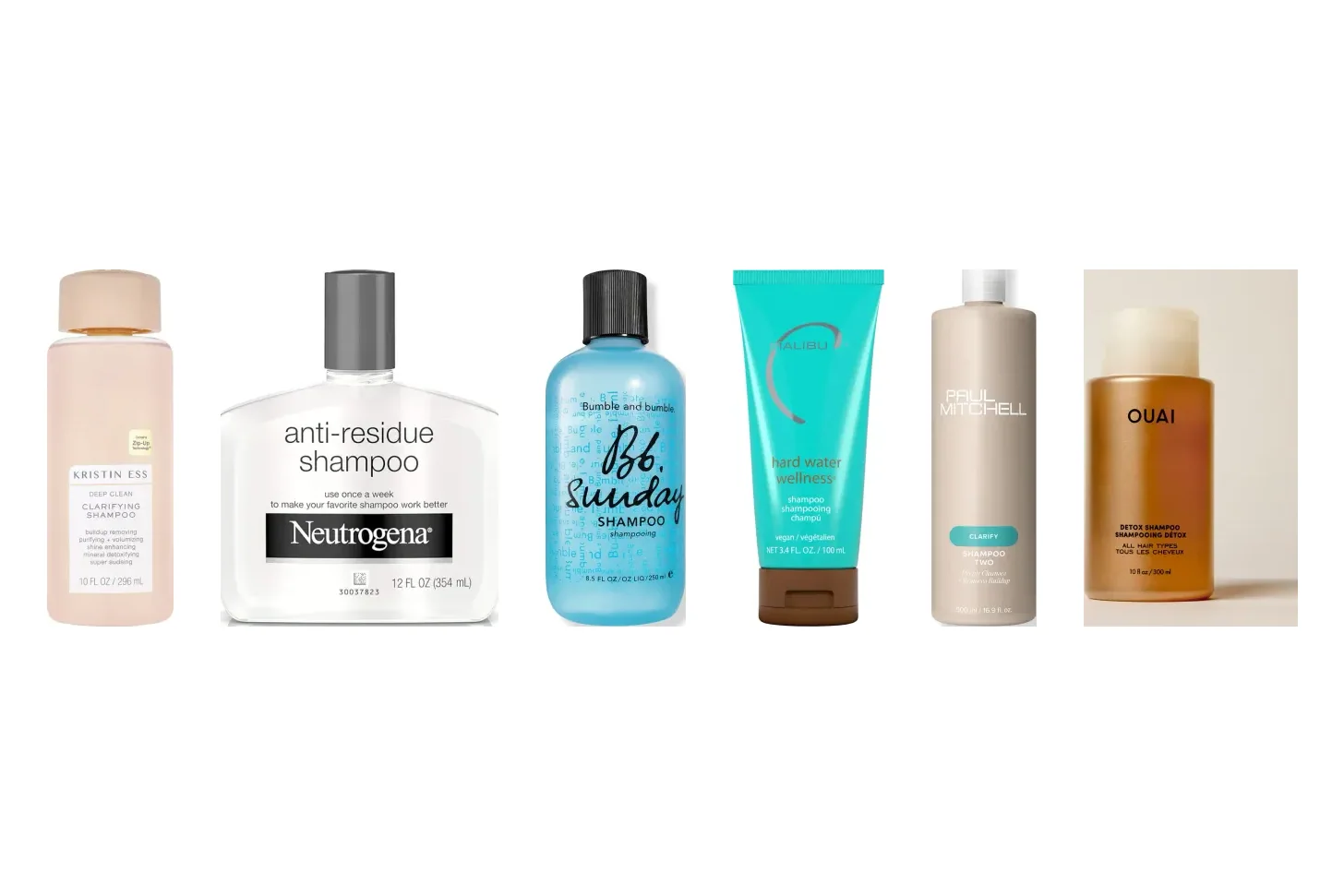
The brush makes each wash more effective; it doesn't replace the right product. If your problem is buildup, a clarifying shampoo once or twice a month addresses it more directly, and the brush makes that wash work better. If your problem is oil, the brush plus the balancing routine is the pair.
If it's flaking, get the shampoo right first — dandruff on fine hair. And if you live somewhere with heavy mineral content, hard water on fine hair explains why your roots feel coated no matter what you do. If flaking is the reason you are here, pair it with a treatment wash — dandruff shampoo for fine hair covers the actives and the frequency.
Your scalp is sore, broken, inflamed or sunburned.Nothing mechanical goes on an irritated scalp. See a dermatologist if it persists.
You're seeing short, blunt-tipped broken hairs at the crown.That's breakage, and a bristled tool is a plausible contributor. Stop, and read breakage on fine hair.
You have extensions, a topper, or bonded pieces.Bristles and attachment points don't mix. Extensions on fine hair, toppers.
Yes, with one rule attached: it's a scalp tool, so keep it on the scalp. The real benefit for fine hair isn't growth, it's cleaning. Fine hair goes flat because the roots are coated, and most people shampoo by working lather through the lengths rather than into the skin, which cleans the part that didn't need it and leaves the part that did. A brush puts the shampoo where the oil actually is and lets you use less of it. The risk is the same tool used carelessly. Friction is higher on wet hair than dry hair, so a bristled implement dragged through swollen fine strands in the shower is about the highest-friction moment you could engineer. A 2015 review of hair cosmetics is blunt about the mechanism: abrasion and friction are impactant factors that cause hair damage by protein loss. Roots only, small circles, no dragging through the lengths. The same logic — cleaning is the real benefit, growth is the marketing — runs through best shampoo for thinning hair.
The evidence is real but very thin, and it's worth knowing exactly how thin before you buy anything on the strength of it. The study everyone cites is a 2016 paper in Eplasty in which nine healthy Japanese men received four minutes of standardized scalp massage a day, on one side of the scalp, for 24 weeks. Hair thickness went from 0.085 mm to 0.092 mm, and the authors concluded that hair thickness was shown to increase with standardized scalp massage. That's nine subjects, all men, using a machine at a fixed speed — not a hand-held brush in a shower, and not this audience. An eight percent change in diameter is also below what you'd notice in a mirror. So the honest position is that scalp massage may do something small for thickness over months, the study supporting it wouldn't survive being called robust, and it's not a reason to buy a brush on its own.
Once or twice a week is plenty for most fine hair, and every wash is fine only if your wash routine is already gentle and your hair isn't fragile. Two things set the ceiling. Fine hair doesn't tolerate repeated mechanical handling well — every pass is friction on a strand with very little cross-section to lose — and over-cleansing the scalp can push oil production up rather than down, which is the opposite of what a flat-rooted reader wants. If your scalp is genuinely oily and flat by the afternoon, use it on your wash days and let a lighter routine handle the days between. If your hair is shedding, mid-recovery or breaking, use it less, or not at all until things settle.
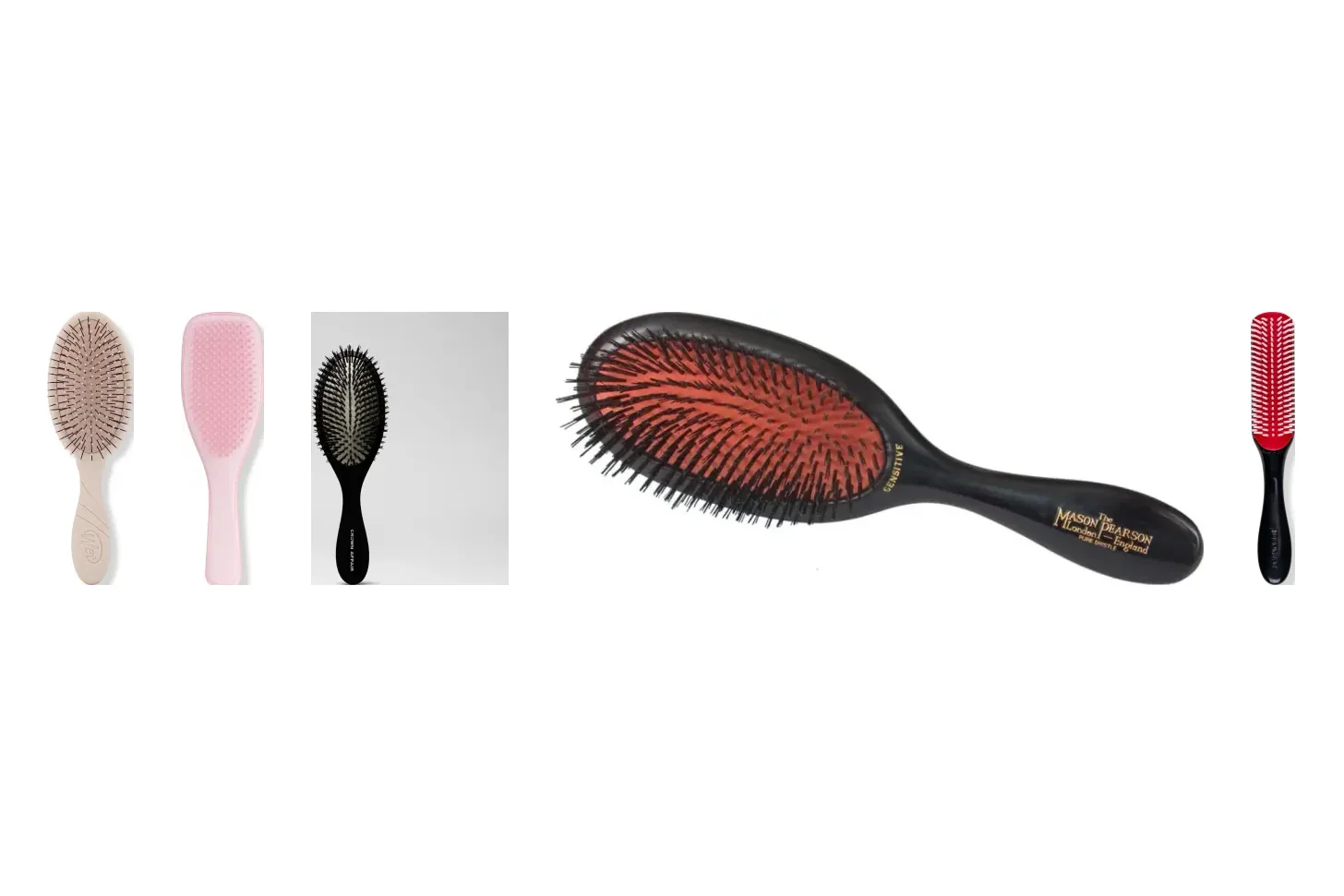
Silicone or soft rubber for in-shower use, and fine nylon bristles only if they have rounded ball tips and you keep them on the scalp. The distinction that matters isn't the material so much as the tip. A rounded tip pushes skin and slides off; a cut or squared-off tip catches. On fine hair, catching is the whole failure mode — a caught strand doesn't bend out of the way, it takes the load. Silicone tips are usually broad, blunt and flexible, which is why they're the default for wet use where friction is highest. Longer, thinner filaments do reach the scalp better through hair without pulling it, which is why the bi-level designs exist, but they're also the ones most likely to catch if the tips aren't properly finished. If you have a choice and you're unsure, buy the blunter one.
Used correctly, no. Used as a hairbrush in the shower, it can contribute to breakage, which looks like hair loss and is often mistaken for it. There's also a common false alarm worth knowing about: using a brush in the shower dislodges the hairs that had already released and were sitting in the follicle, so the first two or three washes with a new brush produce more hair in the drain than usual. That's collection, not loss, and it settles. What isn't a false alarm is short, blunt-tipped broken hairs appearing at the crown or the part, or a scalp that feels tender afterwards — both mean too much pressure. And if you're dealing with genuine shedding rather than breakage, a brush isn't the tool that will answer it. Start with what's causing the shed.
Wet, with shampoo, is where a brush does its most useful work — the lather cushions the contact and the point is to clean the skin. Dry use has a different job: distributing oil or a scalp treatment, and giving a massage without water in the way. On fine hair, dry use is the riskier of the two if the tool has bristles, because there's no lather and no water reducing the grip between the bristles and the strands. The safest version of dry-scalp work on fine hair is a smooth tool with no bristles at all — a scalp gua sha stone or the flat back of a massager — used through sectioned hair with a few drops of product. Whichever you choose, the same rule applies: the tool moves against the skin, not down the hair.
With buildup, genuinely yes — this is the strongest practical case for owning one. Product residue, dry shampoo, styling polymers and hard-water minerals all accumulate at the root, and a brush works shampoo into the skin far more effectively than fingertips through the lengths. With flaking, be more careful. A brush can help lift loose flakes as part of a treatment routine, but flaking driven by a scalp condition needs the right shampoo rather than more scrubbing, and vigorous brushing on an irritated scalp makes it worse. The other honest note is that if buildup is your problem, a clarifying wash addresses it more directly than any tool — the brush makes each wash more effective, it doesn't replace the right product.
Better at being consistent, not better at the outcome — and for one specific group it is meaningfully better. A vibrating massager applies a steady, moderate pressure that doesn't escalate the way a hand does when someone's distracted, which is the commonest way fine hair gets damaged by these tools. It also removes the temptation to scrub. Against that: it costs several times what a good silicone brush costs, it needs a battery, and there's no evidence that vibration adds anything a hand can't. The group it genuinely suits is anyone with grip or wrist limitations, arthritis, or a tendency to press too hard. If your hands work fine and you can be gentle, a five-dollar silicone brush does the same job.
This article is for general education and is not medical advice. Scalp brushes are cosmetic tools and are not a treatment for hair loss. If you are experiencing sudden, patchy or prolonged hair loss, scalp pain, or other concerning symptoms, see a board-certified dermatologist.
Images in this article are AI-generated illustrations, not photographs of real clients or results. See our image policy.
Results vary with hair type, density, and growth patterns. This guide is educational and not a substitute for an in-person consultation with a licensed stylist or physician.
Get the good hair intel
One honest, stylist-written guide in your inbox each week. No hype.

 MH
MH