Reviewed by Tara Sullivan · Updated July 2026 · 8 min read
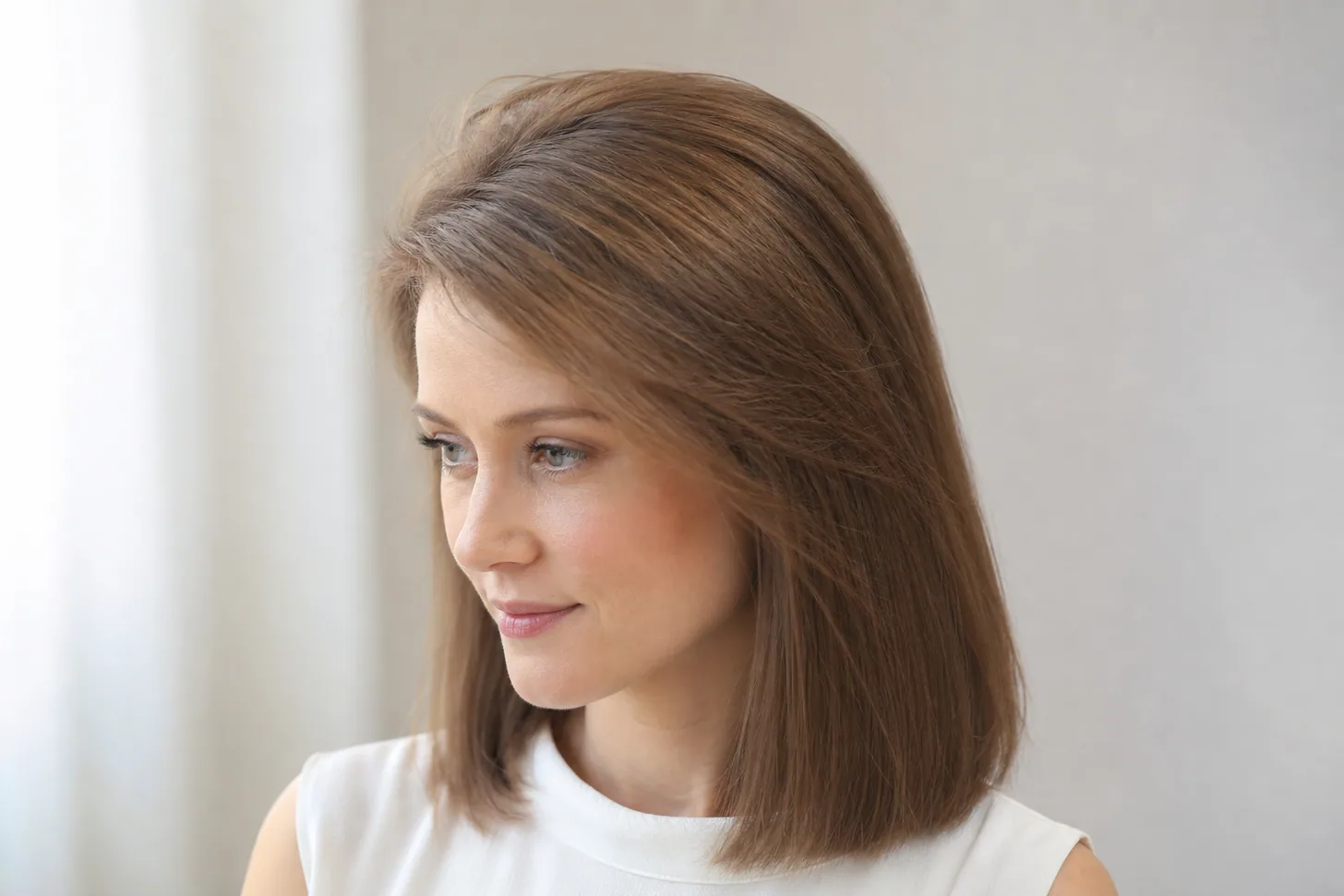
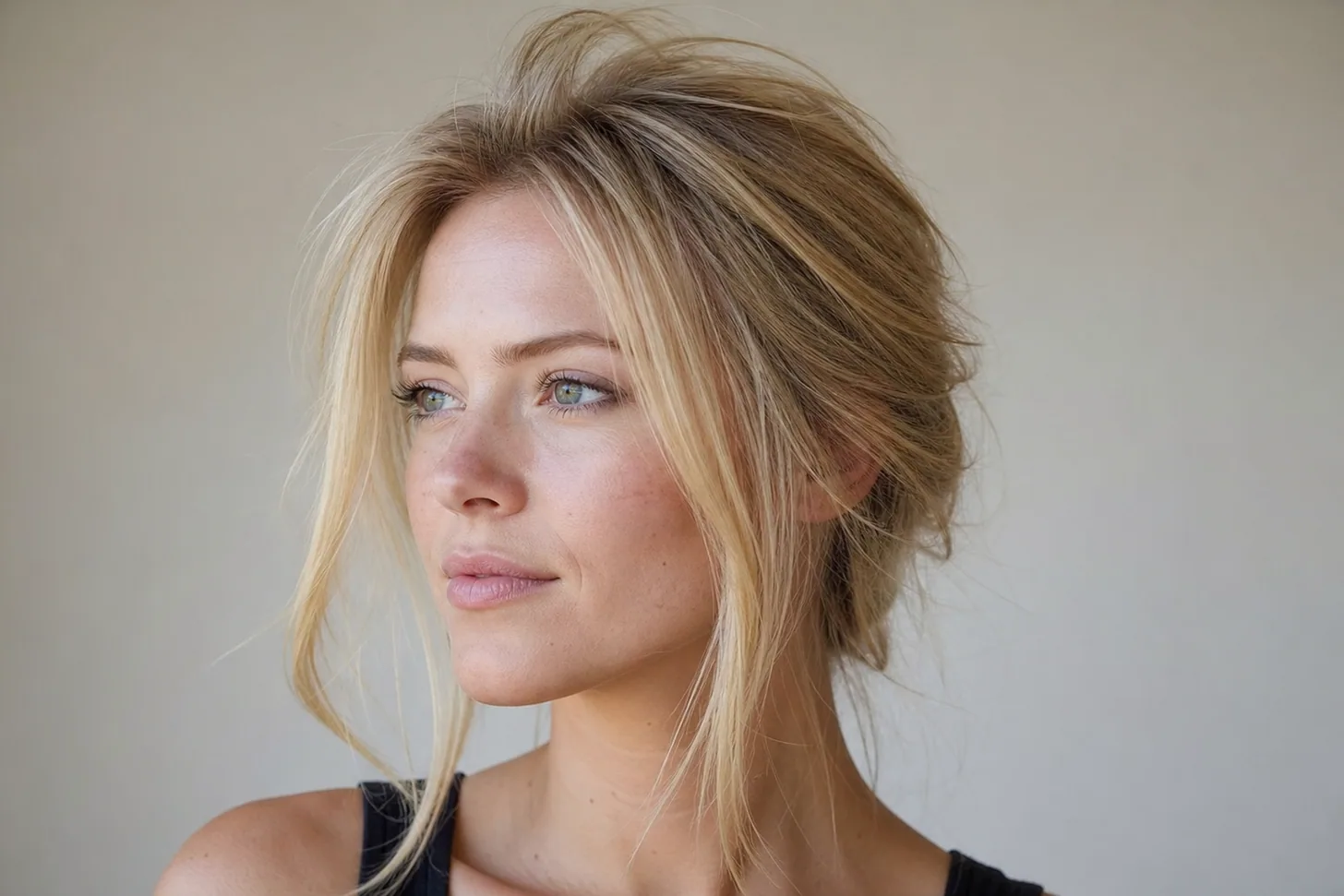
Root volume in fine hair is built at the root while it's damp, then set cold — a fine strand has no stiffness of its own, so you lift it against its natural fall and cool it in that lifted position until it sets there. That's the whole trick, and the cool shot matters more than the product. Below is the six-step method I use in the chair, plus the honest reasons your lift keeps collapsing by noon.
Chair-side note
If you take one thing from this: the cool shot is not optional and it is not for comfort. Heat makes fine hair pliable so you can move the root; cold is what makes it hold.
Almost every client who tells me "my volume never lasts" is dropping the section while it's still warm — it looks great for ten minutes, then relaxes right back down. Cool each lifted section until it's genuinely cold to the touch before you let go.
SB
— Simone Baptiste, Senior Stylist
Why fine hair goes flat at the roots
A fine strand is narrow and soft, with little internal structure to hold itself upright, so it collapses under its own weight and gravity pulls the roots flat against the scalp. Anything that adds weight at the root — heavy conditioner, oils, product build-up, even hard-water minerals — makes it worse by coating and dragging the strand down.
That's why root volume can't be poured out of a bottle: you have to physically lift the root while it's damp and moldable, then lock it there. If you're not sure whether your flatness is a fine-strand issue, a density issue, or both, the two-minute guide to telling fine hair from thin hair is worth reading first, and this method is one chapter of the bigger toolbox in how to add volume to fine hair.
The 6-step root-volume method
Fifteen minutes on wash day. The effort is front-loaded at the crown, because that's the only place root lift actually reads.
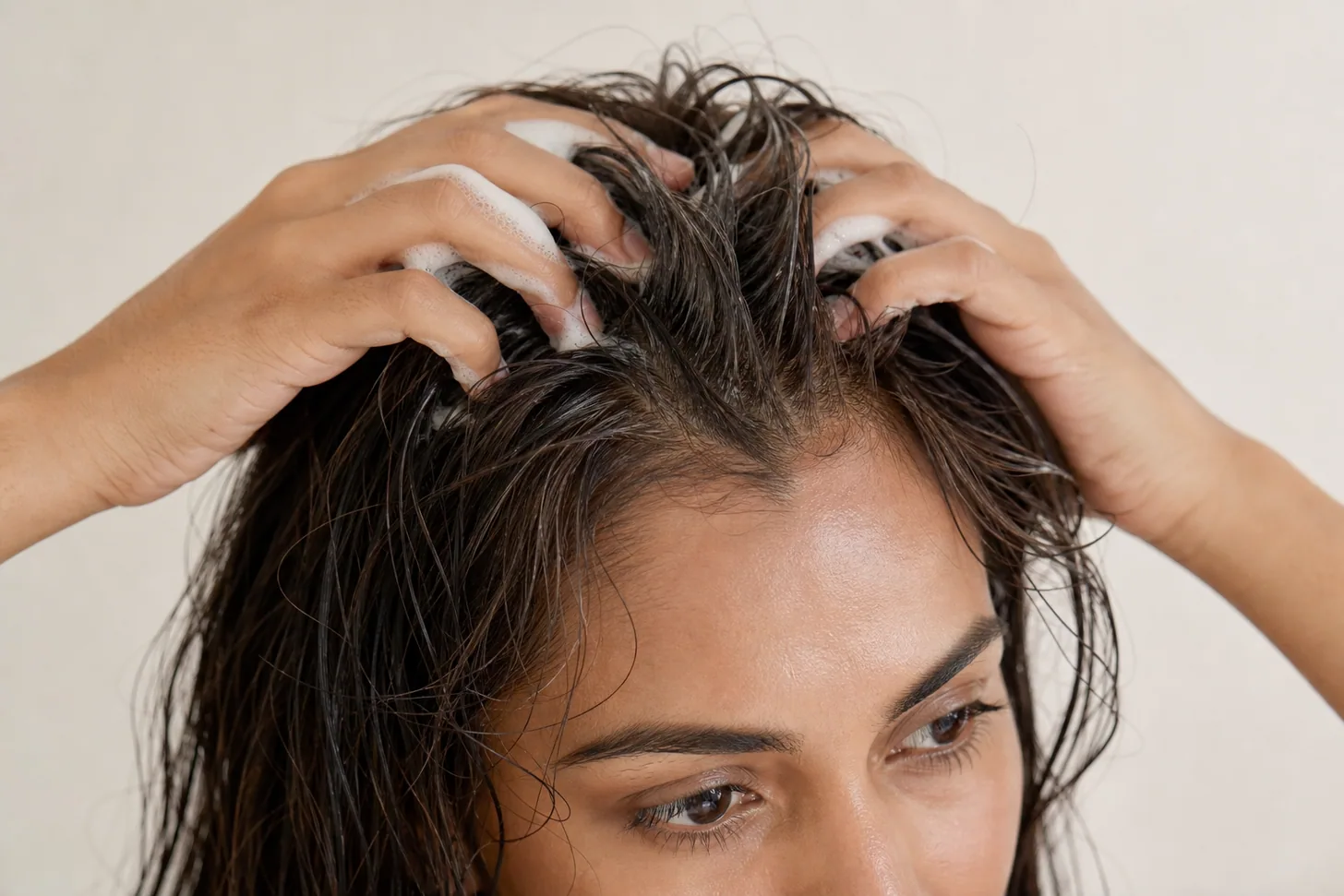
Step 1: Start clean and weightless at the roots
What you need: a lightweight volumizing shampoo; conditioner kept off the roots.
How: shampoo thoroughly — fine hair needs its roots genuinely clean to hold lift — and apply conditioner only from the mid-lengths down, never at the scalp. If your hair goes limp within a day of washing, a build-up problem is usually the culprit; a good fine-hair shampoo and the occasional clarifying wash reset it.
Why: a coated root can't be lifted. The single most common reason root volume won't take is weight sitting at the scalp before you even pick up the dryer.
Step 2: Prep damp roots with a lifting product
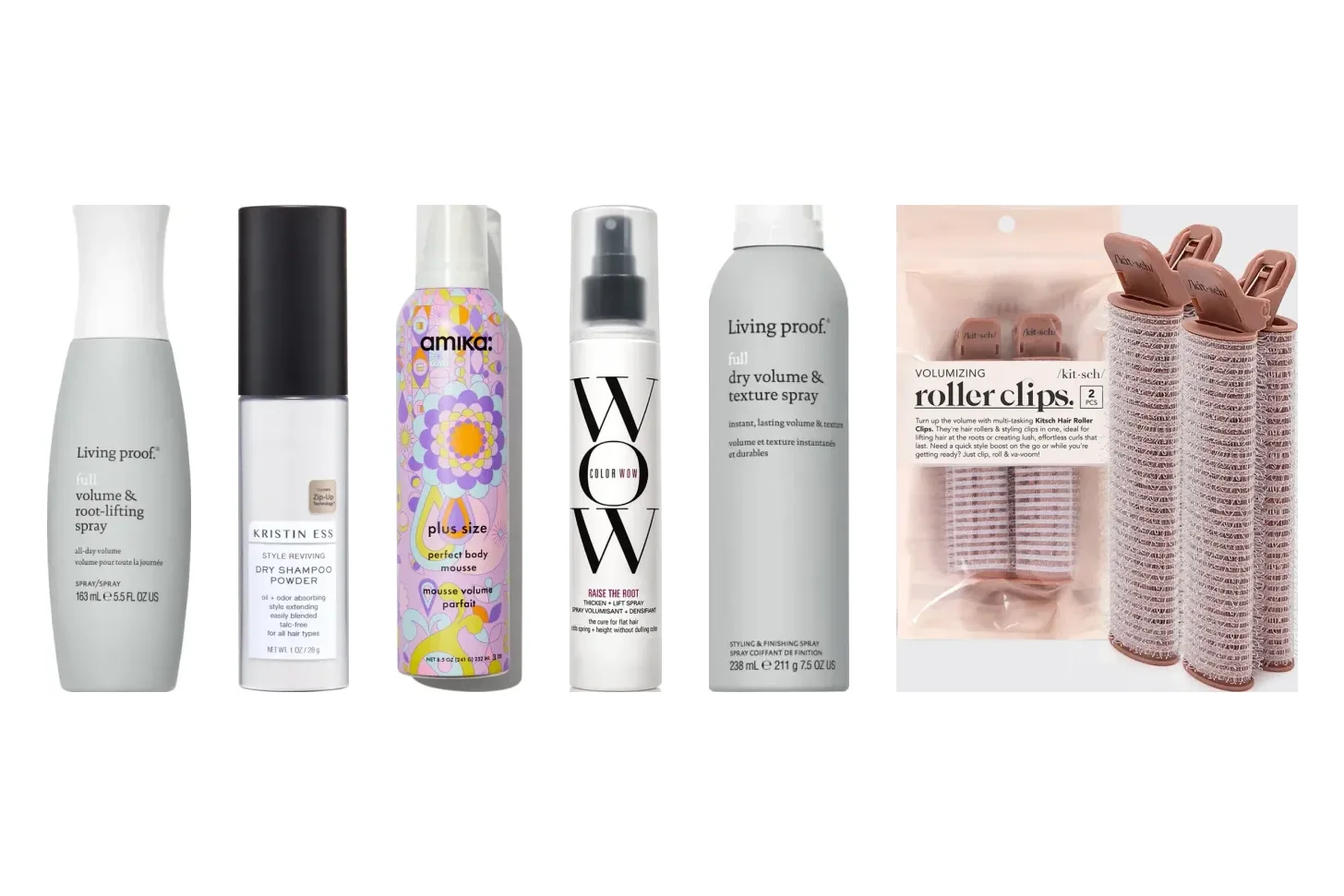
What you need: a lightweight volumizing mousse (about a golf-ball) or a root-lifting spray.
How: on towel-dried, evenly damp hair, work the product into the roots only, concentrating on the crown and the top of the head. Tip your head in different directions and scrunch it into the base. Skip the lengths — they don't need it and it can weigh them down.
Why: mousse and root spray coat each strand with a thin film that dries stiffer than bare hair, giving a fine strand the backbone it lacks. This is where a dedicated root lifter earns its place, or a good volumizing mousse if you want one product for the whole head.
Step 3: Rough-dry upside down to break the root's fall
What you need: a dryer on medium heat with a concentrator nozzle.
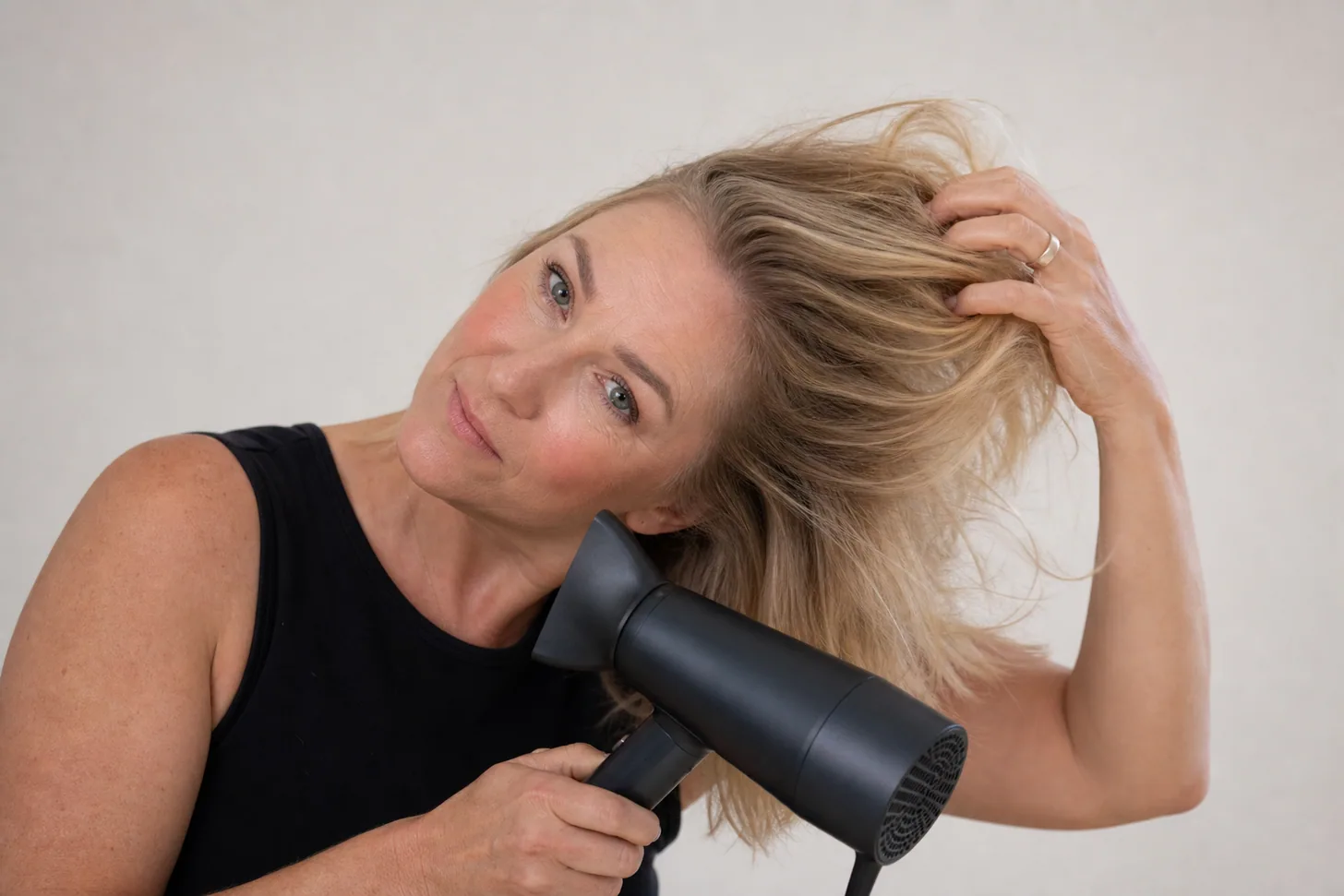
How: flip your head over and rough-dry the roots with your fingers until they're about 80% dry, pushing the hair in the opposite direction to how it usually falls. Keep the nozzle moving and a few inches off the scalp.
Why: drying the root away from its natural fall trains it to stand away from the scalp. Getting most of the water out this way also means less time with the brush later — less total heat on a delicate strand. A dryer with honest low-to-medium heat is all fine hair needs here.
Common mistake: drying the roots flat, in the direction they already fall. You're setting the shape as you dry — set it lifted.
Step 4: Round-brush the roots with over-direction
What you need: a ceramic round brush with a medium barrel.
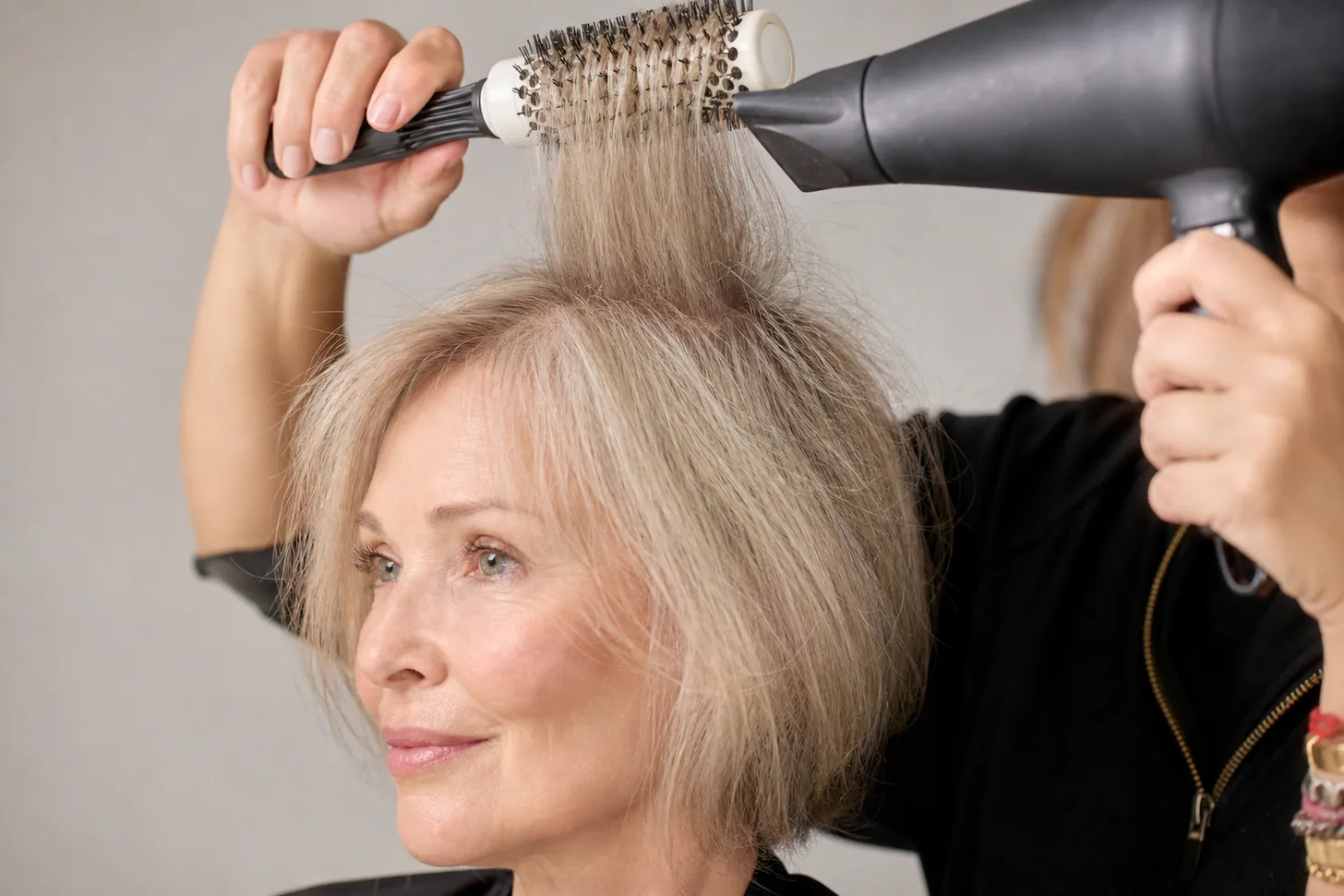
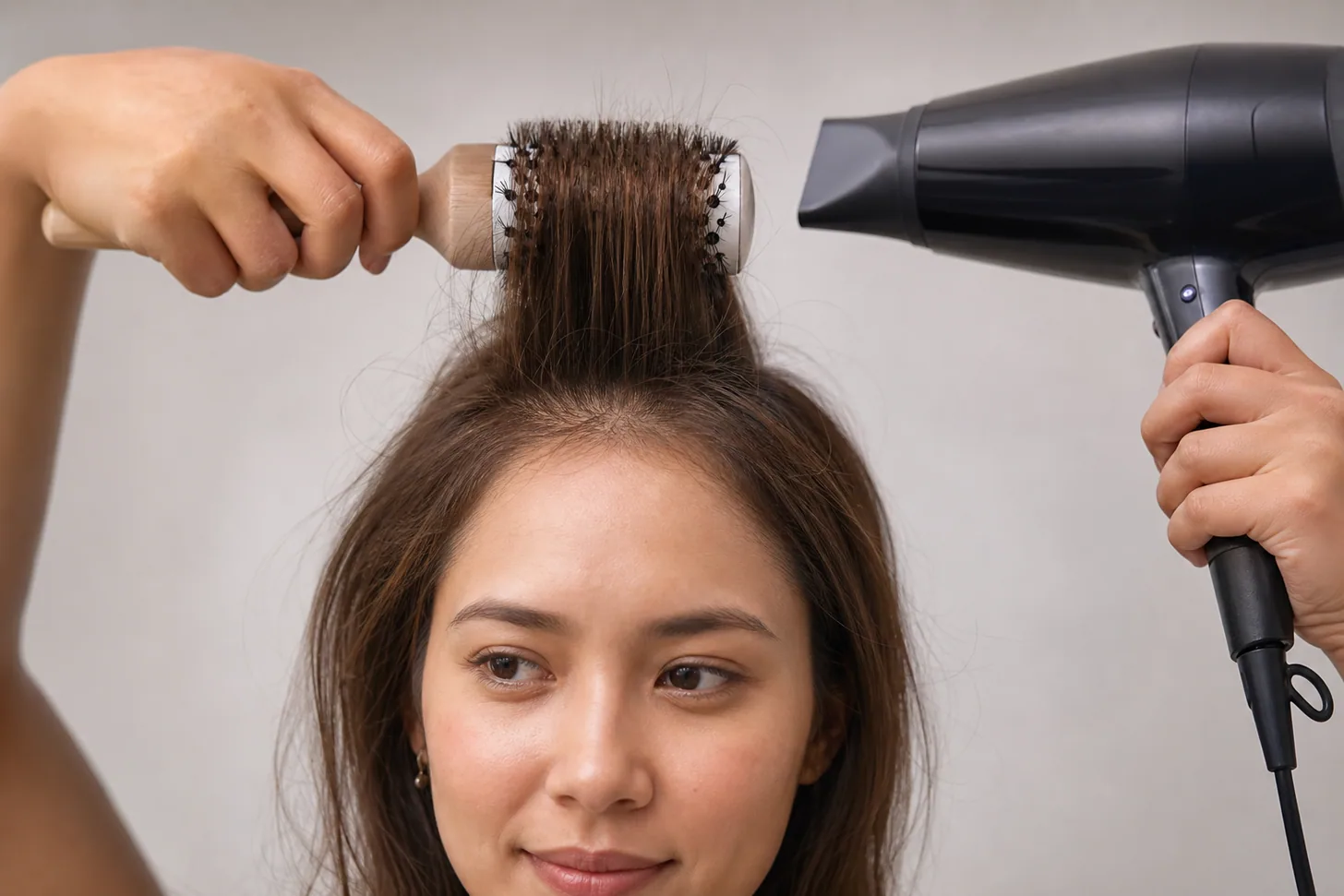
How: take horizontal sections across the crown, one at a time. Lift each section straight up — past 90 degrees, so you're over-directing it forward or back — set the round brush underneath at the root, and dry the base up and over the brush with the nozzle following. Roll the brush a little at the root to build a rounded lift, not a kink.
Why: over-direction means drying the root at a steeper angle than you want it to end up, because it relaxes slightly once released — so you build in extra lift to land in the right place. The right brush matters: our pick of the best round brush for fine hair covers barrels and bristles that grip without tearing.
Common mistake: brushing the root in the direction it falls. Lift it away from the scalp; the brush is a lever, not a comb.
Step 5: Set every section with the cool shot
What you need: the cool-shot button — the most important button on the dryer.
How: with the section still lifted on the brush, hold the cool shot on the root until it feels cold to the touch, then release the brush and move on. Do this on every crown section, every time.
Why: heat softens the hydrogen bonds that hold hair's shape; cooling re-sets them in the new, lifted position. Releasing a warm section lets it relax straight back down — this one step is the difference between volume that lasts eight hours and volume that lasts one.
Step 6: Lock the lift and make it last
What you need: a dry shampoo or a light texture spray.
How: once the whole crown is cool and set, mist dry shampoo or texture spray into the roots and gently tousle. On day two, don't rewet and restart — refresh at the roots with a little more dry shampoo and a blast of cool air.
Why: fine hair is slippery, and slippery strands slide back down. A little product at the root adds friction — grip — that holds the lift in place. Dry shampoo pulls double duty by absorbing the oil that would otherwise re-flatten the crown. The full day-two playbook is in reviving second-day fine hair.
Prefer no heat? Two ways to lift roots passively
Both are covered in more depth elsewhere: root clips for fine hair works through the clip method and the drying window that decides whether it holds, and heatless volume covers the overnight options.
Heatless methods hold a little less firmly on very fine hair, but they add zero heat and can run while you do something else.
Velcro rollers at the crown
Set two or three large Velcro rollers into dry or nearly-dry roots at the crown, rolling up and over so the root lifts. Leave them 10–20 minutes (or mist with a little hairspray and warm briefly with the dryer, then let cool), and unroll gently. The self-grip does the lifting without a single clip.
The clip-and-air-dry
After applying a root-lifting product to damp hair, section the crown and clip each root upward with flat clips, then let the hair air-dry fully before removing them. Flipping your part to the opposite side of your natural one adds instant lift the same way, because the roots have to stand up to cross over. Which side to choose, and how to make a new part stay put, is covered in how to part fine hair.
When root volume won't hold — and it isn't your technique
Your roots are oily by midday. Oil is weight; it re-flattens the crown. Wash-day timing and dry shampoo matter more than any styling step — see how often to wash fine hair.
Product build-up coats the root. If lift won't take even on clean-feeling hair, clarify. A coated strand can't be lifted.
Your cut drags the crown down. Heavy, one-length long hair fights root lift. Internal layers or a shorter shape build fullness the styling can then amplify.
You're skipping the cool shot. The most common cause of all. If the lift looks great, then collapses within the hour, it was never set cold — go back to why hair falls flat.
FAQ
Two reasons. A fine strand is thin and soft, so it has little structural stiffness to hold itself up off the scalp, and gravity plus the weight of the length pulls the roots flat. Product build-up and heavy conditioner make it worse by coating the root and adding weight. Root volume is built, not born: you lift the root while it's damp and pliable, then cool it in the lifted position so it sets there.
Use medium heat, not high, and keep the dryer moving several inches from the scalp — heat over distance and time is far gentler than concentrated heat. Always mist a heat protectant first. The volume comes from technique (over-directing the root and setting it cold), not from cranking the temperature. Backcomb gently and rarely, and never tease already-fragile ends.
A lightweight volumizing mousse on damp roots is the workhorse — it coats each strand with a thin film that adds stiffness as it dries. A dedicated root-lifting spray or mousse aimed at the crown gives an extra push, and a dry shampoo or root powder adds grip and lift on dry hair. The key is weight: anything heavy, oily, or creamy at the root will flatten fine hair, however volumizing the label claims.
Set it cold and give it grip. The single biggest factor is the cool shot — holding each lifted section until it's fully cold is what locks the lift in; skip it and the style falls within the hour. Then add texture: a mist of dry shampoo or texture spray at the roots gives fine hair the friction it needs to stay propped up. On day two, refresh the roots rather than rewetting and restarting.
Sparingly, yes. A little gentle backcombing at the very base of a crown section builds a cushion that props the hair up, and it's a legitimate stylist trick for special occasions. But fine hair is fragile, so tease only at the root, only with a soft touch, and smooth the surface layer back over the top. Daily aggressive teasing causes breakage that ends up looking like more thinning, not less.
Yes. Velcro rollers set into dry or nearly-dry roots at the crown and left for 10–20 minutes lift the root with no heat at all. Clipping the roots up while they air-dry, or drying with your part flipped to the opposite side, both build lift passively. Heatless methods hold less firmly than a cooled blow-dry on very fine hair, so pair them with a root-lifting product and a texture spray to add grip.
Eleven years behind the chair, specializing in short shapes and fine-hair texture. Simone believes the best haircut is the one you can style yourself in ten minutes.
Results vary with hair type, density, and growth patterns. This guide is educational and not a substitute for an in-person consultation with a licensed stylist.
Images in this guide are AI-generated illustrations, not photos of real clients or results. See our image policy.
Get the good hair intel
One honest, stylist-written guide in your inbox each week. No hype.

 SB
SB