Reviewed by Tara Sullivan · Updated July 2026 · 10 min read
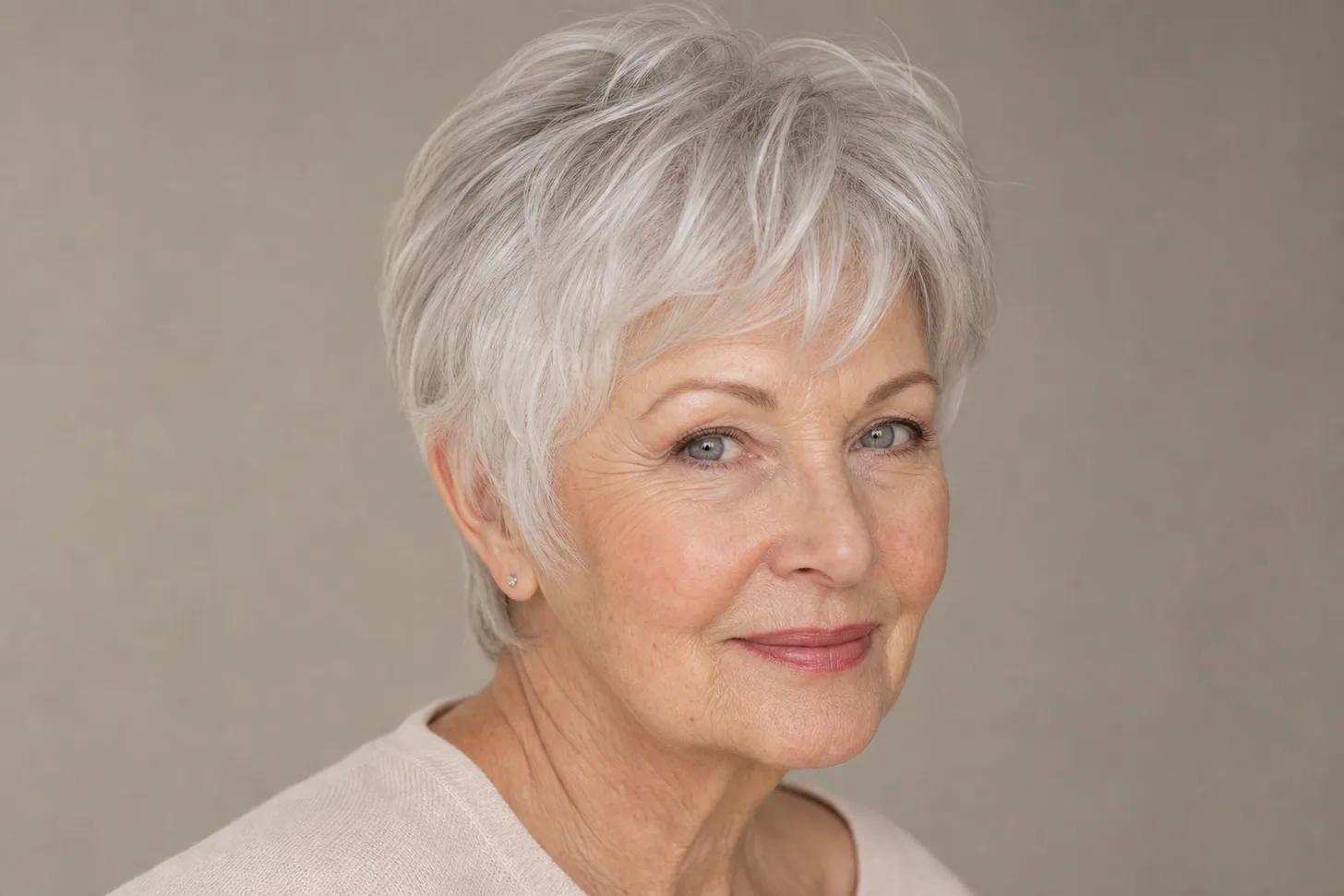
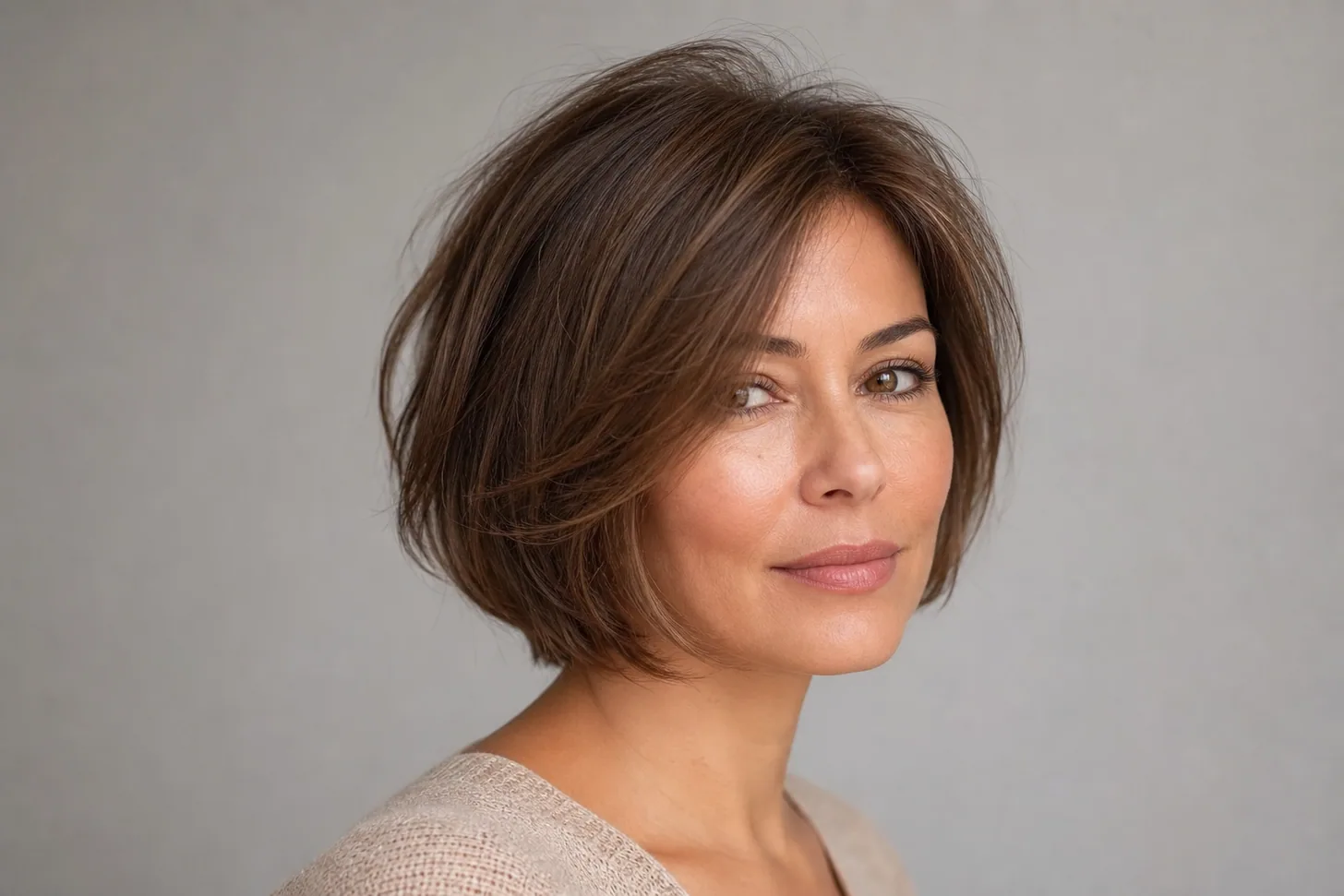
Short is the honest answer for most fine hair over 60 — above the chin, the hair can't out-weigh its own roots, so the volume you've been fighting for happens on its own. But "short" is not one haircut: a tapered pixie, a stacked bob, and a soft crop each solve a different problem, from a thinning crown to glasses that argue with side pieces.
Below are 16 short cuts chosen specifically for fine, lower-density hair at 60-plus, grouped by what they fix, each with the exact words to bring your stylist. If you're weighing short against keeping some length, start with the full over-60 haircut guide — this page is the deep end of its shortest chapter.
Chair-side note
When a client over 60 finally goes short after years of shoulder-length hair, the sentence I hear at the second visit is almost always the same: "I wish I'd done this five years ago." What surprises them isn't the mirror — it's the mornings.
Fine hair that needed twenty minutes of round-brushing to look acceptable at collarbone length looks finished in four minutes at crop length. The cut is doing the work the blow-dry used to do. My honest advice: if you're on this page reading about pixies "someday," someday is usually now.
SB
— Simone Baptiste, Senior Stylist
Why short works so well on fine hair after 60
Fine hair over 60 is usually fighting two battles at once: each strand is narrower than it used to be, and there are fewer of them — diameter and density. Length punishes both. Every inch adds weight that drags the root flat, and thinned ends stretched over a longer distance read as see-through.
A short cut flips the physics: with almost nothing pulling down, roots lift naturally, and the same amount of hair packed into a smaller shape reads as dense. That's why a well-cut crop can look like more hair than a lob, on the identical head. (Not sure whether your hair is fine, thin, or both? Two minutes here settles it — it changes which cuts below suit you best.)
The other honest advantage is maintenance. Every cut on this page can be styled in under five minutes without a round brush — most with just fingers, a dryer, and one light product. The cost is trim frequency: short shapes need the salon every 4–6 weeks to keep their line.
That's the trade, stated plainly. If you're a decade on, the same logic — with a few adjustments for lower density and easier styling — carries into our guide to short hairstyles for fine hair over 70.
Pixies and crops: maximum lift, minimum effort
The shortest family, and the one that solves crown flatness outright — the top layers are too short to fall over, so they stand. The decade below cuts these a shade longer and softer — short hairstyles for fine hair over 50, and short cuts for mature fine hair groups the same shapes by life stage rather than by decade.
1
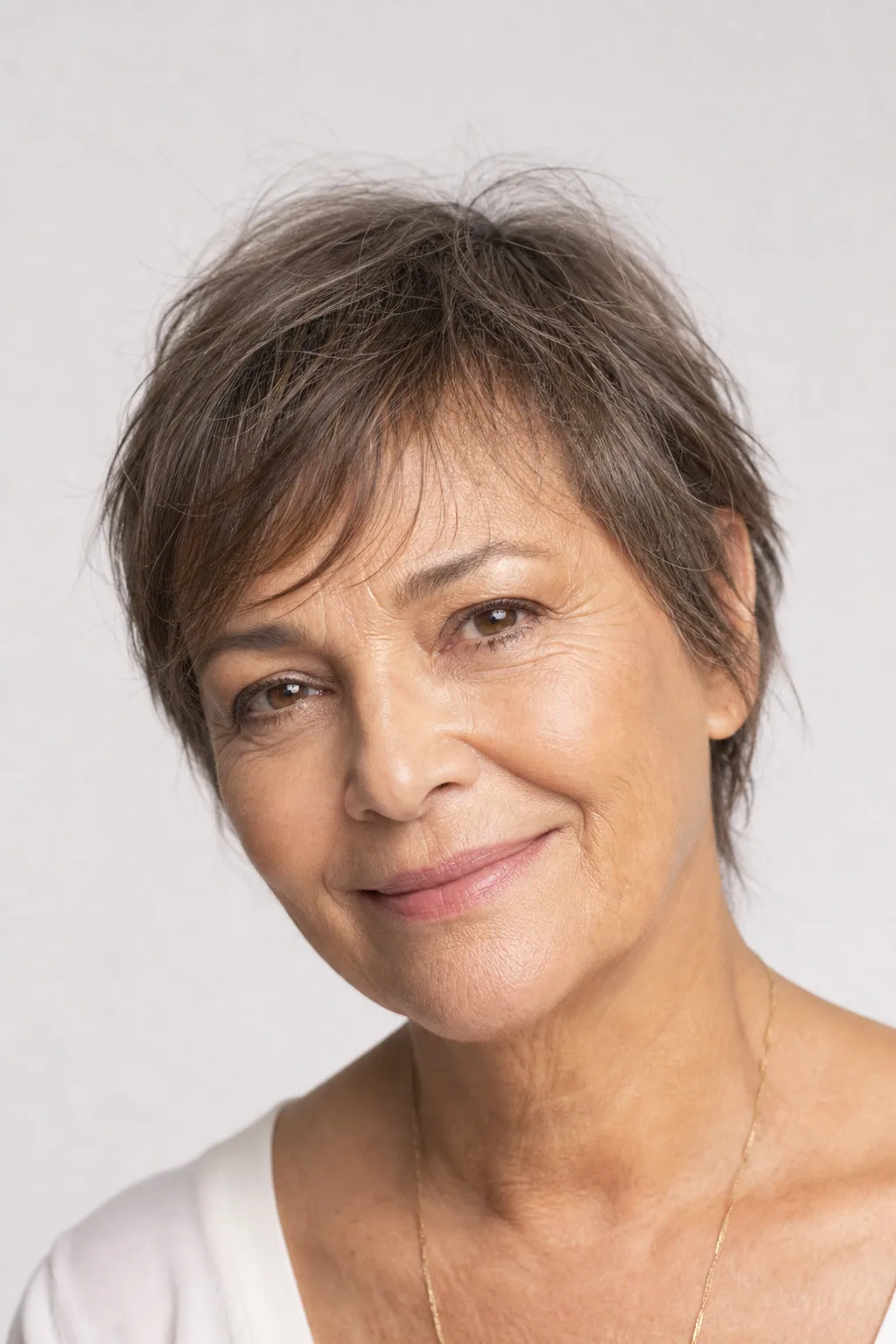
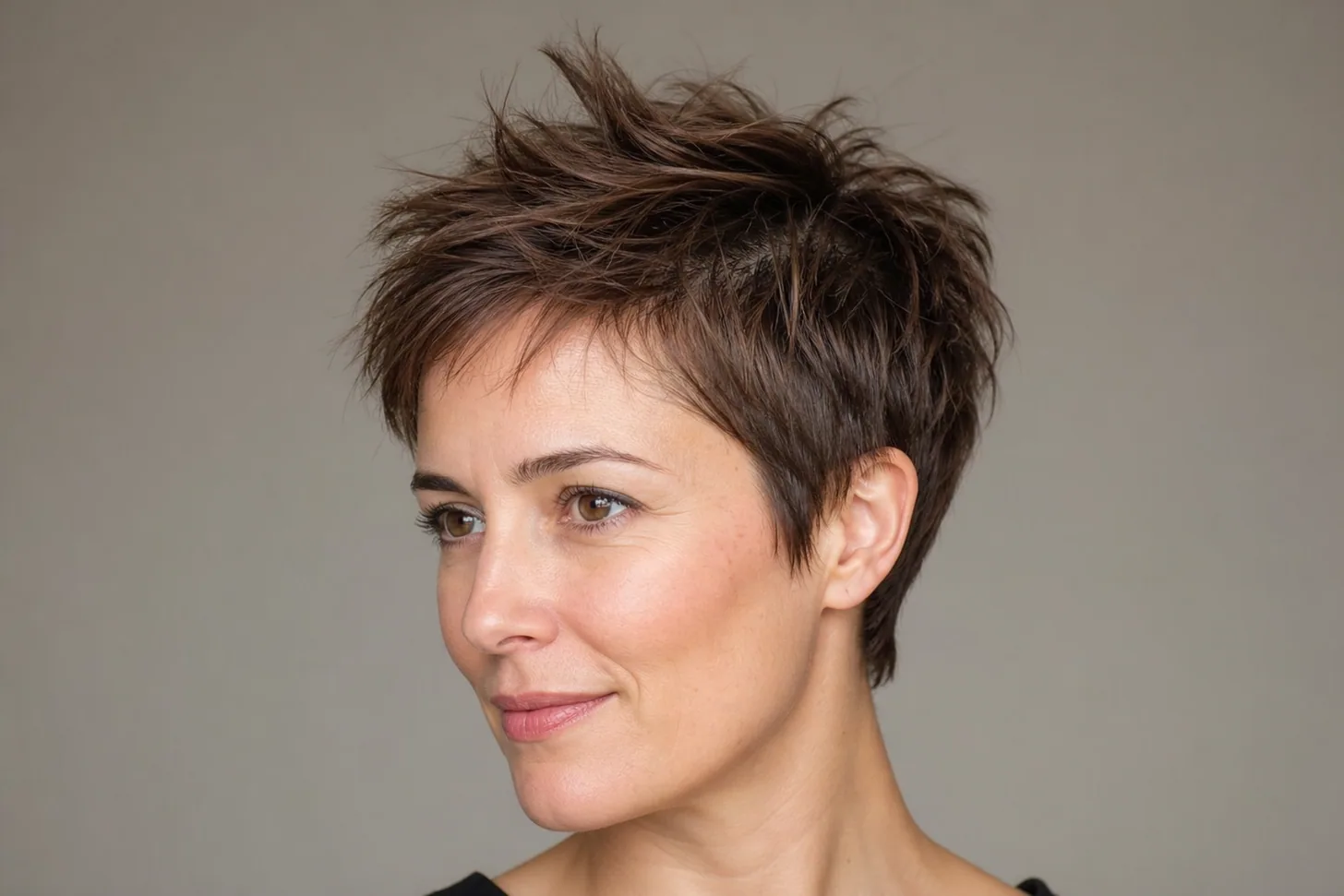
Soft textured pixie with a lifted crown
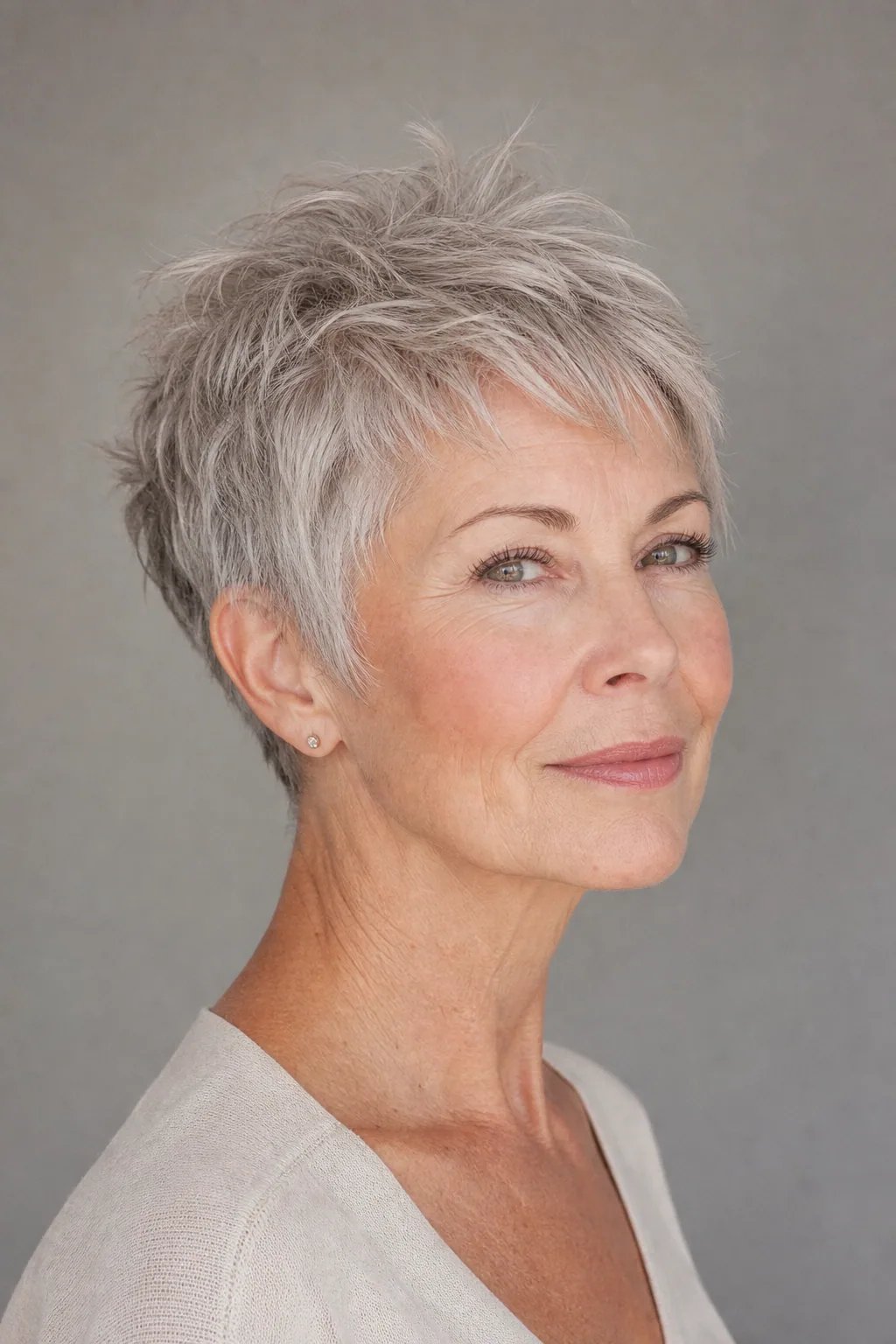
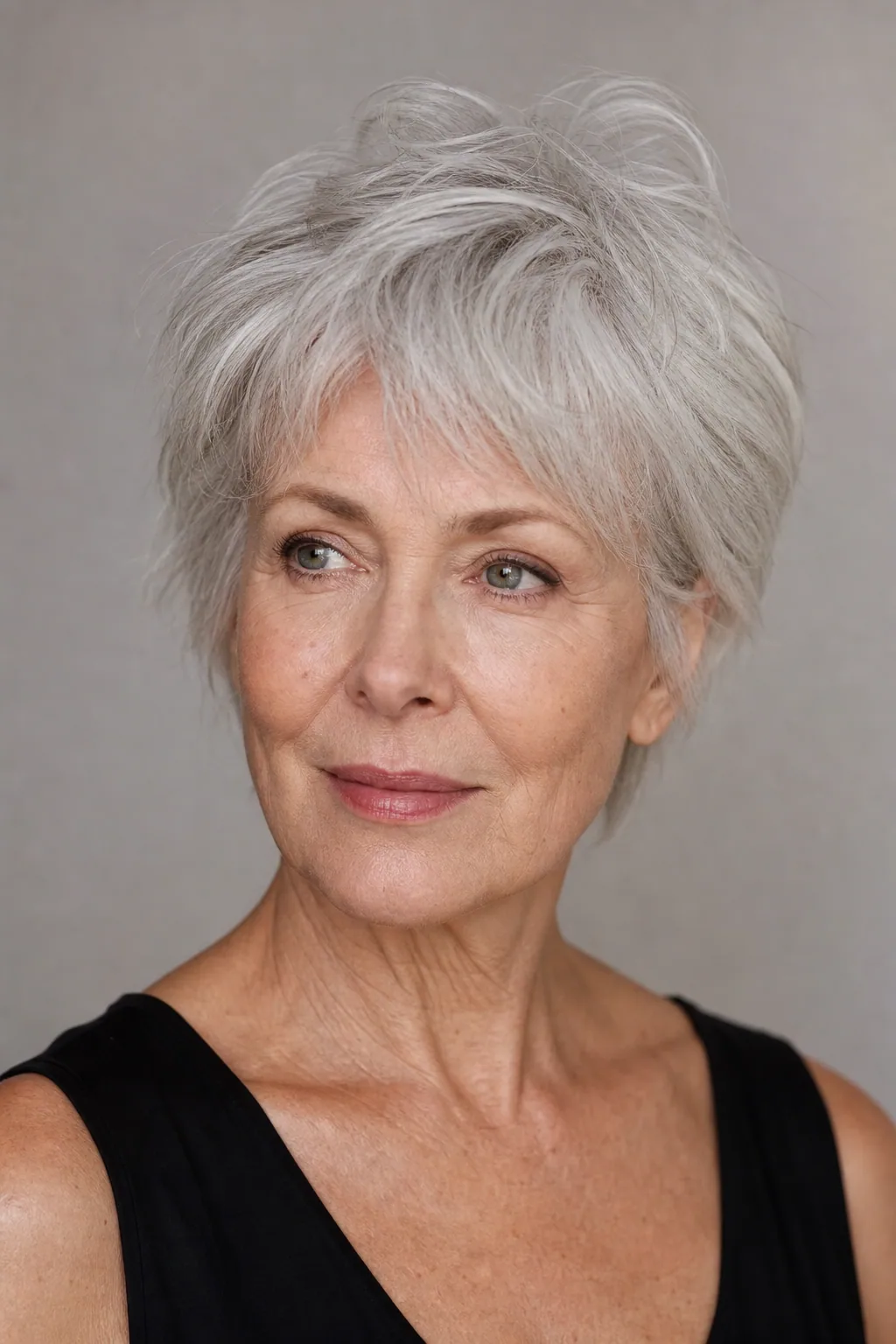
The benchmark short cut for fine hair over 60: point-cut layers through the top create height at the crown that fine hair cannot hold at any longer length. Ask for texture cut into the top, not thinned out of it — thinning shears remove the density you're trying to fake. A fingertip of light paste, a ten-second tousle, done.
2
Tapered pixie with a clean nape
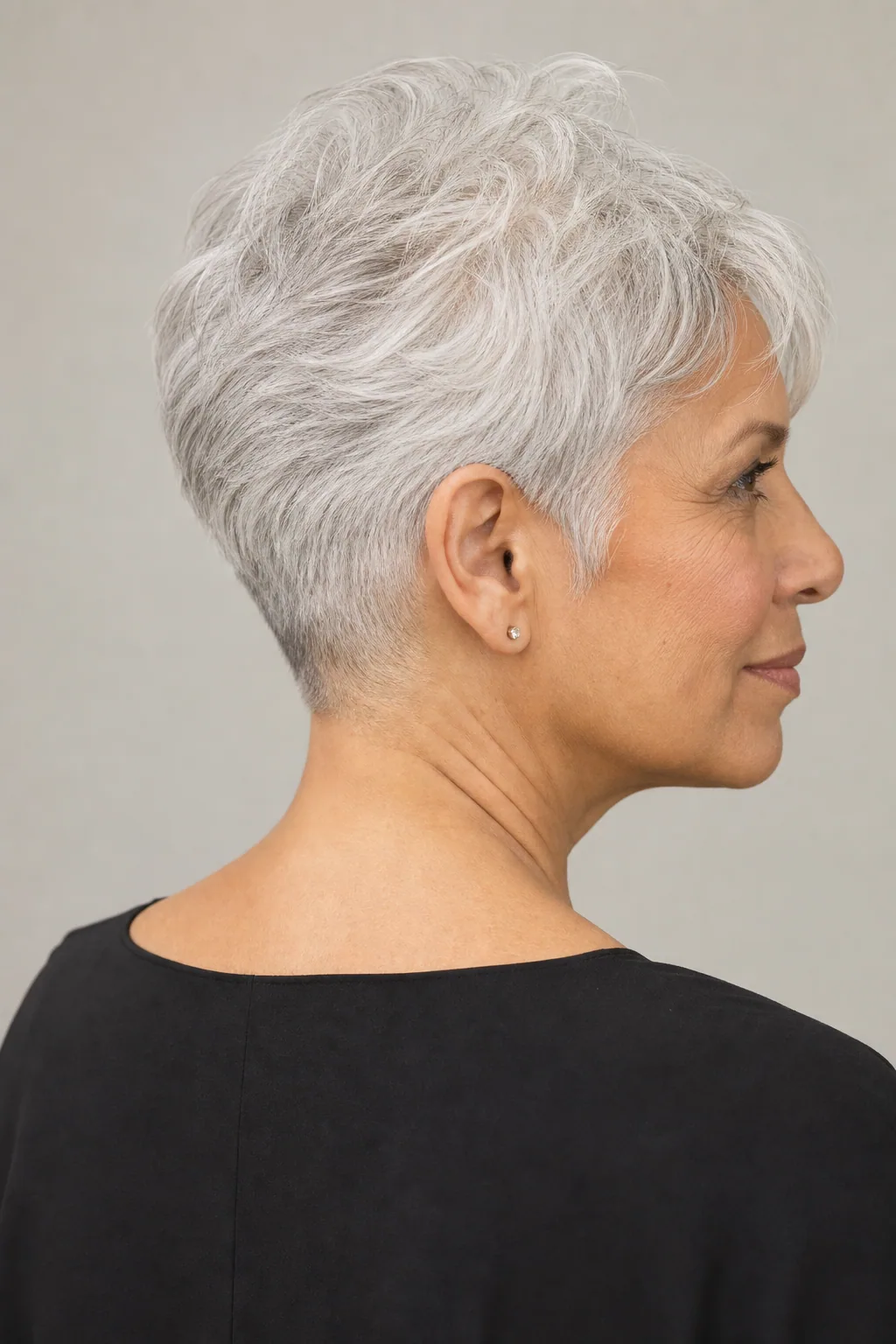
Tapering the nape and sides close makes the sparser hair at the hairline disappear into the shape instead of straggling below it. This is the cut for necklines that have gone wispy — the taper turns a weakness into a deliberate line. It also holds its shape longest between trims of any pixie here.
3
Long pixie with a side-swept top
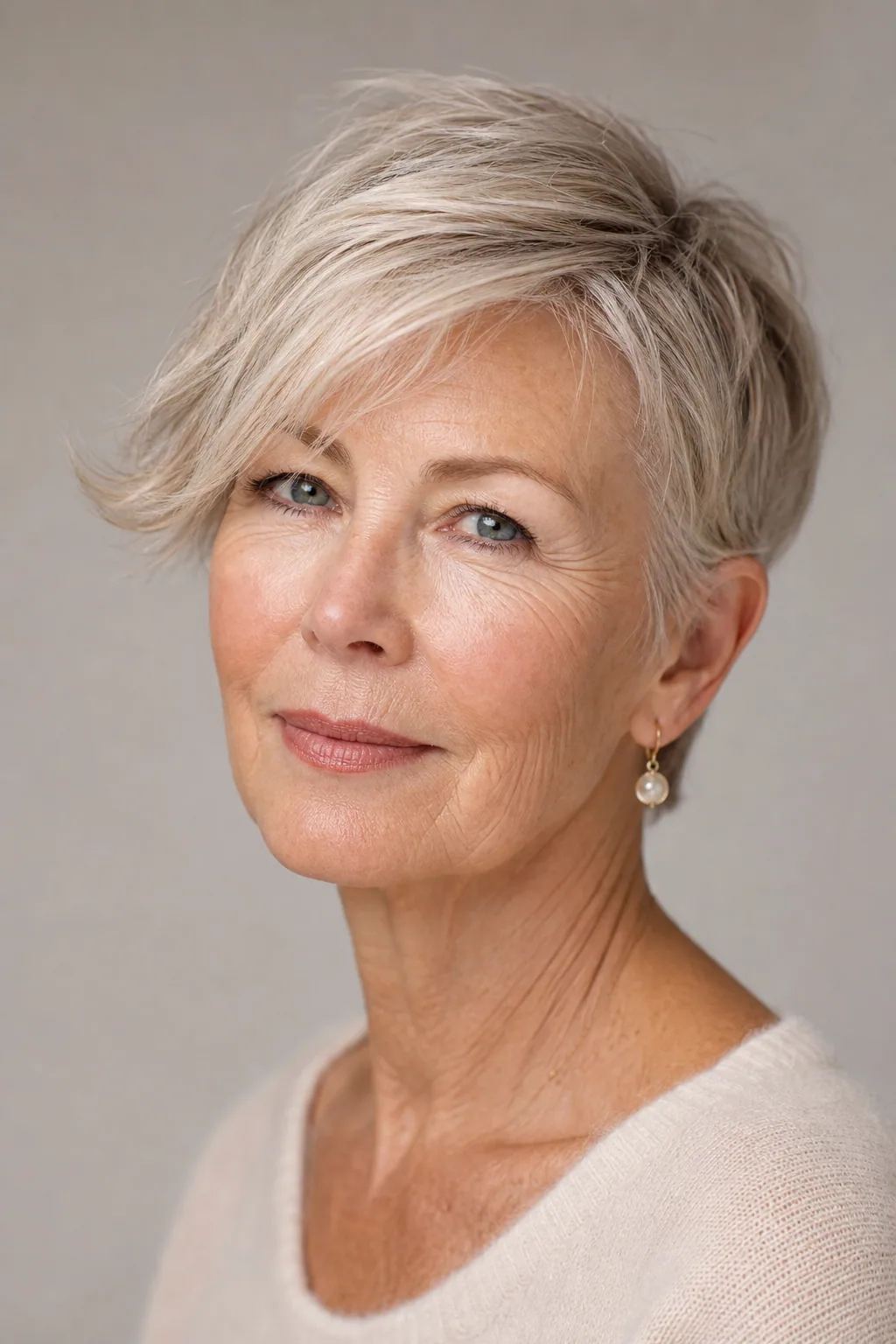
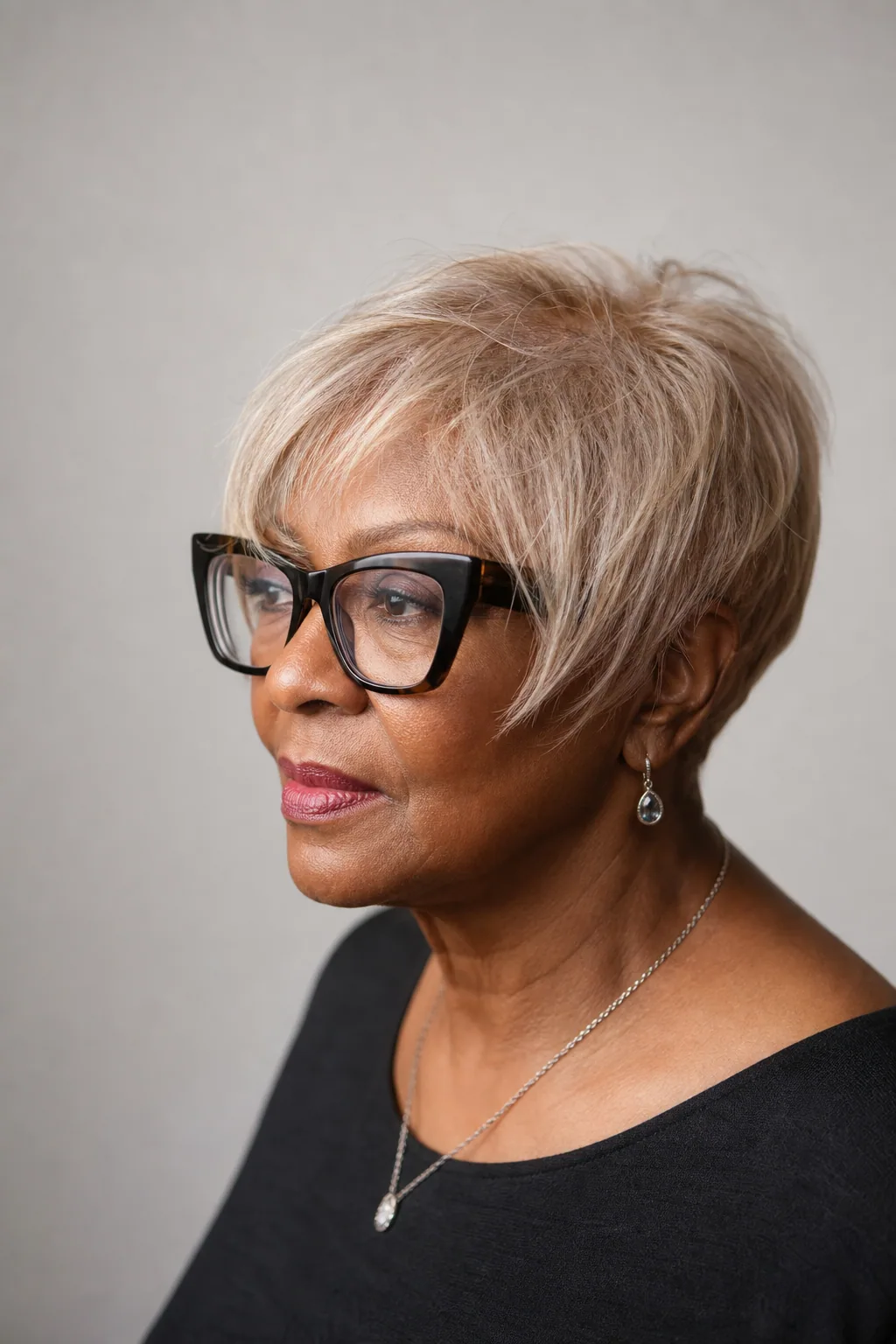
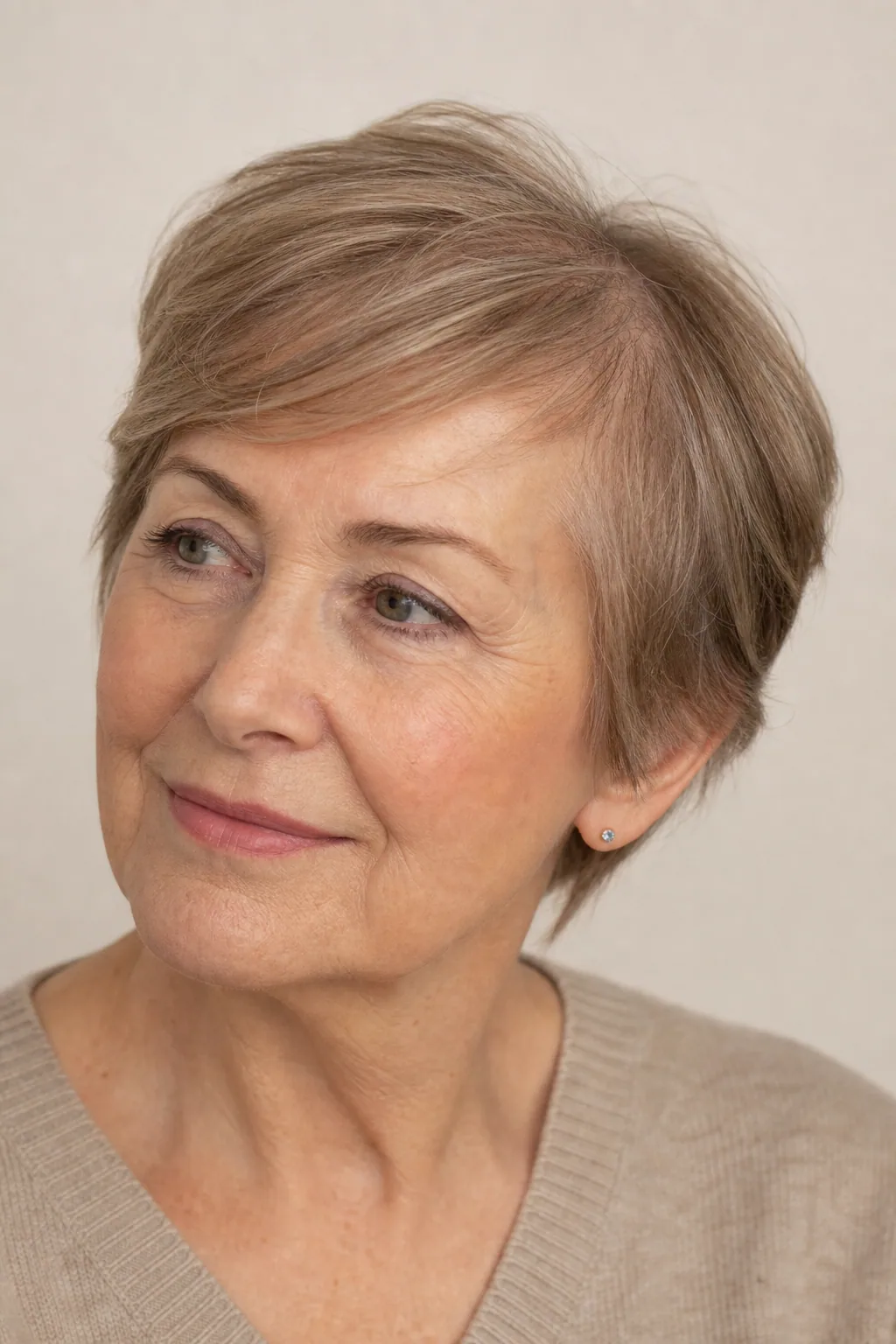
Keeps two to three inches on top, swept diagonally toward one brow — the extra length gives you somewhere to put a little movement, and the sweep covers a high or thinning front hairline. A good first pixie if you're nervous about going short, because it still moves like hair rather than sitting like a cap. It does need sixty seconds of dryer time to train the sweep.
4
Choppy wash-and-go crop
Cut with deliberate irregularity so it's meant to look unarranged — which means air-drying is the style, not a compromise. For women who genuinely will not pick up a dryer, this is the most realistic cut on the page. The broken texture also scatters light, which reads as body on fine strands. More wash-and-wear shapes live in our low-maintenance haircut guide.
5
Feathered crop with a wispy fringe
Feathered edges all over with a sheer, point-cut fringe — the softest-looking cut in the pixie family, flattering on delicate features and forgiving over a lined forehead. The fringe adds a second layer of visual density right at the front, where people actually look. Keep the feathering surface-level; deep feathering on very fine hair goes fluffy.
Short bobs: chin-length and above
For women who want short without pixie-short. A bob's power on fine hair is its perimeter — one strong line that makes the ends look dense. Our full bob guide covers every length; these five are the shortest, fullest versions.
6
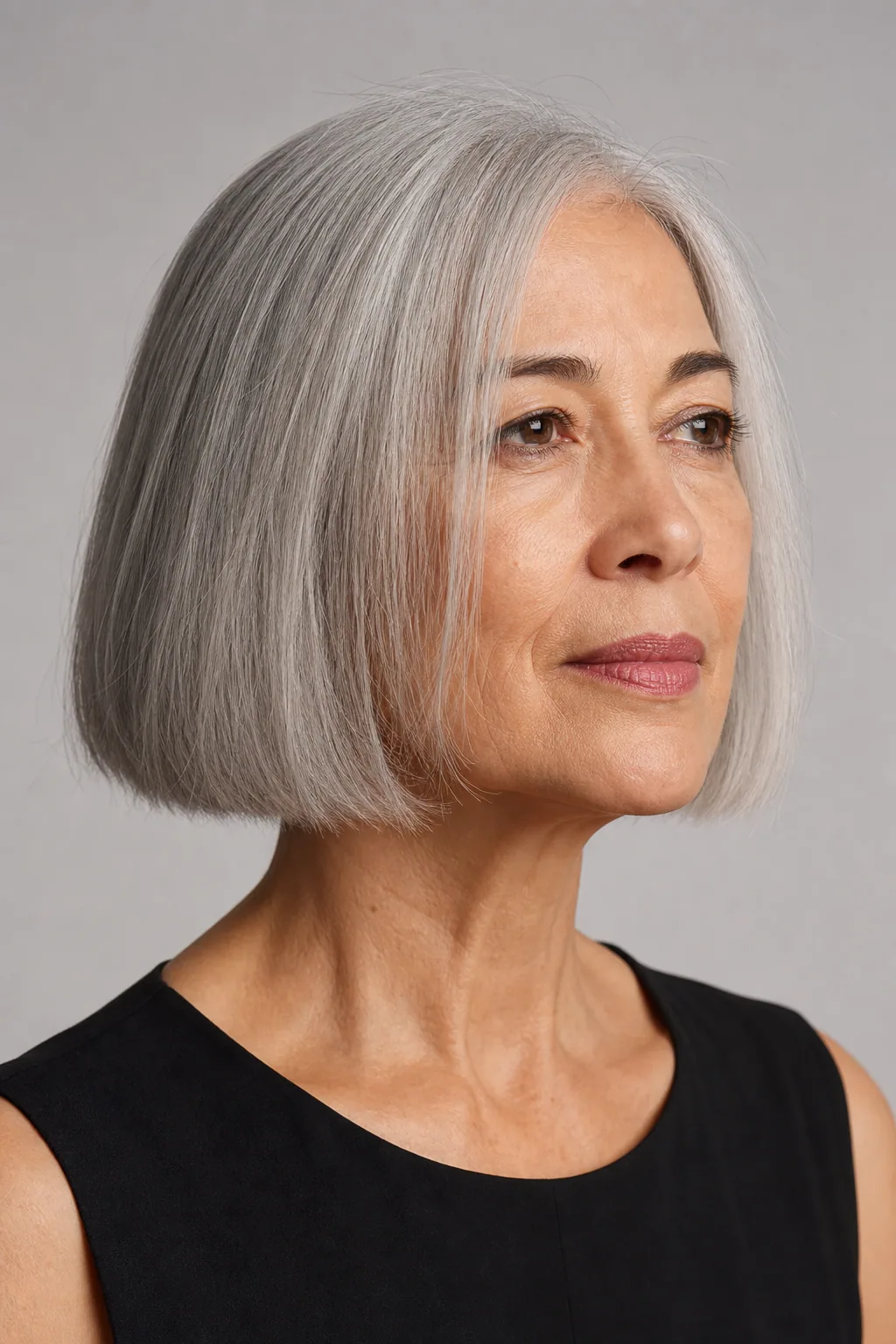
Blunt chin bob
Every strand stops on the same line, so all the density you have lands in one visible edge — the classic "makes fine hair look thicker" cut. It suits hair that's fine in diameter but not severely thinned; if the crown is sparse, pick the stacked version next door instead. Ask for a point-cut finish so the line stays soft rather than helmet-crisp.
7
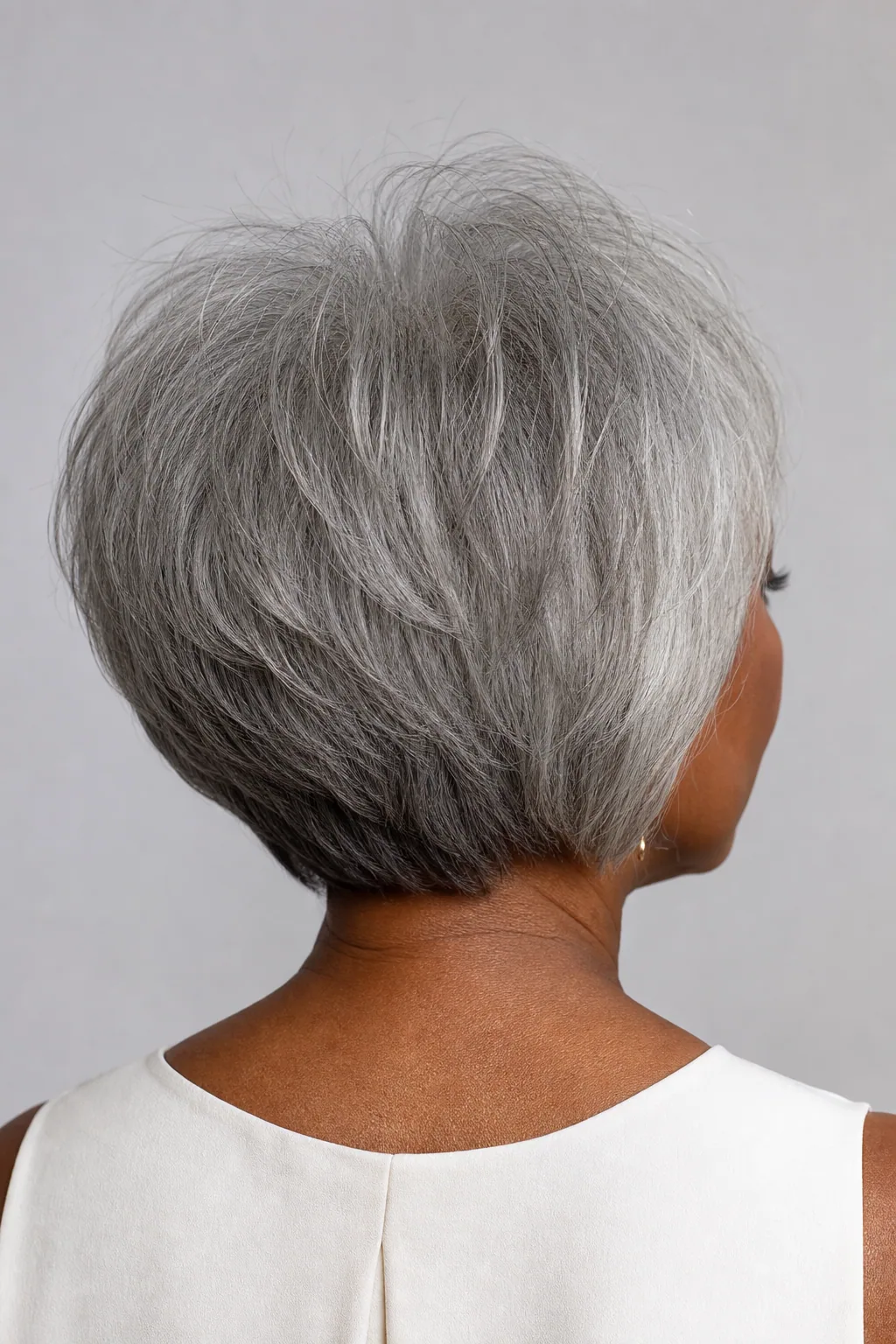
Stacked bob with crown graduation
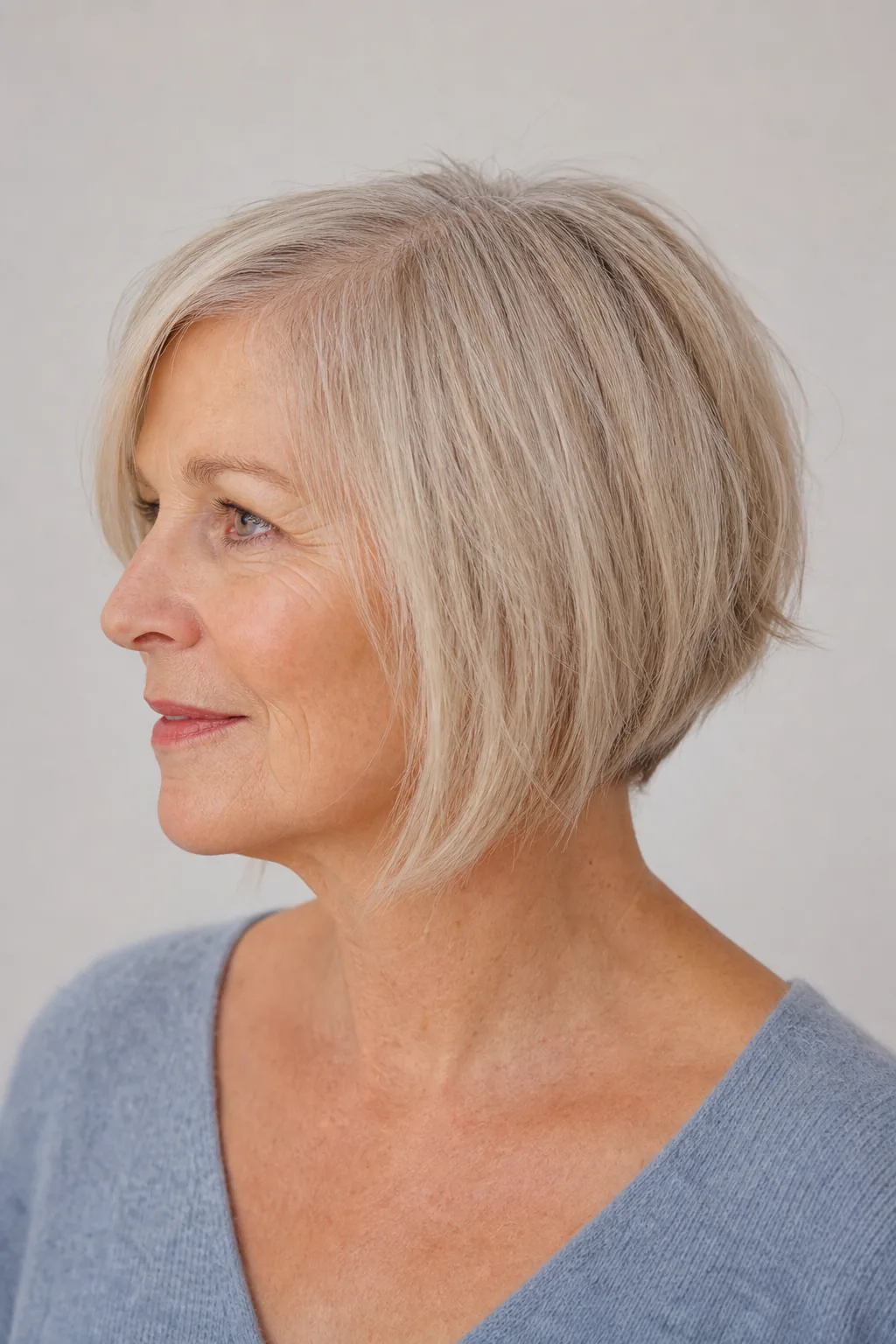
Graduated layers stack weight at the back of the head, building the height at the crown that flat fine hair misses most. From the side, the silhouette curves up and out instead of hanging — it's architecture doing what mousse can't. The trade: this shape is its outline, so it wants a trim every five weeks.
8
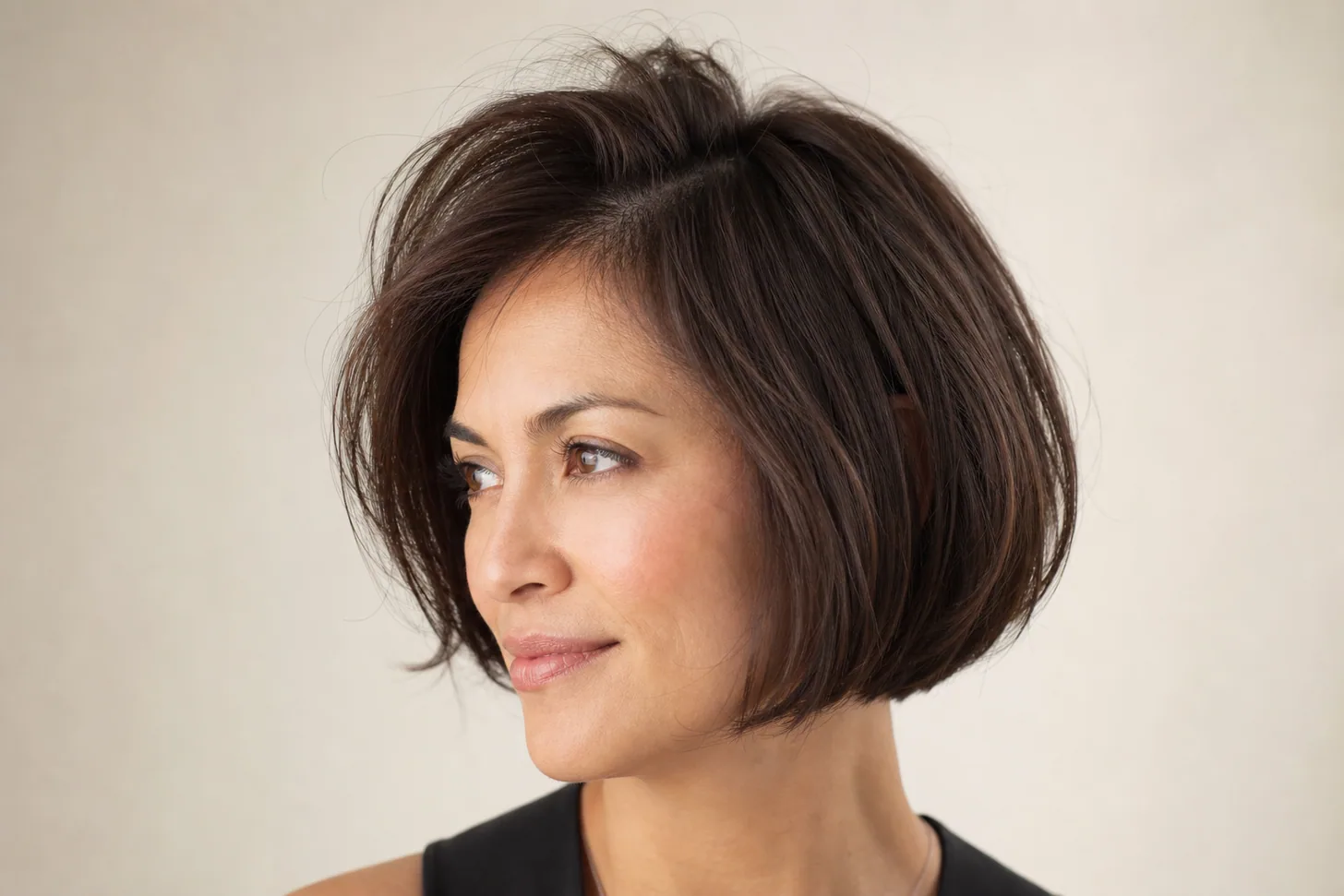
Jaw bob with a deep side part
A clean jaw-length bob worn parted well off-center. The deep part throws the heavier side up and over, lifting the roots against their trained direction — free volume, every morning, no tools. Flip the part to the other side on day two and the lift renews itself. The simplest styling trick on this page attached to one of its simplest cuts.
9
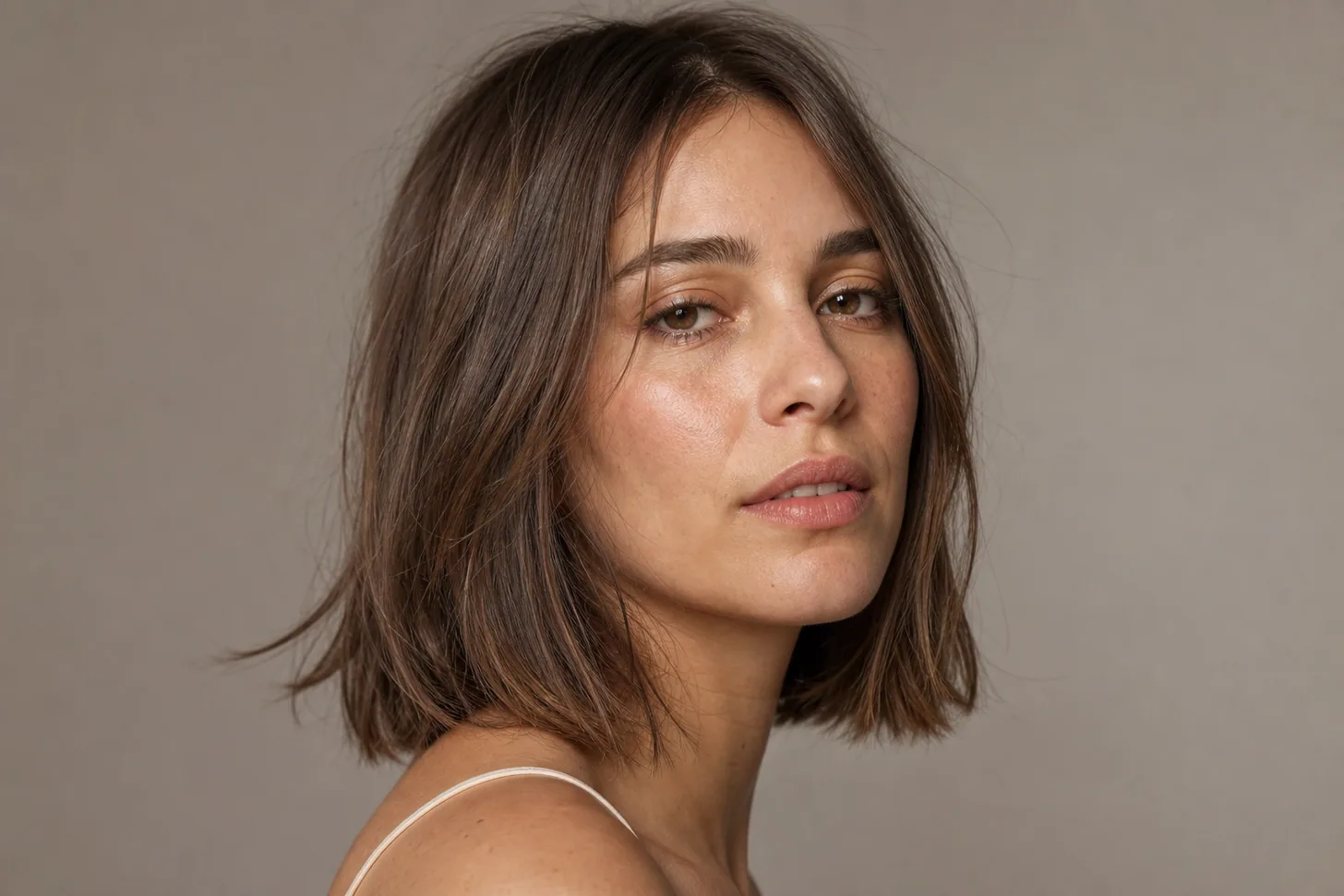
Short French bob with a soft fringe
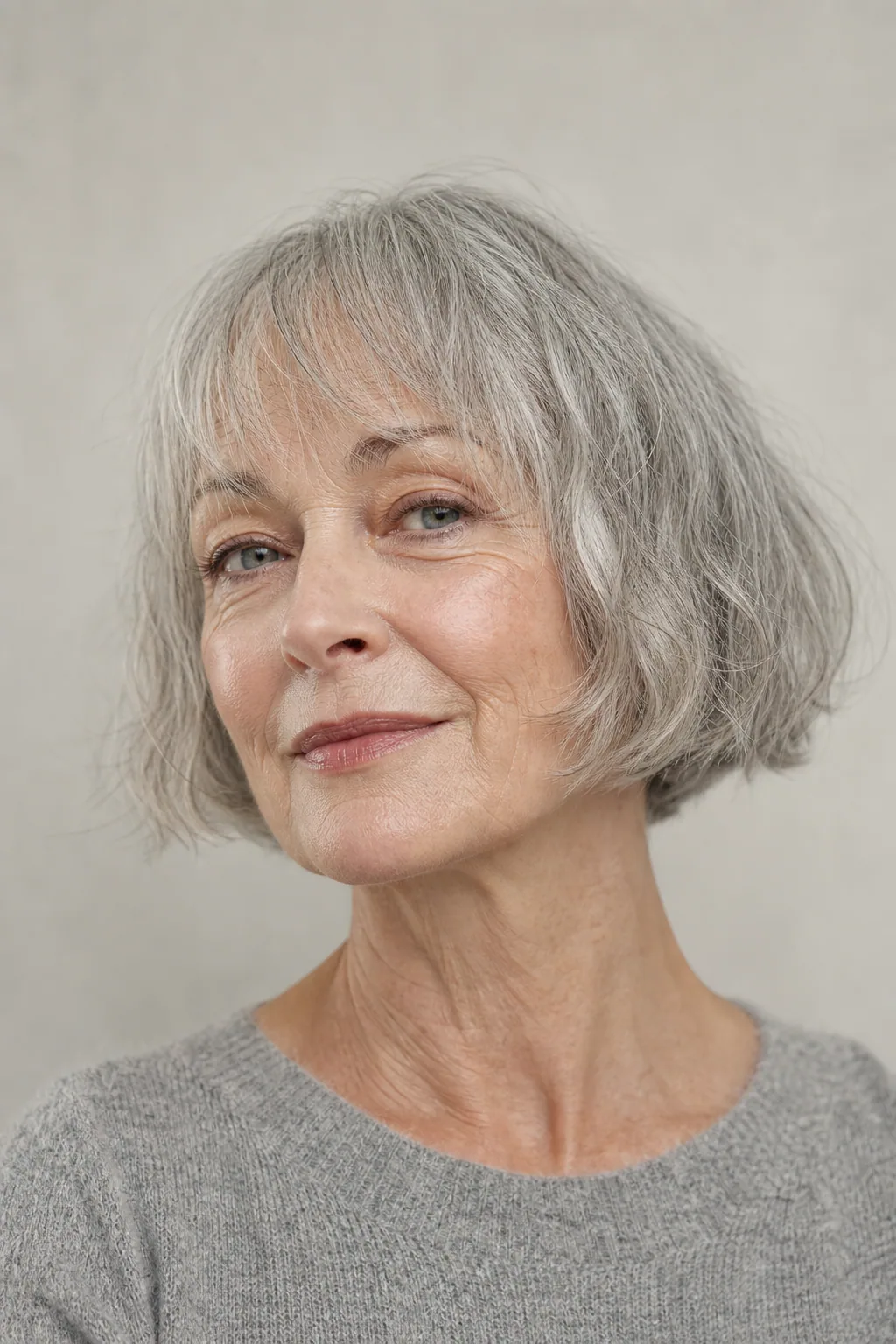
Chin-grazing, slightly undone, finished with a sheer fringe — the least "done" bob here, and the best one for fine hair with natural wave, which supplies the texture the cut is designed around. It reads current without trying, which is exactly what most clients over 60 tell me they want. Air-dry with a walnut of mousse scrunched in; skip the iron.
10
A-line mini bob
Cropped at the back, angling longer toward the chin at the front — the graduation gives the back-of-head fullness while the forward angle slims a rounder or softer jawline. On straight fine hair the diagonal line is striking with zero styling. Keep the front no longer than chin level or the angle starts dragging the shape down again.
Short cuts that work with glasses
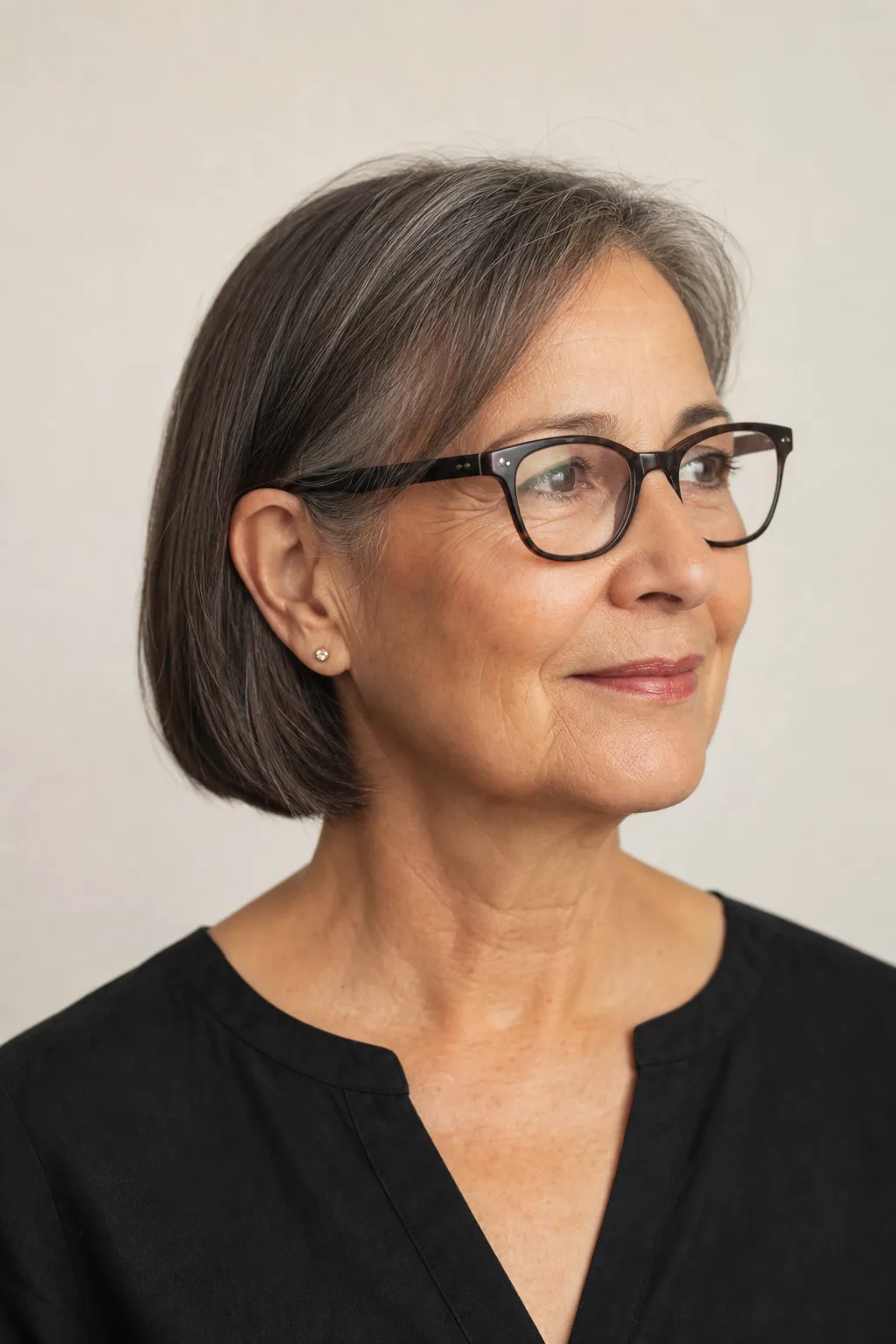
Most style galleries ignore the accessory many of us wear every waking hour. Glasses add structure and visual weight at the temples — so the cut should clear space for them instead of stacking hair against the frames. Three shapes that do it well:
11
Ear-length pixie-bob, frames clear
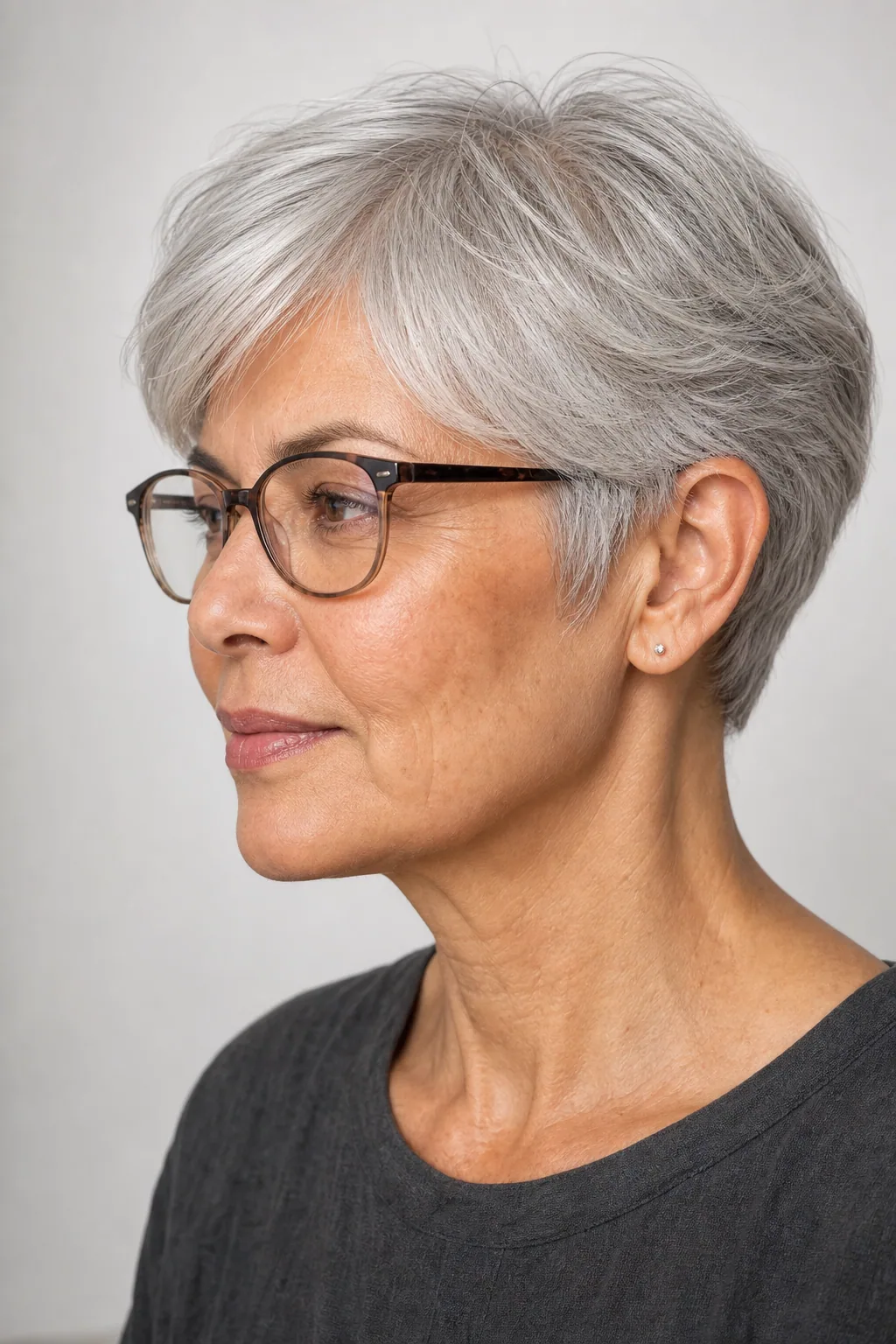
Halfway between pixie and bob, cut to sit just above the ear so the arms of your glasses never trap hair against your head — the small daily annoyance nobody warns you about with longer sides. The exposed ear-and-temple line actually showcases the frames. Bring your everyday glasses to the appointment; a good stylist cuts around them, not from memory.
12
Soft crop with feathered temples
A crop where the temple hair is feathered to sheer softness, so it blends over the top of the frames rather than bulking behind them. Kind to bolder, thicker frames, which supply their own strong line — the hair's job is to soften, not compete. If you switch between glasses and none, this shape looks intentional both ways.
13
Chin bob cut to tuck
A chin bob with the sides cut a half-inch longer than the back specifically so they tuck cleanly behind the ears and stay put under glasses arms. Tucked, it's neat and shows the frames; untucked, it's a full bob — two looks from one cut. Ask your stylist to "cut the tuck in," which keeps the tucked hair from poking back out at the cheekbone.
For silver hair and thinning crowns
The wedge is worth a look alongside these — it builds its bulk at the occipital, below the crown, so a thinning crown does not rule it out the way it rules out cuts needing height on top.
Gray strands are often coarser in feel but more translucent in the light, so gray fine hair can read thinner than it is. And after 60, some visible thinning at the crown or part is common. These three cuts are built for exactly those realities.
14
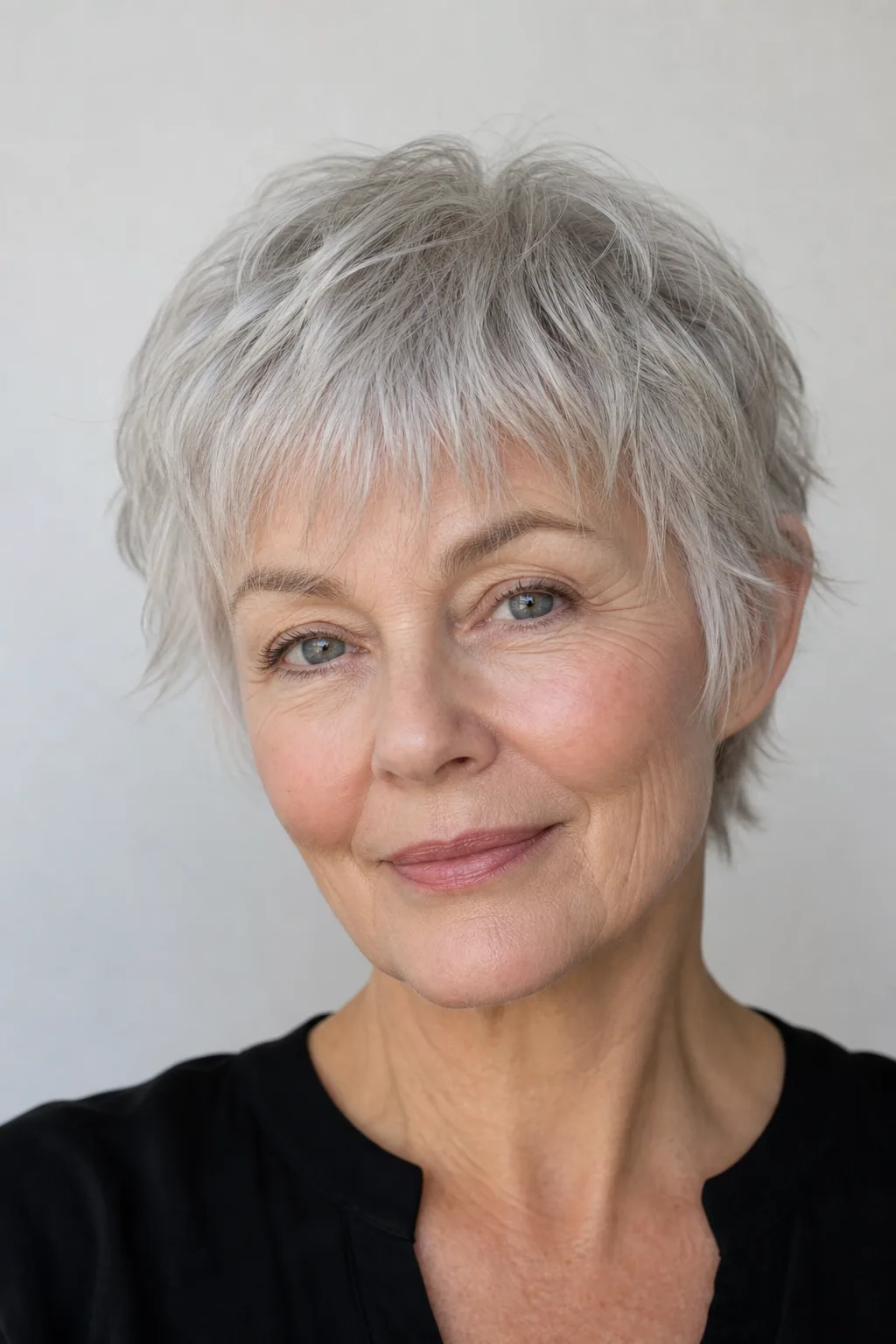
Piece-y silver crop
Deliberate separation is the trick for silver: broken, piece-y texture catches light at a dozen angles and reads as fullness, where smooth silver reads as sheer. Style with a matte paste, never a shine serum — gloss is what makes translucent strands disappear. On true white-silver this is the most striking cut in the entire edit.
15
Salt-and-pepper mini bob
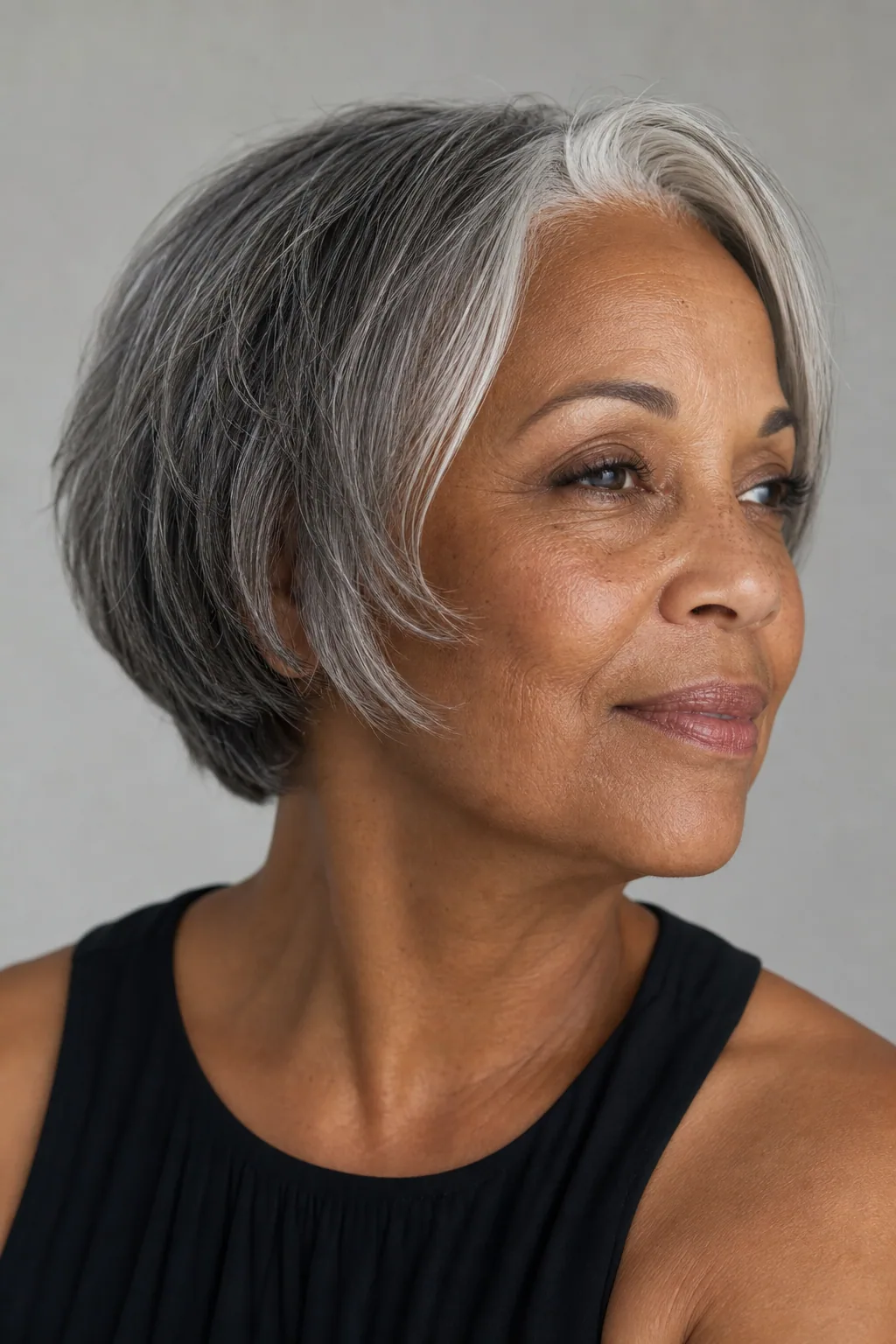
A cropped bob that leans into two-tone gray instead of covering it — the natural light-dark variation creates the same depth highlights are paid to fake, and depth reads as density. Zero color maintenance, one five-week trim cycle. A salon gloss twice a year keeps the silver bright instead of yellow-dull.
16
Crown-layered crop for a thinning top
Short layers concentrated at the crown, cut to fall across the thin spot from a deep side part rather than splitting away from it. This redistributes the coverage you have to where you need it — quietly, without the combed-over look. If the thinning at your crown or part feels new or fast, it's worth reading how to tell fine hair from thinning before booking anything.
The five-minute styling that keeps short cuts full
Short fine hair styles fast, but it still styles — thirty seconds of intention beats zero. The routine for nearly every cut above: rough-dry the roots upward with your fingers (against their fall, not along it), hit the crown with the dryer's cool button for ten seconds to set the lift, then finish with one light product — a fingertip of paste for pixies and crops, a golf ball of mousse pre-dry for the bobs.
Bring your glasses to the consultation, and mention your part before the first snip. Those are the two details clients over 60 forget most, and they're the two that decide whether a short cut works in real life.
A crop that photographs beautifully can sit wrong the moment the frames go on, and a stacked bob built for a center part collapses on a woman who's worn a left part since 1985. Your stylist can only design around your actual life if it's sitting in front of her.
SB
— Simone Baptiste, Senior Stylist
What to ask your stylist
The words that get you the right version of short: "My hair is fine and it's thinner than it used to be. I want a short cut with the volume built into the shape — point-cut the layers, please don't use thinning shears or a razor, they make my ends look see-through."
Then add the one that fits: "Keep weight at the crown, my part shows scalp" — or "I wear glasses all day, cut the sides to work with them" — or "I won't blow-dry, so it has to fall into place air-dried." If you're not sure which silhouette suits your face, run through our face-shape guide before the appointment.
When short isn't the answer
Your hair is fine but still genuinely dense. You have the raw material for a collarbone lob or soft layers — see the full over-60 guide for the longer options before you commit to the scissors.
You wear your hair up most days. A crop ends the bun era entirely. If your hair lives in an updo, keep the length that makes it possible.
Your wave is strong and unpredictable. Very short cuts on strong wave need daily taming; a chin-to-collarbone length that works with the wave may cost you less effort, not more.
You're going short to hide sudden thinning. A cut can flatter gradual change, but sudden or patchy loss deserves a dermatologist before a haircut — here's how to tell the difference.
FAQ
A textured pixie or a stacked short bob, depending on how much length you want to keep. The pixie builds its volume into the top so the roots stand up on their own; the stacked bob packs graduation at the back of the head, exactly where fine hair over 60 collapses first. Both style in under five minutes, which is the honest test of a good short cut at this age.
Usually, yes — above the shoulders, and often above the chin. Length is weight, and weight pulls fine, lower-density hair flat against the head. Cutting above the point where the hair collapses lets the roots lift and makes the ends look denser. The exceptions are hair that's still fairly dense, and women who wear their hair up most days.
A pixie is better when thinness shows at the crown — the short top layers stand up and cover. A bob is better when the length is thin but the crown is reasonable, because a blunt or stacked perimeter makes the ends read denser. If you part your hair and see scalp along the part line, lean pixie; if your ponytail just feels skinny, lean bob.
Cuts that keep the area around the temples and ears deliberately clean: an ear-length pixie-bob, a crop with softness at the temples, or a chin bob with the sides cut to tuck. The frames already add structure and visual weight at the sides of the face, so the cut should not fight them with heavy side pieces — let the glasses be the accessory.
Every 4 to 6 weeks. Short shapes live on their outline — a pixie grows into shapelessness and a stacked bob loses its crown lift within about six weeks. That's the honest maintenance cost of short hair, and it's the trade for near-zero daily styling. Book the next trim before you leave the salon and the cut never has a bad month.
Less product, chosen better. Most short fine-hair cuts need exactly one thing: a light texture paste or spray to define the top, or a golf-ball puff of mousse before a two-minute rough dry. Heavy creams, oils, and rich smoothers flatten a short cut faster than a long one because there's less hair to absorb them.
Eleven years behind the chair, specializing in short shapes and fine-hair texture. Simone believes the best haircut is the one you can style yourself in ten minutes.
Images in this article are AI-generated illustrations, not photographs of real clients or results. See our image policy.
Results vary with hair type, density, and growth patterns. This guide is educational and not a substitute for an in-person consultation with a licensed stylist. If you're noticing sudden or patchy thinning, a board-certified dermatologist can rule out a treatable cause.
Get the good hair intel
One honest, stylist-written guide in your inbox each week. No hype.

 SB
SB