Reviewed by Tara Sullivan · Updated August 2026 · 11 min read
Somewhere around two inches, fine hair stops hanging and starts standing — and that one change of state is why very short cuts flatter fine hair so reliably. Above that length, gravity wins: low density plus low strand weight means the hair lies against the head and reads as sparse no matter what you do to the roots. Below it, the hair no longer has the mass to lie down, so it stands on its own and the density you have gets used at full value.
What changes is which problem you're solving. Flatness stops being the failure mode and coverage becomes it — hair standing up is hair that isn't lying across your scalp, which is a gift if your hair is fine and a real consideration if it's also thin on top. This page picks up where the pixie leaves off: 16 crops, buzzes and undercuts, the guard numbers to ask for, and an honest verdict on shaving anything when you don't have density to spare.
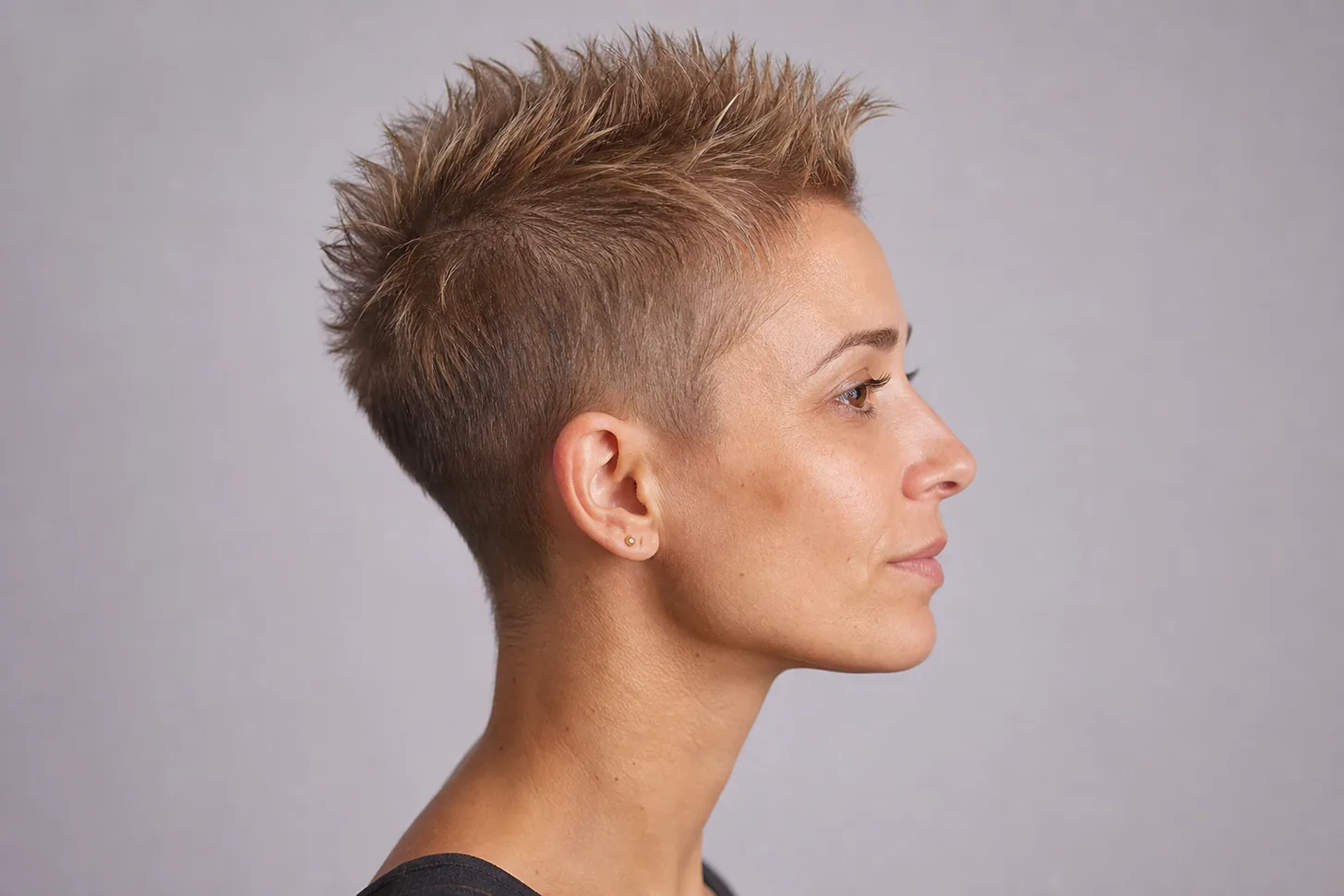
At this length the shape is cut in, not styled in — which is the whole appeal and the whole maintenance cost.
Why very short works on fine hair — and where it stops working
Three mechanisms are doing the work, and knowing them tells you which of the 16 cuts below is yours. For the softer, less architectural end of short, see short cuts for mature fine hair.
Short hair stands, and standing hair occupies more space
A strand's ability to hold itself up is a fight between its stiffness and its own weight, and shortening it changes both in your favor. This is why a fine-haired client who spent years fighting flat roots with mousse discovers she doesn't need any of it at two inches. The mechanics are the same reason root volume is a solvable problem near the scalp and an unsolvable one at the ends.
Density stops being about fall and starts being about coverage
Long hair uses density to look full — strands lying over each other. Very short hair uses density to look opaque — strands standing between the eye and the scalp. If your issue is fine hair (thin strands, normal density), very short is close to a free win.
If it's thin hair (fewer strands per square inch), it's a conditional one, and where the thinning sits decides it. The distinction is worth being precise about: see fine hair vs thin hair.
Contrast becomes a design tool
At this length the scalp is genuinely part of the look, and how visible it is depends on the difference in value between your hair and your skin. Dark hair over a pale scalp shows through at a length where light hair doesn't — which is why lightening a shade or two is a legitimate coverage strategy for a very short cut, not just a style preference. The same optics are discussed in coverage for thinning fine hair.
Chair-side note
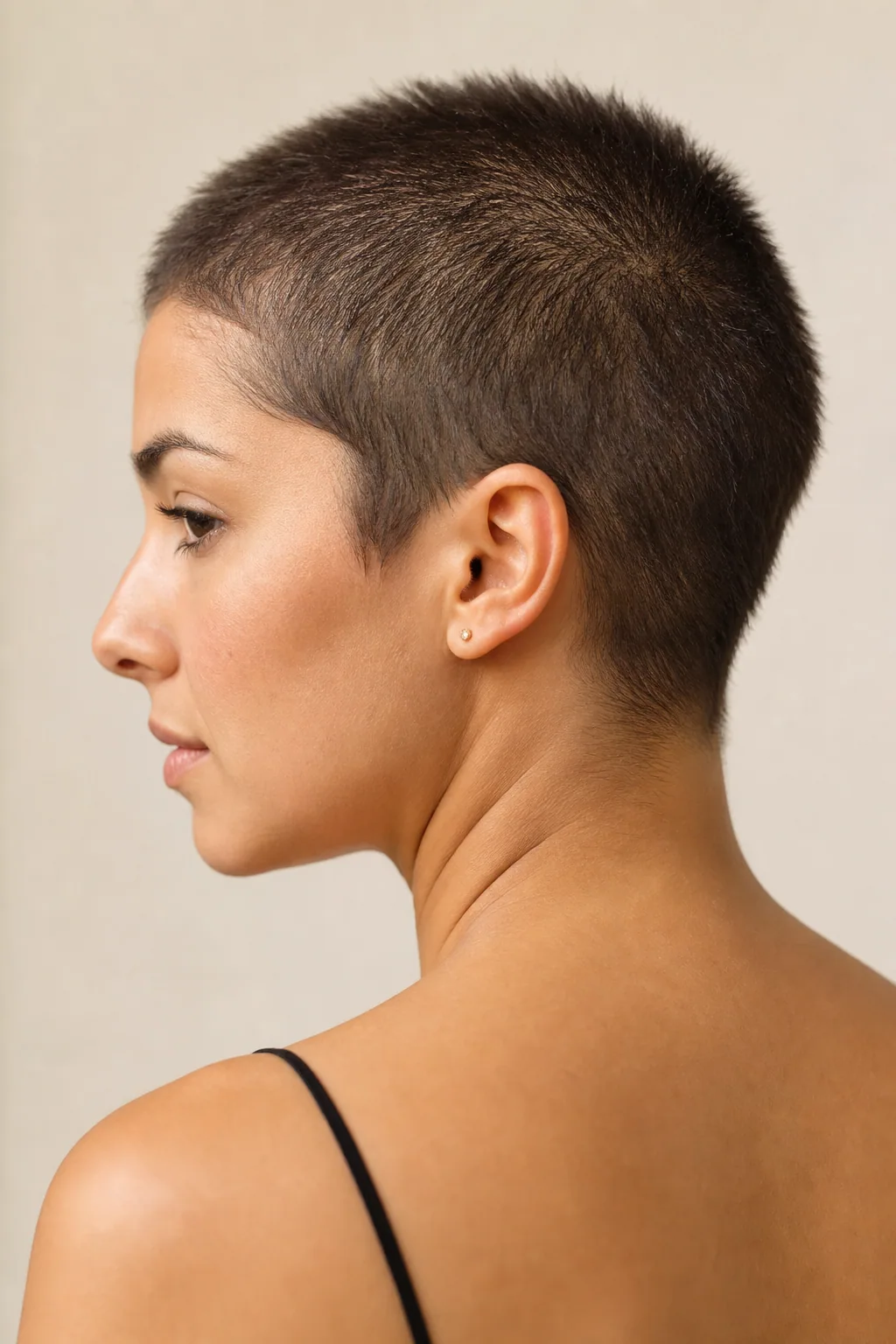
The consultation I have most often before a big cut isn't about the cut at all — it's about the back of the head. At two inches there is nothing left to disguise the skull, and most people have never seen the back of their own head properly. Flat occipital bones are common and completely unremarkable, but if I cut a uniform crop over one, the profile reads as a straight line from crown to nape and everyone quietly decides short hair "doesn't suit them."
It suits them fine; the cut just needed a centimetre more length left at the crown. So I photograph the back of the head in profile before we start and we look at it together. Nobody enjoys this and it prevents more disappointment than any other five minutes of my day.
SB
— Simone Baptiste, Senior Stylist
Micro crops & French crops
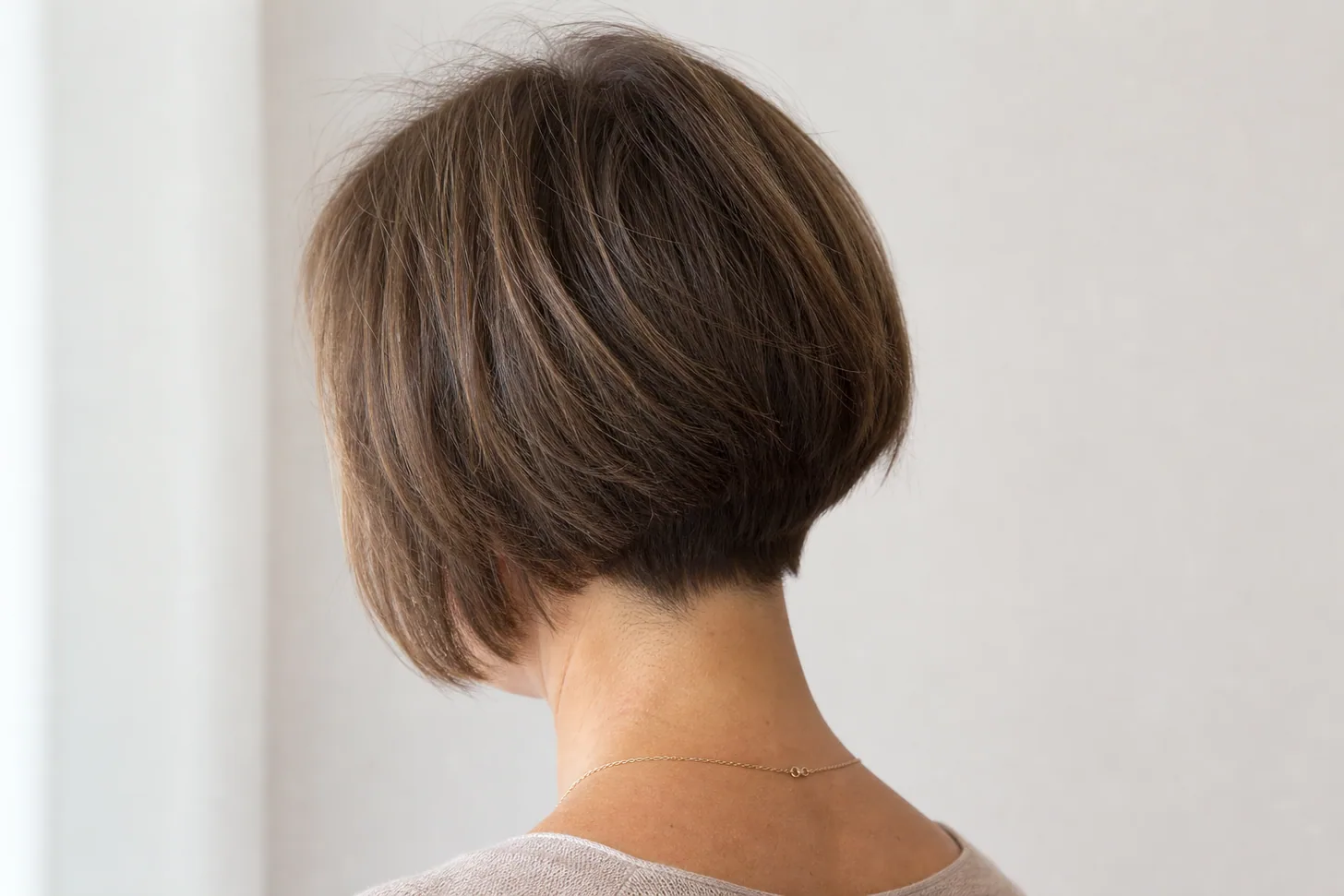
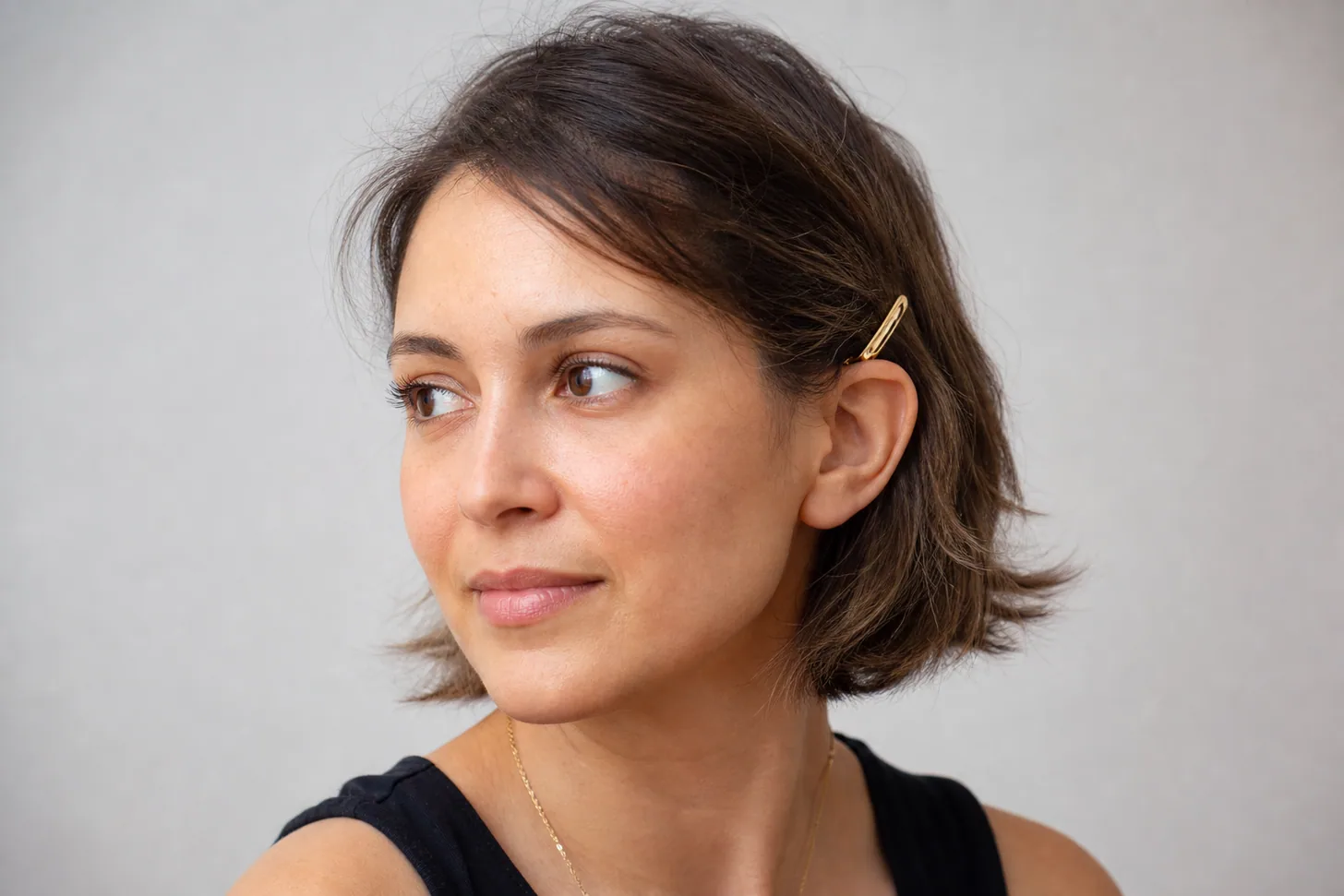
If you want short but with volume built into the back rather than cropped away, the wedge is the shape to look at first.
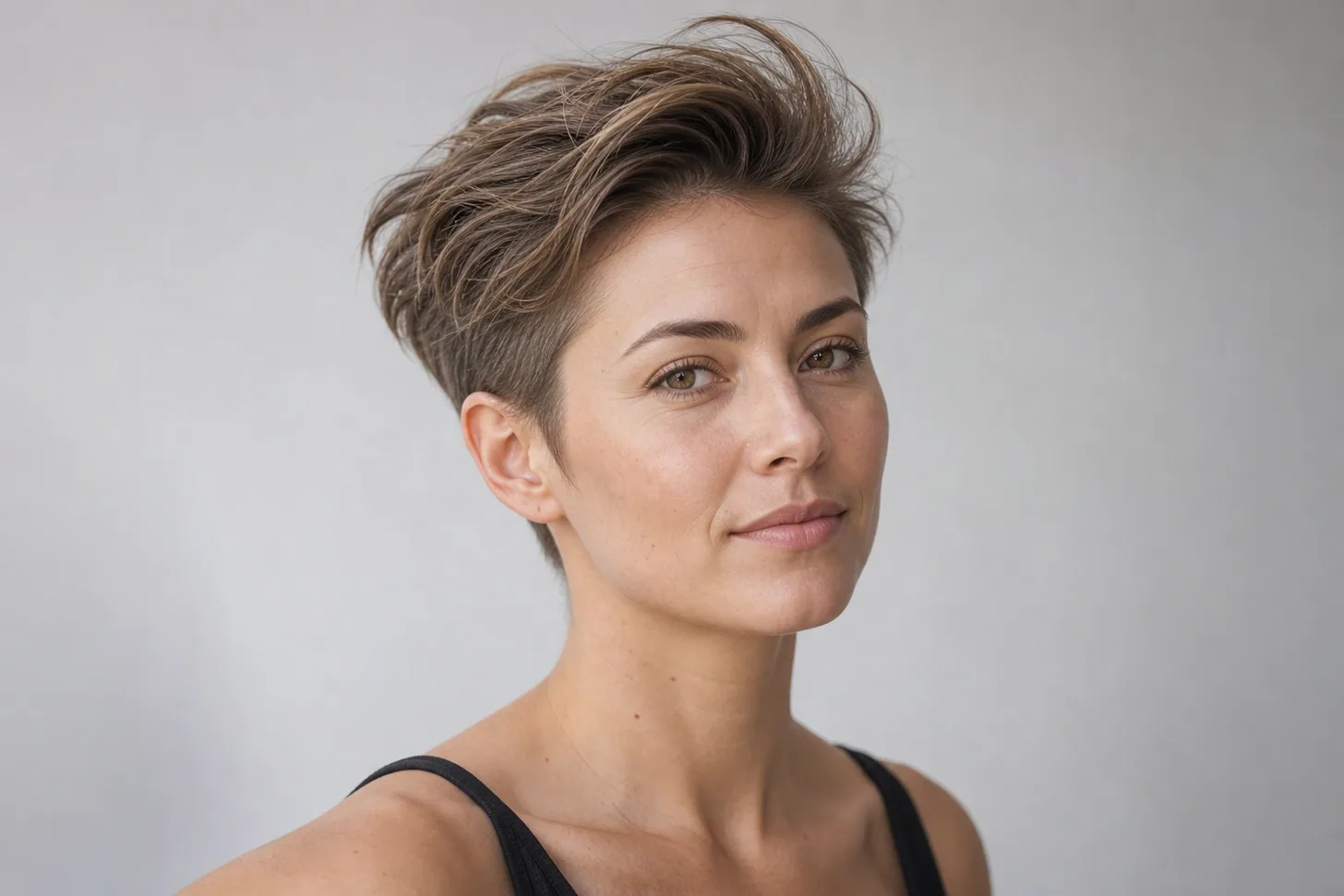
The shortest cuts that still read unmistakably as a hairstyle. All of these keep more length on top than at the sides, which is what builds height on hair that has no weight of its own.
1
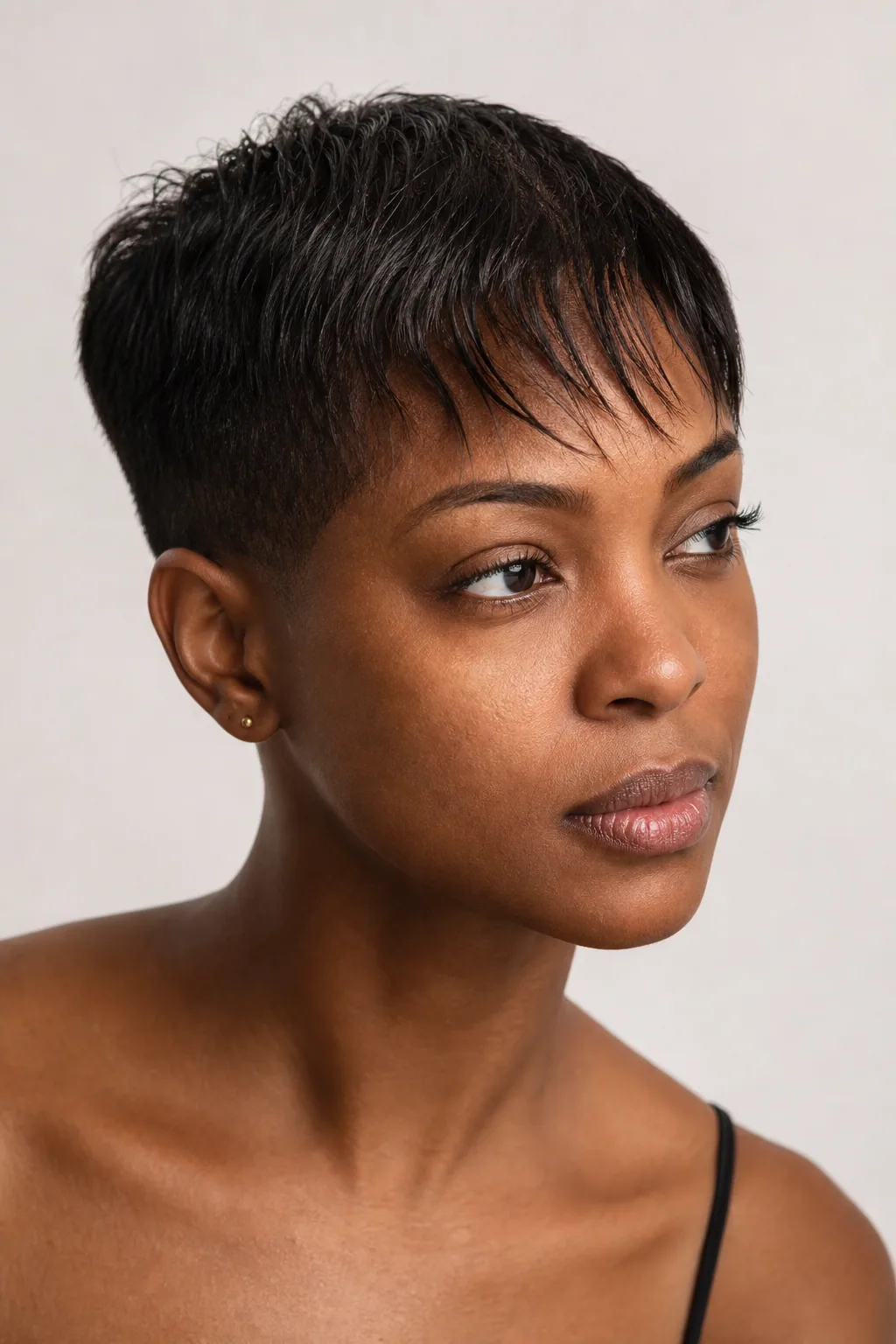
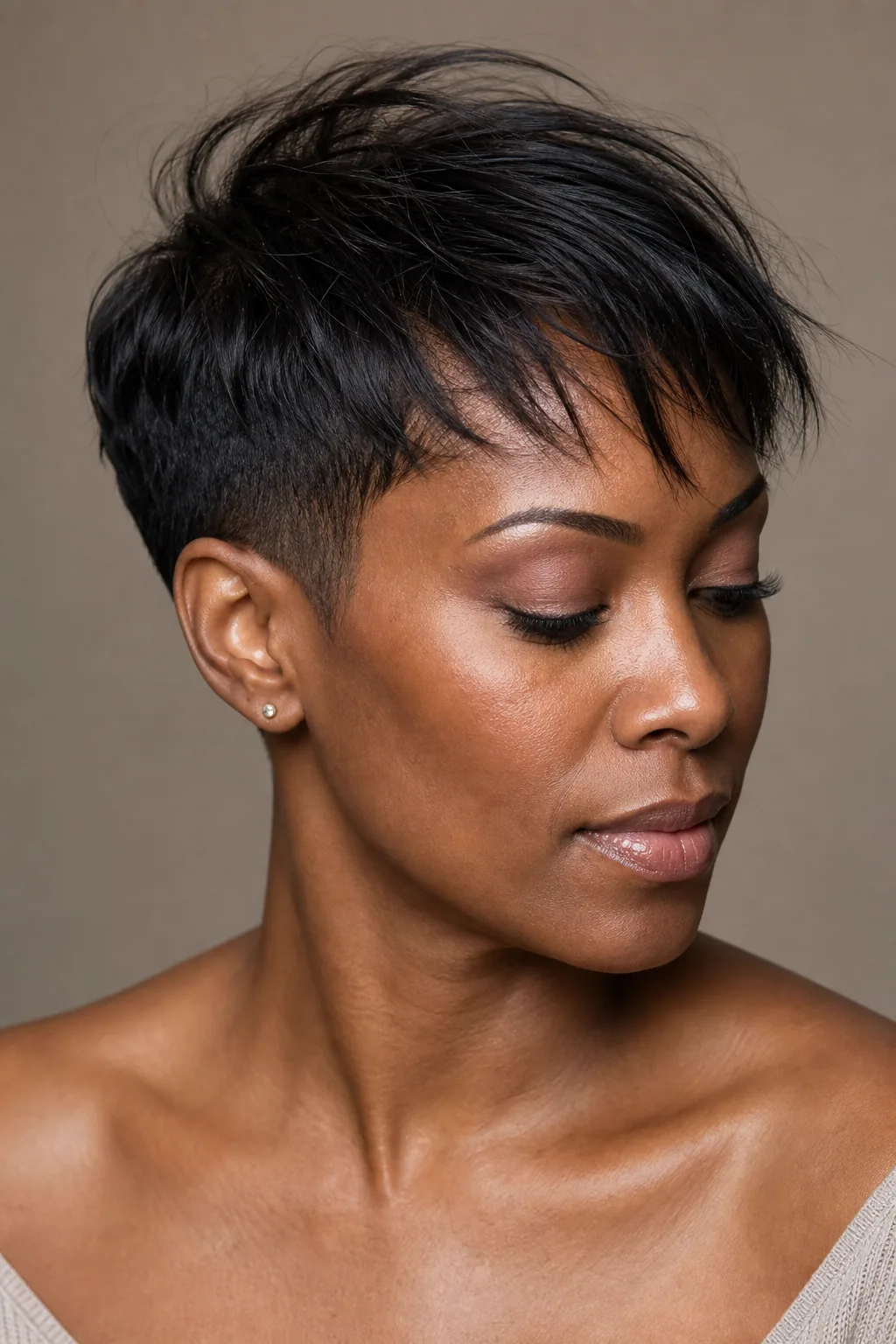
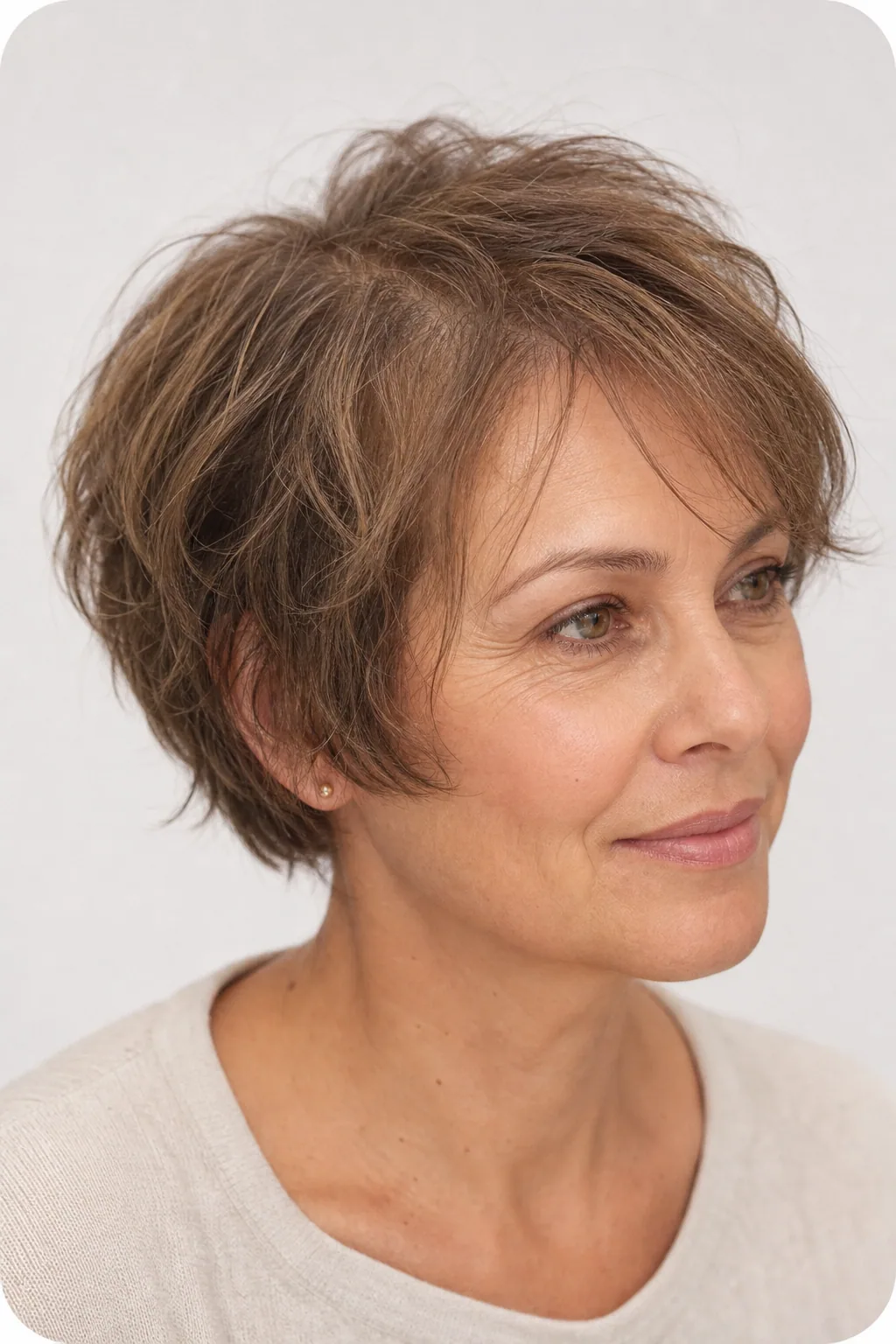
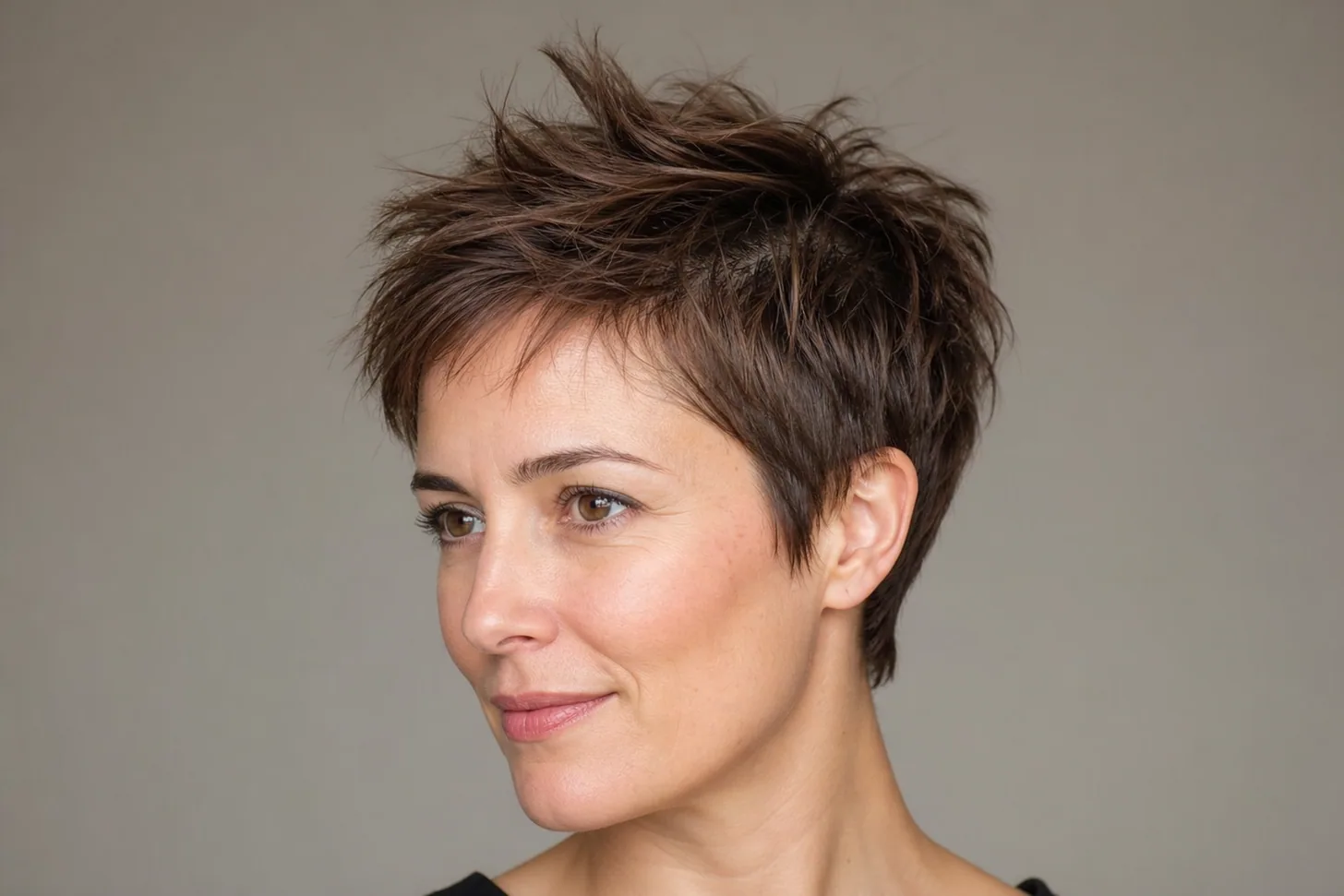
Textured crop with a tight taper
The baseline very-short cut: about an inch and a half on top, point-cut into so the ends separate, with the sides tapered close from the temple down. The separation is what stops fine hair reading as a flat cap — each piece standing slightly apart from its neighbor makes the whole thing look thicker than a uniform surface would.
2
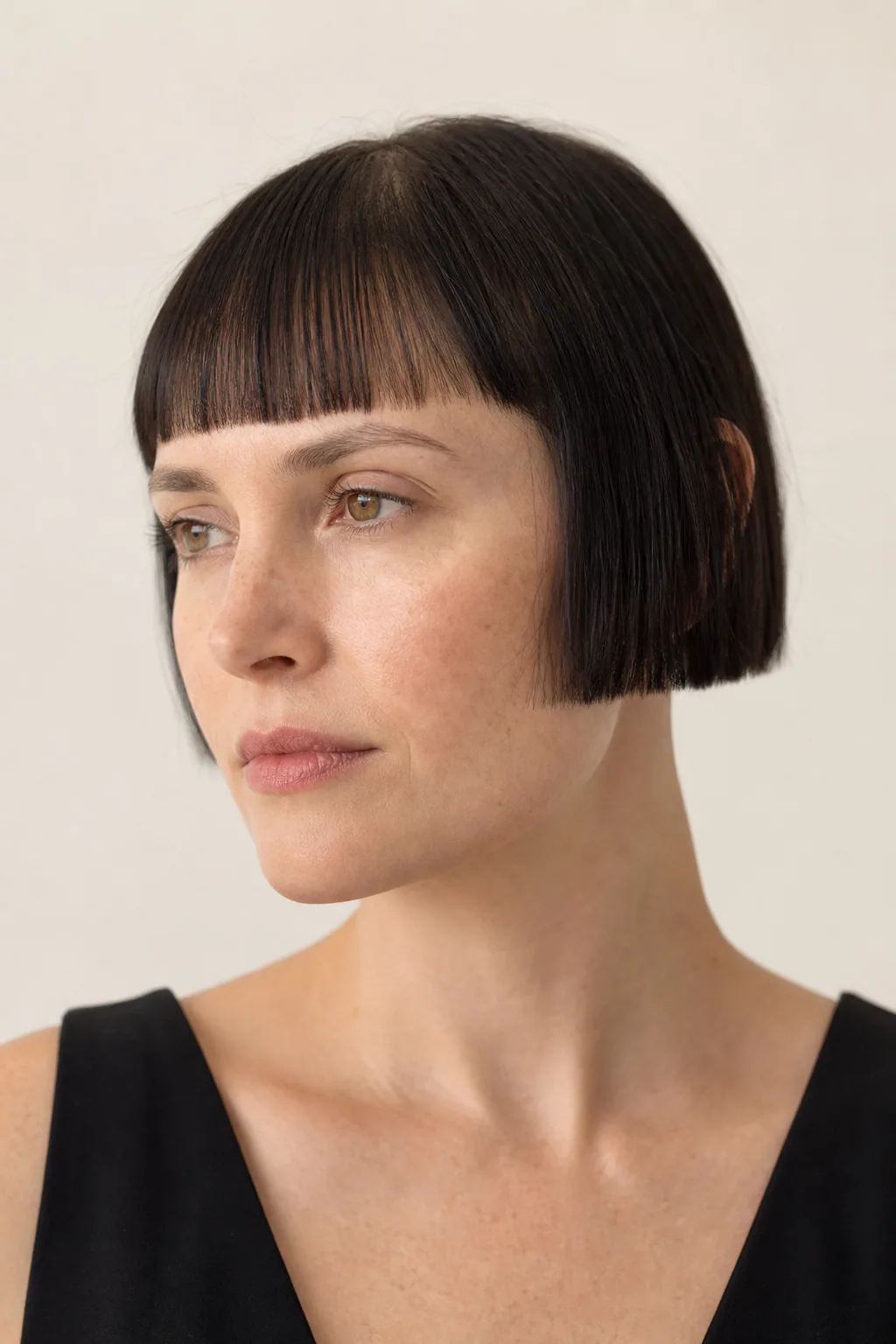
French crop with a blunt micro-fringe
A crop with a short, blunt fringe cut straight across, sitting high on the forehead. Ask for the fringe to be cut blunt rather than textured — on fine hair the solid horizontal line is the densest-looking thing you can put near your face, and softening it into wisps throws that advantage away. Best on foreheads that are average to tall.
3
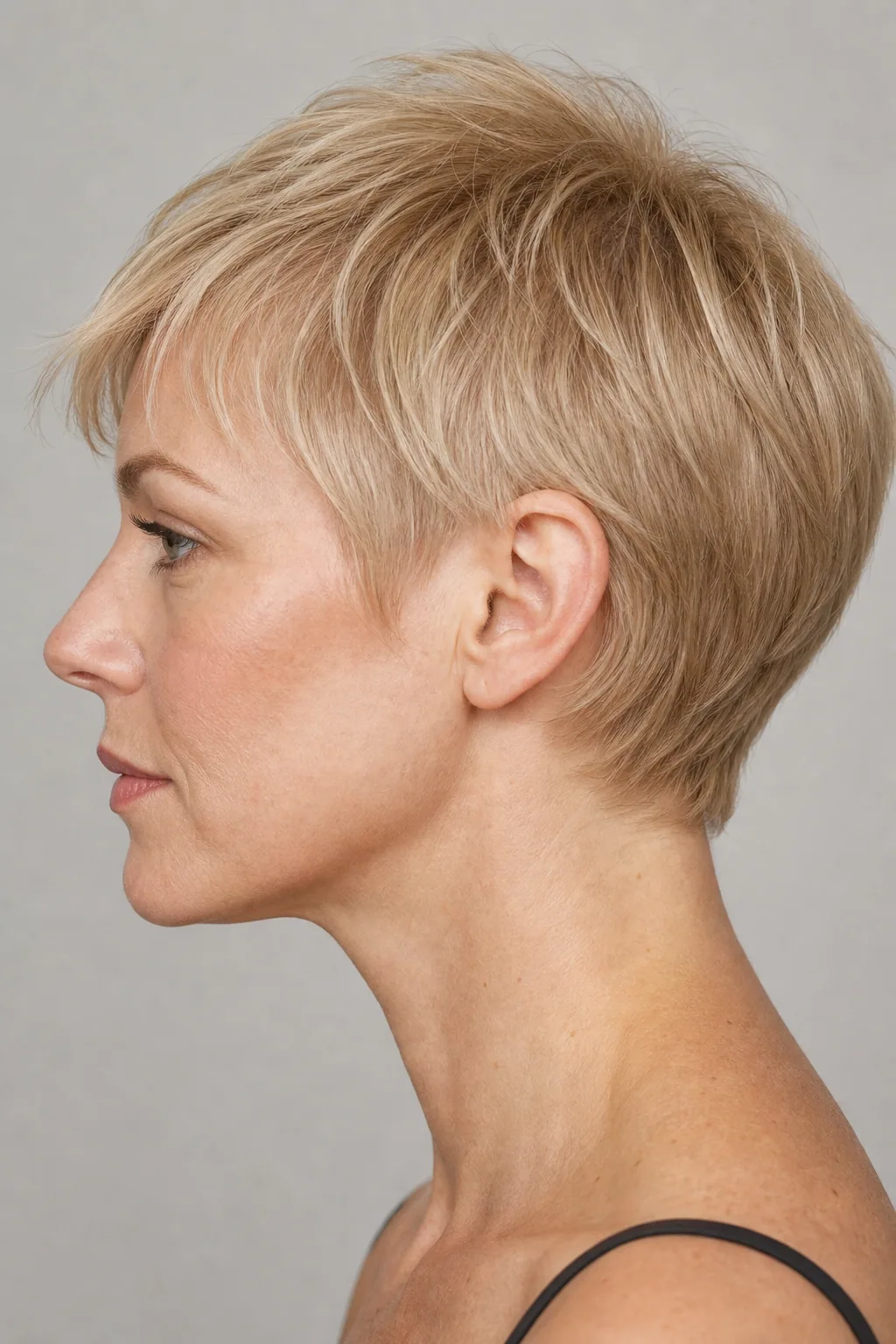
Crown-weighted crop for flat occipital bones
Same shape as the classic crop, with an extra half inch left through the crown and upper back to build a rounded silhouette in profile. This is the version to ask for if the back of your head is flat — it's a correction most people never learn exists, and it changes the cut from unflattering to excellent without changing anything you can see from the front.
4
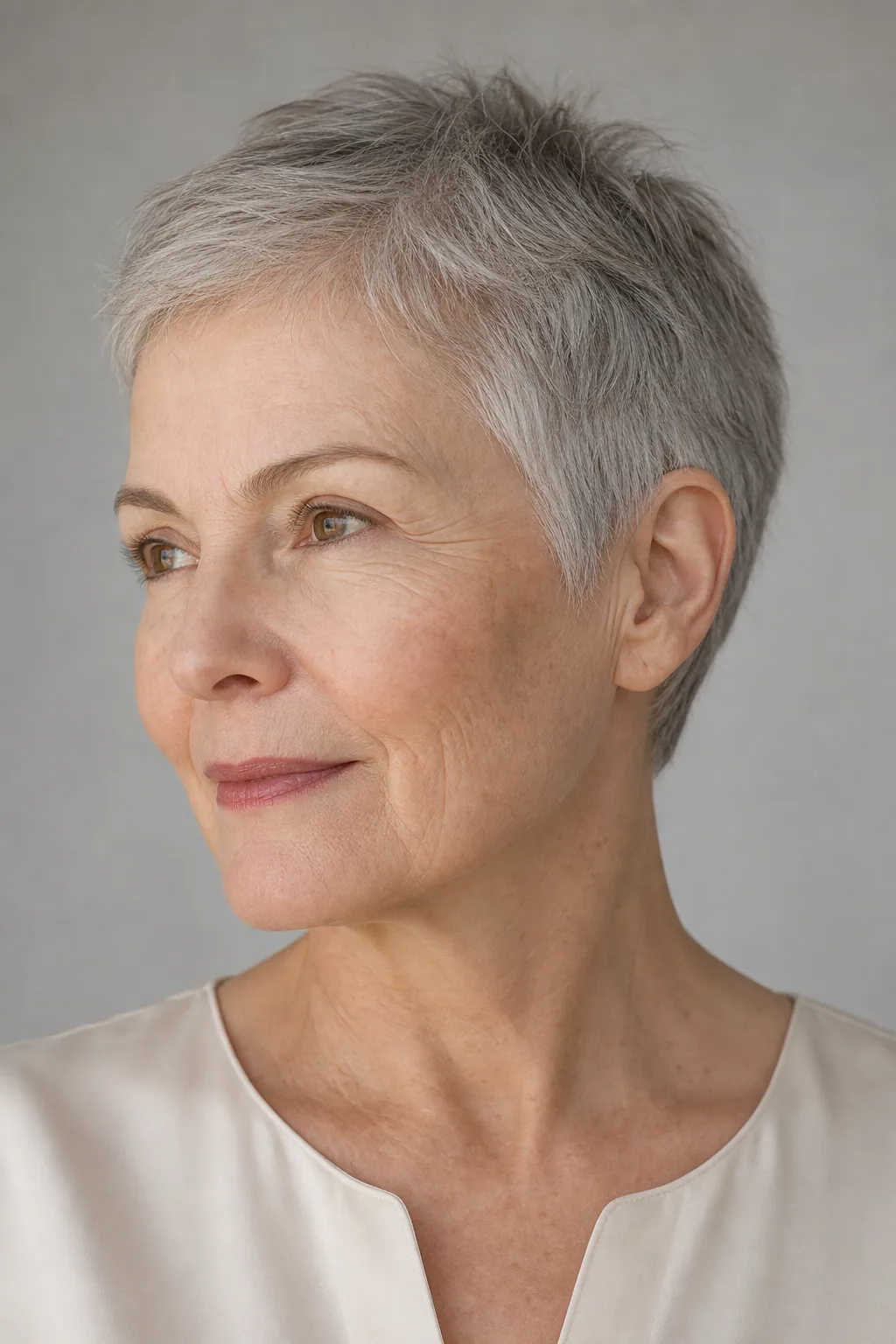
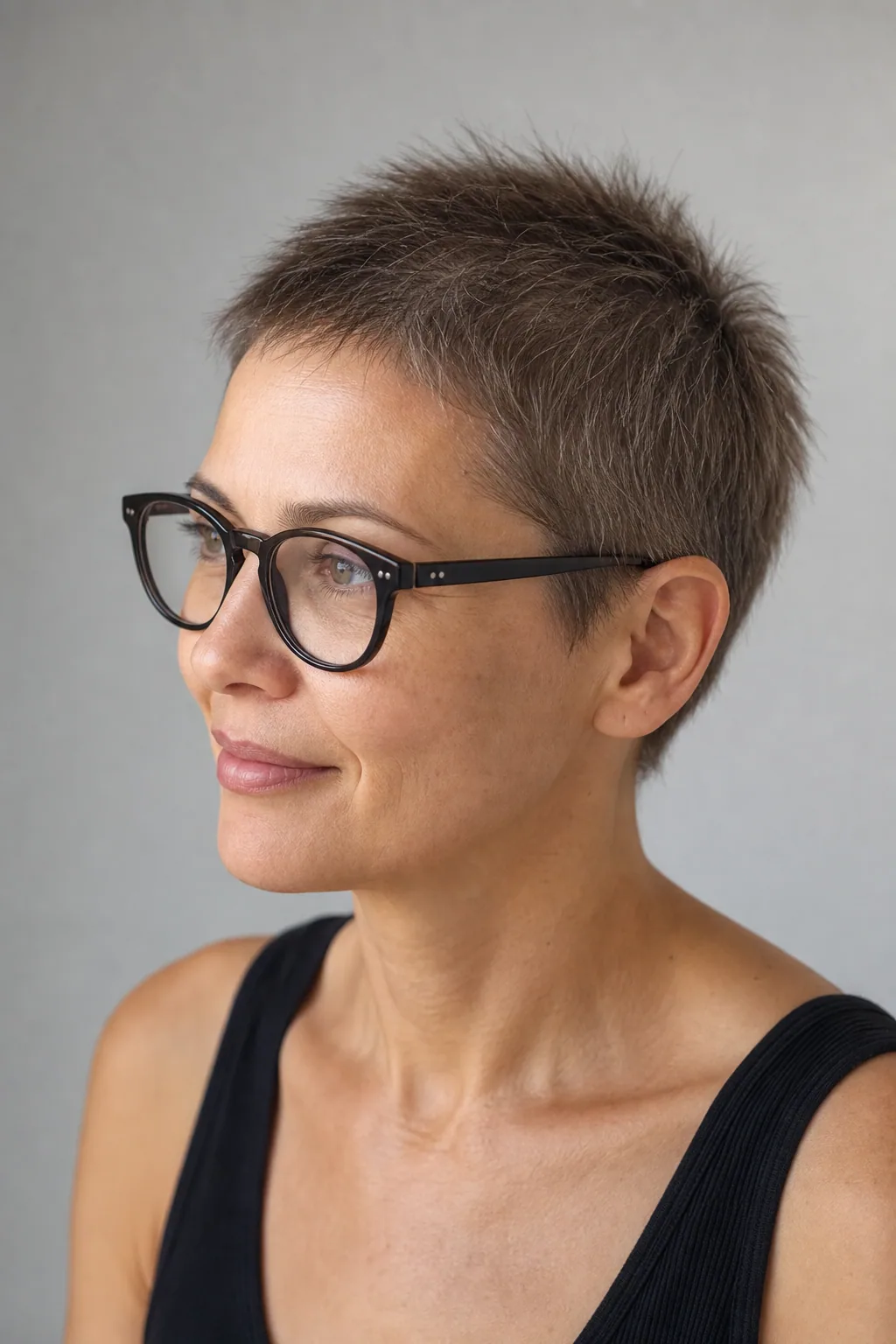
Silver crop with a soft outline
Very short is the most efficient route through a gray transition, because it removes the colored ends in one appointment instead of managing them for three years. Silver hair also helps the cut: low contrast between hair and scalp means you can go shorter before the scalp becomes visible. Ask for the outline around the ears to be left soft rather than razored sharp, which keeps the shape from reading severe. More on the transition in going gray with fine hair.
5
Forward-styled crop with disconnected sides
Two and a half inches on top styled forward, sides taken to a #2 with no blend between the two lengths. The disconnection is what makes this look intentional rather than grown-out. It suits strong bone structure and it is the least forgiving cut on this page if the top starts to thin — the contrast that makes it sharp also makes any sparseness on top obvious.
Buzz cuts and the grown-out buzz
Whatever length you settle at, the daily question is the same one — how to style short fine hair without flattening it.
The clipper cuts. This is where fine hair's reputation is most misleading — a buzz doesn't reveal thinness so much as it removes the comparison that made hair look thin in the first place. What it does reveal is scalp, and that's a matter of guard length and contrast rather than a matter of luck. The same guard-and-contrast logic runs through haircuts for men with thin hair.
6
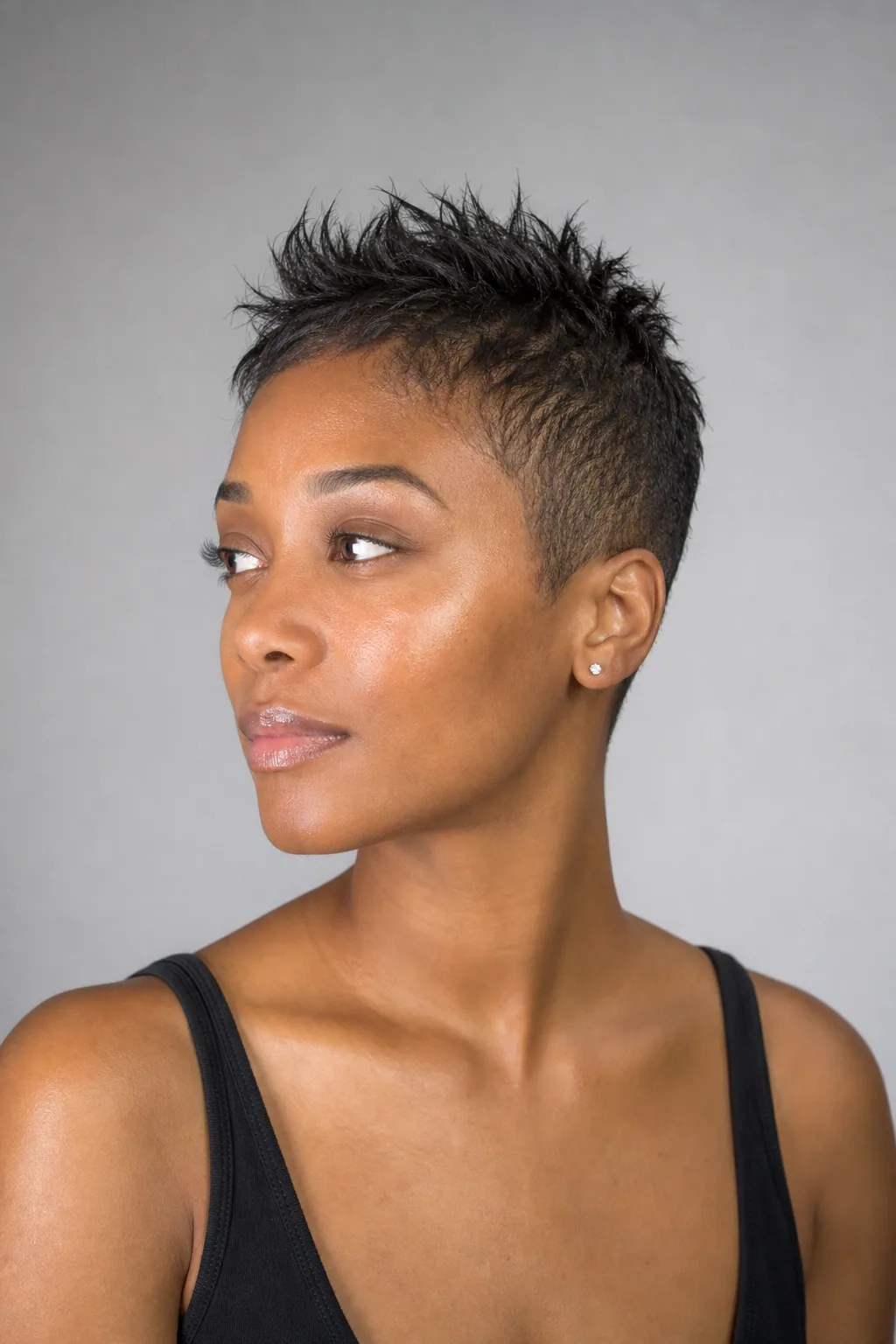
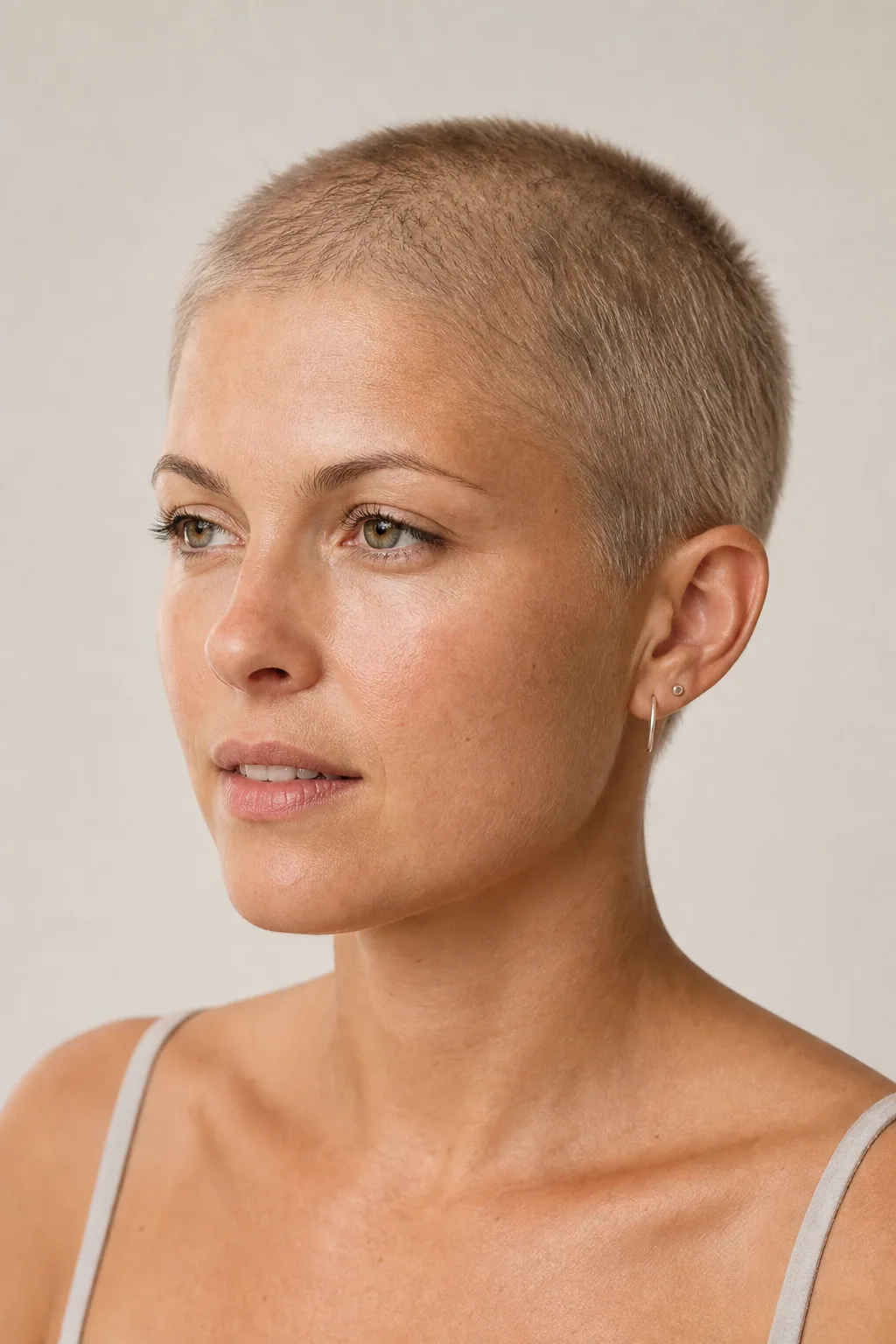
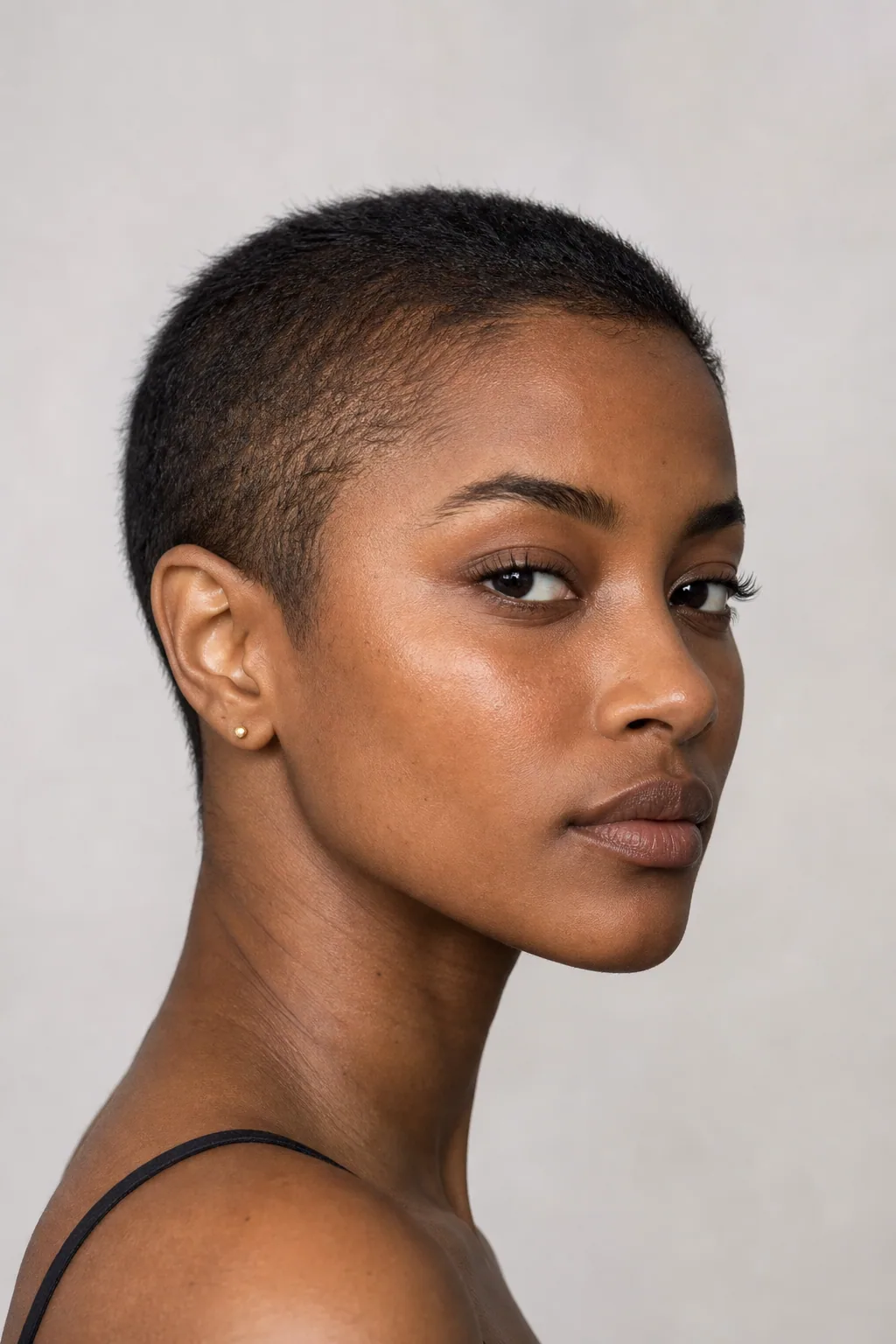
The soft buzz, #4 to #6 all over
Half an inch to three quarters, uniform. This is the length where a buzz still reads as hair with a color rather than as a shaved head, and it's the safest starting point on fine hair. If you're unsure, start here rather than shorter: you can always take it down a guard, and going the other way costs three months.
7
Tapered buzz, longer through the top
A #5 on top dropping to a #3 at the sides and a #2 at the nape. The taper adds shape without the sharpness of a disconnection, and the extra length on top is doing real work on a fine-haired head — it's the difference between a silhouette that follows the skull exactly and one that sits a little above it.
8
The grown-out buzz at one inch
Roughly eight weeks after a #4, and arguably the best-looking phase of the whole cut. Fine hair at an inch stands with a slight softness rather than bristling, and a matte paste worked over the top with fingertips gives it direction. Worth knowing about in advance so you don't panic-cut at week six. If you wear glasses, this is a length that works particularly well with frames — see fine-hair styles with glasses.
9
Buzz with a soft, unlined outline
Same cut, different finish: the hairline at the nape and around the ears left in its natural shape rather than squared off with a trimmer. Fine hair has fine baby hairs at the hairline, and cutting a hard line through them removes the softness that keeps a buzz from reading severe. Ask for "natural outline, no line-up."
Undercuts and shaved sections — the honest verdict
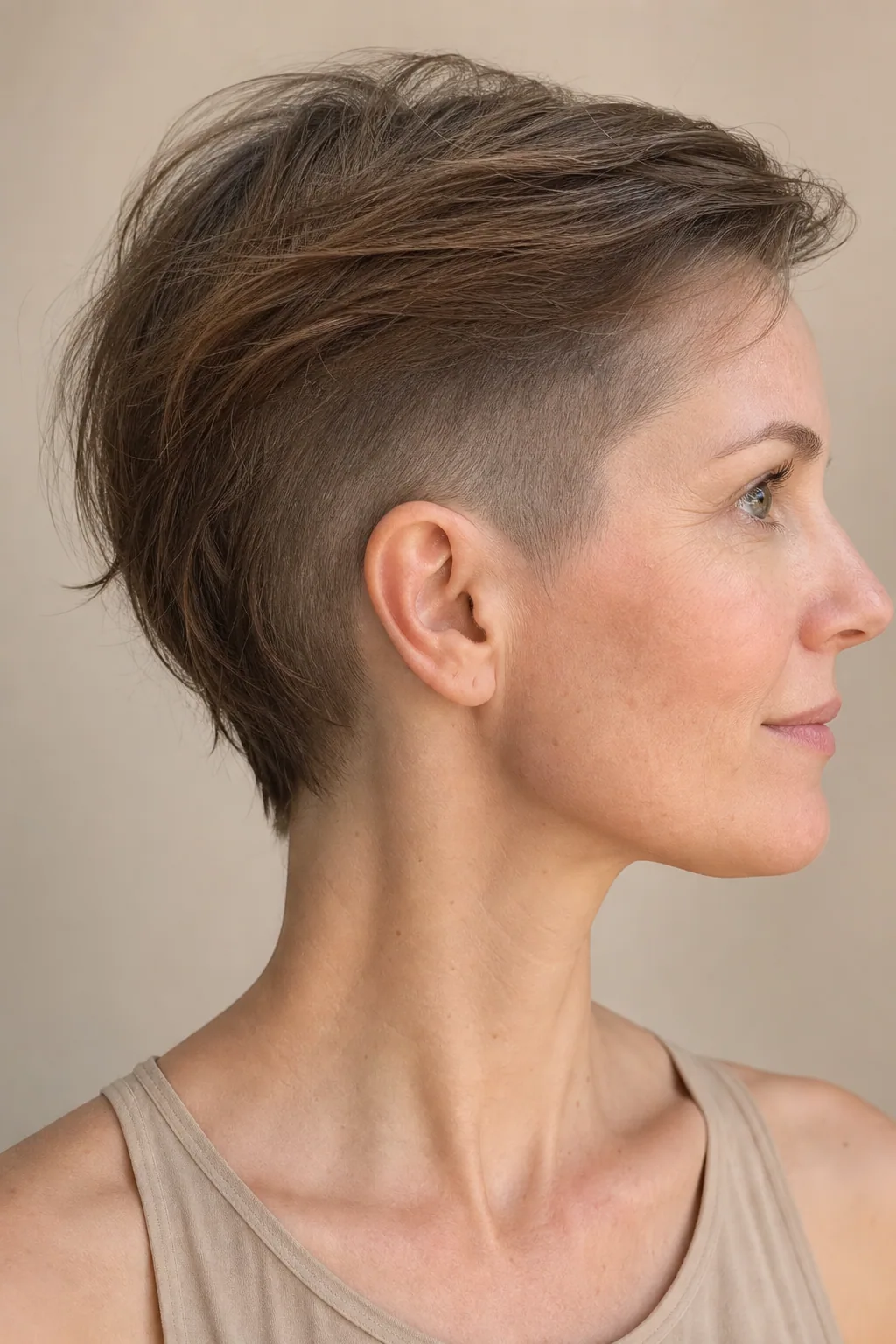
This is the section people arrive on this page looking for, so here is the position plainly: an undercut removes density from a part of your head, and density is the thing fine hair has least of. That doesn't make it a no. It makes it a question of which part, and how much has to cover it afterwards.
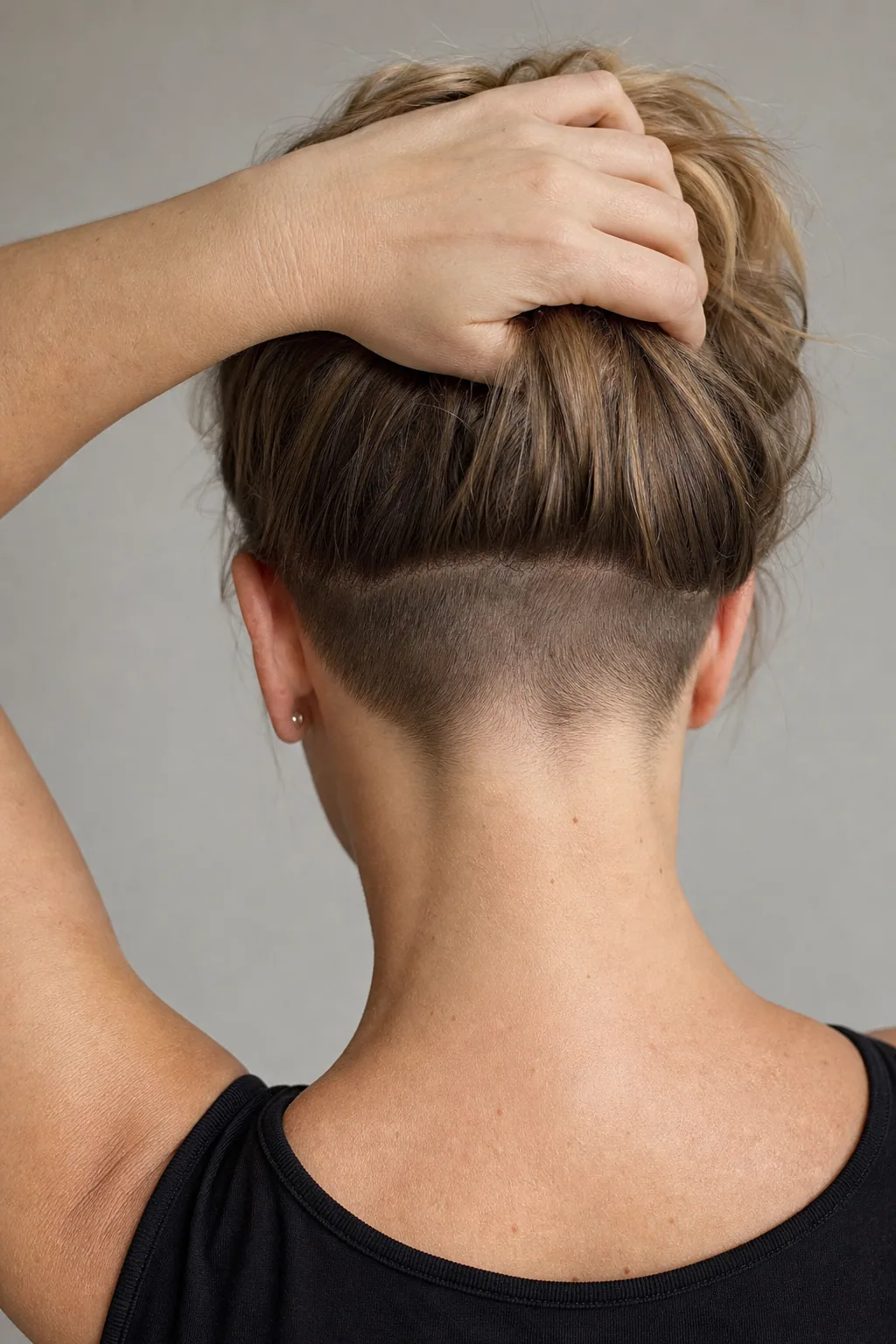
The nape works, because that hair was contributing bulk you weren't using and it's covered by the hair above. The sides above the ear are a different proposition on low density: those are load-bearing coverage, and the hair asked to fall over a shaved side is hair you didn't have spare. The grow-back is also nine to eighteen months of a specific and awkward shape.
10
Hidden nape undercut
A palm-sized panel at the base of the skull taken to a #2, completely covered when the hair is down. The lowest-risk version by a wide margin, and the one I'll do on fine hair without hesitation — it removes bulk that was pushing the hair above it outward, so the length sits closer to the head and reads sleeker. Invisible until you put your hair up.
11
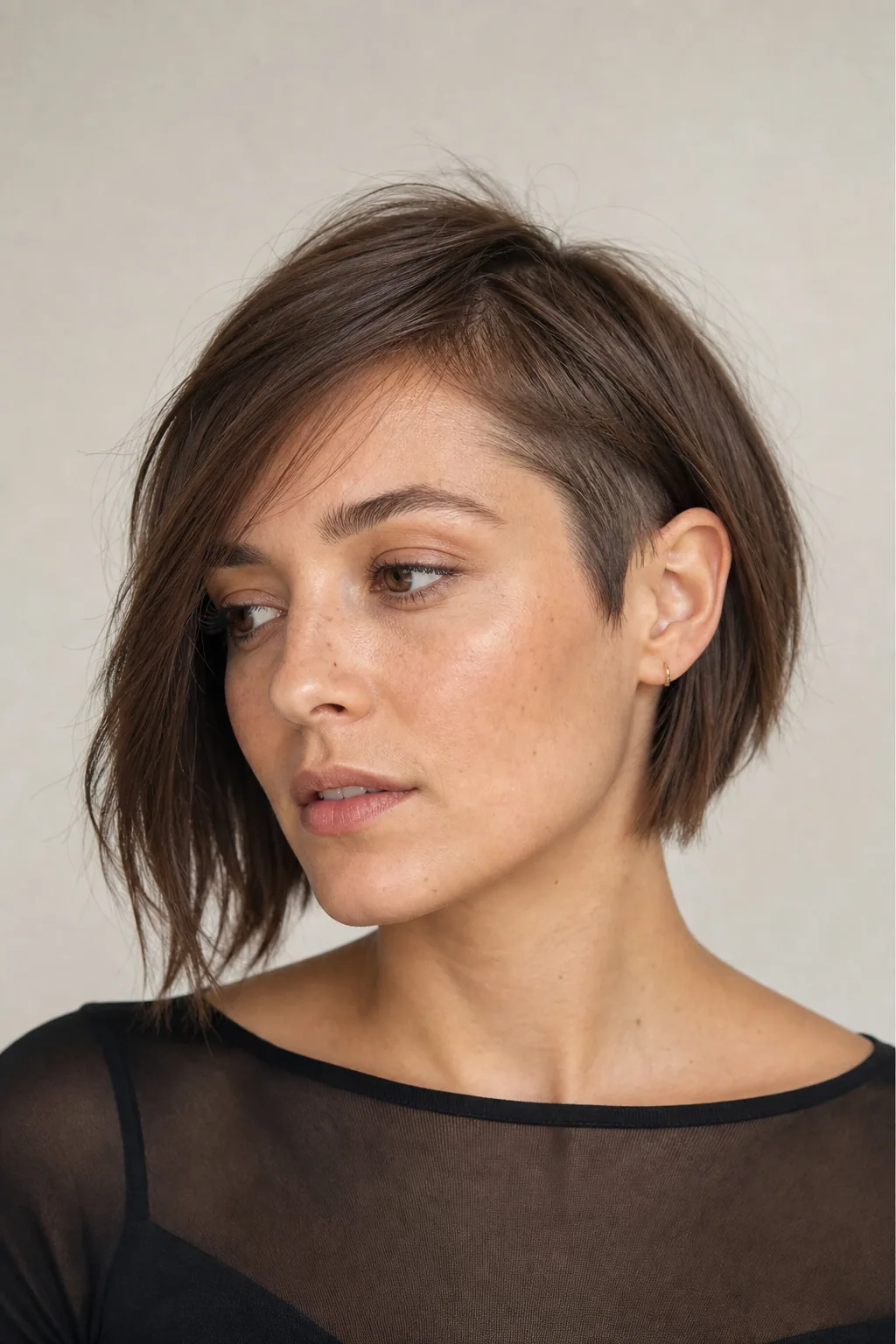
Single-side undercut behind the ear
A small section behind one ear, tucked and visible only when the hair is pushed back on that side. It gives you the option of the look without committing both sides, and it halves the grow-out problem. Good compromise if you want the edge but your density is genuinely low.
12
Full side undercut with a long top
Both sides to a #1 or #2 with two to three inches left on top. The most dramatic option here and the one with the most conditions attached: it needs genuinely good density on top to carry, because all the visual weight is now concentrated in one zone. If the crown is where you've been noticing thinning, this is the cut to skip.
13
The deliberately grown-out undercut
Sides at three quarters of an inch, top still long, the disconnection softened by a stylist into a blend. This is what an undercut should look like on the way out, and it takes one appointment to arrange. Left alone, the same stage looks like a mistake — the difference is entirely in whether someone blended the transition line.
Bowl crops and blunt architectural shapes
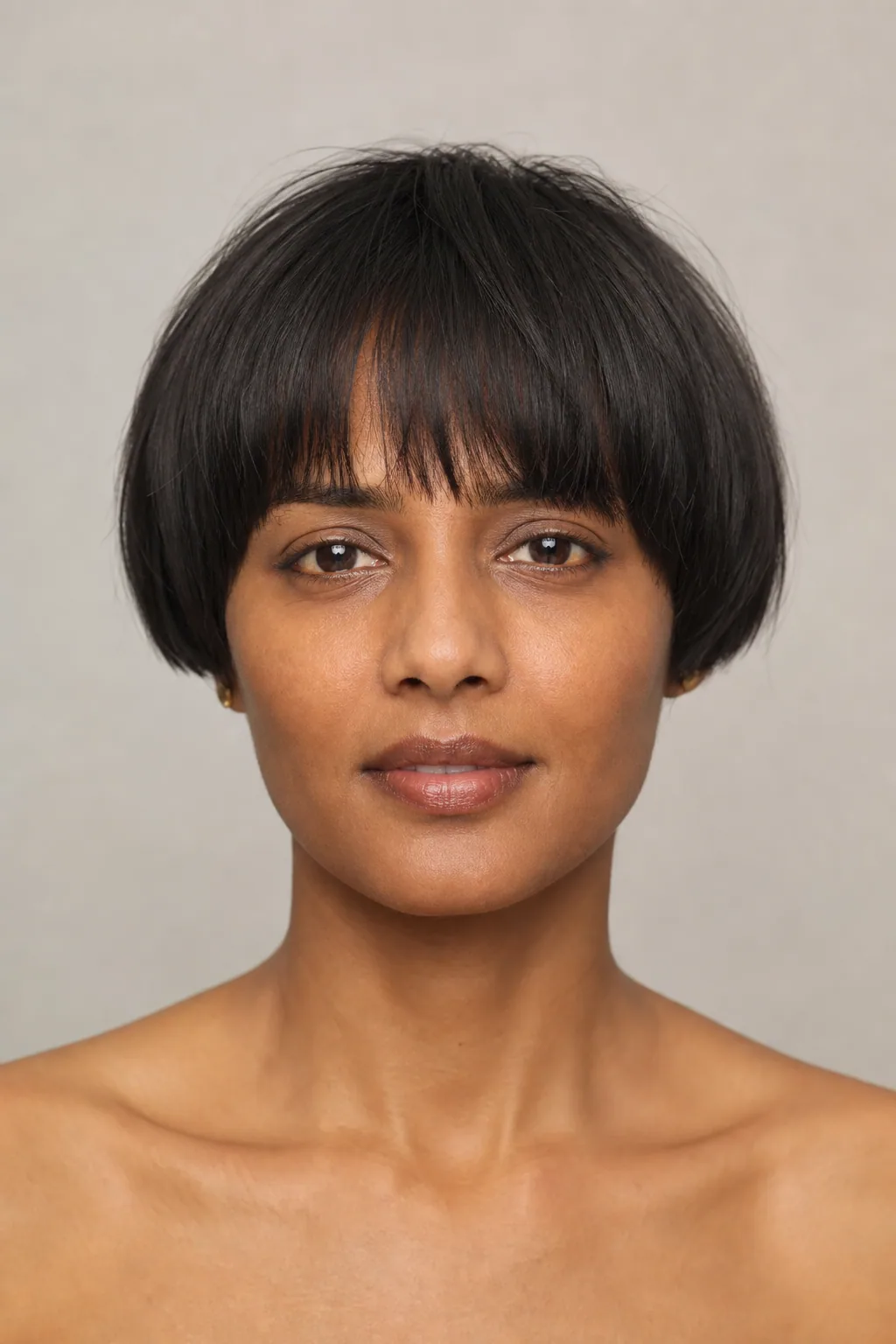
The strongest-looking cuts on this page, and quietly the best for fine hair, because every one of them is built on a blunt line. Blunt edges reflect light as a solid band, which is the single most reliable way to make fine hair read as thick.
14
Modern bowl crop with a blunt perimeter
A heavy, unbroken line running around the head at about ear level, with the nape tapered underneath so the shape doesn't turn into a helmet. All the weight is kept at the outer edge — exactly the principle behind why blunt bobs flatter fine hair, compressed into a much shorter cut. Needs a confident stylist and rewards one.
15
Graphic crop with a squared outline
Straight fringe, squared sides, no taper — a rectangle rather than a curve. Only works on genuinely straight fine hair, where the cut line stays where it was put; a wave will fight the geometry and win. If your hair has movement, ask for the softer version instead. Compare with what suits fine straight hair generally.
16
Rounded crop for fine hair with a wave
The version for hair that bends. The outline follows a curve rather than a straight line, and the ends are point-cut just enough to let the natural movement place itself. Wave is an advantage at this length — it separates the surface for free, so you need less product than a straight-haired crop does. More on working with it in fine, wavy hair.
Choosing by head shape first, face shape second
At every other length, face shape leads. Here it doesn't, because there is no hair left to disguise the skull — so the profile silhouette is decided before anything else.
What you have
What to ask for
What to avoid
Flat back of head(low occipital projection)
Extra length left through the crown and upper back to round out the profile; graduation kept high
A uniform all-over guard length, which follows the flat exactly
Prominent occipital bone
Tighter through the upper back, more length at the nape to soften the drop
Heavy weight at the crown, which exaggerates the bump
Round face
Height at the crown, sides kept close, a side-swept or asymmetric top
Width at the temples and a full round fringe
Long face
A fringe of some kind and moderate rather than maximum height; a little width left at the sides
Length kept longest exactly at the thin zone; a soft, non-disconnected shape; consider going lighter for contrast
Disconnected sides, which concentrate all attention on the top
What to ask your stylist
Very short cuts go wrong through vocabulary more than through skill. Six sentences that do most of the work:
"My hair is fine, so please keep the ends blunt or point-cut — no razor and no thinning shears." Razored and thinned ends go transparent on fine hair, and at this length there's nothing to hide behind.
"Can we look at the back of my head in profile before we start?" The single most useful question on this page.
"Start a guard longer than we discussed." You can always take another guard off. You cannot put one back.
"Natural outline at the nape and ears, please — no line-up." Keeps a very short cut from reading severe on fine baby hairs.
"Leave the crown a little longer than the rest." Height at the crown is what stops a short cut following the skull exactly.
"How will this look at six weeks?" If the honest answer is "quite different," budget accordingly.
Trims every four to six weeks. The shape is entirely in the cut, so half an inch of growth is a large proportion of it. A six-week crop is not a longer crop; it's a different one.
Clippers at home are legitimate here. Maintaining a guard length on a buzz is one of the very few haircut jobs that's safe to do yourself, because the guard sets the length mechanically. The boundaries — and the jobs to leave alone — are in cutting fine hair at home.
Product goes down, not up. A pea of matte paste or clay, fingertips only. Anything shiny reflects the scalp; anything heavy collapses the standing the cut depends on. Our picks: pomades and pastes for fine hair and texture sprays.
Grow-out is twelve to sixteen months to a chin-length bob, and it involves continuing to cut — the sides and the perimeter, never the length you're chasing. The staged version is in growing out short fine hair. Very short shapes are where pomade finally earns its place on fine hair — our pomade picks name the water-based ones that wash out.
When a very short cut may not be your best move
Your part has widened or you can see scalp at the crown. Very short concentrates attention exactly there. A cut with more length on top, or the coverage strategies in coverage for thinning fine hair, will serve you better.
You're in an active shed. Wait it out. Regrowth coming through at half an inch a month behaves unpredictably in a short cut, and you'll be judging the haircut for something that isn't the haircut.
Your hair is tightly coiled. Every length on this page is a dry, hanging length, and a coil wears at a fraction of its stretched one — so the guard numbers and the grow-out timings here do not transfer. The sculpted short shapes built for that math are in cuts for fine coily hair.
You need to be able to put it up. There's no half-measure here — below two inches, updos, ponytails and clips are gone for a year. If that matters for work or events, a longer pixie keeps the option.
You can't commit to six-weekly appointments. This is the highest-maintenance length on the site despite looking like the lowest. Be honest about the calendar before the cut, not after.
You're doing it in the same appointment as a big color change. Two variables at once means you won't know which one you don't like. Cut first, color at the next visit.
FAQ
Not usually, but it changes which problem you have. Above about two inches, fine hair hangs, and gravity plus low density means it lies flat against the head and looks sparse. Below that length it no longer has the weight to lie down — it stands, which is why very short cuts on fine hair look denser than the same head of hair did at chin length. What you trade for that is the coverage question: hair standing up is hair that is not lying across the scalp, so if you have visible thinning at the crown or a wide part, a very short cut can expose it. The rule of thumb is that very short flatters fine hair and is more demanding of thin hair.
Only in the small, low, hidden version. An undercut removes density from a section of your head until it grows back, and density is the thing fine hair has least of. A nape undercut — a palm-sized panel at the base of the skull, covered by the hair above it — is genuinely low-risk, removes bulk you were not using, and makes the hair above sit closer and look sleeker. Taking the sides above the ear is a different decision: on low density, the sides are load-bearing coverage, and a shaved side means the hair that has to cover the transition is hair you did not have to spare. It also takes nine to eighteen months to grow back into a shape.
For a soft buzz that still reads as hair rather than scalp, most fine hair does best somewhere between a #3 and a #6 — roughly three eighths to three quarters of an inch. Below a #2 on fine, low-density hair the scalp starts showing through significantly, because there is not enough fiber standing in each square inch to block the view. The other variable is contrast: pale hair over a pale scalp can go shorter than dark hair over a pale scalp before the scalp becomes visible, which is one of the few times going lighter is a genuine coverage strategy rather than a style choice.
Length and where the weight sits. A pixie keeps enough length on top to sweep, part and style — usually two to four inches — and is shaped to fall in a direction. A crop is shorter and more architectural: the top is cut to stand rather than fall, the sides and back are tight, and the shape is held by the cut rather than by styling. A French crop adds a short, blunt fringe cut straight across the forehead. On fine hair, crops win on apparent density and lose on versatility, since there is no length left to change your mind with.
Every four to six weeks, and that is the honest cost of the style. Very short shapes are held entirely by the cut, so half an inch of growth is a large proportion of the whole thing — a crop that has grown six weeks is not a slightly longer crop, it is a different and usually worse shape. Buzz cuts are the exception if you are willing to run clippers with a guard at home, which is one of the few haircut jobs that is genuinely safe to do yourself. Budget for either the appointments or the clippers before you commit.
Yes, and it takes longer than people expect. At roughly half an inch a month, a crop to a chin-length bob is a twelve-to-sixteen-month project, and the awkward middle is longer on fine hair than on thick because the winged stage at ear level only ends when the hair has enough mass to fall past the widest part of the skull. The counterintuitive part is that growing it out means continuing to cut — the sides and the perimeter, never the length you are chasing. A staged plan makes the difference between a year that looks deliberate and a year that looks neglected.
Less than any other length, which is much of the appeal. At this length the shape is cut in rather than styled in, so you are not fighting gravity with mousse and a round brush every morning. What earns its place is a small amount of matte texture — a paste, a clay or a dry texture spray worked through with fingertips — to give separation, because fine hair cut short can look uniform and slightly helmet-like without it. Avoid anything shiny or heavy: shine on very short fine hair reflects the scalp underneath, and weight collapses the standing that the whole cut depends on.
At this length, head shape matters more than face shape, which is not the case at any longer length. There is no hair left to disguise the skull, so a flat spot at the back of the head or a prominent occipital bone will show, and the cut has to be built around it — extra length left at the crown, or the tightest part of the graduation moved. On face shape, the reliable guidance is that a strong jaw or a round face benefits from height at the crown and tightness at the sides, an oval takes almost anything, and a long face wants the top kept moderate and some width or a fringe added to avoid elongating further.
Eleven years cutting fine and thin hair. Simone's shortcut on this one: look at the back of your own head in profile before you book anything shorter than a pixie — it decides more about the result than your face shape does.
Results vary with hair type, density, and growth patterns. This guide is educational and not a substitute for an in-person consultation with a licensed stylist.
Hairstyle images in this guide are AI-generated illustrations, not photos of real clients or results. See our image policy.
Get the good hair intel
One honest, stylist-written guide in your inbox each week. No hype.

 SB
SB