Reviewed by Tara Sullivan · Updated July 2026 · 10 min read
Short hair is fine hair's secret weapon. Length is weight, and weight is what drags fine hair flat — so going shorter concentrates the hair into a shape that stands up and reads as fuller.
Below are 18 salon-tested short cuts grouped by type — crops and pixies, bobs, and short cuts with bangs or texture — each with who it suits, plus a face-shape cheat sheet and the honest upkeep. Think of this as the map; each cut links to its full guide.
Chair-side note
The fine-haired clients most nervous about going short are almost always the happiest afterward. They've spent years fighting long, flat hair with product, when the cut was the problem all along.
Short doesn't mean severe — a soft crop, a blunt bob, a French bob all read full, because the hair finally has nothing to drag it down. My one rule: match the length to how often you'll get to the salon. Shorter is lower daily effort but higher upkeep. Be honest about that and you'll love it.
SB
— Simone Baptiste, Senior Stylist
Why short hairstyles for fine hair work so well
Two things happen when fine hair goes short. First, you remove the length whose weight was flattening the roots, so the hair lifts and moves. Second, you concentrate the same amount of hair into a smaller silhouette, which simply reads as denser.
Add a blunt hemline for a strong edge and conservative internal point-cut layers (never razored) for lift, and a short cut builds the strongest illusion of thickness fine hair can get from scissors alone. If you're not sure whether your hair is fine, thin, or both, our two-minute fine-vs-thin check helps decide how short to go, and the full range of shapes lives in the haircuts for fine & thin hair hub.
Both effects are why short cuts appear so often in any honest list of shapes that read fuller — haircuts for thin hair that look thicker sets the short options next to the mid-length and long ones so you can see what you would be trading. And if it is lift rather than fullness you are chasing, volumizing haircuts for fine and thin hair splits the choices by density first.
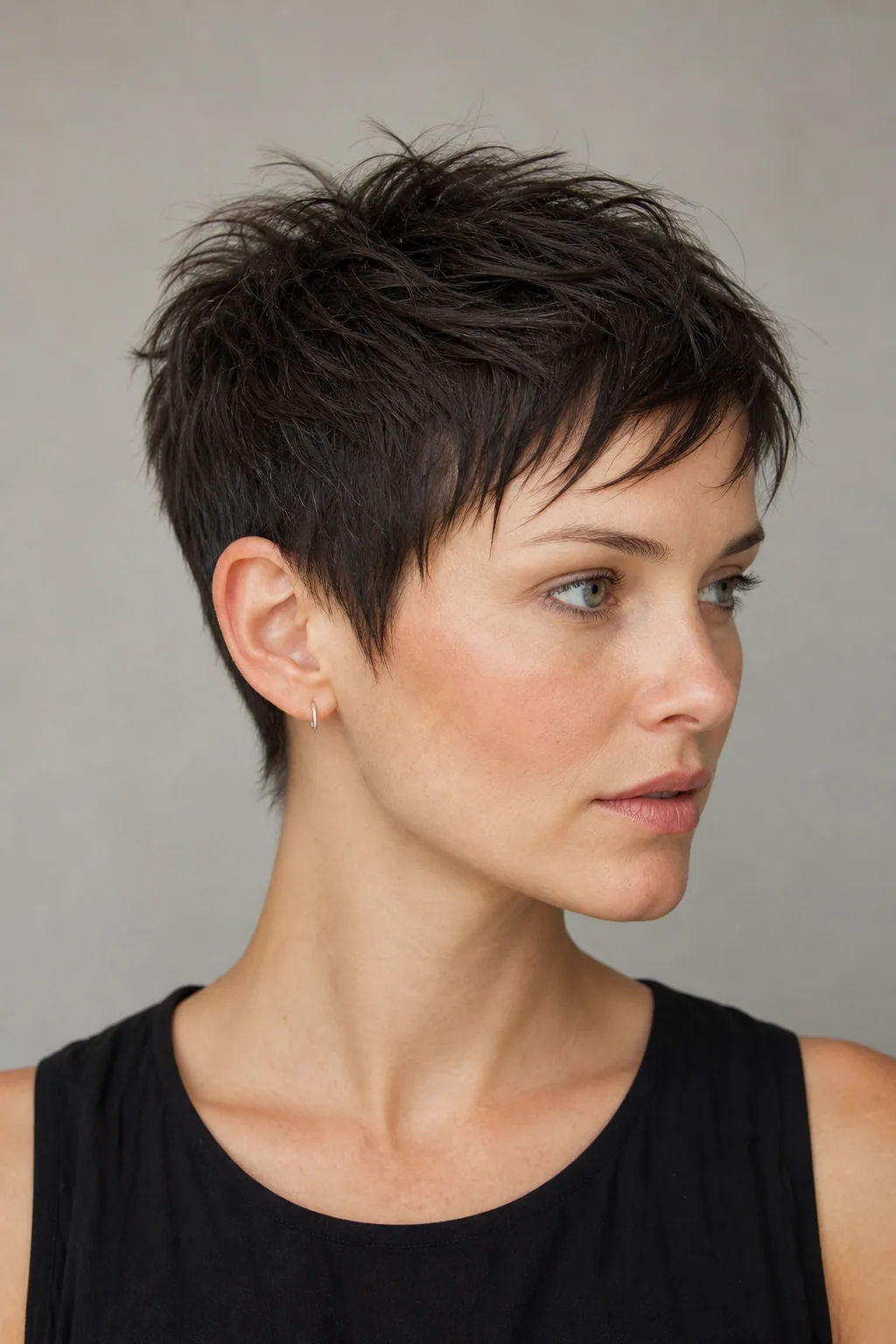
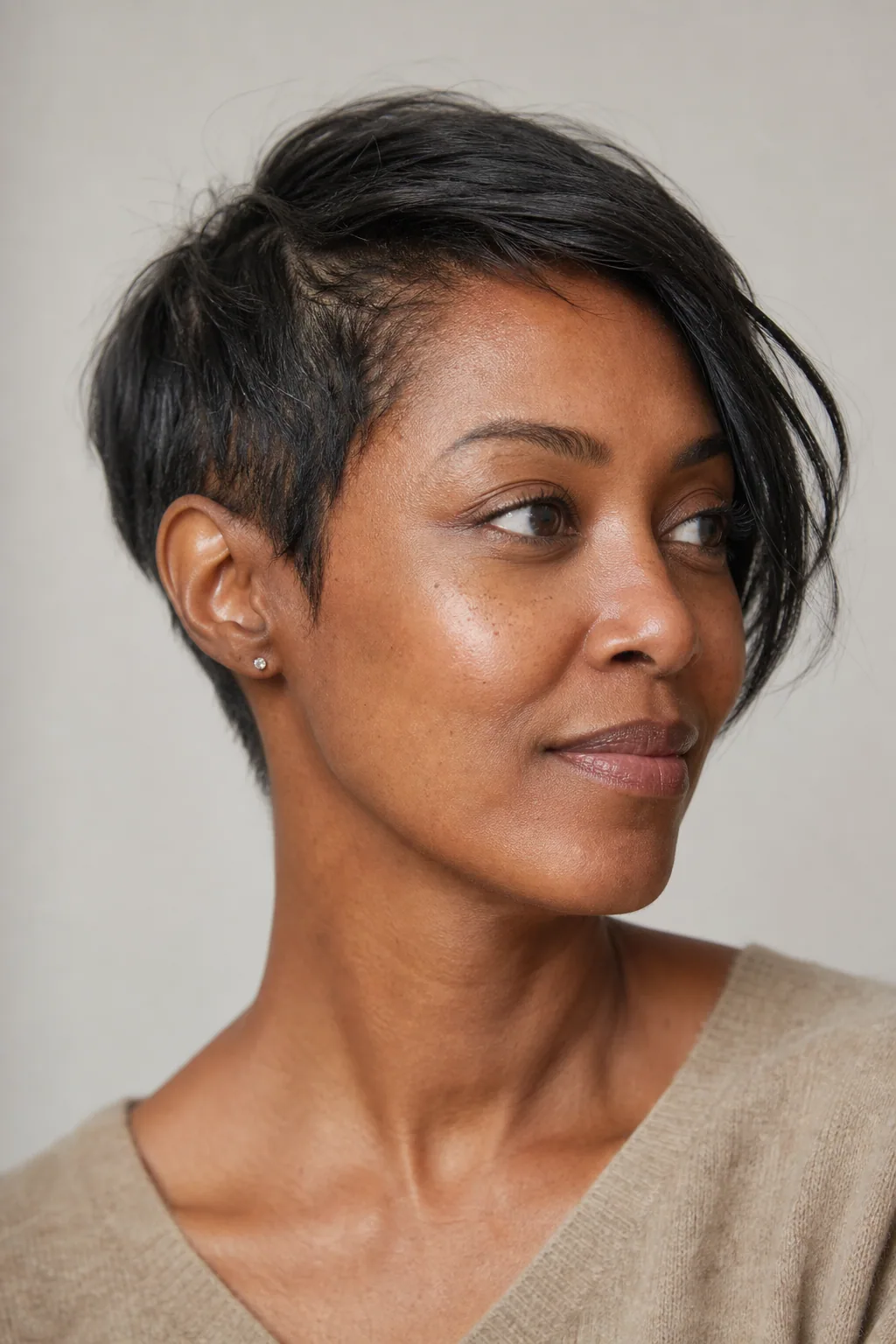
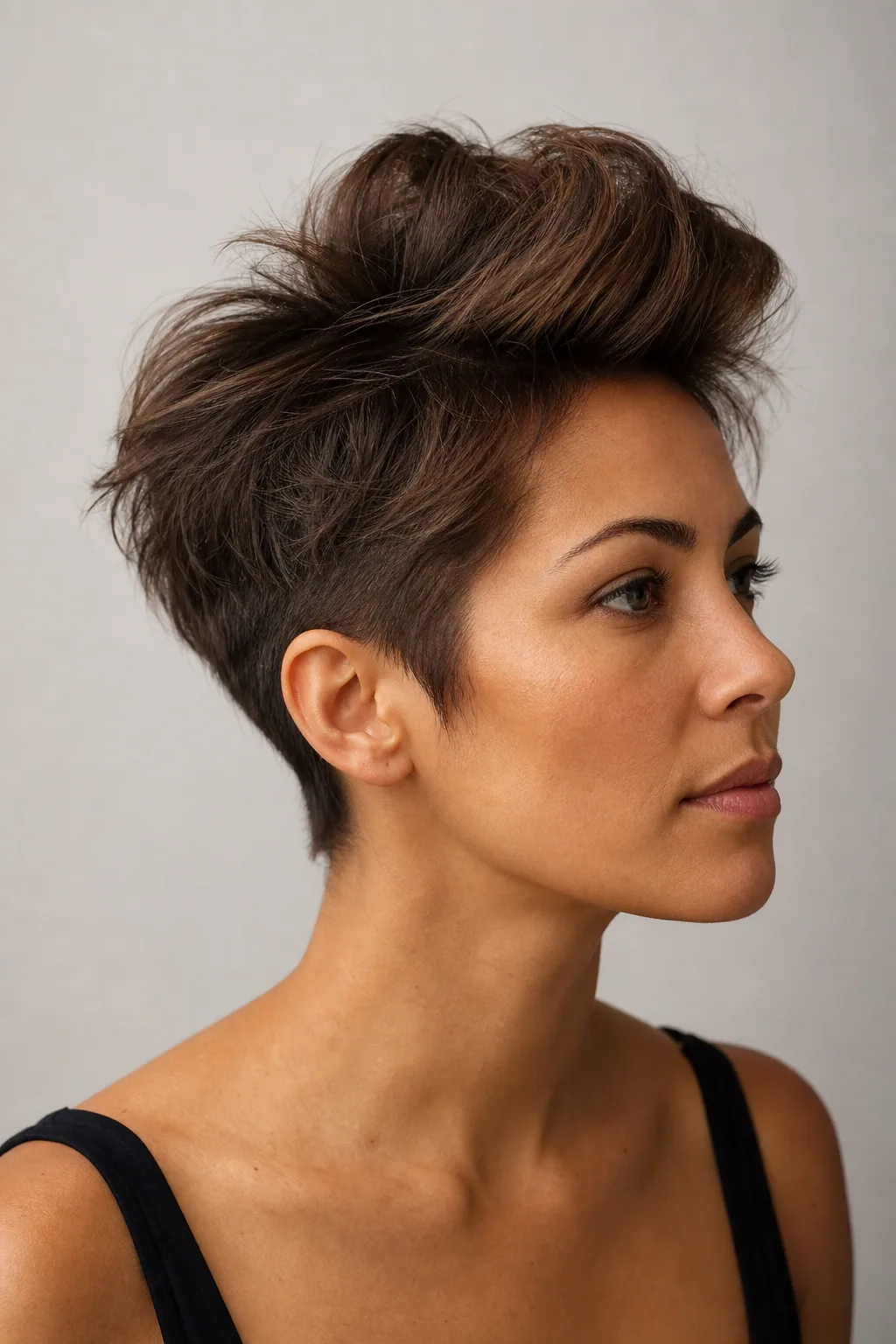
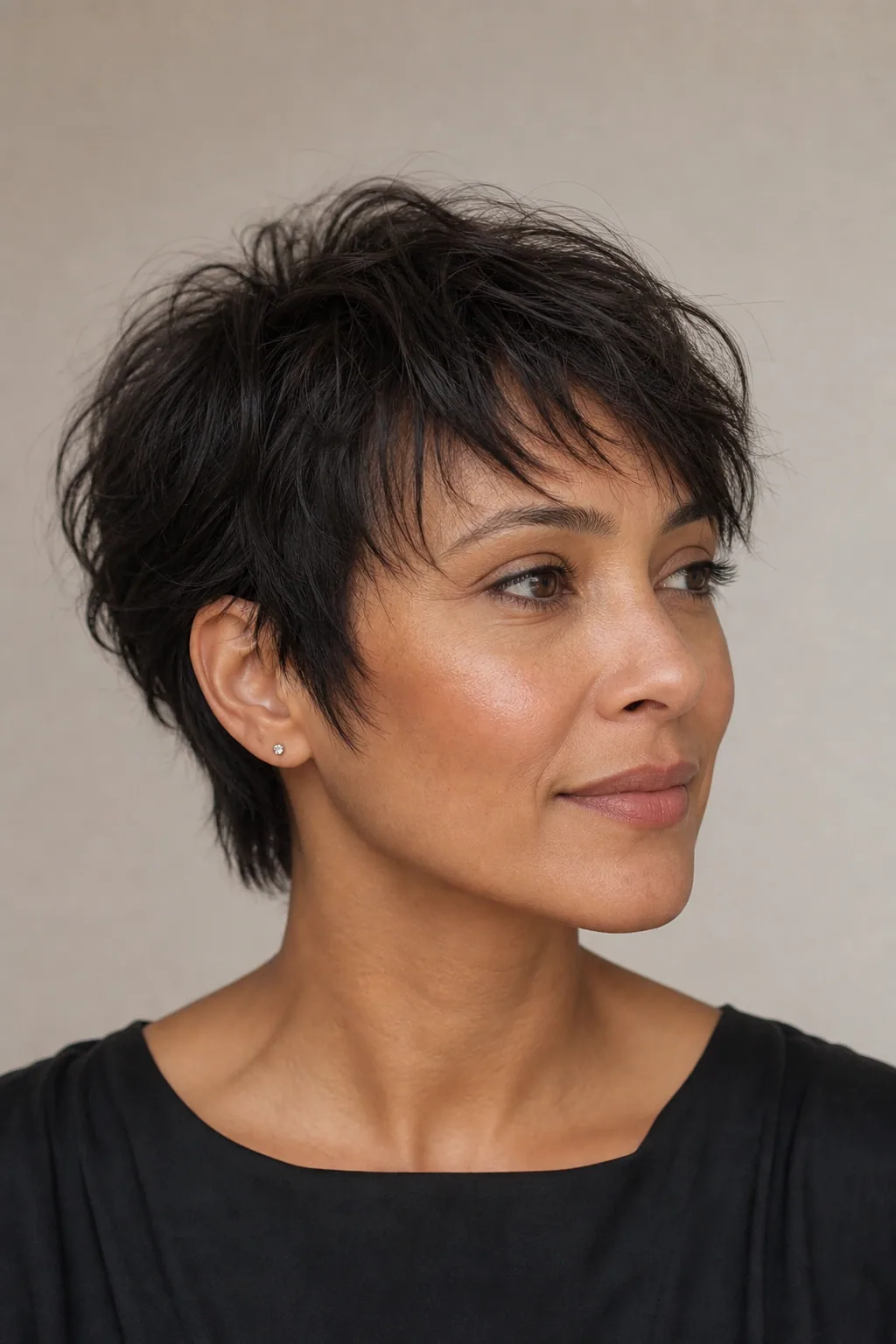
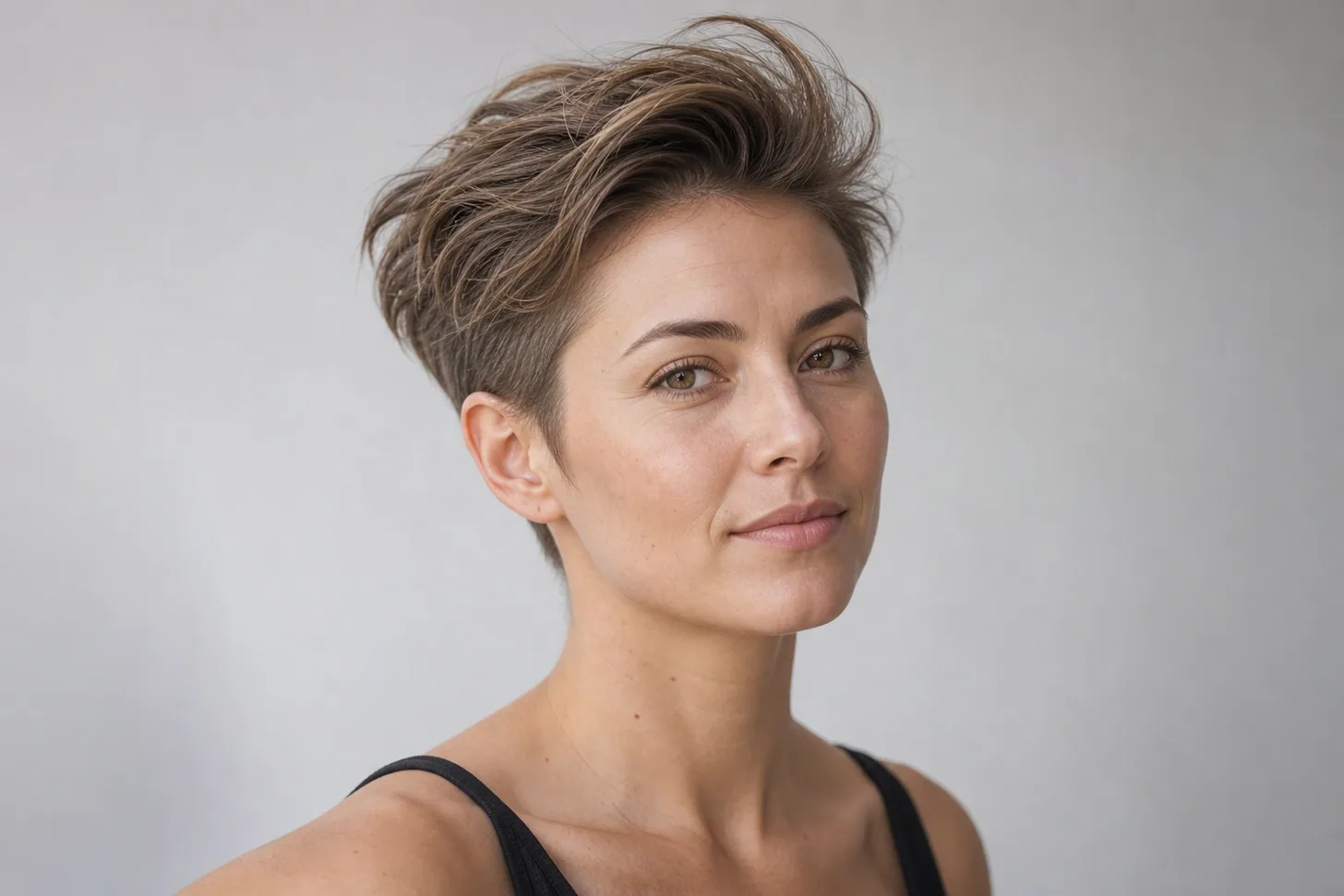
Short sides and a longer, point-cut top that separates into pieces — the separation reads as far more hair than a flat top would. The benchmark short cut for fine hair, and endlessly restyleable from sleek to tousled.
2
The long pixie
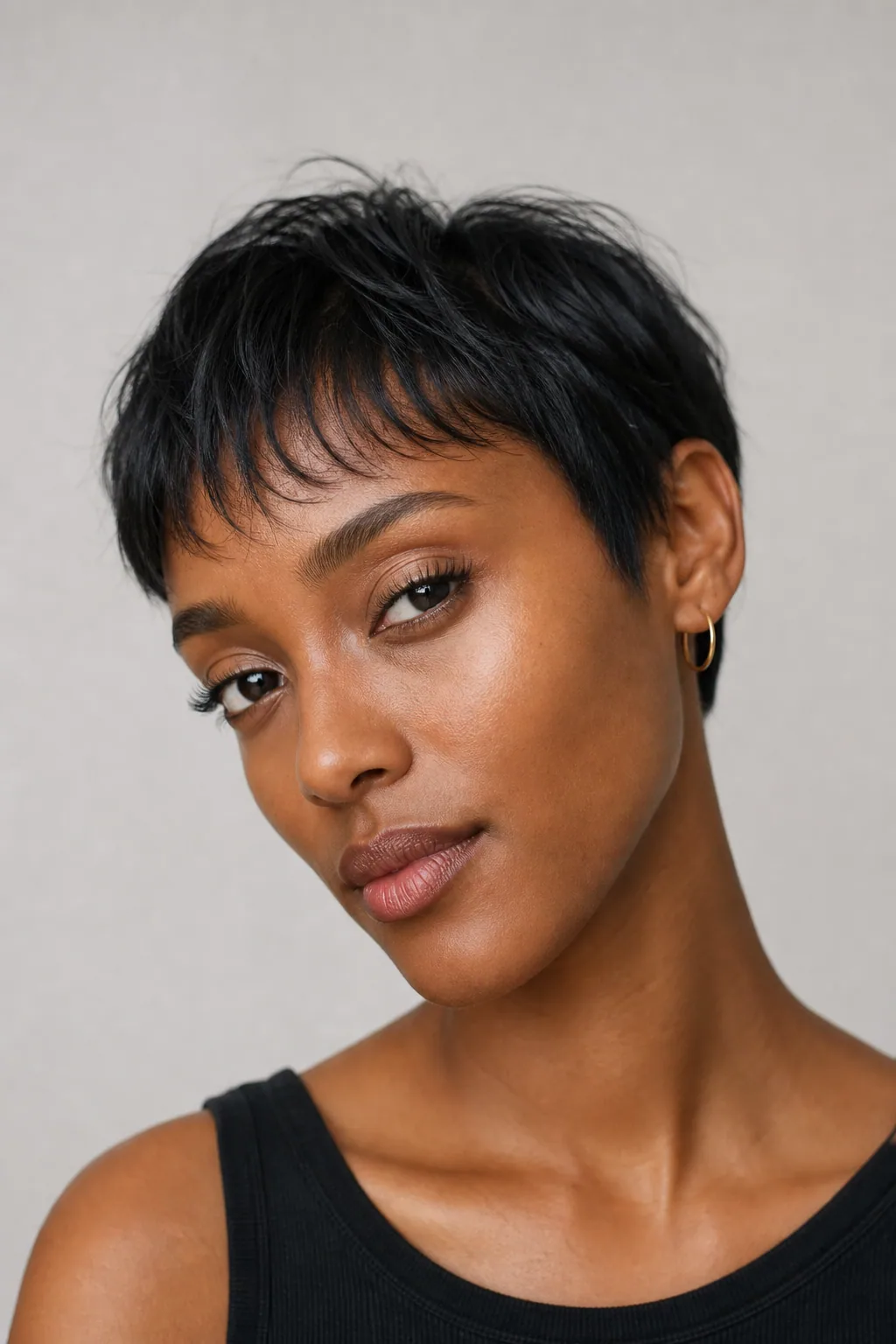
Length kept through the top and fringe, sides trimmed close — long enough to air-dry with a fingertip of paste, short enough to stand up. The most grow-out-friendly short cut there is, and my usual recommendation for a first pixie.
3
Rounded gamine crop
A short, soft, close-to-the-head shape — flattering precisely because no length competes with your face. Needs strong bone structure or a defined fringe to balance, and just a fingertip of paste to style. Grab-and-go by design.
4
Pixie with a lifted quiff
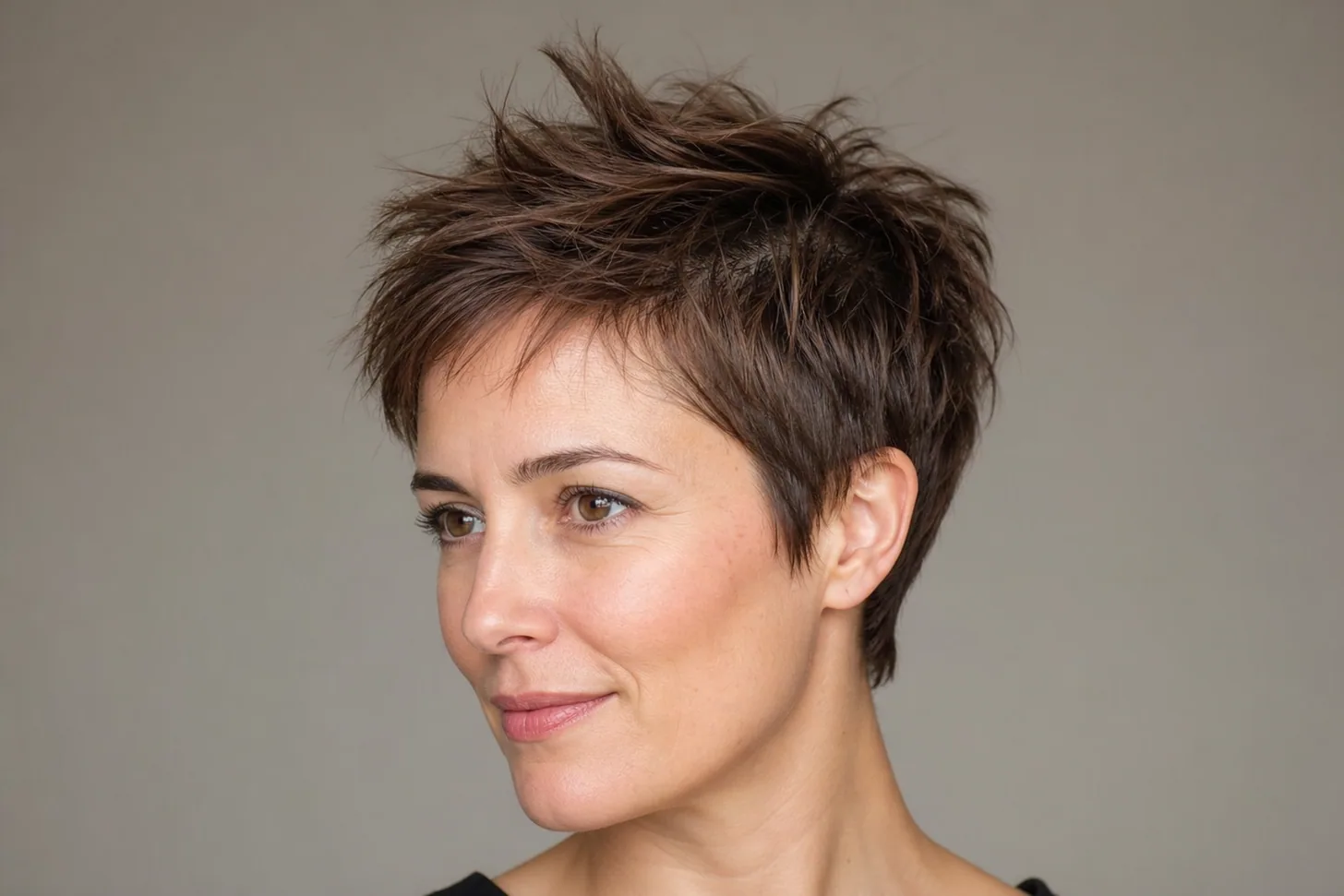
Extra length reserved at the front and styled up for real height where fine hair reads fullest. Ask for the top-front left an inch longer than instinct says — that inch is your volume. Two minutes with a round brush sets it.
5
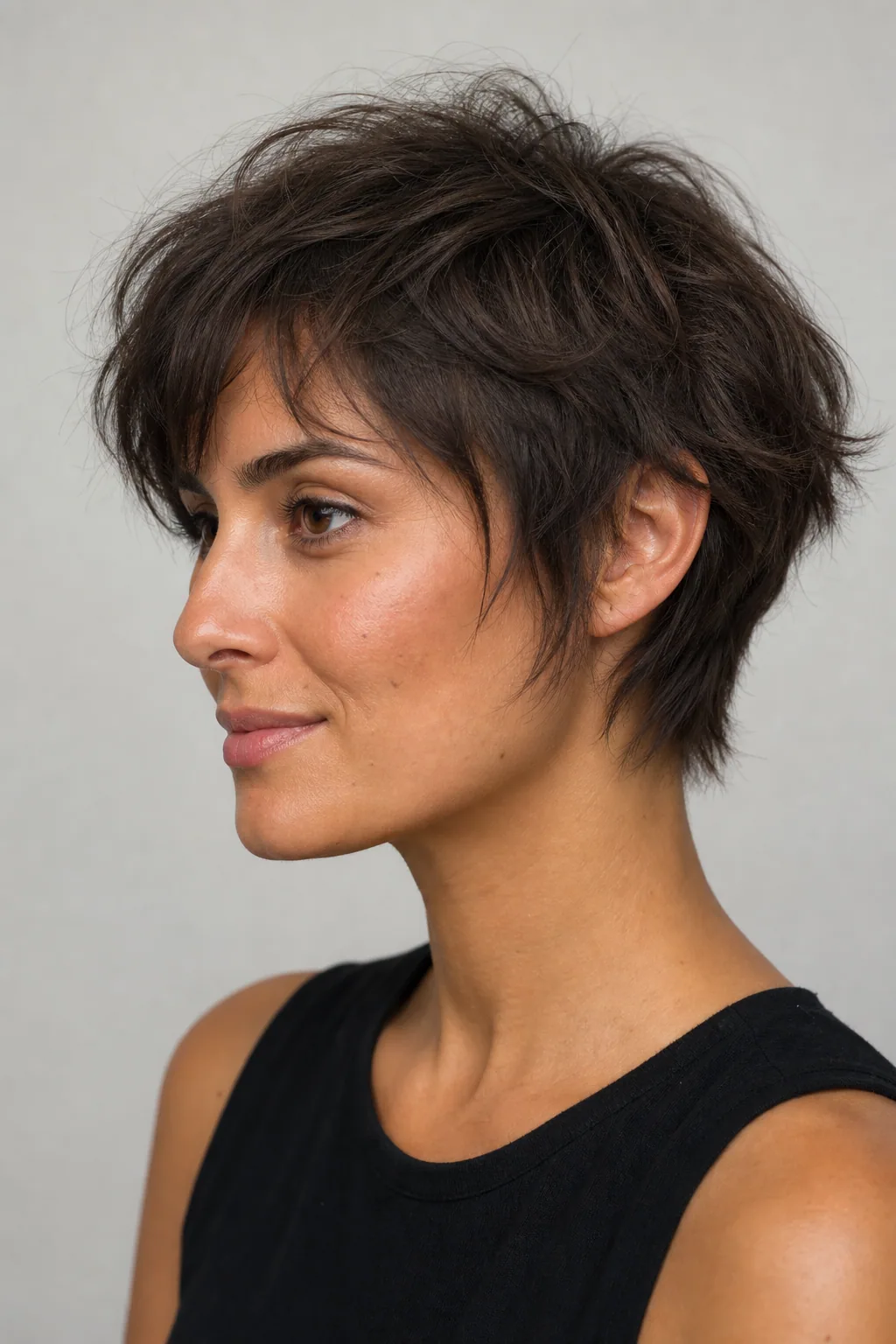
The shixie (shag-pixie)
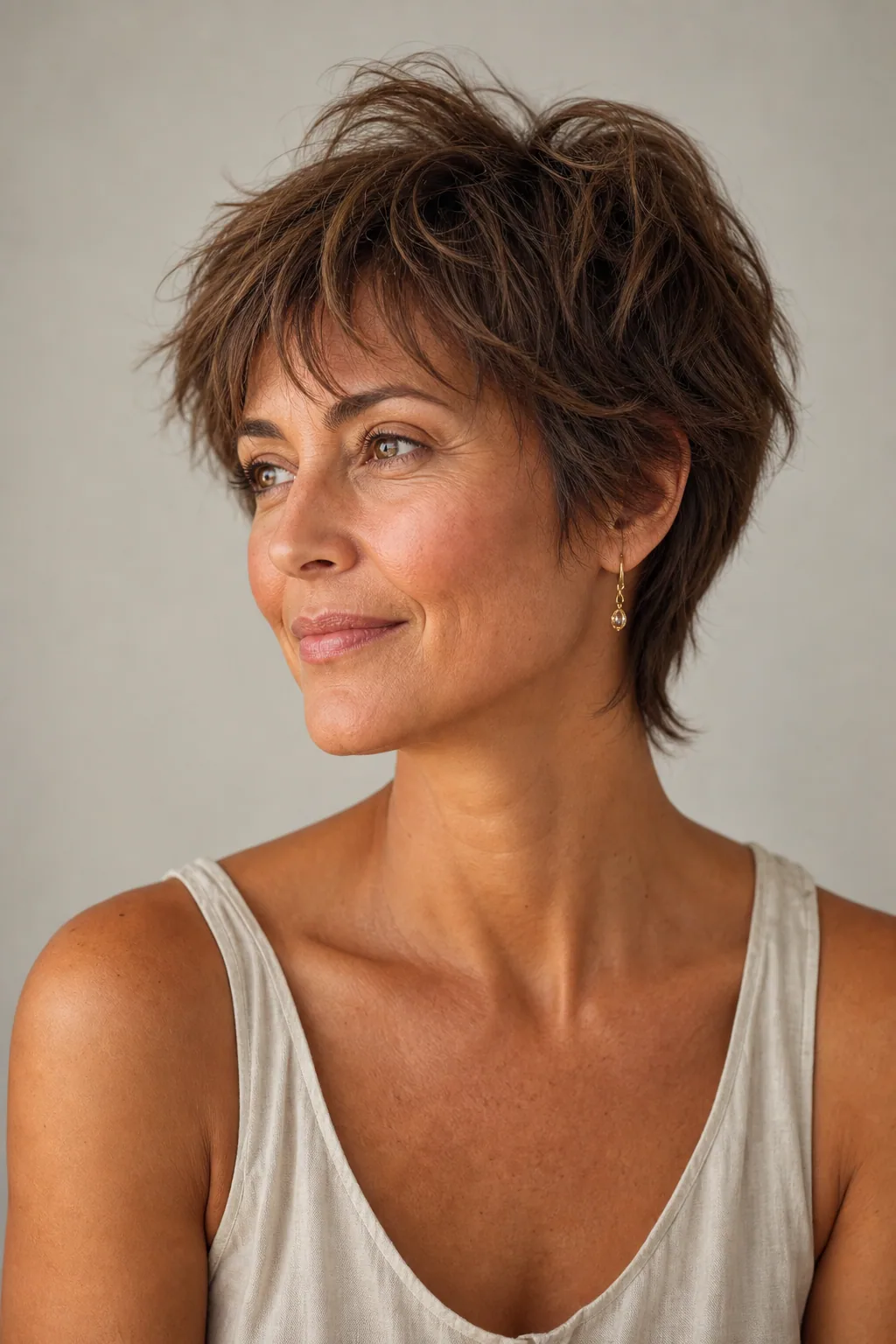
Pixie length with shag layering piled on the crown for maximum lift on minimum hair. The edgy, textured option when density is low but you want movement. A fingertip of paste and go.
6
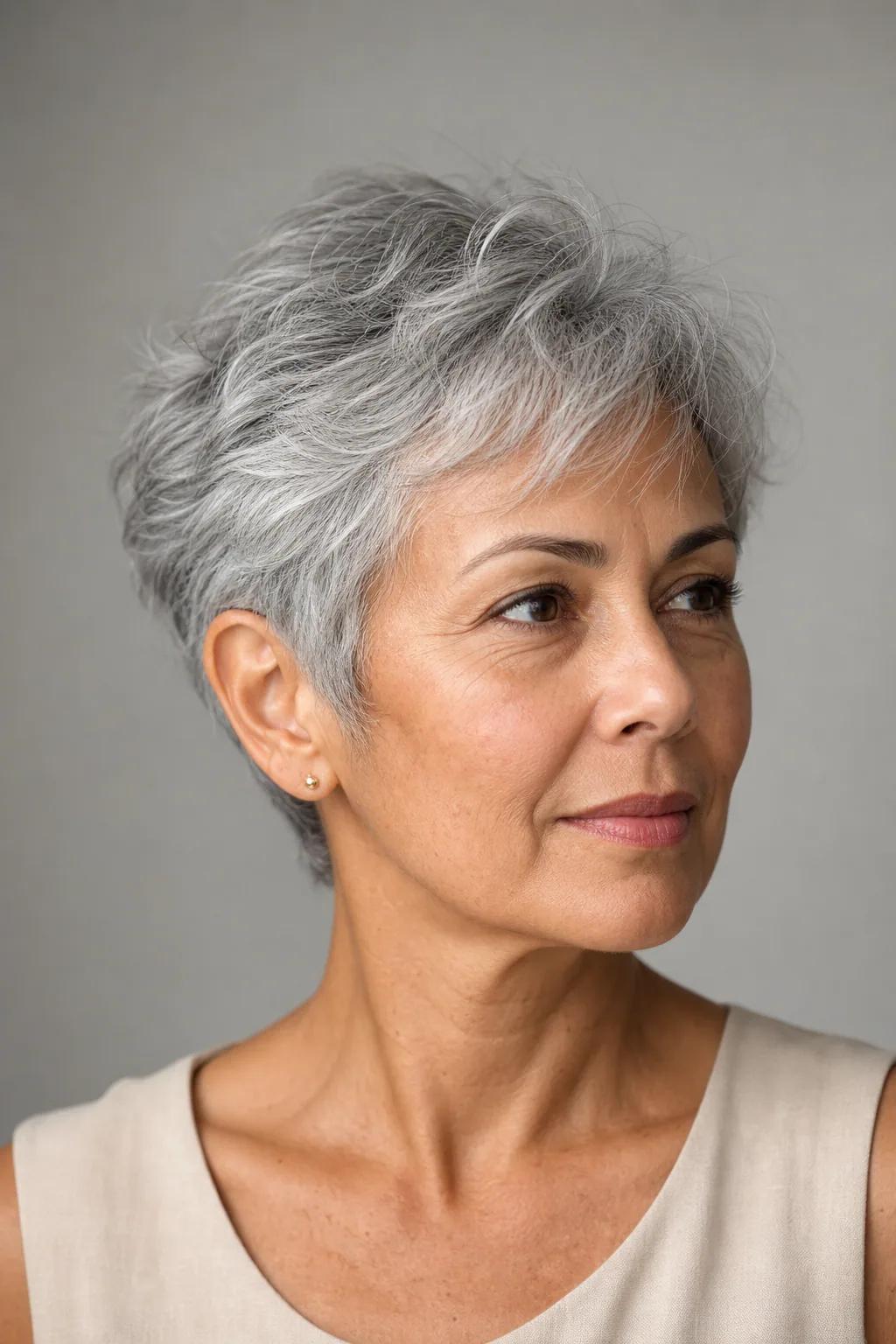
Salt-and-pepper soft crop
Hair finers with the decades, and a soft crop answers it — short enough to stand up, textured enough to disguise thinning density. Grey hair's slightly coarser texture actually helps a crop hold its shape. Wash-and-wear with one pass of paste.
Short bobs
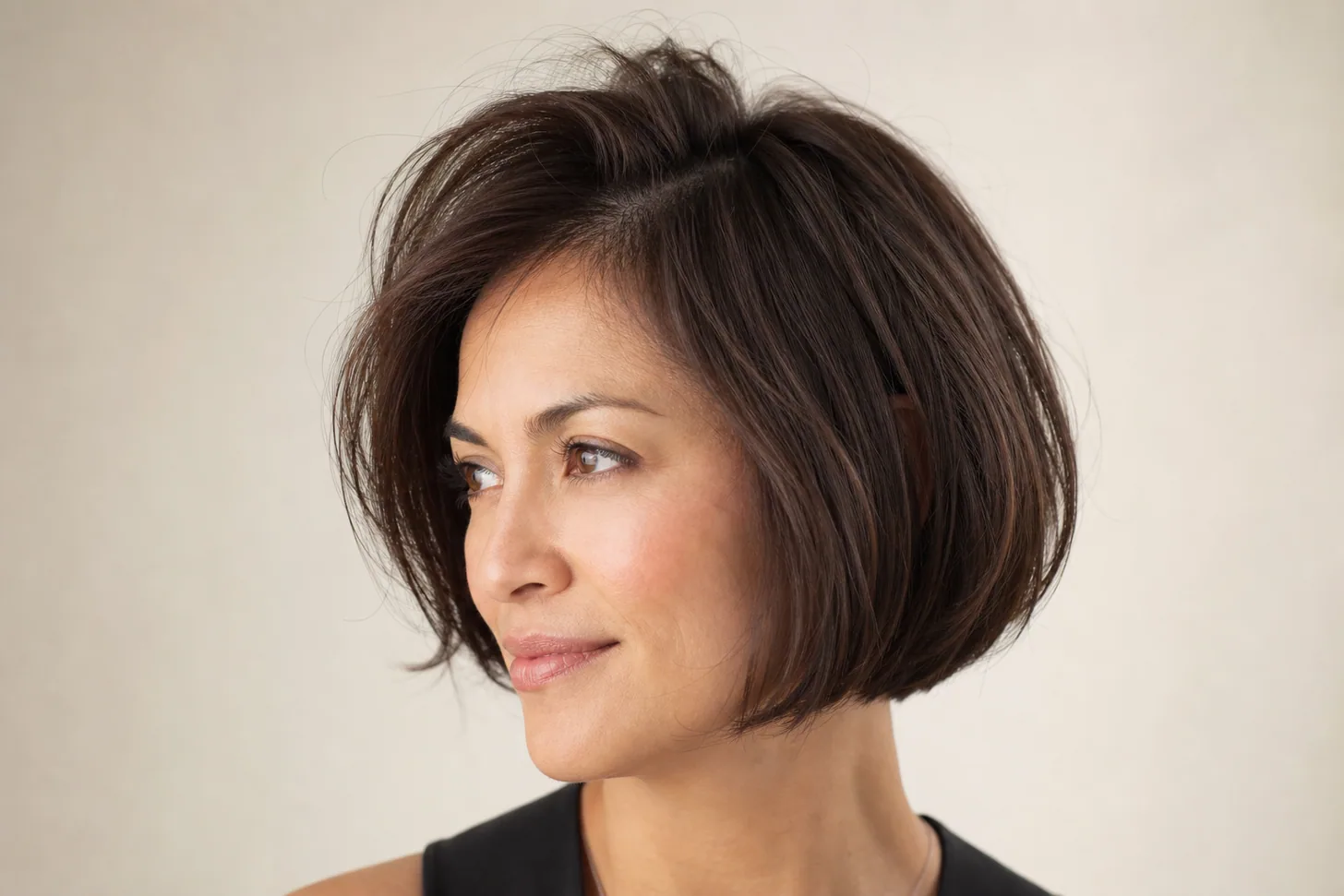
The most universally flattering short category — a blunt hemline is the single most reliable way to make fine hair read dense. The full family is in our bob for fine hair and layered bob guides.
7
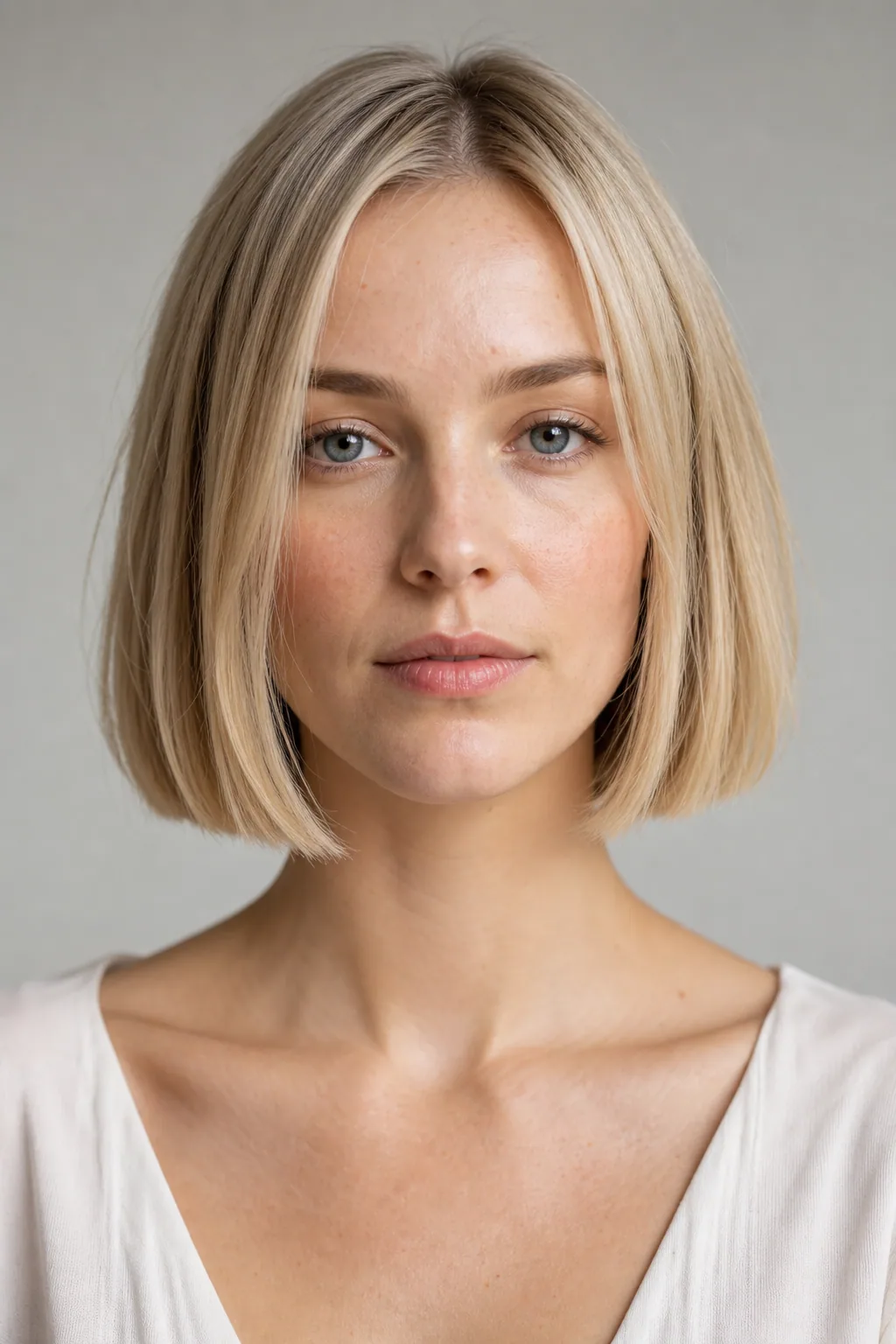
Blunt chin-length bob
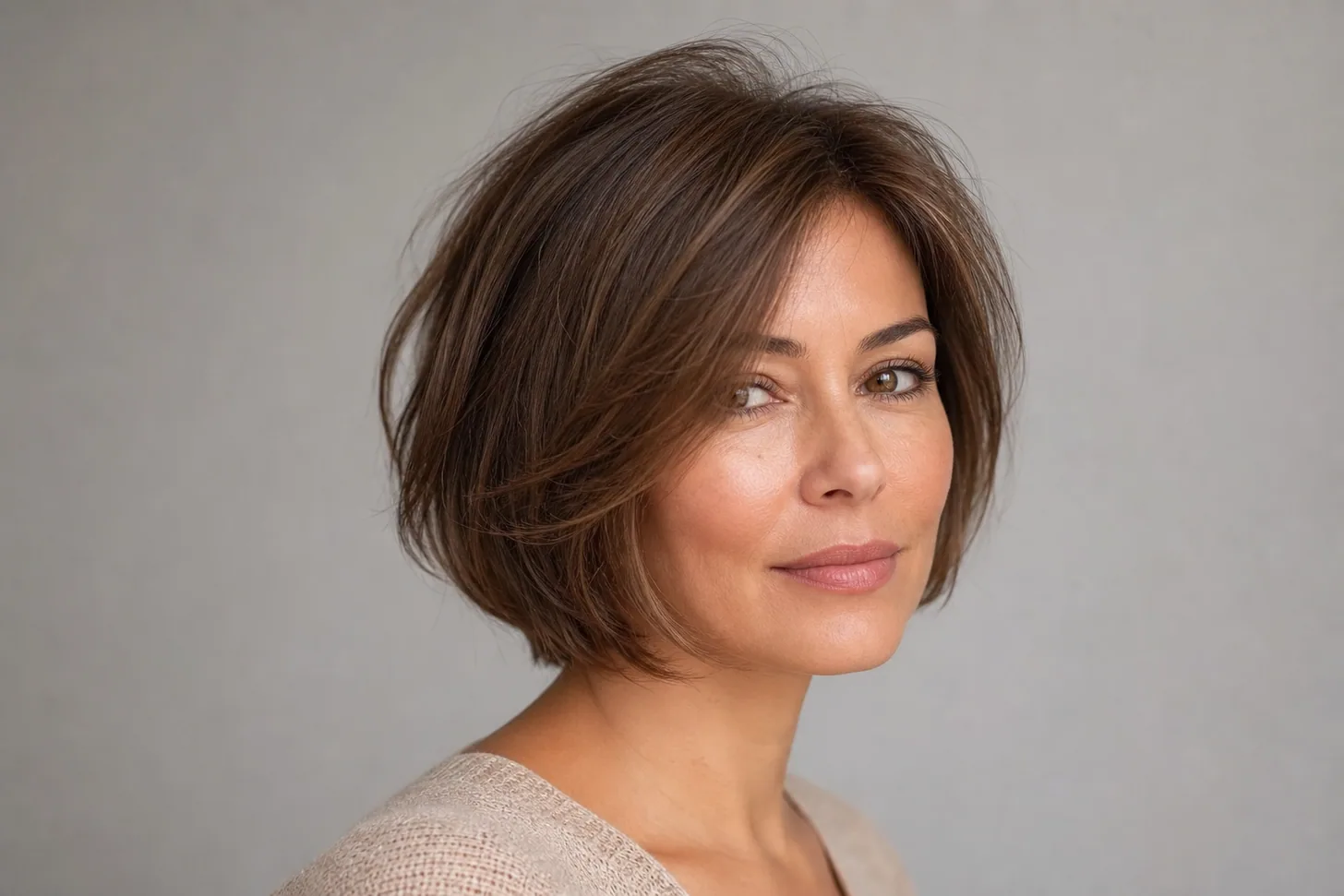
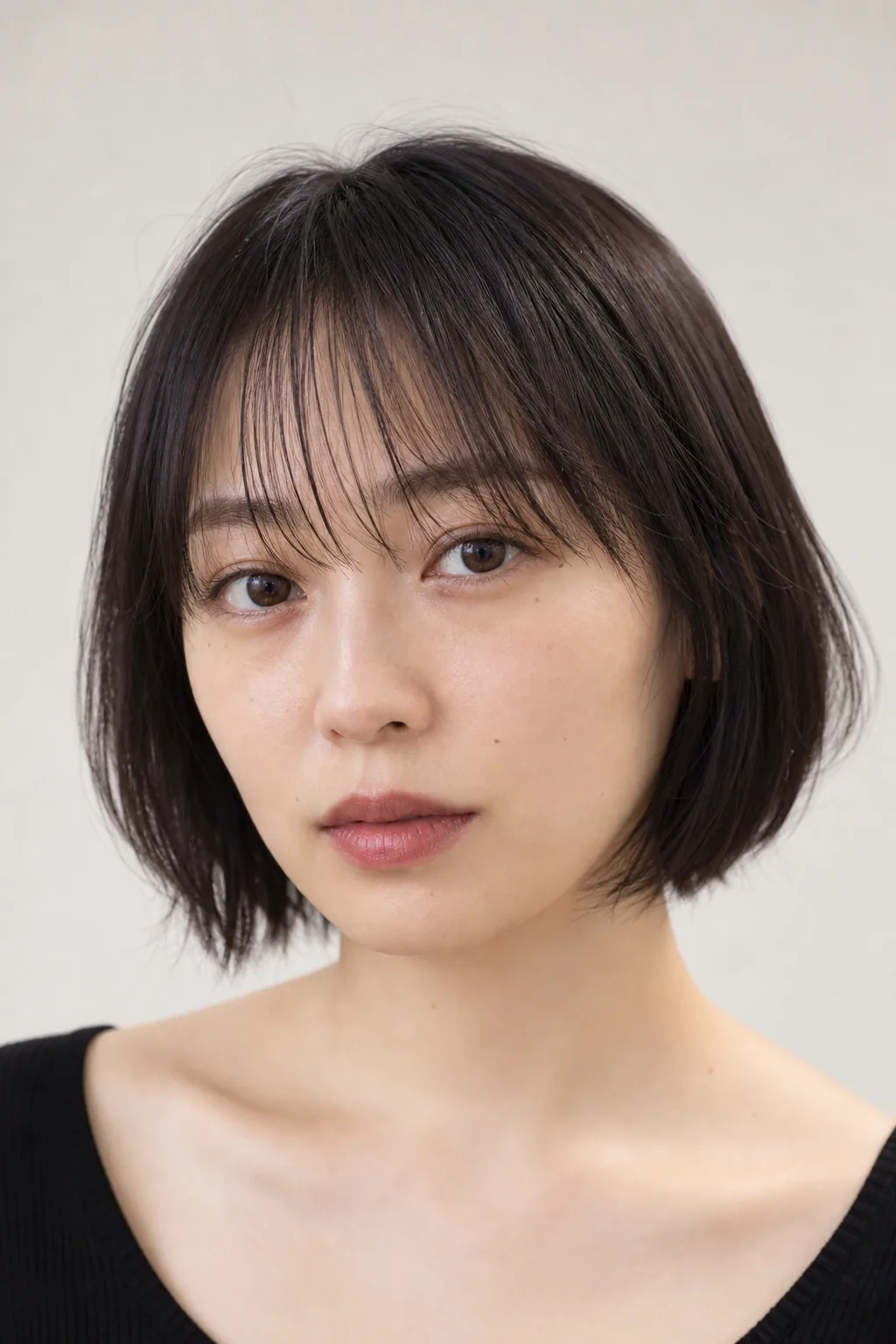
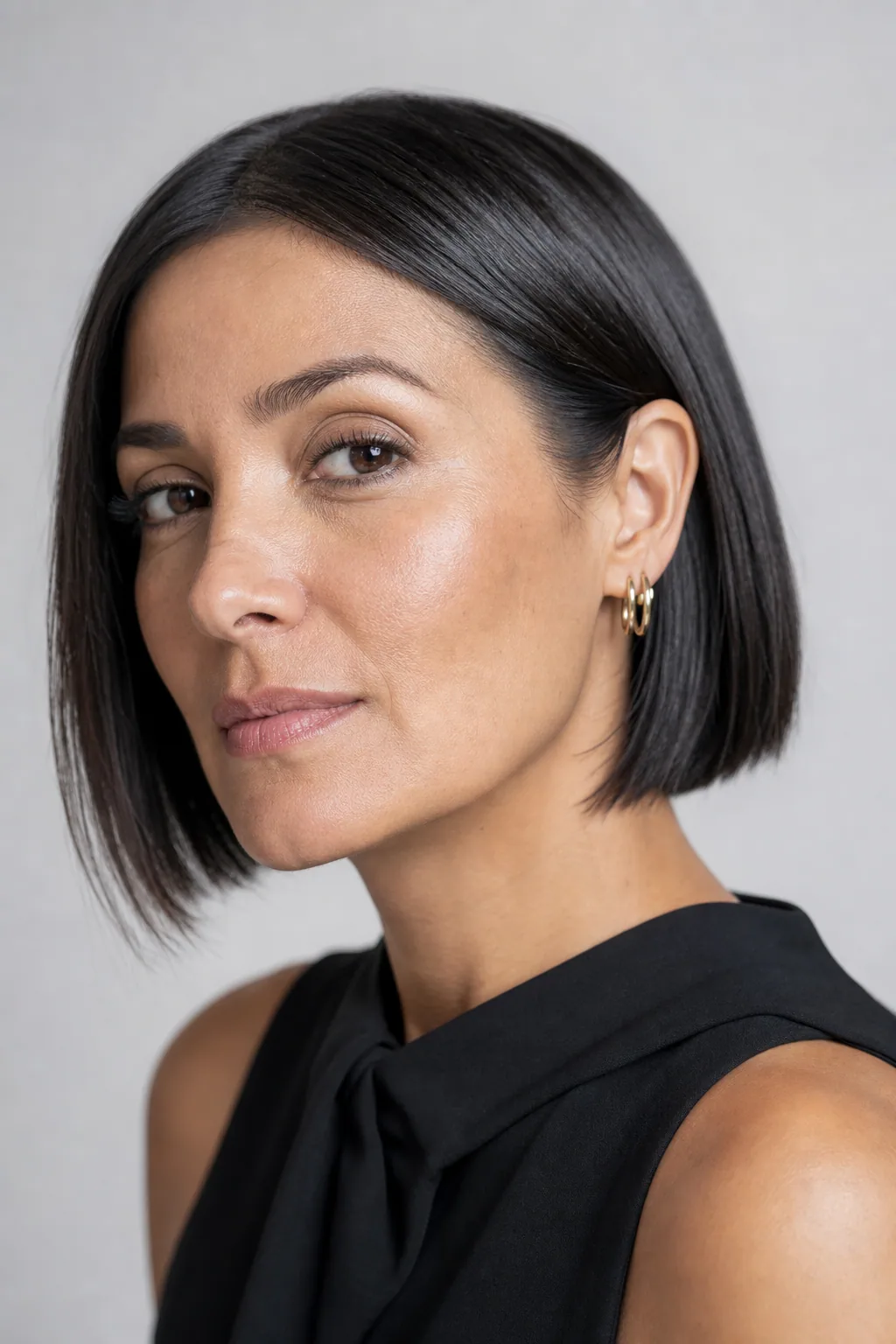
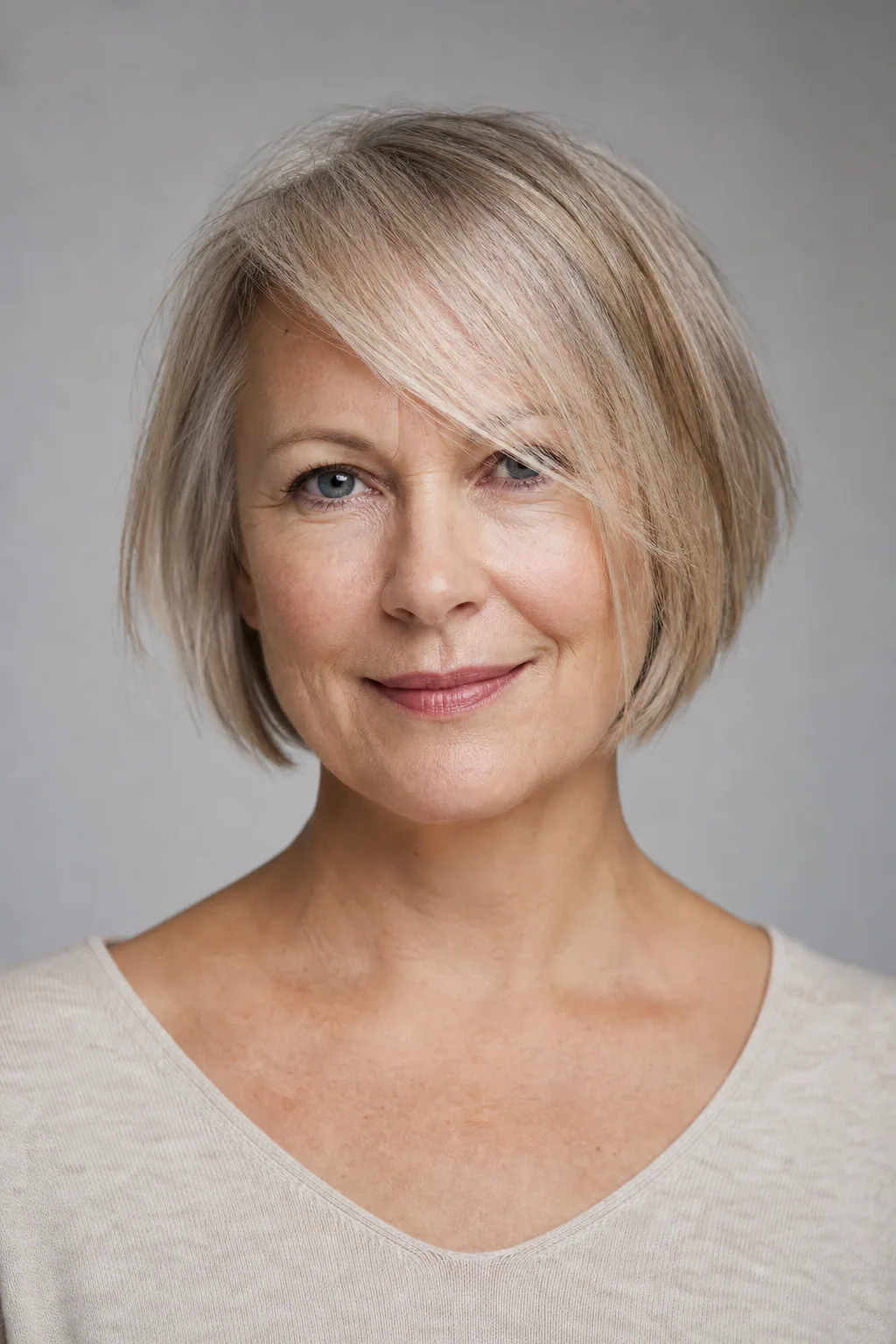
One length, cut level at the chin with a strong hemline — the template, and the strongest density illusion fine hair can buy. Flattering on nearly every face and the safest short cut to ask for if you're unsure.
8
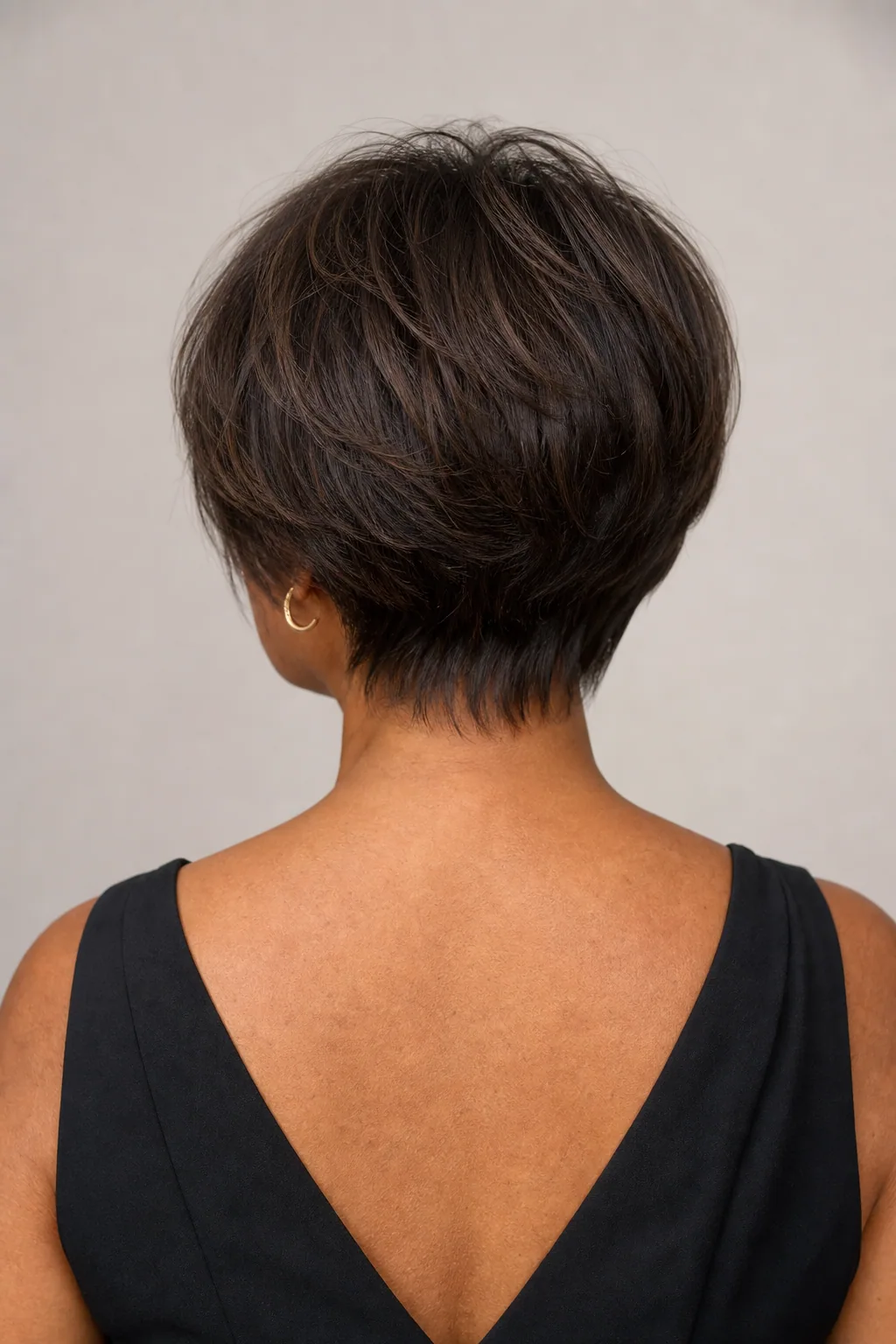
Stacked graduated bob
Short graduated layers stack at the back to build a rounded shelf of volume where fine hair falls flattest, with the front left longer to frame the jaw. Looks fuller from every angle — including the back you never see.
9
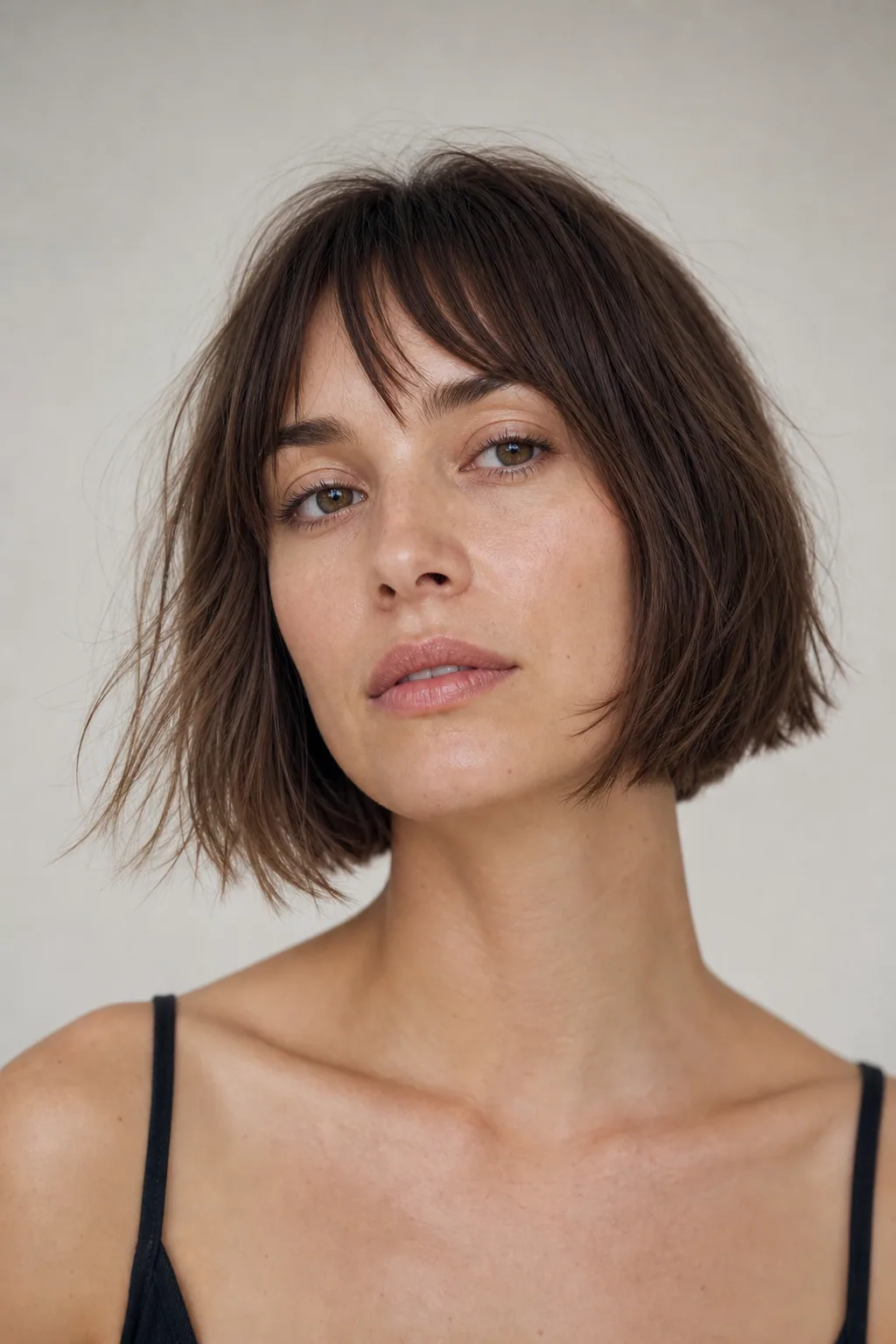
The French bob
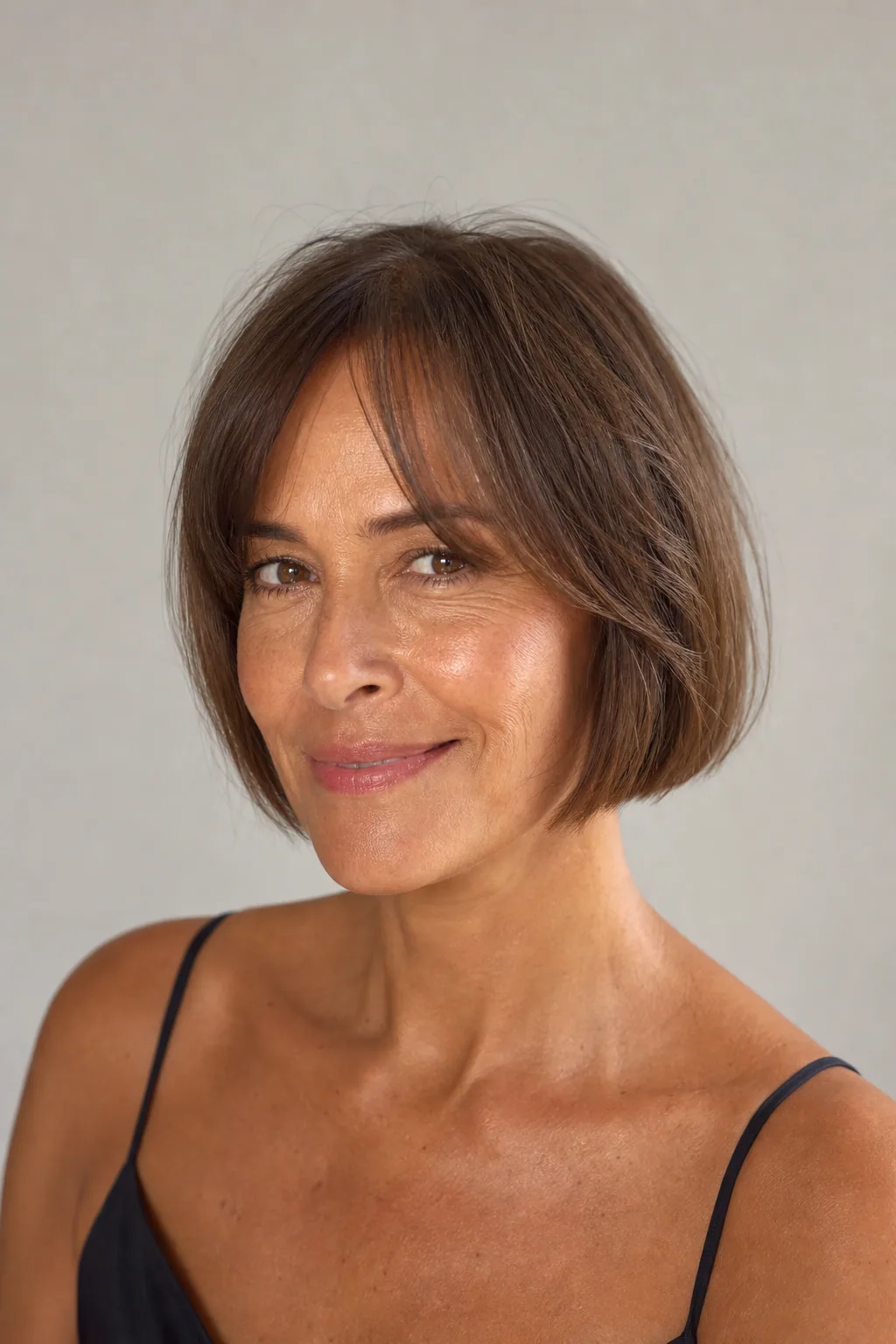
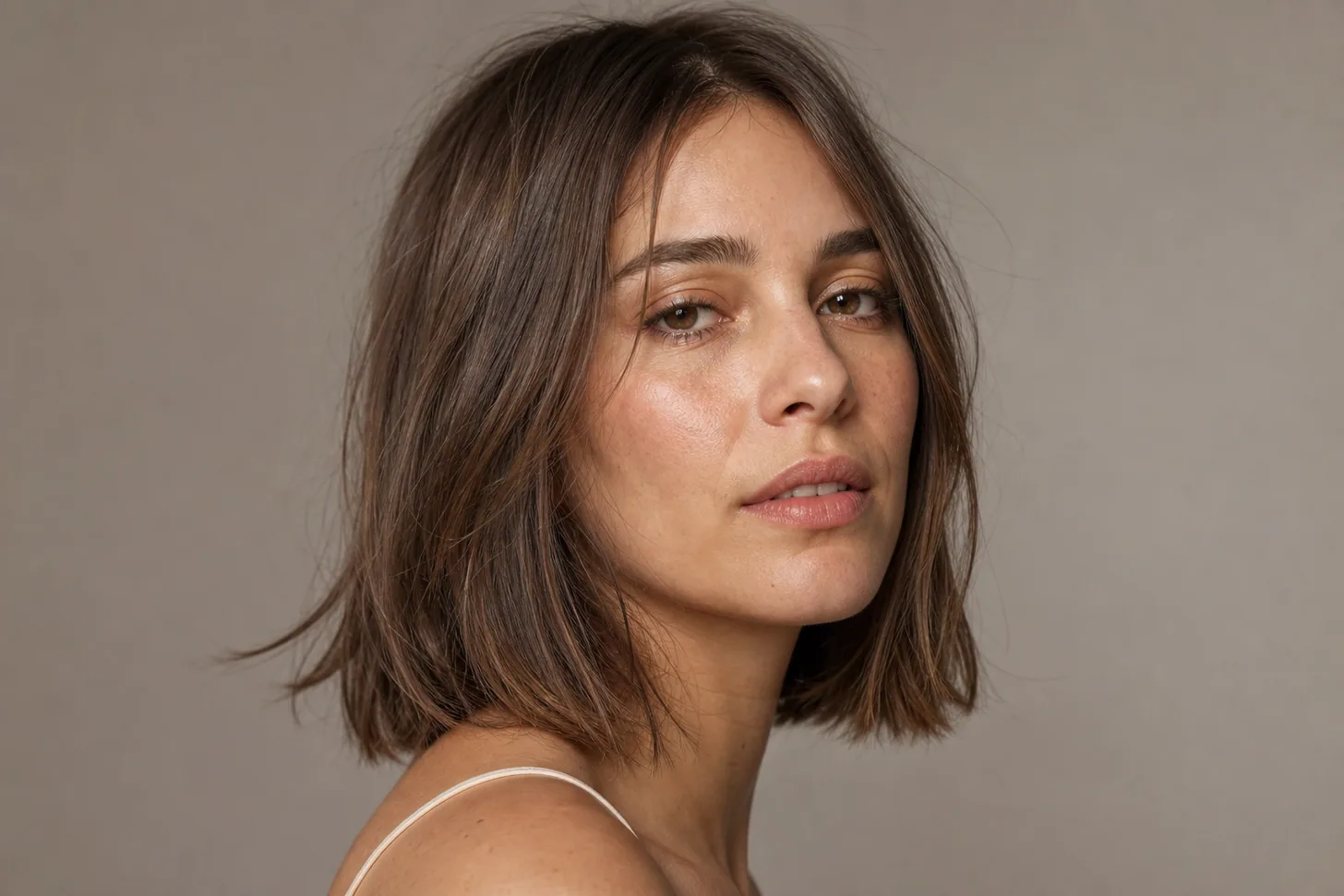
Cheekbone-grazing, blunt, and deliberately undone — it air-dries into piece-y shape with a scrunch of foam, one of the lowest-effort short cuts anywhere. Pairs naturally with a soft micro-fringe. Effortless by design.
10
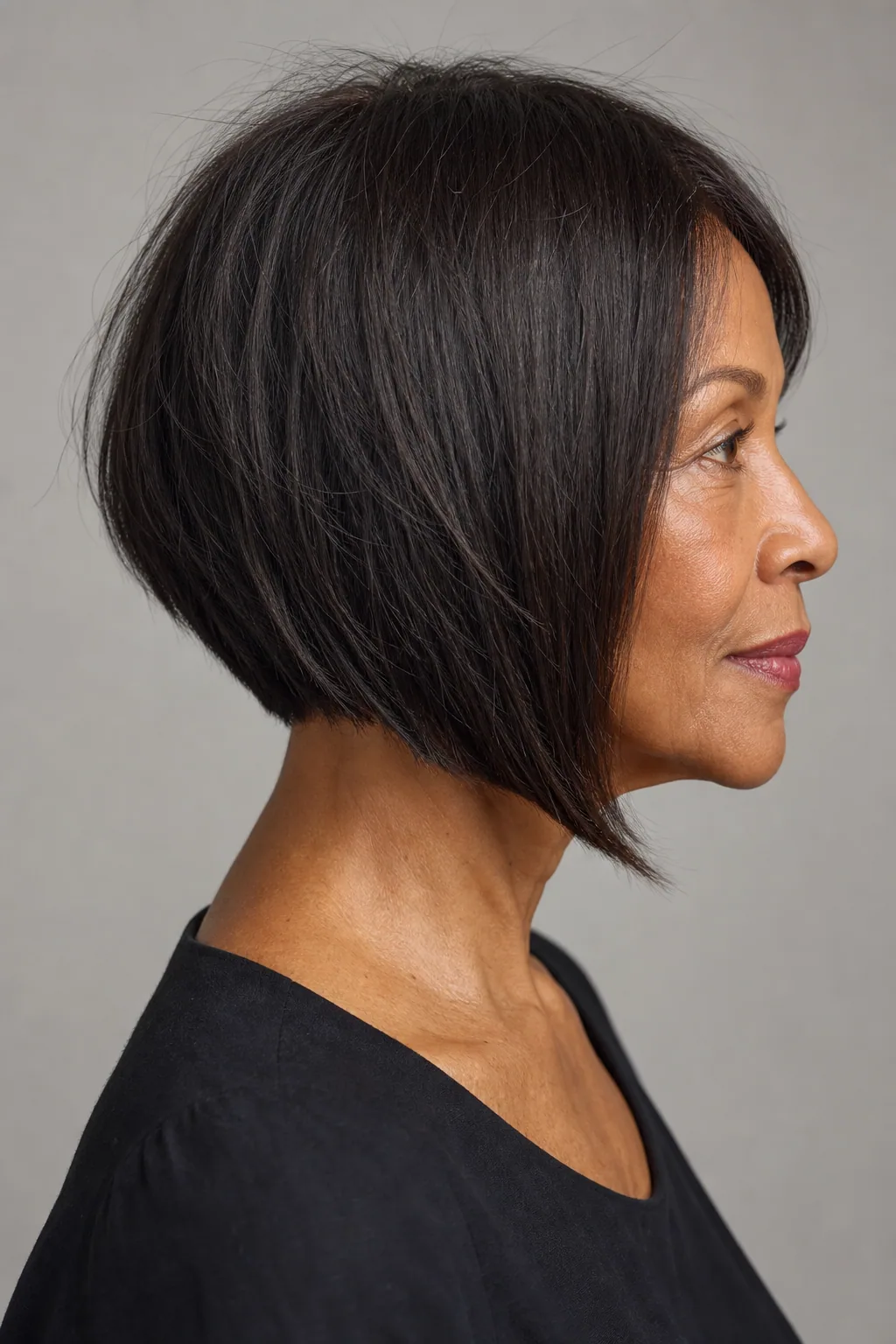
A-line bob
Shorter at the back, angling longer toward the front — the forward weight elongates round faces while the higher back builds lift. A flattering, low-effort shape that keeps a strong hemline.
11
The bixie
Sitting between a bob and a pixie, the bixie keeps more length through the sides than a crop while shagging the top — trendy, fuller-looking, and flattering on more face shapes than a true pixie. The gateway between short and cropped — we show 14 ways to wear the bixie.
12
Sleek tucked bob
A short blunt bob worn tucked behind one ear — clean, modern, and quietly expensive-looking. Because fine hair lies flat easily, this polished finish takes almost no effort; the strong hemline keeps it from reading thin.
Short cuts with bangs & texture
A fringe or a wave gives the eye a second focal point and softens a short cut — the details that make short hair feel like your cut.
13
Short bob with curtain bangs
A blunt short bob softened by a center-parted fringe that frames the face and adds lift at the hairline — two focal points that draw the eye up. The fringe details are in curtain bangs for fine hair.
14
Pixie with a wispy fringe
A sheer, airy fringe that lets a little skin show through — the only across-the-forehead bang that flatters fine hair, because it never pretends to density it doesn't have. Softens a crop on angular faces.
15
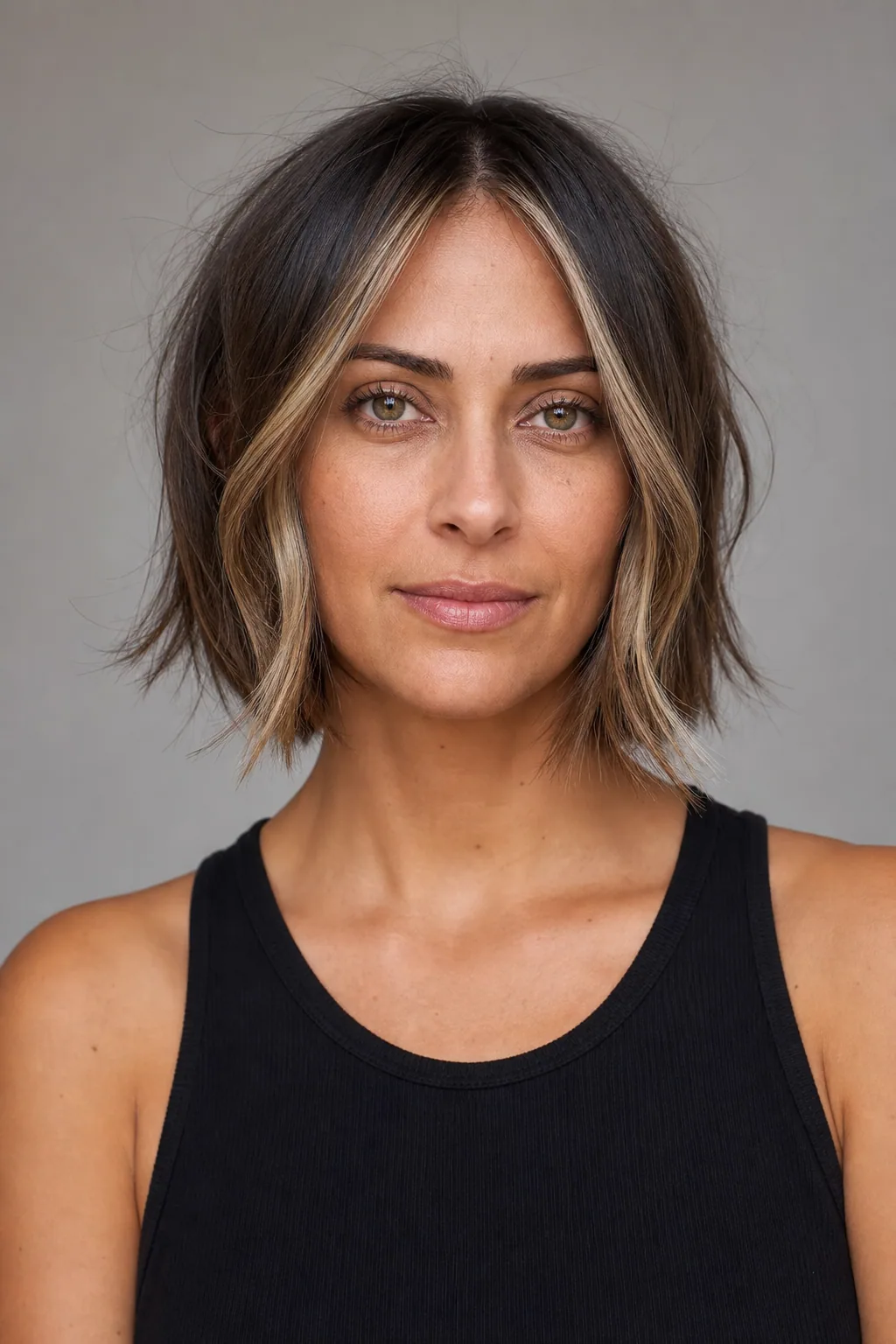
Short wavy bob
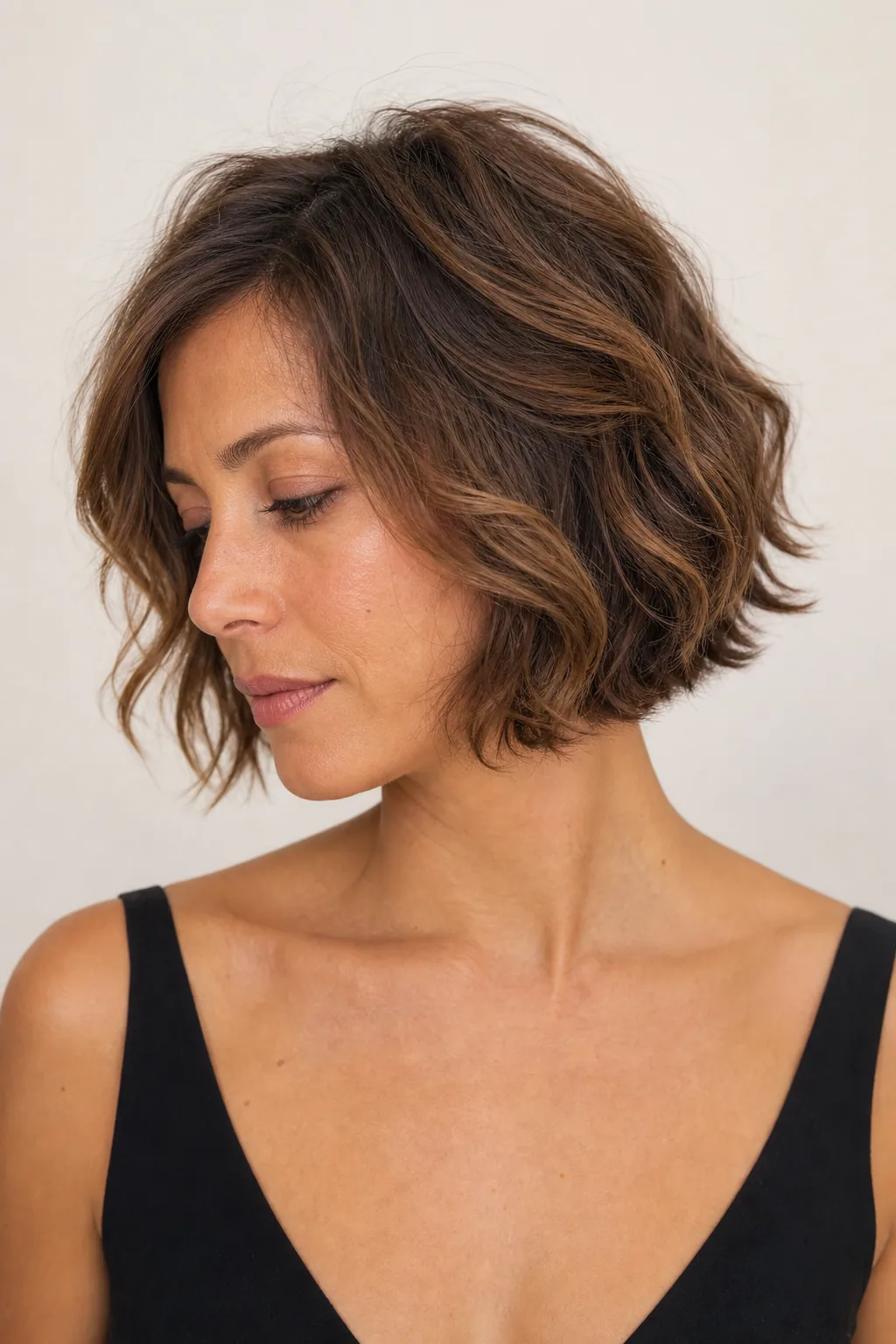
Soft bends through a short bob turn fine hair's fineness into an asset — waves stack visual volume a flat cut can't. Two minutes with a small iron, or air-dried if you have a natural wave. Finish with texture spray for grip.
16
Short crop shag
Ear-length and choppy through the crown with a wispy fringe — the shag at its most textured. The short length keeps the layers standing rather than drooping, so the piecey crown holds height all day.
17
Short bob with a side-swept fringe
A longer fringe swept to one side, grazing the cheekbone — the softest, most forgiving bang, and the easiest to grow out. The diagonal flatters rounder and squarer faces. A safe first fringe for short-hair beginners.
18
Short cut with a money piece
Two brightening pieces framing the face add depth that makes a short cut look full and expensive — on fine hair, contrast reads as dimension the scissors can't cut. Soft, blended placement is covered in balayage vs. foilyage for fine hair.
Angles and height elongate; avoid equal chin-level width.
Square
Short wavy bob or soft crop
Soft bends and texture round a strong jaw.
Heart
French bob or rounded crop with fringe
Weight and a fringe at the jaw balance a wider forehead.
Long / oblong
Chin bob with a fringe
A horizontal line and bangs shorten the face.
The honest upkeep picture
Short cuts are low daily effort and higher salon upkeep — the trade every short shape makes. Here's what each really asks.
Cut
Trim
Daily styling
Grow-out
Pixie / crop
4–6 wks
1–3 min
Choose a long pixie for easy grow-out
French bob
6–8 wks
2–5 min
Designed to look grown-out
Blunt / A-line bob
6–10 wks
3–8 min
Forgiving; hemline softens gradually
Bixie
5–7 wks
2–5 min
Grows into a bob
Any version with a fringe
Fringe every 4–6 wks
+1–2 min
Fringe grows into a face-frame
What to ask your stylist
Say: "I have fine hair and I want a short cut that looks full — keep a strong hemline where it applies, point-cut any internal layers, no razor and no thinning shears." If your hair also runs thin, add: "Keep more weight in the shape and don't over-texturize — I don't want the scalp showing at the crown."
Tell them how often you'll realistically get to the salon; that decides cropped-versus-bob more than anything. Bring a photo, and each cut above links to its full guide if you want to go deeper on one.
Very low density with a visible scalp at the crown. A very short crop can expose it — choose a longer pixie with a weightier top, or a blunt bob whose hemline builds fullness.
You can't get to the salon every 4–8 weeks. Cropped cuts grow shapeless fast; a blunt bob or long pixie forgives stretched trims.
You rely on a ponytail for workouts or heat. Be honest before you cut — most short cuts can't tie back. A lob keeps the option.
Tight curls that shrink when dry. Short curly cuts spring far shorter than planned — see a dry-cutting specialist.
Your hair is relaxed. Short is the right call — it removes most of the touch-up lines a relaxed strand breaks at — but the height has to be cut in rather than styled in. Short relaxed hairstyles for thin hair covers the shapes and the schedule.
FAQ
Often, yes. Length is weight, and weight is what drags fine hair flat — so cutting it short concentrates the hair into a smaller shape that stands up and reads as fuller. Short cuts like bobs, pixies, and crops build fullness that long fine hair struggles to hold. The trade-off is more frequent trims to keep the shape crisp. If your hair falls flat no matter what, going shorter is one of the most effective fixes.
It depends on your face and lifestyle, but the most reliable are the blunt bob (a strong hemline reads as density), the long pixie (maximum lift with easy grow-out), and the French bob (air-dries full and effortless). All three build fullness with the shape rather than relying on styling. Match the length to your face shape and how much salon upkeep you'll realistically keep to.
Yes, in two ways. Removing length removes the weight that flattens the roots, so the hair lifts and looks fuller. And concentrating the same amount of hair into a smaller shape makes it look denser. A blunt hemline and internal point-cut layers amplify the effect. Short cuts don't add hair, but they create the strongest illusion of thickness fine hair can get from a cut alone.
Cropped cuts like pixies need a shape-up every 4 to 6 weeks to stay crisp, since the neckline and sides lose definition quickly. Bobs and lobs stretch to 6 to 10 weeks because the blunt shape is more forgiving. If you can't commit to frequent salon visits, choose a longer pixie or a blunt bob, which grow out more gracefully than a short cropped cut.
Yes — a pixie is one of the most flattering cuts for fine hair because the short length lets the hair stand up on its own instead of hanging flat. The main caution is very low density at the crown: if your scalp shows there, choose a longer pixie with a weightier top rather than a very short crop. Ask for point-cut texture, never razored, so the top holds height.
A French bob or a long pixie — both air-dry into shape with a scrunch of foam or a fingertip of paste, no heat required. A blunt bob is nearly as easy and looks polished with minimal effort. The trick is choosing a cut shaped to your natural texture so the styling is built into the cut, then finishing with one lightweight product.
Eleven years behind the chair, specializing in short shapes and fine-hair texture. Simone believes the best haircut is the one you can style yourself in ten minutes.
Images in this article are AI-generated illustrations, not photographs of real clients or results. See our image policy.
Results vary with hair type, density, and growth patterns. This guide is educational and not a substitute for an in-person consultation with a licensed stylist.
Get the good hair intel
One honest, stylist-written guide in your inbox each week. No hype.

 SB
SB