Every product, every treatment and — honestly — most of this website tells you to give it three to six months. Almost none of them tell you how to look at the end of it. So people judge with the worst instrument available: a memory of what their hair looked like in spring, formed in a different bathroom, under different light, on a different day of the wash cycle.
When authoritative sources differ by an order of magnitude, counting hairs is not the instrument. Below: the four measurements that genuinely repeat, the clinical versions and their real thresholds, an honest calendar of what could have changed by when, and the point at which you should stop measuring and book an appointment instead.
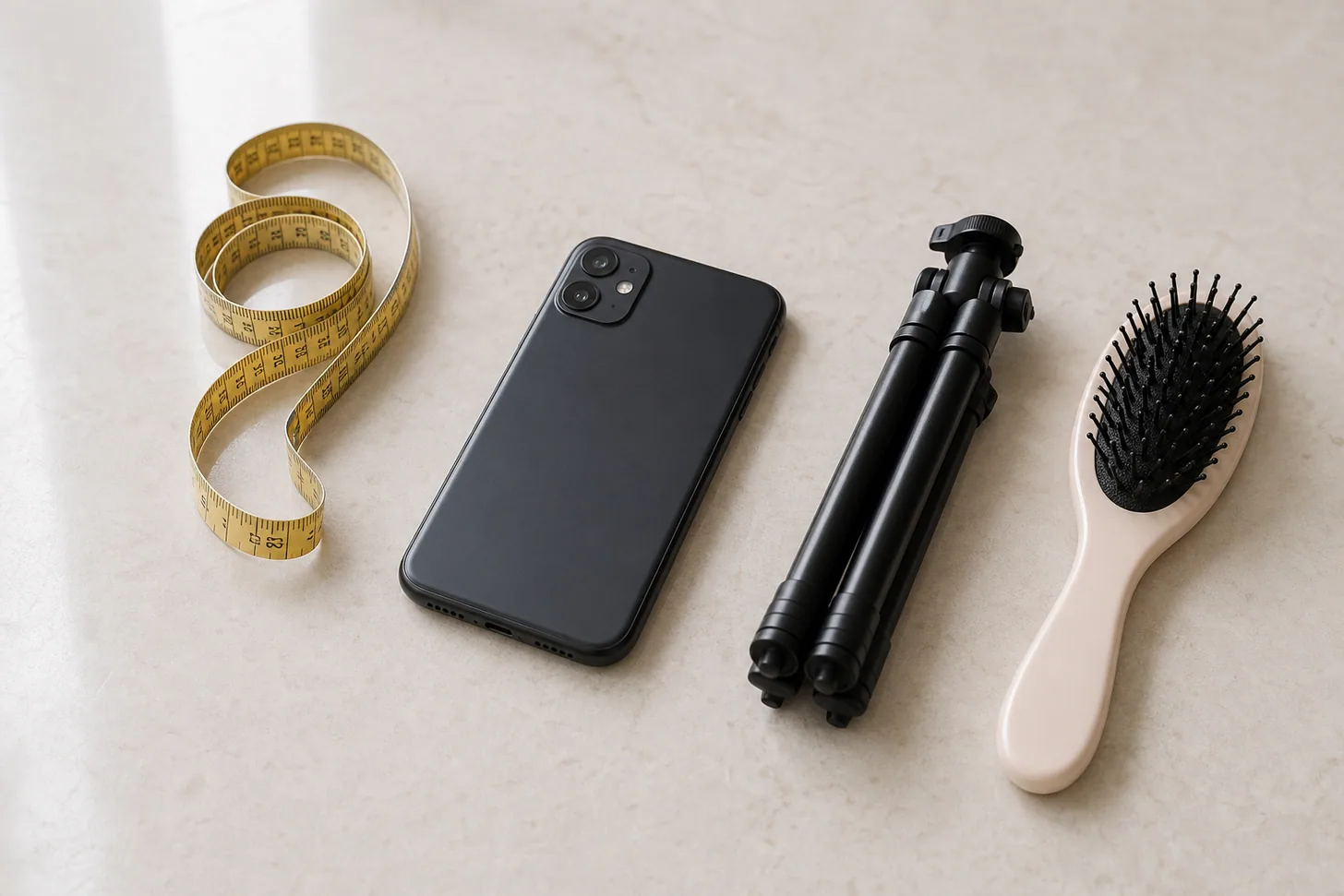
A tape measure is a worse-looking instrument than a mirror and a far better one.
Why you can't tell, and why that isn't a failure of attention
Hair changes slowly enough that it moves below the resolution of ordinary noticing, and everything around the hair changes faster than the hair does.
The rate is the first problem. Scalp hair grows at "a rate of about 0.35 mm/day, 1 cm/month, or 15 cm/year". Three months of a treatment working perfectly is three centimeters of new growth, most of it shorter than the hair around it and therefore invisible. There is no product that changes this arithmetic, and any before-and-after that shows a dramatic difference in six weeks is showing you styling.
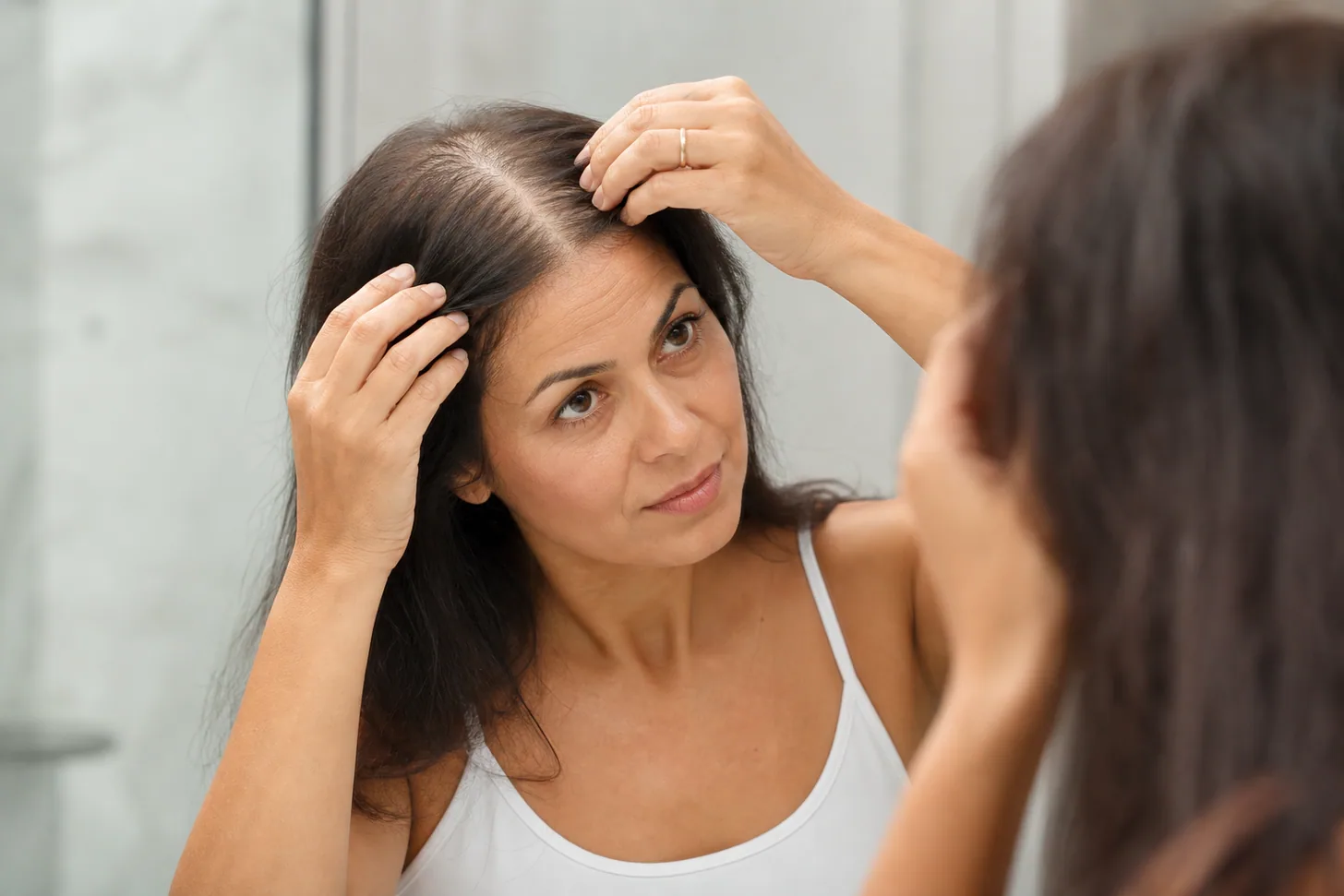
The noise is the second. Overhead light shows scalp that side light hides. Day-one hair separates differently from day-three hair. Humidity changes how much the strands sit together. A part that hasn't moved in a week reads wider than one moved this morning. None of that is density, and all of it lands in the impression you form standing in front of a mirror.
And the memory is the third. You are comparing today's hair against a recollection, and recollections of gradual change are unreliable in a specific direction: people tend to remember the best version. That is why the honest answer to "has it got worse?" is almost always "I don't know", and why a photograph taken on day one is worth more than any amount of subsequent looking.
None of this is a reason to give up. It's a reason to swap instruments.
Chair-side note
The single most useful thing I do for a client worried about her density has nothing to do with hair. I take the measurement on the first appointment, before we talk about anything else — ponytail circumference with a tape, written on her record, and a photo of her part in the same salon light. Three months later, when she is convinced it is worse, we have a number rather than two anxious opinions.
About half the time the number has not moved, and that conversation is completely different from the one we would have had without it. The other half, it has moved, and now we know by how much and we can do something about it instead of arguing about whether it is happening. Whatever you take from this page, take the baseline. It costs two minutes today and it is the only thing you cannot go back and get later.
MH
— Megan Holloway, Editor-in-Chief
The four measurements that actually repeat
A good measurement is one that gives the same answer when nothing has changed. That rules out most of what people do.
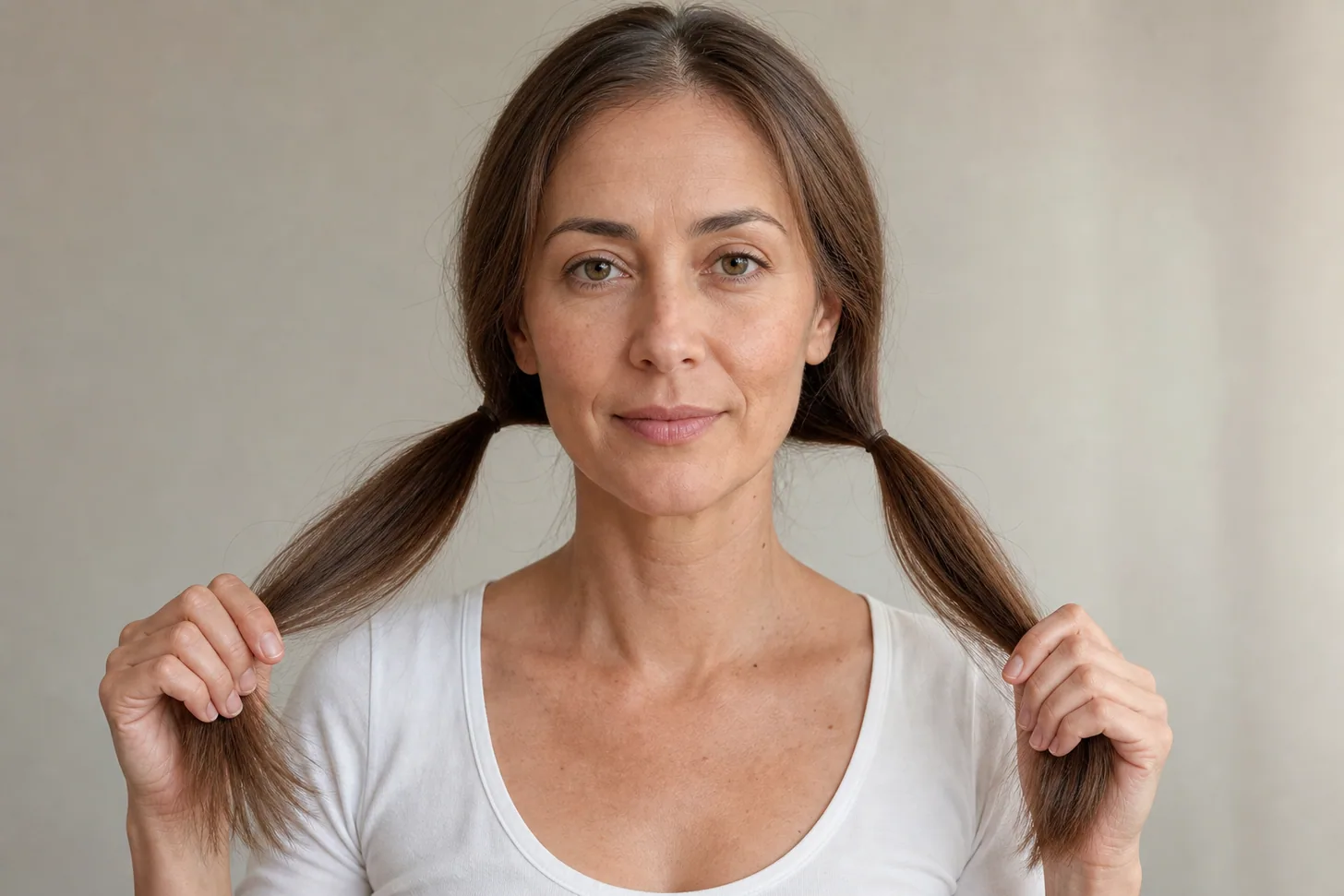
1. Ponytail circumference. The best home measurement there is for hair long enough to gather. Use a tailor's tape, gather everything at the same point on your head with the same tension, on dry unstyled hair, and write the number in centimeters. It doesn't care about lighting, mood or what you were wearing. Monthly, not weekly — over a week the measurement error is larger than any real change.
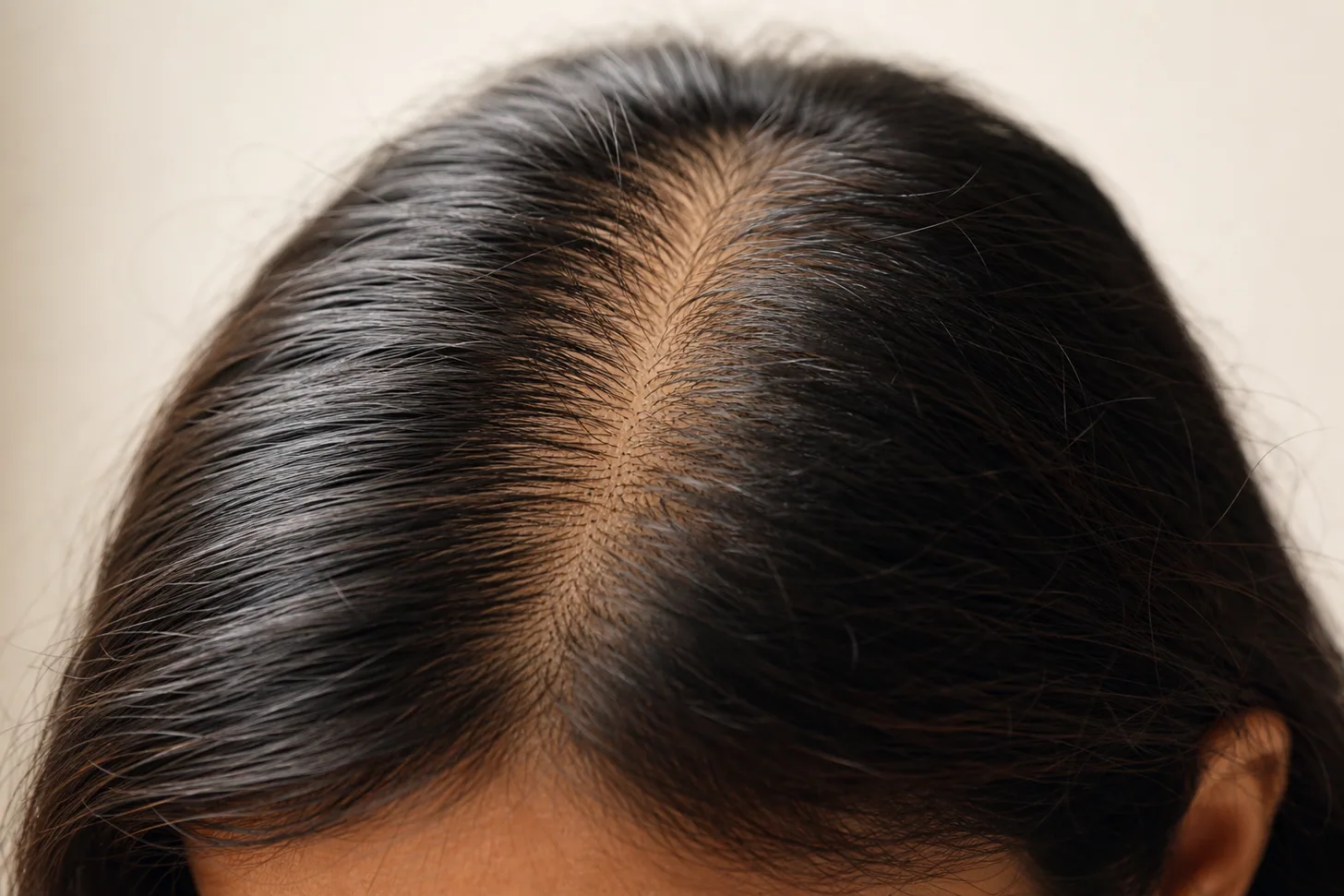
2. Part width against a fixed landmark. For hair too short to gather. Photograph the part from directly above, with something fixed in frame for scale, and always from the same distance. What you're watching is whether the visible scalp line widens, which is the change that matters in thinning at the crown.
3. A four-view photo set, on a protocol. Details below — this is the one people do casually and therefore uselessly.
4. A structured seven-day shed collection, done twice. Not a running tally. A defined week, every hair from every source, repeated identically three months later. The clinical guidance is that "daily hair counts more than 70 are further probed into", but the number that means something to you is the comparison between your two weeks, not the comparison to 70.
What isn't on this list: how your hair felt, whether your ponytail seemed thinner, whether a friend said something, and any judgment formed in front of a mirror. Those aren't measurements. They're the thing measurements exist to replace.
The photo protocol, and why casual photos drift
The clinical version tells you what you're up against. Validated global photography uses "a stereotactic positioning device on which the patient's chin and forehead are fixed", with identical camera, flash, magnification and lighting, across four standard views — vertex, midline, frontal and temporal — and consistent hair styling and parting each time.
You can't reproduce that. You can reproduce the parts that cause most of the drift:
Same light, and make it artificial. Daylight changes with the season and the weather, which is enough on its own to invent a trend. One room, one lamp, curtains closed.
Same distance, marked. A piece of tape on the floor. Phone at the same height — a stack of books works.
Same hair state. Dry, unstyled, same number of days since washing, same part combed the same way. Photographing freshly blow-dried hair one month and day-three hair the next tells you nothing about density.
Same four angles. Top of the head, part from directly above, front hairline, back. One angle is not enough — thinning is rarely even, and a single view can miss it entirely or exaggerate it.
Same date each month. This one matters more than it sounds. If you photograph when you feel anxious and skip the months you feel fine, you will build a record of your bad days and read it as decline.
The clinical tests, and what the real versions involve
These come up constantly in online advice in mangled form. The actual methods have defined thresholds, and knowing them tells you how much weight a home attempt deserves.
The standardized wash test. Five days without shampooing, then washing over a gauze-covered basin, after which "Hairs must be counted and divided into ≤3cm and ≥5 cm in length". The point isn't the total — it's the proportion of short, fine hairs, which is what separates a diffuse shed from pattern thinning where hairs are miniaturizing. That distinction is the one that changes treatment, and it's covered from the other direction in fine hair or thinning?.
So a shed that started this month points at something that happened in spring, and a product started in the middle of that shed will very often be credited with the recovery that was already coming. That is the single commonest way people conclude something worked. It's also why the three-month rule for medications and shedding after weight loss both point backwards rather than forwards.
Change one thing at a time — and write down what you changed
This is the part everyone knows and nobody does, because when you're worried you want to act on all fronts at once.
If you start a supplement, a new shampoo, a scalp serum and a different wash frequency in the same fortnight, then at month six you have one outcome and four variables, and you will never know which mattered.
Worse, you'll keep paying for all four indefinitely, because you can't tell which one to drop. That's an expensive way to be uninformed — and on supplements specifically there's a second trap worth knowing before you start, because the biotin in most hair formulas distorts the blood tests that would have found your actual cause.
A workable version: one change per twelve weeks, written in a note on your phone with the date. That's four things a year, tested properly, which is more useful than twelve things a year tested not at all.
And if you're at the beginning rather than the middle, the order matters: get the bloods done first, treat anything they turn up, and only then start trialling products against a baseline. Otherwise you're measuring the response to the wrong intervention.
When measuring is the wrong activity
You can see scalp through the part in ordinary light, or the part is visibly widening.That's a pattern, and it has treatments. Book an appointment rather than another month of photographs — what a dermatologist can actually do.
The shedding has run for more than about six months.Beyond that it isn't a temporary shed, and the question changes from "is it working?" to "what is this?"
The loss is patchy, or there are defined bald areas.That is a different category of problem entirely and needs to be seen, not tracked.
Your scalp is painful, itchy, scaly or sore.Symptoms plus hair loss is a reason to be examined now rather than measured for three months.
The hair loss arrived with other symptoms.Fatigue, weight change, irregular periods — that's a whole-body question. See which blood tests matter and take it to a doctor.
The tracking has become checking.Daily photographs, counting every wash, feeling worse after each measurement — that isn't information gathering any more. A proper assessment will settle it faster and more kindly than another six months of data, and it's a legitimate reason to book on its own.
FAQ
Three months at the very earliest, and six is a fairer test. The reason is arithmetic rather than patience: scalp hair grows about a centimeter a month, so three months of perfect results is three centimeters of new growth, most of it hidden under the hair already there. Nothing you can buy shortens that. There's a second reason to wait that nobody mentions — if you started treating a shed, the shed was probably going to settle anyway, since shedding after a trigger tends to begin two to three months after the event and then resolve. So a product started mid-shed will very often be credited with a recovery it had nothing to do with. That's why a baseline measurement taken on day one matters more than anything you do in month four.
It's the most quoted number in hair and it isn't well founded. A review of hair evaluation methods puts it plainly: it's said to be normal to lose up to 100 hairs a day, but no clinical study or standardized method has validated the number 100. When researchers actually counted, normal daily loss in women without scalp disease came out at roughly 28 to 35 hairs. Meanwhile a standard physiology reference gives shedding as approximately 100 to 200 follicles a day. Those are authoritative sources differing by an order of magnitude, which tells you the number isn't a reliable instrument. What is reliable is the direction of change in your own count over time, measured the same way each time — a completely different exercise from comparing yourself to a figure from a magazine.
Fix everything except the hair, and take four views rather than one. Clinics use a positioning device holding the chin and forehead in place, with identical camera, flash, magnification and lighting, and four standard views: vertex, midline, frontal, temporal. You can't reproduce that at home, but you can approximate what matters. Same room, same time of day, artificial light rather than daylight — daylight changes with the season. Same distance, marked on the floor with tape. Same hair state: dry, unstyled, same days since washing, same part. Same four angles: top of head, part from above, front hairline, back. And the same date each month rather than whenever you feel anxious, because photographing bad days and skipping good ones manufactures a downward trend that isn't real.
Ponytail circumference with a tailor's tape is the most repeatable home measurement for hair you can gather. Gather all of it at the same point on your head, with the same tension, on dry unstyled hair, and record the number in centimeters. It's insensitive to lighting, to what you were wearing and to how you felt that morning — which is exactly what makes it better than a mirror. Take it monthly, not weekly, because over a week the measurement error is larger than any real change. If your hair is too short to gather, the equivalent is part width against a fixed landmark, photographed rather than eyeballed. Neither tells you why anything is changing. They tell you whether it is, which is the question people can't answer for themselves.
It's a clinical test with a defined method, and the real version is worth knowing because the internet version isn't the same thing. In the described method, approximately 20 to 60 hairs are grasped between the thumb, index and middle fingers from the base, and if more than 10% are pulled away from the scalp, that constitutes a positive pull test — with no shampooing for at least a day beforehand. Two things break the home version: people don't count what they grasped, so the denominator is a guess, and people pull harder when they're worried. If you do try it, count what you grasp and what comes out, do it in several places on the head, and treat the outcome as something to mention at an appointment rather than a diagnosis.
Because almost everything except your actual density changes day to day, and fine hair amplifies all of it. Overhead lighting shows scalp that side lighting doesn't. Day-one hair sits differently from day-three hair. Humidity changes how much strands separate. A part that's been in the same place for a week looks wider than one moved that morning. And the mirror you use in the evening after a long day isn't the one you used on a good morning. None of that is density — it's why an impression formed in a bathroom is a poor instrument and a tape measure is a good one, and why the most useful habit is to stop judging on any given day and compare only the same measurement a month apart.
Only as a structured exercise for a defined period — and ideally not at all if it's making you anxious. If you do it, do it properly: collect every hair from every source for seven consecutive days, including shower, sink, brush and pillow, keep each day separate, and note which days you washed, because a wash day always collects the hairs released on the days between. The clinical rule of thumb is that daily counts above about 70 are worth investigating further, but the number that means something to you is the comparison between your two weeks, three months apart. What makes this worth nothing, and sometimes worse than nothing, is counting one alarming day and drawing a conclusion from it.
Close to it, and knowing the figure is what makes an honest timeline possible. Scalp hair grows at a rate of about 0.35 mm a day, 1 cm a month, or 15 cm a year — roughly four tenths of an inch a month, so half an inch is a slight overestimate but a workable one. Two consequences follow. Anything measured in visible length takes months to show, which is why three to six months is the standard trial period for everything and not a marketing device. And the ends of your hair are much older than people assume: at a centimeter a month, the ends of shoulder-length hair have been on your head for roughly two years and have been through every wash, brush and hot tool in that time — which is a better explanation for their condition than anything you did last week. That gradient is the whole subject of oily roots and dry ends.
When the answer would change what you do, or when the measuring itself has become the problem. Book rather than spend another month photographing if you can see scalp through the part in ordinary light, if your part is visibly widening, if shedding has run more than about six months, if there are bald patches or the loss is patchy rather than diffuse, if your scalp is painful, itchy, scaly or sore, or if the hair loss came with fatigue, weight change or irregular periods. Also stop if tracking has become checking — daily photographs, counting every wash, feeling worse after each measurement. At that point it isn't answering a question, and a real assessment will settle it faster and more kindly than another six months of data.
Fourteen years in fine-hair care, eight of them behind the chair. Megan takes the baseline measurement at the first appointment, before anyone has said what they're worried about.
This article is for general education and is not medical advice, and none of the tests described here are a diagnosis. If you are experiencing sudden, patchy or prolonged hair loss, scalp pain, or other concerning symptoms, see a board-certified dermatologist rather than continuing to track at home.
Images in this article are AI-generated illustrations, not photographs of real clients or results. See our image policy.
Results vary with hair type, density, and growth patterns. This guide is educational and not a substitute for an in-person consultation with a licensed stylist or physician.
Get the good hair intel
One honest, stylist-written guide in your inbox each week. No hype.

 MH
MH