Reviewed by Tara Sullivan · Updated August 2026 · 10 min read
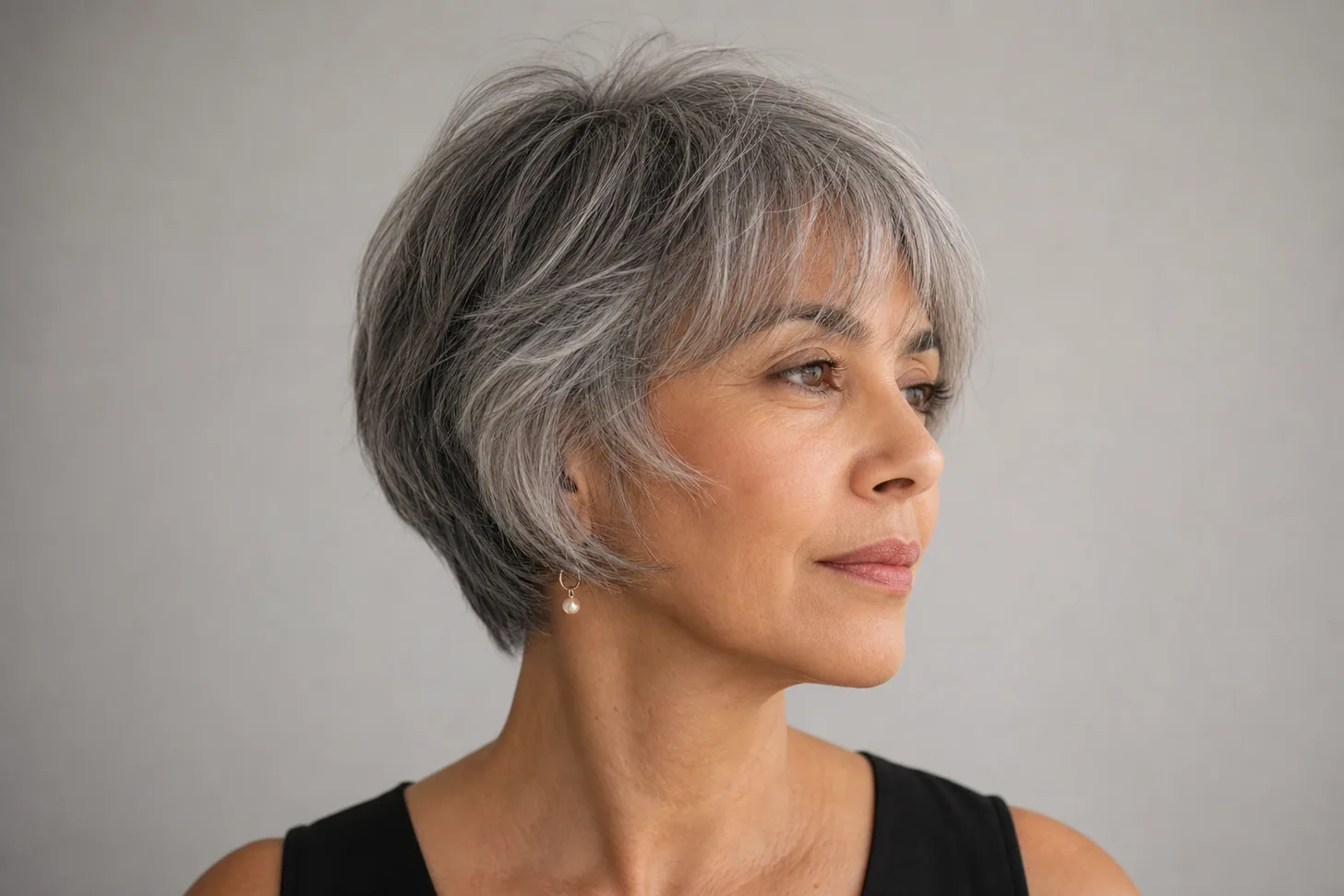
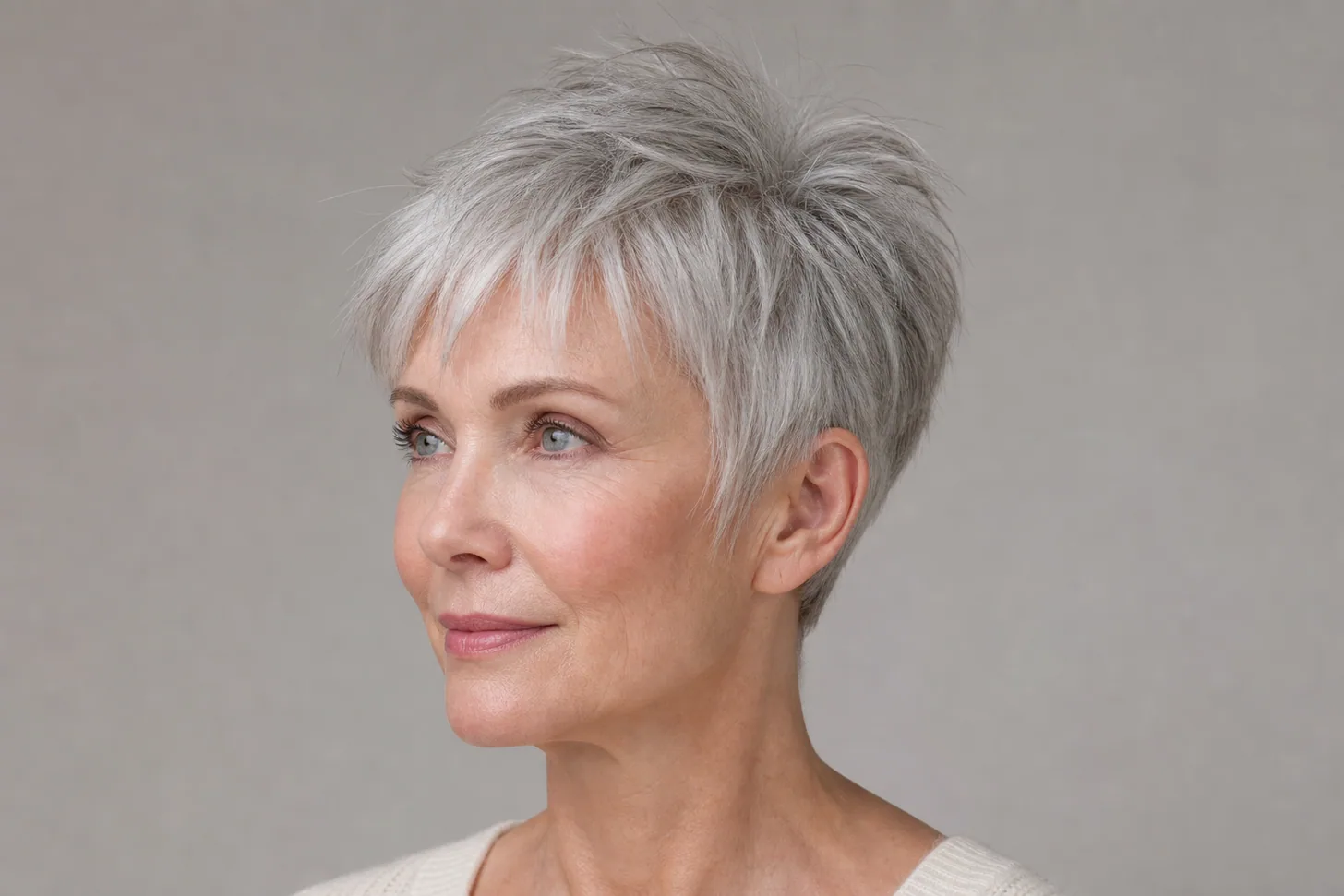
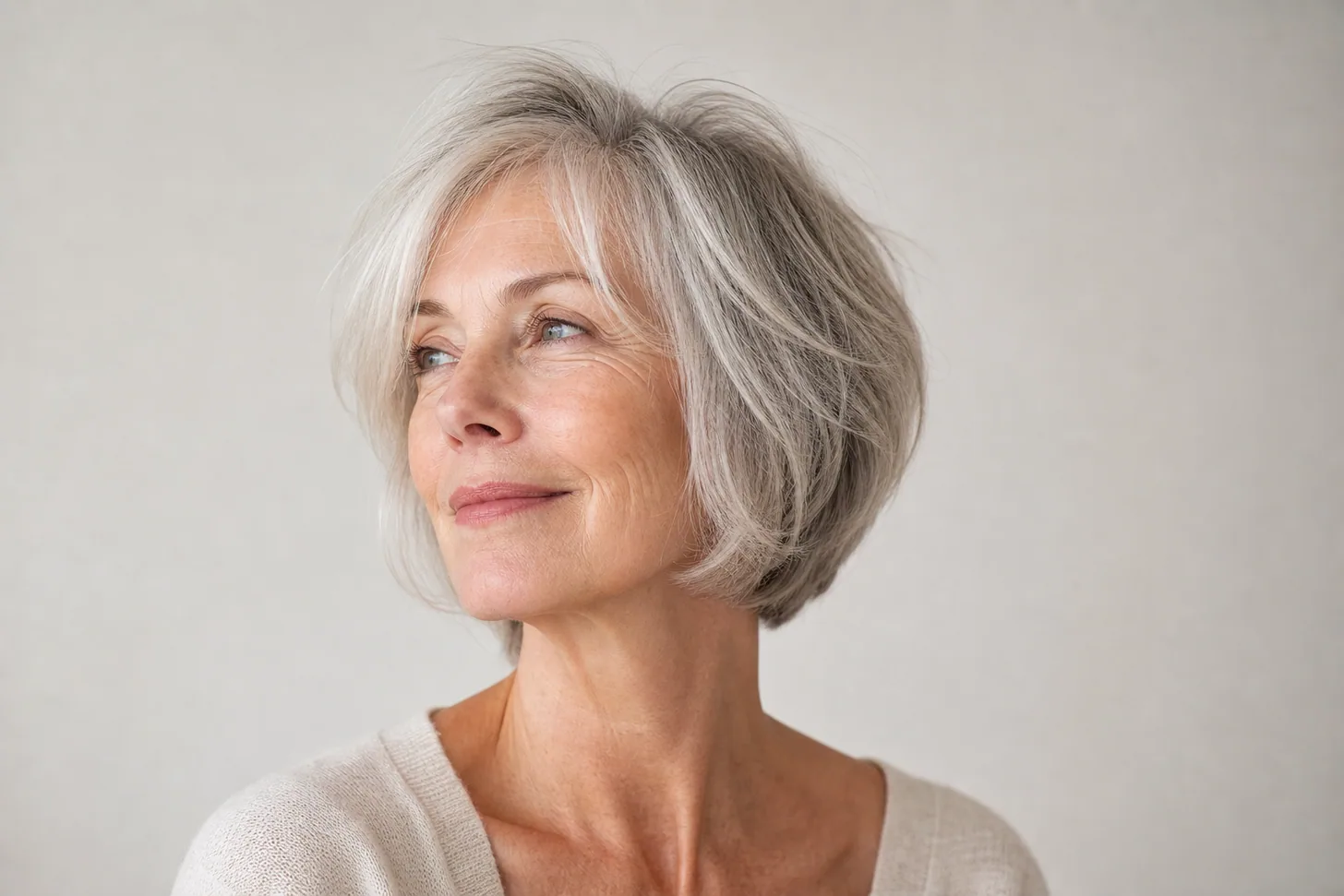
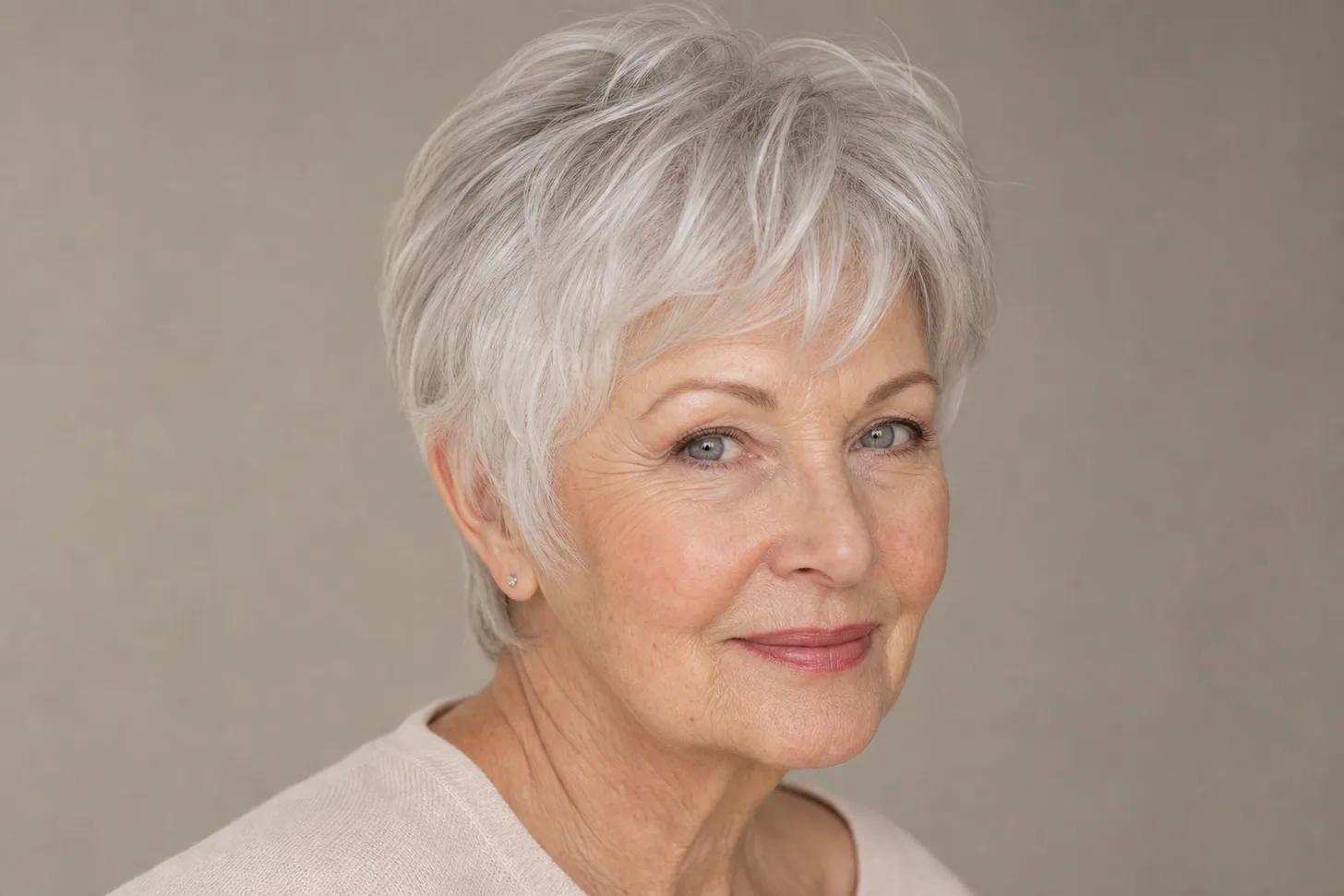
For an older woman with fine, thinning hair, three things converge at once: density genuinely drops — most at the crown and part — the texture changes as gray comes in, and the cut has to work with less daily effort than it used to.
The formula that fixes most of it is the same at every length: build height at the crown, keep a clean weight line at the ends so nothing looks stringy, don't over-layer hair that can't spare the density, and let softness around the face flatter a maturing complexion.
This is the umbrella guide — start here. Below are the universal principles, then 18 flattering representative cuts across short, medium, and by-decade looks, and at each turn I'll point you to the dedicated page for your decade or length so you can go deeper. The goal is full, modern, and flattering — never matronly.
Chair-side note
My mature clients almost always tell me the same thing: their hair "used to be so thick," and now it won't do anything. What's really happening is that fineness and lower density have crept up together, so the old cut — usually one length, grown a little long, parted the same way for thirty years — has stopped working.
The fix is rarely dramatic. Nine times out of ten I do three things: put height back at the crown, set a clean weight line so the ends look dense instead of thin, and take out the over-layering someone added trying to "add movement." Thinning hair can't spare layers; it needs shape. Get those three right and the hair looks full the moment you leave the shower, which is the only kind of fullness that lasts all day.
SB
— Simone Baptiste, Senior Stylist
What makes a haircut work for an older woman with thin hair
Three things decide it, and none of them is the style name. Bring these to the consultation instead of a photograph and you will get a better cut than the photograph would have given you.
Height at the crown, not width at the sides. Density drops fastest at the crown and along the part, so that is where a cut has to build. A shape that adds width around the ears while the top stays flat reads older, not fuller — it is the single most common mistake in cuts aimed at this reader.
A clean weight line at the ends. Thin hair needs its perimeter kept solid; the moment the bottom edge goes wispy and see-through, the whole head reads sparse regardless of what is happening above it. Ask for the ends point-cut rather than feathered into the perimeter, and refuse thinning shears — the tool, and when to say no to it.
Effort you can actually spend, every day, for years. Shoulder reach, grip strength and how often you can realistically get to a salon matter more at 70 than at 50, and a cut needing a five-week trim is a high-effort cut with the effort delegated. Wash-and-wear cuts for thin hair over 70 sorts this by effort rather than by length.
Everything below follows from those three. And one thing worth saying plainly: older here is doing a lot of work for a range that spans thirty years. A woman of 52 with good density and a woman of 78 with a visible scalp at the part have almost nothing in common as haircut problems, which is why this page hands you off to a decade page as soon as it can.
What changes for fine hair as you age (and what to do about it)
Three shifts happen, each with a straightforward answer. Density drops — fewer strands, each tending finer, with the crown and part thinning first, which is why height at the crown does more good than anything else you can ask for.
Texture changes — hair gets drier as oil slows, and gray comes in slightly coarser and sometimes wavier, a small gift because coarser, light-reflecting gray can read fuller than the hair it replaces. And the routine has to get easier — a long round-brush blowout stops being realistic, so the shape itself must carry the fullness. The through-line: build volume where you've lost it, keep the perimeter dense, finish with minimal effort.
One honest distinction first. Gradual fineness — hair slowly getting finer and sparser over years — is normal aging, and everything here is built for it. Genuine thinning — rapid shedding, patches, or a part that widens noticeably over months — a cut can flatter but not fix.
If you're unsure which you have, our guide to fine versus thin hair explains strand diameter versus density, and if the pace worries you, read fine hair or thinning and check with your doctor before deciding anything drastic.
Short cuts for mature fine hair
Short shapes give mature fine hair the most height and the easiest routine — they remove the weight that flattens the hair and lift it off a scalp that shows through more than it used to.
soft textured pixie with a lifted rounded crown and wispy edges on fine salt-and-pepper hair, mature woman in her 60s
1
Soft textured pixie
The single most reliable short shape for mature fine hair — short all over with light point-cut texture through the crown for height, and soft edges so it never reads severe. It lifts the hair exactly where density is lowest and needs only a dab of root lifter to finish. See our full pixie guide for fine hair for face-shape variations.
tapered pixie cut close at the nape with a little length on top on fine silver hair, mature woman in her 70s
2
Tapered pixie
Cut close and tapered at the nape and sides with a bit more length on top to style over the crown. The clean nape is comfortable, cool, and grows out tidily, and the length on top gives you something to lift. It's the neatest, most polished pixie and suits anyone who likes an ordered, put-together look.
short stacked bob with graduation and a rounded lifted back on fine gray hair, mature woman in her 60s
3
Short stacked bob
A short bob with graduation stacked at the back builds a rounded, lifted shape right where the crown thins, while the front stays simple and easy. The stack holds its own shape with barely any styling, which makes it a smart pick if flat back-of-the-head hair is your main frustration. Keep the ends blunt, not thinned.
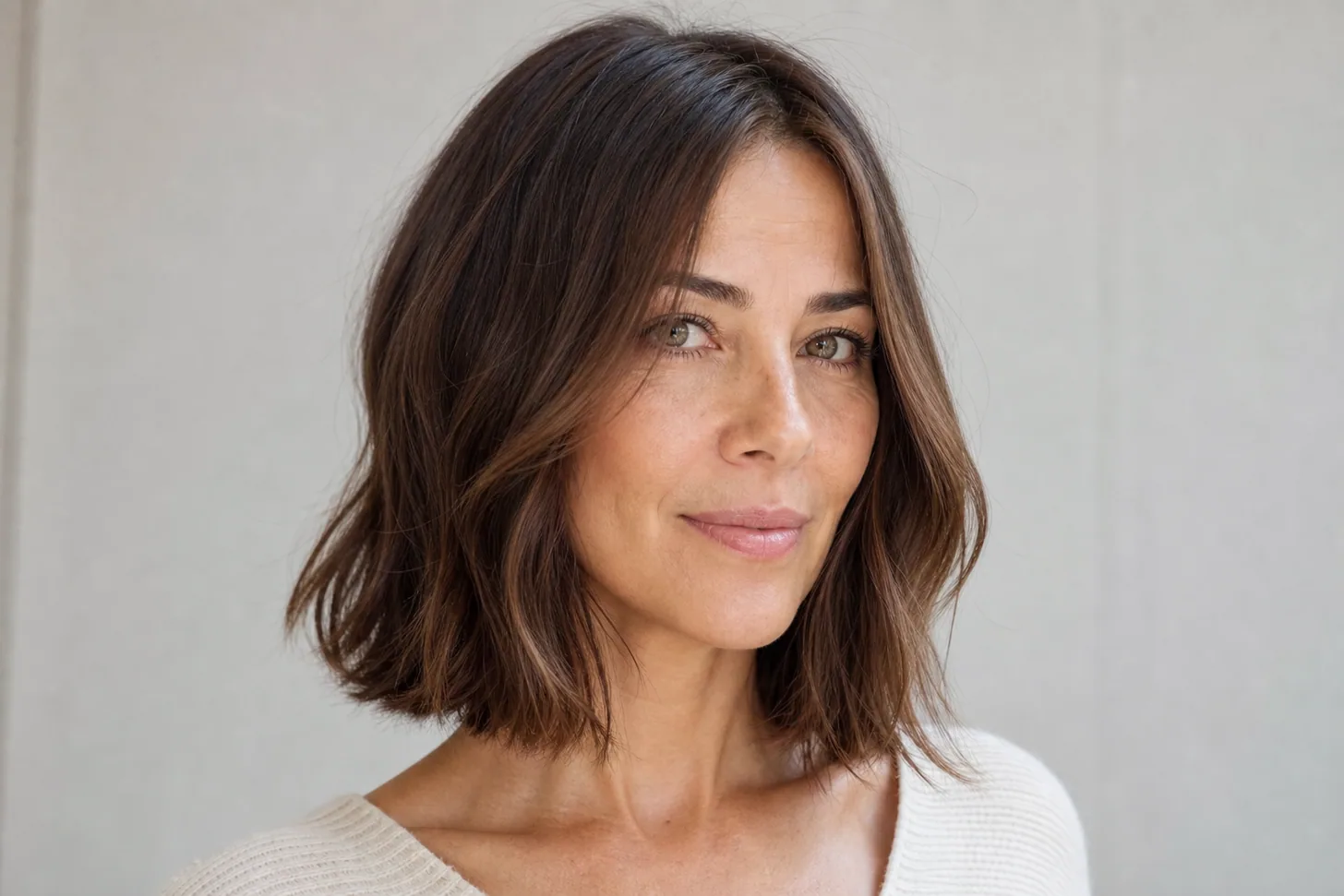
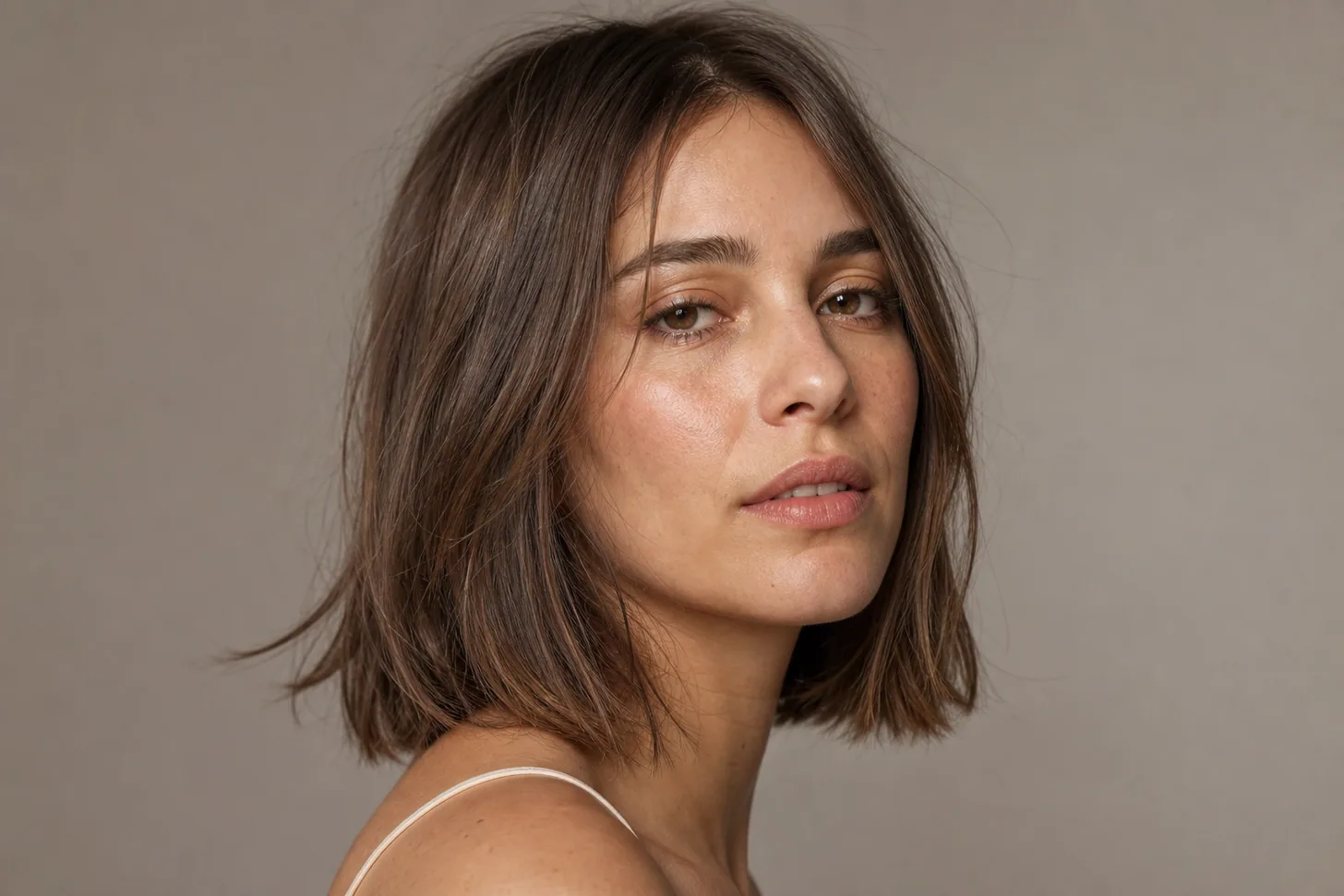
blunt chin-length bob with dense heavy ends on fine brunette hair with grays, mature woman in her 50s
4
Blunt chin bob
A blunt bob at the chin keeps the ends dense and heavy, which makes fine hair look thicker right at the perimeter where the eye lands. The single length is the lowest-maintenance short cut and grows out gracefully. Best if your density is still fairly even and you want a classic, timeless shape rather than a lot of texture.
textured crop with a soft wispy fringe over the forehead on fine white hair, mature woman in her 70s
5
Crop with a soft fringe
A gently textured crop finished with a soft, see-through fringe that covers a lined forehead and draws the eye up. The light fringe adds femininity without the density a blunt one would demand from an already-fine crown. Scrunch a little product as it air-dries and it's done — one of the most-requested shapes I cut at this age.
Medium-length cuts that still look full
You don't have to go short. Kept above the collarbone, layered for movement, and finished with a dense weight line, mid-length hair can look genuinely full into your 60s and beyond. These five are the lengths that flatter without going flat — reach for a lob on fine hair or a layered bob as your starting points, and browse the wider bob gallery if you want more shapes. The by-decade versions of this length run from over 40 upward.
collarbone lob with soft internal layers and a clean weight line on fine brunette hair with grays, mature woman in her 50s
6
Collarbone lob with layers
A lob stopping right at the collarbone, with a few soft internal layers for movement and a clean, slightly heavier weight line at the ends. It's the longest length I'd recommend for most mature fine hair — any longer and the weight flattens the roots. Great if you still like to tie it back.
jaw-length layered bob with rounded volume through the sides on fine salt-and-pepper hair, mature woman in her 60s
7
Layered bob
A jaw-to-neck bob with point-cut layers built for lift, not thinning — they add rounded volume through the sides and crown while the ends stay dense. It's the most versatile mid-short shape: full blow-dried, easy air-dried. Ask for soft internal layers so nothing looks choppy or sparse.
textured mid-length cut with soft curtain bangs framing the face on fine gray hair, mature woman in her 60s
8
Mid-length with curtain bangs
A shoulder-skimming cut softened by curtain bangs that part in the middle and sweep to the sides — the most flattering fringe for a maturing face because it frames the eyes and cheekbones without borrowing much density. The bangs give movement up front while the length stays simple. Easy to grow out, too.
soft modern shag with light feathered layers and gentle volume on fine brunette hair with grays, mature woman in her 50s
9
Soft shag-lite
A grown-up take on the shag — feathered layers kept light and concentrated toward the top for lift, without the heavy, over-textured ends the trend version has. It gives fine hair movement and a modern edge while staying easy. The key word is lite: enough layering to lift the roots, not so much the ends go wispy.
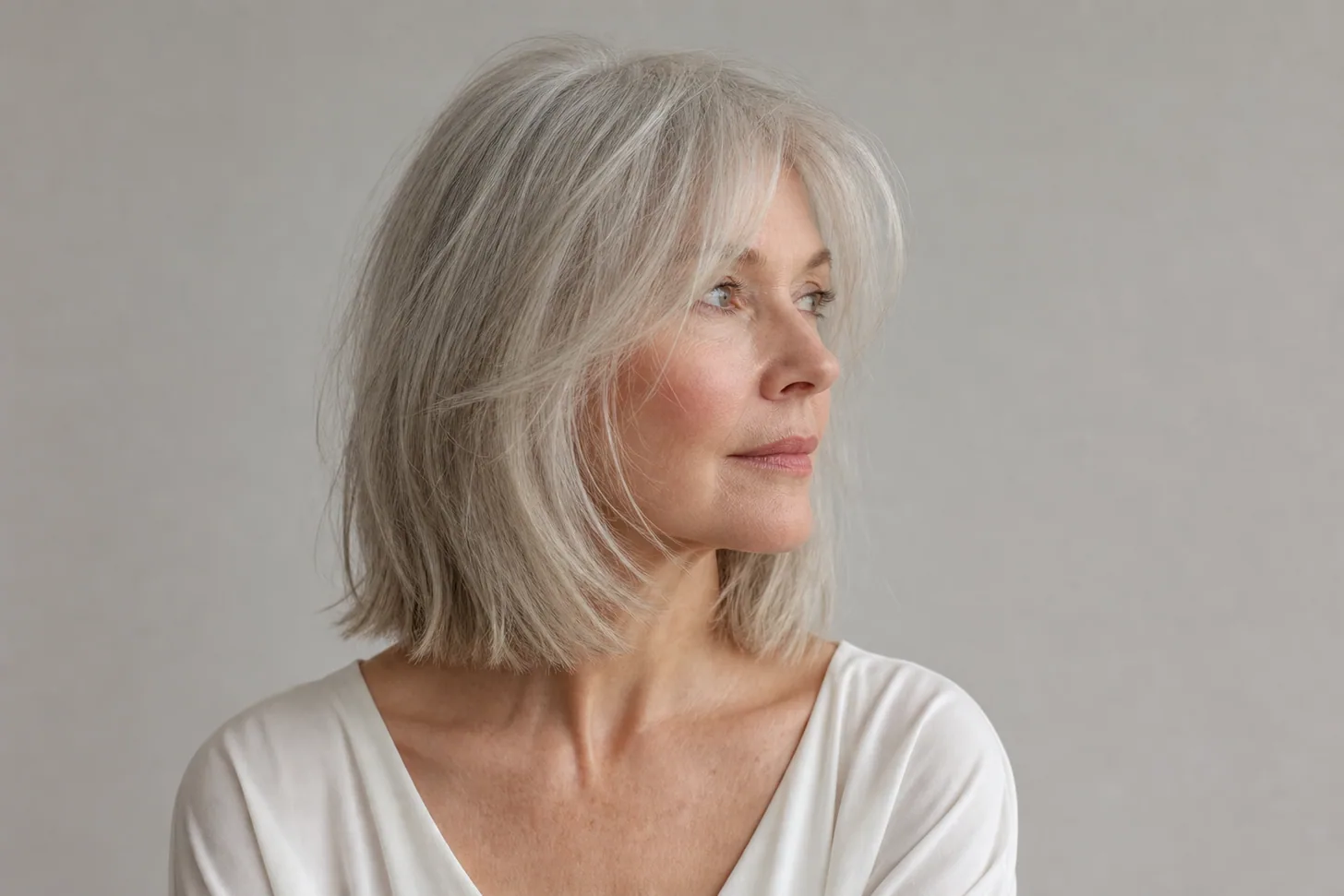
collarbone lob showing blended natural gray dimension with soft layers on fine silver-and-charcoal hair, mature woman in her 60s
10
Blended-gray lob
A lob cut to show off natural blended gray — the mix of silver, charcoal, and remaining pigment acts like free dimension and makes the hair read fuller than a solid color would. Soft layers keep it moving; a clean weight line keeps the ends dense. A beautiful, low-upkeep way to wear grown-out gray at a flattering length.
Your decade is a useful shorthand for where your density and effort level usually sit — though your actual hair matters more than the number. These four looks are signposts: pick the one closest to you, then open the dedicated page for the full gallery built for that stage.
modern shoulder-length layered cut with face-framing and glossy movement on fine brunette hair with early grays, mature woman in her 50s
11
The 50s look: layers with face-framing
In your 50s, density is usually still fairly good, so you have the most options — a shoulder-length layered cut with soft face-framing keeps things current and full. Focus on protecting fullness now with the right weight line. For the full range, see our gallery of hairstyles for fine hair over 50.
chin-to-jaw bob with crown lift and a soft side-swept fringe on fine salt-and-pepper hair, mature woman in her 60s
12
The 60s look: a lifted bob
By the 60s the crown often needs more help, so a chin-to-jaw bob with built-in crown lift and a soft fringe hits the sweet spot of full and easy. It's the most-requested stage, with the widest choice of shapes. Our biggest decade gallery, hairstyles for fine hair over 60, walks through all of them.
short soft pixie-crop with a lifted crown and gentle face-framing on fine silver-white hair, mature woman in her 70s
13
The 70s look: a soft crop
After 70, the fullest cut and the easiest cut are usually the same one — a soft crop or short pixie with a lifted crown that air-dries and takes minutes. Effort matters as much as looks now. Our guide to hairstyles for fine hair over 70 covers the shapes that hold up with the least fuss.
grown-out gray transition cut with blended silver roots and softly layered ends on fine gray-and-brown hair, mature woman
14
Transitioning to gray, any age
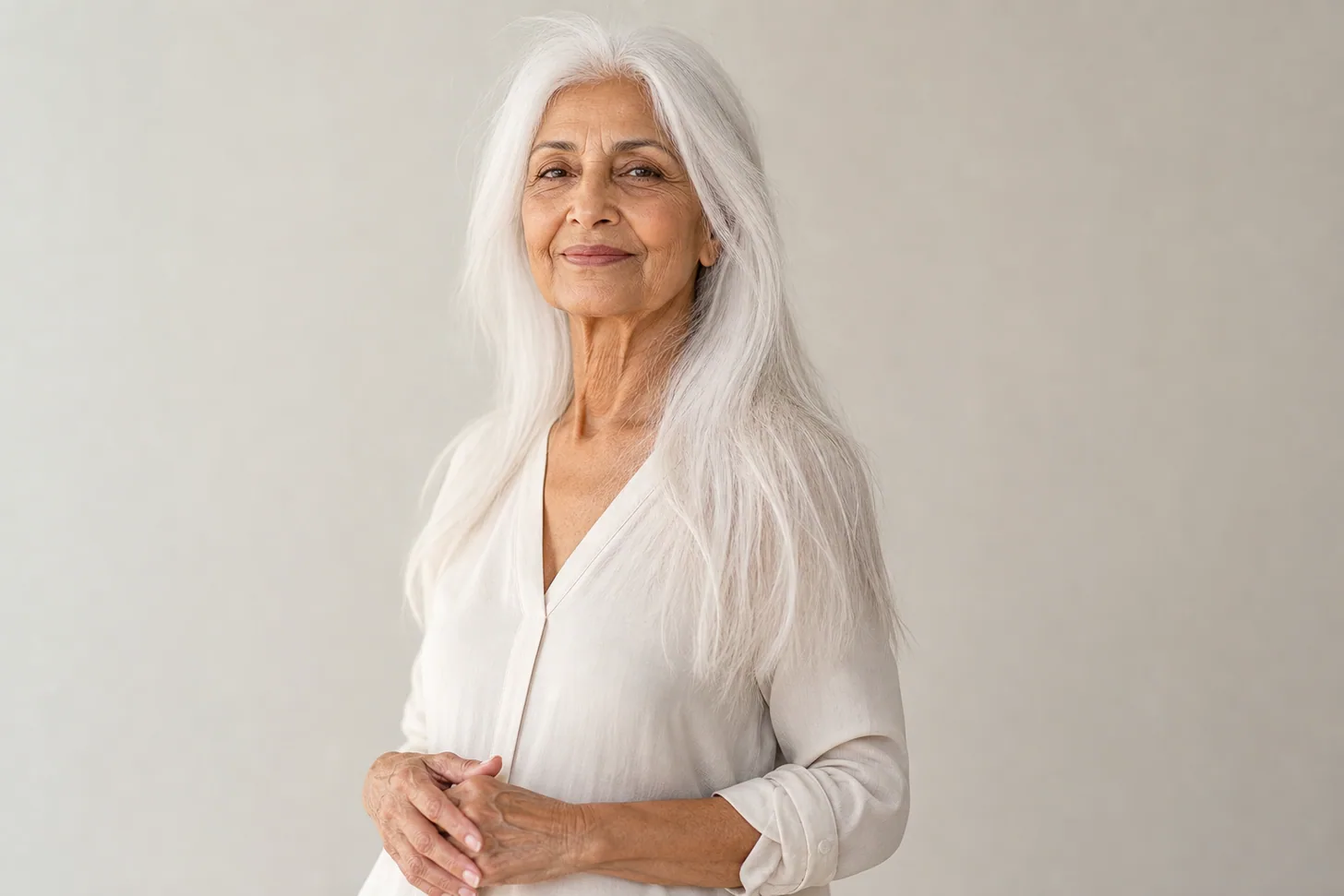
Going gray at any decade is easier with a shorter, layered cut that removes colored lengths faster and blends the silver line as it grows — the four routes through it are compared in going gray with fine hair. The natural dimension of mixed gray reads as fullness, so lean into it rather than fighting it. Keep the ends dense and let the light-reflecting silver do the work of highlights for free. For the longest end of the range in the oldest decade, see long hair on fine hair over 70.
Low-effort mature styles & soft bangs
If your priority is a cut that looks after itself, these four are shaped to look finished with almost no styling — the natural home of the low-maintenance cut for fine hair. Soft bangs feature here because a light fringe adds so much for so little effort; if you want to explore fringe options, start with our bangs guide for fine hair.
choppy wash-and-go crop with piece-y air-dried texture on fine gray hair, mature woman in her 60s
15
Wash-and-go crop
A textured crop cut to look good the second it air-dries — piece-y, undone, no-fuss. The choppy separation reads as volume without any heat. Scrunch in a little product as it dries and walk out the door; the cut for anyone who wants zero routine.
short cut worn with a deep side part sweeping fuller hair over a sparse area on fine silver hair, mature woman in her 70s
16
Side-parted volume cut
A short-to-mid cut worn with a deep side part so the fuller side sweeps over a sparser area — a no-product way to add root height and coverage at once. Simply moving the part off-center lifts hair that's learned to lie flat. The most effortless trick here for disguising a thinning crown.
soft mid-length style with airy curtain fringe framing the eyes on fine brunette hair with grays, mature woman in her 50s
17
Soft curtain-fringe style
A simple mid-length wear-anywhere shape lifted by an airy curtain fringe that frames the eyes and softens the face with almost no upkeep. The fringe does the styling work so the length doesn't have to. Tuck the sides, sweep the fringe, and you look finished.
chin bob cut to tuck neatly behind the ears with soft face-framing on fine salt-and-pepper hair, mature woman in her 60s
18
Tuck-behind-ear bob
A chin bob cut so the sides tuck cleanly behind the ears gives you two looks from one shape — tucked to show the face, down to frame it — with no styling either way. It's practical for glasses and busy days, and the clean length keeps fine ends looking dense. A quiet, flexible everyday cut. Keeping real length past 70 is its own calculation — long hairstyles for fine hair over 70 covers it honestly.
The five-minute routine for mature fine hair
A good cut carries most of the fullness, but a few gentle habits keep mature fine hair looking its best without a long routine. In the shower, keep conditioner on the mid-lengths and ends only, never the roots, so the crown stays lifted, and towel gently — aging fine hair is fragile and snaps when rubbed.
On damp hair, work a little root lifter or lightweight mousse into the roots, then air-dry while scrunching or blow-dry with your head tipped forward so the roots lift as they dry. Skip heavy oils and rich creams, which flatten fine hair; least weight always wins. Our guide to adding volume to fine hair goes deeper, and a touch of dry shampoo revives an afternoon flat spot without a wash.
Chair-side note
Here's the trick I give almost every mature client, and it costs nothing: move your part. Most people have worn the same center or same-side part for decades, so the hair lies flat there — often right over the spot where the scalp now shows. Switch to a deeper side part, or the opposite side, and you get instant root lift and coverage over the sparse area, no product needed.
On gray hair there's a second lever most people miss: keep some dimension. A flat, solid dark dye on thinning hair shows every gap, while softer tones, lowlights, or natural blended silver reflect light and read fuller. Between moving your part and choosing dimensional color, you can add the look of density before you touch a styling tool.
SB
— Simone Baptiste, Senior Stylist
What to ask your stylist
Bring your priorities, not just a photo — at this stage, how the cut lives day to day matters as much as how it looks. Say: "My hair is fine and thinner than it used to be. I want a cut that looks full and flattering on its own and takes me about five minutes. Please build height at my crown, keep a clean weight line so my ends don't look stringy, and don't over-layer — I can't spare the density."
If your face frame is a concern, add: "I'd like soft face-framing or a light fringe rather than a hard, heavy line." And if effort is the priority, be direct: "I want a wash-and-go shape that air-dries well, because a long blow-dry is hard on my arms." A good stylist will happily work to those constraints — they're exactly what makes a cut you'll actually enjoy wearing.
When these mature cuts aren't the right call
You want to keep long hair you can tie back. A short or mid cut removes that option; look at the longer collarbone shapes in your decade page, such as fine hair over 50, which keep a ponytail on the table.
You have a strong cowlick or very irregular growth at the crown. A very short crop can make it stick up; a slightly longer bob or a cut worked deliberately around the cowlick behaves better.
You're noticing rapid, patchy, or accelerating thinning, not gradual fineness. A cut flatters the look but won't address the cause — read fine hair or thinning and see a doctor first.
You're very active or genuinely have no time to style. Go shorter than you think — a soft crop or textured pixie will serve you far better than a mid-length that needs coaxing to look full.
FAQ
There's no single best cut, but the most flattering ones all follow the same formula: build height at the crown, keep a clean weight line at the ends so nothing looks stringy, and don't over-layer hair that can't spare the density. A soft, layered bob or lob and a textured pixie are the two most reliable choices across the mature years, because both lift fine hair off the scalp and can be styled in a few minutes. The right length depends on your decade, your density, and how much daily effort you want to spend — a woman in her 50s with fairly even density has more options than a woman in her 70s with a thinner crown. Match the cut to where you actually are, not to an age on paper.
Shorter usually looks fuller, but it isn't the only good answer. Length adds weight that drags fine hair flat and lets the scalp show through, so a chin-to-collarbone cut almost always reads as denser than long hair on the same head. That said, plenty of women wear a layered lob or soft mid-length beautifully into their 60s and 70s — the trick is keeping it above the collarbone, adding layers for movement, and not letting the ends go thin and see-through. If you love being able to tie your hair back, a collarbone length keeps that option. If your crown is thinning noticeably or a long routine is tiring, going shorter will serve you better. It's a trade-off between fullness and versatility, not a rule.
Yes, as long as they're soft and light rather than blunt and heavy. Wispy or curtain bangs are very flattering on a maturing face — they cover a lined forehead if that's a concern, draw the eye up, and add softness around the eyes. The key is a see-through fringe that borrows very little hair from an already-fine crown, not a thick straight-across fringe that needs density fine hair doesn't have. Curtain bangs that part in the middle and sweep to the sides are the easiest to wear and to grow out. If you're unsure, start longer and side-swept; you can always trim shorter, but growing out a too-short fringe takes patience.
Start with the cut, because shape does more than any product. A shorter length removes the weight that flattens fine hair, and layering concentrated at the crown adds height where thinning shows most. Keep a clean, slightly heavier weight line at the ends so the perimeter looks dense rather than stringy. For styling, a lightweight root lifter or mousse at the roots and a blow-dry with the head tipped forward create lift without heavy product; skip oils and rich creams, which flatten fine hair. Moving your part to a deeper side part instantly adds root height and covers a sparse spot. Color choice helps too — softer, dimensional tones and natural gray both catch light and read fuller than a flat solid dark shade.
Both can look full — it's largely personal, with a few practical points. Natural gray and silver strands are often slightly coarser than the pigmented hair they replace and they reflect light, so gray hair can actually look fuller than it is, and going gray removes the harsh regrowth line and a lot of upkeep. If you prefer color, softer dimensional tones with some depth and lowlights read fuller and are more flattering than a solid, flat dark shade, which can emphasize a thinning scalp and show every gap. The worst choice for fullness is a single block of dark color on thinning hair. Whatever you choose, dimension and light are what create the illusion of density. That coarsening is real and measurable, and it changes how the hair should be cared for — see thin but coarse hair, and menopause and fine hair for what else shifts at the same time.
The most flattering cut as fine hair ages is one built around three things: height at the crown, a soft frame around the face, and a shape that suits your actual density and effort level rather than a trend. In practice that's most often a layered bob or lob, a textured pixie, or a soft mid-length with curtain bangs — all cut with point-cut internal layers, never a razor, so the ends stay dense. Softness around the face flatters a maturing jaw and cheekbones far more than a hard, heavy line. The single biggest mistake is over-layering thinning hair, which makes it look wispier, not fuller. Bring your stylist your priorities, not just a photo, and let them tailor the shape to your head.
Three things, and the style name is not one of them. First, height at the crown: density drops fastest at the crown and along the part, so that is where the cut has to build — a shape that adds width at the sides while the top stays flat reads older rather than fuller. Second, a clean weight line at the ends, because the moment the bottom edge goes wispy and see-through the whole head reads sparse no matter what is happening above it; ask for point-cut ends and refuse thinning shears. Third, an effort level you can sustain — shoulder reach, grip and how often you can get to a salon matter more at 70 than at 50, and a cut needing a five-week trim is a high-effort cut with the effort delegated to someone else.
Eleven years behind the chair, specializing in short shapes and fine-hair texture. Simone believes the best haircut is the one you can style yourself in ten minutes.
Results vary with hair type, density, and growth patterns. This guide is educational and not a substitute for an in-person consultation with a licensed stylist.
Hairstyle images in this guide are AI-generated illustrations, not photos of real clients or results. See our image policy.
Get the good hair intel
One honest, stylist-written guide in your inbox each week. No hype.

 SB
SB