Reviewed by Tara Sullivan · Updated July 2026 · 10 min read
A perm can give fine hair the body it will never grow on its own — or it can fry it, and which one you get comes down to a few decisions made before the solution ever touches your head. For fine hair the answer is almost always a soft body wave, not a tight curl: a large rod, a gentle acid-balanced solution, and a stylist watching the timer, because a fine strand processes faster than a coarse one and over-processes into frizz if it's left too long.
The modern version is nothing like the crunchy perm you're picturing from the eighties — done right, it reads as loose, lived-in movement and root lift that holds through the day. Below is how a perm actually works, which type to ask for on fine hair, honest before-and-after expectations, the damage risk stated plainly, and eight soft perm and body-wave looks that suit fine and thin hair.
The word "perm" scares people, and I understand why — most of us have a relative with a photo from 1987 that did the damage. But the reason those perms looked and felt like that wasn't the perm itself, it was the tight rods, the harsh alkaline solution, and leaving it on until the curl was bulletproof.
When a fine-haired client asks me for "more body," I almost never book a curl. I book a large-rod body wave, process it lightly, and pull it early. The goal is hair that looks like it just air-dried with a natural wave — not a set. If you keep that one picture in your head, "soft wave, not tight curl," you'll ask for the right thing.
SB
— Simone Baptiste, Senior Stylist
How a perm actually works — and why fine hair reacts differently
A perm is a two-step chemical process. First a reducing solution — classically ammonium thioglycolate — breaks the disulfide bonds that hold each strand in its current shape, softening the hair so it can be reshaped around a rod.
Then a neutralizer, usually a mild peroxide, reforms those bonds in the new curled position and locks it in. The disulfide bonds broken and reformed in this process are the strongest bonds in hair, which is exactly why the change is permanent — and why it can't be undone by washing it out.
Here's the part that matters for you: a fine strand has a smaller diameter and less internal structure, so it takes up the solution and processes faster than a coarse strand does. The same perm that gives thick, resistant hair a perfect curl in fifteen minutes can be over-processing fine hair at ten.
Over-processing means too many bonds are broken and not enough reform cleanly — the hair comes out frizzy rather than waved, feels mushy and stretchy when wet, and the ends start to snap. This is the single most common way a perm goes wrong on fine hair, and it's entirely a timing and solution-strength problem, not an inherent one. Fine hair can be permed beautifully; it just has a smaller margin for error, which is why who does it matters as much as whether you do it.
One more property works in your favor and against you at once. Because fine hair has less internal mass, it holds a new bond structure slightly less tenaciously than coarse hair — so a fine-hair perm tends to be a touch softer and to relax a little sooner.
That's a feature for most people: a body wave that loosens gracefully over a few months beats a tight curl that grows out in a hard line. If you're not sure whether your hair is genuinely fine or simply thin as well as fine, sort that out first, because low density changes how visible the grow-out will be.
Which perm to ask for on fine hair
"Perm" covers a family of services at very different strengths. On fine hair the differences are the whole game — the wrong one over-processes, the right one just adds body. Here is what to know about each, in the order I'd recommend them for fine hair.
Body Waves Are the Default for Fine Hair
A body wave is a perm run on large rods with a shorter processing time, so it creates loose movement and root-to-mid volume rather than a defined curl. This is what most fine-haired clients actually want when they say "perm" — the fullness and the S-bend of natural wavy hair, without committing to ringlets.
It's the most forgiving option as it grows out, and it's the one I book most often. If you take nothing else from this section, take this: ask for a body wave, not a perm.
Acid (Low-pH) Perms Are Gentler Than Alkaline Ones
Perm solutions come in two broad camps. Traditional cold alkaline perms work at a high pH and swell the hair aggressively — they're strong, fast, and built for coarse or resistant hair. Acid (or acid-balanced) perms work at a lower pH closer to the hair's own, process more gently, and stress a fine strand far less.
For fine hair, an acid or low-alkaline formula is almost always the safer choice, even though it may take a little longer or need gentle heat to activate. Ask your stylist which type they plan to use and why.
Digital (Hot) Perms Trade Softness for Extra Heat
A digital perm uses heated rods alongside the chemistry to create a soft, loose wave that shows up most when the hair is dry — the results can look very natural. The trade-off is that you're adding heat stress on top of chemical stress, which is more total load on a fine strand.
It's an option for healthy, uncolored fine hair in experienced hands, but if your hair is at all fragile or color-treated, a gentle cold body wave gets you a similar soft look with less risk.
Root Perms and Spot Perms Target Volume Only
If your real complaint is flat roots rather than straight lengths, a root perm — perming only the first inch or two at the base — lifts the crown without waving the whole head. It's a niche service and needs redoing often as the hair grows, but for fine hair that's limp at the scalp and fine everywhere else, it can be a targeted fix. A spot perm does the same for one section, like flat pieces around the face.
Perm type
Result on fine hair
Risk level
Best for
Body wave (large rod)
Loose movement, root-to-mid volume
Lower
Most fine hair — the default recommendation
Acid / low-pH perm
Soft, defined wave; gentler process
Lower–moderate
Fine hair wanting a bit more definition
Digital (hot) perm
Natural loose wave, shows dry
Moderate
Healthy, uncolored fine hair; experienced stylist
Cold alkaline perm (tight rod)
Defined curl — over-processes easily
Higher
Usually the wrong call on fine hair
Root perm
Crown lift only, no length wave
Lower (small area)
Flat roots on otherwise fine, straight hair
What to honestly expect: before and after
The before-and-after that sells you on a perm online is almost always a body wave, styled, on the day. Here's the fuller truth. On day one the wave will look tighter and more "done" than its settled state — perms relax over the first week, which is normal and planned for, so don't panic if it's curlier than you asked for at the salon.
By week two it settles into the shape you'll actually live with. You'll get real, standing-up-on-its-own body and a wave pattern that means your hair air-dries with movement instead of hanging flat — that's the win, and for fine hair it's a genuine one.
What a perm will not do is make your hair look thicker in the sense of more strands. It reshapes the hair you have; it doesn't add density.
The volume illusion is real and often substantial, because waved hair occupies more space and lifts at the root, but if your underlying concern is a widening part or visible scalp, a perm can actually make thinning more visible by separating the hair into wave sections. That's a genuinely important distinction covered in coverage for thinning on top, and it's worth being honest with yourself about before you book.
Expect the wave to last roughly three to five months, softening rather than dropping. It grows out from the root — new straight growth above your waved lengths — so you'll see a soft line after a couple of months. And expect your styling routine to change: permed fine hair is happiest air-dried or diffused with a light foam, scrunched, and left alone. If you were blow-drying it straight every day, a perm undoes that on purpose.
8 soft perm & body-wave looks for fine hair
These are the shapes and wave patterns that flatter fine and thin hair — all on the loose end of the spectrum, because that's where fine hair lives. Bring a photo of the settled look you want, and let your stylist choose the rod size and solution to get there.
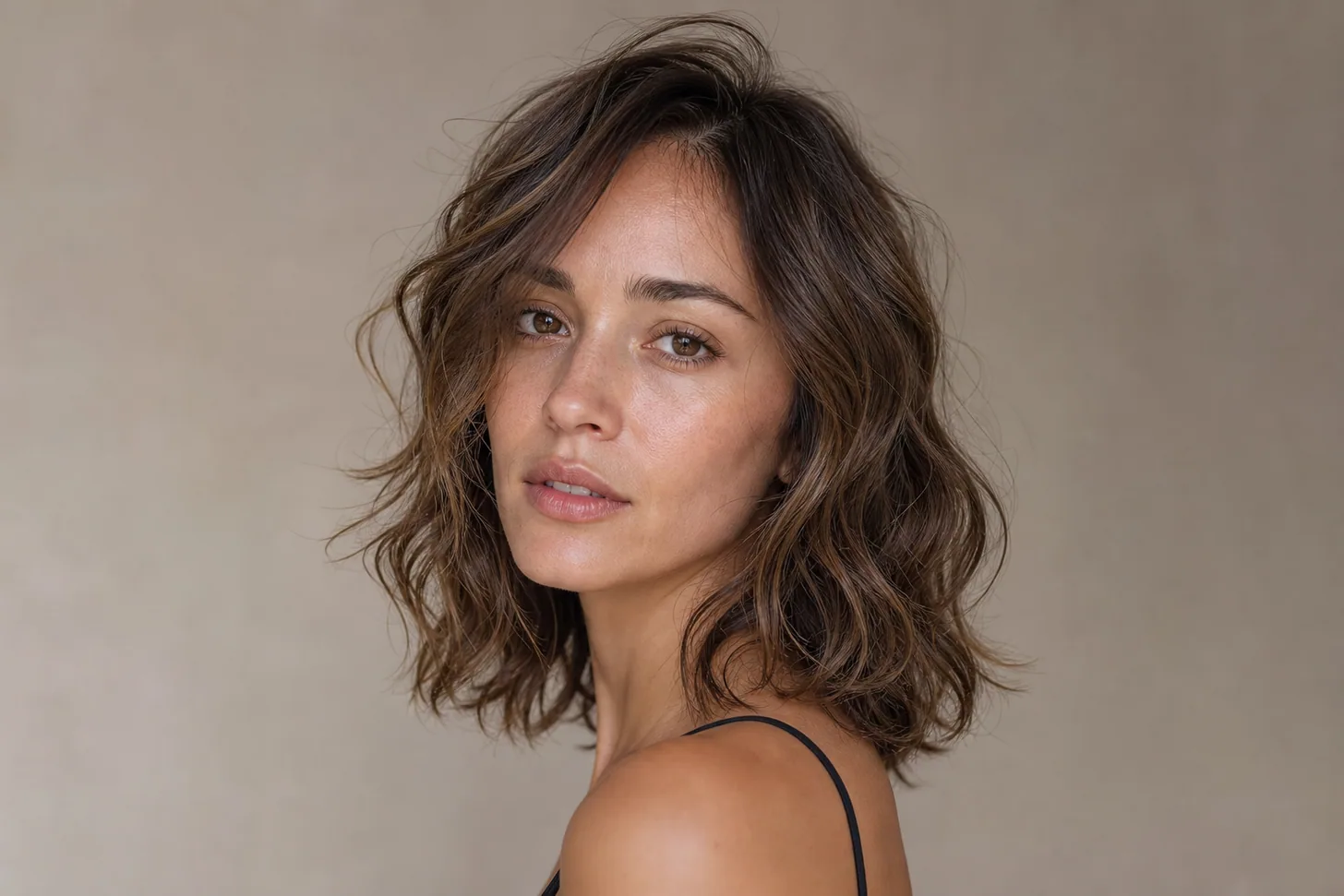
fine collarbone-length hair with a loose beachy body wave, large soft S-waves and root lift, air-dried undone texture
1
The Loose Beachy Body Wave
Large rods and a light process give a soft S-wave that mimics air-dried beach hair — the single most popular ask for fine hair, and the most forgiving to grow out. It lifts at the root and reads as effortless movement rather than a set. Style it by scrunching a lightweight foam into damp hair and diffusing on low.
fine hair in a short wavy bob with a soft body wave adding fullness and bend through a chin-length blunt bob
2
The Waved Bob
A body wave over a blunt bob is a fine-hair power move: the strong perimeter holds the shape while the wave fills it in, so the hair reads dense from root to tip. It suits anyone who already wears a bob and wants to stop fighting for daily volume. Ask for the wave to start below the ear so the top stays sleek.
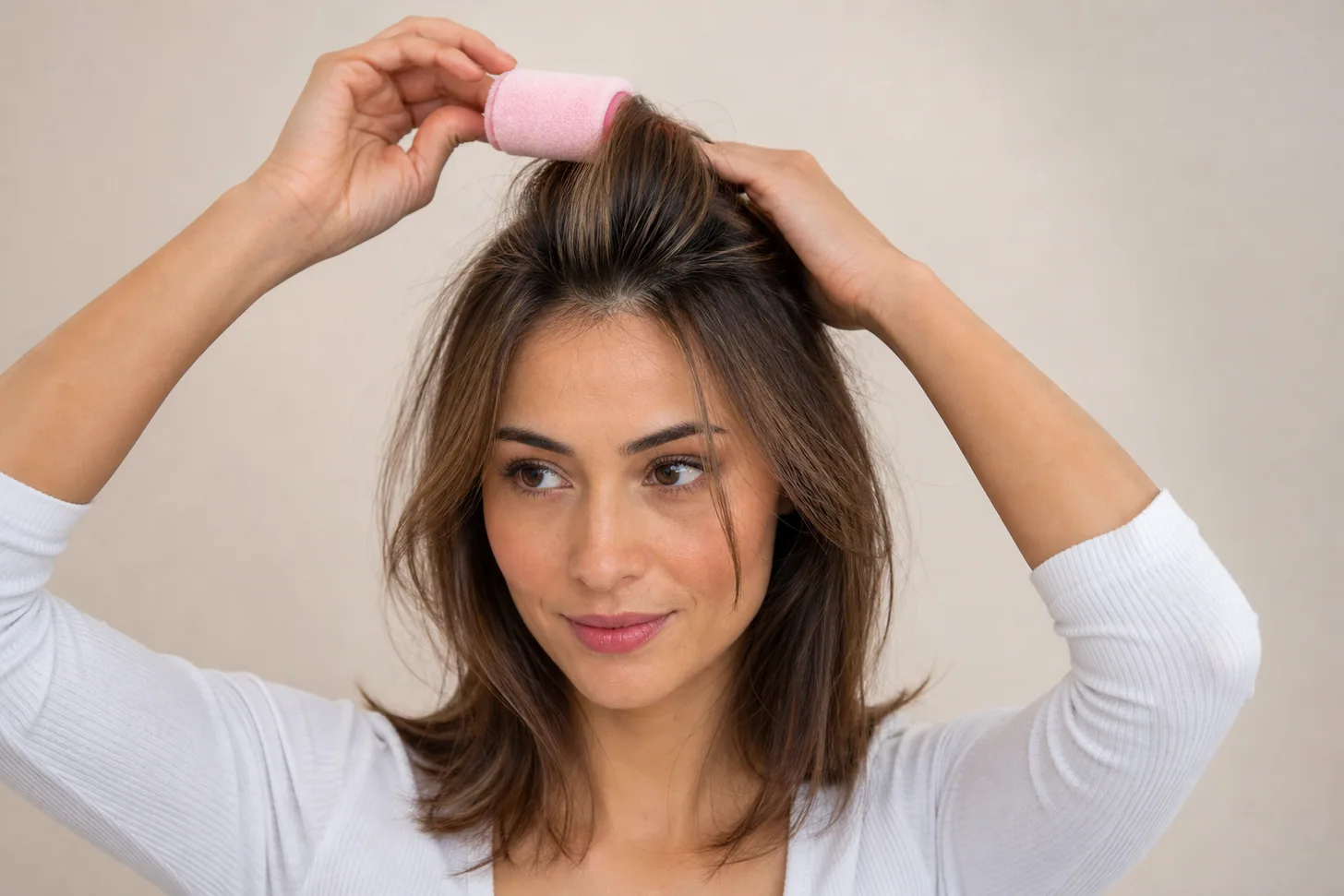
fine hair with a subtle root perm giving crown lift and volume at the scalp, lengths left straight and smooth
3
The Root-Lift Perm
Only the first inch or two at the crown is permed, so the roots stand up and the lengths stay straight — the answer for hair that's flat at the scalp but fine everywhere else. It reads as a great blow-dry you didn't have to do. Expect to redo it every few months as growth pushes the lift out, and pair it with a root lifter on off days.
fine long hair with soft large loose waves from mid-length to ends, natural undone movement, strong perimeter
4
The Mid-to-Ends Loose Wave
The rods start at the mid-lengths and leave the roots straight, so longer fine hair gets movement and an anti-flat lift at the ends without a curled crown. This placement flatters length because it keeps the top smooth and the bottom full — the opposite of the triangle that heavy layering creates. Best on hair that's healthy to the ends.
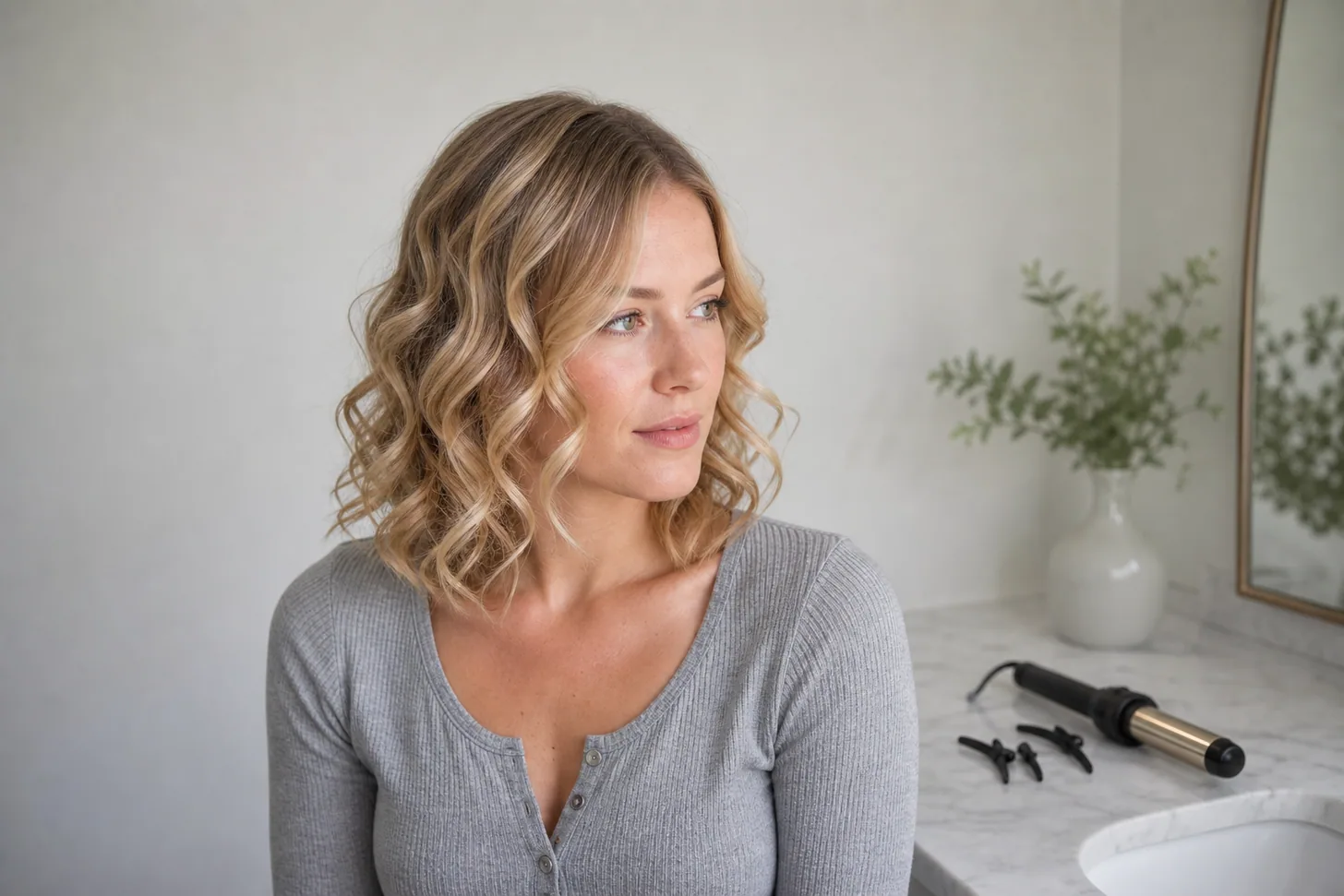
fine lob length hair with a soft digital perm giving natural loose bends visible when dry, modern undone finish
5
The Digital-Perm Soft Wave
On healthy, uncolored fine hair, a digital perm sets a loose bend that's barely there when wet and blooms as the hair dries — the most natural-looking wave of the bunch. It suits someone who wants "my hair but wavier" and has a stylist experienced with hot perms on fine textures. Skip it if your hair is bleached or fragile; the added heat is the trade-off.
fine hair with a wavy shag, soft body wave through choppy layers creating airy volume and movement around the face
6
The Waved Shag
A body wave through a soft shag is where the perm-plus-cut combination shines — the layers give the wave somewhere to sit and the wave gives the layers the movement they were cut for. It's high-impact texture for fine hair that wants a bit of an edge. Have the cut done first and the perm a week or two later so the stylist can wave the finished shape.
fine hair with soft permed waves worn in a loose half-up style, showing the wave holds shape when pinned
7
The Wave That Holds an Updo
One quiet benefit of a body wave: permed fine hair grips pins and holds a half-up or twist far better than slippery straight hair, because the wave adds friction. If you struggle to get any style to stay put, the wave is doing double duty. The texture also hides the grips that slide out of straight fine hair.
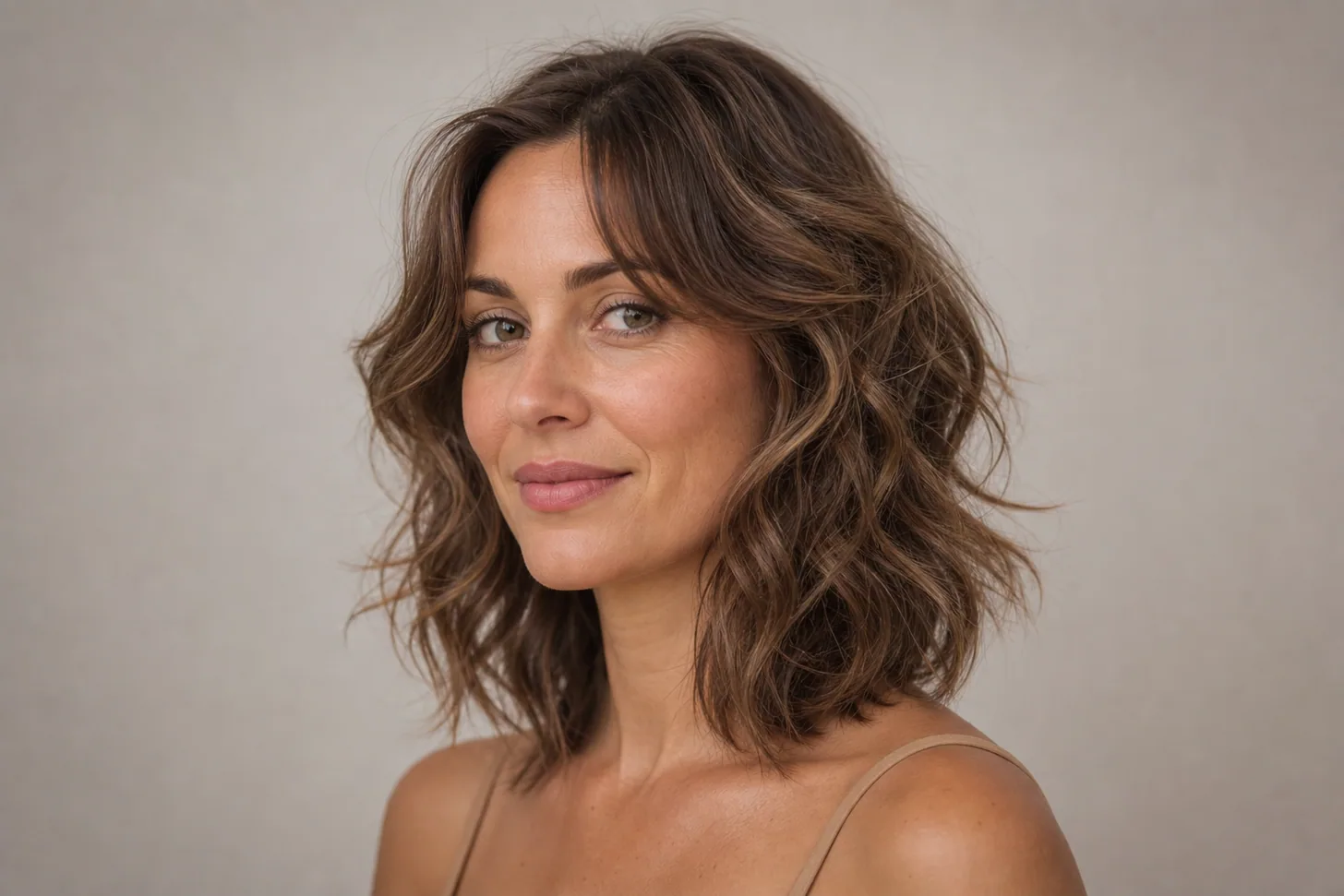
fine hair with a very soft barely-there wave, subtle bend adding fullness, understated natural result on mature fine hair
8
The Barely-There Wave
The gentlest version of all: the largest rods, pulled early, for a whisper of bend that mostly just adds body and lift. It suits mature fine hair and anyone nervous about looking "permed" — nobody will know it's a perm, they'll only notice your hair has more life. It's also the lowest-risk process, which makes it a sensible first perm.
Caring for permed fine hair
The first 48 hours decide a lot. Don't wash a fresh perm for at least two to three days — the bonds are still stabilizing, and shampooing too soon can loosen the wave you just paid for.
After that, switch to a gentle, sulfate-free shampoo and wash less often; permed hair is drier than it was, and fine permed hair especially doesn't want to be stripped. Keep conditioner on the mid-lengths and ends, off the roots, so you don't flatten the lift.
Style it wet-to-dry. Scrunch a lightweight foam or a soft-hold gel into soaking-wet hair, then diffuse on low heat or air-dry — never brush a dry permed wave, because a brush pulls it straight and turns it to frizz. On day two, mist with water and re-scrunch rather than re-wetting fully.
A weekly lightweight mask keeps the ends from going crunchy, and a heat protectant is non-negotiable if you ever put a hot tool near it. The routine overlaps almost entirely with the one in caring for fine, wavy hair — because a perm has essentially made your hair wavy.
Chair-side note
The most important thing you'll do for a perm happens before any chemistry: the test curl. I take a small, hidden section, process it exactly as I plan to do the whole head, and watch how fast it takes and how the wave forms.
On fine hair this is not optional — it's the difference between me knowing your hair over-processes at eleven minutes and finding that out on your entire head. If a stylist skips the test curl on fine hair, or tells you the box time is fine for everyone, that's my cue to walk. Your hair's timing is yours, and it has to be measured, not assumed.
SB
— Simone Baptiste, Senior Stylist
What to ask your stylist
Book a consultation before the appointment, and open with your hair's history: "My hair is fine, and it's [colored / highlighted / virgin]. I want soft body and movement, not a tight curl."
Then ask directly: "Would you use an acid or an alkaline solution on my hair, and what rod size? Can we do a test curl on a hidden section first to check my timing?" A stylist who answers those easily and reaches for a large rod and a gentle solution is the one you want.
If your hair is colored, say so before anything else and ask whether they'd perm it at all — a good stylist may decline highlighted or bleached fine hair, and that's them protecting your hair, not being difficult. Ask what the wave will look like settled, not on day one, and ask for the grow-out plan. The broader script for describing fine hair in the chair is in the exact words to ask for a fuller-looking haircut.
When a perm isn't your best move
Your hair is bleached, highlighted, or chemically damaged. Color and bleach already break internal bonds; a perm breaks more, and on fine hair that stack can tip into breakage. Get a strand test at minimum, and be ready to hear no.
Your ends are dry, splitting, or snapping already. A perm processes damaged hair unevenly and fast. Repair the hair first with the routine in what actually repairs fine hair, or trim to healthy ends, before you consider one.
Your real concern is a widening part or visible scalp. A perm can make thinning more obvious by separating the hair. Read coverage for thinning on top first — and if the change came on suddenly or in patches, see a board-certified dermatologist before any salon service.
You want the look for one occasion. A perm is a months-long commitment. For a single event, the heatless wave methods give you the same soft result with no chemistry at all.
You have a known allergy to thioglycolate or a sensitive, irritated scalp. This is a patch-test situation. Ask for one 48 hours ahead, and see a doctor about any scalp condition before perming.
FAQ
Yes, and fine hair is often the hair that benefits most from a perm, because the wave adds the body it can't grow on its own. The catch is that a fine strand processes faster than a coarse one, so the same perm that gives a thick head a defined curl can over-process fine hair into frizz or breakage if the timing isn't adjusted down. The safe version is a soft body wave or a large-barrel wave on a gentle, acid-balanced solution, processed by a stylist who is watching the clock rather than following the box. Ask for a test curl on a hidden section first — it tells the stylist exactly how fast your hair takes and how long to leave the solution on.
Any perm changes the internal bonds of the hair, so there is always some cost — the question is how much. A perm breaks the disulfide bonds inside each strand and reforms them in a new shape, and on fine hair, which has less of that internal structure to spare, an over-processed perm shows as frizz, mushy wet texture, and snapping ends. Done conservatively on healthy, uncolored fine hair — a gentle solution, a larger rod, careful timing — the damage is manageable and the hair recovers with light care. Done on already-bleached or fragile hair, or left on too long, it can cause breakage that takes months to grow out. Healthy hair to begin with is the single biggest factor.
A soft body wave or a loose, large-barrel wave on an acid-balanced (or low-alkaline) solution. Acid perms process more gently and at a lower pH than the old-school cold alkaline perms, so they swell and stress a fine strand less. A larger rod gives a loose S-wave rather than a tight curl, which reads as body and movement instead of ringlets and is far more forgiving as it grows out. Avoid tight rods and strong alkaline solutions on fine hair — they are built for coarse, resistant hair and will over-process yours. If your hair is colored, tell the stylist before anything else.
A body wave or loose perm on fine hair typically holds its shape for about three to five months, softening gradually rather than dropping all at once. Fine hair tends to relax a little faster than coarse hair because it has less internal structure to hold the new bonds, and a looser wave loosens sooner than a tight curl would. It grows out rather than washing out — the new growth at the root comes in straight while the length keeps its wave — so plan on a soft demarcation line after a couple of months and a re-perm or a trim when it bothers you. The looser the wave, the more gracefully that grow-out reads.
Sometimes, but it's the situation that most often goes wrong. Color and especially bleach already break some of the hair's internal bonds, and a perm breaks more — stack the two on a fine strand and you can cross the line into breakage. Single-process color on healthy fine hair is usually workable with a gentle solution and careful timing; highlighted, balayaged, or bleached fine hair is much riskier and many stylists will decline it or insist on a strand test first. Never perm and color on the same day. If you color your hair, that conversation has to happen before you book, not in the chair.
They're the same chemical process at different strengths. A traditional perm uses smaller rods to create a defined curl; a body wave uses large rods and a shorter processing time to create loose movement and root-to-mid volume rather than actual curl. For fine hair, the body wave is almost always the better ask — it delivers the fullness most fine-haired clients are actually after without committing the hair to a tight curl pattern that's hard to style and unforgiving as it grows. If someone with fine hair says they want a perm, nine times out of ten what they want is a body wave.
A digital (hot) perm can work on fine hair, but with caution. Digital perms use heat as well as chemistry to set a soft, loose wave that shows up most when the hair is dry, and the result can be beautiful and natural-looking. The concern on fine hair is the added heat on top of the chemical processing, which is more total stress than a cold acid wave. If your fine hair is healthy and uncolored and you have a stylist experienced with digital perms on fine textures, it's an option; if your hair is at all fragile or color-treated, a gentle cold body wave is the safer route to the same soft result.
Eleven years behind the chair, specializing in fine-hair texture. Simone books a large-rod body wave far more often than a curl, and never perms fine hair without a test curl first — because a fine strand's timing has to be measured, not guessed.
Results vary with hair type, density, and growth patterns. This guide is educational and not a substitute for an in-person consultation with a licensed stylist. A perm is a chemical service; a patch test and strand test are recommended, and any scalp irritation, allergy, or unusual shedding warrants a board-certified dermatologist.
Hairstyle images in this guide are AI-generated illustrations, not photos of real clients or results. See our image policy.
Get the good hair intel
One honest, stylist-written guide in your inbox each week. No hype.

 SB
SB