Chair-side note
I ask one question before I book a highlight appointment for a fine-haired client: can you see your part getting wider? If the answer is yes, the brief changes completely. Lightening the top of the head is the instinct — brightness where the light hits — and it is the worst thing you can do to a widening part, because pale hair over a pale scalp removes the last bit of contrast that was disguising it.
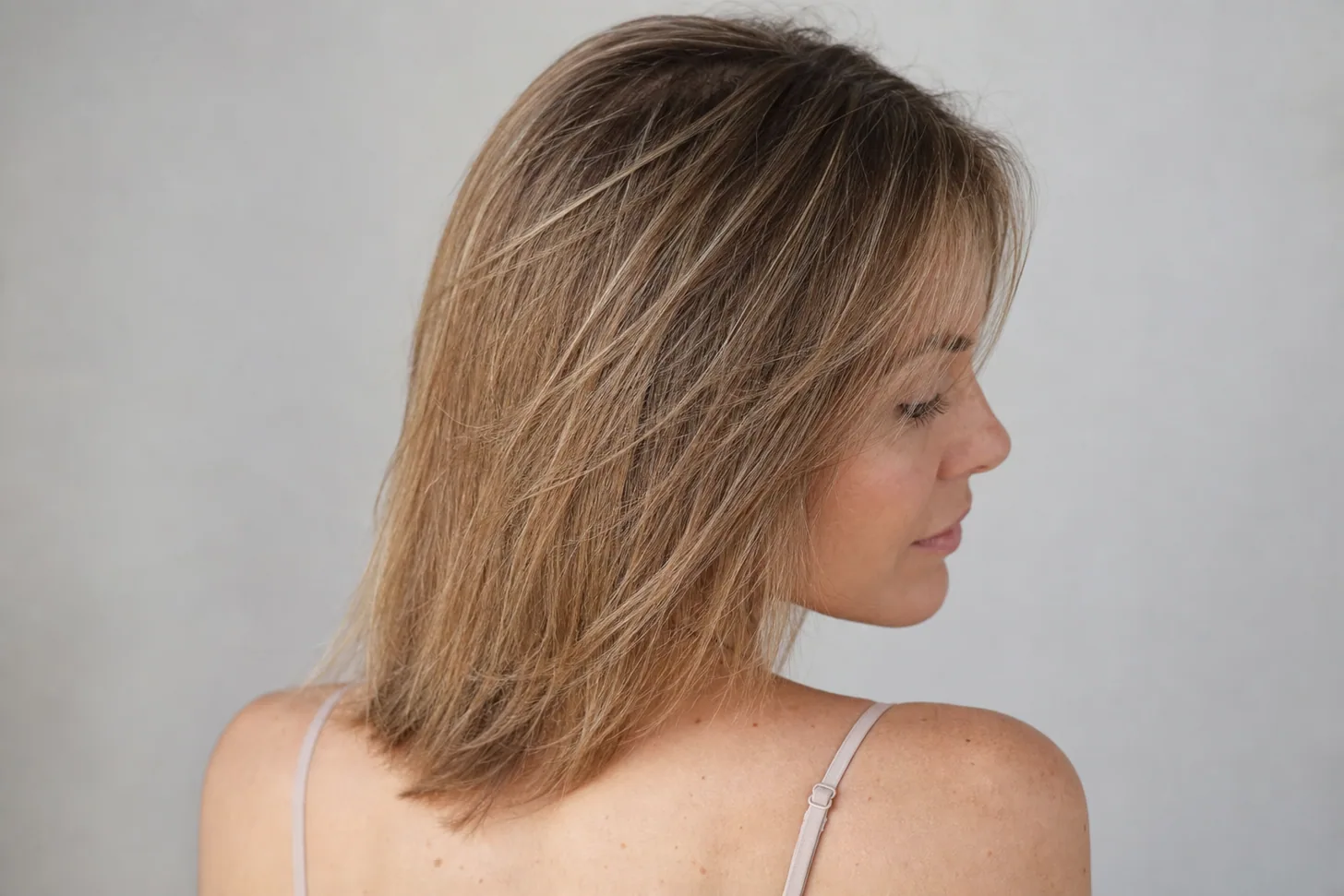
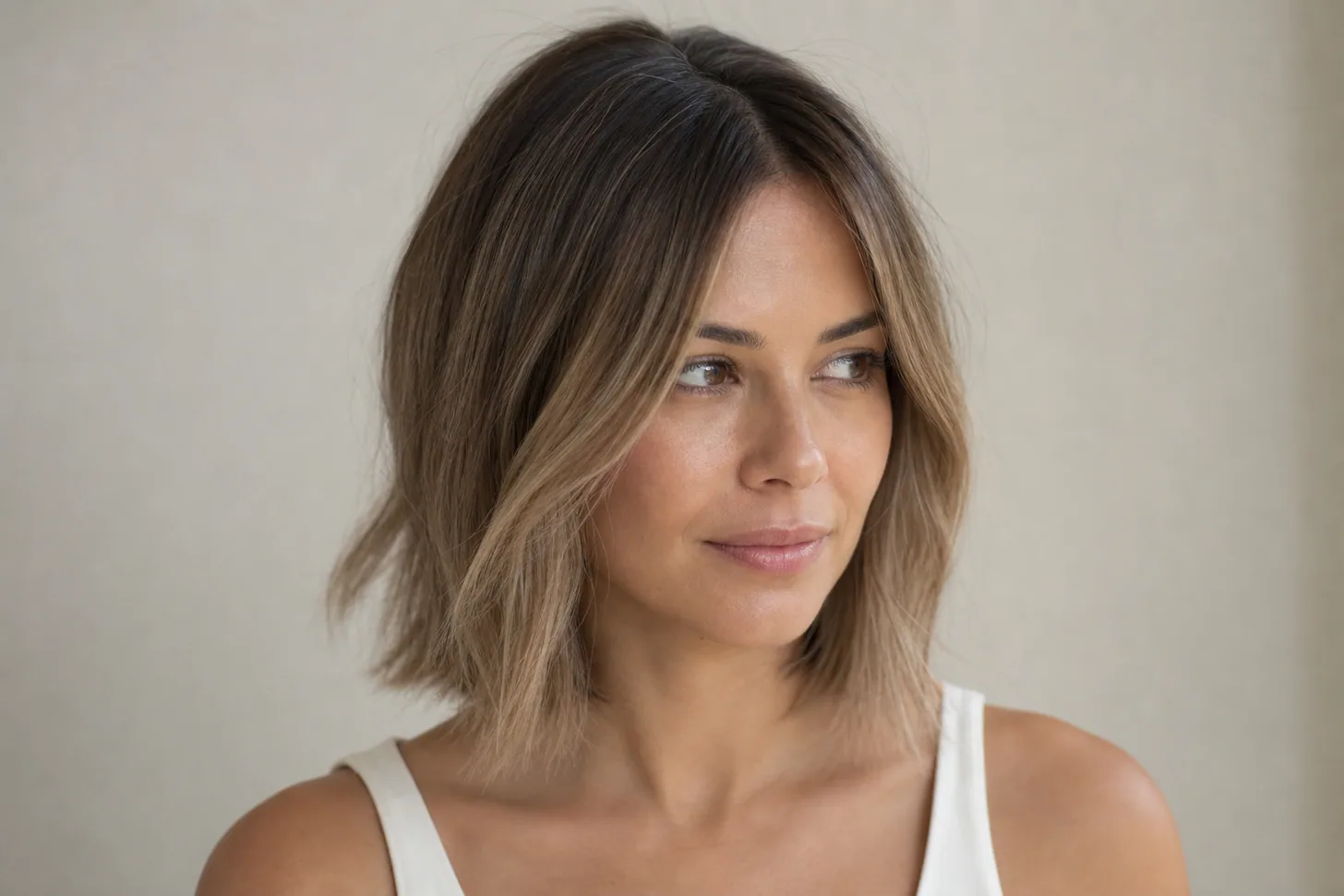
What I do instead is keep the root deeper than the lengths, weave the fine pieces starting an inch or two down, and place lowlights directly through the part panel. The client leaves lighter overall and the part looks narrower than when she came in. Nobody can point to why.
PN
Highlights fake density two different ways
The first is the one everybody knows. Hair of a single, uniform shade has no shadows in it, and without shadows the eye has nothing to read as depth — it sees one flat surface and estimates the amount of hair accordingly.
Put lighter and deeper pieces next to each other and the same head suddenly appears to have layers sitting behind layers. That is a genuine optical effect, and it is why dimensional color is the single most useful thing color can do for low-density hair.
The second mechanism gets discussed far less, and on fine hair it is arguably the more useful of the two. Lightening works by raising the pH to open the cuticle so pigment can be oxidized inside the strand, and the process strips the strand's natural lipid layer and leaves the surface rougher (Hair Cosmetics: An Overview, International Journal of Trichology).
A rougher surface means strands catch on each other instead of sliding into a flat sheet — which is exactly why highlighted fine hair holds a blow-dry, a curl, and a ponytail better than virgin fine hair does. The body is real. It is also, honestly, surface damage being put to work, which is why the amount of lifting you do is a budget rather than a free win.
Both mechanisms fail at the same threshold: scale. Wide highlights at high contrast stop reading as depth and start reading as separate stripes of two different colors, and the moment your eye can trace an individual stripe it can also trace the gap beside it.
On a dense head that gap is more hair. On a low-density head it is scalp. Whether your issue is strand diameter, the number of hairs on your head, or both changes how much contrast you can carry — the two-minute distinction is in telling fine hair from thin hair.
The five highlight types, ranked for fine hair
All five are foil-based or foil-adjacent techniques, and all five are available in any decent salon. The differences that matter here are section width, how close the lightener sits to the scalp, and how the color grows out.
Babylights are the reference standard for fine hair for one structural reason: a section that fine cannot separate from the hair around it, so no matter how much of the head is highlighted the result stays a single soft shade with light moving through it. The cost is chair time — a full head can take three hours or more, because the colorist is weaving many times more sections than a standard foil service.
Teasylights are worth asking about by name. The colorist backcombs each section at the root before applying lightener, so the pushed-back hair shields the root area and the lightener graduates from nothing at the scalp to full brightness through the ends.
You get a built-in shadow at the root, which is both flattering on low density and the reason the grow-out is soft rather than a hard line. The caveat is mechanical: backcombing fine hair repeatedly is rough on it, so this is a technique for a colorist with a light hand and not one to repeat every eight weeks.
Where highlights go on a low-density head
Placement is where most fine-hair highlight jobs are won or lost, and the logic runs opposite to the instinct. Brightness belongs where it is seen and depth belongs where the scalp is visible — which usually means the two are in different places.
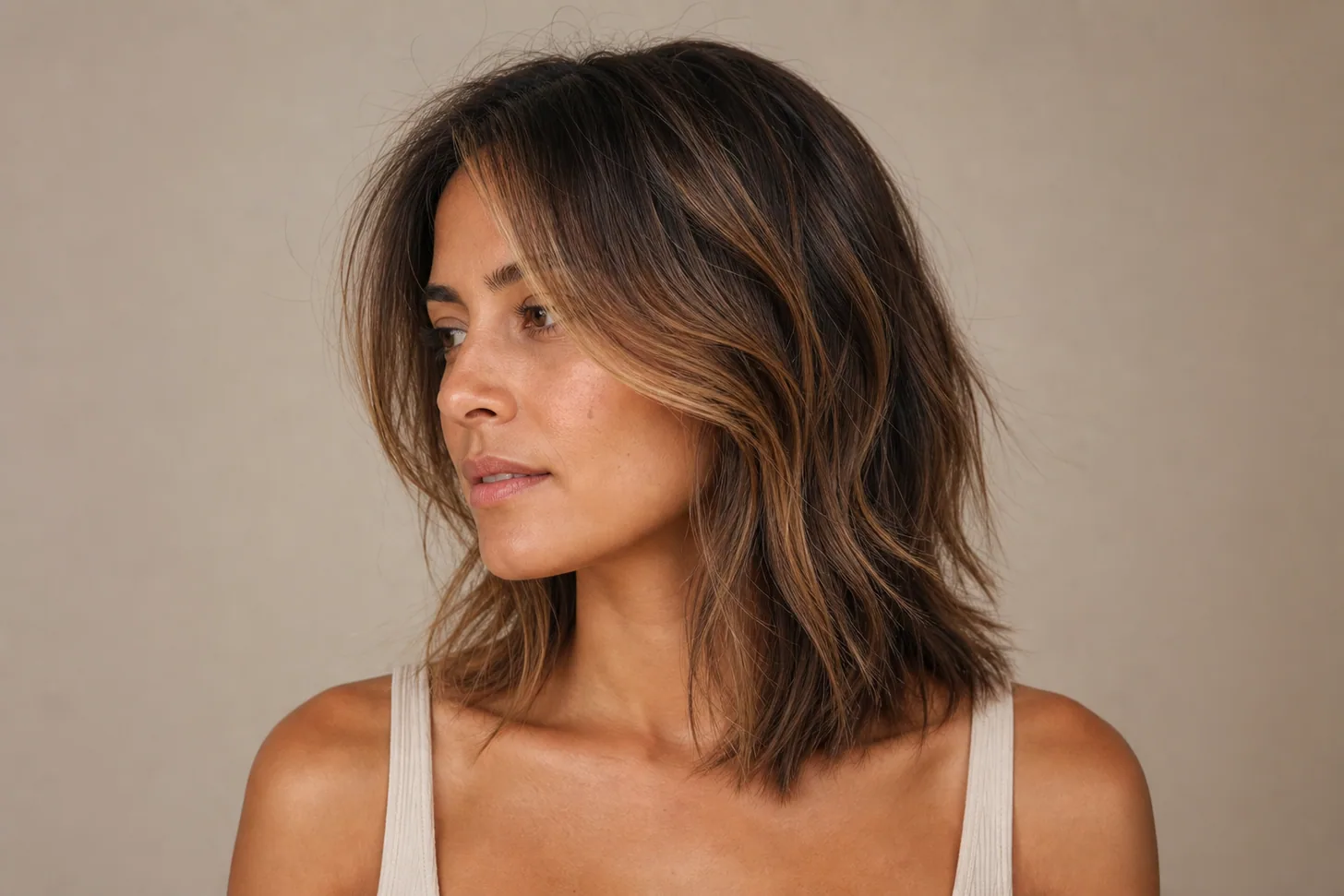
The face frame is the highest-value real estate on the head: a few fine, soft pieces around the hairline brighten your whole complexion in every mirror and every photograph, and they cost almost nothing in lifting.
The mid-lengths and ends of the top layer are next, because that is the surface light actually falls on. The interior and the under-sections should stay deeper than you think — that hidden depth is precisely what the eye reads as more hair when the top layer moves.
What stays dark is as deliberate as what gets lifted. The root keeps or gets a shadow, always. The part panel — the two-inch strip either side of where you part — is the one area on a fine head that should never be the lightest thing on your head.
If the scalp is already showing there, the styling half of the fix is covered in coverage for thinning-on-top fine hair, and color should be working with it rather than against it.
Contrast is the setting nobody names
Ask for a number. Highlights placed one to two levels lighter than your natural base blend; three levels starts to separate; four or more is a stripe, however finely it was woven. This is the variable that decides whether a technique with a beautiful name produces a beautiful result — babylights taken four levels lighter than the base will still look like stripes, just very thin ones.
Low contrast also buys you two practical things. It grows out invisibly, so you can stretch three or four months between lightening appointments instead of six weeks. And it needs far less lifting to achieve, which on a fine strand is the difference between hair that feels like hair and hair that feels spongy when it is wet.
Porosity changes how fast your hair takes both the lift and the toner, and fine hair is often more porous than it looks — worth understanding before the appointment, in how porosity works on fine hair.
Incoming gray shifts this calculation, and usually in your favor — white strands are already low-contrast against the scalp, so they can be treated as a highlight you didn't have to pay for rather than as regrowth to be covered. The four ways to play that are in going gray with fine hair.
The one place high contrast earns its keep is a deliberate money piece: two brighter sections at the front, framing the face, against a base that stays deep everywhere else. That works because the contrast is contained and intentional. Scattered across the whole head, the same contrast is what makes people say fine hair looks "see-through" after a color appointment.
Lowlights: the half nobody asks for
Almost every fine-haired client who tells me her highlights made her hair look thinner is describing the same thing: years of highlight-only appointments, each one lifting a little more of the base, until there is no base left. The head is now one uniform pale shade — which is to say, back to flat color, but lighter and more fragile than where she started, with less contrast than ever to disguise the scalp.
Lowlights put the depth back. A colorist weaves deeper pieces through the under-sections, around the part, and often at the nape, usually with a demi-permanent color that deposits rather than lifts so it adds no further damage.
On low-density hair the effect is immediate and slightly startling — the same amount of hair, suddenly reading as noticeably more of it. If you have been highlighting for years and your hair feels less full than it used to, this is the appointment to book, and it is cheaper and gentler than what you have been doing.
Chair-side note
The most common consultation I have with long-time highlight clients is the one where I suggest doing less next time. It is a strange sell — she is paying for color and I am proposing fewer foils — so I show her rather than tell her. I lift a section from underneath, hold it against the top layer, and let her see how much lighter the top has drifted over the years.
Nobody ever asked for an all-over pale head; it just accumulates, one touch-up at a time, because each appointment only ever adds. Then we spend that appointment putting depth back in with a demi and lifting nothing at all. She always tells me her hair looks thicker afterwards, and it is because the contrast came back.
PN
The exact words to bring to your colorist
Say this, or something close to it: "My hair is fine and I want it to look fuller, not lighter. Can we do fine woven highlights kept within two levels of my natural base, keep or add a shadow at the root, and weave lowlights through the part and the under-sections? I would rather have brightness around my face than across the whole head. Please add a bond-builder, and keep lightener off my scalp."
Then ask two follow-up questions that tell you a lot about how the appointment will go. "How many levels lighter will this be than my base?" — a colorist who answers with a number is thinking about contrast. And "How will this grow out?" — the honest answer for fine hair should be a soft blur at three to four months, not a line at six weeks.
Bring a reference photo, but say out loud that you want your hair's version of it; the model in the photo very likely has twice your density, and the same formula on your head produces a different result.
Keeping highlighted fine hair from going mushy
This is the one situation where a bond builder genuinely earns its price, because lightening is exactly the damage they were designed for — picks by format in bond builders for fine hair.
Lightened fine hair needs support without weight, which is the permanent tension in every fine-hair routine. Bond-builders and lightweight protein do real work here; rich masks and butters buy softness at the cost of every bit of volume you paid a colorist to create. Which ingredients actually rebuild a lightened strand and which just coat it is broken down in what genuinely repairs fine-hair damage.
Book a gloss at six to eight weeks rather than more foils, and if you are choosing between techniques for the next appointment, balayage vs foilyage on fine hair is the comparison worth reading first. A gloss deposits tone, closes the cuticle, and adds shine without lifting anything, so it refreshes the color between appointments at no cost to the strand — and shine is itself a density signal, because dull hair reads as sparse.
Wash in cool water with a color-safe, lightweight shampoo, use heat protection every time, and watch for the tell: if wet hair stretches noticeably before it snaps back, you have lifted enough for a while. Spend the next few months depositing rather than lifting.
If the tone has gone somewhere you did not intend, resist the box-dye fix and read why correction takes more than one visit first. And if the warmth keeps coming back faster than the gloss should allow, brassy fine hair separates ordinary fade from the mineral kind, which needs chelating rather than toning. If you are weighing whether the lightening itself is costing you density, see does color thin fine hair.