First: is your hair thin, or getting thinner?
"Why is my hair so thin?" can mean two different things. Some people have always had fine hair or a low strand count. That is how their hair grows, not a sign that anything has gone wrong.
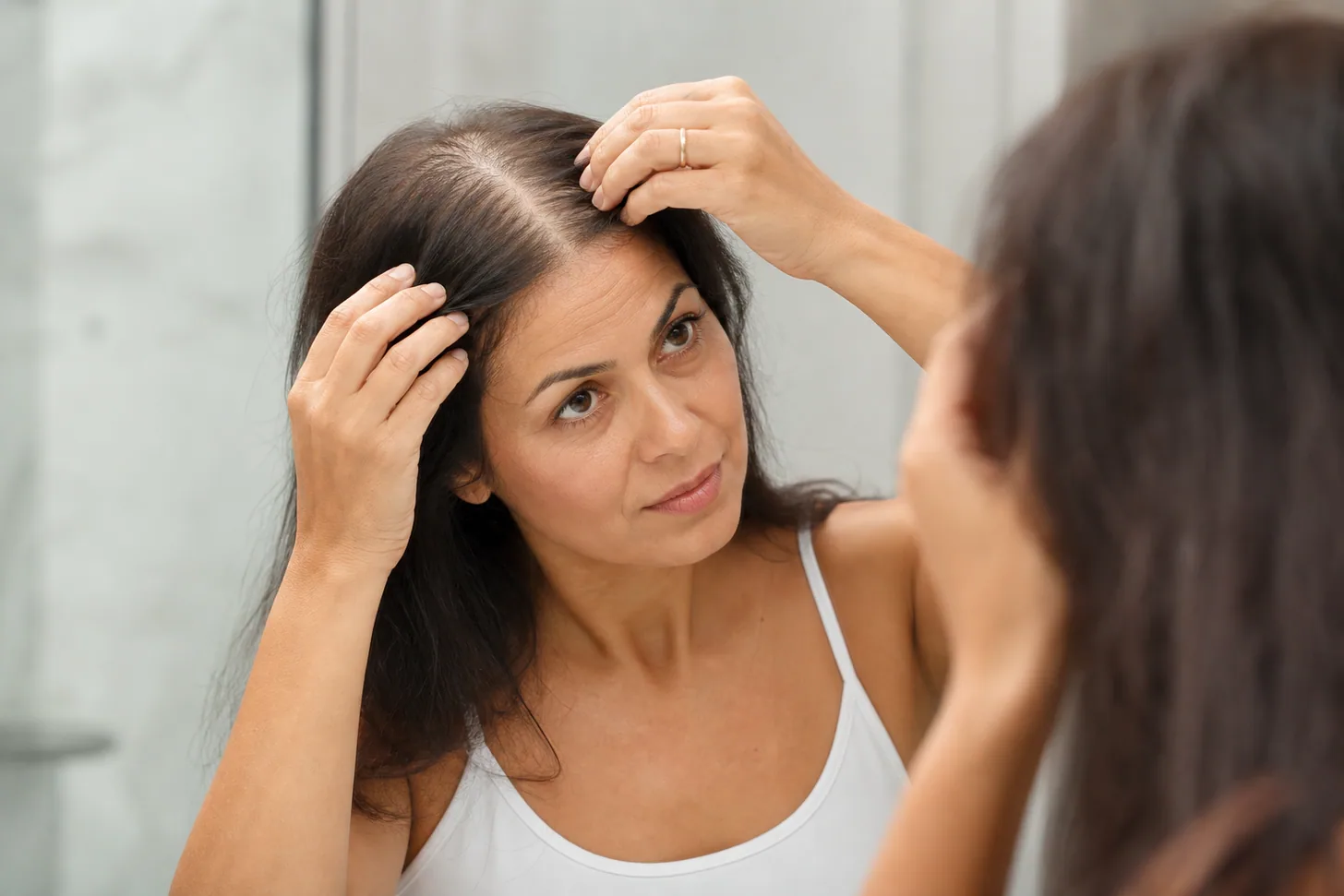
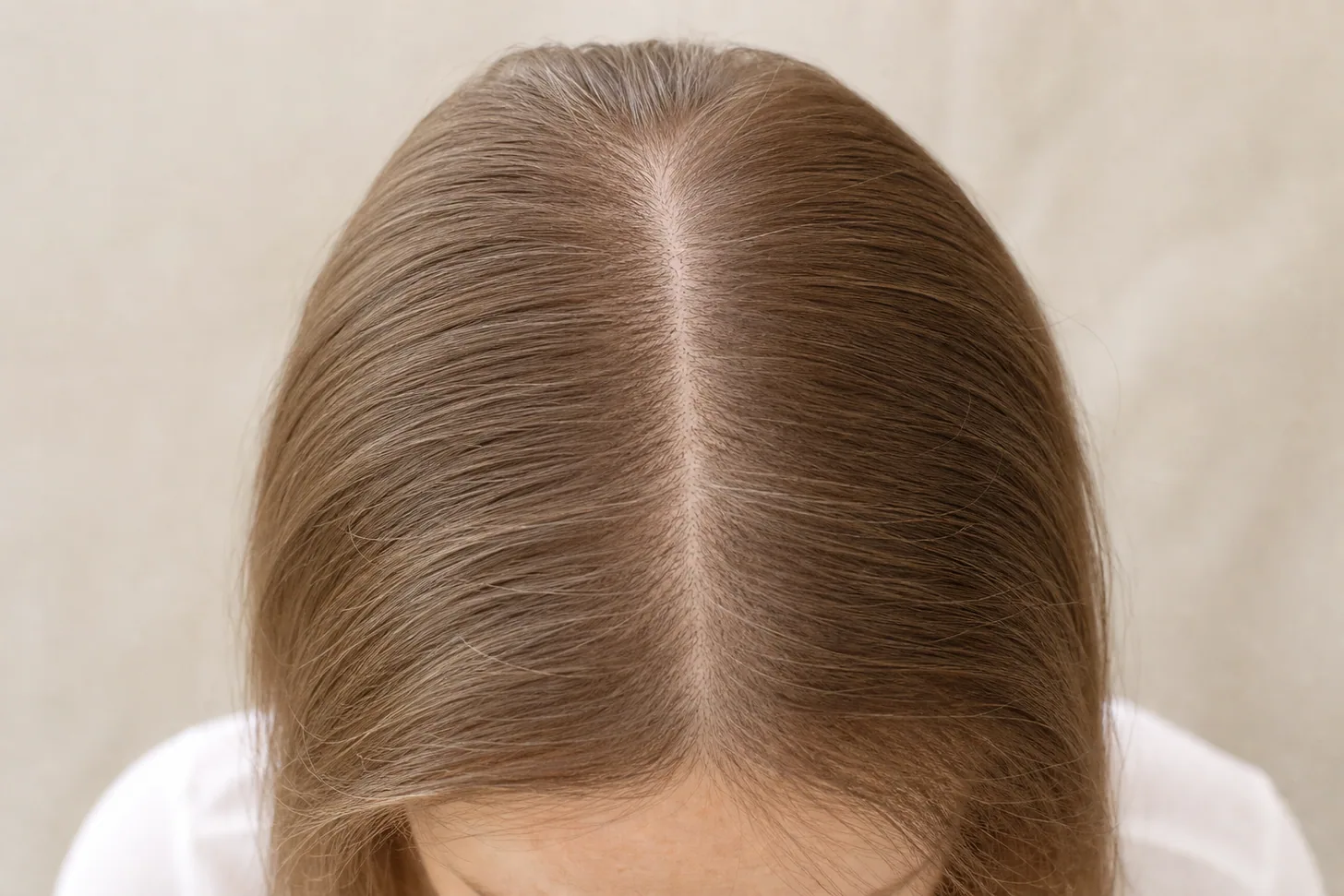
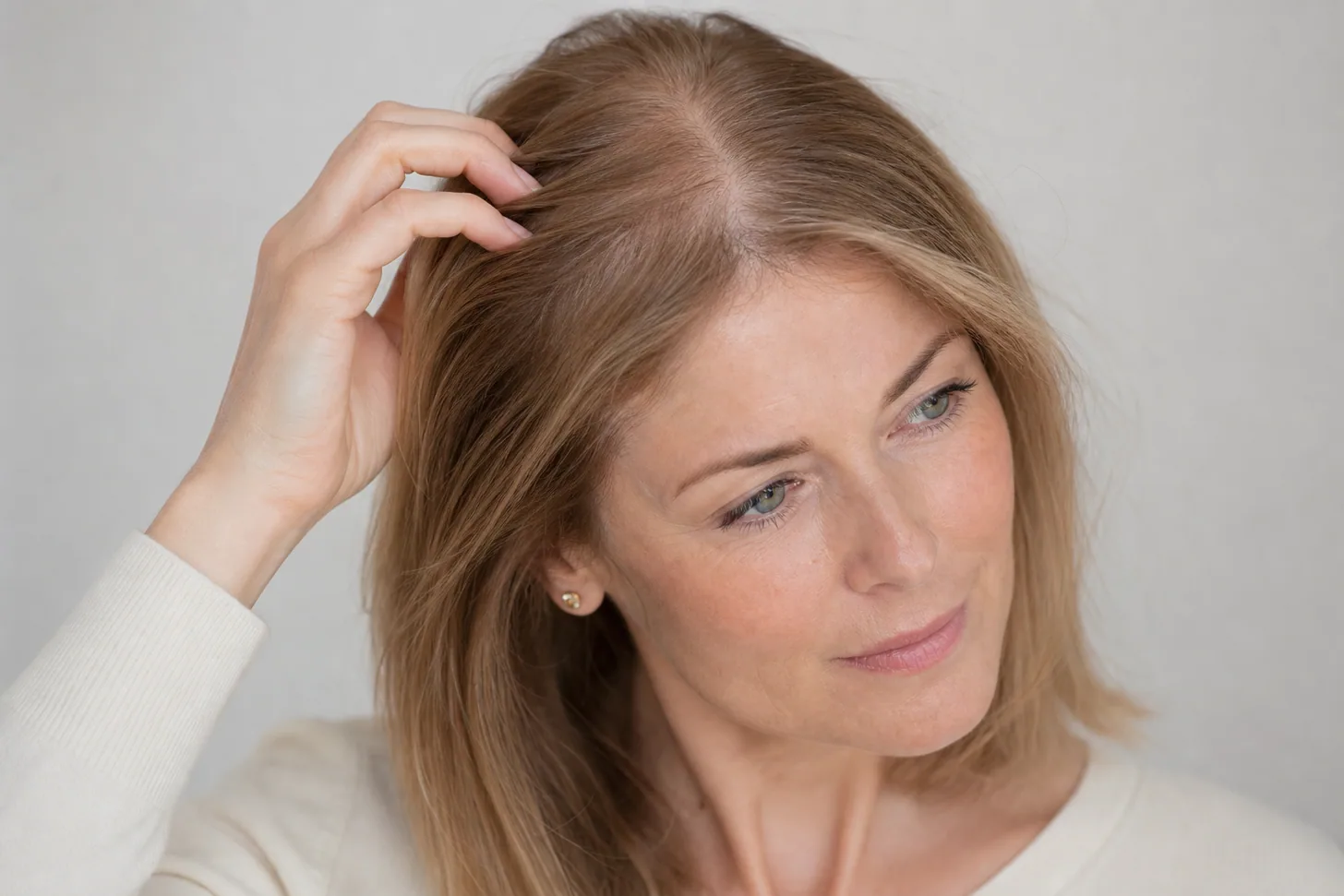
Thinning means less hair than you used to have. Your ponytail is smaller than a year ago, the part is wider, or the scalp shows in photos where it did not before.
Daily shedding alone is not proof. The American Academy of Dermatology says shedding 50 to 100 hairs a day is normal. If you are not sure which group you are in, fine hair or thinning? has three checks to do at home, and fine vs thin hair explains the words.
Where it is thinning tells you the most
Before reading the causes, look at the pattern. The place your hair is thinning narrows the list faster than anything else.
- All over, fairly suddenly: usually a shed after a trigger (causes 1, 2, 7 and 8). See diffuse thinning on fine hair.
- A wider part and a thinner top, slowly: usually female pattern hair loss (cause 3), sometimes hormonal (4 and 5). See thinning on top.
- The temples, front or sides: think tight hairstyles first (cause 9). See thinning hairline and temples.
- One side more than the other: usually your part or your sleep side. See why hair is thinner on one side.
- Round, smooth patches: see a dermatologist (cause 12).
- Short, snapped hairs rather than whole hairs with a root: breakage, not loss (cause 11).
The 12 common causes of thinning hair in women
The causes below are grouped by type, not ranked. Several often happen together: a shed can uncover pattern loss that was already starting, and low iron can make any other cause worse.
1. A shed after something that happened months ago
The most common cause of sudden, all-over thinning is telogen effluvium. A shock to the body pushes many hairs into their resting phase at once, and they fall out together about two to four months later.
Typical triggers are a high fever, surgery, a bad infection, childbirth or a crash diet. The delay is why so few people connect the shed to its cause. It usually settles by itself within six to nine months; postpartum hair loss follows the same pattern.
2. Stress
Emotional stress works through the same mechanism. A bereavement, a divorce, a job loss or months of caring for someone can all set off a shed a few months later.
Ongoing stress can keep the shedding going rather than causing one wave. Hair thinning from stress covers what it looks like on fine hair.
3. Female pattern hair loss
This is the inherited kind, and the most common cause of slow, long-term thinning in women. Hairs do not fall out in clumps; each new hair grows back a little finer and shorter than the last.
The AAD describes the widening part as the usual first sign, with the hairline staying put. It can start any time after puberty, and early treatment gives the best results.
4. Perimenopause and menopause
Falling estrogen in your 40s and 50s changes the balance of hormones that act on the follicle. Many women notice their part widening or their ponytail shrinking for the first time in these years.
Pattern loss often speeds up here too. Perimenopause hair thinning and fine hair through menopause cover the details.
5. PCOS and other hormone conditions
Polycystic ovary syndrome raises androgen levels, which can thin the top of the head. The clue is the company it keeps: acne, irregular periods or new coarse hair on the face or body.
Thinning on its own is weak evidence for PCOS. PCOS and hair loss explains what to ask for.
6. Thyroid problems
An underactive or an overactive thyroid can both cause diffuse shedding. It is one of the most fixable causes on this list, which is why it is worth a blood test even if you do not feel tired.
Hair usually improves within several months of treatment. The thyroid section of our blood-tests guide explains why.
7. Low iron, a poor diet or rapid weight loss
Low iron stores are common in women with heavy periods or a plant-based diet, and they can cause shedding even before full anemia. Too little protein or too few calories has the same effect.
Fast weight loss, including on GLP-1 medications, often brings a shed three months later. See shedding after weight loss, and which vitamin deficiencies matter for hair.
8. Medications, including stopping the pill
Some blood pressure drugs, antidepressants, acne medicine, blood thinners and many others can cause shedding. So can starting, stopping or switching hormonal birth control.
The shed shows up two to four months after the change, so look back that far. Medications that cause hair shedding has the list. Never stop a prescribed drug without talking to your doctor first.
9. Hairstyles that pull
Tight ponytails, buns, braids, extensions and wigs fixed with tension pull on the same follicles every day. Over time that causes traction alopecia, usually at the temples and along the front.
The AAD's rule is that a style that hurts is too tight. Caught early it recovers; left for years it can become permanent. See thinning hairline and temples.
10. Scalp conditions
Severe dandruff, scalp psoriasis and fungal infections can all come with extra shedding. Scratching an itchy scalp also breaks fine hair at the surface.
Treating the scalp usually lets the hair recover. Itchy scalp and thinning hair explains when the two are linked.
11. Breakage that looks like thinning
Bleach, hot tools and rough brushing snap fine hair along its length. The ends get thinner and see-through even though the roots are fine.
Look at the hairs you lose: a hair with a small white bulb at one end fell out from the root; a short piece with no bulb broke. Hair breakage on fine hair covers the fixes.
12. Autoimmune and scarring hair loss
Alopecia areata causes round or oval bald patches, often quickly. Lupus and a few scarring conditions, such as frontal fibrosing alopecia, can also cause hair loss.
These are less common, but they are the ones where waiting costs hair. Scarring loss cannot regrow once the follicle is gone, so see a dermatologist promptly.
What about smoking, alcohol and sleep?
These come up in almost every consultation, so here is the honest version. Smoking has been linked to pattern hair loss in several studies, and stopping is good for your scalp's blood supply along with everything else.
Alcohol has no strong direct link to thinning. Heavy drinking can lower iron, zinc and protein intake, though, which brings you back to cause 7.
Poor sleep on its own is not a known cause. It often travels with stress, which is.
Why is my hair suddenly thinning?
Sudden thinning over a few weeks is almost always a shed (causes 1, 2, 7 or 8) or alopecia areata (cause 12). Pattern hair loss and hormonal thinning are slow; they take months or years to notice.
So for a sudden change, count back three months and write down what happened. If you find a trigger and the shedding is all over, it will most likely settle. If you see patches, book a dermatologist instead of waiting.
The causes change with age
In your teens and 20s, sheds, low iron, PCOS and tight styles lead the list; see why hair thins at 20. In your 40s and 50s, perimenopause and pattern loss take over.
After 60, most thinning is slow pattern loss, often with new medications adding to it. Any sudden change at any age deserves a check.
What to do next
- Photograph your part once a month in the same light. It is the only reliable way to know if things are changing.
- Write down the last six months: illness, surgery, childbirth, diets, new or stopped medications, big stresses.
- Ask your doctor for blood tests: iron stores (ferritin), thyroid and, if relevant, hormones. Our blood tests guide lists what to request.
- Stop biotin a few days before the test, because it can distort some results, including thyroid tests.
- Loosen tight styles and be gentle with heat and bleach while you wait.
Once you know the cause, hair loss treatments for fine hair covers what works for pattern loss. Supplements help only when you are actually short of something; hair supplements explains why.
Making thinning hair look fuller now
Whatever the cause, the cosmetic side is yours to control today. A blunt cut keeps the ends dense, and a lighter shampoo stops fine hair lying flat.
See haircuts for thinning hair in women for shapes, the best shampoo for thinning hair for washing, and a scalp concealer to soften a wide part in a minute.

 MH
MH