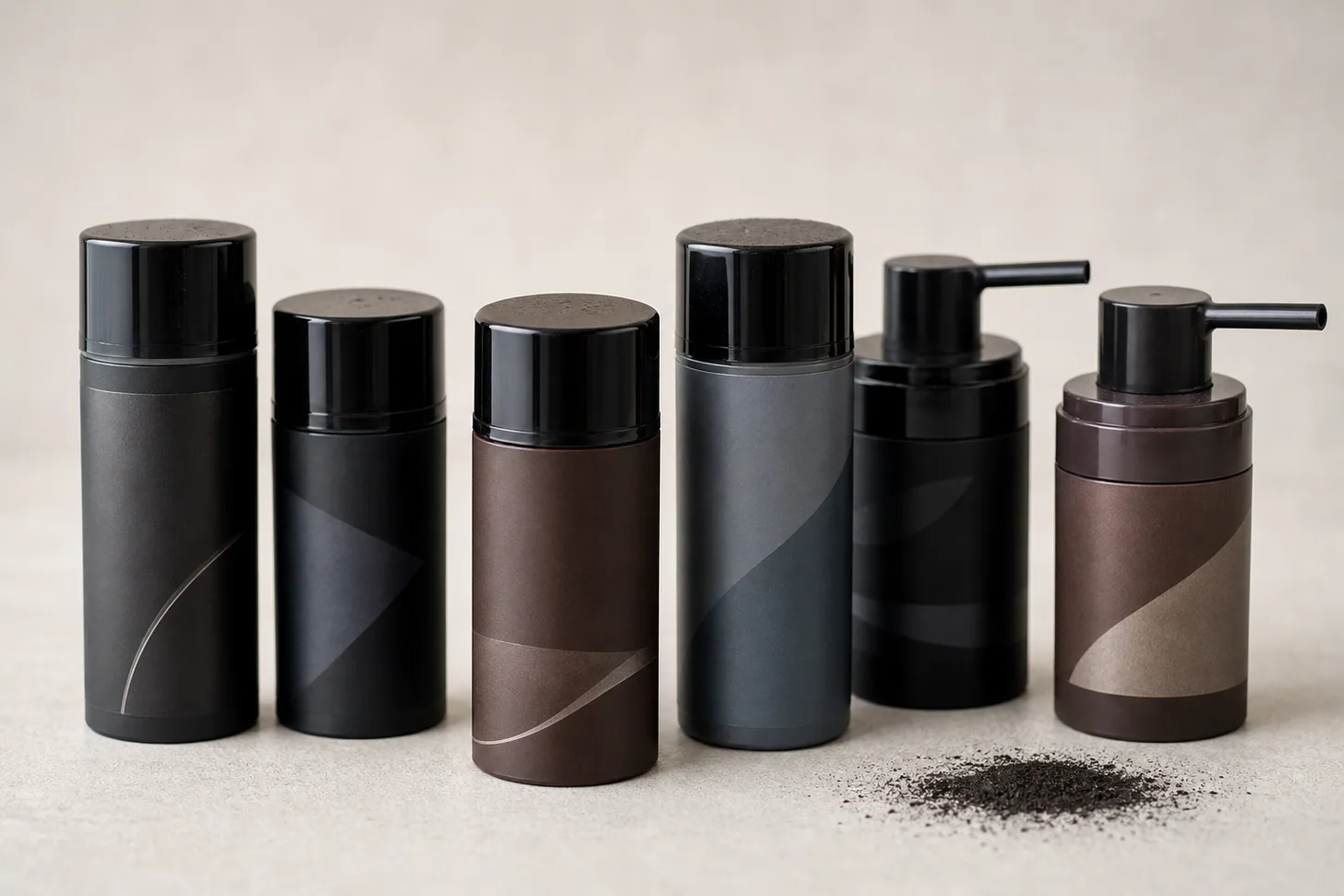
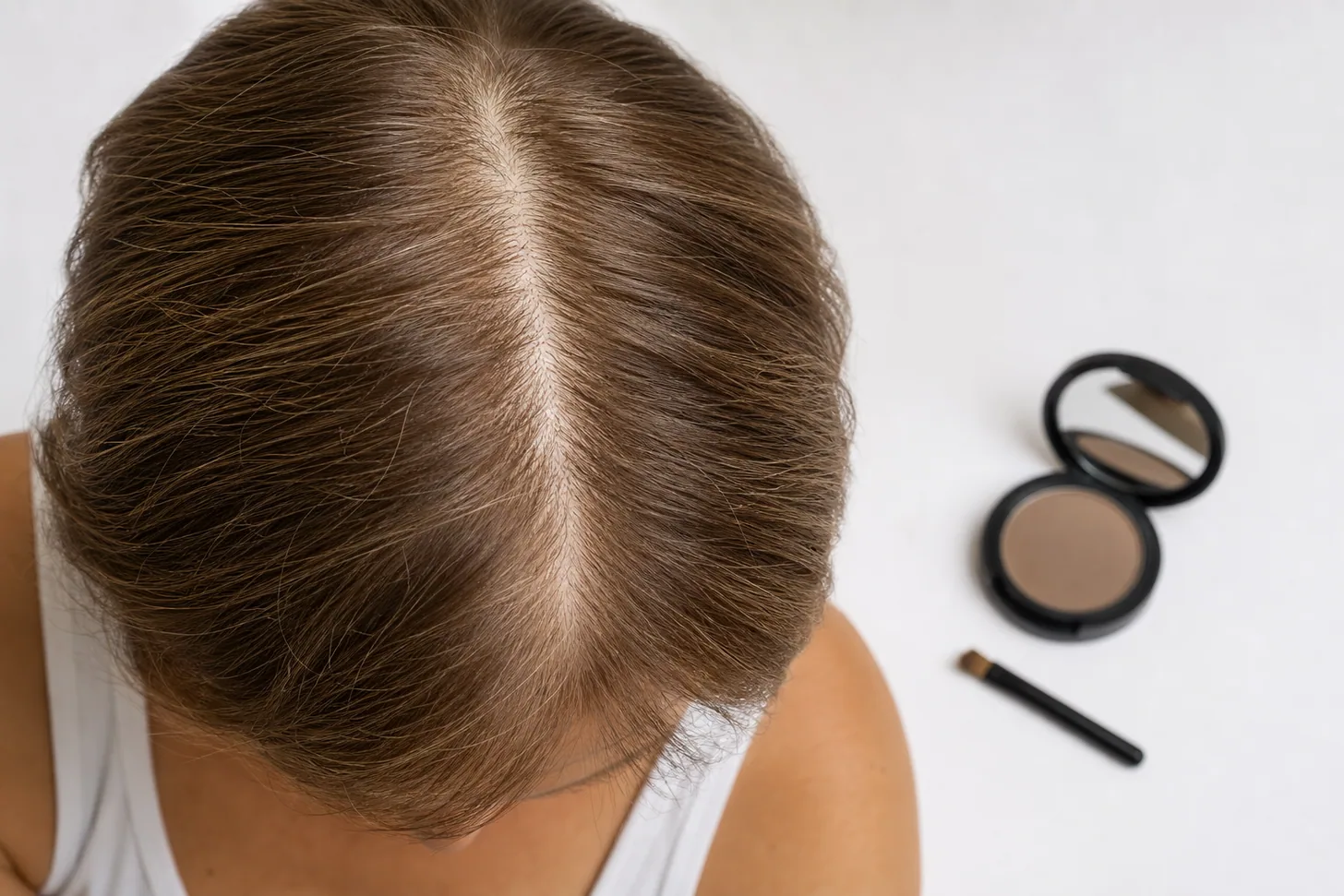
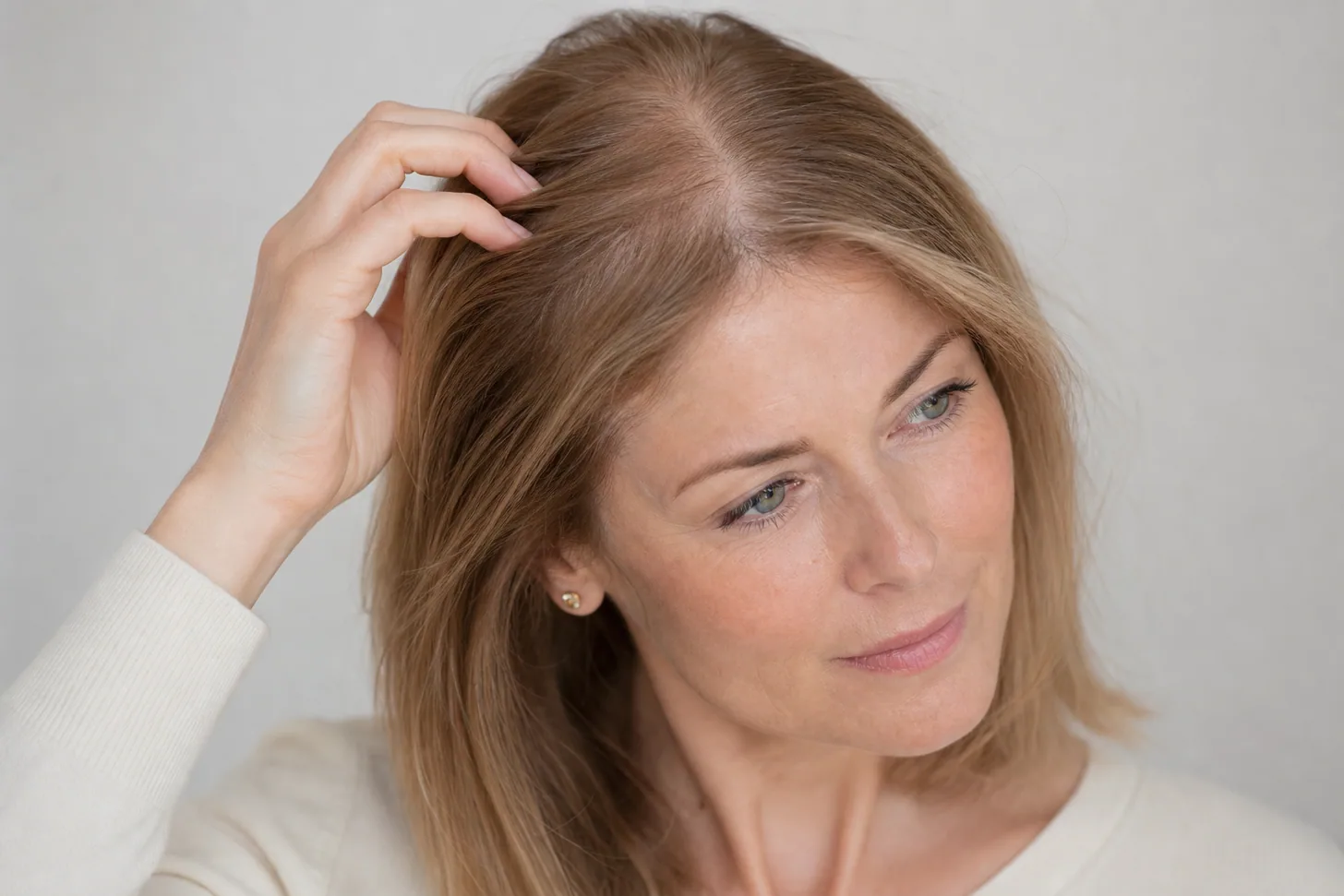
Hair fibers are positively charged particles that cling to the negatively charged surface of the hairs you already have — which means their performance is decided before you buy them, by how much hair is still standing in the spot that bothers you. Over diffuse thinning that still has hair in it, they are the fastest honest improvement available to fine hair.
Over a widened part or a bare strip they have nothing to hold, and a dermatology review of hair camouflage says so flatly: ineffective in bald areas. Below: the one test that tells you which situation you're in, what "fiber spray" actually means when you see it in a listing, six picks with a real limitation named on each, and how to apply them on fine hair without producing visible specks.
Every product here is chosen independently, on the merits — what genuinely suits fine, thin hair. Links go to each brand's official page, and we don't take payment for placement. Price tiers are rough guides because prices change.
Six picks, and the one question that decides whether any of them will work for you.
Fibers bulk the hair you have — so the test is whether hair is there
The fibers are derived from wool or rice keratin, from rayon, or from human hair; they cling along the length of each existing strand, and the effect is that every strand reads wider and the group reads denser.
Everything practical follows from that one sentence, including the failure. The same review notes the products are water resistant but removable with shampoo, that water activities can distort them, that daily application is the main inconvenience — and, decisively, that the option is ineffective in bald areas. There is nothing there to be positively charged toward.
Which gives you a test that takes ten seconds and saves the price of a bottle:
Part your hair and look at the spot that bothers you
What you're seeing
What to buy
Hair, but visibly less of it — finer, sparser, still standing all over the area
Diffuse thinning
Fibers. This is exactly what they're for
A pale line of scalp with hair on either side of it
Most people who report that fibers "didn't work" were in row two or three. It isn't that they bought a bad product; they bought a bulking product for a shadowing problem. Plenty of people end up using both — concealer along the part line, fibers through the hair around it — and that combination generally reads better than either on its own.
Chair-side note
The single most useful thing I do with fibers in the salon is talk people down on quantity. Every demonstration video applies what looks like a reasonable amount, and on fine hair a reasonable amount is far too much — it sits on top like sand rather than disappearing into the hair.
I start clients at about a third of what they think they need, patted in rather than rubbed, and almost everyone is surprised by how little it takes. The second thing: match to your root colour, not your ends. Fine hair is very often lighter at the ends than at the scalp, and fibers sitting near the root in an end-matched shade look like exactly what they are.
MH
— Megan Holloway, Editor-in-Chief
"Fiber spray" means two different things, and neither is fibers in an aerosol
Search for a hair building fiber spray and you'll get results for two products that do unrelated jobs. Both are worth owning on fine hair; neither replaces the other.
A pump applicatorscrews onto a standard shaker bottle in place of the sifter cap and puffs the fibers out in a directed stream. Pressure on the pump controls the dose. This is the one that matters on fine hair, because a shaker is a blunt instrument — it drops fibers over a wide circle, and the places fine hair most often needs help are narrow: a part line, a temple, the front hairline.
A locking or hold spraycontains no fibers at all. It goes on after them to strengthen the bond and help them survive wind and light rain. Useful if you're outdoors, redundant if you're not.
What doesn't exist, despite how the listings read, is a can that sprays fibers and hold together. If you find one, read the ingredients before buying — you're usually looking at a tinted root spray, which is a shadow product wearing a fiber product's name.
What they're made of, and why fine hair should care
Brands say "keratin fibers" the way food packaging says "natural," and the labels repay a closer look. The most transparent statement in this category comes from Infinity, which describes its product as rayon microfibers made with keratin protein — a rayon carrier that has been treated, rather than fibers milled from pure keratin.
That is very likely true of most of the category, and it isn't a scandal; it's simply the honest version. Caboki takes a different route entirely, using a plant fiber from Gossypium herbaceum — cotton — with mineral iron oxide colorants and no keratin at all.
What it means in practice on fine hair is modest but real. Keratin-based fibers hold a stronger electrostatic charge and grip harder, which is what you want on sparse hair and what makes them a little more work to wash out. Plant fibers grip more gently and are the sensible first try if you've reacted to something in this category before, or if you would rather not put a wool derivative on your scalp.
If your scalp is sensitive, look for a brand that says so specifically — Nanogen states that its fibers are suitable for sensitive scalps and won't clog pores or interfere with topical treatments like minoxidil, which is a more useful claim than "natural."
The best hair building fibers for fine & thin hair, by job
One honest pick per job, each with what it's genuinely good at and one real limitation. Shade matching matters more than brand here — a well-matched cheap fiber beats a badly matched expensive one every time.
Toppik Hair Building Fibers shaker bottle, front label facing camera, plain white background, product photography
1
Best overall: Toppik Hair Building Fibers
The category benchmark and the one most likely to be stocked near you. Colored keratin protein in four sizes — a 3g travel, 12g regular, 27.5g economy and 55g giant — with the middle size lasting most people a couple of months at fine-hair doses. Nine shades that the brand explicitly says can be mixed, which is how you handle a root colour that isn't in anybody's chart. Best for: a first bottle, and anyone who wants the matching accessories to exist. Honest limitation: nine shades is the narrowest range in this roundup, and light blonde and silver fine hair is exactly where the gaps show — mixing works, but you're doing it yourself.
Nanogen Hair Fibres bottle, front label facing camera, plain white background, product photography
2
Best for a sensitive scalp, or if you're on minoxidil: Nanogen Hair Fibres
The only brand here that addresses the two questions a thinning-hair reader actually has about safety, and does it on the product page rather than in a blog post. Keratin fibers in 15g and 30g, ten shades, with a patented binding technology the brand calls Kinetic — and, more usefully, an explicit statement that the fibers suit sensitive scalps and won't clog pores or affect the penetration of topical treatments such as minoxidil. Best for: anyone treating hair loss medically who wants coverage in the meantime. Honest limitation: it's a UK brand priced in sterling, so US availability and shipping are less predictable than the American labels here.
Boldify Hair Thickening Fibers bottle, front label facing camera, plain white background, product photography
3
Best shade range, and best for blending gray: Boldify Hair Thickening Fibers
Fifteen shades against Toppik's nine, and the extras are the ones that matter on fine hair — ash brown, hazel brown, dark gray and gray alongside the usual blondes. Fine hair shows a mismatched fiber more readily than coarse hair does, because there's less of it to hide behind, so range is a genuine feature rather than a marketing count. Sold in 12g, 28g and 56g. Best for: ash-toned, gray-blended or in-between colours that the nine-shade charts miss. Honest limitation: the product page doesn't state what the fibers are made of, which is a poor showing in a category where that's a reasonable question.
Caboki hair fiber container, front label facing camera, plain white background, product photography
4
Best keratin-free option: Caboki
Plant fiber rather than protein — cotton, from Gossypium herbaceum, coloured with mineral iron oxides. Worth knowing about for two groups: anyone who has reacted to a keratin fiber before, and anyone who would simply rather not apply a wool-derived protein to their scalp daily. Sold as a travel size, a 16g and a 30g, with a shaker application and hairspray to set. Best for: sensitive skin, and a gentler grip that's easier to wash out of fine hair. Honest limitation: the brand's own copy promises hair that looks "10x fuller," which is the kind of number that should make you discount everything around it — and a gentler grip does mean slightly less staying power in wind.
Infinity Hair Fibers bottle beside its pump applicator, plain white background, product photography
5
Best value per gram: Infinity Hair Fibers
Ten shades across 15g, 30g and 60g, and the 60g works out to well under half the per-gram cost of most 15g bottles — which matters, because fibers are a daily consumable rather than a one-off. Also the most straightforward material statement in the category: rayon microfibers made with keratin protein, electrostatically charged. That's what most of these products are, and Infinity is the one that says so. Best for: anyone past the trial stage who has settled on a shade and wants to stop re-buying. Honest limitation: buying 60g of a shade before you're certain of the match is exactly the wrong way round — start with the 15g.
A fiber pump applicator attached to a fiber bottle beside a small locking spray bottle, plain white background, product photography
6
Best setup for a part line or hairline: a pump applicator plus a locking spray
The two accessories that turn fibers from a crown product into a front-hairline product, and the pair most fine-hair readers should own before they upgrade the fibers themselves. The applicator replaces the shaker cap and delivers a directed puff you can aim along a part; the locking spray goes over the top and strengthens the bond against wind and light rain. Toppik makes both, and its applicator fits its 12g and 27.5g bottles; Infinity sells an equivalent pump. Best for: narrow targets — a part, a temple, a receding front corner. Honest limitation: the applicator costs about as much as a bottle of fibers, and the locking spray is genuinely optional if you're indoors all day.
How to apply fibers on fine hair without producing specks
The application instructions on every bottle are written for a denser head than yours. The adjustments below are what makes the difference between hair that reads fuller and hair that reads powdered.
Completely dry, and already styled.Not damp, not "nearly dry." Any moisture at all turns fibers into visible specks. Fibers are the last step of the routine, after the blow-dry and after whatever you use at the root — see what order to apply fine-hair products.
Match to your root colour, and go a shade darker if you're between two.A slightly dark fiber reads as shadow; a slightly light one reads as dust. If you're gray-blended, buy the gray and mix.
Start with about a third of what the video uses.The single most common mistake, by a distance. You can always add more, and you cannot subtract it without starting over.
Aim at hair, not at scalp.Hold the bottle above the hair around the sparse spot rather than directly over the gap. The fibers need strands to land on, and pointing at the gap is what produces a visible clump sitting on skin.
Pat, don't rub.Press the pads of your fingers down onto the area to settle the fibers into the hair. Rubbing drags them across the surface and lifts them off the strands they've just bonded to.
Disperse, then set if you're going out.Shake your head or use a soft brush to move anything sitting loose on the surface, then a light locking spray or hairspray from about eight inches if you'll be in wind or rain.
One placement note specific to fine hair: fibers add grip, and grip is the thing fine hair is usually short of, so the crown often looks better after fibers than the extra density alone would explain. That's a real bonus, but it also means you'll want less product elsewhere on the same day — a texture spray on top of fibers is usually one grip product too many. Root volume on fine hair covers what to do instead.
Living with them: rain, pillowcases and washing out
Fibers are water resistant, not waterproof, and most of the disappointment in this category comes from that one word. Light rain and ordinary perspiration are survivable, especially with a locking spray. Swimming, a hard workout and heavy rain are not — the review literature is explicit that water activities distort the product. A light-colored pillowcase is the other reliable way to find out how much came loose.
Practical rules that follow from that: apply in the morning rather than the night before, keep a travel size in a bag for touch-ups, and don't sleep in them. The sleeping rule has an extra edge on fine hair, because fibers add grip and fine hair already tangles overnight — sleeping with fine hair covers the friction problem those two make worse together.
Removal is ordinary shampoo, which every brand specifies and which is true. The complication isn't whether they come out, it's what taking them out does to a fine-hair wash schedule: fibers usually want a second shampoo pass, and doing that daily is more washing than most fine hair tolerates before it starts looking dry.
Two workarounds. Rinse and work the fibers loose under running water before you shampoo, so the shampoo has less to do. And reserve fibers for days you were going to wash anyway, rather than wearing them through a stretch of second- and third-day hair — how often to wash fine hair has the underlying schedule.
If you're using minoxidil, the sequence is: treatment first, scalp fully dry, fibers last. Nanogen states outright that its fibers won't clog pores or affect the penetration of topical treatments, and the general dermatology position is that camouflage products may be used alongside medical therapy rather than instead of it.
Which is the more important half of that sentence: fibers are makeup, and they do nothing whatsoever about why the hair thinned.Hair loss treatments for fine hair covers what does, and best shampoo for thinning hair covers the wash underneath, since fibers cling most evenly to a clean, uncoated root.
When hair fibers aren't the right call
You're looking at a bare strip of scalp, not sparse hair.Nothing to grip. A shadow product lowers the contrast instead — scalp concealers and root powders.
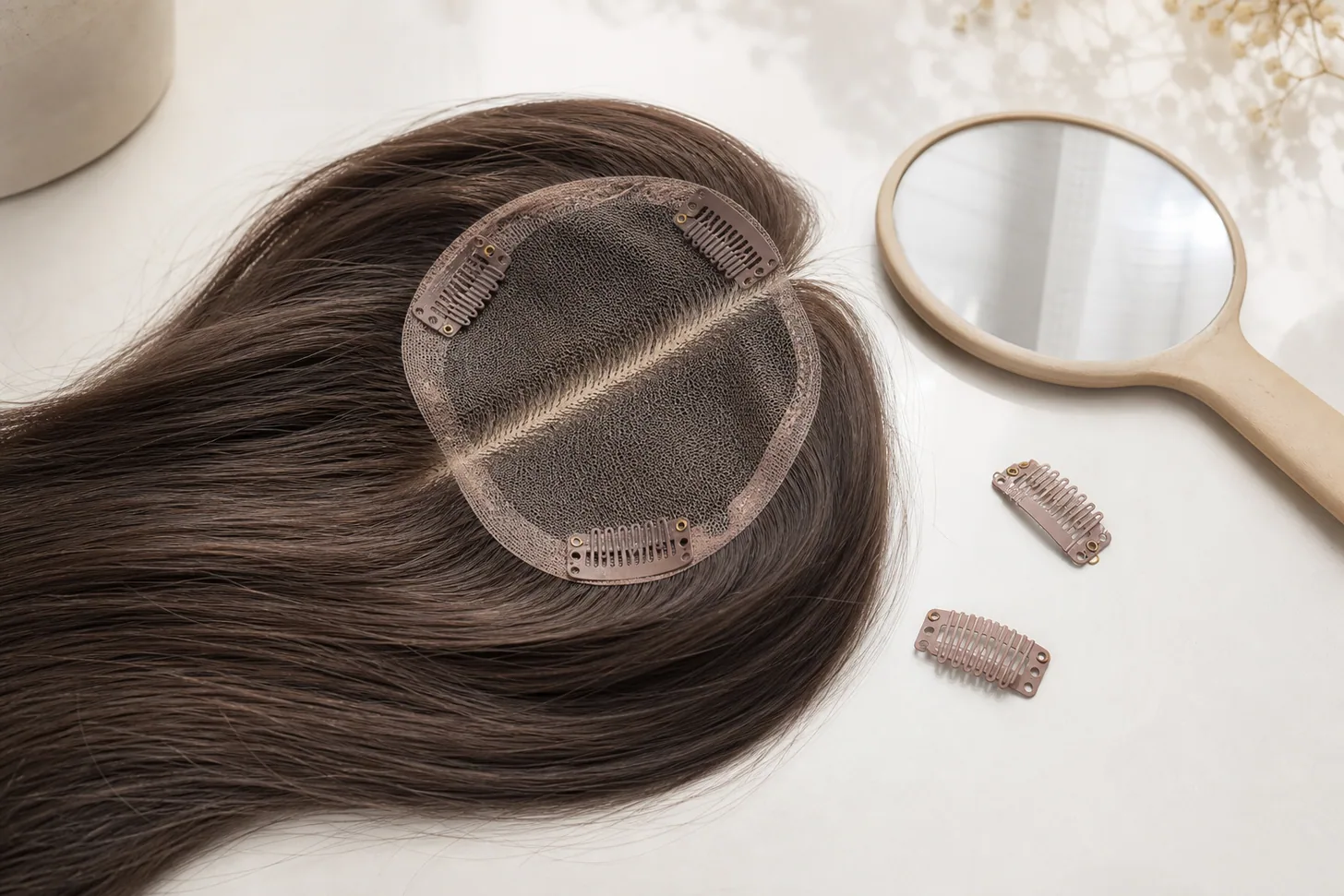
The area is beyond what pigment could plausibly explain.At that point you want real hair rather than a cosmetic — hair toppers is the honest buyer's guide.
Your scalp is flaking, itching or sore.Adding a daily powder to an inflamed scalp is a bad idea until someone has looked at the scalp. Dandruff on fine hair is the starting point for the common version.
You swim, or you train hard most days.This is the use case fibers genuinely fail. Water resistance isn't waterproofing, and reapplying after every session gets old fast.
The change is recent and you don't know why.Covering it is reasonable; covering it instead of finding out isn't, and pattern thinning responds far better to treatment started early. Fine hair or thinning? then the blood tests worth asking for.
They work well on one situation and badly on another, and the two get confused constantly. Fibers are positively charged particles that cling to the negatively charged surface of the hairs you already have, so performance depends entirely on how much hair is left in the area you're treating. Over diffuse thinning — hair that's finer and sparser all over but still present — they're genuinely effective, because every remaining strand gets bulked and the scalp beneath is harder to see. Over a widened part or a bare patch they have almost nothing to hold onto, and the dermatology review of hair camouflage states plainly that the option is ineffective in bald areas. So the honest test isn't how thin your hair is — it's whether there's still hair standing in the spot that bothers you.
They solve the same visual problem from opposite directions. Hair fibers are bulking products: they add material to the strands you still have so each reads wider and the group reads denser. Scalp concealers are shadow products: they put pigment on the skin so pale scalp no longer contrasts with darker hair, which is what the eye reads as absence. That difference decides which one to buy. Bulking needs hair to bulk, so fibers are for diffuse thinning with hair still in it. Shadowing needs only skin, so concealers work on a widened part or sparse hairline where fibers have nothing to grip. Plenty of people use both — concealer at the part line, fibers through the surrounding hair.
The phrase covers two different things. Most of the time it means a pump applicator that screws onto a standard shaker bottle and puffs the fibers out in a directed stream rather than sprinkling them — which makes a real difference at a hairline or along a part, where a shaker is too blunt an instrument. The other meaning is a locking or hold spray, which contains no fibers at all; it goes on after the fibers to strengthen the bond and help them survive wind and light rain. The two are complementary rather than alternatives, and neither is a spray-on fiber in a can. If a listing promises fibers and hold in one aerosol, read the ingredients before buying — it's usually a tinted root spray, which is a shadow product wearing a fiber product's name.
Generally yes, with a sequencing rule: apply the minoxidil first, let the scalp dry completely, then add fibers as the final step. Fibers sit on the hair rather than on the skin, and Nanogen states explicitly that its fibers won't clog pores or interfere with the penetration of topical treatments such as minoxidil. What you shouldn't do is apply fibers to a still-damp scalp — damp fibers clump into visible specks, and you want the treatment absorbed rather than sitting under a layer of powder. If your dermatologist has given you a different instruction for your particular treatment, follow theirs; this is a general cosmetic answer, not a substitute for it.
They're water resistant, not waterproof, and that distinction is where most disappointment comes from. Light rain and normal perspiration are usually survivable, especially with a locking spray over the top. Heavy rain, swimming, a hard workout, or rubbing your head against a light-colored pillowcase are not — the review literature notes that water activities can distort the product. Practically: apply in the morning rather than the night before, keep a travel size for touch-ups, use a locking spray if you'll be outdoors, and don't sleep in them. On fine hair there's an extra reason not to sleep in them, which is that fibers add grip and fine hair tangles enough overnight already.
Ordinary shampoo removes them, and that's what every manufacturer specifies. The complication on fine hair isn't whether they come out but what removing them does to the rest of your routine: fibers usually want a second shampoo pass or a firmer one than fine hair enjoys, and doing that daily is more washing than most fine hair tolerates before it starts looking dry. Two ways round it. Rinse and work the fibers loose under running water before shampooing, so the shampoo has less to do. And reserve fibers for days you were going to wash anyway, rather than wearing them through a stretch of second- and third-day hair.
They're cosmetic products that sit on the surface, they aren't known to damage hair or follicles, and the worry that they suffocate follicles isn't supported. The genuine cautions are smaller. They're a daily-application product, so the friction of applying, patting and later washing them out is repeated friction on hair that's already fine. Some formulas include ammonium chloride to help the electrostatic bond, which can be drying on a scalp that's already sensitive. And if you have any scalp condition with flaking, itching or soreness, adding a powder every morning isn't a good idea until the condition itself has been looked at. Fibers also do nothing about the underlying cause of thinning, which is why they belong alongside a medical conversation rather than in place of one.
Four things, and the first two matter most. Apply to hair that's completely dry and already styled, because any dampness at all turns fibers into visible specks. Use far less than the instructions imply — fine hair needs perhaps a third of what a demonstration video uses, and the commonest mistake by a wide margin is a normal amount on hair that can't carry it. Then pat rather than rub, pressing the fibers down into the hair with your fingertips instead of dragging them around. Finish by shaking your head or using a soft brush to disperse anything sitting on the surface. If it still looks patchy, the problem is usually that you were aiming at scalp rather than at hair — which is the situation fibers can't fix at any dose.
Fourteen years across the chair and the desk. Megan's rule for this category: buy the smallest bottle first, and match to your roots rather than your ends.
This article is for general education and is not medical advice. Hair fibers are cosmetic products and are not a treatment for hair loss. If you are experiencing sudden, patchy or prolonged hair loss, scalp pain, or other concerning symptoms, see a board-certified dermatologist.
Images in this article are AI-generated illustrations, not photographs of real clients or results. See our image policy.
Results vary with hair type, density, and growth patterns. This guide is educational and not a substitute for an in-person consultation with a licensed stylist or physician.
Get the good hair intel
One honest, stylist-written guide in your inbox each week. No hype.

 MH
MH