Reviewed by Tara Sullivan · Updated August 2026 · 12 min read
A choppy bob and an over-thinned bob are indistinguishable in a photograph, which is why this cut has such a mixed reputation on fine hair. In the chair they are not remotely the same haircut. One is length variation cut into the last half-inch of the ends; the other is bulk removed from the middle of the length.
The first gives fine hair separation, movement and a bottom edge that reads fuller than a ruled line does — and costs nothing, because every strand is still full thickness for all but its final half-inch. The second produces the identical effect on the day and leaves you see-through by the second month.
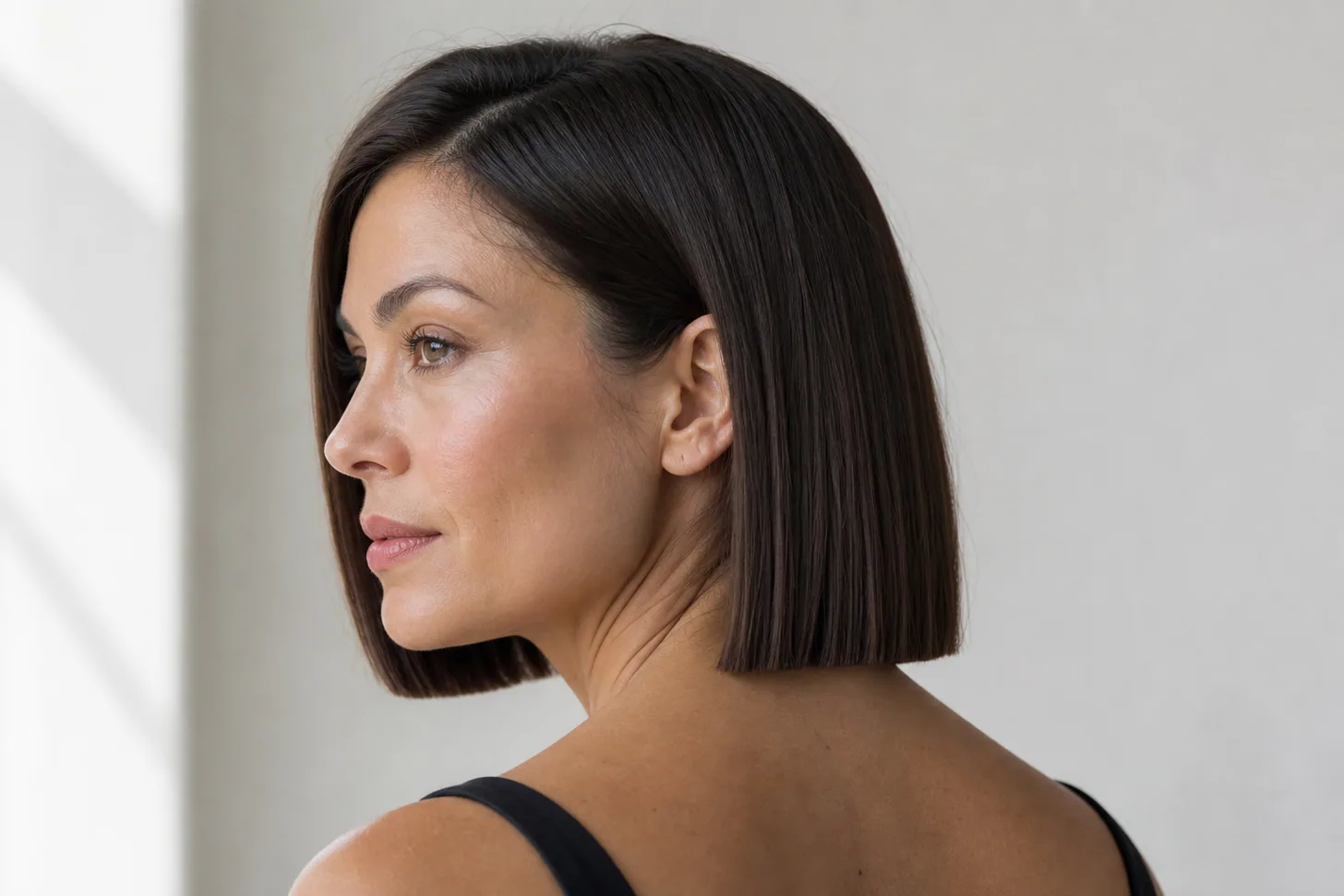
This page is the depth rule that separates them, then 14 choppy bobs that sit on the right side of it, grouped short to long. If you are still deciding between choppy and a hard edge, blunt cuts for thin hair argues the other side, and the two pages agree more than they disagree.
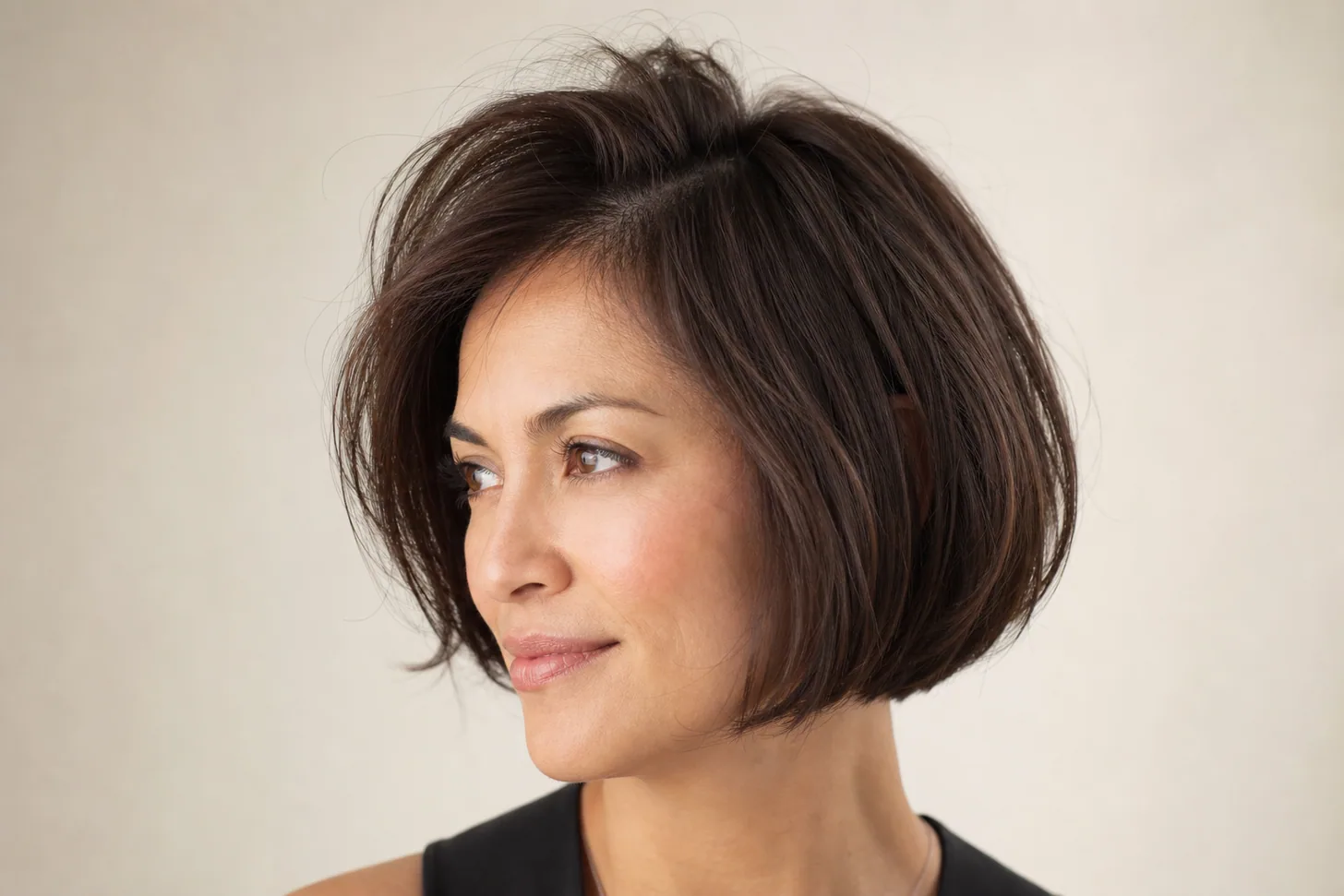
Choppiness that lives in the last half-inch: the ends separate into pieces, and the perimeter is still solid behind them.
Choppy is a shape. Thinned is a subtraction. Fine hair can afford one of them
"Choppy" describes an outline, not a technique. It means the perimeter of the haircut is deliberately uneven — the bottom edge broken into steps and points rather than ruled in one line — so the ends fall as separate pieces instead of as a single curtain.
That separation is the entire visual effect, and on fine hair it is a genuinely useful one. A flat sheet of fine hair shows you exactly how much hair is there. The same hair broken into eight or nine visible sections does not, because the eye stops counting and starts reading movement.
There are two ways to produce that broken edge, and they are not interchangeable.
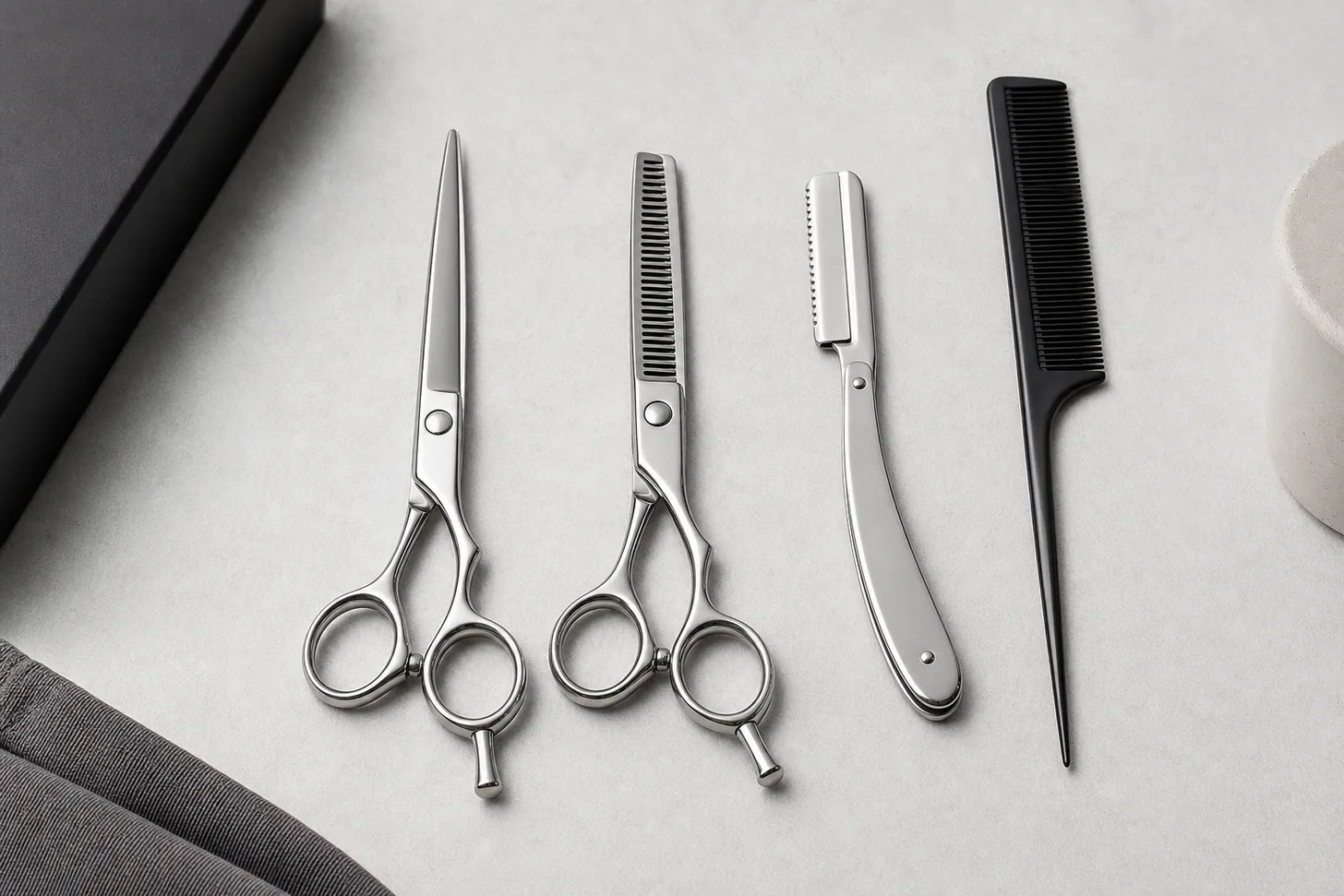
Point cutting into the ends.Straight shears held at an angle to the hair, taking small wedges out of the very tip. Each strand is still full-length and full-diameter for almost its entire run; only the last fraction is staggered. The perimeter stays dense. This is the version fine hair wants.
Bulk removal through the length.Thinning shears, a razor, or slide cutting through the mid-shaft. This cuts a percentage of the strands in a section short and leaves the rest at full length — so a portion of your hair now stops at your ear while the rest reaches your jaw. On the day it looks piece-y. Two months later it looks sparse, and there is nothing to do but grow it out.
Both get described as "adding texture," which is how people with fine hair end up with the second one after asking for the first. The word that separates them is not a technique name — most readers will not win an argument about slide cutting in a salon chair. It is a depth. Point cuts that travel about half an inch into the ends break the line and leave the density alone.
Notching that travels an inch and a half or more is no longer texture; it is a short layer cut into the outline, and on thin hair it opens gaps. Cutting techniques for fine hair has the full vocabulary if you want to arrive fluent, and what to do about over-thinned hair is the page for anyone who has already met the second version.
Chair-side note
I can usually tell within one section which version of this haircut somebody has had before. Point-cut ends feel dense between your fingers right down to the last centimetre, and then they fray. Thinned ends feel like they are disappearing from about two inches up — you slide your hand down the section and it gets thinner and thinner and then there is almost nothing in your palm.
Clients describe that second one as "my hair just stops," and they nearly always think it is something their hair is doing rather than something a pair of shears did eight weeks ago. The reason I labour the depth in consultations is that this is the one haircut mistake on fine hair that cannot be corrected — you cannot put length back into strands that were cut short. You can only wait for them, and it takes the better part of a year.
SB
— Simone Baptiste, Senior Stylist
How choppy you can go — read it off your density, not your strand
The amount of choppiness a bob can carry is set by how much hair you have, not by how thick each strand is. Those are separate measurements and they routinely point in opposite directions; fine hair and thin hair is the difference in full, and it takes about a minute to work out which you are.
The short version: pull your hair into a ponytail and feel the circumference. Thinner than a US quarter is low density. Roughly a quarter is medium. Comfortably thicker is high density — and you can have high density with very fine strands, which is why fine hair when you have a lot of it exists as its own page.
Your density
How much choppiness
Where it goes
What to refuse
Low — ponytail thinner than a quarter
Minimal. Break the very tips only.
Last quarter to half an inch of the perimeter, front sections first.
Any interior texturizing at all. No thinning shears, no razor, nothing removed from underneath.
Medium
Moderate. A visibly broken edge.
Half an inch into the perimeter, plus a few short point-cut pieces at the crown for height.
Thinning shears. Slide cutting below the cheekbone.
High density, fine strands
Generous. This is the group choppiness was designed for.
An inch into the perimeter, real internal layers, and weight taken out of the corners.
Not much — but still ask for point cutting rather than notched blades, because fine strands fray at the cut end either way.
Any density, wavy or curly
Moderate, and cut dry.
Curl by curl, squaring off each piece rather than ruling one line.
Wet choppiness. A bend springs up unpredictably and you finish shorter and blockier than intended.
One more variable moves this: wave. Any bend in the strand supplies its own separation, so wavy fine hair reaches a piece-y finish with roughly half the cutting that straight fine hair needs. If your hair dries with even a soft S in it, start conservative — you will probably get there with less than you think. Fine wavy hair covers the whole set of adjustments.
14 choppy bobs for fine and thin hair
Ordered short to long. Every one of these keeps the perimeter dense — what changes between them is where the broken edge sits, and what else the haircut is doing to buy back root lift.
Short choppy bobs — ear to chin
Choppy French bob on fine dark hair finishing at the earlobe with a short blunt fringe and point-cut ends, woman late 20s
1
The choppy French bob
The shortest version worth asking for, finishing between the earlobe and the jaw with a short fringe and a perimeter broken only at the tips. At this length the hair weighs so little that the roots keep all of their natural lift, so you get separation at the bottom and height at the top without doing anything for either. It is a strong haircut with a definite point of view, and it wants a six-to-eight-week cycle to stay looking deliberate. The French bob on fine hair has the full treatment.
Chin-length choppy bob with a dense blunt perimeter and the last half-inch point-cut, fine blonde hair, woman early 40s
2
The chin-length bob with a blunt line and broken tips
If one cut on this page is the default recommendation, it is this one. The perimeter is cut blunt at the chin, then the last half-inch is point-cut so the edge breaks into pieces without losing its weight. You keep the density illusion a solid line gives you and lose the helmet quality that puts people off blunt bobs entirely. It suits nearly every face shape, and it is the easiest version to ask for accurately, because you can name both halves of it in one sentence.
Rounded choppy bob with volume through the sides curving under at the jaw, fine mid-brown hair, woman mid 50s
3
The rounded choppy bob
Cut with a slightly shorter back and a soft curve through the sides, so the shape reads as a rounded silhouette rather than a straight drop. The choppiness here is doing a specific job: it stops the roundness from looking set, which is the failure mode of this shape on fine hair. Best on straight to slightly wavy hair and worth a round brush on the underneath sections. Genuinely flattering past fifty, when a hard geometric edge can start to look severe.
Choppy bixie with short piece-y crown layers and a bob-length nape on fine ash-blonde hair, woman early 30s
4
The choppy bixie
Sits between a pixie and a bob — long enough at the nape to tuck, short and heavily broken through the crown. This is the only cut in the group where real length variation goes into the interior rather than just the edge, and it works on fine hair because it happens at the top of the head where you want the height, not at the perimeter where you need the density. Ask for the crown pieces to be point-cut short and the sides left alone. The bixie on fine hair goes further.
Jaw to collarbone — the band most people mean
Jaw-length choppy bob with a deep side part and root lift on one side, fine dark-blonde hair, woman late 30s
5
The jaw-length choppy bob with a deep side part
The same cut as number two, moved down an inch and re-parted. The deep side part is doing at least half the work — it pushes a mass of hair across the crown and holds it there, which is the cheapest root lift available to fine hair and the only one that costs nothing daily. Combined with a broken edge at the jaw, the silhouette gains width where fine hair usually has none. How to part fine hair covers moving a part that has sat in one place for years.
Choppy A-line bob angling from a short nape to longer front pieces at the collarbone, fine chestnut hair, woman mid 40s
6
The choppy A-line
Shorter at the back, angling forward to longer pieces at the front. The angle itself creates length variation, so this shape arrives half-choppy before anyone has broken the ends — which means it needs less cutting than it looks like it does. That matters on fine hair. Ask for the angle to be gentle rather than dramatic; a steep A-line on low density leaves the back looking scooped out.
Stacked choppy bob with graduated height at the back of the head and broken ends, fine light-brown hair, woman early 50s
7
The stacked choppy bob
Graduation at the back builds a rounded shelf of hair that sits away from the head, which is the single most effective structural fix for a flat back — a complaint fine hair has more than any other. The choppiness at the perimeter keeps the stack from reading as a set, blow-dried helmet. This one does need a round brush most mornings to hold its shape, so factor that in honestly. The stacked bob for fine hair and the flat back of the head problem are both worth reading before you book.
Air-dried choppy bob on fine wavy hair with natural S-bends and separated ends, woman late 20s
8
The air-dry choppy bob for fine wavy hair
Cut dry, curl by curl, with each end squared off individually rather than a line ruled across the head. Wavy fine hair gets separation for free as it dries, so this version is cut deliberately conservatively — the stylist is finishing what the wave already started. The payoff is the lowest-effort cut on this page: rough-dry the roots, leave the lengths, done. Dry cutting fine hair explains why the wet version goes wrong.
Italian bob at the jaw with soft inward-curving ends and light choppiness, fine dark-brown hair, woman mid 30s
9
The choppy Italian bob
A jaw-length bob with a soft inward curve at the ends and just enough breakage in the line to stop it looking rigid. It is the most polished shape here and the one that suits an office and a school run equally. The technical distinction from a plain blunt bob is small — a handful of point cuts through the front two sections — but it is the difference between a haircut that looks styled and one that looks set.
Choppy lobs — collarbone and just past
Collarbone choppy lob with a heavy bottom edge and lightly broken tips, fine honey-blonde hair, woman early 40s
10
The choppy lob with a heavy bottom
At collarbone length the arithmetic starts to turn against fine hair, because the weight of the length pulls the roots flat. This version answers that by keeping the perimeter deliberately heavy and putting all the choppiness in the last quarter-inch only — the least texture on this page, and the right amount for the length. If you want to keep hair on your shoulders, this is the shape to keep it in. The lob for fine hair is the full length discussion.
Choppy shag-lob with piece-y crown layers and a broken perimeter, fine copper-brown hair, woman early 30s
11
The choppy shag-lob
The one cut here where interior layers earn their place at length, because the shag puts them at the crown rather than through the mid-lengths — height where you want it, weight left where you need it. It only works on medium-to-high density; on low density the layered crown and the long perimeter fight each other and you end up with both problems at once. The shag on fine hair and whether layers help or hurt settle whether you are a candidate.
Collarbone choppy bob with soft curtain bangs parting at the nose, fine mid-blonde hair, woman late 40s
12
The collarbone choppy bob with curtain bangs
Length at the bottom, movement at the front. A curtain fringe puts breakage and face-framing exactly where a longer bob loses interest, and it adds height at the front hairline that a collarbone perimeter otherwise costs you. This is the pairing that makes long-ish bobs work on fine hair rather than merely tolerating them. Curtain bangs for thin hair covers the fringe itself in detail.
Choppy bobs with a fringe
Chin-length choppy bob with soft see-through wispy bangs on fine light-brown hair, woman mid 30s
13
The choppy bob with wispy bangs
A soft, see-through fringe is the safest bang on fine hair, and it pairs naturally with a broken perimeter because both are built from separation rather than weight. Keep the fringe section narrow and shallow — a wide, deep fringe is built out of your hairline, which on fine hair is usually the sparsest ground you own. Wispy bangs for fine hair has the sectioning detail.
Choppy micro-bob above the chin with a blunt straight fringe, fine dark hair, woman late 20s
14
The choppy micro-bob with a blunt fringe
The boldest cut on the page: above the chin, heavily broken at the ends, with a full straight fringe as a counterweight. The blunt fringe is what keeps it from reading sparse — it gives the eye one solid line to land on, so the broken perimeter behind it reads as deliberate texture instead of thin hair. High commitment, six-week cycle, and the fringe needs trimming every two to three. Worth it if that maintenance is genuinely available to you.
The two choppy bobs to turn down
Both of these get recommended constantly for this cut, and both are wrong for fine hair for the same reason: they take density out of a place that has none to spare.
The choppy bob with an undercut
Removing bulk from the nape makes a bob sit closer to the head and stops thick hair flicking out at the bottom. Fine hair does not have that problem.
Taking hair out from underneath on low density leaves the perimeter looking scooped and the whole bob hanging off a narrow base — and when it grows back it grows back as short spikes that push the length outward at exactly the wrong angle. If a stylist offers to "take some weight out from underneath," on fine hair that is the sentence to decline.
The razored choppy bob
A razor tapers every strand it touches to a point, which is why razored cuts look so soft and move so well on thick hair. On fine hair a strand that is already narrow, tapered to a point, is functionally transparent for its last inch.
It also frays: a razor leaves a rougher cut surface than shears do, and fine strands split from that surface upward. Ask for shears, always — and see how often fine hair actually needs trimming for what the ends need afterward.
Styling a choppy bob so it looks piece-y and not stringy
The line between the two is separation with body versus separation without it. Piece-y hair has distinct sections that still have substance. Stringy hair has distinct sections that have collapsed together and gone flat — same separation, no volume behind it. Almost always the cause is product weight rather than the cut.
Root lift first, ends last.Rough-dry the roots with your head tipped forward and fingers only, no brush, until they are about 80% dry. Everything else in this list fails if the roots are flat.
Nothing creamy below the ears.Serums, oils and leave-in creams collapse a choppy bob faster than anything else. If your ends need something, a pea-sized amount on the last inch and nowhere near the mid-lengths.
Texture spray on dry hair, not damp.On damp hair it soaks in and does nothing. On dry hair it grits the surface so pieces hold apart from each other. A couple of short bursts at mid-length, then break the ends with your fingers.
Break the ends by twisting, not raking.Take a half-inch section between finger and thumb and twist it once. Raking your fingers through separates everything evenly, which is the opposite of what this cut is for.
Stop before you think you are done.The most common failure on fine hair is over-working it — every extra pass flattens what the last one built.
A choppy bob is one of the more forgiving cuts on this site, and the reason is structural: it has no single clean line to lose. A blunt bob starts looking soft within six weeks because uneven growth blurs the one thing it depends on.
A choppy bob absorbs the same growth as more texture. What eventually goes is the separation at the tips — point-cut wedges grow down and blunt themselves, so around week ten the ends start hanging together as one piece again. That is the cut asking for a trim, and it is a more useful signal than the calendar.
Choppy bob
Blunt bob
Layered bob
Trim cycle
8–10 weeks
6–8 weeks
10–12 weeks
Minutes most mornings
5–8
8–12, and it needs smoothing
6–10
Air-dries acceptably?
Yes — the best of the three
Rarely
Sometimes
Grow-out behaviour
Graceful — becomes a choppy lob
Awkward — the line goes soft
Graceful, then shapeless
Density it needs
Any, with the depth adjusted
Low to medium is ideal
Medium to high
If a two-month cycle is not realistic, this is still the right family of cut — ask for the choppiness kept shallow and concentrated in the front sections, which are the ones you actually see, and let the back grow.
What to ask your stylist
Bring the depth and the tools, in that order. The rest of the consultation will look after itself.
"A choppy bob, but point-cut into the ends — no more than half an inch."The number is the useful part. It converts a subjective word into an instruction.
"No thinning shears and no razor anywhere."Say both. They are different tools with the same effect on fine hair, and declining one does not decline the other.
"Please don't take any weight out from underneath."This is routine on thick hair and happens without being announced. It is the most common way fine hair leaves a salon thinner than it arrived.
"Keep the perimeter dense — I want the bottom edge to be the fullest part of the cut."This tells your stylist which effect you are buying and lets them cut toward it.
Point to a landmark, don't name inches.Jaw, chin, collarbone. Wet hair sits an inch or more lower than dry, and inches mean different things to different people.
Your ends are already see-through.Choppiness on ends that have lost density makes the sparseness legible rather than hiding it. Grow the perimeter back to solid first — recovering from an over-thinned cut has the sequence.
You have very low density and straight hair.You will get more from a solid line than a broken one. Read blunt cuts for thin hair instead — it is the same argument decided the other way.
Your scalp shows at the crown.A choppy perimeter does nothing for the top of the head. Cuts for a thinning crown is the right starting point, and the perimeter is the second question.
You are growing out a short cut.Breaking the ends every visit undoes the length you are waiting for. Growing out short fine hair has a better order of operations.
Your hair is fine and coarse-textured.Fine but wiry strands stick out from a broken edge rather than lying in pieces, and the result reads frizzy rather than piece-y. Thin coarse hair covers the difference.
Yes, provided the choppiness is cut into the ends rather than through the middle of the length. Those are two different haircuts that photograph the same. Point-cutting into the last half-inch of the perimeter creates length variation at the tips, so the ends separate into visible pieces instead of hanging as one flat curtain — that separation is what reads as fullness, and it costs no density at all. Bulk removed along the mid-shaft with thinning shears or a razor produces the same piece-y look on the day and leaves fine hair see-through within two months, because a percentage of your strands are now half the length of the rest. Ask for the first version and this is one of the best cuts fine hair can have.
A layered bob varies the length of the interior — sections on top cut shorter than sections underneath, so the hair stacks and builds shape through the body of the cut. A choppy bob varies the length of the perimeter — the outline itself is cut unevenly, so the bottom edge is broken rather than ruled. You can have either without the other, and on fine hair the distinction matters: layers remove weight from the interior, while choppiness only interrupts the edge. If your hair is fine and there isn't much of it, choppiness is the cheaper effect — separation and movement without giving up perimeter density. Layered bob haircuts for fine hair is the other side of this.
Only if it's cut deep. The depth of the notching is the whole variable. Point cuts that travel about half an inch into the ends break the line and leave the density alone — the hair still has a full, dense bottom edge, it just isn't a ruler-straight one. Notching that travels an inch and a half or two inches is no longer texture, it's a short layer cut into the outline, and on thin hair it opens gaps you can see scalp through. If you've asked for choppy and your stylist reaches for thinning shears, that's the moment to say the depth out loud.
No, and on fine hair you specifically don't want them. Thinning shears have teeth on one blade, so each closure cuts a fraction of the strands in a section and leaves the rest — which is exactly what creates the see-through ends fine hair can't afford. Everything a choppy bob needs can be done with straight shears held at an angle, taking small wedges out of the very ends. A stylist who cuts a lot of fine hair will do it that way by default. If yours reaches for the notched blade, ask for point cutting instead — a normal request that produces a better version of the same haircut.
Give the depth and name the tools. Something like: a choppy bob, point-cut into the ends no more than half an inch, no thinning shears anywhere, no razor, and please keep the perimeter dense. Then add the one that catches most people out — nothing removed from underneath. Salons routinely take bulk out of the nape to make a bob sit closer to the head, which is right on thick hair and wrong on fine hair, and it happens without being announced. Naming the depth in inches is the single most useful sentence you can bring to this consultation.
Every eight to ten weeks — more forgiving than a blunt bob, less demanding than a pixie. A choppy perimeter grows out well for the same reason it looks the way it does: there's no single clean line to lose, so two months of uneven growth reads as more texture rather than as a haircut going soft. What does eventually go is the separation at the tips, because the point-cut wedges grow down and blunt themselves. When your ends start hanging together in one piece again rather than breaking apart, that's the cut asking for a trim.
Yes, and it's one of the few cuts where air-drying genuinely flatters fine hair rather than merely being tolerated. Broken ends dry into separate pieces on their own, so the texture the cut was built for appears without styling. What air-drying won't give you is root lift, and a choppy bob with flat roots reads limp no matter how good the ends look. The two-minute version: rough-dry the roots only — head tipped forward, fingers, no brush — then leave the lengths to finish on their own. Air-drying fine hair has the full method.
Blunt if your hair is fine, straight and there genuinely isn't much of it, because a solid edge is the most reliable density illusion available and choppiness slightly dilutes it. Choppy if your hair is fine but you have a reasonable amount of it, or if it has any wave at all, because a blunt line on that hair sits as a heavy triangle and choppiness gives it somewhere to move. The two aren't opposites, and the best fine-hair bobs borrow from both — a dense blunt perimeter with the last half-inch point-cut is, for most people reading this, the answer to both questions at once.
It can, with two adjustments. Keep the length below the widest part of your face rather than level with it — a choppy bob ending at the cheekbone widens, one ending at or just past the jaw lengthens. And keep the choppiness vertical: point cuts that break the line downward draw the eye down the face, whereas heavy horizontal texture through the sides adds width where a round face already has it. A deep side part helps more than the cut does, and costs nothing to try first. Haircuts for a round face and fine hair covers the rest.
Eleven years cutting fine hair. Simone measures choppiness in half-inches out loud, because "just add some texture" is how fine hair leaves a salon thinner than it arrived.
Images in this article are AI-generated illustrations, not photographs of real clients or results. See our image policy.
Results vary with hair type, density, and growth patterns. This guide is educational and not a substitute for an in-person consultation with a licensed stylist.
Get the good hair intel
One honest, stylist-written guide in your inbox each week. No hype.

 SB
SB