Reviewed by Tara Sullivan · Updated July 2026 · 8 min read
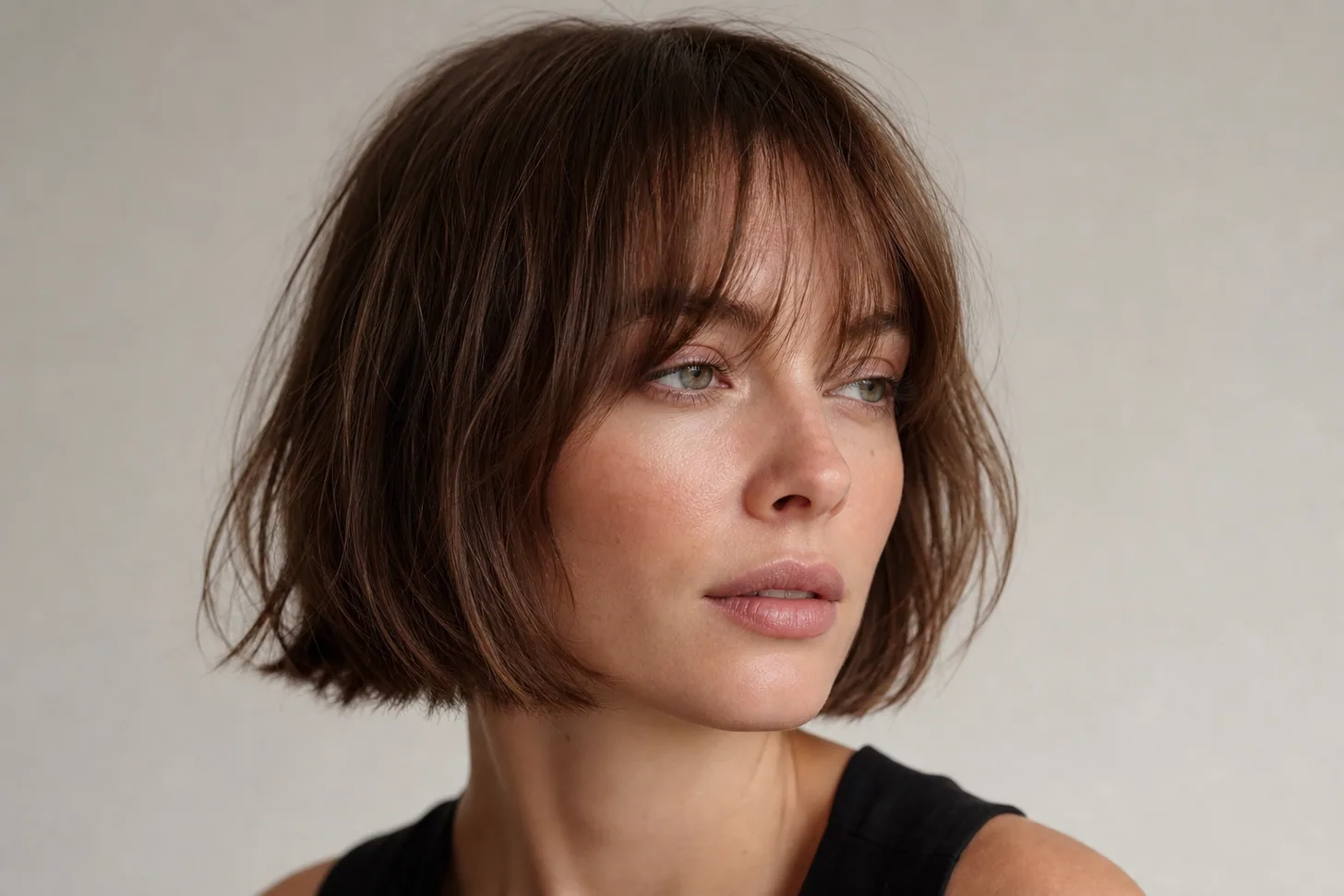
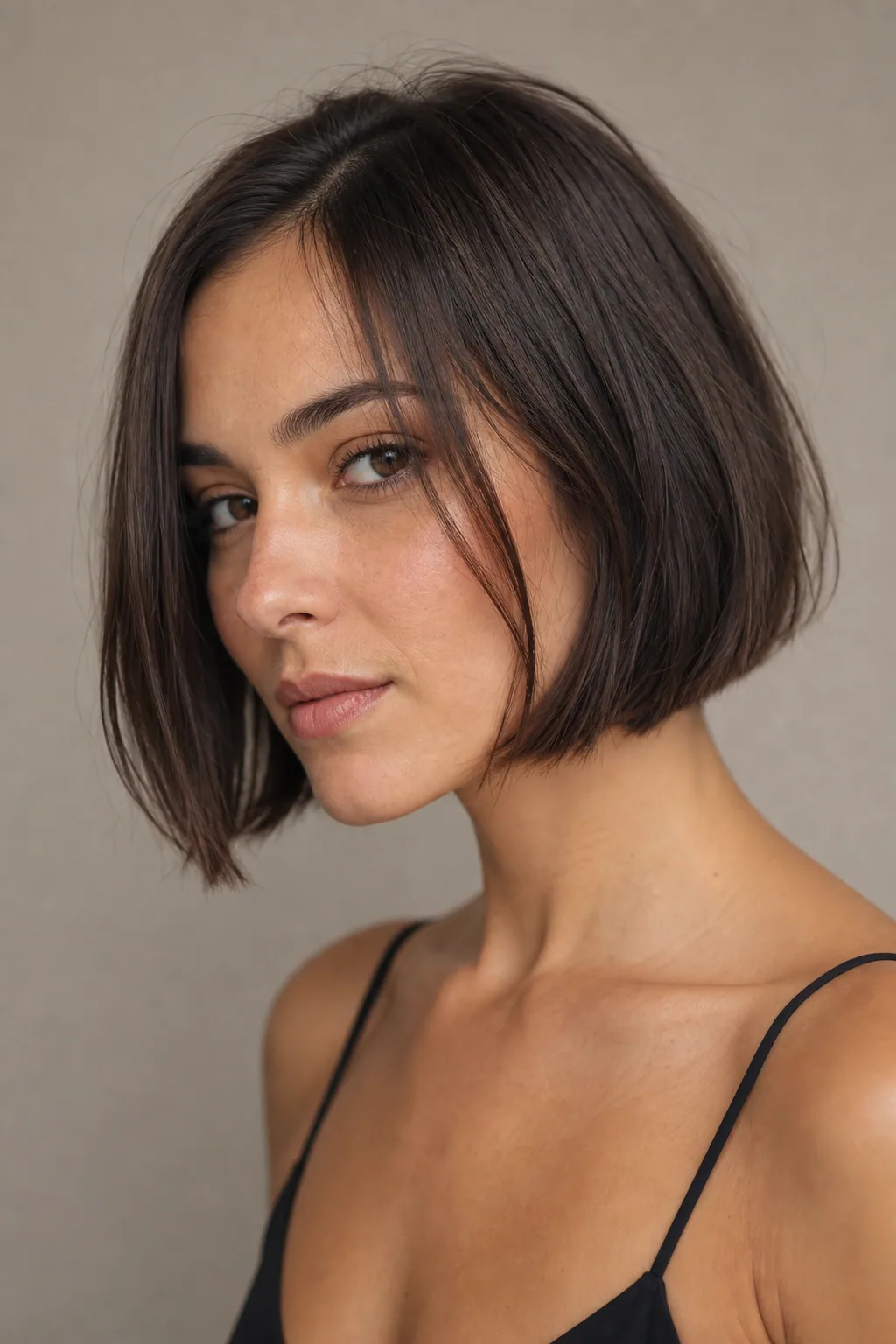
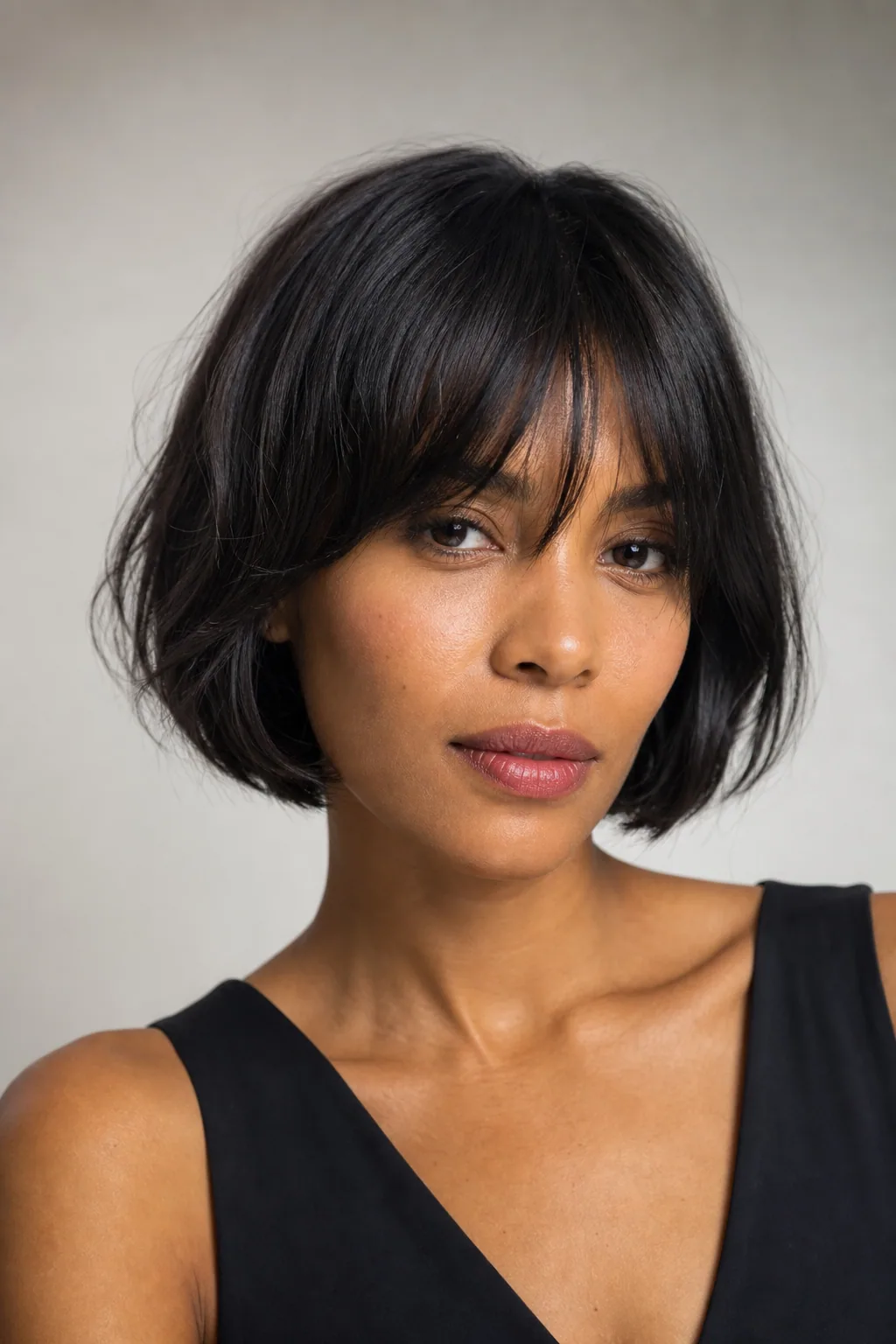
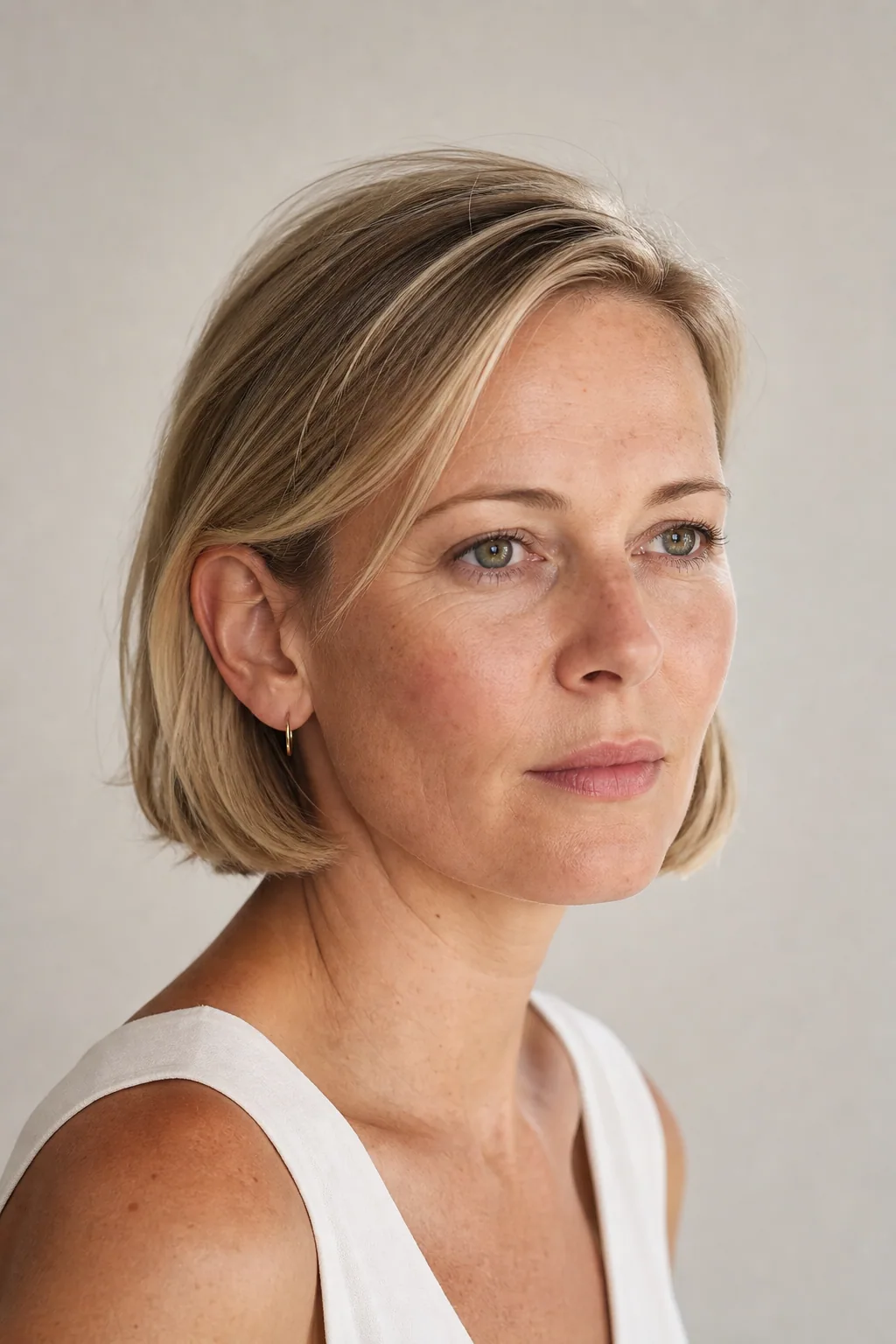
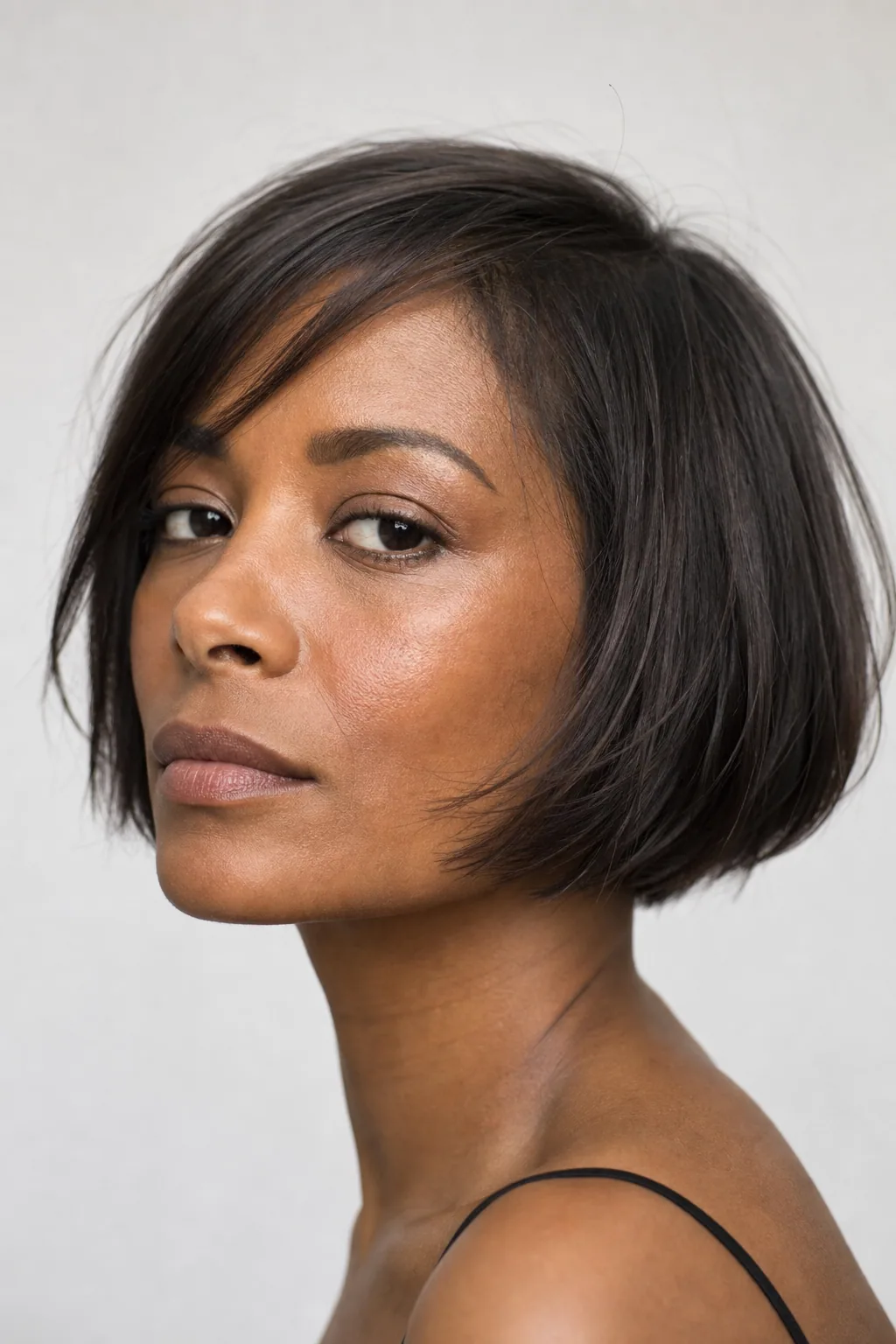
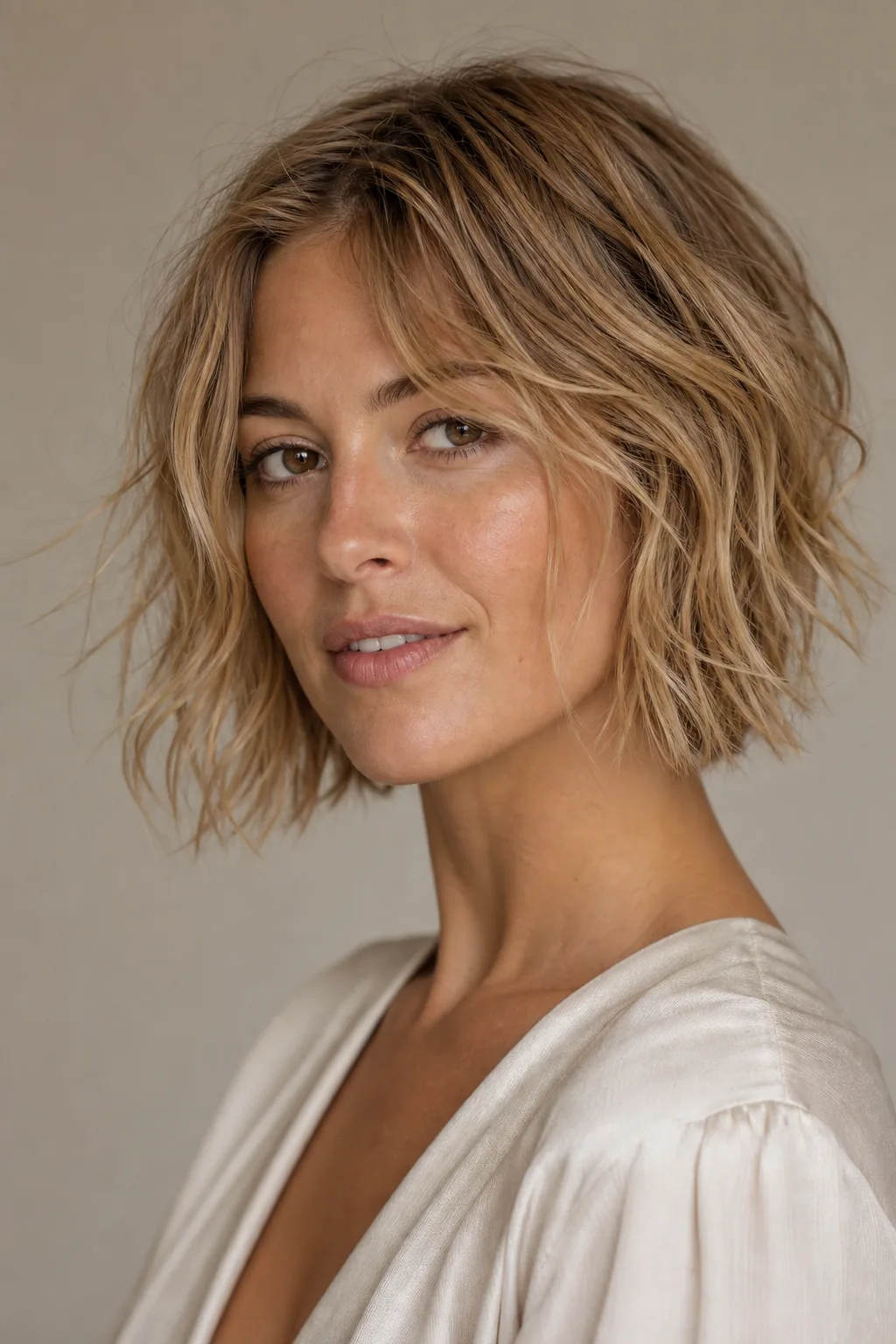
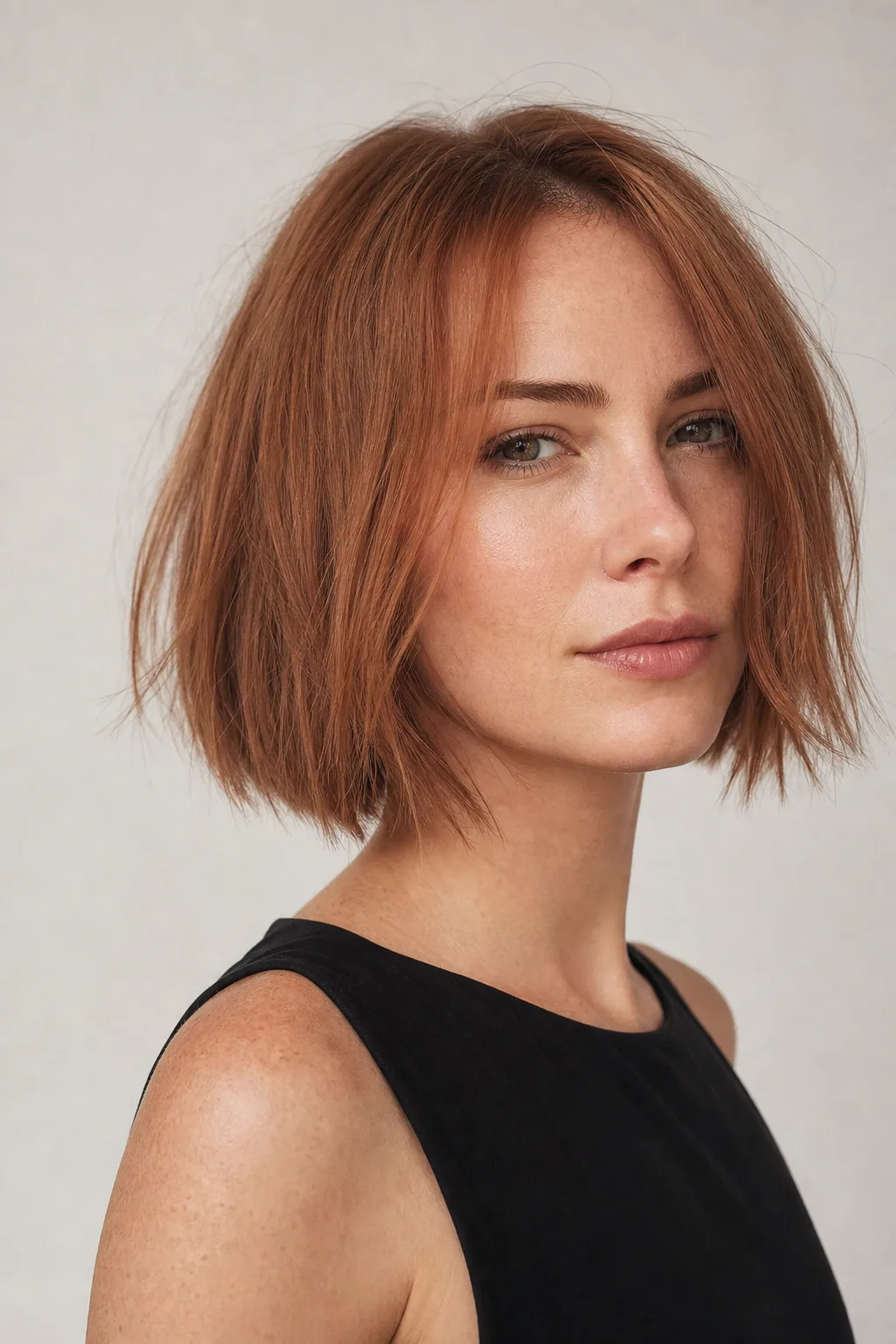
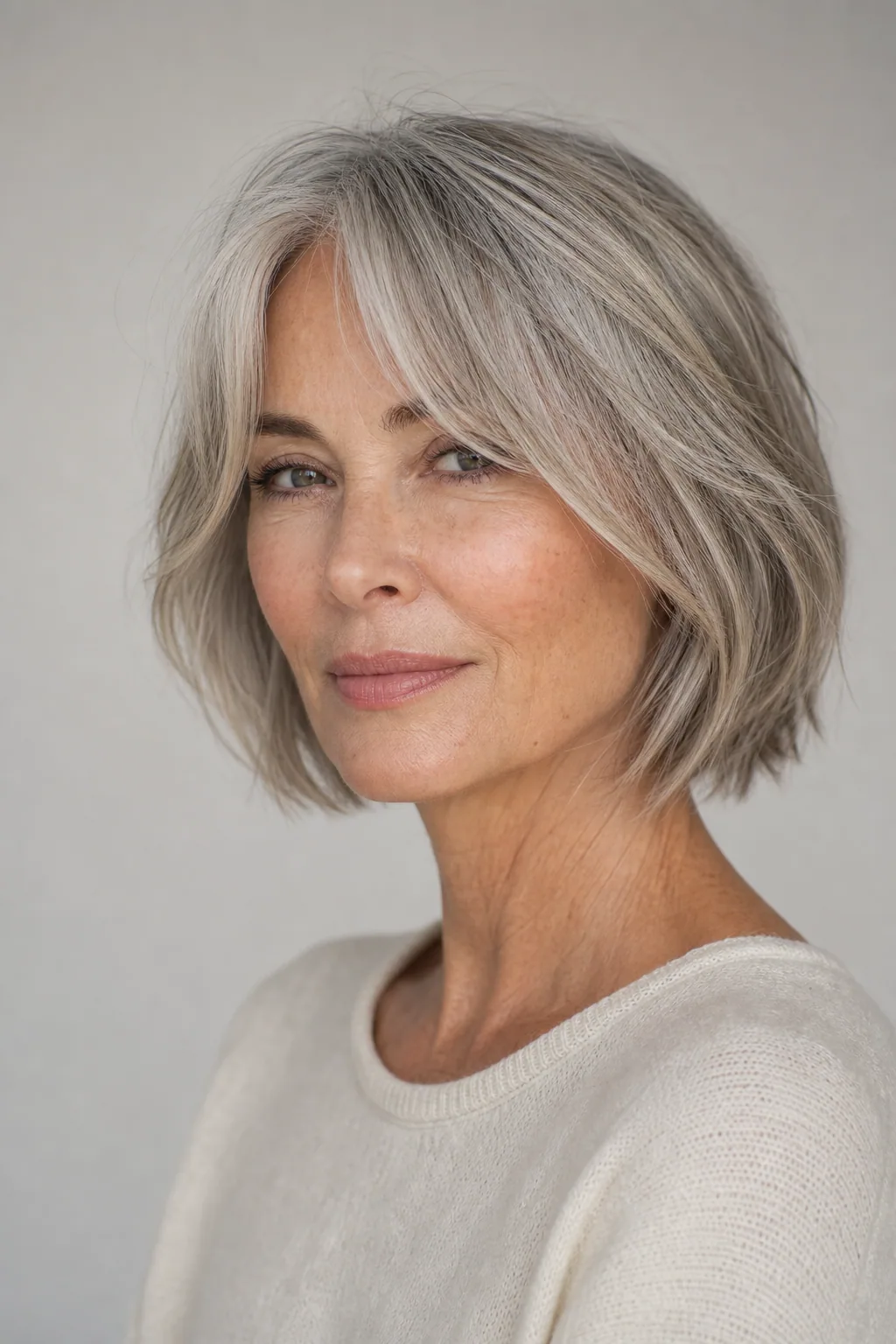
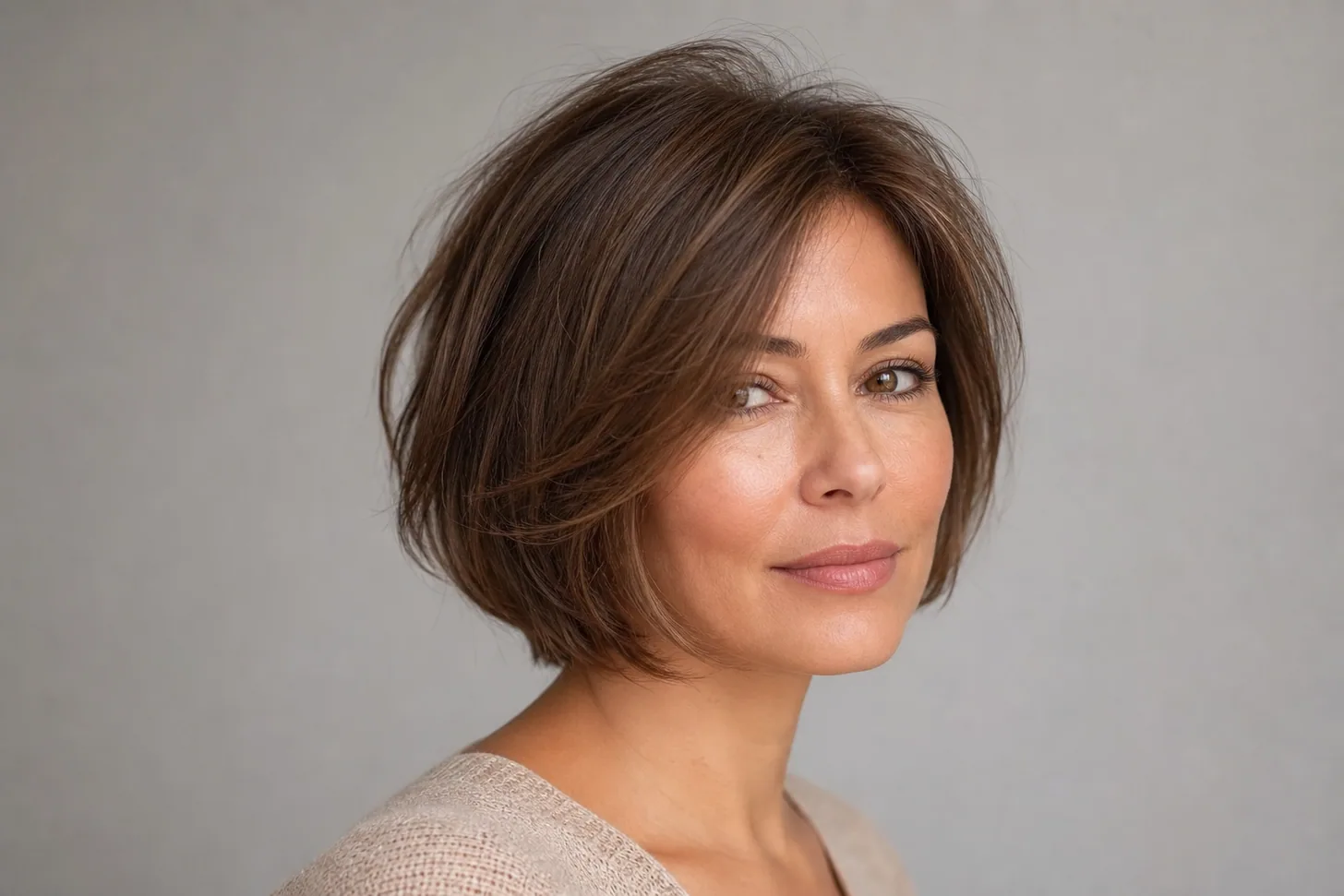
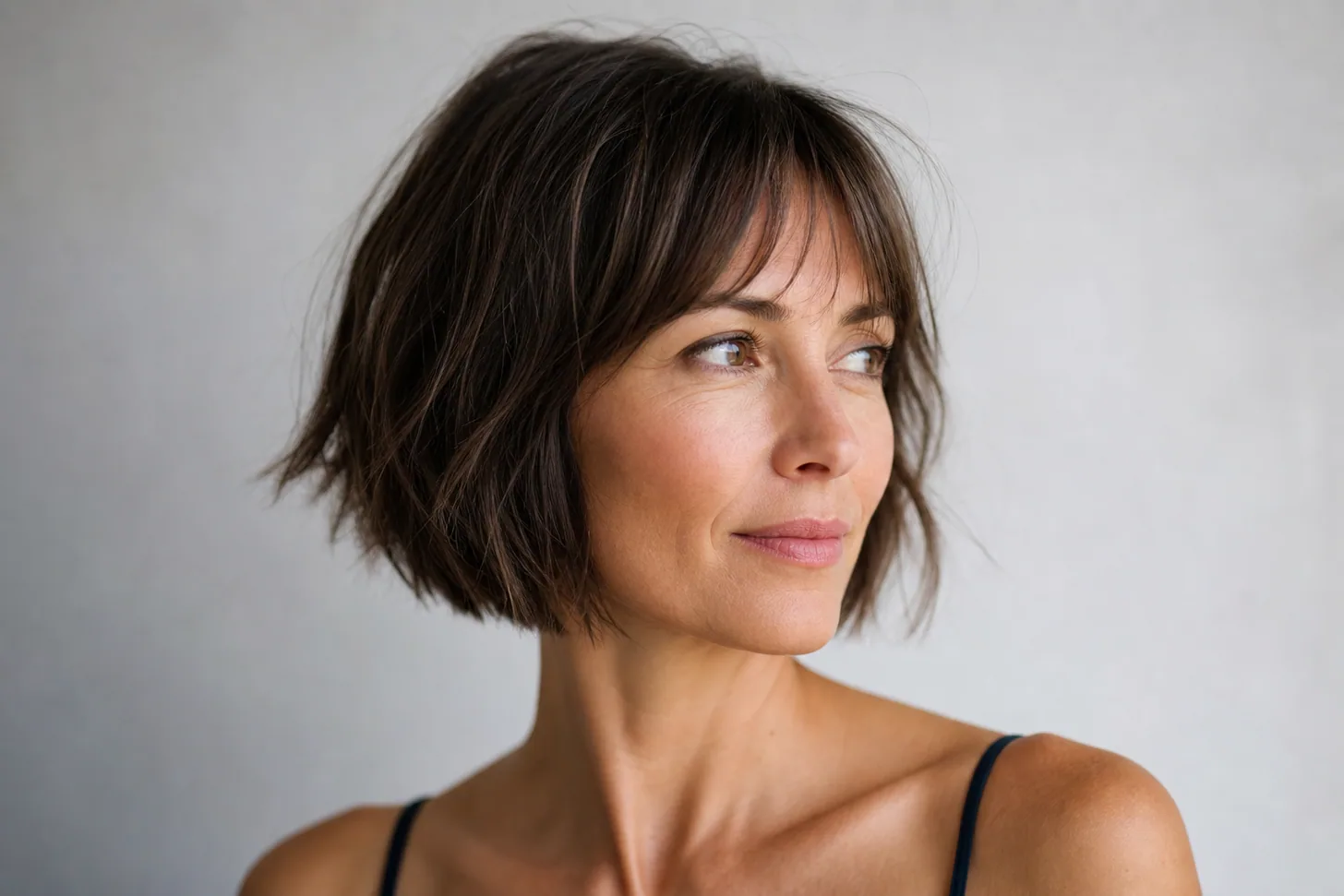
The French bob is the rare short cut that works with fine hair instead of fighting it — its chin-grazing length keeps the weight forward so the ends stack and read dense, and its undone, fringe-framed texture fakes a second layer of fullness. Below are 14 salon-tested French bobs for fine and thin hair, grouped from the cleanest classic to the softest lived-in version, each with who it suits and the exact words to bring your stylist.
Chair-side note
The mistake I see with French bobs on fine hair is asking for it too polished. This cut is supposed to look a little undone — that texture is what reads as volume. Ask for point-cut ends and a soft, imperfect line, not a razored, feathered finish that leaves fine ends see-through. And keep the length at the chin, not above it, unless your crown density is genuinely good.
SB
— Simone Baptiste, Senior Stylist
Why the French bob suits fine hair
The French bob — the short, chin-length, fringe-framed cut you've seen on every Parisian street-style feed — happens to solve fine hair's core problem almost by accident. Fine strands go flat because length drags the weight down; the French bob removes that length entirely, cutting to the chin or jaw where the ends collect and look dense.
Then it layers on the two things fine hair is always short of: weight near the face (the fringe) and visible texture (the signature undone finish that breaks up the light). The result reads full without a single volumizing product — though a little helps.
If you're deciding between this and its longer relatives, our full gallery of bobs for thin hair covers the whole family, and if you're not sure whether you're working with fine strands, low density, or both, the two-minute guide to telling fine hair from thin hair will help you pick the right version below. It is one of the strongest performers in fine hair trends for 2026, and one of the few short shapes that has never really gone away.
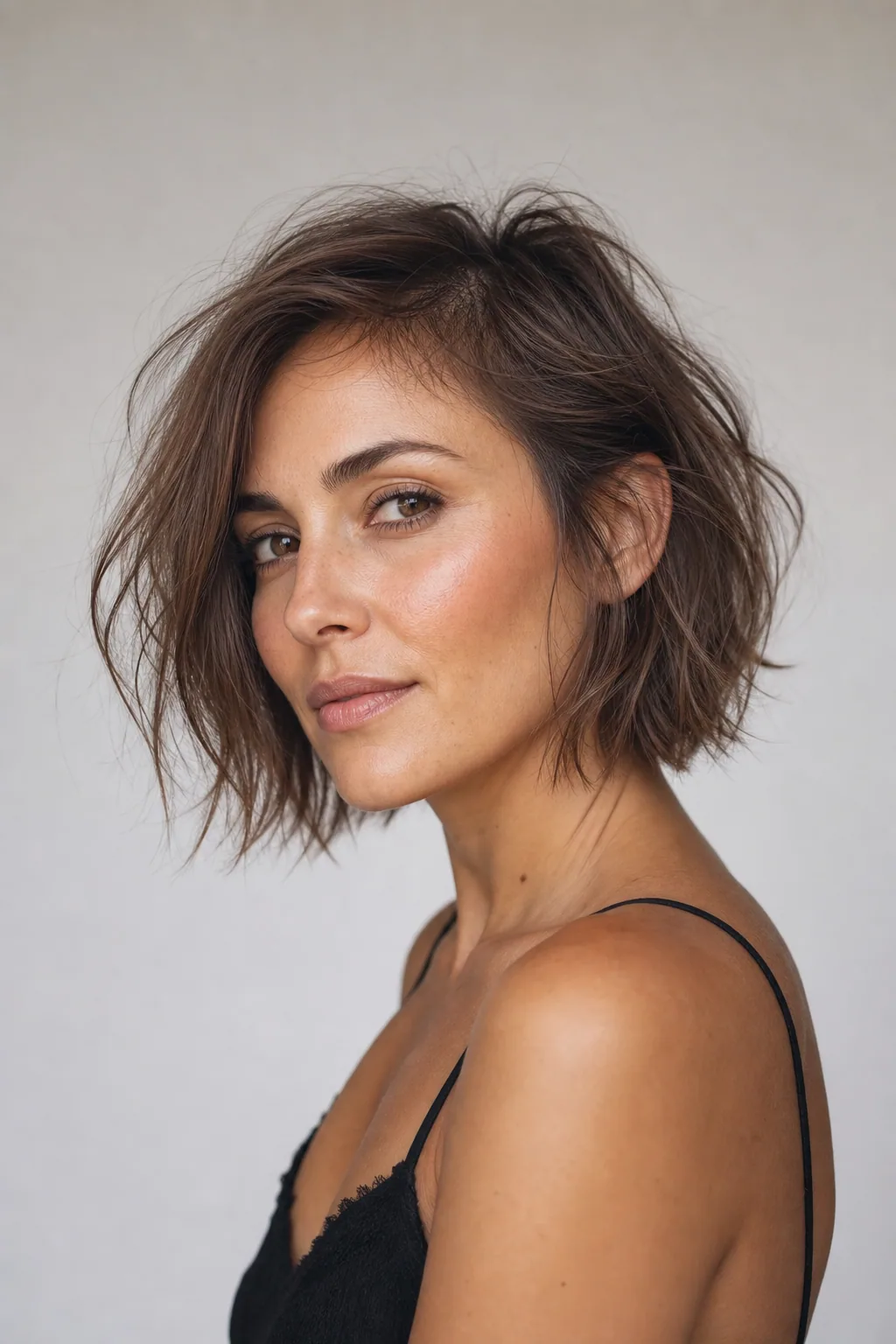
The classic French bob shapes
Start here if you want the definitive Parisian cut. These are the clean, weight-forward shapes the whole trend is built on — the most fullness-per-effort of any version, and the easiest to explain to a stylist. All of them rely on the bottom line being cut straight rather than tapered — see blunt cuts for thin hair.
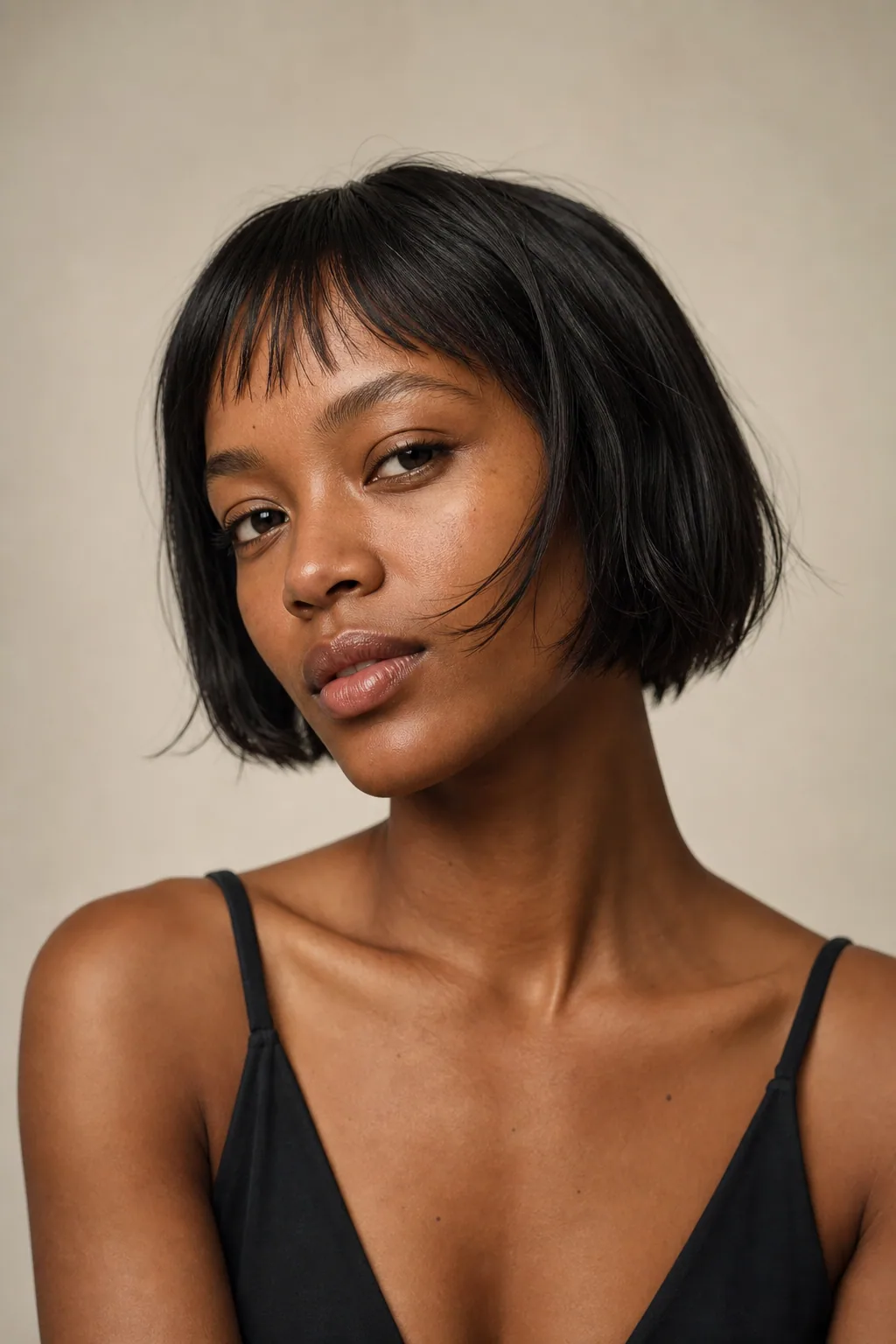
1
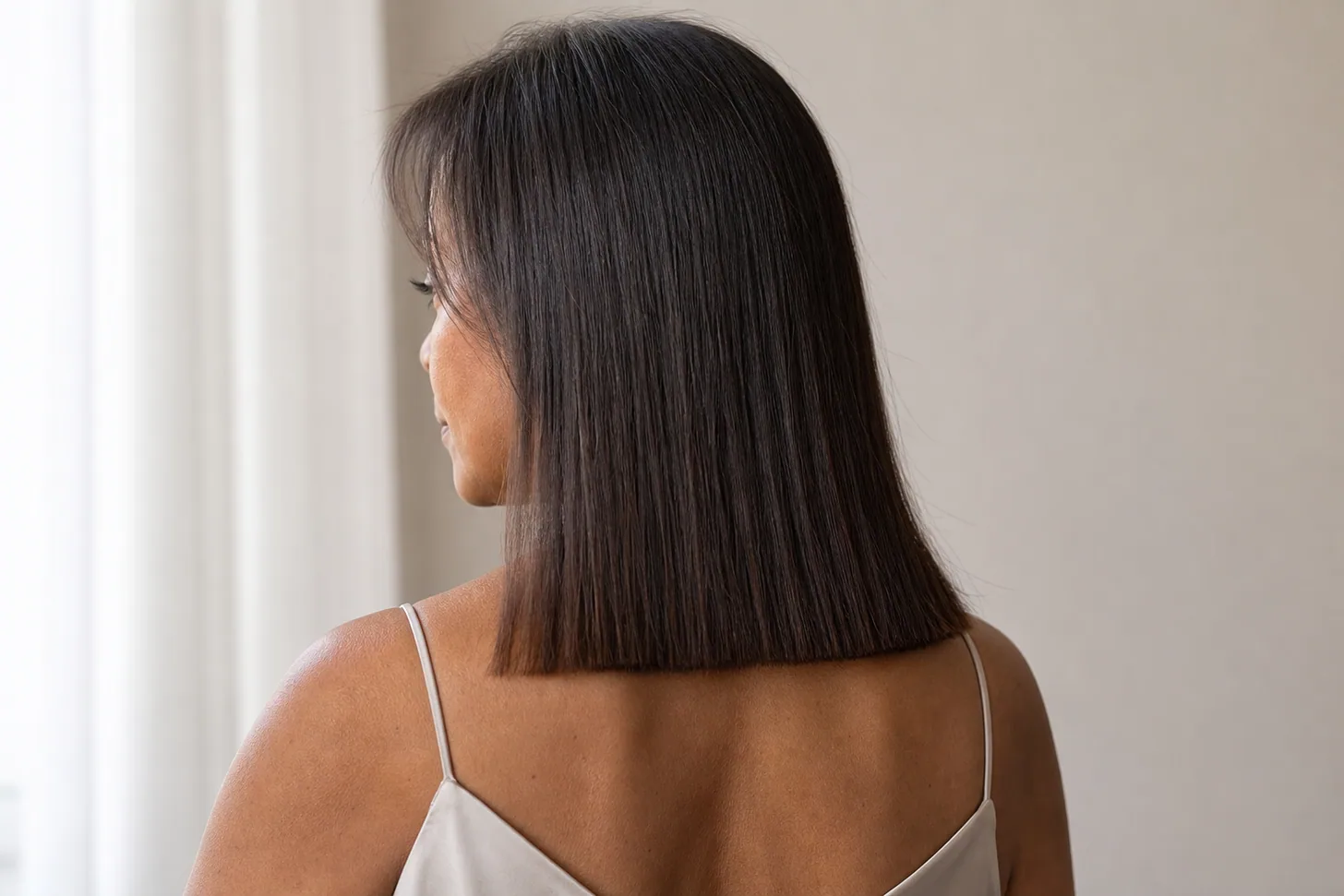
The chin-length blunt French bob
The template: one clean line grazing the chin, cut blunt so every strand ends together and the perimeter looks dense. It's the single most fullness-building version for fine hair with decent density — no layers to thin the ends, just weight sitting exactly where you want it.
2
French bob with a full fringe
The definitive Parisian version, and the one most people picture. The full fringe pulls weight toward the face, adding a band of density right where the eye lands — a genuine volume trick disguised as a style choice. Best on foreheads that can carry a fringe; ask for it soft and slightly parted, not a heavy blunt wall.
3
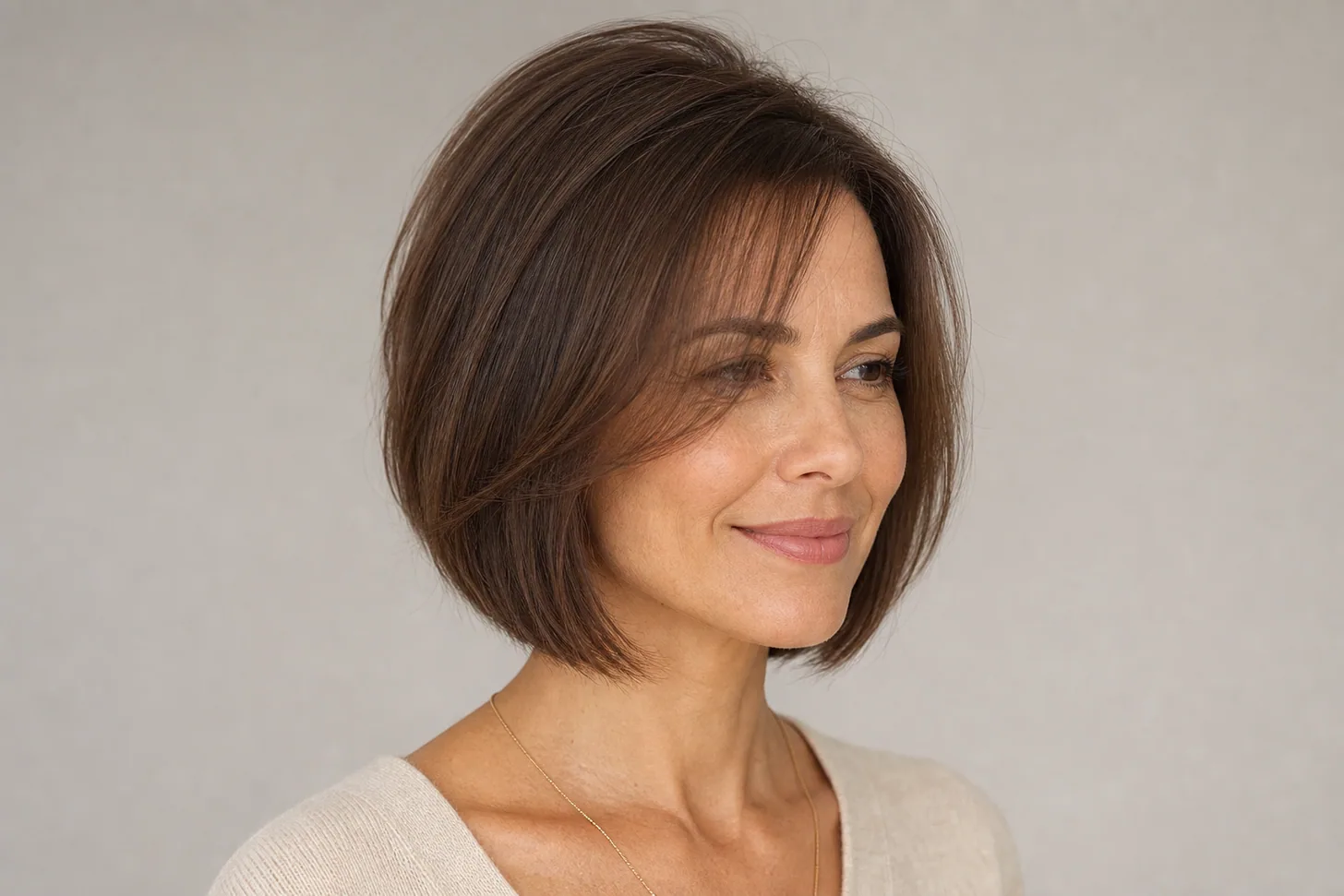
The jaw-grazing French bob
A hair longer than the classic, landing right at the jaw — the safest entry point if chin-length feels like a leap. It still keeps the weight forward but leaves enough length to tuck behind an ear, which suits anyone easing into short hair for the first time.
4
The cheekbone French bob
The boldest cut here, sitting above the jaw near the cheekbone for a sharp, editorial line. The extreme shortness maximizes density — there's simply less hair to fall flat — but it asks for good crown volume and regular trims. A confident pick for straight, fine hair.
5
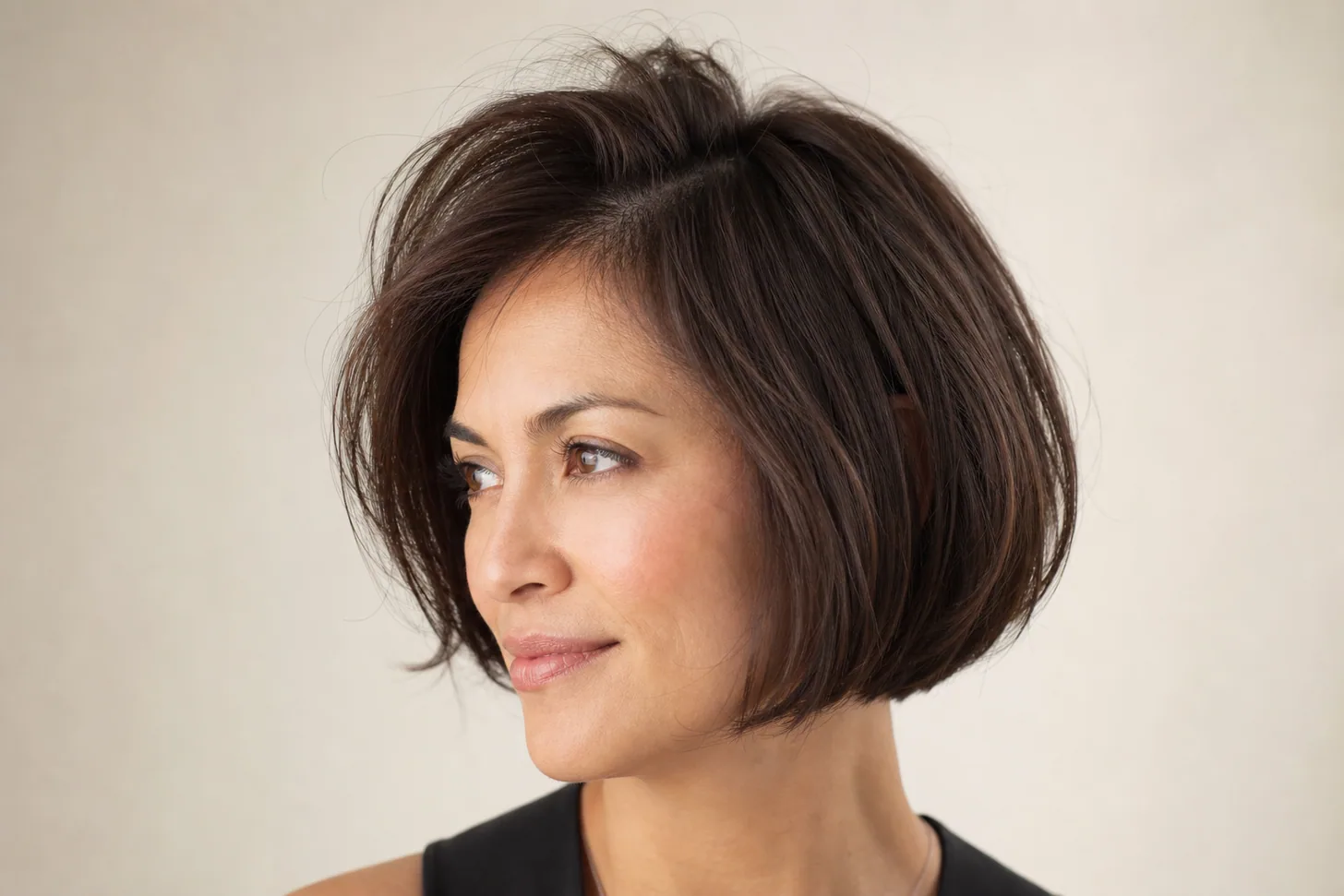
The rounded French bob
A softer take with the ends curved gently under, building a rounded dome of volume through the sides. The bend does the fullness work a straight line can't, and it needs only a quick round-brush finish to hold its shape — a flattering, low-effort choice for most face shapes.
Textured & wavy French bobs for movement
When you want piece-y, effortless volume rather than a clean line, these lean on texture and a natural bend. They're the most forgiving on day-two hair, and they suit fine, wavy hair especially well — the wave supplies built-in body.
6
The tousled wavy French bob
Loose, undone waves through a chin-length shape — the texture breaks up the light so the eye reads movement instead of sparseness. A spritz of texture spray on the mid-lengths sets it in a minute; ask for point-cut ends so the waves stay separated rather than stringy.
7
The air-dried French bob
Cut to be worn exactly as it dries — the point of a French bob is that it looks intentional undone. Scrunch a light mousse through damp hair, let it air-dry, and the natural bend does the styling. The lowest-maintenance version in the edit, and ideal if heat is what's been thinning your ends.
8
The piece-y point-cut bob
Here the texture is built into the cut itself: the stylist point-cuts the ends so they finish in fine, separated pieces rather than a solid line. On fine hair that separation reads as density and movement at once. It grows out gracefully, too — the piece-y ends just soften rather than losing a crisp perimeter.
9
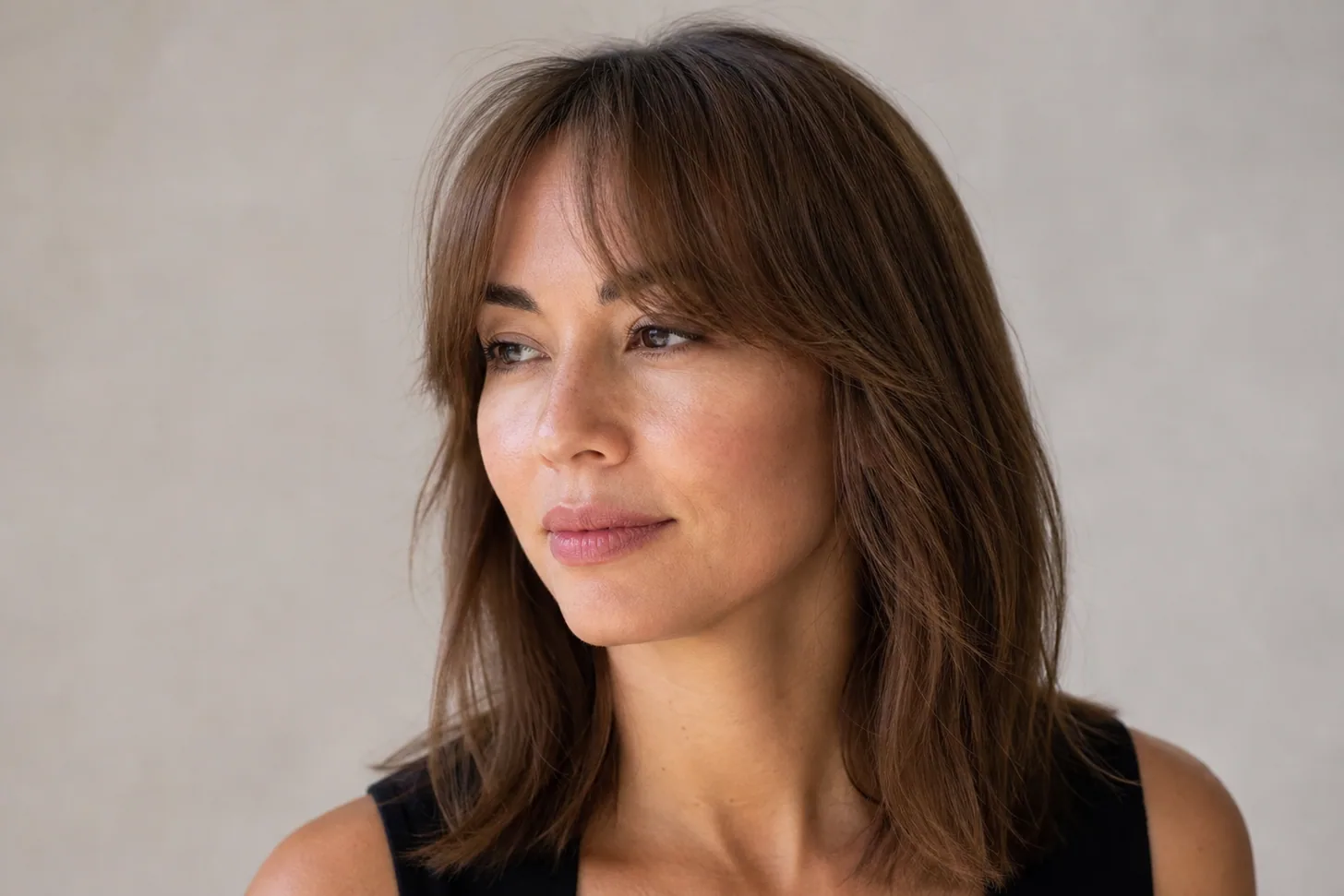
French bob with a Bardot fringe
Swaps the blunt fringe for a longer, swept, curtain-style one that frames the cheekbones — softer and more grown-out than the classic. If a full fringe feels like too much commitment, this is the gentler route; the same weight-forward benefit, styled open. See our full take on curtain bangs for fine hair for the trims and styling.
10
The undone "messy" French bob
The most casual finish — roughed-up at the roots, deliberately imperfect, styled with fingers rather than a brush. It leans hardest into the effortless-French idea and hides fine hair's flatness better than any polished version, because there's no smooth surface to fall limp.
Fringe & finish variations
The French bob's personality lives in the fringe and the part. These four show how far one short shape can flex — from the boldest micro-fringe to a fringe-free, grown-out version that blurs into lob territory.
11
French bob with a micro fringe
A very short "baby" fringe sitting high above the brows — the most fashion-forward version, and a striking way to draw the eye up and away from flat lengths. Keep it wispy rather than blunt so it stays light on a fine hairline; it's a trim-every-two-weeks commitment.
12
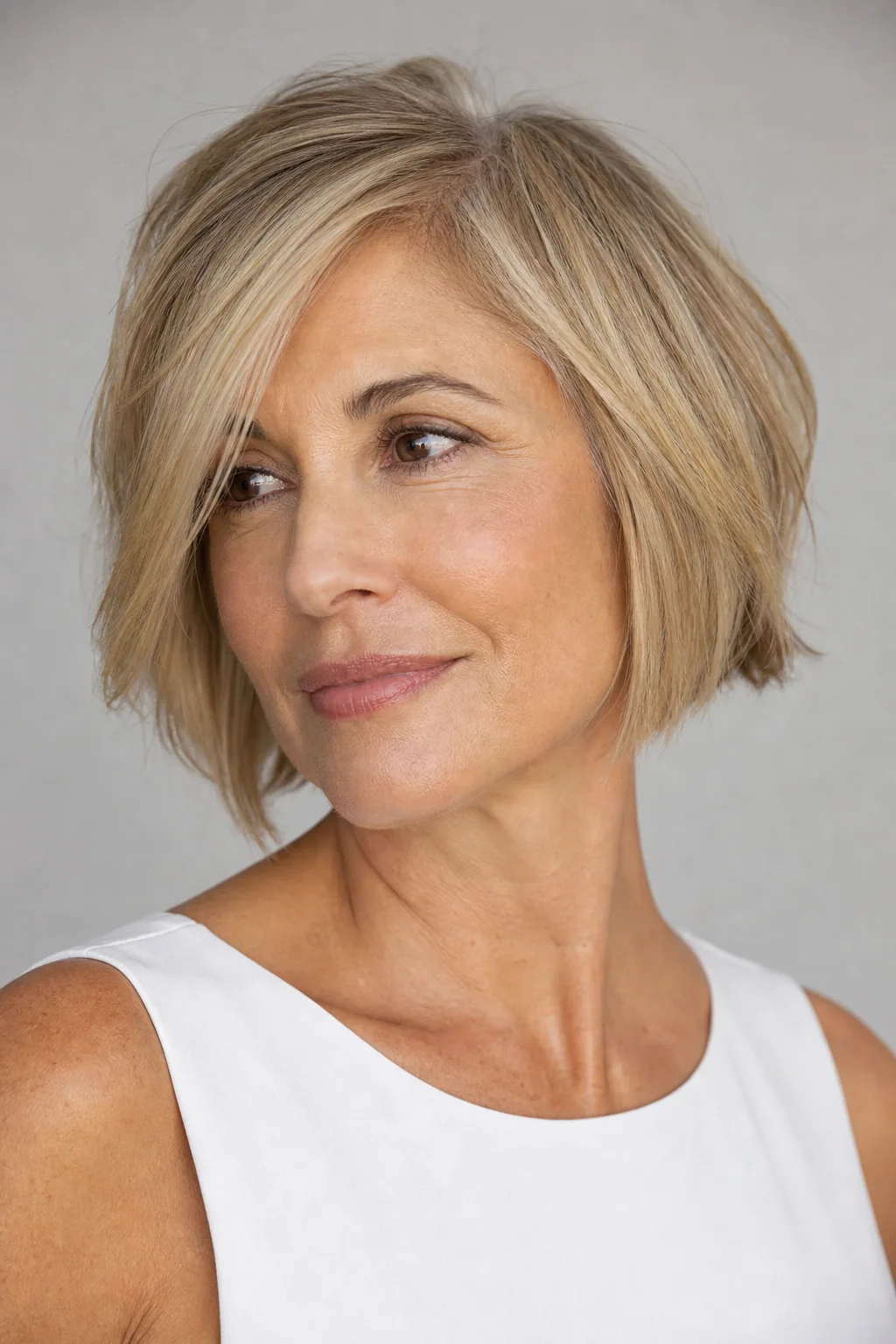
The side-parted, fringe-free bob
Proof you don't need bangs to wear one — a deep side part adds instant root lift on one side and sweeps a soft, face-framing piece across the forehead instead of a fringe. The easiest French bob to grow out, and the most office-friendly.
13
The tucked-behind-the-ears bob
Styled sleek and tucked, this is the polished evening version — proof fine hair can look expensive, not just full. A cool-shot finish and a drop of lightweight serum on the ends keep it glossy without flattening the roots. Best when your density is good enough that a smooth surface still looks dense.
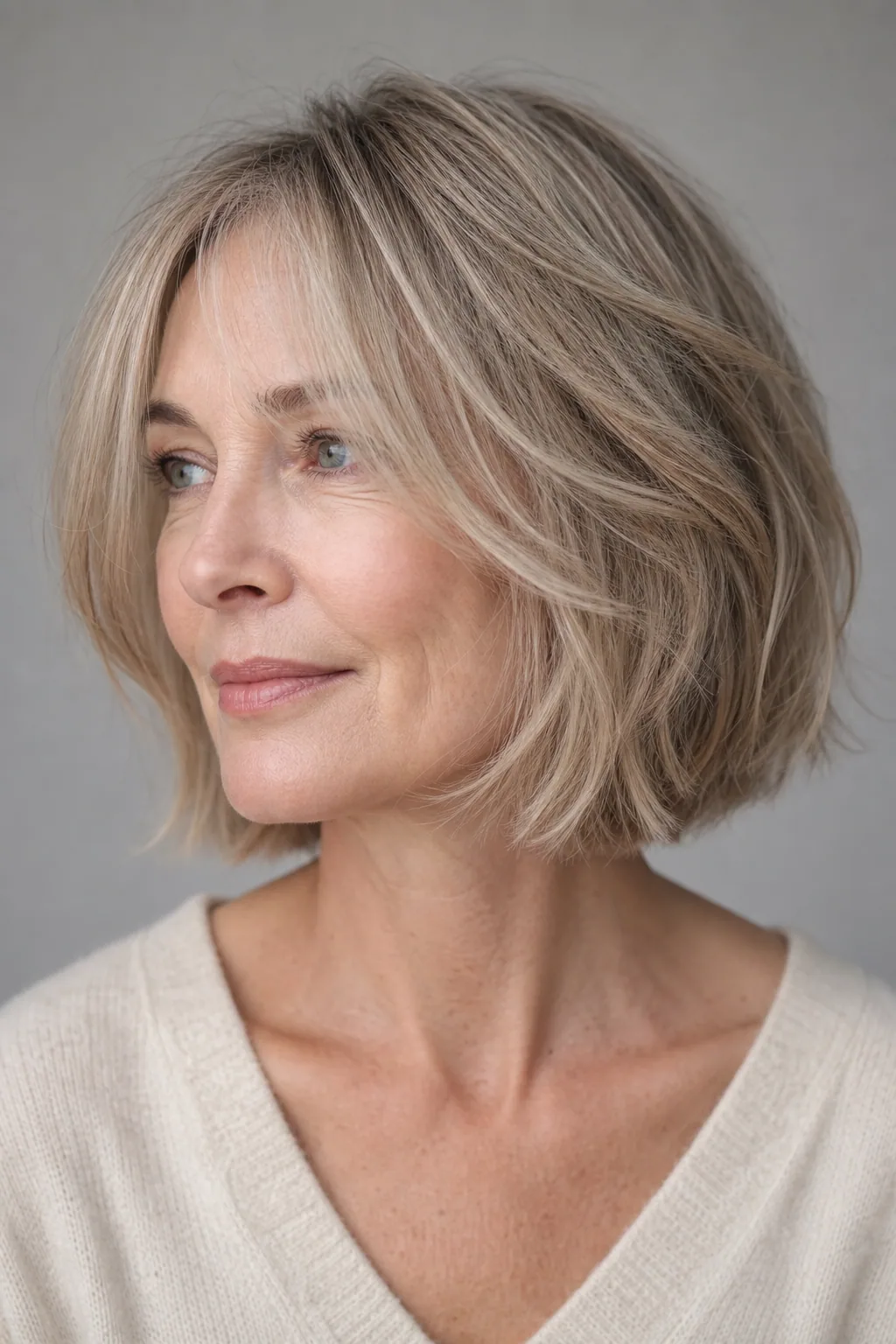
14
The grown-out French lob
Where a French bob goes when you stop trimming it — a few inches longer, grazing the jaw toward the neck, with the fringe softened into face-framing pieces. It keeps the effortless texture but reads a touch more grown-up and versatile, and it's the natural next step if you love the vibe but want length back. Its rougher cousin keeps the length and abandons the clean line — the mullet on fine hair.
The fine hair French bob, by what you are actually asking for
Three versions of this cut get searched far more than the rest, and they are not three shapes — they are three different constraints. Sorting out which one you are under before you sit down saves the appointment.
The low-maintenance fine hair French bob
Be careful with this phrase, because a French bob is low-styling and high-trim, and the two get confused constantly. The undone finish means you can leave it to air-dry with a scrunch of mousse and it still reads intentional — genuinely five minutes. But the whole cut is a clean line at chin or jaw, and a clean line at that length is visibly out of shape by week six.
If a six-week salon rhythm is not realistic, ask for the jaw-grazing version rather than the chin-length one: it blurs as it grows instead of collapsing, and it buys you two or three extra weeks. The rest of the wash-and-wear shortlist is in our guide to low-maintenance cuts for fine hair.
The fine hair French bob over 50
The cut travels well into a fifth and sixth decade, and for a specific reason: density usually drops at the crown and the part first, and a short weight-forward shape moves the visual bulk forward, away from exactly that ground.
Two adjustments make it work. Keep a little length at the top rather than cropping it — a very short French bob exposes a thinning crown faster than almost any other cut — and take the fringe softer and more parted than the classic blunt band, because a hairline that has receded slightly cannot spare the hair a full fringe borrows. Our decade guides carry the rest: fine hair over 50 and short hairstyles for thin hair over 50.
With bangs or without — and what changes
The fringe is the single biggest fork in this cut, and it is a density decision, not a style one. With bangs you move a band of hair forward to the face, which adds fullness precisely where the eye lands — the strongest thing a French bob does for fine hair.
The cost is that the band comes out of your top section, so it is the wrong trade on a sparse crown or a receded hairline. Without bangs, a deep side part does the lifting instead and the cut grows out far more forgivingly. If you want the benefit without the commitment, take the swept Bardot version above. Full workings on both: bangs for fine hair, wispy bangs, and curtain bangs.
Choose your French bob for your face shape
The French bob's short length draws attention straight to the face, so matching the version to your proportions matters more than usual. Use this as a starting point, then confirm with your stylist — the full method is in our guide to finding your face shape.
Balanced proportions carry the classic blunt or fringe version beautifully.
Round
Jaw-grazing, side-parted
A little length and an off-center part lengthen; skip cheekbone-short blunt cuts.
Square
Rounded or tousled wavy bob
Soft, curved ends offset a strong jaw; avoid sharp blunt lines at the jaw.
Heart
Chin-length with a full or Bardot fringe
A fringe balances a wider forehead; width at the chin evens the proportions.
Long / oblong
Blunt chin-length with a fringe
The fringe shortens the face; keep length at or above the jaw.
What to ask your stylist
Bring the language, not just a photo. For fine hair, say: "I want a French bob at chin length — cut it blunt or point-cut, please don't razor or heavily thin the ends, it makes my hair look see-through."
If you want the fringe: "A soft, slightly parted French fringe, not a heavy blunt wall." And if your crown runs flat or sparse, add: "Keep a little weight on top so my scalp doesn't show through." That last sentence prevents the most common fine-hair regret with a cut this short.
Chair-side note
The French bob is a commitment to your fringe more than your length. A chin-length bob is easy to live with; a fringe wants a trim every two to three weeks or it slides into your eyes and stops doing its job.
Before you book, be honest about whether you'll keep up with it — if not, take the side-parted or grown-out Bardot version, which forgive a missed trim. And whatever you choose, mist a weightless heat protectant before you bend the ends, because a short cut shows damaged ends fast.
SB
— Simone Baptiste, Senior Stylist
When a French bob may not be your best move
Very low density at the crown — a short, weight-forward cut can expose the scalp on top. Choose the jaw-grazing or grown-out version, keep weight up top, or look at a layered bob instead.
You won't keep up a fringe — bangs need a trim every two to three weeks. Take the side-parted or Bardot version, which grow out gracefully.
Very tight curls that shrink dramatically — a French bob can read far shorter than expected once dry. Ask for a shaped, slightly longer curly cut judged on how the curl actually sits.
You want true wash-and-go with zero styling. Even the air-dried version wants a scrunch of product; a longer low-maintenance cut is more forgiving.
FAQ
Yes — it's one of the most flattering short cuts for fine hair, because it works with what fine hair already does. The French bob sits short (chin to jaw) and keeps its weight forward, so the ends stack and read dense instead of hanging flat. The signature undone texture and full fringe add a second layer of visual fullness. Ask for point-cut ends, not razored, so the shape looks piece-y rather than thin.
Length and attitude. A French bob is deliberately short — it grazes the chin or jaw — and almost always comes with a fringe and a soft, lived-in texture rather than a sleek, polished finish. A regular bob can be any length down to the collarbone and is often styled smooth. Think of the French bob as the shorter, more effortless, more Parisian cousin of the classic bob.
Not strictly, but the fringe is part of what makes it French. A full or wispy fringe redistributes weight toward the face, which on fine hair adds fullness exactly where you see it. If you'd rather skip bangs, ask for a chin-length blunt version with a center or side part — it's still a French bob in spirit, just softer around the face. A grown-out or curtain-style fringe is a good middle ground.
Classic French bobs land between the chin and the jaw — short enough to build fullness, long enough to tuck. The shortest cheekbone versions sit above the jaw for a bolder look; the longer versions graze the jaw and blur into French-lob territory. For fine hair, chin-to-jaw is the reliable sweet spot: it keeps the ends dense without exposing the neck or crown.
Lean into the undone finish — a French bob is meant to look effortless, which is good news for fine hair. Rough-dry on medium heat with your fingers for lift, add a little texture spray or a light mousse at the roots, and bend the ends with a round brush or a flat iron for the signature soft curve. Air-drying with a scrunch of mousse works too, especially on fine, wavy hair that supplies its own bend.
It can, when it's cut for density. The short length concentrates the hair you have into a fuller-looking shape, and the texture breaks up the light so the eye reads movement instead of sparseness. The caveat is very low crown density: a very short French bob can expose the scalp on top, so ask your stylist to keep a little weight up top and choose a chin-length rather than a cheekbone version.
Low-styling, not low-upkeep — and the difference matters before you commit. Day to day it is one of the easiest cuts fine hair can have: the finish is meant to look undone, so a scrunch of mousse and an air-dry is a legitimate way to wear it, and there is no smooth surface that has to stay smooth. The upkeep sits in the calendar instead. A French bob is a clean line at chin or jaw, and on fine hair that line reads soft by week six and shapeless by week eight, so budget a trim every six to eight weeks — every four if you have taken the micro fringe. If that rhythm is not realistic, ask for the jaw-grazing length instead of the chin-length one; it grows out into something wearable rather than into nothing in particular.
Eleven years behind the chair, specializing in short shapes and fine-hair texture. Simone believes the best haircut is the one you can style yourself in ten minutes.
Results vary with hair type, density, and growth patterns. This guide is educational and not a substitute for an in-person consultation with a licensed stylist.
Hairstyle images in this guide are AI-generated illustrations, not photos of real clients or results. See our image policy.
Get the good hair intel
One honest, stylist-written guide in your inbox each week. No hype.

 SB
SB