Reviewed by Tara Sullivan · Updated September 2026 · 10 min read
The Italian bob is one of the best bobs for fine hair, because its fullness comes from a heavy, rounded bottom edge rather than from layers. It sits at the jaw or just below, with ends that bend softly under, so fine hair looks thick where the eye lands.
Below are 12 Italian bobs, from sleek to wavy, how it differs from a French bob, and the exact words to use in the chair.
Chair-side note
When someone with fine hair brings me an Italian bob photo, the first thing I check is where their hair looks thinnest. It is almost always the ends.
The Italian bob fixes exactly that, because I cut the hem as one heavy, rounded line. The only layering goes in at the crown, and only if the hair needs lift.
SB
— Simone Baptiste, Senior Stylist
What an Italian bob is
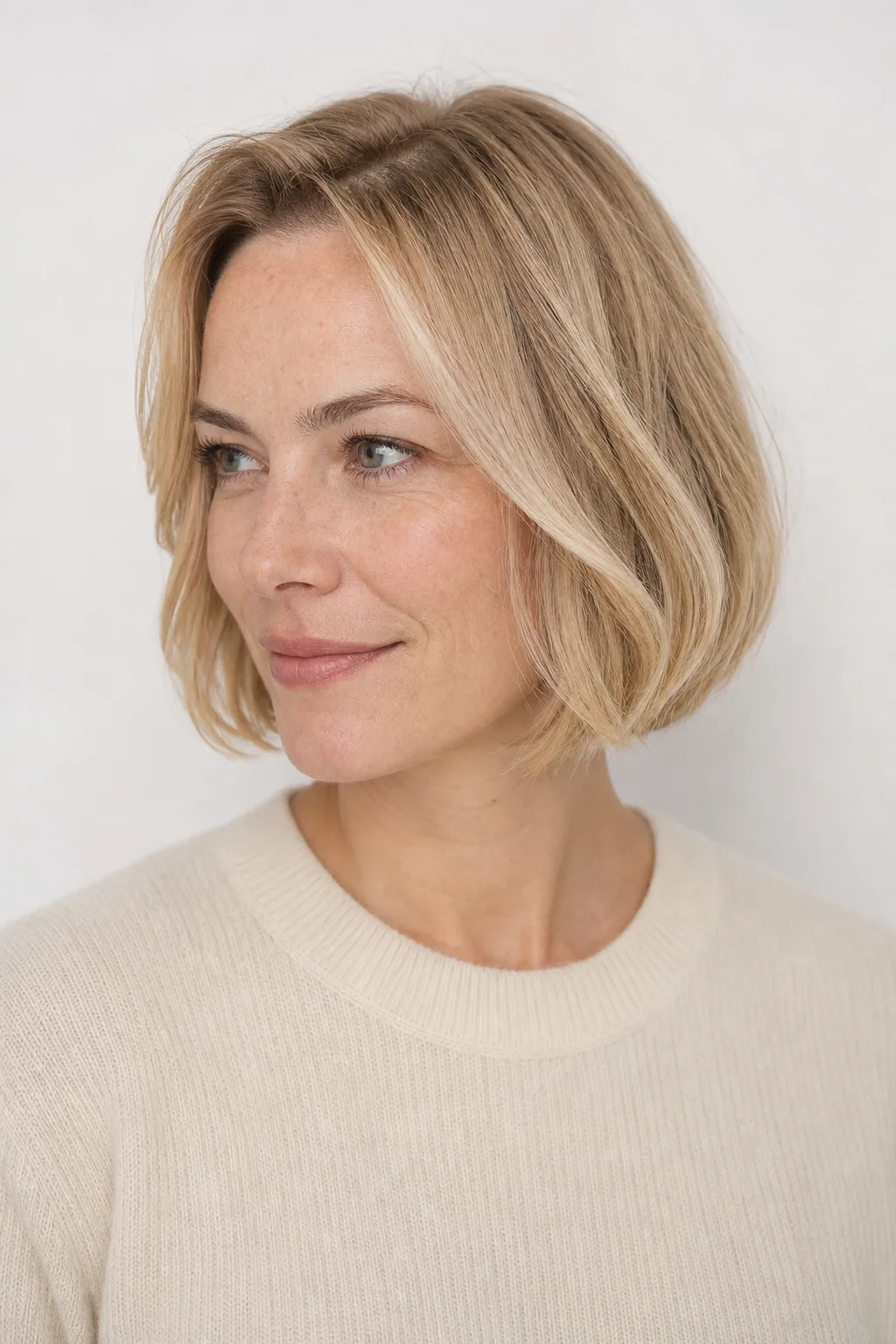
An Italian bob is a jaw-length to just-below-the-jaw bob with a full, rounded perimeter and a soft bend at the ends. It is worn with volume at the roots and movement at the hem, usually with a side part and no fringe.
The shape takes its name from the glamour of Italian film stars, and the idea is polish without stiffness. On fine hair, the rounded weight line is what makes it work: it puts all the density at the bottom, where fine hair usually runs out.
Italian bob vs French bob
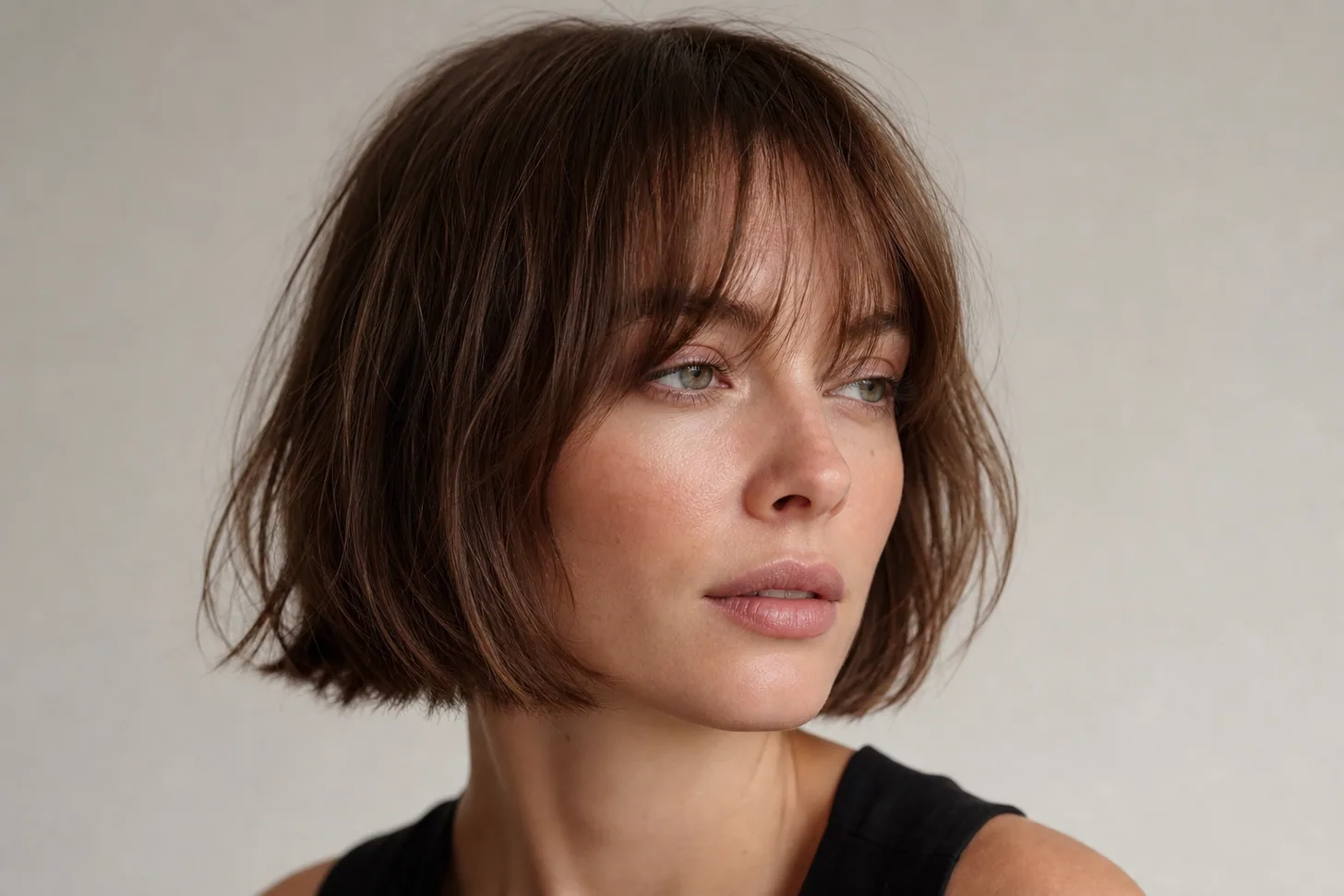
The two get confused, but they are different cuts. A French bob is shorter, at the cheekbone or lip, usually with a fringe, and worn undone. The Italian bob is longer, fuller and more polished, and it usually has no fringe.
For fine hair, the choice comes down to your face and your mornings. The French bob air-dries; the Italian bob looks best with a quick round-brush blow-dry. Both keep weight at the ends, which is why both suit fine hair.
Classic Italian bobs
These are the heaviest, most rounded versions, and the ones that make fine hair look thickest.
1
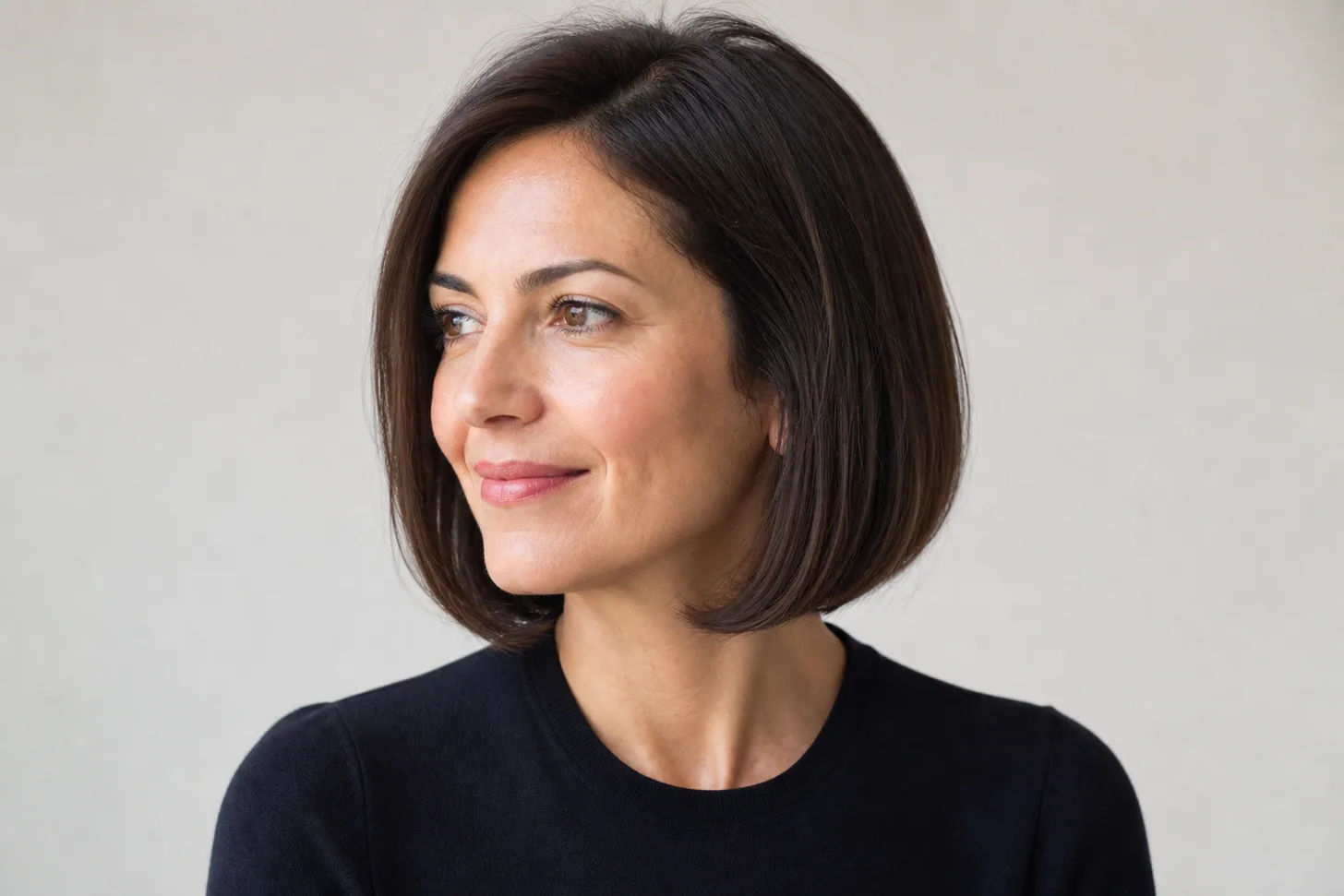
Classic Italian bob with a rounded hem
Cut as one heavy line just below the jaw, with the ends bent under with a round brush. It is the shape that started the trend, and the most flattering on fine hair.
Ask for the perimeter to be cut with a very slight graduation, so the ends turn under on their own.
2
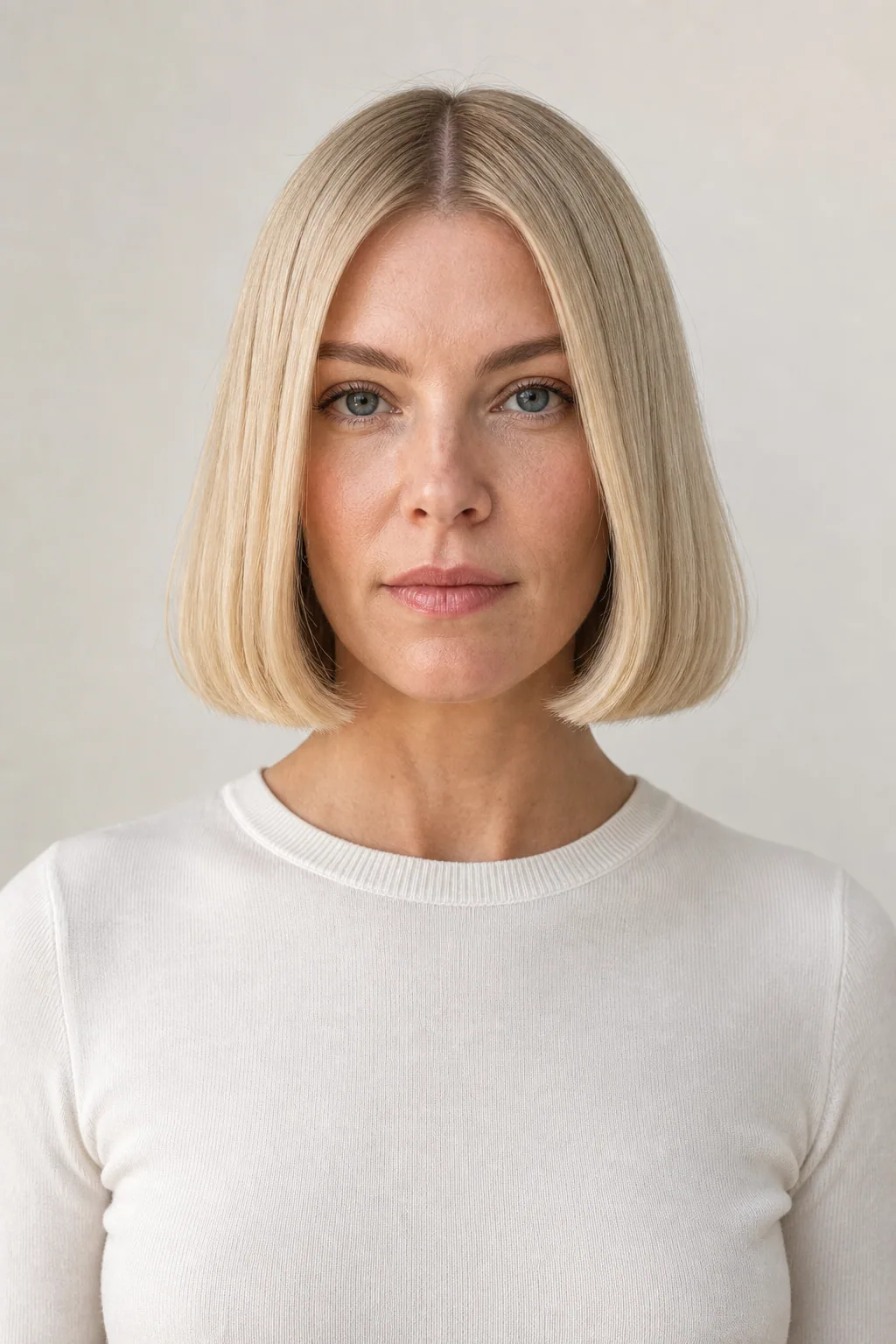
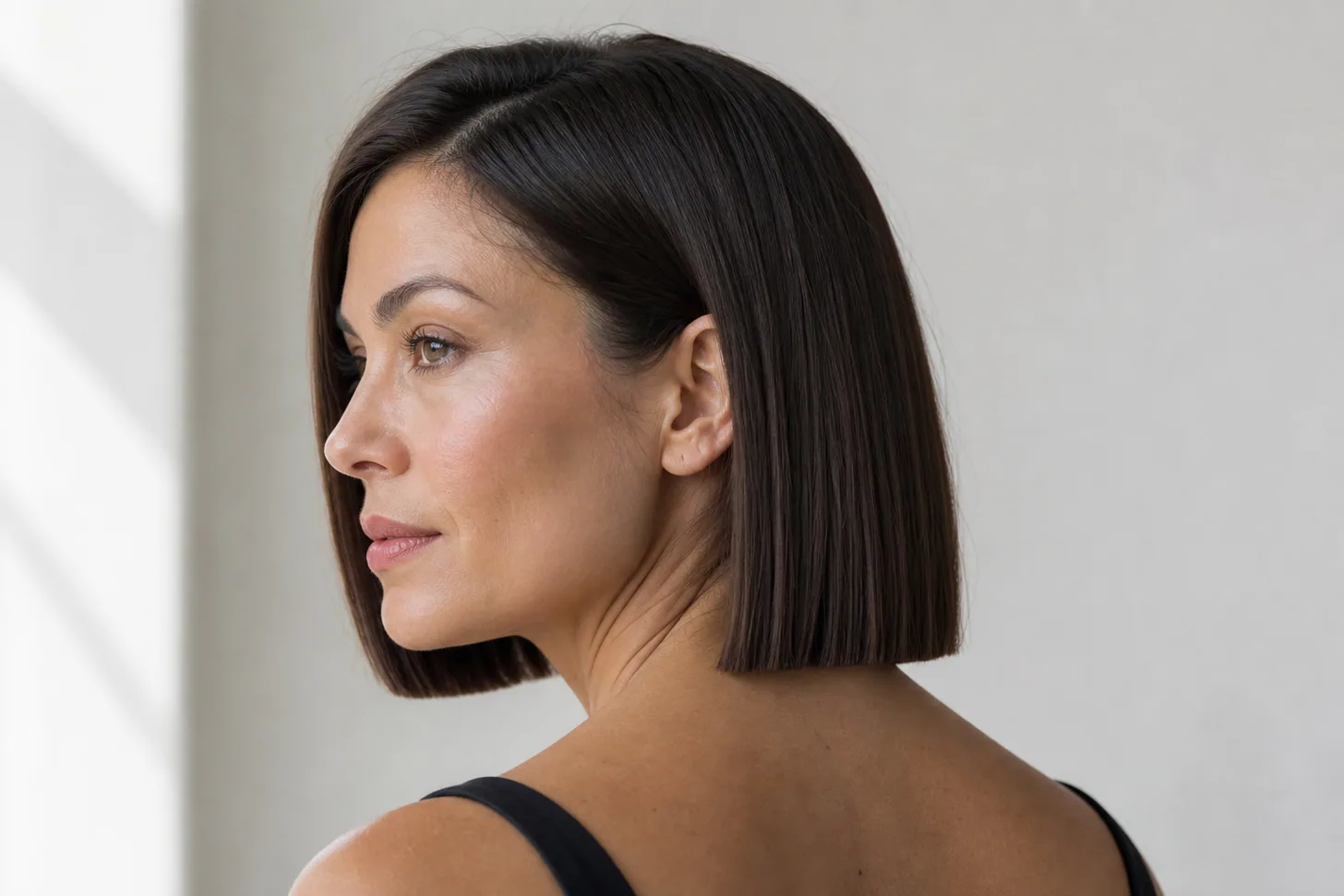
Blunt Italian bob for thin hair
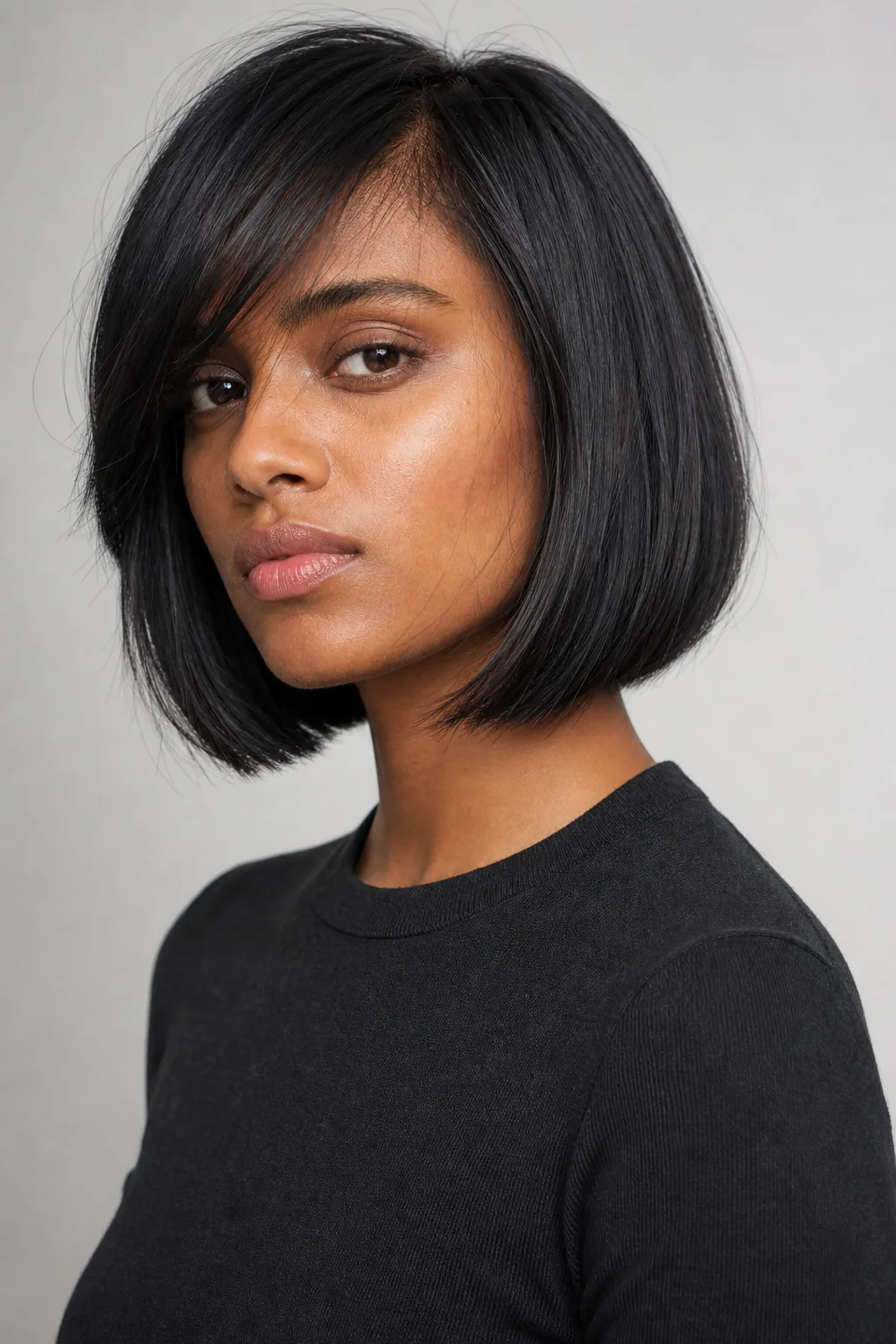
No layers at all, just one solid line at the jaw. If your hair is genuinely thin, this is the Italian bob to choose, because every strand ends in the same place.
It looks sleek and heavy even on low density. The trade-off is less lift on top, so add it with a root spray.
3
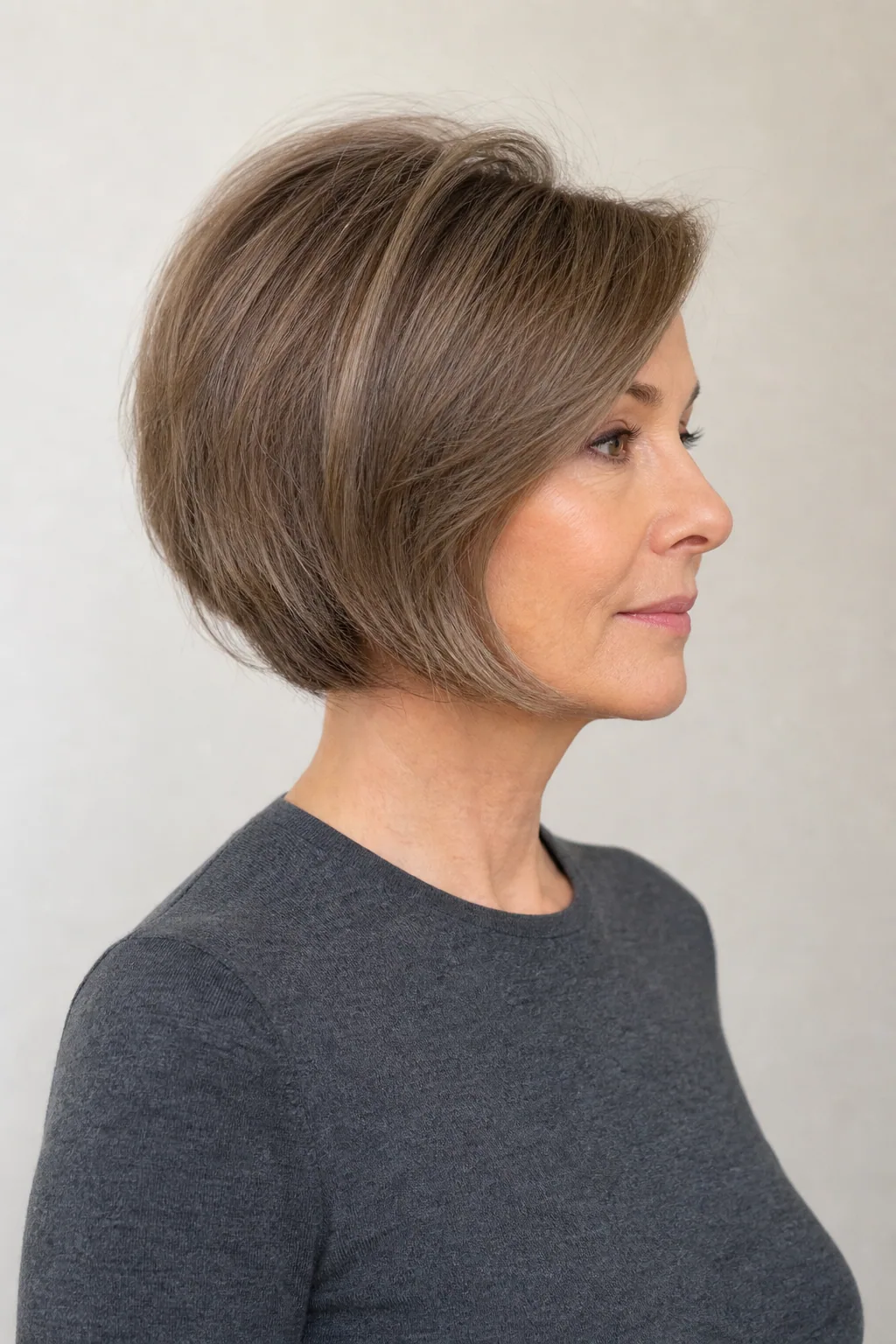
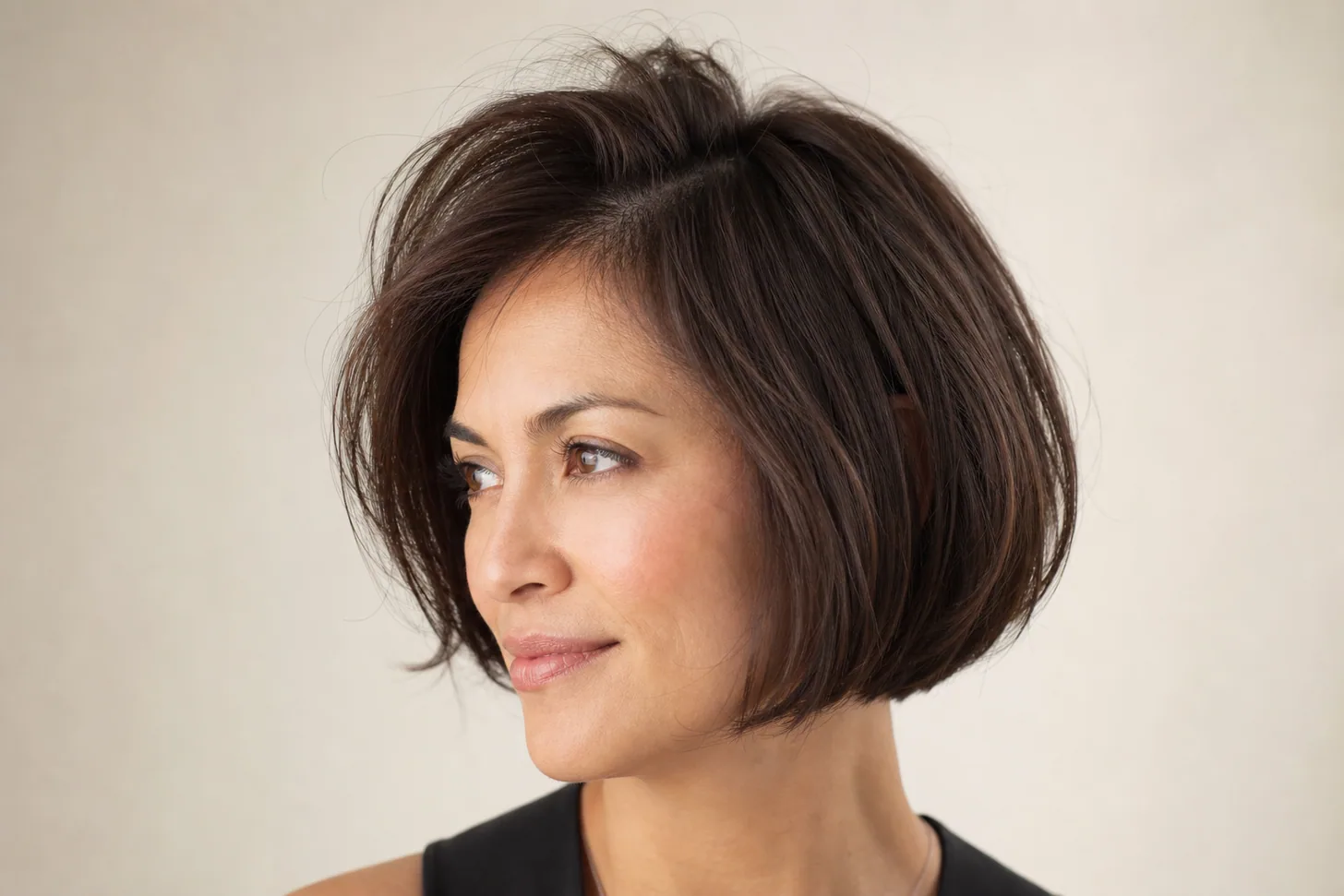
Italian bob with crown volume
A few long layers at the crown add lift on top, while the hem stays heavy. From the side, the shape is round from crown to ends.
It suits fine hair with medium density. Keep the crown layers long, at least six inches, so they lift instead of sticking up.
Blow-dry the crown with a round brush lifted straight up from the roots.
Italian bob on thin hair: soft and wavy versions
Movement makes fine hair look fuller than a flat, straight finish. These versions add bend or wave while keeping the weight at the bottom.
4
Soft-bend Italian bob
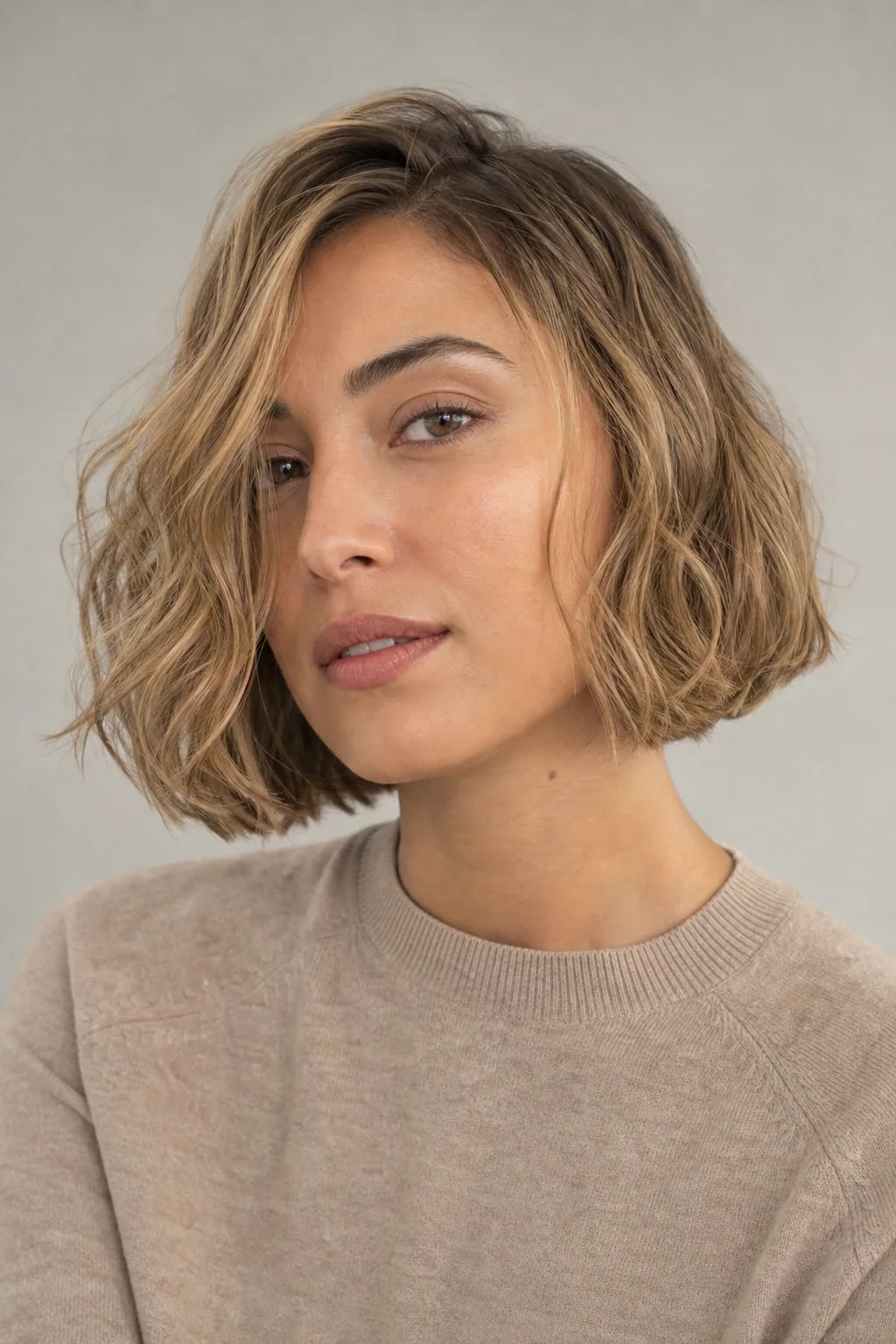
Loose S-bends through the lengths, made with a large-barrel iron and brushed out. The bends take up more space than straight hair, so the bob looks fuller.
Brush the waves out with your fingers after they cool. Tight waves on a bob look dated.
5
Wavy Italian bob for fine hair
Fine hair with natural wave suits an Italian bob with almost no styling. Scrunch a little mousse in and let it dry, and the wave fills out the shape.
Ask for it to be cut dry, so the length allows for the wave springing up.
6
Italian lob just past the jaw
The longest version, grazing the top of the neck. It is long enough to tie back and short enough to keep the ends full.
Do not go past the top of the neck. Beyond that length, fine hair loses the weight that makes the shape work.
Italian bob with bangs
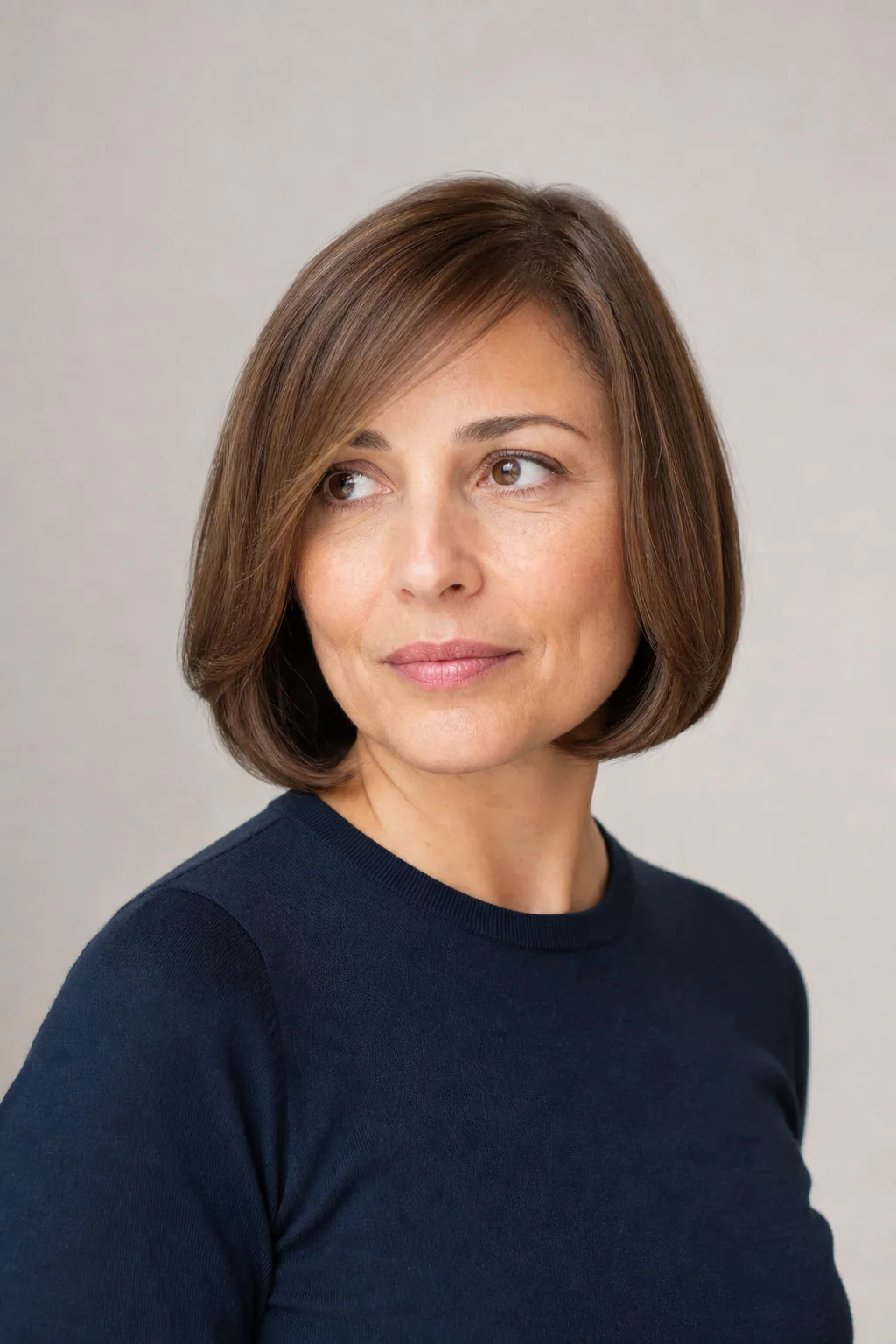
The classic Italian bob has no fringe, but a soft one works on fine hair, especially with a high forehead or a thinning front hairline.
7
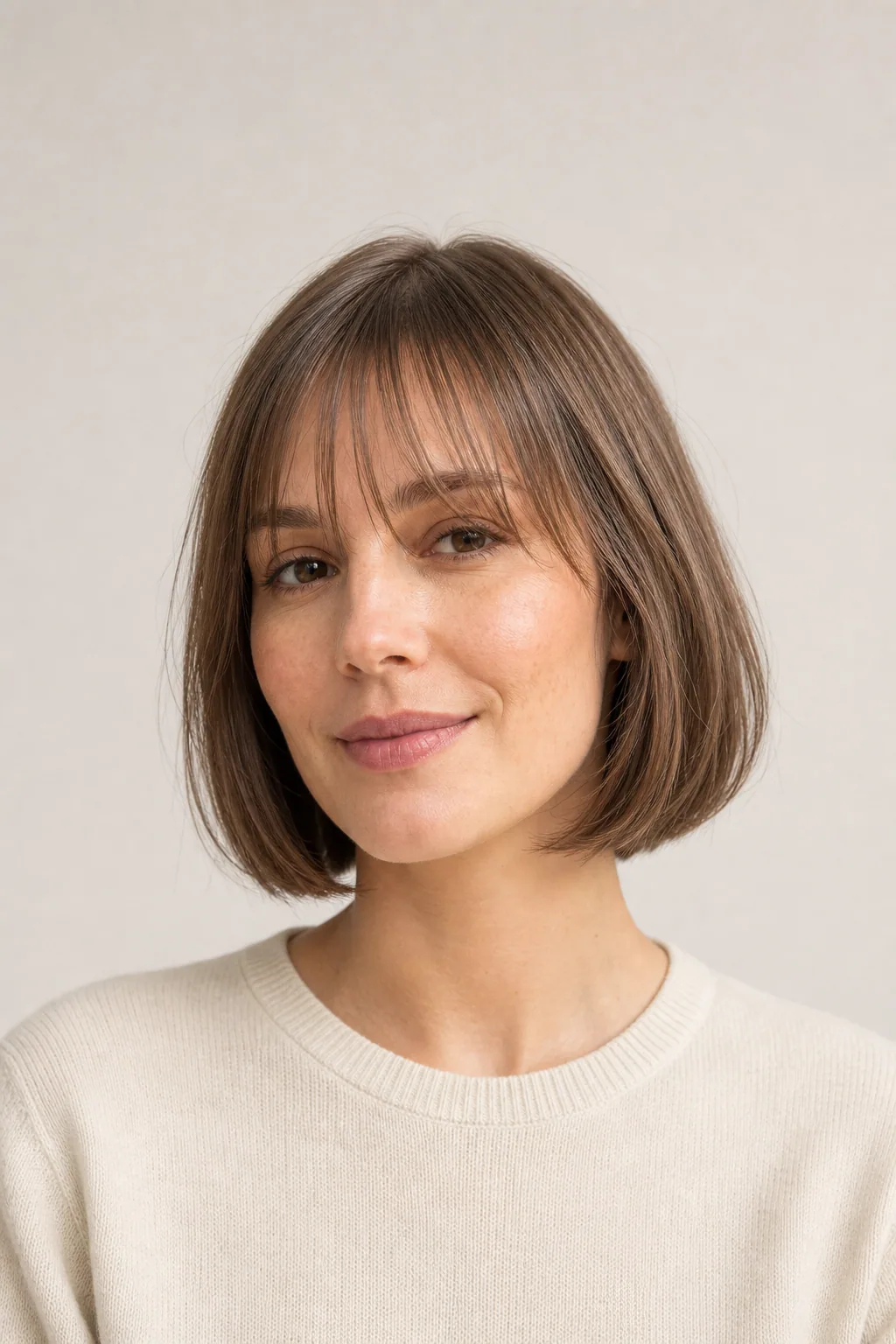
Italian bob with curtain bangs
Long curtain bangs parted in the middle, blending into the rounded sides. They frame the face without taking much hair from the top.
They suit long and oval faces well. Blow-dry them over a round brush so they curve outward, away from the face.
8
Italian bob with a soft side fringe
A long side fringe that sweeps across one brow and into the side of the bob. It hides a high forehead and grows out easily.
Keep it long enough to reach the cheekbone. A shorter side fringe on fine hair tends to separate.
9
Italian bob with wispy bangs
Soft, wispy bangs at the brow over a full Italian bob. The contrast between light bangs and a heavy hem makes the bottom look even thicker.
Trim them every three to four weeks, or they fall into the eyes.
Italian bob over 50
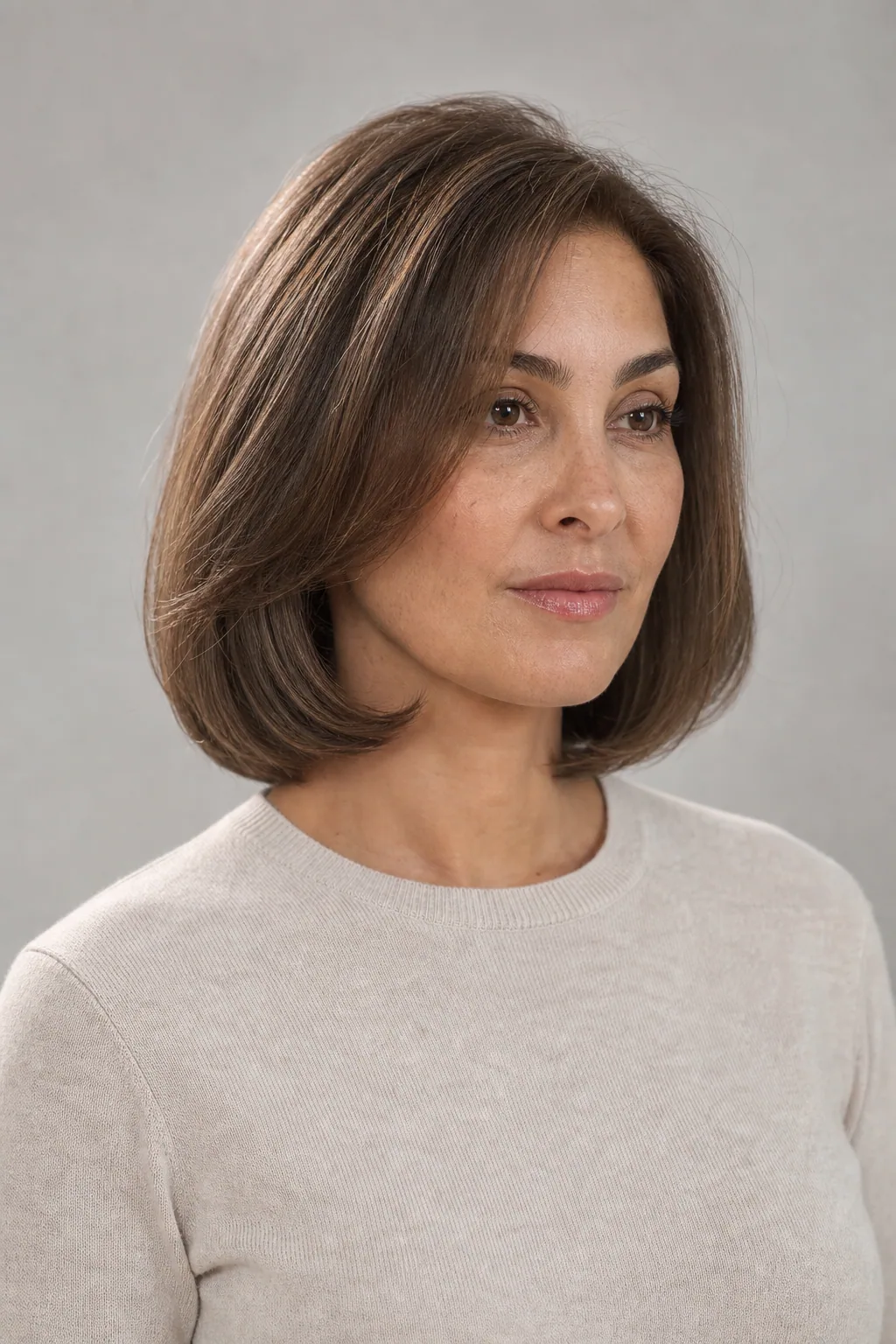
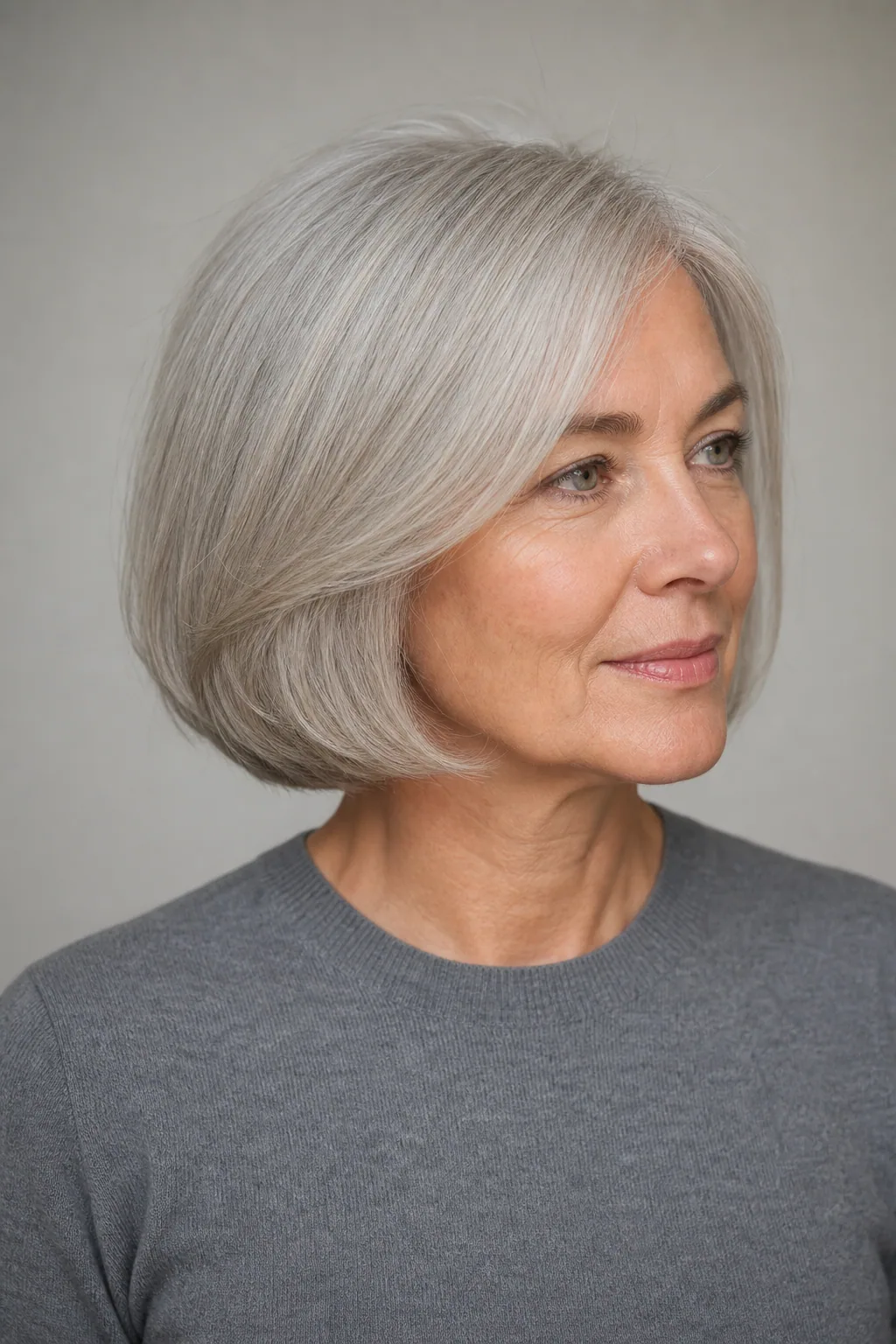
The Italian bob is a strong choice for fine hair over 50, because its polish reads as deliberate and its rounded hem hides thinning ends. Keep the length at the jaw or just below; longer weighs fine hair down.
10
Silver Italian bob
A classic Italian bob on silver hair, with a smooth blow-out and a deep side part. The shine of a blow-dried finish makes silver look healthy rather than dry.
A deep side part adds lift at the root, which matters more as hair gets finer.
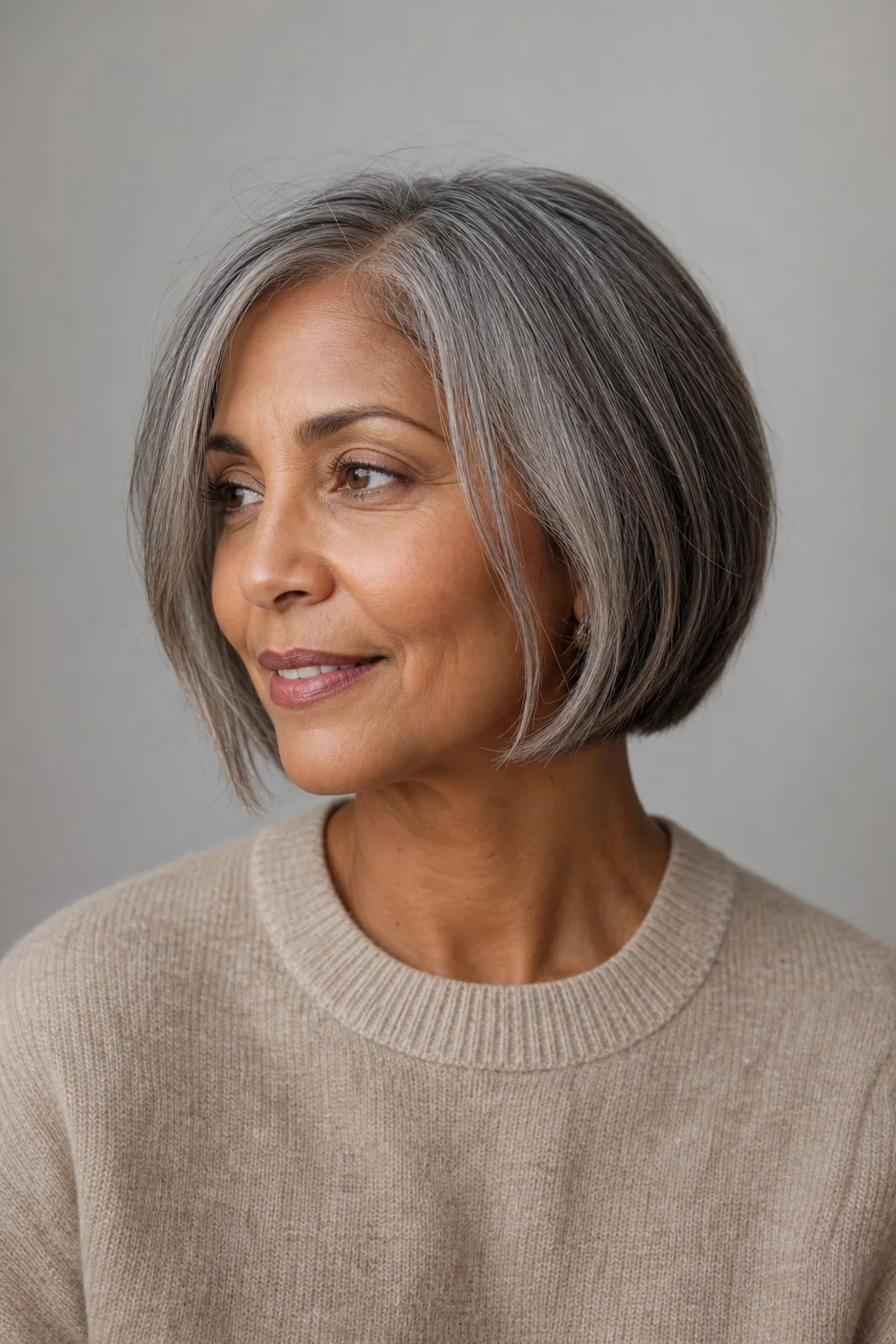
11
Italian bob with face-framing over 60
Soft face-framing pieces start at the cheekbone and blend into the full hem. They soften the jawline without removing weight from the bottom.
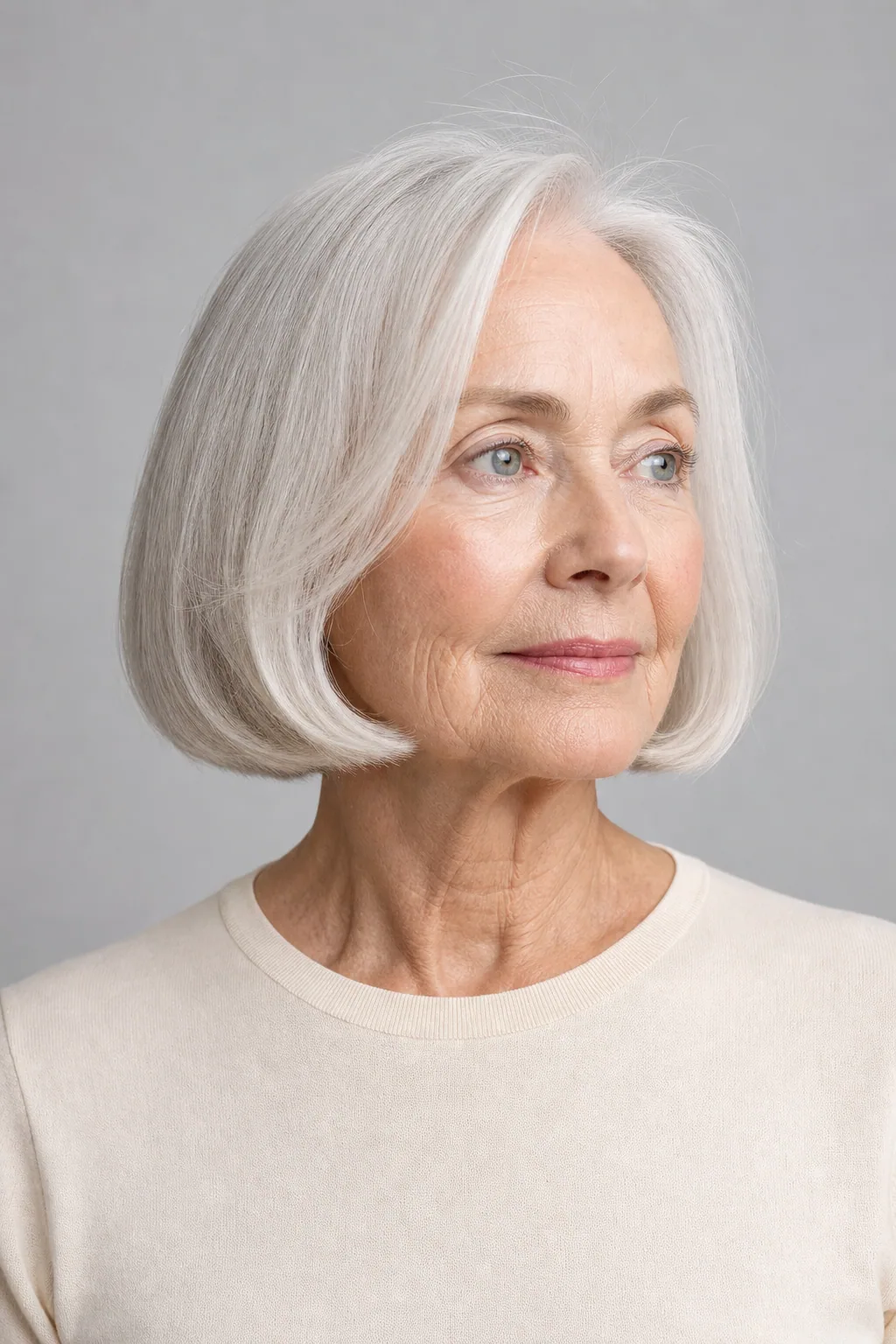
A slightly shorter take, cut at the chin rather than below the jaw. Less length means less weight on the roots, so the lift lasts longer on very fine hair.
A velcro roller at the crown while you get dressed gives the same lift as a blow-dry, with less heat.
Styling an Italian bob on fine hair
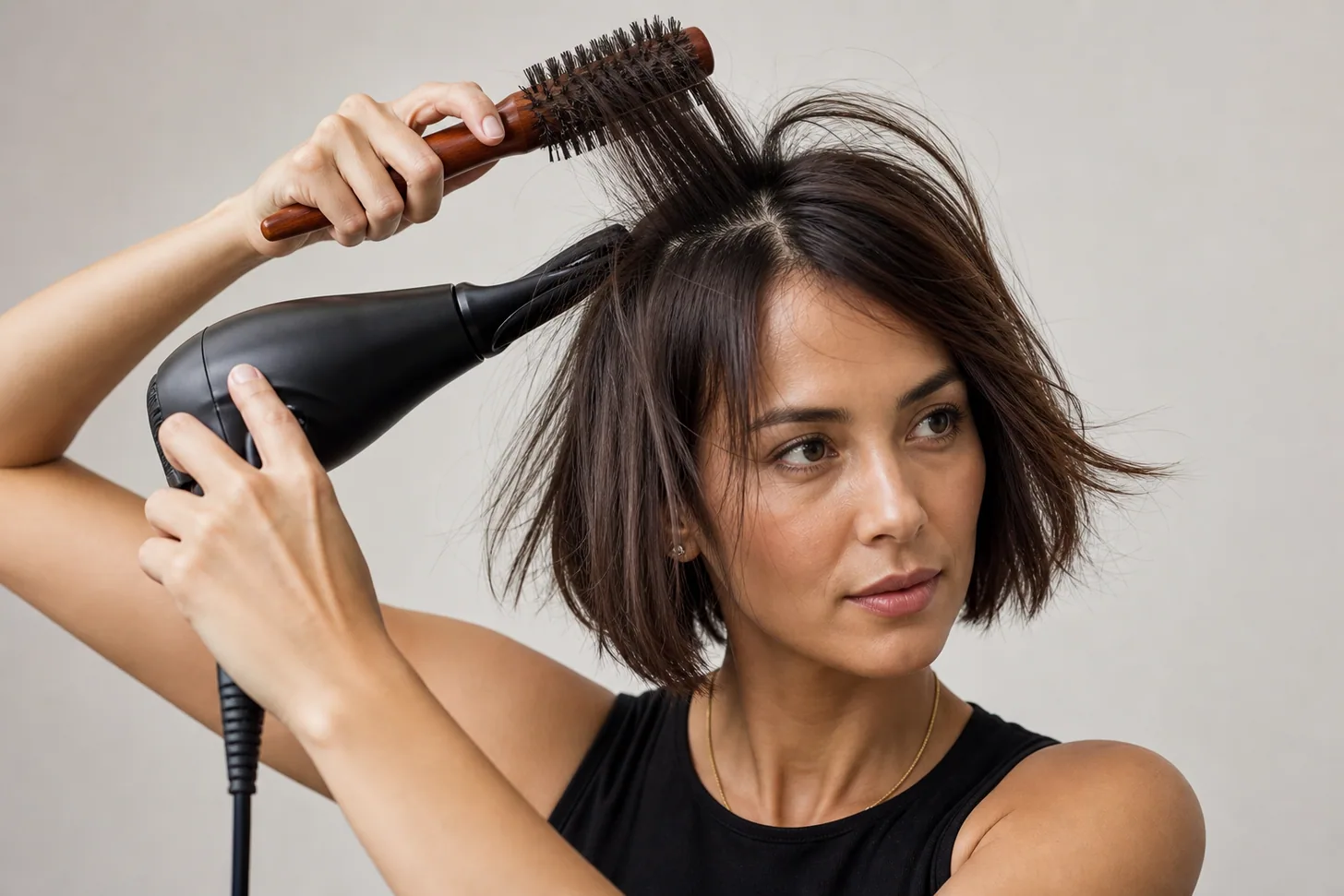
Apply a root-lift spray or light mousse to damp roots. Rough-dry to about 80 percent, then finish with a medium round brush, turning the ends under and lifting at the crown.
Say: "My hair is fine, so I want an Italian bob with a heavy, rounded perimeter just below my jaw. Please keep the ends blunt and dense, no razor and no thinning shears. If I need lift, add a few long layers at the crown only."
Book a trim every six to eight weeks. The rounded hem is the whole point of the cut, and once the ends wear thin, it looks like a plain grown-out bob.
When an Italian bob is the wrong call
You never want to use a hairdryer. The Italian bob looks best blow-dried. A French bob or a shaggy bob air-dries better.
Your hair is very curly. Curls spring up, and a jaw-length rounded bob can end up at the cheekbone. Ask for a curl-specific cut instead.
You want lots of texture and movement. The Italian bob is polished. Try a shaggy bob for a more tousled look.
Your stylist suggests heavy layers throughout. That removes the weight the cut depends on. Keep any layers at the crown.
FAQ
Yes, it is one of the best bobs for fine hair. Its fullness comes from a heavy, rounded bottom edge rather than from layers, so fine hair looks thick where it usually looks thinnest, at the ends.
An Italian bob sits at the jaw or just below, with a full rounded hem, and is usually worn polished with no fringe. A French bob is shorter, at the cheekbone or lip, usually with a fringe, and worn undone. Both keep weight at the ends, which is why both suit fine hair.
Yes, especially the blunt version with no layers. Every strand ends in the same place, so the bottom edge looks as dense as possible. Add lift on top with a root spray rather than with layers.
Yes. Curtain bangs, a long side fringe, or soft wispy bangs all work, because they take little hair from the top. A heavy blunt fringe needs more density.
Root-lift spray or light mousse on damp roots, rough-dry to about 80 percent, then finish with a medium round brush, turning the ends under and lifting at the crown. It takes about ten minutes. Finish with light hairspray rather than oil.
Every six to eight weeks. The heavy rounded hem is what makes the cut work, and once the ends wear thin, it loses its shape.
Eleven years behind the chair, specializing in short shapes and fine-hair texture. Simone believes the best haircut is the one you can style yourself in ten minutes.
Results vary with hair type, density, and growth patterns. Hairstyling guidance is not a substitute for an in-person consultation with a licensed stylist.
Hairstyle images in this guide are AI-generated illustrations, not photos of real clients or results. See our image policy.
Get the good hair intel
One honest, stylist-written guide in your inbox each week. No hype.

 SB
SB