Reviewed by Tara Sullivan · Updated October 2026 · 10 min read
A textured bob is a bob cut so the ends and layers move instead of lying in one flat line. On thin hair, the texture has to be point-cut into the ends and added with product, not removed with a razor, or the hem goes see-through.
Below are 12 textured bobs for thin hair, grouped by finish, with how to ask for texture without thinning your ends, how to style one and who should pick a blunt bob instead.
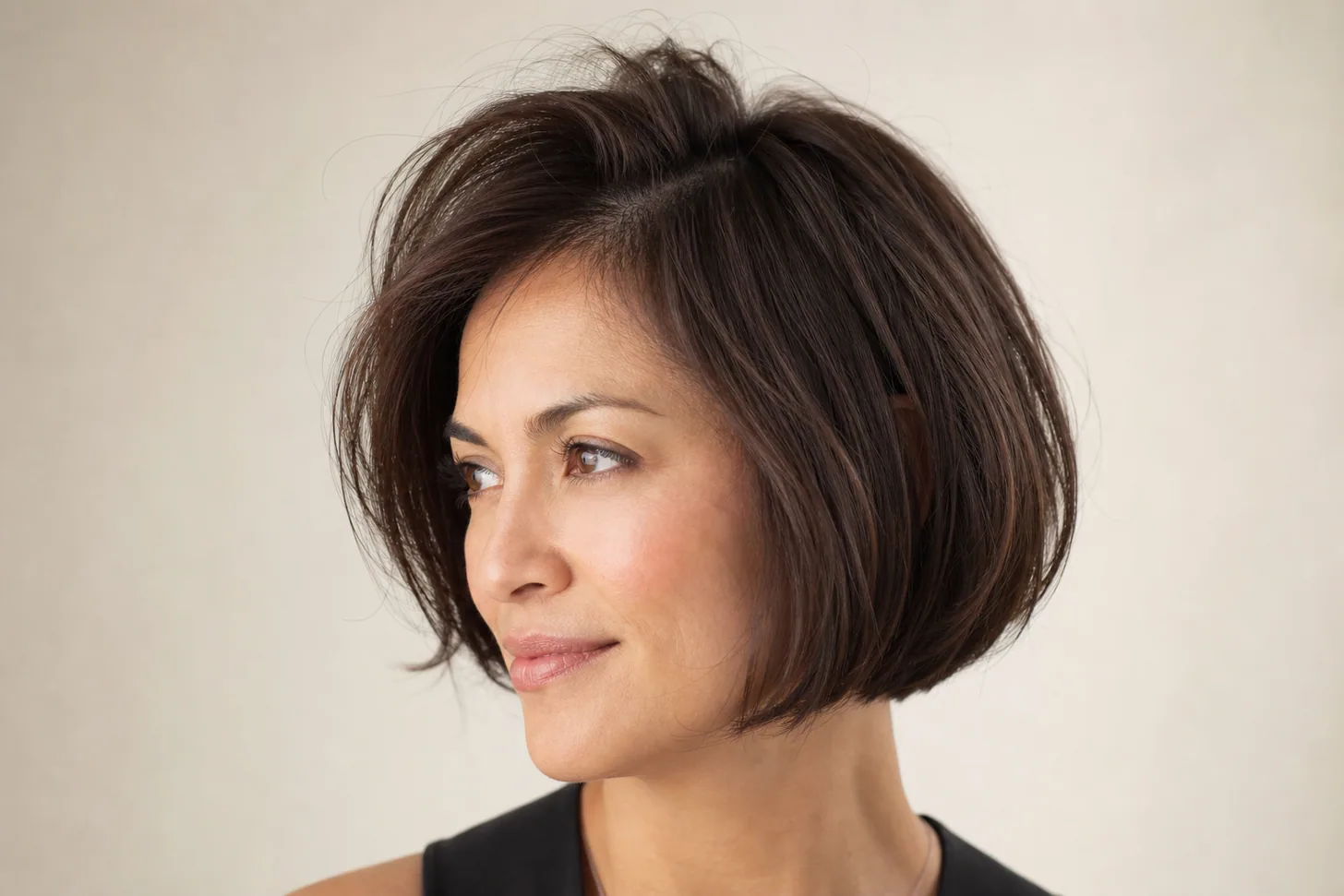
textured chin-length bob on fine light-brown hair with point-cut ends, soft movement through the layers and a loose finish, woman in her mid 30s, front three-quarter view
Chair-side note
The word "texture" worries me on fine hair, because it can mean two things. One is point-cutting the ends so they separate softly. The other is razoring or thinning shears, which take hair away.
On fine hair I get texture by point-cutting into the ends, not by removing hair. The bob keeps its density at the hem, and the movement comes from how the ends are cut and what you put on them.
SB
— Simone Baptiste, Senior Stylist
What is a textured bob?
It is a bob with broken-up ends, soft internal layers or a deliberate wave so it looks lived-in rather than perfectly smooth. The shape ranges from a slightly softened blunt bob to a choppy, piecey one.
Yes, if the texture comes from point cutting. Point cutting snips into the ends at an angle, which softens the line without removing a lot of hair. A razor or thinning shears take hair out of the middle of the strand and leave fine ends transparent. For more on this, read thinning shears on fine hair and cutting techniques for fine hair.
Soft textured bobs
The gentlest versions, closest to a blunt bob with softened ends.
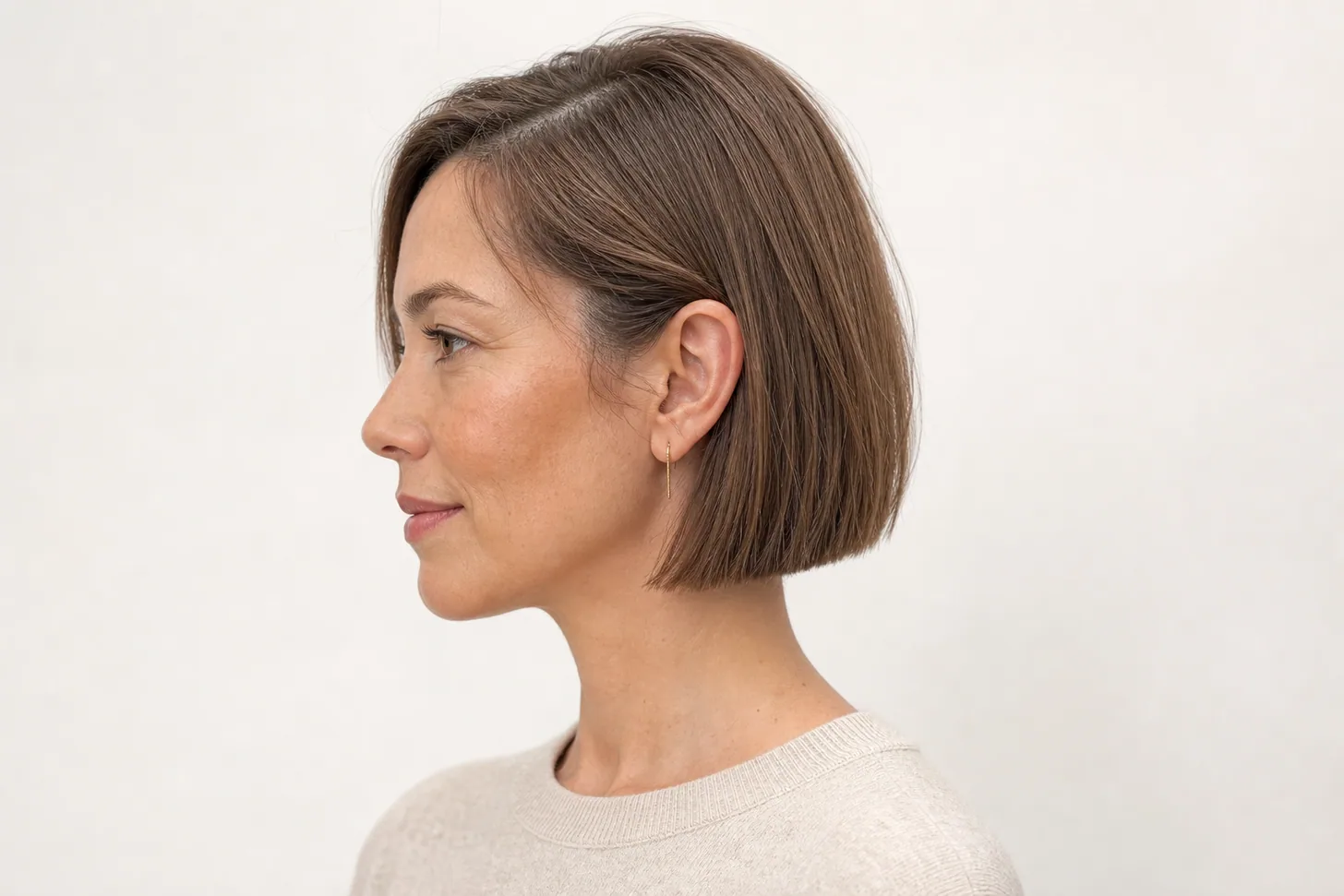
chin-length bob on fine light-brown hair with point-cut softened ends and a soft side part, woman in her mid 30s, front three-quarter view
1
Point-cut chin-length bob
A bob with the ends snipped at an angle so they separate softly. It is the base version of a textured bob.
It keeps the hem dense and still moves.
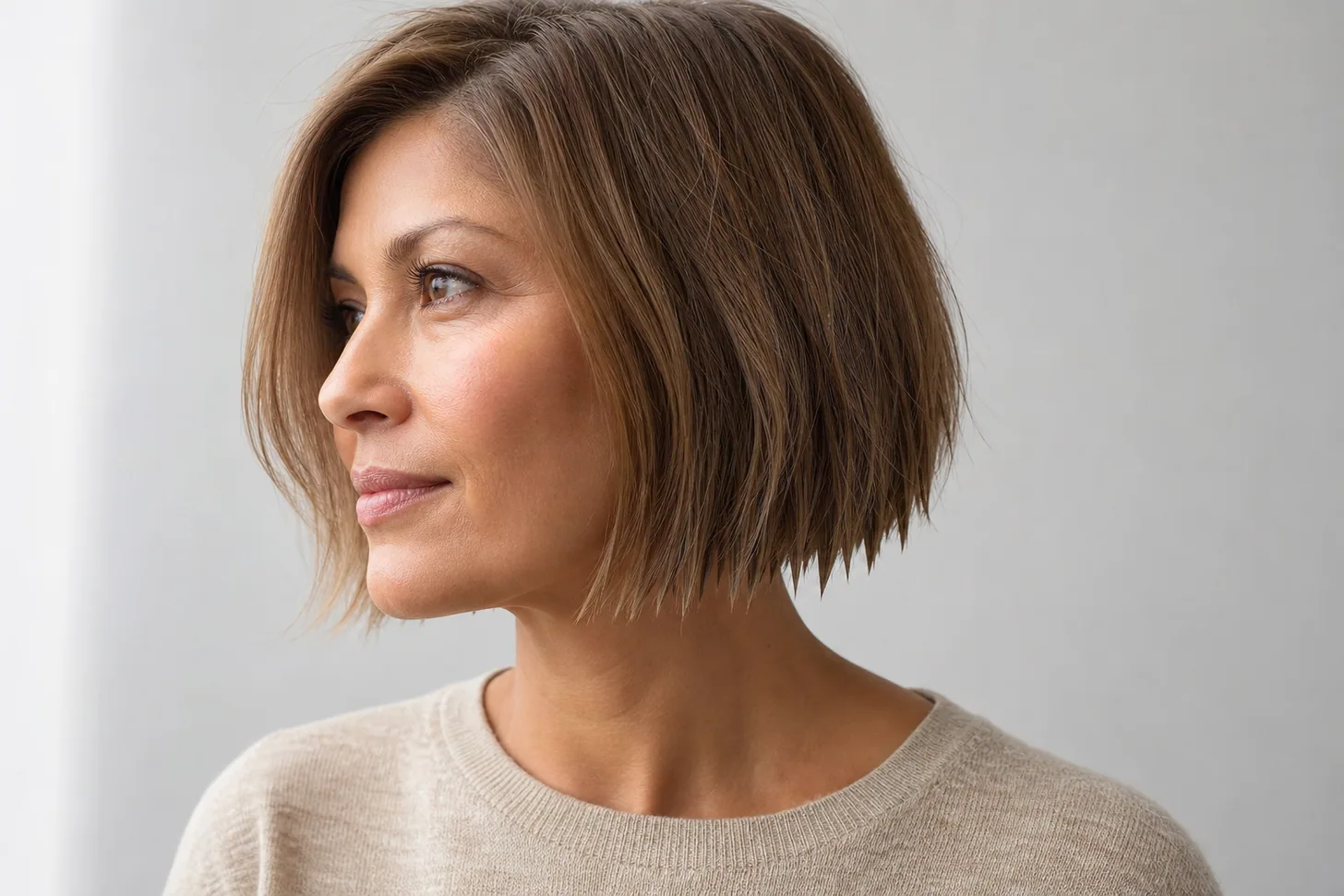
softly graduated textured bob on fine dark-blond hair, slightly shorter at the nape with a rounded crown and piecey ends, woman in her early 40s, back three-quarter view
2
Softly graduated textured bob
A little graduation at the back lifts the crown and the textured ends give it movement.
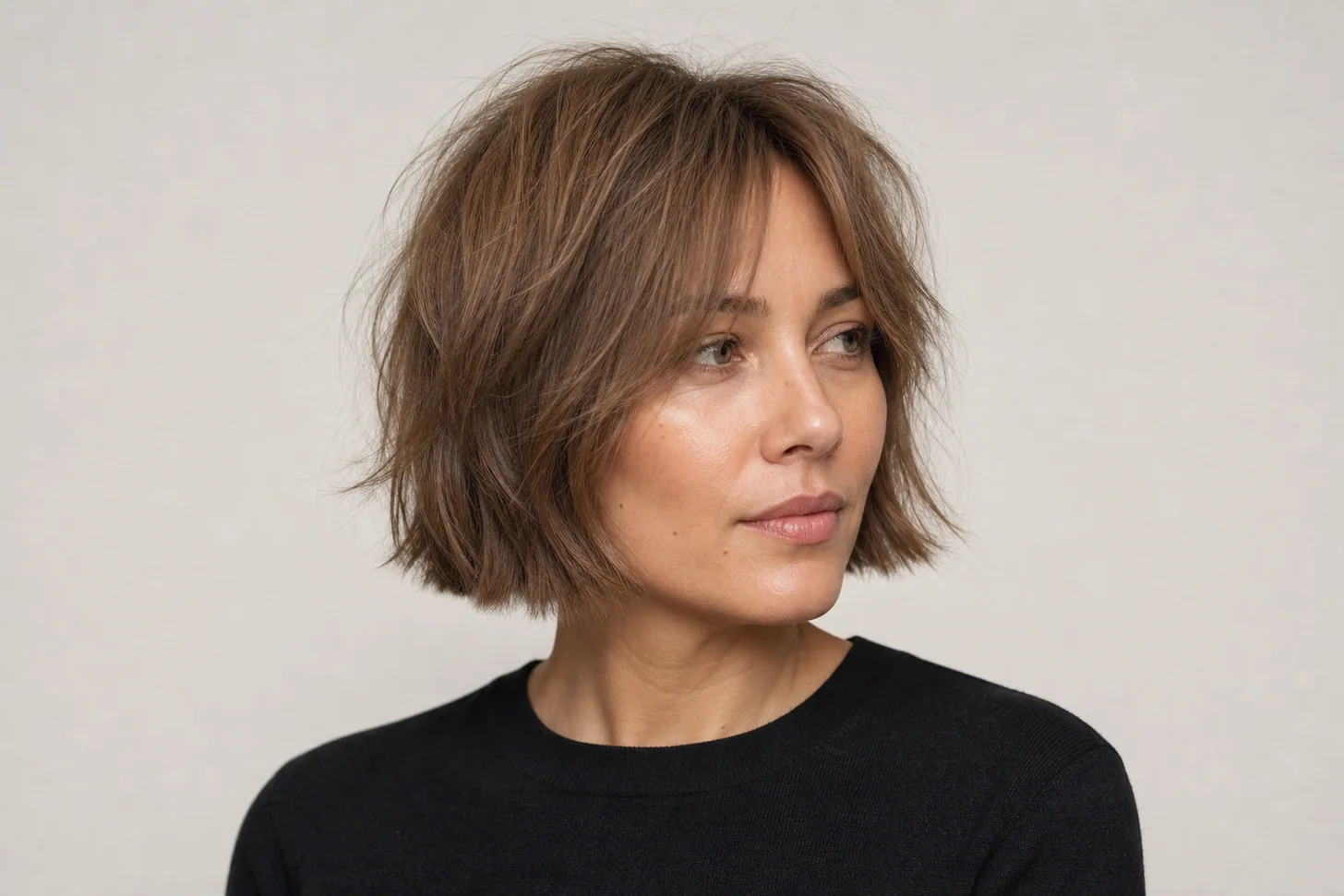
chin-length textured bob on fine dark-brown hair with a deep side part and slightly tousled ends, woman in her late 30s, front view
3
Textured bob with a deep side part
A deep side part throws a wedge of hair across one side and makes the top look fuller.
Dry the roots up and away from the part first.
chin-length bob on fine medium-brown hair with a single hidden internal layer for lift and a soft textured finish, woman in her mid 30s, front three-quarter view
4
Textured bob with an invisible layer
One short internal layer under the top gives lift at the crown without showing. It's called a ghost layer.
Say: "I'd like a chin-length bob with a blunt perimeter and point-cut ends. Please don't razor it or use thinning shears, and keep the weight at the bottom." Ask your stylist to check your density before deciding how many layers.
How to style a textured bob
Work a light texture spray through the ends, then rough-dry with your fingers. Finish with a pinch of paste or styling cream on the ends only. Trim every eight weeks, since the texture goes shapeless as the ends grow.
Who should skip a textured bob
Your hair is very fine and sparse at the ends. More texture makes the ends look thinner. A blunt bob looks denser.
You want a polished, sleek look. The textured bob is meant to look lived-in. Choose a blunt or French bob instead.
Your stylist suggests a razor. Find a stylist who point-cuts. A razor leaves fine ends transparent.
You do not want to style it. A textured bob needs a spray and a rough dry. Without it, it can fall flat.
FAQ
A bob cut with broken-up ends or soft layers so it moves instead of lying in one flat line. The texture comes from the cut, a wave or styling product.
Yes, if the texture comes from point cutting. A razor or thinning shears remove hair and leave fine ends transparent, so avoid them.
Ask for a chin-length bob with a blunt perimeter and point-cut ends, with no razor or thinning shears. Ask your stylist to check your density first.
A light texture spray through the ends and a pinch of paste or cream on the tips. Skip heavy waxes, which weigh fine hair down.
Every eight weeks. The texture gets shapeless as the ends grow.
A choppy bob has more visible, jagged separation between pieces. A textured bob can be anything from softly broken ends to a choppy finish.
Eleven years behind the chair, specializing in short shapes and fine-hair texture. Simone believes the best haircut is the one you can style yourself in ten minutes.
Results vary with hair type, density and growth patterns. Haircut guidance is not a substitute for an in-person consultation with a licensed stylist, and sudden or heavy hair loss is worth raising with a doctor.
Hairstyle images in this guide are AI-generated illustrations, not photos of real clients or results. See our image policy.
Get the good hair intel
One honest, stylist-written guide in your inbox each week. No hype.

 SB