Reviewed by Tara Sullivan · Updated July 2026 · 9 min read
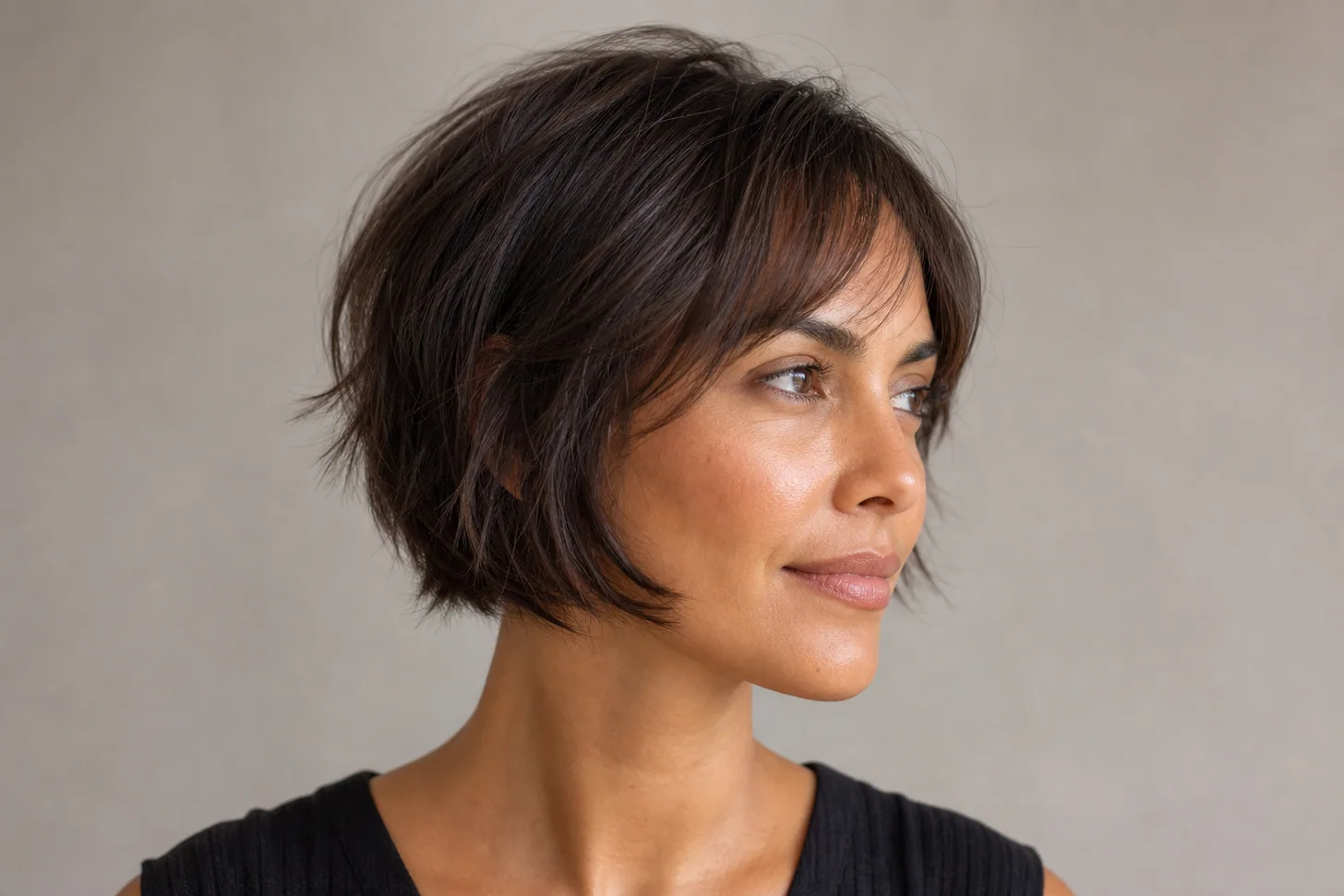
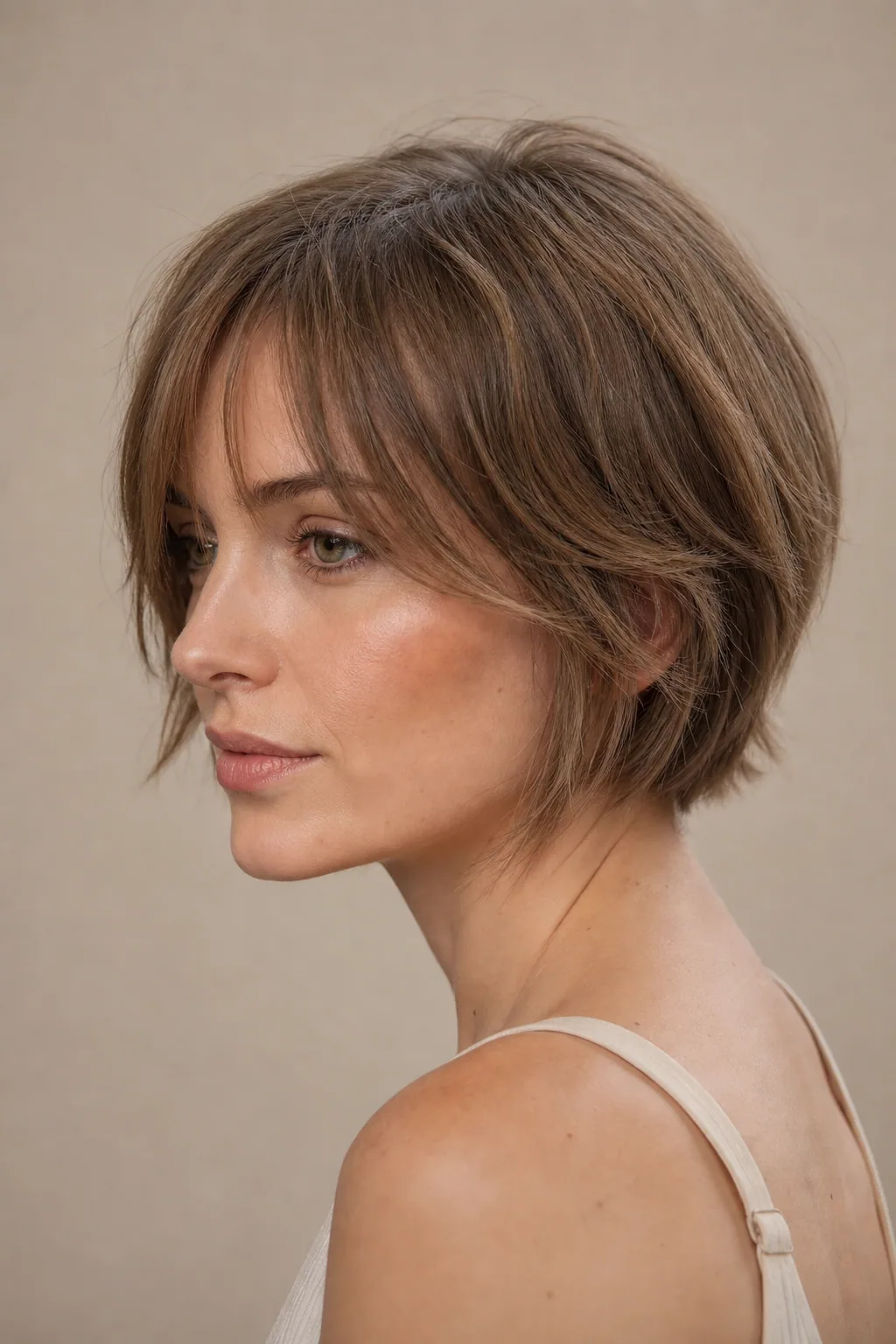
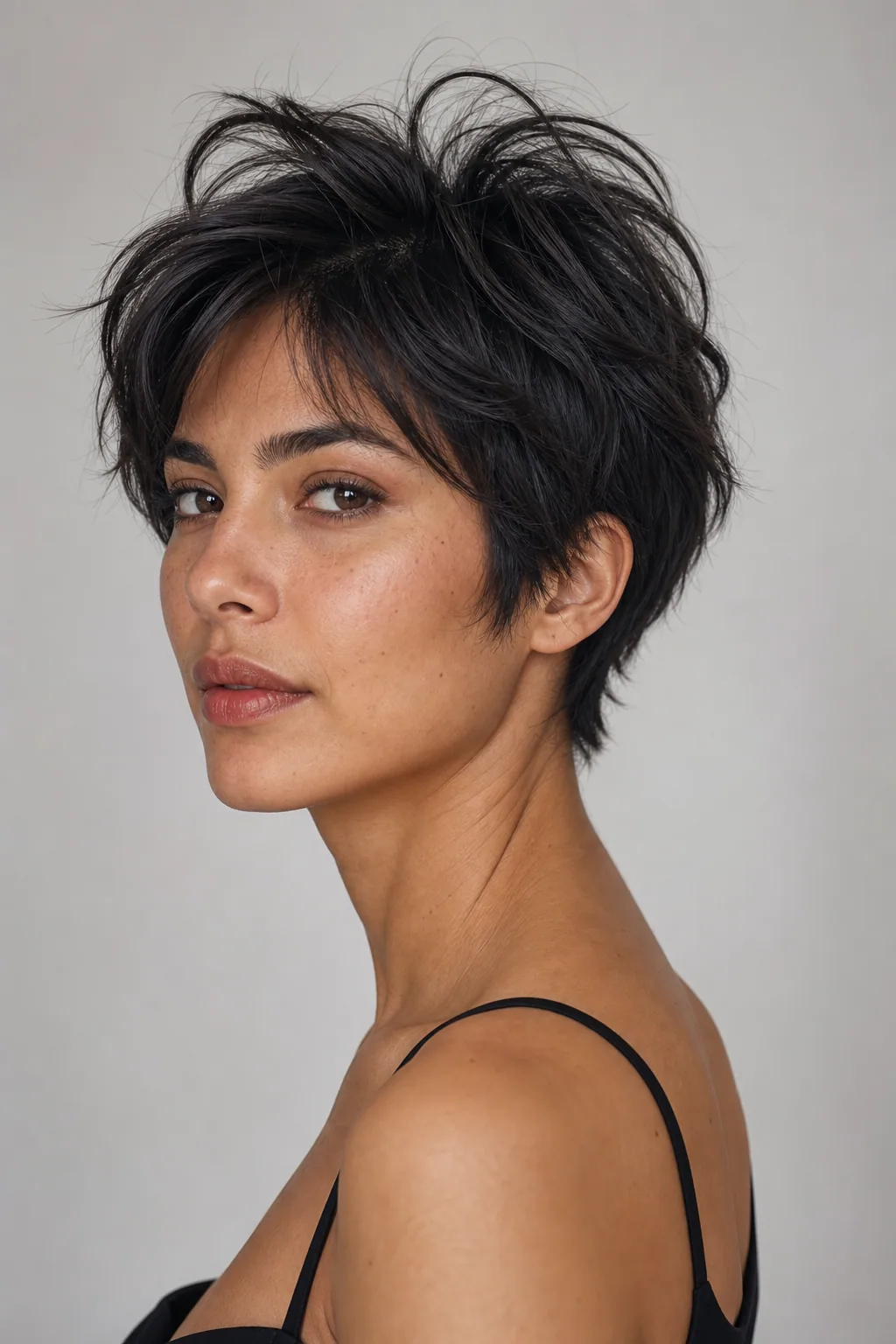
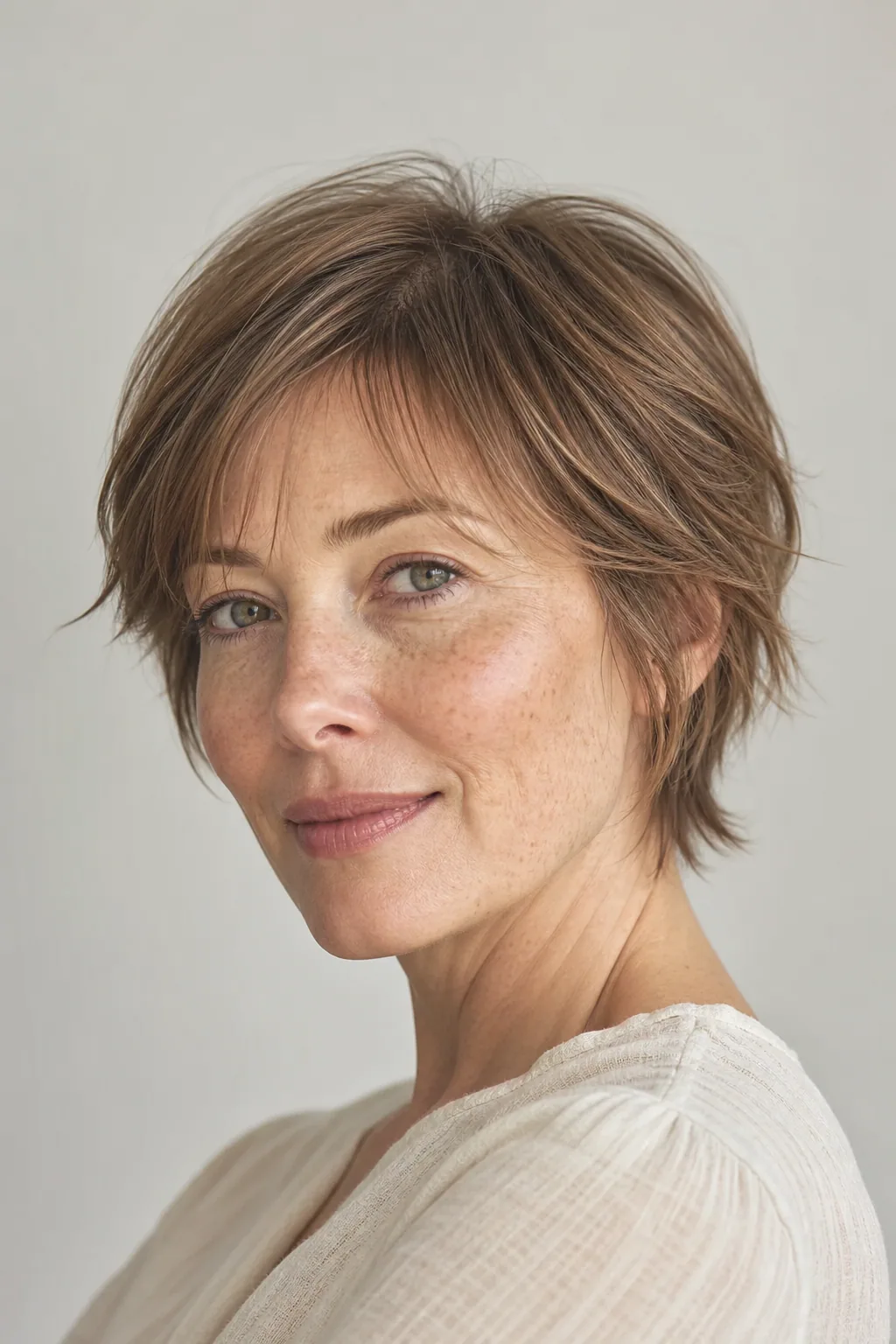
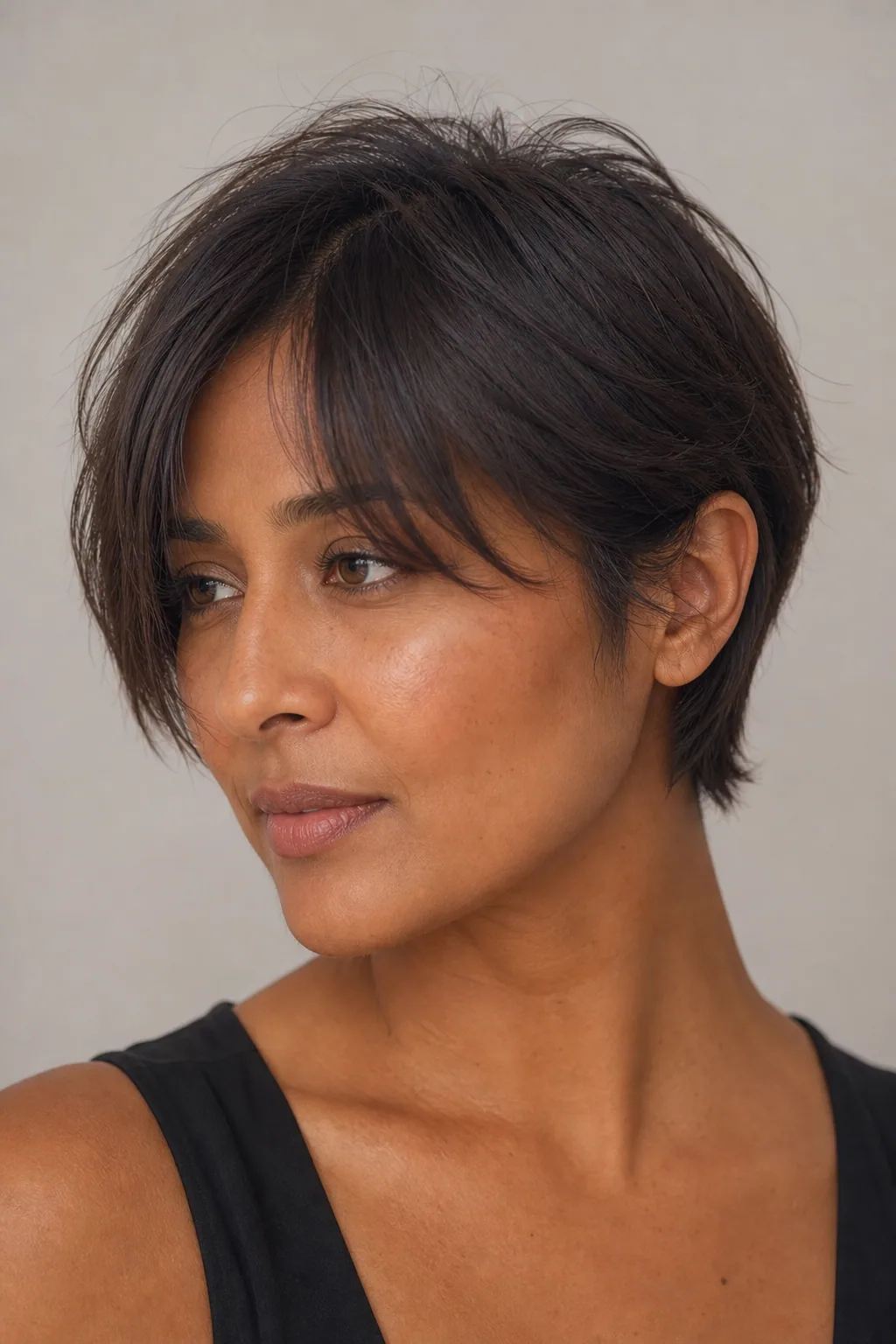
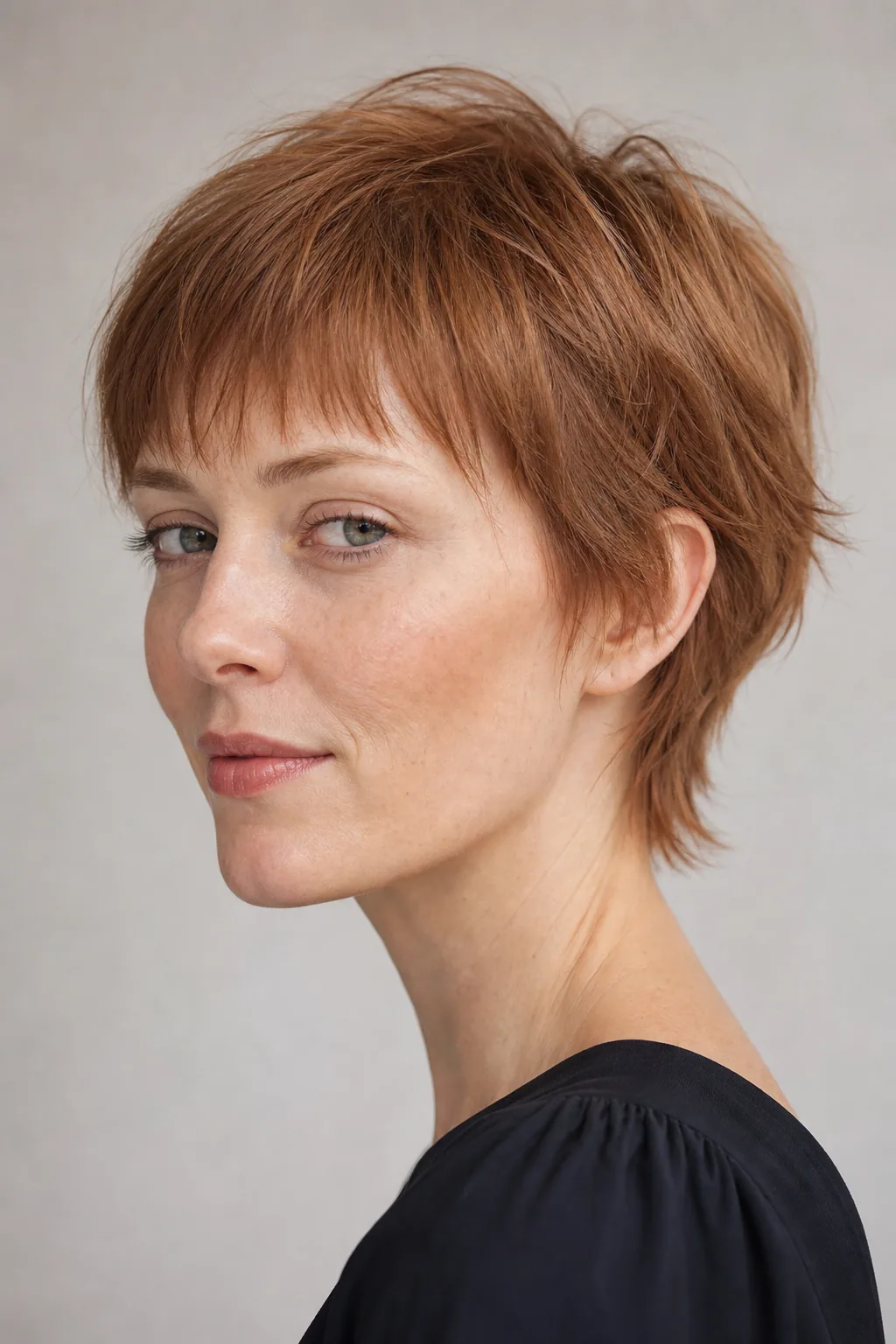
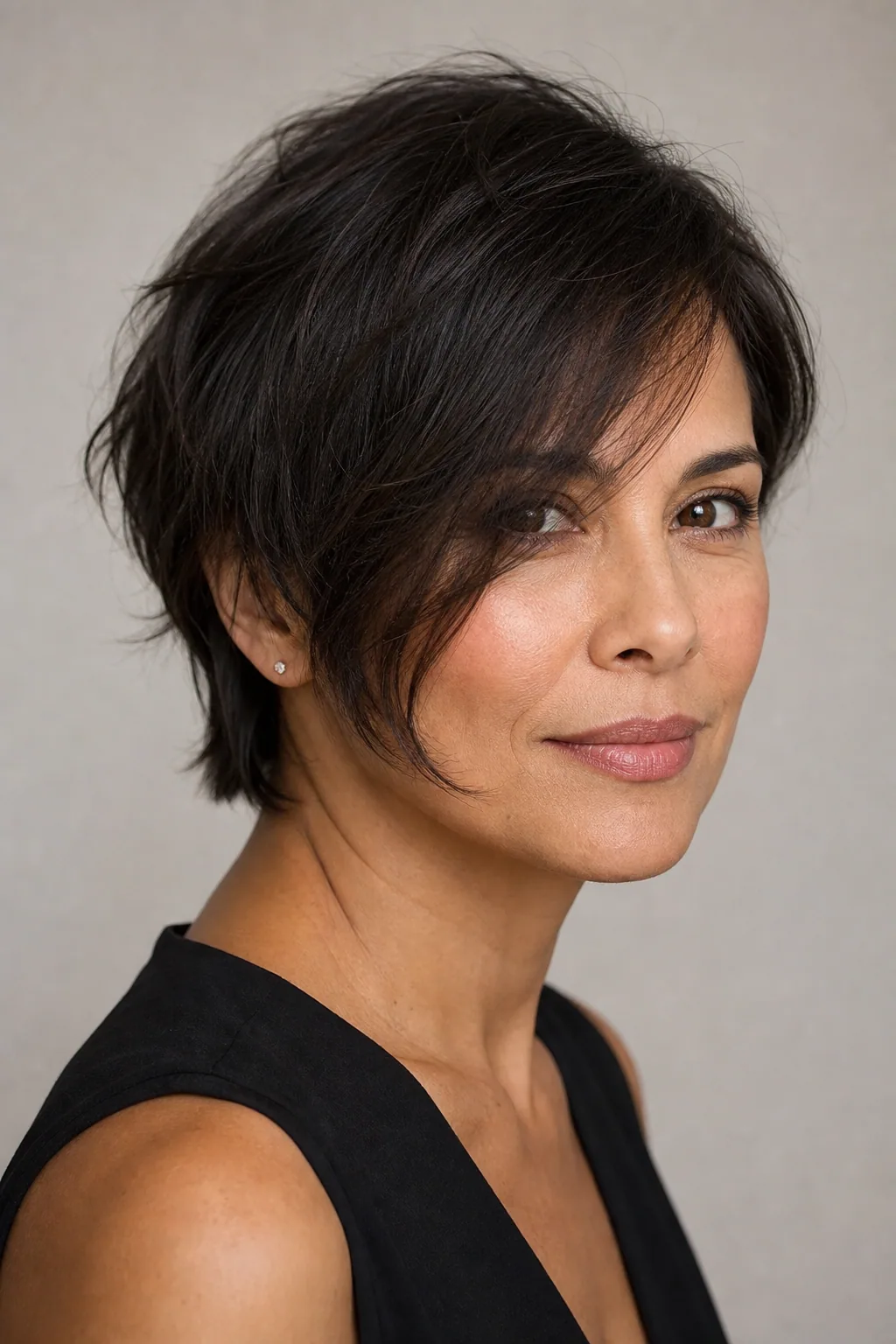
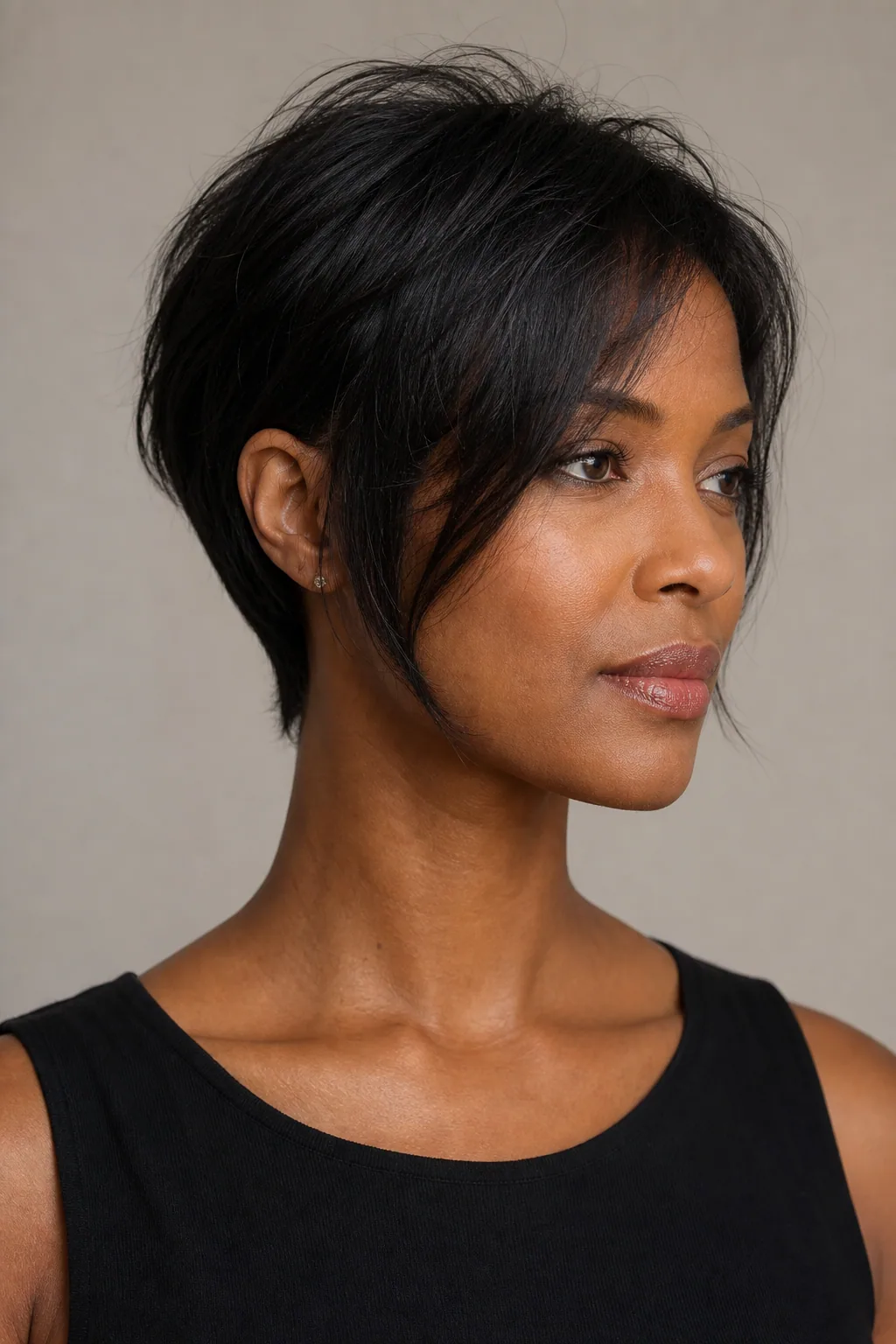
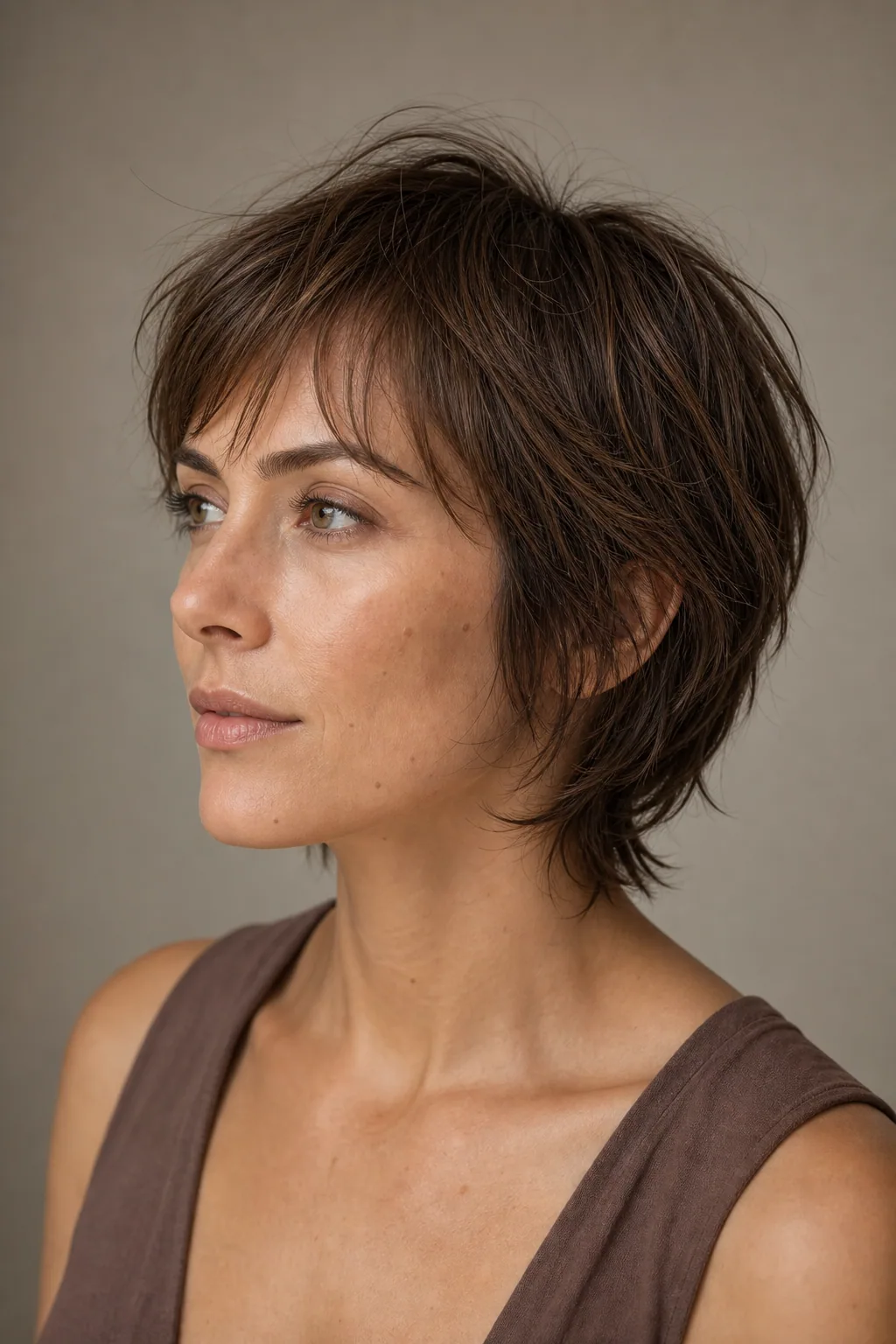
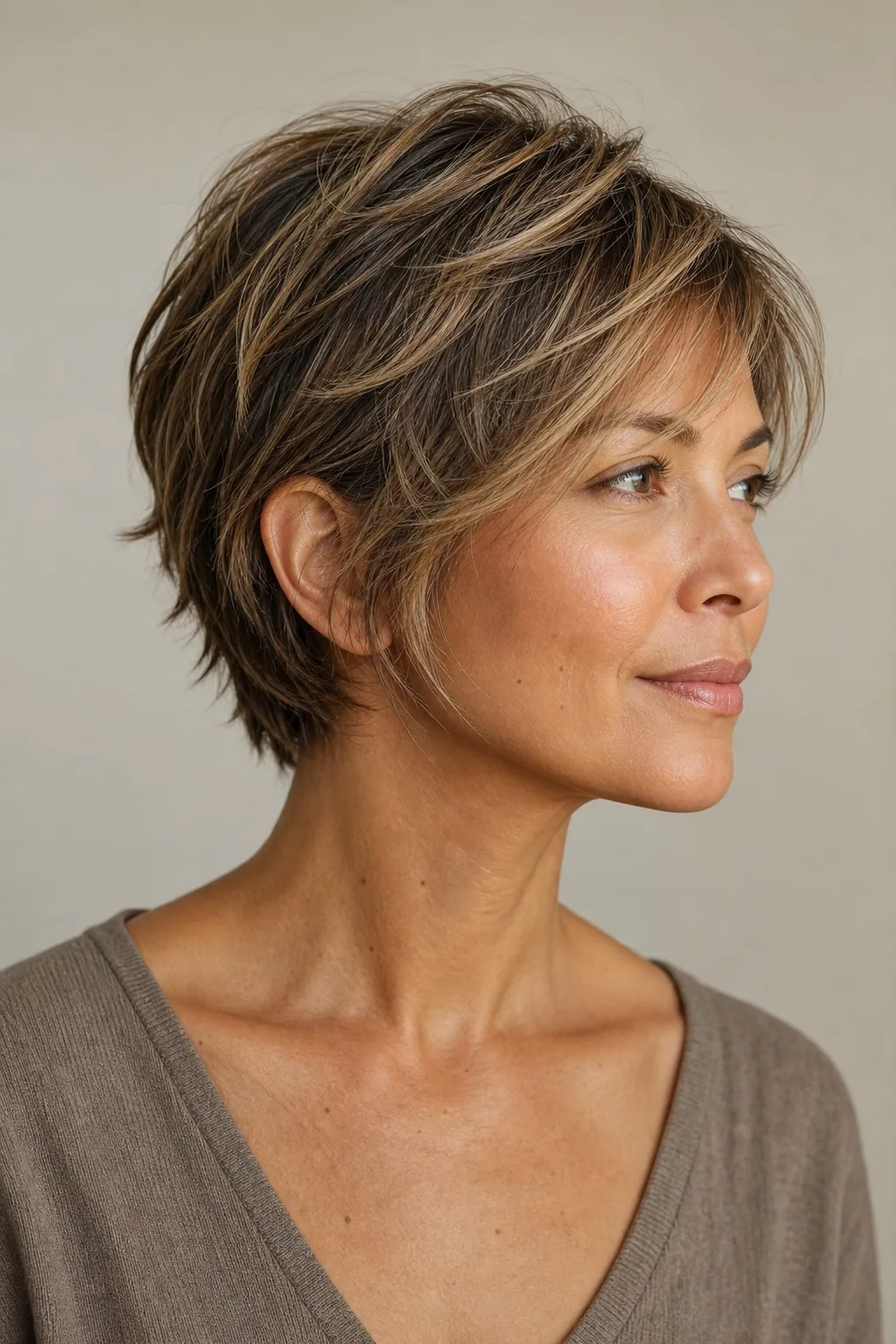
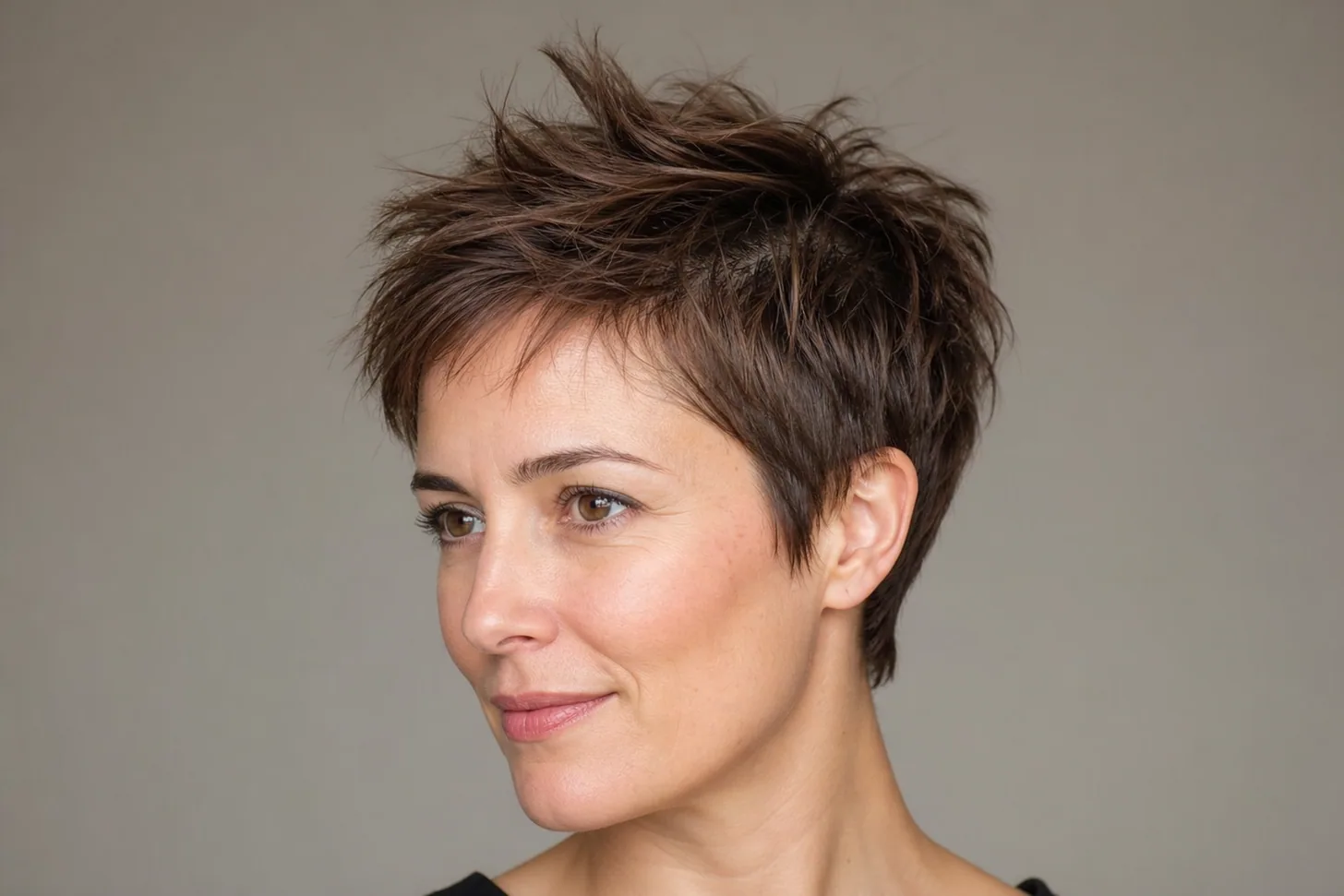
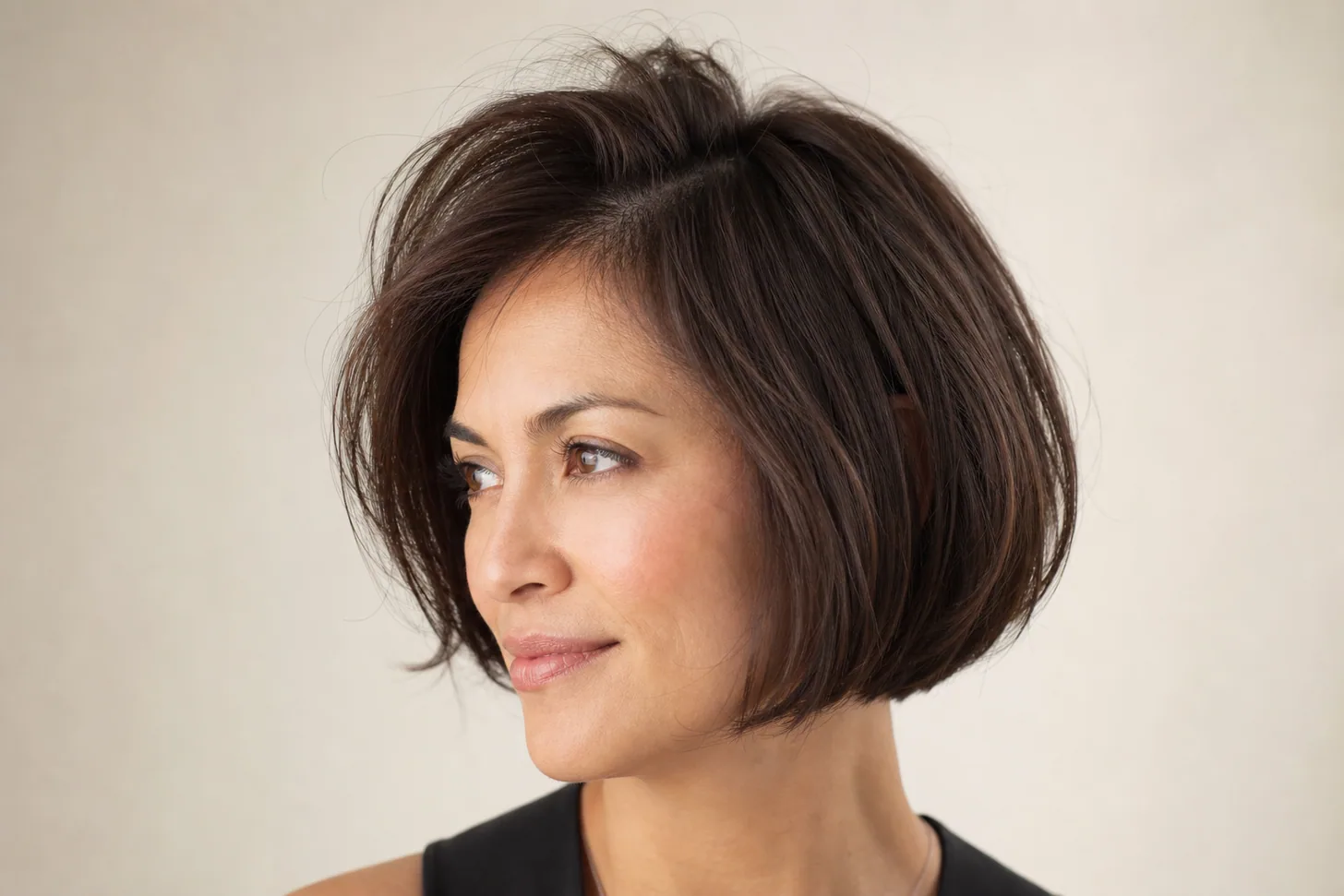
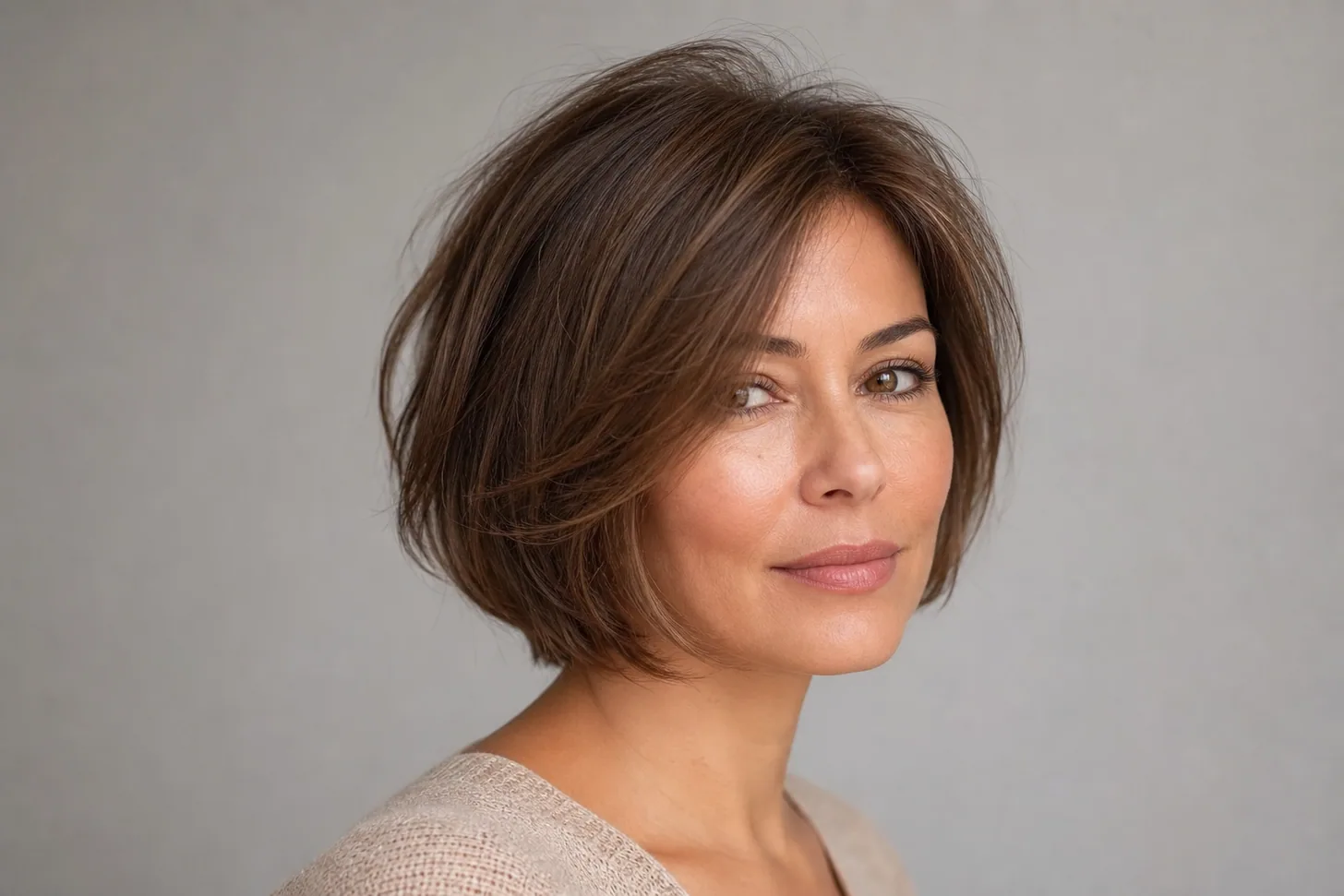
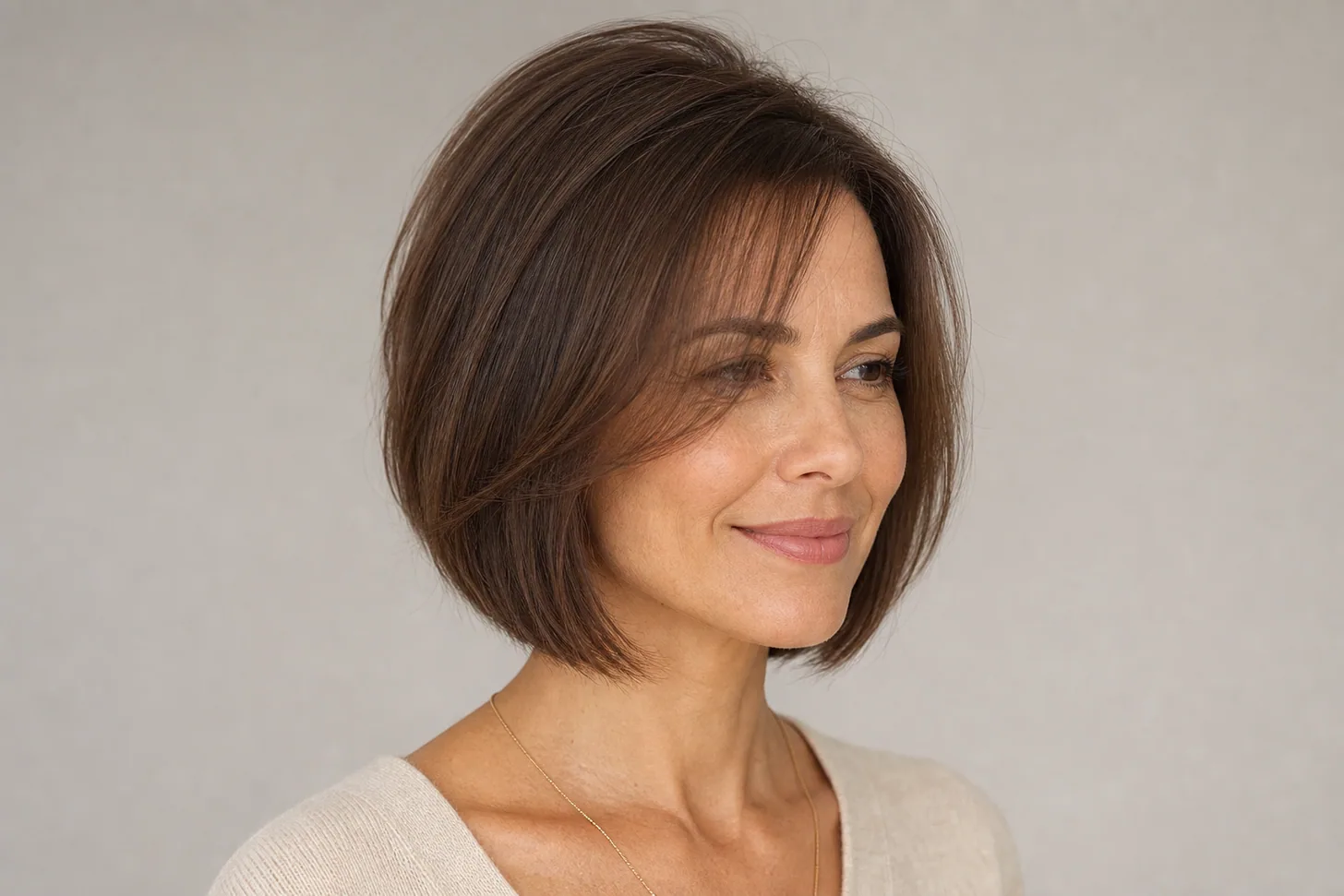
The bixie is a bob-pixie hybrid — short, point-cut layers through the crown for lift, with softer, bob-like length kept through the sides — and that combination is precisely why fine hair wears it so well.
The crown layers are too short to hang flat, so the top lifts on its own; the fuller perimeter keeps the outline reading dense. Below are 14 salon-tested bixies from soft to edgy, who each one suits, honest maintenance numbers, and the exact words to bring to your stylist.
Chair-side note
The bixie has become my favorite gateway cut for fine-haired clients who are pixie-curious but scared. Here's the honest pitch I give in the chair: a pixie is a commitment — four-week trims, and a long awkward grow-out if you bail.
A bixie gives you 80% of the pixie's lift while keeping enough length through the sides that if you hate it, you're eight weeks from a layered bob. On fine hair that safety net matters, because the number one fear I hear is "what if short makes my hair look thinner?" Cut right, a bixie does the opposite.
SB
— Simone Baptiste, Senior Stylist
Why the bixie works on fine hair
Fine hair's core problem is leverage: the longer a fine strand gets, the more its own weight drags the root flat. A bixie attacks that at the crown — layers cut short enough that gravity has nothing to pull on, so lift is built into the architecture of the cut rather than styled in every morning.
Meanwhile the sides and nape stay closer to bob length, which keeps a soft, dense-looking outline around the face. It's the same fullness logic as a textured pixie, with more insurance.
If you're weighing short shapes generally, our haircuts for fine & thin hair hub maps them all — and if you're not sure whether your hair is fine, thin, or both, take two minutes with the fine-vs-thin check first, because density decides how short and how layered you can safely go. It is also one of the few short shapes gaining rather than losing ground in fine hair trends for 2026.
Bixie or pixie bob? Where the two cuts actually differ
The two names get used for the same haircut constantly, and most of the time nobody is wrong — both describe a short cut that sits between a pixie and a bob. Where they part company is which half the cut commits to.
A pixie bob leans bob: it keeps a recognisable perimeter somewhere around the ear or jaw and simply takes some length and weight out of it, usually with soft internal layering. A bixie leans pixie: the crown layers are cut genuinely short and piece-y, short enough that they cannot hang, and the bob-ish outline is what is left underneath them.
On fine hair that distinction has a practical consequence rather than a semantic one. The pixie bob keeps more weight in the perimeter, so the outline reads denser and the cut is more forgiving if your density is low enough that scalp shows at the crown — the length on top is still lying down and covering. The bixie buys lift instead: the short crown layers stand up on their own, which is the fullness fine hair is usually chasing, but they expose more of the top of the head.
If you are not sure which side of that trade you want, our fine hair versus thin hair check answers it — fine strands with normal density can take the bixie, genuinely low density is usually better served by the pixie bob. The bob-leaning bixie further down this page is the middle setting, and it is the one most people actually mean.
Both are also frequently searched as a low-maintenance option, and that deserves an honest answer rather than a yes. A pixie bob is low-maintenance day to day — there is little enough length to go flat, and a rough-dry plus fingers gets you there.
It is not low-maintenance on the calendar: any short shape with a defined outline loses that outline in six to eight weeks, and both of these do. If your definition of low-maintenance is fewer salon visits rather than fewer minutes each morning, a lob is the more honest recommendation. See low-maintenance cuts for fine hair for how the whole ladder trades off.
The classic bixies
Short cuts live or die on the daily five minutes — how to style short fine hair is the companion to any of these.
The core shapes — where the bob-to-pixie ratio itself is the variable. Start here if the bixie is new to you. Ask for the sides and top softly tapered and the nape left blunt — the feather cut rule applies to every shape with a bottom line.
1
The classic soft bixie
The blueprint: feathered, point-cut layers through the crown, length falling between the ear and jaw, everything blended so no line shows. It suits nearly every face shape and is the version to choose if you want the volume without anyone quite being able to name what changed. This is the photo to bring if you've never worn short hair before.
2
The stacked-back bixie
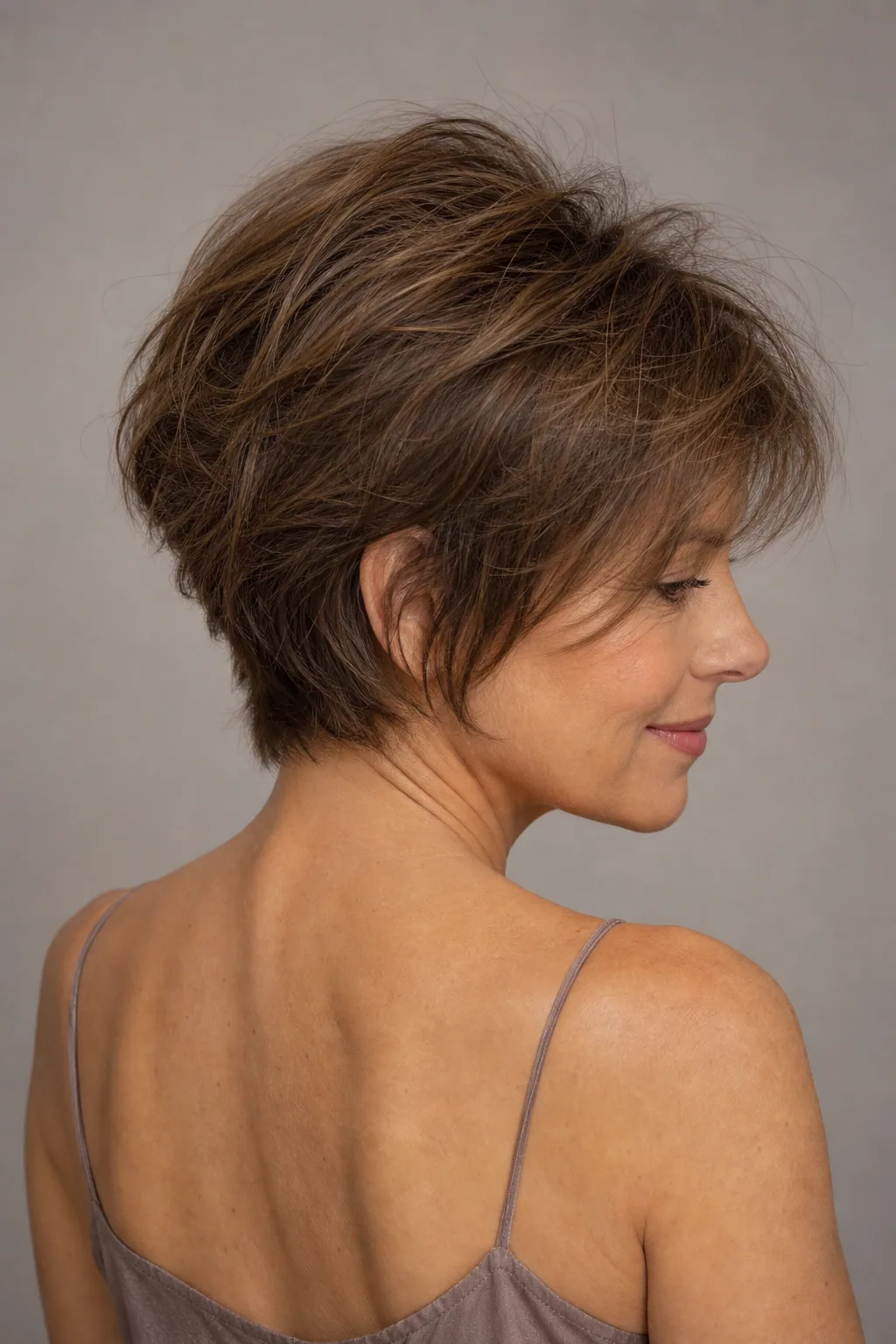
Graduation through the back stacks short layers on top of each other, building a cushion of height exactly where fine hair collapses first — the crown. The front stays longer and softer, so from the mirror you see a bob; from behind, all lift. Ask for "graduated through the back, blended into longer sides" and your stylist will know the shape.
3
The bob-leaning bixie
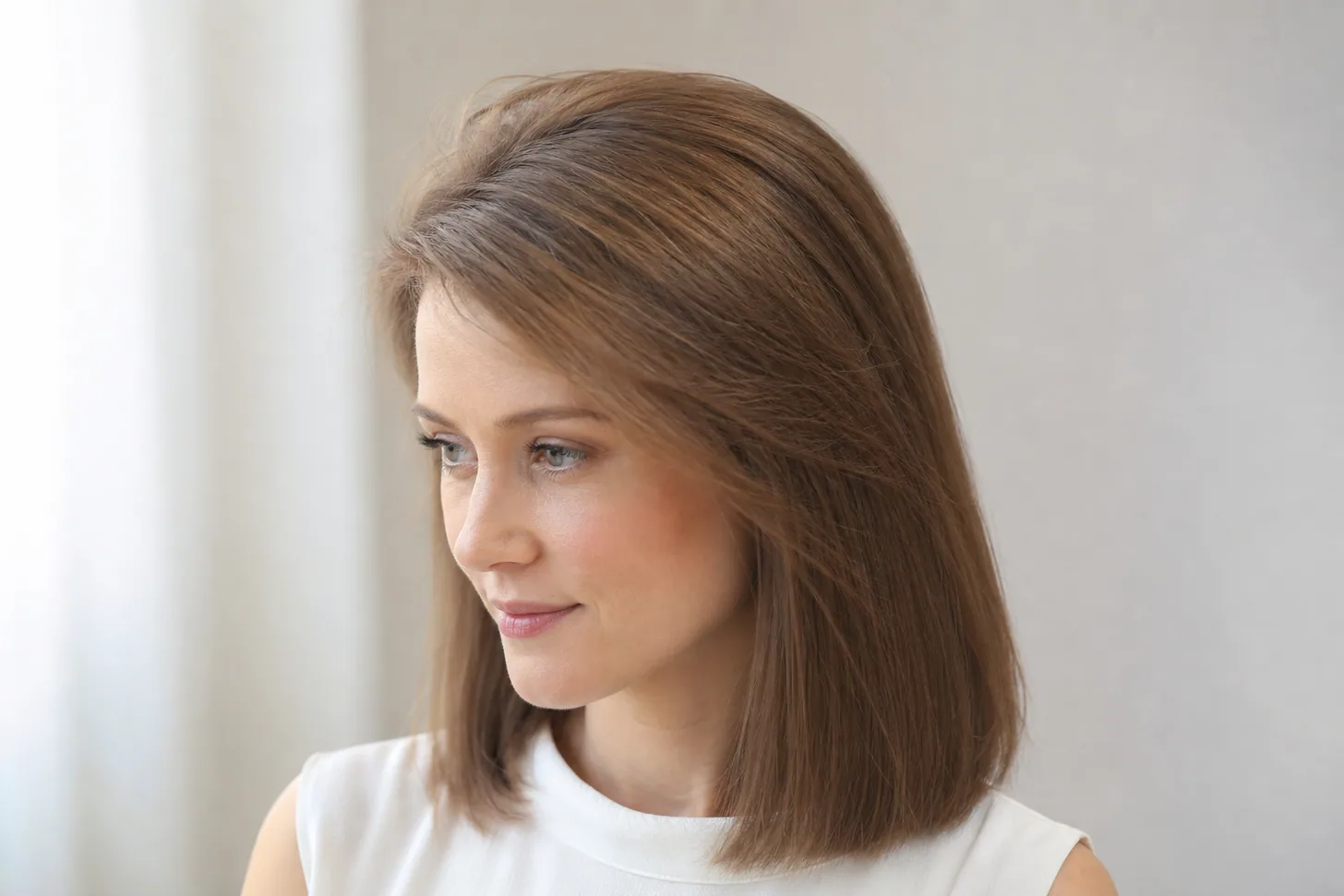
More bob than pixie — jaw-length sides with only the top third layered. The gentlest entry point, and the right call if your density runs low: the nearly intact perimeter does the thickness work while the modest crown layers add just enough lift. Compare it against a true fine-hair bob before you book; the difference is that layered top.
4
The pixie-leaning bixie
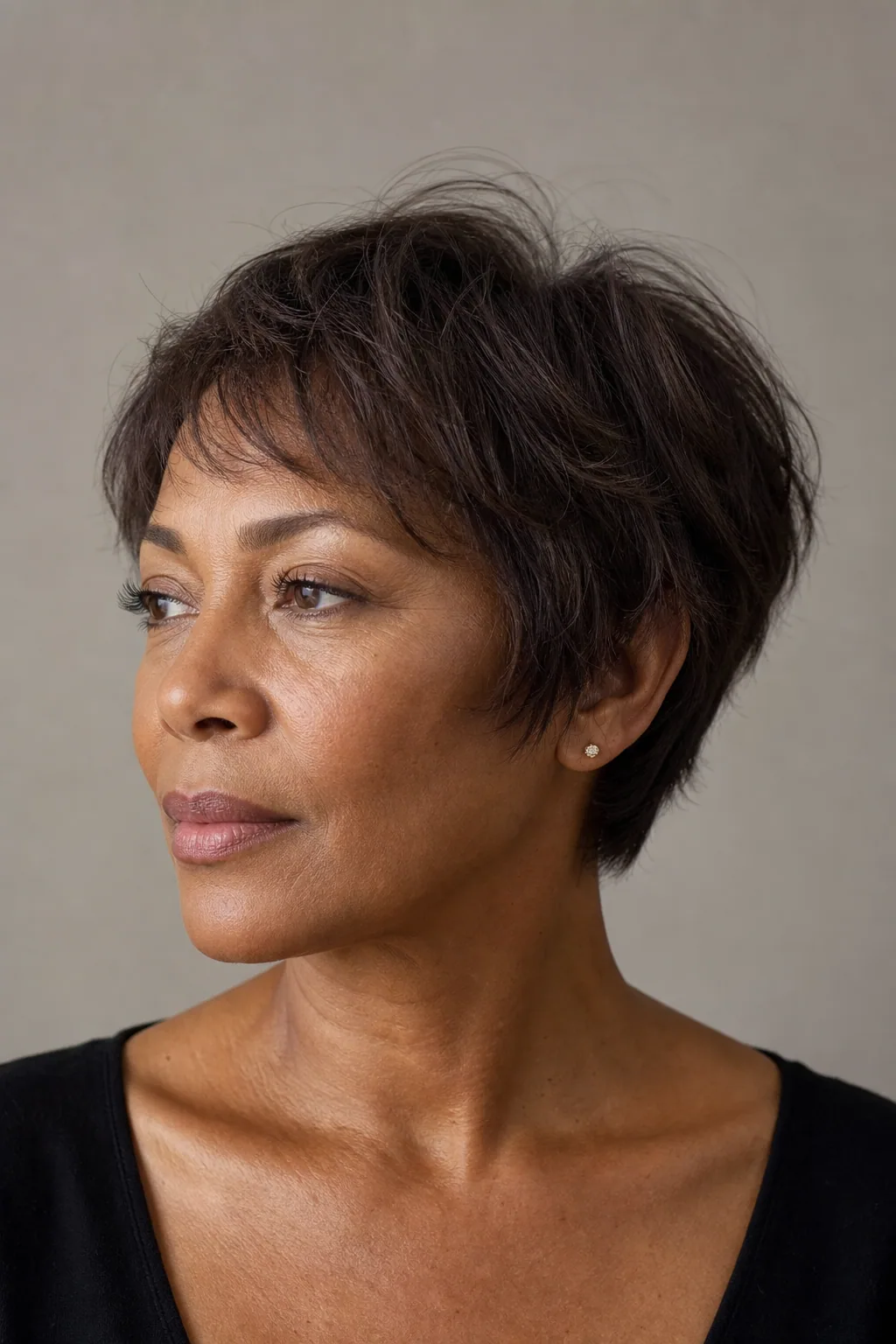
Cropped close at the nape and around the ears, with the bixie's signature length kept only through the top and fringe area. Maximum lift, minimum blow-dry — the top pushes up with a fingertip of paste in under three minutes. Best on oval and heart faces that can carry an exposed neckline, and on fine hair with decent density up top.
5
The wash-and-wear bixie
Cut dry, following how your hair actually falls, so it air-dries into shape with a scrunch of light mousse and nothing else. The trade: it holds one silhouette rather than restyling into many. If mornings are the bottleneck, this belongs on your shortlist next to the other genuinely low-maintenance fine-hair cuts.
Bixies with bangs & face-framing
The fringe decides how a bixie meets your face — and on fine hair it's the difference between softening the cut and spending density you can't spare.
6
Bixie with a curtain fringe
A center-parted fringe that sweeps into the side length, so bang and cut read as one continuous shape. The lifted part-line adds a second volume point at the front hairline, right where flatness shows most in photos. The fringe rules for fine hair — how sheer to go, how to dodge the greasy-by-noon problem — are in curtain bangs for fine & thin hair.
7
Bixie with a wispy micro-fringe
A short, deliberately sheer fringe ending above the brows gives the bixie a French, gamine edge. Because it's meant to be see-through, it costs fine hair almost nothing in density — the rare fringe where sparseness is the style. Suits smaller features; trims every three to four weeks keep it above the brows.
8
Bixie with a side-swept fringe
The fringe cut long and pushed to one side, grazing the cheekbone before melting into the layers. That diagonal line is the most flattering move on round and square faces — it cuts the width without demanding a committed short fringe. It's also the easiest to grow out; it simply becomes the face-frame.
9
Bixie with cheekbone face-framers
Two longer pieces left at the front, hitting the cheekbones, with the rest of the cut sitting shorter behind them. Tuck the sides behind your ears and the framers stay out — instant structure on days the crown won't cooperate. A small detail that makes the cut noticeably more versatile.
Texture, color & the mature bixie
A bixie cut with a stacked rather than an even back becomes a wedge-bixie hybrid, which is the most forgiving short shape on the site — the wedge haircut for fine hair has it as entry 13.
Where the bixie stops being one cut and starts being yours — wave, choppiness, dimension, and the versions that flatter hair that has finered with age.
10
The wavy bixie
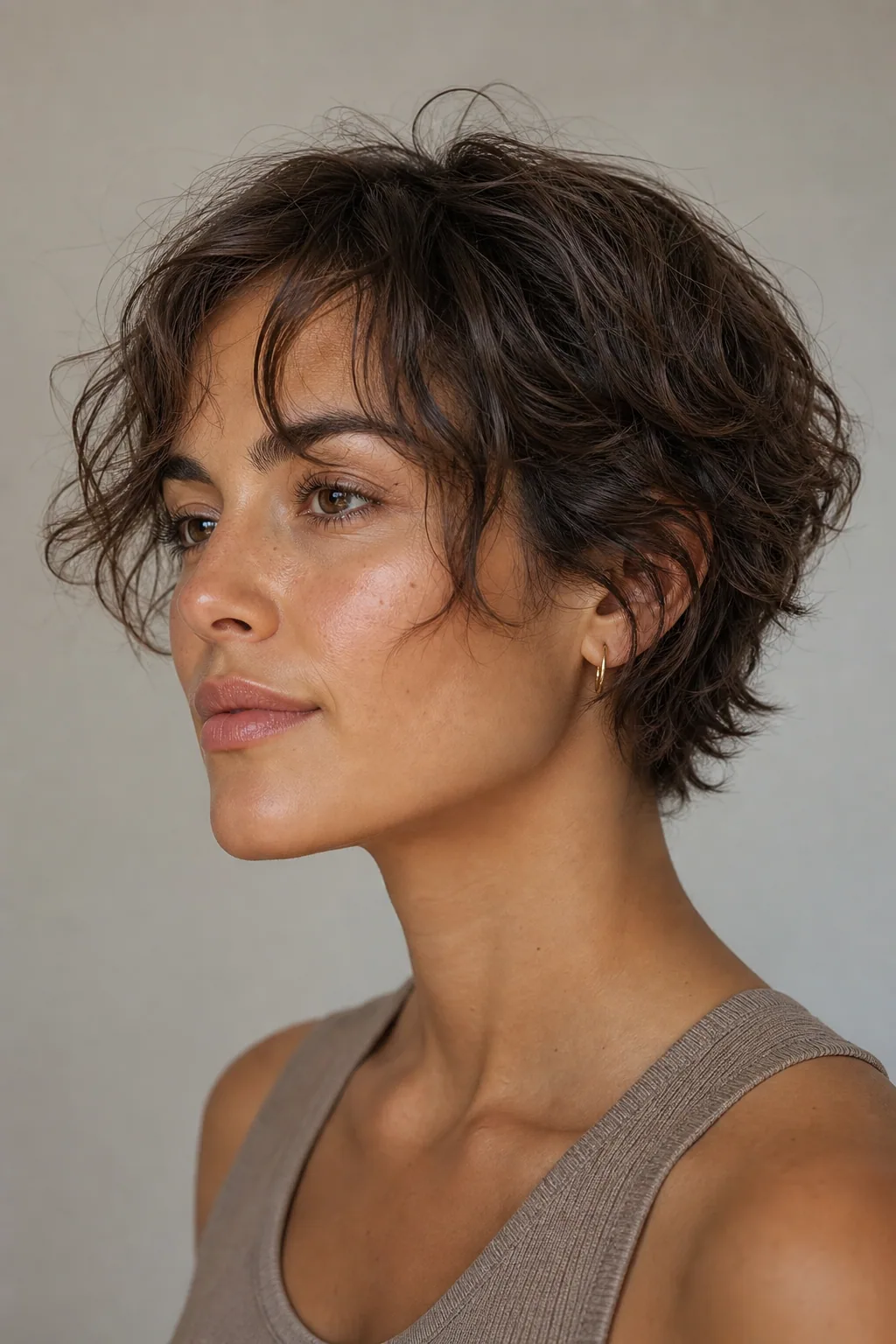
Fine hair with a natural bend is the bixie's easiest customer — at this length the wave springs up instead of being dragged straight by its own weight, so the cut looks fuller than the same hair ever did long. Scrunch with a light foam, air-dry, done. Have it cut dry so the layers land where the wave actually turns.
11
The choppy bixie
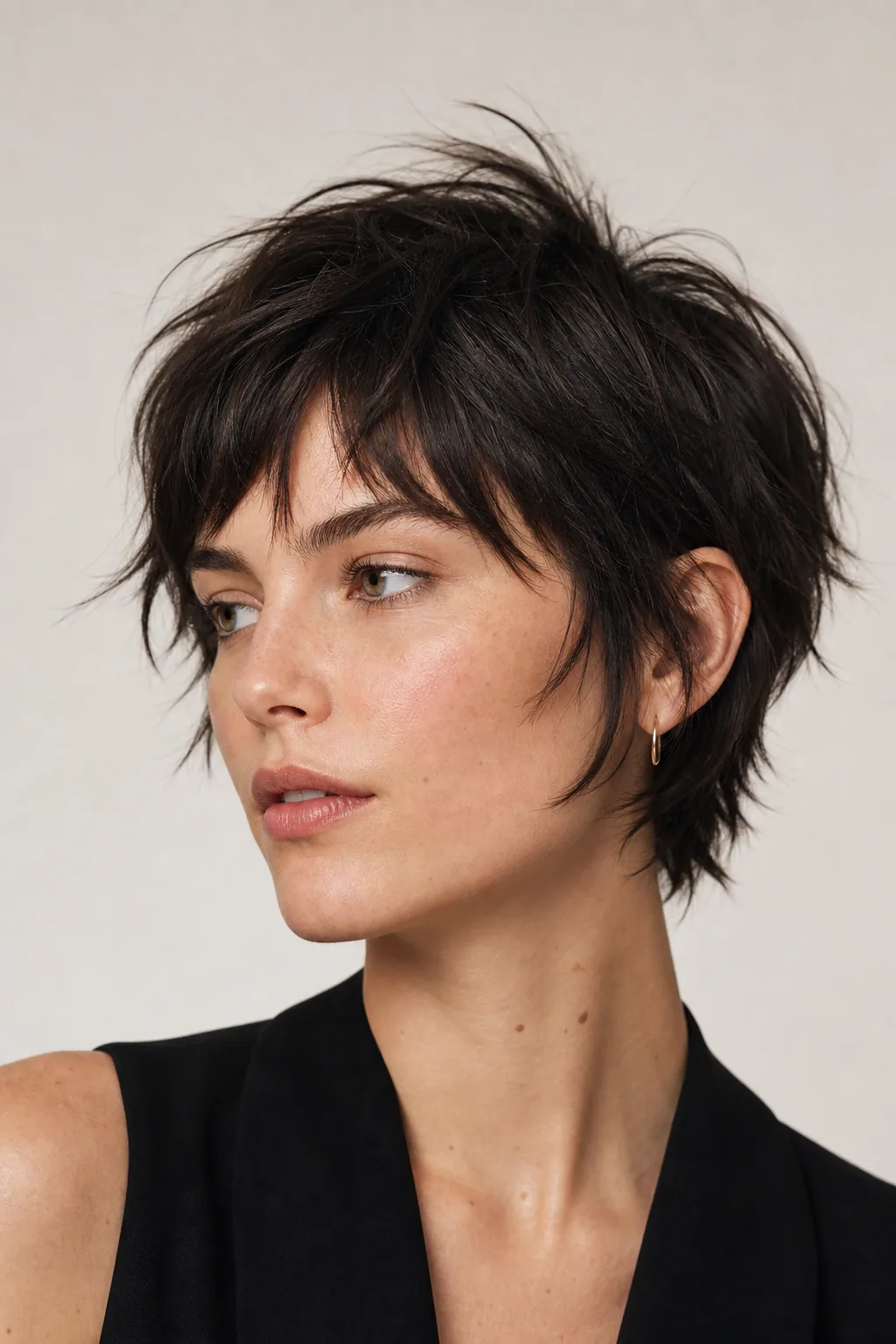
Point-cut harder for visible, piece-y separation — the editorial, undone version. It needs grip to look intentional: a mist of texture spray, raked through with fingertips. One honest warning for fine hair: choppy lives on the surface of the cut. If your stylist starts chopping into the perimeter, the ends go sheer — say "texture on top, keep my ends solid."
12
The bixie-shag crossover
Shag DNA — rounder crown layering, soft sideburn pieces, a retro lean — on a bixie footprint. It's the moodiest version on this page and the one that photographs most like a '70s crop. We break down the shag family, including where it overlaps the bixie, in shag haircuts for thin hair.
13
Bixie with dimensional color
A few soft, well-placed lighter pieces through the crown layers make the lift read double — the eye counts every plane of light and shadow as more hair. Keep the contrast gentle and concentrated where the layers move; chunky stripes do the opposite on fine hair and expose the scalp at the part.
14
The silver bixie
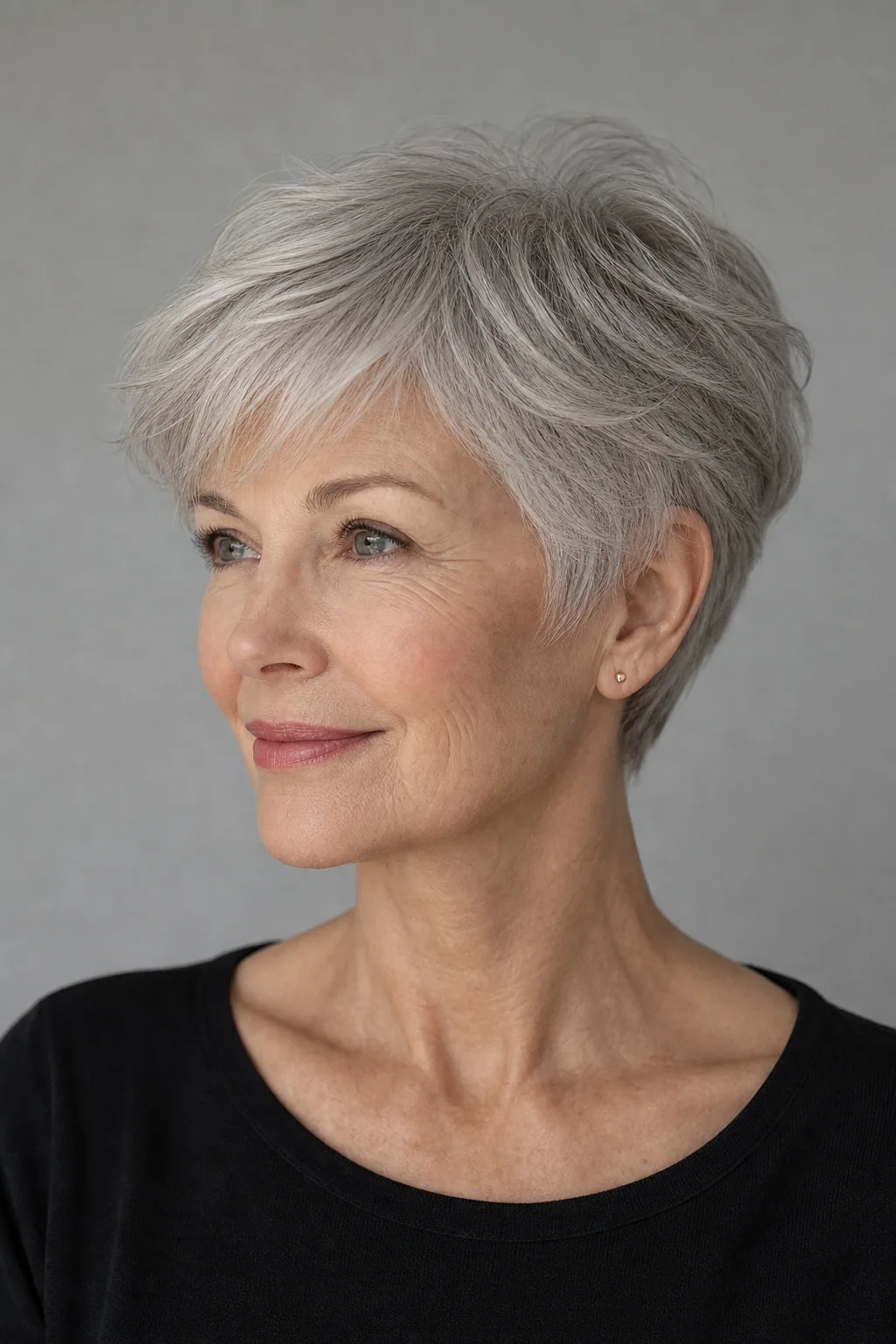
On grey and silver hair — which often finers with age — the bixie earns its keep twice: the crown layers counter age-related flatness, and the shorter length keeps naturally drier grey ends looking deliberate rather than wispy. The layers are rounded and softened here, polished over punk. More shapes in this spirit live in hairstyles for fine hair over 60. Grown out at the back rather than kept short, the same textured logic becomes a mullet on fine hair.
Which bixie for your face shape
The bixie is unusually forgiving because you can tune the bob-to-pixie ratio and the fringe to your features. If you haven't mapped your face shape, our two-minute face-shape guide sorts it out with a mirror.
Balanced proportions carry the pixie-leaning crop and the classic alike.
Round
Side-swept fringe bixie
Height at the crown + a diagonal fringe elongate; avoid width at ear level.
Square
Classic soft bixie
Feathered edges and cheekbone framers soften a strong jaw.
Heart
Bob-leaning bixie
Fuller sides at the jaw balance a wider forehead; keep the fringe wispy.
Long / oblong
Bixie with a fuller fringe
A brow-level fringe shortens the face; keep crown height modest.
The honest maintenance picture
Shorter cuts trade daily styling time for salon frequency. The bixie sits in the middle of that trade — cheaper to own than a pixie, needier than a bob. Separation at the ends of a bixie comes from a trace of pomade suited to fine hair, used in far smaller amounts than the tin suggests.
Version
Trim
Daily styling
Grow-out
Classic / bob-leaning bixie
6–7 wks
3–5 min
Blends into a layered bob — the easiest grow-out in short hair
Pixie-leaning bixie
5–6 wks
2–4 min
Passes through a classic bixie on its way out
Wash-and-wear / wavy bixie
6–8 wks
1–3 min
Very forgiving; shape softens rather than collapses
Any version with a fringe
Fringe every 3–5 wks
+1 min
Fringe lengthens into a face-frame
What to ask your stylist
Say: "I want a bixie — bob length through the sides and nape, short point-cut layers through the crown for lift. Please keep the perimeter soft but intact, no razor and no thinning shears — my hair is fine and I need the ends to stay solid."
Then set the ratio: "lean it toward the bob" if you're cautious or your density is low, "lean it toward the pixie" if you want maximum lift. Bring a photo regardless — bixie is a young term and stylists draw the bob-pixie line in different places.
Day to day it's a three-minute cut: mousse at the roots, rough-dry pushing the crown up and over, texture spray to finish. The full lightweight product logic — what lifts fine hair and what flattens it — is in how to style fine & thin hair.
When a bixie may not be your best move
Very low density at the crown with visible scalp. Short crown layers can expose more scalp under overhead light — a blunt bob with an intact perimeter builds a stronger density illusion.
You're actively growing your hair long. A bixie is a reset button — you'd be re-growing everything above the jaw. A trim-as-you-grow layered shape serves the goal better; the stage-by-stage grow-out plan is the one to follow instead.
Strong natural curl. Curl springs shorter than it measures; a bixie cut for a straight-hair silhouette can turn unexpectedly round. It's cuttable, but only dry, by someone who does curly crops weekly.
You want one wash a week. Short fine hair shows oil faster because every root sits at the surface — expect to wash or refresh more often, not less.
FAQ
A bixie is the hybrid of a bob and a pixie: pixie-style layering through the crown and back for lift, with bob-like length kept through the sides and nape — usually somewhere between the ear and the jaw. The mix is the point: you get a pixie's built-in volume without giving up all the softness and face-framing of a bob.
It's one of the best short cuts for fine hair. Short layers at the crown physically can't hang flat the way length does, so the top lifts on its own, while the fuller perimeter through the sides keeps the outline reading soft and dense. Ask for point-cut layers and an intact perimeter — an over-texturized bixie loses the density illusion that makes it work.
They're close cousins and some stylists use the names interchangeably. In practice, a pixie-bob usually leans more bob — one length nudged shorter with some layering — while a bixie commits harder to the pixie half: genuinely short, piece-y crown layers over a bob-ish outline. If you bring either word to the chair, also bring a photo; the picture settles what the name can't.
Rough-dry with a little mousse at the roots, push the crown up and over with your fingers as it dries, and finish with a light texture spray for grip and separation. That's three to five minutes. A blunt-tipped paste or a pea of light wax defines the ends if you want a piece-y finish — keep anything waxy off the roots.
Every five to seven weeks to keep the crown layering doing its lift work — a grown-out bixie doesn't collapse, it just gradually becomes a layered bob. That's its quiet advantage over a true pixie, which needs a four-week standing appointment to stay a pixie.
Better than almost any other short cut. Because the length gap between the crown layers and the perimeter is modest, the shape blends as it grows instead of hitting an awkward mullet stage — a bixie grows into a layered bob, which grows into a lob. That forgiving grow-out is a big reason stylists suggest it to first-time short-hair clients.
Eleven years behind the chair, specializing in short shapes and fine-hair texture. Simone believes the best haircut is the one you can style yourself in ten minutes.
Images in this article are AI-generated illustrations, not photographs of real clients or results. See our image policy.
Results vary with hair type, density, and growth patterns. This guide is educational and not a substitute for an in-person consultation with a licensed stylist.
Get the good hair intel
One honest, stylist-written guide in your inbox each week. No hype.

 SB
SB