Reviewed by Tara Sullivan · Updated July 2026 · 9 min read
Both — and which one you get is entirely a matter of technique, not the layers themselves. Layers help fine hair when they're point-cut with scissors and placed to build shape over a strong perimeter, adding movement and crown lift the hair can't make on its own. They hurt it when they're razored, thinned with texturizing shears, or scattered all the way down the lengths — which strips weight from the already-sparse ends and leaves the bottom of the cut see-through.
The single most common mistake I undo in the chair is over-layered fine hair that's gone stringy, and the fix is almost never "no layers" — it's the right kind, in the right place.
Below is exactly which layers add fullness and which quietly steal it, a side-by-side comparison for layered versus blunt, how length changes the math, and the precise words to bring to your stylist so you get the fuller version. First, if you're not certain whether you're working with fine strands or low density, settle that — it changes how much layering your hair can take.
Chair-side note
When a client sits down and says "I was told fine hair shouldn't have layers," I know exactly what happened to them: someone over-layered it once, it went thin and stringy, and they swore off layers forever. That's the wrong lesson. The problem was never that fine hair can't be layered — it's that it was layered the way you'd layer thick hair, by removing bulk.
Fine hair has no bulk to remove. So I don't remove weight from it; I place a few soft layers to build shape and leave a solid line at the bottom to gather the density. Same tool, completely different intention. Done that way, fine hair looks fuller with layers than without them.
SB
— Simone Baptiste, Senior Stylist
What layers actually do to hair
A layer is simply hair cut shorter than the length beneath it. On any hair, layers do two jobs: they remove weight and they create shape and movement. On thick, dense hair the first job is the point — layers thin out an overwhelming amount of hair so it moves instead of sitting like a helmet.
On fine hair, that first job is a trap. There is no excess weight to remove; the weight is what's making the hair look full. Take it away and you're left with less.
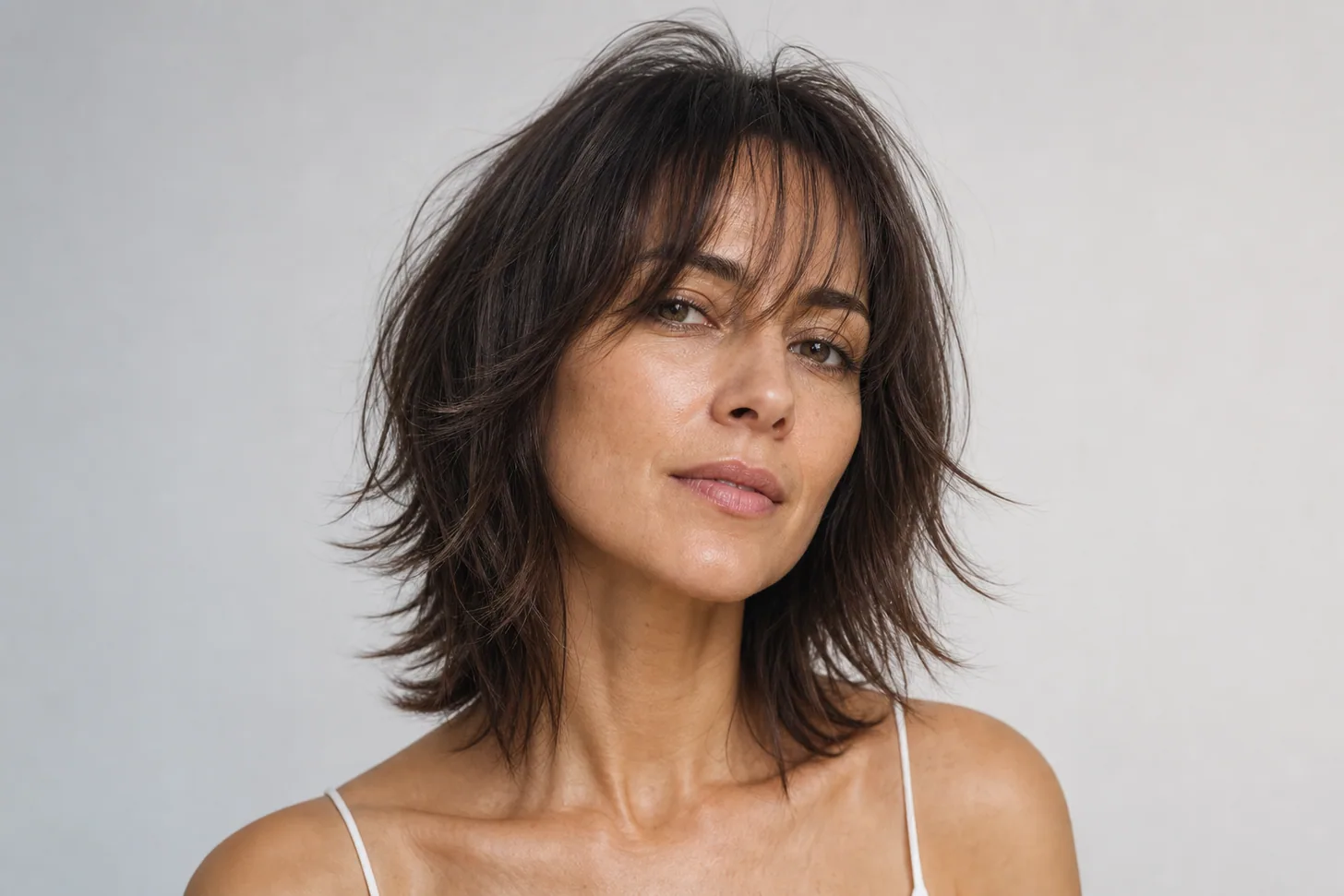
So the entire question of whether layers help fine hair comes down to which job the stylist is doing. If they're layering to remove weight — razoring, thinning, carving through the lengths — they're working against you. If they're layering to create shape and lift — a few point-cut pieces placed high, face-framing at the front — they're working for you, because movement and crown height are exactly what flat fine hair lacks.
The tool is the same scissors; the intention is opposite, and the result is opposite too. Of the two, the front panel is the safer bet by some distance: face-framing layers on fine hair cost you almost no density, because nothing is removed from the interior of the cut.
This is why you can't answer "should fine hair have layers" with yes or no. It's like asking whether a knife is good for cooking. Everything depends on what's being done with it, which is the whole reason this guide exists — and the reason the exact words you use in the chair matter more here than for almost any other cut decision.
The layers that help fine hair
These four are the ones that add fullness or movement without costing you density. What they share: they're cut with scissors (point-cutting, not razoring), they sit over a strong perimeter, and they're placed rather than scattered. One caveat on quantity: if you have fine strands but a great deal of them, you can take considerably more internal layering than this page assumes — see fine hair but a lot of it.
Point-Cut Internal Layers Build Movement Without Removing Weight
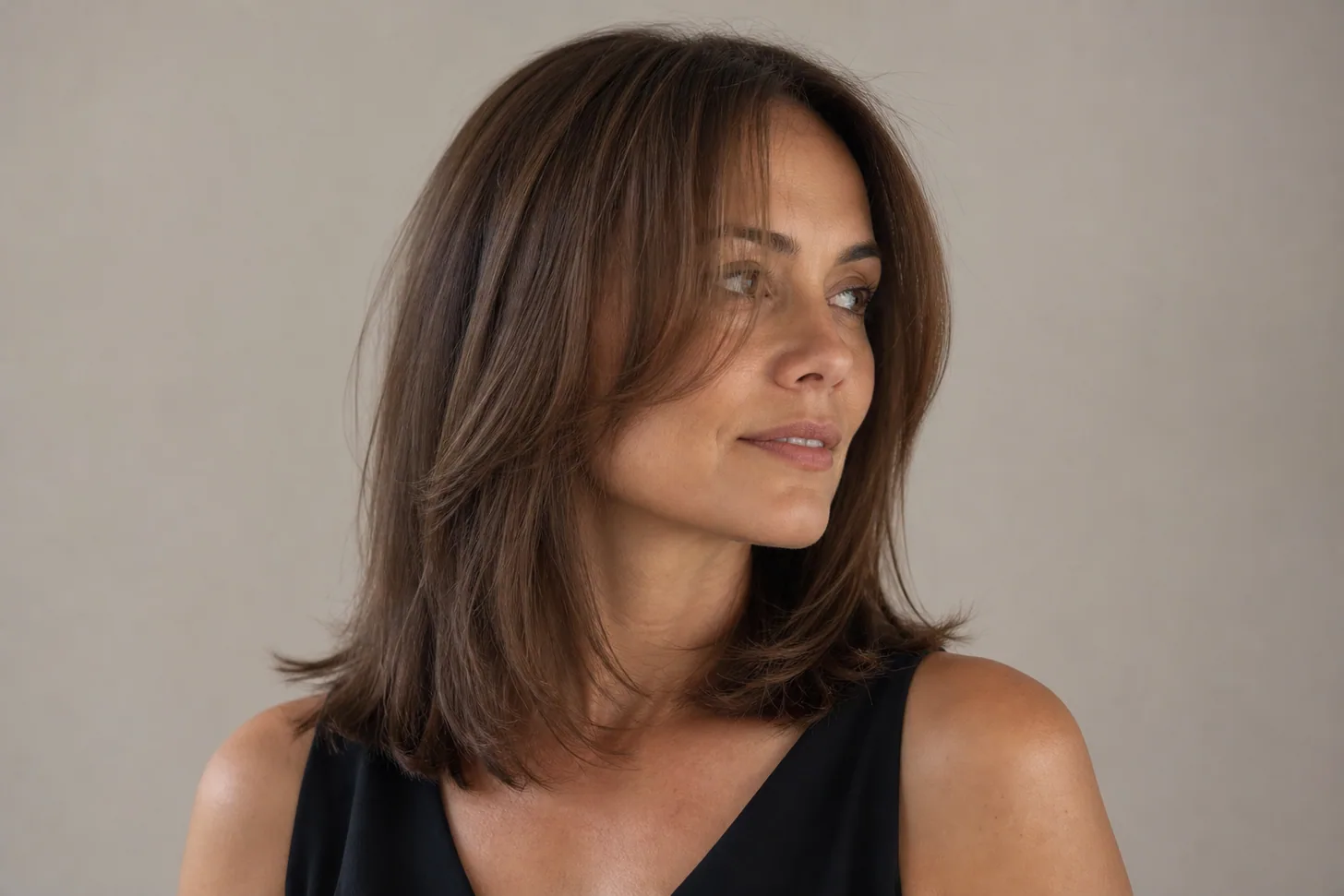
Point cutting means cutting into the ends vertically with the scissor tips rather than straight across, which softens the line and adds a little texture without tapering the strand to nothing. A small number of these internal layers, kept high inside the shape, give fine hair the movement that makes it look alive instead of flat — while the length underneath stays intact.
This is the workhorse layer for fine hair, and it's the one to name specifically when you book. Cut entirely under the top section so it never surfaces, it's the technique now sold as ghost layers.
Crown Layers Lift the Top of the Head
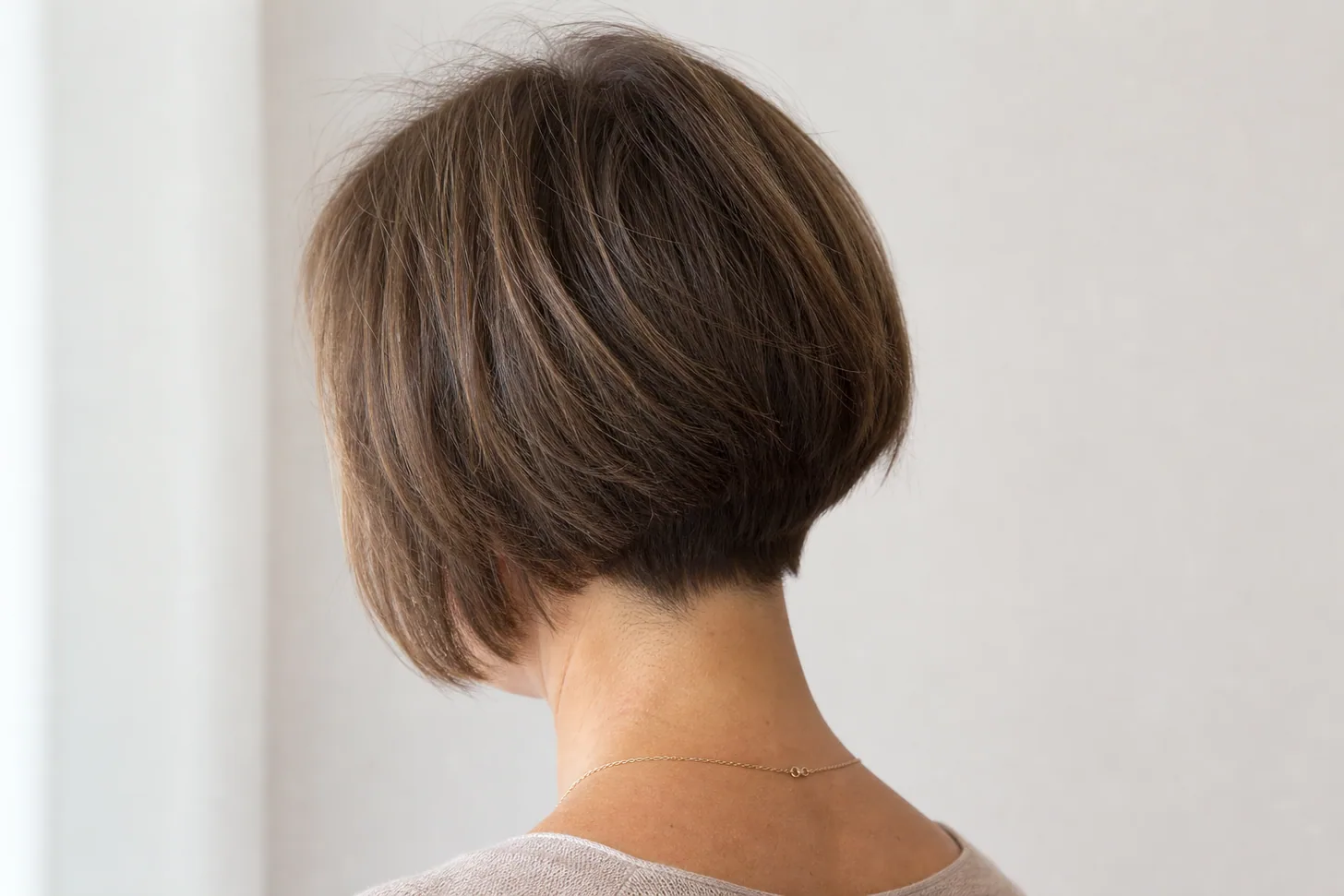
Fine hair collapses first at the crown, where the roots go flat under the weight of the length. A few shorter layers placed at the crown lift the top of the head and build a rounded body there, which reads as volume. This is the same principle behind a stacked bob and a layered bob — height built where fine hair falls flattest. Keep them subtle; steep, chunky crown layers expose the shorter hair underneath.
Face-Framing Layers Add Fullness Where It Shows
Started at the cheekbone or jaw and point-cut soft, face-framing layers add movement around the face — the most visible part of any cut — without touching the weight of the bulk. They're almost universally flattering on fine hair, they grow out gracefully into the length, and they pair naturally with curtain bangs. If you only add one kind of layer to fine hair, make it this one.
Long Layers Remove Weight Only From Over-Long Ends
The one time weight removal helps fine hair: when the length has grown long and heavy enough that the ends drag the roots flat. A few long layers — cut low, blending into the length — take just enough weight off the very bottom to let the hair lift. This is a light touch, not a full layering, and it's mostly relevant on longer fine hair that's started to look limp and stretched.
One variable decides more than technique does, and it isn't on this page: density. Fine hair with a lot of it can afford layering that fine hair with little of it cannot, which is why the layers argument never resolves — both camps are right about different heads.
Volumizing haircuts for fine and thin hair has the two-minute density self-test and splits the cuts into a track for each answer. Do that before you decide how far to take anything below.
The layers that hurt fine hair
These are the techniques that produce the stringy, see-through result that makes people swear off layers. All three share one thing: they remove hair from where fine hair can least afford it — the ends. They are also, not coincidentally, the three techniques most likely to be attempted over a bathroom sink; the full list of what to leave alone is in cutting fine hair at home.
If one of them has already happened to you, resist the instinct to cut more — how to fix a bad haircut on fine hair sets out what a corrective cut can actually repair and what only time can. If the answer you keep arriving at is “then don’t layer it at all”, that case is made properly in blunt cuts for thin hair.
Razor-Cut Layers Leave Fine Ends Transparent
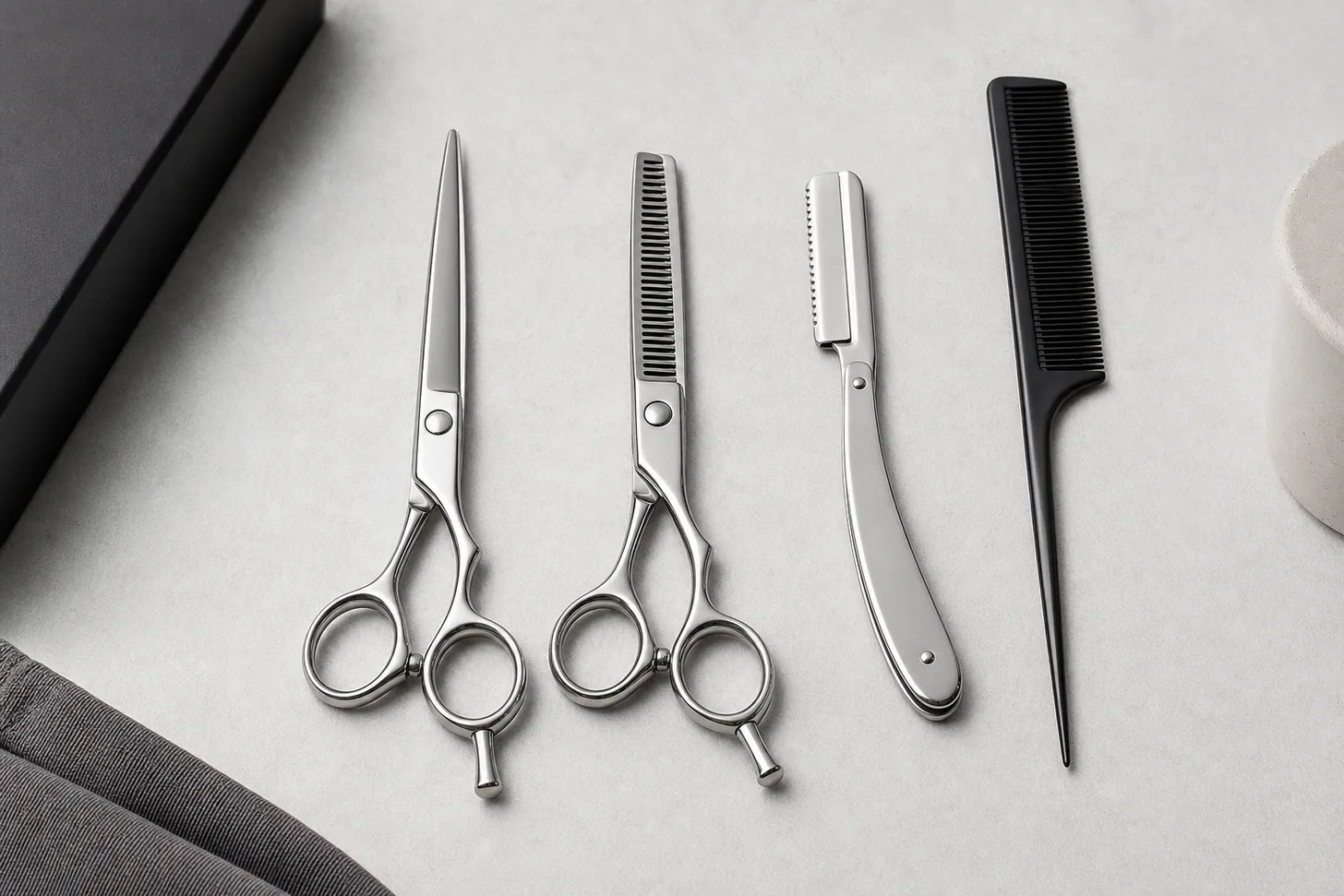
A razor tapers each strand to a fine point along the cut. On coarse hair that adds a beautiful softness; on a fine strand, which is already thin, it leaves the last inch with almost no substance — so the ends go wispy, frizz easily, and read as see-through. Razoring is the single most damaging technique for fine hair, and it's worth stating plainly in the chair that you don't want it.
Thinning and Texturizing Shears Steal Density You Don't Have
Thinning shears (the notched scissors) remove hair from the middle of a section to reduce bulk. That's genuinely useful on thick hair and actively harmful on fine hair, because you have no bulk to spare — the result is short, broken pieces that stick up as frizz while the length below goes sparse.
There's very little reason to use thinning shears on fine hair, and plenty of reason not to — though the tool has four narrow legitimate uses, and knowing them is what lets you refuse the other ninety per cent.
Heavy All-Over Layering Creates the Triangle
Layers scattered all the way down long, fine hair remove the weight line that was gathering the density — so the bottom of the cut fans out thin and the top sits flat. That's the triangle silhouette: wide and wispy at the bottom, flat on top, the exact opposite of full. The fix is a strong perimeter with layers kept high and few, which is the logic behind every shape in our fine-hair haircut galleries.
Blunt / one-length
Well-placed layers
Over-layered
Perceived fullness
Densest at the perimeter
Full with movement
Thin, stringy ends
Movement
Minimal — can sit heavy
Soft, lively
Too much; loses shape
Crown volume
Flat unless styled
Lifted (crown layers)
Flat — weight removed wrong
Styling time
Low
Low–moderate
High; hard to control
Grows out
Evenly
Gracefully (face-framing blends)
Awkwardly; needs growing back
How length changes the layering math
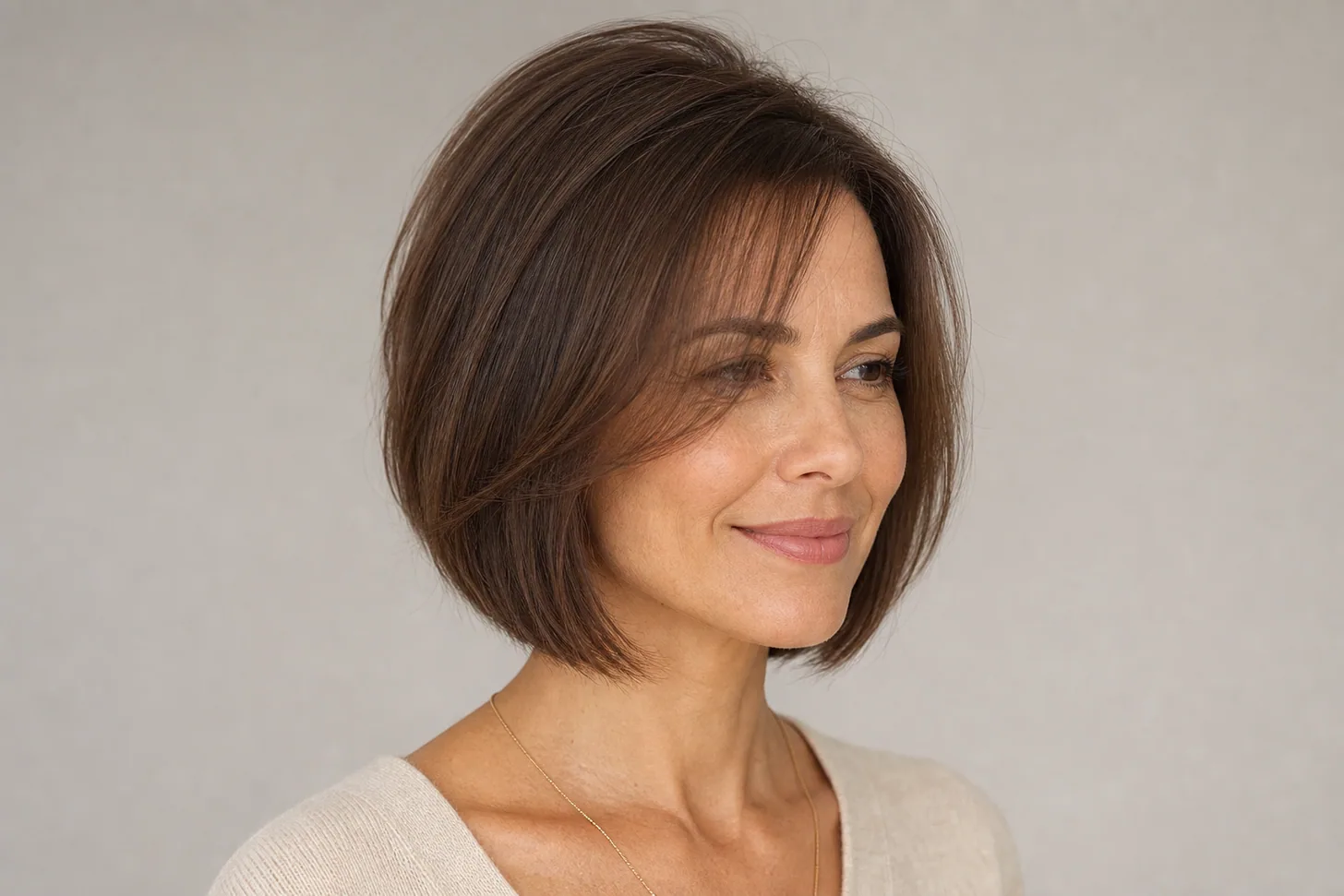
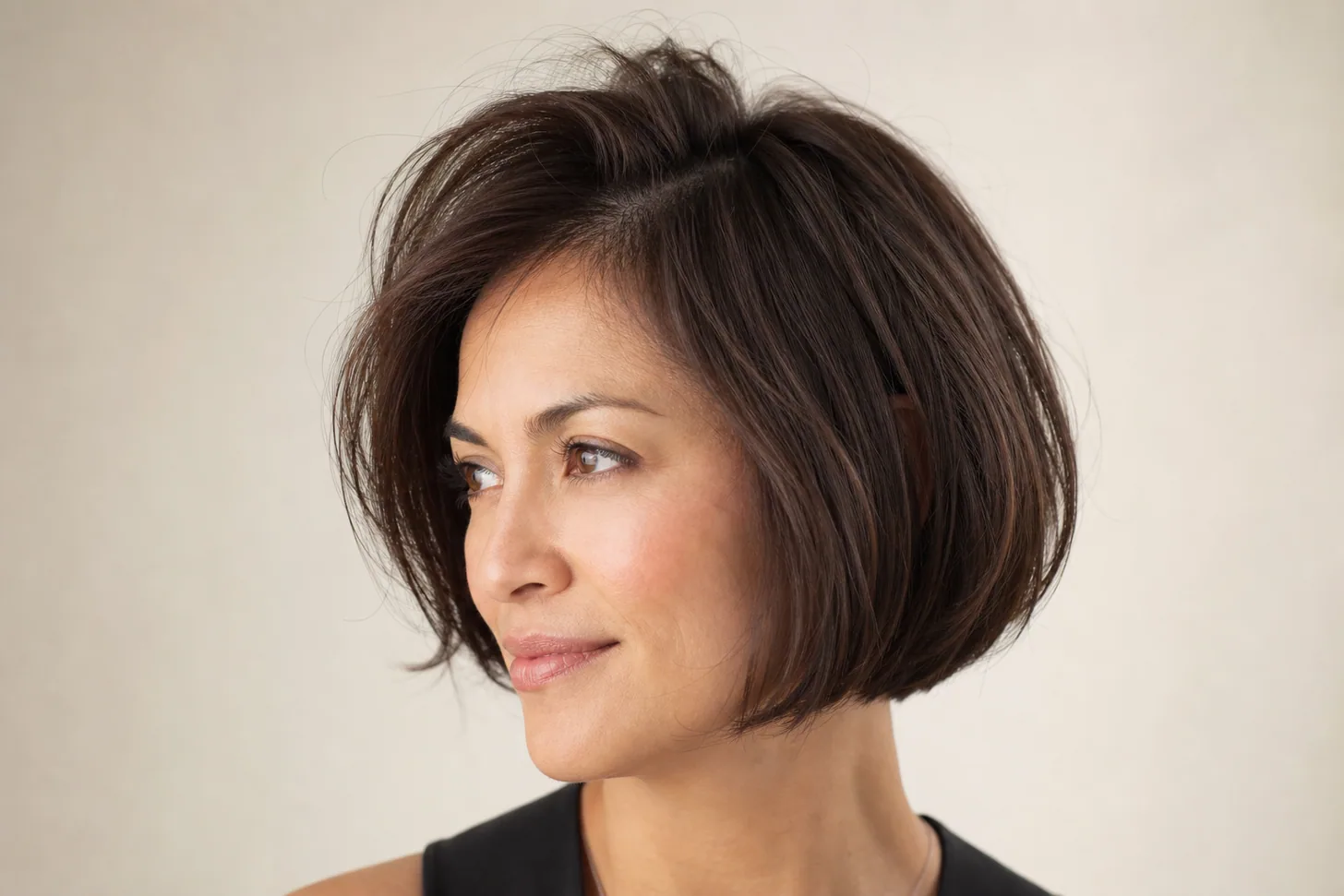
The shorter the hair, the more layering it can take, and the reason is weight. On short and mid-length fine hair — a bob, a lob, a short cut — the length is short enough that the roots aren't dragged flat, so internal and crown layers can do their lift-and-movement job freely. This is why layered bobs are such reliable fine-hair cuts: the layers build body and the shape is too short to go stringy.
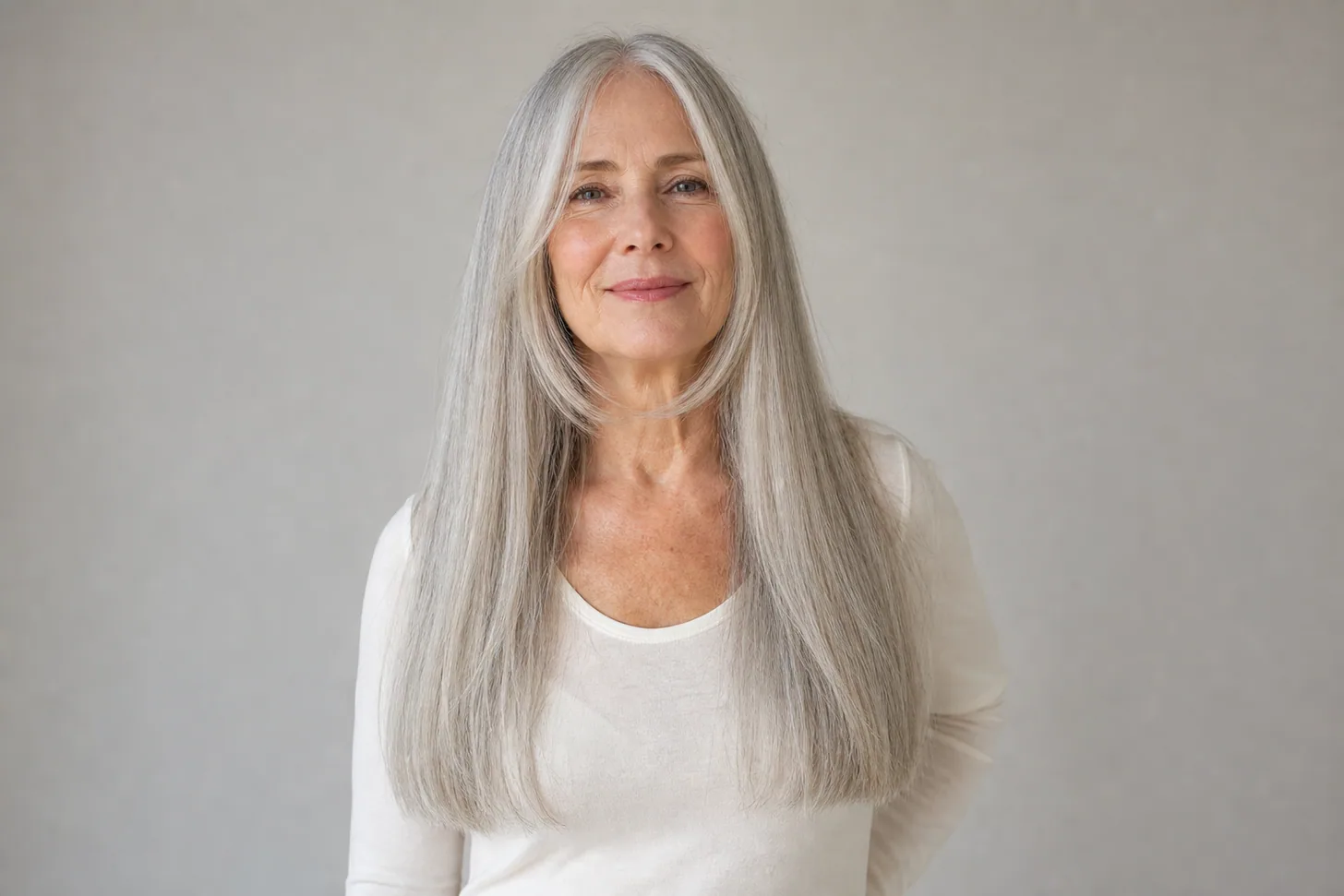
On long fine hair the calculation flips. Length adds weight that pulls the roots flat, and heavy layering on top of that thins the ends where the hair is already stretched thinnest — so long fine hair is where over-layering does the most visible damage.
If you're keeping length, the rule is fewer layers, placed high, over a heavy perimeter: face-framing at the front, maybe a little crown lift, and a solid line at the bottom. Everything below the ear stays as intact as you can bear. The medium-length cuts for fine hair sit right at the sweet spot where layers give the most and cost the least.
Chair-side note
Here's the test I wish every client knew. When your stylist finishes and the hair is dry, look at the very bottom perimeter in the mirror. Is it a clean, solid line you could almost draw with a ruler — or does it feather off into wispy, separated pieces you can see the light through?
On fine hair you want the solid line. That line is what makes the eye read the hair as thick. If it's feathered and see-through, the layers went too far down, and no styling will put that density back — only growing it out and recutting will.
That taper has a name and a whole family of cuts built on it: the feather cut works on fine hair for exactly as long as it stays above this line. Check the perimeter before you leave the chair, while there's still a conversation to be had. At the extreme end of layered disconnection sits the mullet, worth understanding even if you never book one, because it shows what happens when layers stop blending.
SB
— Simone Baptiste, Senior Stylist
What to ask your stylist
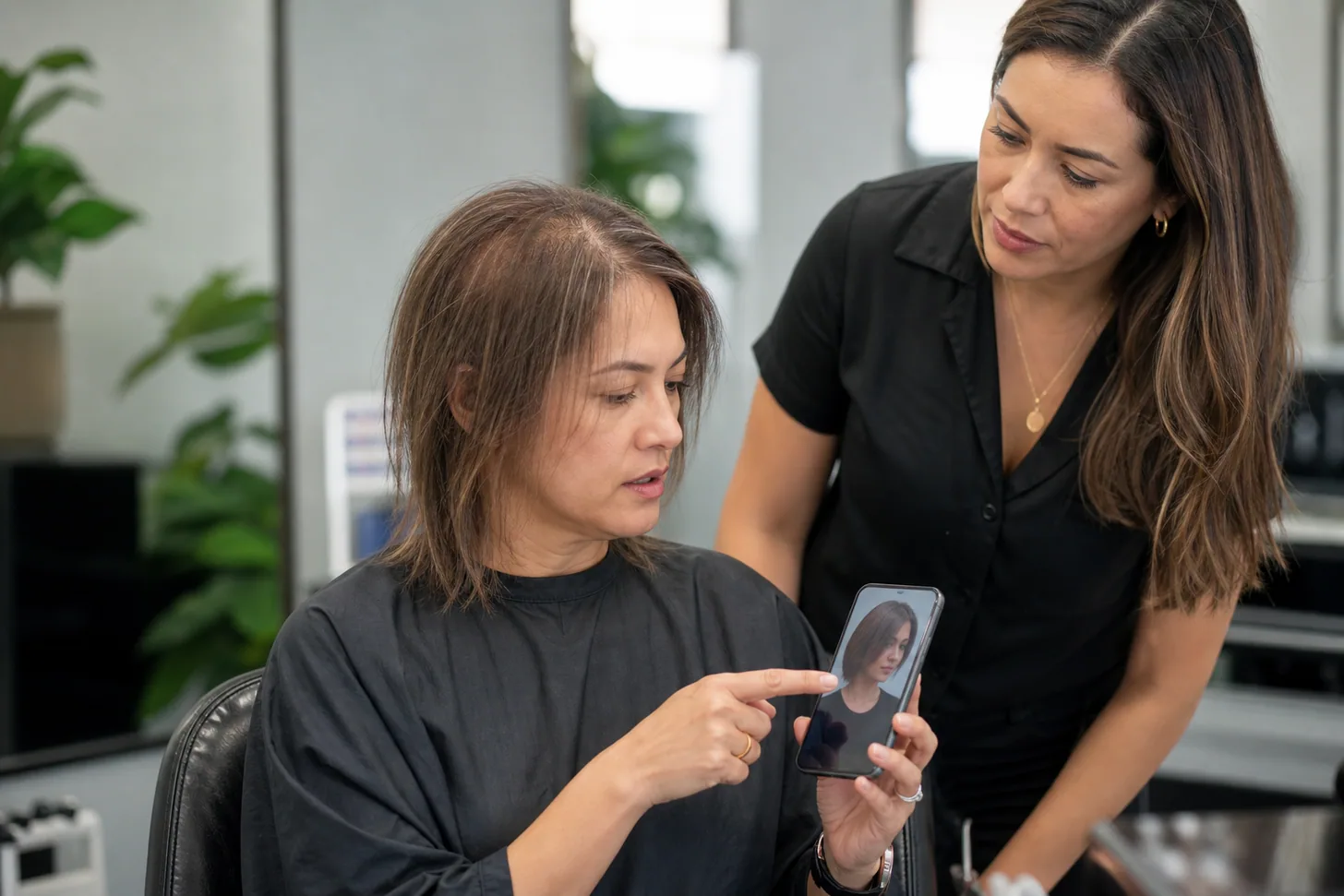
Be specific about technique, because "some layers" means different things to different stylists. Say: "I have fine hair and I want it to look fuller. Please keep the perimeter blunt and strong, and add soft point-cut layers inside the shape and around my face for movement — but keep the weight low and don't razor or thin the ends." That one sentence gets you the helpful layers and rules out the harmful ones.
If you want crown lift, name it: "Can you place a few short layers at the crown to lift the top?" And ask them to show you the perimeter, dry, before you leave — a solid line is what you're checking for.
Your hair is very fine and already sparse at the ends. A blunt or barely-layered cut will almost always look fuller. Save layering for face-framing only, and keep everything else one length.
Your part is widening or your scalp shows at the crown. Layers can separate the hair and make thinning more visible. Read coverage for thinning on top first, and choose weight and coverage over movement.
You want the lowest-maintenance cut possible. A blunt bob or lob asks less of you day to day than a layered shape. Face-framing is the one low-effort layer worth adding.
Your last layered cut went stringy. Don't re-layer to fix it — grow the perimeter back to a solid line first, then add only soft, high, point-cut layers at the next cut.
The change in your hair has been sudden or patchy. That's not a cutting question. See a board-certified dermatologist before booking any haircut.
FAQ
It depends entirely on how they're cut. Layers that are point-cut with scissors and placed to build shape make fine hair look fuller, because they create movement and lift that flat, one-length hair can't. Layers that are razored, thinned with texturizing shears, or scattered all the way down the lengths make fine hair look thinner, because they remove weight from the ends where fine hair is already sparse and leave the perimeter see-through. Same word, opposite results — which is why "should I get layers" has no single answer without knowing the technique. Ask for soft, point-cut internal layers over a strong perimeter, and you get the fuller version.
Most fine hair does best with a strong one-length or blunt perimeter plus a few soft internal layers — not fully layered, and not dead blunt with no movement either. A completely blunt cut looks densest but can sit flat and heavy; heavy all-over layering thins the ends and creates a stringy, see-through bottom. The middle path wins: keep the bottom line solid so it reads thick, and add point-cut layers inside the shape and around the face for movement and lift. If you have to choose one extreme, blunt beats over-layered on fine hair almost every time.
Almost always because too much length was removed from the ends, or the layers were razored or thinned rather than point-cut. Fine hair has little density to spare, so when a stylist layers heavily through the lengths or tapers the ends to a point, the bottom of the cut goes wispy and see-through — that's the stringy look. It's a cutting problem, not a product problem, and no styling fully fixes it. The repair is to grow the length back and, at the next cut, ask for a blunt or point-cut perimeter with layers kept high and soft, and no thinning shears anywhere near the ends.
Yes — face-framing layers are one of the most flattering things you can do to fine hair. Because they sit at the front where they're most visible, they add movement and softness around the face without removing weight from the bulk of the cut. Started at the cheekbone or jaw and point-cut soft, they frame the face and create the impression of fullness at the sides. The key is that they're added on top of a strong shape, not carved out of it. They also grow out gracefully, blending into the length instead of leaving an awkward stage.
The right layers can, in a specific way: short layers placed high at the crown lift the top of the head and build rounded body where fine hair collapses first, and that reads as volume. Long layers can also remove a little weight from over-long, heavy ends so the hair isn't dragged flat. What layers can't do is add density — they reshape the hair you have, they don't grow more. So layers contribute to the illusion of fullness when they're placed for lift, but they work alongside a strong perimeter, root lift, and styling, not instead of them. Over-layering actually costs you volume by thinning the ends.
Avoid razor-cut layers, thinning or texturizing shears on the ends, and heavy layering scattered all the way down long hair. Razors taper each strand to a fine point, which on an already-fine strand leaves the last inch transparent and prone to frizz. Thinning shears remove hair from the middle of a section — fine on dense hair, ruinous when your ends are already sparse. And too many layers through long lengths creates the triangle silhouette: flat and thin at the bottom, no weight line to gather the hair. If a stylist reaches for a razor or thinning shears on fine hair, ask them to point-cut with scissors instead.
Eleven years behind the chair, specializing in fine-hair texture. Simone places layers rather than removing weight with them, and checks the finished perimeter for a solid line before any fine-haired client leaves the chair.
Results vary with hair type, density, and growth patterns. This guide is educational and not a substitute for an in-person consultation with a licensed stylist.
Hairstyle images in this guide are AI-generated illustrations, not photos of real clients or results. See our image policy.
Get the good hair intel
One honest, stylist-written guide in your inbox each week. No hype.

 SB
SB