Reviewed by Tara Sullivan · Updated July 2026 · 9 min read
The reason a good haircut and a flattening one can start from the same photo is that the photo never tells the stylist how to cut — and on fine hair, the how is everything.
Here is the sentence that gets you a fuller-looking cut, verbatim: "I have fine hair and I want it to look fuller. Please keep the perimeter blunt and strong, point-cut any internal layers instead of razoring or thinning them, and keep the weight low enough that my roots aren't dragged flat." That single instruction rules out the three techniques that thin fine hair and locks in the three that build it.
Below is the full script — how to describe your density, the exact phrases to ask for by goal, the words that quietly get you the wrong cut, a say-this-not-that table, and what to check before you leave the chair — all in language you can copy straight into your next appointment. This is the whole reason this site exists: the cut matters, but knowing what to ask for is what actually delivers it.
Chair-side note
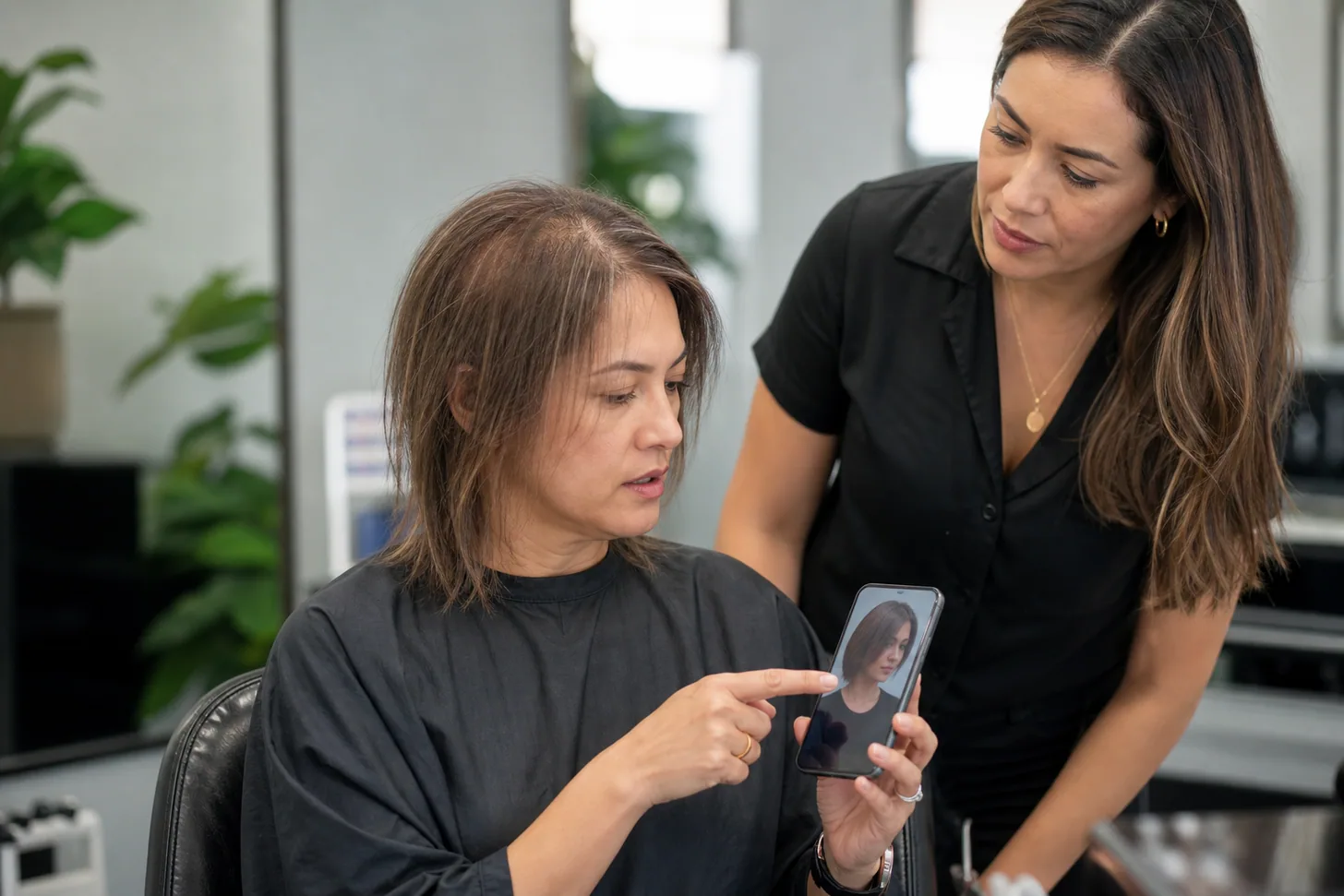
I can tell within the first thirty seconds of a consultation whether a client with fine hair is going to leave happy, and it has nothing to do with the photo they brought. It's whether they can tell me how their hair behaves — where it goes flat, what a past cut did wrong, whether their scalp shows at the part.
A client who says "the last time I got layers it went stringy at the bottom" has just told me more than a folder of inspiration pictures. You are the world expert on your own hair. My job is to translate that into a cut, and I can only do it if you tell me. The words in this guide are the translation.
SB
— Simone Baptiste, Senior Stylist
Why a photo isn't enough
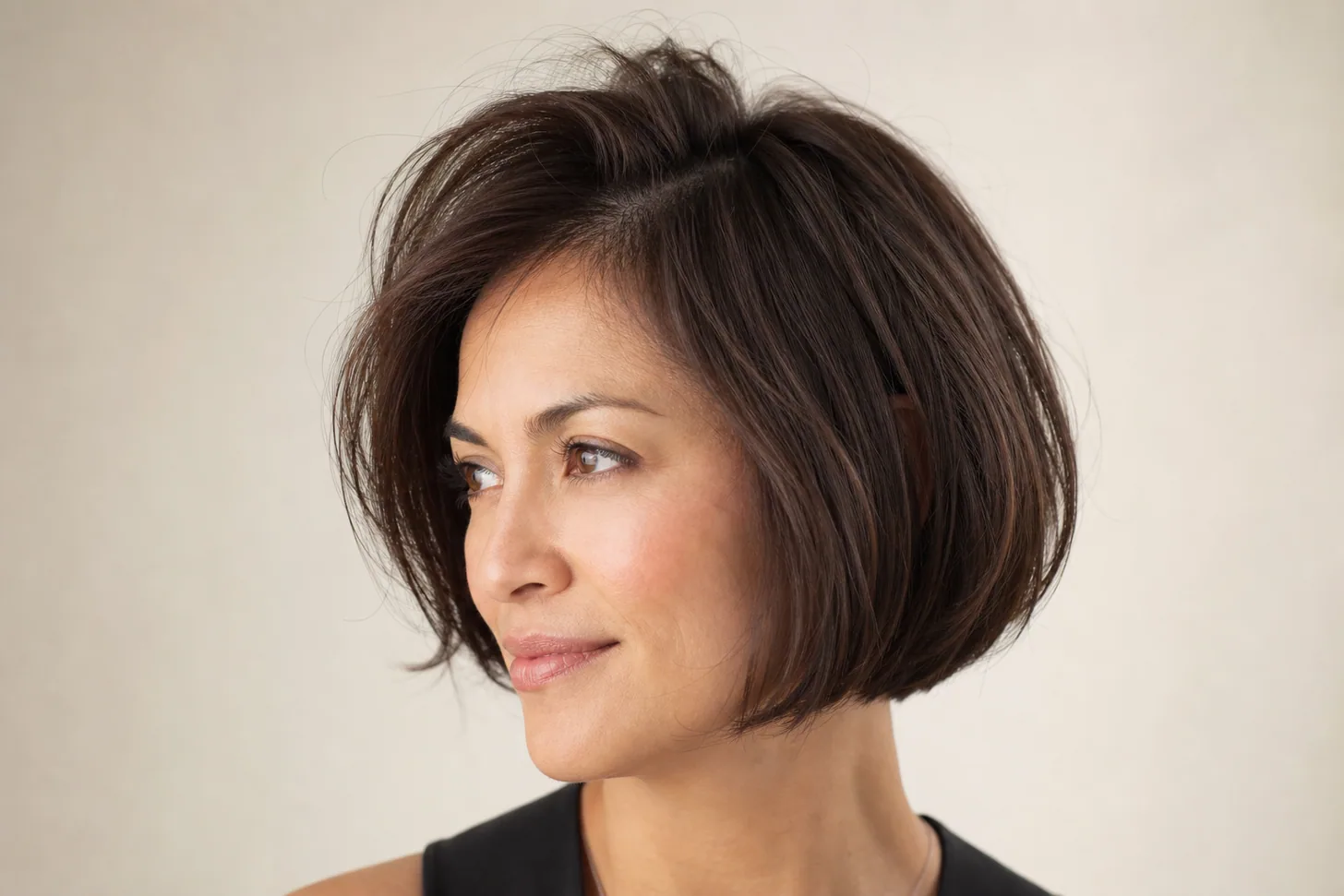
A photo shows a silhouette. It doesn't show the density of the model's hair, whether the cut was razored or point-cut, how much weight was left at the perimeter, or how it was styled to look that full for the camera. Bring a picture of a bob to ten stylists and you can get ten different cuts — some that would flatter fine hair and some that would thin it — because the photo communicates the destination, not the route.
On fine hair the route is the outcome. The same bob is dense and flattering when it's cut blunt with the weight kept low, and stringy and disappointing when it's razored and over-layered — and both can look identical in the inspiration photo you brought. That's why this guide is about construction language rather than style names.
You still bring the photo; you just pair it with the mechanics, so the stylist knows not only what you want but how your hair needs to get there. That applies double to a virtual preview — the hairstyle try-on apps compared for fine hair explains why the app almost always renders more density than you have, and what to read in the image instead.
One request belongs at booking rather than in the chair, because it changes how long the appointment needs: ask for the shape cut wet and the layers and face-framing refined dry, for the reasons set out in wet or dry cutting for fine hair. And if a previous appointment is the reason you're reading this, how to fix a bad haircut on fine hair has the triage and the words for that conversation.
Start by describing your density, precisely
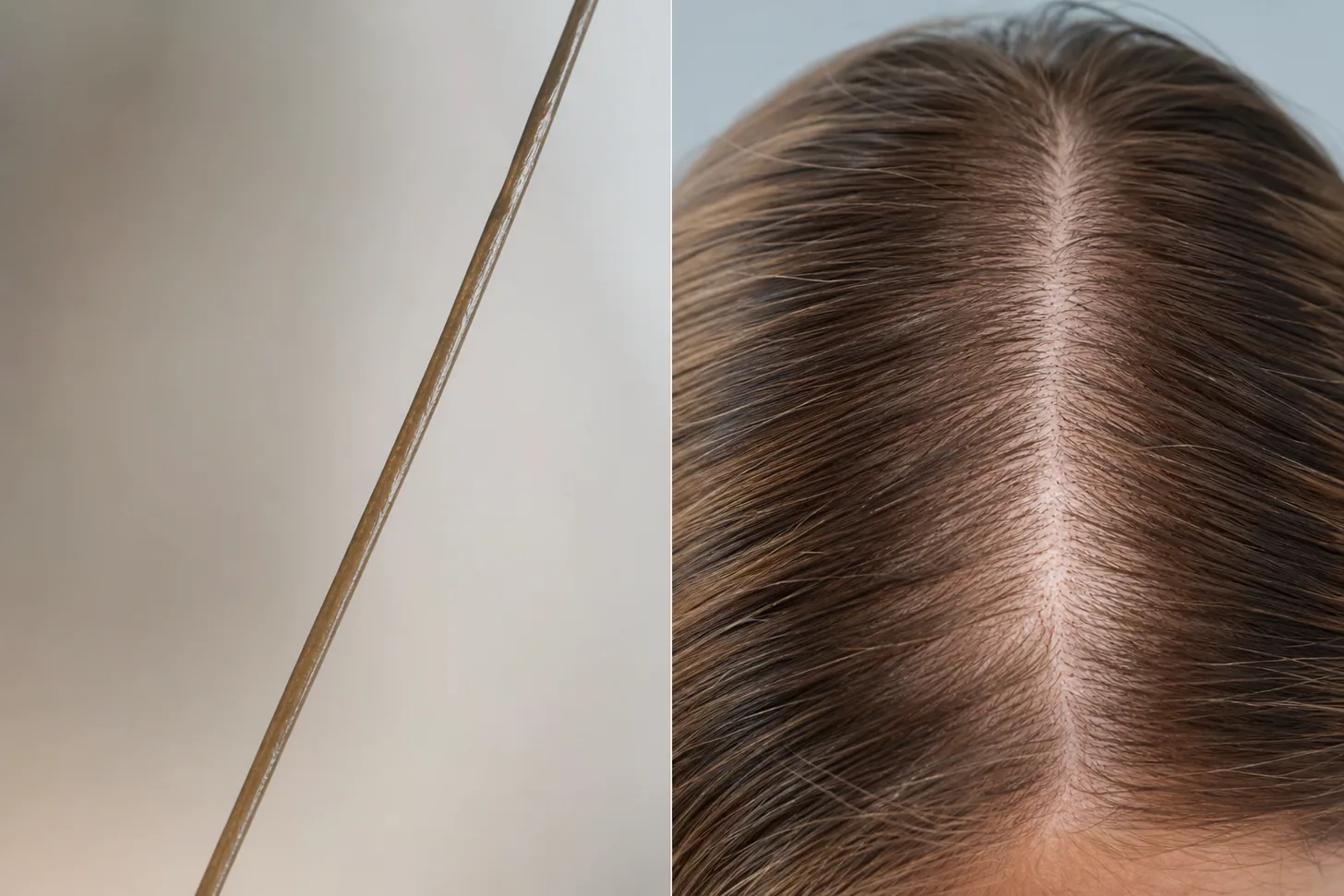
Before you say a word about the cut, tell the stylist what they're working with — and be precise, because fine and thin are two different things that need two different approaches. Fine describes the diameter of each strand; thin describes how many strands you have (density).
You can have fine strands at high density, or coarse strands at low density, or — most commonly among people reading this — fine strands and low density together. If you're not sure which you are, our guide to telling fine from thin hair sorts it in two minutes, and it changes what you should ask for.
Say it in one of these forms, whichever fits: "My strands are fine but I have a lot of them" · "My hair is fine and my density is low — my scalp shows at the part" · "My hair used to be thicker and the part is widening."
That last one matters most of all, because a widening part or visible scalp means the priority is weight and coverage, not movement — and it may be worth reading coverage for thinning on top before you book at all. Naming your density accurately is the single most useful sentence in the whole consultation.
The exact phrases, by goal
Here is what to say for each thing you want the cut to do. Use the ones that apply and skip the rest — you don't need all of them, but each is phrased to get you the fine-hair-friendly version.
For the Perimeter, Ask for "Blunt and Strong"
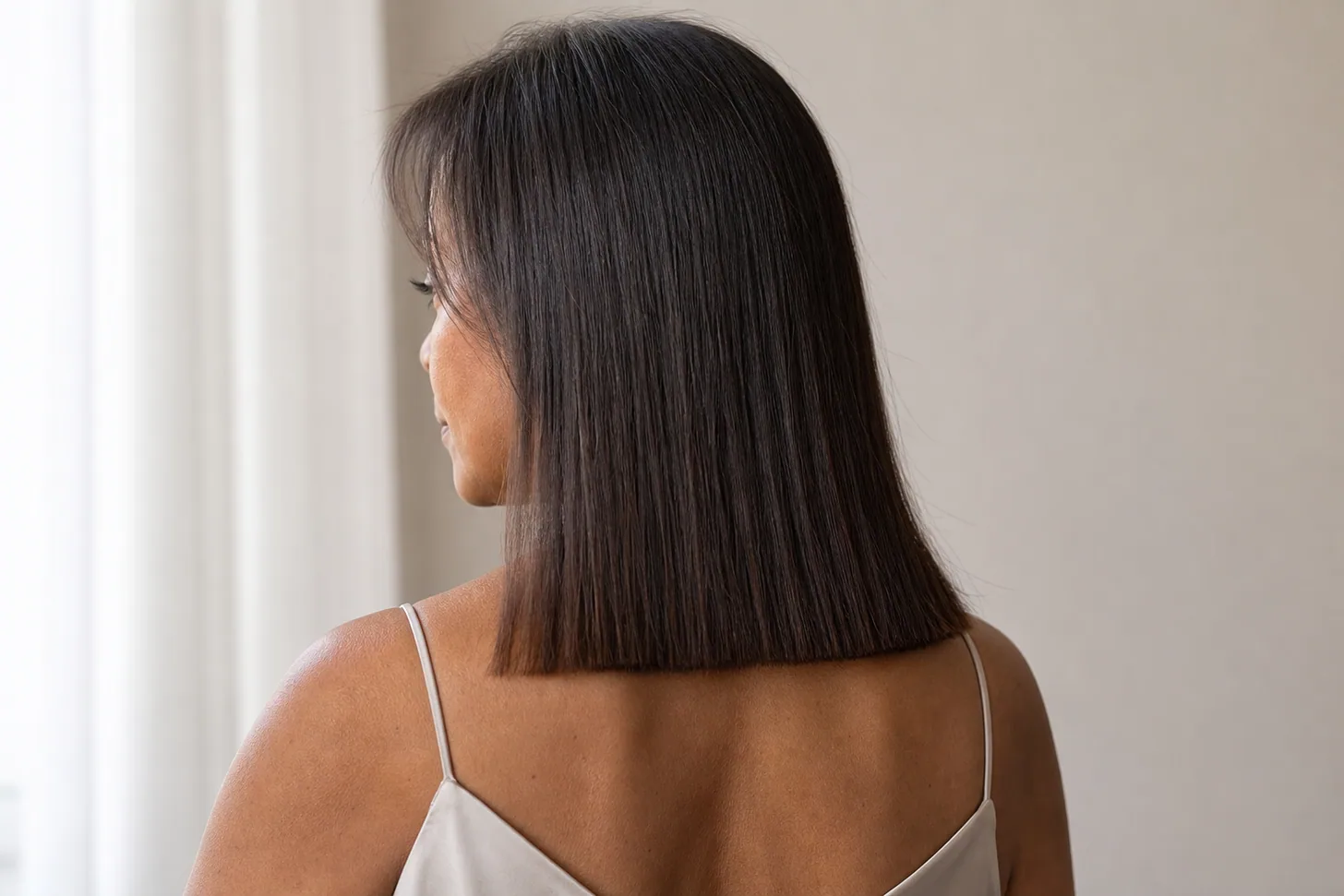
The perimeter — the bottom line of the cut — is what makes fine hair read as dense, because a solid edge gathers every strand into one thick-looking line. Say: "Keep the perimeter blunt and strong — I want a solid line at the bottom, not feathered or wispy ends." This is the most important single instruction for fine hair, and it applies whether you're getting a bob, a lob, or keeping length.
For Layers, Ask for "Soft, Point-Cut, and Placed High"
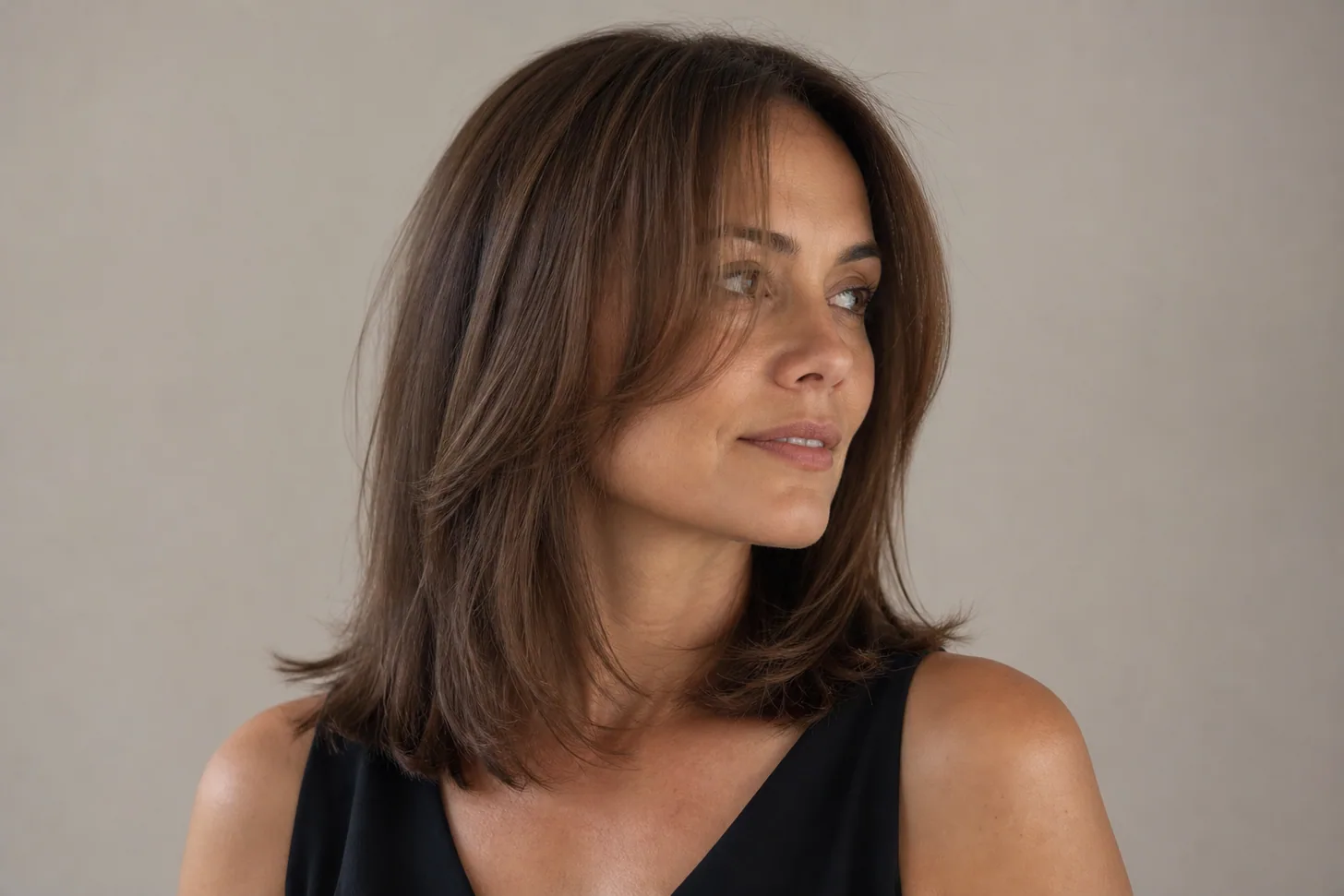
Layers help fine hair only when they're cut with scissors and placed for shape, not scattered to remove weight. Say: "Any internal layers point-cut and kept high — a little movement and some crown lift, but nothing that thins the ends." If you want framing at the face, add: "Soft face-framing layers starting around my cheekbone." The full breakdown of which layers build fullness and which steal it is in do layers help or hurt fine hair.
For Thinning Shears and Razors, Say No Directly
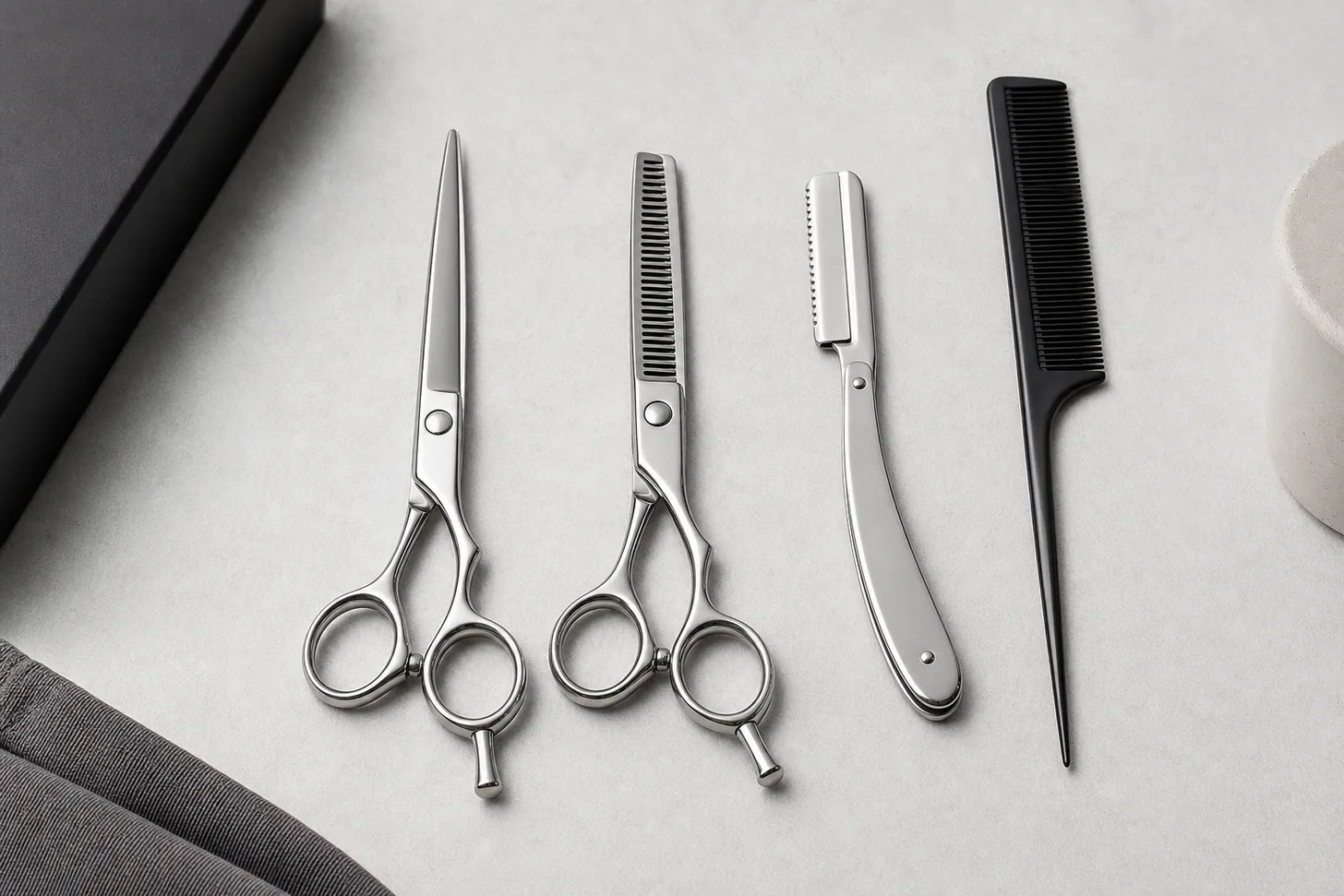
This is the one to state plainly and early: "Please don't use thinning shears or a razor anywhere in this cut — my hair is fine and I need to keep the weight I have." These are bulk-removal tools built for thick hair; on fine hair they leave the ends see-through.
Asking a stylist not to use them is completely normal, and a good one won't blink. If they push back hard, that's worth noticing. And if it's already happened to you, over-thinned fine hair covers the tells, the grow-out timeline and the cut that helps in the meantime.
For Root and Crown Volume, Ask for "Lift at the Crown"
If your hair goes flat on top, say: "Can you cut a few short layers at the crown to lift the top of my head, and set me up with a deeper side part?" Crown layers build rounded body where fine hair collapses first, and a deeper part instantly adds root lift for free. Pair it with the styling side in how to get root volume in fine hair.
For a Fringe, Ask for "Soft and Blended, Not a Heavy Block"
Bangs add fullness at the face without borrowing density from the top — but only the soft kind. Say: "A soft, blended fringe — curtain or wispy — that grows out gracefully, not a heavy blunt block." Our galleries of curtain bangs and wispy bangs for fine hair show the range.
For Length, Ask Them to "Measure Where It Falls, Dry"
Shorter usually reads fuller on fine hair, so if you're deciding, say: "I'm open to going a little shorter if it'll look fuller — where would you take it?" And always have them measure dry, because wet hair stretches and fine hair springs up shorter than it looks under water.
The words that get you the wrong cut
Some everyday salon phrases quietly invite the exact techniques fine hair can't afford. The problem is that they describe the problem and leave the solution to interpretation — and the default interpretation is usually thinning. The same techniques are the ones to avoid if you're tempted to do it yourself: see cutting fine hair at home.
"Texturize it" and "add lots of layers" often get heard as thinning and razoring. "Take some weight out" is the most counterproductive of all — on fine hair, weight is what creates fullness, so removing it does the opposite of what you want. And "do whatever you think" hands away the one decision that matters most on fine hair.
None of these are wrong on thick hair; they're just the wrong instruction for yours. The fix is always to describe the construction, not the feeling: not "make it less flat," but "blunt perimeter, soft point-cut layers, keep the weight."
Say this
Not that
Why
"Blunt, strong perimeter"
"Texturize the ends"
A solid line reads dense; texturizing thins it out.
"Soft point-cut layers, kept high"
"Add lots of layers"
Placed layers build shape; scattered ones go stringy.
"Keep all the weight I have"
"Take some weight out"
Weight is fullness on fine hair.
"No thinning shears or razor"
"Whatever makes it less bulky"
Fine hair isn't bulky; those tools leave it see-through.
"My density is low, scalp shows at the part"
"My hair is just flat"
Names the real issue so they cut for coverage.
"Measure the length dry"
"About this long" (on wet hair)
Fine hair springs up shorter than it looks wet.
Chair-side note
Here's permission you might not know you have: you can stop a haircut at any point and ask what's happening. If you see a razor come out, or hear the distinctive shuffle of thinning shears, it is completely fine to say "sorry — can we not use those?" mid-cut.
I would far rather a client interrupt me than sit silently watching something they didn't want. The chair can feel like a place where you've handed over control, but you haven't. It's your hair, you're paying for it, and "can you tell me what you're about to do?" is a reasonable sentence at any moment. The best clients I have ask it without apology.
SB
— Simone Baptiste, Senior Stylist
What to check before you leave the chair
Once it's cut, dried, and styled, do two things before you stand up. First, look at the perimeter in the mirror: it should be a clean, solid line, not feathered pieces you can see light through. On fine hair that solid line is what reads as thickness, and if it's gone wispy, now — while there's still a conversation to be had — is the time to say so.
Second, ask how to recreate it at home: "What are you doing to get this much volume, and can I do it in ten minutes?" A cut that only looks full under a stylist's round brush isn't the right cut for real life. The at-home half of the equation is in how to add volume to fine hair and how to style fine hair day to day.
Finally, ask about maintenance before you book the next one: "How often will this need trimming to keep its shape?" Fine-hair cuts with a strong perimeter lose their shape faster than shaggy ones, and knowing that upfront saves you the disappointment of a cut that looked great for three weeks.
Be aware that the answer you get is usually the shape interval, which is a different number from how often your ends actually need cutting — how often to trim fine hair separates the two.
When the words aren't the problem
Your part is widening or you can see your scalp through the top. No cut instruction fixes a coverage issue on its own. Read coverage for thinning on top, and ask the stylist to prioritize weight and a strategic part.
You keep leaving unhappy no matter what you ask. It may be the stylist, not the script. A stylist who won't skip the thinning shears when asked isn't the right one for fine hair — it's fine to find another.
Your hair has changed suddenly, is shedding, or came out in patches. That's a medical question, not a haircut one. See a board-certified dermatologist before your next salon visit.
You want a fuller look today without a cut. Styling can do a lot on its own — start with how to fix flat hair and a root lifter.
FAQ
Lead with three things: a strong, blunt perimeter; soft point-cut layers rather than razored or thinned ones; and weight kept low so your roots aren't dragged flat. A sentence that covers it: "I have fine hair and I want it to look fuller — please keep the perimeter blunt and strong, point-cut any internal layers instead of razoring or thinning them, and keep the weight low." If your part is widening, add that you'd like a few layers at the crown for lift and a deeper side part. Those specifics matter far more than the photo you bring, because they tell the stylist how to cut, not just what to aim for.
Tell them both, because they're different problems with different solutions. Fine means each strand is small in diameter; thin means there aren't many strands (low density). You can be one, the other, or both. Say which you are — for example, "my strands are fine but I have a lot of them," or "my hair is fine and my density is low, so my scalp shows at the part." A stylist cuts differently for low density than for fine-but-dense hair: low density needs weight and coverage, fine-but-dense needs shape and movement. Naming it precisely is the single most useful thing you can do in the consultation.
Say it plainly and early, before the cutting starts: "Please don't use thinning shears or a razor anywhere in this cut — my hair is fine and I need to keep all the weight I have." It's a completely normal request and a good stylist won't be offended; thinning shears and razors are bulk-removal tools built for thick hair, and they leave fine ends see-through. If the stylist pushes back or reaches for them anyway, that's a real signal to pause the appointment. You're allowed to stop a cut and ask what they're about to do at any point.
For most fine hair, ask for a blunt or graduated bob or a lob at or above the collarbone — a strong perimeter is what makes fine hair read as full. If you want to keep length, ask for a heavy, solid perimeter with only face-framing layers and a little crown lift, nothing scattered down the lengths. Bring the mechanics as well as a photo: "blunt strong perimeter, soft point-cut internal layers, no thinning or razoring, weight kept low." The exact cut matters less than those construction rules, which apply whether you end up with a bob, a lob, or long layers.
Avoid vague volume language that invites the wrong technique. "Texturize it" and "add lots of layers" often get interpreted as thinning and razoring, which are the opposite of what fine hair needs. "Take some weight out" is the most dangerous one — on fine hair, weight is what creates fullness, so removing it backfires. Instead of describing the problem ("make it less flat"), describe the construction ("blunt perimeter, soft point-cut layers, keep the weight"). And skip "do whatever you think" — with fine hair, the specifics are exactly where a cut is won or lost, so this is the one time to be precise rather than trusting.
Yes, but bring it as a starting point and pair it with the mechanics of how you want it cut. A photo shows the stylist the silhouette you like; it doesn't tell them the model's hair density or how the cut was constructed, and a shape that looks full on thick hair may need a different technique to look full on yours. Bring a photo of the finished look you want, then say the construction out loud: perimeter, layers, no thinning. If you can, also bring a photo of a cut you disliked and say why — "this went stringy at the ends" tells a stylist more than a dozen inspiration shots.
Eleven years behind the chair, specializing in fine-hair texture. Simone starts every consultation by asking how the hair behaves, not what photo the client brought — because on fine hair, the words you use decide the cut.
Results vary with hair type, density, and growth patterns. This guide is educational and not a substitute for an in-person consultation with a licensed stylist.
Hairstyle images in this guide are AI-generated illustrations, not photos of real clients or results. See our image policy.
Get the good hair intel
One honest, stylist-written guide in your inbox each week. No hype.

 SB
SB