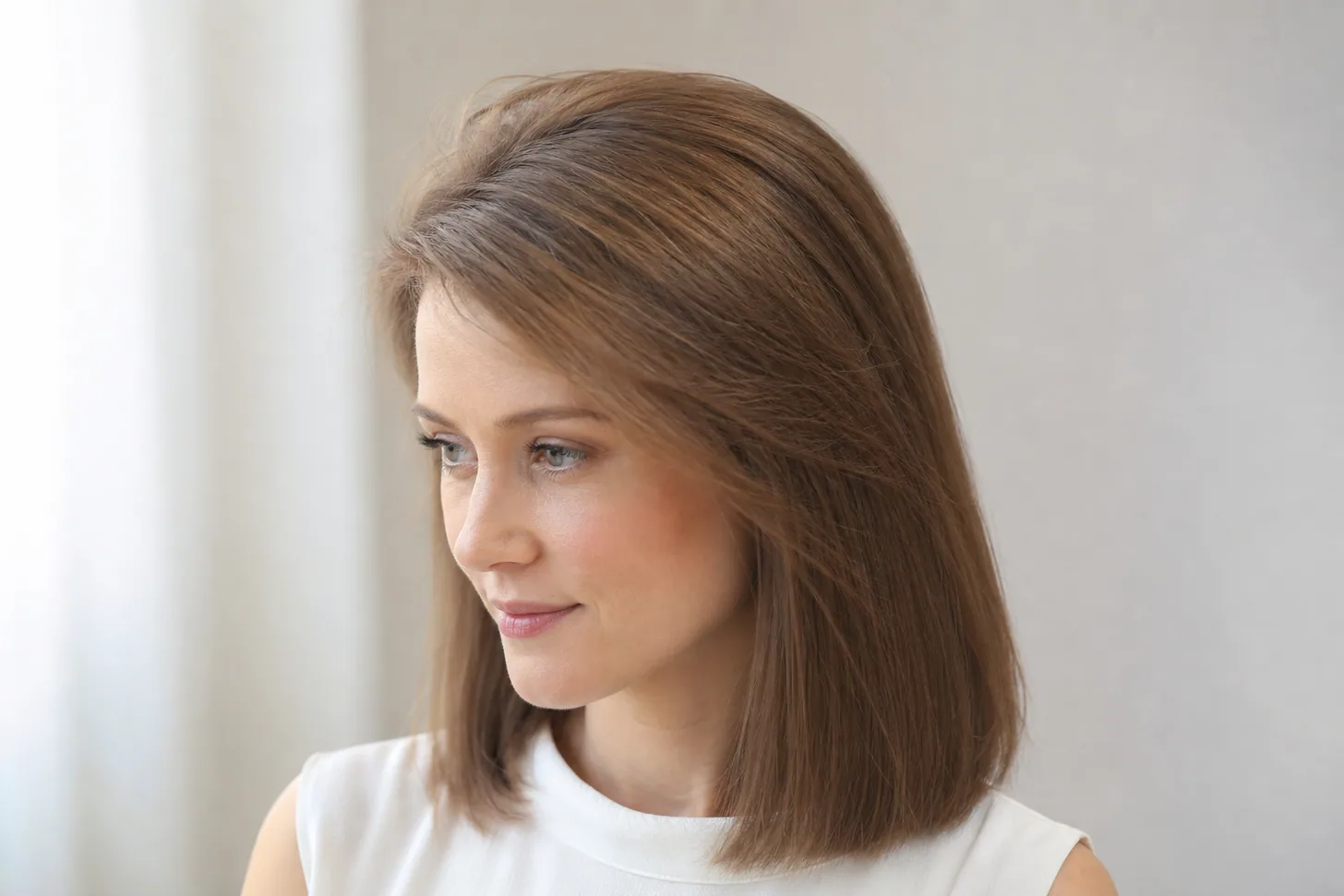
Reviewed by Tara Sullivan · Updated July 2026 · 8 min read
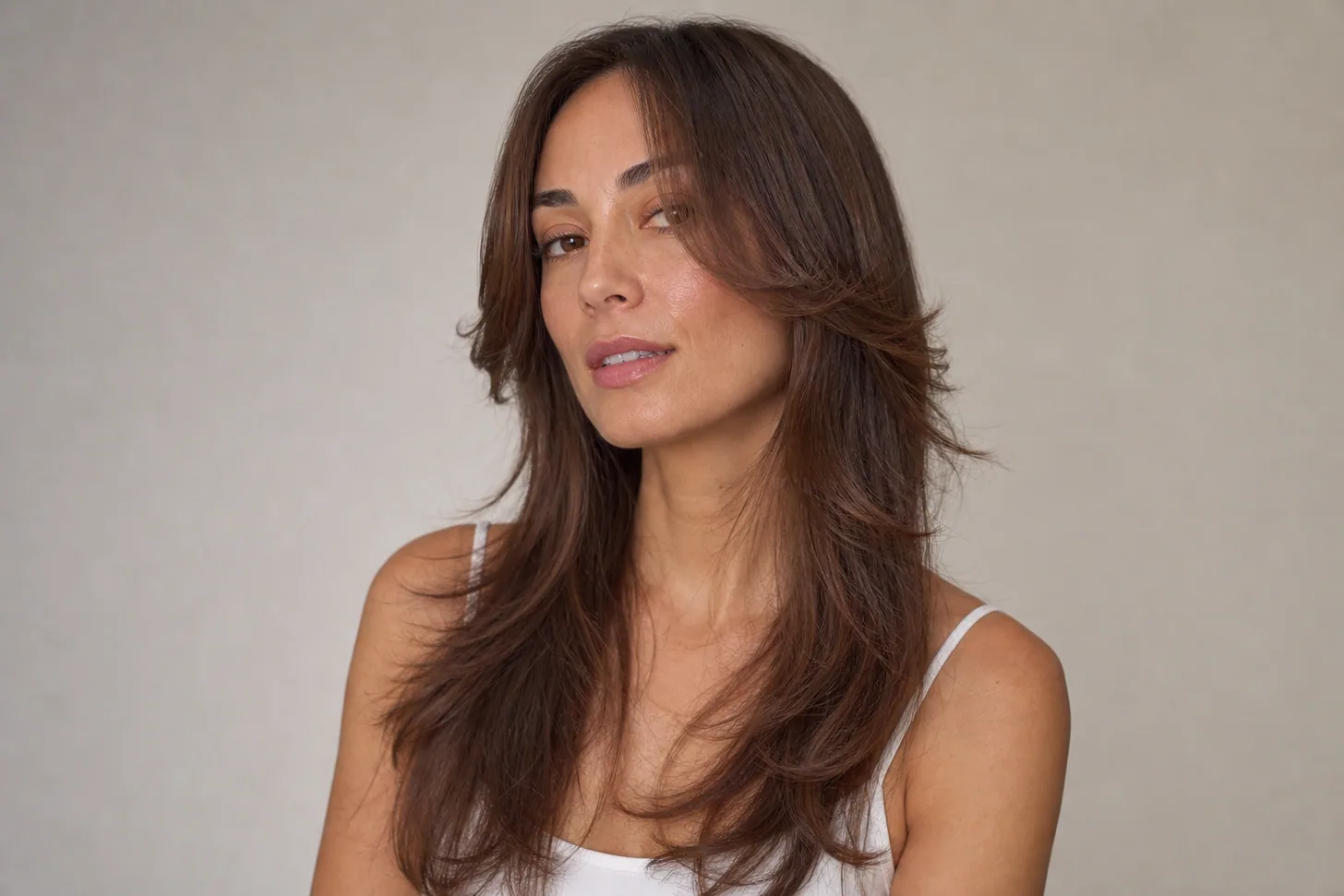
The wolf cut — a shag-meets-mullet with a shaggy, voluminous crown and longer, wispier lengths — is one of the most volumising trends you can wear on fine hair, because texture is exactly what fine hair lacks.
The catch is restraint: a heavily razored wolf cut thins already-sparse ends, so the fine-hair version keeps the layers point-cut and the perimeter with some weight. Below are 14 salon-tested takes on the wolf cut for fine hair and thin hair alike, from soft and blended to full-on rock, each with who it suits and the exact words to bring your stylist.
Chair-side note
The wolf cut is the cut fine-haired clients bring me most often from social media — and the one I most often talk them into a softer version of. The viral wolf cut is razored to shreds for maximum shag, which looks amazing on thick hair and leaves fine hair see-through at the bottom.
My fine-hair rule: point-cut the layers, never razor them; keep the shortest layers concentrated at the crown for lift; and leave a bit of weight in the perimeter so the wispy tail doesn't turn stringy. Think of it as a wolf cut dialled two-thirds of the way toward a shag — you keep the volume and the attitude, you lose the risk.
SB
— Simone Baptiste, Senior Stylist
Why the wolf cut works for fine hair
Fine hair's core problem is that it has no built-in texture — it falls flat because there's nothing breaking up the surface. The wolf cut fixes that by design: it stacks short, choppy layers around the crown and top, so the hair props itself up and reads as full, and its whole finish is deliberately messy, which hides the flatness a sleek style exposes.
In other words, the exact features that make a wolf cut look dramatic are the ones fine hair benefits from. It sits next to two cuts you may already be weighing — the modern shag, which is softer and more even, and the bixie, which is its short cousin.
The only thing to get right is the aggression of the layering, and that comes down to your density — if you're unsure whether you're working with fine strands, low density, or both, the quick read on telling fine from thin hair tells your stylist how far to take it.
It is one of the shapes still carrying momentum into fine hair trends for 2026, in a noticeably softer form than the version that went viral. The wolf cut is the shag-and-mullet hybrid; if you want the sharper, more disconnected parent of it, see the mullet on fine hair.
The classic wolf cuts
Start here for the definitive versions — the shag-mullet blend that made the cut go viral, adjusted so they read full rather than sparse on fine hair.
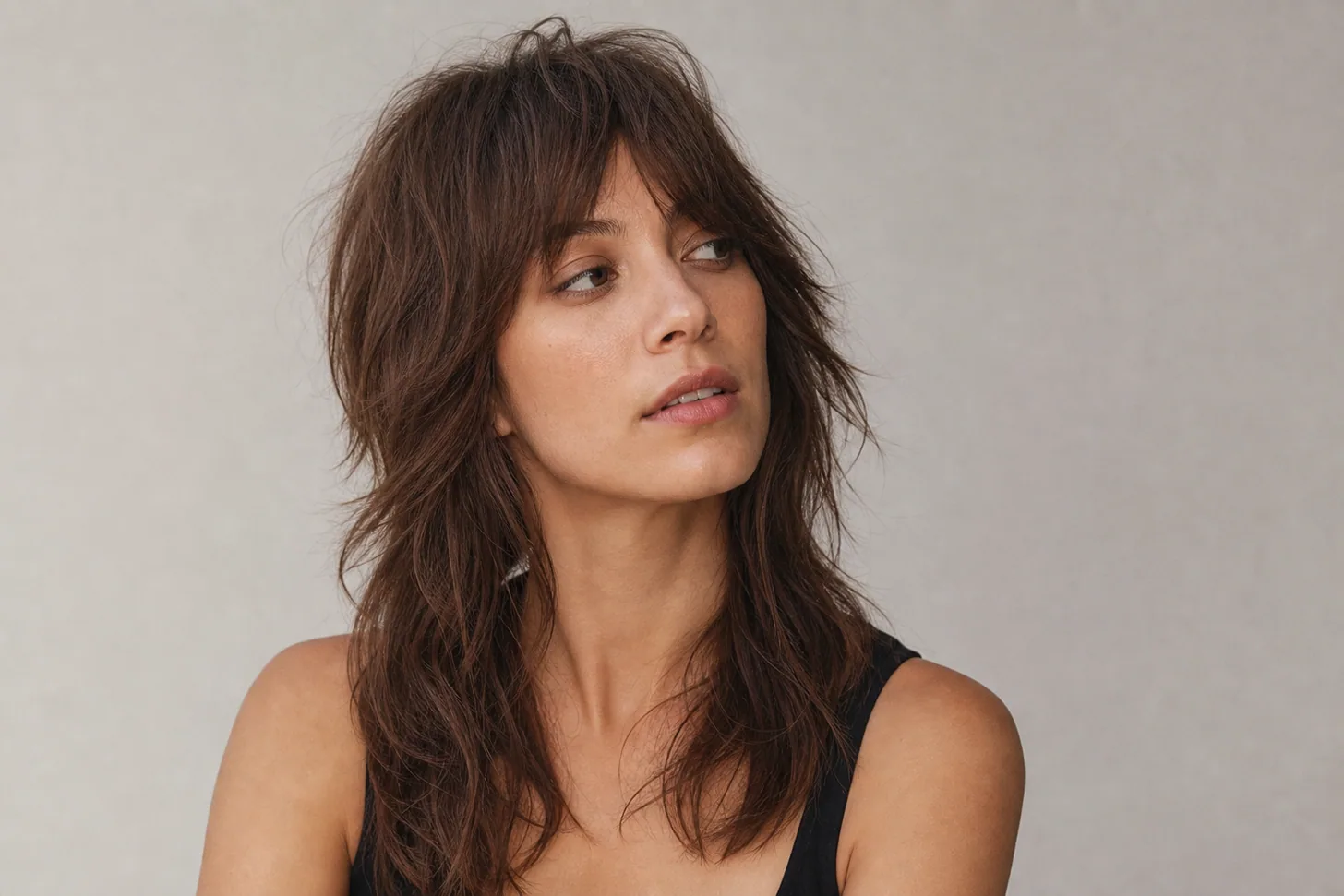
classic shaggy wolf cut with a voluminous layered crown on fine hair
1
The classic wolf cut
The template: a shaggy, heavily layered crown that graduates into longer, wispier lengths, all worn messy and full of movement. On fine hair the trick is keeping those crown layers point-cut for lift while leaving the ends with a little weight. It's the boldest way to fake volume fine hair doesn't have.
mullet-leaning wolf cut with a defined shorter crown and longer tail on fine hair
2
The mullet wolf
Dialled toward the mullet end — a bigger contrast between the short, textured crown and a longer, defined tail at the back. It's the most statement-making version, best on those confident with a bold shape. Keep the tail from going too thin on fine hair by leaving it a touch blunter than the classic wispy finish.
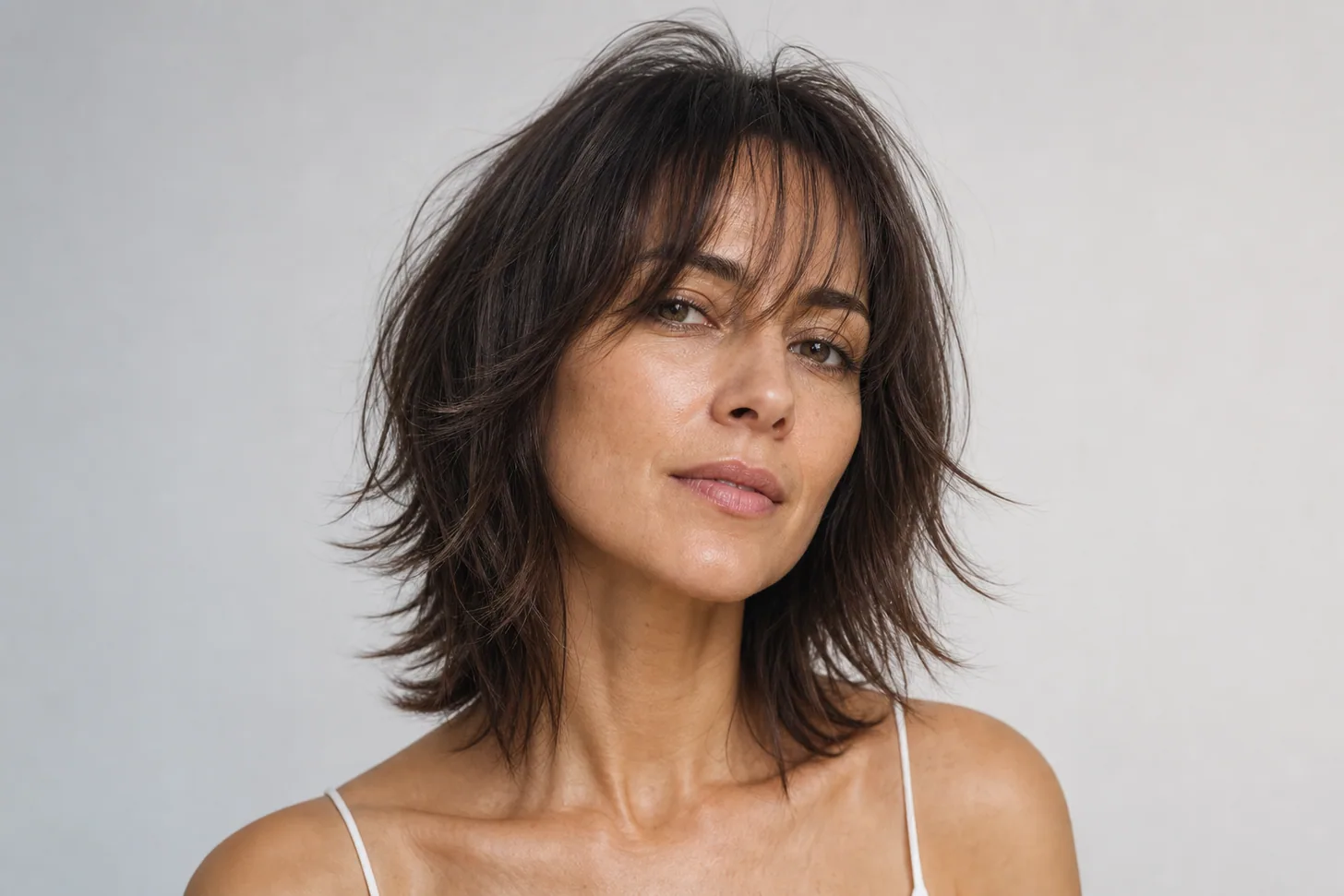
soft blended wolf cut with gentle layers for fine thin hair
3
The soft, blended wolf
The version I steer most fine-haired clients toward: the layers are softened and blended so the shag-mullet shape reads as gentle movement rather than harsh contrast. You get the volume and the vibe without any risk of a stringy bottom. It's the most forgiving wolf cut on very fine hair and grows out cleanly.
eighties rock-inspired wolf cut with big voluminous texture on fine hair
4
The '80s rock wolf
The wolf cut worn the way it was born — big, teased, rock-and-roll volume all over. The maximal texture reads as serious fullness on fine hair, and the attitude is the point. It asks for a texture spray and a bit of backcombing at the crown, so factor in the styling; this is the least wash-and-go of the bunch but the biggest on volume.
Wolf cuts by length
The wolf cut isn't one length — it works from cropped to long. Here's the shape at each, and which suits fine hair best. A wolf cut is a shape; if what you actually want is the soft tapered finish rather than the architecture, that's a feather cut, and it can be applied to any length.
short cropped wolf cut with a textured pixie-length crown on fine hair
5
The short wolf cut
Cropped close to a pixie length up top with a short shaggy tail at the nape — the fullest-looking wolf cut, because there's the least length to drag the volume down. It's edgy and low-effort, and brilliant on very fine hair where volume is the whole battle. Ask for texture through the crown and a soft, short tail.
medium-length wolf cut at the collarbone with layered volume on fine hair
6
The medium wolf cut
The most wearable version: a collarbone length with the shaggy layered crown and a softer tail. It's the sweet spot for fine hair — enough length to feel versatile, enough crown texture to build body. If you want a wolf cut you can wear to work and still tie back, this is it.
long wolf cut with a shaggy crown and long wispy layers on fine hair
7
The long wolf cut
For those keeping length, the wolf cut adds a heavily textured crown over long layers, so the top has all the volume while the length stays. It's the way to make long fine hair look full instead of flat — but keep the long ends from wisping out by leaving a soft weight line. The most length you can keep and still get the wolf effect.
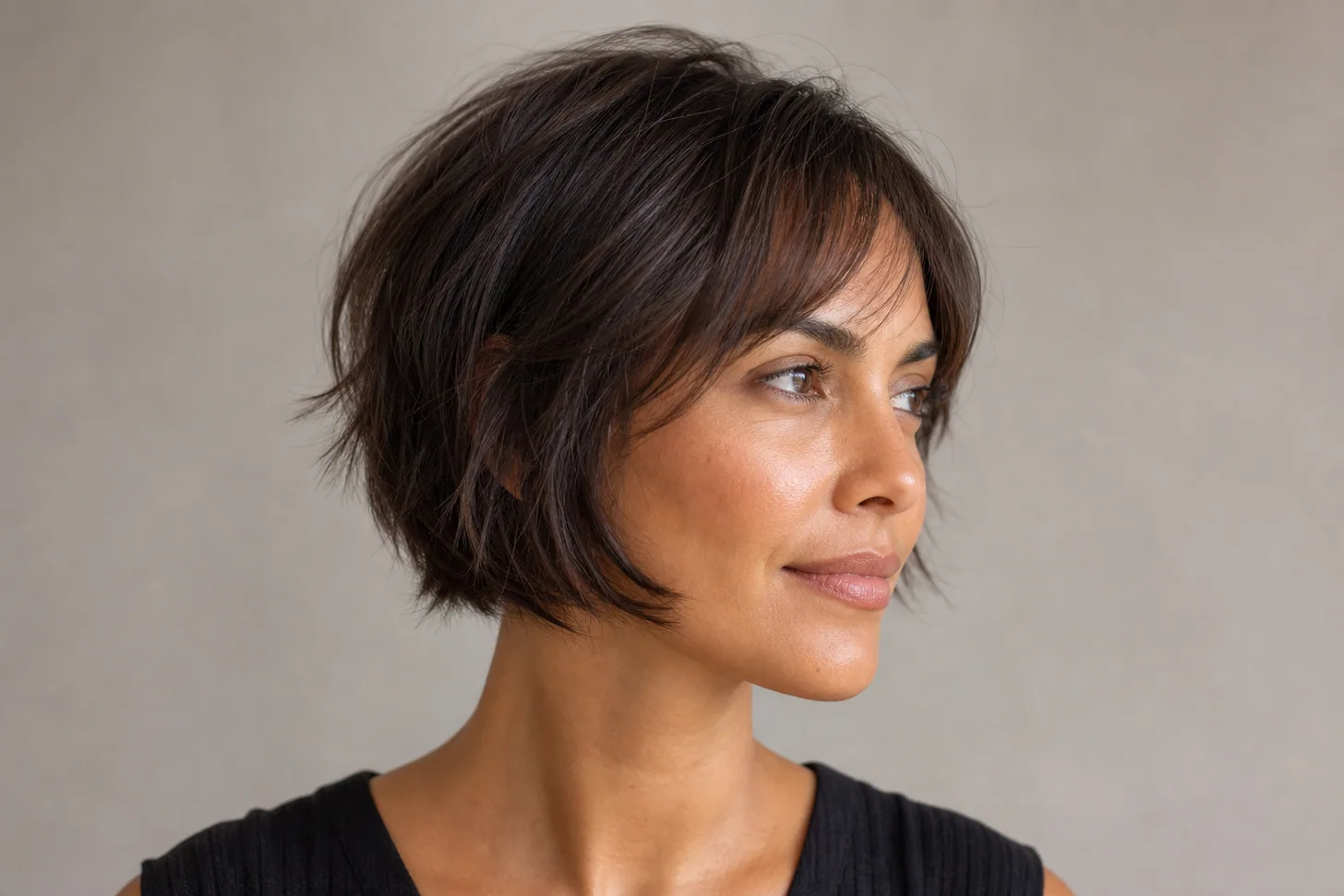
wolf cut bob at chin length with a shaggy textured crown on fine hair
8
The wolf bob
The wolf cut compressed into a chin-length bob — shaggy, textured layers on top over a bob-length perimeter. It's the bixie's messier sibling, and a smart way to try the wolf shape without much length commitment. The short perimeter keeps the ends dense, which makes this one of the safest wolf cuts for very fine hair. At the shortest end the wolf cut converges with the choppy bob for fine hair, which is the easier version to ask for.
Wolf cuts with bangs & fringe
The wolf cut and a fringe are a natural pair — bangs add to the shaggy, face-framing texture that defines the cut. These three suit fine hair specifically.
wolf cut with soft curtain bangs blending into the layered crown on fine hair
9
The wolf cut with curtain bangs
Soft curtain bangs flow straight into the shaggy face-framing layers, so the whole front moves as one and adds fullness at the hairline. It's the most flattering, easiest-to-grow-out fringe for the cut. Ask for them point-cut and blended into the crown texture rather than sitting separate.
wolf cut with a shaggy piece-y fringe on fine hair
10
The shaggy fringe wolf
A piece-y, textured fringe that matches the shag of the cut — separated and airy rather than a solid block, which is what makes it work on fine hair. It amps up the messy, undone attitude and frames the face with movement. The most on-brand fringe for a full-commitment wolf cut.
wolf cut with a wispy micro fringe on fine hair
11
The wispy micro-fringe wolf
A short, see-through micro-fringe for a bolder, more fashion-forward take. Because it's wispy and light, it flatters fine hair rather than exposing a thin hairline — the airiness is the point. Best on higher foreheads and anyone who wants the wolf cut to make a statement up front.
Textured & modern wolf cuts
The wolf cut bends to your texture and how you want to wear it. These three cover wavy hair, a sleeker modern finish, and the low-effort grown-out stage.
wavy wolf cut with natural bend enhancing the shaggy layers on fine hair
12
The wavy wolf cut
If your fine hair waves, the wolf cut is a dream — the natural bend falls into the shaggy layers and supplies built-in texture, so you can often air-dry it. It's the lowest-effort wolf cut for anyone with a natural wave. Scrunch a little product and let the layers do the work; more on the approach in cuts for fine, wavy hair.
sleek modern wolf cut with smoother polished layers on fine hair
13
The sleek modern wolf
Proof the wolf cut doesn't have to look wild — worn smoother, with the layers polished down and just the crown lifted, it reads as a modern textured cut rather than full-on rock. It's the office-friendly version. Keep some weight in the perimeter and blow the crown up softly; the shape carries even when it's tidy.
grown-out lived-in wolf cut with softened layers on fine hair
14
The grown-out wolf
A few months in, the wolf cut softens into a shaggy, lived-in low-maintenance shape — one of the reasons it's such a low-regret choice. The layers lengthen into gentle movement rather than leaving an awkward shelf. Trim the crown occasionally to keep the volume, and let the rest grow; it looks intentional the whole way.
Choose your wolf cut for your face shape
The wolf cut's volume sits at the crown and its face-framing hits the cheeks, so proportion matters. Use this as a starting point, then confirm with your stylist — the full method is in our guide to finding your face shape.
Balanced proportions carry short, long, or full-shag wolf cuts equally.
Round
Longer wolf with crown height
Volume up top and length below lengthen the face; skip a wide, short shag.
Square
Soft, blended wolf with curtain bangs
Soft face-framing and texture round off a strong jaw.
Heart
Medium wolf, longer face-framing
Keep width and texture lower down to balance a wider forehead.
Long / oblong
Wolf with a fringe
A fringe shortens the face; keep the crown from adding too much height.
What to ask your stylist
Bring the fine-hair guardrails, not just a viral photo. Say: "I want a wolf cut, but I need it to look full, not stringy — please point-cut the layers instead of razoring them, keep the shortest layers at my crown for lift, and leave some weight in the perimeter so my ends don't go see-through."
Then set the intensity: "Soft and blended" or "bolder, more mullet" tells your stylist how far to push it. And if your density is low, add: "Go conservative — I'd rather you take less than too much." With a wolf cut, you can always cut more next time; you can't put it back.
Chair-side note
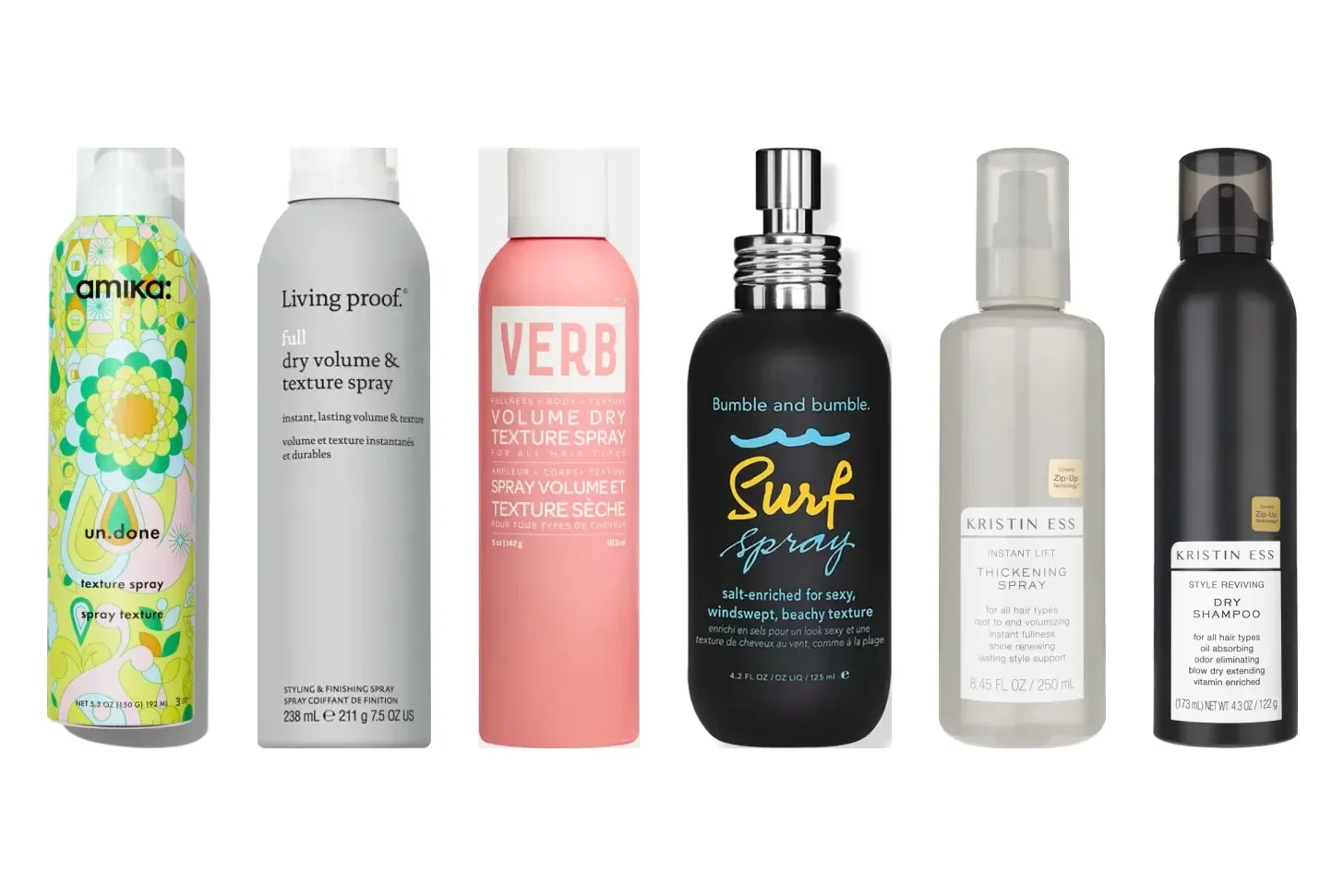
The wolf cut lives and dies by its styling, and the good news for fine hair is that it wants the opposite of a sleek blowout. A round-brush blow-dry actually kills a wolf cut — it needs finger-drying, a mist of texture spray, and a scrunch to bring out the choppy separation.
That's a gift for fine hair, which never holds a smooth style anyway. Rough-dry the roots for lift, mist, tousle, done. And because the layers expose your ends, mist a weightless heat protectant before any hot tools — layered fine hair shows dry, damaged ends fast.
SB
— Simone Baptiste, Senior Stylist
When a wolf cut may not be your best move
Very low density through the lengths — heavy layering can leave the wispy tail see-through. Ask for minimal, point-cut layers over a weightier perimeter, or choose the softer shag instead.
You want a sleek, polished, low-styling look. The wolf cut is built to be textured and undone; a low-maintenance cut or a blunt bob suits a tidy routine better.
Your ends are already dry or snapping — layers expose damaged ends. Trim and treat them first; a heavily layered cut magnifies breakage on fine hair.
You're noticing real thinning or scalp showing at the crown. Keep the layering minimal and see our honest guide to fine hair versus thinning before committing.
FAQ
Yes, when it's cut conservatively. The wolf cut is built on heavy texture and layering, and that texture is exactly what builds volume on fine hair — the shaggy crown and layered top prop each other up and read as fullness. The danger is over-doing it: a full-on, heavily razored wolf cut removes too much weight from already-fine hair and leaves the wispy bottom see-through. The fine-hair version keeps the layers point-cut rather than razored, keeps some weight in the perimeter, and goes lighter on the mullet-y tail. Cut that way, it's one of the most volumising trendy cuts you can wear on fine hair.
A wolf cut is a heavily layered, textured cut that blends a shag and a mullet — short, choppy, voluminous layers around the crown and face that graduate into longer, wispier lengths at the back and bottom. The result is big volume up top and a shaggy, undone finish, inspired by 1980s rock hair and revived as a modern trend. It's designed to look deliberately messy and full of movement, which is why it's popular with anyone wanting texture and volume rather than a sleek, polished shape. If you want the front-to-back contrast without the all-over shag layering, that's the mullet for fine hair — a different shape with its own rules.
It does, because it concentrates layers and texture at the crown and top of the head, which is where thin hair looks flattest. The stacked, choppy layers create height and separation that the eye reads as fullness, and the messy finish hides the flatness a sleek style would expose. To protect the effect on thin hair, keep a bit of weight in the perimeter so the ends don't look sparse, and keep the layers point-cut. A wolf cut on thin hair should look full and textured up top, not thin and stringy at the bottom.
They're close cousins. A shag is layered and textured throughout with a softer, more even distribution of movement. A wolf cut is more extreme and more mullet-influenced — it has a bigger contrast between the short, heavily layered crown and the longer, wispier bottom, so the volume is more concentrated up top and the finish is shaggier. For fine hair, a shag is the gentler, more forgiving choice, while a wolf cut makes a bolder statement; the fine-hair version of the wolf cut essentially dials it toward the shag end of the spectrum.
The wolf cut is styled to look undone, which is good news for fine hair. Rough-dry the roots for lift, then use your fingers and a texture spray to separate and tousle the layers — no sleek round-brush blowout required. A little volumizing mousse on damp roots builds the base, and scrunching or twisting pieces adds the choppy separation the cut is known for. On fine hair, less product and more texture spray is the rule; the messier and more piece-y it looks, the better it hides flatness. A quick mist of a lightweight heat protectant before any hot tools keeps fine ends from frying.
Only if it's cut too aggressively. The risk with any heavily layered cut on fine hair is removing so much weight that the ends turn wispy and see-through. Avoid that by asking for point-cut layers rather than razored ones, keeping a solid-ish weight line at the perimeter, and going conservative with the shortest layers and the mullet tail. Done with restraint, a wolf cut does the opposite of thinning — it builds volume and texture where fine hair is flattest. If your density is very low or you're noticing real thinning, keep the layering minimal and read our guide on fine hair versus thinning first.
Eleven years behind the chair, specializing in short shapes and fine-hair texture. Simone believes the best haircut is the one you can style yourself in ten minutes.
Results vary with hair type, density, and growth patterns. This guide is educational and not a substitute for an in-person consultation with a licensed stylist.
Hairstyle images in this guide are AI-generated illustrations, not photos of real clients or results. See our image policy.
Get the good hair intel
One honest, stylist-written guide in your inbox each week. No hype.

 SB
SB