Reviewed by Tara Sullivan · Updated July 2026 · 8 min read
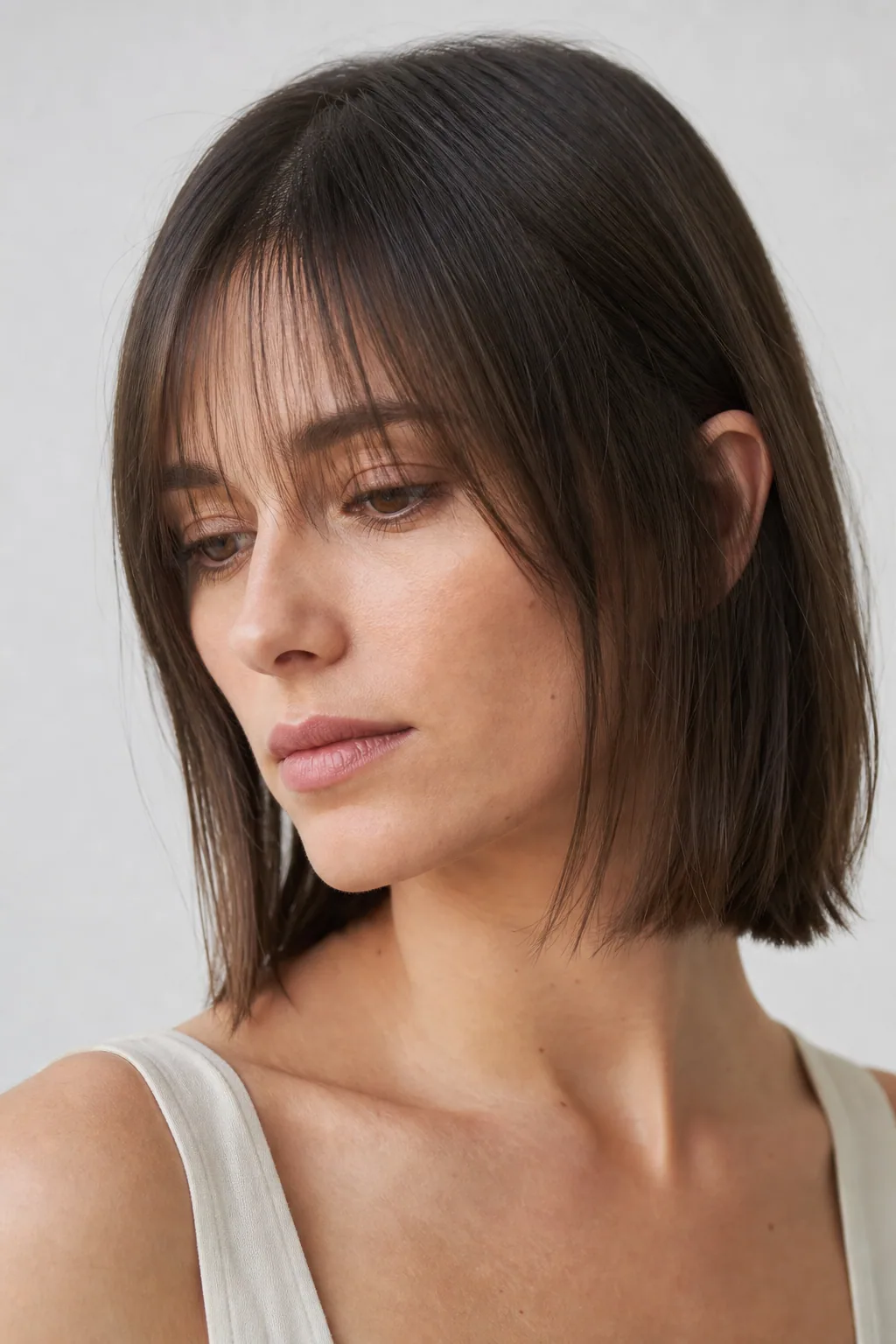
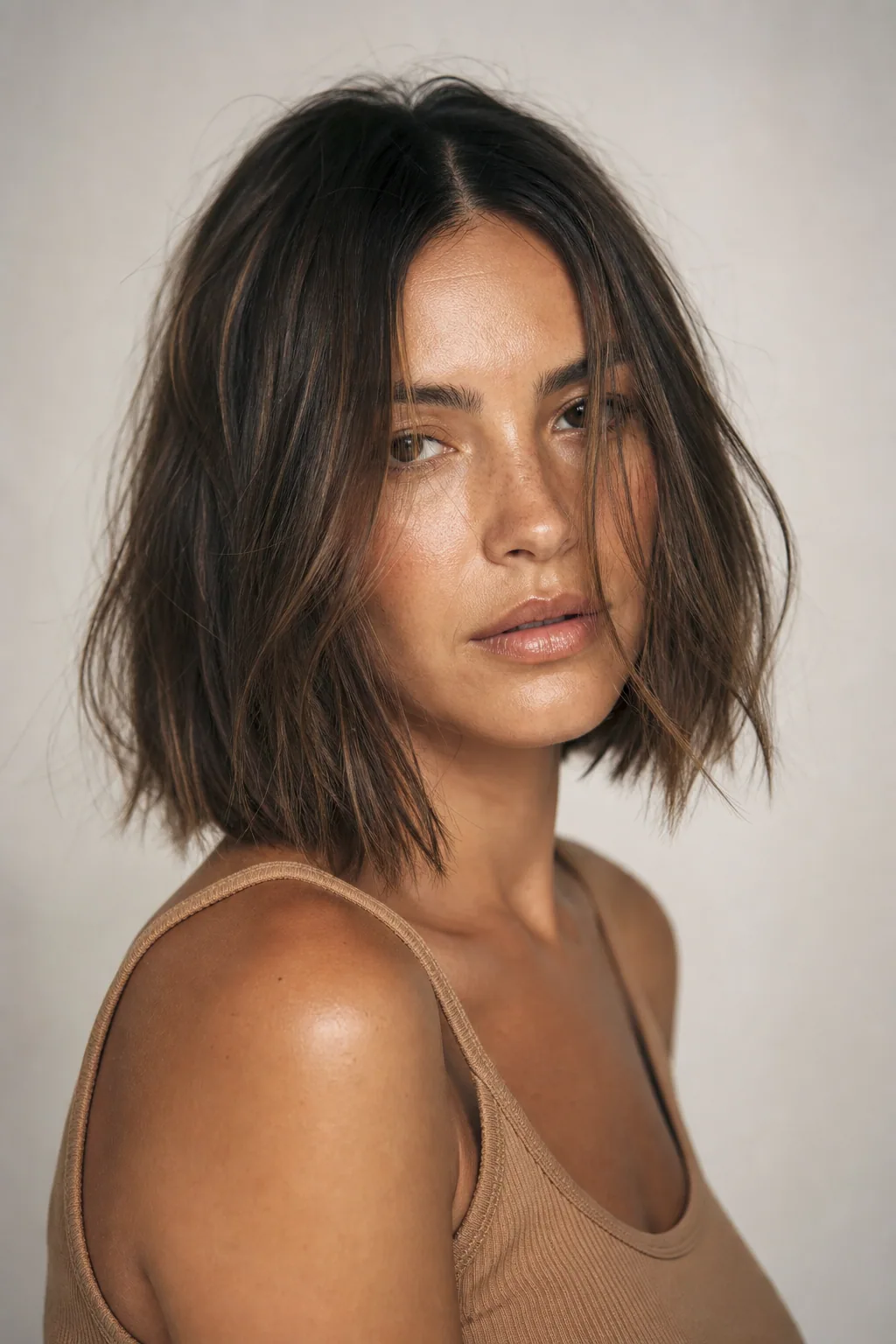
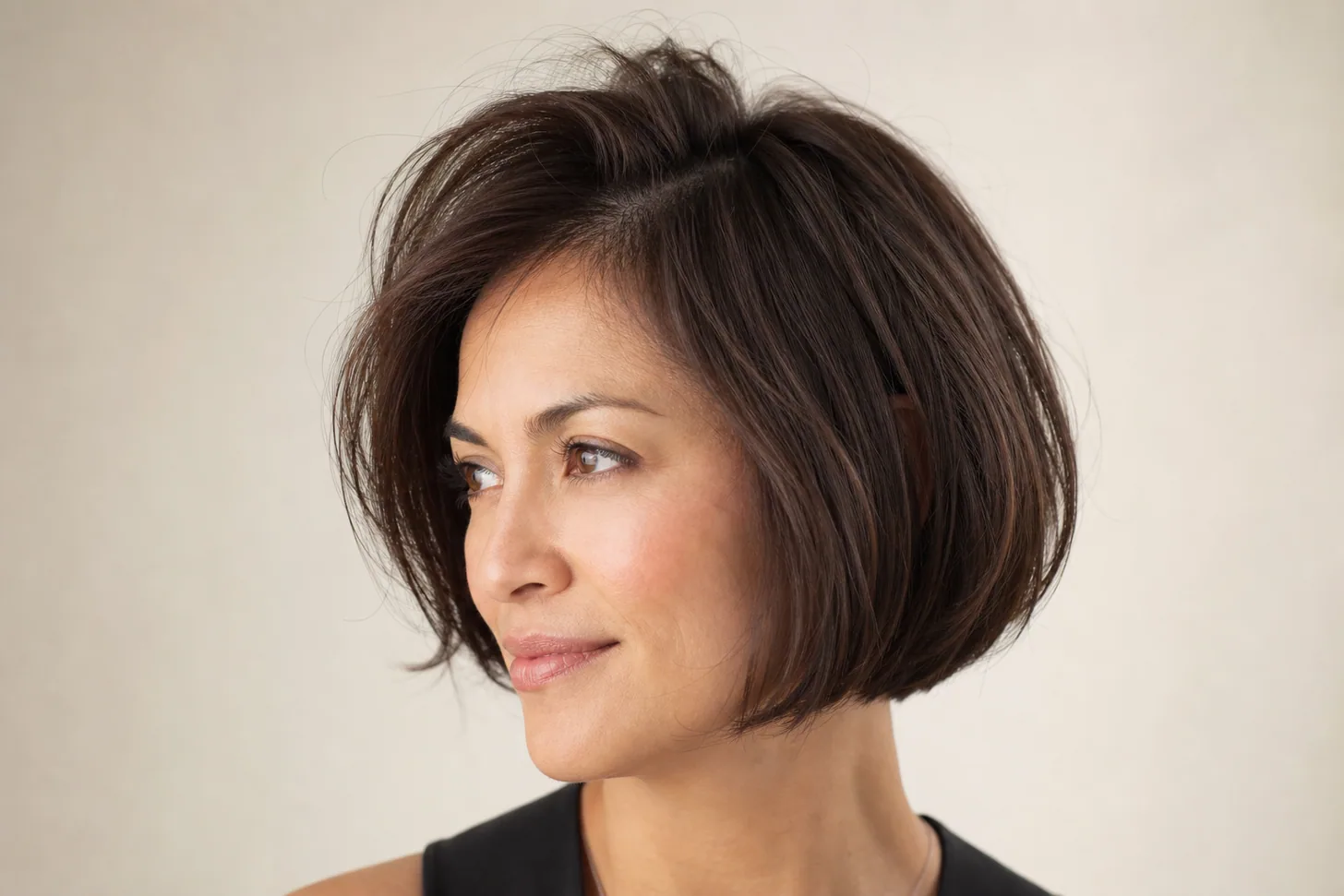
The lob is the smartest long-ish cut for fine hair, and the reason is the hemline: a strong, blunt bottom edge is the single most reliable way to make fine hair read as dense.
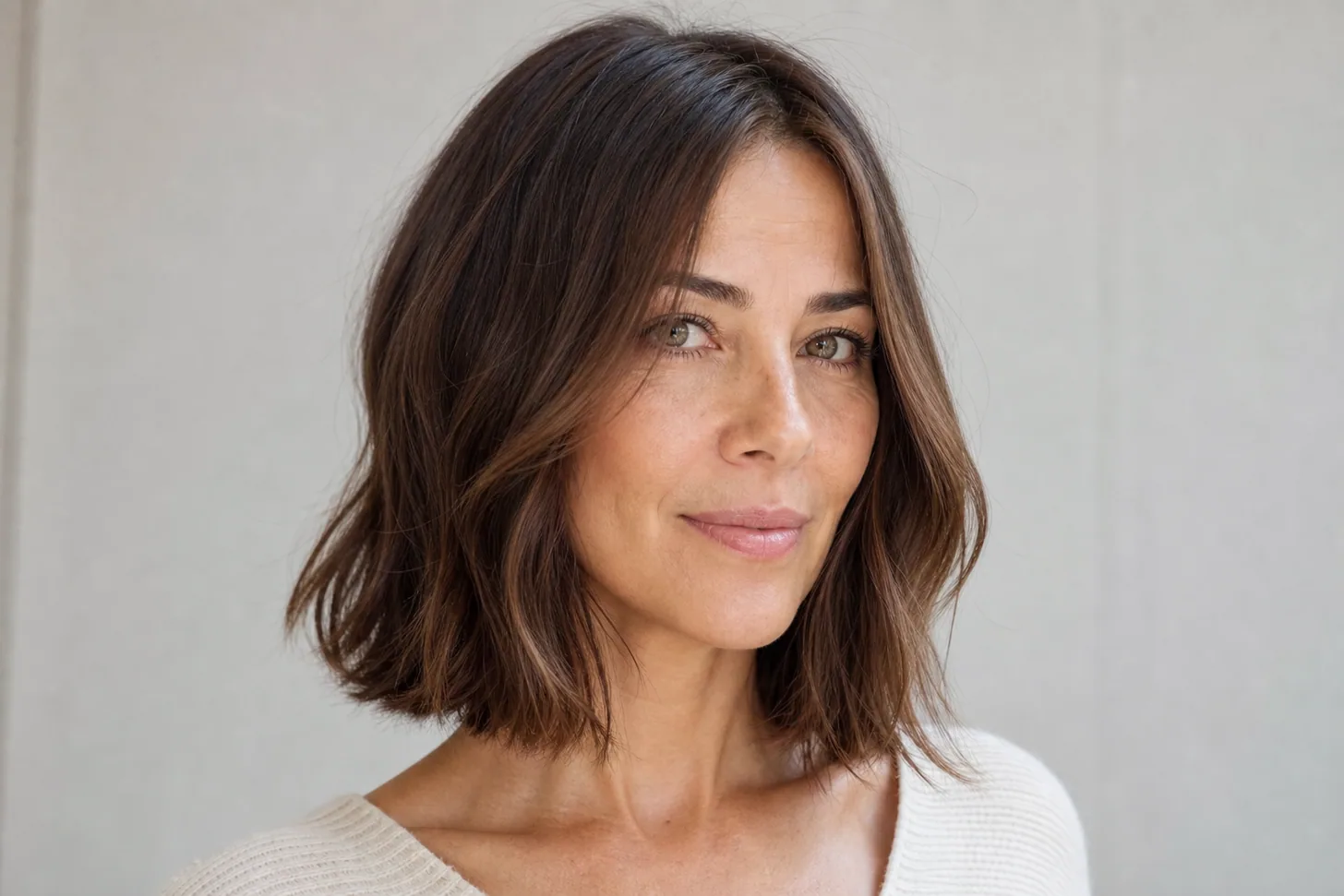
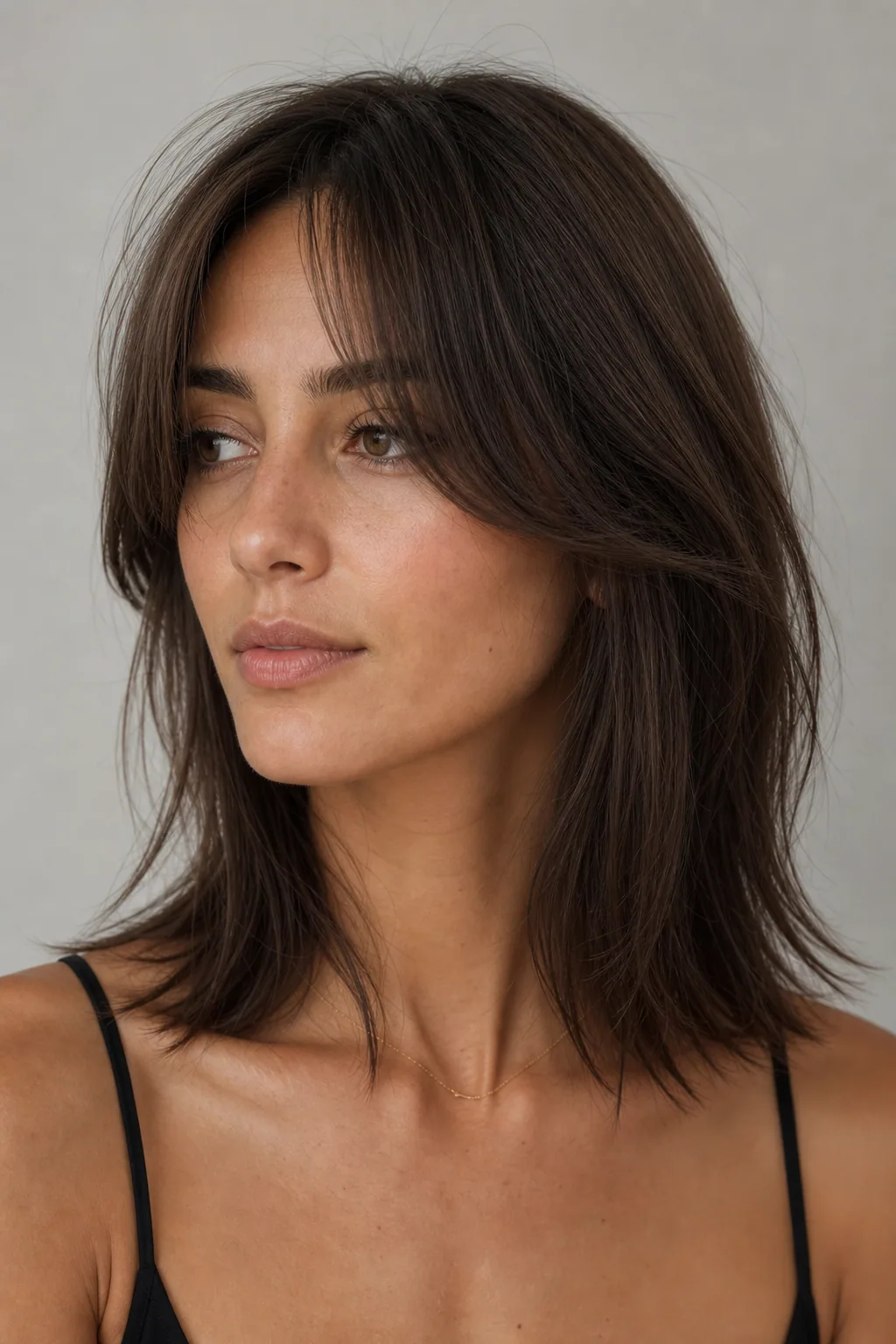
At collarbone length it's short enough to hold body, long enough to still feel long — the compromise for anyone not ready to go truly short. Below, 16 salon-tested lobs from blunt to wavy, each with who it suits, plus a face-shape cheat sheet and the exact words to bring to your stylist.
Chair-side note
The lob is the cut I recommend most to fine-haired clients who say the words "I don't want to go short." It gives them the fullness of a bob's weight without losing the length they're attached to. But there's one non-negotiable: the hemline stays strong.
The instant someone asks me to "texturize the ends so it's not so heavy," I know their lob is about to look thinner. On fine hair, heavy is the goal — heavy at the bottom is what reads as thick.
SB
— Simone Baptiste, Senior Stylist
Why the lob works for fine hair
Fine hair is narrow-stranded and light, so it hangs flat and looks thinnest at the ends, where individual strands taper and separate. A blunt lob attacks both problems: it stops the hair at collarbone length before its own weight drags it lifeless, and it keeps the ends full and level so the perimeter reads as a solid, dense line rather than a wispy fade.
That solid line is doing the same visual job as the weighty hemline on a blunt bob for fine hair — just longer. If you're not sure whether your hair is fine, thin, or both, start with the two-minute fine-vs-thin check; density decides how blunt you should keep it.
The strongest density illusion fine hair can buy — a solid, level hemline with minimal or invisible layering. If your hair is thin as well as fine, start here. The reasoning behind that edge, and where it starts costing you root lift, is in blunt cuts for thin hair.
1
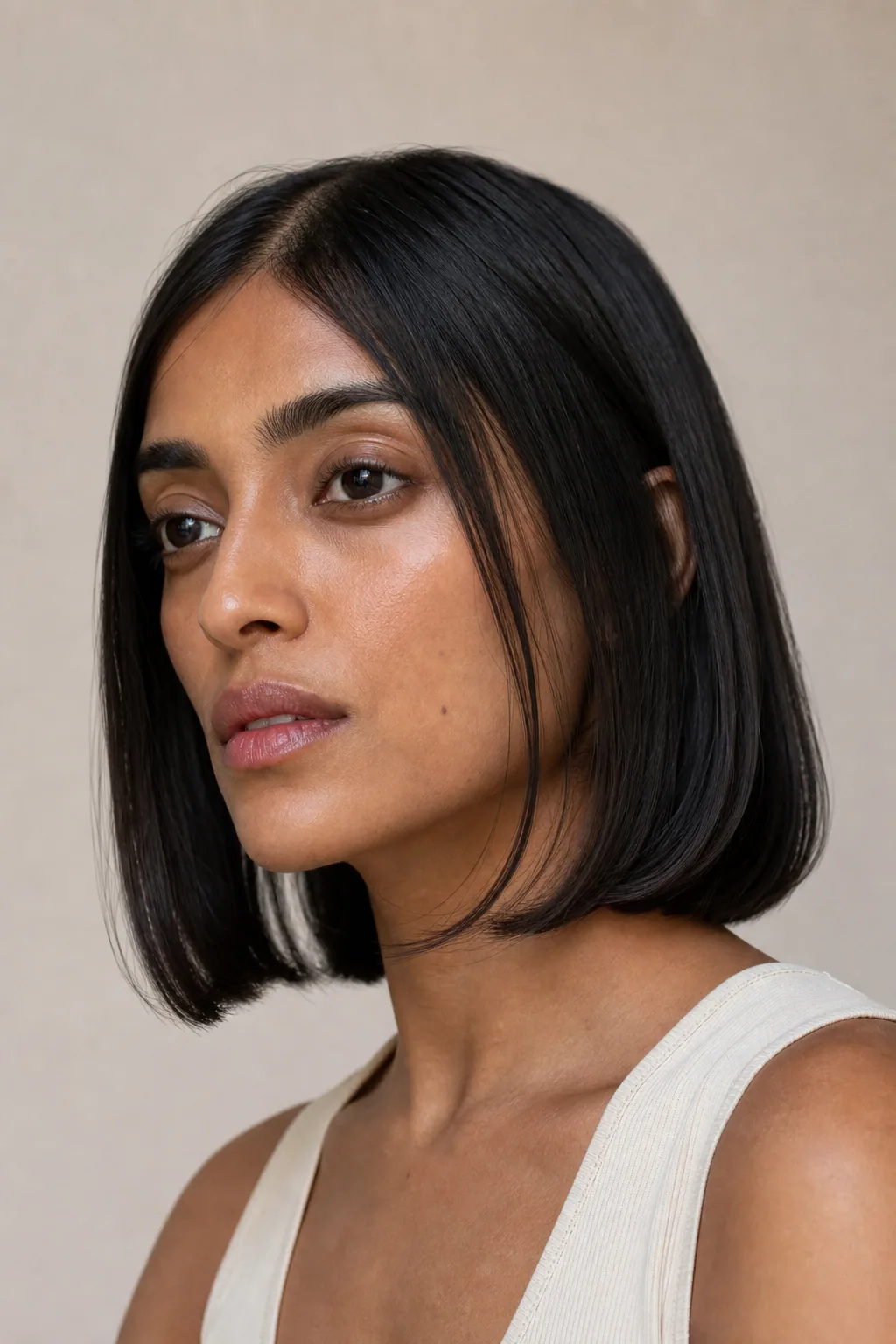
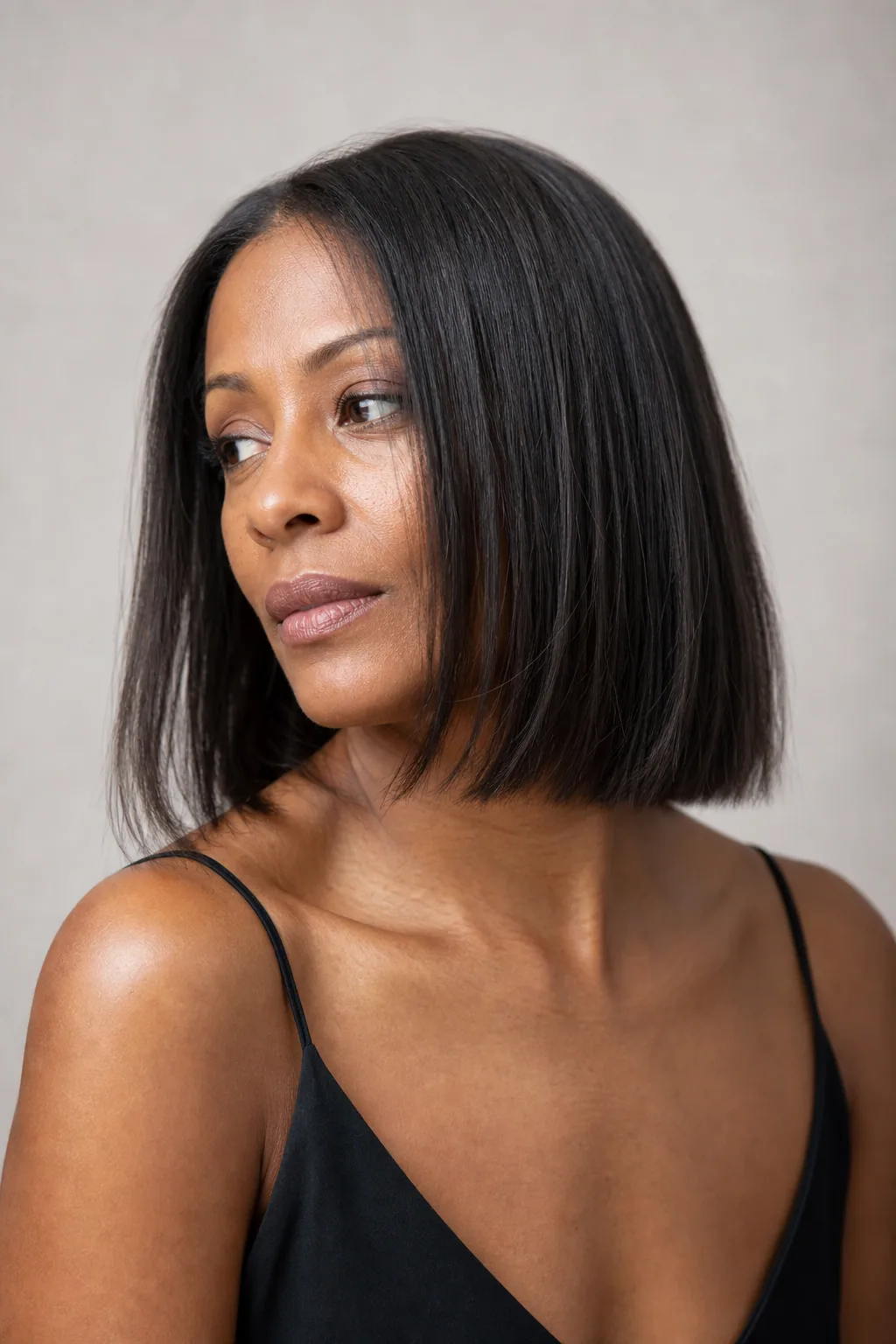
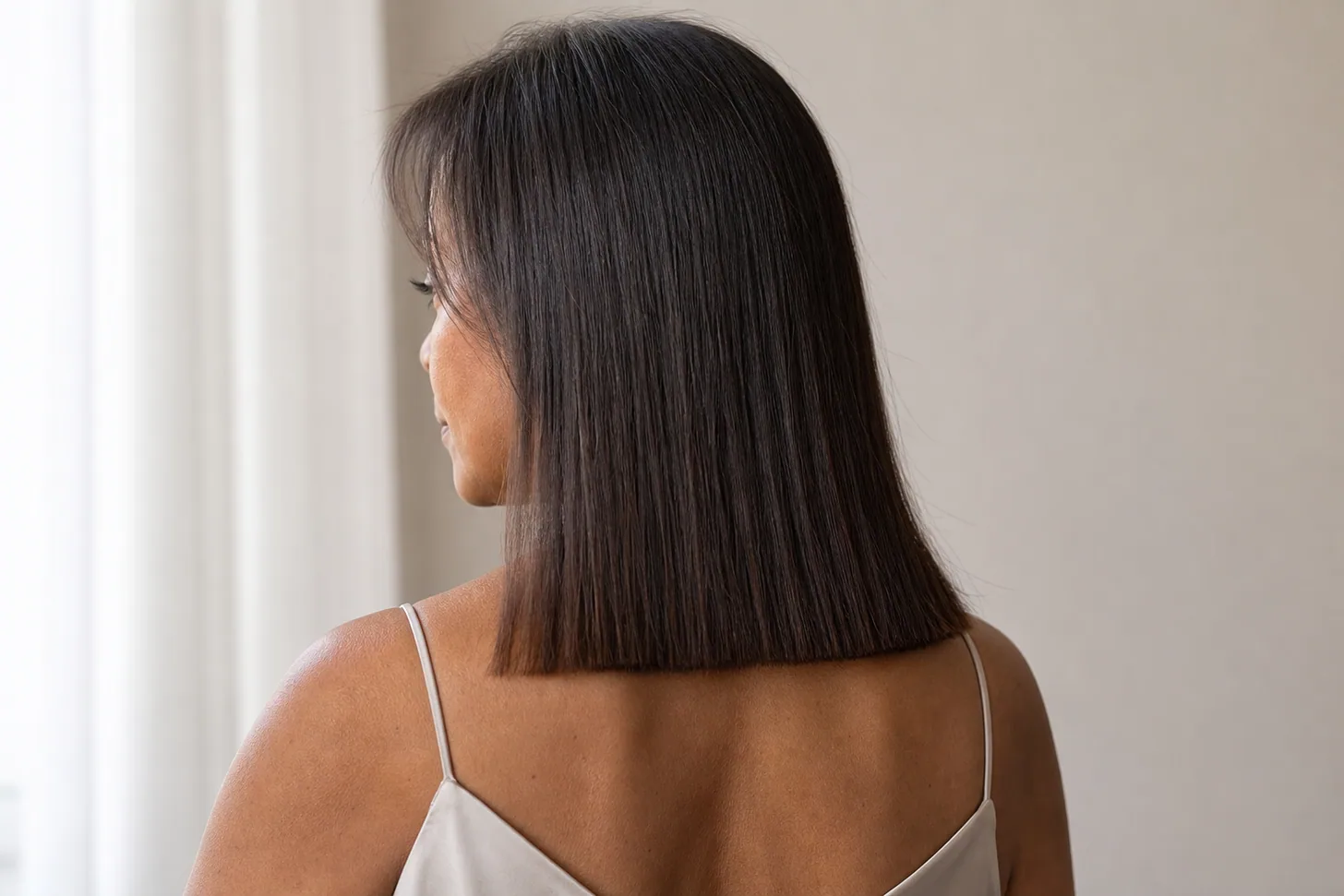
The blunt collarbone lob
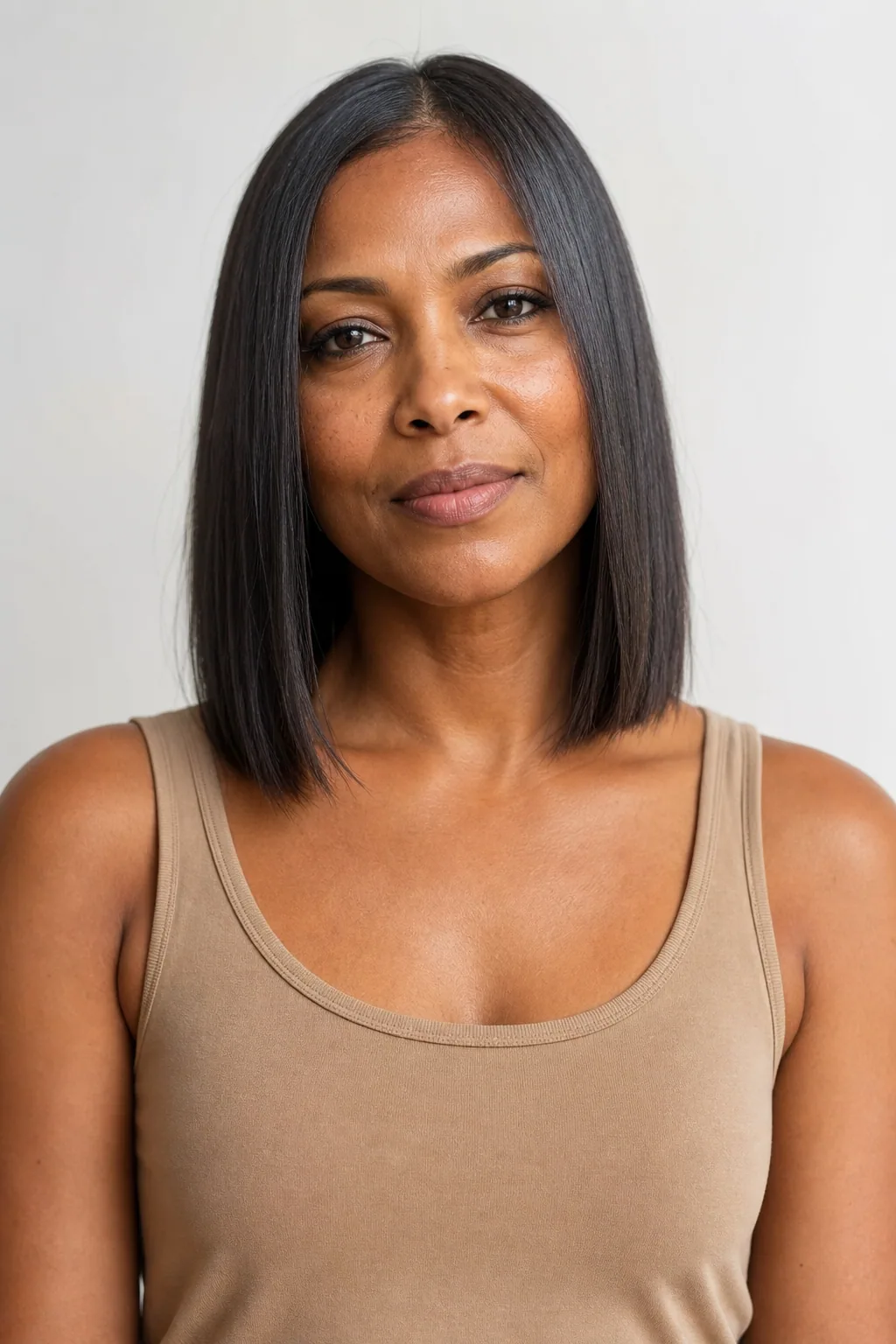
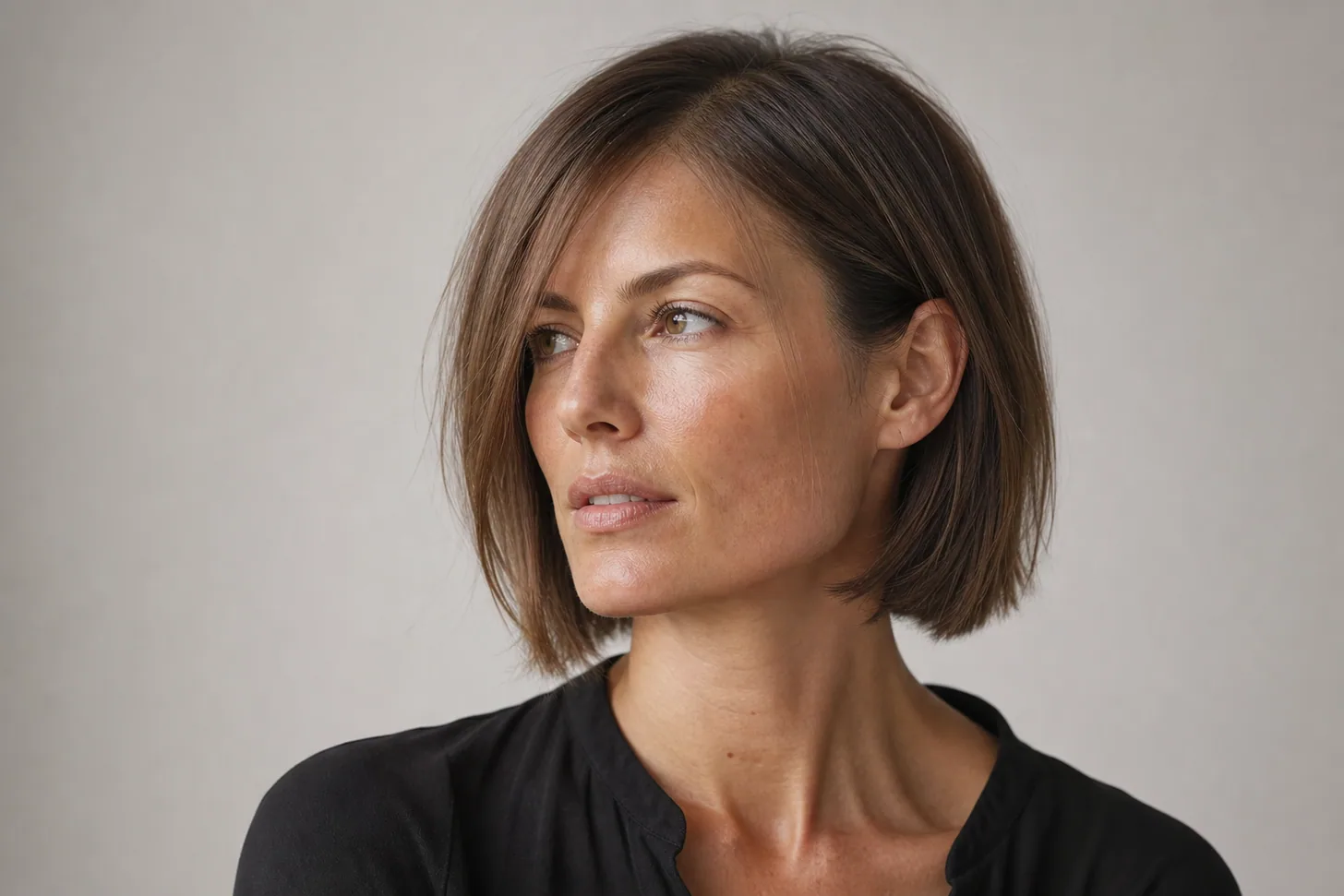
One length, cut level at the collarbone with a strong, point-finished hemline — the template every other lob on this page is a variation of. On fine hair the solid bottom edge reads as pure density. Flattering on nearly every face, and the safest lob to ask for if you're unsure.
2
Heavy-hemline lob for thin hair
Cut just above the shoulders so the hemline sits at its heaviest and fullest — the version to ask for when density is genuinely low. Zero internal layering, all weight kept at the bottom. It's the most-full-looking cut here for anyone who can see their scalp through longer lengths.
3
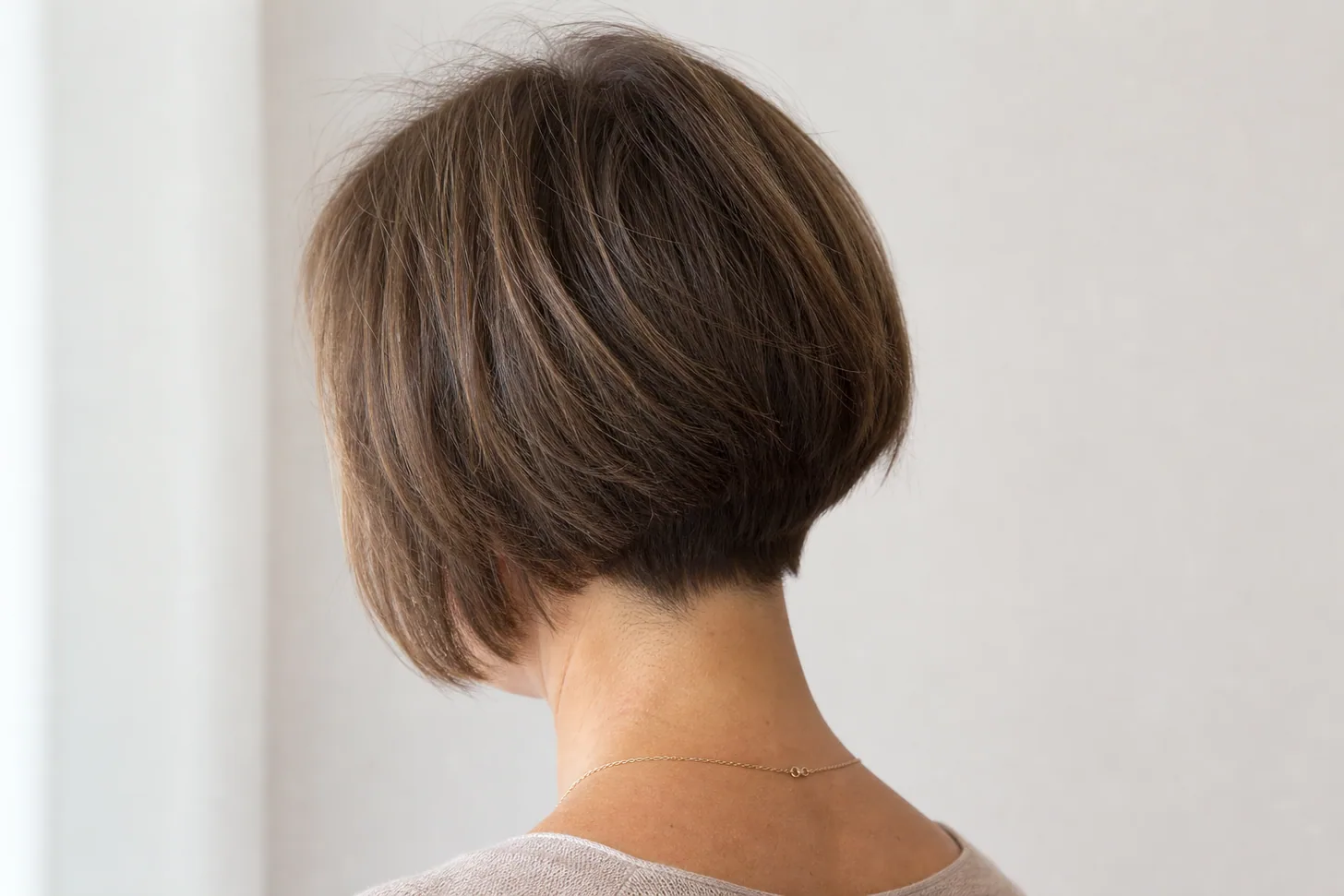
The A-line lob
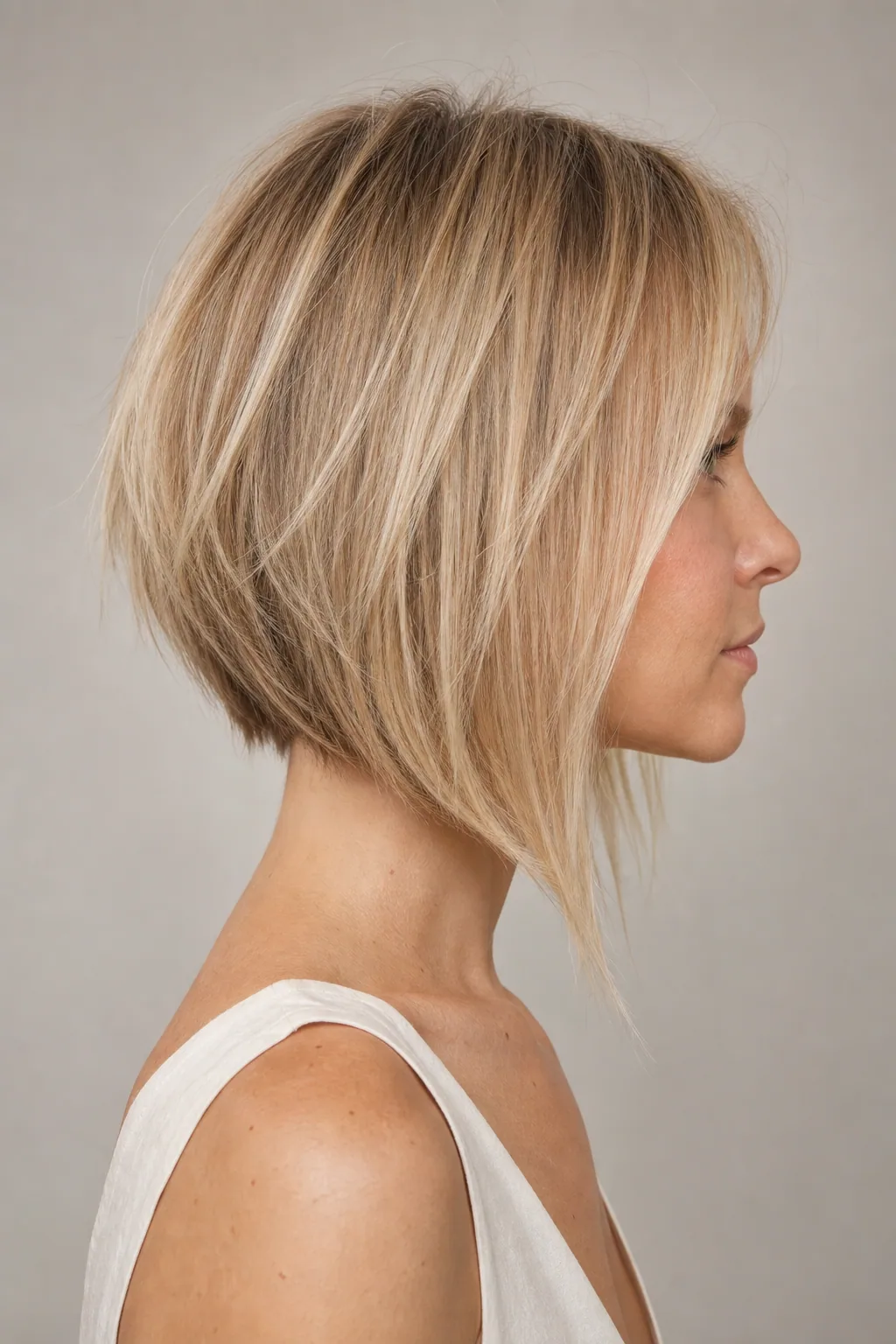
Slightly shorter at the back, angling longer toward the front — the forward weight elongates round faces while the higher back builds subtle lift, the same trick a graduated bob uses. Keeps a strong hemline while adding shape. Flattering and low-effort to style.
4
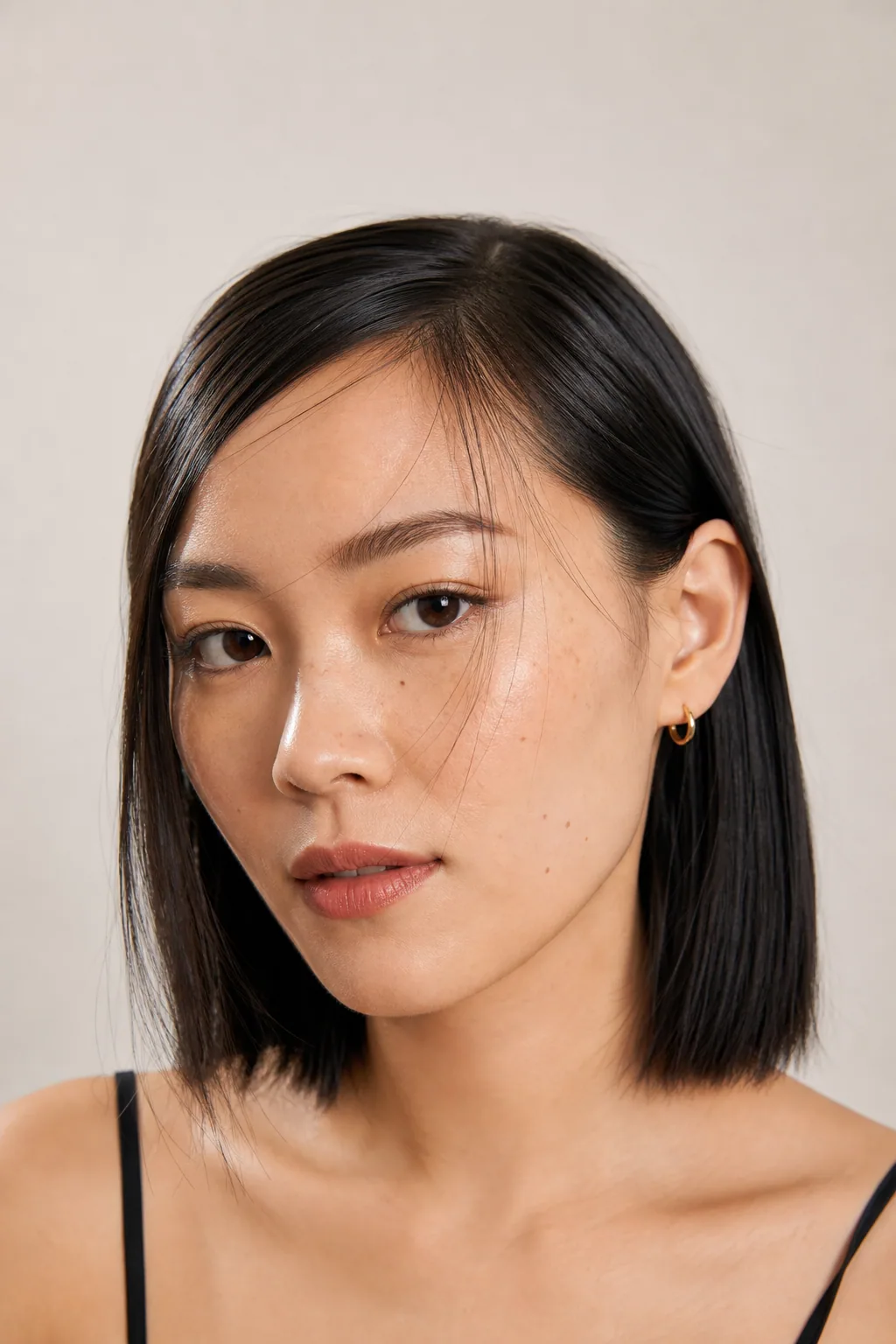
The tucked-behind-the-ear lob
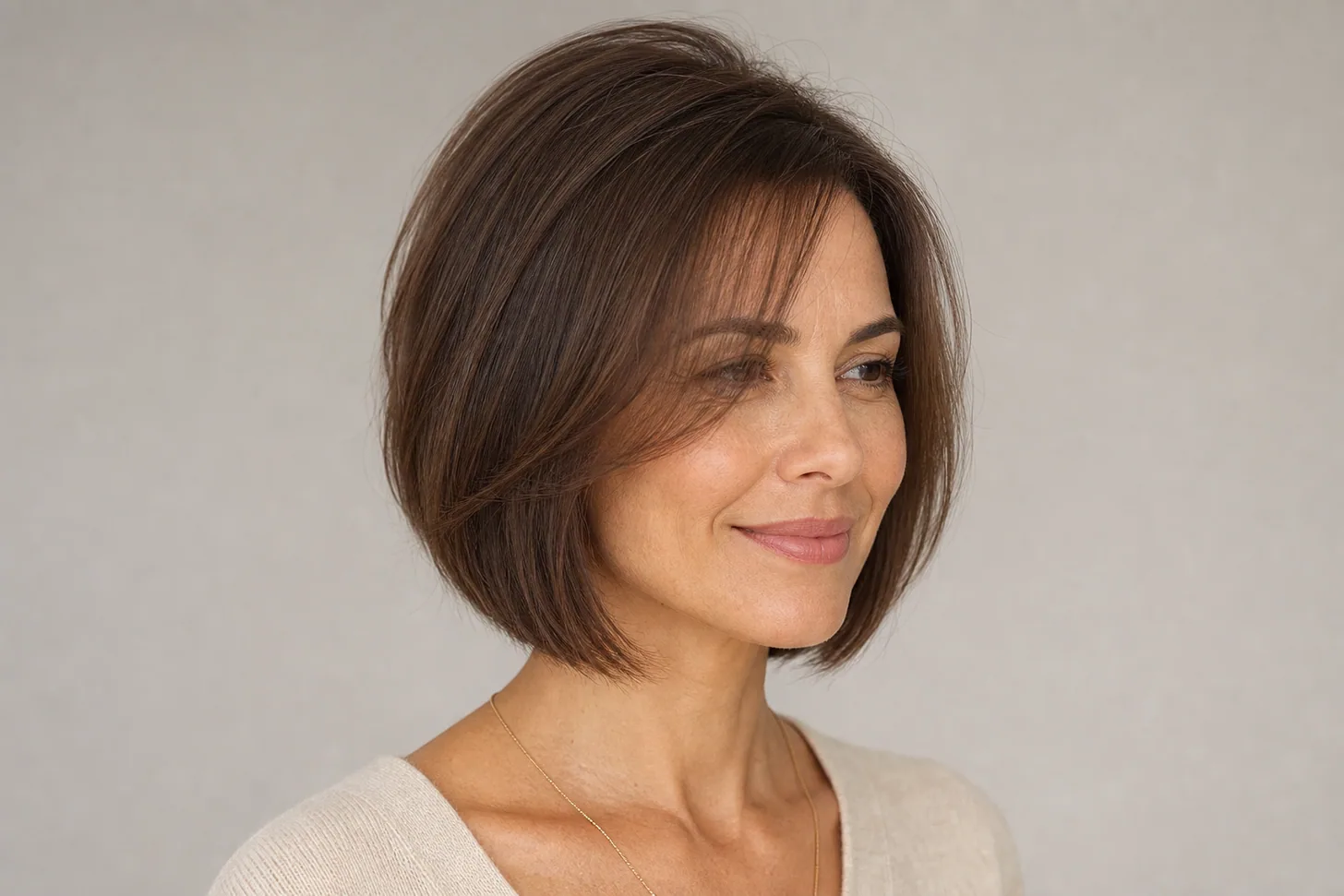
A sleek, straight blunt lob styled tucked behind one ear — clean, modern, and quietly expensive-looking. Because fine hair lies flat easily, this polished finish is one it does effortlessly; the strong hemline keeps it from looking thin. A shine spray, not oil, gives the gloss without the weight.
5
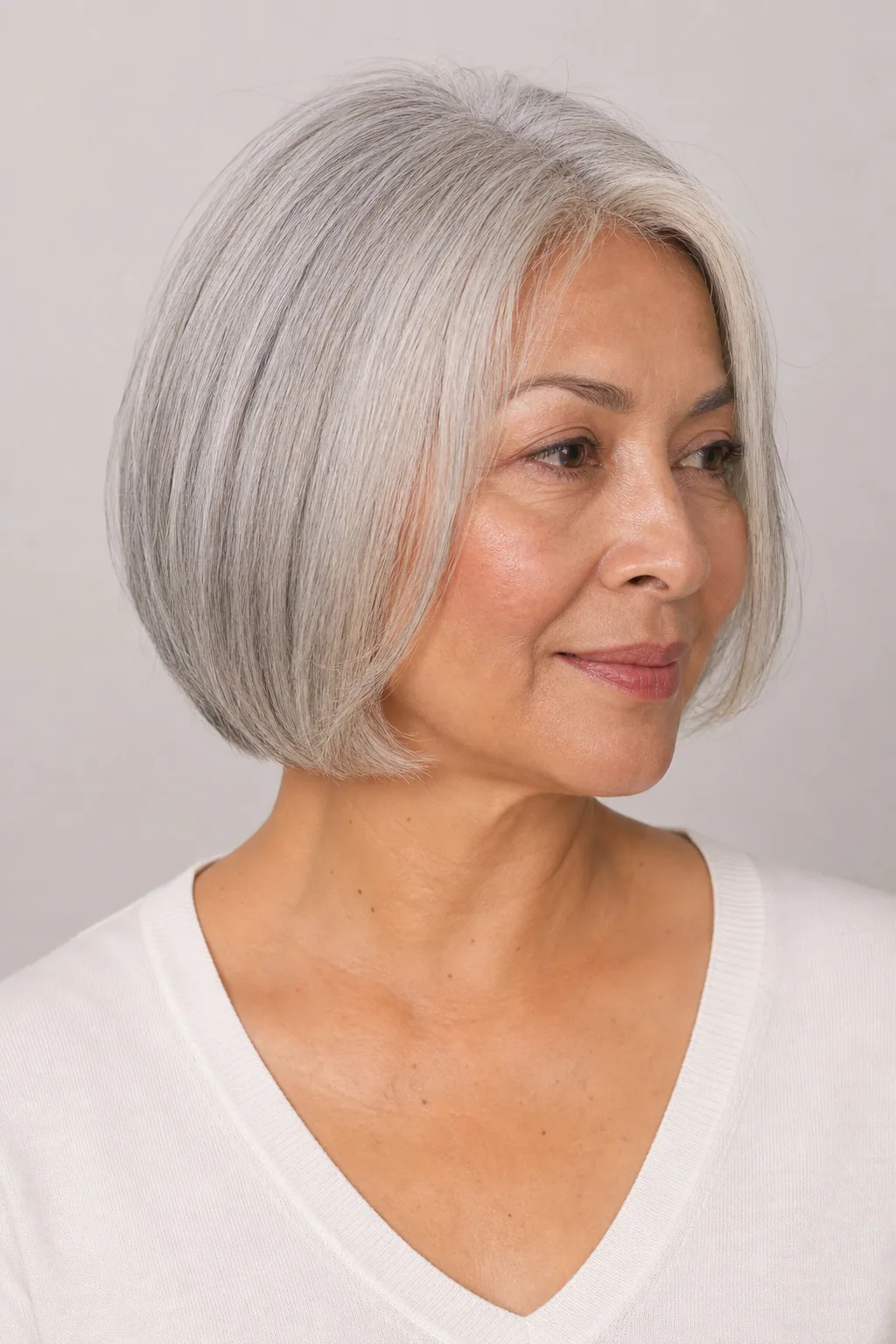
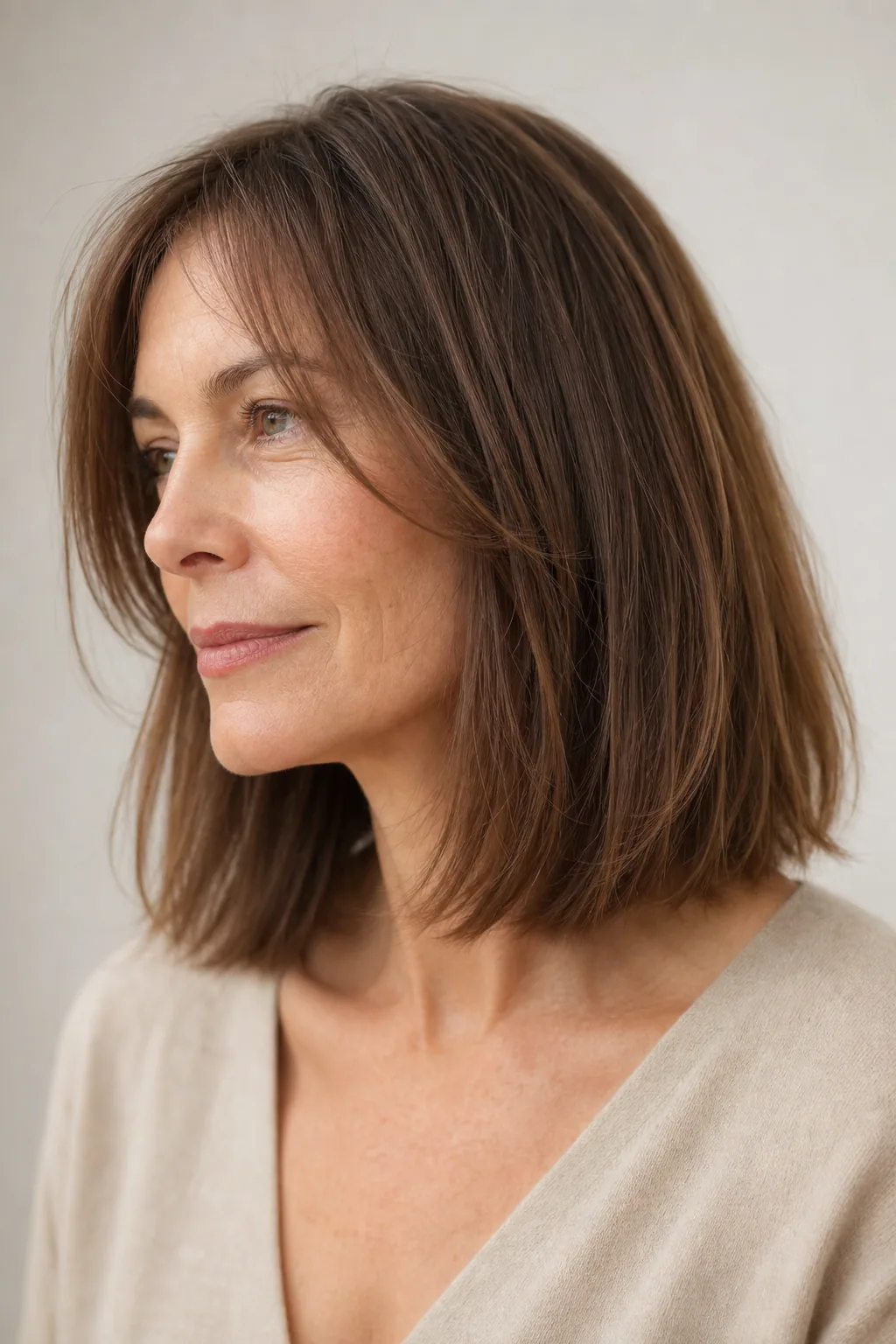
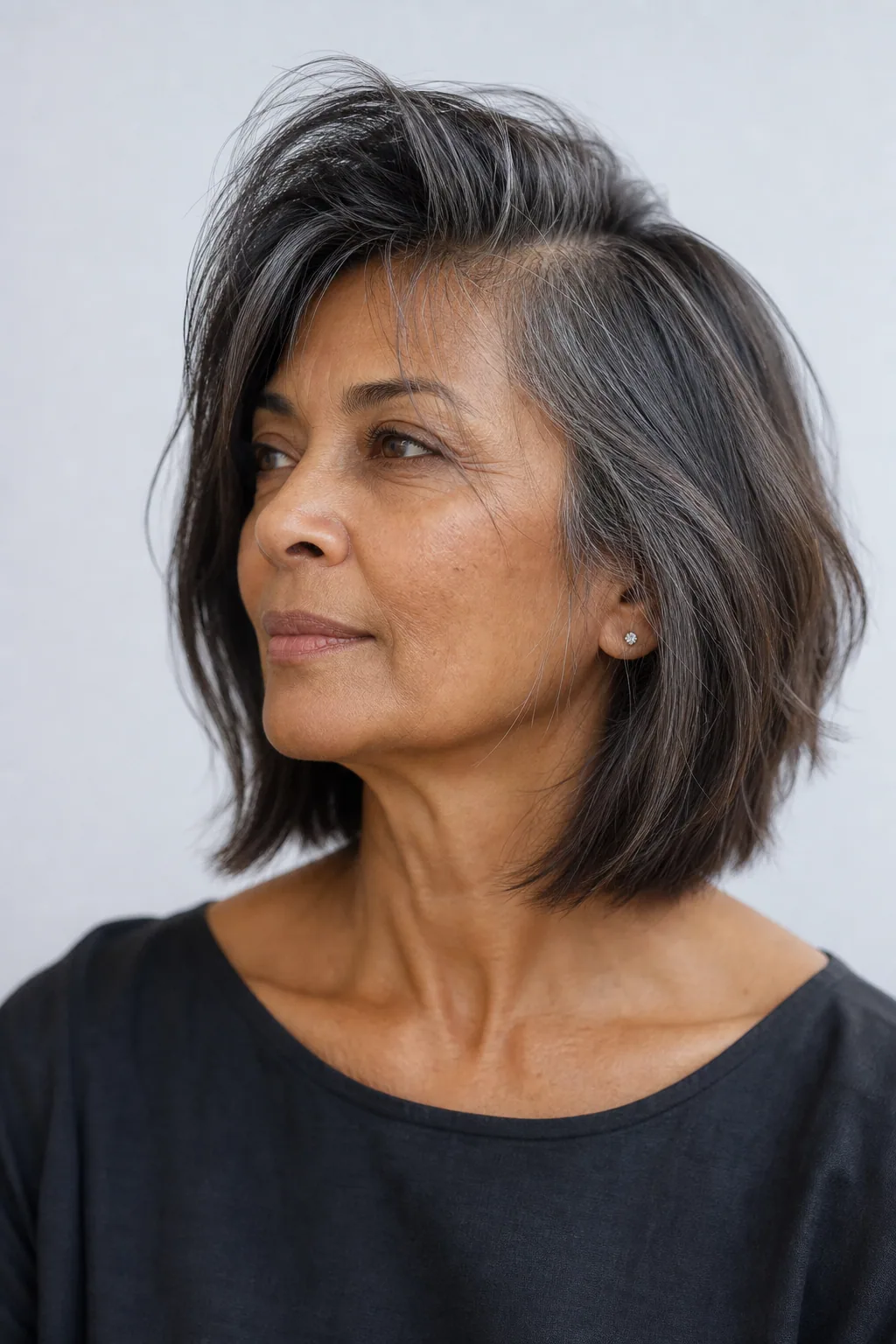
Blunt lob for mature fine hair
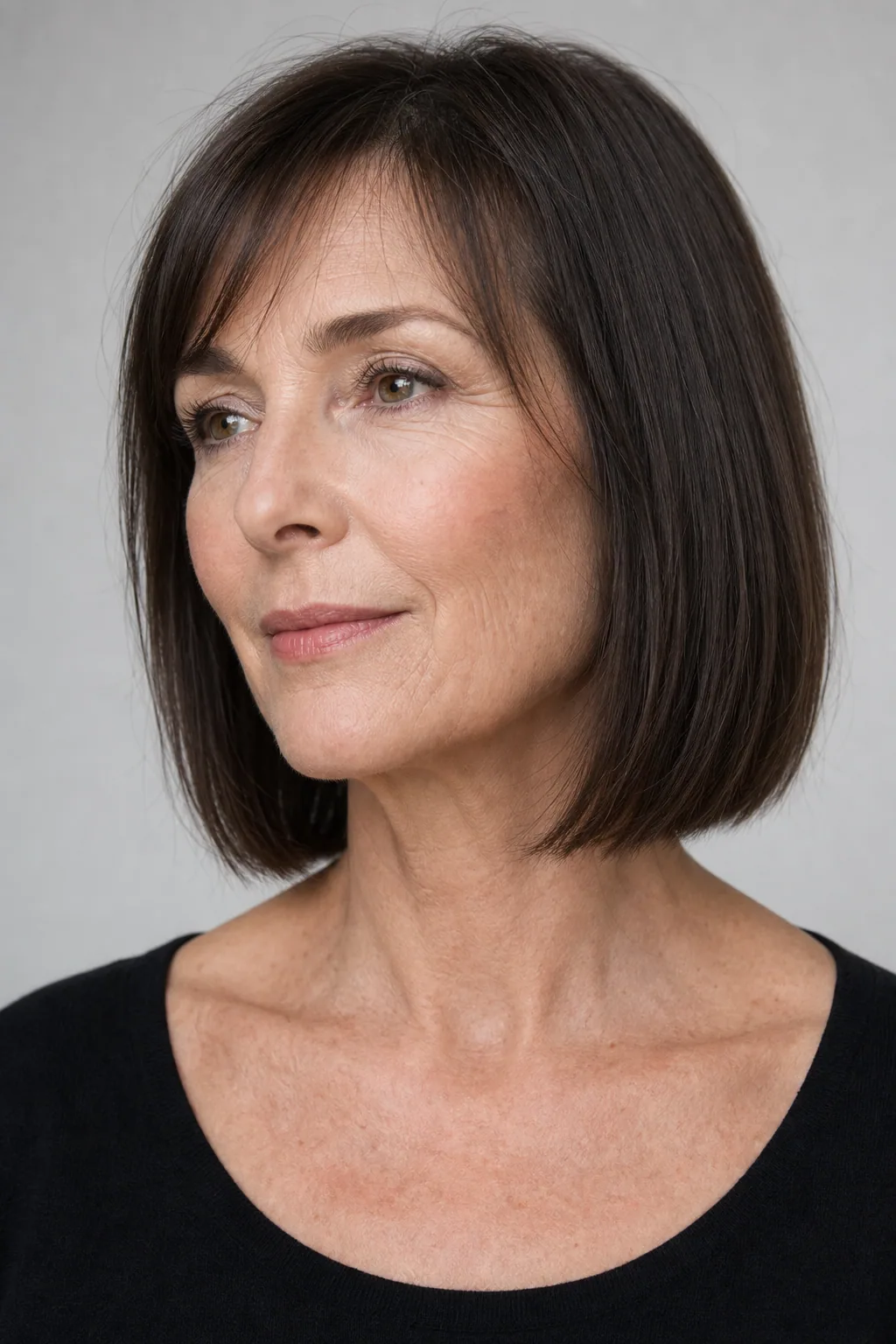
Hair usually finers with the decades, and a blunt lob answers it with weight rather than layers — a soft, level line that keeps its fullness without the upkeep of a shorter cut. One pass of a round brush at the crown and it's done. A trim every eight weeks holds the hemline that does the work.
Textured & wavy lobs
Where a bend or a soft layer turns a flat lob into a full one — waves stack visual body that straight lengths can't, and a little movement hides fine hair's tendency to thin at the ends. A lob also takes a small high half-up better than most lengths, which is why it turns up in bridesmaid hairstyles for fine hair.
6
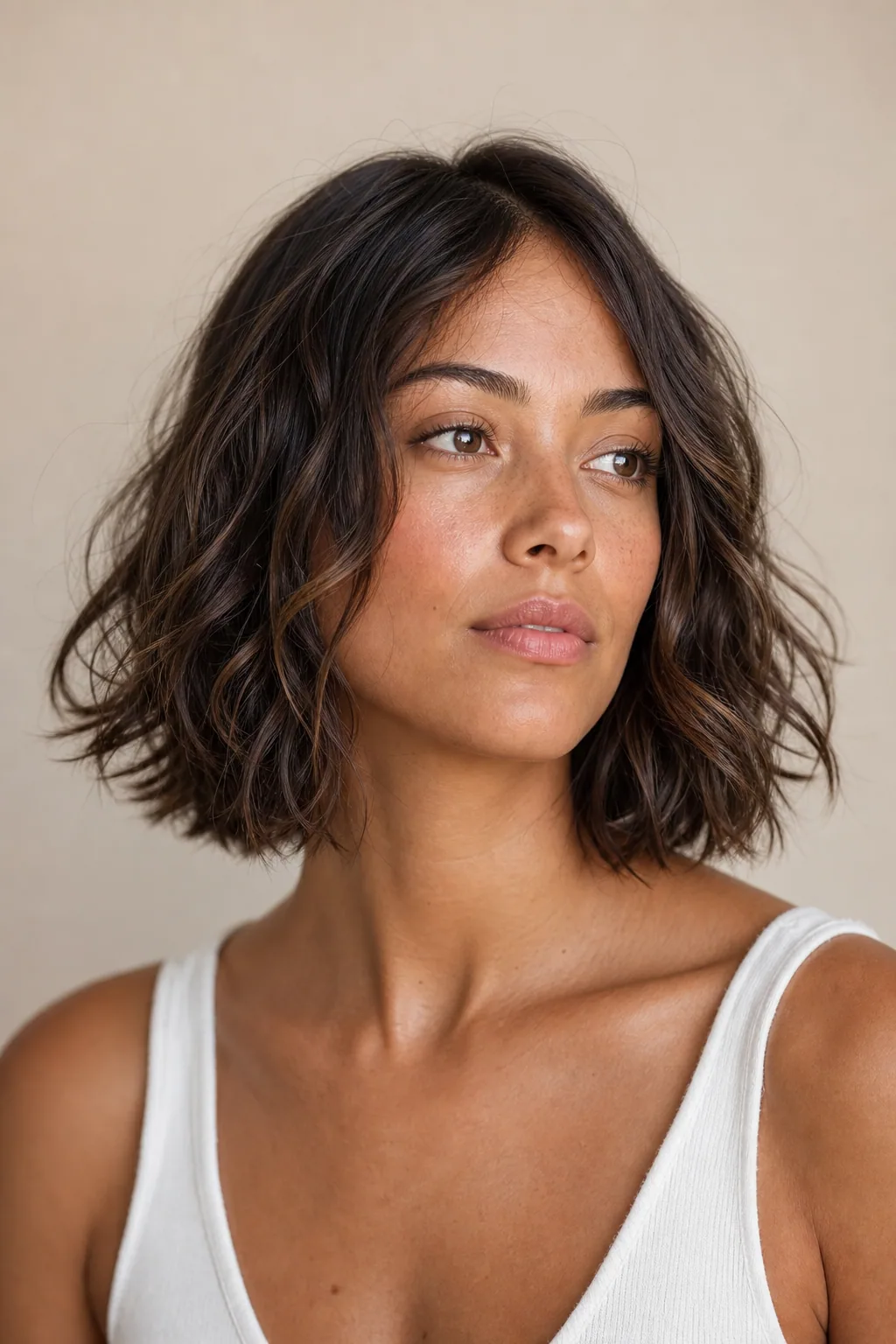
The wavy lob
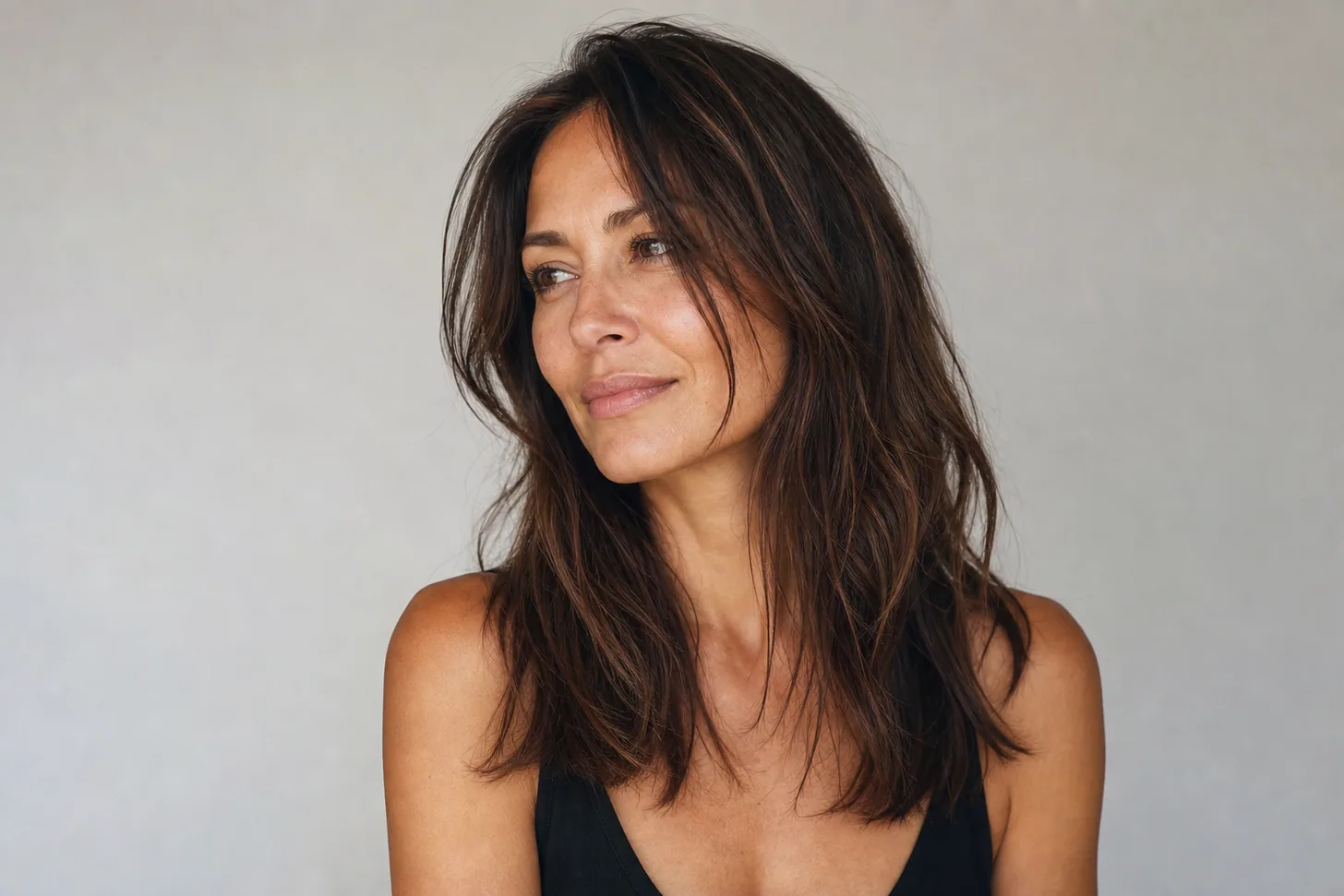
Loose, undone waves through a blunt lob — the most-requested lob for a reason: the bends turn fine hair's fineness into an asset, stacking body a flat lob can't. Two minutes with a one-inch iron on the mid-lengths, cool in the palm, shake out with texture spray. The everyday fullness-maker.
7
The air-dry lob
Cut to work with a natural wave rather than against it, so it dries into shape with a scrunch of light foam — the choice for anyone rationing heat. Have it cut dry if your stylist offers it; wet-cut waves spring up shorter than planned. The lowest-effort lob for fine wavy hair.
8
Textured lob with point-cut ends
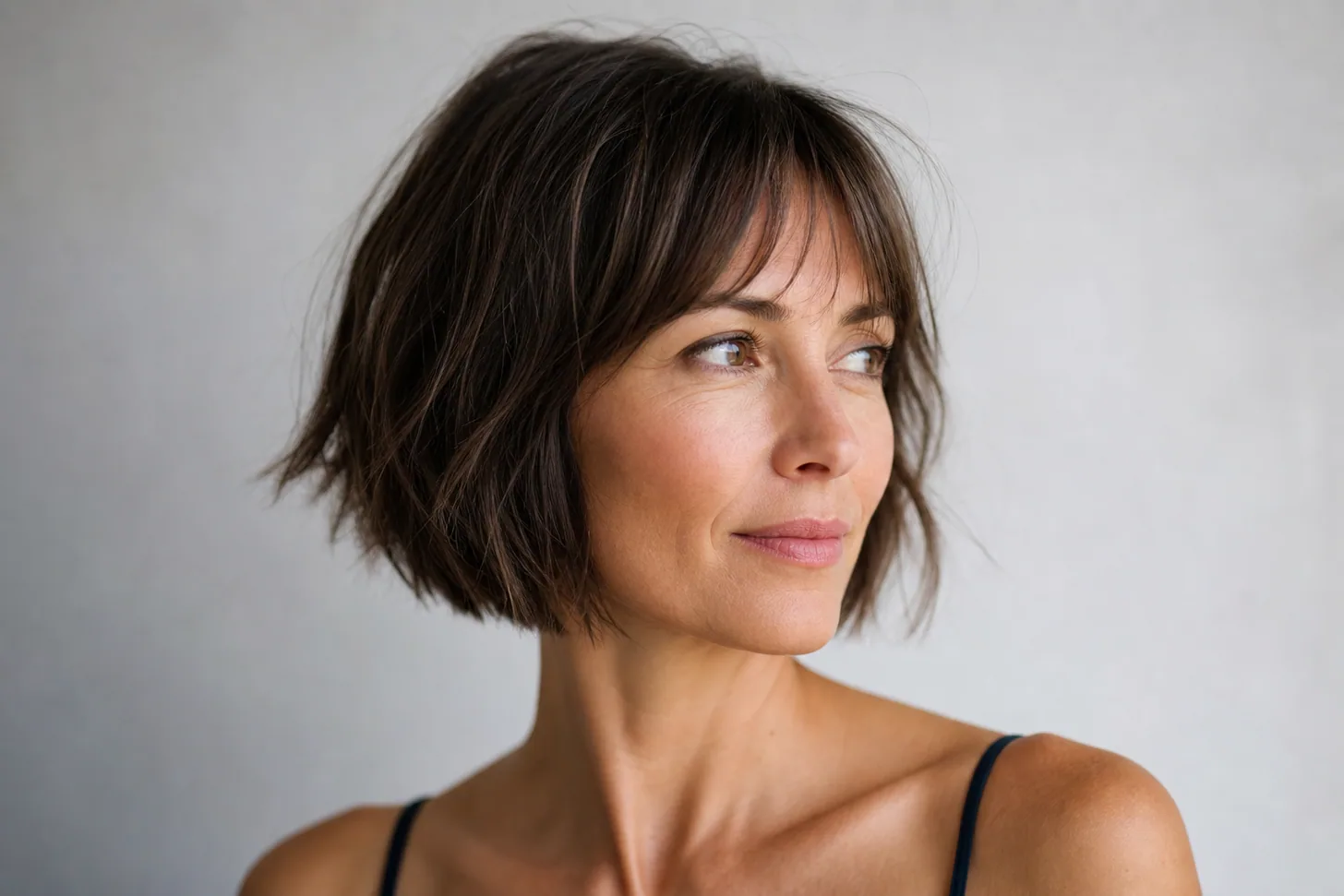
The compromise for anyone who finds a fully blunt line too severe — the ends are softened with vertical point-cutting, not razored, so they stay full-width while losing the hard edge. Movement without sacrificing the hemline. Ask specifically for point cutting; a razor here thins the ends fine hair can't spare.
9
The center-part '90s lob
A straight, blunt lob worn with a clean center part and ends tucked slightly under — the minimalist supermodel shape. Best on oval and heart faces; a center part frames symmetry. On fine hair, keep the ends full and add a whisper of shine spray so the sleekness reads polished, not flat.
10
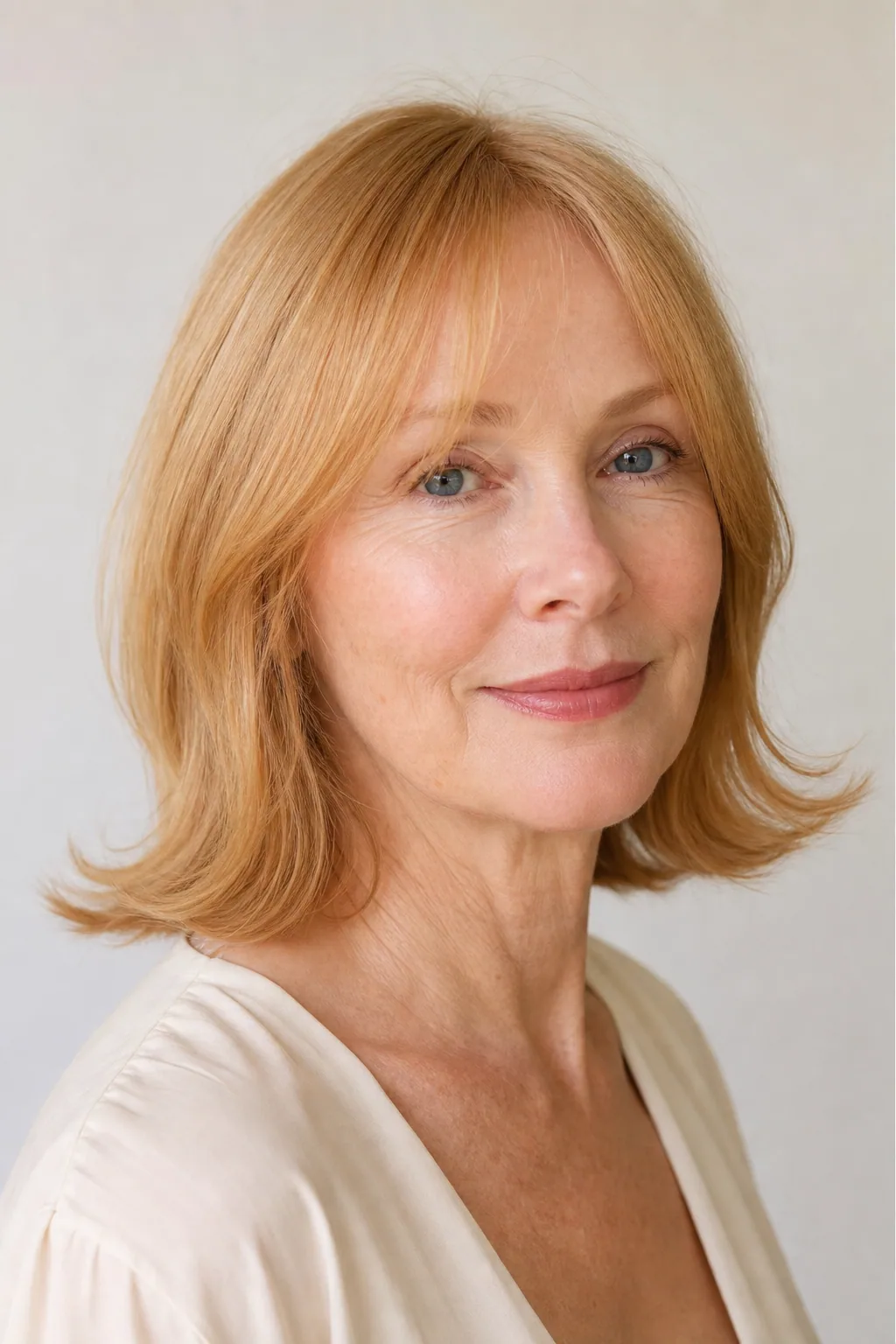
The flipped-end lob
Ends flicked out in a soft retro flip — the outward bend adds bounce and width at the hemline, which reads as fullness on fine hair. A round brush and a cool shot set it, or a flat iron turned out at the ends. Playful, and surprisingly good at faking density along the bottom line.
11
Lob with invisible internal layers
From the outside a blunt lob; inside, one or two whisper-light layers keep it from sitting like a curtain. It's the same hybrid that makes our layered bobs work on fine hair — movement on top, weight at the hemline. If your hair is fine but reasonably plentiful, this adds the swing a fully blunt lob lacks.
Lobs with bangs & finishing touches
A fringe or a color detail gives the eye a second focal point and adds a layer of interest that makes a simple lob feel designed.
12
Lob with curtain bangs
The fringe sweeps from a center part into the lengths, framing the face and adding lift at the hairline — two focal points that draw the eye up and away from the ends. We break down the fringe half of this in curtain bangs for fine & thin hair. The most universally flattering lob-and-bang pairing.
13
Lob with wispy bangs
A sheer, straight-ish fringe that lets a little skin show through — the only across-the-forehead bang that flatters fine hair, because it never pretends to a density it doesn't have. Softens a blunt lob on angular faces. Keep it airy and point-cut; a heavy, solid fringe looks sparse on fine hair.
14
The deep-side-part lob
A deep side part throws the weight up and over, doubling crown lift with zero product — the roots along the new part line stand against their trained direction. Suits round and heart faces; the asymmetry breaks up width. The easiest free-volume trick on this page, and it needs no cutting to try.
15
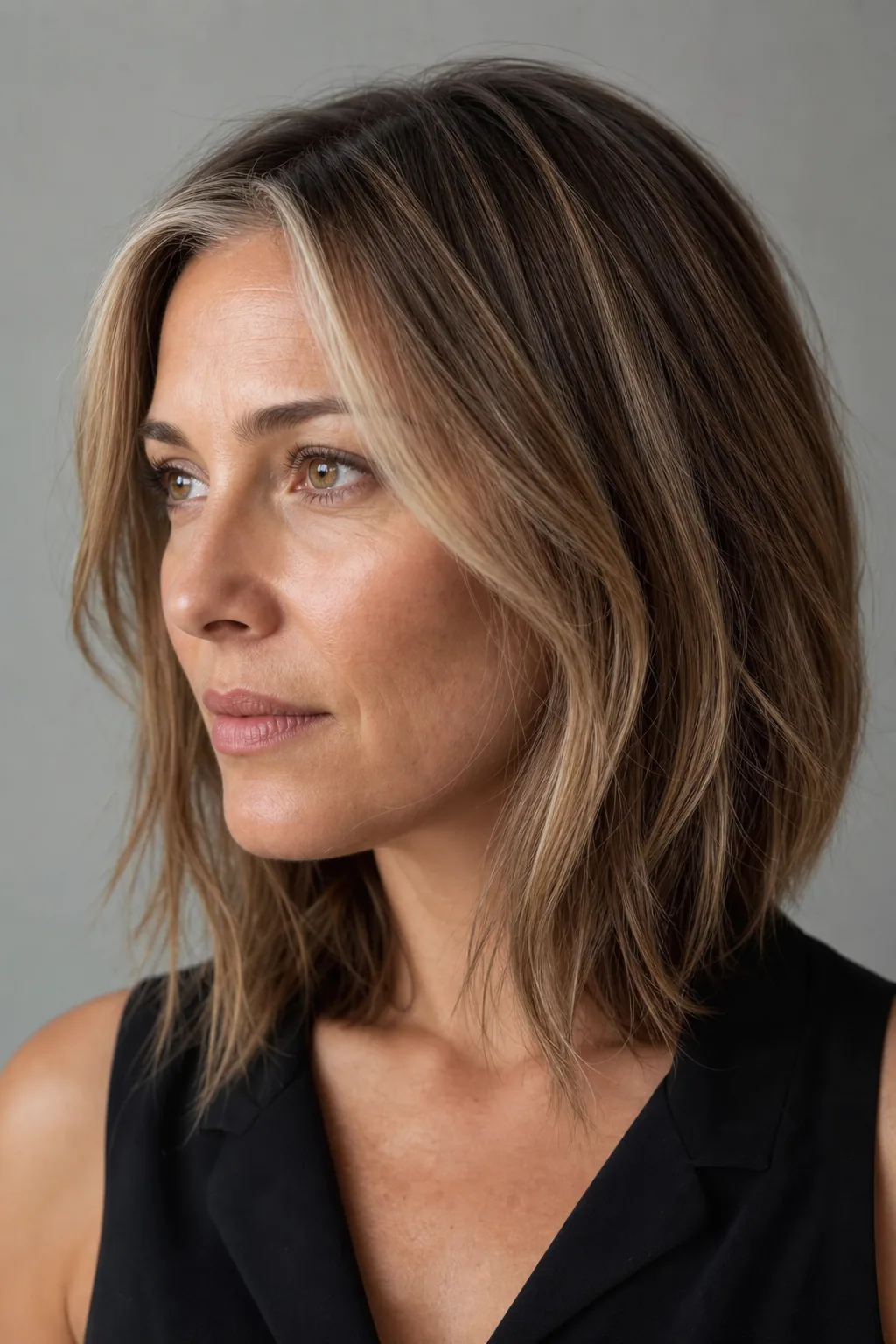
Lob with dimensional highlights
Soft, brightening pieces around the face and through the top layer catch light at different depths, faking a thickness the cut alone can't. On fine hair, contrast — not stripes — reads as volume; keep placement concentrated up top and around the face. The color detail that makes a lob look expensive.
16
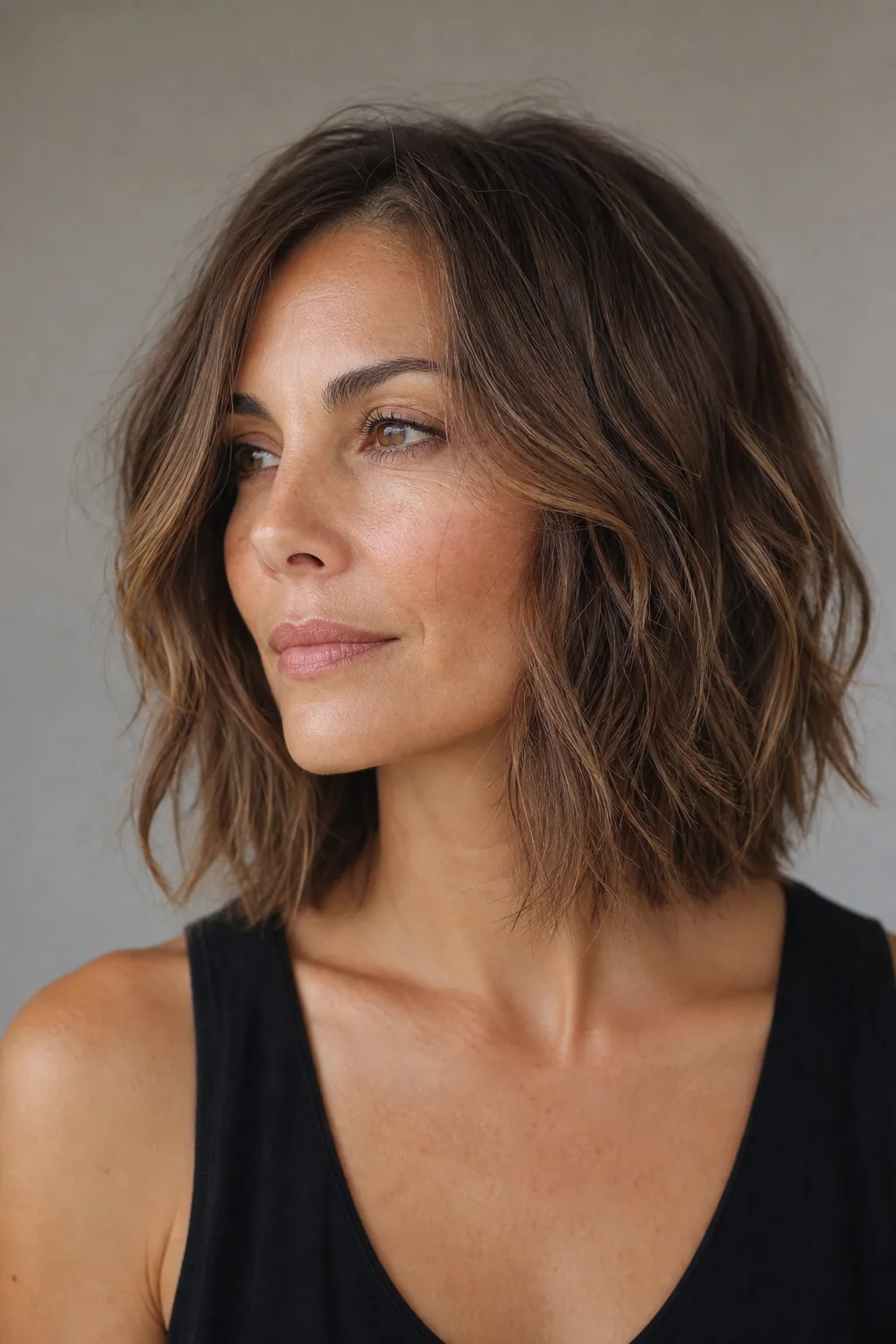
The lived-in undone lob
A blunt lob worn deliberately imperfect — air-dried, tousled, a little piece-y, finished with texture spray for grip. It borrows the ease of a soft shag without the layering, so the hemline stays strong. The choice for anyone who wants fullness with genuinely five minutes of effort.
Lobs for your face shape
Where the length sits and how you part it — not layers — decide what flatters. If you haven't mapped your face shape yet, our two-minute face-shape guide does it with a mirror and a washable marker. For a wider forehead over a narrow chin, the framing needs to start lower than usual — cuts for a heart-shaped face with fine hair covers where.
Balanced proportions carry blunt and wavy lobs alike.
Round
A-line lob with a deep side part
Forward angles and asymmetry elongate; avoid a chin-level blunt line.
Square
Wavy lob just below the jaw
Soft bends and below-jaw length round a strong jawline.
Heart
Collarbone lob with curtain bangs
Length and a fringe balance a wider forehead with fullness lower down.
Long / oblong
Blunt lob with wispy bangs
A fringe and a horizontal hemline shorten the proportions.
The honest maintenance picture
The lob is one of the most low-upkeep cuts for fine hair — long enough to tie back, forgiving to grow out, and dependent mostly on keeping the hemline honest.
Version
Trim
Daily styling
Grow-out
Blunt collarbone lob
8–10 wks
5–10 min
Very graceful; grows into long hair
Heavy-hemline lob (thin hair)
7–9 wks
5–10 min
Hemline softens; trim on time to keep density look
Wavy lob
9–10 wks
5–8 min
Waves hide grow-out; very forgiving
Lob with curtain bangs
Fringe every 4–6 wks
+1–2 min
Fringe grows into a face-frame
Center-part sleek lob
8 wks
8–12 min
Shows split ends soonest; keep it trimmed
What to ask your stylist
Say: "I have fine hair and I want a lob with a strong, blunt hemline — keep the weight at the bottom, point-cut the ends, no razor and no thinning shears. If it needs movement, one or two soft internal layers only, kept well above the hemline."
If your hair also runs thin, add: "Cut it just above the shoulders where the hemline is heaviest, and skip layers entirely — I want maximum fullness at the bottom." Bring a photo, and resist the urge to ask for the ends to be "thinned out" — that's the one request that will make a fine-hair lob look sparse.
At home, body comes from a root-first blow-dry and a bend — the full routine is in how to style fine & thin hair, and a one-inch curling iron is the one tool a wavy lob relies on.
When a lob may not be your best move
You can see your scalp clearly through longer lengths. Even a heavy lob may not build enough fullness — a shorter blunt bob or a pixie concentrates hair into a denser-looking shape.
You want visible, piece-y movement and texture. A lob's strength is weight, not layers; a modern shag delivers movement fine hair can't get from a blunt cut.
Your hair is highly damaged or split at the ends. A blunt hemline shows every split — get the damage cut off first, even if it means going shorter than a lob for now.
You genuinely never heat-style and your hair is poker-straight. A straight, flat lob can hang lifeless; either commit to the blunt-and-sleek look or choose a cut that builds body without a wave.
FAQ
The lob is one of the best long-ish cuts fine hair can wear. At collarbone length the hair is short enough to hold body but long enough to still feel long, and a strong, blunt hemline is the single most reliable way to make fine hair read as dense. Keep it mostly one length with a solid perimeter and it flatters almost everyone.
Lean blunt. On fine hair the weight of a solid hemline is what creates the illusion of thickness — every layer you remove from the perimeter subtracts from that illusion. If you want a little movement, ask for one or two soft internal layers only, kept well above the hemline, rather than layers cut into the ends. Blunt perimeter, invisible internal layers is the fine-hair formula.
Length. A bob sits between the ear and the jaw; a lob (long bob) falls around the collarbone or just above the shoulders. For fine hair the bob usually builds more visible fullness because it's shorter and carries less weight, but the lob keeps length while still holding body — the compromise for anyone not ready to go truly short.
Body comes from three things: a blunt hemline for weight, a root-first blow-dry for lift, and a bend through the mid-lengths so the hair doesn't hang flat. Mousse at damp roots, dry the crown up and against its fall, and add a loose wave with a one-inch iron. A center or switched part adds crown height for free.
Every 8 to 10 weeks. The lob is forgiving to grow out, but the hemline is what makes a fine-hair lob look full, and a blunt line softens and splits noticeably past ten weeks. If you want the blunt density illusion at its strongest, trim closer to eight weeks; if you like it a touch undone, you can stretch it.
A soft wave usually wins for volume — bends stack visual body that a flat, straight lob can't, and they hide fine hair's tendency to look thin at the ends. A straight, blunt lob looks sleek and dense but shows every gap, so it needs a strong hemline and a shine that isn't greasy. Many fine-haired clients keep it straight for polish and wavy for fullness.
Eleven years behind the chair, specializing in short shapes and fine-hair texture. Simone believes the best haircut is the one you can style yourself in ten minutes.
Images in this article are AI-generated illustrations, not photographs of real clients or results. See our image policy.
Results vary with hair type, density, and growth patterns. This guide is educational and not a substitute for an in-person consultation with a licensed stylist.
Get the good hair intel
One honest, stylist-written guide in your inbox each week. No hype.

 SB
SB