The three rules that change everything
Weight is the enemy. Every product decision on fine hair is a weight decision — a narrow strand collapses under creams and oils that coarse hair doesn't even notice. The root is the style. Lift at the first inch of hair decides whether the whole head reads full or flat; the lengths mostly follow.
Hair holds the shape it cools in. Heat softens the strand's temporary bonds and cooling re-sets them — skip the cool-down and the volume you just built falls within the hour.
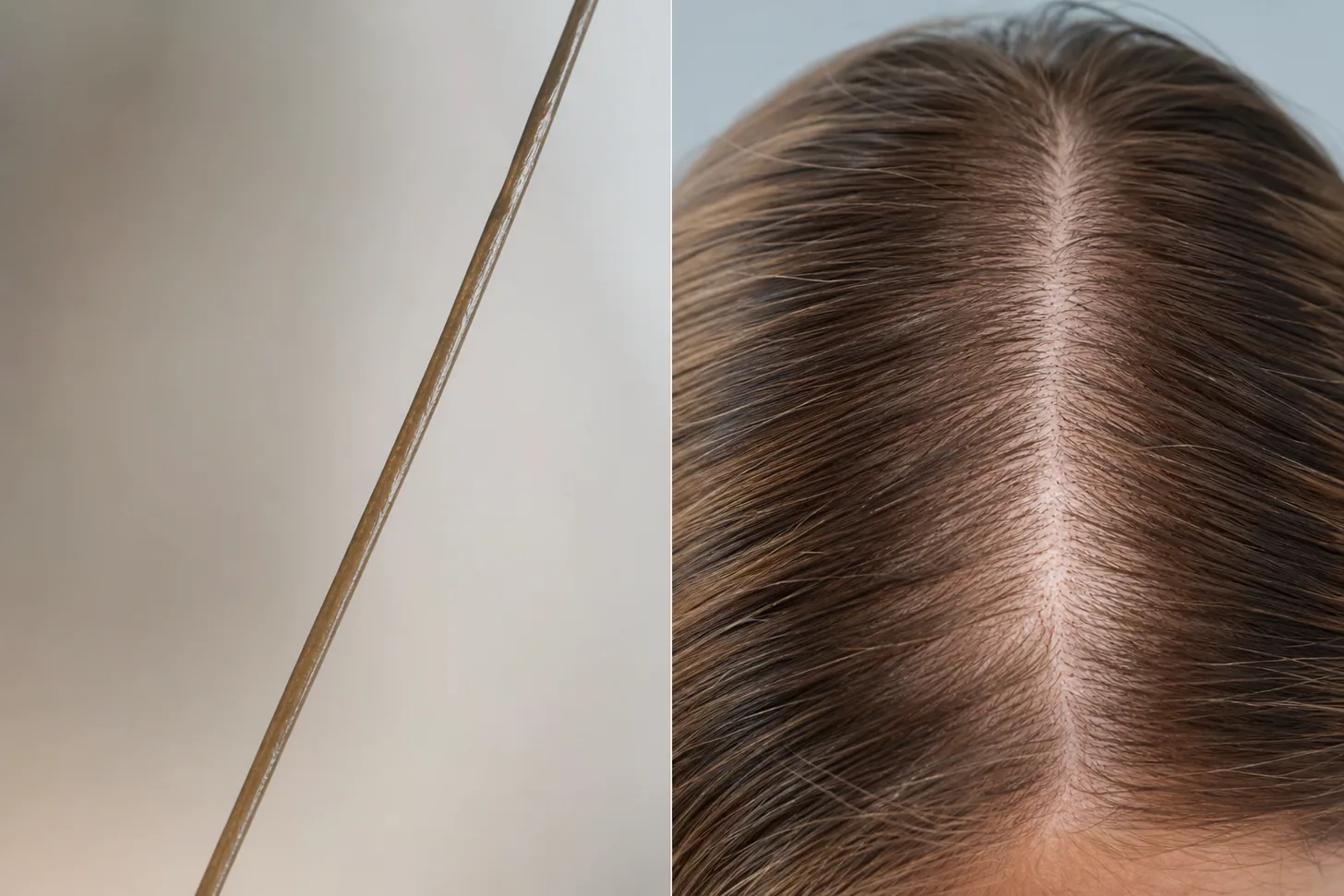
One caveat before the method: if your hair is fine and noticeably low-density, a couple of these moves shift (less teasing, more strategic parting) — our two-minute guide to telling fine hair from thin hair sorts out which you're working with.
Chair-side note
Watch where your hands go by 2 p.m. Most of my fine-haired clients unconsciously tuck, smooth, and re-tuck their hair all day — and every pass transfers oil from the fingers and presses the root flat. Half of "my volume never lasts" is a touching habit, not a product problem.
SB
The 10-minute daily method
This is a wash-day routine. It assumes nothing fancier than a dryer, a round brush, and two products — and once it's habit, it genuinely fits inside ten minutes on chin- to shoulder-length hair.
Step 1: Start with a clean, lightweight base
What you need: a lightweight volumizing shampoo and a rinse-out conditioner you keep off the scalp.
How: shampoo at the roots, condition from the ears down, rinse thoroughly — residue is weight. Our picks are in the best shampoo for fine & thin hair guide.
Why: a coated root physically cannot lift. If hair is limp on day one, the wash is the culprit more often than the styler.
Step 2: Prep damp roots with mousse
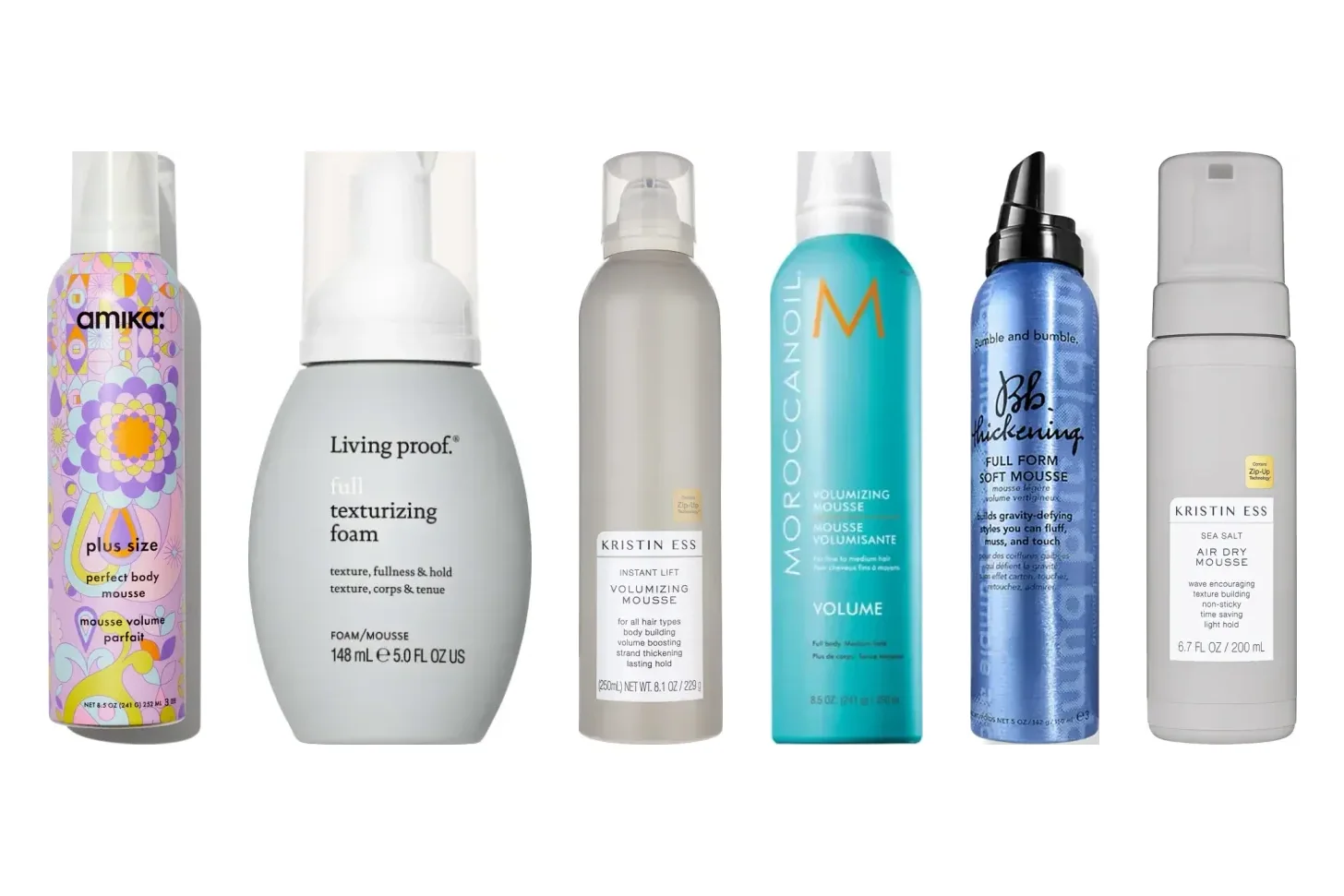
What you need: a golf-ball-sized puff of lightweight volumizing mousse — the categories worth buying are in our best mousse for fine hair roundup.
How: on towel-damp hair, work the foam into the roots section by section with your fingertips; comb the little that's left through the mid-lengths. Nothing on the ends.
Common mistake: raking mousse through the lengths like conditioner. The hold belongs at the root — that's where the lift happens.
Step 3: Blow-dry root-first, against gravity
How: flip your head over and rough-dry until hair is about 90% dry, keeping the dryer moving and a few inches off the hair — continuous motion at a distance measurably reduces heat damage to the strand's surface (peer-reviewed study on dryer distance and hair damage). Flip upright, then finish the crown and front with a round brush, lifting each section straight up and drying the root against its natural fall.
Why upside down: gravity is doing half the flattening. Drying the roots in the opposite direction builds lift into the set instead of asking product to fake it later.
Step 4: Set the lift while it cools
How: hit the roots with the cool-shot button section by section — or better, roll the crown into two or three large velcro rollers while the hair is still warm and leave them in while you do the rest of your routine.
Why: hair re-sets its temporary bonds as it cools. Cool the root in a lifted position and the lift is in the hair, not sitting on top of it.
Step 5: Finish light
How: mist a texture spray through the roots and mid-lengths for grip and separation, and stop there. If any piece needs smoothing, use the smallest possible touch of serum on the ends only — never within a hand's width of the scalp.
Common mistake: "finishing" with a shine cream or oil. On fine hair that's an eraser for steps 1 through 4. For waves that survive the afternoon, the flat-iron bend outlasts a curling-iron coil on fine hair — the flat-iron method has the technique.
The part switch: free volume, zero product
Hair trains itself to lie flat in the direction of your usual part. Flip the part to the other side — or move it an inch — and the roots along the new part line stand up against their training, adding instant height at the crown. Stylists use this trick on every photo shoot; it's also the fastest midweek reset when a full restyle isn't happening. Rotate the part every few wash days so no line gets permanently flattened.
Second-day styling: revive, don't rewash
Day-two fine hair is flat for two reasons — scalp oil coating the roots and the set simply wearing out. Address both in three minutes: mist dry shampoo at the roots (from a hand's width away, in sections, not one cloud on top), let it sit a minute, massage it through, then flip your head and blast the roots with warm-then-cool air.
The dry shampoo absorbs the oil; the heat-and-cool re-sets the lift. If the crown still drags, two velcro rollers for ten minutes finish the job.
Heat styling that actually holds on fine hair
Curls and waves fall out of fine hair when the sections are too big, the barrel is too wide, and the curl never cools.
Work in one-inch sections with a one-inch or smaller barrel — or skip the barrel entirely and bend the hair with a flat iron, which holds better on fine strands, keep the temperature moderate over a weightless heat protectant, and pin or palm each curl until it's fully cool before you let it hang — the cool-set rule again. Section size, temperature, and the pin-cooling step are walked through in how to curl fine hair so it actually holds.