Reviewed by Tara Sullivan · Updated July 2026 · 8 min read
If your fine hair has a natural wave, you have something straight fine hair doesn't: built-in body. The trick is a cut that works with the wave — letting it spring up and supply its own volume — instead of a heavy, blunt shape that stretches it flat.
Below are 14 salon-tested cuts for fine, wavy hair, from short textured bobs to long layers, plus the styling that keeps fine waves defined rather than frizzy, each with who it suits and the exact words to bring your stylist.
Chair-side note
Fine wavy hair gets cut wrong in two opposite ways. Some stylists treat it like straight fine hair and cut it blunt and heavy, which drags the wave out until it just looks like flat hair with a bend. Others treat it like curly hair and thin it to death, which turns fine waves into frizz.
The sweet spot is soft internal layers that let the wave form, over a length that isn't so long it stretches the wave straight. And crucially — ask for it to be cut dry, or at least checked dry, so your stylist can see where your wave actually falls. A wave cut only when wet is a gamble — wet or dry cutting for fine hair explains exactly how much length a wet cut can borrow.
SB
— Simone Baptiste, Senior Stylist
Why fine wavy hair needs its own approach
Wavy hair forms a loose S-shape — somewhere between straight and curly — and when it's also fine, it behaves unpredictably: limp and stretched out one day, frizzy the next. That's because fine strands don't have the weight to hold a consistent wave, so length, cut, and product all tip the balance. Get them right and the wave becomes your best volume tool; get them wrong and you get frizz on top with no body underneath.
This is a genuine bridge between a cut and a routine, so treat it as both. If you're not sure whether your hair is fine, thin, or both, the quick read on telling fine from thin hair helps — and because fine waves live or die by how you handle them, the styling section below matters as much as the cut you choose. (Note: this is for wavy hair, not tight curls or coils, which want a different, heavier approach.)
Short cuts for fine wavy hair
Whatever length you land on, fine wavy hair is the type root clips genuinely suit — the wave holds the lift after the clip comes out, which is exactly what fine straight hair cannot do.
Short lengths are brilliant on fine waves — with less weight pulling the wave down, it springs up and reads as full, textured body. These four are the shorter shapes that make the most of a natural bend.
wavy pixie cut with soft textured waves on top on fine hair
1
The wavy pixie
A pixie on wavy hair is a joy — the wave gives the top piece-y, effortless texture that straight pixies have to work for. Keep a little length on top so the wave can show, and let the natural bend do the styling. It's the lowest-effort short cut for anyone whose fine hair waves; scrunch a little product and go.
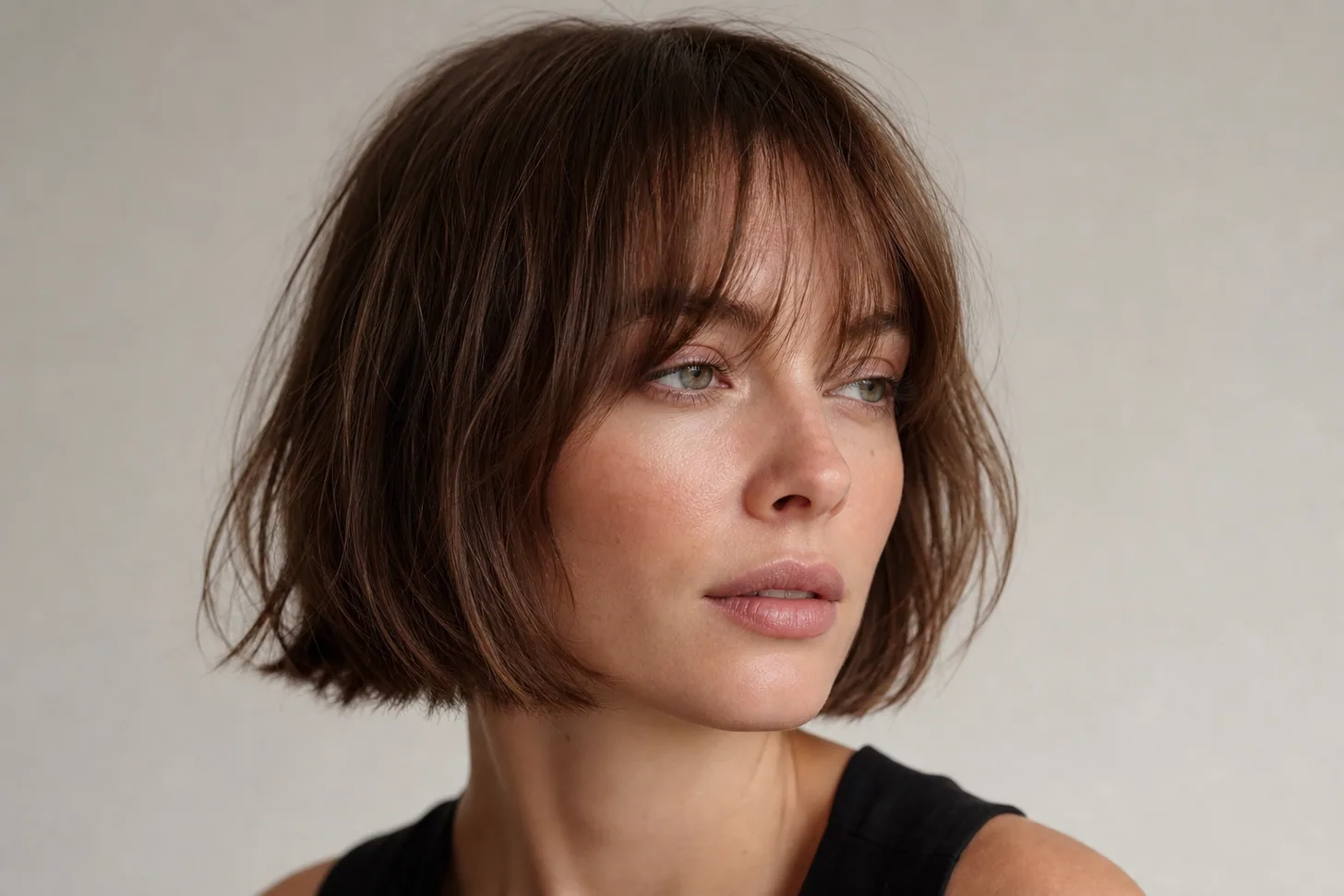
textured French bob with a soft wave and blunt fringe on fine wavy hair
2
The wavy French bob
The French bob was made for a soft wave — a chin-grazing length with piece-y ends that the wave turns into instant, undone texture. It's chic, low-commitment, and looks best a little tousled, which suits fine hair perfectly. Add a soft fringe if you want the full Parisian effect.
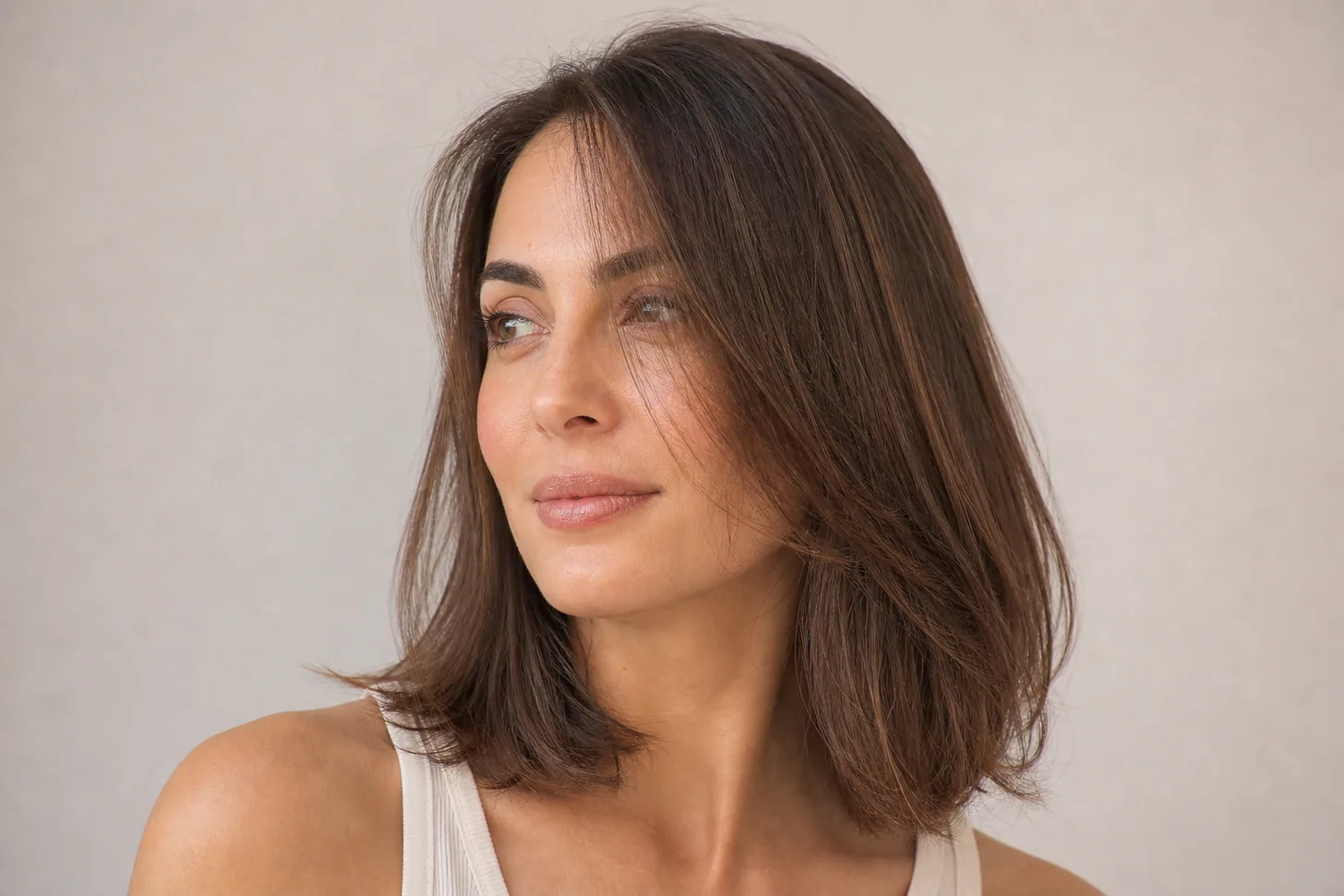
chin-length bob with internal layers and a soft wave on fine hair
3
The wavy chin bob
A chin-length bob with soft internal layers so the wave has room to form rather than sitting like a helmet. The layers are the key detail here — a blunt one-length bob can triangulate on wavy hair, widening at the ends. Ask for internal layering to break up the weight and let the wave bend cleanly.
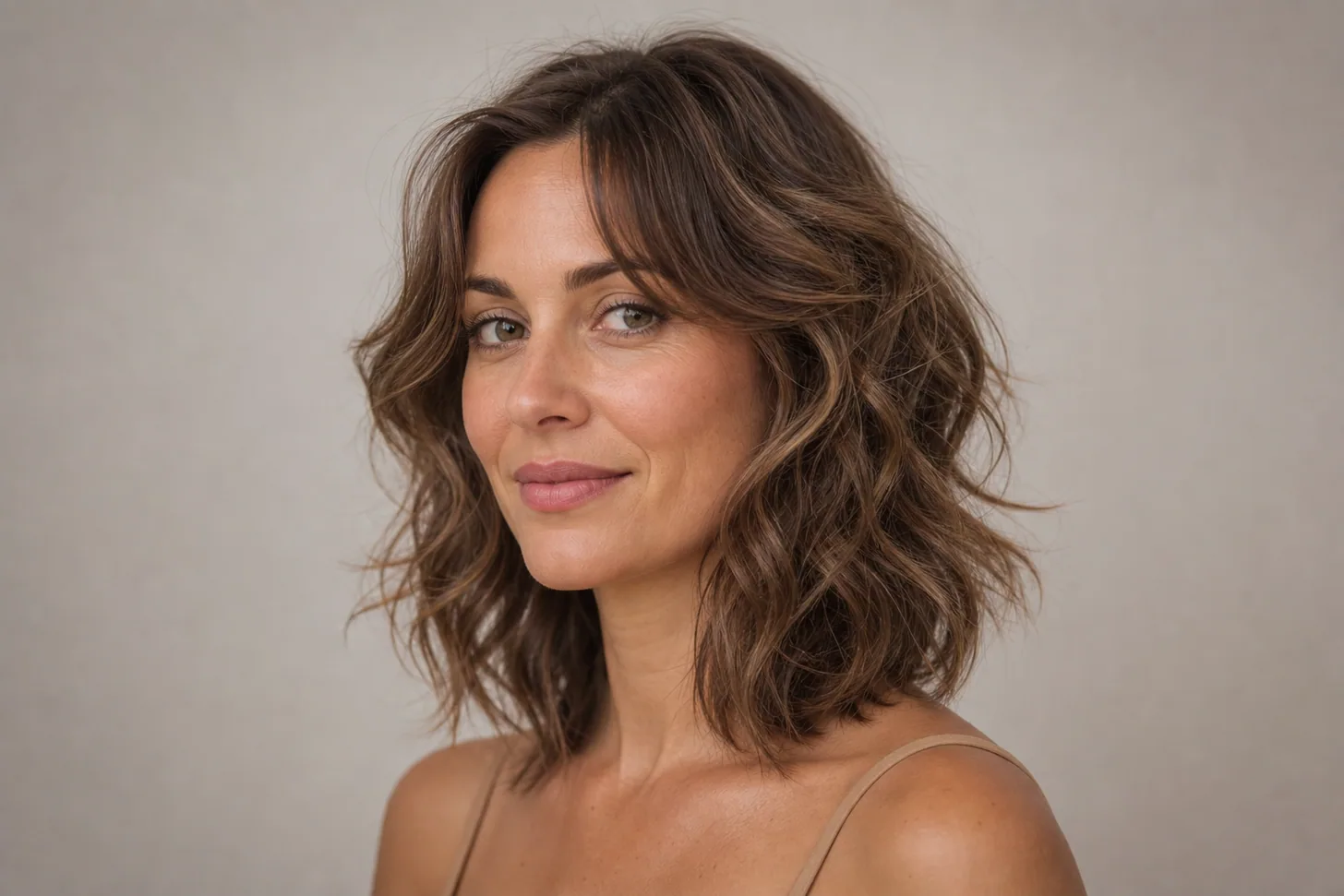
wavy lob at the shoulders with soft movement on fine hair
4
The wavy lob
The lob is arguably the perfect length for fine wavy hair — long enough for a proper S-wave to form, short enough that the weight doesn't stretch it out. It air-dries into effortless body and suits almost every face shape. If you want one cut that makes fine waves look their fullest with the least effort, this is it.
Medium & long cuts for fine wavy hair
You can keep length with fine waves — you just need layers to stop the weight from dragging the wave straight. These four hold body through the mid-lengths and ends.
collarbone-length wavy cut with soft internal layers on fine hair
5
The collarbone wavy cut
A medium collarbone length with gentle internal layers is the versatile everyday option — enough length for the wave to define, enough layering to keep it from going heavy. It's the medium cut I steer most fine-wavy clients toward, because it air-dries well and still ties back. Keep the ends soft, not razored.
long layered cut with defined waves and face-framing on fine wavy hair
6
The long layered wave
If you love your length, long layers are how fine wavy hair stays wavy instead of stretching flat. The layers remove just enough weight through the lengths for the wave to keep its bend all the way down. Expect to help it along with product on wet hair — long fine waves need support to stay defined.
wavy shag with piece-y textured layers on fine hair
7
The wavy shag
The shag and a natural wave are a perfect match — the piece-y layers and the wave together create tousled, rock-and-roll volume that fine hair could never fake on its own. It's the fullest-looking option here and the most forgiving on day-two hair. Lean in with a texture spray and let it look undone.
wavy butterfly cut with short face-framing layers on fine hair
8
The wavy butterfly
The butterfly cut works beautifully on waves, because the shorter face-framing layers spring up around the face for extra body without the round-brush routine the straight version needs. On fine wavy hair it can genuinely air-dry into shape. Ask for the shortest layers around the chin and let the wave do the flicking.
Fine wavy cuts with bangs & face-framing
Bangs on wavy hair take a little planning — waves shrink up and move — but done right they add a cushion of fullness at the face. These three suit fine waves specifically.
fine wavy hair with soft curtain bangs that blend into the waves
9
Wavy hair with curtain bangs
Soft curtain bangs are the most wave-friendly fringe — long enough to blend into the face-framing as the wave springs up, so there's no awkward shrinkage. They add fullness at the front and frame the face. Ask your stylist to cut them a touch longer than you'd think, because waves lift shorter than straight hair.
fine wavy hair with a soft grown-out fringe swept to the side
10
The soft side-swept fringe
A longer, side-swept fringe is the safest bangs choice on fine waves — it moves with the texture and tucks away when the wave isn't cooperating. It softens the face without the maintenance of a blunt fringe, which waves fight anyway. A relaxed, low-commitment way to frame wavy hair.
fine wavy hair with cheekbone face-framing layers adding movement
11
Wavy face-framing layers
Shorter pieces cut around the face from the cheekbone down give the wave somewhere to spring up right where it flatters — the single most effective detail for building body at the face on fine waves. No fringe commitment, just movement where you see it. Pair with any of the lengths above.
Ways to style fine waves for volume
With fine wavy hair, the cut is only half the story — how you dry it decides whether you get full, defined waves or flat frizz. These three approaches all start on wet hair and let the wave do the work. What you washed with matters too: fine wavy hair sits between the volumising shelf and the curl shelf, and our guide to shampoo for fine wavy hair works out which one you should be shopping from.
fine wavy hair scrunched and air-dried into soft defined waves
12
The air-dry scrunch
The lowest-effort, best-volume method: scrunch a lightweight mousse or a curl cream light enough for fine waves into soaking-wet hair, upward toward the scalp, then leave it to air-dry untouched. Scrunch out any crunch once dry for soft, full waves. Handling the hair while it dries is what causes frizz — so the rule is scrunch once, then hands off.
tousled beach waves with texture spray on fine wavy hair
13
The tousled beach wave
For lived-in, piece-y waves, mist a texture spray through mostly-dry hair and scrunch. It grips fine waves and exaggerates the bend for that undone, off-duty look — and it's the most forgiving style on second-day hair. The more relaxed it looks, the better it suits fine hair.
defined springy S-waves shaped with a diffuser on fine wavy hair
14
The diffused definition
When you want maximum definition and volume, diffuse instead of air-drying. Apply a light styler to wet hair, then dry on a low speed and a low heat, lifting each section up into the bowl from underneath — cradle it there rather than pressing the diffuser against your scalp, which compresses the root you're trying to lift. Dry the roots first with your head tipped, since that's the only window in which they can still be repositioned. Keep the heat low; high, direct heat stretches fine waves straight. The full step-by-step is in how to diffuse fine, wavy hair for volume, with the no-heat version in air-drying fine hair. For the beachy end of that, keep the salt content low — sea salt sprays for fine hair explains why high-salt formulas cost fine waves more than they give.
Choose your wavy cut for your face shape
Because waves add width, where your length falls matters. Use this as a starting point, then confirm with your stylist — the full method is in our guide to finding your face shape.
Balanced proportions carry short waves or long layers equally well.
Round
Lob or long layered wave
Keep length below the chin so the wave's width doesn't widen the face.
Square
Soft wavy shag or French bob
Rounded, tousled texture softens a strong jaw.
Heart
Collarbone wave with curtain bangs
Width and wave lower down balance a wider forehead.
Long / oblong
Wavy bob or cut with a fringe
A fringe and side width shorten the face; the wave adds the width.
What to ask your stylist
Bring the specifics that protect a fine wave. Say: "My hair is fine and wavy — please cut it dry, or at least check it dry, so you can see where my wave falls. I want soft internal layers to let the wave form, but keep the ends soft, not razored, and don't over-thin it or it'll frizz."
Then be honest about styling: "I want to air-dry" or "I'll diffuse" changes how much length and layering suits you. A stylist who understands wavy hair will ask to see it in its natural state first — if they reach straight for the straightener, find one who won't.
Chair-side note
The fastest way to ruin fine wavy hair isn't the cut — it's the towel and the brush. Rubbing waves dry with a rough towel roughens the cuticle into frizz, and brushing dry hair shatters the wave pattern completely. Switch to scrunching with a microfibre towel or an old cotton T-shirt, and only ever detangle in the shower with conditioner in.
If your waves keep going frizzy despite a good cut, that's the first thing to fix — and if it persists, it can be a porosity issue, which we unpack in taming frizz on fine hair and hair porosity for fine hair.
SB
— Simone Baptiste, Senior Stylist
When these cuts may not be your best move
Your hair is tightly curly or coily, not wavy. Curls and coils want a different approach and dedicated curl-cutting — this guide is built for loose S-waves on fine hair. If your curls are defined but your density is low, start with our guide to cuts for thin, curly hair instead; if they are tight coils, the shrinkage changes the shape entirely and cuts for fine coily hair is the right page.
You blow-dry your hair straight most days. If you rarely wear the wave, cut for your straightened length and body instead — a wave-optimised cut can look uneven worn straight.
You want a sharp, blunt, one-length look. Blunt cuts fight a wave and can triangulate; a straight-hair blunt bob only works if you'll style the wave out.
Your ends are dry or frizzy from heat. Treat and trim them first — damaged ends never hold a clean wave, and no product fully hides that.
FAQ
The best cut works with your wave instead of flattening it. For most fine wavy hair, a collarbone-to-lob length with soft internal layers is ideal — long enough for the wave to form a defined S-bend, short enough that the weight doesn't stretch the wave out straight. A textured or French bob is excellent on shorter wavy hair, and a soft shag suits anyone who wants more movement. Avoid heavy, blunt one-length cuts on wavy hair, which can triangulate or sit like a helmet, and avoid over-thinning, which makes fine waves frizzy and stringy. The goal is a shape that lets the wave spring up and supply its own volume.
Your wave is the volume — the job is to enhance it, not fight it. Apply a lightweight mousse or curl-enhancing cream to soaking-wet hair, scrunch upward toward the scalp, and either air-dry or diffuse on low. Drying the roots with your head flipped over builds lift, and scrunching out the crunch of a light gel or mousse once dry leaves soft, full waves. Skip heavy creams and oils, which weigh fine waves down flat, and don't brush the hair dry — brushing breaks the wave pattern into frizz. Product on wet hair plus a gentle dry does more for volume than anything you can add to dry hair.
Yes, but gently. Soft, point-cut internal layers help the wave form and spring up, which builds body — a completely one-length cut on wavy hair can hang heavy and pull the wave out. What fine wavy hair doesn't want is heavy, choppy layering or razor-cutting, which removes weight from already-fine strands and turns waves into frizz. Ask for layers that support the wave — enough to let it move, not so many that the ends look wispy. If your density is low, keep the layers minimal and concentrated through the mid-lengths.
Frizz and flatness on fine wavy hair usually come from the same causes: over-washing, brushing dry hair, and heavy products. The fixes are to wash less often, apply a lightweight styler to wet hair and leave the wave alone as it dries, and use a microfibre towel or T-shirt to scrunch rather than rub. A light anti-frizz cream or serum on the mid-lengths and ends smooths without weighing the wave down. If frizz is persistent, it can also be a porosity issue — our guides to taming frizz on fine hair and hair porosity go deeper. The short version: less handling, lighter products, and never a dry brush.
No. Wavy hair forms a loose S-shape and tends to fall somewhere between straight and curly, while curly hair forms defined loops or coils. Fine wavy hair is its own thing — it has the built-in body of texture but the delicacy of fine strands, so it can go limp and stretched out one day and frizzy the next. Most curly-hair advice is too heavy for fine waves. Treat fine wavy hair as fine hair first: lightweight products, gentle handling, and cuts that support rather than weigh down the wave.
For the most volume and definition, apply a light styler to soaking-wet hair, then either air-dry or diffuse on a low, gentle setting. Scrunch upward toward the scalp to encourage the wave, and dry the roots first — flipping your head over helps build lift. If you prefer a blow-dry, use a diffuser rather than a nozzle and concentrated heat, which stretch the wave straight and flatten it. Whatever you do, don't touch the hair while it's drying beyond the initial scrunch; handling wet-to-dry waves is what turns them to frizz. Finish by scrunching out any product crunch for soft, full definition.
Eleven years behind the chair, specializing in short shapes and fine-hair texture. Simone believes the best haircut is the one you can style yourself in ten minutes.
Results vary with hair type, density, and growth patterns. This guide is educational and not a substitute for an in-person consultation with a licensed stylist.
Hairstyle images in this guide are AI-generated illustrations, not photos of real clients or results. See our image policy.
Get the good hair intel
One honest, stylist-written guide in your inbox each week. No hype.

 SB
SB