Reviewed by Tara Sullivan · Updated July 2026 · 8 min read
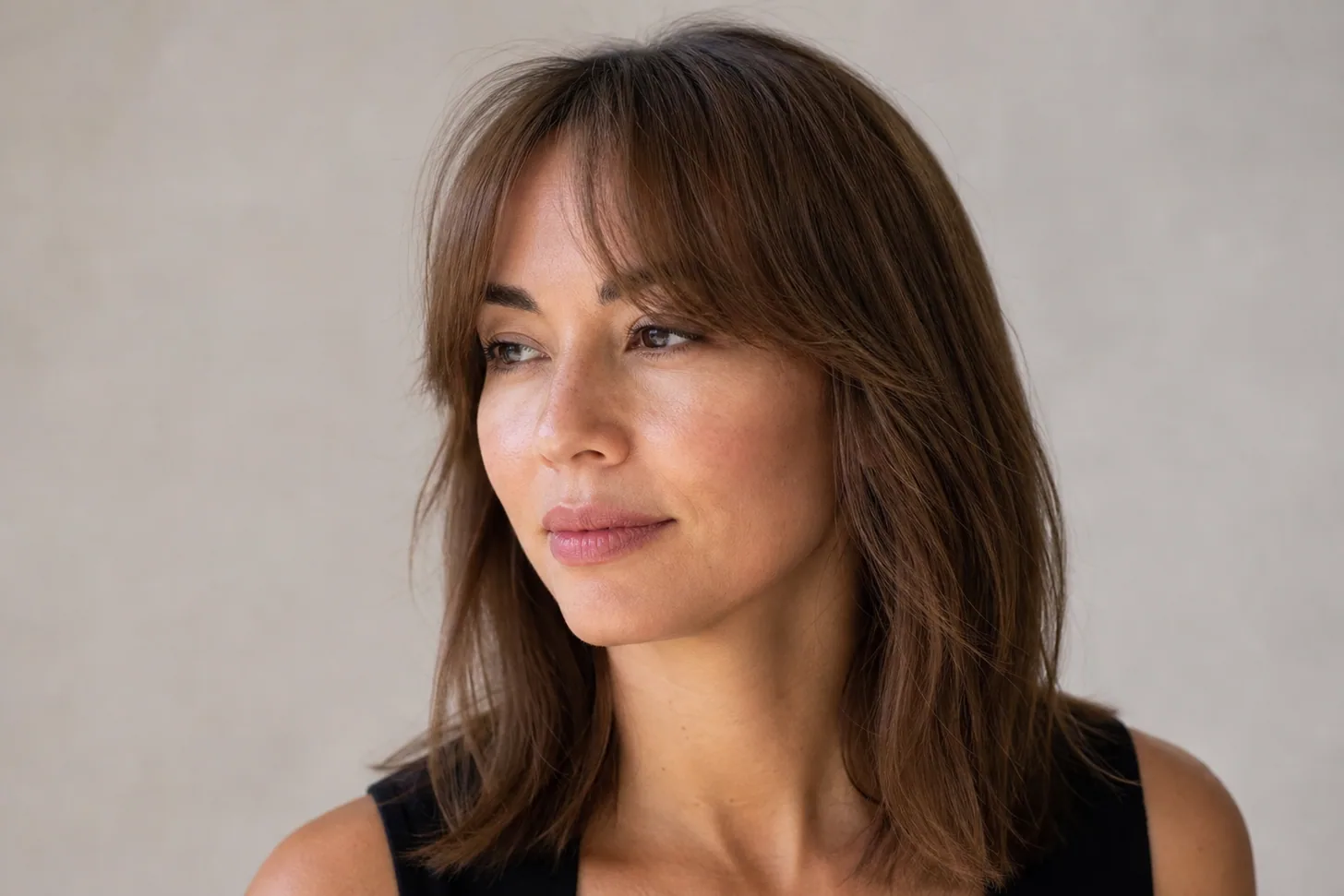
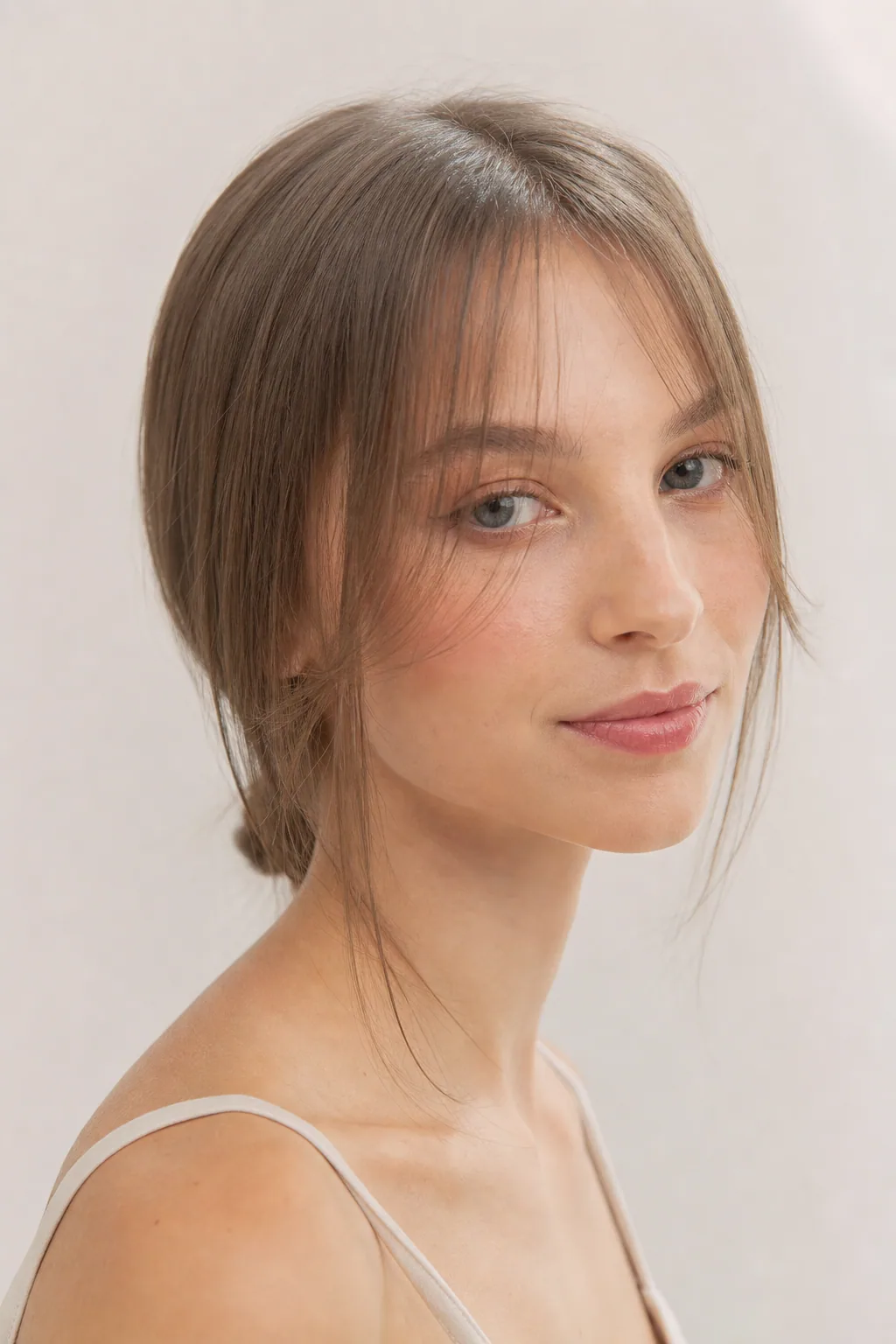
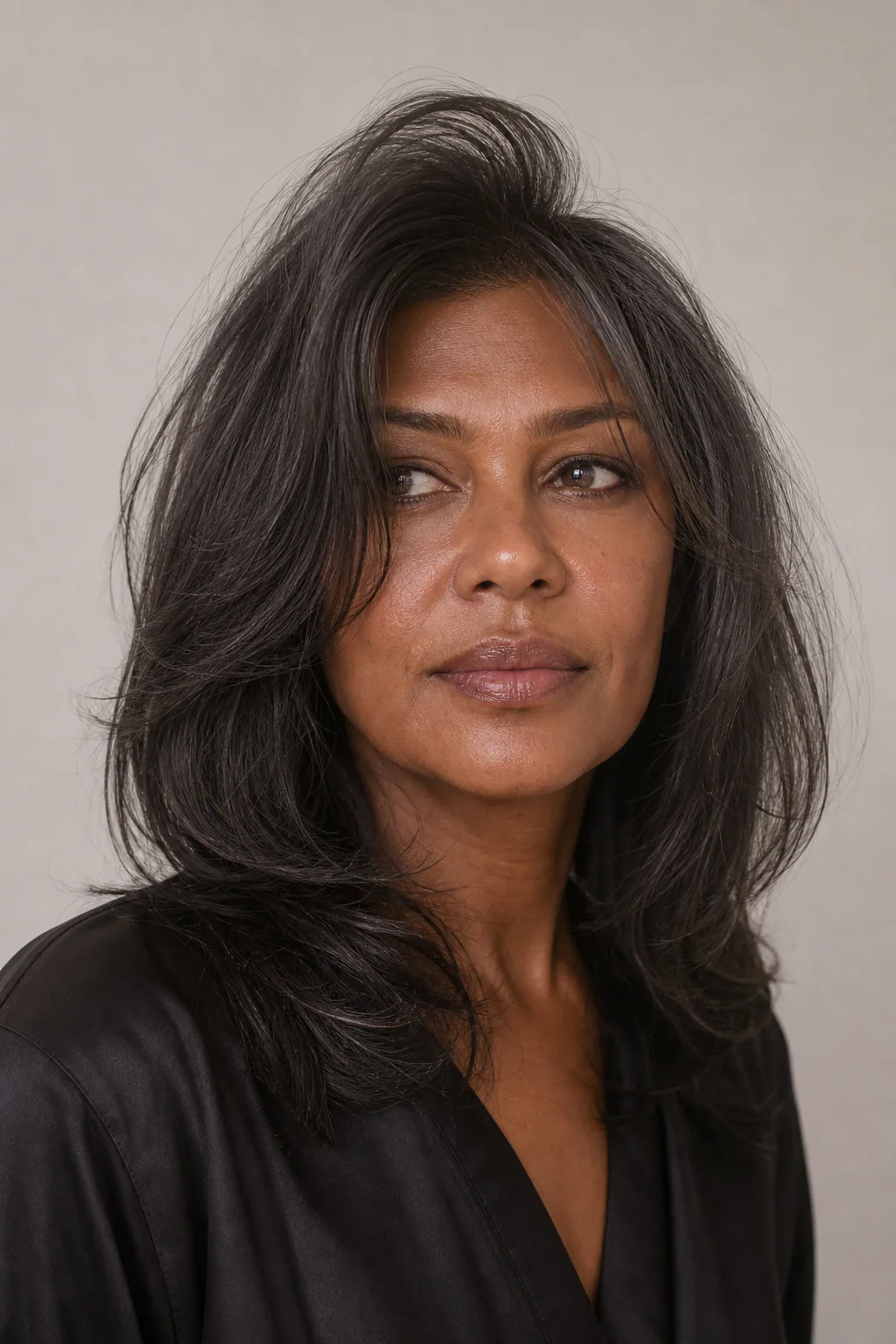
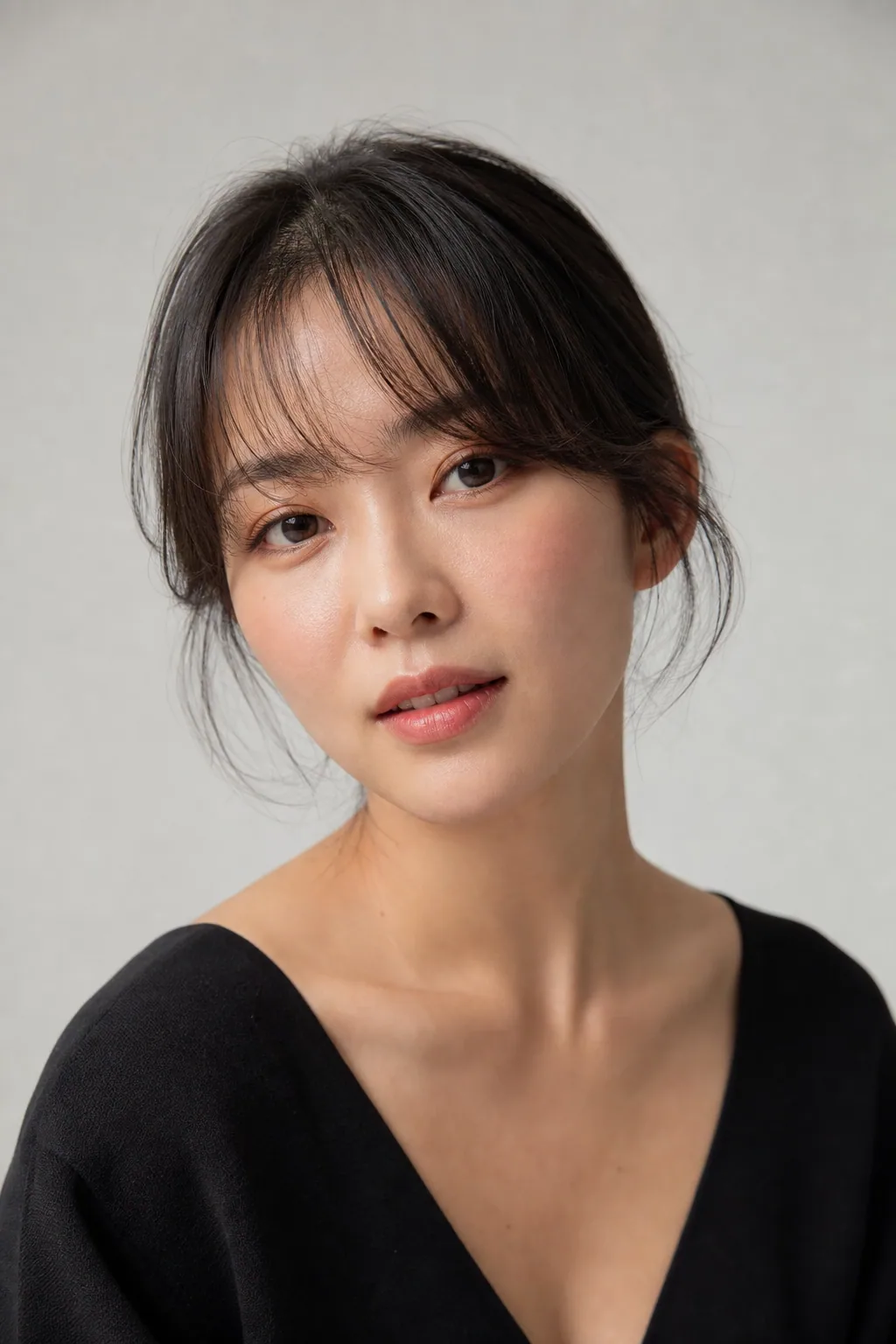
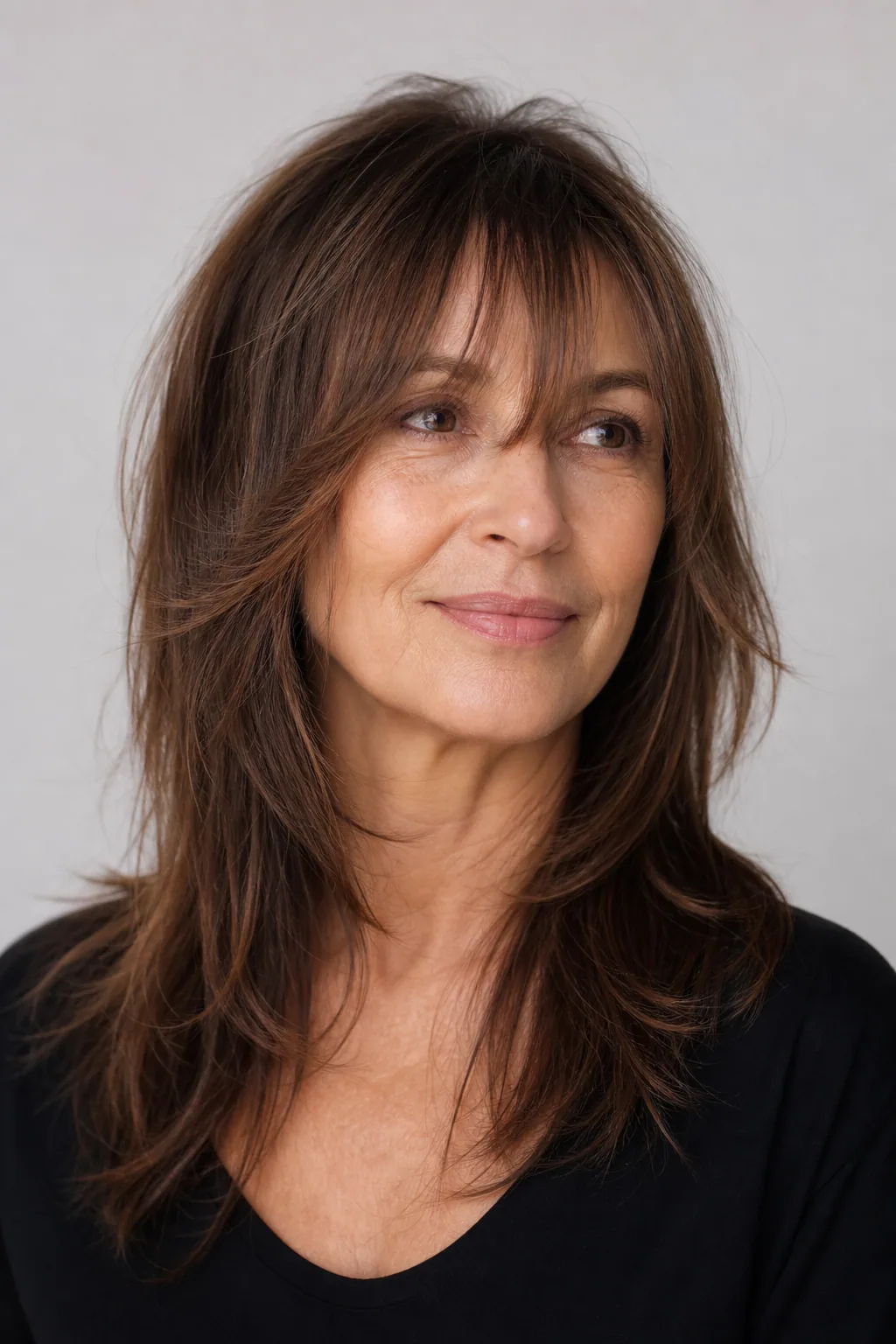
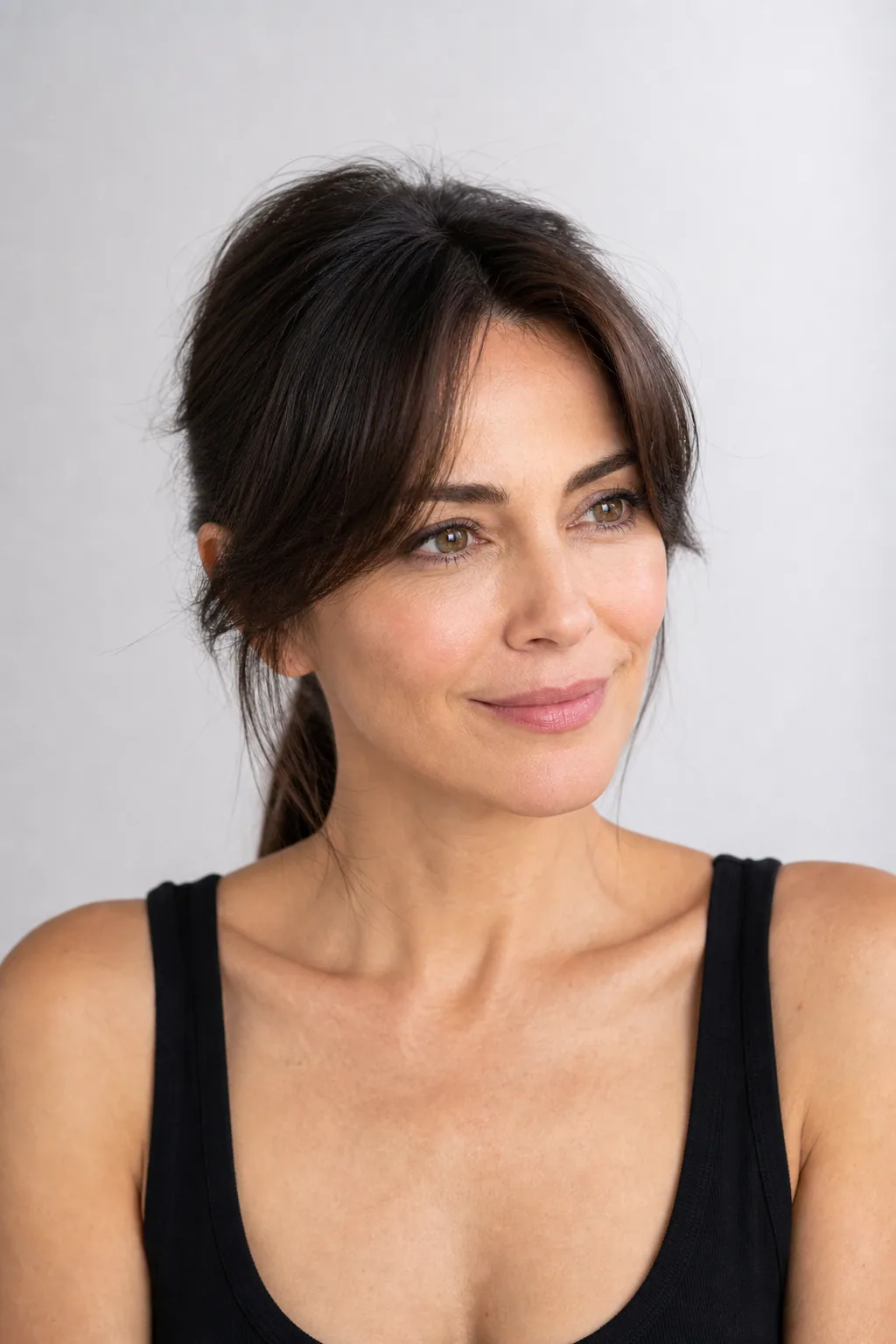
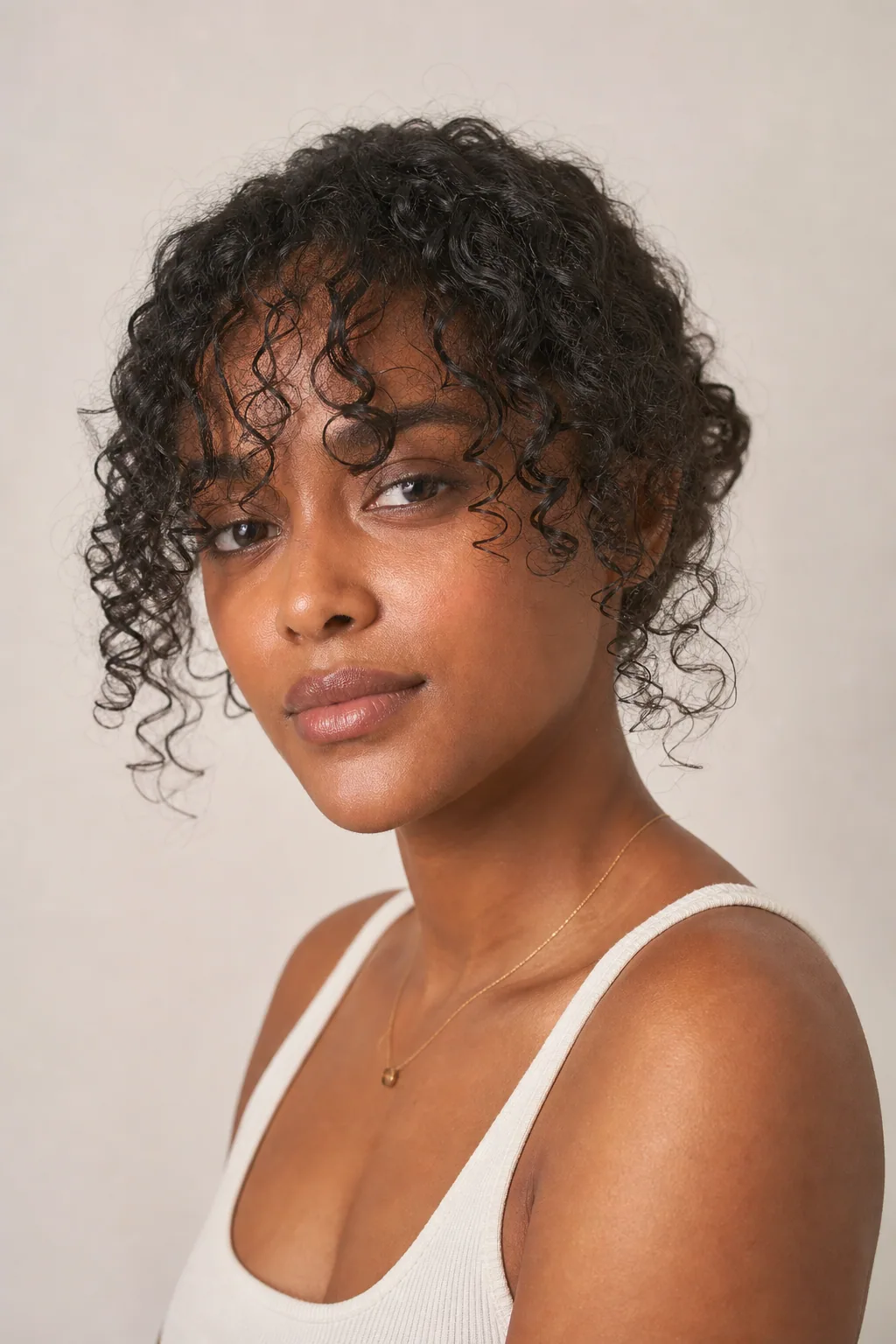
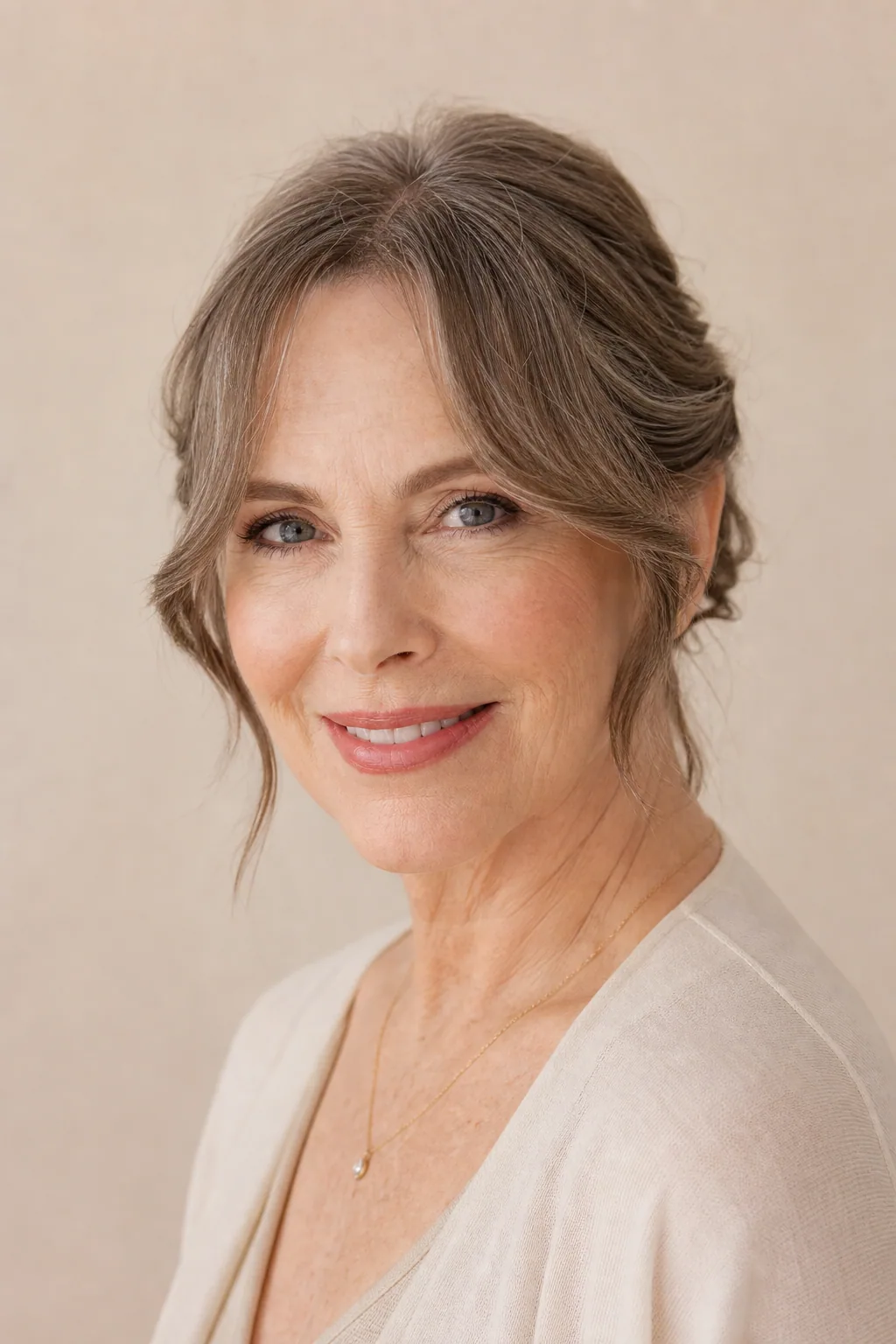
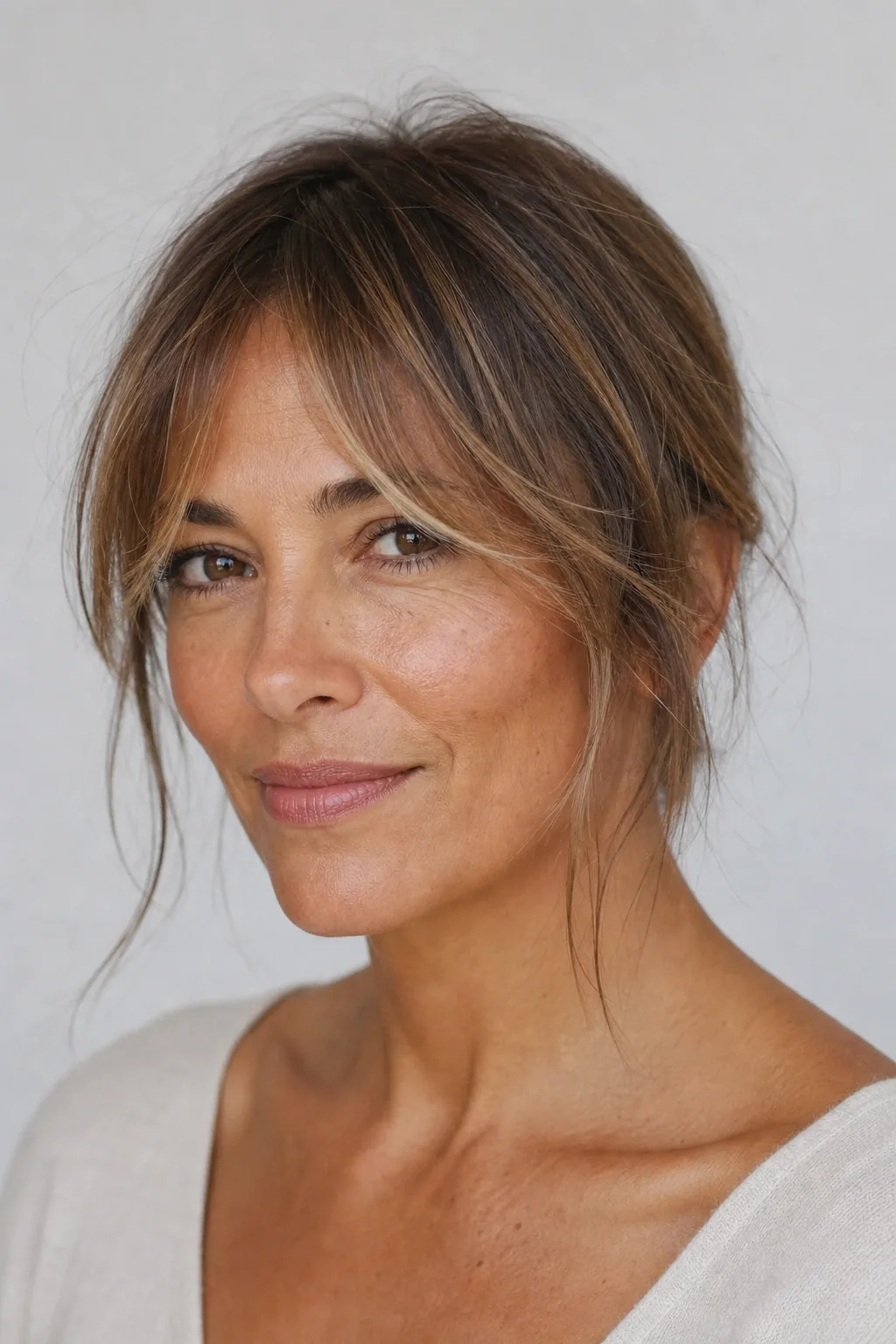
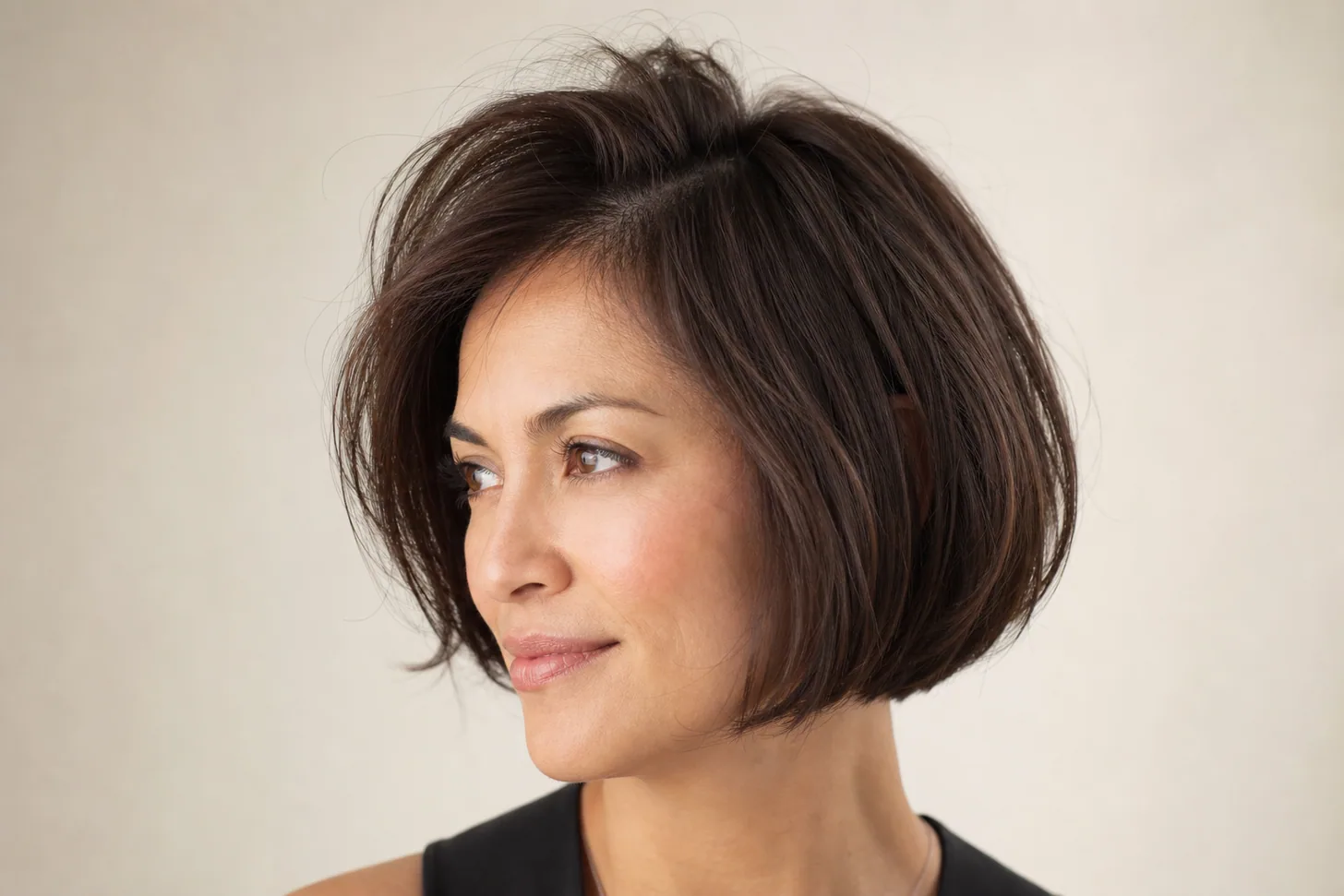
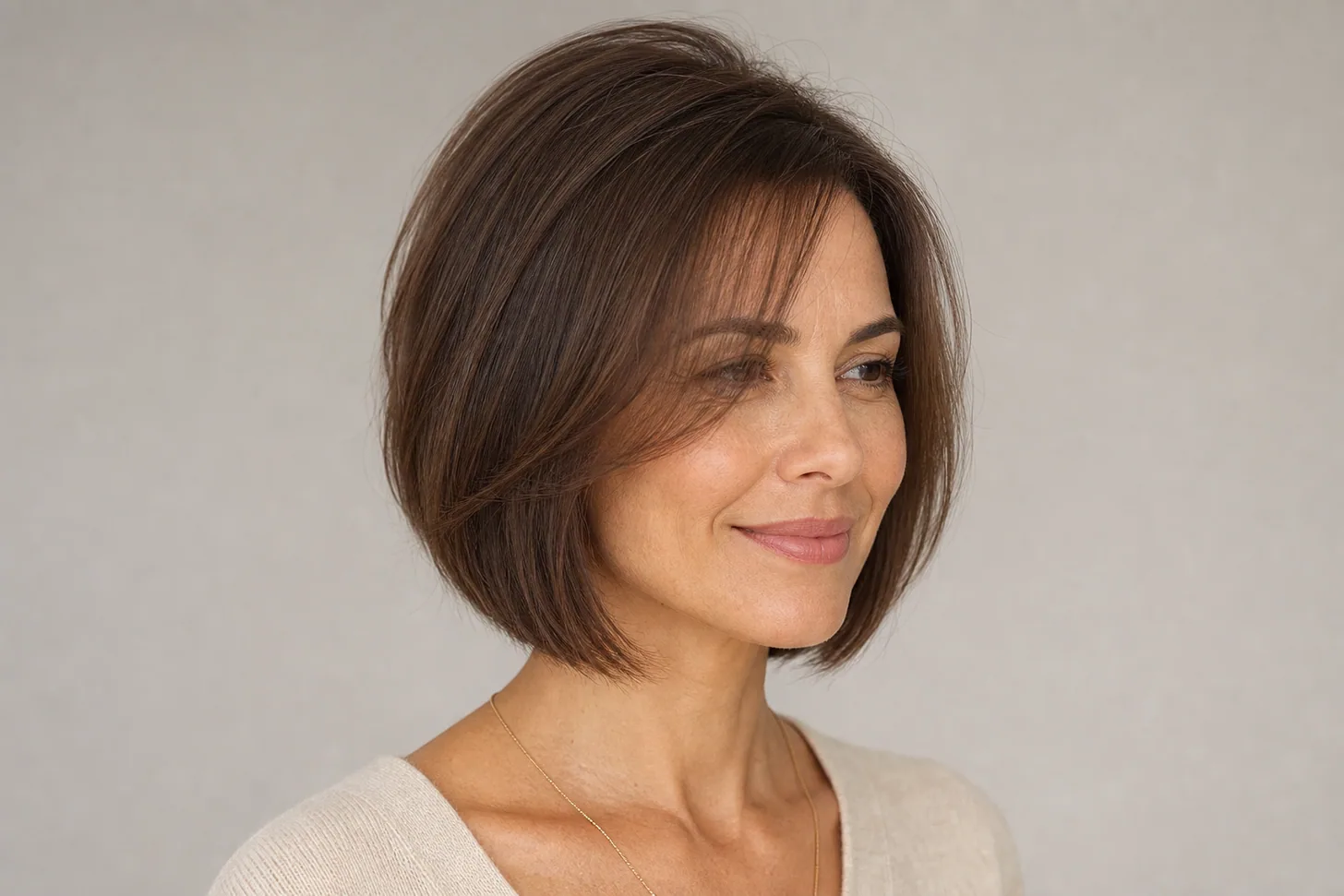
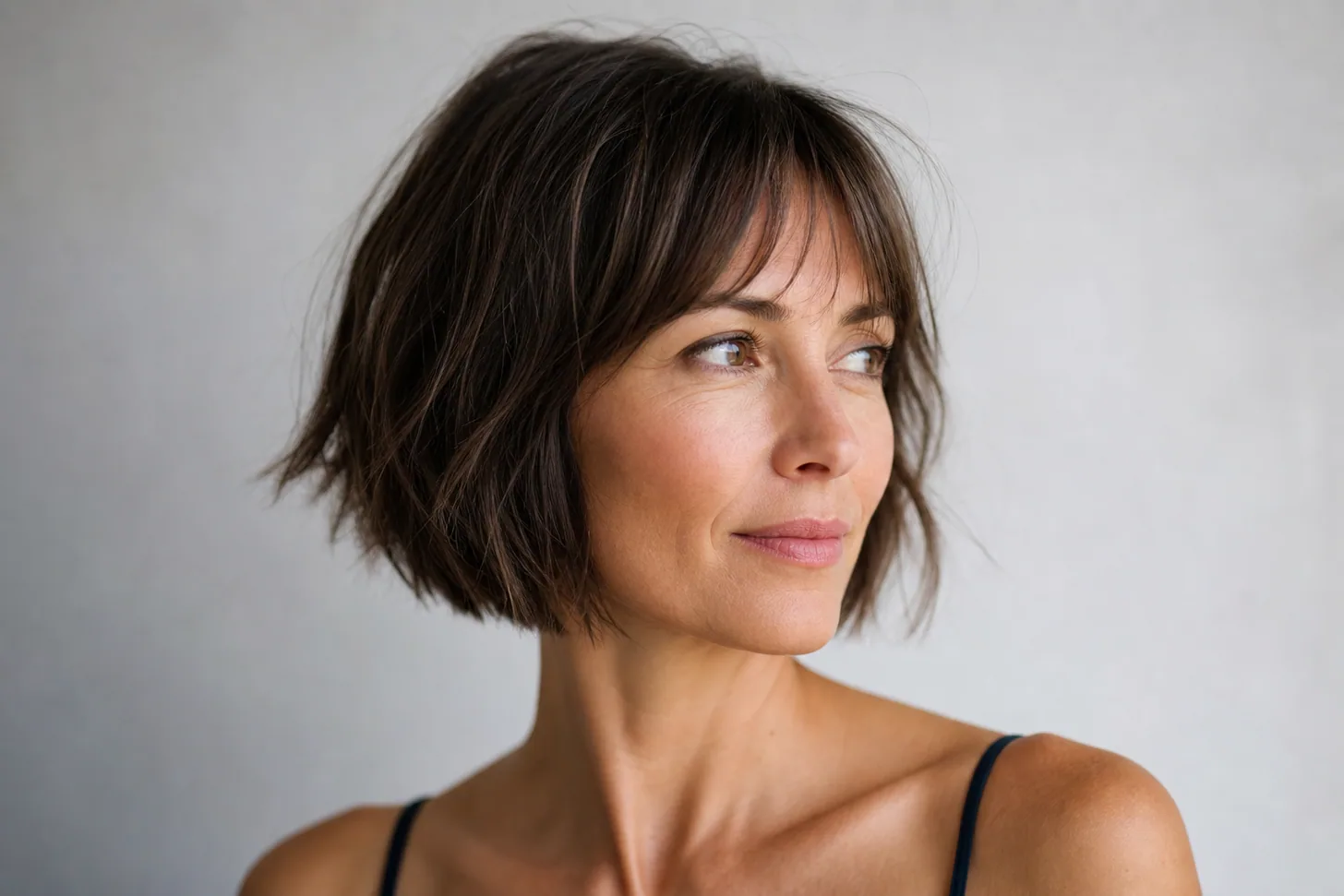
Curtain bangs flatter fine hair when they're texturized, not blunt — a center-parted, side-swept fringe that adds soft volume and movement up front without the density a heavy fringe demands. Below, 14 salon-tested versions grouped by length and texture, each with who it suits and the exact words to bring your stylist.
The honest maintenance verdict
4–6 minutes most morningsDay two: rewet the fringeTrim every 4–6 weeksTucking it back sets a bend
Curtain bangs are sold as the low-maintenance fringe and on fine hair that isn't true — they're the highest-maintenance of the common options, and it's worth knowing before you commit rather than three weeks in. The reason is length. A curtain fringe is long, and long fine pieces have enough weight to fall but not enough body to hold a sweep, so they separate into stringy panels within a few hours of the styling wearing off.
What day two actually looks like: flat against the forehead, separated into two or three visible strands per side, and noticeably greasier than the rest of your hair — because it has spent a day lying on skin covered in moisturizer and SPF. Most people who wear this fringe successfully rewet just the fringe at the sink each morning and give it ninety seconds with a brush. That is the routine, and it's much quicker than washing your whole head.
The tucking problem is real and specific to this fringe. Fine hair takes a set from being held in a position, so an hour with your fringe tucked behind your ear leaves a curve bending in toward your jawline that won't brush out dry. If you tuck reflexively while you read or concentrate, factor that in — a side-swept fringe is far more tolerant of it.
The fix for stringiness is length, not product. A shorter curtain fringe that finishes at the cheekbone rather than the jaw holds its shape substantially longer, because there's less weight pulling it down. If yours goes stringy by lunchtime, take an inch off before you buy anything. The full daily method is in how to style bangs on fine hair, and the fringe comparison table puts these numbers next to every other type.
Chair-side note
Ask for your curtain bangs to be point-cut, not cut straight across, and to start at cheekbone level. On fine hair a blunt fringe looks sparse — you can see gaps — but soft, feathered ends read full and blend into the length so grow-out is painless. It's the single detail that separates a curtain bang that suits fine hair from one that doesn't.
SB
— Simone Baptiste, Senior Stylist
Why curtain bangs work on fine hair
A blunt, straight-across fringe needs density to look right — pull fine hair into one heavy line and the gaps show. Curtain bangs do the opposite: they part in the middle and sweep to each side, distributing hair rather than massing it, so they frame the face and add soft height at the fringe without exposing the scalp.
The wispy, texturized ends blend into face-framing layers, which is also why they grow out so gracefully — and why converting a straight fringe to this shape is the shortcut through a grow-out. If you want that airy quality across the whole fringe rather than only a center-parted sweep, see our edit of wispy bangs for thin hair.
And if you're weighing a fringe because your hair falls flat, it helps to know whether you're working with fine strands, low density, or both — our two-minute guide to telling fine hair from thin hair makes the call. They have also outlasted almost every other fringe of the last five years — fine hair trends for 2026 covers what is replacing the ones that did not.
“Thin curtain bangs” and “curtain bangs for thin hair” are two different asks
Worth settling before you book anything, because one phrase sends two women with opposite problems into the same chair. Thin curtain bangs describes the fringe itself — a sparse, see-through, deliberately under-filled curtain, taken from a shallow section at the front so the forehead still reads through it.
Curtain bangs for thin hair describes the head the fringe is cut on, and the goal there is the opposite: you want the fringe to look like it has enough hair in it, not less.
The difference is not cosmetic, because the two are cut from different depths. A deliberately thin curtain comes from scooping only the surface layer at the front, so most of the hairline stays behind it — which on fine hair is a genuinely kind technique, since it borrows very little from a density you cannot spare. But that same shallow section is what makes a fringe read stringy if what you actually wanted was fullness at the front.
So say which you mean. “A soft, see-through curtain” and “a curtain fringe that looks full on fine hair” are different instructions, and a stylist who guesses will pick the wrong one about half the time. Both are covered below. If the see-through version is what you are after, wispy bangs for fine hair is the page built around it, and the full bangs taxonomy places both against every other fringe shape.
Soft, wispy curtain bangs
The most fine-hair-friendly versions — light, feathered, and barely-there, so they never read heavy or sparse.
1
Wispy cheekbone-length curtain bangs
Feather-light ends that graze the cheekbones — the softest, most forgiving version for fine hair. They add face-framing movement with almost no weight, and they're the easiest to grow out of the whole edit.
2
Bardot bang with root lift
A fuller, bouffant-inspired sweep blow-dried up and back for maximum height at the fringe. On fine hair, the root lift is everything here — it's what turns a thin fringe into a soft, voluminous frame.
3
Short "micro" curtain bangs
A shorter take that hits around the eyebrows before sweeping out — youthful and a little French. Keep them airy and separated; on fine hair, short bangs must be texturized or they lie flat against the forehead.
4
Seamless layered curtain bangs
Cut to melt directly into the first face-framing layer, so there's no visible "bang" line at all. This is the low-commitment choice — it reads as soft layers rather than a fringe, and it's nearly impossible to grow out badly.
Curtain bangs with a cut
Bangs never live alone — pairing them with the right length multiplies the fullness. These combinations are the ones I reach for most on fine hair.
5
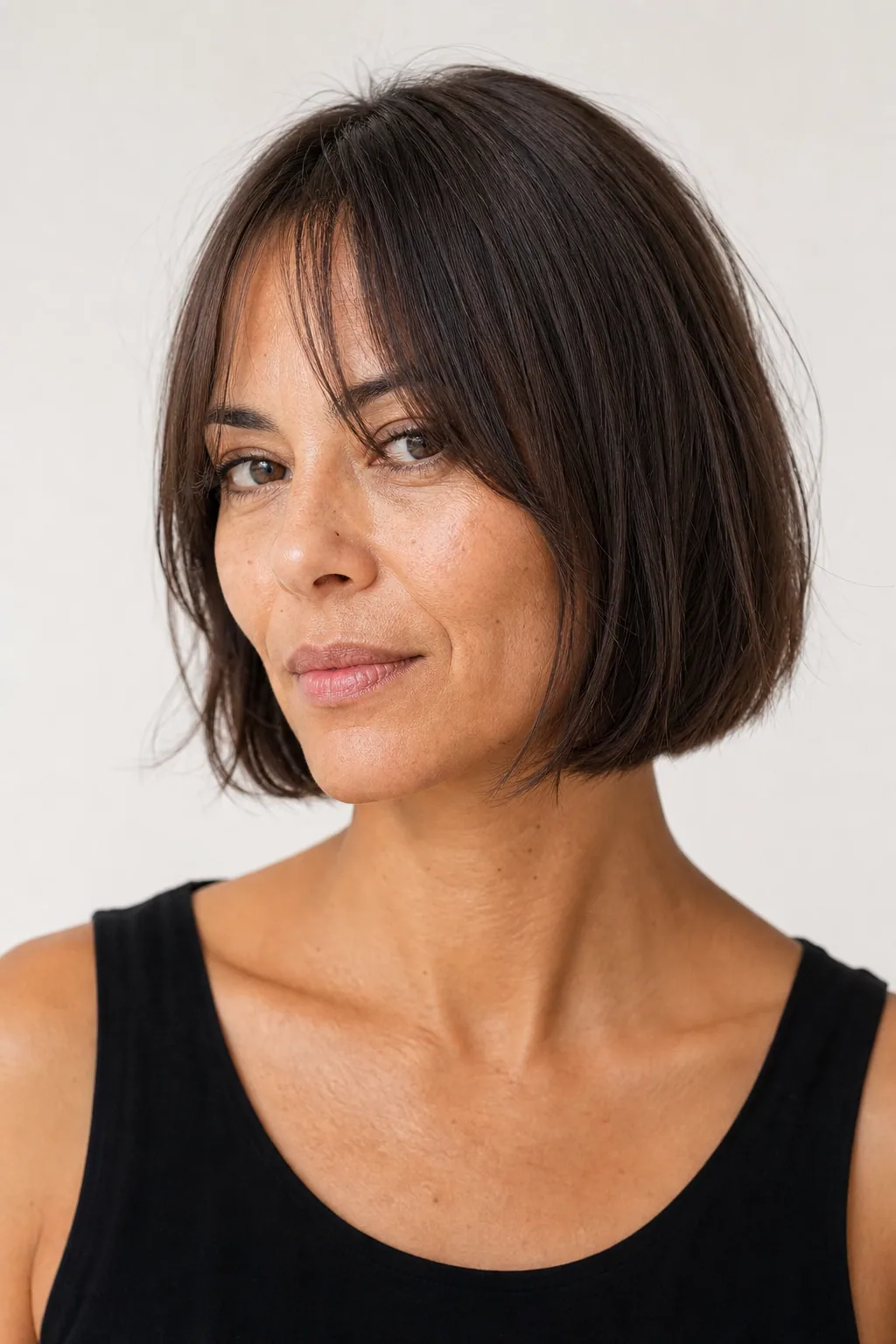
Bob with curtain bangs
Chin-length weight plus a soft central fringe — two fullness tricks at once. The bob stacks density at the jaw while the bangs frame the face; see the full range in our guide to bob haircuts for thin hair.
6
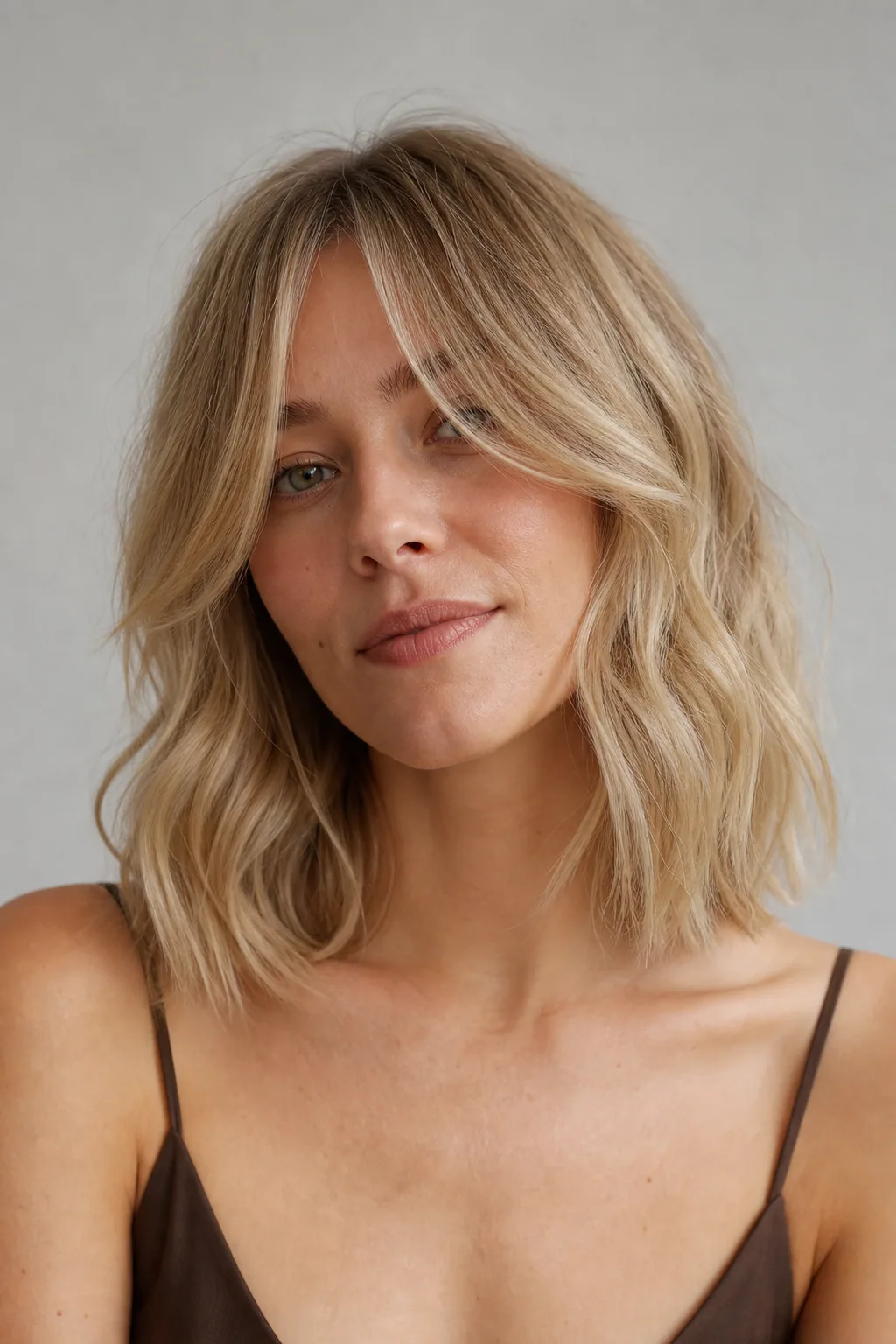
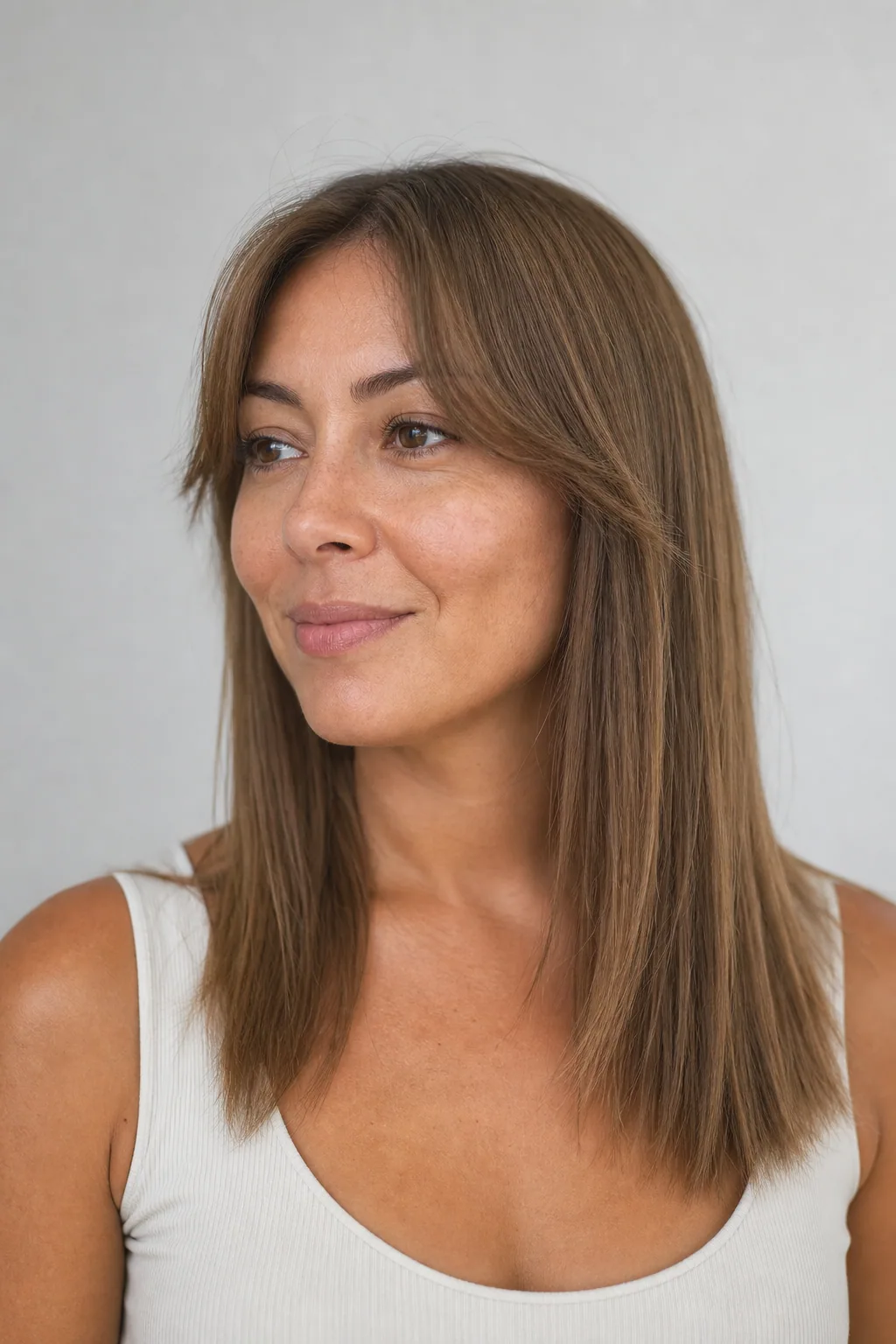
Lob with long curtain bangs
A collarbone-length lob with bangs swept to jaw level — the most versatile length for fine hair that isn't ready to go short. The long fringe blends into the layers for an easy, undone frame.
7
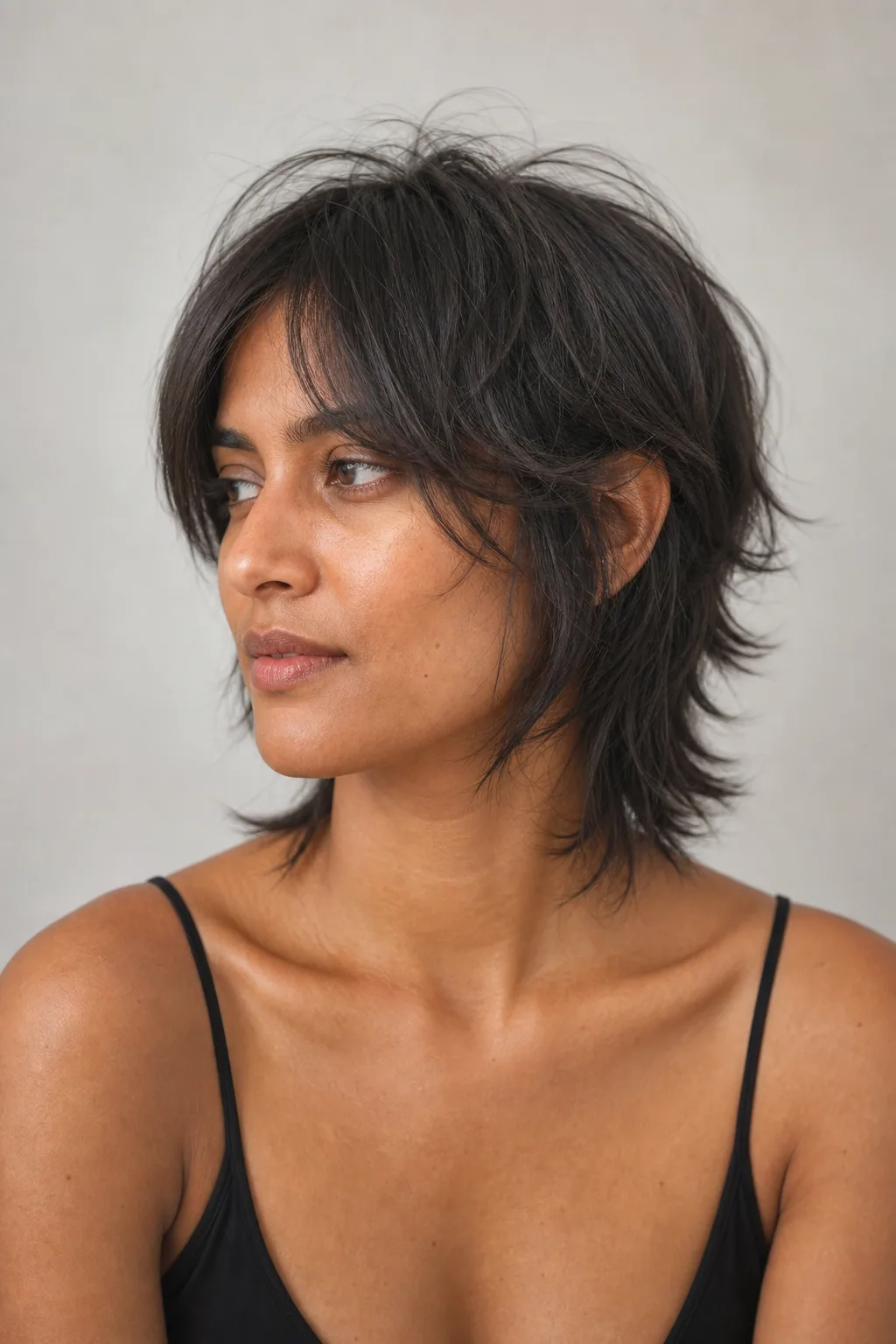
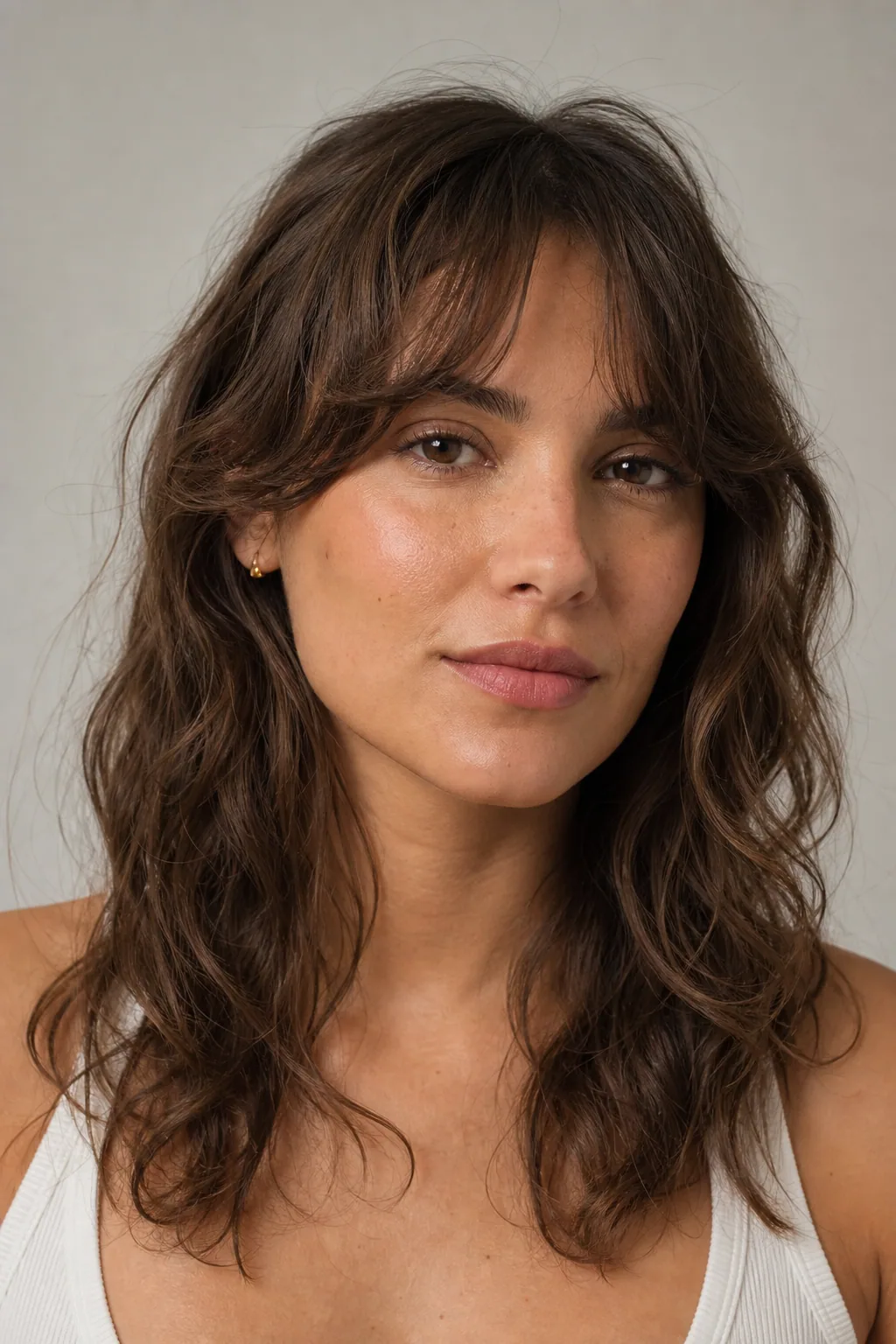
Shag with curtain bangs
Choppy, texturized layers and a curtain fringe are a natural pair — both rely on movement rather than density. The shag builds body through the crown while the bangs soften the face; ideal for fine, straight hair that wants an edgier feel.
8
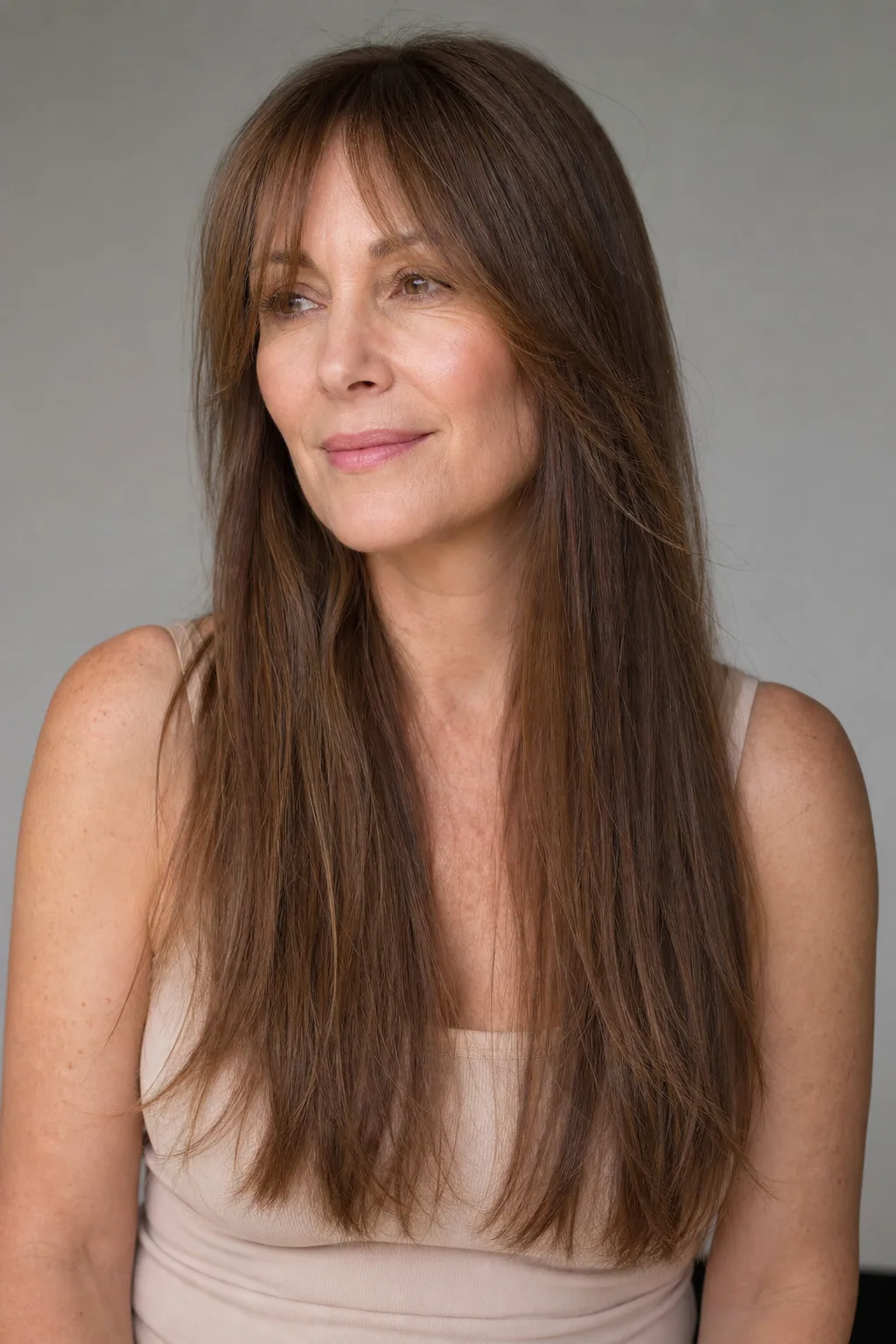
Long hair with curtain bangs
Proof you can keep your length and still get face-framing volume. On long, fine hair the bangs do the heavy lifting the lengths can't — they add the movement and frame that stop long fine hair from looking flat and one-note.
9
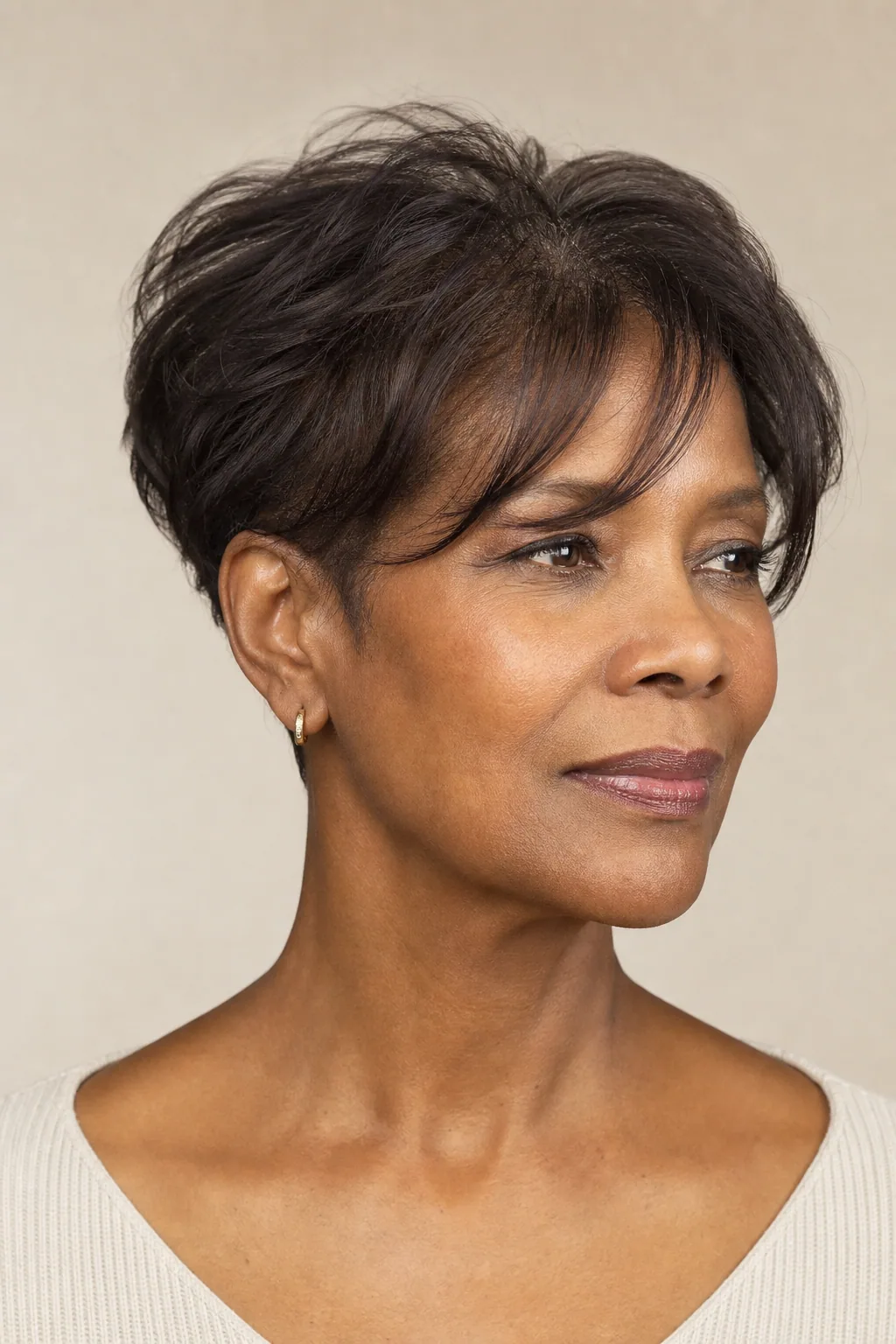
Pixie with a long curtain fringe
A cropped cut kept long and parted on top, sweeping into curtain-style pieces at the front. The contrast between short sides and a longer fringe creates the illusion of volume up top — a bold, low-fuss pick for fine hair.
By texture and styling
How your hair naturally falls changes how a curtain bang behaves — and how much you'll do to it each morning.
10
Air-dried wavy curtain bangs
Fine, wavy hair gets built-in body, so these can be scrunched and left to dry with just a little texture spray. The natural bend keeps them off the forehead — the lowest-maintenance version if you'd rather skip the round brush.
11
Curtain bangs on fine straight hair
Straight fine hair is the hardest texture to keep a curtain bang in, and nobody warns you: with no natural bend, the sweep has nothing to hold it, so both sides drift back over the forehead by lunchtime. The fix is a bend set at the root, not product added at the ends — dry the fringe forward first, then back and up at the roots so they are trained against the way they want to fall, and give it a cool shot before you let go of the brush. Done that way it holds all day on the flattest hair. This is the fuller of the two asks above rather than the see-through one, so take the section a little deeper: there has to be enough in it to keep a shape.
12
Sleek blow-dried curtain bangs
Polished and swept back with a round brush for a clean, expensive finish. The key on fine hair is lifting from the root, not smoothing flat — a cool shot at the end locks the sweep without weighing it down.
13
Curly curtain bangs
On fine, curly hair a curtain fringe is cut longer to account for spring, letting coils frame the face with natural fullness. Have them cut dry so the length is judged on how the curl actually sits, and define with a light gel rather than a heavy cream.
14
Grown-out curtain bangs, pinned back
Once they reach the jaw, curtain bangs double as face-framing pieces you can twist and pin off the face. That flexibility is why they suit anyone unsure about a fringe — you're never stuck with them on a flat day.
15
Curtain bangs with face-framing highlights
A few brightening pieces along the fringe catch the light and fake extra dimension — color doing what density can't on fine hair. Keep the placement soft and around the face so it reads as glow, not stripes.
Curtain bangs for your face shape
Face shape
Best curtain bang
Key detail
Round
Longer, jaw-length sweep
Length past the cheeks elongates; avoid short, rounded fringes.
Balanced proportions carry both short and long versions.
Square
Soft cheekbone-length wisps
Feathered ends soften a strong jaw and forehead corners.
Heart
Cheekbone-length, fuller sweep
Frames a wider forehead and narrows toward the chin.
Long / oblong
Fuller, shorter curtain bang
Width at the fringe shortens the face; skip very long, sparse bangs.
How to style curtain bangs on fine hair
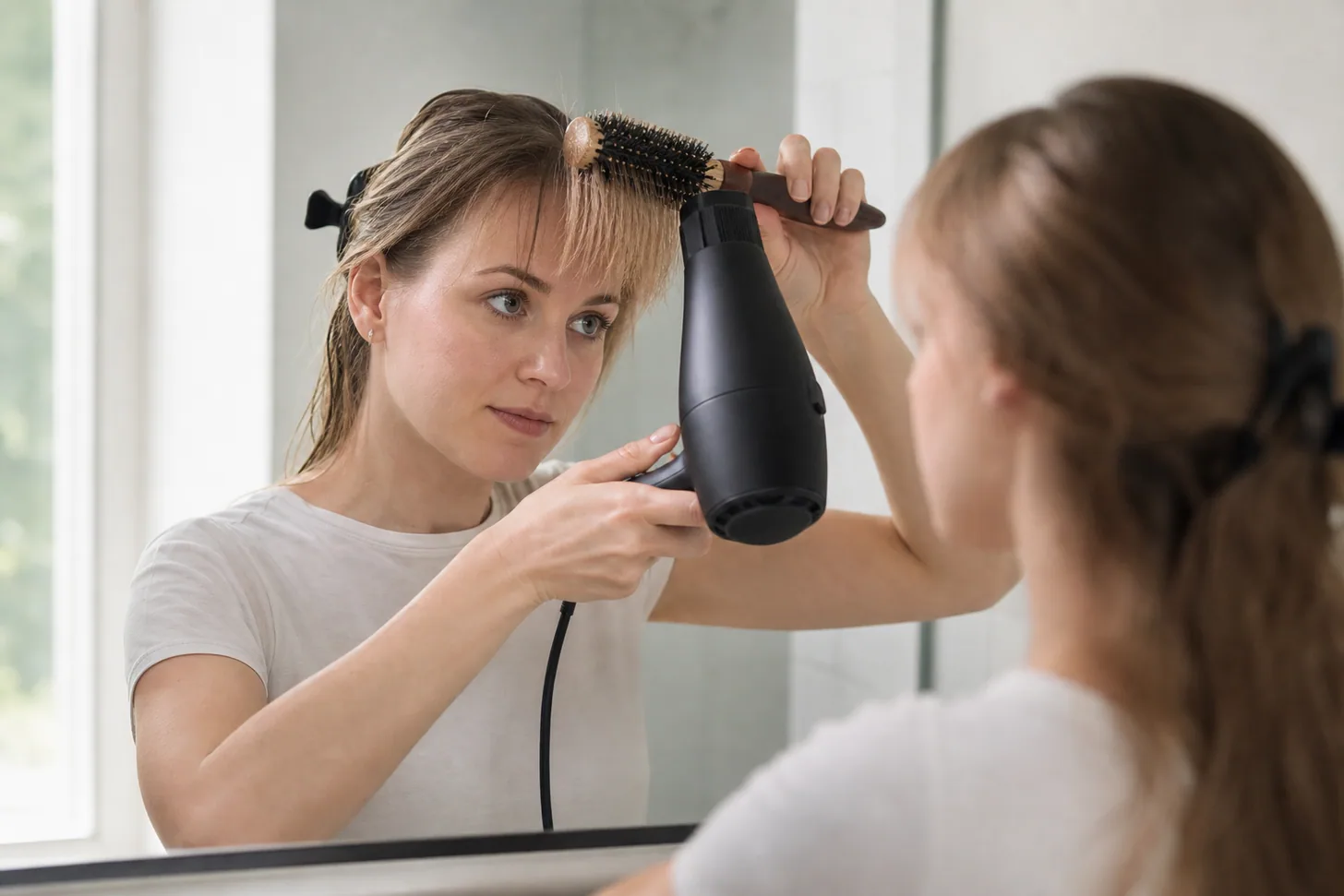
Curtain bangs live or die on the blow-dry. Do the fringe first, while it's damp — once fine hair air-dries in place it won't take the sweep. Aim the dryer up and back at the roots, sweep each side away from the face over a round brush, and finish with a cool shot to set the lift.
A whisper of texture spray adds grip; a heavy cream or oil is the fastest way to flatten them. The same root-first, cool-set principles run the rest of your routine too — the full method is in how to style fine & thin hair.
Chair-side note
Protect the fringe from the heat you'll use on it daily. Curtain bangs get blow-dried more often than any other section, so a light heat protectant before the round brush matters — repeated hot styling roughens the cuticle over time, and a pretreatment measurably cuts that thermal damage (peer-reviewed study on thermal protection). Keep it lightweight so it doesn't drag the bangs flat.
SB
— Simone Baptiste, Senior Stylist
What to ask your stylist
Say: "I have fine hair and I'd like soft, texturized curtain bangs — point-cut, please, not blunt across. Start them around my cheekbones and blend them into face-framing layers so they grow out easily."
If your hair is very fine, add: "Keep them on the longer, wispier side — I don't want a heavy fringe that looks see-through." A heart-shaped face is one of the best matches for this fringe, for reasons set out in haircuts for a heart-shaped face with fine hair.
When curtain bangs may not be your best move
A cowlick or strong swirl at the front hairline — it can fight the central part and push the bangs apart. Ask your stylist to assess the growth pattern first; a side-swept fringe may sit better.
You truly won't blow-dry — fine curtain bangs need that two-minute root lift to look their best. If wash-and-go is non-negotiable, longer face-framing layers with no defined fringe are more forgiving.
Very low density right at the front hairline. A sparse fringe can expose the forehead; keep the bangs longer and wispier, or frame with layers instead.
FAQ
Yes, and they're one of the most flattering fringes for fine hair — as long as they're texturized, not blunt. Point-cut, wispy curtain bangs add soft volume and face-framing movement without demanding the density a heavy, straight-across fringe needs. A blunt curtain bang can look sparse on very fine hair.
Not if cut correctly. Because curtain bangs are parted in the middle and sweep to the sides, they distribute rather than concentrate hair, which avoids the see-through look a dense blunt fringe can create. Keep them on the longer side (cheekbone to jaw) and texturized so they blend into the length.
Blow-dry them damp, not dry. Take the bang section, aim the dryer up and back at the roots, and use a round brush to sweep each side away from the face while you dry — that root lift is what gives fine curtain bangs their body. Finish with a whisper of texture spray, never a heavy cream.
Every 4 to 6 weeks to keep the sweep sitting right, though curtain bangs are among the most forgiving fringes to grow out because the long, angled ends blend into face-framing layers. Many stylists will do a quick bang trim between full cuts for free or a small fee.
They're medium maintenance. They style fast — a two-minute round-brush blow-dry — but fine hair means they can separate or fall flat by afternoon, so most people re-lift them with a quick blast of cool air or a touch of dry shampoo at the root. They grow out gracefully, which offsets the trim frequency.
Nearly all of them, which is part of their appeal. The central part and side sweep flatter round and square faces by adding length, soften a long face when kept fuller, and frame a heart shape beautifully. The adjustable length is the key — longer for round faces, shorter and softer for long ones.
Two different things, depending on who is asking. Usually it means a deliberately sparse, see-through curtain fringe — cut from a shallow section at the front so the forehead still shows through it, which is a soft, low-commitment look. But a lot of people searching the phrase mean curtain bangs cut on thin hair, which is the opposite goal: you want the fringe to read as full rather than see-through. The two are cut from different section depths, so tell your stylist which you mean. On fine hair the see-through version is genuinely kind, because it borrows very little density from a hairline that cannot spare it.
Yes, but they have to be set rather than only cut. Straight fine hair has no natural bend to hold the sweep, so untrained curtain bangs drift back over the forehead within a few hours. Blow-dry the fringe forward first, then back and up at the root so it is trained against the direction it wants to fall, and finish with a cool shot before you release the brush. That root bend, not product on the ends, is what makes them hold. Ask for them point-cut rather than blunt, and slightly longer at the outer edges so they blend into the length instead of stopping abruptly.
Yes — fringe is the British word and bangs is the American one, for exactly the same haircut, so everything on this page applies whichever term you searched. The distinction actually worth making is not fringe versus bangs but curtain versus blunt: a curtain fringe parts in the middle and sweeps to both sides, distributing hair, while a blunt fringe masses it into one line across the forehead and needs a density fine hair does not have.
Eleven years behind the chair, specializing in short shapes and fine-hair texture. Simone believes the best haircut is the one you can style yourself in ten minutes.
Images in this article are AI-generated illustrations, not photographs of real clients or results. See our image policy.
Results vary with hair type, density, and growth patterns. This guide is educational and not a substitute for an in-person consultation with a licensed stylist.
Get the good hair intel
One honest, stylist-written guide in your inbox each week. No hype.

 SB
SB