Reviewed by Tara Sullivan · Updated July 2026 · 9 min read
The bob is the most reliable cut for fine and thin hair because weight placement does what the strand can't — concentrate fullness at the jaw and crown, and remove it where hair falls flat. Below, 15 salon-tested bobs grouped by what they fix, each with who it suits and the exact words to bring your stylist.
Chair-side note
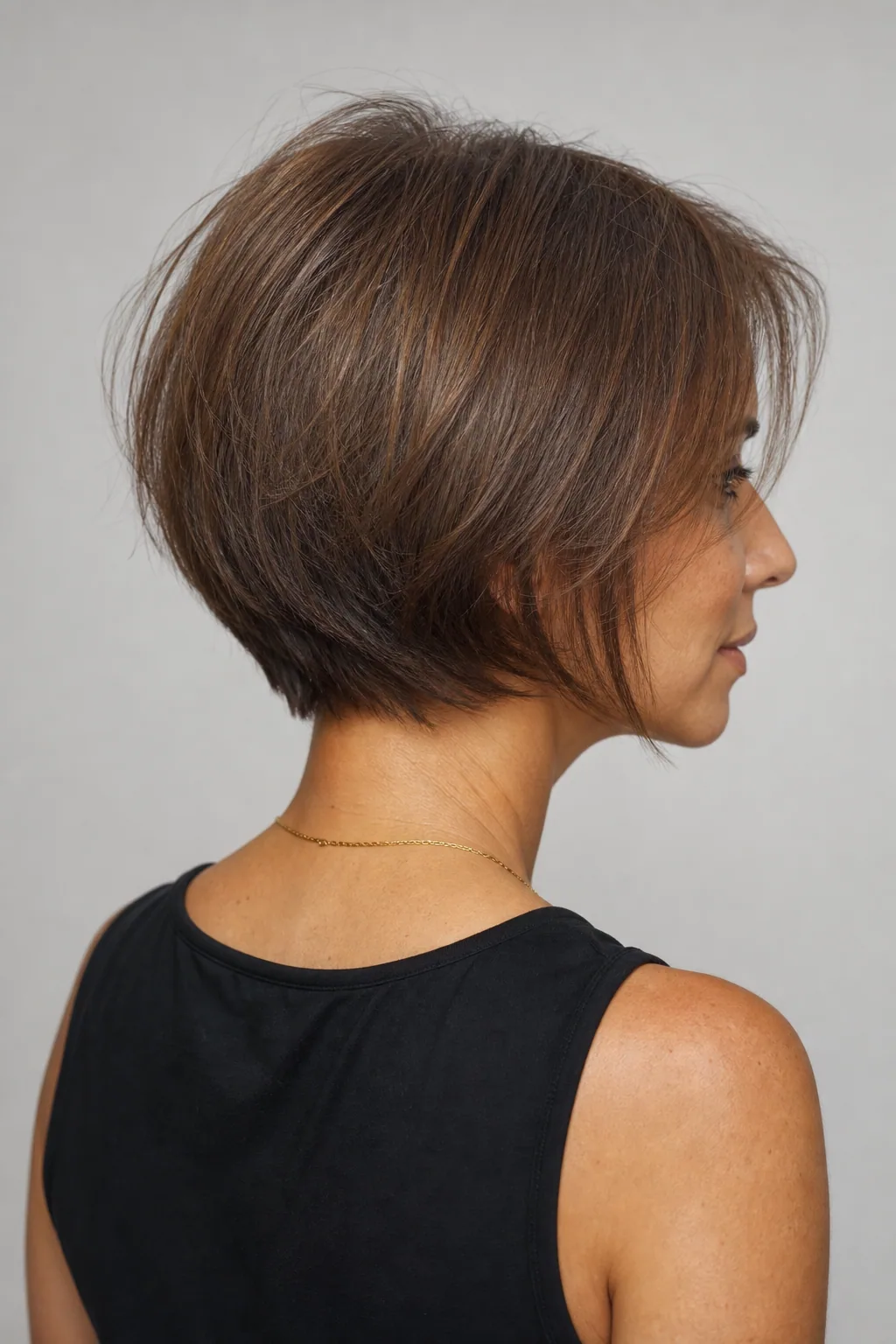
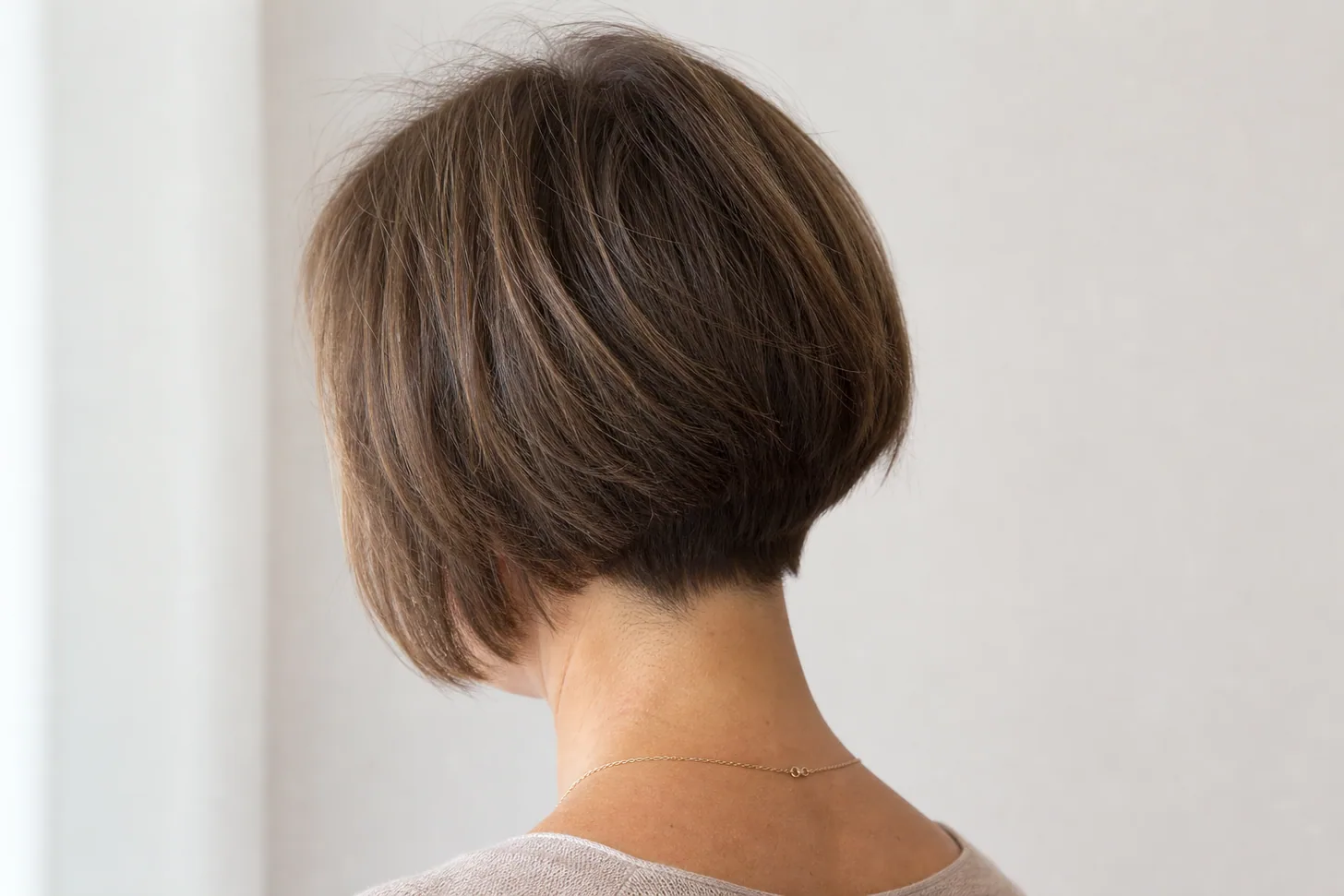
If your hair is fine, ask for a graduated (stacked) bob, not a razored one. The internal layering at the back builds the illusion of density a straight-across cut can't — but razor cutting removes weight from the ends and leaves fine hair transparent. Point-cut layers, every time.
SB
— Simone Baptiste, Senior Stylist
Why the bob works so well on fine hair
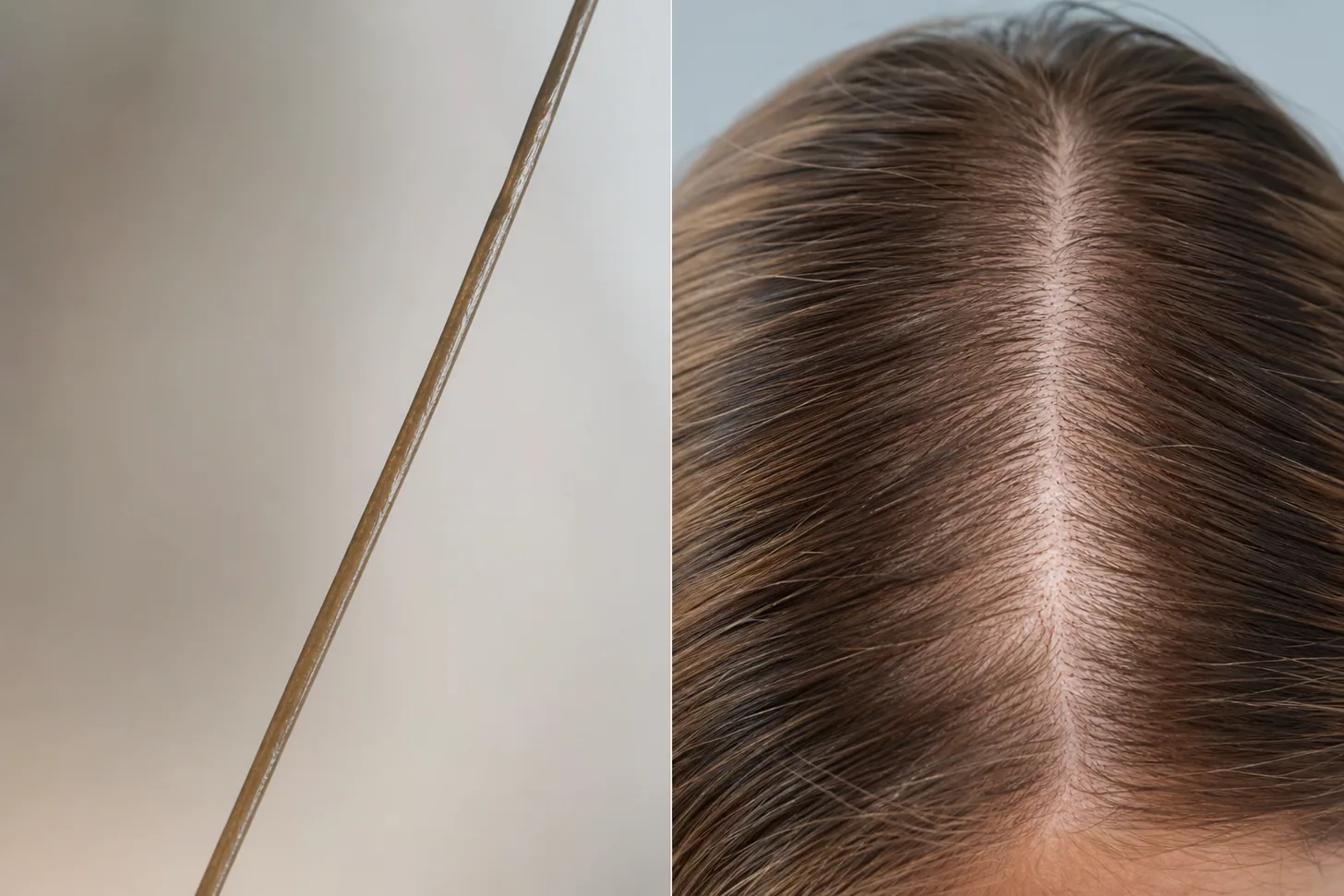
Fine hair is a narrow strand with little internal structure, and thin hair is low density — both look flat when length pulls the weight down. A bob reverses that: it lifts the perimeter to jaw or chin level, where the ends stack and read as denser, and it puts the fullest part of the shape near your face.
The result looks like more hair without adding a thing. If you're not sure whether you're working with fine strands, low density, or both, our two-minute guide to telling fine hair from thin hair helps you pick the right version below. Most of that comes down to the bottom line being cut straight rather than tapered, which is worked through in blunt cuts for thin hair.
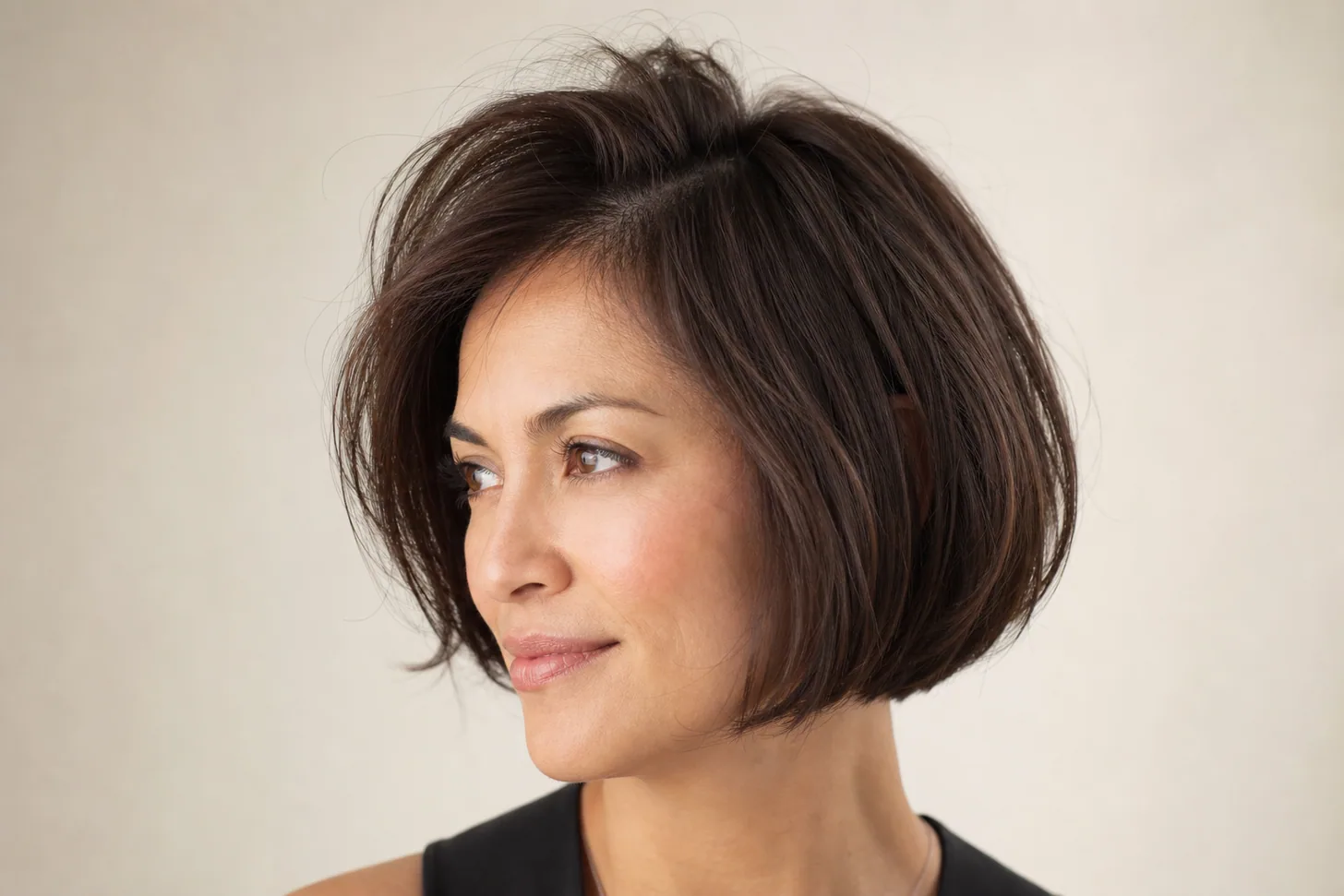
Chin-length is where a bob does the most work on fine hair
Ask a stylist where a bob should sit on fine hair and most will land in the same narrow band: chin to jaw. The reason is mechanical rather than fashionable. A bob builds fullness by stacking the ends into one dense edge, and the shorter the length, the less weight there is hanging below that edge to drag the roots flat.
Chin-length is the point where those two things balance — short enough that the perimeter still reads solid and the roots still lift, long enough that it is unmistakably a haircut with hair in it rather than a crop. Go much above the chin and low density starts to show at the crown; go much below the jaw and you are into lob territory, where you keep the length but have to work harder for the lift.
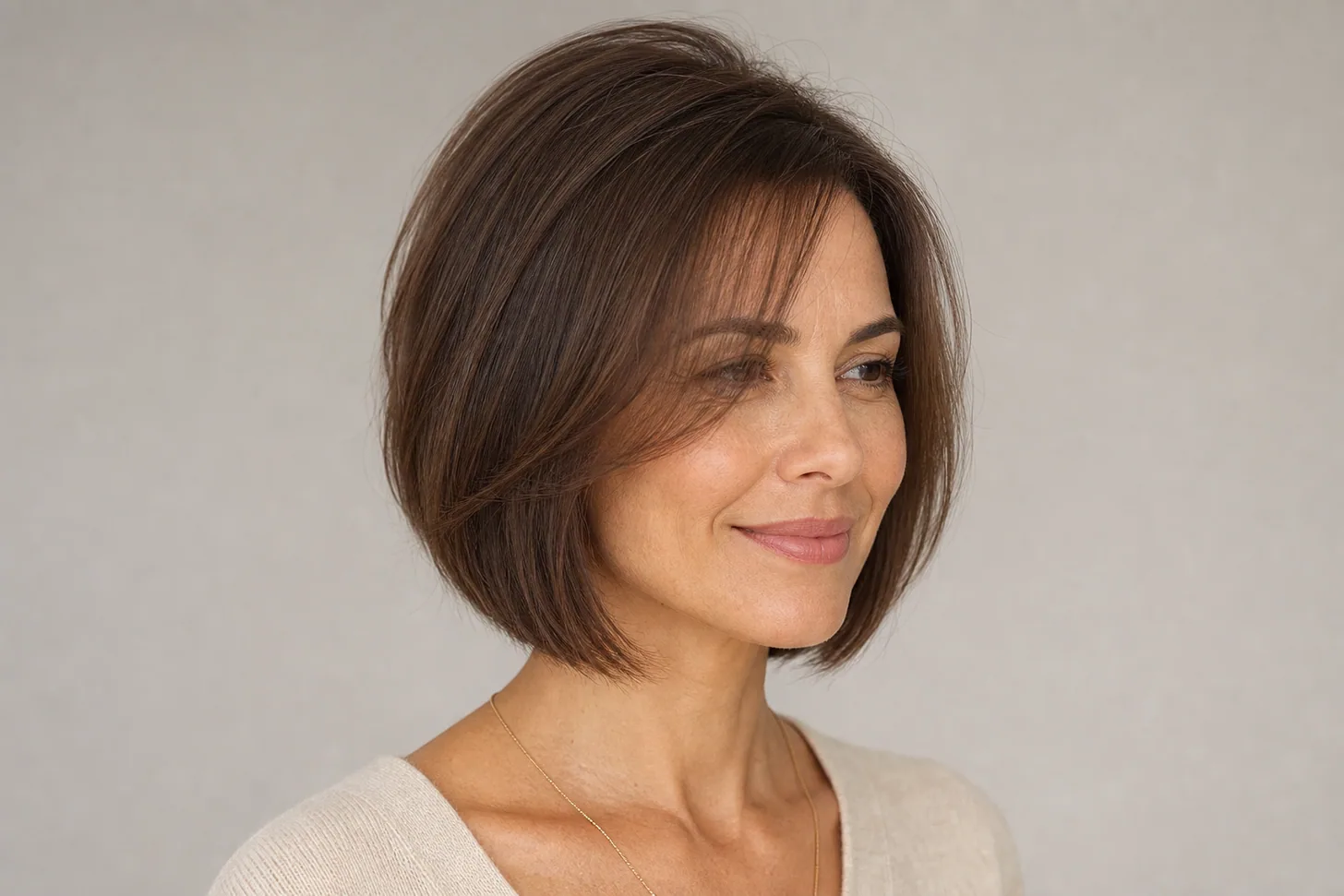
That makes chin-length haircuts the default recommendation on this page rather than one option among many, and it is why so many of the cuts below are built around that line — the blunt chin-length bob, the French bob, the graduated bob and the Italian bob are all variations on it.
What separates them is not length but what happens behind the ear: how much graduation sits at the nape, how blunt the perimeter is cut, and how much internal layering the interior can afford. A chin-length bob also survives a grow-out better than most short shapes, because it drops into a jaw-length bob and then a lob without ever passing through a stage that needs pinning back.
If your face shape is the thing you are unsure about, the chin-length blunt bob is the one shape that suits an oval face with no adjustment at all, and the one a round or square face needs to modify — the cheat sheet further down sorts that out.
Bobs that build the most fullness
Weight and internal layering do the heavy lifting here — these add height and density exactly where fine hair falls flattest. If layering is the part you want to go deep on, we dedicate a full gallery to the layered bob for fine & thin hair.
1
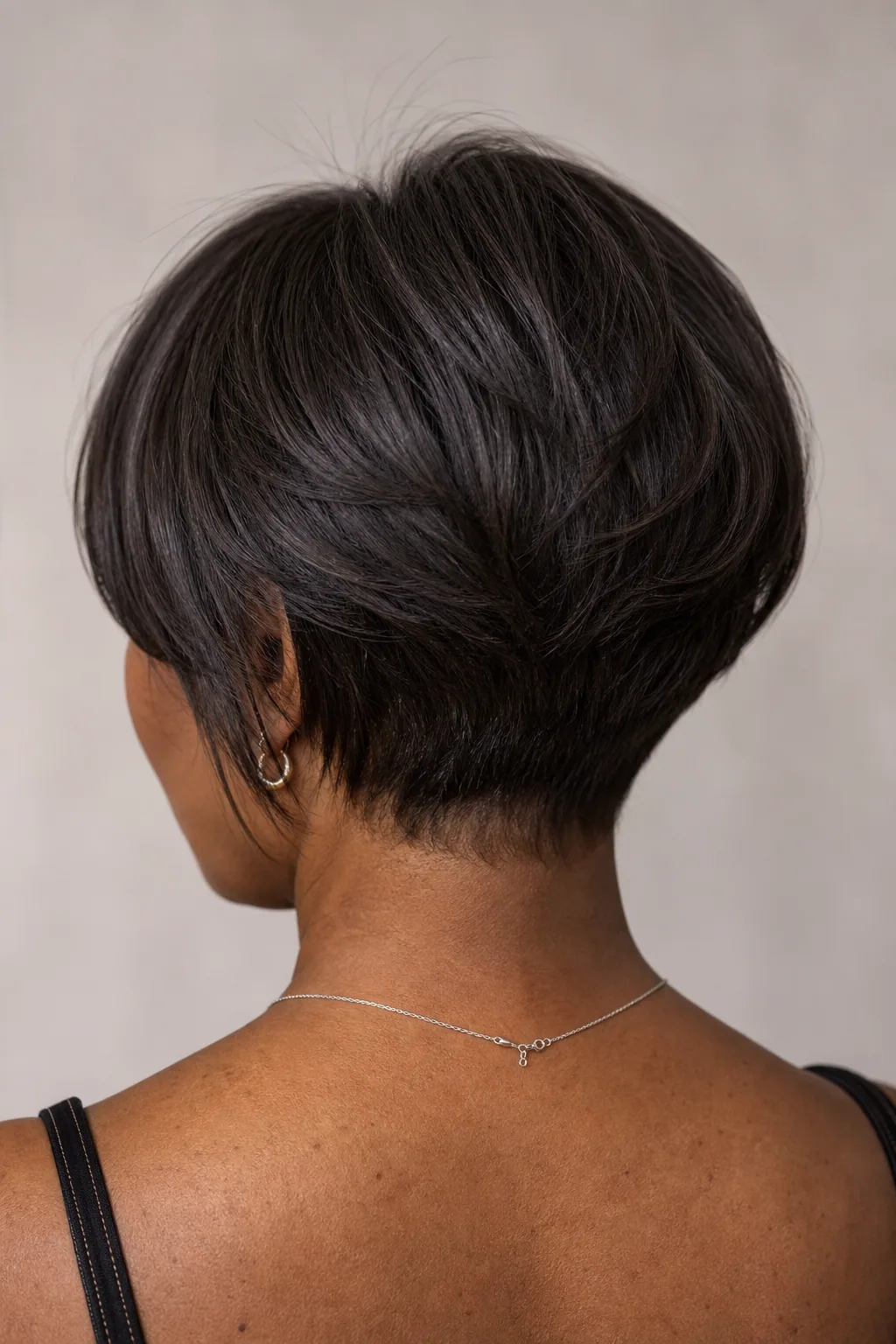
Stacked bob for fine hair
Internal graduation at the back builds height and the illusion of density right at the crown. Blow-dry with a round brush for lift where fine hair falls flat — this is the single most fullness-building bob in the edit, and we break it down in our full guide to the stacked bob for thin hair.
2
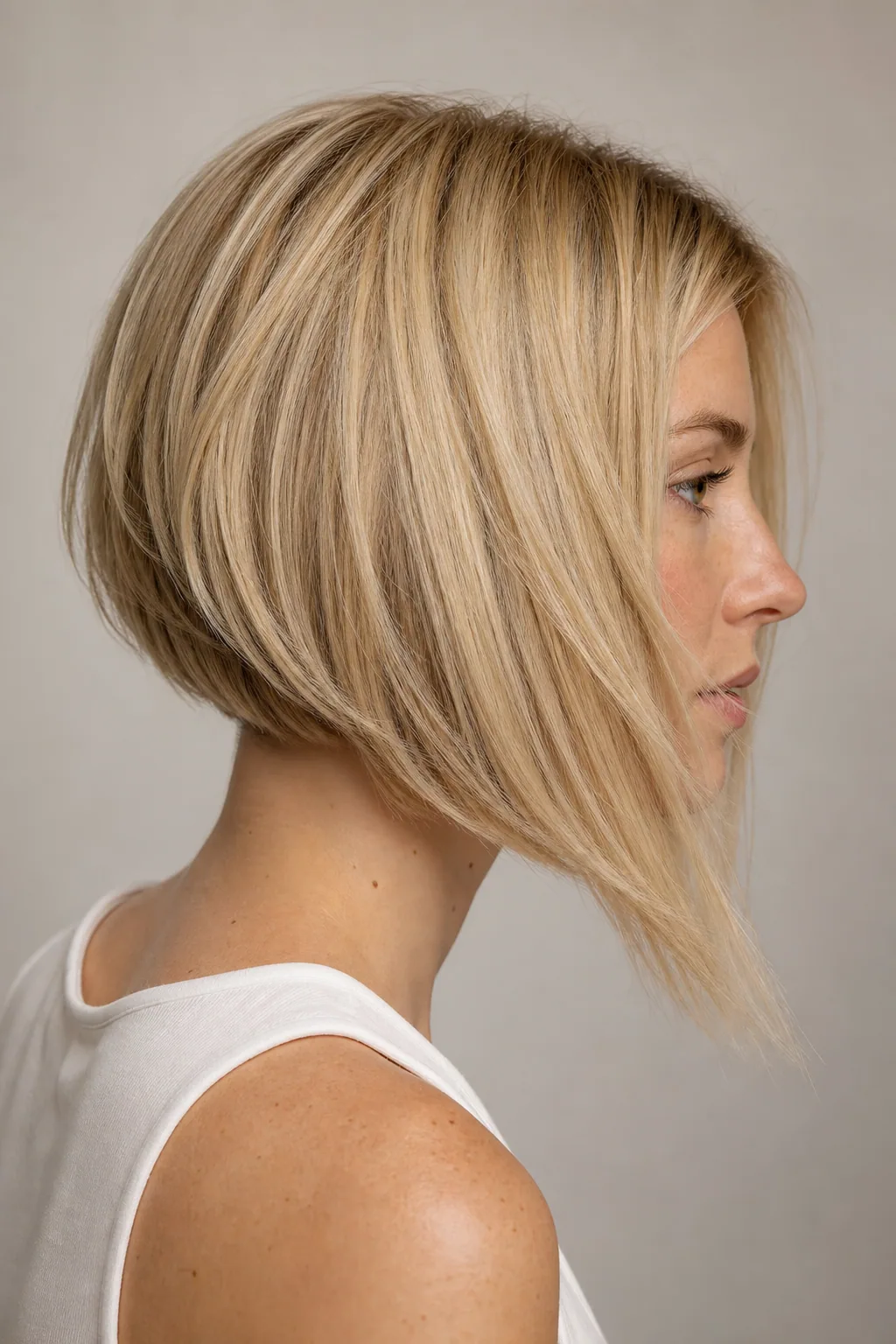
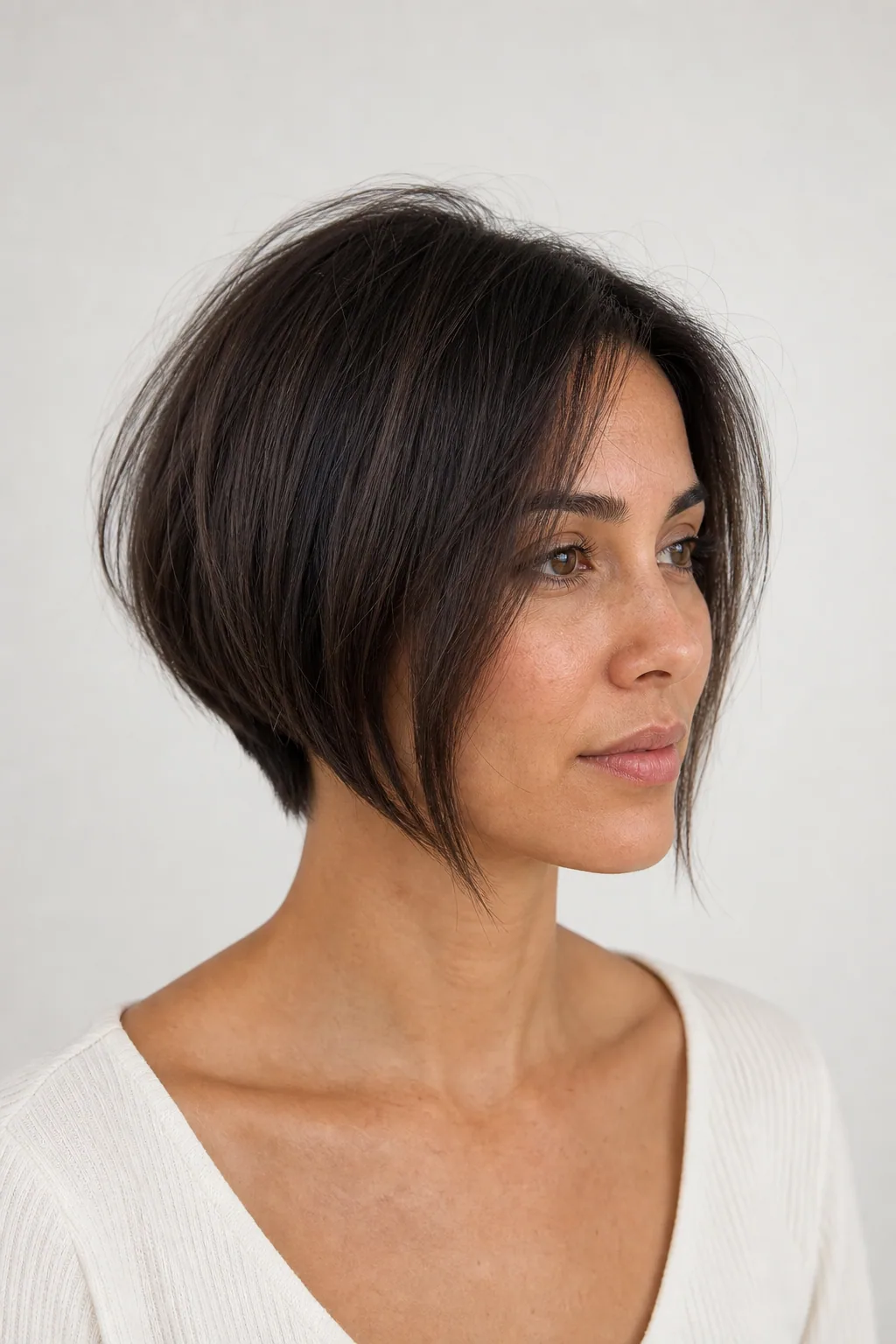
Angled A-line bob
Shorter at the back, longer toward the face — the stacked nape creates volume while the forward angle flatters a round face. Ask your stylist to keep the front length below the chin so it elongates rather than widens.
3
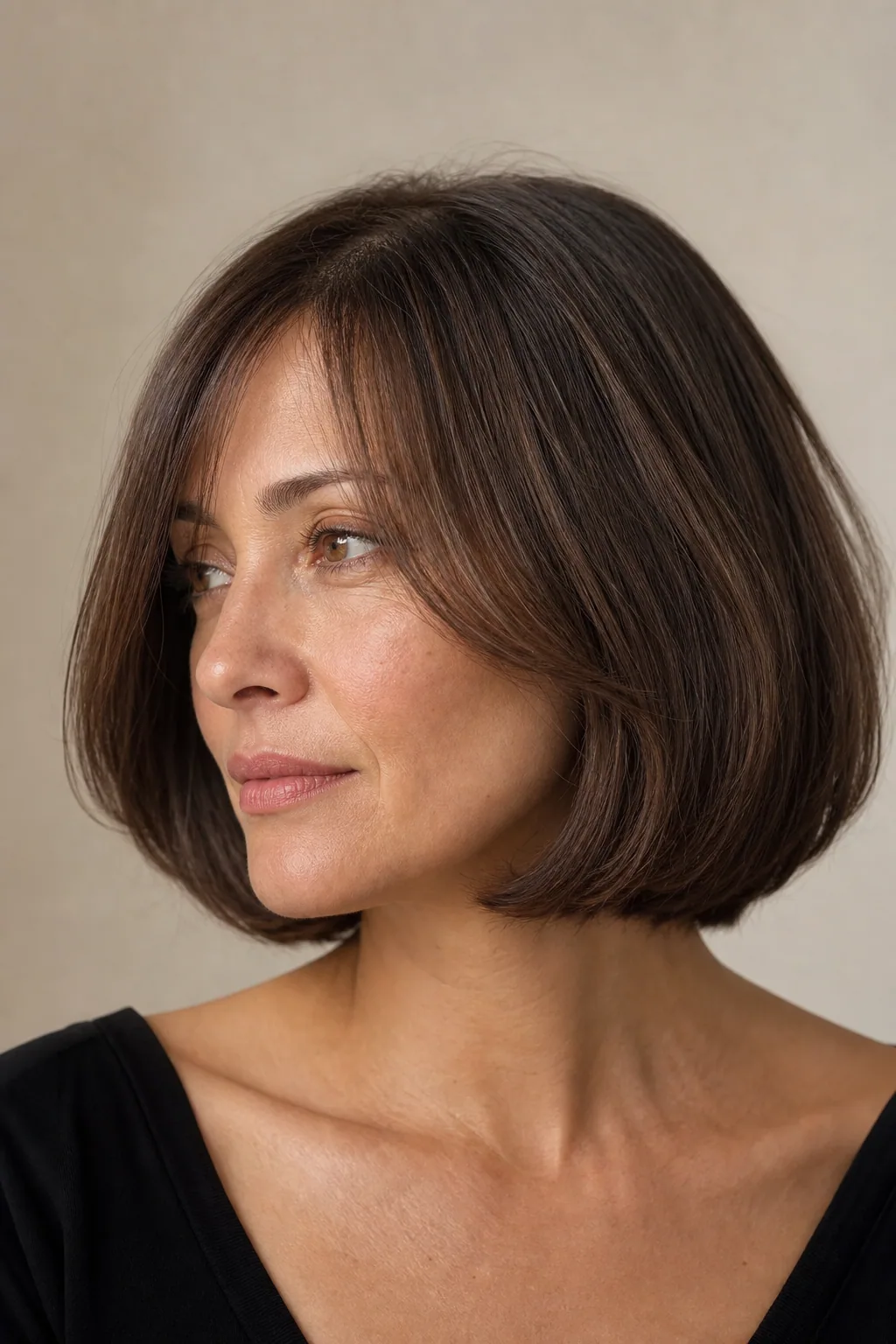
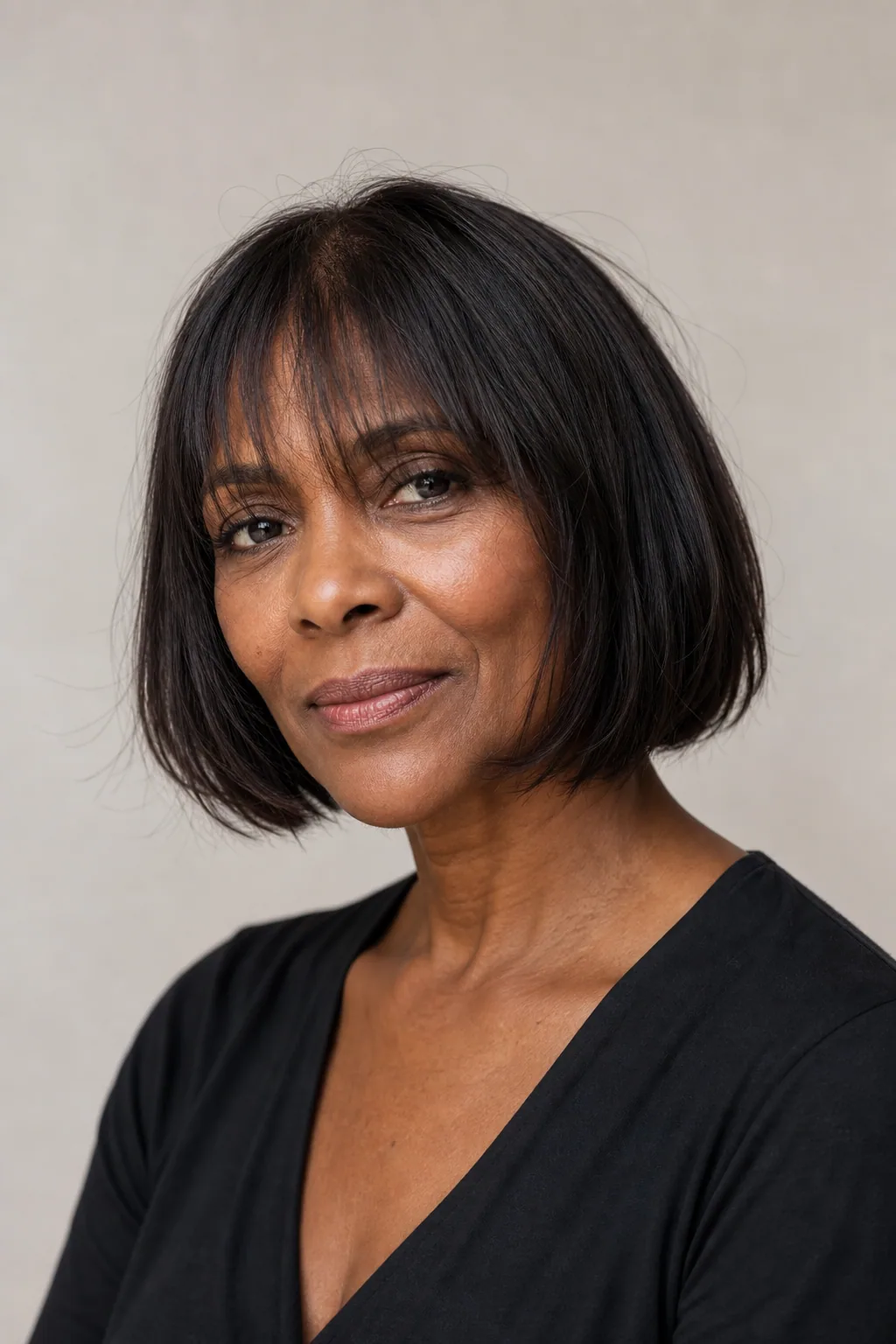
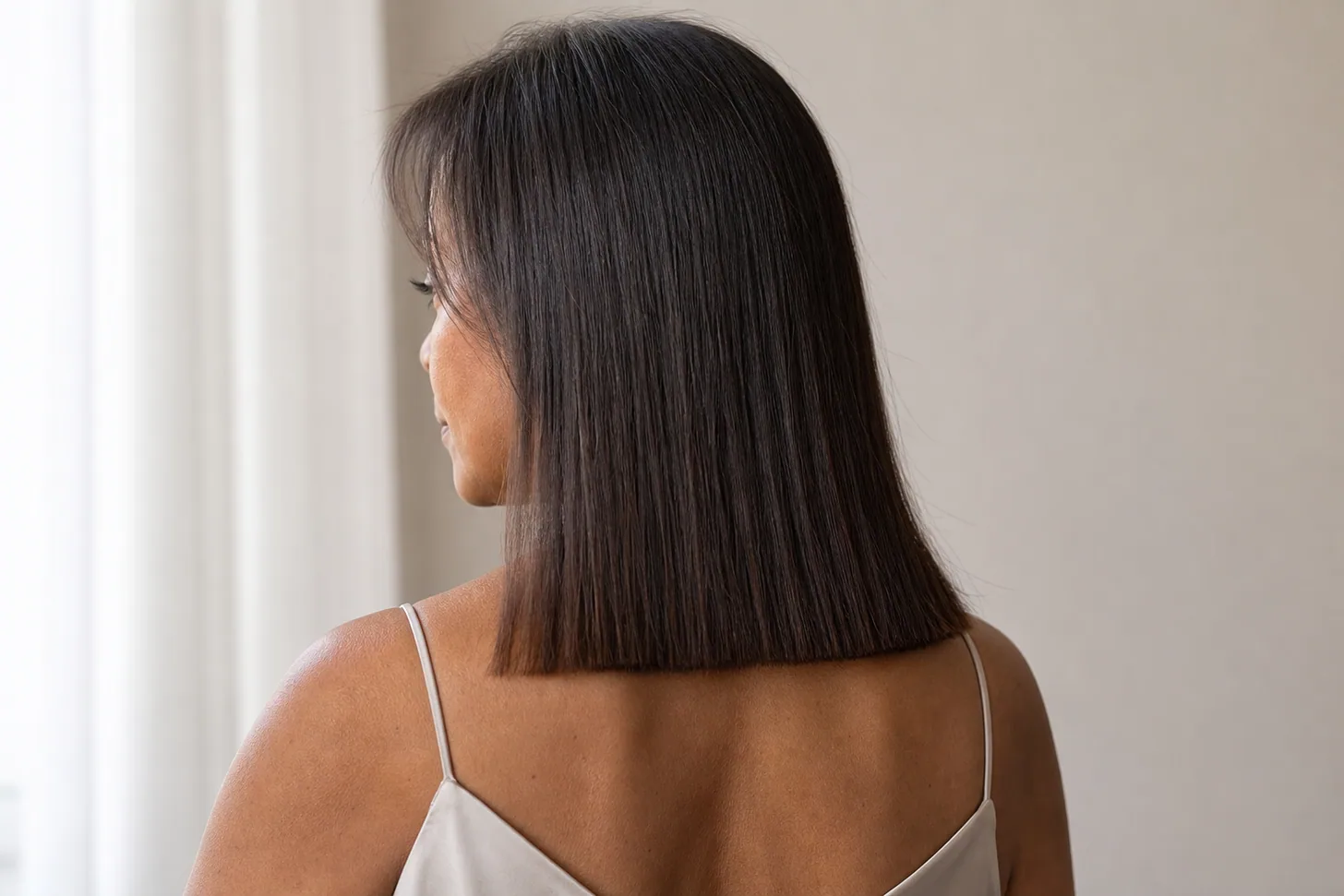
Blunt chin-length bob
Every strand ends on one clean line, which makes the ends look thicker — the go-to when hair is fine but density is decent. Keep it chin-length: too short and a blunt line can expose the crown on lower-density hair.
4
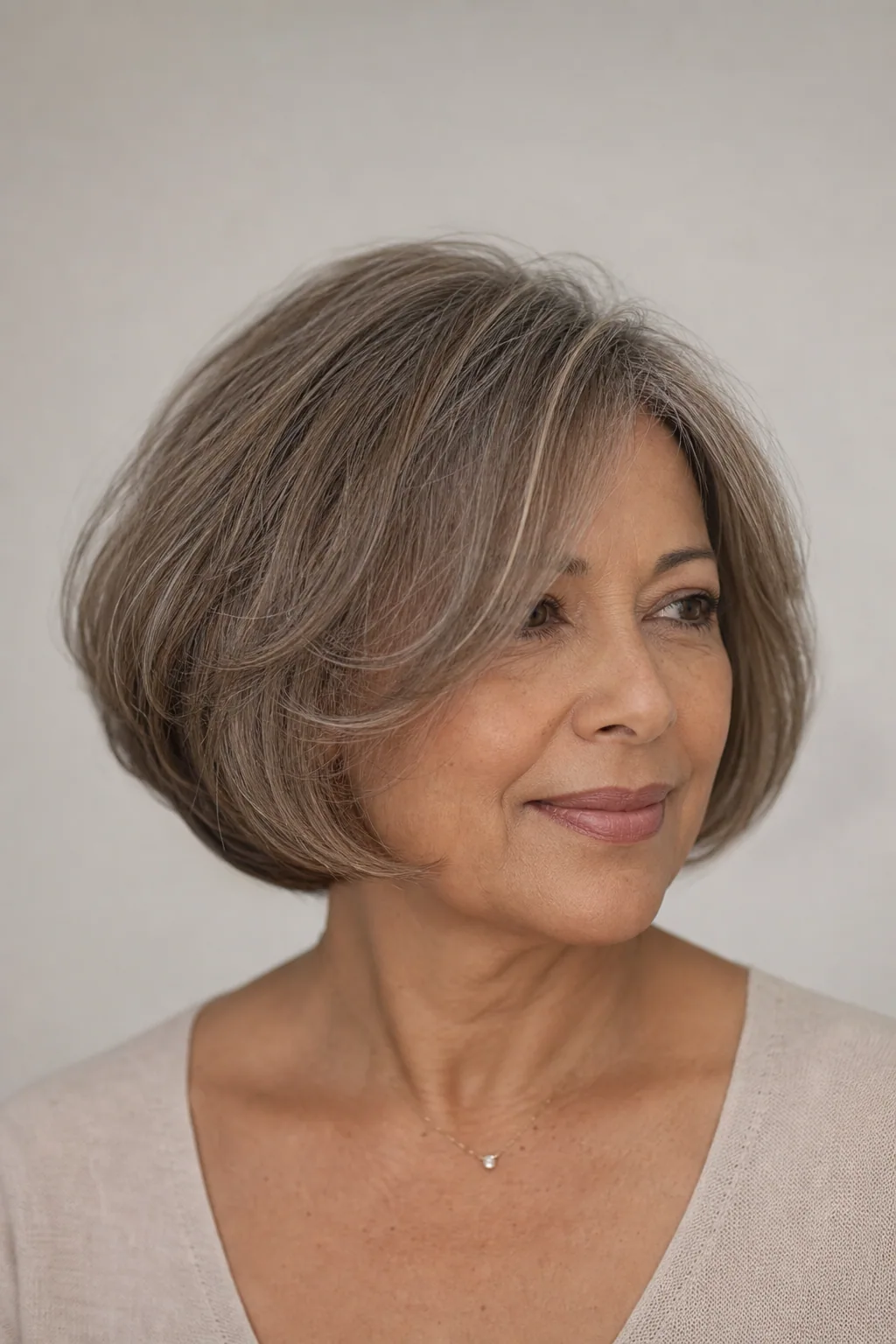
Rounded (bubble) bob
A curved perimeter that tucks under, building a soft dome of volume through the sides. The rounded shape reads full from every angle and needs only a round-brush finish to hold its bend.
5
Graduated bob with a lifted nape
Closer to a soft wedge — stacked graduation packs weight at the back of the head for genuine crown lift. Best for straight, fine hair that collapses at the roots; the built-in height means less daily styling.
Softer, textured bobs for movement
The opposite instinct, for anyone whose priority is fullness over movement, is the wedge haircut — a weight cut where the stack at the back is the whole point and texturizing undoes it.
When you want piece-y, effortless volume rather than structured lift, these lean on texture and a fringe. They're the most forgiving on day-two hair.
6
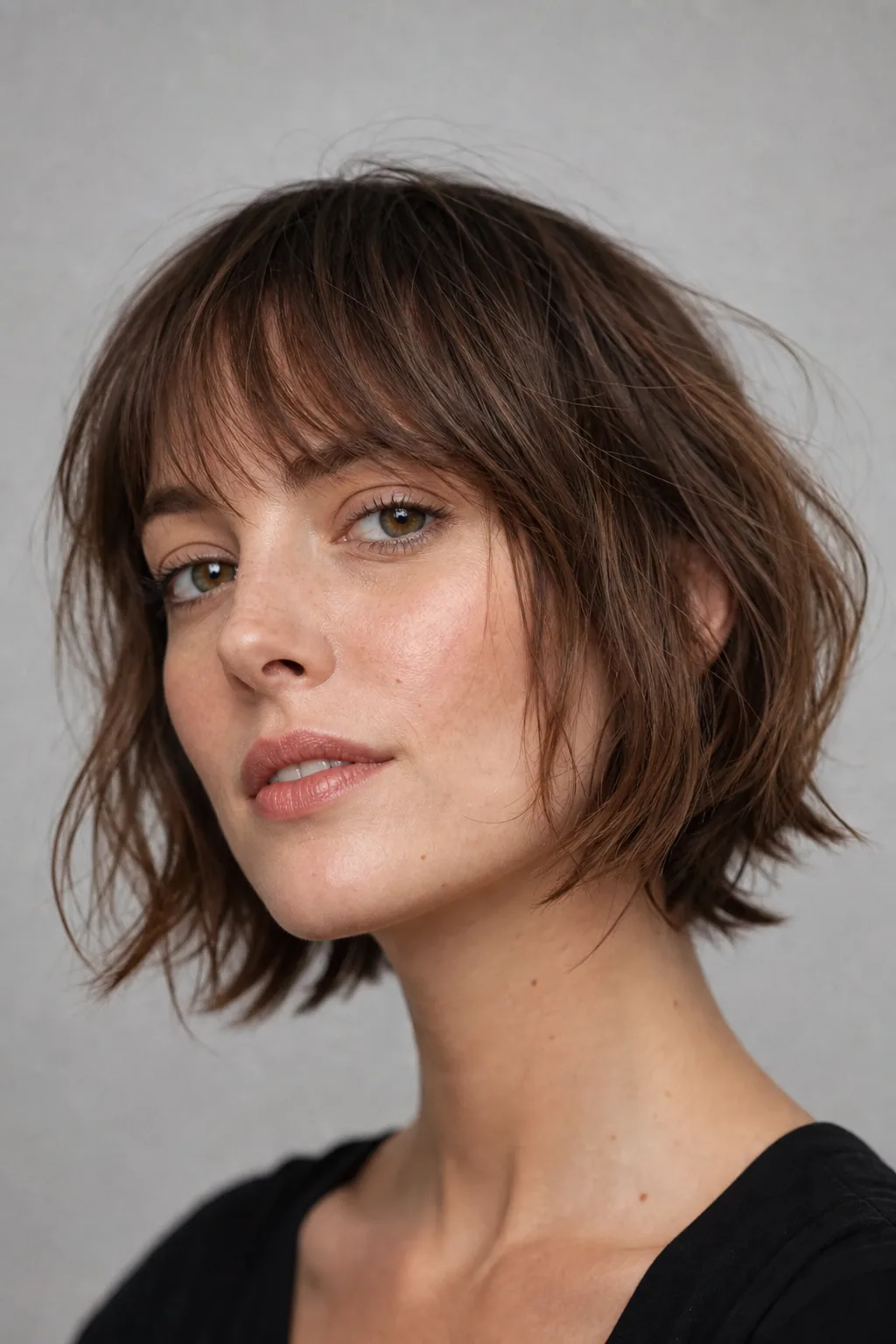
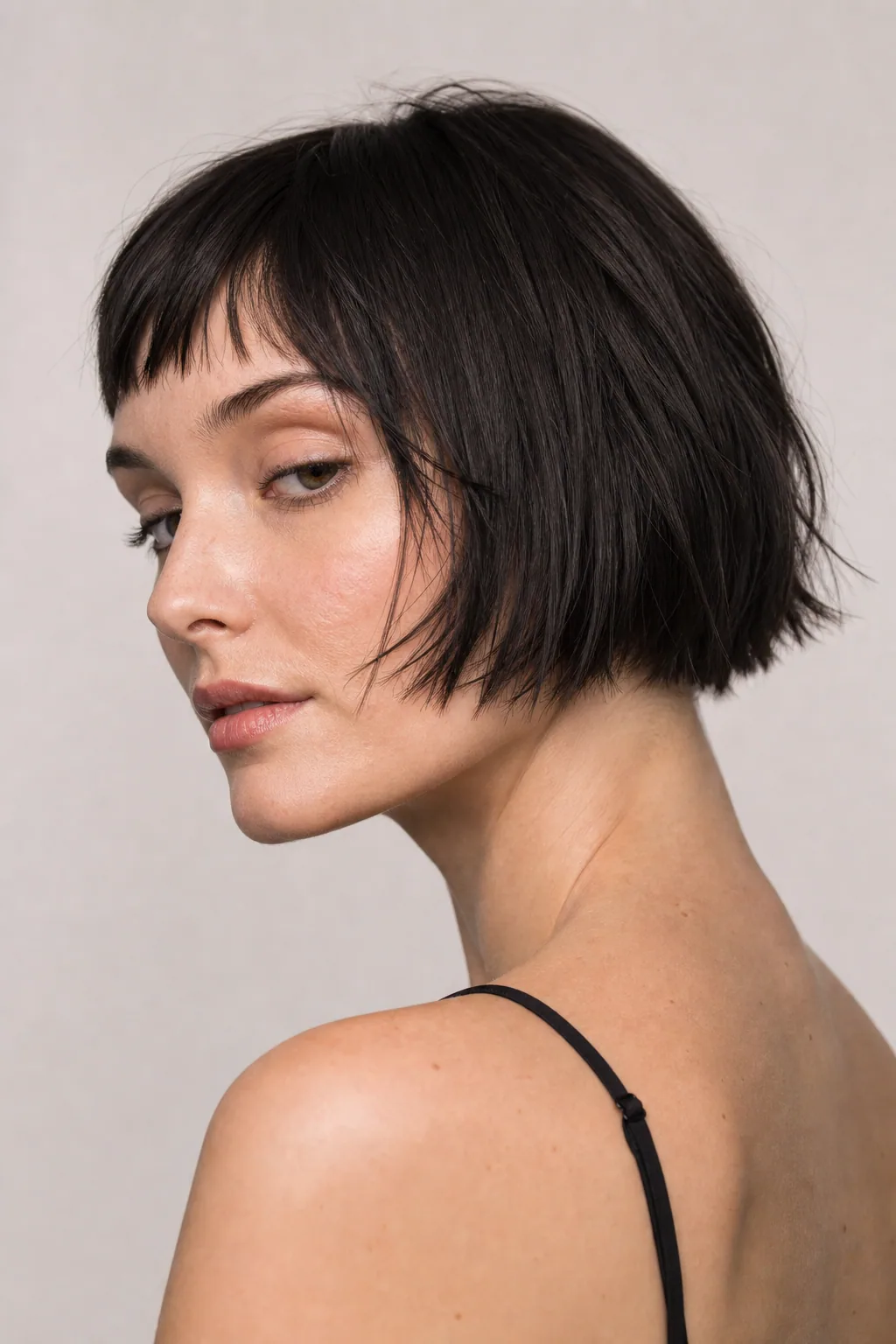
Textured French bob
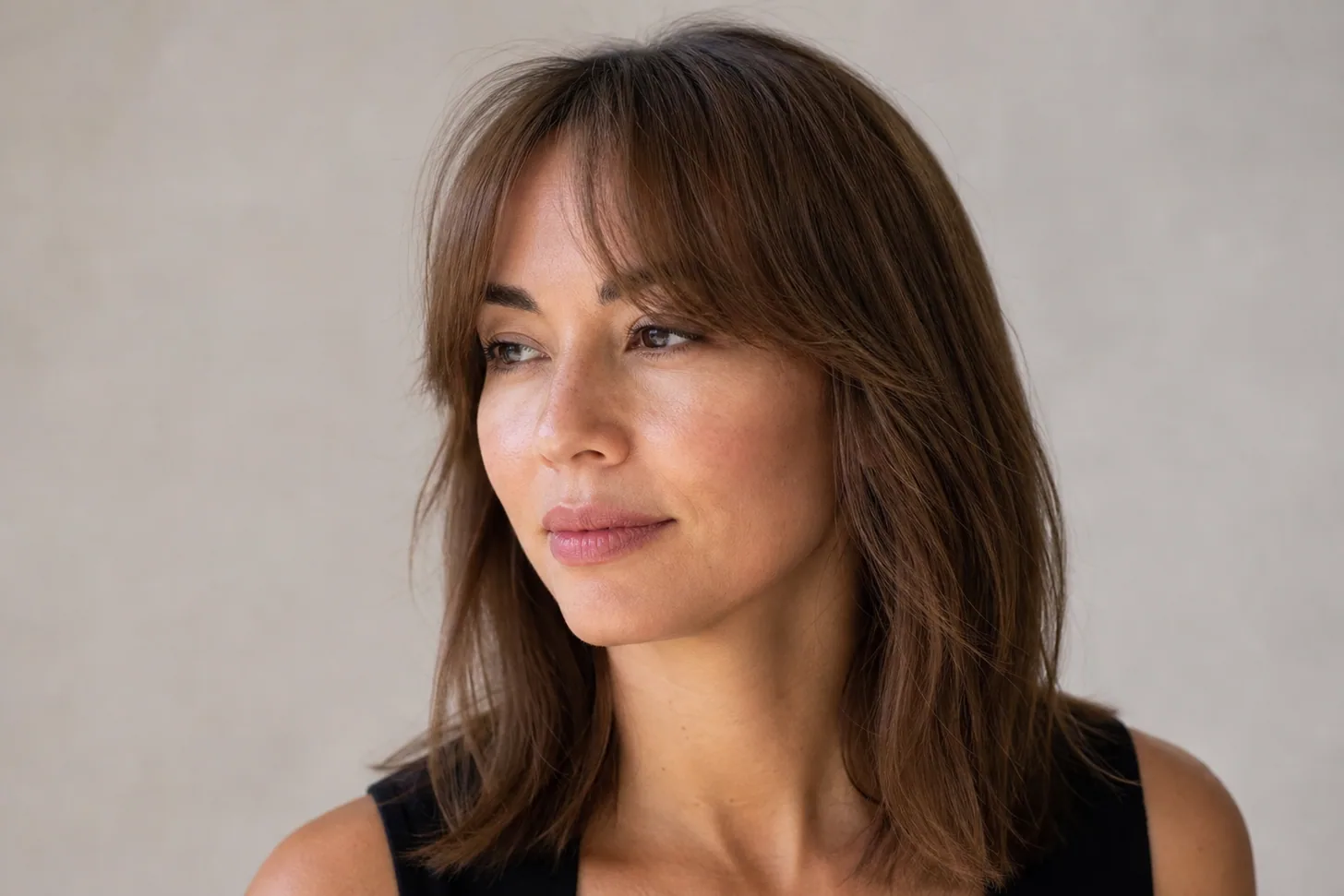
A chin-grazing length with piece-y ends and a soft fringe — low-commitment volume that looks effortless even unstyled. It suits fine, wavy hair especially well, since the wave supplies built-in body.
7
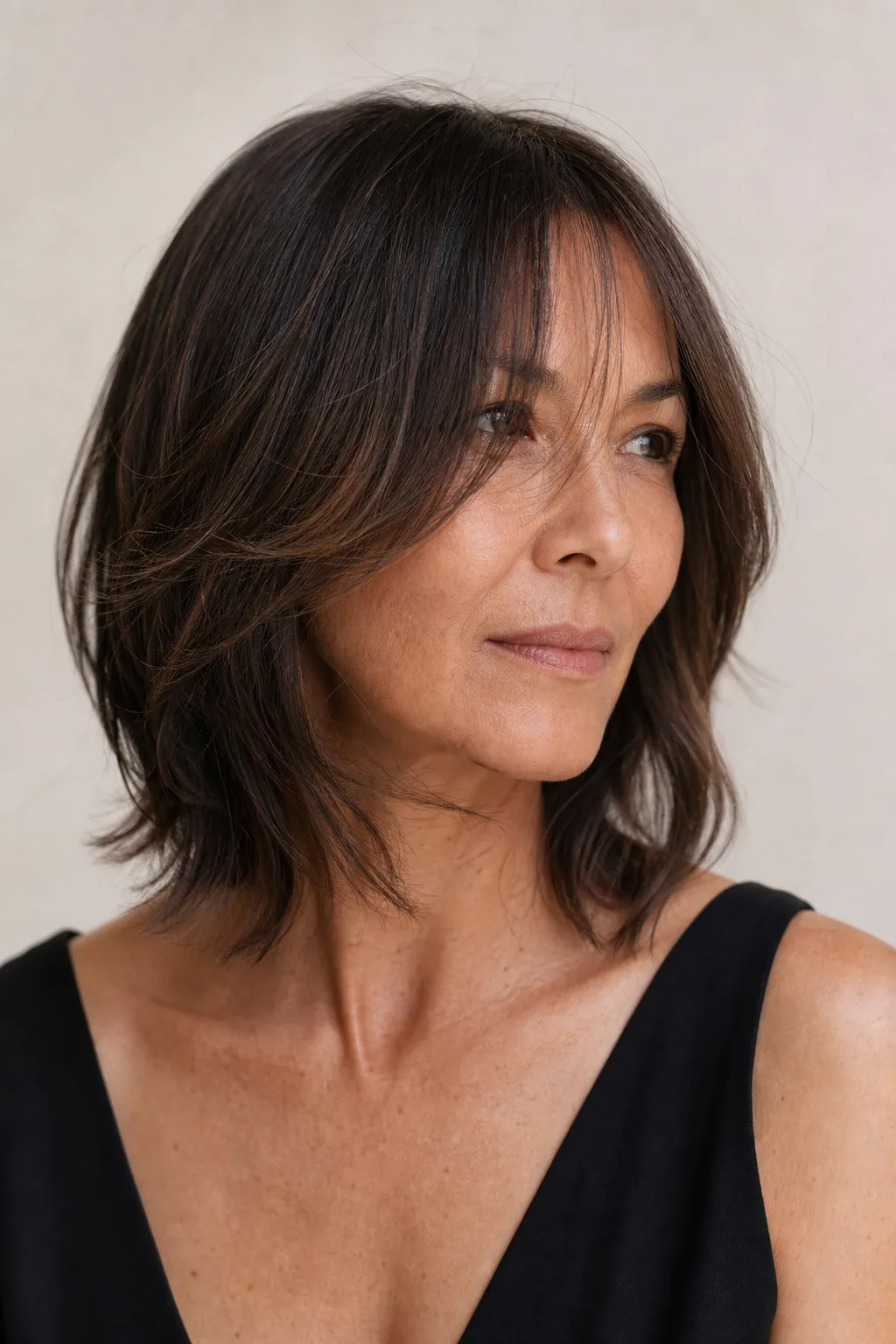
Layered lob with curtain bangs
The longest cut here — face-framing layers and soft curtain bangs for fine hair add movement without removing length you may not be ready to lose. A gentle entry point if a true bob feels too short.
8
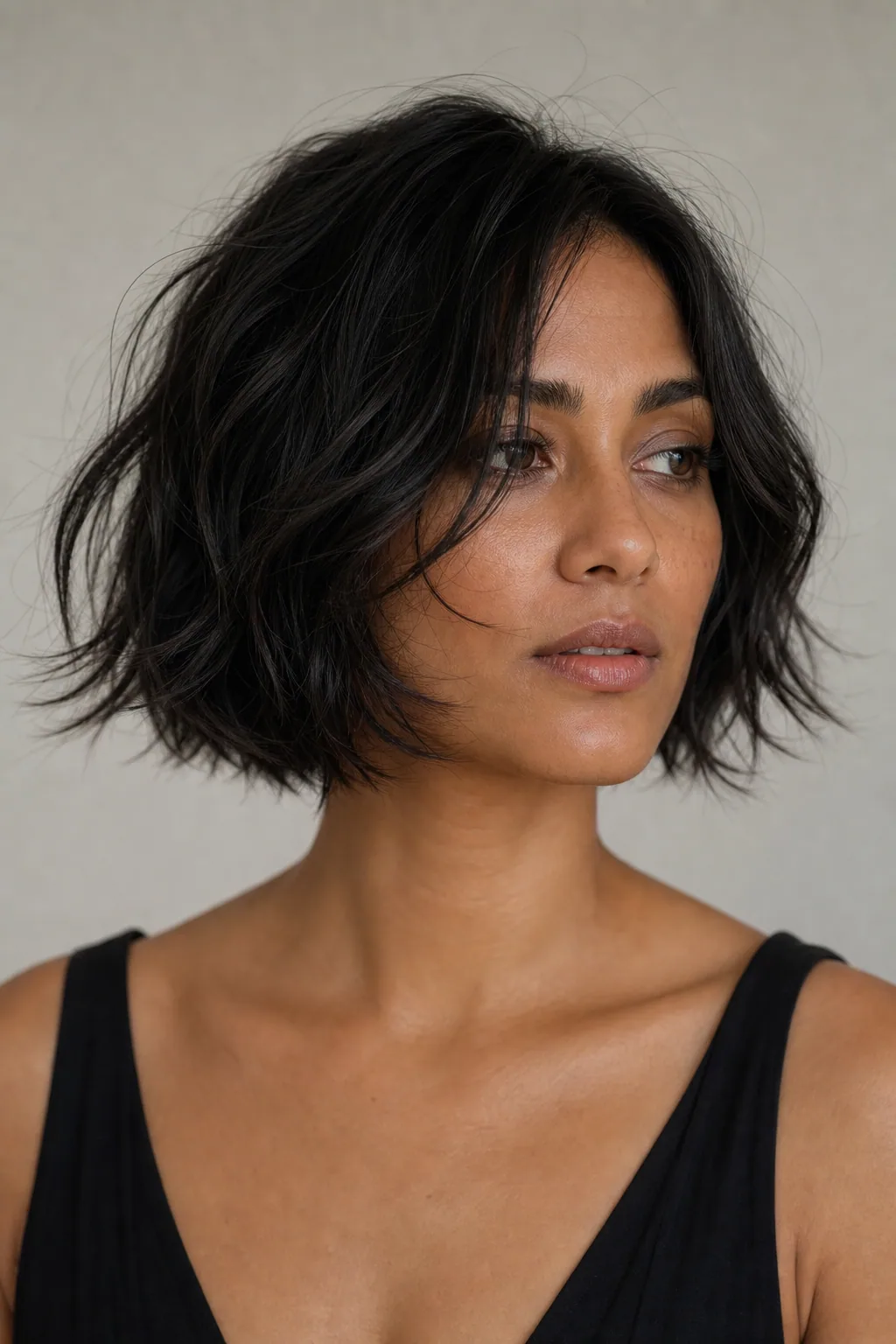
Tousled wavy bob
Loose, undone waves through a jaw-length bob fake density by breaking up the light. A spritz of texture spray on the mid-lengths sets it; ask for point-cut ends so the waves stay separated, not stringy.
9
Choppy micro-bob
A very short, chin-and-above bob with deliberately uneven, choppy ends for a modern, editorial edge. The texture creates separation that looks like more hair — the choppy bob has the depth rule that keeps it from thinning fine ends — a bold, low-maintenance pick for confident straight, fine hair.
10
Italian bob
The season's just-below-the-jaw length with a soft, rounded blow-out bend. Longer than a French bob but still weight-forward, it flatters most face shapes and photographs full without heat-heavy styling. Push that texture further and the perimeter itself becomes irregular — the choppy bob for fine hair is that version.
Bobs with a fringe or face-framing detail
A fringe redistributes weight toward the face and hides a high forehead — and on fine hair, it adds a second layer of visual density up front.
11
Bob with wispy bangs
Fine, feathered bangs that sit light on the forehead — no heavy blunt fringe to overwhelm a delicate strand. They soften the hairline and make even a simple blunt bob feel finished.
12
Inverted bob
A dramatic version of the A-line — very short and stacked at the nape, angling to a longer jaw-framing front. The steep graduation is a volume machine for fine hair; it does ask for a trim every five weeks to stay sharp.
13
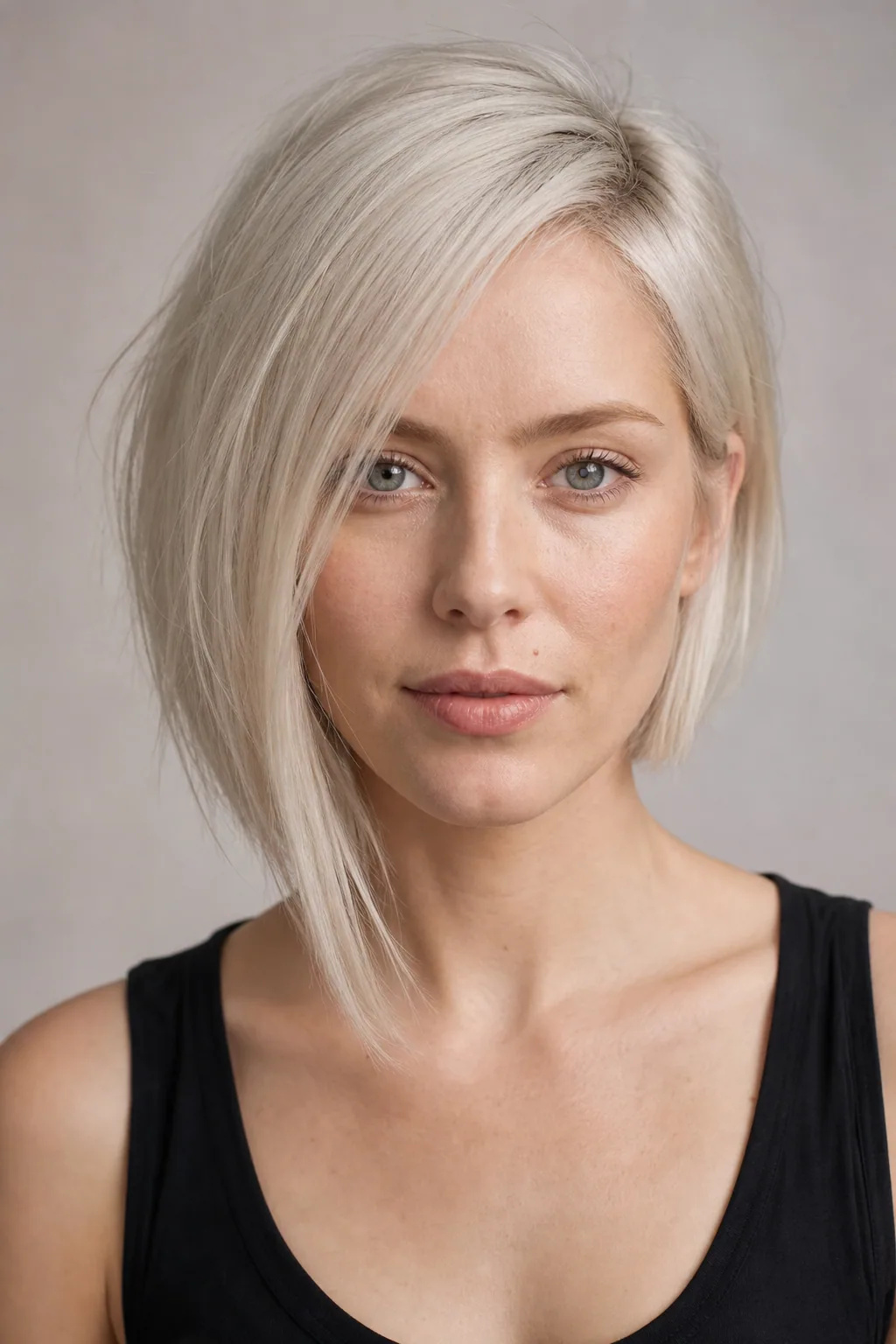
Asymmetric bob
One side cut longer than the other for a deliberate, modern imbalance that draws the eye and adds perceived movement. Style the shorter side tucked and the longer side forward to maximize the contrast.
14
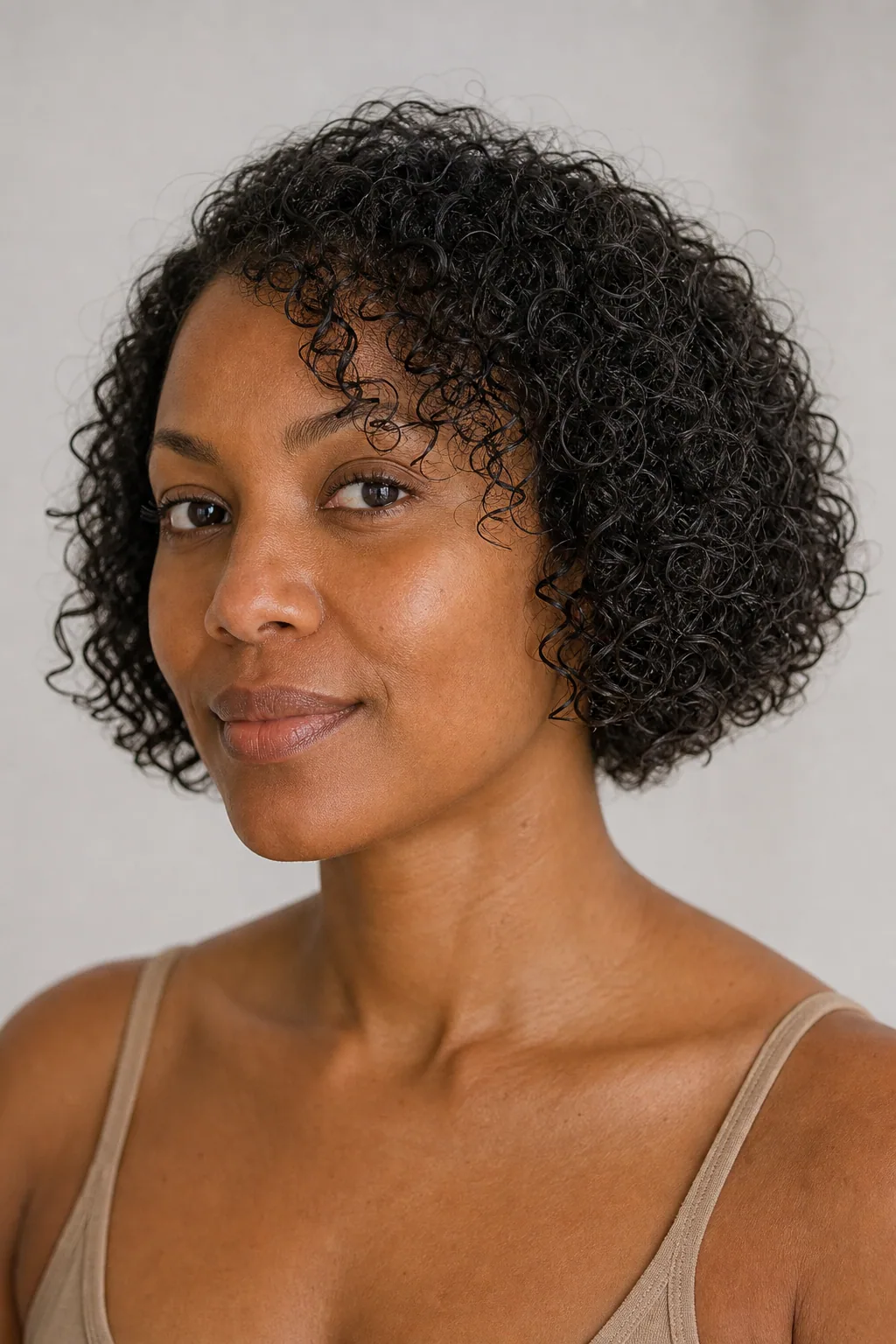
Curly bob for fine, curly hair
Cut to let each curl spring and stack, a jaw-length curly bob turns fine curls into a full, rounded shape. Ask for a dry or curl-specific cut so the length is judged on how the curl actually sits, not stretched-out.
15
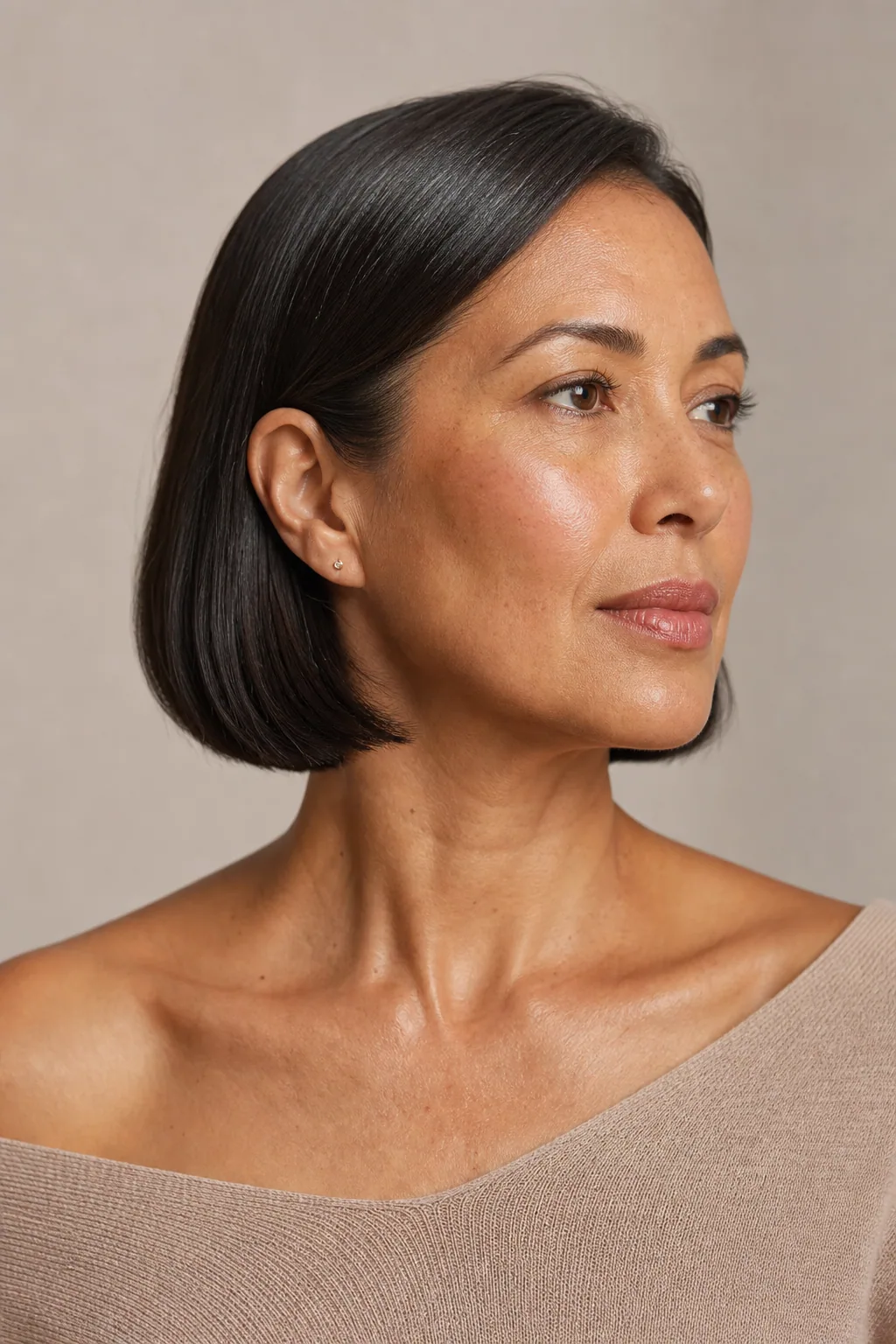
Sleek tucked bob
A polished, one-length bob worn tucked behind the ears with a glossy finish — proof fine hair can look expensive, not just full. A cool-shot finish and a drop of lightweight serum on the ends keep it sleek without flattening the roots.
Choose your bob for your face shape
Face shape
Best bob
Key detail
Round
Angled A-line or inverted bob
Length below the chin elongates; avoid blunt cheekbone-level cuts.
A classic blunt or stacked bob shows off balanced proportions.
Square
Soft, wavy or Italian bob
Rounded ends soften a strong jaw; skip sharp, blunt lines.
Heart
Chin-length bob with wispy bangs
Volume at the jaw balances a wider forehead.
Long / oblong
Chin-length blunt with a fringe
Width at the jaw plus bangs shortens the face; avoid very long lobs.
What each bob asks of you
A bob is faster to style than long hair but faster to lose its shape, too — the perimeter line is the design. Here's the honest upkeep before you commit.
Bob
Trim
Daily styling
Grow-out
Stacked / graduated
5–6 wks
10–15 min round-brush
Loses stacking after wk 5
Blunt chin-length
6–7 wks
5–10 min; cool-shot finish
Softens evenly; forgiving
Inverted / A-line
4–5 wks
10–15 min
Front angle blurs first
Textured French
7–8 wks
5 min; texture spray
Grows out gracefully
What to ask your stylist
Bring the language, not just a photo. For fine or thin hair, say: "I have fine hair and I want it to look fuller. Can we do a graduated bob with point-cut internal layers — please don't razor the ends or do heavy thinning, it makes my hair look see-through." If density is low at the crown, add: "Keep a little weight on top so my scalp doesn't show." That one sentence prevents the most common fine-hair bob regret.
Chair-side note
The finish matters as much as the cut. Blow-dry fine hair with a round brush, lifting each root section up and over the brush, then hit it with the cool shot before you drop the section — that's what sets volume that lasts. A little heat protectant first keeps repeated blow-drying from roughing up an already-delicate strand (cosmetic pretreatment reduces thermal damage from hot ironing).
SB
— Simone Baptiste, Senior Stylist
When a bob may not be your best move
Very low density at the crown — a short blunt bob can expose the scalp. Keep length on top and choose a graduated shape, or a longer lob instead.
Very tight coils that shrink dramatically — a bob can read much shorter than expected. Try a shaped, longer curly cut with a defined perimeter.
You want true wash-and-go with zero heat. Most fullness-building bobs want a quick round-brush finish; a longer textured lob is more forgiving air-dried.
FAQ
The opposite, when cut correctly. A graduated or stacked bob removes weight from the ends and concentrates fullness where it reads — around the crown and jaw. A single blunt line can look sparse on very fine hair, so the trick is where the weight sits, not the length itself.
Both work, differently. A blunt bob makes the ends look denser because every strand ends at the same line — great for fine but not sparse hair. A graduated or softly point-cut layered bob builds height and movement, better when hair is fine and flat. Avoid heavy, razored layers, which thin fine ends.
Every 5 to 7 weeks to keep the shape crisp. A bob's perimeter line is the whole design, so it loses definition faster than long layers. The payoff is quicker daily styling, not fewer salon visits.
Chin to jaw length is the sweet spot for most thin hair — short enough to look full and dense, long enough to style. Going very short can expose the scalp at the crown if density is low, so keep a little length on top and ask for internal layers rather than heavy thinning.
Yes — a French or textured bob suits fine, wavy hair beautifully because the wave supplies built-in volume. Ask for a length that lets the wave sit without triangulating, and keep layering minimal and point-cut so the ends stay piece-y, not stringy.
It is the single best length for most fine hair, and it is the default this page is built around. A chin-length bob stacks all the remaining weight into one dense perimeter right beside your face, and leaves almost nothing hanging below it to pull the roots flat — which is the two things fine hair needs from a haircut, solved by the length alone. Ask for the line cut blunt with no thinning shears or razor in the ends, and any layers kept internal and point-cut. The one situation to modify it for is very low density at the crown, where a chin-length bob can expose scalp on top: keep a little more length up there and take a graduated shape rather than a one-length blunt line.
Length, and what that length costs you. A bob sits between the ear and the jaw, so a chin-length bob is the long end of the bob range. A lob starts at or just above the collarbone and runs longer. On fine hair the practical difference is root lift: a chin-length bob has so little weight below the perimeter that the roots stand up almost on their own, while a lob keeps the length you may want but needs a round brush, velcro rollers or a root product to get the same fullness. Choose the bob if your hair goes flat by lunchtime; choose the lob if you would rather spend five minutes styling than lose the length.
A quick round-brush blow-dry at the roots gives the best fullness, but a good cut does much of the work. Stacked and graduated bobs hold shape with minimal effort; a lightweight mousse on damp roots plus a cool blast sets volume that lasts most of the day.
Eleven years behind the chair, specializing in short shapes and fine-hair texture. Simone believes the best haircut is the one you can style yourself in ten minutes.
Results vary with hair type, density, and growth patterns. This guide is educational and not a substitute for an in-person consultation with a licensed stylist.
Hairstyle images in this guide are AI-generated illustrations, not photos of real clients or results. See our image policy.
Get the good hair intel
One honest, stylist-written guide in your inbox each week. No hype.

 SB
SB