Reviewed by Tara Sullivan · Updated July 2026 · 8 min read
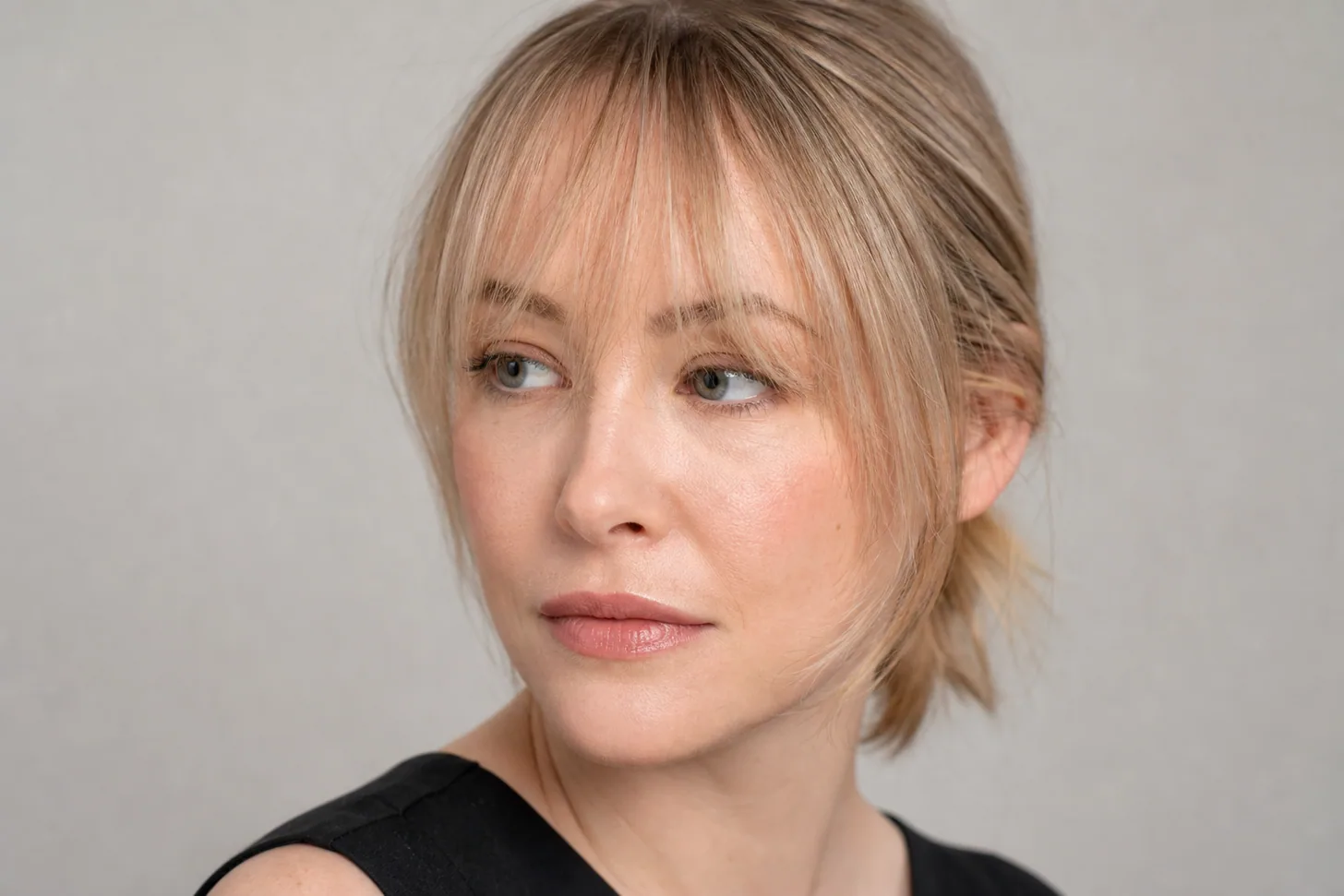
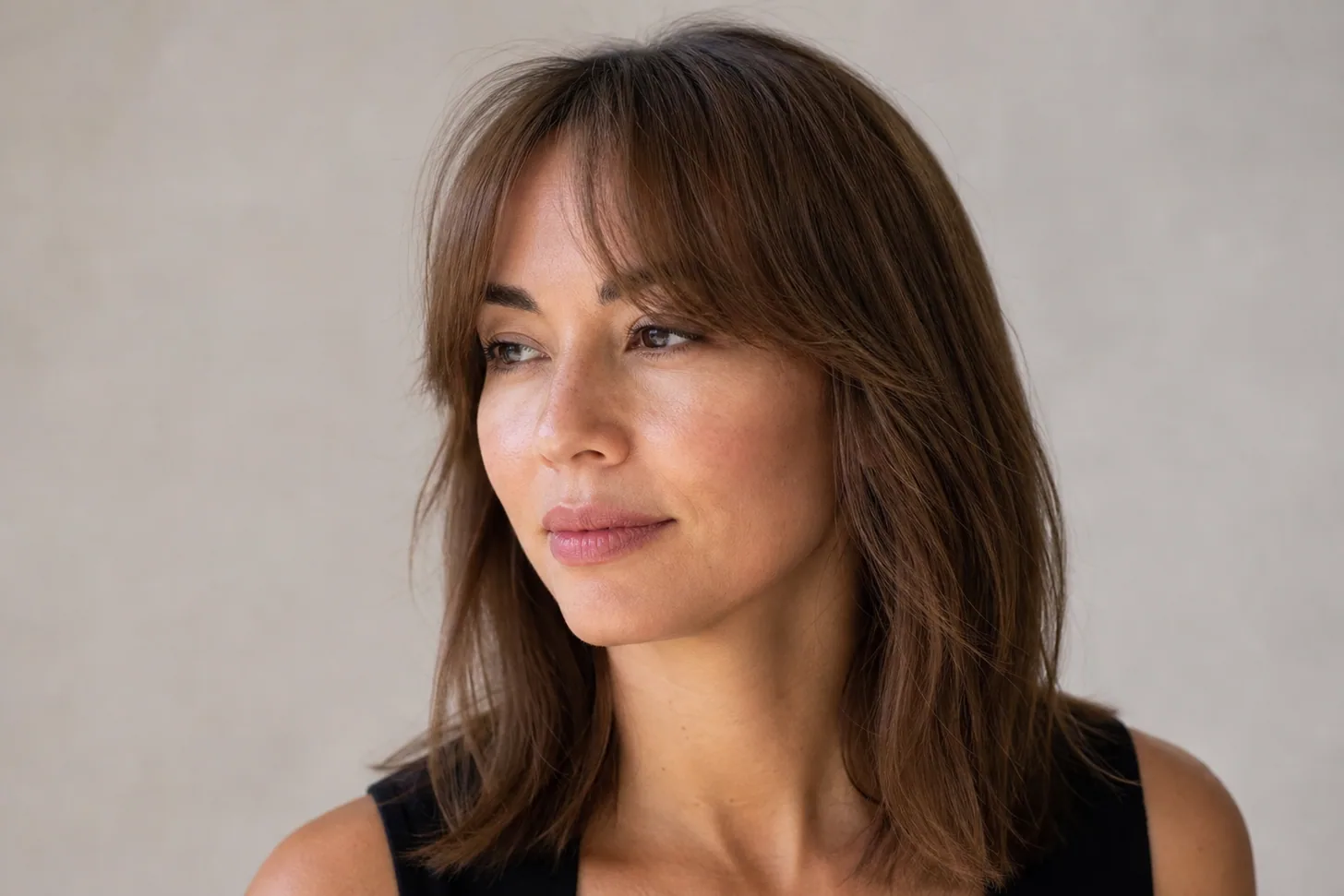
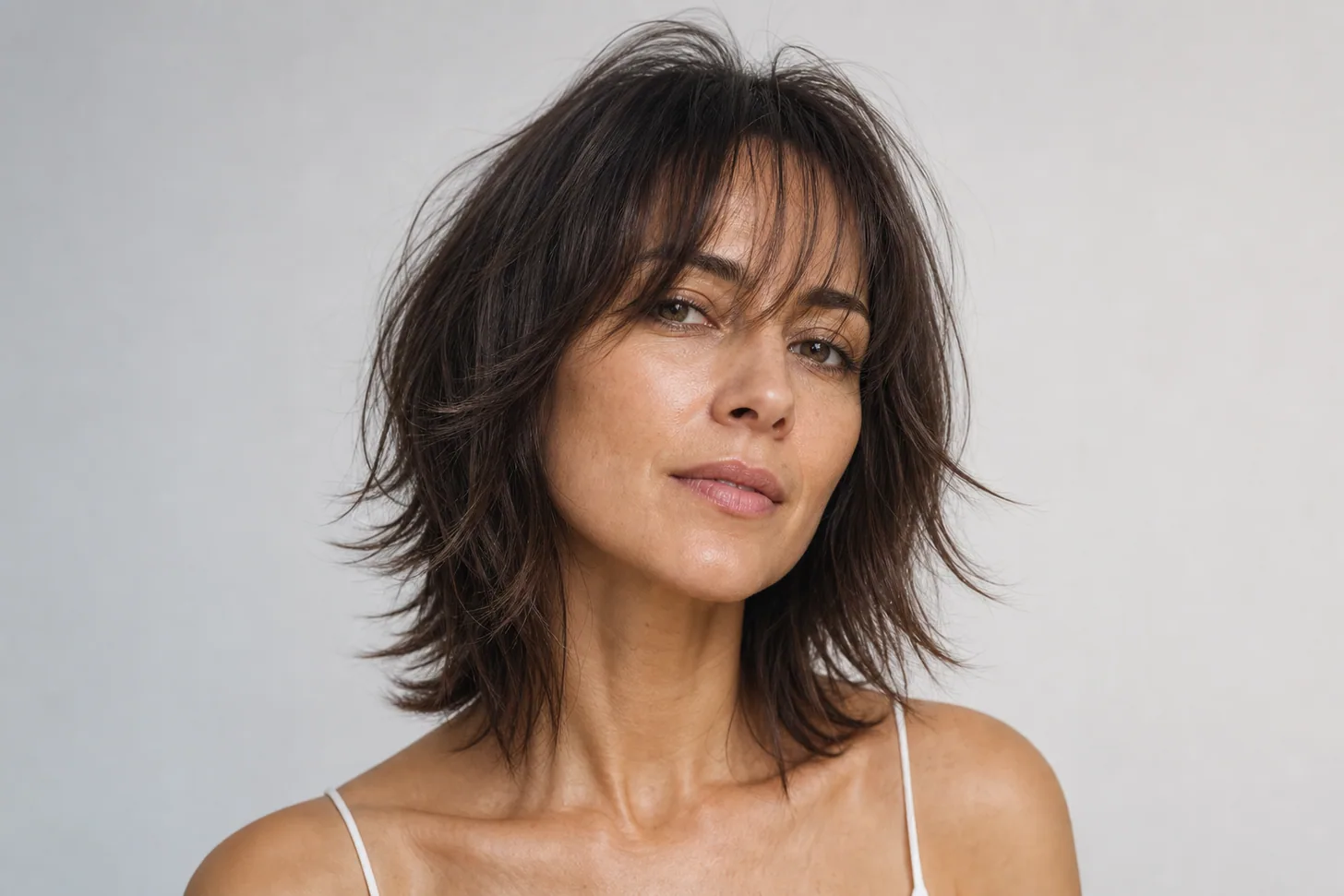
Wispy bangs — soft, feathered, see-through pieces at the front — are the single best fringe for fine hair, because they're designed to look delicate on purpose instead of needing density they don't have. A blunt fringe borrows hair from an already-sparse hairline and looks thin when it isn't full; wispy bangs do the opposite, framing the face with airy pieces that take very little hair to create.
The trick is a shallow section, point-cut so the ends taper. Note that wispy describes density rather than direction, so it can be worn either way — the one-direction version has its own page in side-swept bangs for fine hair. Below are 14 salon-tested wispy fringes for fine and thin hair, from a barely-there micro-fringe to soft face-framing pieces, each with who it suits and the exact words to bring your stylist.
The honest maintenance verdict
3–4 minutes, and easy to overdoDay two: shows oil before any other fringeTrim every 2–3 weeksNothing heavier than a mist goes near it
Wispy bangs are the fringe fine hair wears best and the fringe fine hair has to look after most attentively — which sounds contradictory until you look at what makes them work. A wispy fringe is deliberately built from very few strands, so it never has the weight problem that makes a blunt fringe separate and show scalp. But the same sparseness means every strand is visible and doing a job, and anything that happens to one of them shows.
What day two actually looks like: the least forgiving of any fringe on this site. With only a handful of strands across the forehead, even slight oil clumps them into visible spikes rather than distributing invisibly through a mass of hair. This is the fringe most likely to send you to the sink. The good news is that rinsing and drying a wispy fringe takes under two minutes precisely because there's so little of it.
Product is the main way people ruin these. A wispy fringe will take a light mist of hairspray or a whisper of dry shampoo at the root and nothing else — no cream, no oil, no serum, and no styling product applied with fingers you've just used on the rest of your hair.
One coat of anything with weight in it and the wisps become strings. If your fringe looks greasy an hour after styling, this is almost always the cause rather than your scalp. Dry shampoo for fine hair covers the light options.
The short trim cycle is the price of the look. Because a wispy fringe is defined by where the shortest pieces sit, half an inch of growth changes it from wispy to simply short-and-thin. Two to three weeks is the honest interval, and it's the strongest argument for learning to dust the ends yourself between appointments.
Fine-haired clients often tell me they've been "scared of bangs" because a fringe they tried years ago looked stringy. Nine times out of ten the problem wasn't bangs — it was a blunt fringe cut too heavy for their density, or a section taken too deep.
Wispy bangs fix both. My rules: take a shallow, narrow triangle at the front only, never dig back into the crown, and point-cut the ends vertically so they taper into feathery pieces instead of a solid line. Cut that way, a wispy fringe reads as soft and deliberate on the finest hair. And the see-through quality means a little bit of hair goes a long way — you're framing the face, not building a wall.
SB
— Simone Baptiste, Senior Stylist
Why wispy bangs work for fine hair
Fine hair struggles with any style that depends on looking full, and a traditional blunt fringe is exactly that kind of style — it needs real density to sit as a solid, even line, and on fine hair it separates and looks sparse instead.
Wispy bangs sidestep the whole problem by making airiness the goal: they're cut soft, tapered, and see-through, so the delicate look is intentional rather than a shortfall. That's why they flatter fine hair when almost nothing else at the front does. They're the lighter, more forgiving cousin of curtain bangs, and they pair with practically any shape — a bob, a pixie, or long layers.
The only judgment calls are how shallow the section is and how it's tapered, and both come down to your density; if you're unsure whether you're working with fine strands, low density, or both, the quick read on telling fine from thin hair tells your stylist how light to go.
The classic wispy fringes
Start here for the definitive versions — the soft, feathered fringes that define the look, cut so they read airy rather than sparse on fine hair.
classic soft wispy fringe with feathered tapered ends across the forehead on fine hair
1
The classic wispy fringe
The template: a soft, feathered fringe that sits just at the brows with point-cut, tapered ends so it looks airy rather than blunt. On fine hair this is the safest way to try bangs, because the see-through finish is the whole design. Ask for a shallow section so it doesn't rob density from your crown.
wispy curtain bangs parted in the middle sweeping to each side on fine hair
2
Wispy curtain bangs
The wispy texture worn as a center-parted curtain fringe that sweeps away from the face on both sides. It's the most versatile version — flattering on nearly every face shape and easy to grow out. The airy pieces frame the cheekbones without the weight a fuller curtain bang would need.
side-swept wispy bangs falling softly across the forehead on fine hair
3
Side-swept wispy bangs
Soft pieces swept diagonally across the forehead, long enough to blend into the sides — the most efficient option if you are also covering a high hairline. The side sweep suits round and square faces because it breaks up width and adds a diagonal line. It's also the most grow-out-friendly wispy fringe — as it lengthens it simply becomes face-framing.
wispy micro fringe sitting high above the brows on fine hair
4
The wispy micro-fringe
A short, see-through baby fringe that sits well above the brows for a bold, fashion-forward look. Because it's so light and airy, it flatters fine hair rather than exposing a thin hairline — the wispiness is the point. Best on higher foreheads and anyone who wants a fringe to make a statement.
Wispy bangs by length & shape
The same wispy texture reads very differently depending on where it falls. Here are the lengths and shapes, and who each suits on fine hair.
long wispy bangs falling past the brows into the lashes on fine hair
5
Long wispy bangs
A longer fringe that grazes the lashes or cheekbones, cut wispy so it stays soft rather than heavy. The length lets you tuck it, part it, or sweep it aside, so it's the most flexible option day to day. It's also the easiest to live with on fine hair because it blends into your length as it grows.
wispy birkin bangs with an arched piece-y shape framing the eyes on fine hair
6
Wispy Birkin bangs
The soft, slightly arched, piece-y fringe made famous by Jane Birkin — full-looking in spirit but cut light and separated so it works on fine hair. The gentle arch frames the eyes and flatters most faces. Ask for it heavily point-cut so it never reads as a solid, dense block.
wispy fringe with a soft gap parting slightly in the center on fine hair
7
The parted wispy fringe
A full-width wispy fringe with a soft break or gap in the center, so it sits between a full fringe and curtain bangs. The little parting keeps it from looking heavy and shows a sliver of forehead, which flatters fine hair. It's a modern, undone take on the classic fringe.
rounded wispy fringe following the curve of the brows on fine hair
8
The rounded wispy fringe
A fringe cut slightly shorter in the middle and longer at the sides, following the curve of the brows, with wispy tapered ends. The rounded shape softens angular faces and draws the eye to the center. Keep the section shallow so the curve stays light and airy rather than heavy in the middle.
Wispy bangs with popular fine-hair cuts
Wispy bangs pair with almost any shape. These are the combinations that do the most for fine hair.
chin-length bob with soft wispy bangs on fine straight hair
9
Wispy bangs with a bob
A chin-length bob and a wispy fringe is a classic fine-hair pairing — the blunt weight of the bob balances the airy fringe, and the fringe softens the strong line of the cut. It's a polished, low-fuss look. Ask for the bangs blended toward the length so the two pieces feel like one shape.
pixie cut with a long wispy fringe swept across the forehead on fine hair
10
Wispy bangs with a pixie
A pixie with a long, wispy fringe is one of the most flattering short looks for fine hair — the soft front keeps a short cut from looking severe. The fringe adds movement and femininity where a pixie could feel stark. Keep it long enough to sweep so it grows out easily between trims.
layered bob with wispy bangs blending into face-framing layers on fine hair
11
Wispy bangs with layers
On a layered bob or a layered lob, wispy bangs flow straight into the face-framing layers so the whole front moves as one. It's the most seamless pairing, adding fullness at the hairline and reinforcing the movement of the layers. Ask for the fringe and the first layers cut to blend into each other.
long fine hair with soft face-framing wispy bangs on fine straight hair
12
Wispy bangs on long hair
On long fine hair, a wispy fringe adds interest and frames the face without cutting length. It breaks up the flatness that long fine hair is prone to and gives the front some shape. Keep the fringe soft and connected to face-framing pieces so it doesn't look tacked on.
Wispy bangs for mature fine hair
A soft fringe is one of the most flattering things you can do for fine hair as it changes with age. These two are gentle, youthful, and easy to wear.
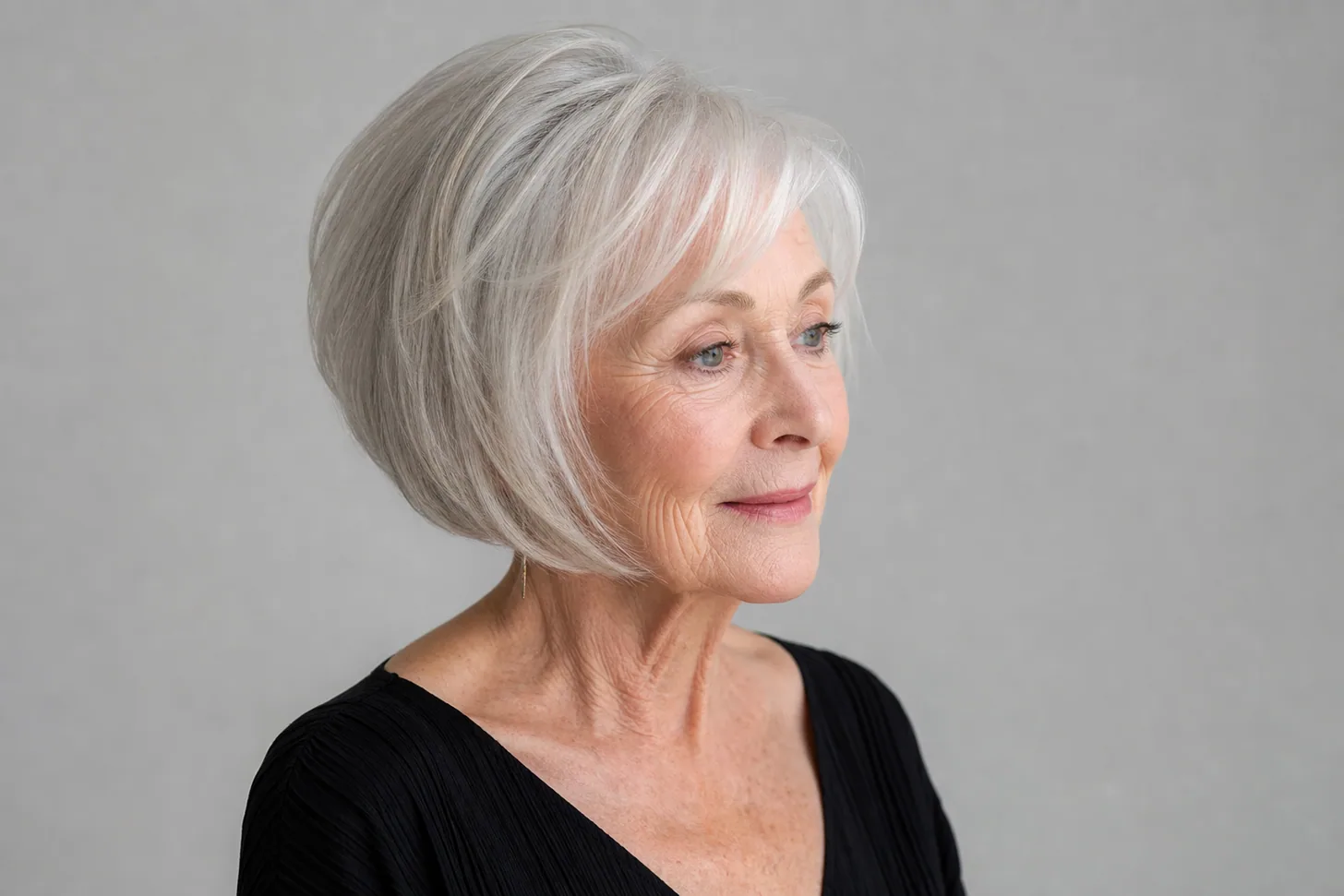
soft wispy fringe on a mature woman with fine silver-gray hair
13
The softening wispy fringe
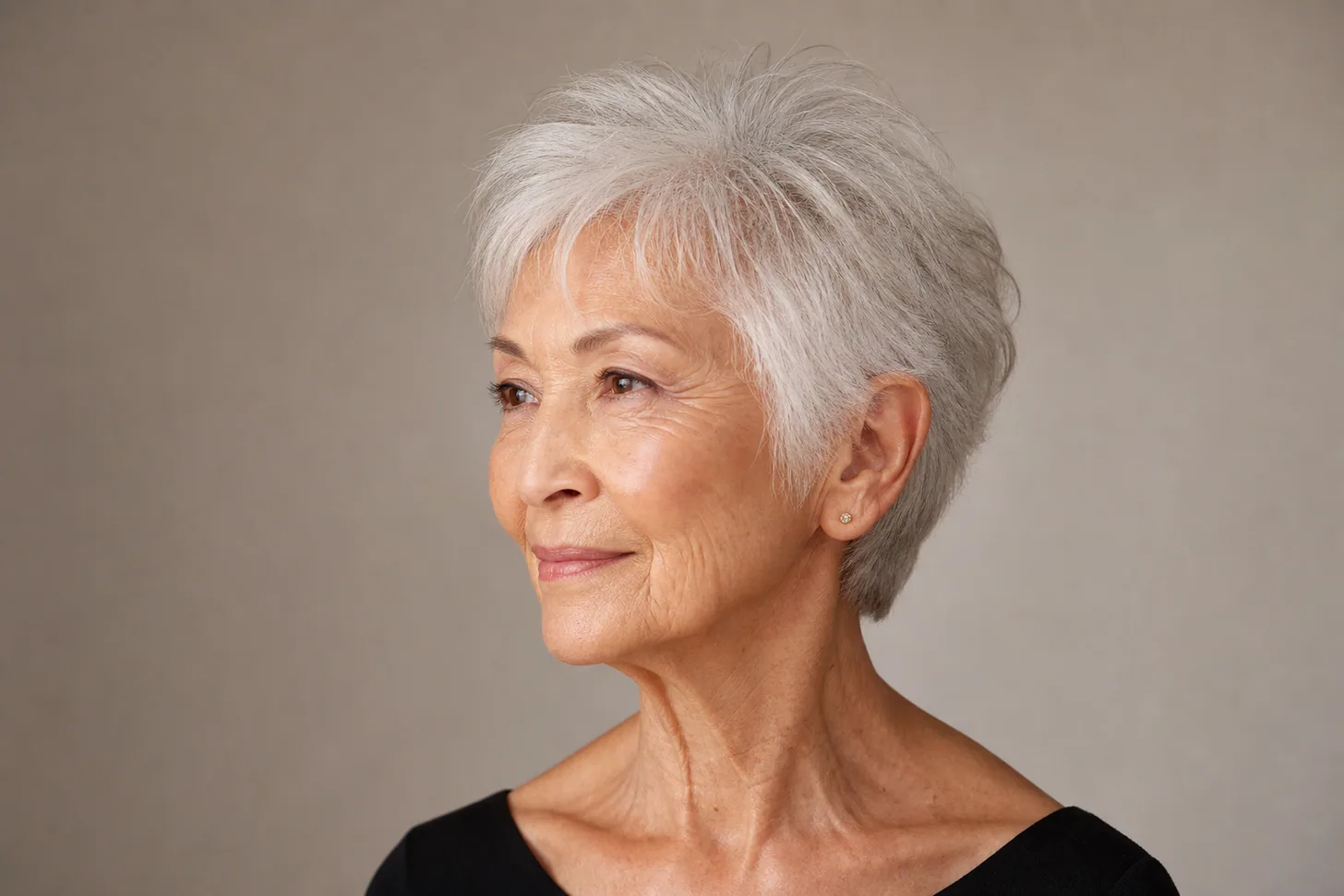
A light, tapered fringe softens the face and draws the eye up, which is why it's a favorite on fine hair over 60. It adds a youthful frame without the upkeep of a heavy fringe, and it flatters gray and silver beautifully. Keep it airy and long enough to sweep so styling stays quick.
wispy side-swept bangs worn with glasses on fine hair
14
Wispy bangs with glasses
A side-swept wispy fringe works well with glasses because the soft, thin pieces sit lightly around the frames instead of fighting them. It frames the face above the lenses without adding bulk at the temples. Ask for it cut to fall just above or into the top of your frames, tapered so it doesn't catch.
Choose your wispy bangs for your face shape
Wispy bangs are flexible, but the length and direction should suit your proportions. Use this as a starting point, then confirm with your stylist — the full method is in our guide to finding your face shape. Wispy fringes are often prescribed for a high forehead and they are not always the right call there — bangs for a big forehead on thin hair explains when they work.
Balanced proportions carry a full, side-swept, or micro wispy fringe equally.
Round
Side-swept or longer wispy bangs
A diagonal line and length add angles; skip a short, straight-across micro-fringe.
Square
Soft rounded or curtain-style wispy bangs
Softness at the hairline offsets a strong jaw.
Heart
Full-width wispy fringe or wispy curtain bangs
Width at the brow balances a wider forehead and narrower chin.
Long / oblong
Fuller straight-across wispy fringe
A fringe across the forehead shortens a long face.
What to ask your stylist
The difference between a wispy fringe that flatters fine hair and one that looks stringy is all in the cutting. Say: "I want wispy bangs, and I need them to look soft and see-through, not heavy — please take a shallow, narrow section at the front only, don't dig back into my crown, and point-cut the ends so they taper into feathery pieces."
Then set the length and direction: "Long enough to sweep to the side" or "a short micro-fringe" tells your stylist the shape you're after. And if you're nervous, add: "Start longer — I'd rather come back and go shorter than lose too much at once." You can always trim a wispy fringe up; you can't lengthen it until it grows.
Chair-side note
The fastest way to ruin wispy bangs is the wrong product. Fine fringe pieces clump together the second you touch them with anything heavy — a pea of cream or a drop of oil and they go stringy and greasy-looking by lunchtime.
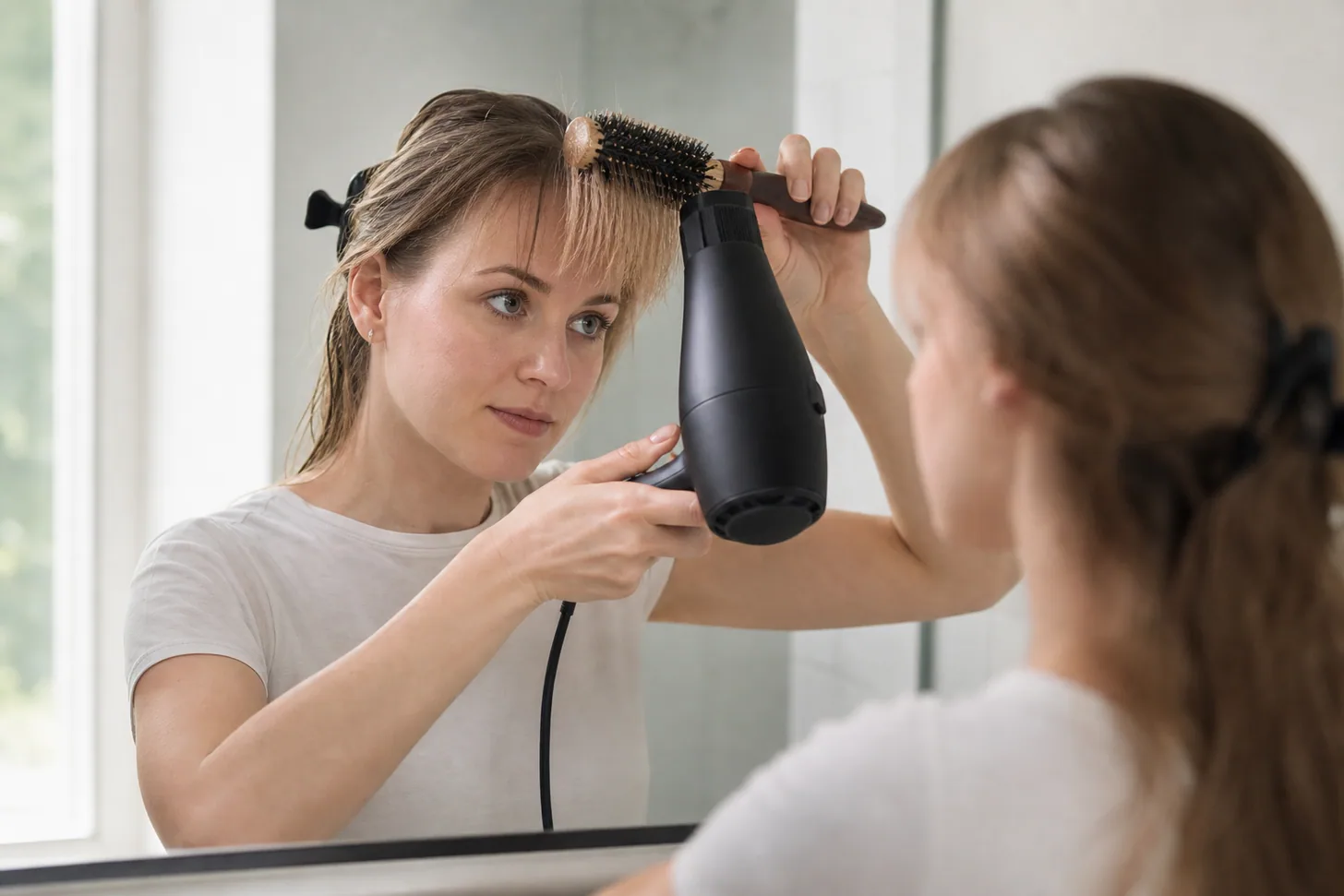
My routine: blow the fringe dry first, while it's damp, sweeping it side to side with the nozzle so it doesn't set into a cowlick, then finish with the lightest mist of texture spray to separate the pieces. That's it. If your fringe goes flat or oily fast, a whisper of dry shampoo at the roots refreshes it without a full wash. Less is genuinely more here.
SB
— Simone Baptiste, Senior Stylist
When wispy bangs may not be your best move
You want a low-trim, hands-off routine. A fringe needs a shape-up every three to four weeks; if that's not for you, keep your length face-framing with long layers instead.
You have a very oily forehead or fine hair that goes greasy fast. A fringe sits on the skin and shows oil first; be ready to refresh with dry shampoo, or keep the fringe longer and sweepable.
You have a strong cowlick or a widow's peak at the hairline. It can push a straight fringe apart; a side-swept wispy fringe or curtain bangs work with the growth pattern instead of against it.
You're noticing thinning right at the front hairline. A fringe can help cover it, but read our honest guide to fine hair versus thinning first so you know what you're working with.
FAQ
Wispy bangs are arguably the best type of fringe for fine hair, because they're designed to look light and see-through rather than full and blunt. A blunt, heavy fringe needs real density to look right, and it borrows hair from an already-sparse hairline; wispy bangs do the opposite — they're cut soft and piece-y so they read as delicate on purpose. That means they flatter fine hair instead of exposing it, and they take very little hair to create. Cut with point-cutting so the ends taper, wispy bangs frame the face and add softness without weighing down or thinning the rest of your hair.
They overlap, but they're not the same. Curtain bangs are longer, parted in the middle, and sweep away from the face on each side like open curtains — they frame the cheeks and blend into the length. Wispy bangs describe the texture and weight rather than the shape: soft, feathered, see-through pieces that can be worn as a fringe across the forehead or as face-framing. You can have wispy curtain bangs, which combine both. For fine hair, wispy is the quality you want either way — it's the airiness that keeps the fringe from looking sparse.
No, when they're cut correctly they make thin hair look softer and more intentional, not thinner. The mistake that causes thinning is taking a fringe section that's too deep, which pulls hair away from the top of the head and leaves the crown looking sparse. Wispy bangs use a shallow, narrow section and are point-cut to taper, so they sit lightly at the front without robbing density from the rest. The see-through effect is the design, so it never reads as accidental sparseness. Kept shallow and light, wispy bangs are one of the safest fringes for thin hair.
Wispy bangs are low-effort, which suits fine hair. Blow them dry first, while they're still damp, using a small round brush or just your fingers and the nozzle to sweep them side to side so they don't dry with a cowlick. A tiny amount of texture spray or a light mist of hairspray separates the pieces and keeps the airy, feathered look. Avoid heavy creams or oils on the fringe — they clump the fine pieces together and make them look greasy and thin. On fine hair, the rule is less product and more separation; the more piece-y they look, the better.
Wispy bangs are lower-maintenance than a blunt fringe day to day, but they grow out and need trimming every three to four weeks to stay at the right length. The upside is that because they're soft and tapered rather than blunt, they grow out gracefully — as they lengthen they simply become face-framing pieces rather than an awkward heavy fringe, so a missed trim isn't a crisis. Many salons offer free fringe trims between cuts. If you know you won't keep up with trims, ask for them cut slightly longer so they blend into your length as they grow.
Almost any cut can take wispy bangs, which is part of their appeal — they pair beautifully with a bob, a lob, a pixie, layers, and long hair. Because they're light and face-framing, they add softness to a blunt cut and reinforce movement in a layered one. The main thing to consider is your forehead and face shape: wispy bangs shorten a long face nicely, while a longer, side-swept wispy fringe suits a rounder face better. Talk it through with your stylist so the fringe complements the shape you already have rather than fighting it.
Eleven years behind the chair, specializing in short shapes and fine-hair texture. Simone believes the best haircut is the one you can style yourself in ten minutes.
Results vary with hair type, density, and growth patterns. This guide is educational and not a substitute for an in-person consultation with a licensed stylist.
Hairstyle images in this guide are AI-generated illustrations, not photos of real clients or results. See our image policy.
Get the good hair intel
One honest, stylist-written guide in your inbox each week. No hype.

 SB
SB