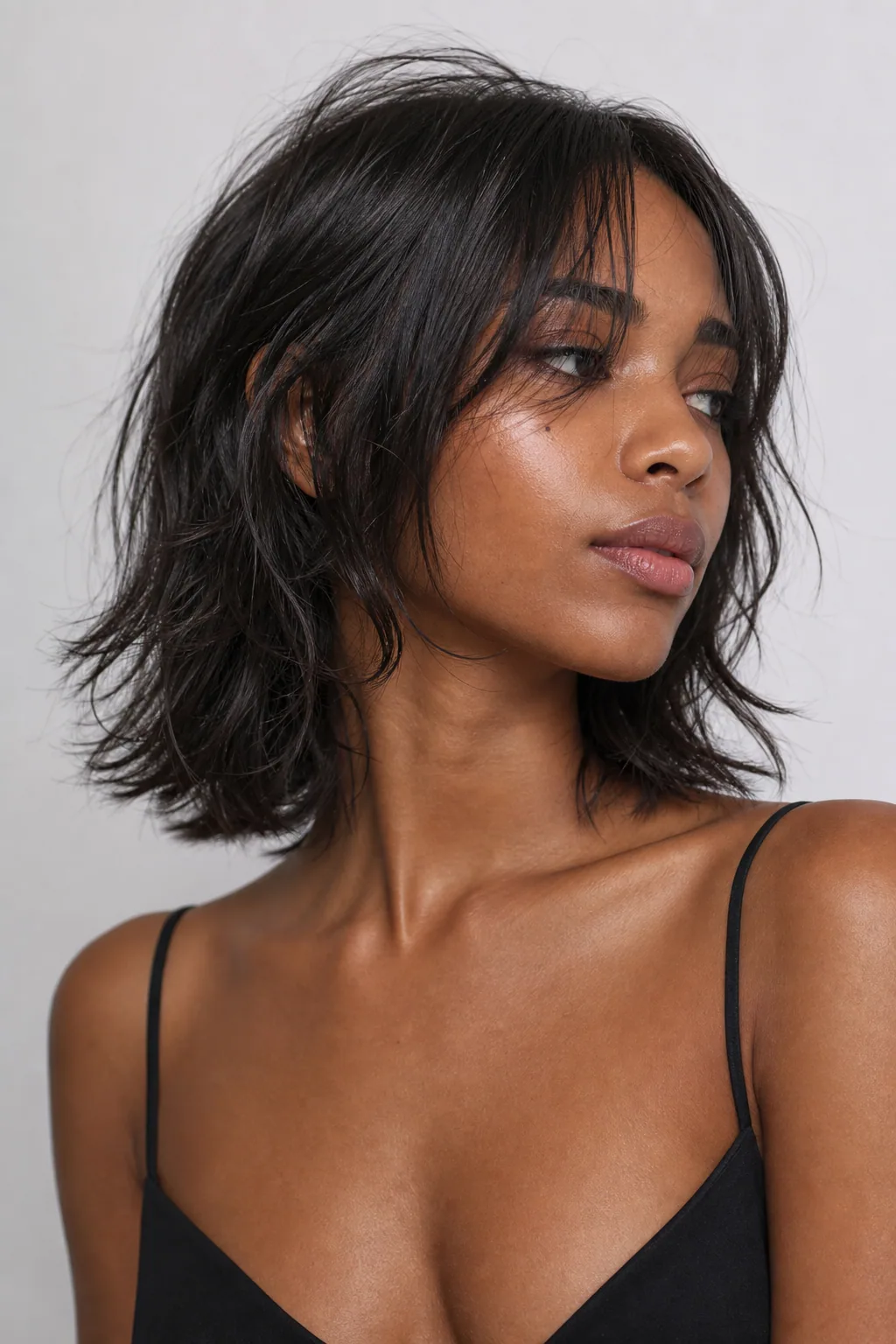
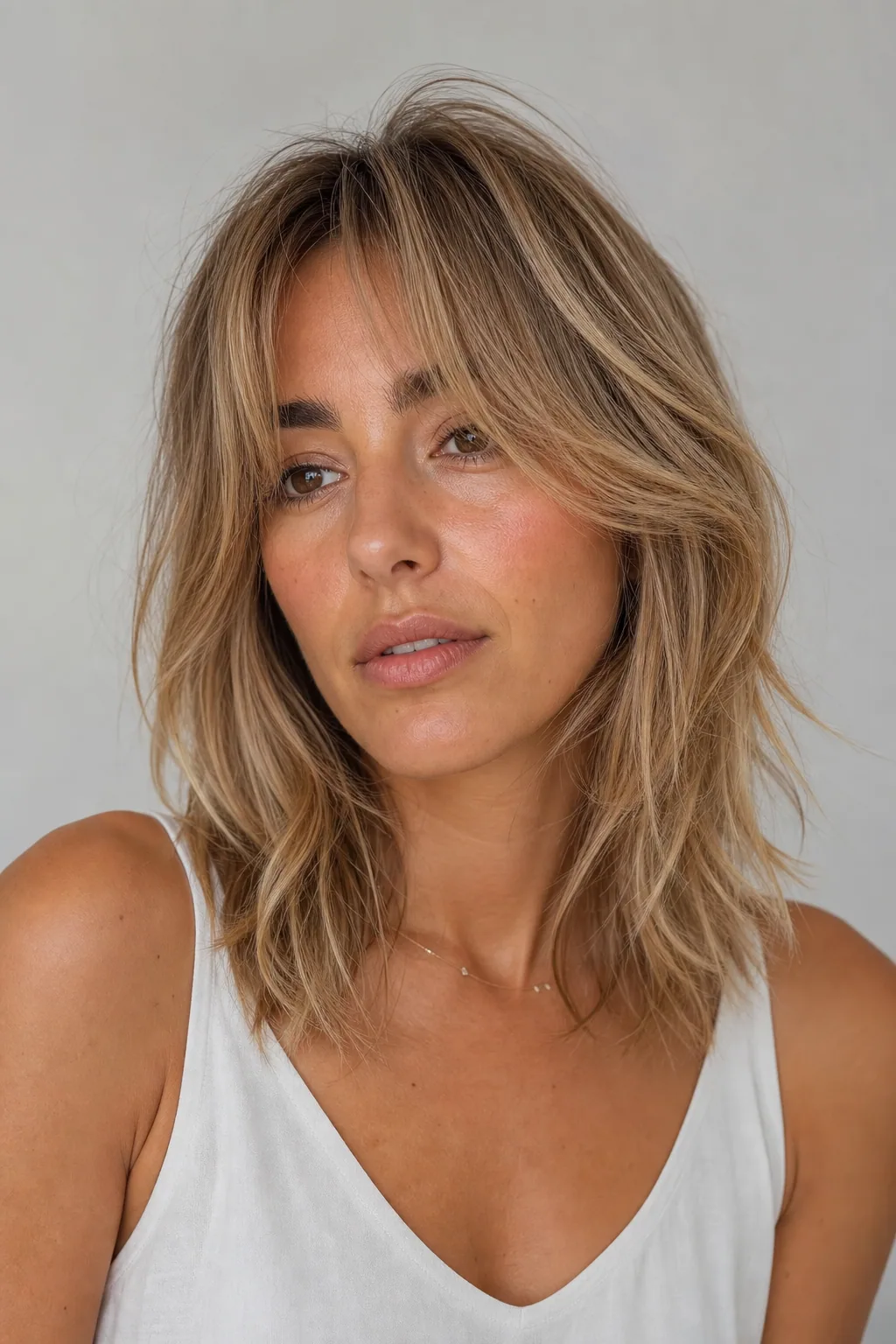
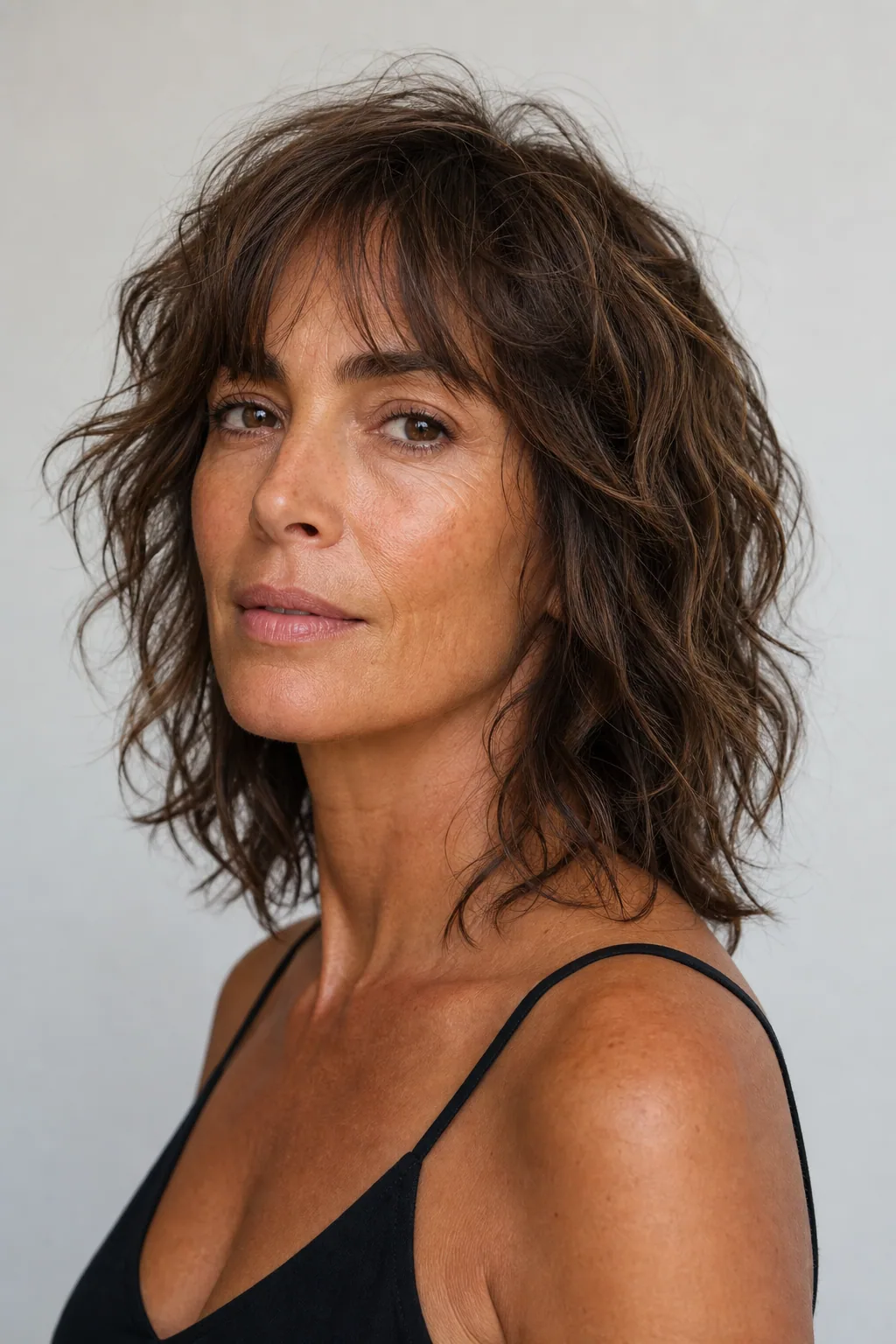
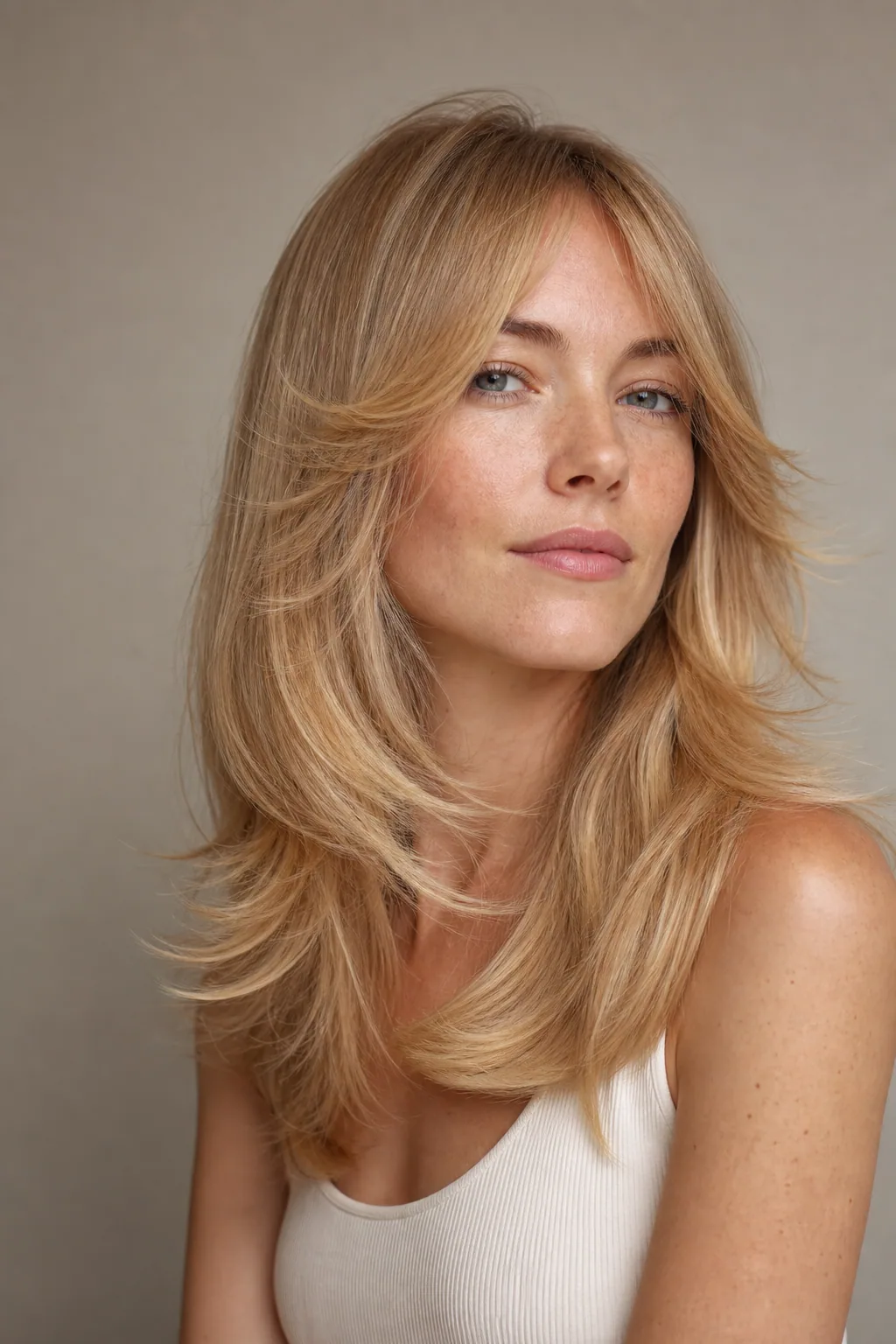
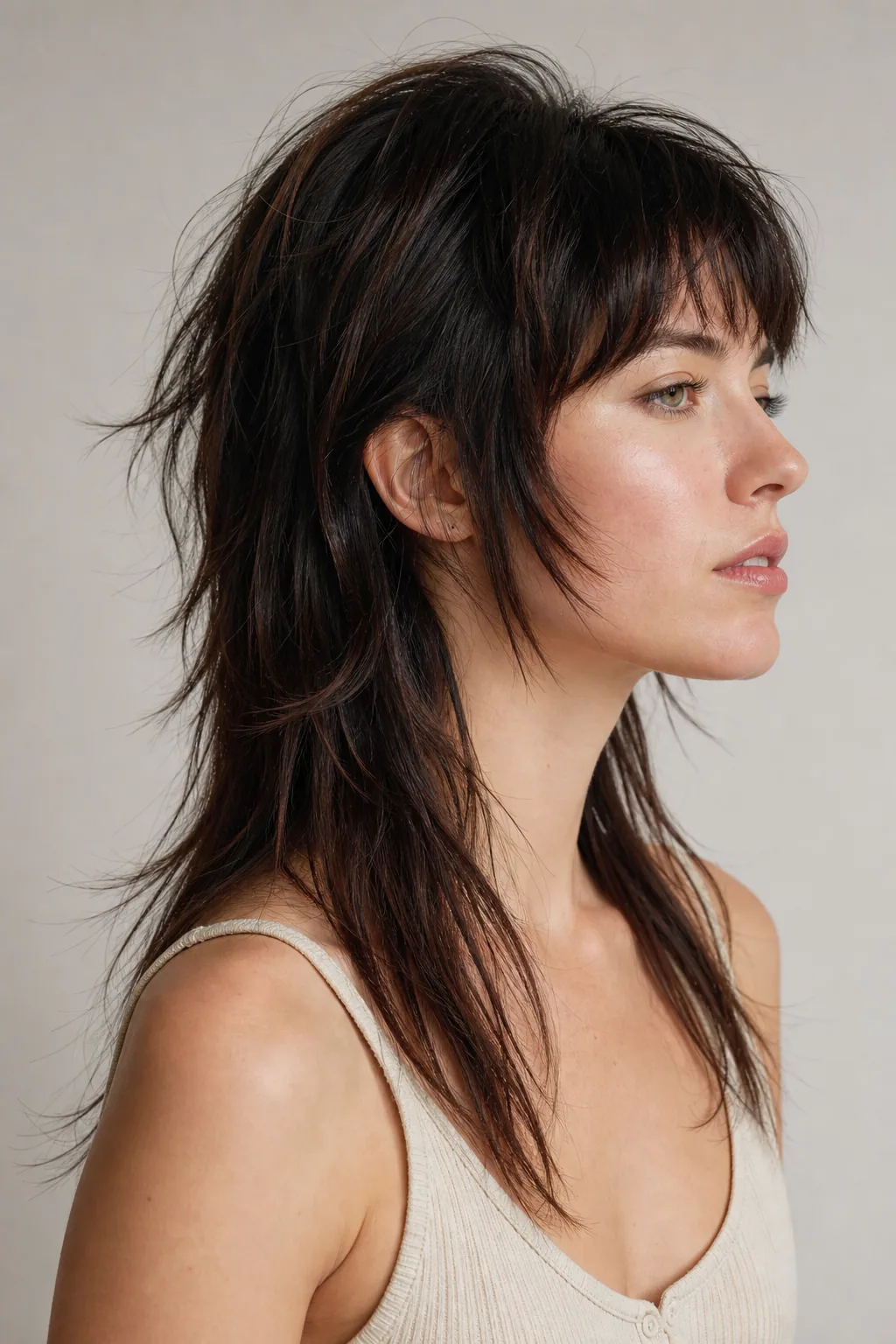
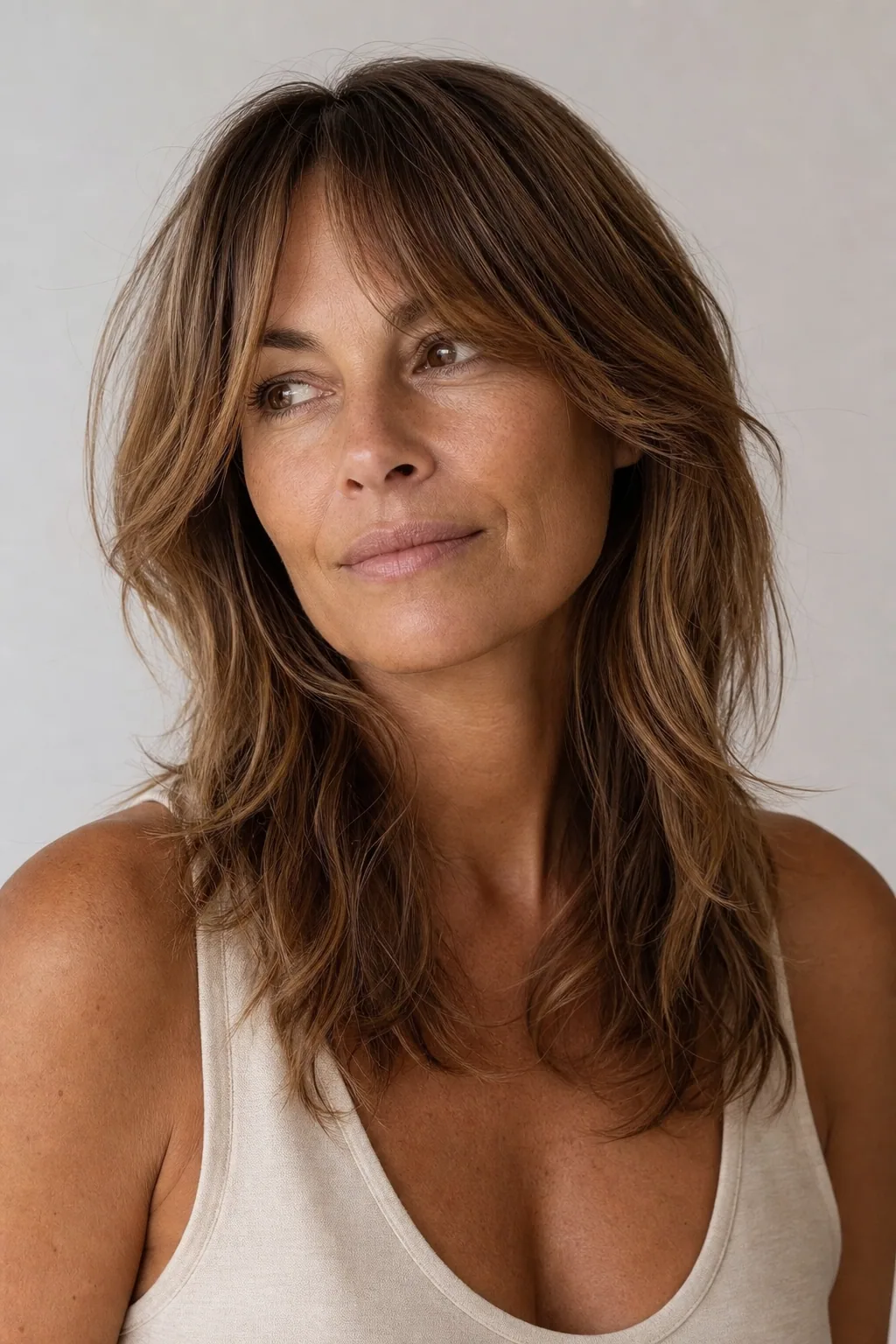
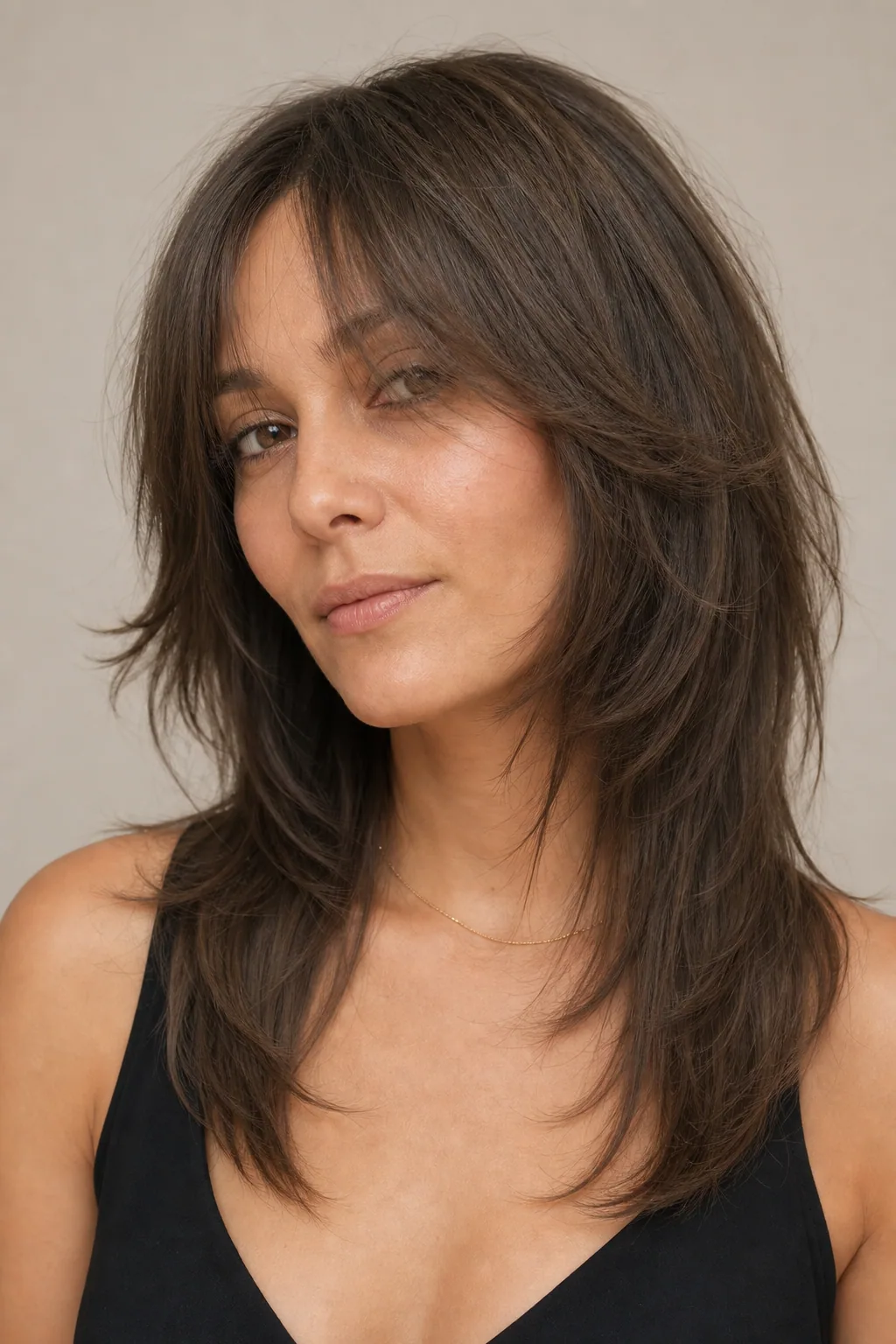
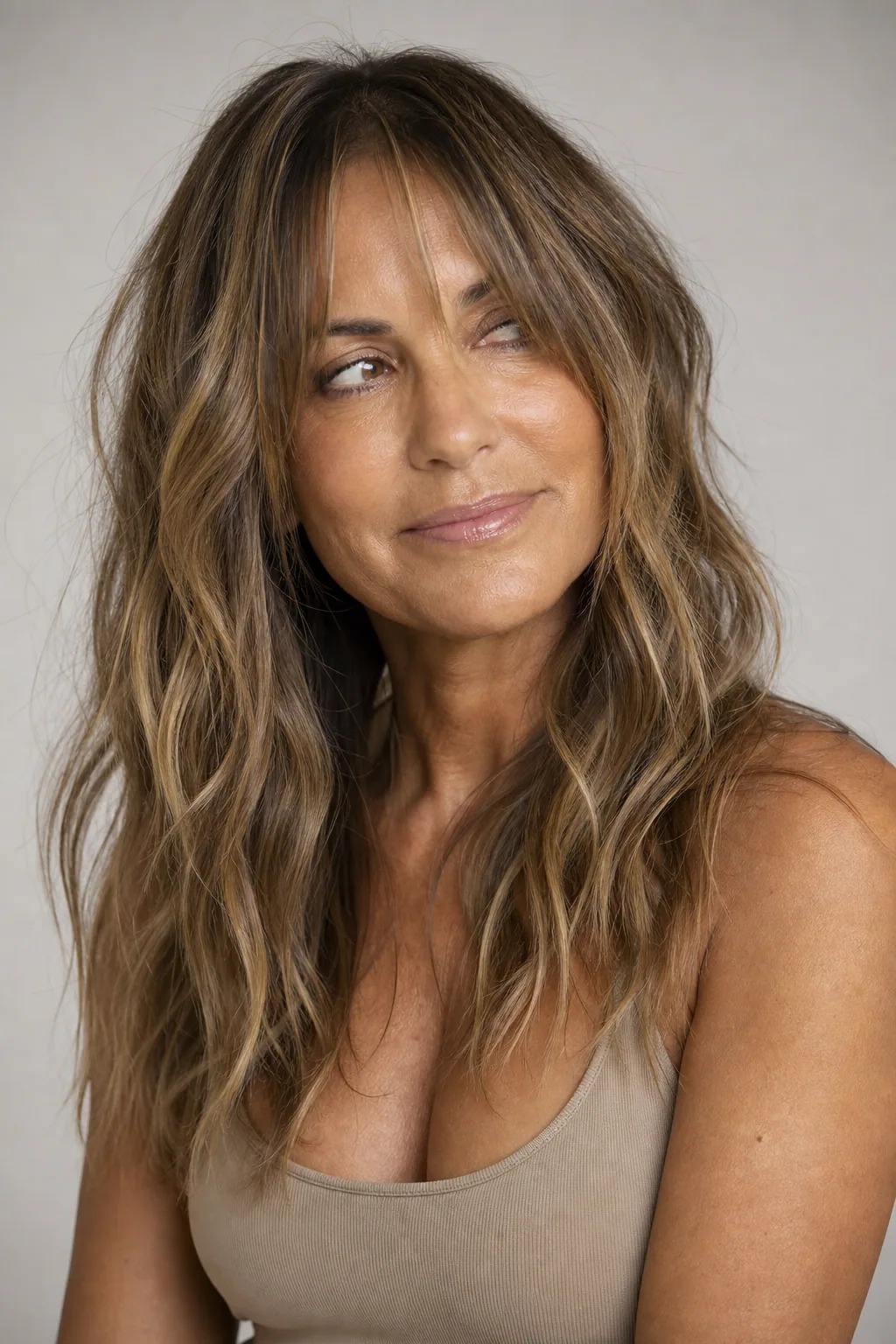
Reviewed by Tara Sullivan · Updated July 2026 · 10 min read
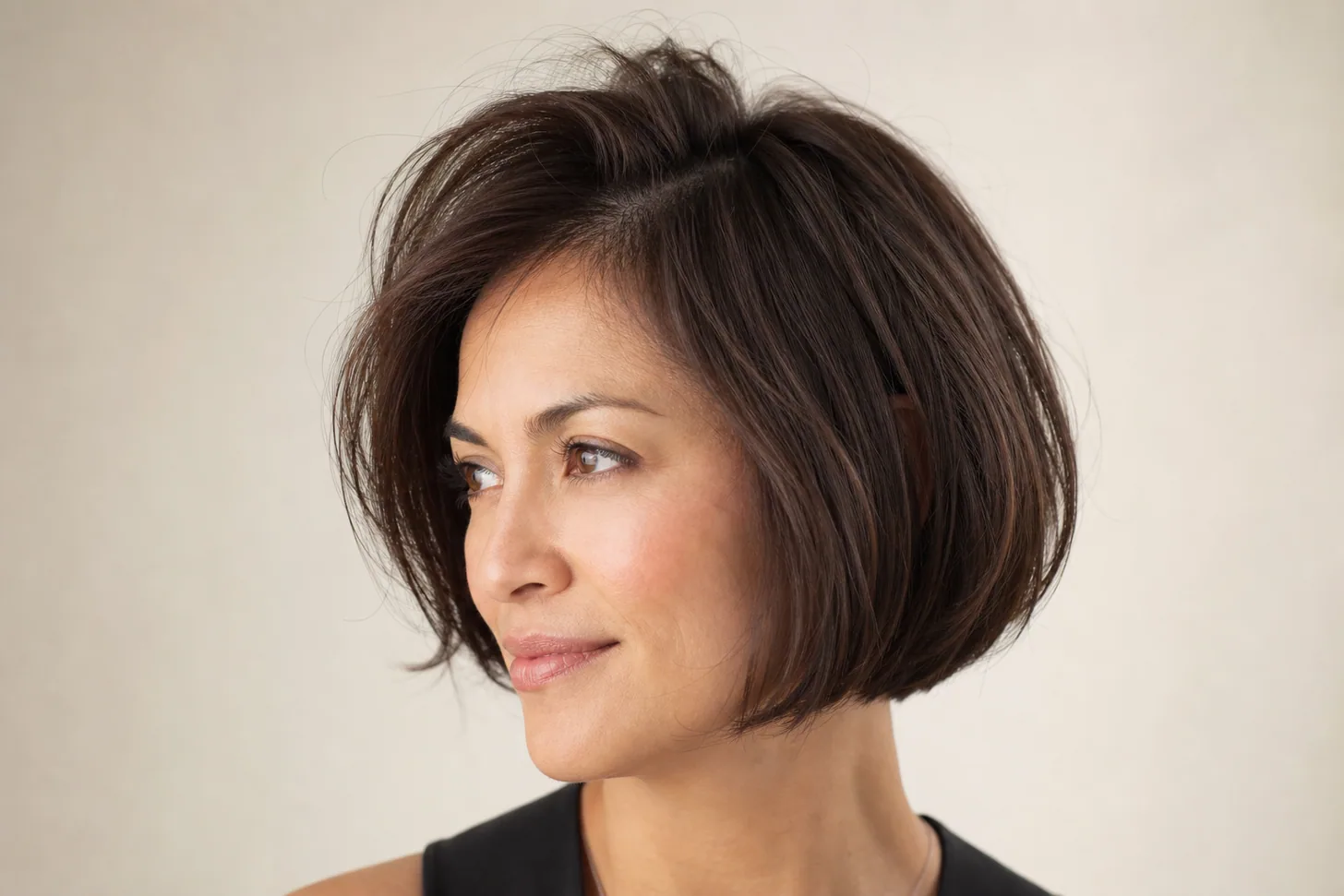
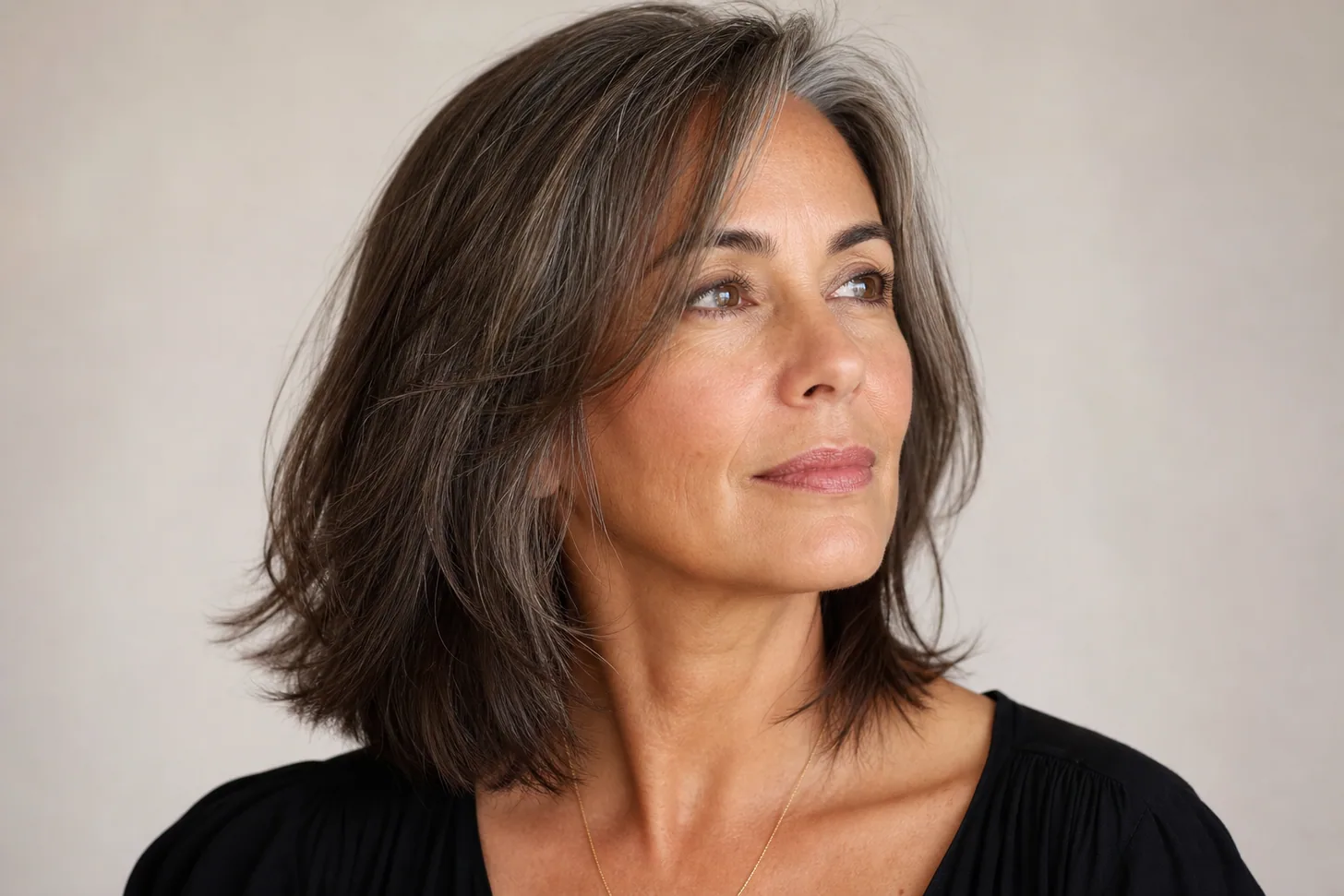
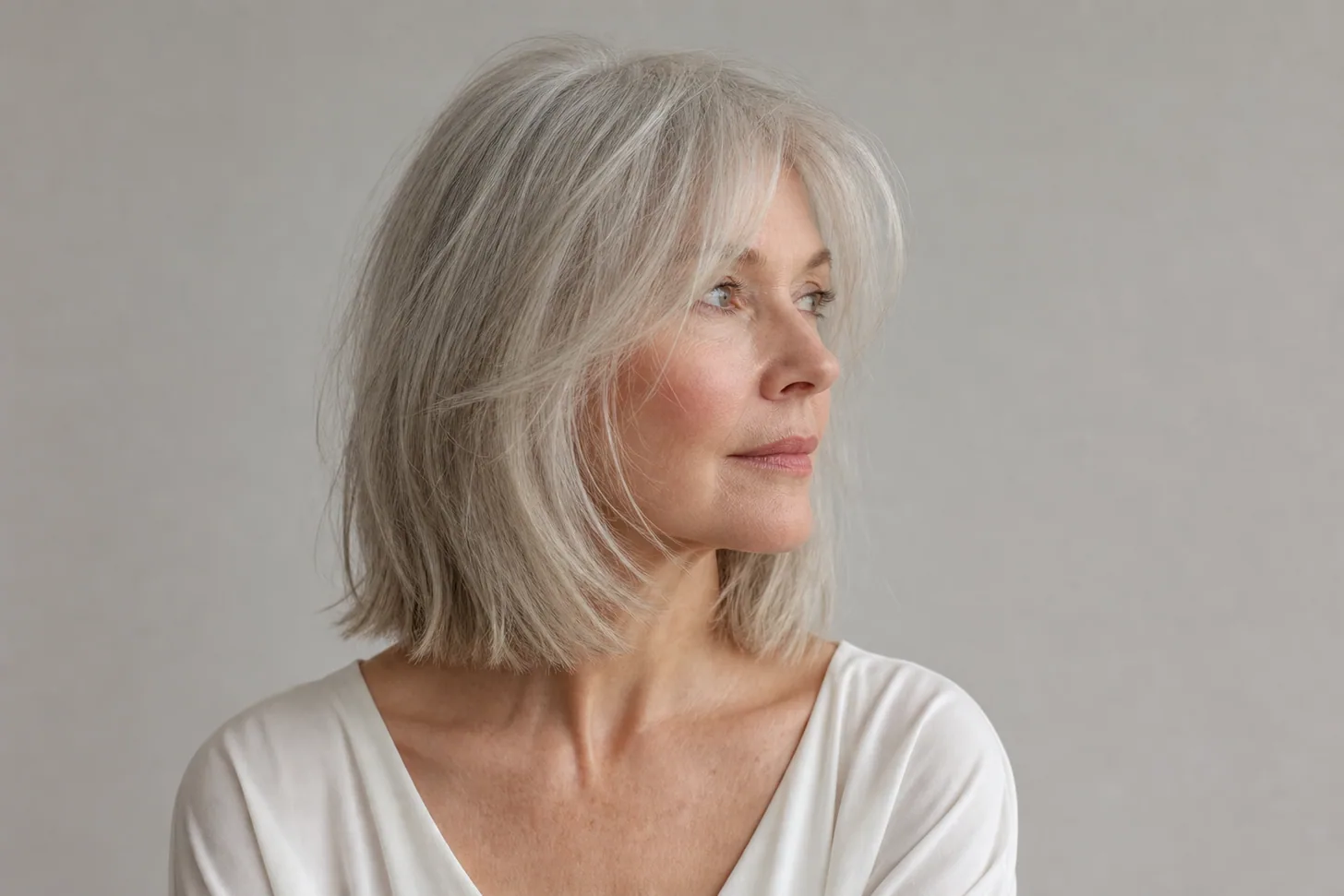
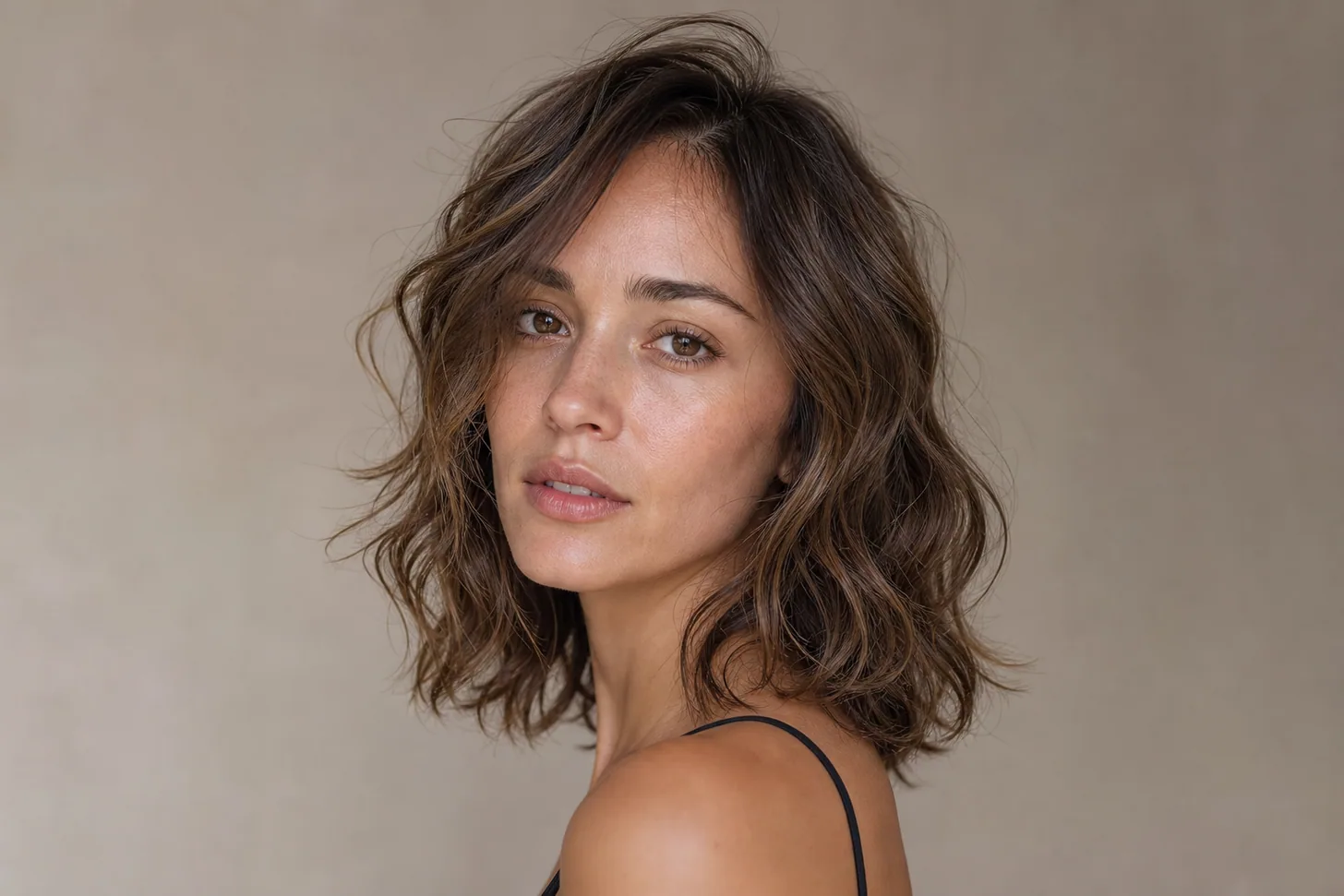
The shag is the rare cut designed to manufacture the exact thing fine hair lacks — texture, movement, and piled-on volume. Its choppy, stacked layers break flat hair into pieces that catch light and read as fullness.
The only rule for fine hair is restraint: a soft, point-cut modern shag builds body, while a heavy 70s version thins sparse ends. Below, 20 salon-tested shags grouped by length, each with who it suits, plus a face-shape cheat sheet and the exact words to bring to your stylist.
Shag, shaggy, choppy shag — all one cut. "Shaggy" is simply the adjective form, and salons use the two interchangeably; the only word that changes the haircut is choppy, which describes how visible the steps between layers are. That one matters on fine hair, and it is worked through further down the page.
Chair-side note
When a fine-haired client asks for a shag, the first thing I do is talk them down from the reference photo. Those Pinterest shags are almost always on thick, wavy hair — copy the layering directly onto fine hair and you get stringy, see-through ends.
What I actually cut is a modern shag: layers concentrated at the crown for lift, a nearly-intact perimeter for weight, and every end point-cut, never razored. Same tousled look, but it builds fullness instead of spending it.
SB
— Simone Baptiste, Senior Stylist
Why the shag works on fine hair
Fine hair is narrow in diameter, so it carries little weight and grows almost no texture of its own — it hangs in a flat sheet that catches no light. The shag's answer is mechanical: choppy, graduated layers stack shorter pieces under longer ones, so the surface sits on a cushion and the whole shape moves. Popularized in the 1970s and revived every few years since (Vogue on the shag's enduring return), the modern version is softer than the original — which is exactly what fine hair needs.
One caveat decides whether any of this lands: a shag needs enough hair behind its separated pieces to still read as a mass rather than as gaps, which makes it a high-density cut before it is a fine-hair cut.
If your ponytail measures under about two inches around, take the two-minute density test in volumizing haircuts for thin hair before you book — it splits the volume options into a track for each answer, and a shag sits firmly in one of them. Push the disconnection further and you arrive at its close relative — the modern mullet on fine hair, which trades softness for a stronger silhouette.
Short shags
Chin-length and above, where the shag's crown layers do their boldest volume work — and where it edges into pixie territory. High impact, higher upkeep on the fringe.
1
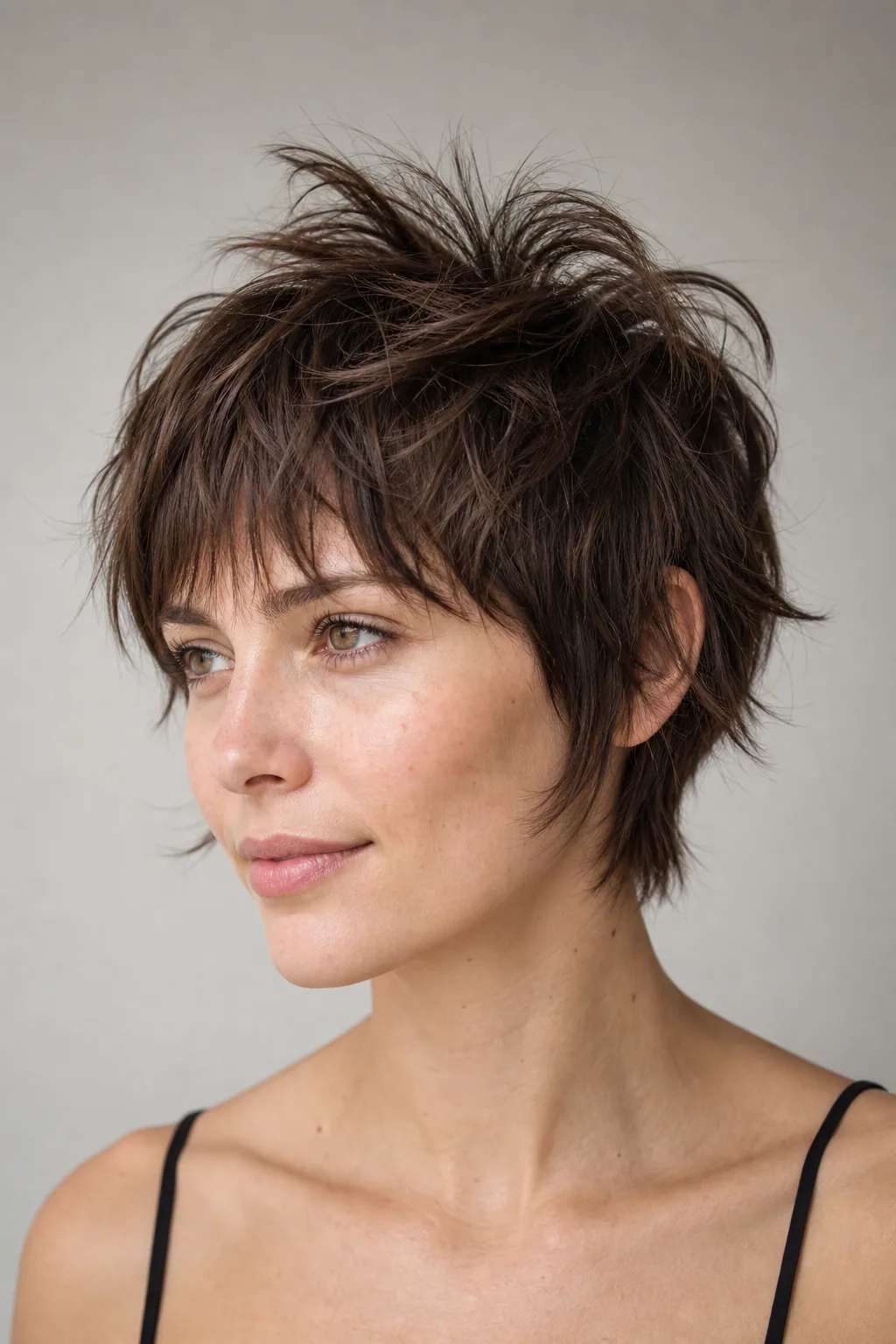
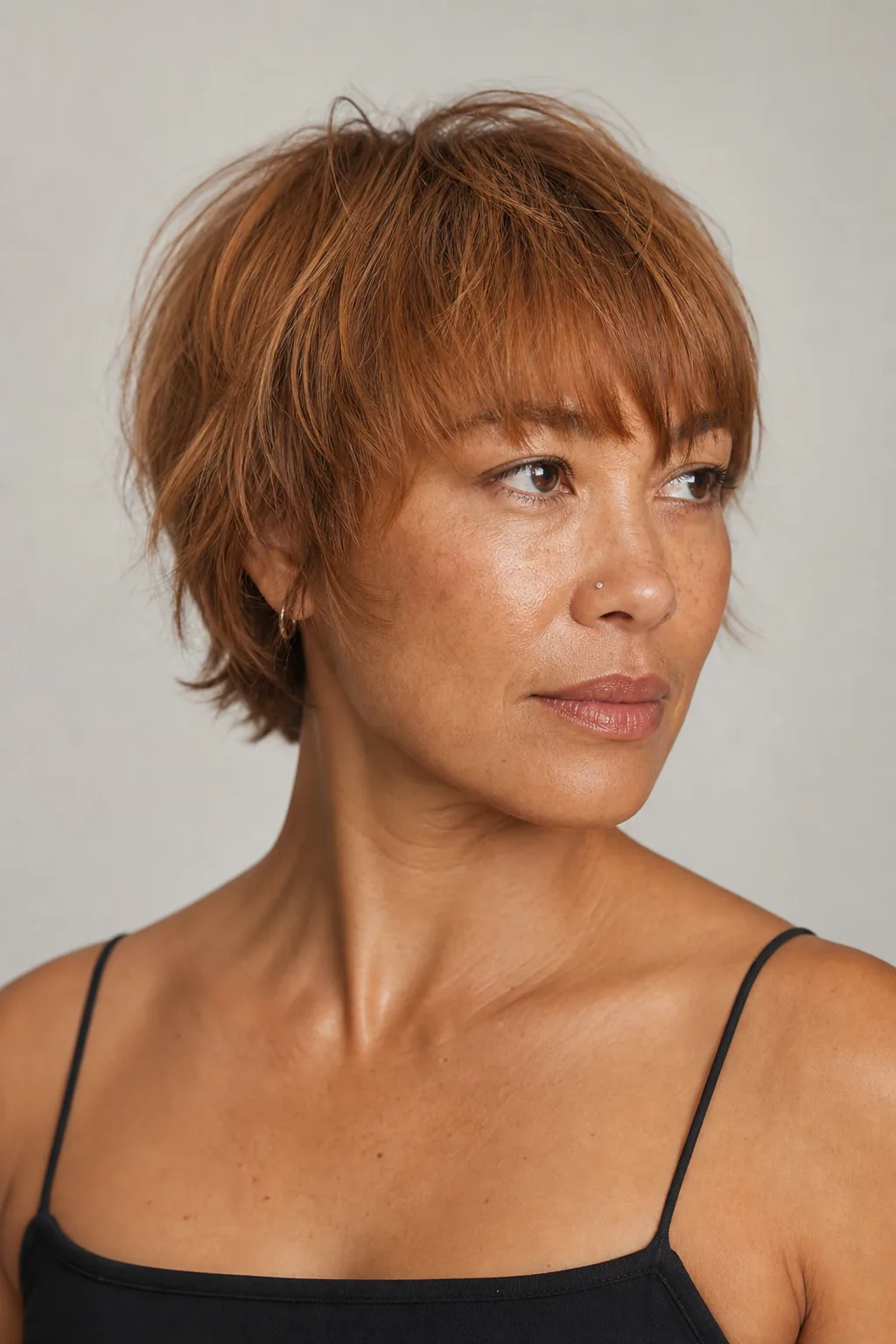
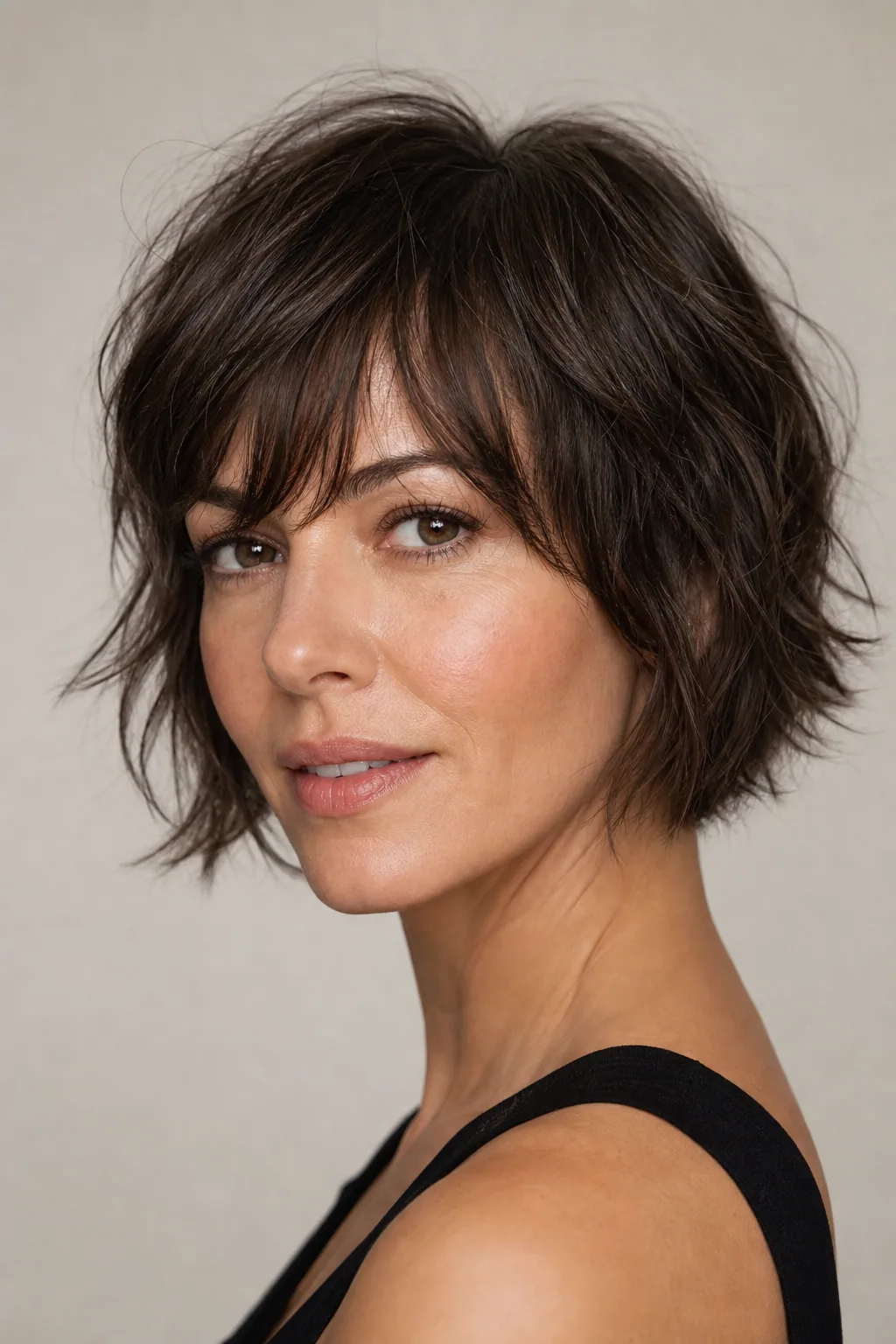
The short crop shag
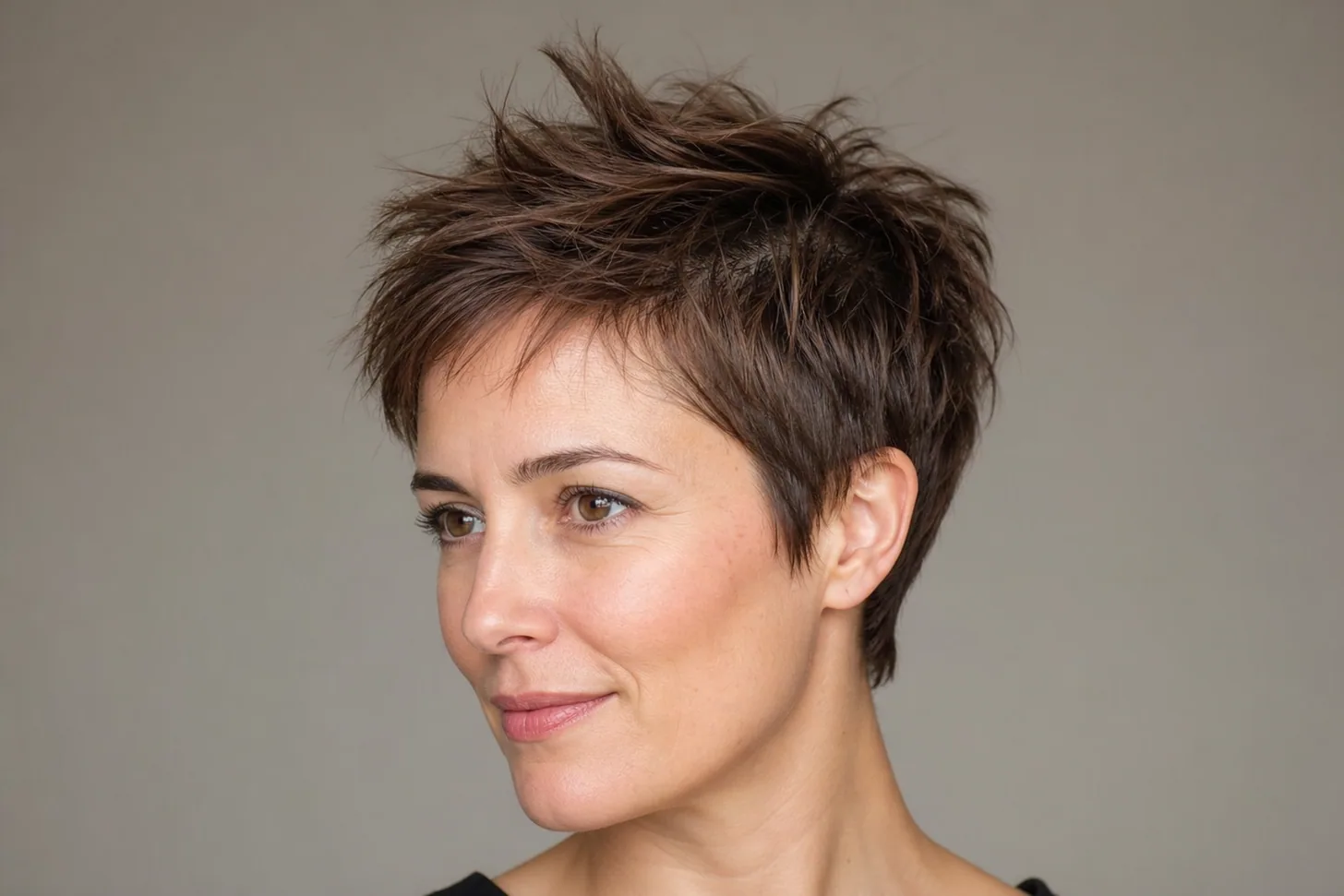
Ear-length, choppy through the crown, with a wispy fringe — the shag distilled to its most textured. On fine hair the short length keeps the layers standing rather than drooping, so the piece-y crown holds height all day. Best on oval and heart faces with the confidence to go short.
2
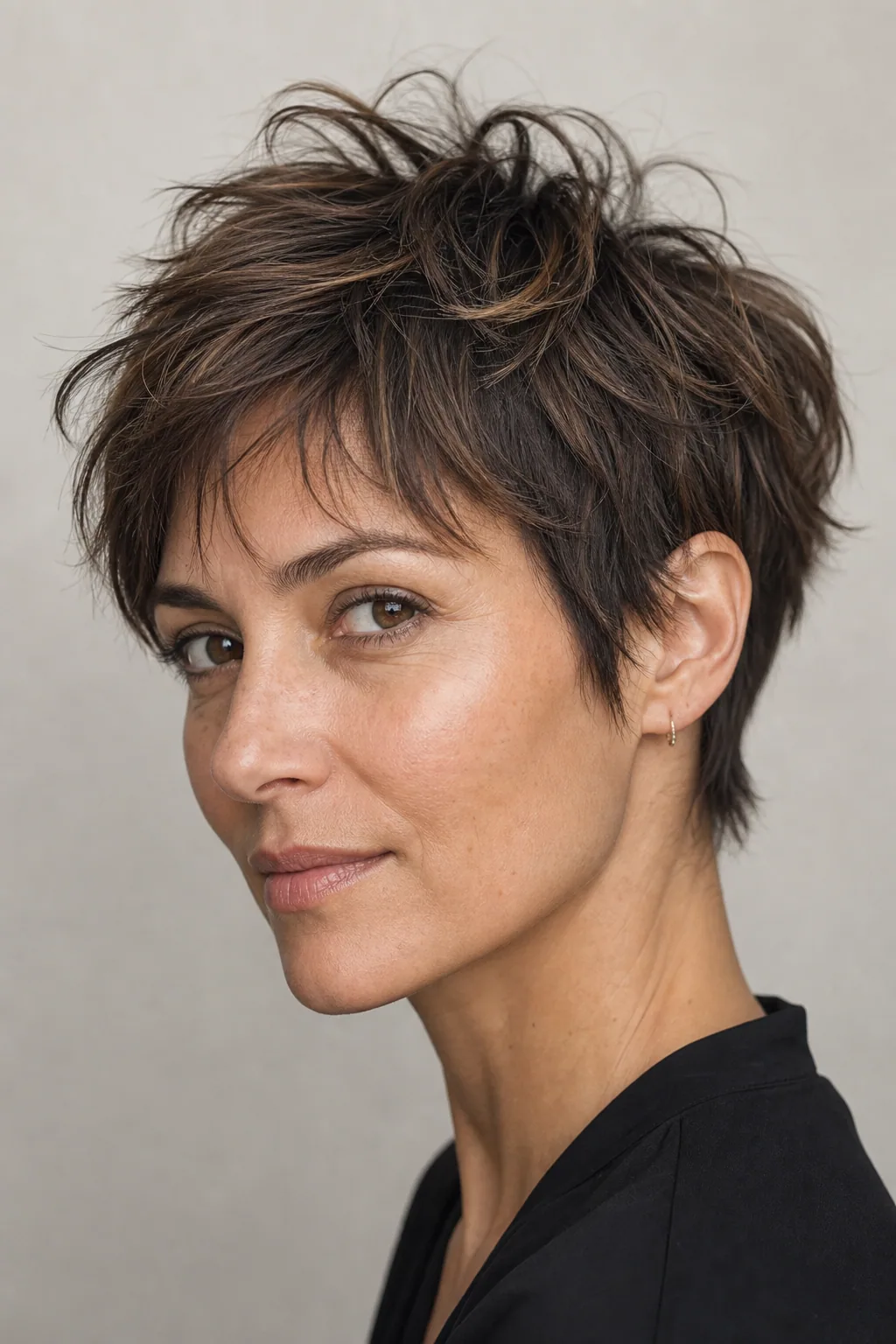
The shixie
A shag-pixie hybrid: pixie length with shag layering piled on the crown for maximum lift on minimum hair. It's the shape I reach for when density is low but the client wants edge — all the volume tricks of a textured pixie with more movement up top. Two minutes and a fingertip of paste.
3
The bixie shag
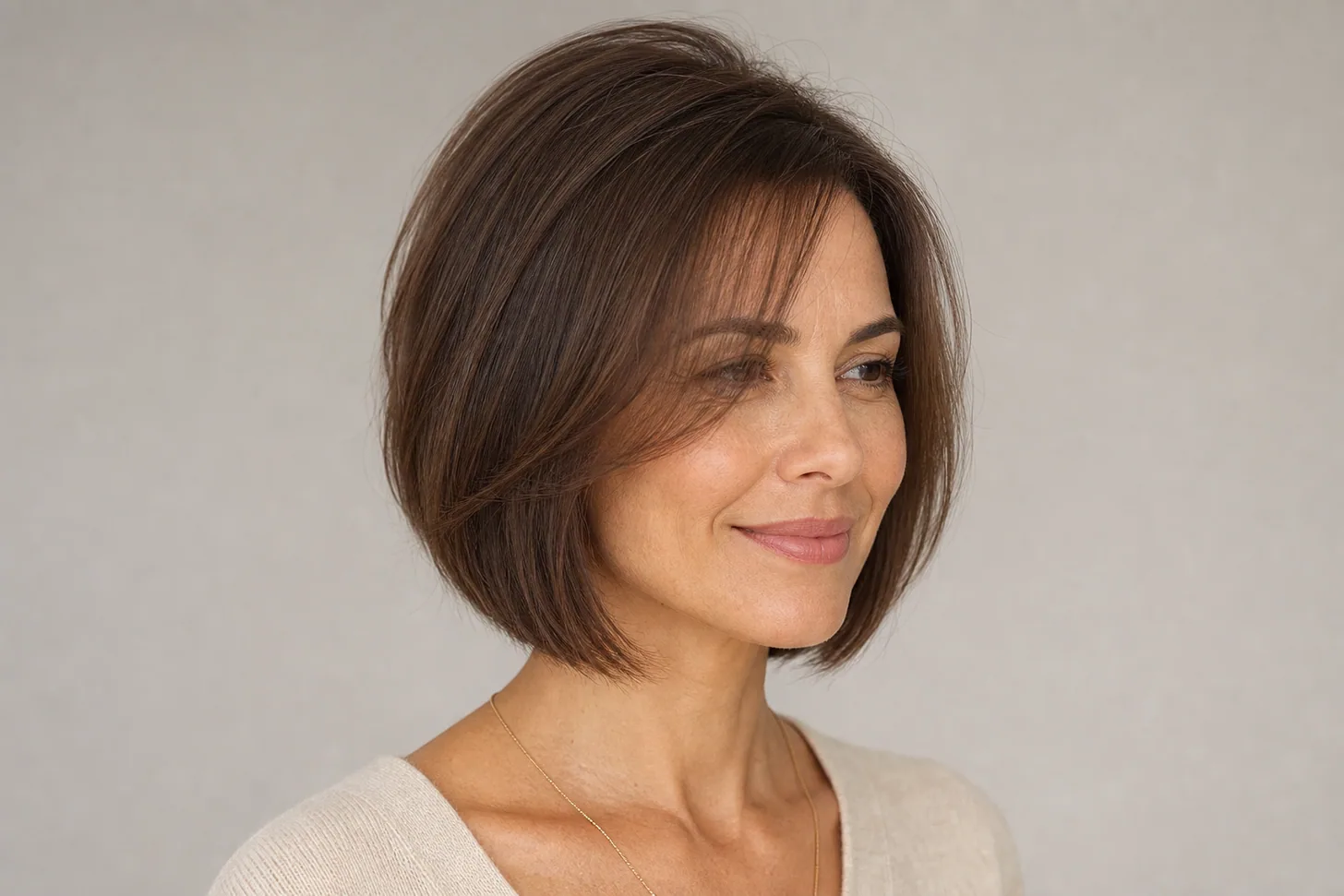
Sitting between a bob and a pixie, the bixie shag keeps a little more length through the sides than a crop while shagging the top. Flattering on more face shapes than a true pixie because the extra side length softens the jaw. The full range of this hybrid — from soft to choppy — lives in the bixie haircut for thin hair.
4
Short shag with a full fringe
A fuller, brow-skimming fringe anchors a short shag and gives the eye a second focal point away from the crown. Keep the fringe soft and slightly point-cut, not blunt and heavy — on fine hair a solid fringe can look sparse where it separates. Suits longer and oval faces especially.
5
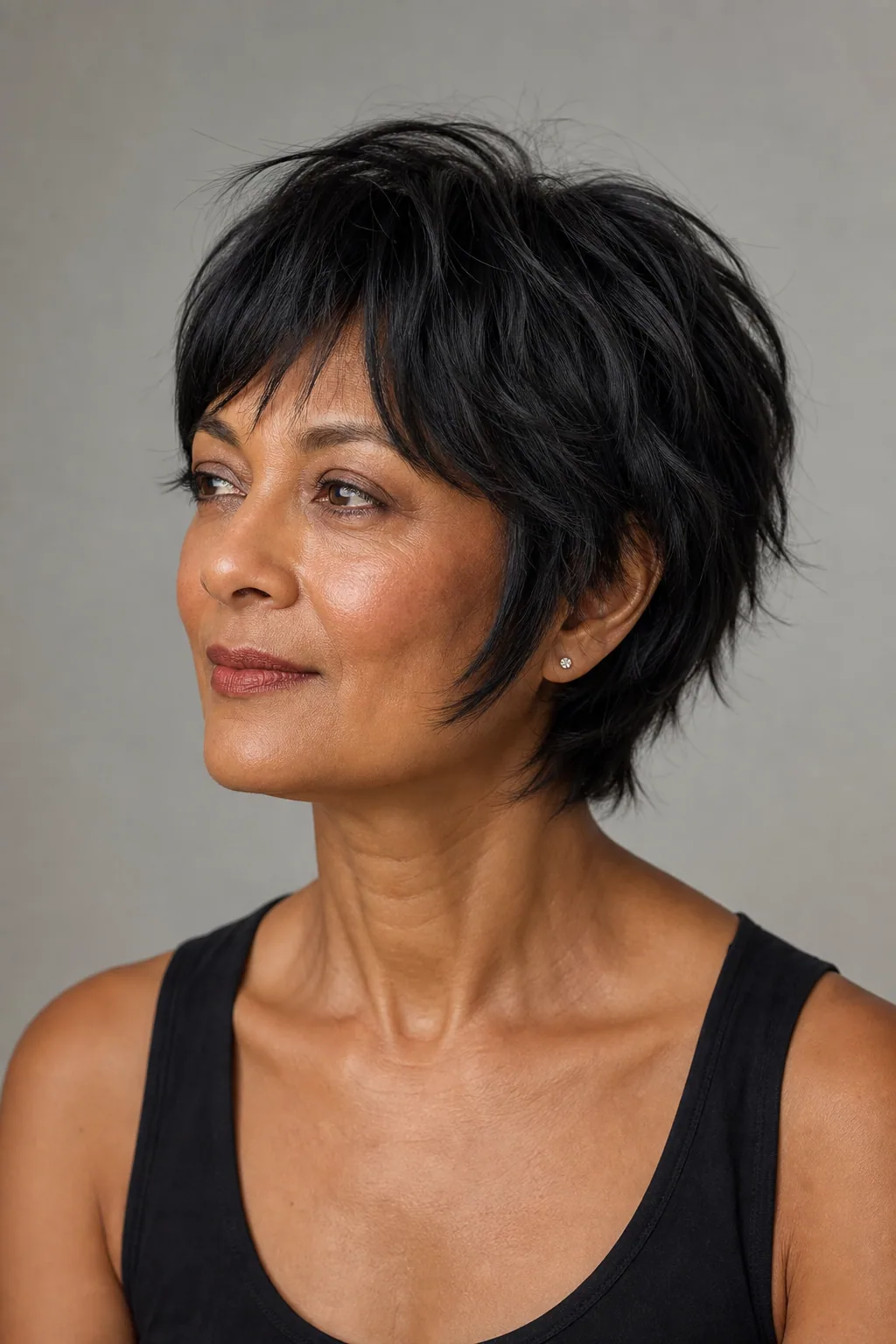
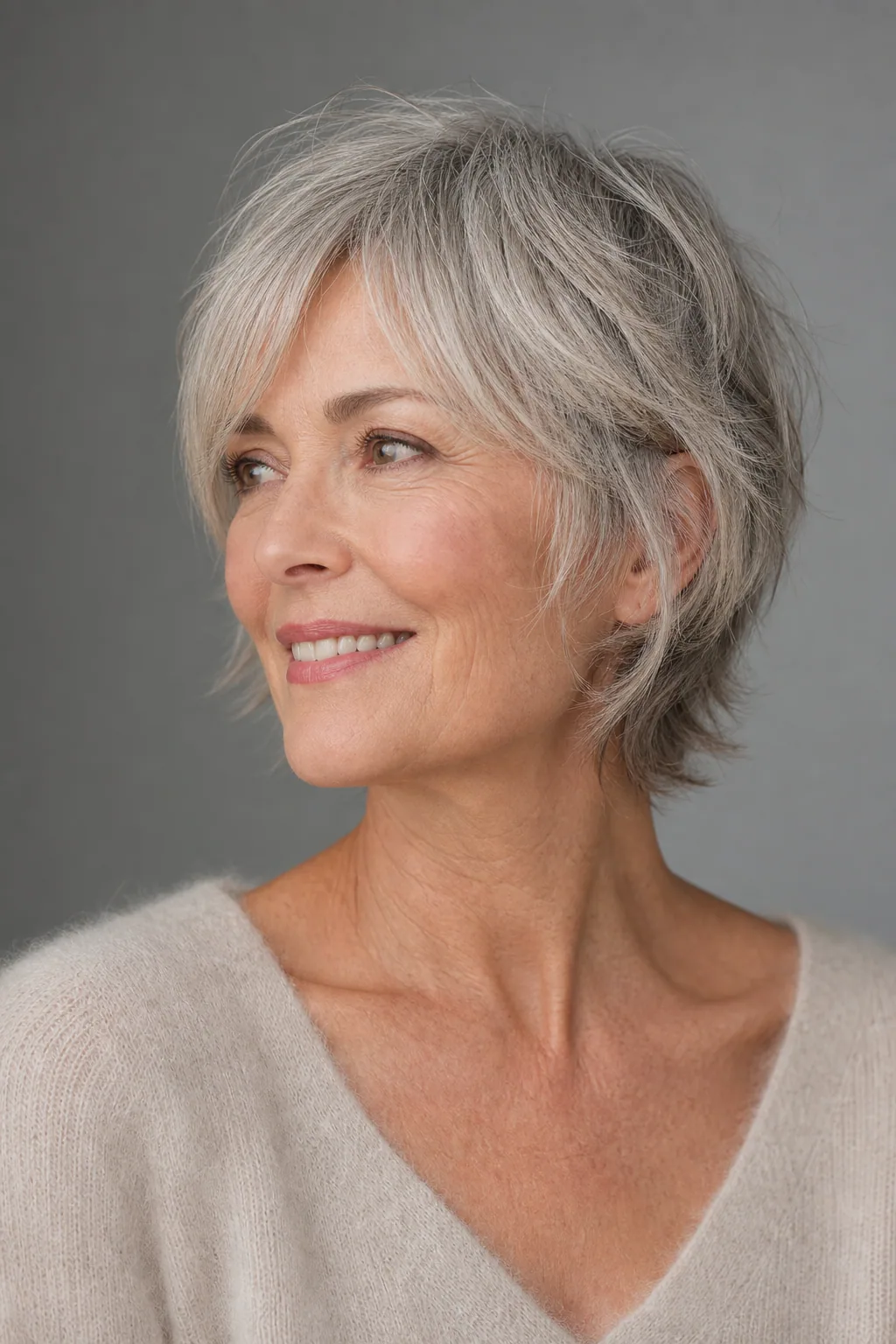
Rounded soft shag for mature fine hair
A gentler, rounder shag for hair that has finered with age — the layers are softened and the choppiness dialed back so it reads polished, not punk. Builds body where mature fine hair falls flattest without demanding daily styling. A trim every eight weeks holds the shape.
6
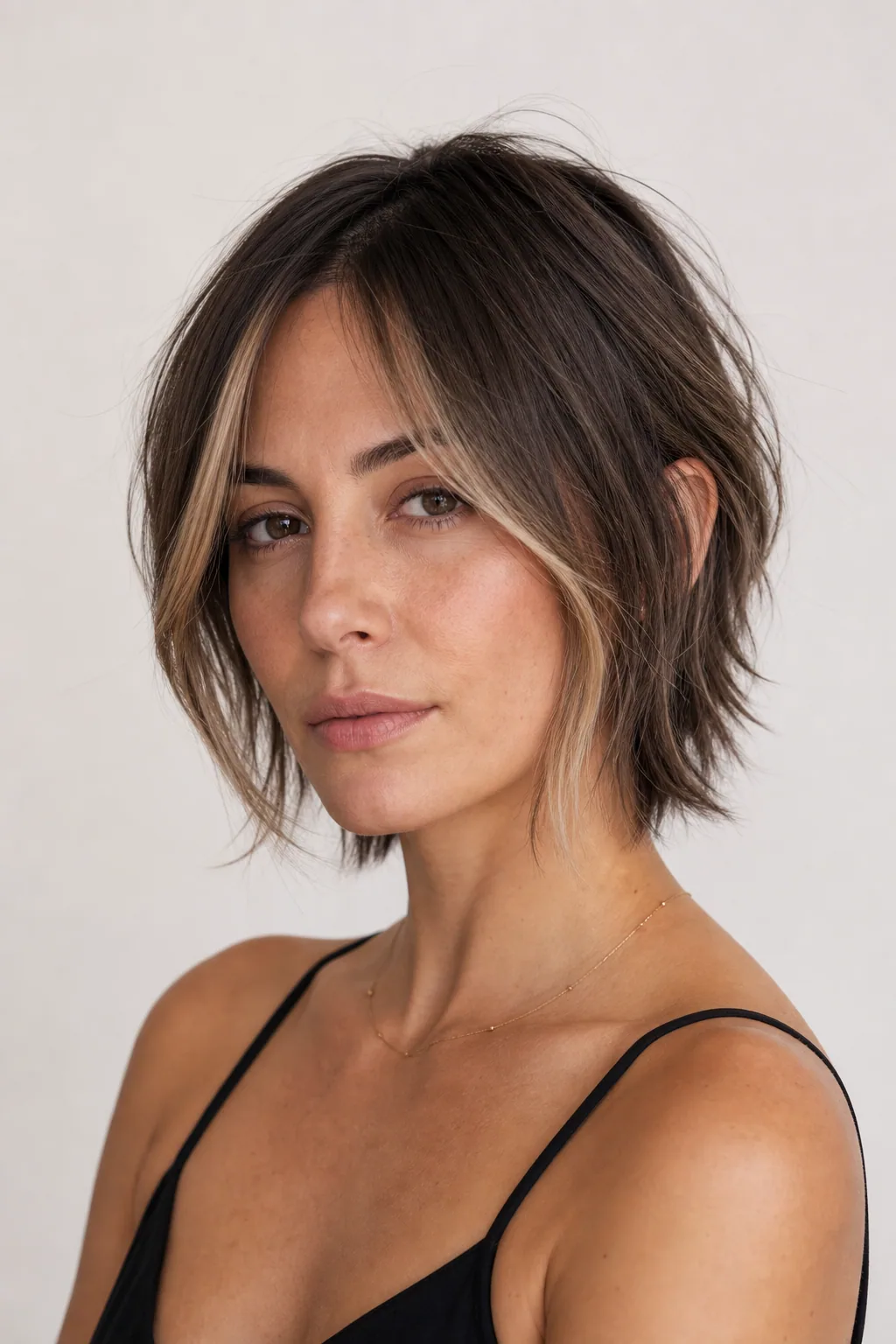
Short shag with a money piece
Two brightening pieces framing the face add depth that makes a short shag look expensive and full — on fine hair, contrast reads as dimension the scissors can't cut. Keep the lightening soft and confined to the front. The finishing detail that turns a simple crop-shag into a statement. Kept to bob length with the texture concentrated at the ends, the same idea becomes a choppy bob.
Mid-length shags
Collarbone to shoulder — the modern shag's home territory, and the length that suits the most people. Long enough to tie back, short enough that fine hair still holds body and swing.
7
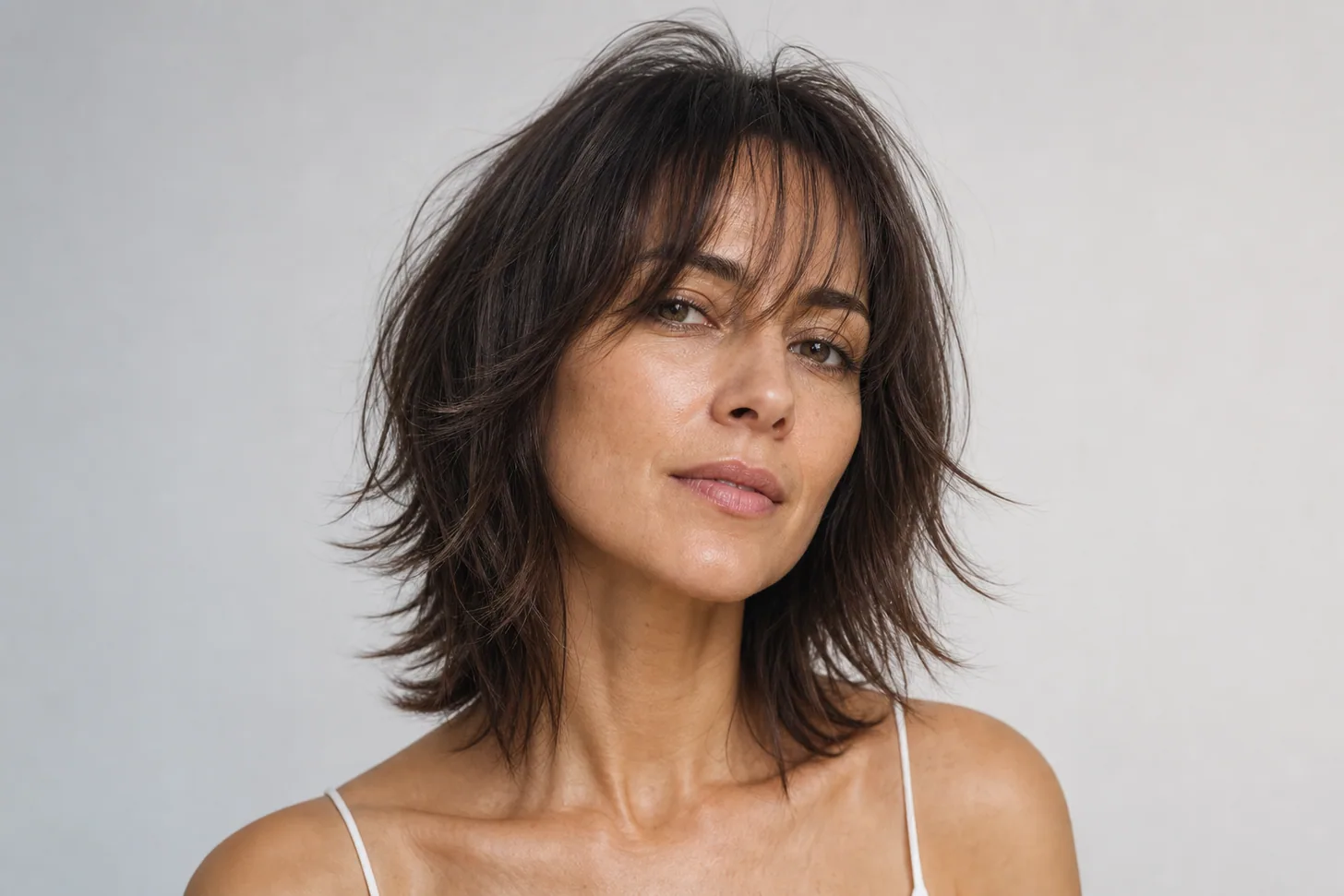
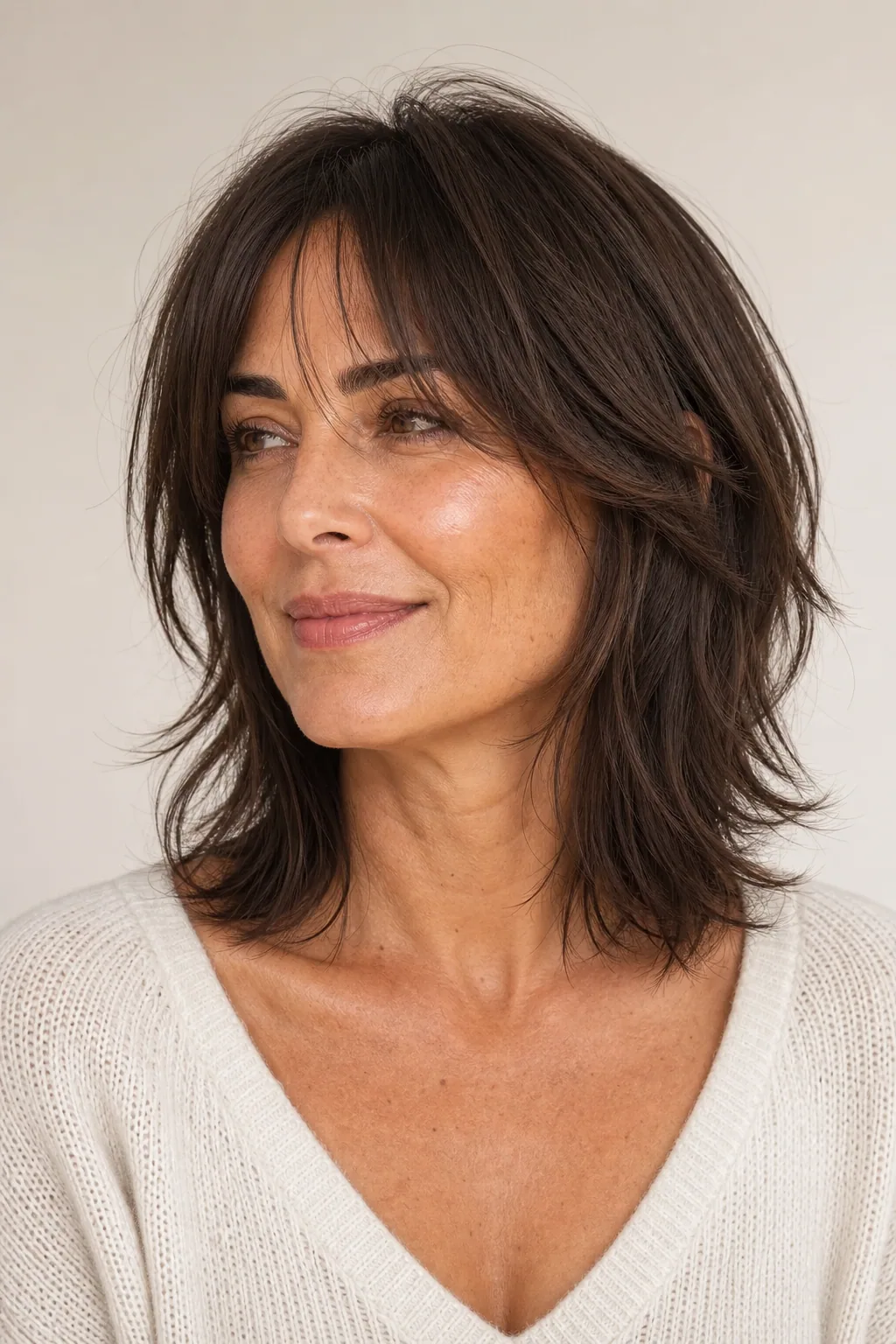
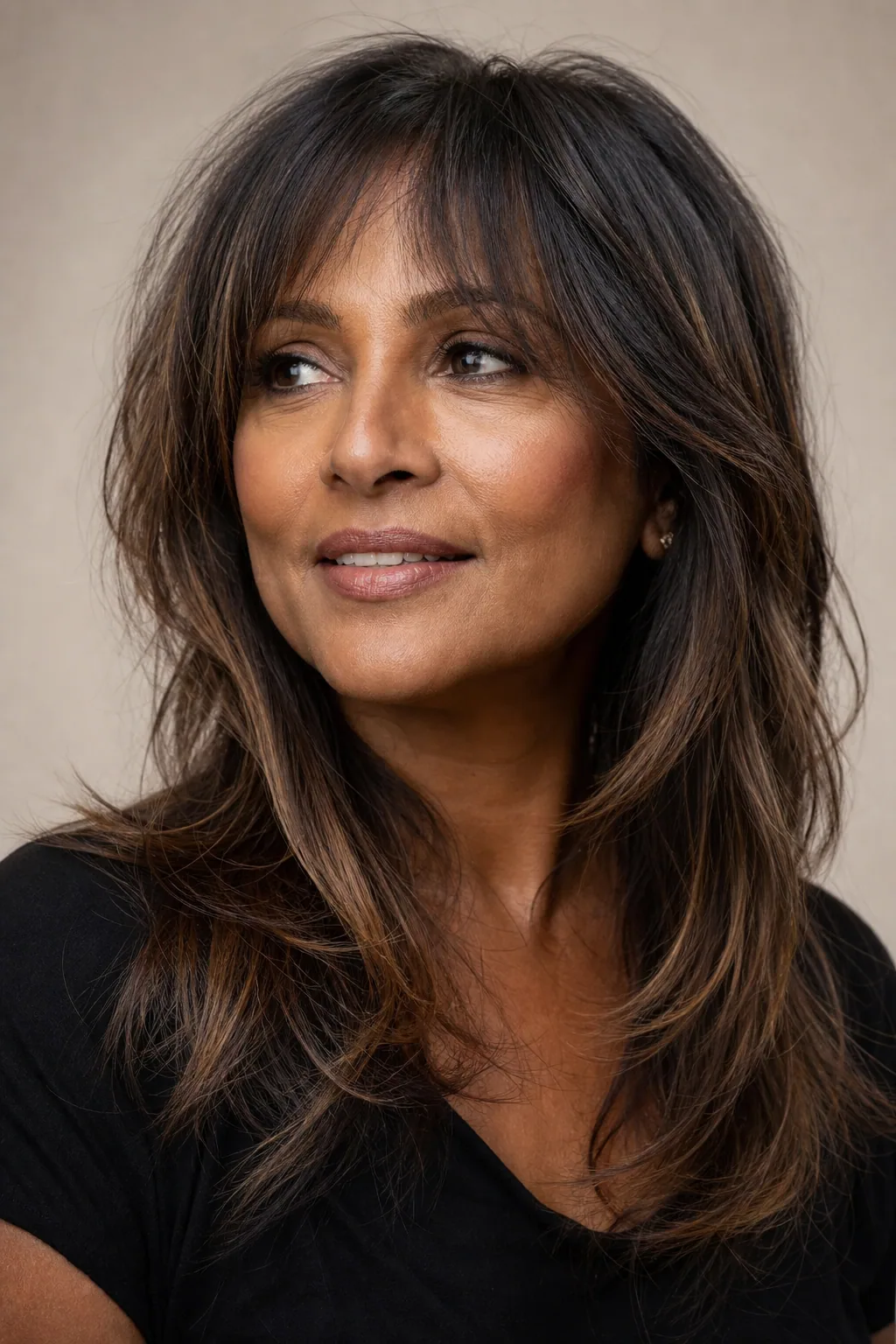
The collarbone modern shag
The most-requested shag in the chair: layered from the crown down, ending around the collarbone with a soft curtain fringe. It's the sweet spot for fine hair — enough length to move, enough crown layering to lift, and forgiving to grow out. If you only screenshot one from this page, make it this.
8
The shag lob
A lob with shag layering worked through it — the blunt-ish weight of a lob at the hemline for density, the piece-y movement of a shag on top. The hybrid for anyone who loves a lob but finds it too flat; the shag layers wake it up without sacrificing the weighty perimeter fine hair needs.
9
Shag with curtain bangs
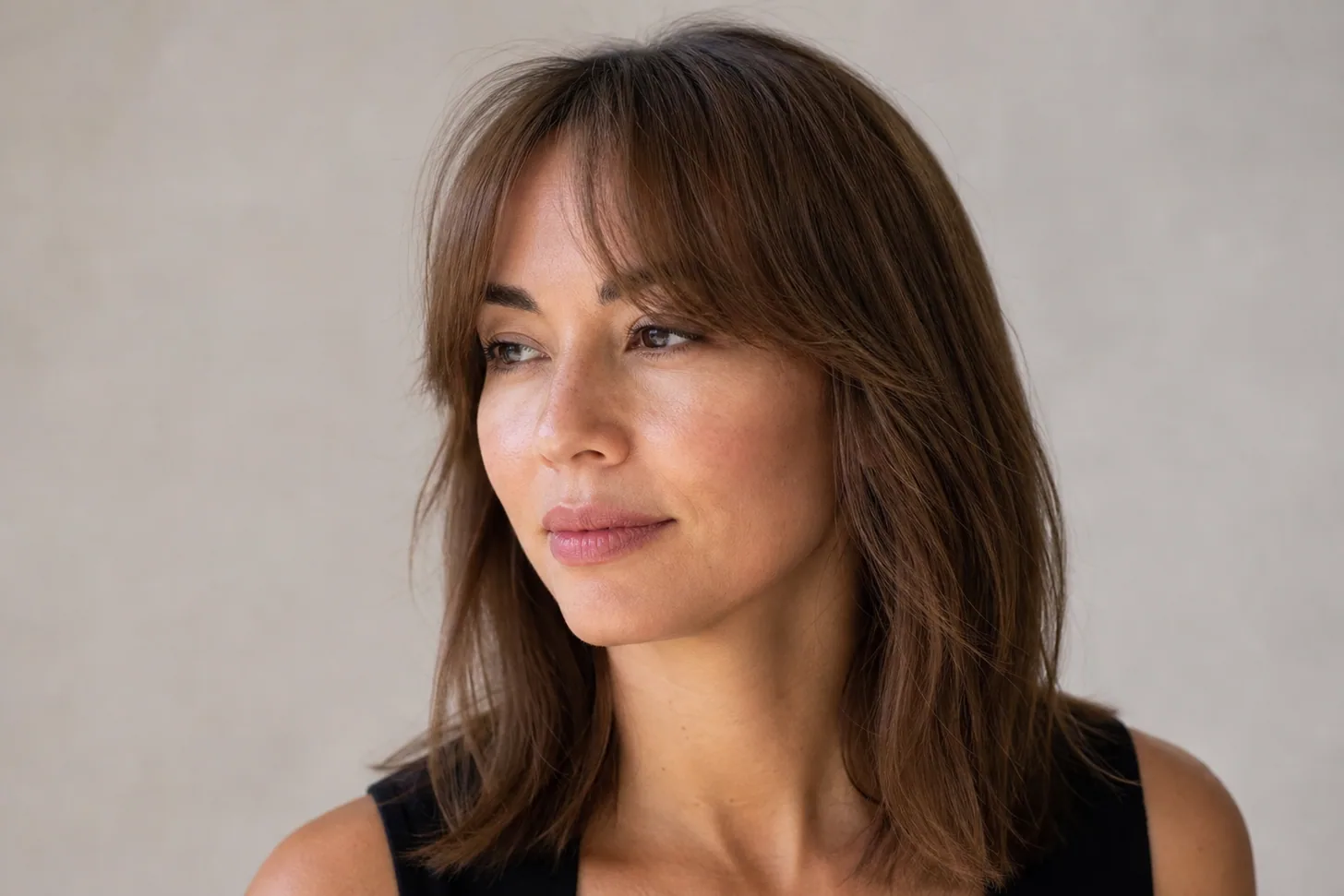
Curtain bangs and shags were made for each other — the fringe sweeps into the first face-framing layer so bang and cut read as one flowing shape. Two volume tricks stack: crown layering and a lifted fringe. We cover the fringe half in curtain bangs for fine & thin hair.
10
Wavy mid-length shag
Fine hair with a natural bend is a shag's ideal canvas — the wave stacks visual volume the layers then multiply, so it air-dries into a piled, textured shape with just a scrunch of foam. The lowest-effort shag on this page for anyone with a wave. Cut dry if your stylist offers it, so the layers land where the bend turns.
11
'70s feathered shag
The retro original, softened — feathered layers that flick away from the face, Farrah-style, but cut conservatively so fine hair keeps its weight. The feathering lives at the front where you see it, not through the ends where fine hair needs its density — the rule that decides every feather cut on fine hair. A round brush and a cool shot flick the layers out.
12
Shag with a side-swept fringe
For anyone who finds a center curtain fringe too much face: a longer fringe swept to one side, grazing the cheekbone and melting into the layers. The diagonal flatters rounder and squarer faces, and it's the easiest fringe to grow out — it just gets longer and softer.
13
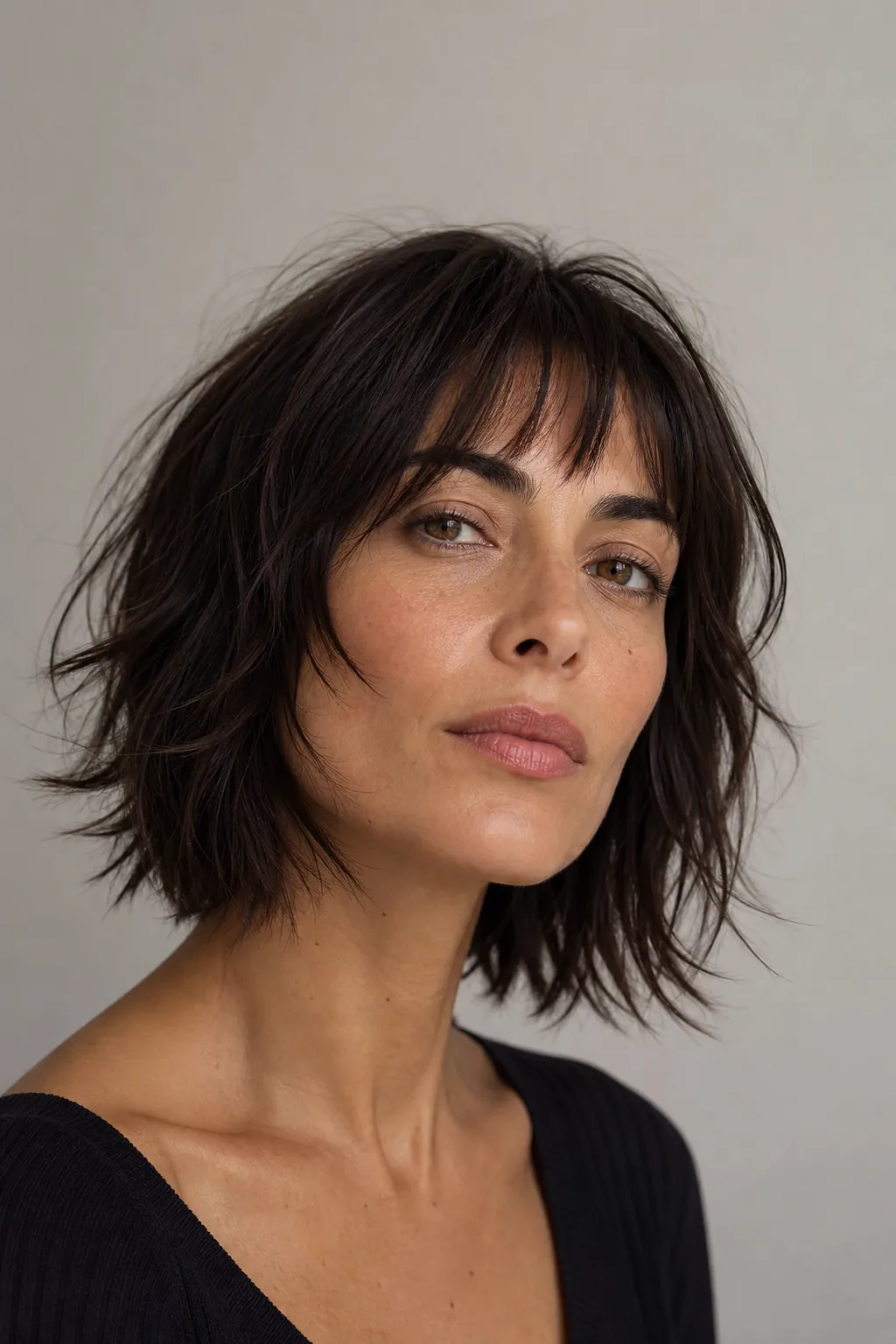
The shaggy bob
A bob that trades some hemline weight for deliberate, piece-y crown height — the shag-bob hybrid we also feature among our layered bobs. Best on fine hair with a little wave and plenty of it; on very thin, straight hair keep the choppiness gentle so it doesn't read sparse.
14
The French shag
Jaw-grazing, piece-y, and deliberately undone — the Parisian take trades polish for lived-in cool and pairs with a sheer micro-fringe. On fine hair it air-dries into shape with a scrunch of light foam, making it one of the lowest-maintenance cuts here. Effortless by design, which is the whole point.
Long shags & wolf cuts
Shoulder-length and beyond, for fine hair not ready to lose length — where strategic layering prevents the flat "hanging curtain" that plagues long one-length cuts. This is also wolf-cut country.
15
Long shag with face-framing layers
Length kept past the shoulders, with the shag layering focused on the crown and face frame so the mid-lengths stay full. This is how long fine hair earns its keep — the layers add movement up top while the weight stays where it reads as density. Pairs with our guide to long hairstyles for fine hair.
16
The wolf cut
The shag pushed to its extreme — heavy, short crown layers blended into a long, shaggy length, borrowing a mullet's disconnection. Striking on fine hair with density to spare; on very thin hair, ask your stylist to soften the disconnection so the short top doesn't expose how little length sits above it. The boldest shape on this page — and if the front-to-back contrast is what appeals rather than the all-over layering, see the mullet for fine hair.
17
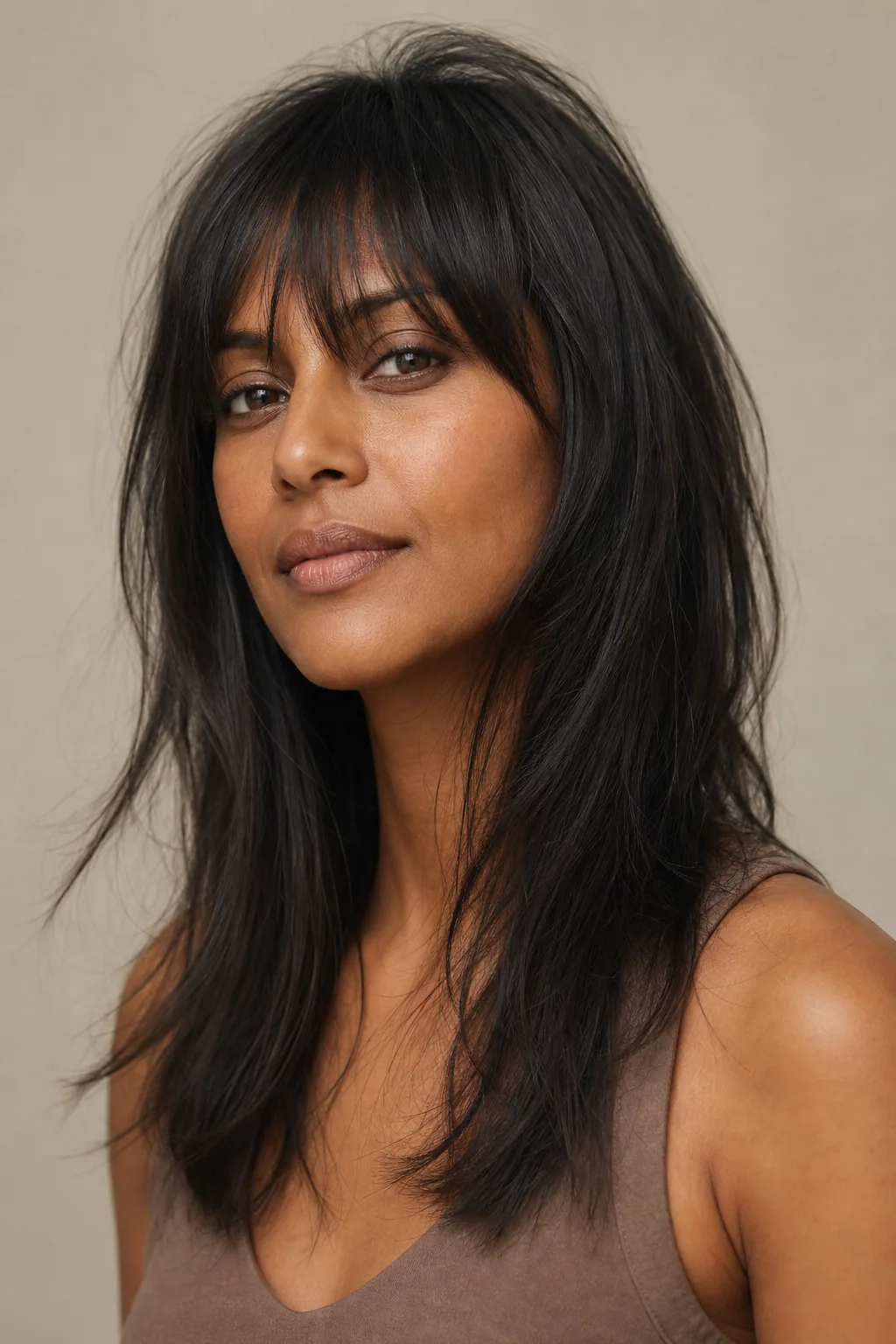
Long shag with curtain bangs
The most wearable long shag: layers and a curtain fringe on flowing, past-shoulder length. The fringe and crown layers do the volume work so you keep the length you love without the flatness that usually comes with it. A one-inch iron adds a bend or two if your hair is straight.
18
Butterfly-layered shag
The viral butterfly layers, cut as a shag — short face-framing pieces feathered around the face, long layers underneath, creating the illusion of two lengths and double the volume. It's the shaggier take on the full butterfly cut for fine hair. On fine hair it fakes remarkable fullness; the trick is keeping the shortest layer at the cheekbone, no higher, so it frames rather than fluffs.
19
Beachy wavy long shag
Loose, undone waves through a long shag turn fine hair's fineness into an asset — the bends stack body the layers then break into piece-y, sun-out texture. Two minutes with a wide wand on the mid-lengths, cool in the palm, shake out with texture spray. The most low-effort-glam shape here.
20
Long shag with dimensional highlights
A few soft, brightening pieces along the layers and face frame catch light at different depths, faking a thickness the scissors alone can't. On fine hair, keep it contrast rather than stripes — depth reads as volume. The polish that makes a long shag look salon-fresh between cuts.
Shags for your face shape
The shag's length and where its layers start — not the layers themselves — decide what flatters. If you haven't mapped your face shape yet, our two-minute face-shape guide does it with a mirror and a washable marker.
Balanced proportions carry short crops and long shags alike.
Round
Long shag with curtain bangs
Vertical layers and a center fringe elongate; avoid chin-level width.
Square
Wavy mid-length shag with side sweep
Soft bends and a diagonal fringe round a strong jaw.
Heart
Collarbone shag with a fuller fringe
Weight and layers at the jaw balance a wider forehead.
Long / oblong
Short shag with a full fringe
A horizontal fringe and jaw-length shape shorten the face.
The honest maintenance picture
The shag is one of the most forgiving cuts to grow out — its whole aesthetic is lived-in — which makes it a genuinely low-upkeep choice, fringe aside.
Version
Trim
Daily styling
Grow-out
Short crop shag / shixie
5–7 wks
2–5 min
Grows into a longer shag; very graceful
Collarbone modern shag
8–10 wks
5–10 min
Forgiving — layers blend as they grow
Shag lob
8–10 wks
5–10 min
Grows into a longer layered lob
Wolf cut
6–8 wks
5–10 min
Disconnection softens; grows into a long shag
Any version with a fringe
Fringe every 4–6 wks
+1–2 min
Fringe just lengthens into a face-frame
What to ask your stylist
Say: "I have fine hair and I want a modern shag — point-cut layers concentrated at the crown for lift, keep the perimeter weight, no razor and no thinning shears. I want texture, not thinness."
If your hair also runs thin, add: "Go conservative on the layering and keep the ends fuller — I'd rather have a softer shag than see-through, stringy tips." Bring a photo, but say out loud that your reference is probably on thicker hair and you want the fine-hair version of it.
At home, a shag is scrunch-and-go — mousse at the roots, texture spray through the layers. The full lightweight routine is in how to style thin hair, and a small-barrel curling iron is worth having if your hair is straight and needs a bend to bring the layers alive.
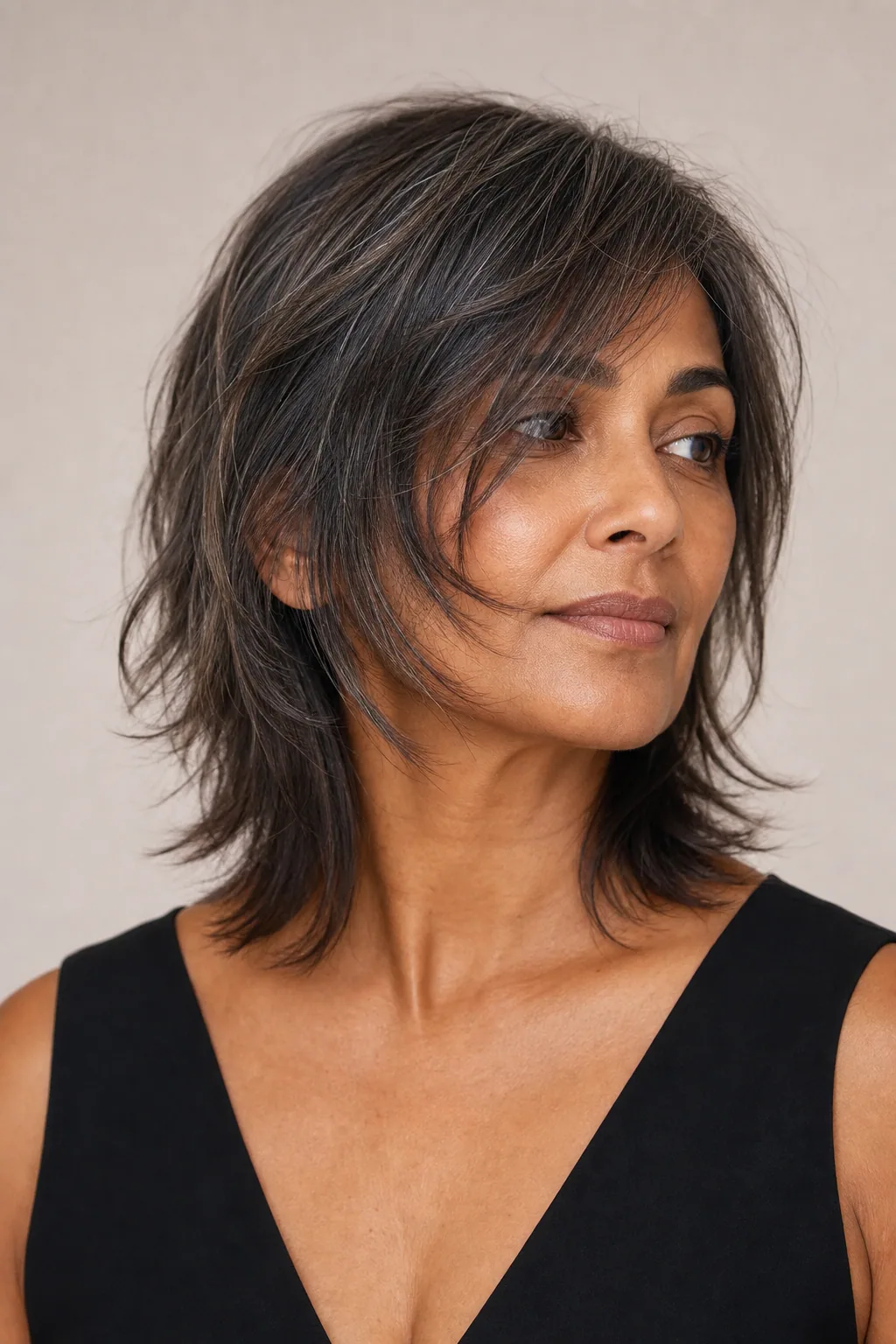
Shaggy hairstyles for fine hair over 50 and over 60
This is the most-searched version of the shag, and it usually arrives with a specific worry attached: the density has dropped, a one-length cut has started to advertise it at the perimeter, and a shaggy haircut looks like the answer. It often is — but for a reason worth stating precisely, because it also sets the limit.
A shag converts lost density into deliberate texture. Hair that is thinning reads as thin mostly at the outline: a blunt perimeter shows exactly how much hair arrives at the bottom. Break that outline into layers and the eye stops measuring the edge and starts following the movement instead. That is the whole trick, and it does not require you to have thick hair — it requires the cut to stop drawing a line.
The limit is where the density actually went. After 50, fine hair usually thins at the crown and along the part rather than at the ends, which is the opposite of where a traditional shag takes its weight from. A stylist working the standard formula will lift and texturise the crown, and on a scalp that is already showing through, that removes the little coverage you have.
The instruction that keeps the cut safe is short: layers concentrated where the hair still is, and a conservative hand above the occipital bone. Our guide to fine hair after 60 makes the same call from the other direction — a softened layered shape gives airy lift without the choppy, rock-and-roll edge of a full shag, and that softening is exactly what this section is describing.
Decade
What usually changes
What to ask for
Over 50
Density holding, but the part widening and the ends looking sparse.
A full shag with point-cut layers, fringe optional. The standard cut still works — just no razor.
Over 60
Visible crown thinning; grey texture running coarser and more wiry than the hair around it.
A softened shag: layers from the mid-lengths down, crown left dense, curtain fringe to cover the hairline.
Over 70
Overall density down, and salon trips harder to make.
What "choppy" means on a shag — and when it works against fine hair
Choppy is the modifier attached to more shag searches than any other, and it is the one most likely to get fine hair into trouble. It describes how visible the steps between layers are: deep point-cutting, slide-cutting or a razor leaves ends that finish at obviously different lengths, so the cut reads as broken up rather than graduated.
Here is the tension. The fullness a shag creates on fine hair comes from weight sitting in stacked layers — and choppiness is the removal of weight. Push the texture far enough and you take out the thing that was doing the work, which is why heavily choppy shags on fine hair so often look thinner in the mirror than the photo promised. It is the same arithmetic that makes over-texturising a wedge cut self-defeating.
So the honest split is on density rather than on diameter. If your strands are fine but you have plenty of them, choppy layers are genuinely flattering and give you the piece-y separation the style is known for.
If you are fine and thin — fewer strands, scalp visible in a bright bathroom — ask for a soft shag instead: point-cut internal layers, ends left blunt enough to hold a line, and the choppiness reserved for the front pieces where it frames rather than where it thins. If you are unsure which of the two you are, telling fine hair from thin hair settles it.
When a shag may not be your best move
Very low density with a scalp that shows through at the crown. Heavy shag layering removes mass where you can't spare it — a blunt bob builds a stronger thickness illusion.
Poker-straight, very fine hair with no wave. Choppy layers can fall flat and separated instead of tousled; you'll need a wand or braids most days, or choose a softer, weightier shape.
You want a truly wash-and-go cut with zero styling. A shag needs texture spray and often a bend to look intentional; a one-length blunt lob asks less.
You're growing out an old, over-layered cut with stringy ends. Let those layers reach the hemline first — shagging over grown-out layers compounds the thinness.
FAQ
A modern shag is one of the best cuts fine hair can wear — its whole job is to manufacture the texture and movement fine hair can't grow on its own. The catch is restraint: a soft, point-cut shag adds fullness, while a heavy, over-layered 70s shag can thin already-sparse ends. Ask for a modern, conservative version and specify point cutting, no razor.
Yes, through texture rather than added strands. The choppy, stacked layers break the hair into pieces that catch light and pile on top of each other, so the eye reads volume and movement instead of a flat sheet. It works best when the layers are placed at the crown and worked with a texture spray; over-layered ends can read stringy on very low density.
A wolf cut is a shag pushed further — shorter, more dramatic crown layers blended into a longer, shaggier length, borrowing the disconnection of a mullet. A classic shag is softer and more graduated. On fine hair the modern shag is usually the safer choice; a full wolf cut's heavy disconnection can expose how little length is left at the top.
Every 8 to 10 weeks — the shag is one of the most forgiving cuts to grow out because it's designed to look lived-in and piece-y. The fringe needs attention sooner, around 4 to 6 weeks. Its low trim frequency is a big part of why it suits busy fine-haired clients who want shape without a monthly salon habit.
Rough-dry with a mousse at the roots, then scrunch or twist the mid-lengths with a texture spray to define the layers — the layers do the shaping, so you're enhancing, not building from scratch. A one-inch iron adds a bend or two if your hair is straight. Skip creams and oils; a shag needs grip and separation, which weight kills.
Yes, but it needs a little help — poker-straight, very fine hair can let choppy layers fall flat and separated instead of tousled. Add a bend with a curling wand or overnight braids, and finish with texture spray for grip. If your hair also runs very low in density, choose a softer shag with layers concentrated at the crown rather than an all-over choppy one.
Yes — a shaggy haircut is one of the few shapes actively designed to do what fine hair cannot do on its own, which is look like it has texture and movement. The layers break a flat, one-length perimeter into pieces that catch the light, so the eye reads fullness instead of measuring the outline. The one condition is restraint: ask for point-cut layers rather than razored or heavily thinned ones, because a razor leaves fine ends transparent and the illusion depends on the ends keeping some weight. "Shag" and "shaggy" describe the same cut, so it makes no difference which word you use in the salon.
A softened shag, with the layers concentrated from the mid-lengths down and the crown left dense. The reason is specific: after 50, fine hair usually thins at the crown and along the part rather than at the ends, which is precisely where a traditional shag takes its weight from. A stylist running the standard formula will lift and texturise the crown, and on a scalp that already shows through, that removes the coverage you have least of. A collarbone or shoulder-length shag with a curtain fringe is the safest version, because the fringe covers the hairline while the layers do the volume work lower down. Over 60, soften it further and keep the choppiness to the front pieces only.
One where the steps between layers are deliberately visible — created with deep point-cutting, slide-cutting or a razor so the ends finish at obviously different lengths, giving that broken-up, piece-y separation. On fine hair it is a genuine trade-off rather than a straight upgrade, because the fullness a shag creates comes from weight sitting in the layers and choppiness is the removal of weight. If your strands are fine but plentiful, choppy layers look excellent. If your density has dropped as well, a soft shag with point-cut internal layers will look fuller than a choppy one.
No — they are the same cut, and salons use the words interchangeably. "Shaggy" is just the adjective form, and it turns up more often in searches than the noun does. The words that genuinely change the haircut are the modifiers in front: choppy means the steps between layers are visible and weight has been removed, soft or modern means the layers are point-cut and graduated, and wolf cut means the disconnection has been pushed further toward a mullet. On fine hair those three describe meaningfully different outcomes, so they are the ones worth saying out loud in the chair.
Eleven years behind the chair, specializing in short shapes and fine-hair texture. Simone believes the best haircut is the one you can style yourself in ten minutes.
Images in this article are AI-generated illustrations, not photographs of real clients or results. See our image policy.
Results vary with hair type, density, and growth patterns. This guide is educational and not a substitute for an in-person consultation with a licensed stylist.
Get the good hair intel
One honest, stylist-written guide in your inbox each week. No hype.

 SB
SB