Fine-hair haircuts · Transitions

Growing Out Short Fine Hair: The Stage-by-Stage Plan

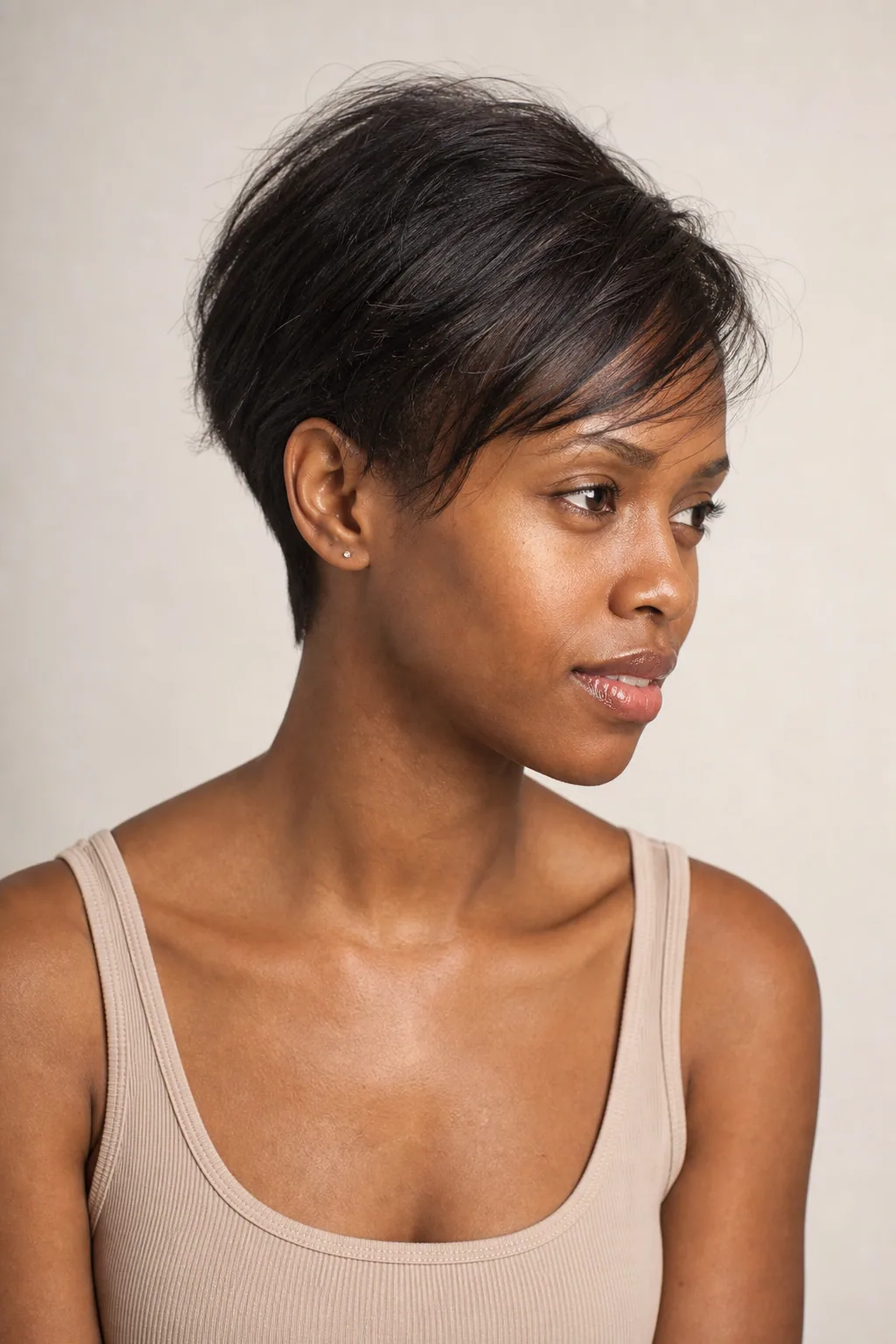
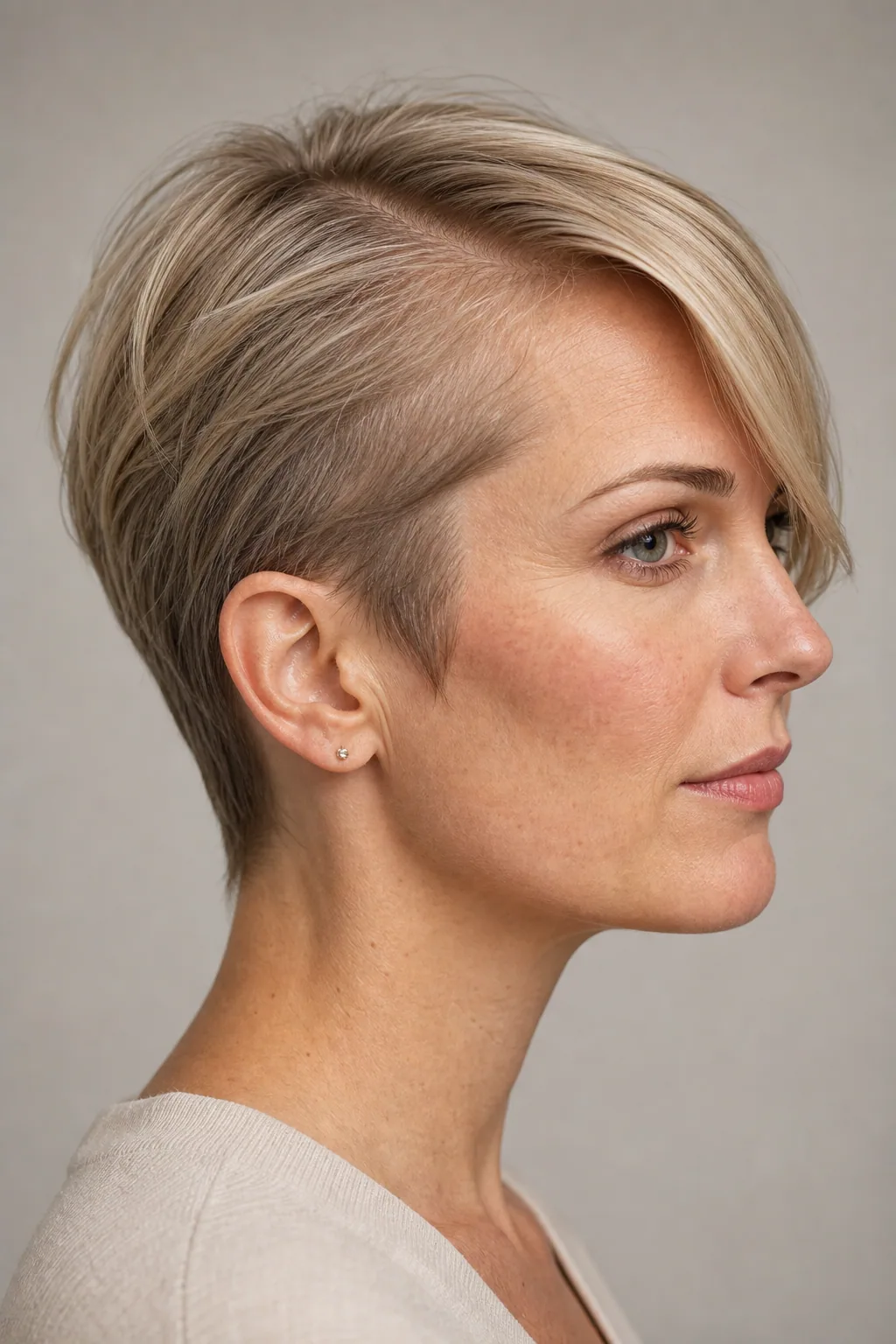
The awkward stage isn't bad luck and it isn't your hair being difficult — it's a predictable geometry problem that happens to everyone at the same point, and fine hair gets a longer, more visible version of it. Somewhere around month five, the sides reach the widest part of your skull without yet having the weight to fall past it, so they wing out. Thick hair drags itself back down within weeks. Fine hair has no mass to do that with, so it stays winged for months, and that is the month almost everyone quits. The fix is the least intuitive instruction in hairdressing: to grow your hair out, you have to keep cutting it — the sides and the perimeter, never the length you're chasing. Below: the honest timeline in months, the five stages with the exact words for each appointment, and 14 ways to wear it while it happens.

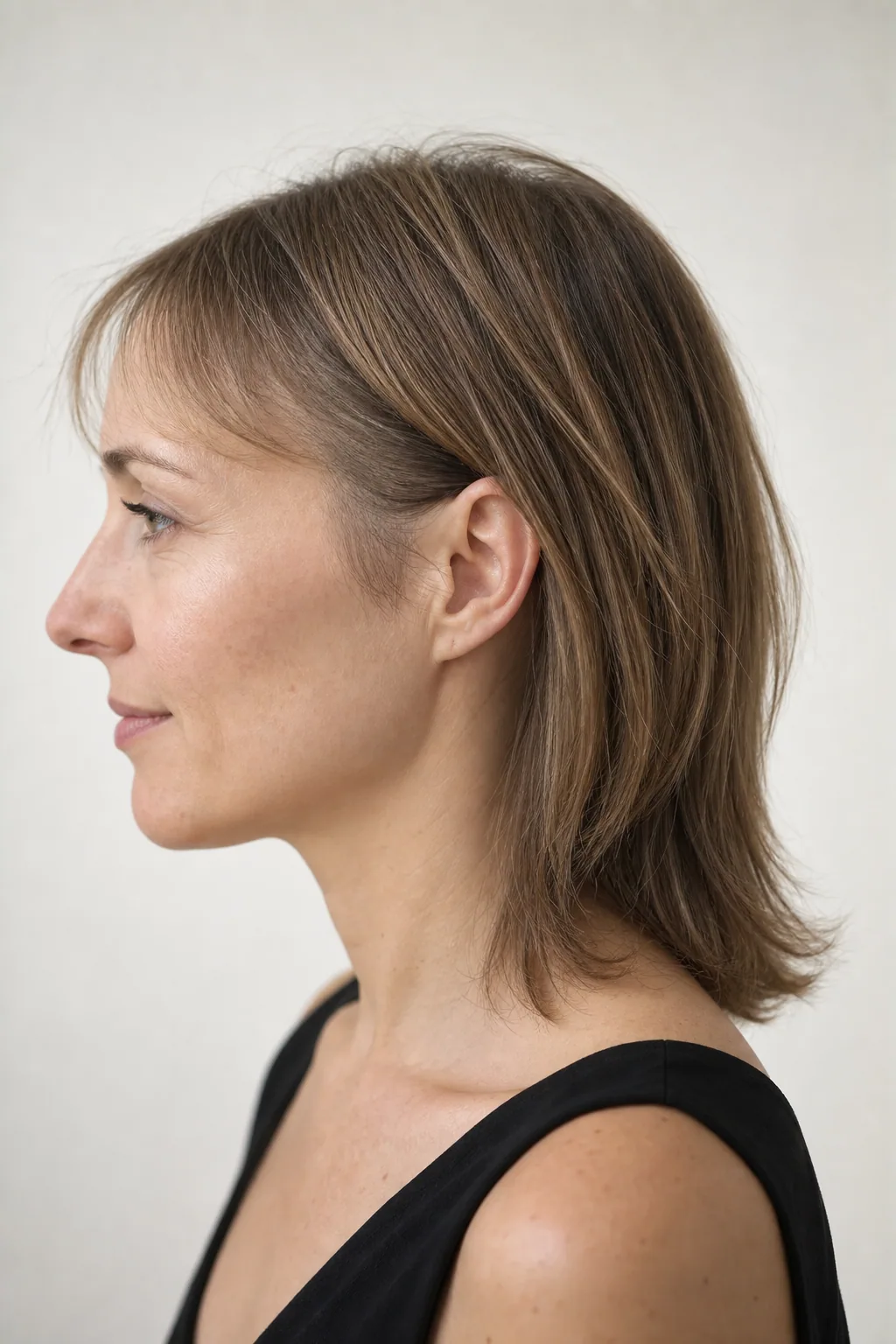
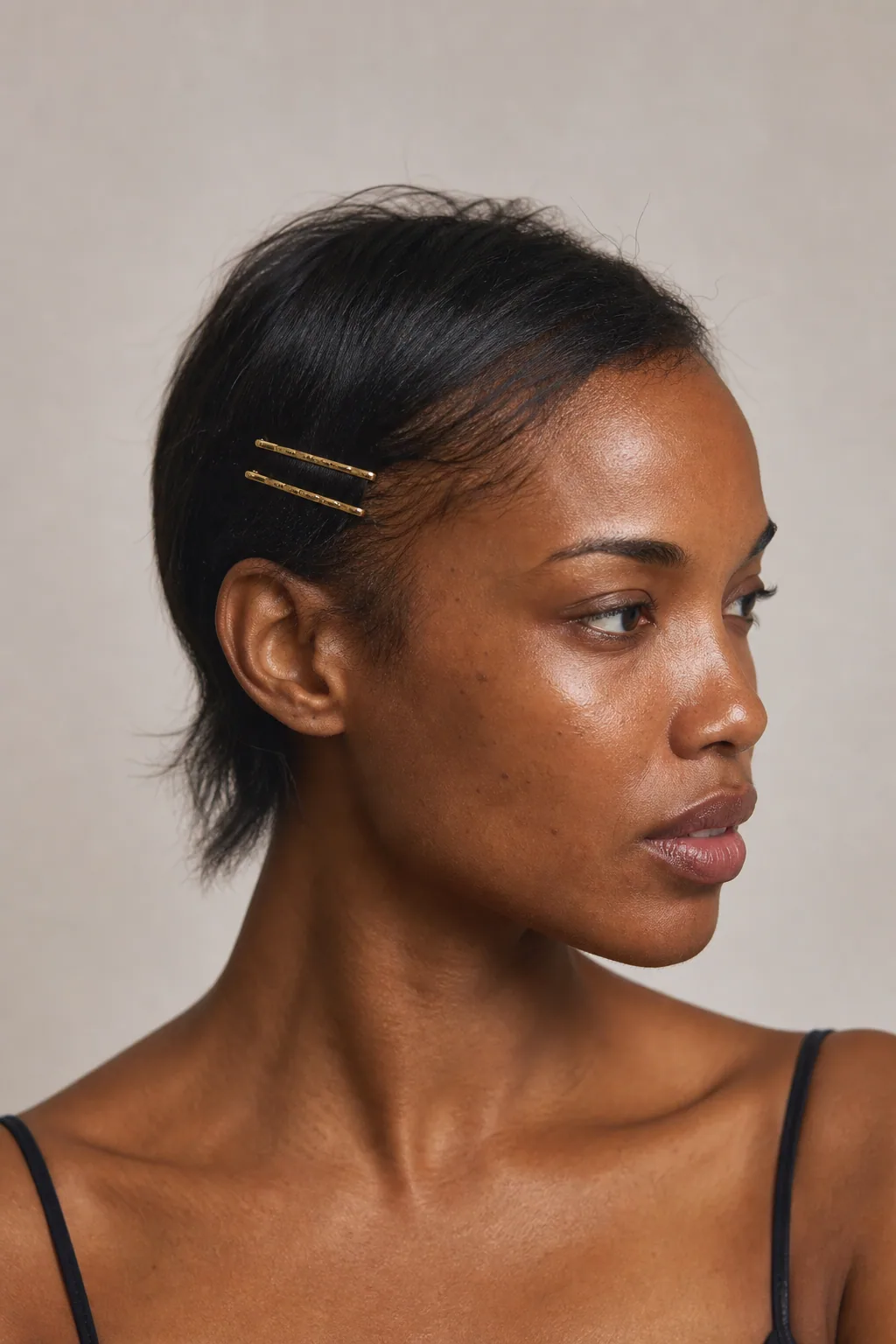
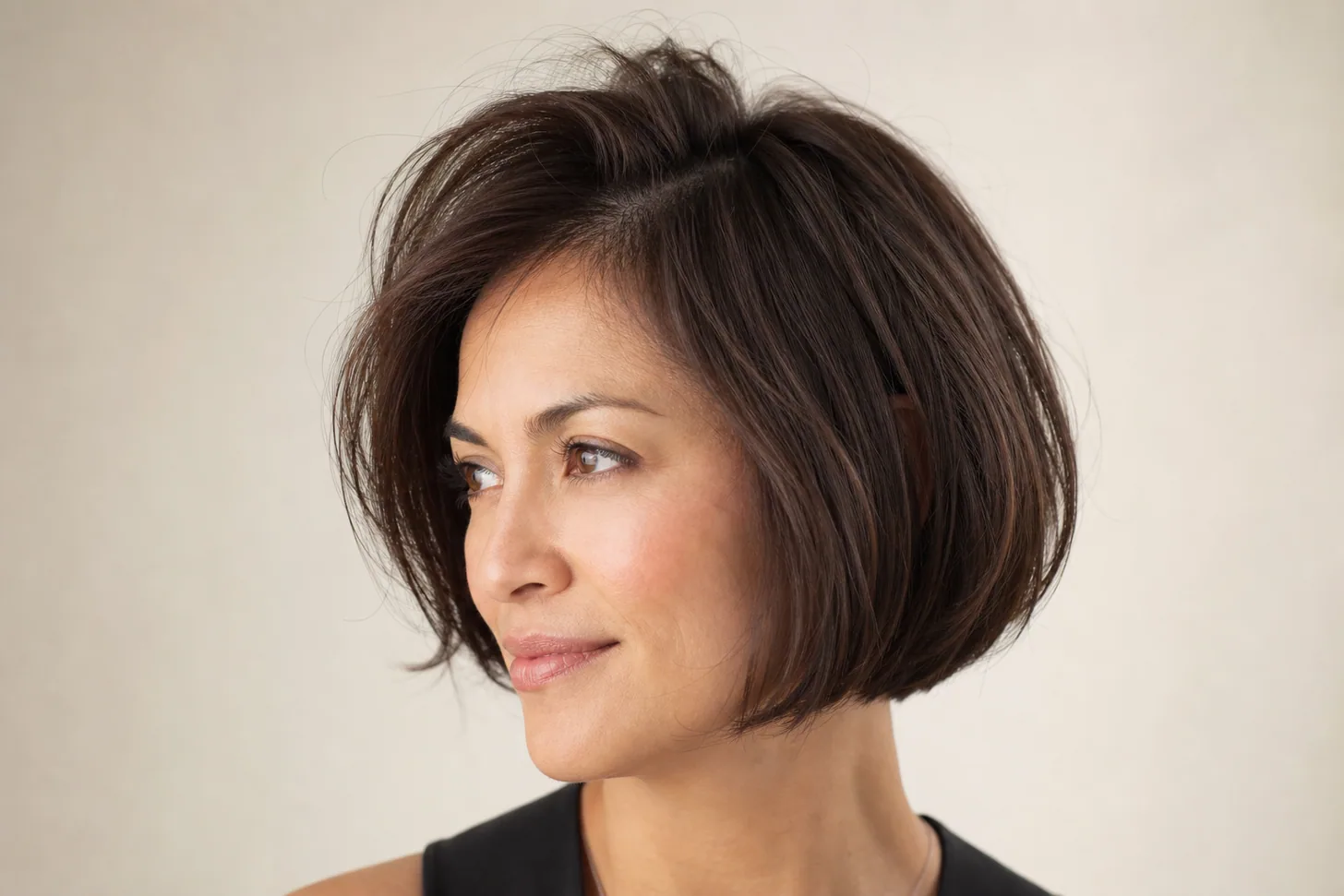
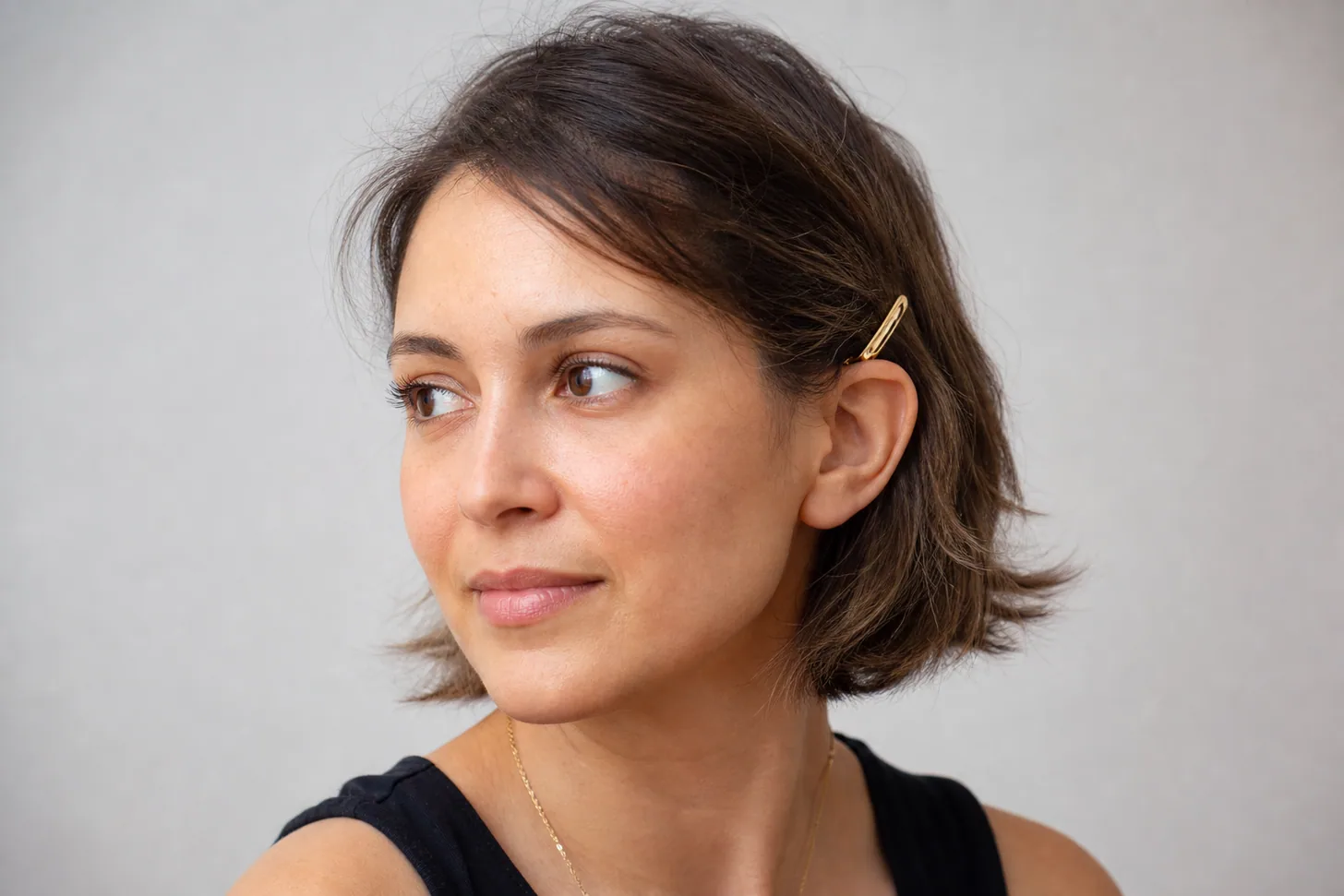
Fine hair at the ear-length grow-out stage tucked behind one ear with a small gold barrette, soft daylight, three-quarter view, unposed
Month seven, and cut into deliberately. The same length left alone is the one everyone hates.
Chair-side note

I can tell you the exact appointment where a grow-out is won or lost, and it's the one where the client sits down, says "just a trim, I'm growing it," and then flinches every time the scissors go near anything. What she means is don't take my length, which is completely reasonable. What I hear is that I've been given permission to tidy and nothing else — so I take a quarter-inch off the whole thing, which removes a month of progress and leaves the shape exactly as unbalanced as it was. Now I ask for the target out loud before I pick anything up: chin, collarbone, shoulder? Then I can cut toward it, which usually means taking a lot off the sides and nothing at all off the back. It looks alarming on the floor and it's the only thing that makes month eight bearable.
Simone BaptisteSB
— Simone Baptiste, Senior Stylist

The timeline, in real months

Start with the number, because almost nobody is given it. Hair grows at about 0.35 mm a day — "approximately 0.5 in/mo or 6 in/yr," per the StatPearls reference on hair anatomy. That rate is largely fixed. It isn't affected by trims, and no product meaningfully changes it.

So the arithmetic is unforgiving and worth accepting up front: a short pixie to a chin-length bob is roughly twelve to sixteen months. Chin to shoulder is another eight to twelve. A pixie to genuinely long hair is a two-and-a-half-year project. People quit at month five not because their hair has failed but because nobody told them month five was going to look like that and that month nine was going to be better.

Why fine hair gets the worse version

Two things make the middle of a grow-out harder on fine hair, and both are about weight.

The wing lasts longer because there's no mass to pull it down

Your skull is widest just above the ear. Hair that reaches that point is pushed outward by the curve of the head, and it stays out until it's long and heavy enough for gravity to win. On thick hair that's a few weeks. On fine hair, where each strand weighs almost nothing and there are fewer of them, it can be four or five months — and because the hair is fine, the winged section also looks see-through, so it reads as damage rather than as a stage.

Ends that are still tapering from the old cut look sparse

Short cuts are usually finished with some point-cutting and internal texture, which is right for the shape but leaves the ends soft. As those ends travel down, they become the perimeter of a longer shape — and a soft, wispy perimeter is exactly what makes fine hair look thinner than it is. This is why keeping the outline blunt through a grow-out matters more here than on any other hair type, and it's the same principle behind whether layers help or hurt fine hair.

There is a compensation, and it's a real one: fine hair suits blunt, deliberate, slightly severe shapes better than thick hair does. Every stage below has a good version. You just have to cut it.

The five stages, and what to ask for at each

Roughly ten to twelve weeks between appointments through the middle stages. Fewer, and you'll lose ground; more, and the shape gets away from you.

StageRoughlyWhat it doesWhat to ask for
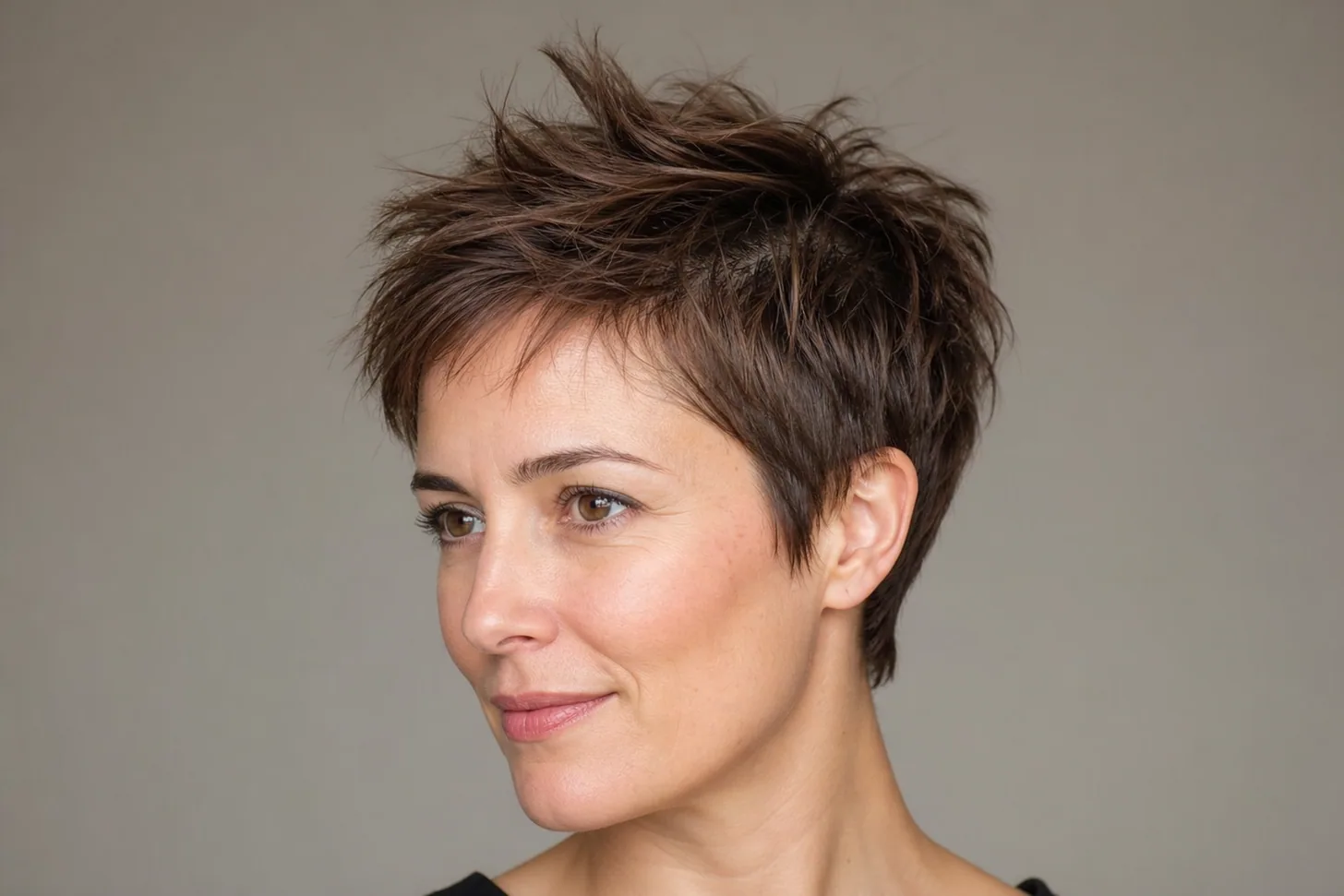
1 · Still shortMonths 0–4Looks like your old cut, softening"Clean the nape and around my ears only. Nothing off the top."
2 · The wingMonths 4–9Sides kick out above the ear; top goes flat"Take the sides down so they sit, keep everything else. Blend the step."
3 · The middleMonths 9–14Neither short nor a bob; back longer than sides"Cut this into a deliberate shape — a shag or a soft fringe — don't shorten it."
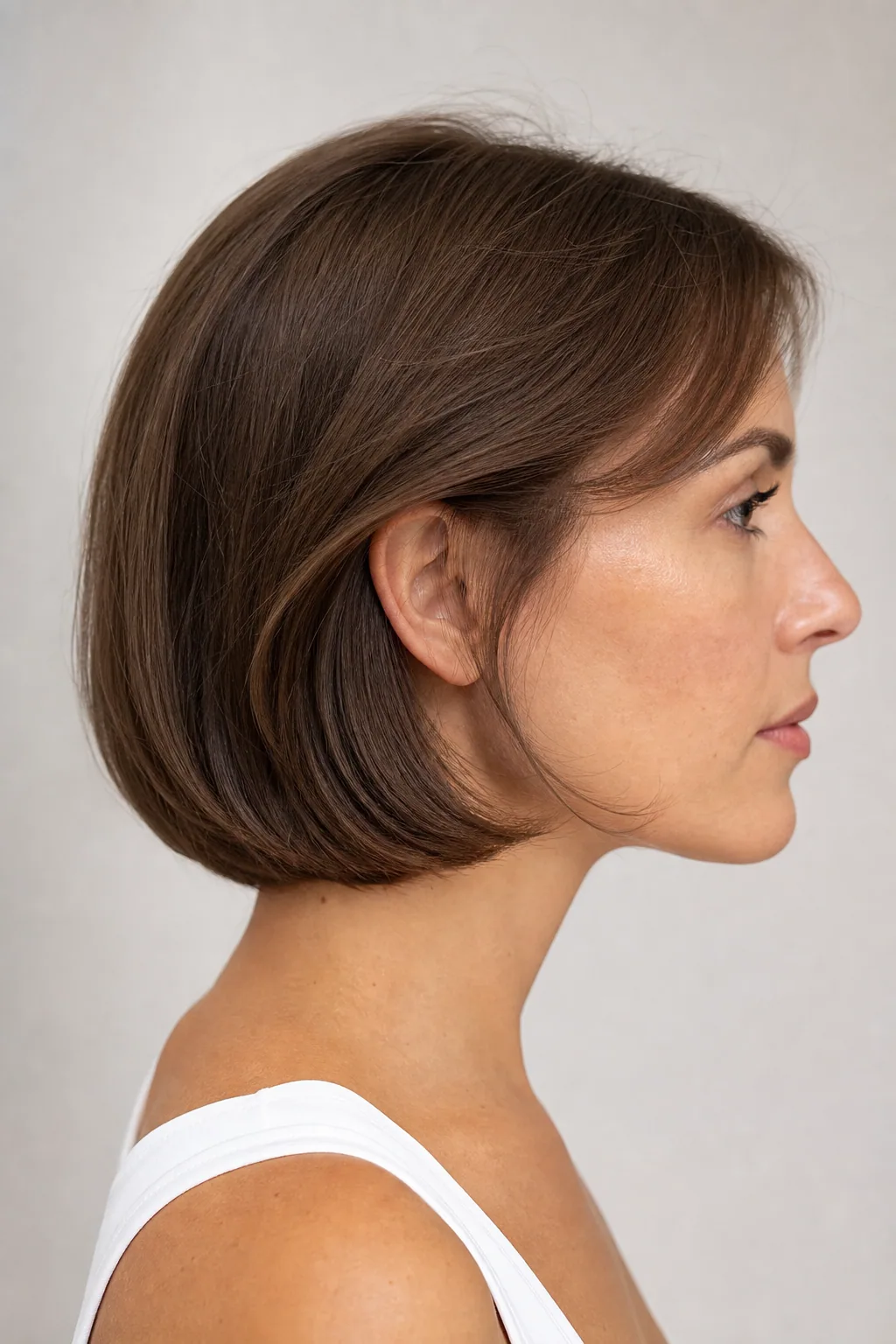
4 · The first real bobMonths 12–18Reaches jaw and chin; finally has weight"Blunt perimeter at the chin, level the front, no thinning shears."
5 · OnwardMonths 18+Lob and beyond; the hard part is done"Dust the ends every twelve weeks. Keep the hemline strong."

The rule that runs through all five: shorten what's causing the problem, never what you're waiting on. In practice that means the sides get cut repeatedly and the back and top are barely touched for a year.

Stage 1 & 2 — while it's still short, and through the wing

The first four months are easy and the next five are the hard part of the whole project. Everything here buys you shape while the length does nothing visible.

Stage 3 & 4 — the middle, and the first real haircut

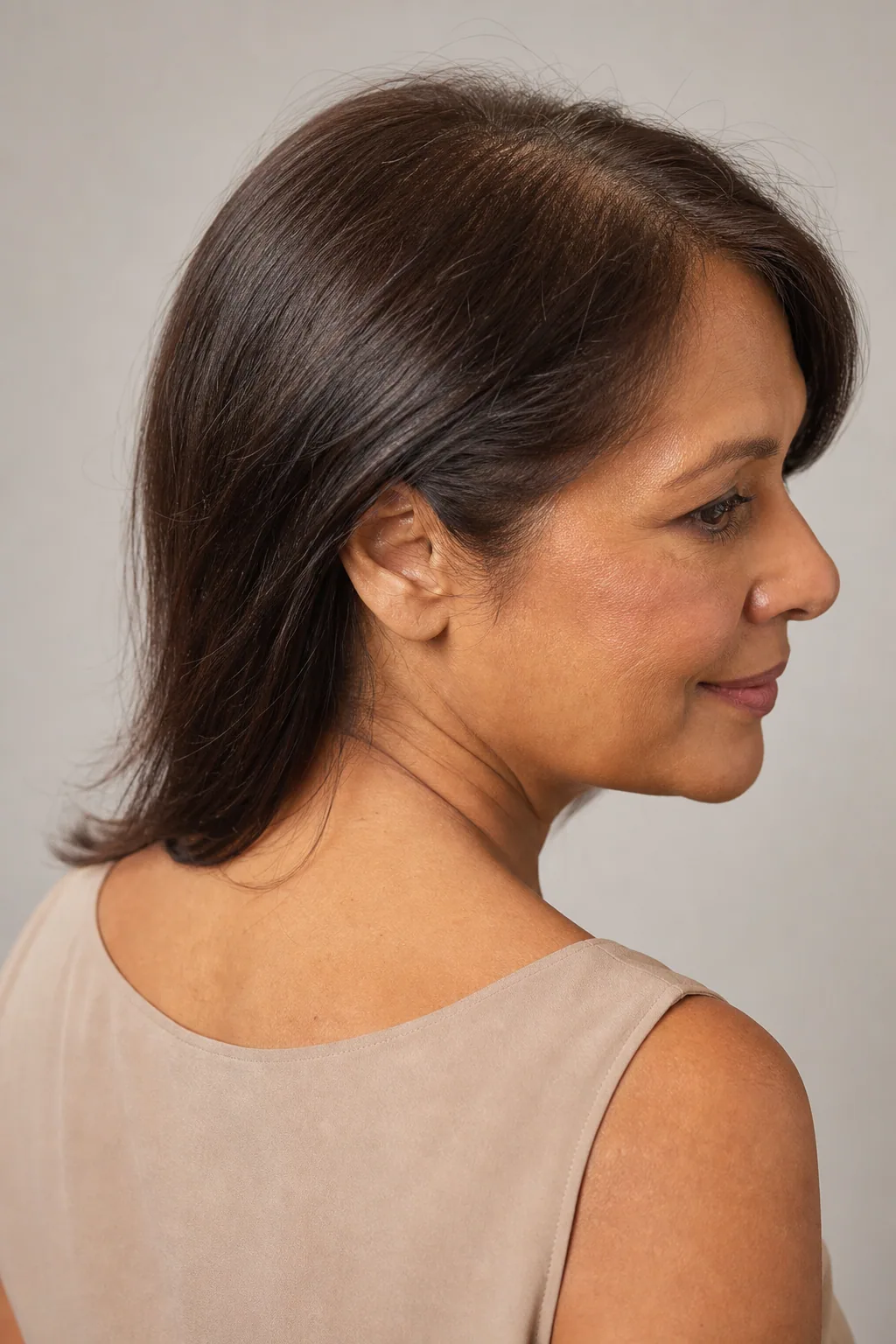
Around month nine the back is noticeably longer than the sides and the shape has no name. This is the moment to stop waiting and give it one.

The exact words for the appointment

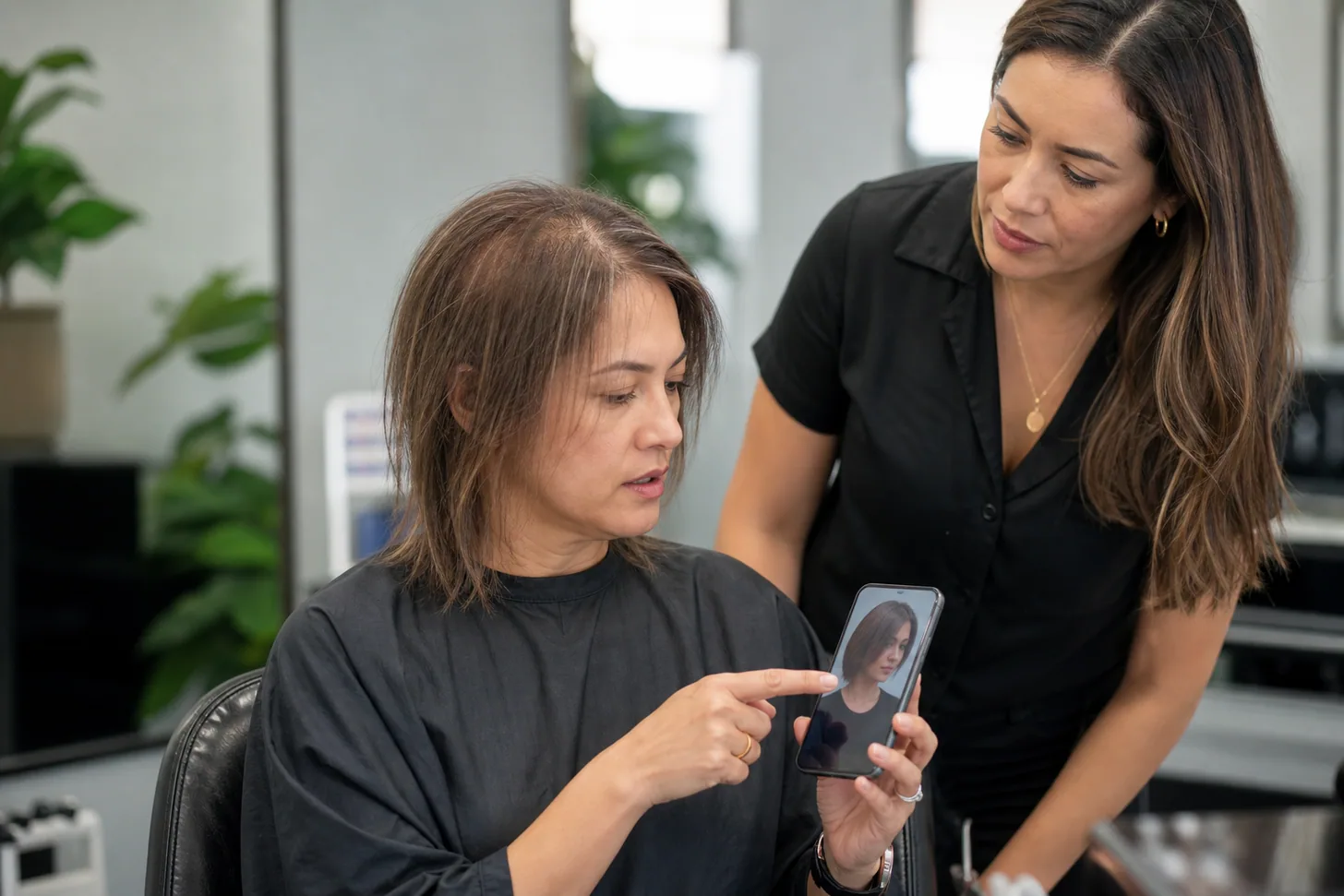
The word "trim" is the problem. To most clients it means shape; to many stylists it means half an inch off everything. Replace it with a target and an instruction.

  • "I'm growing this out to [chin / collarbone / shoulder]." Say the destination first. It changes every decision that follows.
  • "Please don't take anything off the back or the top." Explicit, because the default is to even everything up.
  • "The sides are kicking out — can you take those down enough to sit, and blend the step?" This is the wing fix, described as a symptom so your stylist can choose the cut.
  • "Keep the perimeter blunt. No thinning shears, no razor." Fine ends thinned out during a grow-out stay thin for a year, because they're the hair you're keeping.
  • "What should this look like when I come back, so I know it's on track?" Turns a haircut into a plan, and tells you quickly whether you're in the right chair.

If you're rebuilding the conversation from scratch, the exact words to ask for a fuller-looking haircut covers the general version of this.

What to keep on the shelf for the middle months

Small list. The grow-out doesn't need new products so much as three specific ones.

  • A light styling cream, used on the sides only. A pea-sized amount smoothed over the winging section adds just enough weight to help it lie down. On the roots it will flatten you — see creams that don't weigh fine hair down.
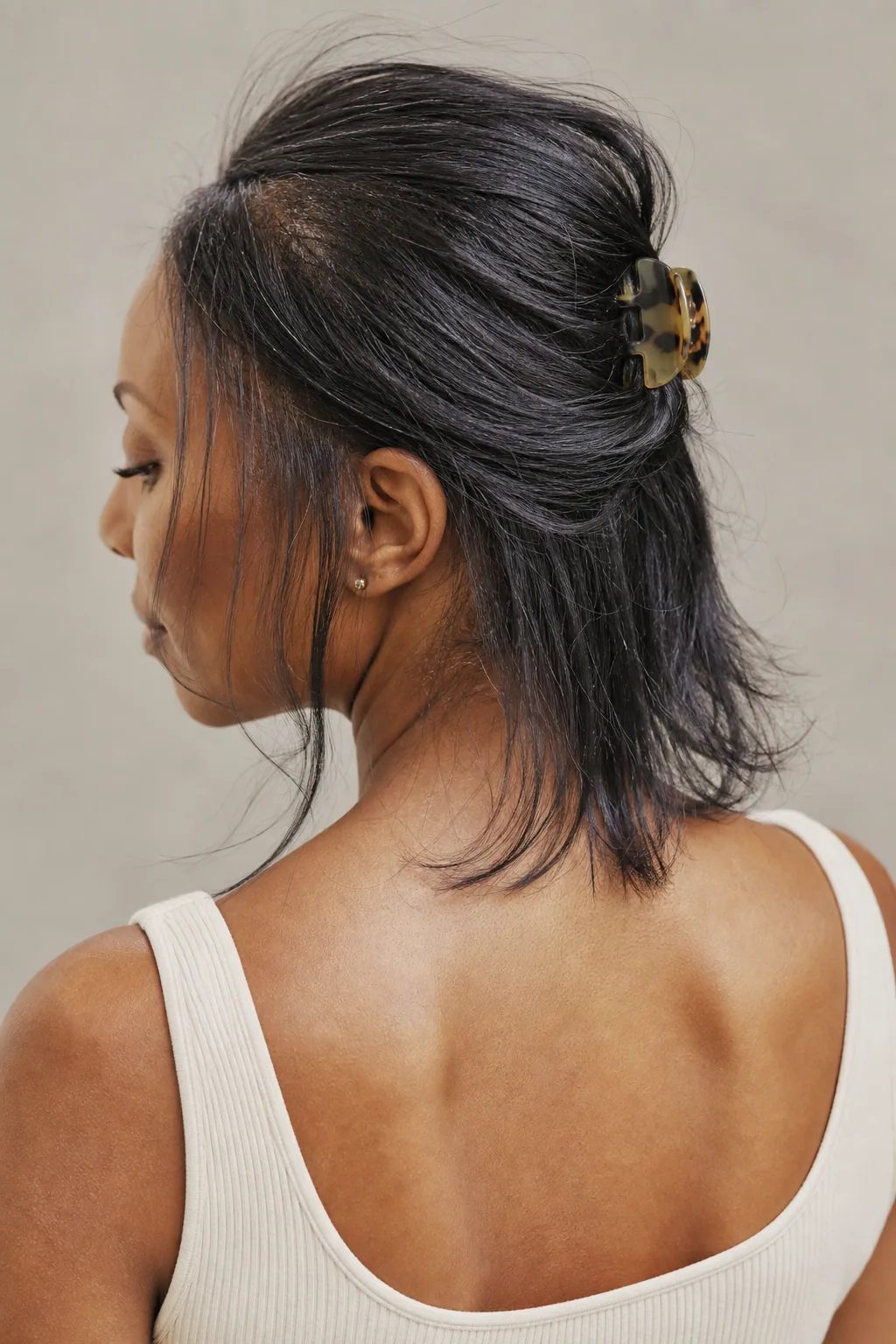
  • Grippy clips and pins. Most slide straight out of fine hair. The ones that don't are in the fine-hair clip roundup.
  • A round brush you can actually control. Mid-length grow-out hair is short enough that a large barrel is unwieldy. A 1.5-inch barrel bends ear-length hair without fighting you.

What to leave alone: heavy oils and serums, which undo the small amount of lift you have, and daily flat-ironing, which makes an in-between shape look flatter and more see-through, not sleeker.

When to stop growing it and take the cut

  • You've stopped wearing it down entirely. If it's been up for two months straight, you're not growing a hairstyle, you're avoiding one.
  • You need heat every single day to make it behave. A shape that only works when styled for twenty minutes isn't a shape, and daily heat on fine hair costs you the ends you're growing.
  • The ends are wispier than the short cut ever was. Length that tapers to nothing reads as thinner overall. A strong short shape will look denser.
  • Your density has changed since you started. If there's less hair than there was a year ago, the target length may no longer be the flattering one — check whether it's fine or thinning before committing another year.
  • You wanted a change more than you wanted length. Perfectly common, and worth admitting early. There's no prize for finishing.

FAQ

Hair grows at roughly 0.35 mm a day, which works out at about half an inch a month or six inches a year. Getting from a short pixie to a chin-length bob means adding something like six to eight inches at the front, so twelve to sixteen months is realistic. Shoulder length is another year beyond that. Knowing the number in advance is genuinely the most useful thing on this page, because most people abandon the project at month five believing something has gone wrong, when in fact they're exactly on schedule and standing in the worst month of it.

Because the hair has reached the widest part of your skull without gaining enough weight to fall past it. The head curves outward above the ear, so hair at that length is pushed away from the head; on thick hair, mass drags it back down within a few weeks. Fine hair has very little mass, so it stays winged for months. This is the most predictable event in the whole grow-out and the reason most people give up. It's also fixable in one appointment — you cut the sides, not the top.

Yes, and this is where most grow-outs go wrong. Not cutting anything isn't a strategy, because the problem is never total length — it's the difference in length between sections, and that difference only widens if nothing is touched. Trims during a grow-out are about shape rather than maintenance: cutting the sides so they stop winging, keeping the perimeter blunt so fine ends don't go wispy, and never taking anything off the length you're actually chasing. Expect an appointment roughly every ten to twelve weeks.

Say the goal first and the instruction second: "I'm growing this to a chin-length bob. Don't take anything off the top or the back — I want you to take the sides down so they stop kicking out, keep the perimeter blunt, and blend the difference." That gives your stylist the target so they can cut toward it, and it removes the ambiguity in the word "trim," which many people use meaning shape and many stylists hear meaning half an inch off everything. Ask what the hair should look like at your next appointment as well, so you can tell whether it's on track.

Two reasons, both to do with weight. Fine hair doesn't have the mass to pull a mid-length shape down, so it wings out at the sides for longer and sits higher on the head. And fine hair looks thinnest at its ends, so a length still tapering from an old short cut reads as sparse rather than as growing. Thick hair spends the same months in the same shape and gets away with it. The compensation is that fine hair suits blunt, deliberate shapes at every stage — so cutting into the grow-out rather than waiting it out works better on your hair than on anyone else's.

Not in any way that changes your timeline. Growth rate is largely set by your follicles, and no product on the shelf lengthens the growth phase. Supplements help someone with a genuine deficiency and do nothing measurable for someone without one. Where you can win is at the other end: hair that snaps off mid-shaft never accumulates length, so gentle detangling, a blunt perimeter and moderate heat protect the growth you already have. That's a real gain, just a slower and less exciting one than the marketing suggests.

When the honest answer to "do I want long hair, or do I want a change?" is the second one. A grow-out is a two-year commitment on fine hair, and there's no prize for finishing it. Three practical signs it isn't worth continuing: you've stopped wearing your hair down entirely, you're using heat every day to make a mid-stage shape behave, or the length you've gained is so wispy at the ends that the overall shape looks thinner than the short cut did. Any of those and a strong short shape is the better-looking choice.

Related reads

Simone BaptisteSB
Simone Baptiste
Senior Stylist · Licensed Cosmetologist (NY) & Certified Bridal Stylist

Eleven years behind the chair, most of it with fine and thin hair. Simone's rule for grow-outs is to name the destination out loud at every appointment, because a stylist who knows the target can cut toward it instead of tidying around it.

More from Simone →

Results vary with hair type, density, and growth patterns. This guide is educational and not a substitute for an in-person consultation with a licensed stylist.