Reviewed by Tara Sullivan · Updated September 2026 · 10 min read
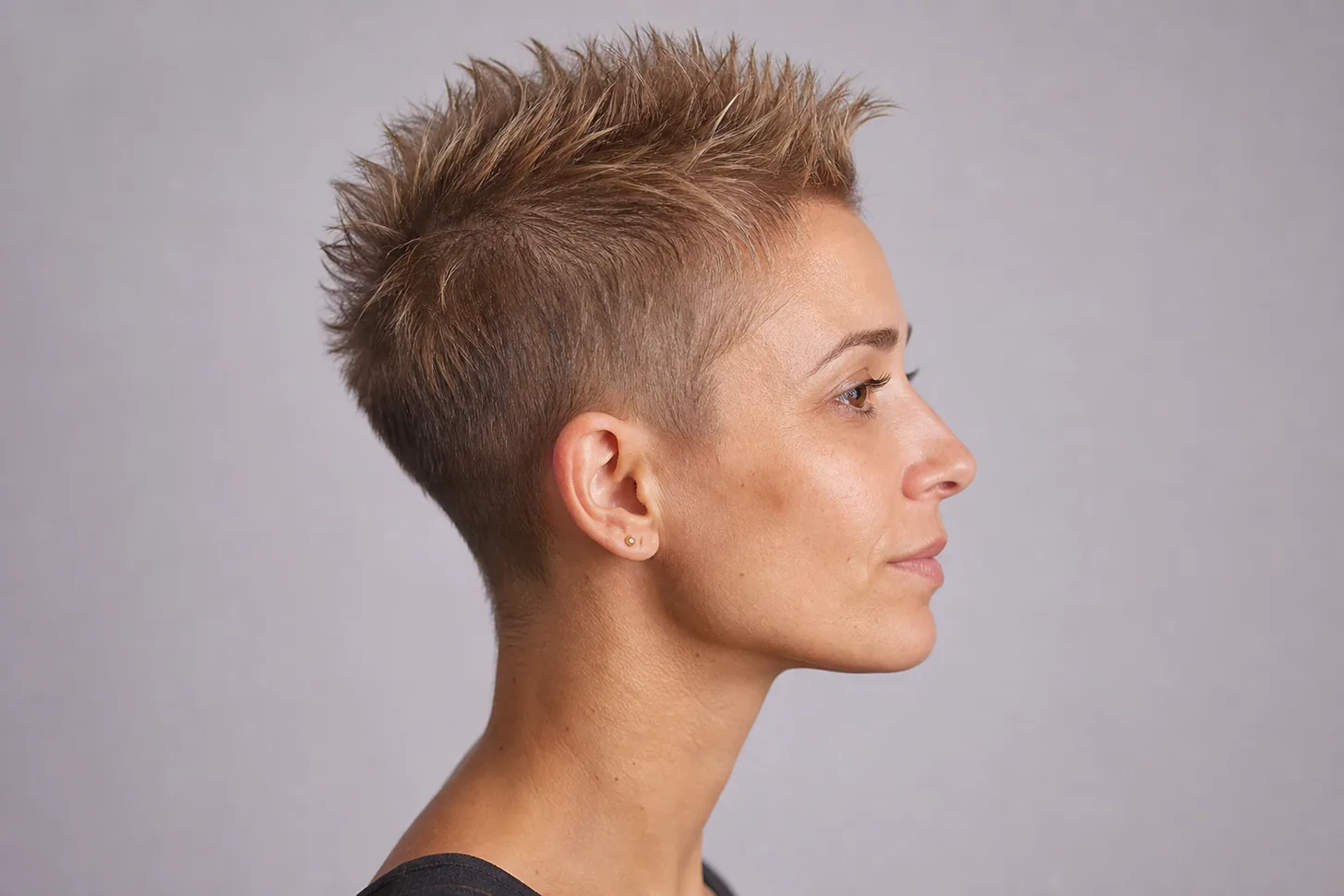
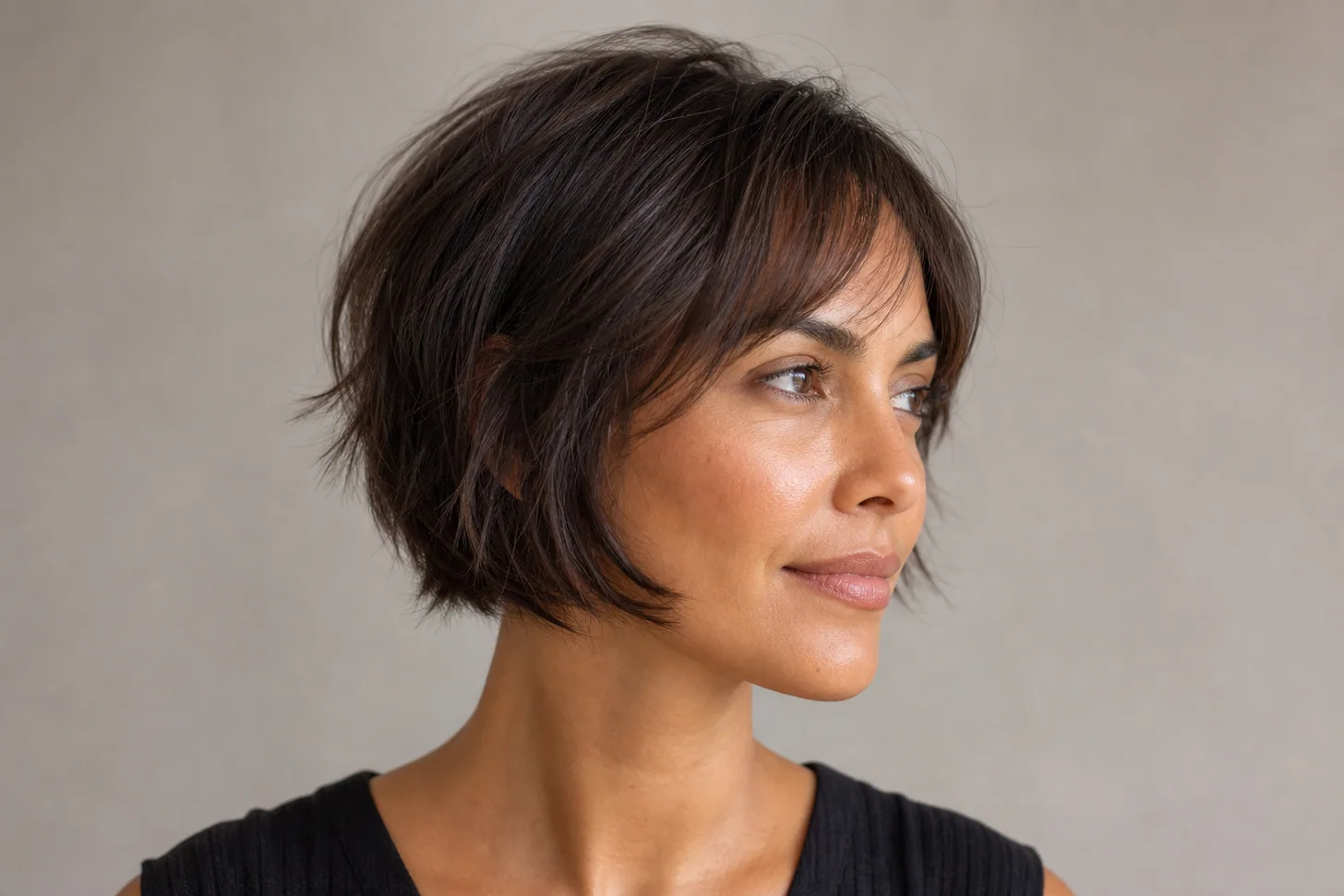
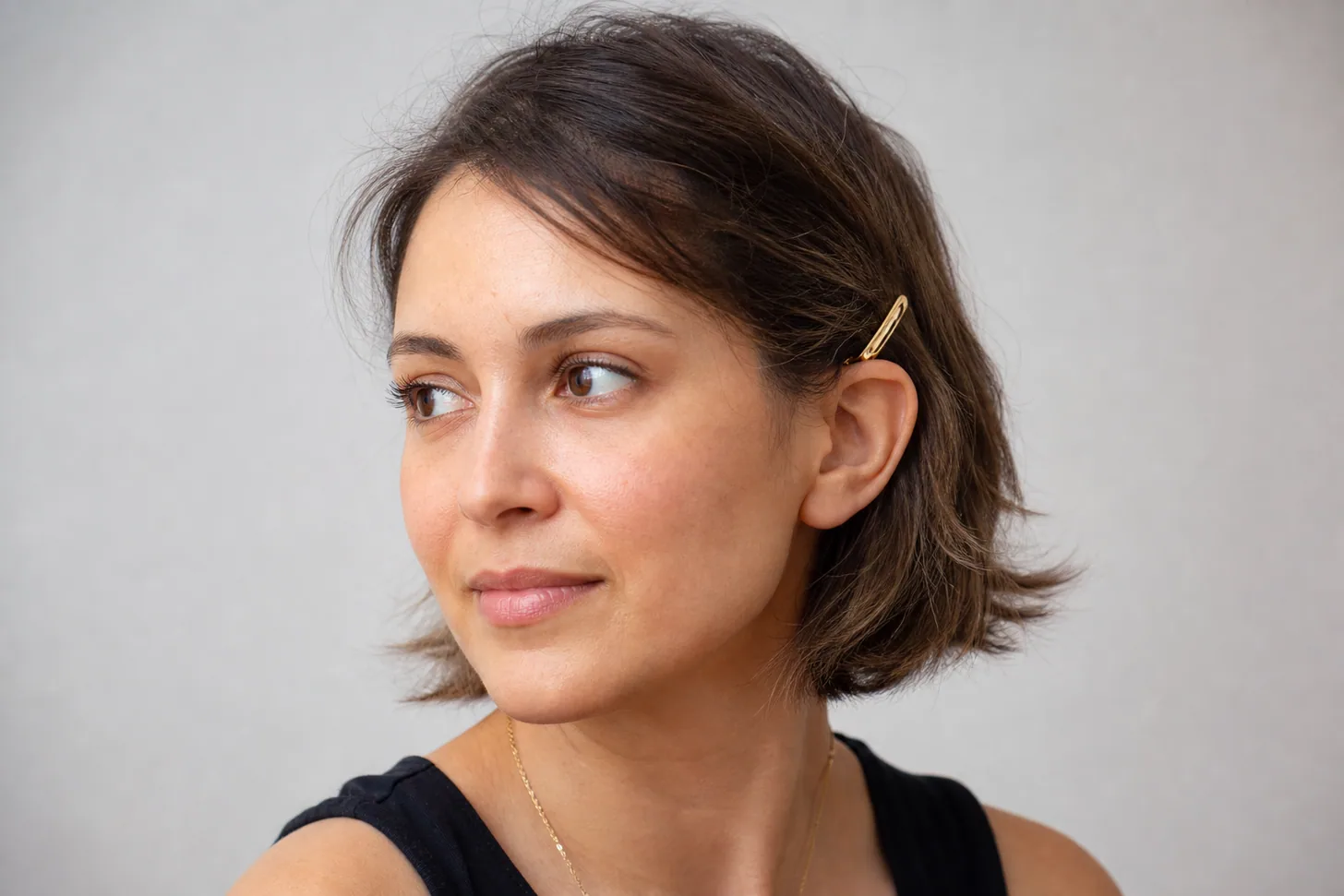
An undercut pixie works on fine hair when the shaved section sits underneath hair that can cover it: at the nape, or behind one ear. There it removes bulk you were not using, and the pixie sits closer to the head and looks sleeker.
The version to be careful with is the full side undercut on thin hair, because the sides above the ears are doing real work. Below are 12 undercut pixies, from hidden to bold, how to grow one out, and exactly what to ask for.
Chair-side note
When someone with fine hair asks me for an undercut pixie, the first thing I do is lift the hair at the back and look at the nape. On most fine hair it is the wispiest, flattest hair on the head, and it is often what makes a pixie look fluffy at the back.
Clipping that hair short is the best thing an undercut does for fine hair. What I will not do is take the sides above the ears if the hair on top is thin. That hair is covering something.
SB
— Simone Baptiste, Senior Stylist
Why an undercut pixie can work on fine hair
An undercut takes a section of hair, usually at the nape or the sides, down to a clipper length while the hair above it stays long. On a pixie, that means the layers fall over a short, neat base instead of a bulky or wispy one.
On fine hair, the nape often grows in soft and patchy, and it pushes the back of a pixie outward. Taking it short lets the longer hair sit flat against the head, which reads as sleeker and more deliberate. It also stops the neckline looking fuzzy between cuts.
The catch is density. An undercut removes hair, and fine hair has less to spare. So the question is not whether to have one, but where. Our verdict on undercuts for fine hair covers the same rule on even shorter cuts.
Hidden undercut pixies
These keep the undercut under the hair, where it thins out bulk without costing any coverage. They are the safest place to start, and the ones I would recommend on thin hair.
1
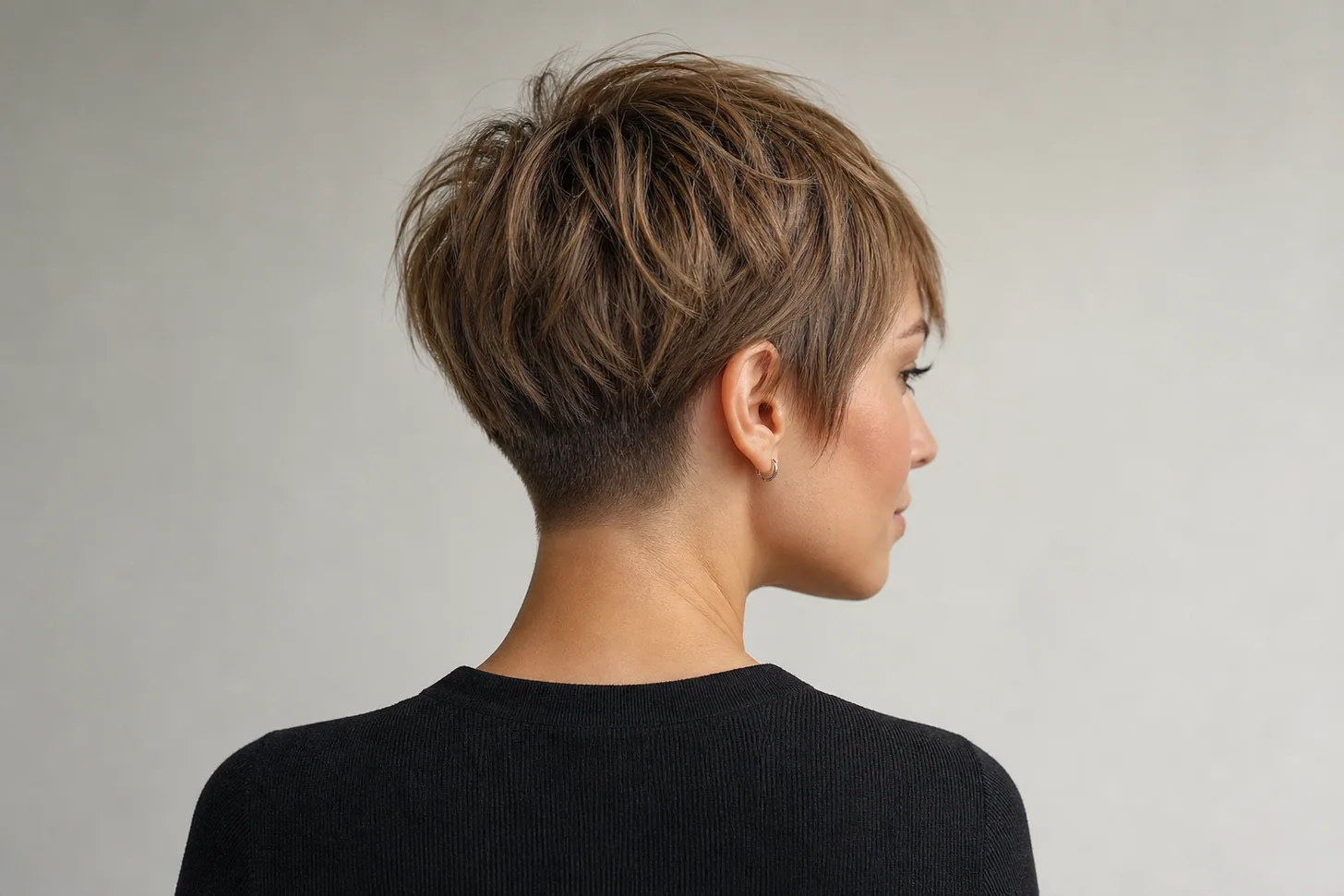
Hidden nape undercut pixie
A palm-sized panel at the nape is taken to a number 2, and the pixie layers fall over most of it. From the front nobody can tell it is there.
This is the undercut pixie I recommend first on fine hair. It clears away the wispy hair that makes the back look fluffy and costs nothing in coverage.
2
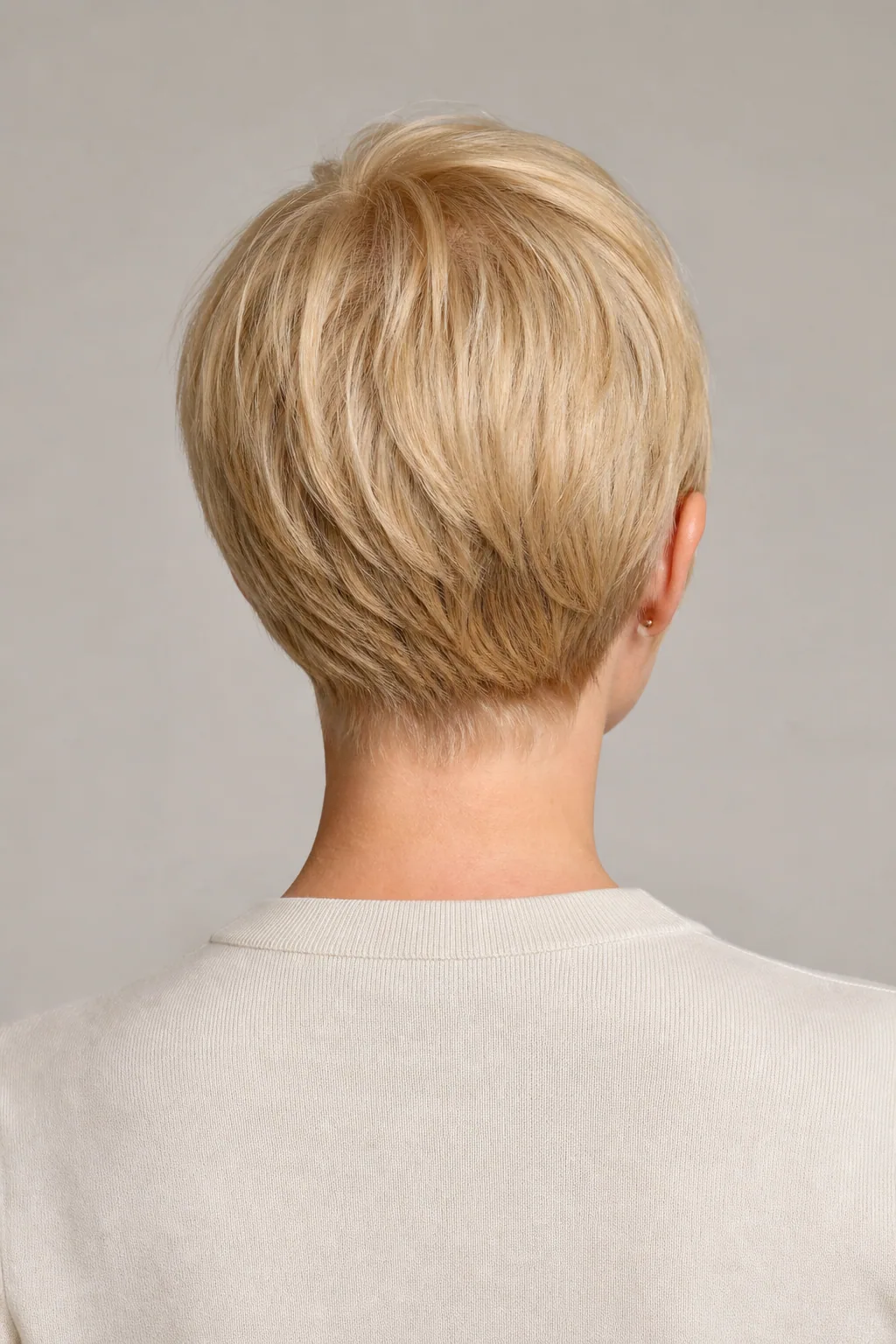
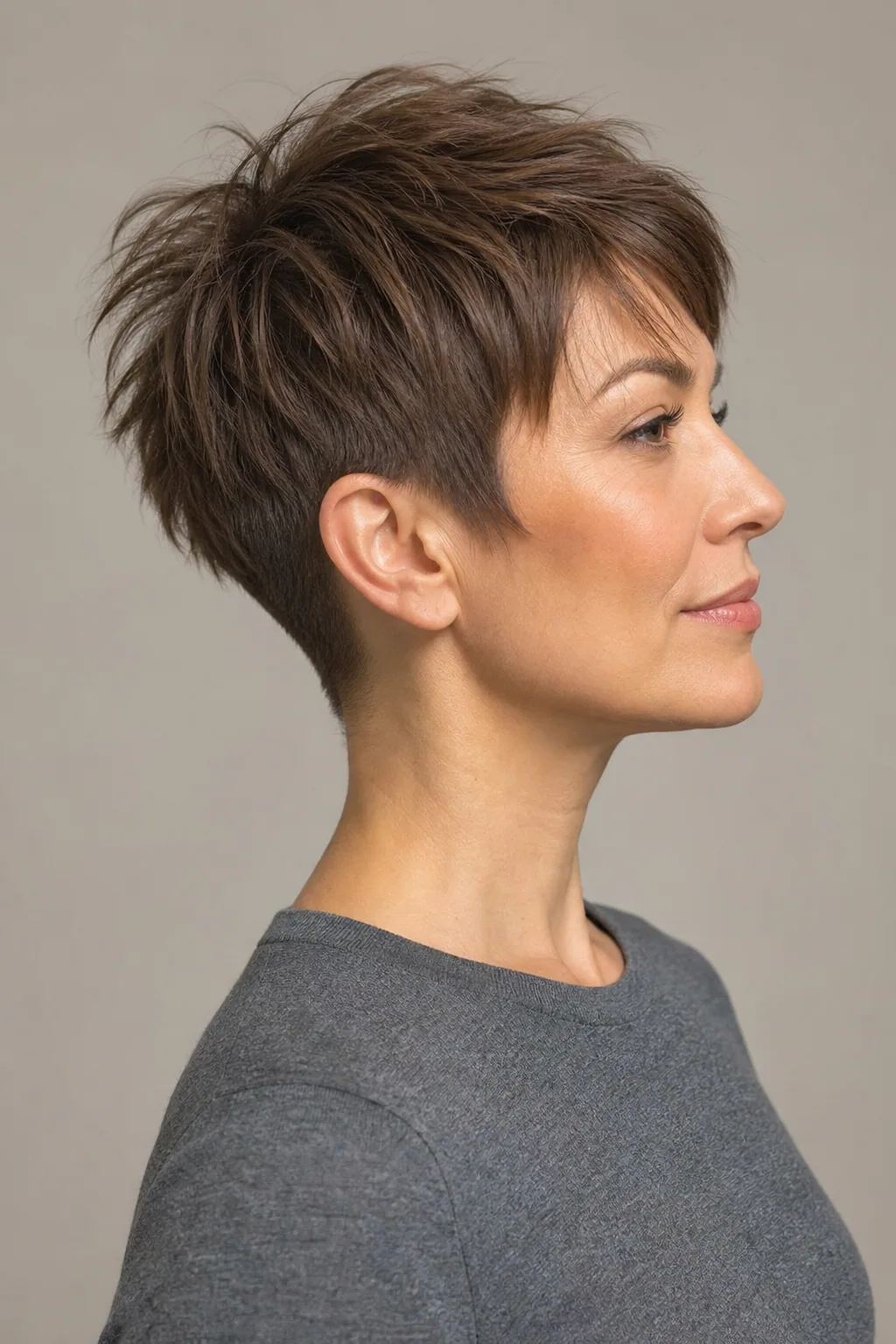
Nape undercut with a tapered neckline
The same nape undercut, but with the pixie cut shorter so the clipped section shows as a clean taper at the back. It gives a sharp, tailored outline that fine hair cannot hold on its own.
Ask for the taper to be rounded rather than squared. A square neckline grows out into a hard line within a week.
3
Undercut pixie under a long side fringe
A small section above one ear is taken short, and a long side-swept fringe covers it. Tuck the fringe back and the undercut shows; let it fall and it disappears.
It is a good way to try an undercut without committing. On fine hair, keep the shaved section small, about two fingers wide.
This does not carry over to a bob. A bob's fullness is its bottom edge, and taking hair from underneath on fine hair hollows it out; our choppy bob guide explains why to decline it. A pixie has no heavy edge to lose, which is why the nape undercut suits it.
Side undercut pixies
These show the undercut on purpose. They look bolder, and they need more density on top, because the sides no longer help cover anything.
4
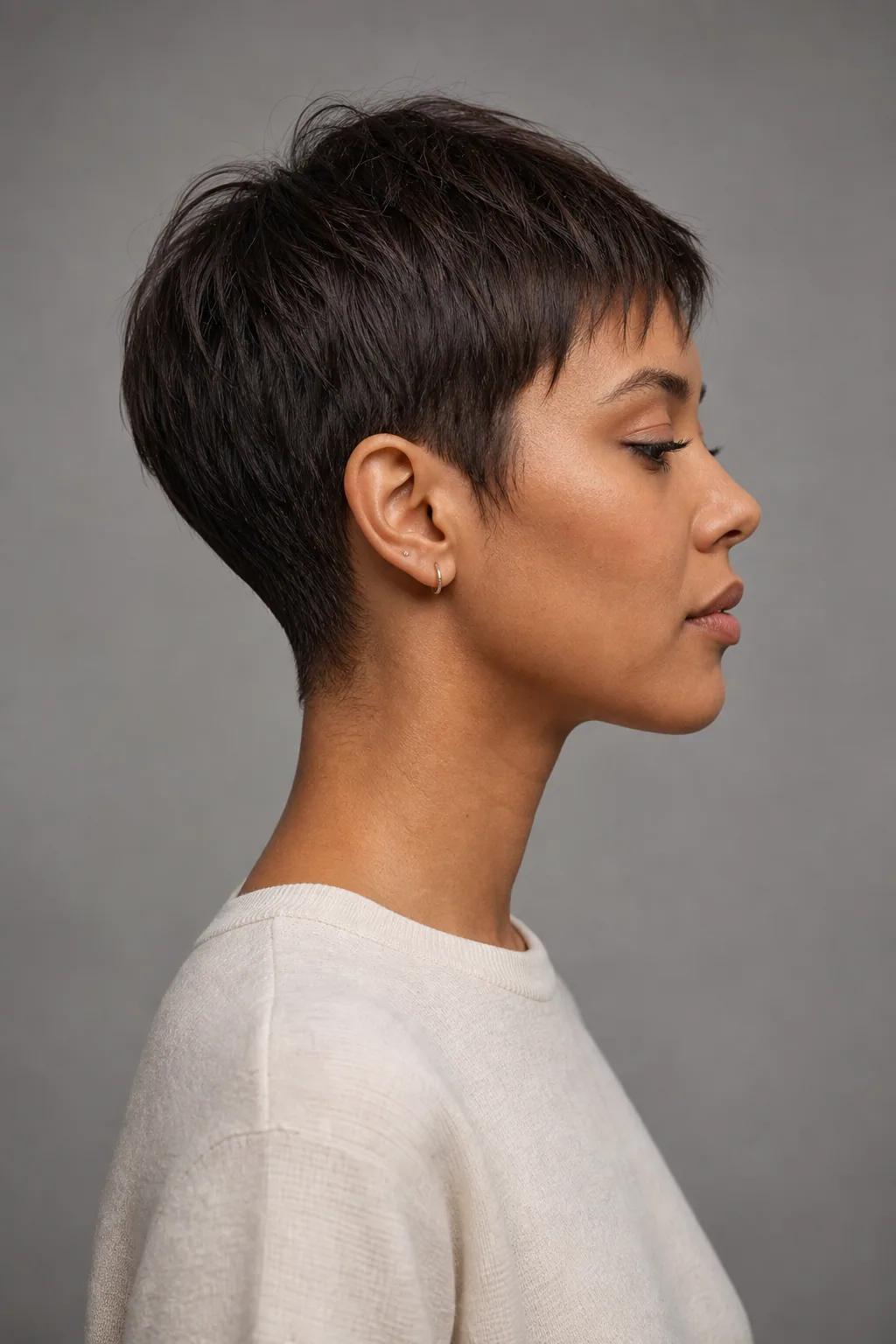
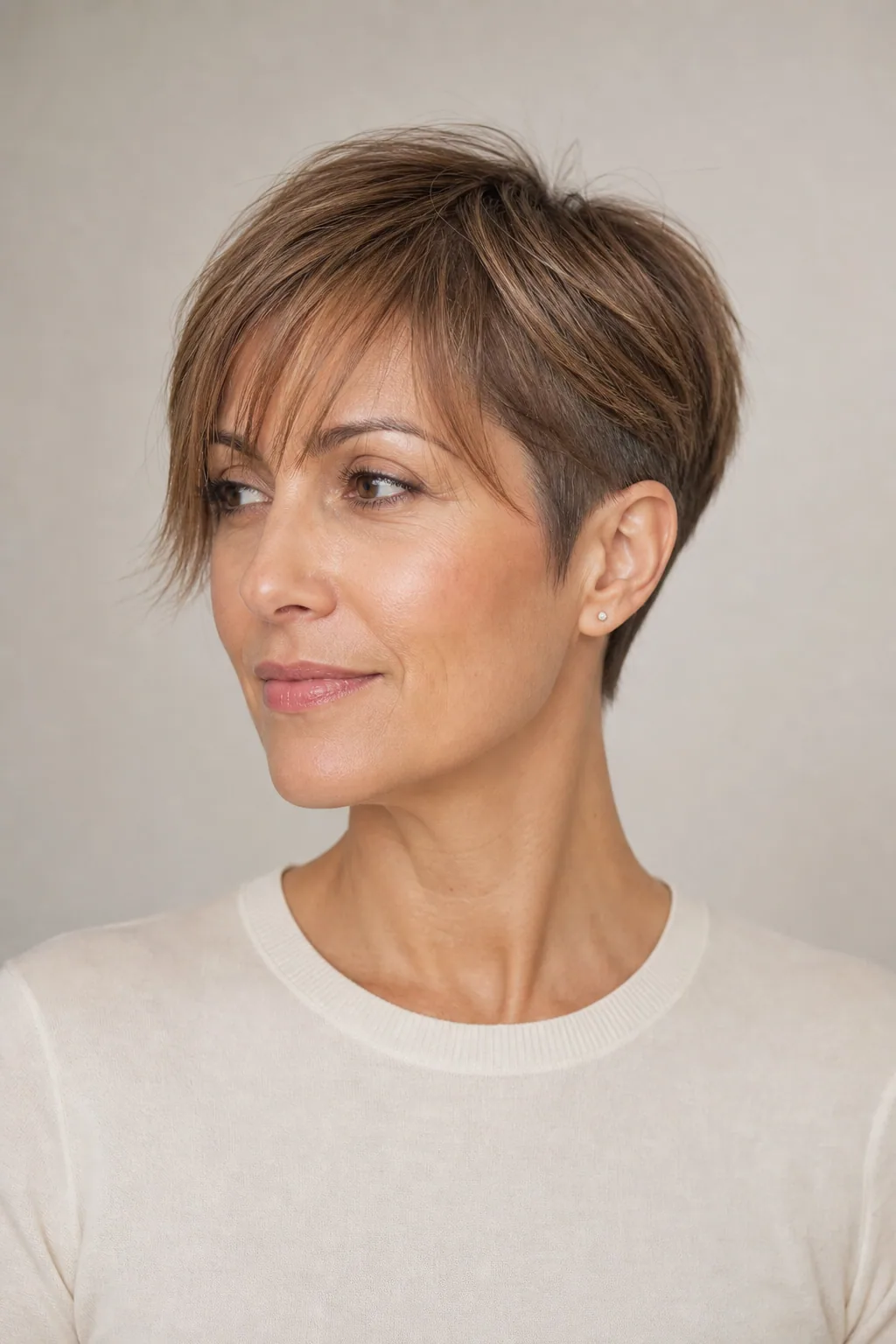
Single-side undercut behind the ear
Just one side, behind the ear, is clippered short. It shows when the pixie is tucked back and hides when it is not.
It halves the grow-out problem and keeps most of your coverage. If your density is genuinely low, this is the bolder undercut to choose.
5
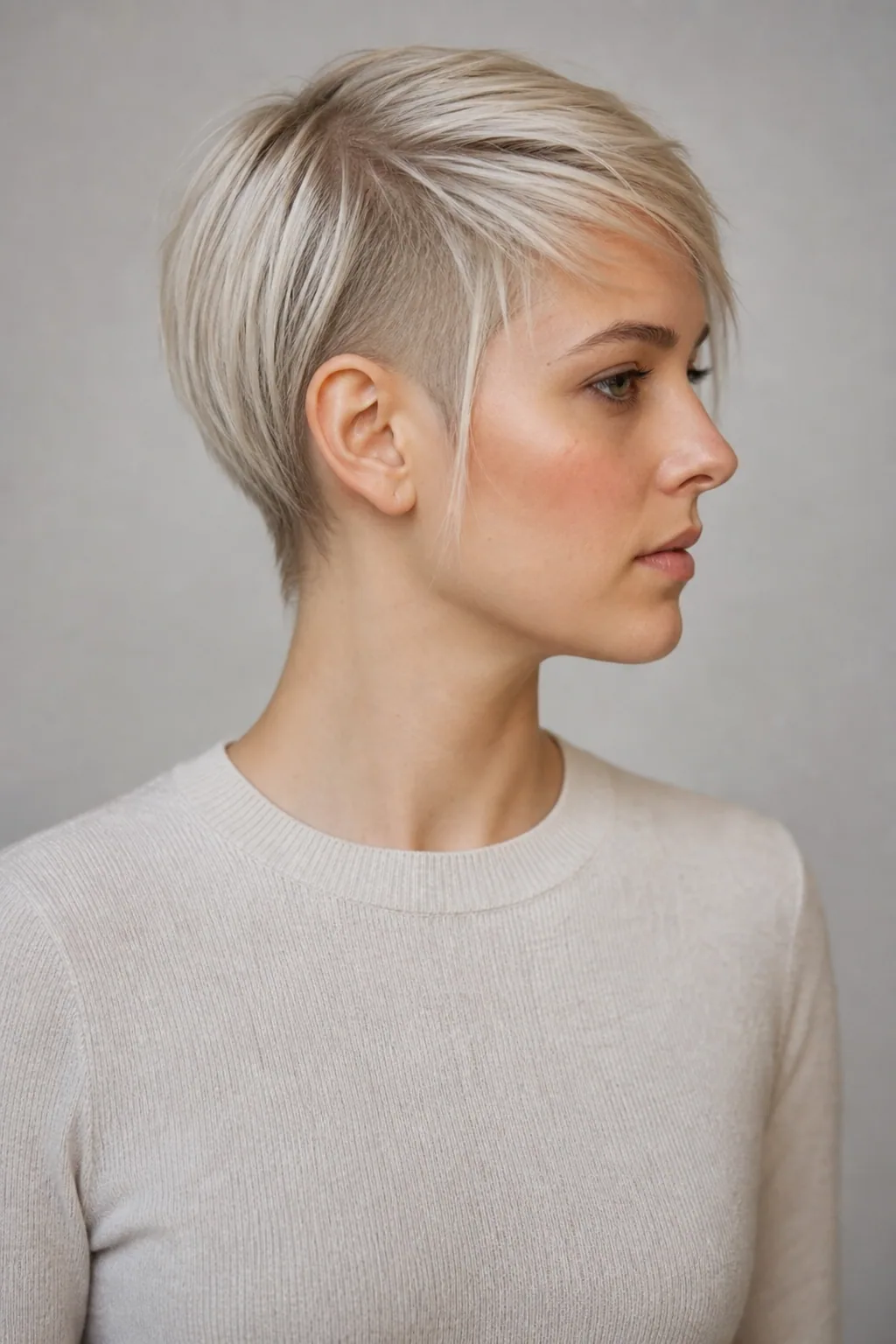
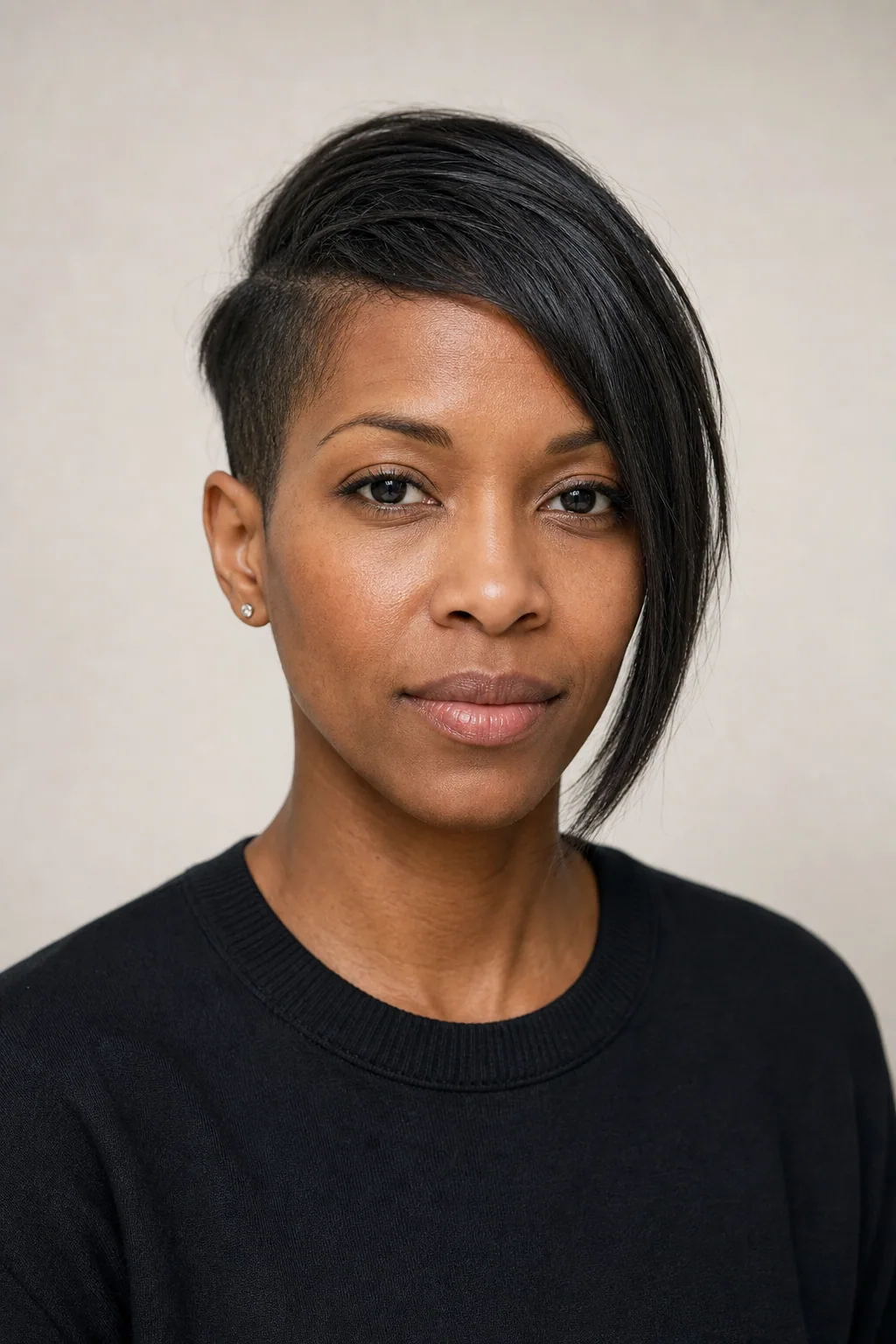
Asymmetrical undercut pixie
One side is short, and the top is swept across into a long diagonal on the other. The asymmetry makes fine hair look deliberate and full on the long side.
Sweep it toward the side where your hair is thickest. Most people have one side that lies better, and that is where the length should fall.
6
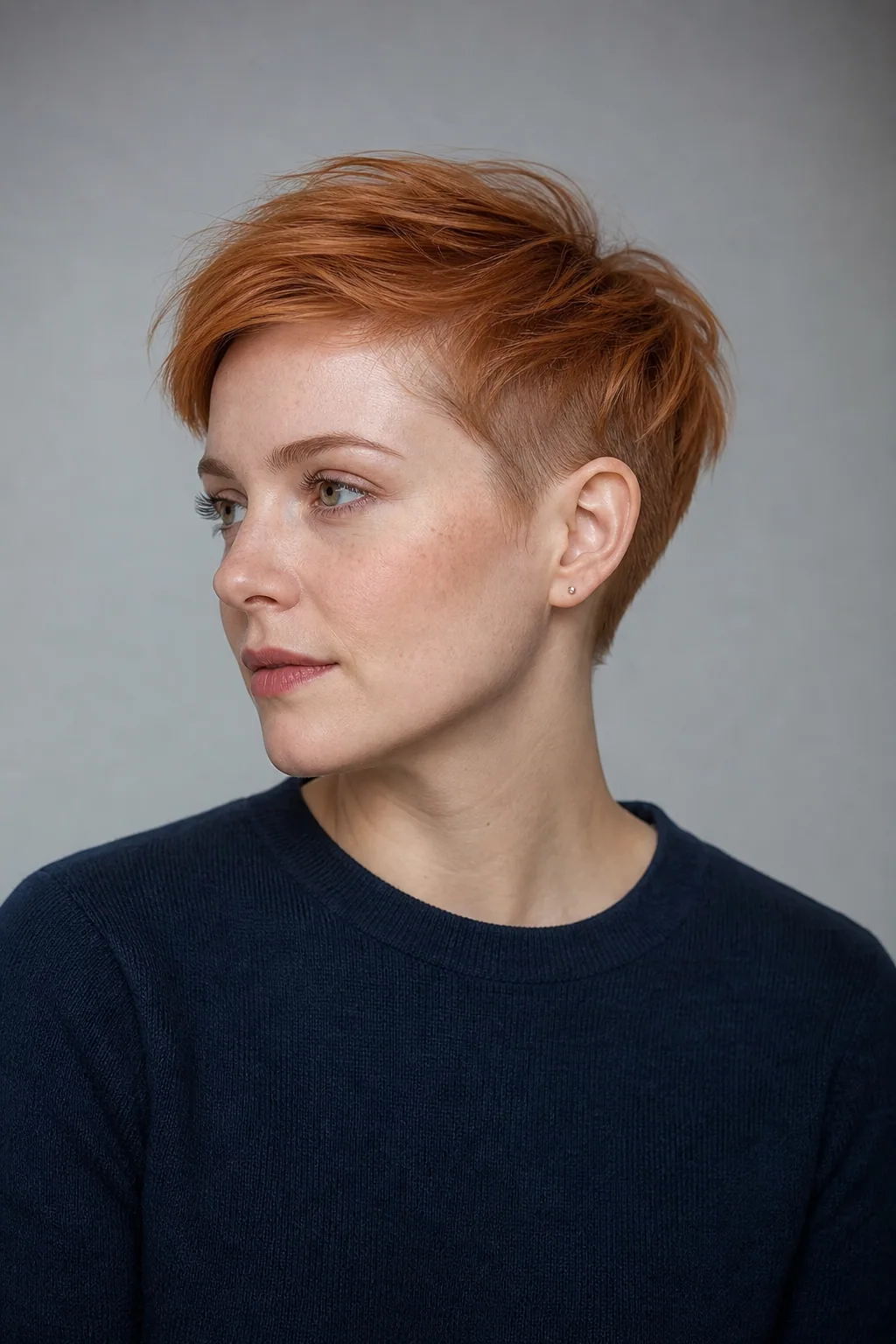
Feminine undercut pixie with a soft fringe
The undercut is blended into the pixie rather than cut as a hard line, and the fringe is soft and wispy. It keeps an undercut's neat shape without looking severe.
Ask for a "blended undercut, no disconnection." It grows out far more gently than a sharp step.
7
Double side undercut with a long top
Both sides are taken to a number 2 with about three inches left on top. It is the most dramatic undercut pixie here and has the most conditions attached.
It needs good density on top, because all the hair is now in one place. If you have noticed thinning at the crown or temples, skip this one.
Messy and textured undercut pixies
Texture is what keeps a fine-hair pixie from lying flat. With the bulk gone underneath, the top can be cut into pieces that stand up.
8
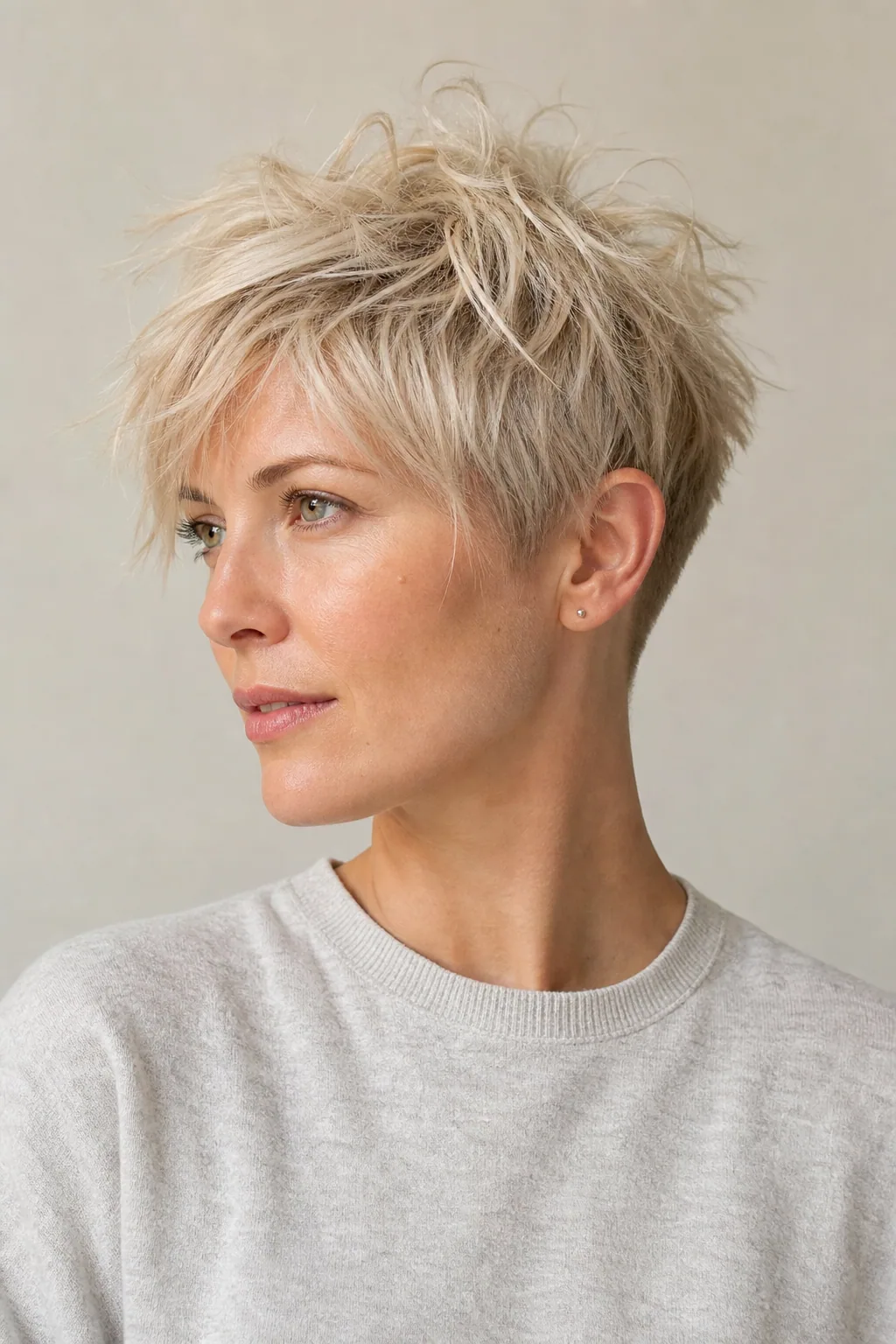
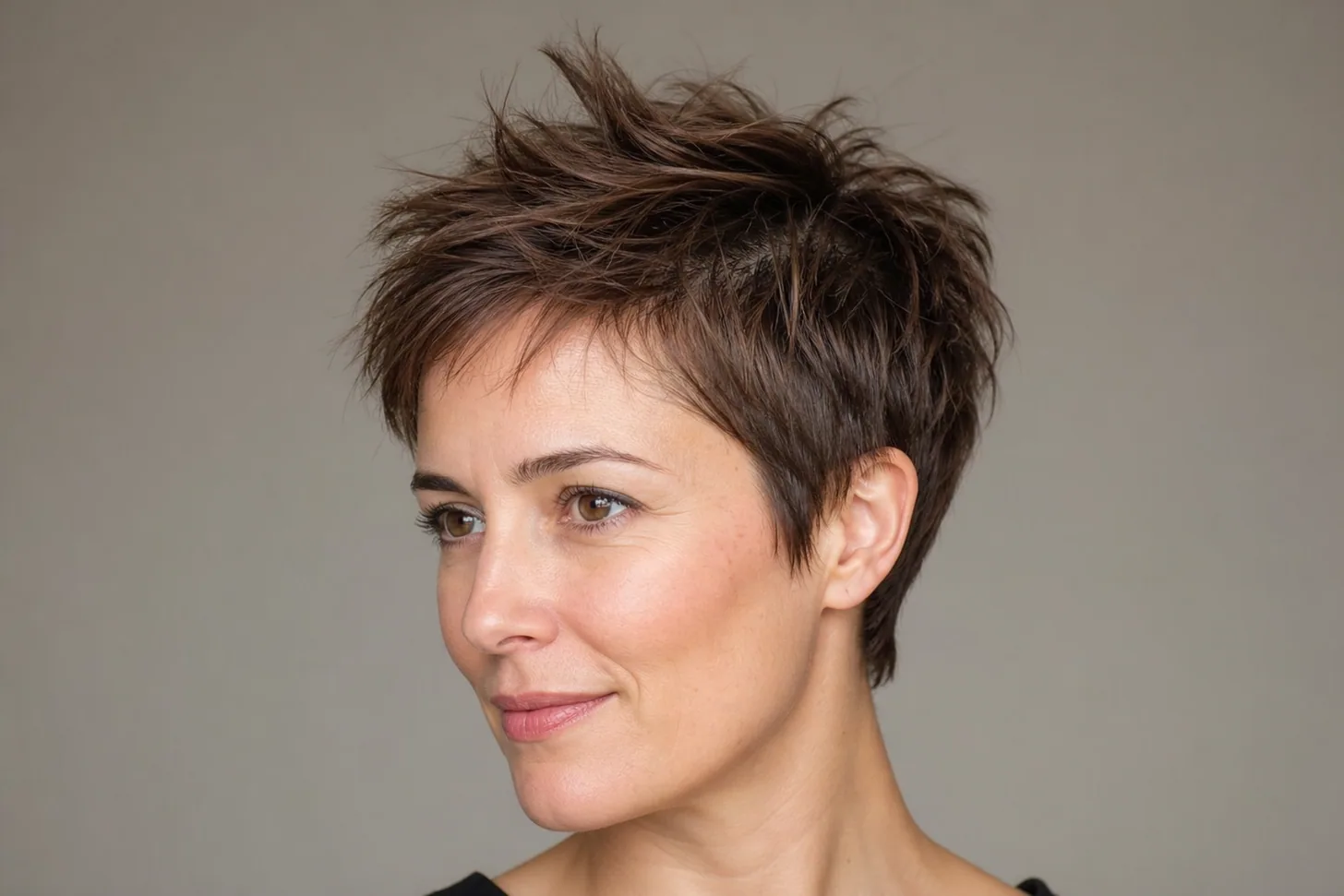
Messy undercut pixie
The top is point-cut into uneven pieces and roughed up with the fingers. Strands pointing in different directions overlap, and overlap is what covers scalp on thin hair.
Use a pea-sized amount of matte paste and rub it through with your fingertips. Shine makes fine hair separate.
9
Choppy undercut pixie with a lifted crown
Short choppy layers at the crown, with the nape clippered underneath. Because the back no longer pushes outward, the crown can be lifted instead.
Blow-dry the crown up and forward for thirty seconds. That small lift makes the whole cut look fuller.
10
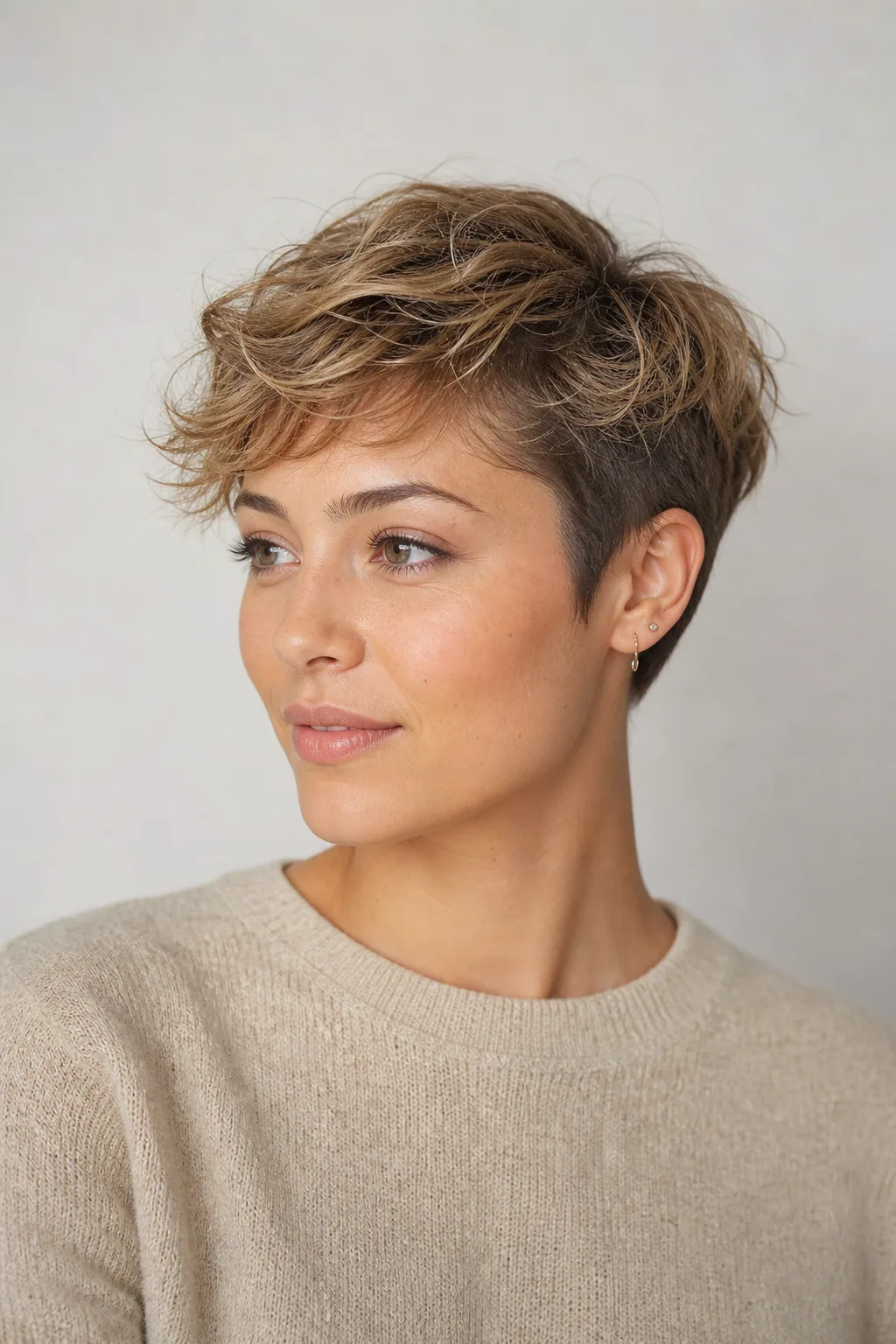
Wavy undercut pixie
Fine hair with a natural wave is well suited to an undercut pixie, because the bend lifts and spreads the top. Keep about three inches on top so the wave has room to form.
Scrunch in a little light mousse and let it air-dry. Brushing it out will turn the wave into frizz.
Undercut pixie over 50
An undercut pixie is not only for younger women. Over 50, a hidden nape undercut is often the easiest way to keep a short cut neat, because it stops the back going soft and fluffy between trims.
Keep the undercut small and blended, and keep more length on top than you would at 30. Hair tends to get finer with age, so the top needs every bit of coverage. Short hairstyles for thin hair over 50 has more cuts in this vein.
11
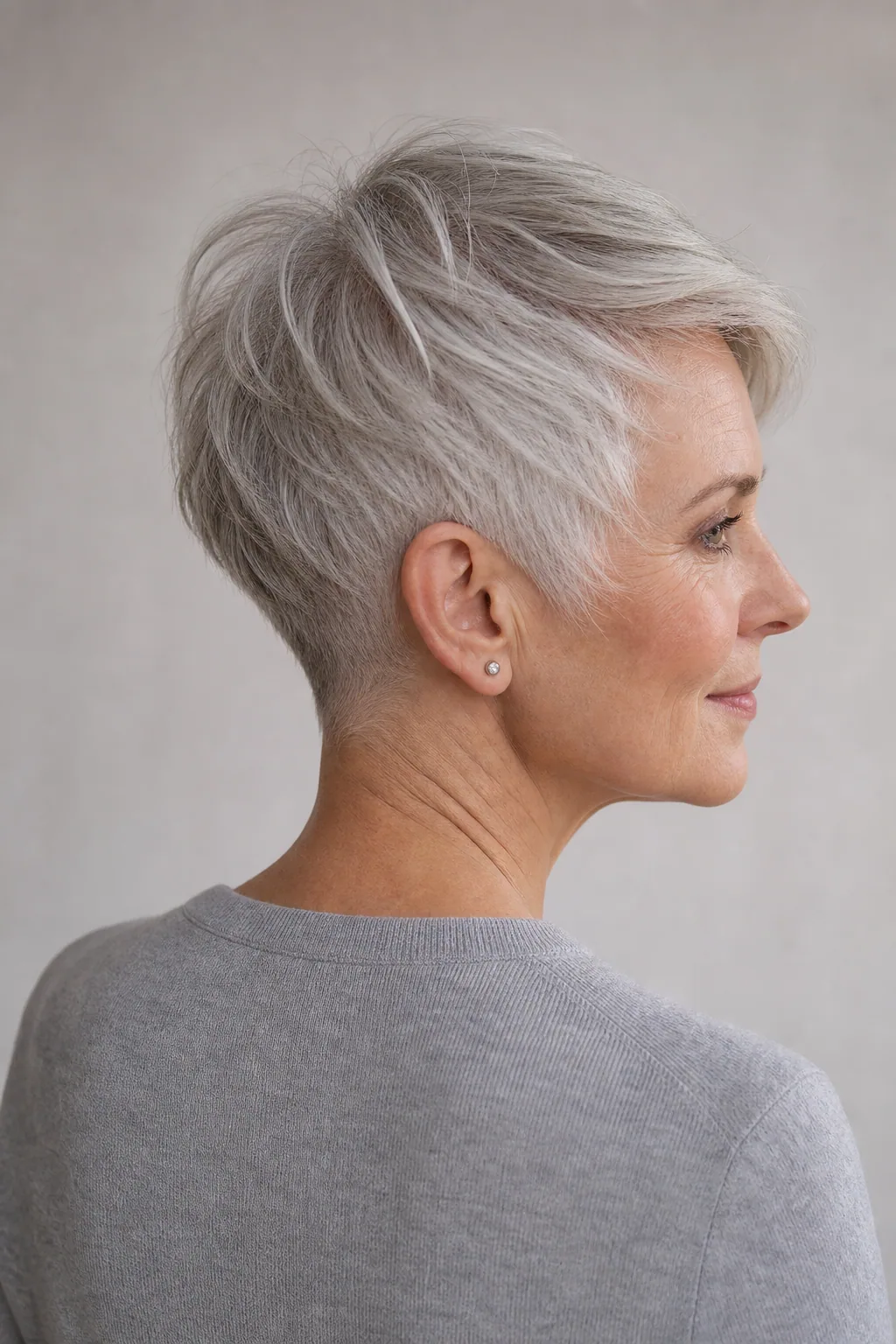
Silver pixie with a soft nape undercut
A softly layered pixie with the nape blended short underneath. Silver hair shows less contrast against the scalp, so the undercut reads as tidy rather than bold.
A purple shampoo once a week keeps grey from turning yellow at the ends.
12
Salt-and-pepper undercut pixie with a longer top
The top is left longer and swept forward, and a small section above one ear is clippered short. The longer top gives coverage where hair is thinnest; the undercut keeps the outline crisp.
Sweep the top forward rather than back. It covers a thinner front hairline and softens the face.
Growing out an undercut pixie
Be honest with yourself about this part. An undercut takes nine to eighteen months to grow back to the length of the hair around it, and there is an awkward stage in the middle.
At about three quarters of an inch, ask your stylist to blend the undercut into the hair above it. That one appointment turns the grow-out into a softer shape. Left alone, the same stage looks like a mistake. Growing out short hair when it is fine covers the rest of the process.
A hidden nape undercut is the easiest to grow out, because the hair above covers it the whole time. A double side undercut is the hardest.
What to ask your stylist
Say: "My hair is fine, so I want the undercut hidden under the pixie. Please take a palm-sized section at the nape to a number 2, below the curve of the back of my head, and leave the hair above it long enough to cover it. Point-cut the top for texture, no thinning shears."
For a side undercut, name the side and show the size with your fingers. Two fingers wide is plenty on fine hair. Book a clean-up every three to four weeks; the undercut goes fuzzy long before the pixie needs cutting.
Styling an undercut pixie on fine hair
Towel-dry, then blow-dry the top up and forward with your fingers for a minute. Fine hair dried in a direction stays there, and hair left to air-dry lies flat.
The hair above your ears is thin. A side undercut removes the hair that was covering it. Choose a hidden nape undercut, or none.
You have noticed thinning at the crown or temples. An undercut concentrates all the length on top, exactly where the hair is going. Keep the sides and focus on coverage.
You cannot book a trim every three to four weeks. The undercut goes fuzzy fast, and a grown-in undercut looks untidy long before the rest of the pixie does.
Your hair is falling out in patches or shedding suddenly. A haircut cannot help with that. See our overview of hair loss treatments and a dermatologist.
FAQ
Yes, when the undercut is hidden. A small section at the nape, clippered short under the pixie, removes the wispy hair that makes the back look fluffy and lets the pixie sit sleeker. A side undercut above the ears is riskier on thin hair, because that hair helps cover the head.
A hidden nape undercut will not, because the hair above covers it. A side undercut can, if the hair on top is thin, because it removes coverage and leaves all the length in one place. Keep the undercut small and underneath if your hair is thin.
At the nape, below the curve of the back of the head, is the safest place. Behind one ear is the next safest, because it hides when the hair falls forward. A full side undercut on both sides needs good density on top and suits fine hair only when it is not thinning.
A number 2 clipper guard, about a quarter of an inch, is the usual length for fine hair. It looks neat and is not so short that the scalp shows through. A number 1 shows more scalp and grows out into a more obvious stage.
Nine to eighteen months for the undercut to reach the length of the hair around it. At about three quarters of an inch, have your stylist blend it into the hair above; that makes the grow-out look like a cut rather than a mistake. A hidden nape undercut is the easiest to grow out.
A soft pixie with the undercut blended into the layers rather than cut as a hard line, usually with a wispy fringe and rounded shape. It keeps the neat outline of an undercut without looking severe, and it grows out more gently than a sharp, disconnected undercut.
Eleven years behind the chair, specializing in short shapes and fine-hair texture. Simone believes the best haircut is the one you can style yourself in ten minutes.
Results vary with hair type, density, and growth patterns. Hairstyling guidance is not a substitute for an in-person consultation with a licensed stylist.
Hairstyle images in this guide are AI-generated illustrations, not photos of real clients or results. See our image policy.
Get the good hair intel
One honest, stylist-written guide in your inbox each week. No hype.

 SB
SB