Reviewed by Tara Sullivan · Updated August 2026 · 12 min read
We spend a lot of time matching haircuts to face shapes and almost none on the part of your head that decides more about how a cut actually sits: the back of it. If your skull runs close to straight down from the crown to the nape — a flat occipital — then hair falling from the crown lands on nothing and keeps going.
On thick hair that barely registers, because the bulk of the hair supplies the curve the bone isn't. Fine hair can't do that. It takes the outline of whatever it's lying on, and if that's flat, so is your back view. Which is why the cut you were given — long layers, "to add movement" — made it worse rather than better.
The principle that fixes it is the opposite of the one you were sold: build weight up across the back of the head, don't remove it from the ends. Below is how to tell whether this is your shape, the cutting language that gets it built, six shapes that do it well, and the two things to refuse in the chair.
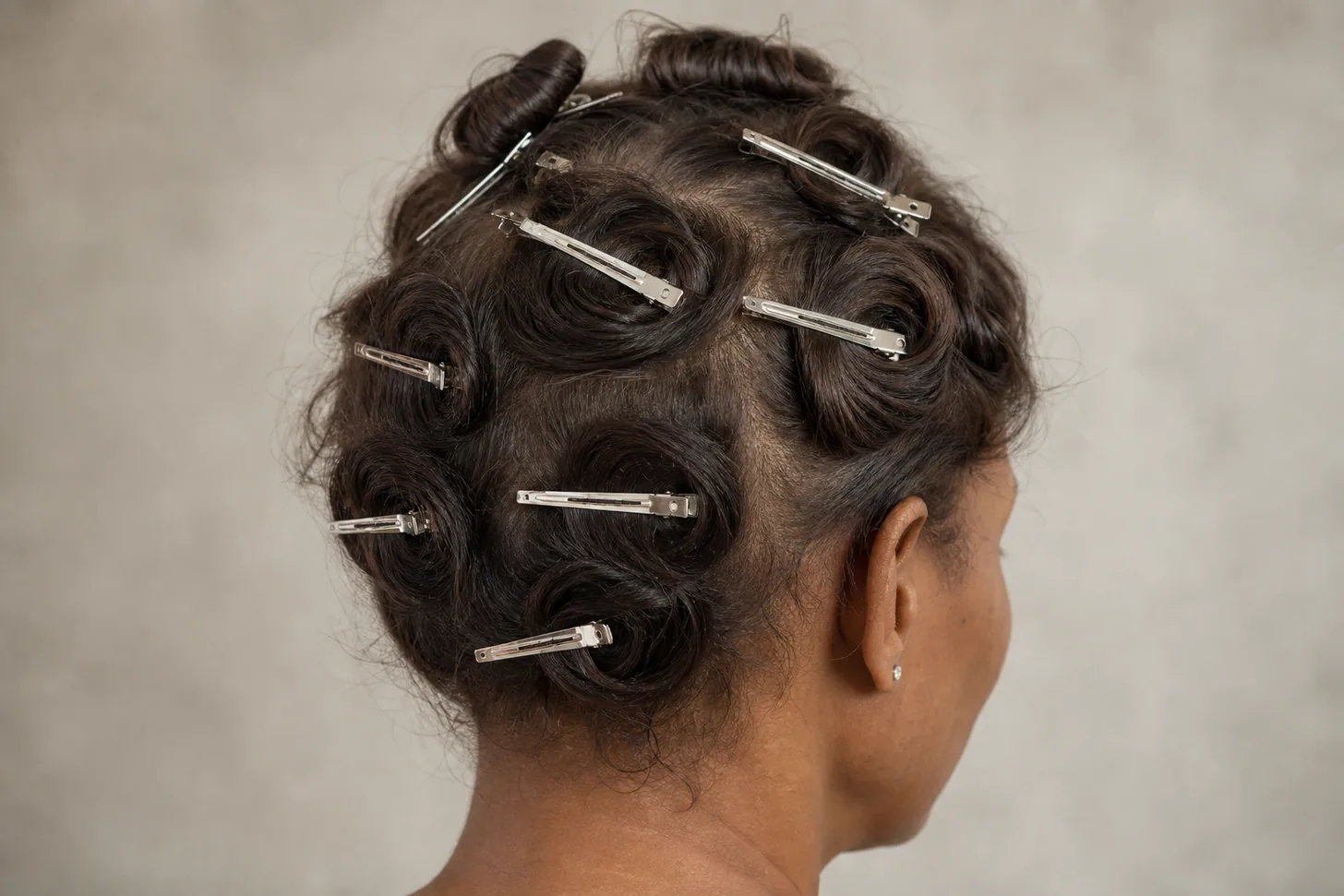
The curve you're missing is a band, not a whole head — and it sits level with the tops of your ears.
How to tell whether this is actually your shape
Most women who have this have never had a name for it. They know their hair "goes flat at the back" and they've assumed it was the hair. Four quick checks, all free:
The palm test. Put your palm flat against the back of your head, fingers pointing down, and slide it from the crown to the nape. On a pronounced occipital you'll feel your palm pushed outward around ear level and then tuck back in above the neck. On a flatter head the palm stays in near-continuous contact the whole way down — there's no bump to ride over.
The two-mirror photo. Take a photo of the back of your head with your phone, hair down, in daylight. Not a mirror selfie — an actual photo, arm extended behind you. This is the view you've never properly seen, and it's the one you're trying to change.
The profile. Have someone photograph you side-on with your hair pushed behind your ear. Look at the line from the top of your head to your neck. If it descends in a near-straight diagonal rather than curving out and back in, that's the shape.
The wall test. Stand with your back to a wall, heels and shoulders touching. If the back of your head touches the wall at the same time as your shoulder blades with no gap at the neck, your occipital is on the flatter end. (This one is rough, and posture skews it — treat it as a tiebreak.)
Before going further: this is normal anatomy. Occipital shape varies as much as nose shape does, nobody's skull is symmetrical, and a flat back of the head is a variation, not a flaw. It's worth naming only because it changes which haircut works, and because being handed the wrong one costs you three months of grow-out.
Why fine hair pays for it twice
Two separate mechanisms, and it's worth knowing which one you're fighting because they have different fixes.
First, fine hair has no mass to fake the curve. A thick head of hair is its own architecture — pile up enough of it and you get a rounded silhouette regardless of the skull underneath. Fine hair behaves much more like a sheet: it drapes.
Drape a sheet over a curved surface and you get a curve; drape it over a flat one and you get a flat panel. This is the same reason fine hair shows every irregularity of a cut that thick hair hides, and it's why the shape genuinely has to be constructed rather than assumed.
Second, fine hair loses the second chance. On thicker hair, whatever the cut fails to do, styling can rescue — a bump built at the back in the morning stays. Fine hair sets less durably and cools faster, so the round-brush curve you built at 8am is often gone by 2pm.
If you've ever wondered why the back of your head looks right leaving the salon and wrong the next day, why fine hair won't hold a style is the mechanism, and the short version is that the shape is decided as it cools, not while the heat is on.
Put together: the cut has to carry more of the load for you than it does for anyone else. That's not bad news — it means one good appointment buys you months.
Chair-side note
I can usually tell within about ten seconds of running my hands through someone's hair, and the giveaway is what they say next. Almost every woman with this head shape apologizes for it. "Sorry, I know it's a weird shape back there." Nobody apologizes for their cheekbones.
The reason it lands as a personal defect rather than a fitting problem is that we've all been trained to think about faces and nothing else — every magazine chart, every quiz, every consultation opens with face shape, and then you go home and the thing you actually don't like is the back. So: it isn't weird, roughly a third of the heads I cut have some version of it, and it's genuinely one of the easiest things to build around. It just requires the stylist to cut a shape rather than cut a length.
SB
— Simone Baptiste, Senior Stylist
The principle: build the bump, don't cut into it
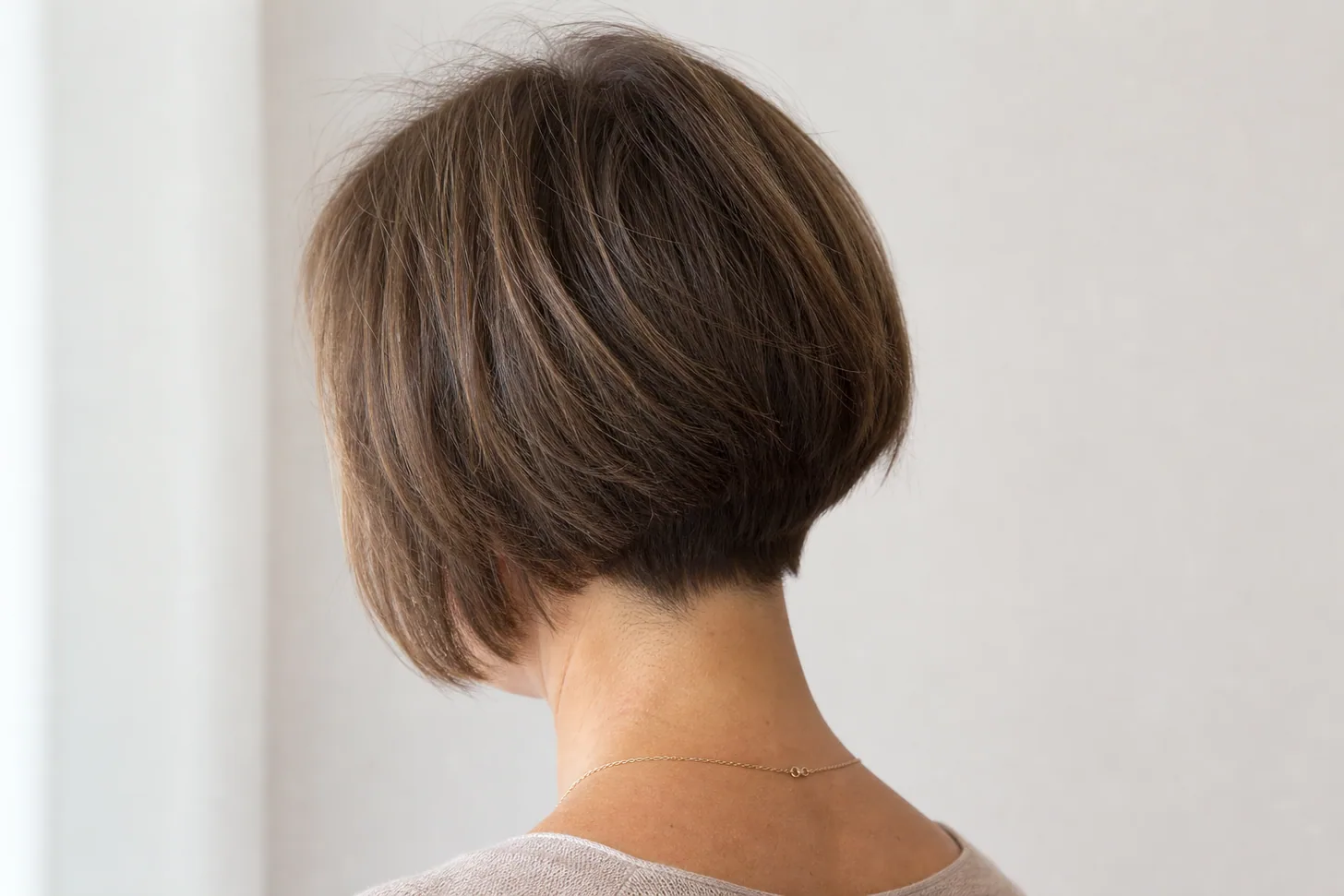
The cut that does this most emphatically is the wedge, which stacks weight at the occipital precisely to supply a curve the head does not have.
Everything on this page comes from one idea. You are trying to add volume in a specific horizontal band — roughly from the level of the tops of your ears up to the lower crown — and keep it out of everywhere else. Not all-over volume. A band.
Graduation is the tool that does it. Graduation means each section is cut a little longer than the one below it, so the hair stacks on itself and builds outward. It's what makes the back of a good bob look like a rounded shape rather than a curtain, and it's the closest thing hairdressing has to building bone. On a flat occipital, graduation is literally supplying the curve that isn't there.
Long layers are the tool that ruins it, and they're what most people are given, because "layers" is the reflex answer to any request involving the word volume. Long layers remove weight from the ends of hair that is already hanging past the flat area.
On fine hair that means fewer ends, more visible scalp through the back, and a shape that tapers to a point exactly where you wanted it to be full. Layers on fine hair covers where they do and don't belong; the short version for this problem is short and internal, never long and through.
Weight underneath is what makes graduation read as thickness. A stacked back only looks full if there's a solid perimeter under it to sit on. Keep the bottom line blunt or close to it. The instinct to soften the ends "so it doesn't look heavy" is exactly wrong here — the heaviness is the point.
And the crown gets its own small treatment. Three to four inches of short, point-cut internal layer at the crown lets the hair there stand up slightly instead of lying down onto the flat, which is the difference between a shape that starts at the top of your head and one that starts at your ears.
Point-cut, not razored — a razor on fine hair leaves the ends transparent, and cutting techniques for fine hair explains why that matters more here than anywhere.
Approach
What it does to the back view
Verdict on fine hair
Graduation at the occipital
Stacks weight into a band, builds the missing curve
The core fix — ask for this by name
Blunt perimeter underneath
Gives the graduation something solid to sit on
Essential; don't let it be softened
Short internal crown layers
Lets the top lift instead of lying onto the flat
Yes — three to four inches, point-cut
Going shorter overall
Less length pulling down on the band
Usually helps; chin to collarbone is the sweet spot
Long layers through the length
Removes weight past the problem, tapers the back
No — the most common wrong answer
Thinning shears at the back
Creates short blunt wisps in a spot you can't see
No, and refuse it out loud
Razor cutting
Tapers ends to nothing; back reads sheer
No on fine hair, here more than anywhere
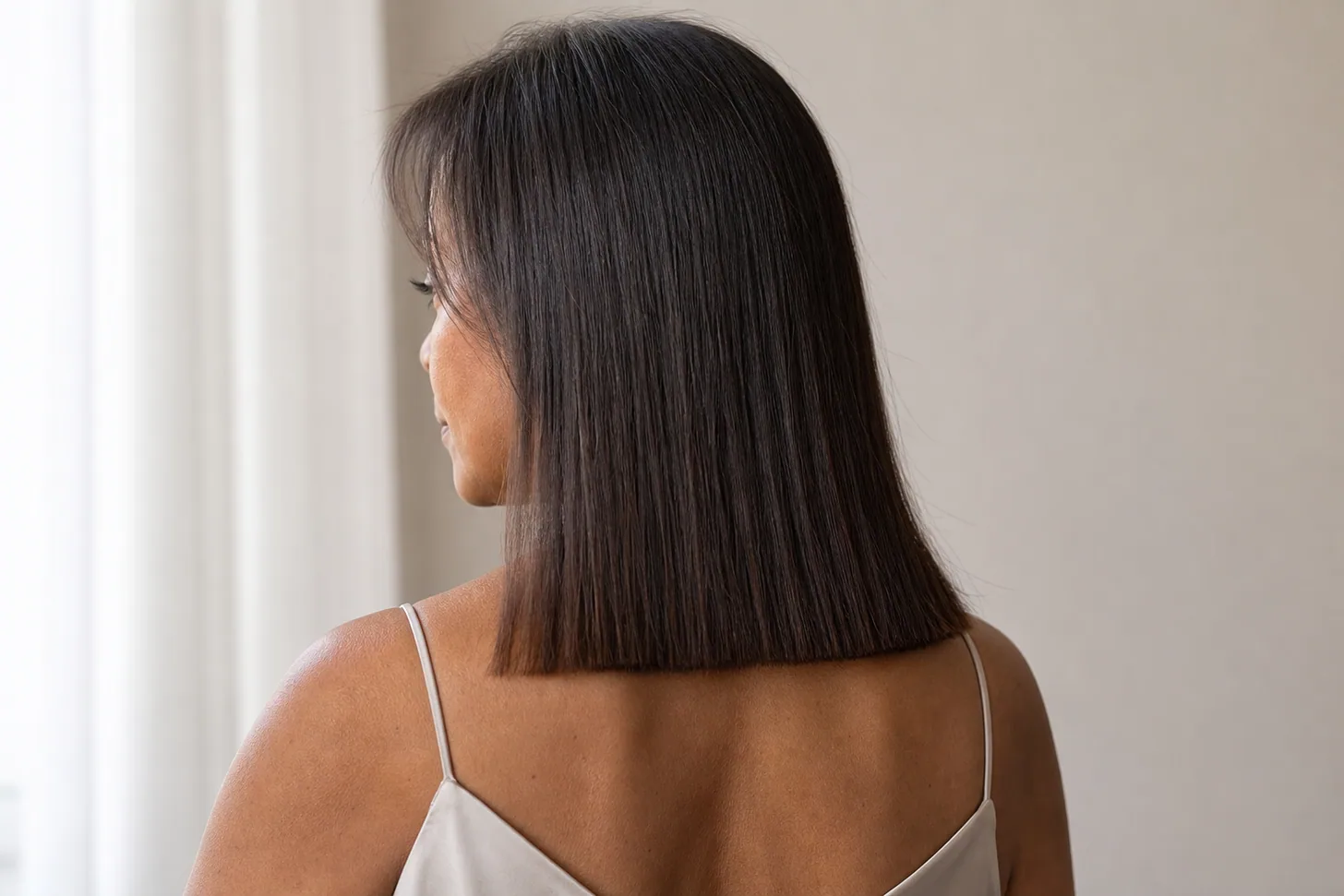
A one-length blunt bob
Hangs as a flat panel on a flat head
The version to avoid; graduate it instead
Very long, one-length hair
Maximum weight dragging the band down
Hardest shape to make work
Six shapes that build a back
All six do the same structural job in different lengths. Pick on lifestyle and length preference; the mechanism doesn't change.
Rear view of a graduated chin-length bob on fine hair, stacked fullness across the back of the head, solid blunt perimeter
1
The graduated chin-length bob
The most reliable answer on this page and the one I give most often. The perimeter sits blunt at the jaw so the outline reads solid, and the sections above it are graduated so they stack into a rounded band right where the skull goes flat. It costs you nothing in length compared to the blunt bob most people are given — it's the same haircut, built rather than hung. Ask for a graduated bob with a strong bottom line and the graduation kept above the ears.
Rear view of a stacked bob on fine hair with a short graduated back rising into the crown and longer front pieces
2
The stacked bob with a longer front
Graduation taken further: the back is cut noticeably shorter and stacked steeply, while the front sections stay longer and angle down toward the jaw. The steep stack is the strongest curve-building shape a bob can carry, which makes this the pick if your occipital is very flat rather than mildly so. It asks more of you at home — the back genuinely needs drying with a brush to sit properly — so it suits someone who already blow-dries. Stacked bobs on fine hair has the full version.
Rear view of a collarbone-length lob on fine hair with soft graduation through the back and a blunt bottom line
3
The lob with hidden graduation
For anyone who doesn't want to go shorter. The length stays at the collarbone and the bottom line stays blunt, but two or three inches of soft graduation are built in behind the ears so the back has a shoulder rather than a straight drop. This is the shape most stylists will offer as a compromise, and it works — with one condition. The graduation has to be cut into a section that is combed up and away from the head, not into the length. If it's cut with the hair hanging down, it becomes long layers and you're back where you started. The lob for fine hair covers the length itself.
Rear view of a rounded layered bob on fine hair with a lifted crown and soft nape, tucked at the neck
4
The rounded layered bob
A softer, less architectural take: graduation kept gentle, crown layers slightly longer, the nape tapered in close to the neck so the eye reads the fullness above it as a curve by contrast. The tucked nape does a surprising amount of the work here — narrowing the bottom makes the middle look wider without adding a single hair to it. Best on fine hair that's straight to slightly wavy, since the nape taper needs the ends to lie down cleanly. See layered bobs for fine hair.
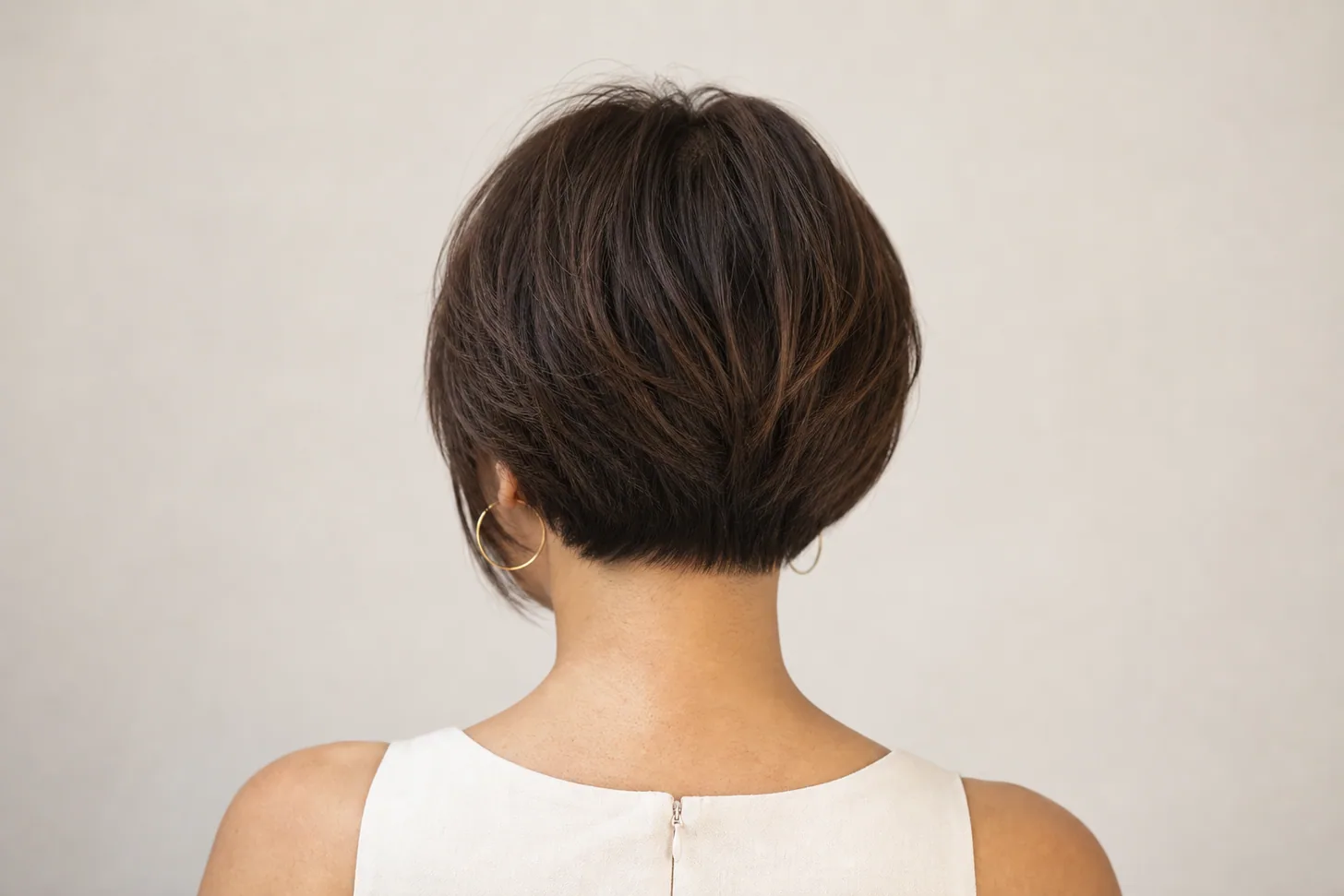
Rear view of a short crop on fine hair with a built-up rounded occipital and a close nape
5
The short crop with a built-up back
Going short is the most direct solution available, because there's no length left to drag the band down and the shape is almost entirely cut rather than styled. The version that works keeps a deliberate rounded mass at the occipital and takes the nape in tight underneath it, so the head reads as a curve from the side. The version that doesn't is the flat, all-one-length crop, which follows the skull exactly and shows it. If you're weighing it, very short cuts for fine hair and the pixie both go deeper.
Rear view of long fine hair with short invisible crown layers and a blunt hemline, fullness concentrated high on the back of the head
6
Long hair with the weight kept high
The hardest brief, and worth being honest about: long hair on a flat back with fine density is the combination that gives you the least to work with, because you're carrying maximum weight past the exact place you want lift. It can be done, and the rule is that all the shaping happens above the ears — short invisible crown layers, nothing through the length, and a hemline kept blunt so the ends don't taper away. Expect to do more at home than the shorter options need. Long hairstyles for fine hair is the fuller treatment.
The exact words to bring to the salon
Describe the outcome, not the anatomy. Most stylists will recognize the shape immediately and simply agree — but the request has to be specific, because "more volume at the back" is heard as "layers" nine times out of ten.
"My back view goes flat. I'd like the weight built up across the back of my head, not taken out of the ends."This one sentence does most of the work.
"Can we graduate it at the occipital and keep the bottom line solid?"Names the technique and protects the perimeter in the same breath.
"Short internal layers at the crown only, please — point-cut."Gets the lift at the top without opening up the length.
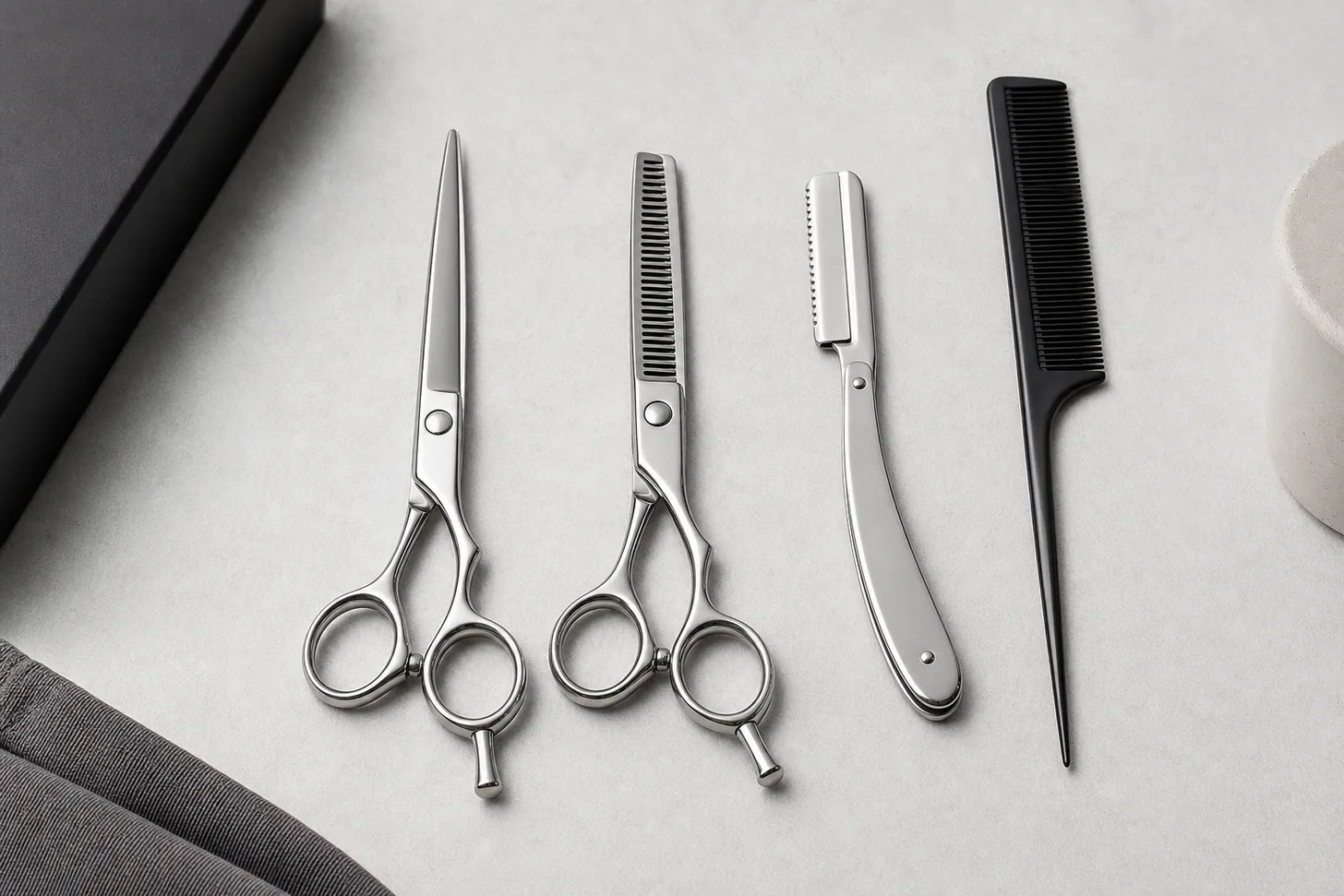
"No thinning shears and no razor — my hair's fine and it goes see-through."Say it out loud rather than hoping. This is the one thing you can't inspect afterwards.
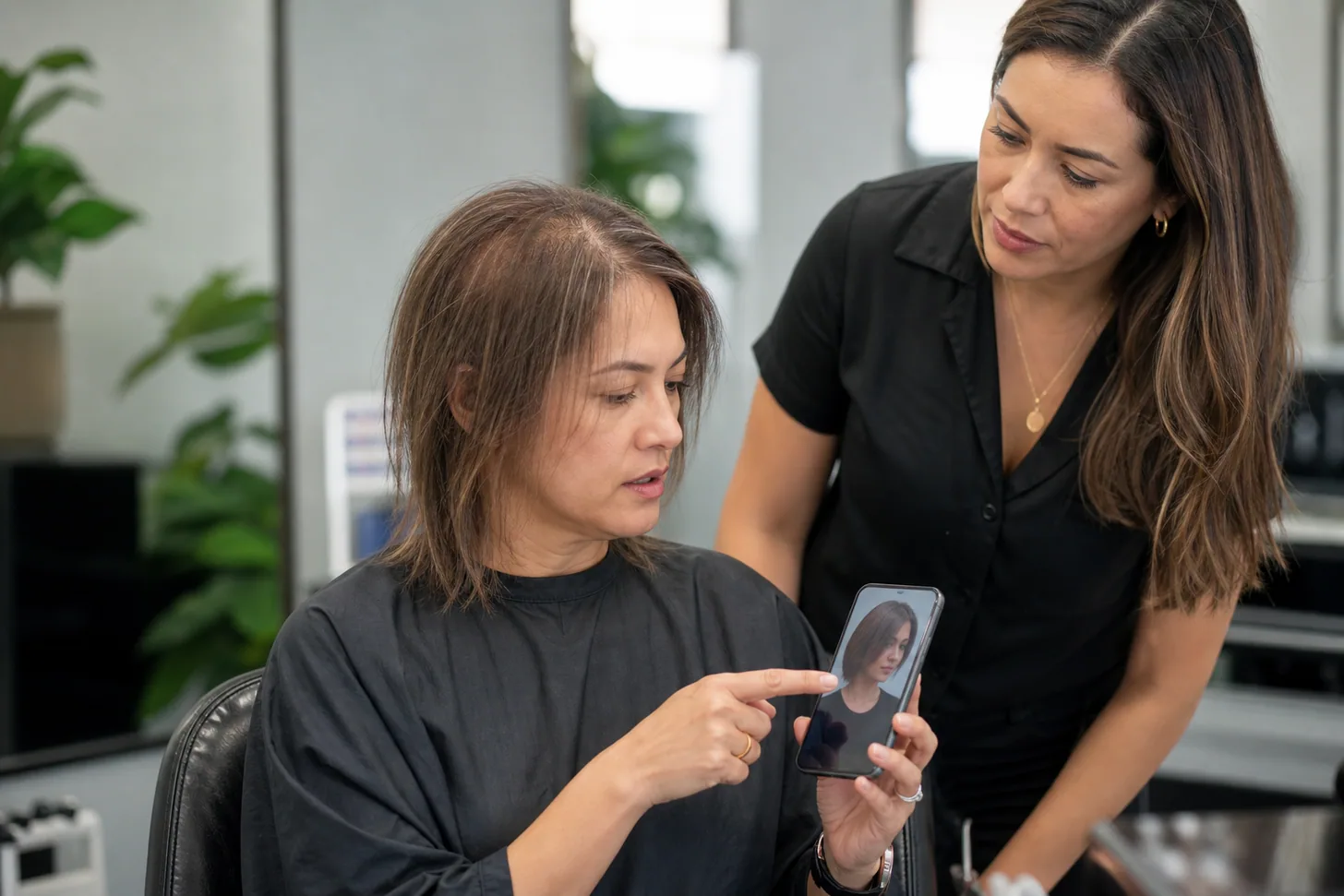
Bring a photo of the back of someone's head.Front-facing reference photos are almost useless for this request; everything you're changing happens behind you.
A good cut carries most of this, but three techniques add real height in the band, and all three work by the same mechanism — lifting the root away from the skull where the skull is flattest.
Round-brush the back upward, not backward. Take a horizontal section across the occipital, lift it above horizontal — closer to 90 degrees from the head than you think — and dry from underneath, rolling the brush up and over. Drying the back with the hair hanging down sets it against the skull, which is the opposite of what you want. How to blow-dry fine hair has the full method.
Self-grip rollers in the band while you do everything else. Two or three medium rollers set across the back of the head, put in while the hair is warm from drying and left in for ten minutes, will out-perform any amount of brushing — because the shape sets as the hair cools, and a roller holds it in position for the entire cooling window.
A small amount of discreet backcombing at the root of that band. Not the whole back — three or four sections, at the root only, in the strip level with your ears. Done lightly it's invisible and it lasts all day; done heavily on fine hair it damages and shows. Teasing fine hair without wrecking it is the technique in detail.
One product note and then I'll stop: whatever you use goes on damp hair at the root of that band before you dry, not on the ends afterwards. A root lifter or a light mousse in that strip does more for a flat back than anything applied later, and applying either to the length just adds weight where weight is already the problem.
Chair-side note
The single most common way this goes wrong isn't a bad stylist — it's a good stylist solving the wrong problem. A client says "it's flat at the back", the stylist hears "needs volume", and volume in most people's training means removing weight.
So out come the layers, and for the first week it does look better, because freshly cut layers have body of their own. Then they settle, the ends taper, and by week six the back is thinner than it was before.
I've re-grown a lot of those. So when I'm asked for volume at the back on fine hair now, I say the sentence back to the client before I pick anything up: "we're going to add weight above the flat part, not take it out of the ends — is that what you want?" It takes five seconds and it's saved me more grow-outs than any technique I know.
SB
— Simone Baptiste, Senior Stylist
When a flat back isn't the problem you're solving
It's gotten flatter over the last year or two.Bone shape doesn't change in adulthood. If the back view has changed, that's density, not anatomy — start at cuts for a thinning crown or fine or thinning?.
You can see scalp through the back in photographs.Flatness and see-through are different complaints with different fixes. Thinning on top covers the second one.
Your hair is fine and curly or coily.Graduation behaves completely differently on curl — stacked shapes can expand rather than stack. Thin curly hair and fine natural hair are the right starting points.
You never blow-dry and don't intend to start.Then take the cut shorter rather than relying on a stacked bob you won't style. An air-dried stacked back on fine hair sits closer to the head than the photo suggests — air-drying fine hair is realistic about this.
It bothers you only in one specific mirror.Worth noticing. Overhead lighting flattens the back of the head badly, and a lot of "my hair looks awful at work" is the ceiling, not the cut.
FAQ
It's a head whose occipital bone — the curved bone at the lower back of the skull — sits closer to vertical than average, so the profile runs almost straight down from the crown to the nape instead of bulging outward and tucking back in. It's an ordinary anatomical variation, not a defect, and a large share of people have some version of it. You mostly notice it through hair: on a head with a pronounced occipital curve, hair falling from the crown lands on that curve and is pushed outward, creating a rounded back view for free. On a flatter head the same hair falls straight down with nothing underneath it. That's why two people can have the same haircut, the same length and the same density and get completely different silhouettes from behind.
Because fine hair has no mass of its own to supply the missing curve. On thick hair the sheer bulk creates a rounded shape whether or not the skull underneath is round — the hair is the shape. Fine hair behaves closer to a sheet: it takes the outline of whatever it's lying on, and if that's flat, it's flat. Fine hair also loses the second chance, because it holds a set less durably, so the round-brush bump you build at the back in the morning has often surrendered by mid-afternoon. That's the honest reason this bothers fine-haired women more than anyone: the shape has to come from the cut, because neither density nor styling will hold it up on their own.
Something with graduation stacked at or just above the occipital — a graduated bob, a stacked bob, or a shorter shape with a rounded built-up back. Graduation means each section is cut slightly longer than the one beneath it, so the hair piles on itself and builds the bump the skull isn't providing. You want height concentrated in a band across the back of the head, roughly level with the tops of your ears, with the length beneath it kept solid. What you don't want is long layers running the full length of the back — the most commonly given answer and the wrong one. Long layers remove weight everywhere, and on fine hair they leave the back thinner and flatter than before you sat down.
Short internal layers at the crown help. Long layers through the length usually make it worse. The distinction is where the weight is removed from. Graduation and short crown layers take weight from underneath and above the flat area, letting the hair sit up and away from the skull. Long layers thin the ends of hair that was already hanging straight down past the problem, so they remove the little body you had and expose more scalp on a fine head. If your stylist reaches for a razor or thinning shears to solve a flat back, stop the conversation — on fine hair those tools leave transparent wispy ends, and the back of the head is the one place you never get to check before you leave.
It improves it noticeably, but it won't match what a cut gives you and it has to be repeated daily. Three techniques genuinely work: a round brush rolled up and over at the back with the section held above horizontal; two or three self-grip rollers left in the occipital band while you finish getting ready; and a small amount of discreet backcombing at the root in that same strip. All three lift the root away from the skull exactly where the skull is flattest. The catch on fine hair is duration — a bump built with heat and released warm falls out within the hour, so the whole result depends on letting the section cool completely before the brush or roller comes out.
Describe the outcome, not the anatomy. Say: my back view goes flat, and I'd like the weight built up across the back of my head rather than removed from the ends. If you want to be more specific: graduation stacked at the occipital, solid underneath, no thinning shears. Most stylists will have seen the shape many times and will simply agree. It also helps enormously to bring a photo of the back of a head rather than the front — this is the one haircut conversation where a front-facing reference tells your stylist almost nothing, because everything you're trying to change happens behind you.
Not by itself. A flat occipital is a bone shape and it's been that way your whole life, so if the flatness has always been there it's anatomy, not loss. The question worth asking is whether something has changed. Thinning at the crown looks different: more scalp visible when you look down into a mirror or photograph the top of your head, a part that widens, and a change that happens over months rather than being a permanent feature. If the back of your head has looked the same since you were twenty but you've recently started seeing scalp through the top, those are two separate things and only one is a haircut problem.
No — but a one-length bob is the version that shows the problem most clearly, and it's the version most people are given. A blunt one-length bob hangs as a flat curtain, and on a flat head with fine hair the back becomes a rectangle. The same length cut with graduation solves it: the perimeter stays crisp and solid, which is what makes a bob look thick, while the sections above it stack to build the curve. This is the single most useful change most women with this head shape make, and it costs no length. Ask for a graduated or stacked bob rather than a blunt one and keep everything else the same.
Eleven years cutting fine hair. Simone's rule for a flat back of the head: add weight above the flat part, never take it out of the ends — and say so out loud before the scissors move.
Images in this article are AI-generated illustrations, not photographs of real clients or results. See our image policy.
Results vary with hair type, density, and growth patterns. This guide is educational and not a substitute for an in-person consultation with a licensed stylist.
Get the good hair intel
One honest, stylist-written guide in your inbox each week. No hype.

 SB
SB