Reviewed by Tara Sullivan · Updated August 2026 · 10 min read
The honest answer is both, in a specific order — and the reason matters more than the answer, because it explains two things that happen to fine hair constantly. Wet hair is longer hair: a single strand stretches 20–30% of its length when dry, and "in contact with water, this may reach up to 50%".
Add a stylist's comb tension and the scissors are meeting hair that will be shorter by the time you're standing at the reception desk. That's the shrinkage problem, and it's why a cut can feel two centimetres shorter than you asked for. The second problem is the opposite: wet hair is flat hair.
Stuck to the scalp, every head looks like it has the same density, so the two questions that decide whether a fine haircut works — where does the weight sit, and where does scalp show — are invisible until it dries. So: cut the line wet, cut the weight dry. Below is which parts of your haircut belong in which half, why the fringe is never an exception, and the exact sentence to say at booking.
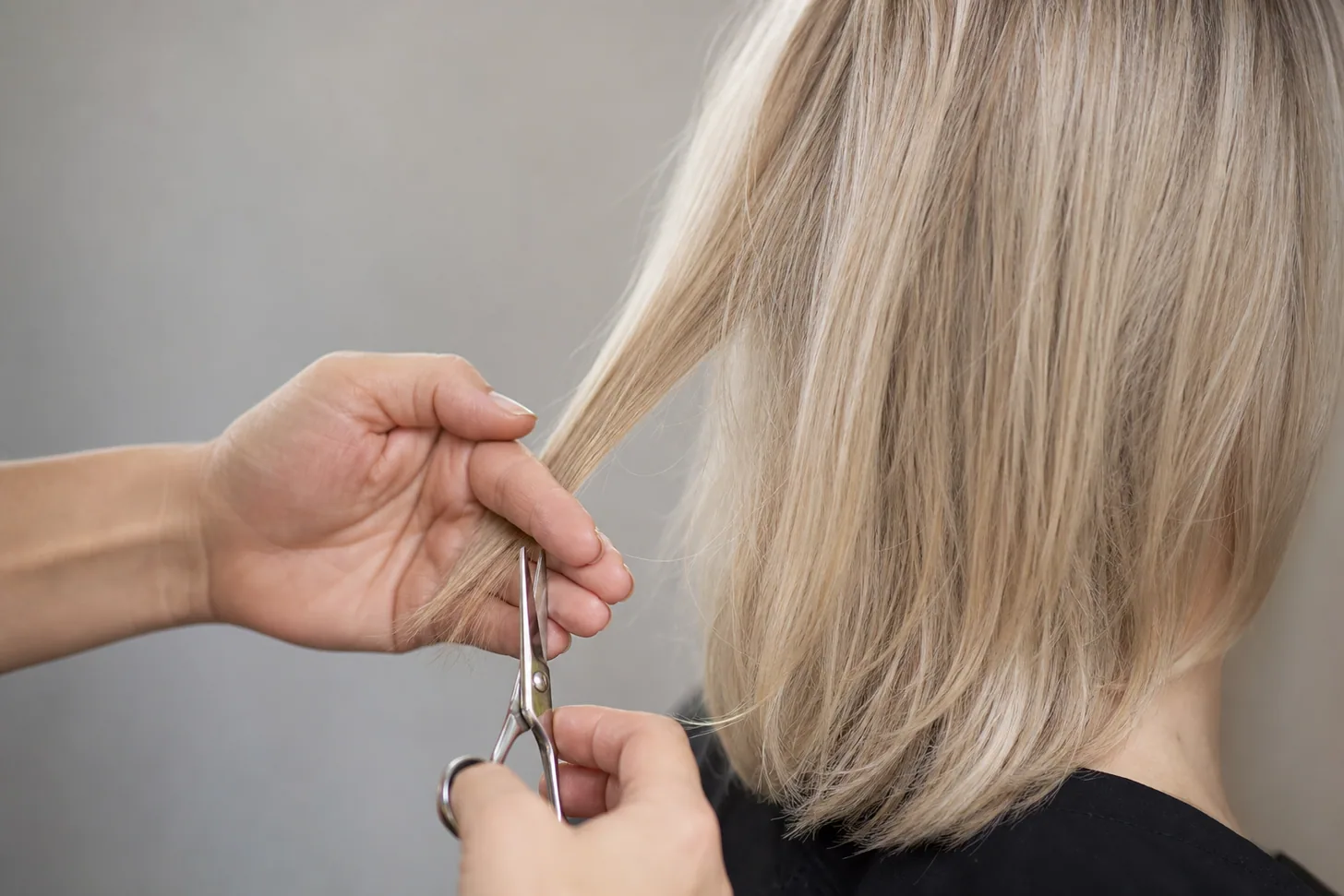
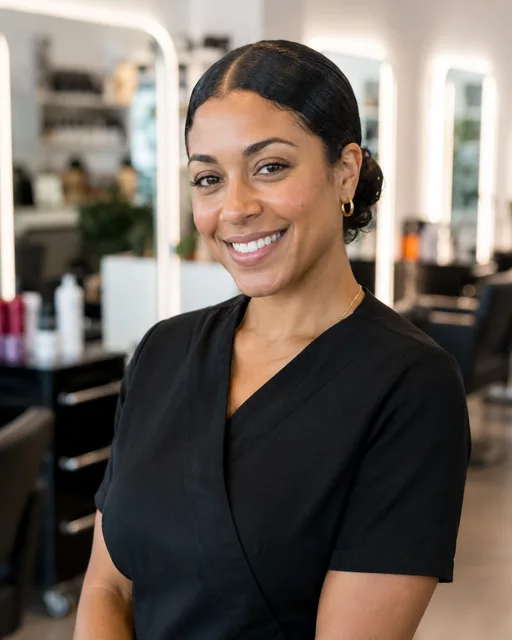
Point cutting into dry ends — the pass where a fine haircut is actually decided.
Wet hair is longer hair, and fine hair pays for it twice
Start with the measurement, because it's larger than most people expect. Hair is elastic, and water is what unlocks the extra: dry, a fiber can be pulled to 120–130% of its resting length before it fails; wet, it goes considerably further. That elasticity doesn't disappear when a stylist picks up a section — it's precisely what a comb pulled taut through wet hair is doing.
So a wet cut is always cutting a stretched version of your hair, and the amount it springs back by is the amount of surprise waiting for you. That surprise is bigger on fine hair for a reason worth naming: fine strands offer less resistance to the comb. Coarse hair pushes back against tension; fine hair goes where it's pulled. The same stylist, using the same grip, stretches fine hair further than thick hair without noticing.
Then add wave. Any bend in the strand takes up length, and how much varies across the head — more at the crown, less at the nape, unpredictably around a growth pattern. On fine, wavy hair that's where "I asked for a trim and got a bob" comes from, and it isn't carelessness. It's a cut made at one length being worn at another.
Wet hair hides the only two things that matter on a fine head
This is the half the wet-versus-dry debate usually misses, and on fine hair it's the more important half.
Soak any head of hair and it does the same thing: it clumps into ropes, lies flat against the scalp, and reads darker and denser than it is. Whatever fullness you have disappears. Whatever sparseness you have is disguised — wet strands stick together and cover the scalp between them far better than dry ones do.
Which means that on wet hair a stylist cannot see:
Where your weight actually sits — whether the ends are still solid or have gone see-through, and how much can safely come out of the interior.
Where scalp shows — along the part, at the temples, at the crown whorl. All of it is covered while wet, all of it reappears in the mirror at home.
What your growth patterns do — a cowlick lies down obediently when wet and stands straight up as it dries.
How much a layer will lift — the same layer that hangs neatly wet can float two centimetres higher dry, which is the difference between a soft shape and a shelf.
Every one of those is a fine-hair decision. Density is the constraint the whole haircut is built around, and wet hair is a photograph with the constraint edited out.
Chair-side note
The test I run on myself before the last few snips: I put the scissors down, take my hands off, and let the section fall the way it wants to. If I've been holding fine hair out at an angle with any tension at all, what I think I'm about to cut and what I'm actually about to cut are two different lengths — and on fine hair the gap is bigger than on anyone else's, because it comes to me so easily.
It costs three seconds. It's also why I'd rather do the last twenty minutes of a fine haircut dry, with the client sitting upright, head level, hair falling exactly where it will fall on a Tuesday morning. You can't judge weight on hair that's being held. You can only judge it on hair that's hanging.
SB
— Simone Baptiste, Senior Stylist
Which parts of your haircut belong wet, and which dry
The useful framing isn't "get a dry cut". It's knowing which pass is which, so you can hear whether the plan being described to you makes sense.
Part of the cut
Wet or dry
Why, on fine hair
Blunt perimeter / one-length bob
Wet
A clean line is the whole point, and wet hair combs into an even sheet the scissors can follow. Fine hair needs its perimeter as solid as possible — see the bob for fine hair
Overall length / baseline
Wet, then checked dry
Faster and more even wet. The dry check catches the shrinkage before you find it at home
Internal layers
Dry
Layer placement is a weight decision, and weight is invisible wet. Two centimetres of lift changes a soft shape into a shelf — layers on fine hair
Face-framing
Dry
It has to be judged against your face and your part, in the position it'll be worn. Face-framing layers
Any fringe
Dry. Always
Shortest hair on the head, so shrinkage is the biggest proportion of it — and it's the section most likely to sit on a cowlick
Softening the ends (point cutting)
Dry
You're deciding how the ends read to the eye, which you can only see dry
Not a wet-or-dry question. On fine hair this is the wrong tool at any moisture level — over-thinned fine hair
The honest case against a fully dry cut
Dry cutting has become a marketing category, which means it's now sold as strictly better. It isn't, and three caveats are worth having before you book one.
It's a distinct skill, not a setting. A stylist trained in wet precision cutting who has been asked to work dry will often produce a worse haircut than they would have wet — dry hair doesn't sit in a predictable sheet, so following a guideline takes a different technique entirely. If you want dry work, ask whether they do it routinely, not whether they can.
It reads whatever is on your hair that day. Dry cutting judges the hair in front of it. If you arrive with three days of dry shampoo and a texture spray at the roots, the stylist is assessing a version of your hair that has more grit and apparent body than the real thing, and can take out weight you'd rather have kept. Turn up clean, dried the way you normally dry it — that's the point.
It costs more time, and often more money. Twenty to forty minutes more is typical, and plenty of salons price it accordingly. On fine hair, the high-value version isn't the full dry cut — it's the dry finish. Shape wet, refine dry. You get the decisions that matter without paying for the ones that don't.
And one thing dry cutting doesn't fix: a cut can be perfect in the chair and wrong at home, because the salon blow-dry isn't your blow-dry. If your hair looked full leaving and flat by Wednesday, that's usually a styling gap rather than a cutting one — how to blow-dry fine hair for volume closes most of it.
What to say when you book, and what to say in the chair
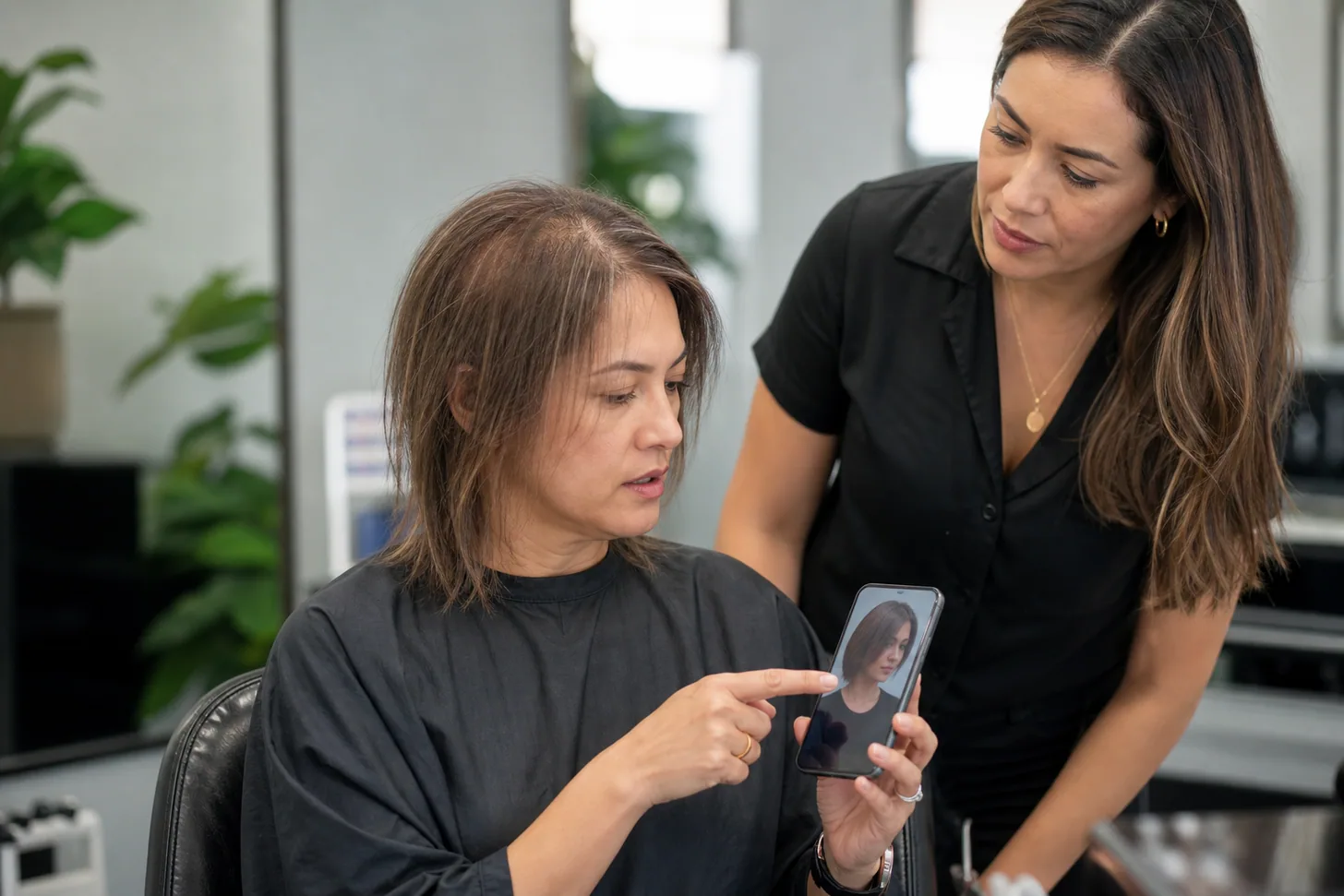
Say it at booking, because it changes the length of the appointment and a stylist who is running ten minutes behind will not add a dry pass for you at 5pm.
"My hair is fine — can we do the shape wet and refine the layers and face-framing dry?" This is the whole request in one sentence, and it tells a good stylist immediately that you understand the trade.
"Please don't blow-dry it smooth before the dry pass — I air-dry at home." A salon blow-dry irons out the wave the haircut has to live with. If you never wear it that way, don't have it cut that way.
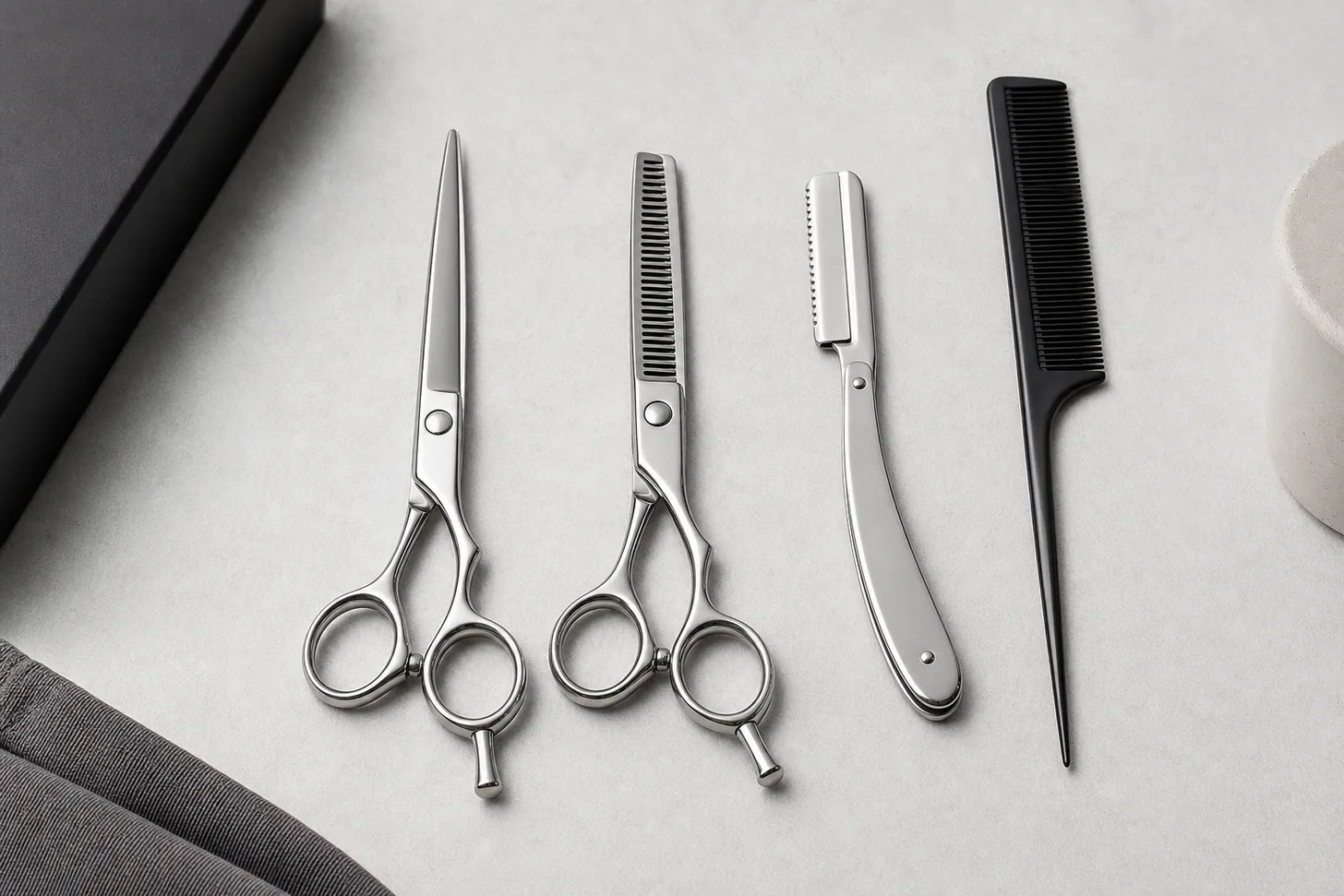
"Point cutting rather than thinning shears, please." The single highest-value sentence in a fine-hair appointment, and it applies wet or dry.
"Can we look at it dry before anything else comes off?" The reversible order. You can always take more; you can't put it back.
"How much will this shrink up when it dries?" A fair question and a diagnostic one. A stylist who has an answer has thought about it.
If you take nothing else to your next appointment, take this: ask to see it dry before the last decisions rather than after. Almost every fine-hair haircut I've been asked to correct went wrong in the same place — a stylist finished a beautiful wet cut, blow-dried it, and only then saw that the interior was too light or the layers had lifted higher than intended.
By that point the only available move is to take more off. Sitting a client under a dryer for eight minutes in the middle of a haircut feels like an interruption. It's the cheapest insurance in the building, and on fine hair, where there's no surplus to correct with, it's the difference between a fix and a compromise.
SB
— Simone Baptiste, Senior Stylist
What this means if you cut your own hair
Everything above argues in one direction at home: cut dry, cut less, and never cut wet hair you intend to wear dry. The shrinkage that a professional can predict is the thing you have no calibration for, and there's no undo. It's also the reason the ponytail method — gathering everything into a band and cutting straight across — goes so badly on fine hair, quite apart from what it does to the shape.
Cutting fine hair at home sets out the four jobs that are genuinely safe and the five that aren't, and a fringe trim is on the safe list only if it's done dry, on clean hair, a millimetre at a time.
When a dry cut isn't the answer
You want a sharp, blunt line — a French bob, a one-length lob. That line is cleaner wet. Ask for a dry check afterwards, not a dry cut. The lob for fine hair.
Your stylist doesn't cut dry routinely. A wet cut from someone fluent beats a dry cut from someone experimenting. Ask, and take the honest answer well.
You've arrived with days of product in your hair. Dry cutting reads what's in front of it, and grit reads as body. Wash first, or book the shape wet.
The complaint is that your hair goes flat by lunchtime. That's rarely a cutting-technique problem. Start with why fine hair falls flat.
You're being offered dry cutting with thinning shears or a razor. The technique is not the issue; the tool is. Over-thinned fine hair explains what both do to low-density hair.
You already dislike the cut you have. Correcting a shape is a different appointment from refining one, and it starts with a conversation — what to do when you hate your haircut.
FAQ
Both, at different points in the same appointment. The parts of a haircut that establish a clean line — a blunt perimeter, a one-length bob, a solid baseline — are more accurate wet, because wet hair combs into an even sheet and the scissors can follow a straight edge. Everything that removes weight is more accurate dry: layers, face-framing, texturizing and any fringe. That's because the whole question on fine hair is where the weight sits and where scalp shows, and neither is visible while the hair is wet and stuck flat to the head. A stylist who cuts your shape wet and refines it dry isn't being indecisive — that's the correct sequence.
Because wet hair is longer than dry hair, in two ways that add together. Water lets the fiber extend much further under tension: measured on a single strand, hair stretches 20 to 30 percent of its length when dry, and in contact with water that can reach as much as 50 percent. On top of that, the stylist's comb and fingers apply tension while cutting. So the length the scissors met was the stretched length, and what you see afterwards is the same hair relaxed. Any natural wave then lifts it further. On fine hair with movement in it, two centimetres of unexpected shrinkage is completely ordinary.
No, provided the scissors are sharp and the hair is clean and detangled. The old objection to dry cutting came from blunt shears pushing the fiber rather than slicing it, which frays the cut end — a tool and technique problem rather than something inherent to cutting dry. What genuinely does damage fine hair in the chair is thinning shears used to remove bulk from a head that has none to spare, and that happens on wet hair as readily as dry.
Dry, or at most barely damp, with no exceptions worth making. A fringe is the shortest hair on your head, so any shrinkage is a larger proportion of its length, and it's also the section most likely to sit over a cowlick that only reveals itself as the hair dries. A fringe cut wet to eyebrow level can dry a centimetre or more above it. If a stylist is about to cut your fringe wet, it's entirely reasonable to ask them to dry it first — most will, because most have made that mistake once and remember it.
Because wet cutting is faster, cleaner and genuinely more precise for the jobs it suits. Wet hair combs into an even sheet, sits where it's put, and lets a stylist follow a straight guideline all the way round — exactly what a blunt bob or a solid perimeter needs. Cut hair also rinses away rather than sticking to the client. Dry cutting takes longer, needs a different set of skills, and many salons charge more for it. Neither is the professional option and the other the amateur one; they solve different problems.
Ask at booking rather than in the chair, because it changes how long the appointment needs. The useful sentence: "My hair is fine, and I'd like the shape cut wet and the layers and face-framing refined dry, so we can see where the weight sits." Then add the two specifics that matter most on fine hair — point cutting rather than thinning shears, and a look at it dry before anything else comes off. If you air-dry at home, say so and ask them not to blow-dry it smooth before the dry portion, because a salon blow-dry hides the wave the cut has to live with.
Mostly yes, and the finer and wavier the hair the stronger the case. Wave is the reason shrinkage becomes unpredictable rather than merely predictable: each strand takes up length in the bend, and how much varies across the head. Cutting dry means the stylist is cutting the hair in the shape it'll actually be worn. The exception is the perimeter, where a wet baseline can still give a cleaner line, followed by a dry pass to correct anything the wave has lifted.
On fine hair, the part worth paying for is the dry finish rather than a fully dry cut. The decisions that make or break a fine haircut are about weight — how much sits at the ends, where the layers start, whether the face-framing exposes the part — and those can't be judged accurately on hair that's flat and wet against the scalp. If a salon offers dry cutting as a premium service and your budget is finite, the highest-value version is asking for the shape wet and fifteen minutes of dry refinement at the end.
Images in this article are AI-generated illustrations, not photographs of real clients or results. See our image policy.
Results vary with hair type, density, and growth patterns. This guide is educational and not a substitute for an in-person consultation with a licensed stylist.
Get the good hair intel
One honest, stylist-written guide in your inbox each week. No hype.

 SB
SB