Reviewed by Tara Sullivan · Updated July 2026 · 9 min read
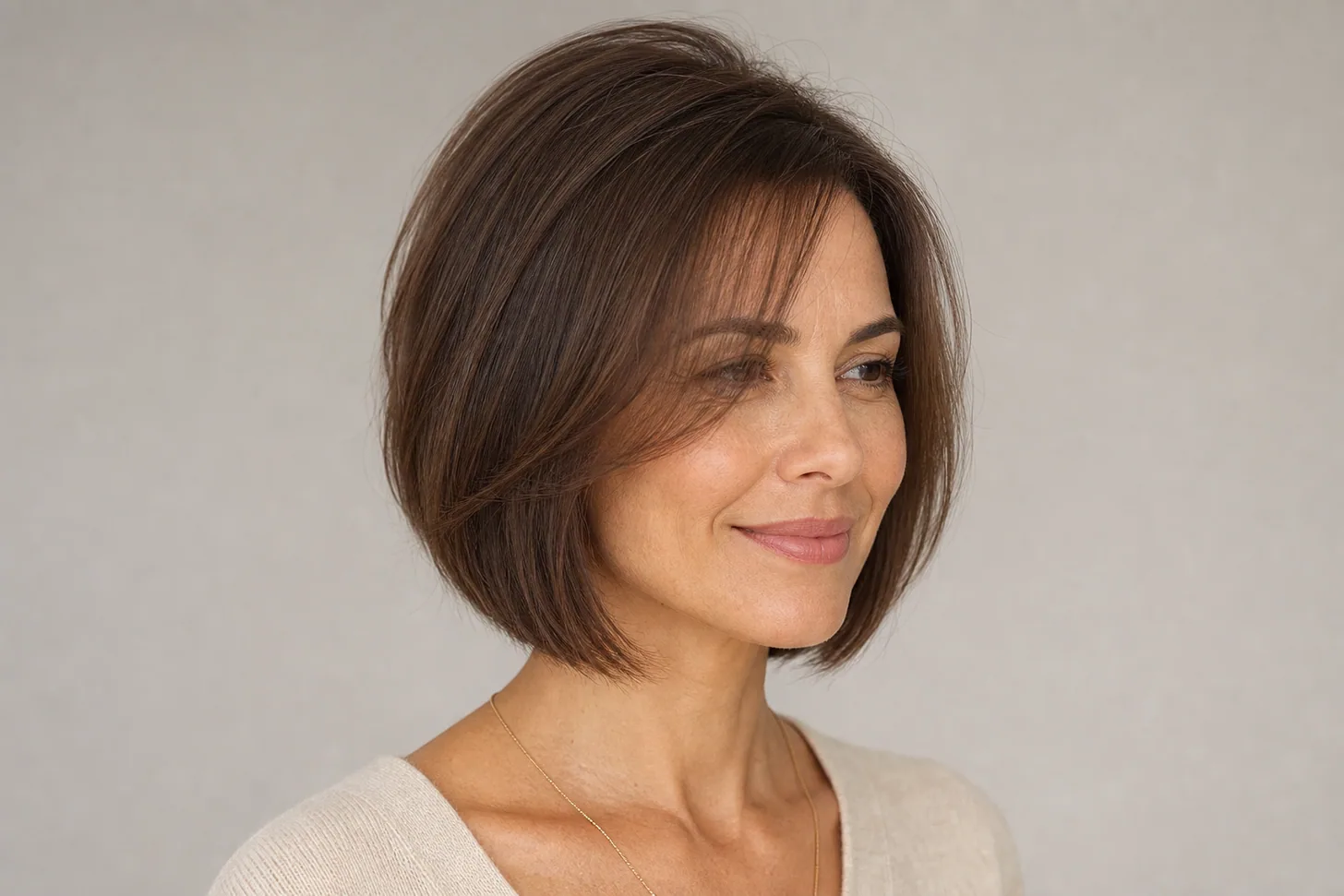
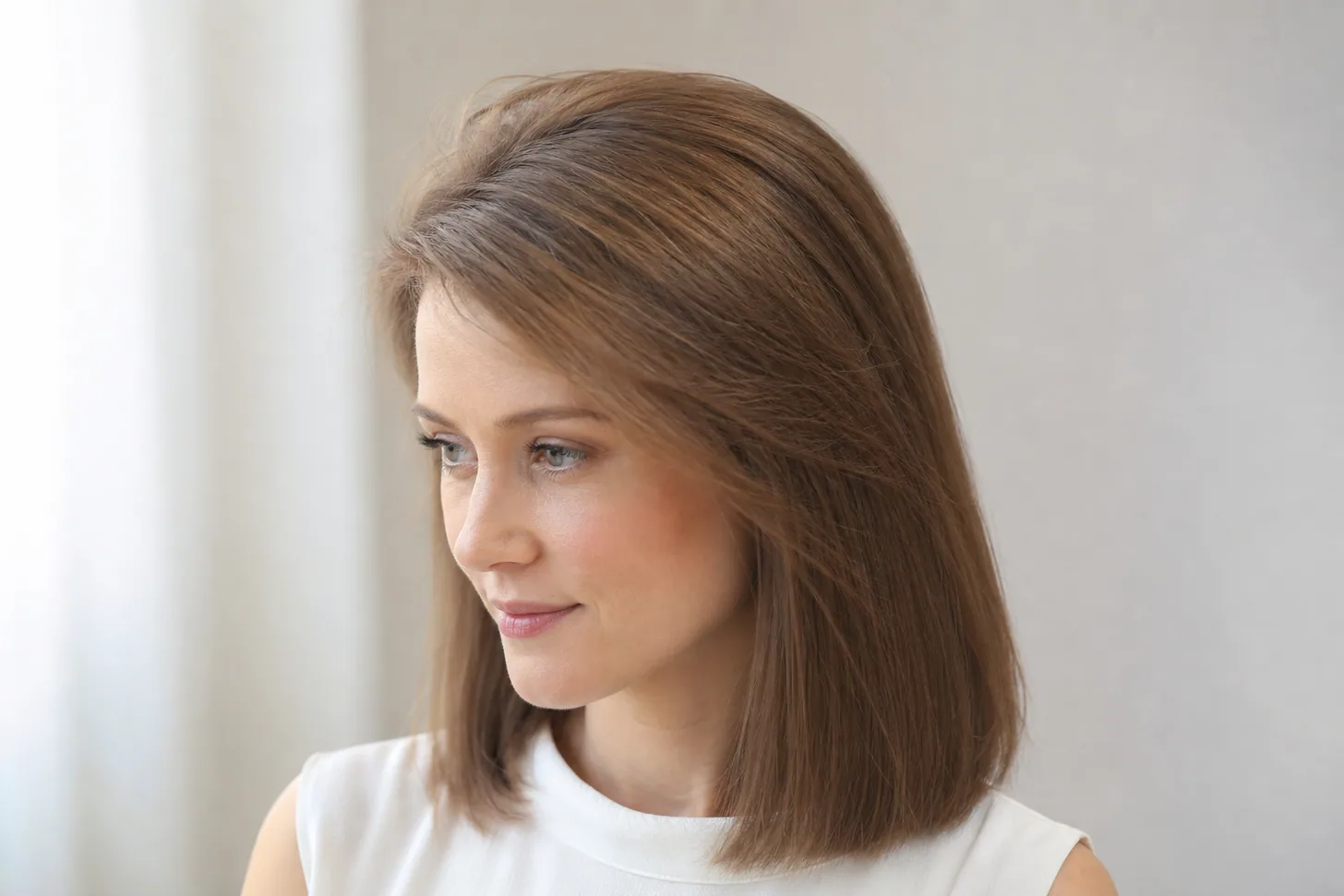
A layered bob works on fine hair when the layers are internal and point-cut — removing just enough inside weight to create lift and movement while the perimeter stays strong enough to read as density. (If you're still deciding, our stylist settles whether layers help or hurt fine hair in general.) Below, 16 salon-tested versions grouped by length and texture, each with who it suits, plus a face-shape cheat sheet and the exact words to bring to your stylist.
Chair-side note
The single most important sentence to say at the salon: "point-cut internal layers, please — no razor." A razor tapers each strand to a whisper, and on fine hair that means see-through ends within a month. Point-cut layers give you the same softness with the strand width intact. It's the difference between a layered bob that builds fullness and one that quietly deletes it.
SB
— Simone Baptiste, Senior Stylist
Why the right layers work on a fine-hair bob
Fine hair and layering have a complicated relationship. Done heavily, layers strip weight fine hair can't spare — the ends go sparse and the cut looks thinner than before.
Done internally, layering is the best volume tool a bob has: a few hidden levels inside the shape let the surface hair sit on a little cushion of shorter strands, so the crown lifts and the cut moves instead of hanging. The perimeter — the bottom line of the cut — stays nearly blunt, because on fine hair the hemline is where thickness reads.
If you're weighing this against a fully blunt cut, our guide to bob haircuts for fine hair covers the whole family; and if you're not sure whether your hair is fine, thin, or both, start with the two-minute fine-vs-thin check — it changes which of these 16 you should screenshot. Where this shape sits against the rest of the year’s requests is in fine hair trends for 2026.
Short & stacked layered bobs
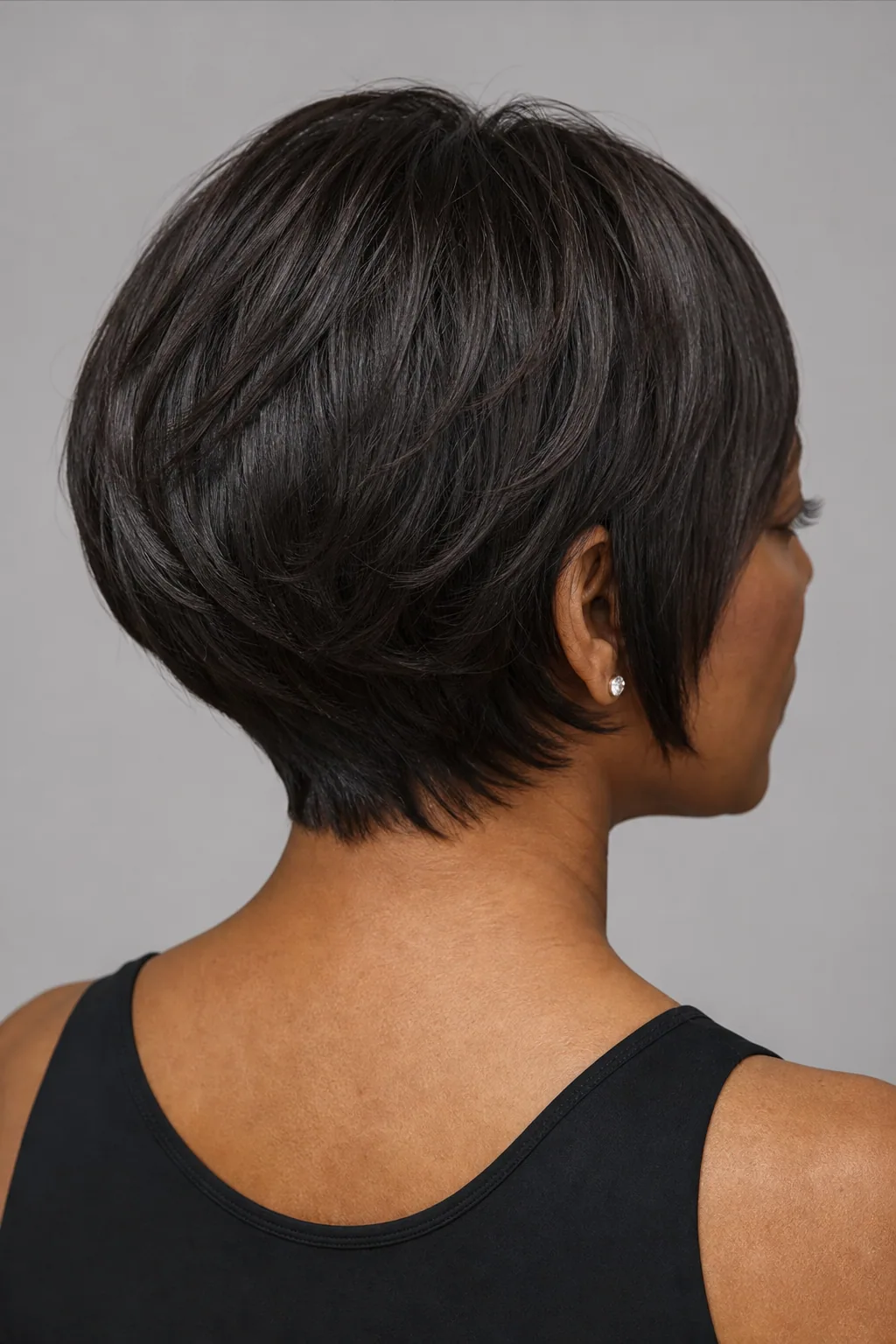
Take the stacking further and the nape shorter and you arrive at the wedge, which trades a longer trim cycle for the most built-in volume of any short cut.
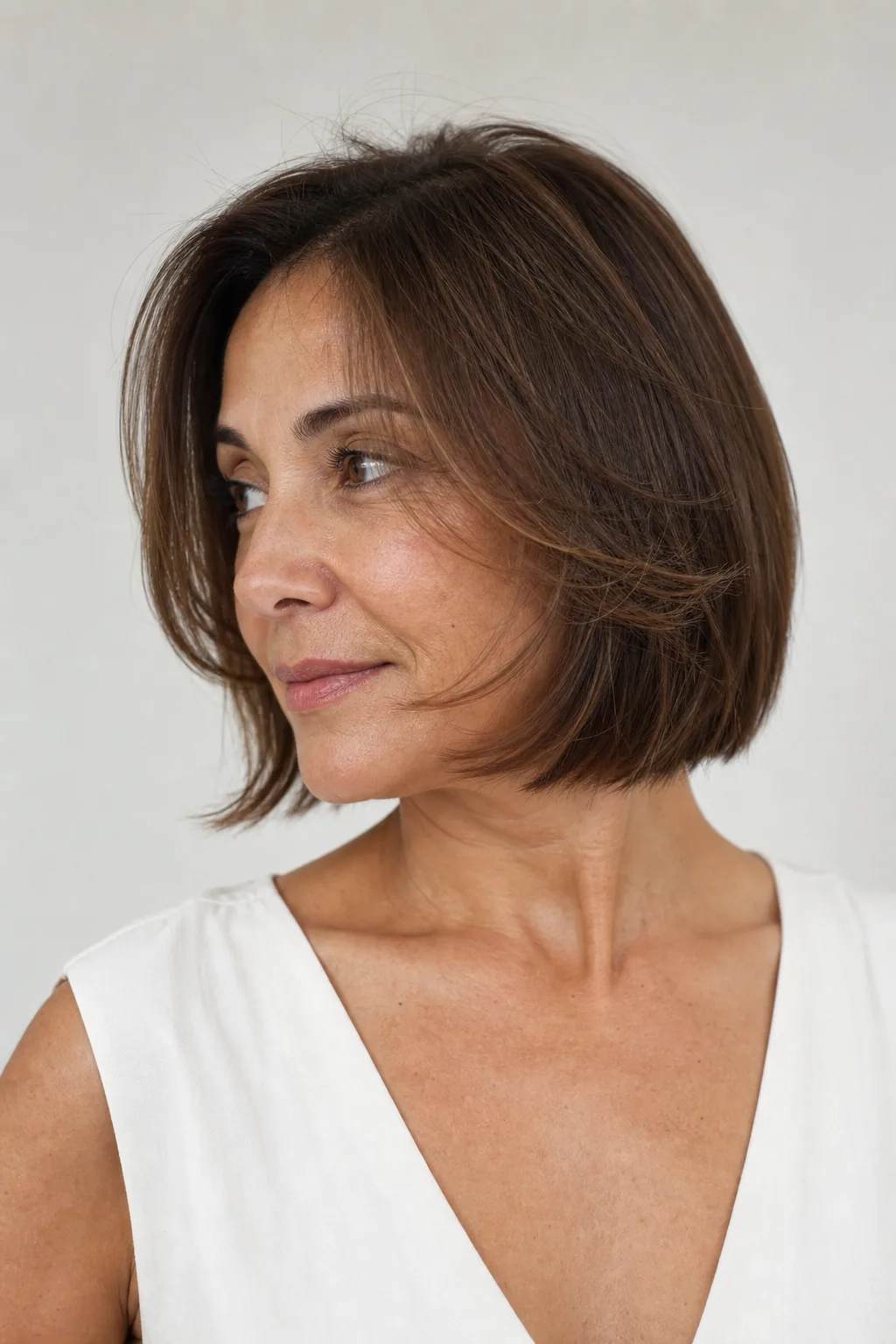
Chin-length and above, where layering does its best work — building height at the back and crown, exactly where fine hair falls flattest.
1
Stacked layered bob
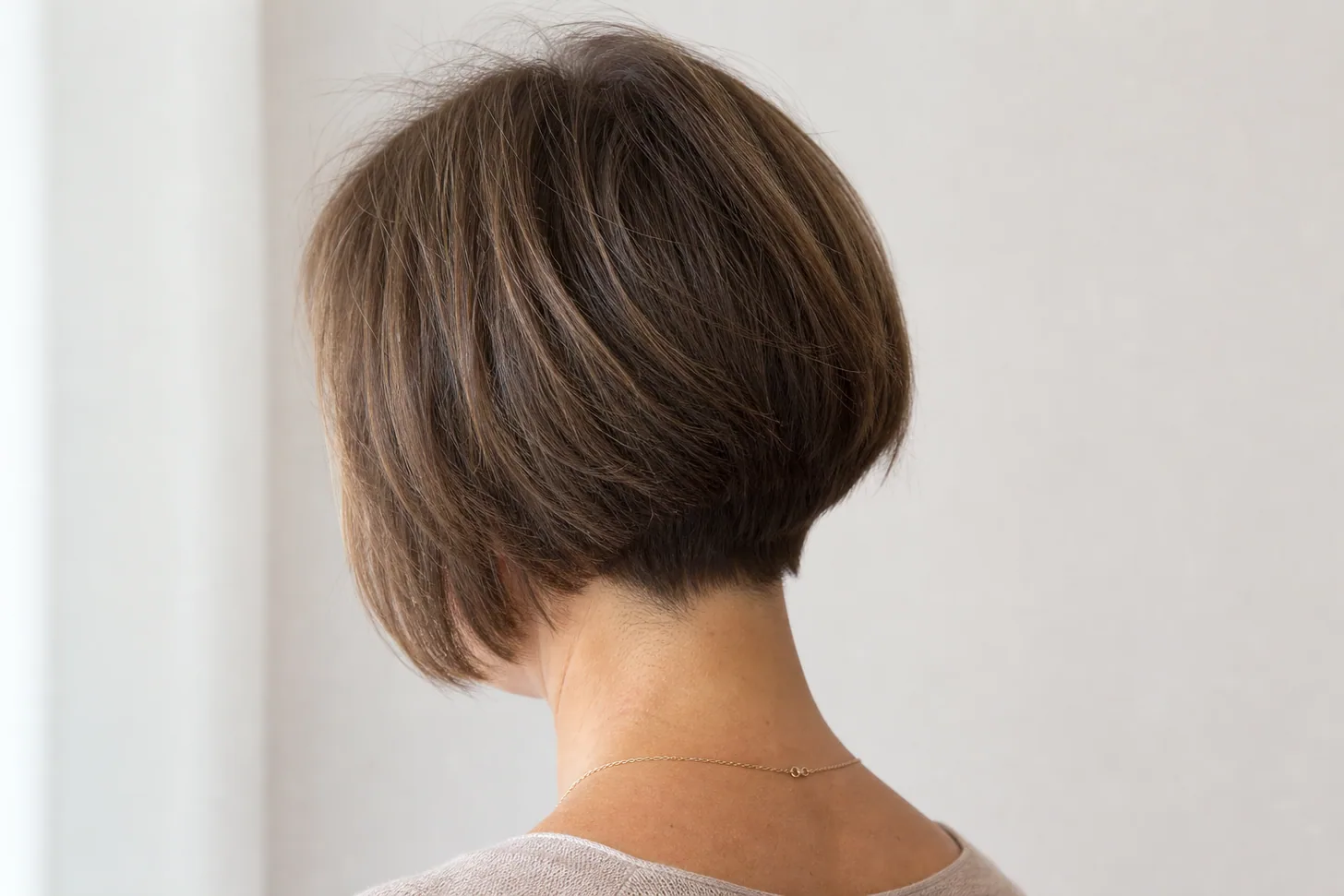
Short graduated layers stack on top of each other at the back, building a rounded shelf of volume where fine hair is usually flattest. The front stays longer and frames the jaw — a shape that looks fuller from every angle, including the one you never see. If it's the back volume you're after, see our dedicated stacked bob guide.
2
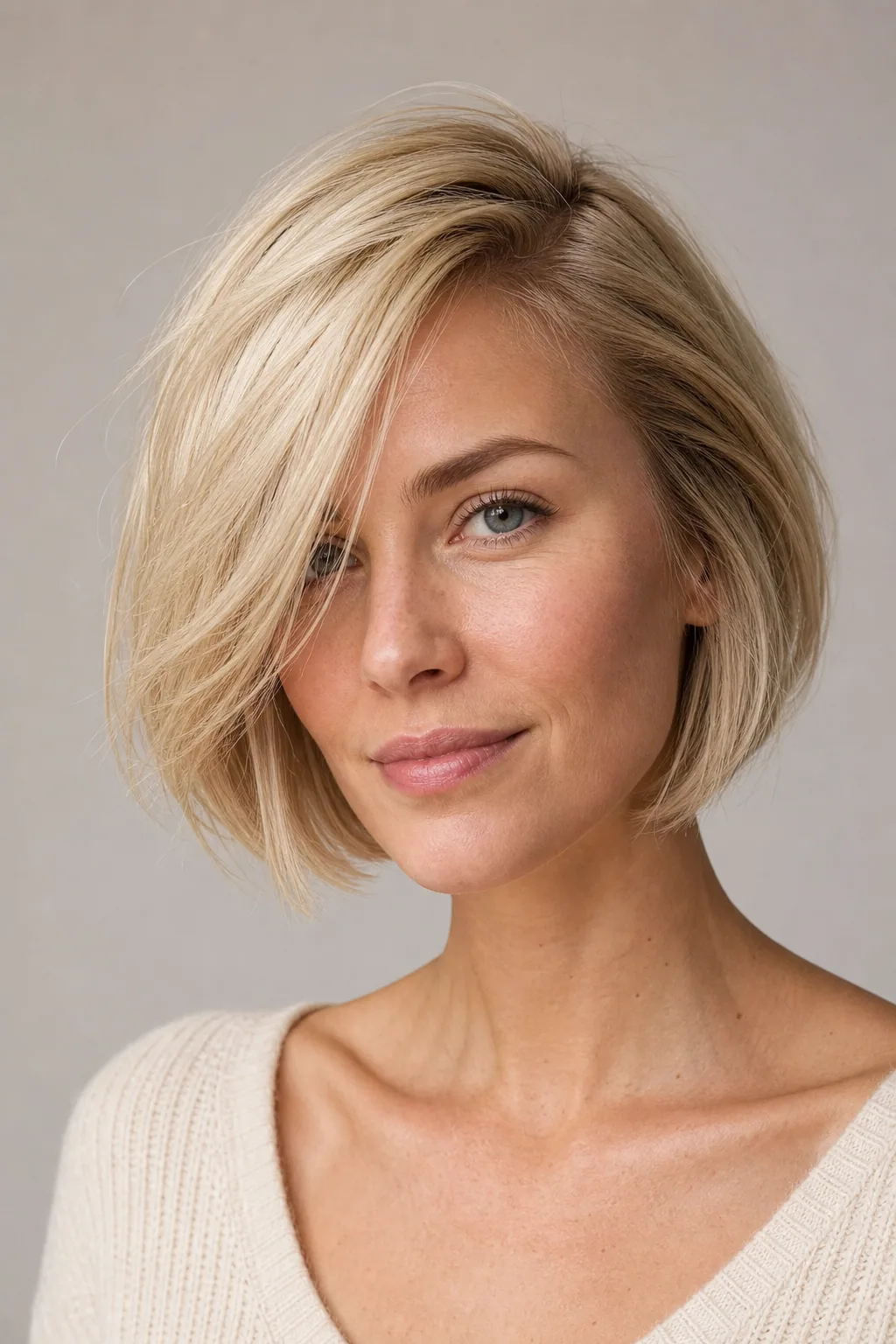
Jaw-length layered bob with a side part
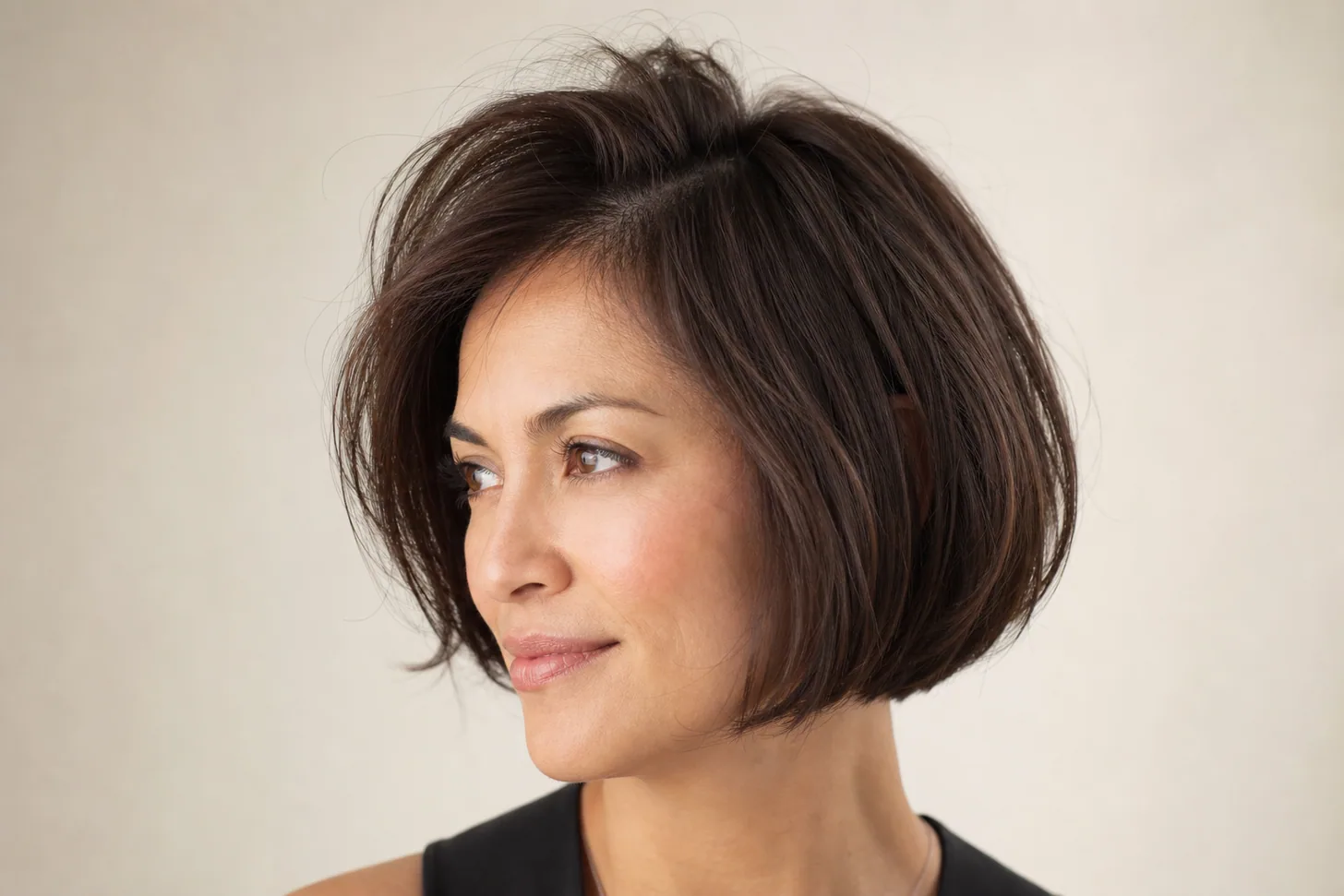
The deep part throws the heavier side up and over, doubling crown lift with zero styling effort. Suits round and heart faces especially — the asymmetry breaks up width. Ask for soft internal layers only through the top so the part flips without separating.
3
Chin-length bob with wispy point-cut layers
Feather-light layering confined to the last inch of the cut, nipped in vertically with scissors. The effect is soft, airy edges over a still-solid shape — movement without sacrificing the hemline that makes fine hair read thick.
4
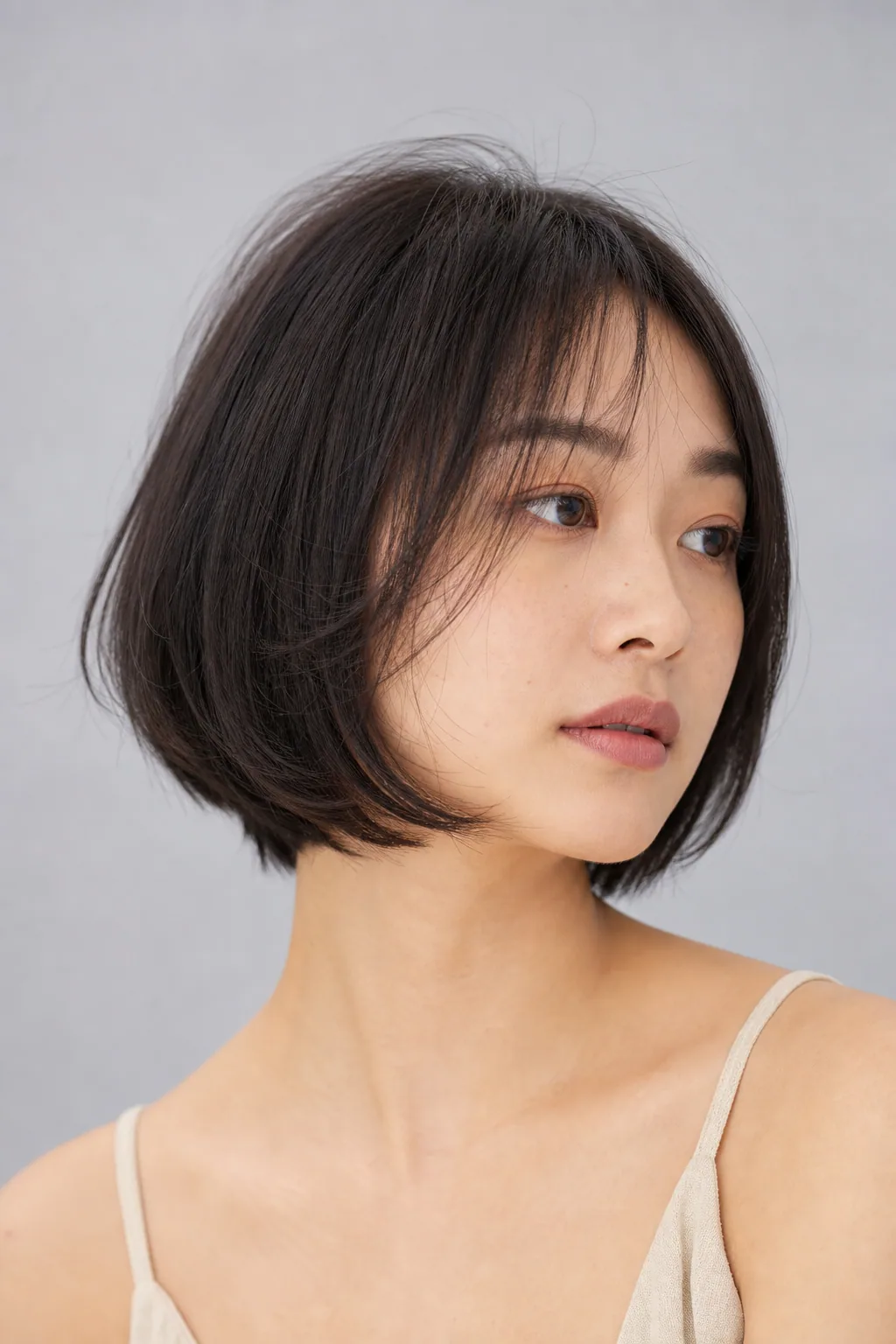
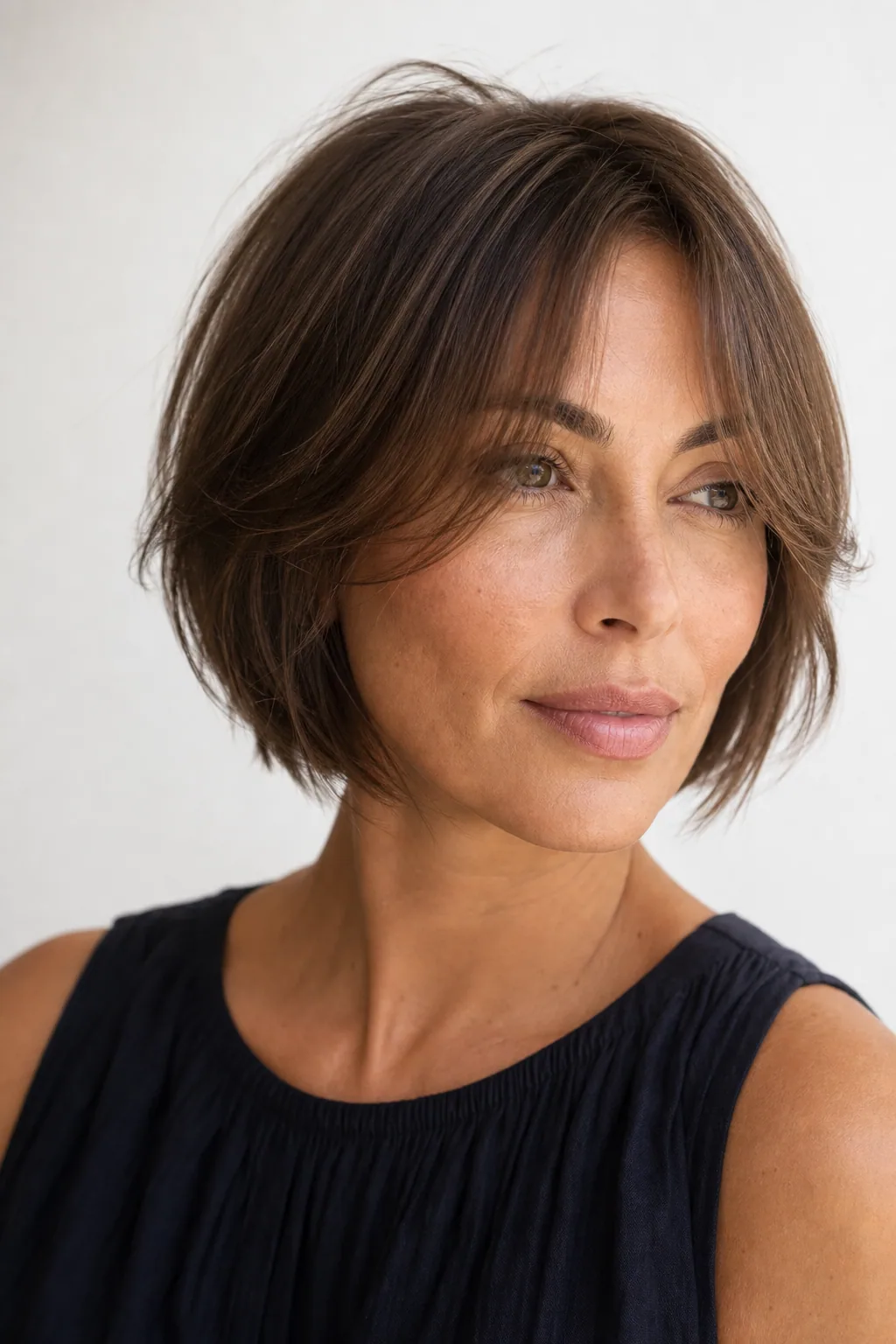
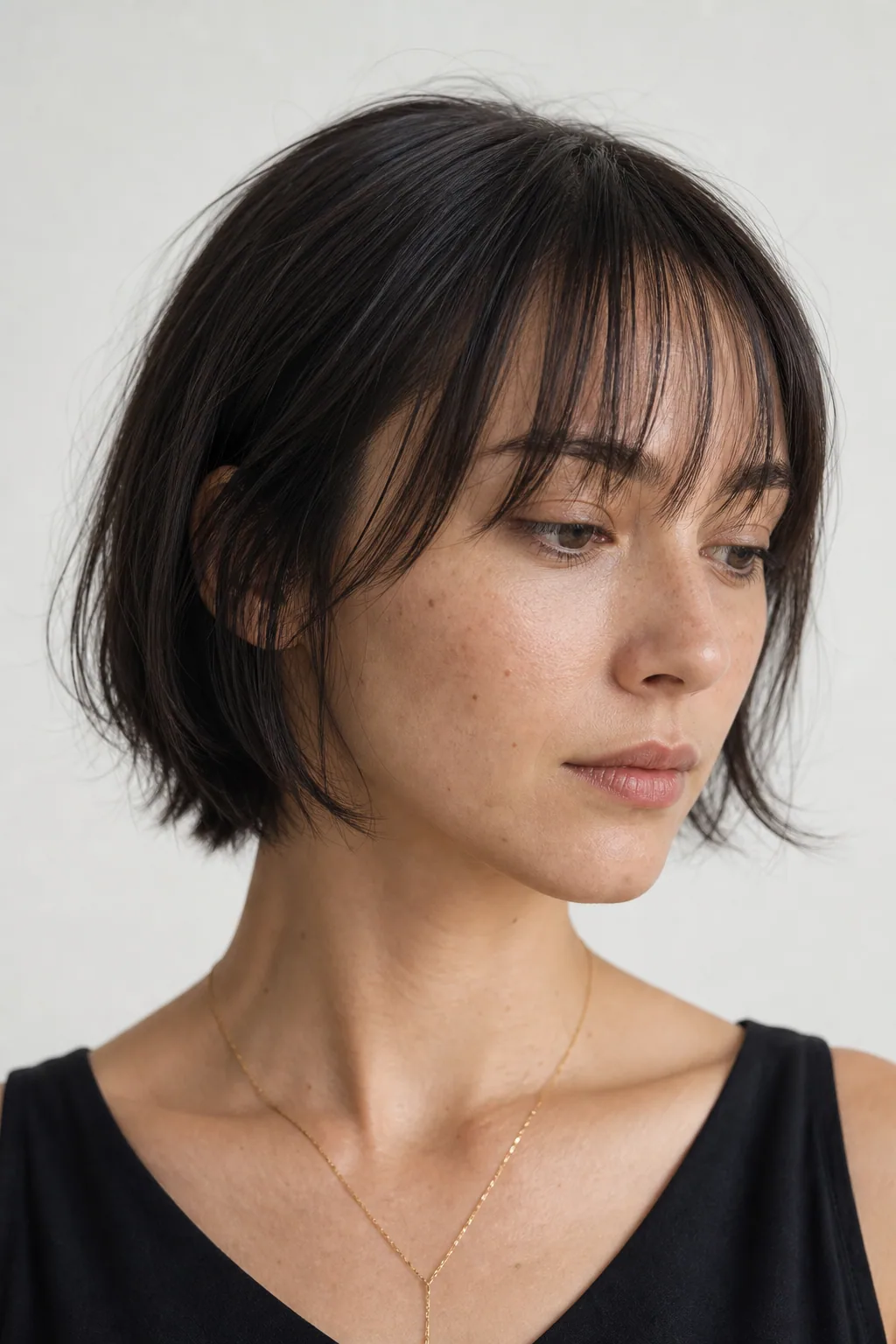
French layered bob
Cheekbone-grazing, piece-y, and deliberately imperfect — the Parisian version trades polish for lived-in texture. On fine hair it air-dries into shape with a scrunch of light foam, which makes it one of the lowest-effort cuts in this gallery. Pairs naturally with a sheer micro-fringe.
5
Feathered face-frame layered bob
Layering concentrated at the front, feathering away from the cheekbones in soft flicks while the back stays one length. A flattering compromise for anyone nervous about layers: the frame moves, the mass stays.
6
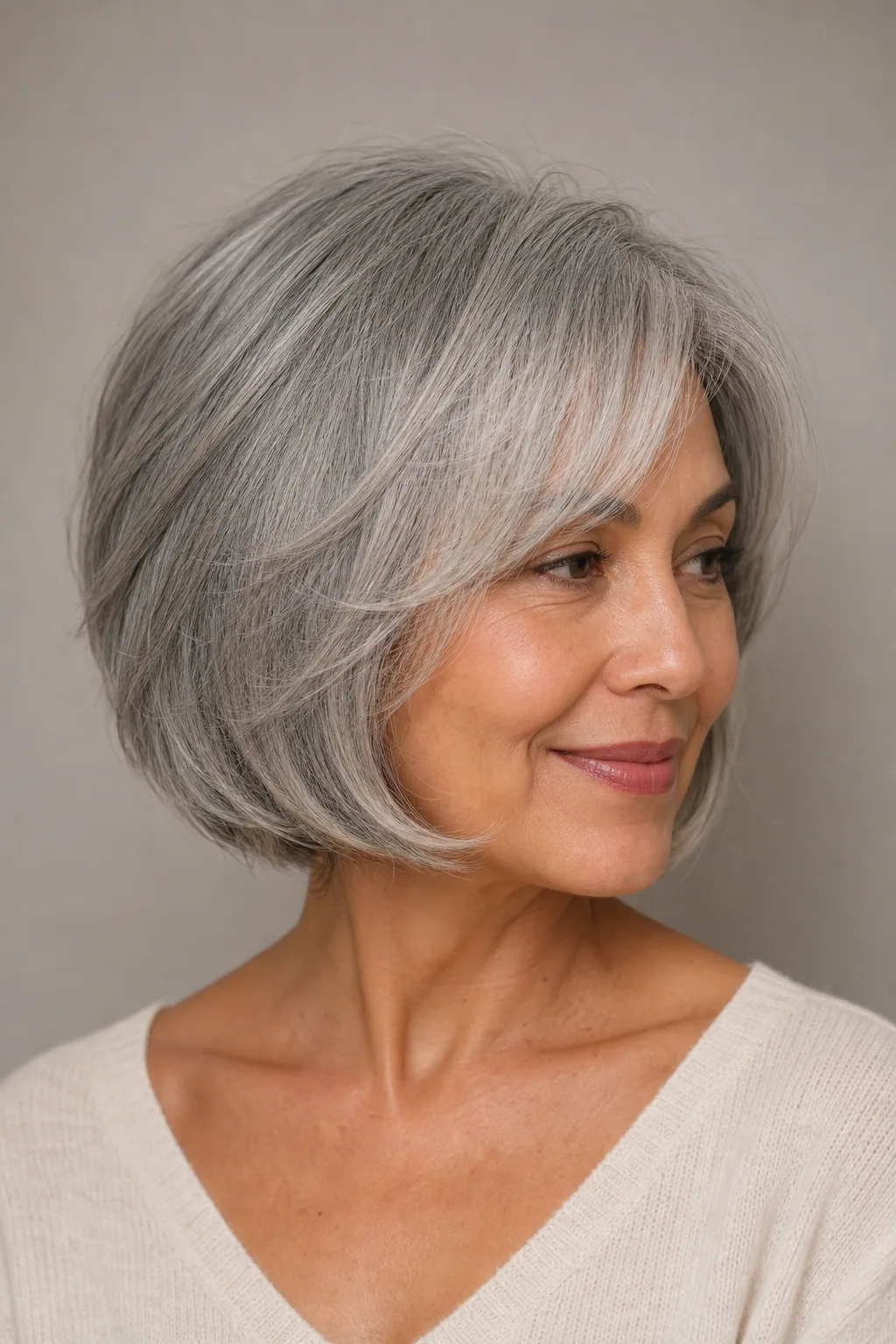
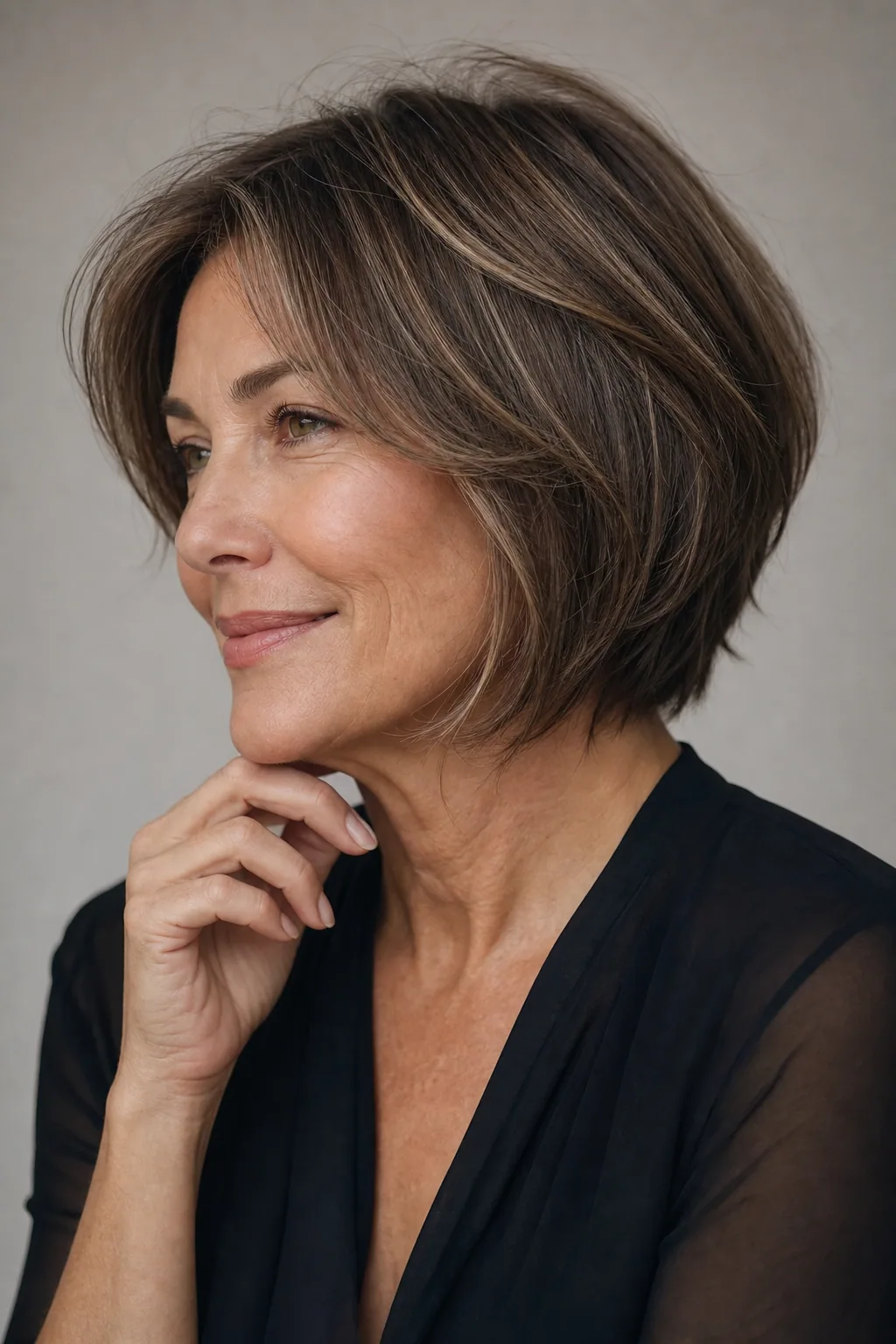
Rounded layered bob for mature fine hair
Hair typically gets finer with the decades, and this softly rounded shape answers it — graduated layers curve the silhouette so it never sits flat against the head. Wash-and-wear with one pass of a round brush at the crown; a trim every six weeks keeps the curve.
Longer layered bobs & lobs
Collarbone territory — for fine hair that isn't ready to go short, where layers earn their keep by preventing the "hanging curtain" effect of one-length longer cuts. At the longer end this shades into mid-length territory, which is covered by decade in medium length for fine hair over 40.
7
Collarbone layered lob
The most-requested length in the chair, and for good reason: long enough to tie back, short enough that fine hair still holds body. One soft internal level starting below the chin keeps it swinging. This is the safest first step out of long hair.
8
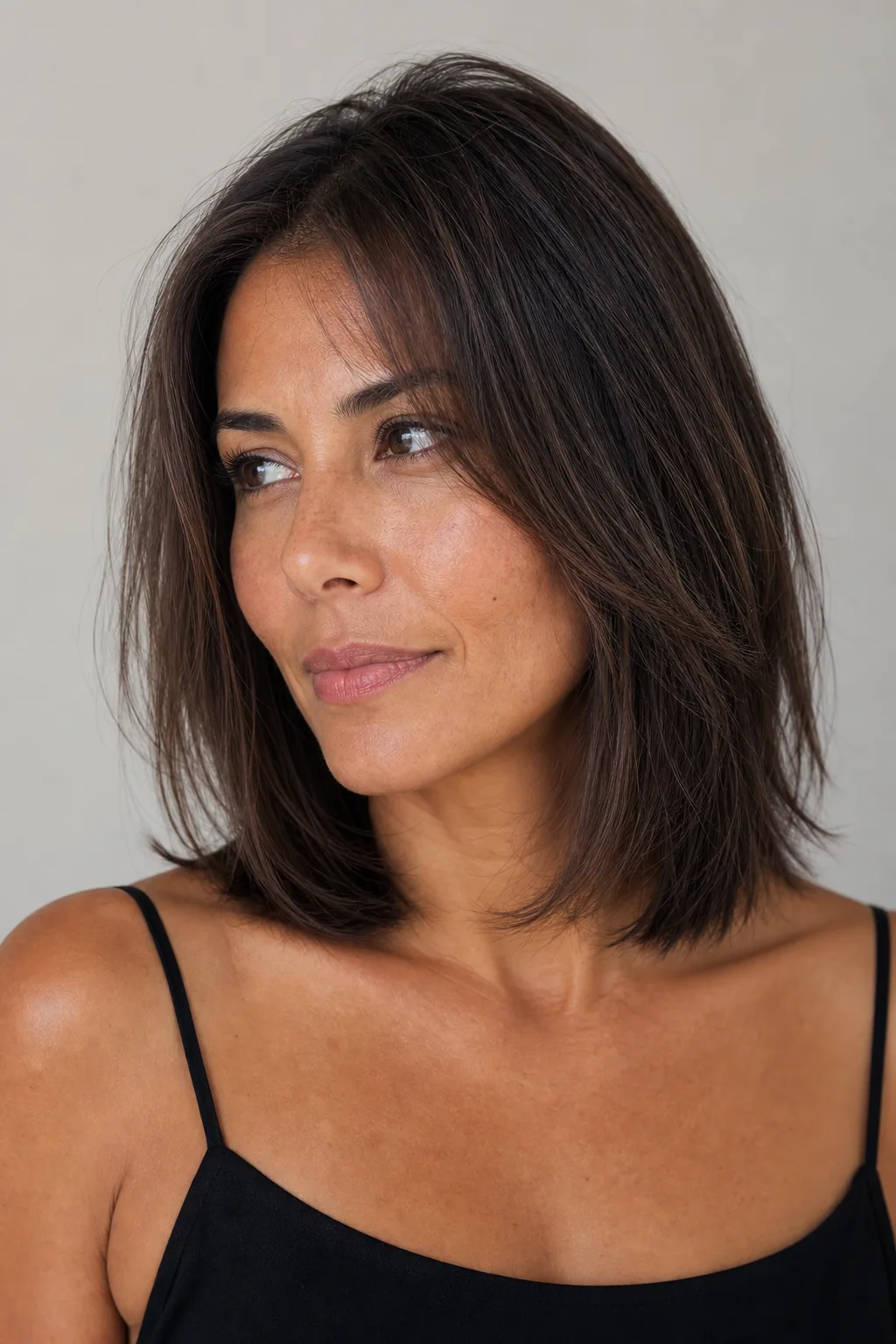
Shoulder bob with long face-framing layers
Face-framing starts at the cheekbone and melts into the length — the layer lives at the front where you see it, not through the ends where fine hair needs its weight. Flattering on long and oval faces; on round faces, keep the shortest frame piece below the chin.
9
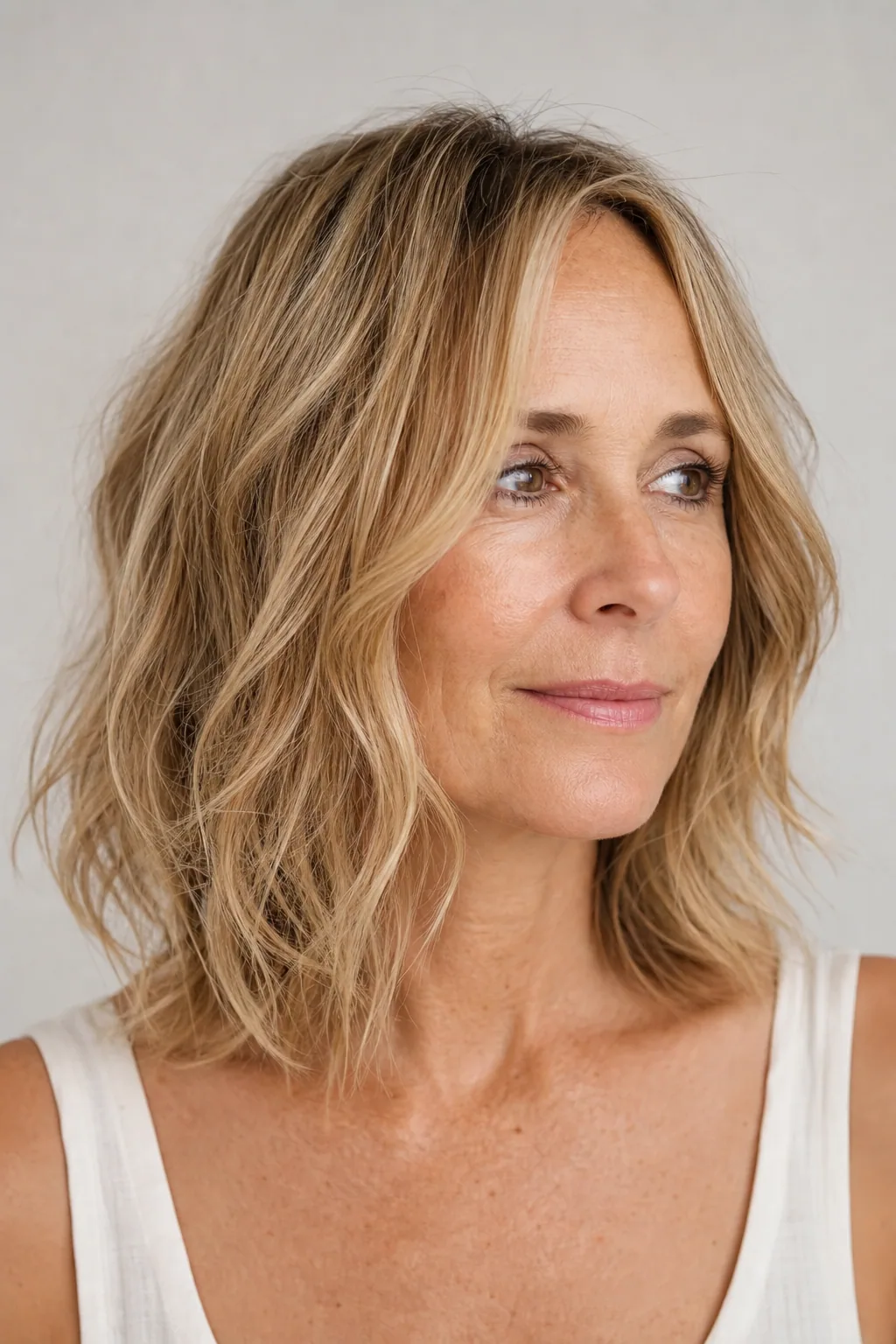
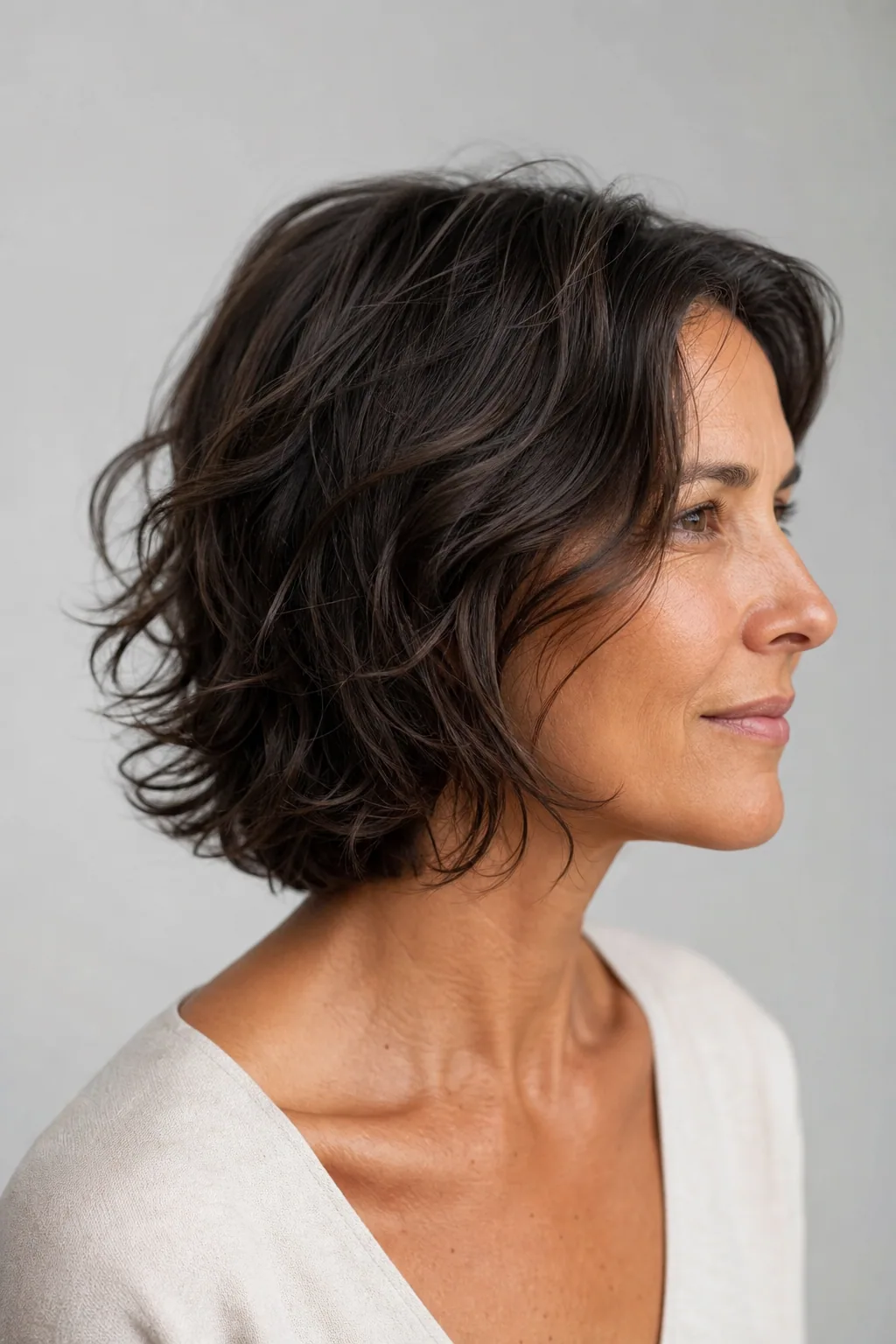
Wavy layered lob
Loose bends through a lightly layered lob turn fine hair's fineness into an asset — soft waves stack visual volume that straight lengths can't. Two minutes with a one-inch iron on the mid-lengths, cool in the palm, shake out with texture spray.
10
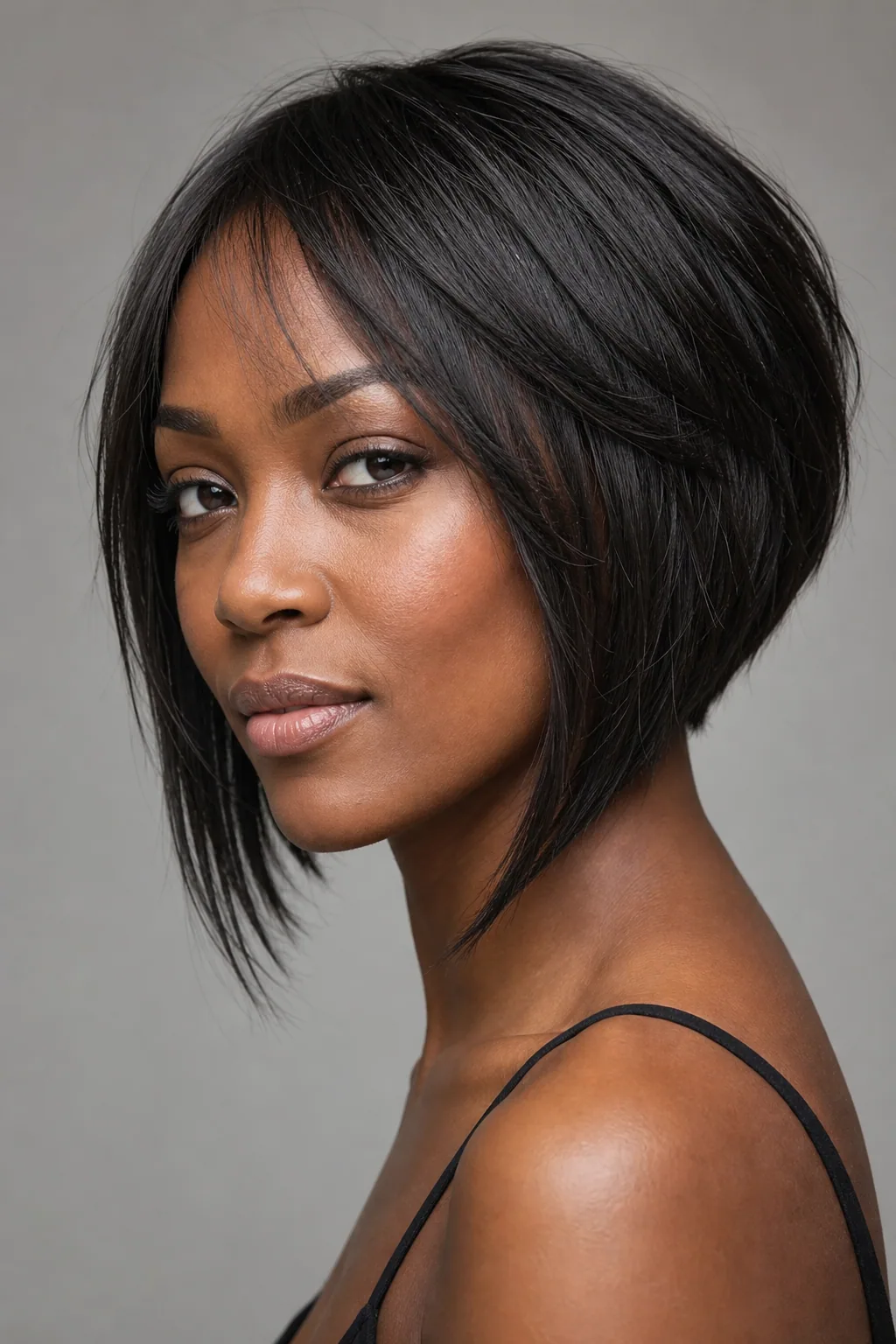
A-line layered bob
Shorter at the back, angling longer toward the collarbone in front, with the layering hidden in the angle itself. The forward weight elongates round faces, and the higher back builds lift the way a stacked cut does — without reading as "short."
11
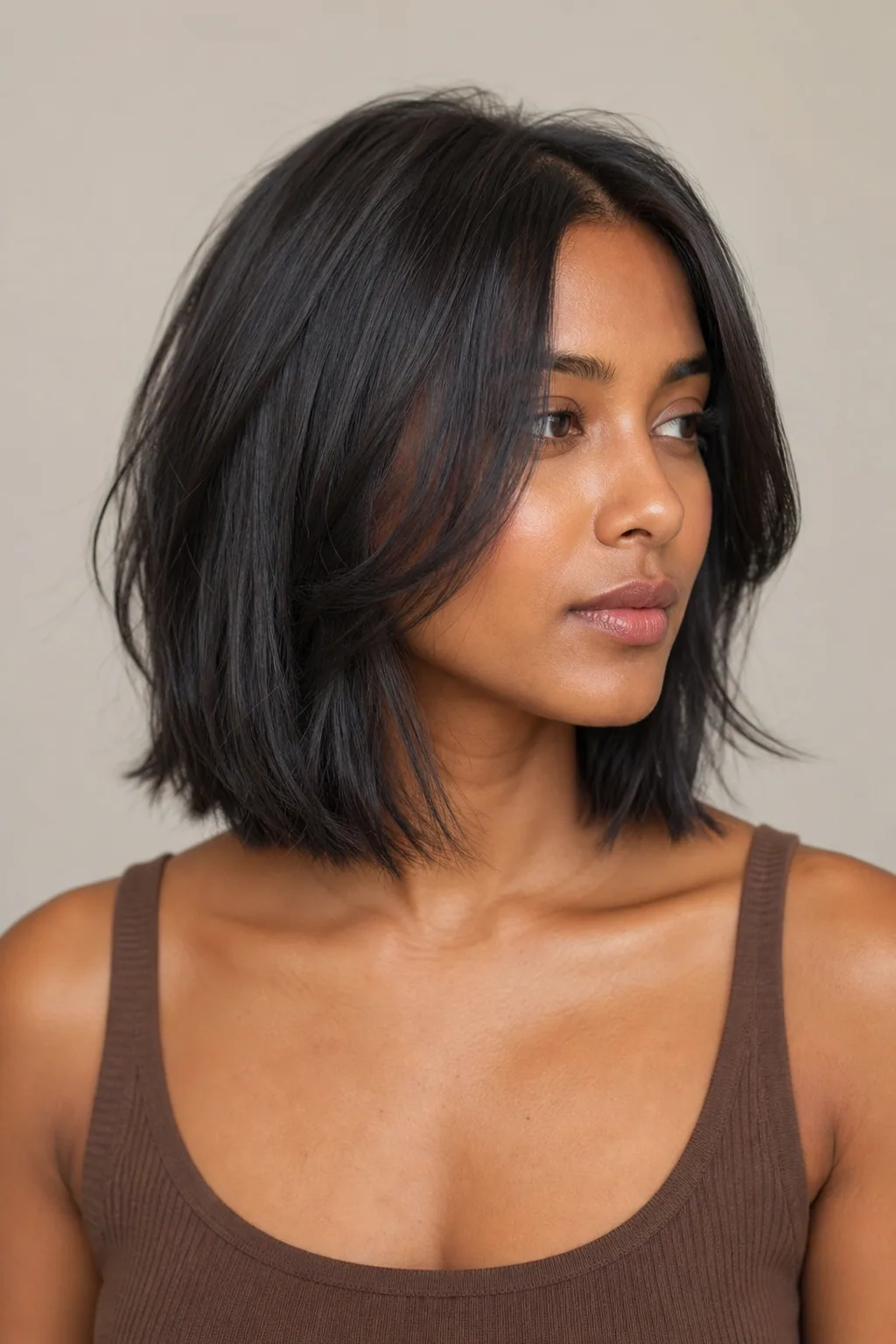
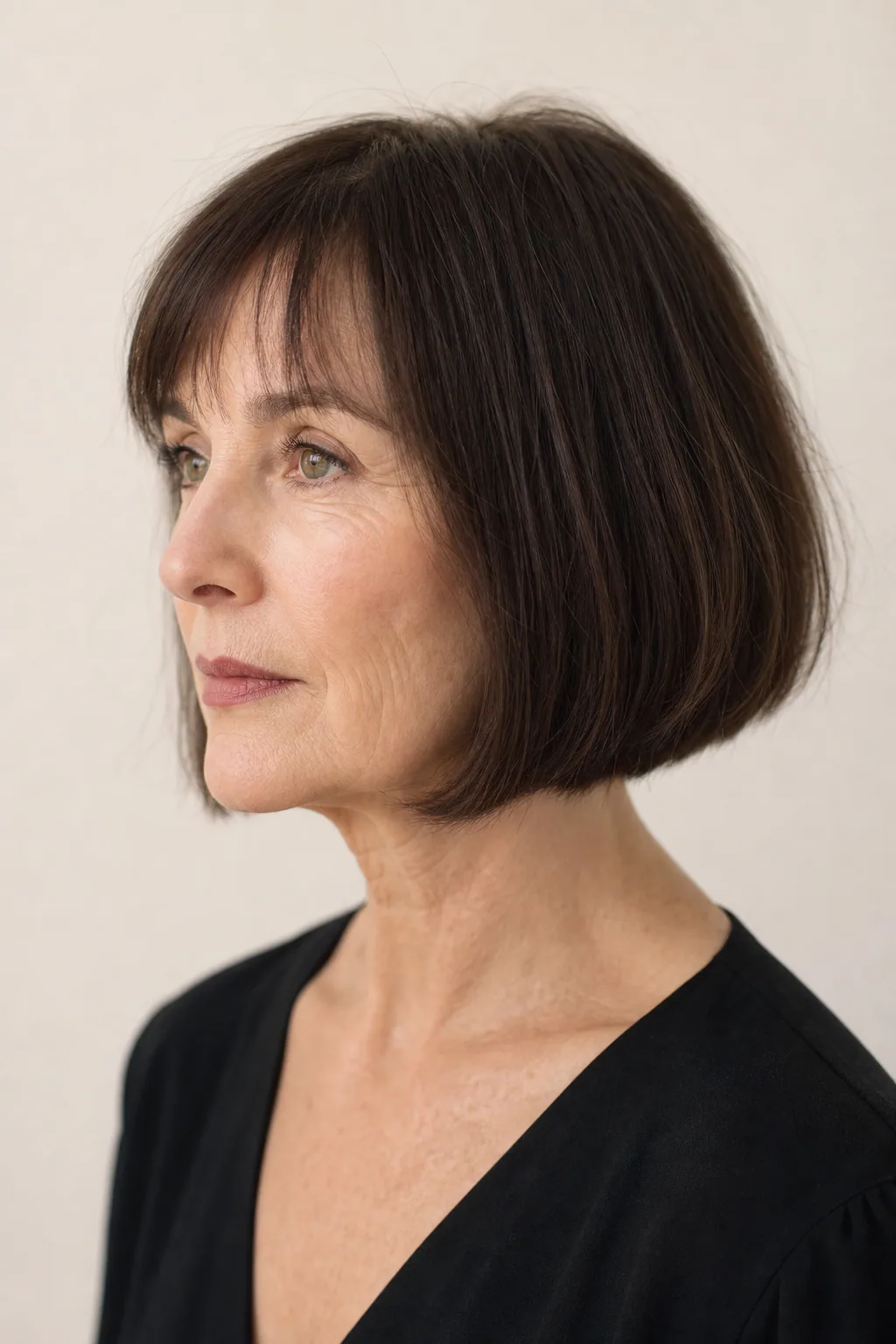
Blunt-perimeter bob with invisible layers
From the outside it's a blunt bob — the strongest density illusion fine hair can buy. Inside, two whisper-light layers keep it from sitting like a helmet. If your hair is thin as well as fine, this hybrid is usually the answer; the hemline does the volume work the density can't.
Texture & bang pairings
Layers multiply when paired with the right fringe or worked with your natural texture instead of against it.
12
Layered bob with curtain bangs
The fringe sweeps into the first face-framing layer so bang and bob read as one shape. Two volume tricks stack: weight at the jaw, lift at the fringe. We break down the fringe half of this equation in curtain bangs for fine & thin hair.
13
Layered bob with wispy bangs
A sheer, straight-ish fringe that lets skin show through — the only straight-across bang style that flatters fine hair, because it never pretends to a density it doesn't have. Keeps a chin-length layered bob from feeling severe on angular faces.
14
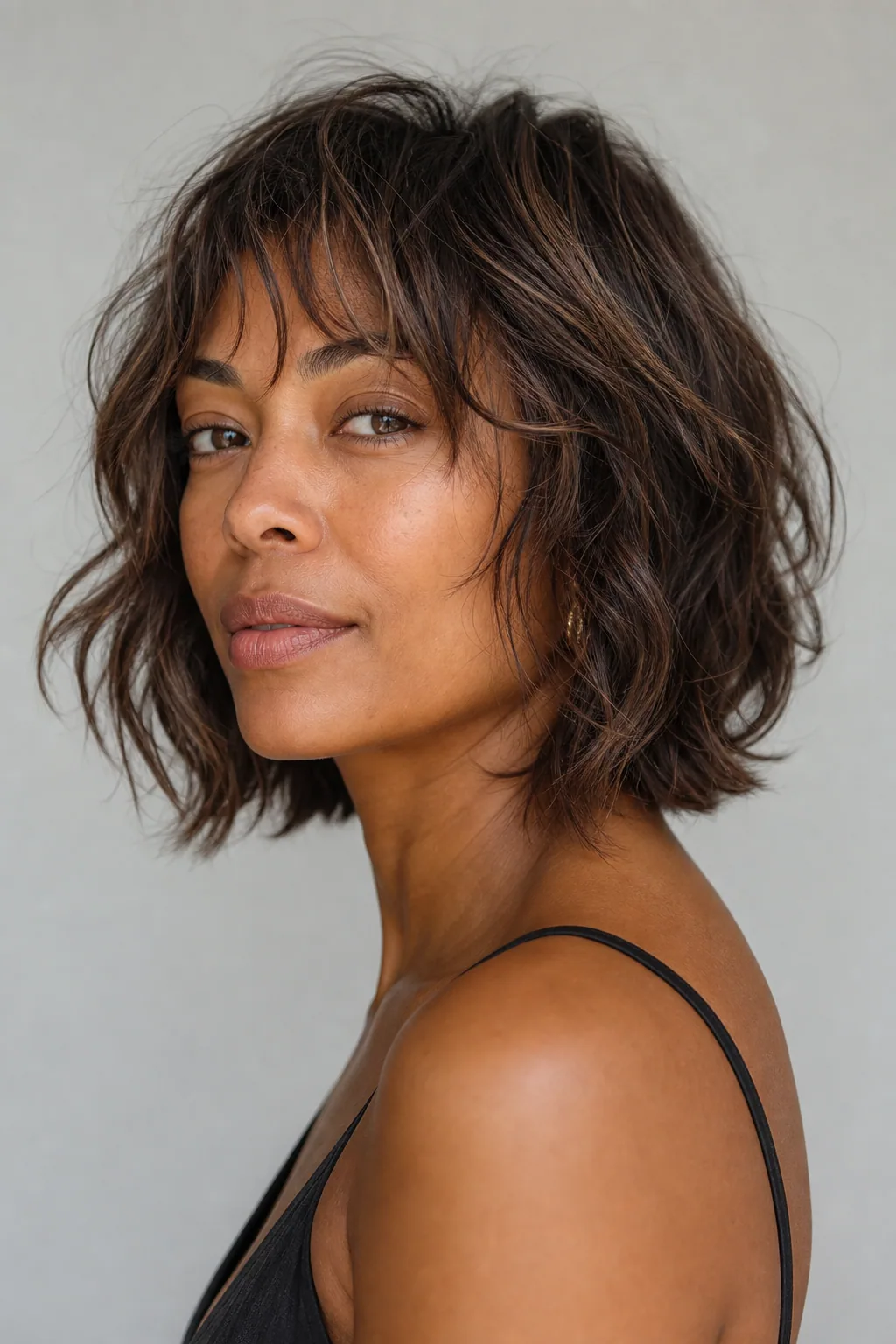
Shaggy layered bob
The one exception to the "conservative layers" rule — a shag-bob hybrid layers the crown on purpose, trading hemline weight for deliberate, piece-y height on top. Best on fine hair with a natural wave and plenty of it; on very thin, straight hair the choppiness can read sparse.
15
Air-dry layered bob for fine wavy hair
Cut to the wave, not against it — layers placed where the bend naturally turns, so the cut dries into shape with a scrunch of light foam. The choice for anyone rationing heat. Have it cut dry if your stylist offers it; wet-cut waves spring up shorter than planned.
16
Layered bob with dimensional highlights
A few brightening pieces along the layers catch light at different depths, faking a thickness the scissors alone can't. Keep placement soft and concentrated around the face and top layer — contrast, not stripes, is what reads as volume on fine hair. For a sharper, more deliberately uneven finish than layering gives, see the choppy bob for fine and thin hair.
Layered bobs for your face shape
Length and layer placement — not the layers themselves — decide what flatters. If you haven't mapped your face shape yet, our two-minute face-shape guide does it with a mirror and a washable marker. For the heart-shaped case in more detail, including where to start the framing, see haircuts for a heart-shaped face with fine hair.
Face shape
Best layered bob
Key detail
Round
A-line or jaw-length with side part
Forward angles and asymmetry elongate; avoid chin-level width.
Balanced proportions carry short stacks and long lobs alike.
Square
Wavy layered lob
Soft bends and below-jaw length round a strong jawline.
Heart
Chin-length with feathered face-frame
Fullness at the jaw balances a wider forehead.
Long / oblong
Chin bob with wispy bangs
Horizontal fringe and jaw weight shorten the proportions.
The honest maintenance picture
Version
Trim
Daily styling
Grow-out
Stacked layered bob
5–6 wks
10–15 min
Loses the back shelf by week 7
Blunt-perimeter + invisible layers
6–8 wks
8–12 min
Forgiving; line softens gradually
Collarbone layered lob
8–10 wks
5–15 min
Very graceful; layers blend down
Shaggy layered bob
8–10 wks
5–10 min
Grows into a longer shag
French layered bob
6–8 wks
3–8 min
Designed to look grown-out
What to ask your stylist
Say: "I have fine hair and I want a layered bob that keeps its weight — point-cut internal layers only, no razor, no thinning shears, and keep the perimeter strong. The shortest layer shouldn't sit more than a couple of inches above the hemline."
If your hair also runs thin, add: "Prioritize the blunt hemline over the layering — I'd rather have fewer layers than see-through ends." Bring a photo of one of the cuts above; the number matters less than the shape.
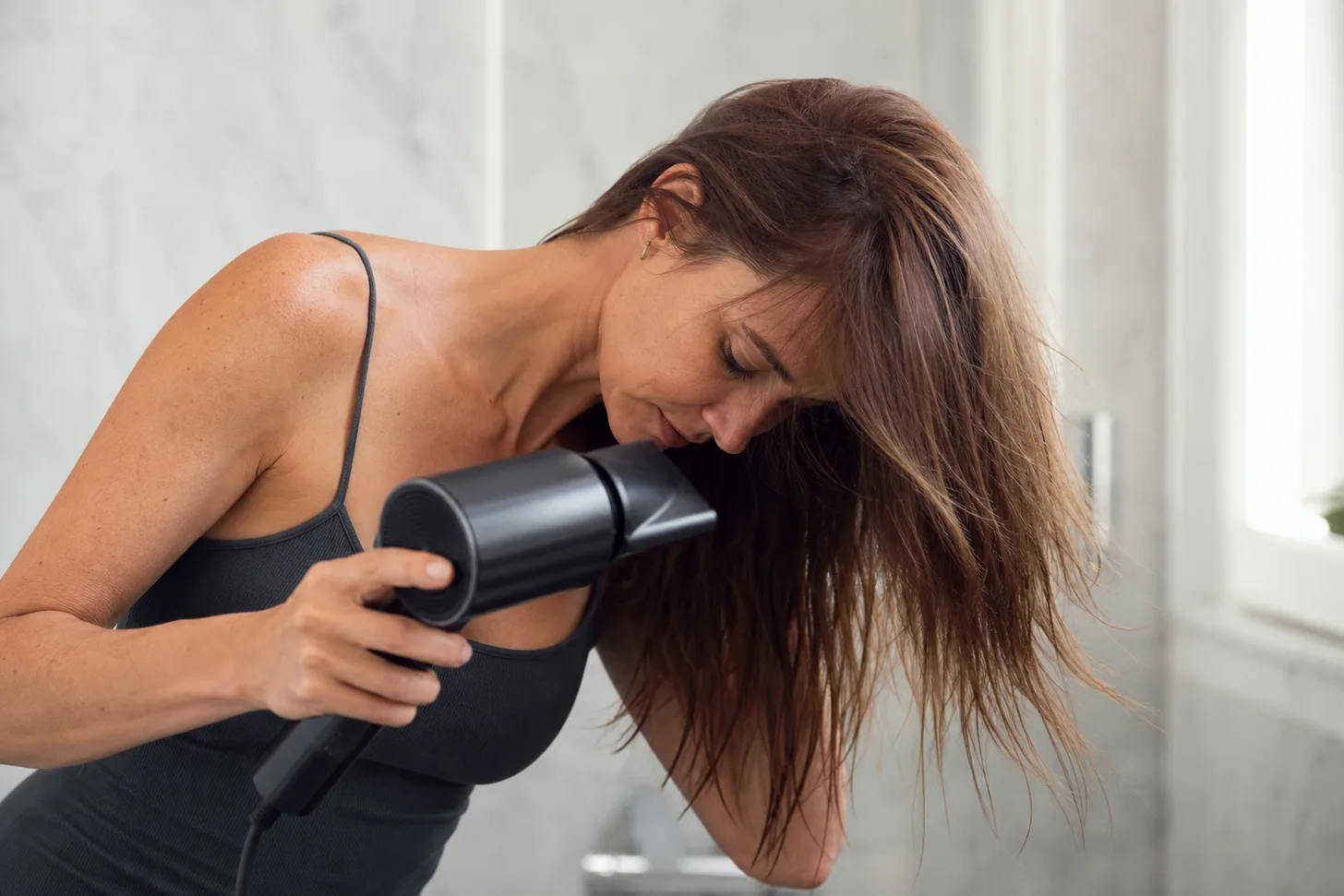
Once you're home, the styling is a root-first blow-dry and a cool shot — the full routine is in how to style fine & thin hair.
When a layered bob may not be your best move
Very low density with a visible scalp at the crown — layering removes mass exactly where you can't spare it. A blunt one-length bob builds a stronger thickness illusion.
Tight curls that shrink several inches when dry — bob layers cut wet can spring into an unplanned shape. Seek a dry-cutting specialist, or keep length and shape the perimeter instead.
You had a heavily layered cut that left your ends stringy and you're still growing it out. Let the old layers reach the hemline first — layering over grown-out layers compounds the thinness.
FAQ
Yes, when the layering is internal and conservative. Internal layers remove a little weight from inside the shape so the surface sits fuller and moves, while the perimeter stays strong enough to read as density. Over-layered bobs do the opposite — too many visible layers thin the ends and expose how little hair there is.
Fewer than you think — usually one or two soft internal levels plus optional face-framing, not a fully layered head. The goal is movement with a nearly intact perimeter. A good benchmark to bring to the salon: the shortest internal layer shouldn't sit more than about two inches above the hemline.
If density is genuinely low, a blunt or barely-layered bob usually wins — the solid hemline is what creates the illusion of thickness. If your hair is fine but reasonably plentiful, light internal layers add movement a blunt cut can't. Many stylists split the difference: blunt perimeter, minimal invisible layering inside.
Generally no. A razor slices the strand at an angle, tapering ends that are already narrow — on fine hair that reads as transparent, frizz-prone tips within a few weeks. Ask for point cutting instead: scissors nipping vertically into the ends gives the same soft, non-blunt finish while keeping the end of each strand at nearly full width.
Every 6 to 8 weeks. The layers themselves are forgiving, but the perimeter is what makes a fine-hair bob look full, and it softens noticeably past week eight. If you stretch appointments, ask your stylist to keep the layering conservative — grown-out heavy layers separate and look stringy on fine hair.
Mousse at the damp roots, a quick root-first blow-dry with a medium round brush, and a cool shot to set — about eight minutes at bob length. The layers do most of the shaping, so the daily work is lifting the crown, not curling the lengths. A light texture spray adds separation; skip heavy creams and oils.
Eleven years behind the chair, specializing in short shapes and fine-hair texture. Simone believes the best haircut is the one you can style yourself in ten minutes.
Images in this article are AI-generated illustrations, not photographs of real clients or results. See our image policy.
Results vary with hair type, density, and growth patterns. This guide is educational and not a substitute for an in-person consultation with a licensed stylist.
Get the good hair intel
One honest, stylist-written guide in your inbox each week. No hype.

 SB
SB