Reviewed by Tara Sullivan · Updated July 2026 · 9 min read
The short cuts that work for fine hair after 50 do two things at once: they build fullness where perimenopause is quietly stealing it — the crown and the widening part — while staying modern, textured, and current, not the tight set that reads matronly. At this age you still have real styling capacity and you want to look like yourself, only sharper; the fear is a short cut that ages you.
It shouldn't, and the right one won't. Below are 18 salon-tested short shapes for fine and thin hair over 50, grouped by mood and by how you live, each with who it suits and the exact words to bring your stylist. For every length, start with our fuller guide to hairstyles for thin hair over 50.
Chair-side note
The fifties are the decade my fine-haired clients first notice the change in the mirror — the part looks a little wider, the crown goes flat by lunch, the texture is drier and there are more coarse grays woven in than there used to be. None of that means going short and "sensible."
It means going short and smart: a cut that lifts the crown, keeps the ends dense so nothing looks stringy, and carries enough point-cut texture to read fashion-forward. You still have the time and the hair to style, so I cut for volume you can build in five minutes — not a shape that gives up on you. Modern short hair at 50 should make you look current, never older.
SB
— Simone Baptiste, Senior Stylist
Why short suits fine hair after 50
Two shifts arrive together around 50, and short cuts answer both. Density starts to drop and strands often get finer, so length — weighed down by itself — lies flat against the head and lets the scalp show through, especially along a part that's widening as the crown thins first. A short cut removes that weight so the hair lifts and stands away from the head, which the eye reads as fullness, and a little crown layering puts height exactly where it's disappearing.
The second shift is texture: perimenopausal hair often turns drier and slightly waverier, which short shapes actually use, because that movement becomes built-in volume instead of frizz to fight. The payoff is that a well-shaped short cut looks modern and full at the same time — you're not choosing between the two.
If you're unsure whether you're dealing with finer strands, lower density, or genuine thinning, our guide to telling fine from thin hair helps you and your stylist plan the cut — and if the rate of change worries you, read fine hair or thinning first. For the decades on either side, see our overview of styles for mature fine hair.
Modern pixies with edge
A pixie is the fastest route to crown height on fine hair, and at 50 the modern version is textured and soft, not sculpted. These four keep it current. A decade earlier the same shapes are cut a shade longer and softer — short cuts for fine hair over 40, and the wider fine hair over 40 guide.
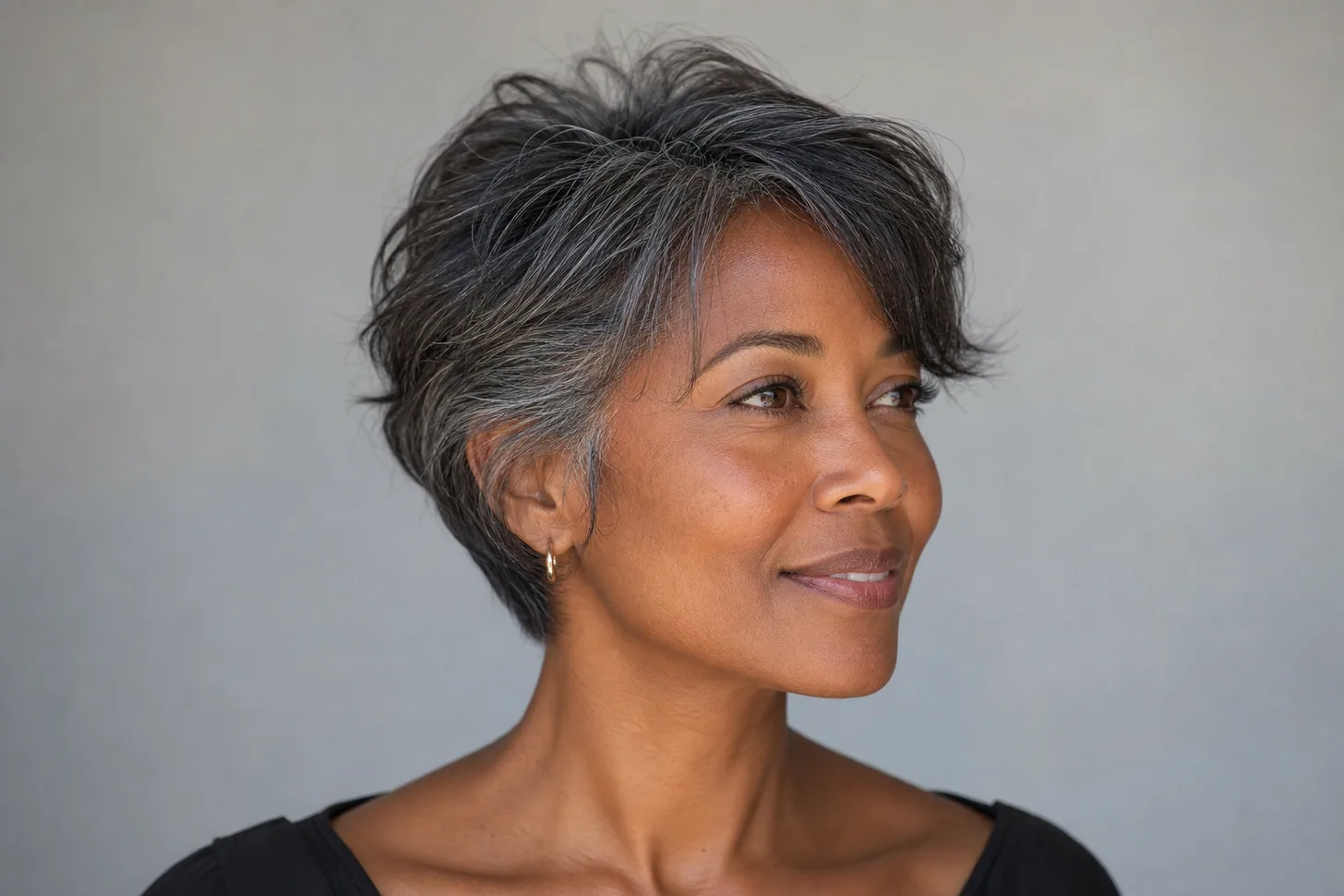
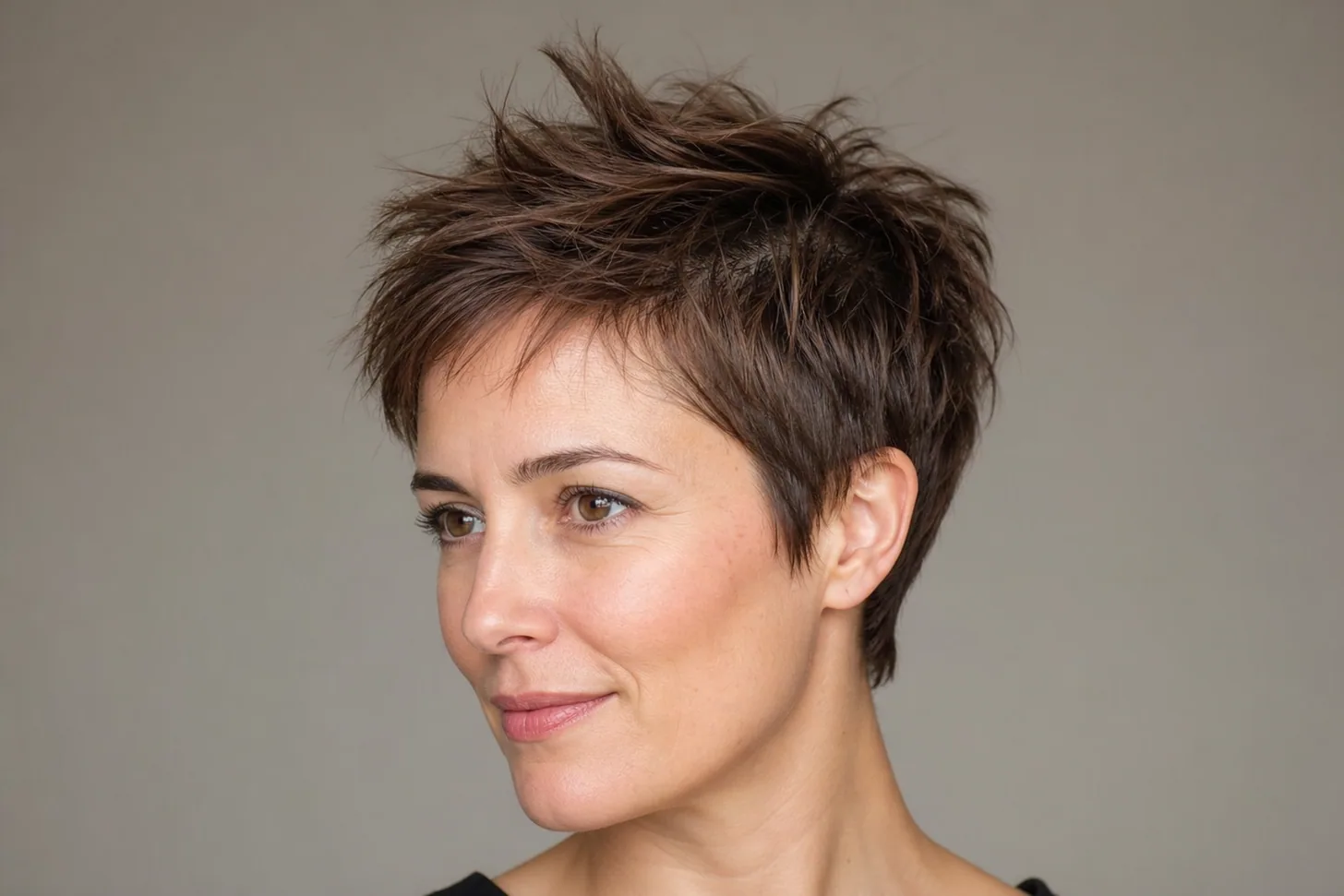
textured pixie with piece-y separation and a lifted crown on fine brunette hair with grays, woman over 50
1
Textured pixie with a lifted crown
Point-cut internal layers at the crown give this pixie its height, and the piece-y finish is what keeps it modern rather than matronly. On fine hair the separation reads as volume, so you get fullness and edge from the same cut. A dab of root lifter and thirty seconds of finger-styling is the whole routine.
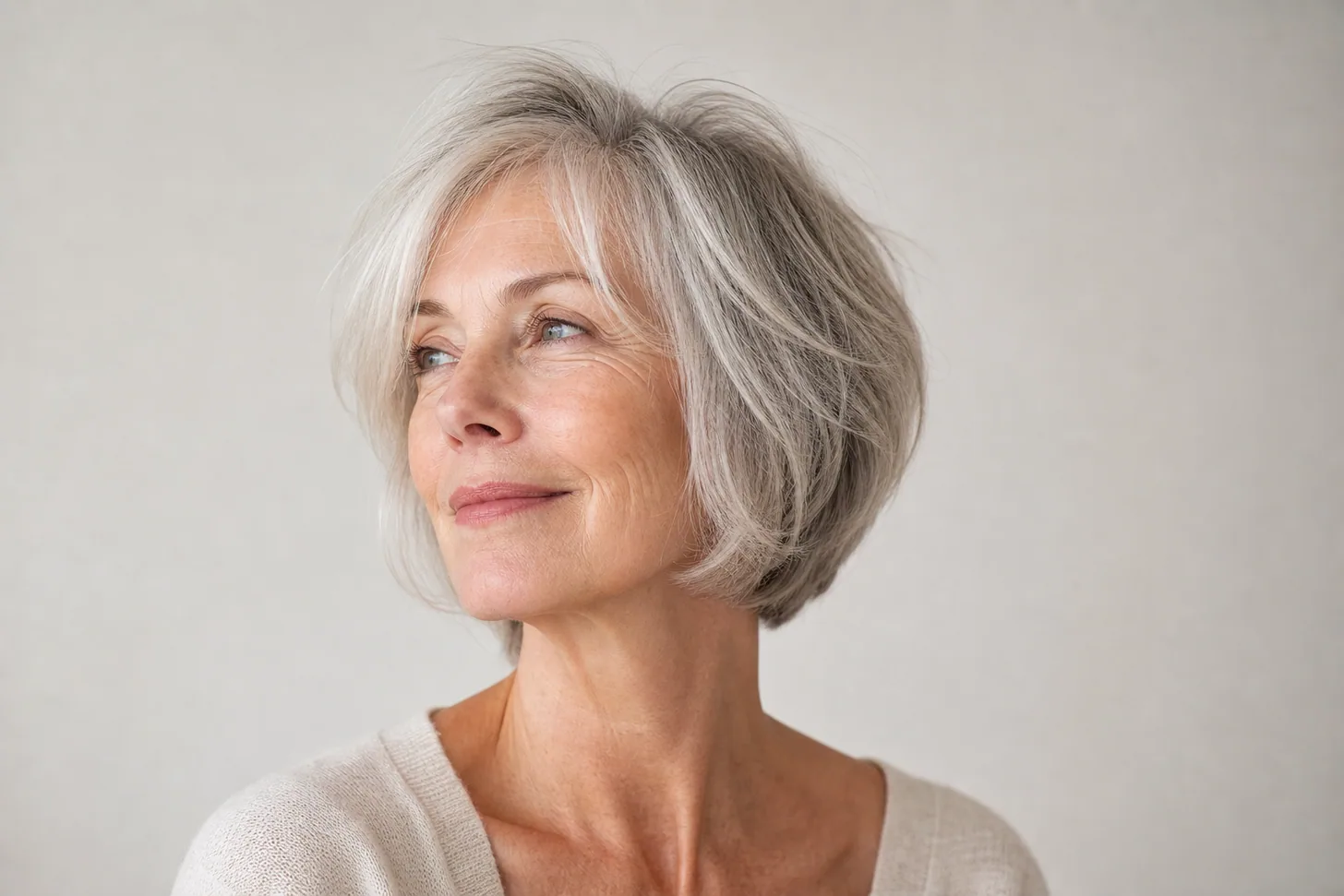
grown-out long pixie with longer top and textured fringe on fine blonde hair with silver, woman over 50
2
Grown-out long pixie
Longer on top and through the fringe, close at the sides — the most versatile pixie and the easiest step down from a bob. The extra length up top gives you something to sweep and style, which flatters those who worry a crop is too severe. It's the current, French-girl take on short hair for anyone easing in.
side-swept pixie with a deep diagonal part on fine salt-and-pepper hair, woman over 50
3
Side-swept pixie
Worn with a deep side part so the top sweeps across on a diagonal — a line that adds instant polish and covers a thinning temple or widening part. The asymmetry is what makes it feel designed rather than dated. It suits a rounder face especially well, since the diagonal lengthens and lifts.
rounded pixie with volume built on top and soft tapered sides on fine light brown hair with grays, woman over 50
4
Rounded pixie with volume on top
No shaved undercut here — just a softly tapered pixie with all the length and layering kept up top to build a rounded, lifted crown. It's the pixie for fine hair that needs height more than edginess, and it grows out gently. Ask your stylist to concentrate the volume at the crown and keep the nape soft, never buzzed.
Short bobs & lobs that stay current
If very short isn't for you, a short bob or lob keeps length while still lifting fine hair — and the modern versions are textured and lived-in, not blow-dried stiff. These five span the chin to the jaw.
blunt short French bob at the jaw with dense ends and a soft fringe on fine dark brunette hair, woman over 50
5
Blunt short French bob
A French bob sits high at the jaw with blunt, dense ends and a little fringe — the weight line makes fine hair look thicker at the perimeter while the length reads chic and current. It's the short cut that feels most like fashion rather than maintenance. Best when your density is still fairly even and you want something with real attitude.
choppy textured bob with undone movement and separated ends on fine ashy blonde hair with grays, woman over 50
6
Choppy textured bob
Point-cut through the ends for a piece-y, undone finish that turns fine hair's slight wave into built-in volume. The choppy texture is exactly what keeps a short bob looking modern instead of set. Scrunch a little product in as it air-dries and the movement does the work — this is the low-effort cut that still looks styled.
stacked bob with graduated back volume and rounded crown on fine medium brown hair, woman over 50
7
Stacked bob for back volume
A stacked bob graduates at the back to build a rounded, lifted shape at the crown while the front stays long and face-framing. The stack adds body precisely where fine hair goes flat at the back of the head. If your main frustration is a collapsed crown by afternoon, this shape holds its lift with barely any styling.
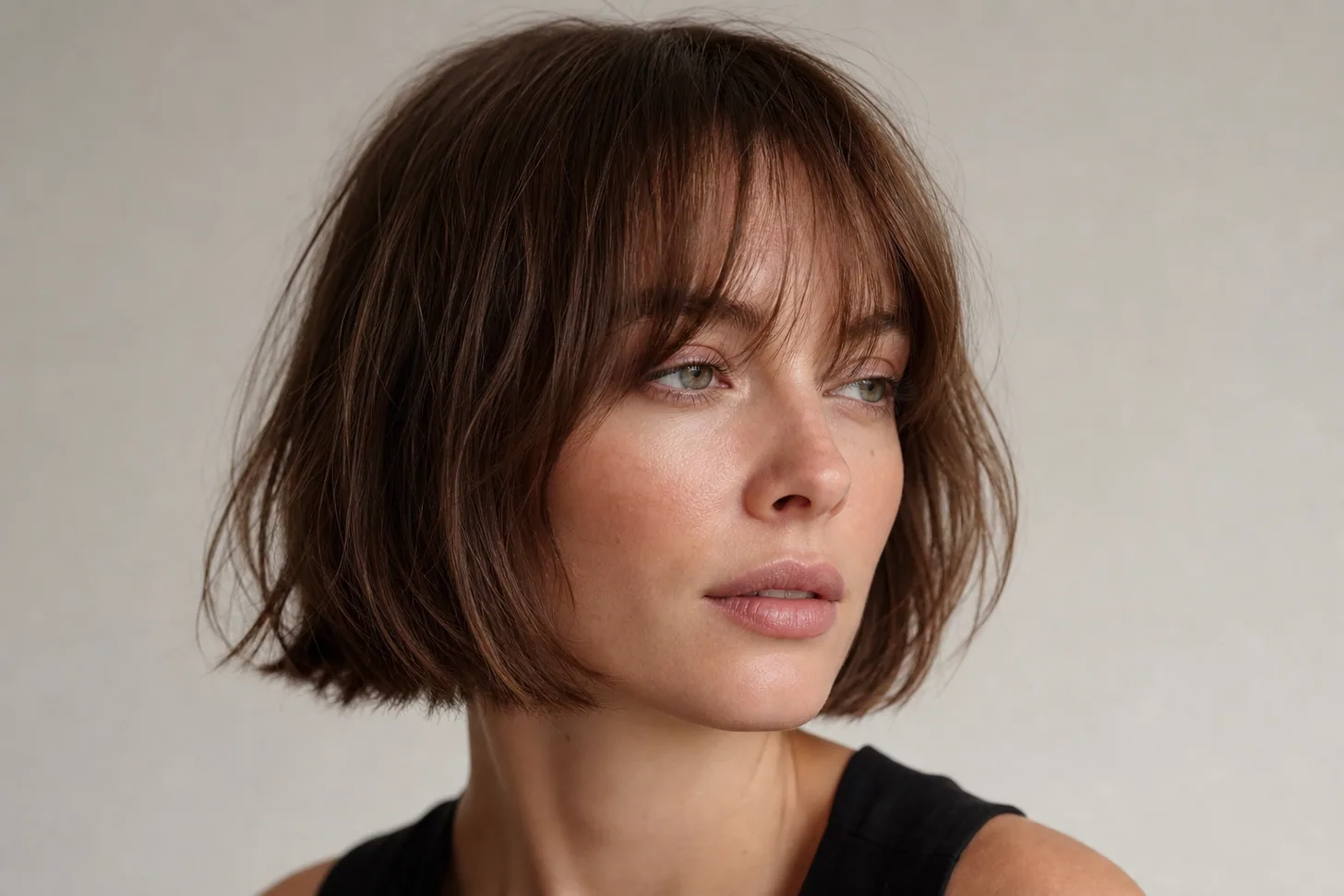
chin-length bob with soft curtain bangs framing the face on fine warm brunette hair with grays, woman over 50
8
Chin bob with curtain bangs
A chin-length bob paired with soft curtain bangs that part in the middle and sweep back along the cheekbones. The bangs frame the face and draw the eye up, and they grow out without a hard line — the most flattering, forgiving fringe for a short bob at 50. Familiar length, modern finish.
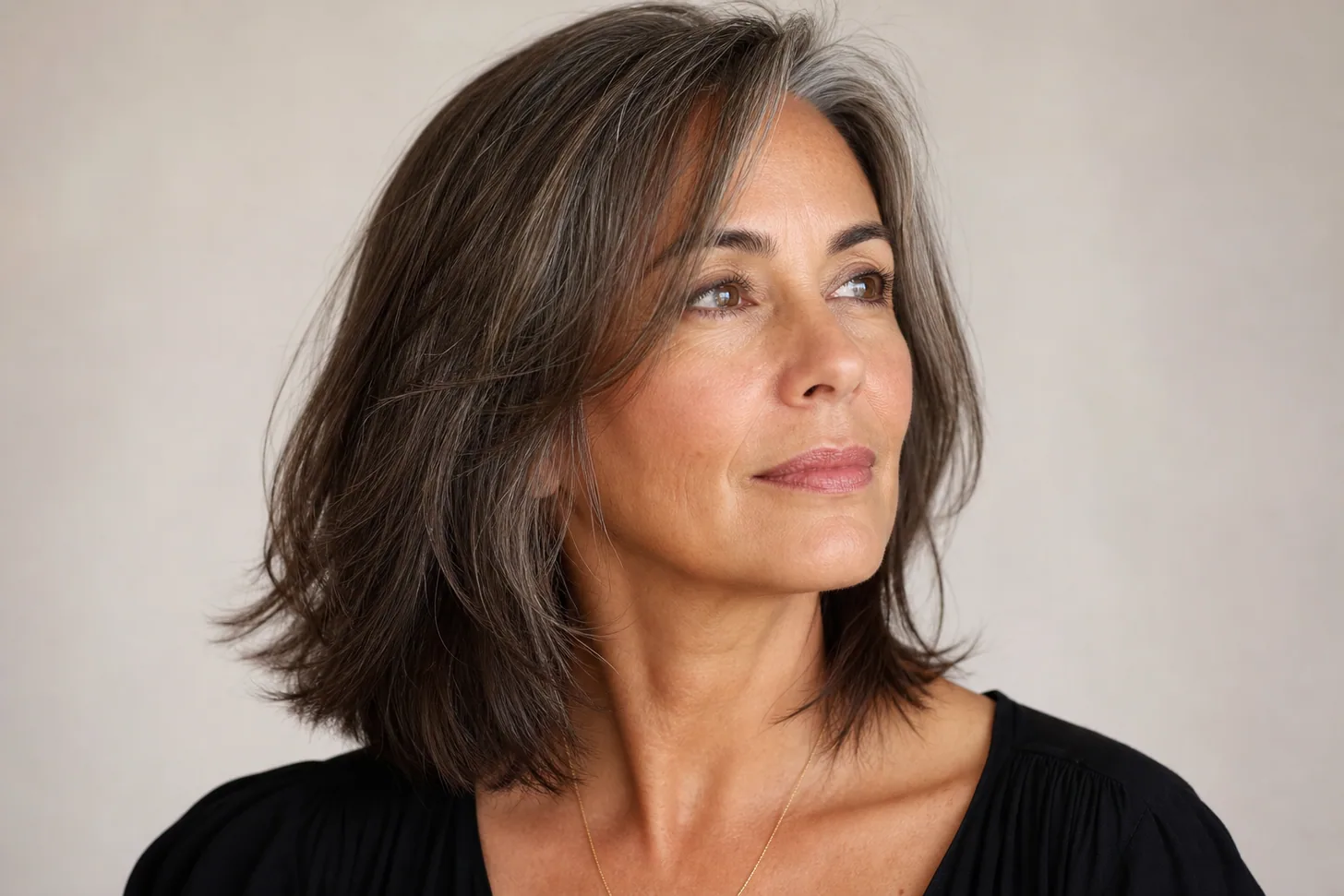
soft short lob just below the jaw with airy movement on fine silvery blonde hair, woman over 50
9
Soft short lob
The longest option here, a short lob grazes just below the jaw and keeps the versatility of length without the flatness. Kept blunt at the ends with a few soft internal layers, it lifts fine hair while still tucking behind an ear or reaching a low clip. Ideal if you want short-cut fullness but aren't ready to lose all your length.
Short cuts with soft bangs
A fringe is the quickest way to make a short cut look modern and soften the face after 50 — as long as it stays light and see-through. These four pair short shapes with the right kind of bang.
short crop with parted curtain bangs sweeping to the cheekbones on fine chestnut hair with grays, woman over 50
10
Curtain-bang crop
A short crop finished with curtain bangs that split in the center and feather back — the fringe that flatters almost every face shape and adds movement to fine hair without weight. It softens a forehead, lifts the eye, and reads distinctly current. The easiest fringe to style and the easiest to grow out.
short bob with a light see-through wispy fringe on fine golden blonde hair, woman over 50
11
Wispy-fringe bob
A short bob with a light, wispy fringe you can almost see through — soft enough that it never borrows the density fine hair can't spare. The airy fringe adds youth and a little mystery around the eyes. Point-cut so it stays feathery, it's the antidote to the heavy blunt bang that flattens fine tops.
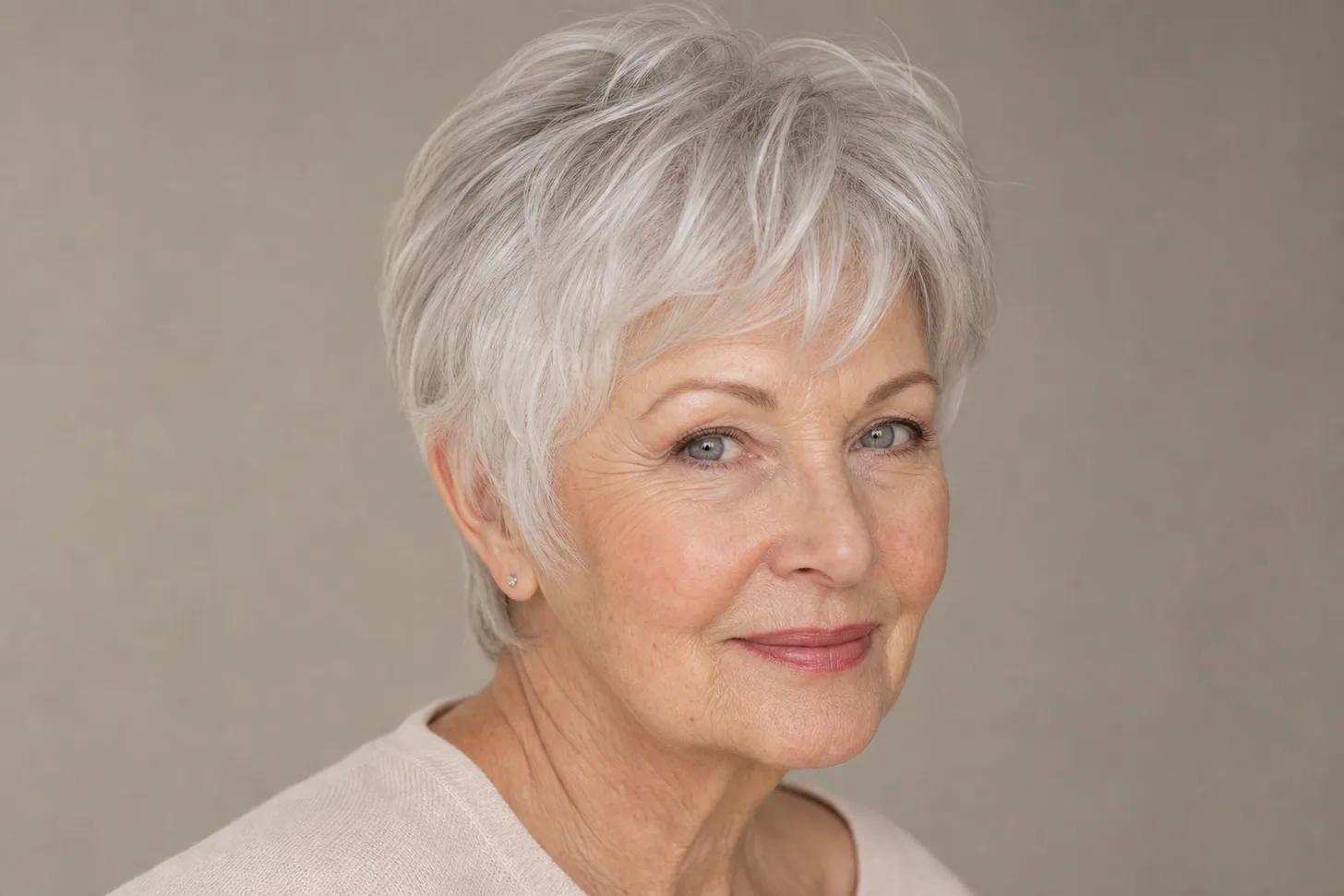
pixie with a long side-swept fringe covering one brow on fine dark blonde hair with silver, woman over 50
12
Side-swept fringe pixie
A pixie with a long fringe swept to one side, grazing the brow — the diagonal covers a lined forehead and adds a soft, glamorous line to a short shape. It's the least severe way to wear a pixie and flatters a higher or wider forehead. Blow the fringe across with a round brush for two seconds and it sets the whole look.
tousled short shag with a soft full birkin-style fringe on fine brunette hair, woman over 50
13
Tousled crop with a Birkin fringe
A softly shaggy short crop with a full but feathered fringe in the Jane Birkin spirit — enough fringe to feel bohemian and current, kept light so it works on fine hair. The tousled layers around it add texture and movement. This is the most fashion-forward pick for anyone who wants short hair with a little rock-and-roll ease.
Low-effort short cuts for a busy 50s life
Wanting style doesn't mean wanting a long routine. These five short cuts look modern and full but air-dry or finger-style in minutes — the sweet spot for a full calendar. If you’d rather browse by life stage than by decade, short cuts for mature fine hair groups the same shapes differently — and if you want to keep real length instead, long hairstyles for fine hair over 50 is honest about when that works.
easy wash-and-go textured crop with natural movement on fine ash brown hair with grays, woman over 50
14
Wash-and-go crop
Cut to look good the second it dries — short, textured, and genuinely no-fuss. The built-in separation gives fine hair volume without a single hot tool. Scrunch product in damp, let it air-dry, and go; the shape carries the style so your mornings don't have to.
air-dried textured short bob with natural wave and undone ends on fine wavy light brown hair, woman over 50
15
Air-dry textured bob
Built for fine hair with a bit of natural wave — the layers are cut to fall into an undone, lived-in shape as it dries on its own. No round brush, no blowout, just a curl cream alternative that won't weigh it down and your fingers. If perimenopause added a slight wave to your hair, this cut finally puts it to work.
short bob cut to tuck neatly behind the ears on fine dark brunette hair with grays, woman over 50
16
Tuck-behind-ear bob
A short bob cut so the sides tuck cleanly behind the ears — tucked, it's sleek and shows the face; down, it frames it. Two looks from one cut, and both take seconds. It's the practical choice for a working week when you need hair that behaves and still looks intentional.
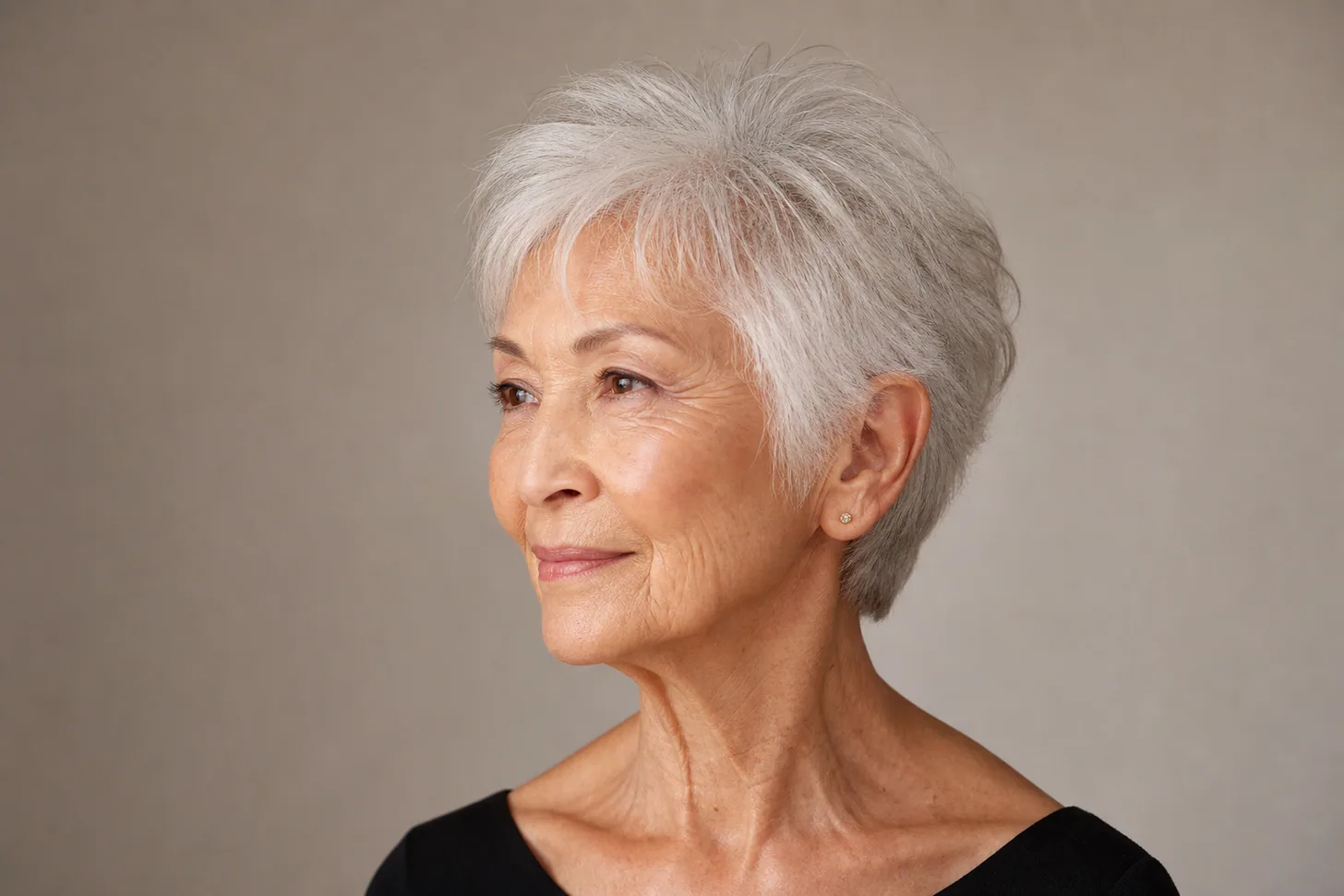
textured pixie that blends grays with dimension and light on fine salt-and-pepper hair, woman over 50
17
Gray-blending pixie
A textured pixie that lets grays read as natural dimension — the piece-y finish scatters light so mixed salt-and-pepper looks like free highlights instead of a flat line. Going shorter also grows out your color faster if you're transitioning. Low-upkeep, modern, and a confident way to wear the grays coming in.
short cut with a deep side part sweeping volume over the crown on fine honey blonde hair, woman over 50
18
Side-parted volume cut
A simple short shape worn with a deep side part so the fuller side sweeps up and over the crown for instant, product-free root height. Moving off a center part is the easiest fix for a widening part and a flat top. It's the most low-maintenance volume trick on this list — a cut plus a part, no tools required.
The five-minute routine that keeps a short cut full
A good cut does most of the work, but a few quick habits keep fine hair over 50 at its fullest all day. Start in the shower with volume kept in mind: shampoo at the scalp, and keep conditioner strictly on the mid-lengths and ends so the crown stays lifted.
On damp hair, work a little root lifter or a lightweight mousse into the roots at the crown, then either scrunch and air-dry, or blow-dry with your head tipped forward so the roots lift as they set. Skip heavy oils, rich creams, and silicone serums — they flatten fine hair fast — and if you want more height, a few of the gentle tricks in our guide to adding volume to fine hair take under a minute.
Finish with the lightest mist of hairspray at the crown, and when the afternoon flattens things out, a quick pass of dry shampoo at the roots revives the lift without a wash. Plan a trim every five to seven weeks — short shapes lose their lift and their edge the moment they grow past the cut line.
Chair-side note
Here's the thing clients rarely believe until they see it: modern versus matronly is about texture, not length. Two women can have the exact same three-inch pixie, and one looks fresh while the other looks set — the difference is entirely in the finish.
Point-cut internal layers, a little separation, a soft face-framing edge and an air-dried or lived-in feel read current at any age. A uniform, blow-dried, hairsprayed-solid version of the same cut reads old. So when you're worried short hair will age you, don't ask for more length — ask for more texture. That's what keeps you looking like the current version of yourself.
SB
— Simone Baptiste, Senior Stylist
What to ask your stylist
Bring a photo, but bring your priorities too — at 50 how the cut lives day to day matters as much as the picture. Say: "I have fine hair that's thinner than it used to be, and I want a short cut that looks full and modern, not set. Please build height at my crown, keep the ends dense so nothing looks stringy, and add point-cut texture so it reads current. Don't over-layer or razor it — I can't spare the density and fine hair frays."
If you're nervous about looking older, add: "I want a lived-in, textured finish, not a tight blow-dry." And if the crown is your worry, name it: "My part is widening and my crown goes flat — please cut for lift and coverage there, and set me up with a deeper side part." A good stylist will happily work to those constraints; they're what turn a short cut into one you'll actually love.
When short isn't the answer
You have a long or narrow face. Very short shapes can lengthen it further; a chin bob or short lob with a soft fringe adds width and balance while still lifting fine hair.
You rely on being able to tie your hair back. A short cut removes that option — a collarbone length in our full over-50 guide keeps the ponytail while still adding volume.
Your crown is very sparse and you want real coverage. Very short hair can expose a thin top rather than hide it; a slightly longer cut with strategic layering gives more to sweep over the area.
You're noticing rapid or patchy thinning, not gradual fineness. A cut helps the look, but check the cause first — see our honest guide to fine hair versus thinning and speak to your doctor.
FAQ
The best short cut for fine hair after 50 is one that builds height at the crown, keeps the ends dense, and reads current rather than set-and-forget. A textured pixie or a choppy French-style bob are the two most reliable choices, because both add volume where perimenopausal thinning shows first and both look modern with a few minutes of styling. If you want to keep some length, a soft short lob at the jaw gives fullness and framing without going very short. The deciding factor is your density and how much time you actually want to spend — a short cut should give you more volume for less effort, not lock you into a rigid routine.
Yes. Long hair carries weight that drags fine strands flat against the head and lets the scalp show through, and after 50 lower density makes that more obvious. Cutting it short removes the weight so the hair lifts and stands away from the head, which the eye reads as fullness, and short crown layers add height exactly where the part tends to widen. The effect is immediate and doesn't depend on product. It is the single most effective thing a haircut can do for fine, thinning hair at this age.
A short cut only ages you if it's the wrong short cut — tightly set, uniform, and helmet-like. Modern short hair does the opposite: texture, a little movement, soft face-framing, and a fringe keep it fashion-forward and lift the face. What reads matronly is not the length, it's the finish. Ask for point-cut internal texture, softness around the face, and an air-dried or lived-in finish rather than a rigid set, and a short cut at 50 looks current and flattering, not older.
Perimenopause often widens the part and thins the crown first, so choose a cut that builds height right there. A pixie or crop with extra point-cut layering at the crown lifts the hair off the scalp and disguises a sparse top, and switching to a deeper side part sweeps fuller hair over a widening center line. A stacked or graduated short bob adds body at the back of the crown if that's where you go flat. Avoid a hard center part and heavy one-length weight, which both emphasize a thinning top.
Bangs are one of the easiest ways to make a short cut look modern and soften the face after 50, so long as they're light. Curtain bangs and wispy, see-through fringes add movement, draw the eye up, and cover a lined forehead without needing the density a blunt fringe demands. Skip a thick, straight-across fringe on fine hair — it looks sparse and borrows weight from an already-fine top. If you'd rather not commit, a side-swept fringe grows out invisibly and gives you the softness without the upkeep.
Flatness by afternoon is usually roots giving out, not the cut failing. Build the volume at the root while damp with a lightweight root lifter or mousse, dry the crown with your head tipped forward or on velcro rollers, and keep conditioner and any oils off the roots entirely. Through the day, a quick mist of dry shampoo at the crown absorbs the oil that weighs fine hair down and revives the lift without a wash. A deeper side part also holds height longer than a center part that the hair has learned to lie flat in.
Eleven years behind the chair, specializing in short shapes and fine-hair texture. Simone believes the best haircut is the one you can style yourself in ten minutes.
Results vary with hair type, density, and growth patterns. This guide is educational and not a substitute for an in-person consultation with a licensed stylist.
Hairstyle images in this guide are AI-generated illustrations, not photos of real clients or results. See our image policy.
Get the good hair intel
One honest, stylist-written guide in your inbox each week. No hype.

 SB
SB