Reviewed by Tara Sullivan · Updated October 2026 · 11 min read
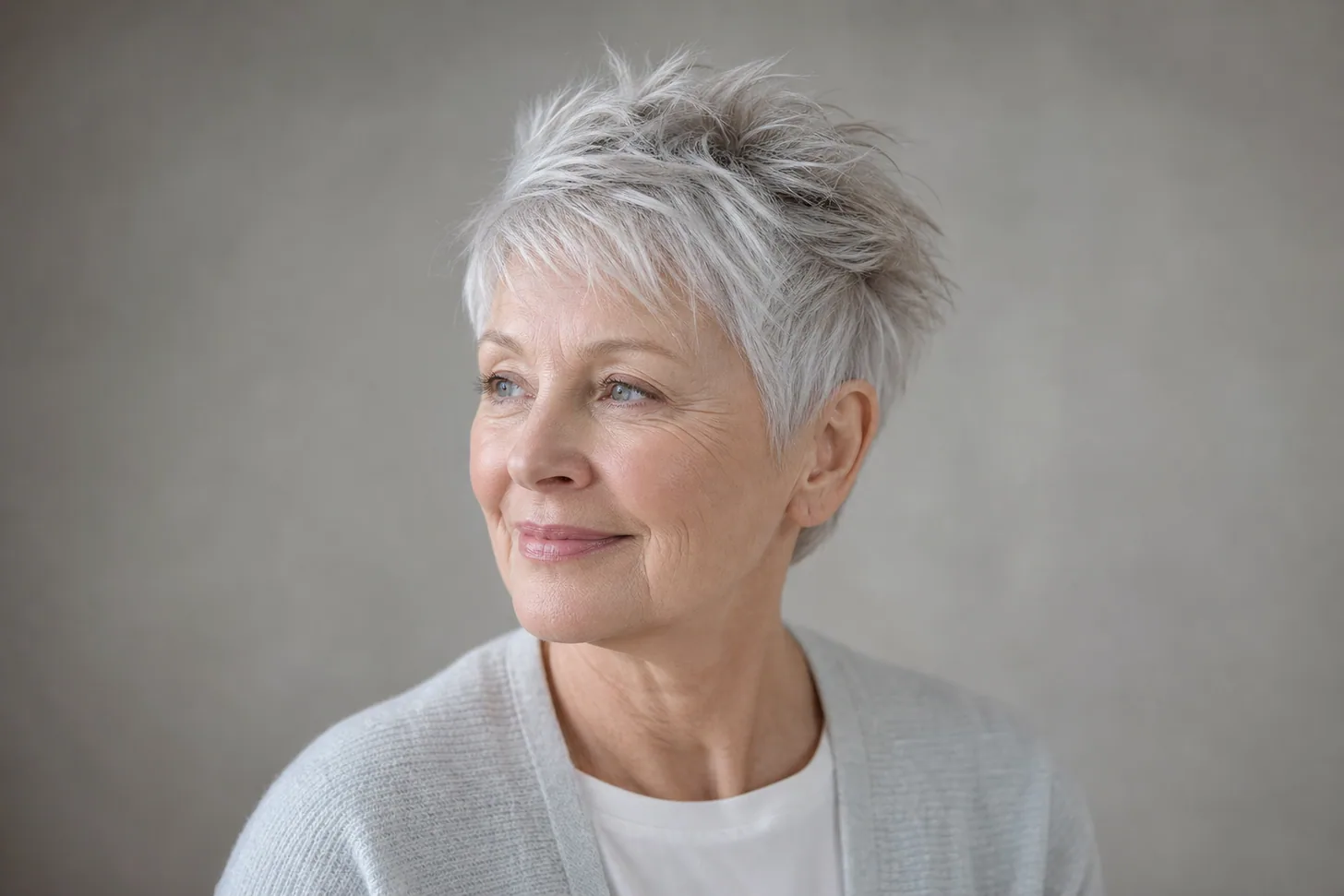
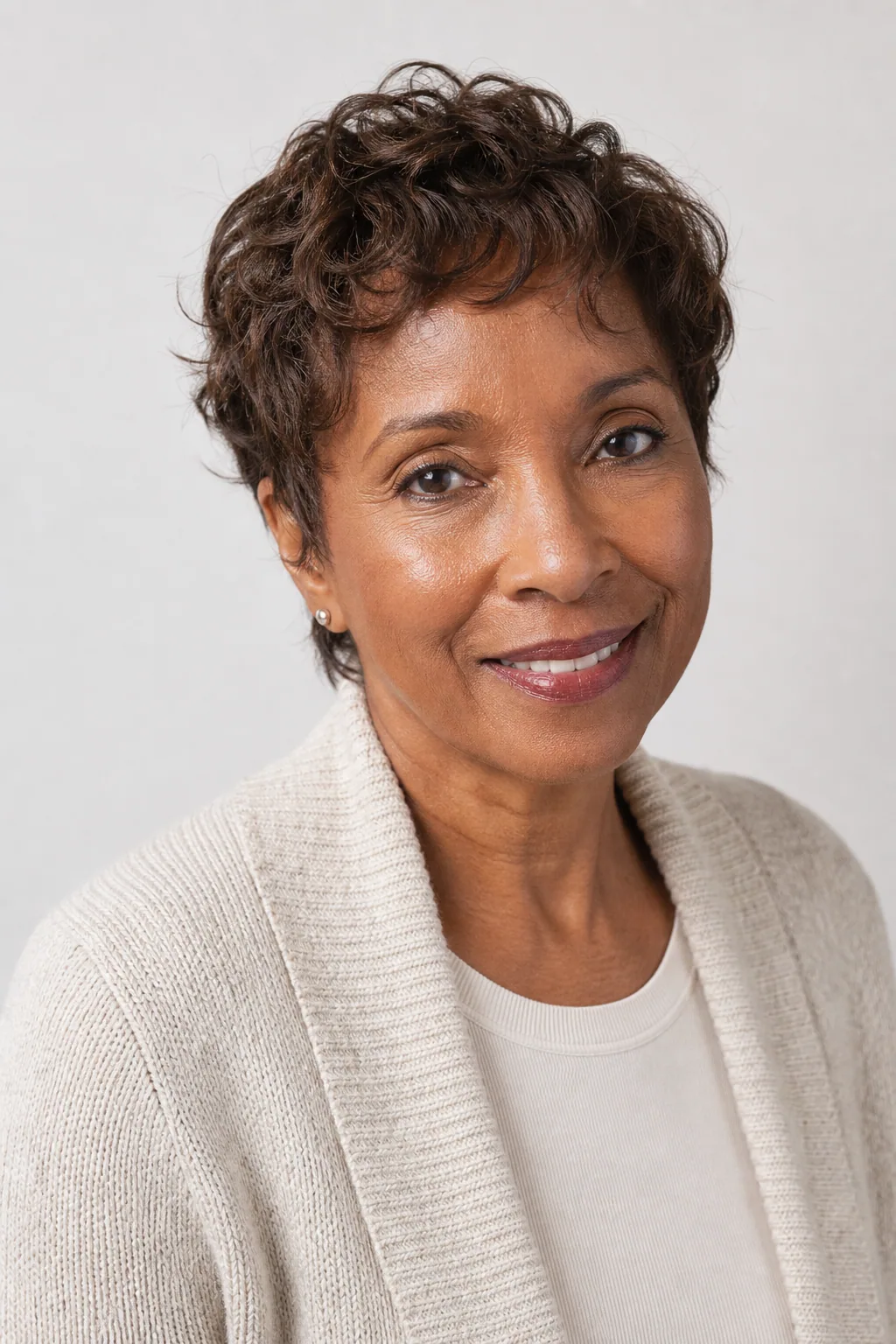
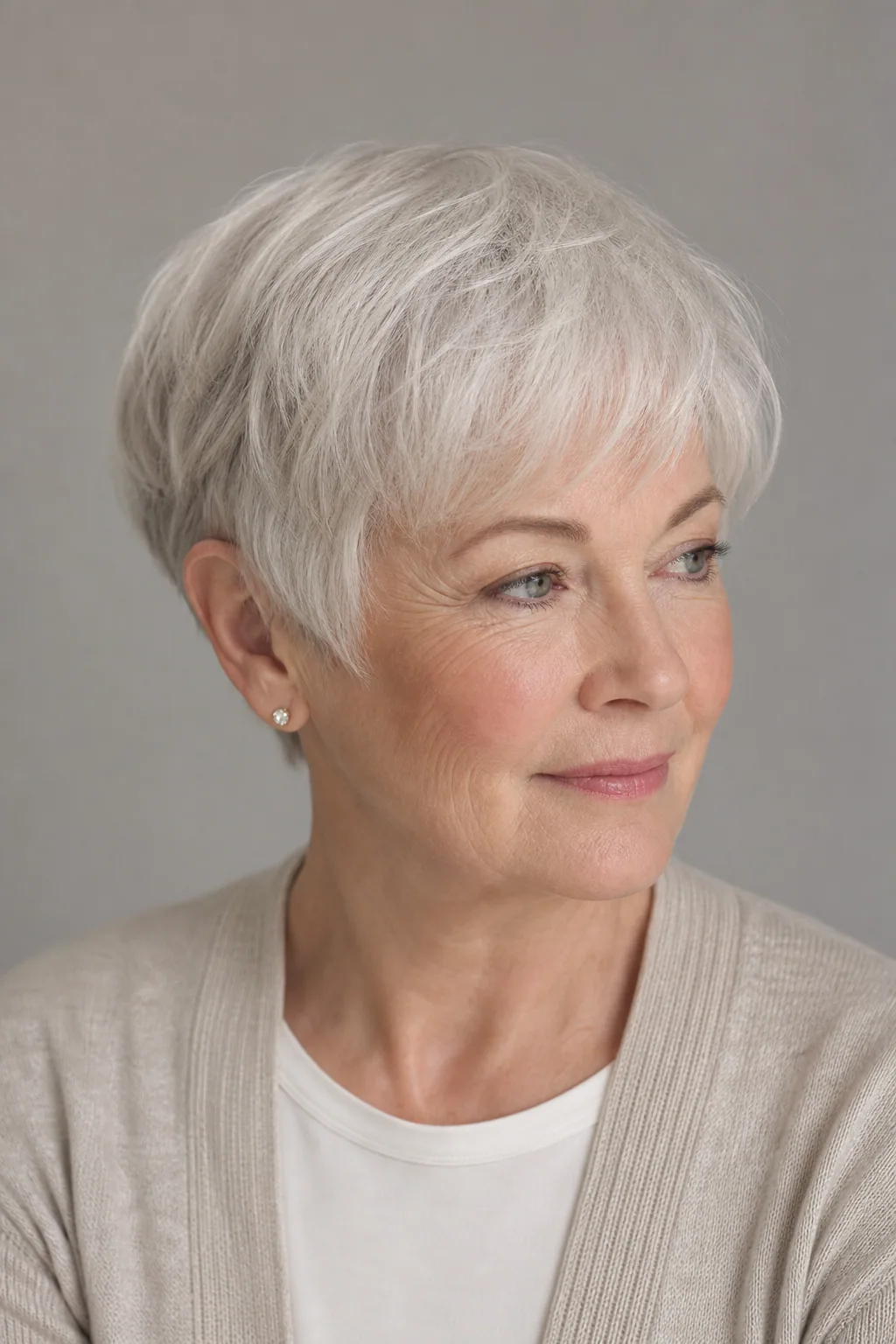
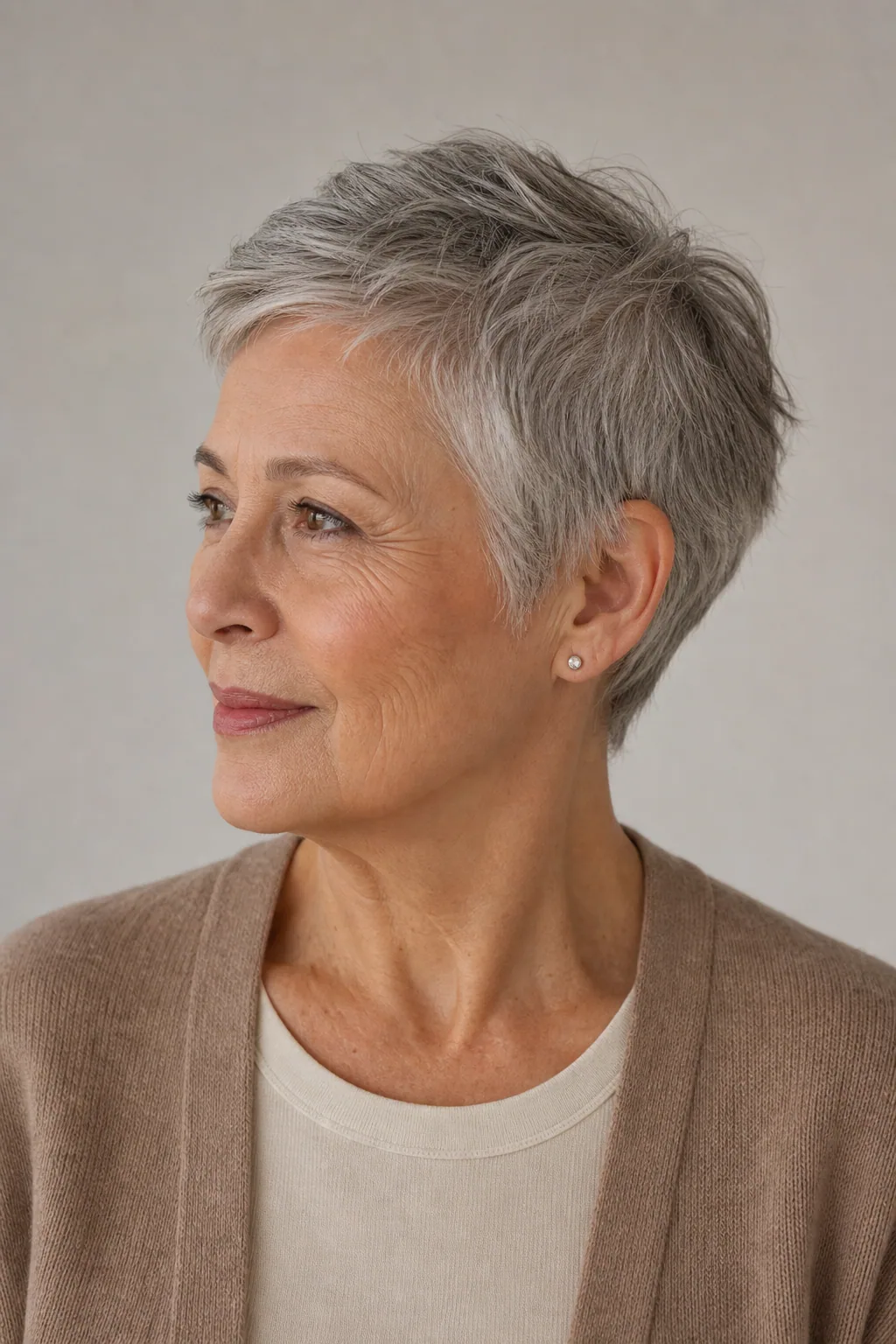
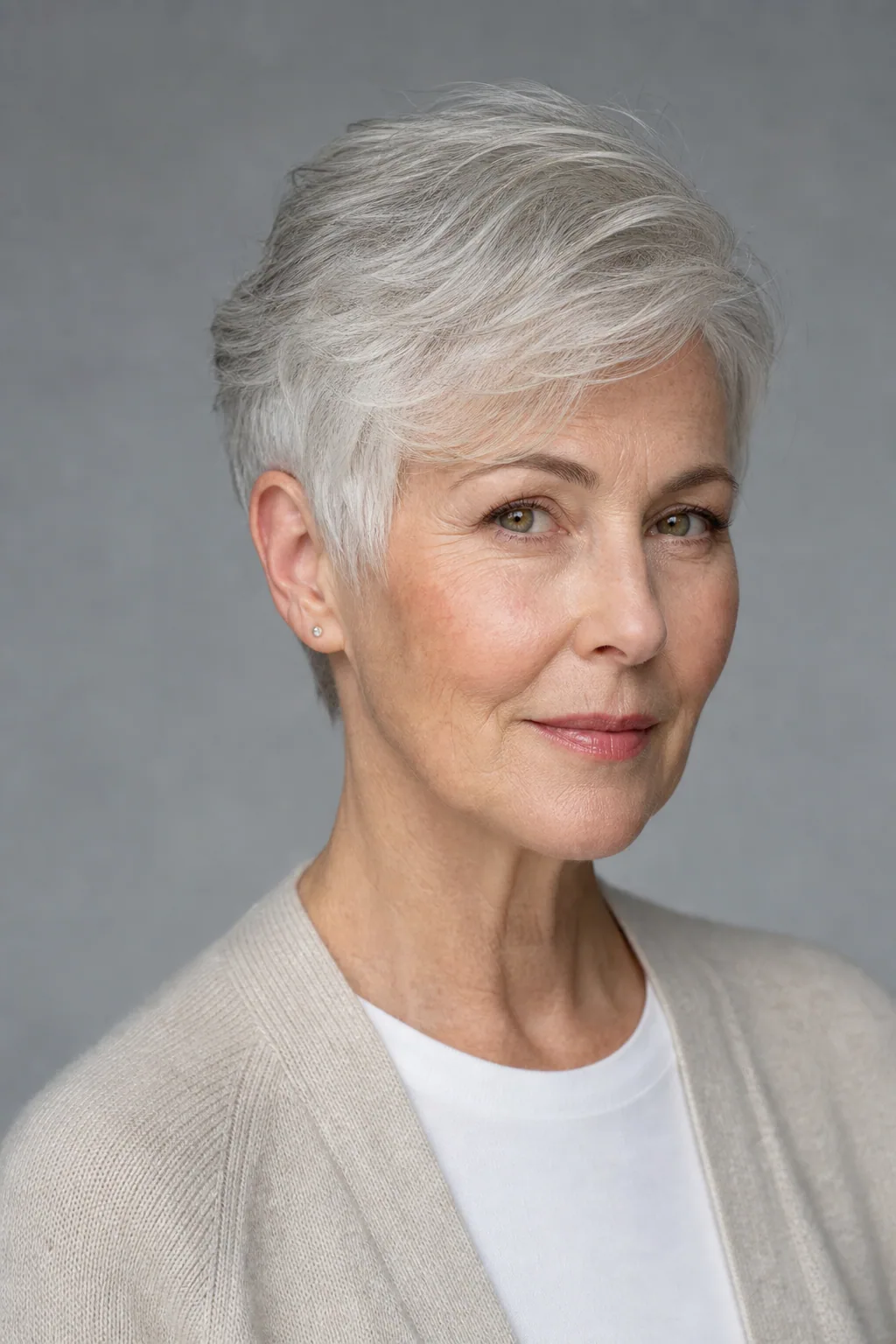
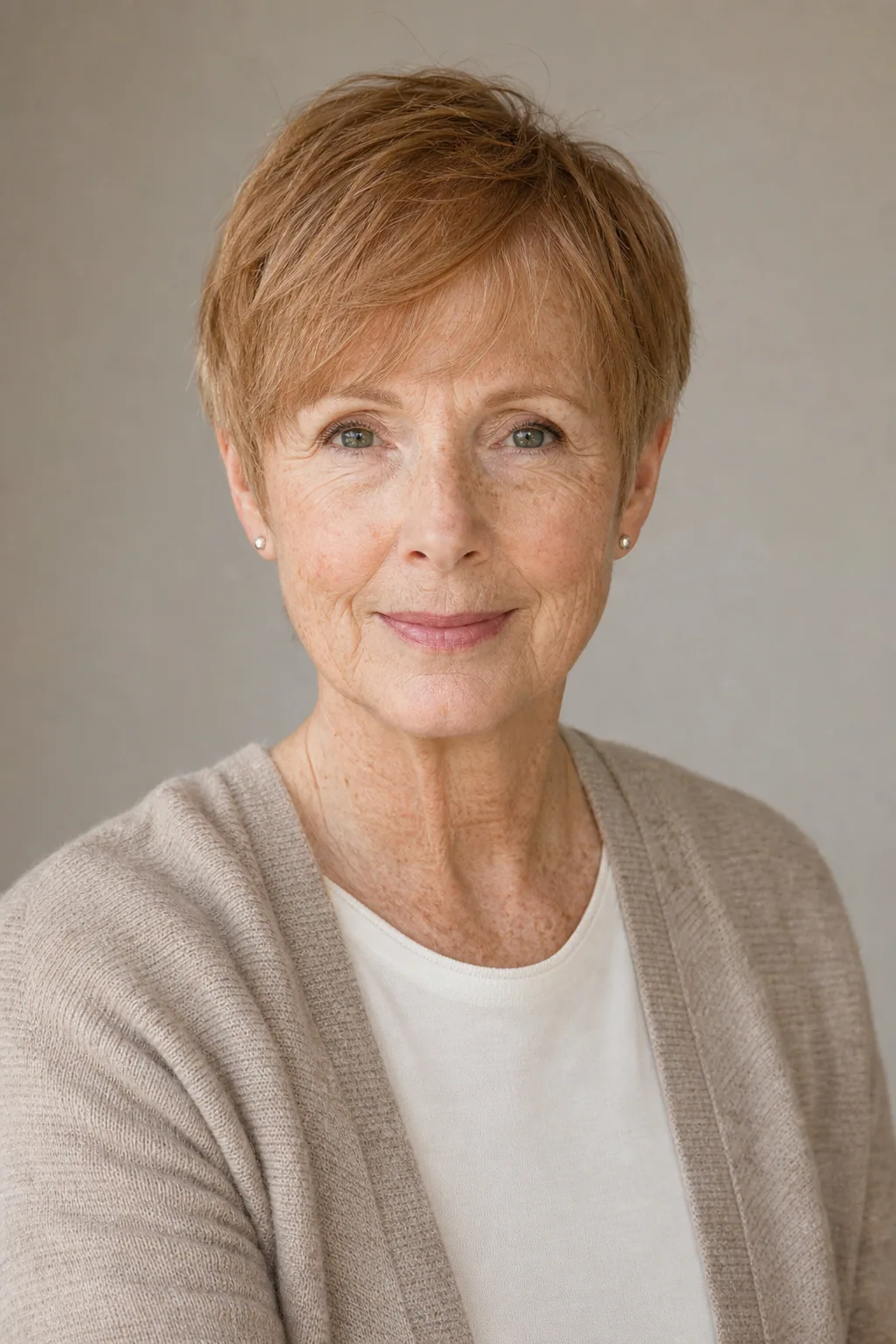
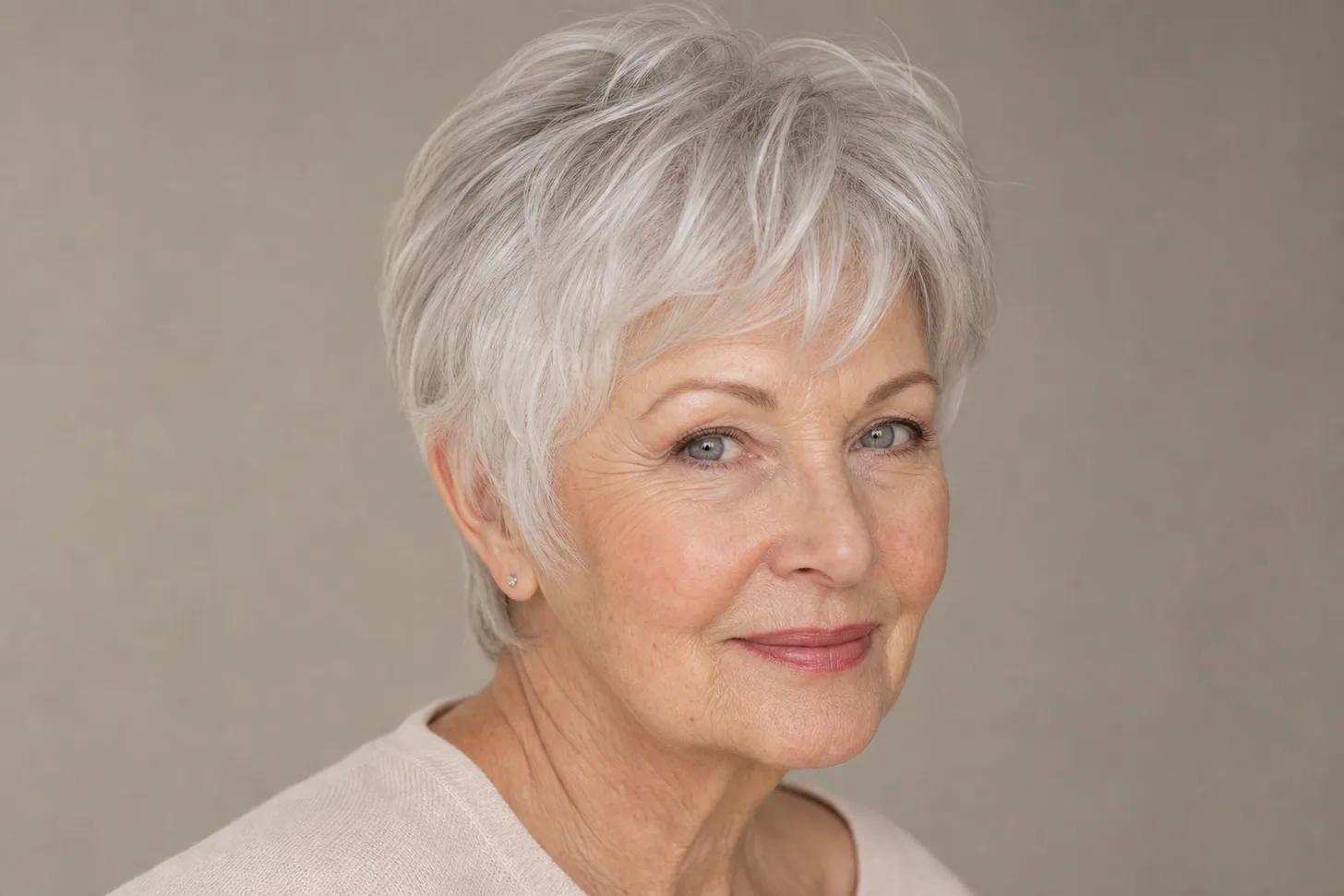
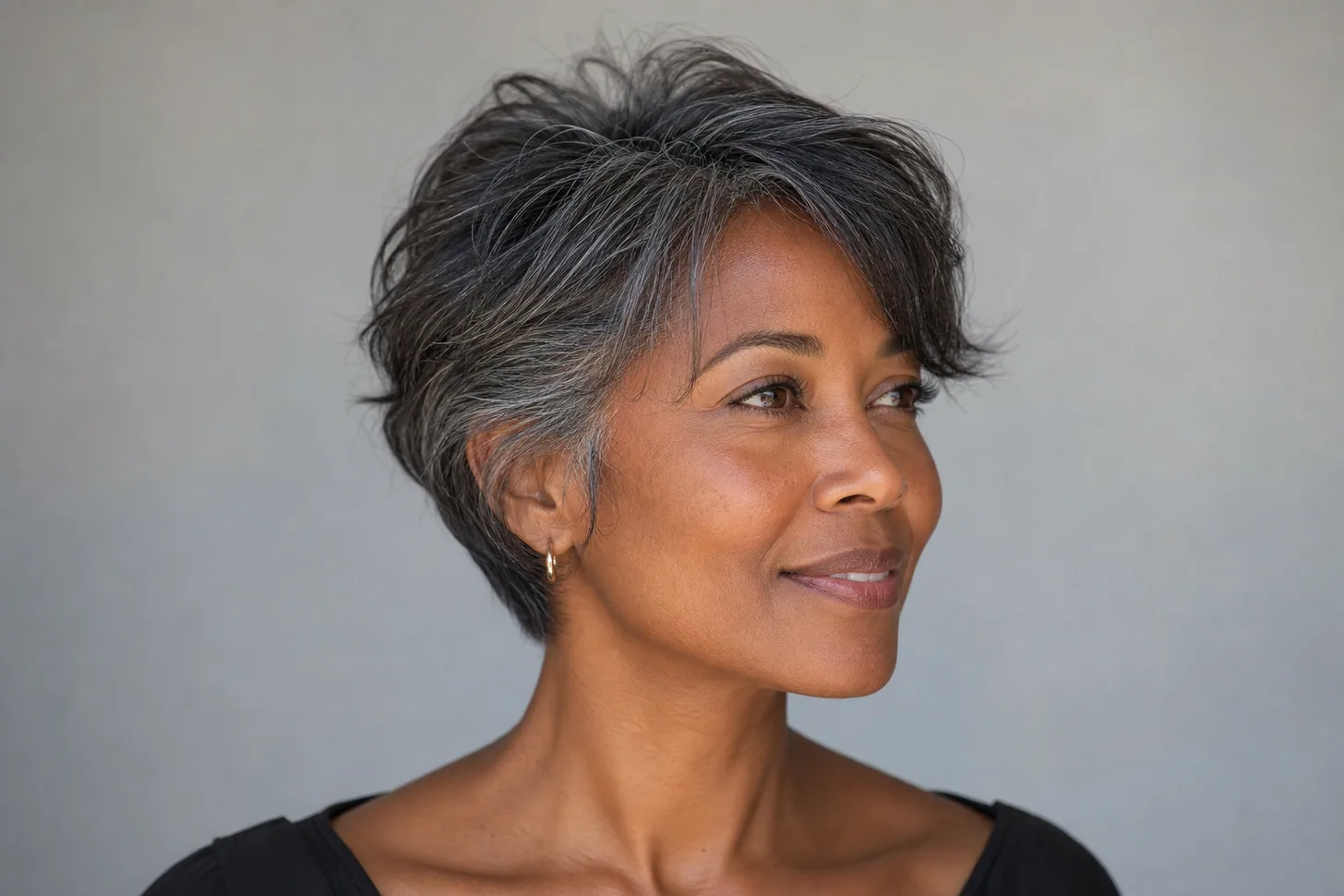
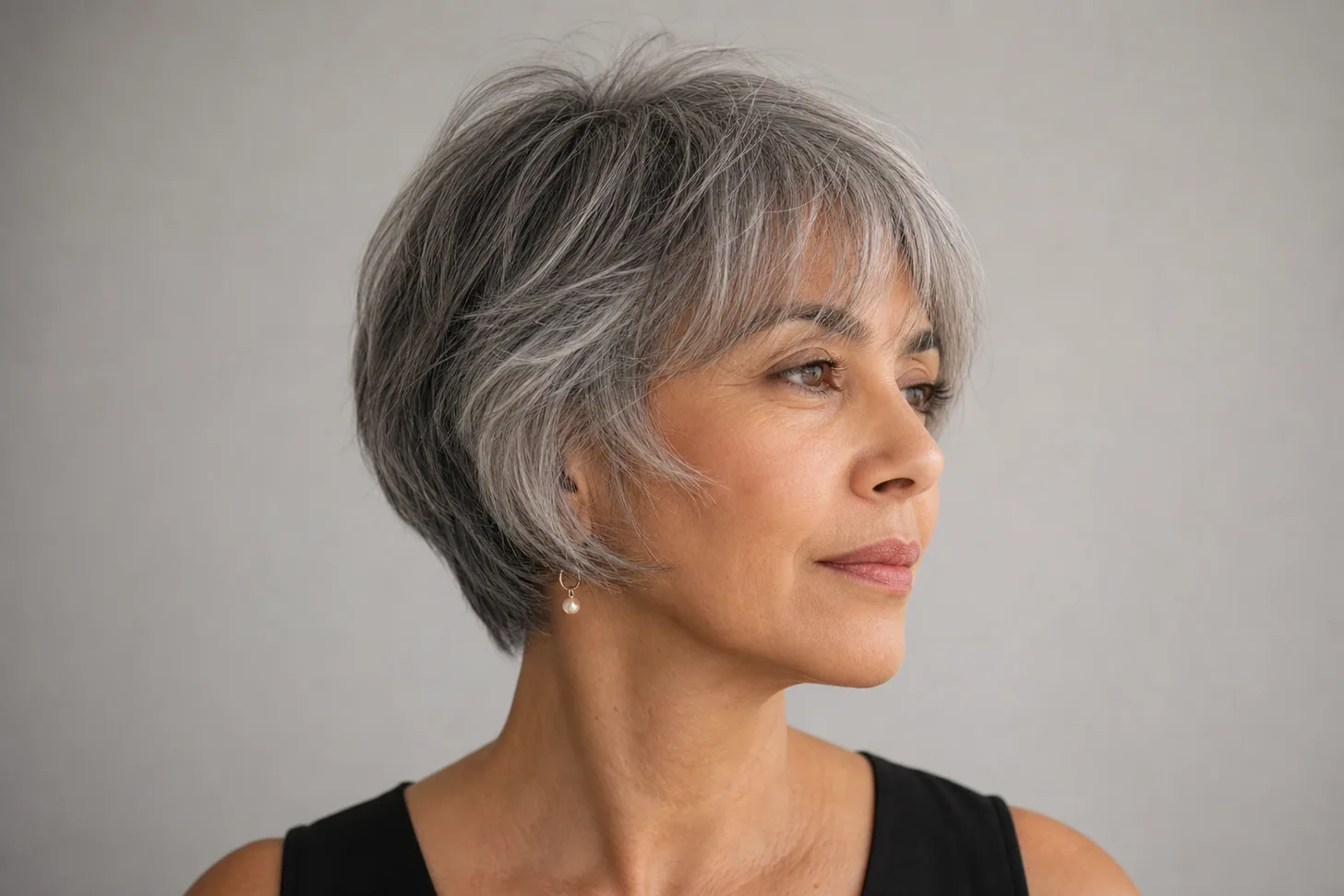
A pixie is the short cut that does the most for fine hair over 60, because hair cut this short is too light to lie flat. The top stands up on its own, so the crown looks fuller with almost no styling.
Below are 14 pixie haircuts for fine hair over 60 and over 50: soft ones, edgy ones, long ones, and pixies that work with glasses or a thinning hairline.
Chair-side note
Most clients over 60 who sit down and ask for a pixie have been thinking about it for years. What holds them back is the fear that short hair will show more scalp.
On fine hair it usually shows less. Long fine hair lies flat and parts at the crown; a pixie lifts away from it. The cut just has to leave enough length on top to cover what needs covering.
SB
— Simone Baptiste, Senior Stylist
Why a pixie works on fine hair over 60
After 60, fine hair loses density at the crown and the hairline first, and gray strands often grow in coarser and wirier. A pixie handles both. The short top stands up instead of separating, and wiry gray holds texture better than it held a sleek bob.
The pixie's limit is the crown itself. If the top is cut as short as the sides, any thinning shows; if it is left two to three inches long and point-cut, it covers. Every cut below follows that rule.
For pixies at every age, see our main pixie cuts for thin hair gallery. This page is only about the cut after 50 and 60.
Pixie haircuts for fine thin hair over 50
In your 50s the hair is usually still dense enough for a little edge. Keep the texture in the top and the fringe, and let the sides be as short as you like.
1
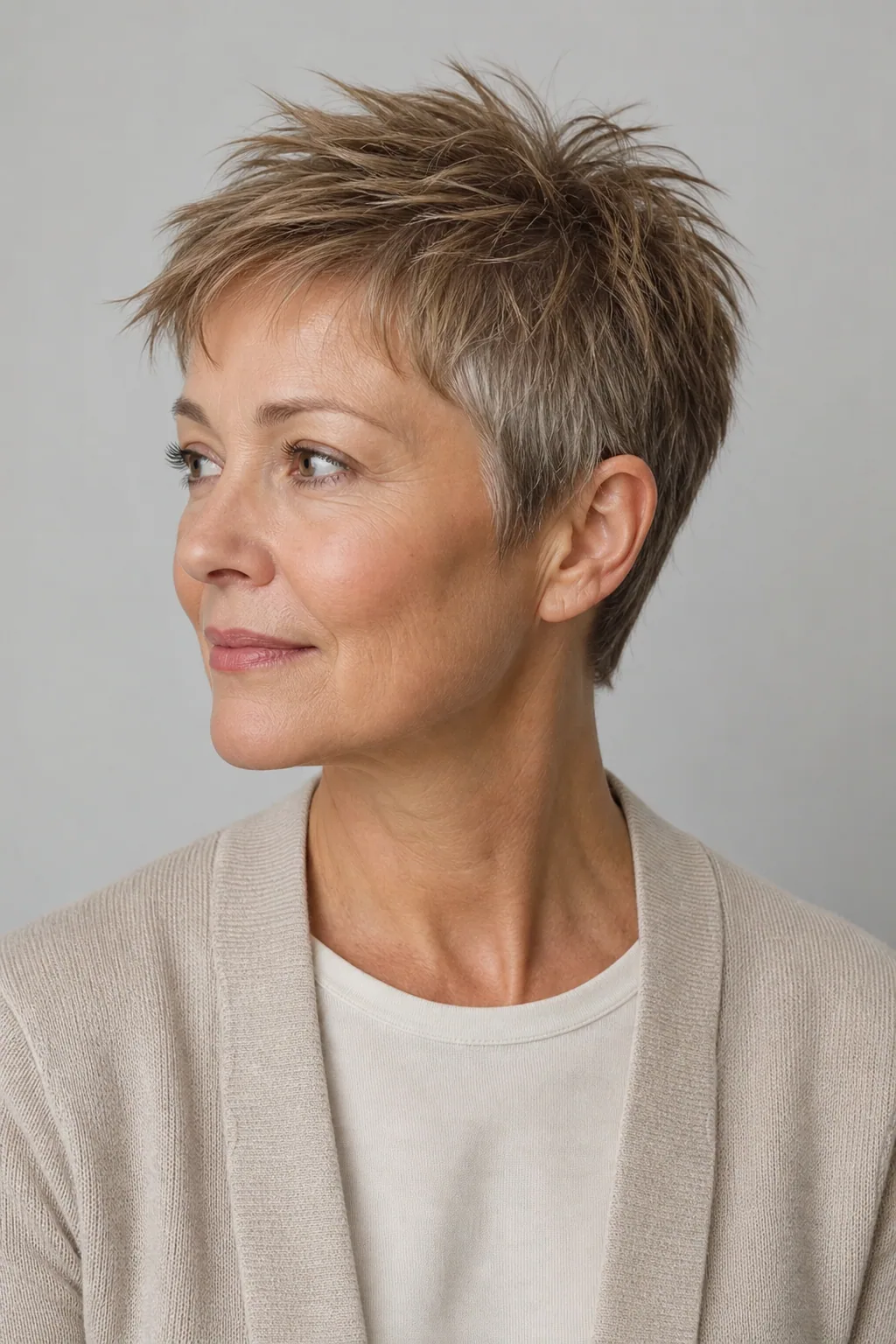
Point-cut pixie with a longer top
The top is left about three inches long and point-cut, so it can be pushed up or forward. The sides are short, which makes the top look thicker by contrast.
This is the pixie I cut most for fine hair in the 50s. Ask for texture cut into the top, not thinned out of it.
2
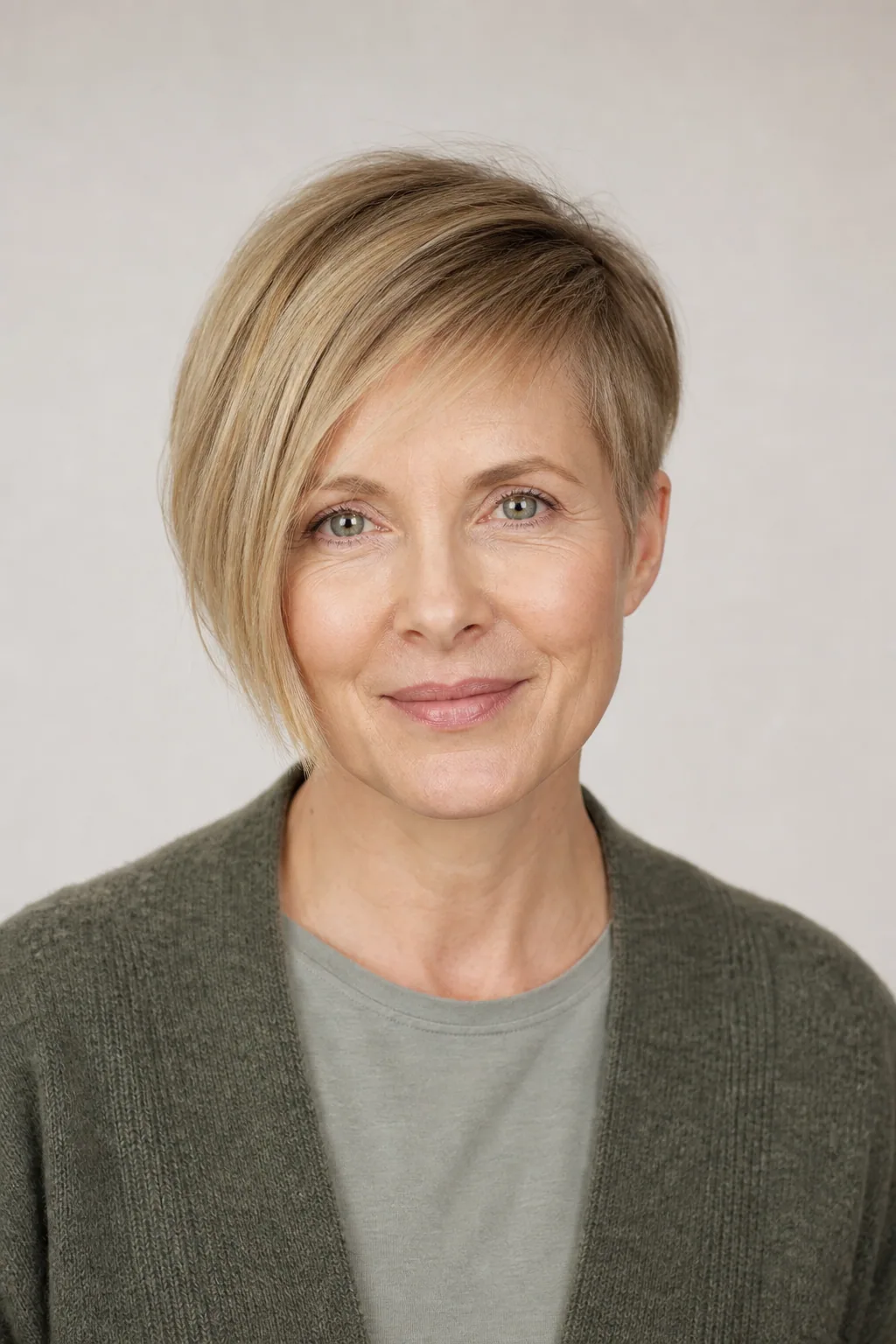
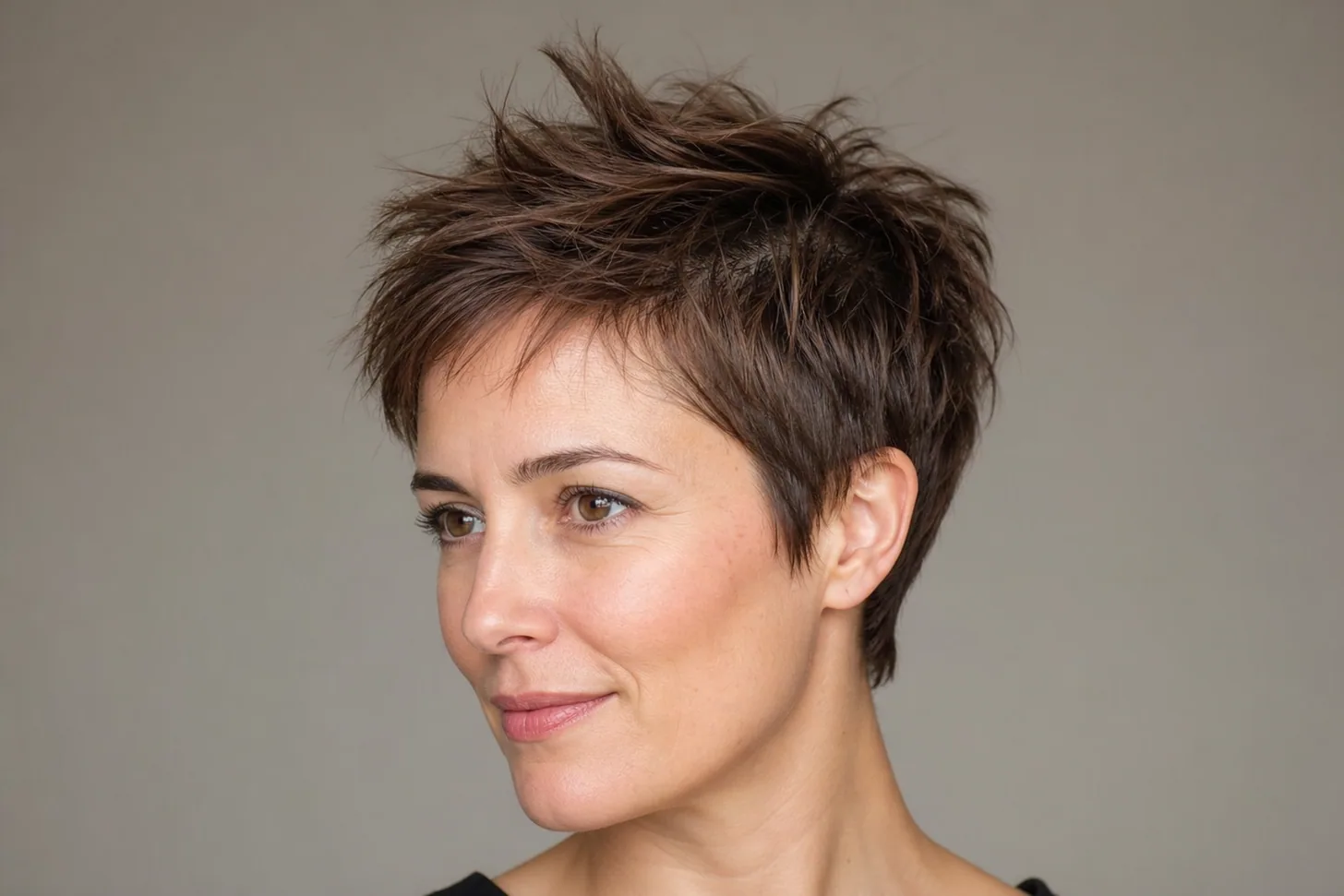
Edgy asymmetric pixie
One side cropped short, the other swept long to the cheekbone. The long side carries most of the hair, so it looks fuller than a symmetrical crop.
It needs a blow-dry and a little wax to keep the long side sharp. If you want zero styling, pick a softer pixie below.
3
Long pixie with tucked sides
A longer pixie, about four inches on top, with sides you can tuck behind your ears. It is the gentlest first pixie if you are coming from a bob.
It is also how you grow a pixie out. See growing out short hair for the stages after this one.
4
Wavy pixie left textured
A pixie cut to the natural wave and left to air-dry. The bends give the top height without a brush or a dryer.
Ask your stylist to cut it dry, so they can see where each wave sits before they take length.
Pixie cuts for thin hair over 60
After 60, softer usually looks better. Rounded shapes, a full crown and a wispy fringe flatter more than sharp, graphic lines, and they are easier to keep tidy between cuts.
5
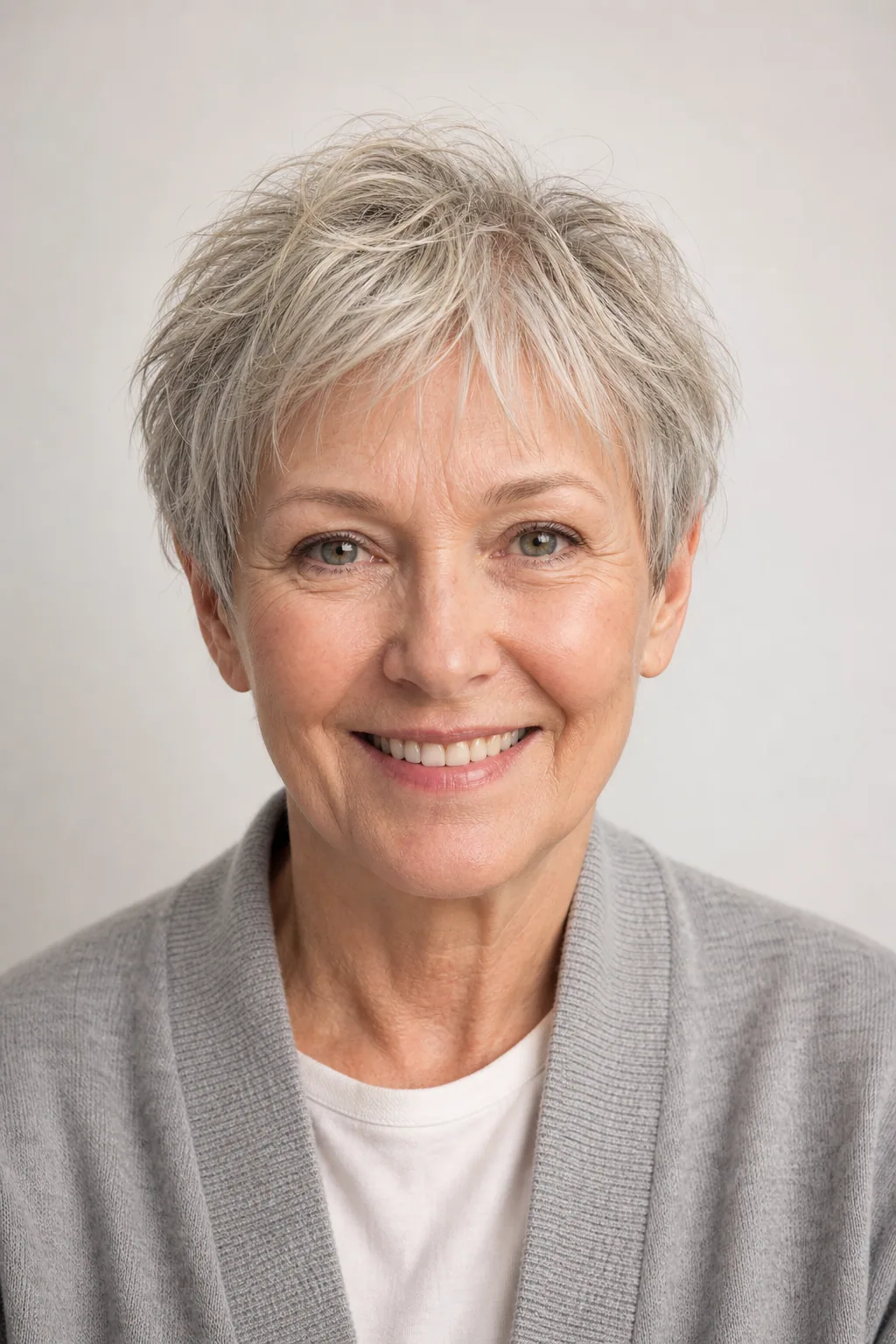
Soft rounded pixie with a full crown
A rounded shape with the crown left full and a wispy fringe. Nothing is spiky, so it looks neat even on a no-styling day.
This is the pixie for visible crown thinning after 60. For more cuts built around the crown, see haircuts for a thinning crown.
6
Very short pixie with a feathered nape
About an inch and a half on top, with a feathered nape and soft sideburns. The very short pixie is the most searched cut at this age, and it suits a strong jaw and good cheekbones.
It needs a trim every four to five weeks. Past six, the nape looks shaggy and the shape is gone.
7
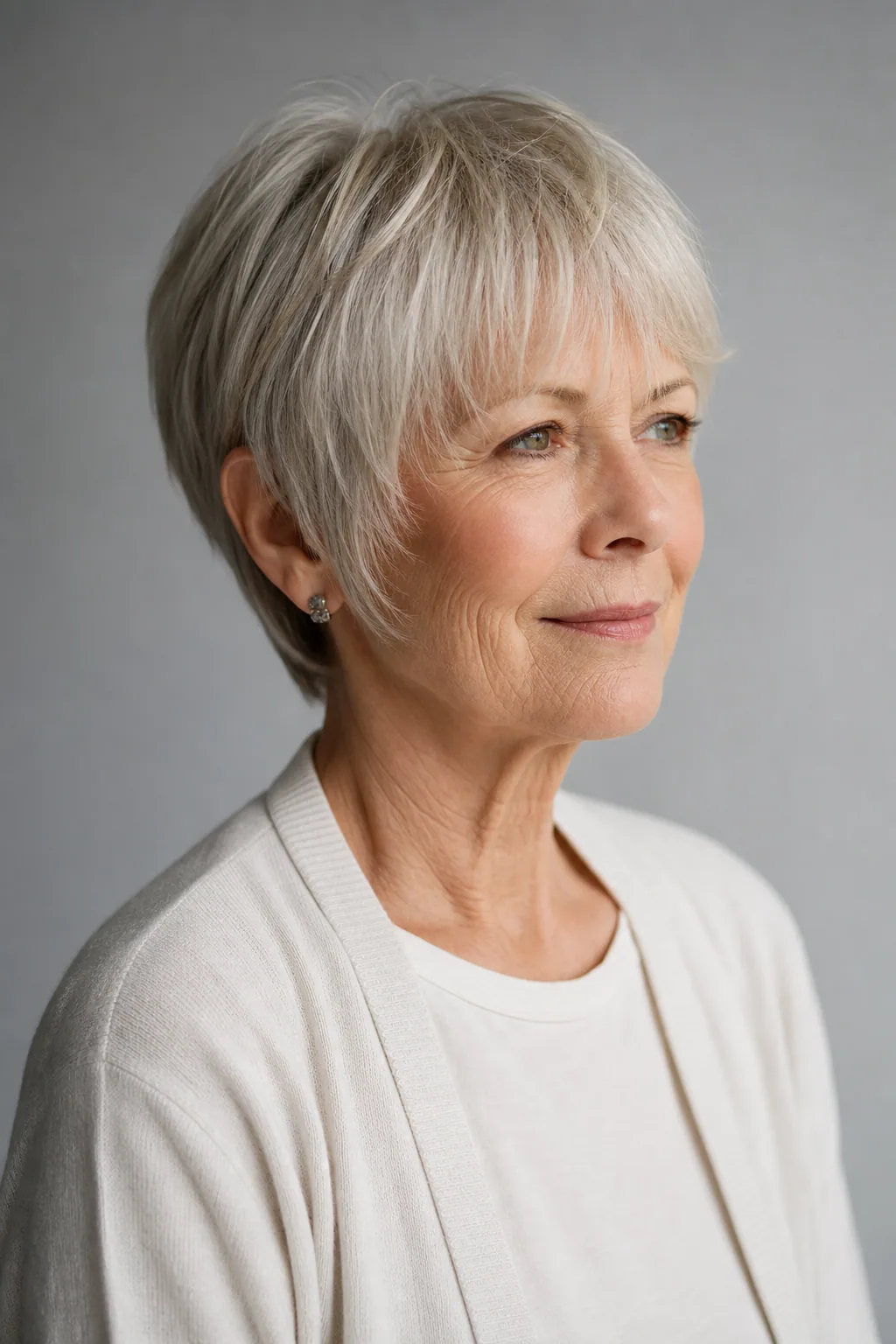
Silver pixie with a deep side part
A deep side part with the top swept over in one soft wave. The part lifts the root on the heavy side, and the sweep hides a thin spot at the crown.
Change the side of your part now and then. Hair parted the same way for years often thins along that line.
8
Wash-and-go pixie
Cut so it dries into shape on its own. Towel it, rub a pea of light paste through the top, push it into place with your fingers, done.
Pixie cuts for older ladies with fine hair and glasses
Glasses add a strong line across the face, and a pixie has no length to soften it. The answer is to keep some height and some fringe, so the frames are not the only thing people see.
9
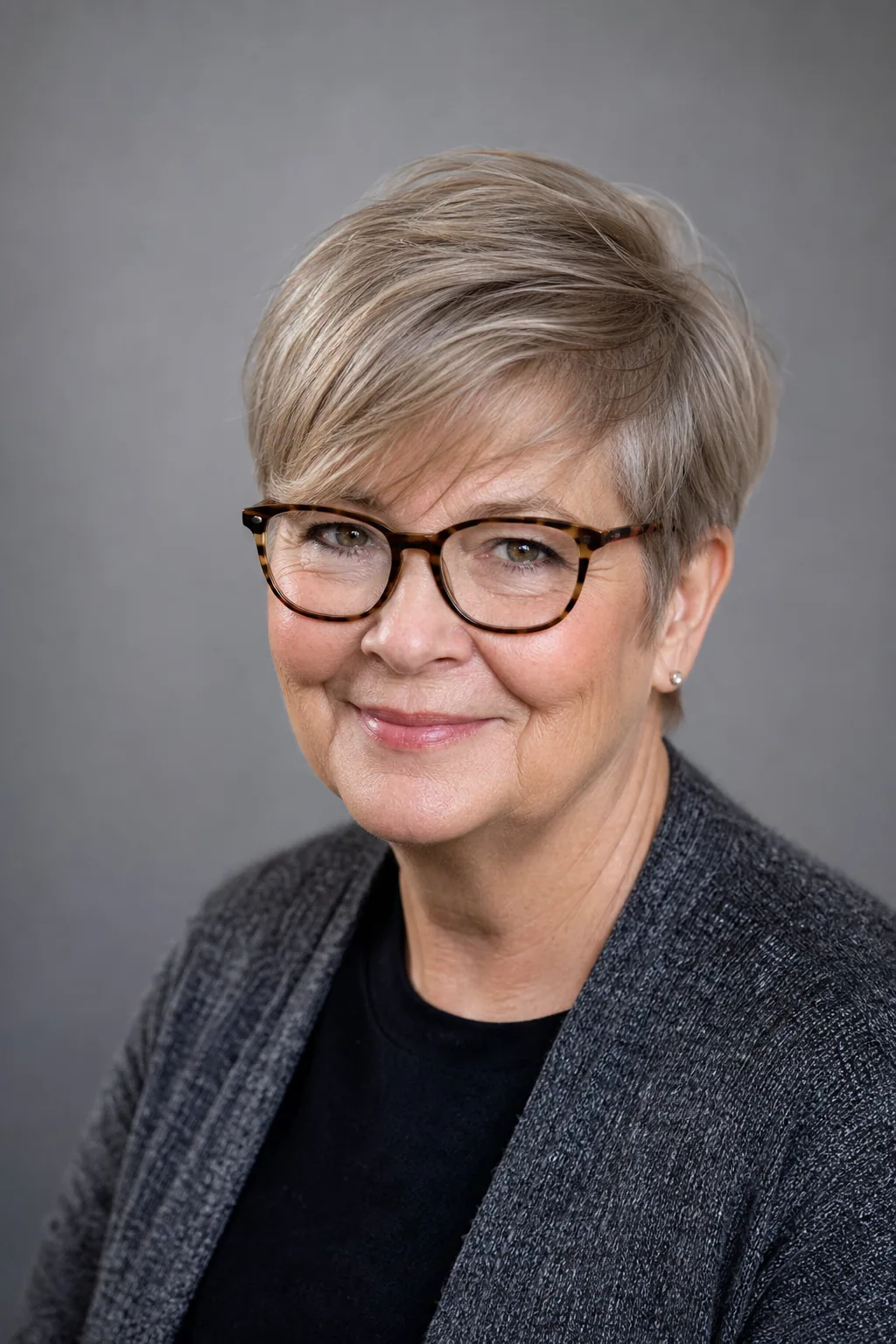
Side-swept pixie above the frames
The fringe is cut to sweep across and rest just above the frames. It fills the gap between brows and hairline without hiding behind the lenses.
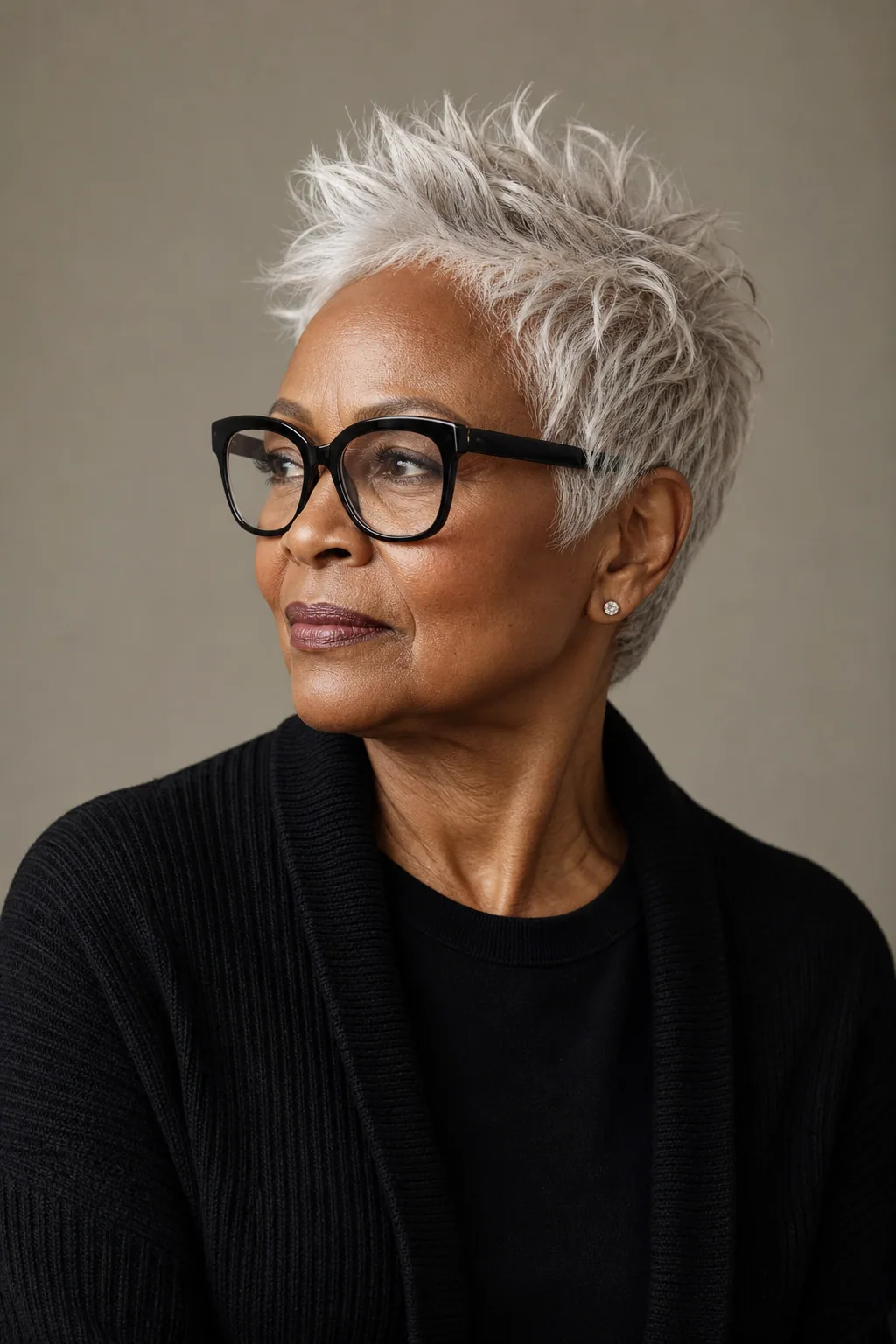
Short, piece-y spikes on top pair well with bold frames: both are strong, so neither one dominates. Silver hair holds the spikes well.
Use a matte wax on dry hair, not a gel. Gel clumps fine hair into strands and shows the scalp between them.
11
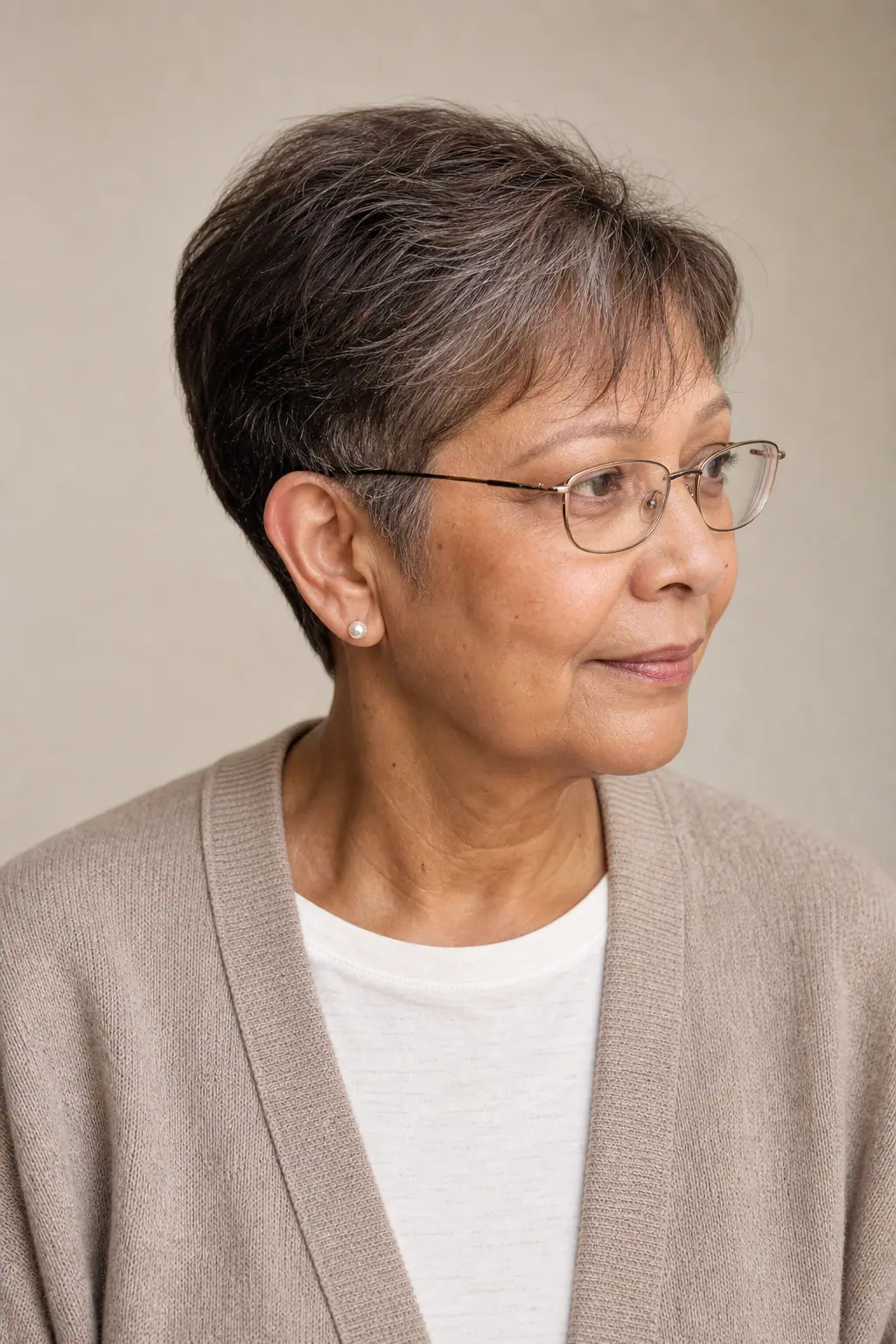
Tapered pixie with a soft fringe
Tapered close at the sides, so the arms of the glasses sit flat and do not push the hair out. A soft fringe keeps the face from looking bare.
Ask your stylist to finish the cut with your glasses on. A sideburn that looks right without them can catch on the arms.
Pixie cuts for a thinning crown or hairline
If the crown or the temples are where you have lost the most, place the length there. A pixie is easy to adjust this way, because every section is short enough to cut on its own.
12
Pixie with a forward-brushed fringe
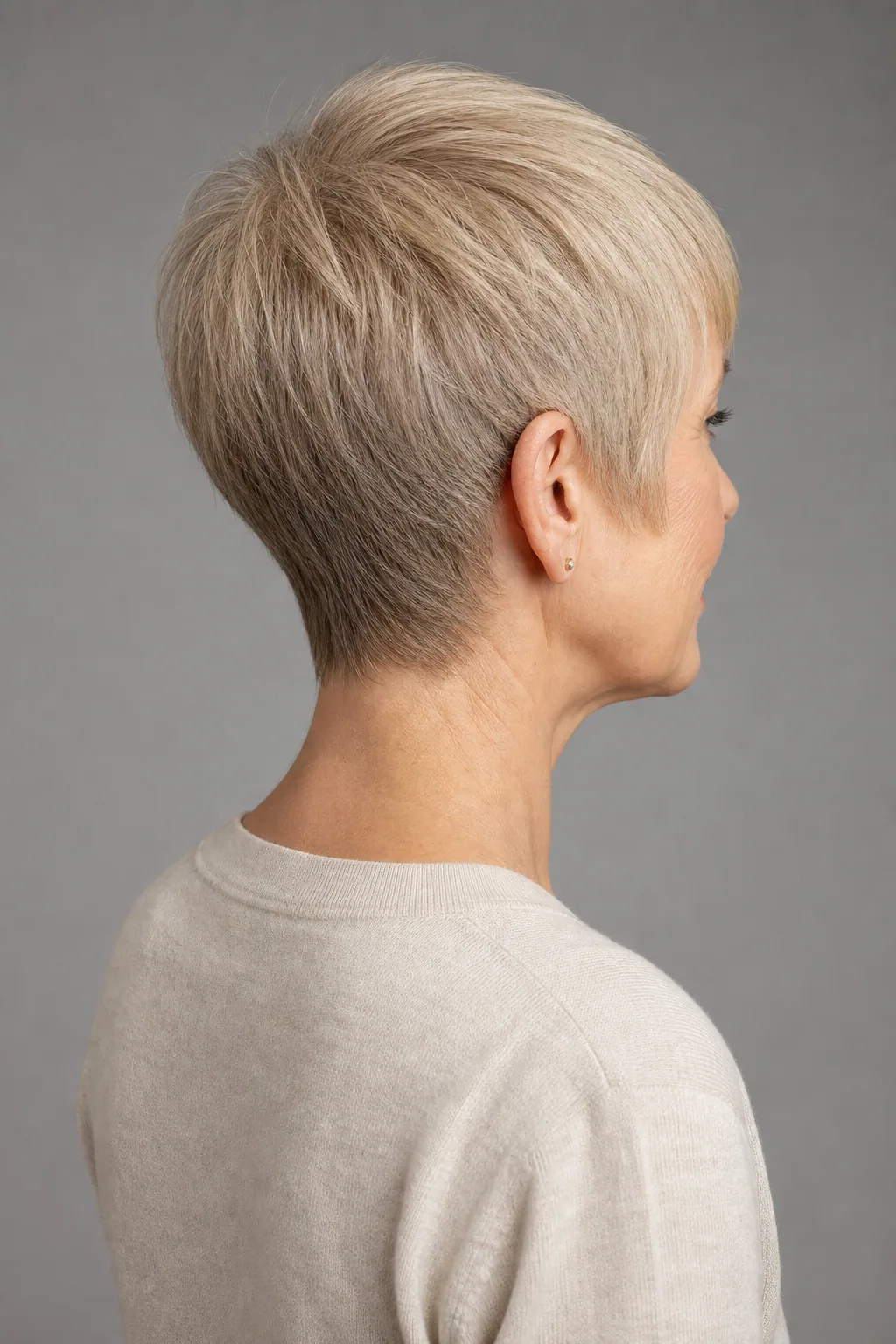
The top is cut to fall forward into a soft fringe, so the hair covers the temples instead of pulling back from them. It works well on a receding hairline.
The crown is left longer than the rest and laid over the top, like a small roof. From behind, no scalp shows.
This is the change I make most often to a standard pixie after 60. Tell your stylist exactly where the thin spot is before they start.
14
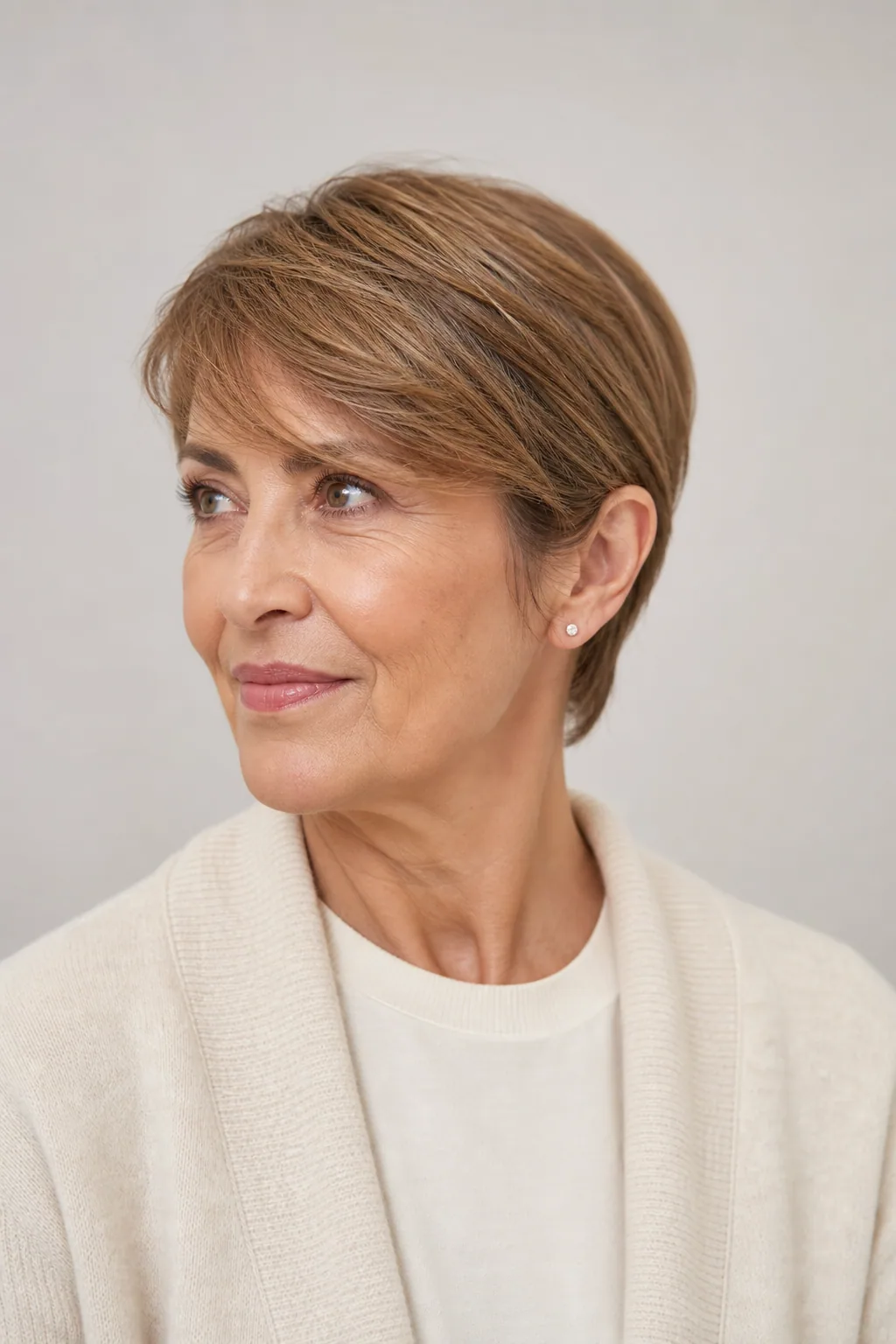
Pixie bob for fine hair over 60
Halfway between a pixie and a bob: sides at the bottom of the ears, a short stacked back and a soft fringe. It keeps more hair around the face than a true pixie.
Use less product than you think. A pea-sized amount of light paste or cream, rubbed warm between your fingers, then pushed up through the top from the roots, is enough for the whole head.
Dry the top first, lifting it with your fingers. Heavy waxes and oils make a fine pixie look greasy by the afternoon, and they separate the top into strands that show the scalp.
What to ask your stylist
Say: "My hair is fine and thinner on top than it used to be. I want a pixie with at least two inches left on top, point-cut for texture, and the sides as short as suits my face. Please don't use thinning shears or a razor on the top."
Book the next trim before you leave. A pixie looks best at five to six weeks, and missing one appointment is how most of them grow into a mushroom shape.
When a pixie is the wrong call over 60
Your scalp shows through the top even when the hair is wet and combed flat. A pixie has no length to cover it. A short bob or a topper covers more.
You cannot get to a salon every five to six weeks. A pixie grows out of shape fast. A chin bob holds for ten to twelve weeks.
You have strong cowlicks at the crown. Very short hair stands straight up over a cowlick. Leave that section longer, or choose a pixie bob.
You are unsure about short hair at all. Try the long pixie or pixie bob first. Both can grow back into a bob in about four months.
FAQ
Yes, in most cases. Short fine hair is too light to lie flat, so a pixie gives the crown lift with very little styling. Leave at least two inches on top and ask for point-cutting, not thinning shears.
A soft rounded pixie with a full crown and a wispy fringe. It covers a thinning top, looks neat without styling, and grows out evenly between trims.
A point-cut pixie with a longer top, a long pixie with tucked sides, or an asymmetric pixie if you like some edge. In your 50s the hair usually has enough density for more texture than after 60.
A side-swept pixie with the fringe resting just above the frames, or a tapered pixie that lets the arms of the glasses sit flat. Bold frames pair well with a spiky textured pixie.
Leave the crown section longer than the rest and smooth it over the top. Point to the thin spot before the cut, and avoid thinning shears or a razor on top.
Every five to six weeks. A very short pixie needs four to five weeks; a long pixie or pixie bob can go eight.
Eleven years behind the chair, specializing in short shapes and fine-hair texture. Simone believes the best haircut is the one you can style yourself in ten minutes.
Results vary with hair type, density, and growth patterns. Hairstyling guidance is not a substitute for an in-person consultation with a licensed stylist, and sudden or heavy hair loss is worth raising with a doctor.
Hairstyle images in this guide are AI-generated illustrations, not photos of real clients or results. See our image policy.
Get the good hair intel
One honest, stylist-written guide in your inbox each week. No hype.

 SB
SB